Skip to content
  • Home
  • Subscribe / donate
  • Events calendar
  • News
    • Local
    • National
    • Israel
    • World
    • עניין בחדשות
      A roundup of news in Canada and further afield, in Hebrew.
  • Opinion
    • From the JI
    • Op-Ed
  • Arts & Culture
    • Performing Arts
    • Music
    • Books
    • Visual Arts
    • TV & Film
  • Life
    • Celebrating the Holidays
    • Travel
    • The Daily Snooze
      Cartoons by Jacob Samuel
    • Mystery Photo
      Help the JI and JMABC fill in the gaps in our archives.
  • Community Links
    • Organizations, Etc.
    • Other News Sources & Blogs
    • Business Directory
  • FAQ
  • JI Chai Celebration
  • JI@88! video

Recent Posts

  • Sharing her testimony
  • Fall fight takes leap forward
  • The balancing of rights
  • Multiple Tony n’ Tina roles
  • Stories of trauma, resilience
  • Celebrate our culture
  • A responsibility to help
  • What wellness means at JCC
  • Together in mourning
  • Downhill after Trump?
  • Birth control even easier now
  • Eco-Sisters mentorship
  • Unexpected discoveries
  • Study’s results hopeful
  • Bad behaviour affects us all
  • Thankful for the police
  • UBC needs a wake-up call
  • Recalling a shining star
  • Sleep well …
  • BGU fosters startup culture
  • Photography and glass
  • Is it the end of an era?
  • Taking life a step at a time
  • Nakba exhibit biased
  • Film festival starts next week
  • Musical with heart and soul
  • Rabbi marks 13 years
  • Keeper of VTT’s history
  • Gala fêtes Infeld’s 20th
  • Building JWest together
  • Challah Mom comes to Vancouver
  • What to do about media bias
  • Education offers hope
  • Remembrance – a moral act
  • What makes us human
  • המלחמות של נתניהו וטראמפ

Archives

Follow @JewishIndie
image - The CJN - Visit Us Banner - 300x600 - 101625

Ed Asner shines in final role

Ed Asner shines in final role

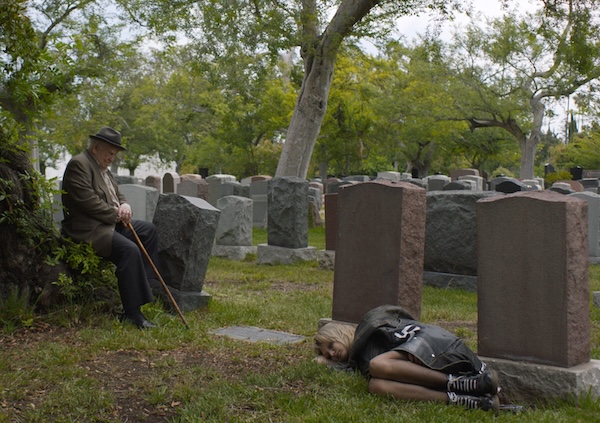
Ed Asner gives a remarkable performance in Tiger Within, which is part of the online Vancouver Jewish Film Festival, April 15-19. (tigerwithin.info/press-photos)

I had the privilege of interviewing Ed Asner several years ago. It was an experience I (and my mother, who also got to speak with him) won’t forget. So, it was with some sentimentality that I watched his last film, Tiger Within, which can be screened online April 15-19, as part of the Vancouver Jewish Film Festival, which has other movies being presented at the Rothstein Theatre April 12-14.

Asner, who died in 2021, gives a wonderful, understated performance in Tiger Within, as widower and Holocaust survivor Samuel, who takes a troubled young woman under his wing, and changes her life for the better. His performance is the main reason to watch this film. People old enough to know Asner will understand when I say Tiger Within would have fit perfectly into the ABC Afterschool Special lineup. Well-intentioned, it is not well written and, with the exception of Asner, the acting is middling.

Casey, played by Margot Josefsohn, is a rebellious teenager with a struggling mother who prefers to keep her nasty boyfriend happy than care for her daughter. Casey’s father has started a new family and their suburban life isn’t a place for the mouthy, punk-loving, artistic teen. Another highlight of Tiger Within is Casey’s art, which makes appearances throughout, further communicating her frustrations and other feelings.

Out on her own, Casey is lucky to meet Samuel, who sees her inner light and inherent worth, even if she doesn’t. He manages to see beyond the swastika someone spray-painted on her jacket, which she didn’t bother to wash off, and her antisemitic opinions, including that Jews made up the Holocaust, which were taught to her by her mom and others. He gives her the unconditional love, snippets of wisdom and space to “tame the tiger within” and make her place in the world.

The movie has a timely and important message. And a younger audience might be just the one to receive it in the manner it was intended. 

“One of the biggest tragedies is the misuse of love, the most powerful force there is,” writes director Rafal Zielinski on the movie’s website (tigerwithin.info). “Loving oneself, family, group, race, country (narcissism) and being incapable of loving the other equally, as oneself, is the misuse of love, it breeds hate.

“That is the message, I feel, in this film – Samuel overcomes hate for this girl and shows her unconditional love. 

“It’s the greatest gift anyone can receive on this earth, and he keeps his promise, he once made to his wife – ‘to forgive all before he dies.’”

For tickets to Tiger Within and other festival films, visit vjff.org. 

Format ImagePosted on April 12, 2024April 10, 2024Author Cynthia RamsayCategories TV & FilmTags Ed Asner, Tiger Within, Vancouver Jewish Film Festival, VJFF
Writing music for life

Writing music for life

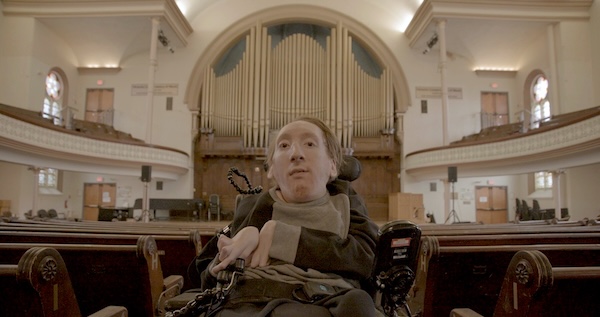
Composer Ari Kinarthy writes music using interactive hardware and software systems that form sounds from movements. His story is told in the documentary Ari’s Theme, which will screen at Hot Docs in Toronto, then be available on TELUS originals. (photo from Salazar Film)

Ari’s Theme, about Victoria composer Ari Kinarthy, will make its world première this spring at Toronto’s Hot Docs Film Festival. Directors Jeff Petry and Nathan Drillot said the idea for the documentary came from an article about Kinarthy in the Jewish Independent, which was published in April 2020.

Petry and Drillot, who run Salazar Film, a production company located in Vancouver, were intrigued and inspired by Kinarthy upon discovering his method for composing music. By using interactive hardware and software systems that form sounds from movements, Kinarthy can use the movements he makes with his wheelchair to produce music that is recorded into multimedia platforms. For example, movements closer to the recording device create lower notes and movements further away result in higher notes.

“As we learned more about Ari’s story, we thought about how interesting it would be to work with a composer like Ari, who has a very particular life experience, and ask him to compose music about the most impactful moments, dreams and experiences of his life and let us create cinematic scenes around them,” Petry said.

Petry and Drillot pitched the project to TELUS originals, which supports local documentaries by independent filmmakers in British Columbia and Alberta, with the objective of bringing films on various social topics to wider audiences.

“As the filmmaking relationship between Ari and ourselves developed, it turned into a really deep collaboration, and other themes we hadn’t expected started to grow and evolve,” said Petry. “Ari showed a lot of strength and vulnerability in creating this film with us and, for this, we are really honoured by his trust.”

Kinarthy, now in his 30s, has used a wheelchair since childhood because of type-2 spinal muscular atrophy, a condition that continues to weaken his muscles. Kinarthy is profoundly cognizant of his mortality and Ari’s Theme delves into his desire to tell his story, as he endeavours to create a new composition inspired by some of the most meaningful moments in his life.

“This film has been nothing short of a gift from God,” Kinarthy said. “The ability to install my music in a visual project is already amazing, and my dream, but to have that project be a complete portrayal of my life is truly special. I have always wanted a way to not only inspire others but to have my memory, or legacy, encapsulated so that I live on beyond my body.”

Kinarthy said he enjoys the challenge of creating grand symphonic music of the sort John Williams writes – the kind composed for a hero. There have been times in his life, he said, when he has had to fight like one.

For Kinarthy, the process of working on the film was a journey from stress to happiness. 

“Looking back and reflecting on my past, myself, and my life was challenging and rewarding. I have been through a lot and I got to write music about key moments,” he said.

“Working with Salazar was a wonderful experience,” he added. “The studio was always very understanding of my situation and gave me tons of flexibility to write how I write. They were also very helpful in helping me articulate my thoughts. The directors and I became close during the process of the film, and I am so glad I got to meet them. I will never forget them.”

Petry and Drillot have several documentaries to their credit, including Becoming Sumo, the story of Ōsunaarashi Kintarō, the world’s first Arab Muslim professional sumo wrestler; Handsome and Majestic, a short film about a teenage transgender boy growing up in Prince George; and Wizard Mode, a feature-length movie (eventually acquired by Netflix US) about Robert Gagno, a world champion pinball player.

Over the past decade, Petry and Drillot have filmed around the world, from Nunavik to Bolivia, to the Democratic Republic of Congo. They received Juno and Grammy nominations for best full-length music documentary for their work with Canadian indie rock duo Tegan and Sara. 

Despite some problems, which were recently reported in the entertainment media, it appears the show will go on for Hot Docs Canadian International Documentary Festival, now in its 31st year. In late March, director Hussain Currimbhoy stepped down for personal reasons, according to the festival. Ten other members of the programming team also left, for undisclosed reasons.

Ari’s Theme will first screen in Toronto on April 30, followed by another festival screening on May 2. After its Hot Docs run, the film will be available on TELUS Optik TV Channel 8 and online at TELUS originals.

To read the article that sparked the idea for Ari’s Theme, visit jewishindependent.ca/no-barriers-to-music. To view the documentary following its showing at Hot Docs, go to watch.telusoriginals.com. 

Sam Margolis has written for the Globe and Mail, the National Post, UPI and MSNBC.

Format ImagePosted on April 12, 2024April 10, 2024Author Sam MargolisCategories Music, TV & FilmTags Ari Kinarthy, composers, documentary, Jeff Petry, Nathan Drillot, Salazar Film, TELUS originals

The rise and fall of a giant

Michael Shamata directs The Lehman Trilogy, which will be at Victoria’s Belfry Theatre from April 23 to May 19. (photo from Belfry Theatre)

From April 23 to May 19, Victoria’s Belfry Theatre will stage The Lehman Trilogy, a three-act play that follows the Lehman family’s story, from three immigrant brothers arriving in the United States in the mid-1800s to the founding of their investment firm, which became a financial giant, then fell.

Michael Shamata, the Belfry’s artistic director, said he knew at once after reading the play that The Lehman Trilogy had to be shown in Victoria. 

“I couldn’t put the script down,” he said. “In literary terms – it’s a ‘page-turner.’ In theatrical terms – it is a stunning high-wire act. Three exceptional actors play three brothers and three generations of the Lehman dynasty. It’s a wild ride: from a tiny store in Alabama to a Wall Street juggernaut – from small-town enterprise to full-on moral corruption.”

The Lehman Trilogy was written by Italian novelist and playwright Stefano Massini. It has since been translated into 24 languages and appeared on London’s West End and on Broadway. In 2022, the show picked up five Tony Awards.

Ben Power, associate director at London’s National Theatre, adapted the play from Mirella Cheeseman’s English translation. Massini’s original work started as a nine-hour radio play before being shortened to a five-hour, three-act theatrical work written in free verse. The length was whittled down again when it hit the London stage under the direction of Sam Mendes and the cast, which once numbered 20, was cut to three.

The tale is remarkable. Lehman Brothers started out as a dry goods store in Montgomery, Ala. The firm grew exponentially, moved to Wall Street and rose to become a corporate behemoth before its demise during the 2008 financial crisis. As the Belfry states on its website, “We view The Lehman Trilogy as an exploration of the American Dream, and ultimately a critique of American capitalism.”

The story of Lehman Brothers, once one of the world’s most esteemed financial institutions, offers a worthwhile glimpse into “this journey which is so emblematic of the evolution of consumerism, capitalism and the American way of life,” notes the Belfry. In its heyday, Lehman Brothers employed 25,000 people. At the time it declared bankruptcy, it was in debt more than $600 billion.

One reason the play is compelling theatre, Ben Power told NPR’s The Indicator from Planet Money in 2020, is that it explores the abstract, as the Lehman company grows into a financial powerhouse by being, essentially, a middleman. Whereas, at one time, a trader might have had to bring goods, such as cotton, to a market to be seen (and touched) by a purchaser, trade on a stock exchange involves no such visibility or tangibility, as goods are traded through companies like Lehman Brothers.

“There is a move into the imagination, a move into metaphor. Instead of having a thing, you just have a word,” Power said. “And I think one of the reasons the story works is that at the heart of all these financial systems is the idea that one thing stands for something else. You get the distance from the actual thing that you are selling and the people’s lives you are impacting when you do that. The more you move into the abstract, maybe, the harder it gets to have a moral framework around what you are doing.”

The Victoria production features actors Brian Markinson (Henry Lehman), Celine Stubel (Mayer Lehman) and Nigel Shawn Williams (Emmanuel Lehman). The three take on the roles of dozens of other characters throughout the play.

“Casting across race, religion and gender highlights the universal seductiveness of both the American Dream and capitalism,” says the Belfry on its website. “In addition, given that the production’s three actors are playing multiple characters – crossing genders, cultures and ethnicities – why should the casting not do the same?”

A Broadway staging of The Lehman Brothers encountered some snags due to the pandemic. The March 26, 2020, official opening at the Nederlander Theatre was postponed and did not reopen until September 2021.

Though widely acclaimed by reviewers, The Lehman Trilogy did not receive universal praise. Writing for The Observer, David Rich called the play “profoundly antisemitic.”

“Not in a crude way – a clumsy turn of phrase here, a jarring stereotype there – but in its innermost essence, connecting a modern audience to malevolent beliefs about Jews and money that are buried deep within Western thought. Most striking of all, none of the people responsible for writing, acting, directing or producing this play seem remotely aware, and most reviews have missed it entirely,” Rich wrote.

The play is the first Jewish-related work to be in the Belfry’s lineup since the cancellation of The Runner late last year. The planned scheduling of that play, about an Israeli ZAKA volunteer, made national headlines after anti-Israel protesters demanded that it not be shown. 

To order tickets for The Lehman Trilogy, go to belfry.bc.ca. 

Sam Margolis has written for the Globe and Mail, the National Post, UPI and MSNBC.

Format ImagePosted on April 12, 2024April 10, 2024Author Sam MargolisCategories Performing ArtsTags antisemitism, Belfry Theatre, capitalism, history, Lehman Brothers, Michael Shamata, The Lehman Trilogy, theatre
Take a trip back in time 

Take a trip back in time 

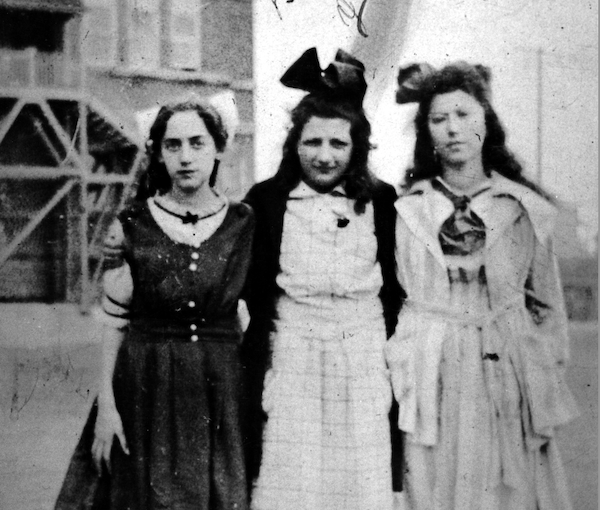
School girls, Lord Strathcona School, 1915. The JMABC Walking Tours take participants on a journey through the girls’ Strathcona neighbourhood, as well as to the Mountain View Jewish Cemetery, where many of the community’s pioneers are buried. (JMABC L.00172)

This summer, the Jewish Museum and Archives of British Columbia is once again offering opportunities for time travel. JMABC Walking Tours are back, taking guests on an immersive journey into Vancouver’s Jewish past. All you need to bring for the journey is your curiosity – and a hat and water!

The Jewish presence in British Columbia goes back 166 years, to the days before Vancouver was established as a city. Early Jewish immigrants arrived in the region during the 1850s Klondike Gold Rush, along with masses of other hopefuls seeking fortune in the wilderness of the BC Interior. Unlike their contemporaries, early Jewish gold-seekers did not head to the mines. Instead, they opted to sell supplies to those seeking gold. In the mines, there was no guarantee that gold would be found; in the shops, even unsuccessful miners needed provisions, thus guaranteeing an income for the shopkeepers.

The earliest Jewish community in the province was based in Victoria. It was primarily made up of businessmen and their families, who had profited during the gold boom. As the rush petered out, Jewish-owned outfitter shops transformed into general stores or niche market suppliers that specialized in items such as stoves, fabric, dry goods and other essentials, updating their stock as necessary to meet the changing needs of the times. When Vancouver was officially established in 1867, Jewish storefronts in Gastown were among some of the earliest establishments along the main thoroughfare of Water Street.

Eventually, attention in the region turned away from mercantile pursuits and towards the burgeoning real estate market. With the completion of the CPR and the dedication of Vancouver as its terminus station, the railway company began selling off large packages of land that had been taken from Indigenous communities. Real estate investors jumped at the opportunity, and Jewish businessmen were among some of the first investors in what would later become the residential and commercial neighbourhoods of Downtown Vancouver. As the city expanded, surveyor groups purchased large swaths of the forested area to the south, which now comprises the bulk of the City of Vancouver. During this time of growth, Jewish real estate moguls were instrumental in securing space for a Jewish section within the then-newly established Mountain View Cemetery.  

Around this time, the whispers of two core Jewish neighbourhoods sprang up: the West End, where those with more resources and status would settle; and the East Side, where immigrants and other lower-income families would congregate. The latter neighbourhood, Strathcona, was the closest residential area to the hub of the city. While the Jewish community eventually moved towards Fairview Slopes and Oak Street in the 1950s, the Strathcona neighbourhood continues to stand as a testament to the historic challenges and achievements of British Columbia’s early immigrants.

The JMABC walking tours seek to engage audiences in the remarkable structures and values that have contributed to Jewish life here over its history. Each tour introduces participants to the iconic characters, stories and cultural phenomena that formed the Jewish community’s foundations, and it is hoped that participants emerge from each experience with greater insight and new perspectives, inspired to continue building the legacy of the community in Vancouver. 

Jewish Strathcona: The Architecture of Community-Building
(JMABC Walking Tours July 7, July 21 and Aug. 18, at 11 a.m.)

Since the city’s early beginnings, Vancouver’s East Side neighbourhhood of Strathcona has been home to multiple waves of immigrant communities. From the 1880s through the mid-20th century, Jewish immigrants were among the ethnic minorities that claimed these streets as home. As early as the 1850s, these Jewish pioneers were establishing essential services and buildings to accommodate the vision of a thriving Jewish community. 

The JMABC tour of Strathcona highlights the themes of social welfare, family and tradition as cornerstones of Jewish communal development. The tour follows the journey of early immigrants to this area and the paths they took to found and build communal structures and social groups. Through the magic of storytelling, participants are transported back in time and immersed in the experiences of those who laid the groundwork for the expansive Metro Vancouver Jewish community we have today.

Mountain View Jewish Cemetery: Exploring Common Grounds
(JMABC Walking Tours July 14 and Aug. 4, 3 p.m.)

Despite its context and location, this tour is all about life! Like its sister tour in Strathcona, this experience transports audiences back in time to get to know the once-lively personalities of the people buried in the Mountain View Jewish Cemetery. Tour participants are encouraged to engage with the space and explore the unique aspects of the surroundings, looking beyond the façades of stone and dirt to understand the deeper nuances of this historic site. Using an audience-guided model, this tour can be repeated multiple times, with variable content and direction, stemming from three focal themes: the people, the stones and the stories. Each area of focus gives its audience new perspectives on the significance and role of a cemetery as a foundational pillar of Jewish community.

* * *

To join a tour or to book a private one, contact the JMABC office at 604-257-5199 or [email protected]. 

– Courtesy Jewish Museum and Archives of British Columbia

Format ImagePosted on April 12, 2024April 10, 2024Author Jewish Museum and Archives of British ColumbiaCategories LocalTags history, Jewish museum, JMABC, Mountain View Jewish Cemetery, Strathcona, Vancouver, walking tours

Reflections on Shoah

For 20 years, on the afternoon of Yom Kippur, Prof. Chris Friedrichs delivered a lecture to the congregants of Temple Sholom on the subject of the Holocaust. It started in 2004, when Rabbi Philip Bregman, now rabbi emeritus of the shul, asked Friedrichs to speak on the most solemn day in the liturgical calendar. The rabbi asked him to reprise the lecture the following year, and it became an annual event.

After the 2014 passing of Friedrichs’ wife, Dr. Rhoda Lange Friedrichs, like her husband an historian, Rabbi Dan Moskovitz announced that the presentation would be known as the Rhoda Friedrichs Memorial Lecture. 

photo - Chris Friedrichs
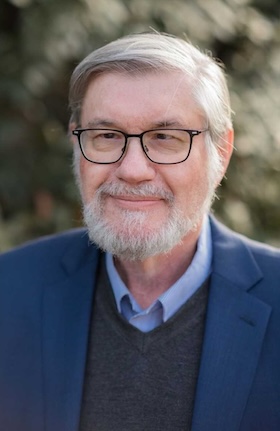
Two decades of Prof. Chris Friedrichs’ Yom Kippur lectures at Temple Sholom have been compiled into a book, Reflections on the Shoah. (photo from Chris Friedrichs)

Friedrichs, now professor emeritus of history at the University of British Columbia, decided to end the tradition after 20 years and his friend and UBC colleague, Prof. Richard Menkis, suggested the idea of compiling the lectures in a book.

The volume, Reflections on the Shoah: Yom Kippur Sermons Given at Temple Sholom 2004-2023 is a small but irreplaceable volume offering deep and original insights on the lessons of history from a leading thinker on these subjects.

In these lectures, Friedrichs does not dwell on the facts of history so much as draw broader insights into their meaning. In 2005, he reflected on the term “martyrs,” which is often used in reference to the victims of the Nazis.

“A martyr is someone who has accepted death rather than renounce his or her Jewish faith,” he said. Yet, he noted, among the six million were many, like the Jewish-born Catholic nun Edith Stein, who were not killed because they refused to renounce their faith. Indeed, he said, renunciation would not bring redemption. It was Jewish “racial” identity, not adherence to Jewish ideas, that drove the Nazis’ murderous objectives.

In an historic sense, though, Friedrichs argues, Jews were murdered in the Holocaust because generations of ancestors had refused, against all pressures, to abandon their identities. “And, therefore, it is in fact right to honour those who died as martyrs,” he said.

In 2007, Friedrichs struggled with theologians’ explorations of the meaning of the Shoah, as though some divine purpose could be discerned from it.

“The Shoah was an entirely human event,” he said. “But that hardly removes the question: where was God while it took place? Why did God allow it to happen?”

God gave humans free will, he concluded, but this does not answer the unknowable question.

“In a world we cannot begin to understand, we can still hope for mercy, and we can pray for strength,” he said.

In a brief postscript to this lecture, Friedrichs writes that the daughter of a friend, having heard the sermon, asked her father “Where was God?” In response, the father said, “Where was man?”

In 2012, Friedrichs spoke of the first Holocaust memorial ever created, in May 1943, in the Majdanek death camp, where a group of prisoners persuaded the SS administrator that the camp could be made more beautiful if they could erect a pillar topped by a statue of three eagles about to take flight. The commandant never knew that under the base of the pillar the inmates had buried a container of ashes of the victims taken from the crematorium.

In 2013, Friedrichs addresses the problem with the very word Holocaust, which means a burnt sacrifice.

“What a meaningless term!” Friedrichs declared. “Six million Jews were sacrificed? Sacrificed to what God? Sacrificed to what end?”

In 2020, when his lecture was recorded and shared virtually because of the pandemic, Friedrichs spoke of the sanctity of life.

The next year, after unmarked graves were discovered adjacent to a former residential school in Kamloops, he spoke of the “humanitarian obligation to go beyond just our circle of Jewish concerns.” He drew parallels between the MS St. Louis, the ship of Jewish refugees turned away from ports of refuge, including Canada’s, and the Afghans clambering through the Kabul airport, struggling to escape the country before the takeover of the Taliban.

In 2022, he invoked a very different piece of history. In high school, his most memorable teacher was Anne Schwerner. When the news came, in the summer of 1964, that three civil rights workers had been murdered by white supremacists in Mississippi, one of them Michael Schwerner, Friedrichs realized this was his favourite teacher’s son. He reflected on the lessons of obligation to universal freedom and rights embodied in Jewish tradition.

image - Reflections on the Shoah book coverIn his last lecture in the series, Friedrichs spoke of how, when he speaks to audiences of high school students, as he frequently does, he makes the lessons relevant to young, multicultural Canadians.

“I tell the students that it is normal to dislike somebody because that person, as an individual, is bad or unkind or unpleasant,” he said. “But to dislike or hate somebody not because of their own characteristics but because they happen to belong to a group, to hate them just because they are Chinese or Filipino or South Asian or Black or members of any other group, is to take the first step on a path that has led and could lead again to things like the Holocaust.”

In most of his lectures, Friedrichs describes predations that are difficult to read and must have been more difficult to hear on a Yom Kippur afternoon, in a room that includes survivors of precisely such atrocities. This, though, is one of the invaluable aspects of Friedrichs’ approach. Whatever reservations might exist in this time of safe spaces and trigger warnings, one can hardly make the case that it is too burdensome to listen to a few examples of the barbarism for the sake of education, memorialization and understanding, when there are people in our community, including in the congregation Friedrichs was addressing, who experienced the cruelties themselves.

Anyone who heard these lectures when they were delivered, or has heard any of Friedrichs’ many presentations elsewhere, can hardly help but hear his deep voice and commanding delivery while reading his words. Those who haven’t had the privilege of hearing him speak are fortunate to have these lectures compiled in this new book.

Reflections on the Shoah is available at templesholombc.shulcloud.com/form/reflections. 

Posted on April 12, 2024April 10, 2024Author Pat JohnsonCategories BooksTags Chris Friedrichs, history, Holocaust, Temple Sholom, Yom Kippur lectures
Many invaluable contributions

Many invaluable contributions

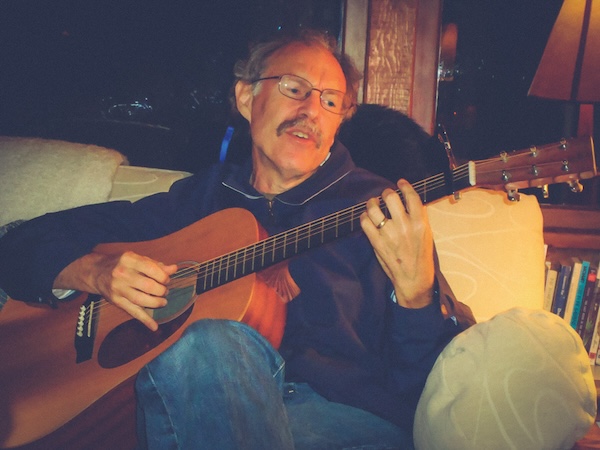
Harley Rothstein has just released a three-CD compilation of Jewish music and secular folk songs. (photo from harleyrothstein.ca)

A little over a year ago, my friend and musical colleague Harley Rothstein – cantor, songwriter, folk singer – shared with me his freshly minted three-CD compilation of both Jewish music and secular folk songs. The recordings, several years in the making, are Modim: Songs of Spirit and Gratitude; Songs of Love and Humanity: Folk Songs of Fifty Years, Volume I; and Songs of Love and Humanity: Folk Songs of Fifty Years, Volume II.

Before getting into more “nuts and bolts,” let me say something well understood by all hardworking creatives: the life of an artist is, in a very real sense, an act of service to the community in which they live. This contribution to the community is what stands the test of time, and Harley Rothstein is undoubtedly one such indefatigable contributor, an artist who has dedicated himself to serving the community in which he lives, and sharing his work unselfishly. The compilation under discussion here is only the most recent of the many invaluable gifts of music Harley has given us over the years.

As many readers may know, Harley is a scion of the philanthropic Rothstein family; indeed, his parents are the benefactors of the Norman and Annette Rothstein Theatre. So, he comes by “service to the community” quite honestly.

Harley Rothstein has been singing since the age of 6, and he learned to play the guitar at age 18. Since then, he has played and performed folk songs in many locales – from Vancouver’s Bunkhouse coffeehouse in 1965 to the Princeton Traditional Music Festival from 2016 to 2019, and numerous other venues and occasions in between. He was inspired by a trip to New York’s Greenwich Village coffeehouses in 1965 and to the Berkeley Folk Festival in 1966. 

Harley also played in rock bands in the late 1960s, taught elementary music and university-level music education from 1975 to the early 1990s, and sang for 10 years in the 150-voice Vancouver Bach Choir. He studied Jewish liturgical music with several cantorial teachers and has led congregations in synagogue services for 40 years. Harley has led many sing-alongs at political and social gatherings.

Harley’s musical contributions to local Jewish life have included years of performing, teaching and mentoring others who wish to lead services. He regularly conducts services at Or Shalom and Beth Israel, and has recorded a seven-CD set of instructional recordings, which are on the Beth Israel website.  

Now to the music at hand. On Modim: Songs of Spirit and Gratitude, Harley’s meticulous work makes accessible a raft of songs for the Jewish community, for prayer and for simple enjoyment. There is a variety of offerings – a klezmer song, two songs in Ladino, and two Israeli folk songs from the 1950s. The majority of the songs are prayers from the siddur, set to music composed by pioneer songwriters such as Shlomo Carlebach and Debbie Friedman, as well as contemporary songwriters including Hanna Tiferet Siegel, Myrna Rabinowitz, David Shneyer, Jeff Klepper and Dan Freedlander, plus five of Harley’s own compositions. Harley notes: “I focus on these because all of these writers have inspired a whole new repertoire of contemporary Jewish spiritual music.”

Indeed, the music of the synagogue has been transformed by contemporary songwriters, like Harley, who, over the past generation or so have introduced the melodic and harmonic sensibilities of North American folk song into congregational song. Harley’s compositions reflect this line of creative work, and are part of a revival, for many, of a Judaism that is closer to the people, enabling all attendees to participate in services in a meaningful way. This folk music thread serves as a common sinew running through the entire three-album project. 

The Songs of Love and Humanity: Folk Songs of Fifty Years recordings are a unique compilation of folk music that, I hope and expect, will help a younger generation become aware of the significant thoughts and hopes of their forebears. This in itself, apart from being an authentic and loving look back upon the artist’s personal musical history, makes the project irreplaceable. I salute Harley for his singular dedication.

The two CDs of folk songs are comprised of numerous pieces, 32 in all, which cover a truly large sweep of folk music history. Being Harley’s contemporary, I recognized many of these songs, but there were some that I was not aware of, or only dimly so, such as those that make up the track “Union Medley,” for example, and the rare gem “Toy Gun,” a 1960s antiwar song. There are classics by Woody Guthrie (“Blowing Down the Road”; “Hard Travelin’”), Bob Dylan (“Don’t Think Twice It’s All Right”; “I Shall Be Released”) and Pete Seeger (“God’s Counting On Me God’s Counting On You”). And other heroes of folk music are well represented – Tom Paxton, Ian Tyson, Gordon Lightfoot and Stan Rogers, among others. It’s a heady mix of work and labour songs, spirituals, political songs from the 1960s and Canadian songs. Harley says, “the unifying theme was that each song has been important to me in my career of over 50 years. This is why I refer to the recordings as a ‘legacy project.’”

Regarding the production elements, I really loved the focus on voice as foreground, unfettered by excessive tech. The songs are thus presented as primary and the accompaniment is just that, in support. It is also evident that these songs have been loved by the artist for many years, and one can hear this in his renditions. On Modim: Songs of Spirit and Gratitude, check out Harley’s own settings of “Yosheiv B’seiter” (“Dwelling in the Shelter of the Most High”), “Luley He’emanti” (“Mine is the Faith”) and the titular piece “Modim” (“We Give Thanks to You”). On Songs of Love and Humanity, I was delighted by his renditions of “Pack Up Your Sorrows,” “Follow the Drinking Gourd” and “Blowing Down the Road,” among many others. Throughout the recordings, Harley’s lyric baritone voice is always a pleasure to listen to.

Included with each CD is an informative booklet, with texts and backgrounders for all the songs. To find out more about the recordings, how to purchase them digitally or in hard copy, visit harleyrothstein.ca. 

Moshe Denburg is a Vancouver-based composer, bandleader of the Jewish music ensemble Tzimmes, and the founder of the Vancouver Inter-Cultural Orchestra (VICO).

Format ImagePosted on April 12, 2024April 10, 2024Author Moshe DenburgCategories MusicTags composers, folk music, Harley Rothstein, history, Judaism, labour songs, liturgical music, prayer
Dance as an act of solidarity

Dance as an act of solidarity

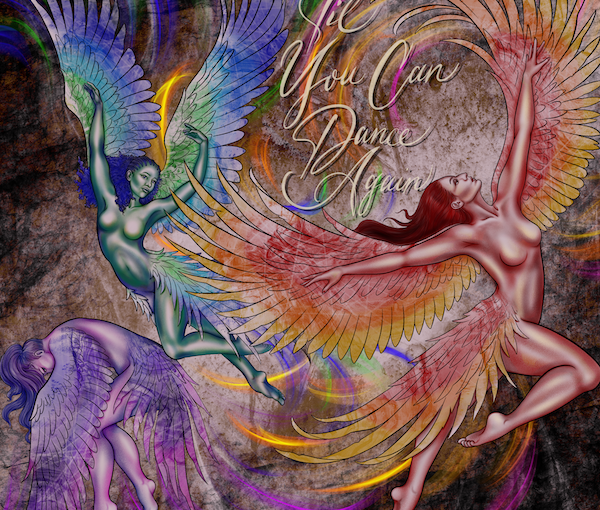
Iraqis in Pajamas’ new album is a tribute to the victims of the Oct. 7 massacre.

In the wake of the Oct. 7 massacre of Israelis…. And the celebrations that followed worldwide – glorifying the raping, burning and decapitating of my people…. 

And the subsequent mass destruction of posters raising awareness of Israeli hostages being tortured in captivity by Hamas…. 

And the simultaneous call for a violent uprising against Jews worldwide…. 

And the astronomical spike in hate crimes against Jews – among other things, leading to incessant harassment, assaults and death threats of students at my alma mater, Columbia University, and additionally leading to the murder of a kind Jewish man I knew in Los Angeles….

And the international mob chants of “From the river to the sea,” harkening back to the harrowing cries my father heard on Arabic radio stations as a child in Iraq, “We will throw the Jews into the sea.”…

And the palpable terror I then felt as a Jew, whose family had seen this before, had fled this before, in a pro-Nazi uprising in Baghdad, where a similar massacre had taken place during my father’s childhood….

And the deafening silence in the wake of all this – not even one word of care or kindness from the vast majority of non-Jewish people I had loved, had lived with, had broken bread with….

And I felt as if I had died.

I stopped journaling, stopped writing poetry, stopped writing music, stopped singing, stopped playing bass, stopped dancing. I got sick repeatedly and continuously over the course of two months, even ended up in the emergency room with symptoms of a possible stroke at 2 a.m. one night – this, after years and years of never getting sick, not once, not even when my ex got COVID and I nursed him back to health. 

I couldn’t sleep, had nightmares, woke up in the middle of the night, lying awake for hours, my mind circling around and around, imagining the horror and terror the hostages must be suffering through. I was haunted by the video image I accidentally had seen of a young Jewish woman who was naked and chained, publicly being dragged around by Hamas, as they filmed her – one of the many Jewish women they gang raped and mutilated that day, often next to the dead bodies of these women’s friends – filming that violence, too, in something akin to snuff porn. 

I could feel it in my body.

I couldn’t breathe.

I couldn’t move.

Despite the impact on me, I felt that, somehow, by energetically experiencing and, by extension, by physically experiencing the pain that my people were enduring, I was communicating a telepathic message to them: I will not forsake you, I will not forget you. 

No, I will not frolic on the beach beneath the misty grey soothing skies. No, I will not enjoy the quiet, peace and comfort of the vast rainforest just outside my door. No, I will not detach myself from something “happening on the other side of the world,” as a non-

Jewish acquaintance kindly advised, because there is no “other side of the world” when it comes to Jews. You are me, and I am you, and we are connected. I cannot control the world’s response, but I can control mine. I will face, see, hear and feel your pain, until it is gone.

But wait…. That’s exactly what Hamas wants, isn’t it? To demoralize and destroy Jews. To suffocate us, hijack our imagination. To strip us of our dignity, safety, peace and, perhaps most of all, joy.

So, to reclaim my joy is, in fact, a radical act of Jewish power and solidarity. To flip imagination on its head – instead of visualizing all the horrors and shrinking in my body, to instead expand in my body and visualize all the hostages, injured people and 

grieving families as resilient, grounded, surrounded by love, and the dead as soaring freely and peacefully, wrapping their loved ones in comfort.

Nothing is black and white, but this is an article, not a book, so I’m trying to keep it short and sweet. Suffice it to say, I actively and repeatedly attempted to turn the images around over the course of two months – to send white light, to bless the hostages, to emit some kind of protective energetic shield, but it kept seeming silly, foolish, without actual impact, perhaps just making myself feel better, like a hollow New Ager. My prayers would not stop a psychopathic Hamas gunman with absolute control over a hostage, I reasoned, because G-d gave humans both the gift and curse of free will. 

But then….

But then I went to a concert of Yemen Blues, which was more of a primal howl of freedom than a “performance,” and which featured an Israeli woman dancing with a defiant, raw ferocity that brought back to life the sanctity, dignity and power of the Jewish female body – and, with that, permission to dance.

And, after that, I started dancing again. And, after that, I started singing again. And, after that, I started frolicking with my beautiful dog beneath the misty grey, soothing skies on the beach, and through the vast rainforest just outside my door.

And I came back to life.

In this very difficult but transformative journey, I learned that life begets life begets life, and artistic self-expression is not an indulgence, but rather, a superpower. 

As I danced on the beach with my dog over a couple of days, a vision emerged – a global movement of Jews and our allies taking videos of ourselves dancing joyfully, and sending those videos to the people wounded in the Oct. 7 massacre, the families of those who died, the families of those taken hostage, and the young women and men on the frontlines defending Israel from further attack – turning “we will dance again” into “we will dance for you until you can dance again” – sharing whatever strength, freedom and joy we have to uplift those who are in the thick of it, struggling and suffering.

Having snapped out of an emotional coma of sorts, I then picked up my bass, and out poured both the melody and lyrics of a new song, “’Til You Can Dance Again.” That same day, I finally finished the song I had started a few weeks after Oct. 7, “Dear Hostages.” Not having touched my bass for the better part of three months, I played until my fingers were blistered and almost bleeding. Over the next 24 hours, I wrote two additional songs, and then worked with my band on developing a full album, ’Til You Can Dance Again, offering both my journey and my joy as a catalyst for healing and transformation.

It is through song, dance, story, prayer and food that Jews historically have not only overcome tragedy, but have taken that very experience and transmuted it into an vehicle for joy – the ultimate “f*** you” to those who have tried to destroy us. For this reason, my band released our new album on March 23, at the start of Purim, a holiday marking one of many historical traumas that the Jewish people have turned on its head and morphed into a cause for celebration. My heartfelt prayer for this album is that, as broken as we may feel right now, we shall once again rise up, sing and dance ourselves back to wholeness, and honour the victims of Oct. 7 not only through our grief and pain, but also through our fierce and irrepressible Jewish joy – emerging, once again, like that unstoppable phoenix, soaring up and out from the ashes. 

Loolwa Khazzoom (khazzoom.com) is the frontwoman for the band Iraqis in Pajamas and editor of The Flying Camel: Essays on Identity by Women of North African and Middle Eastern Jewish Heritage (theflyingcamelbook.com). She has been a pioneering Jewish multicultural educator since 1990, and her writing has been featured in the Washington Post, Marie Claire, Rolling Stone and other top media worldwide. This article was originally published in the Times of Israel.

More about the album

On March 23, Iraqis in Pajamas released the album ‘Til You Can Dance Again, as a tribute to the victims of the Oct. 7 massacre.

Its creation served as a vehicle for Khazzoom’s processing and healing, and the tone of the songs evolved as Khazzoom herself evolved from feeling despair to outrage to core power.

“Dear Hostages” is a love song to those held in captivity, in which Khazzoom pledges, I will not forsake you, I will not forget you, as she explores what it means to act in solidarity from afar. 

“’Til You Can Dance Again” is a spin on the Israeli promise, “We will dance again” – vowing to spread the life energy of dance, to help uplift the spirits of those who were shattered by the massacre. 

“Bataween” draws from a conversation with an Iraqi Muslim friend, exemplifying the healing imperative of Arab Muslims recognizing and caring about the history of indigenous Middle Eastern Jews, including the experience of Arab Muslim oppression. 

“Kids from the Sandbox” builds on that imperative, holding out a vision for Arabs and Jews to embrace the complexity of shared history, using art to express love and hate in healthy ways, effectively co-creating a new reality. 

“I’m a F***-You Jew” fuses ancient and contemporary stories of Jewish defiance and soul power in an unabashed expression of Jewish pride and strength amid an onslaught of global accusation and condemnation. 

“These Boots” is a campy spin on “never again,” calling out the left’s hypocrisy and betrayal in the wake of Oct. 7, and refusing to contribute Jewish energy and resources to those who do not offer the same in turn. 

“Bloody Cross” is a scathing critique of the Red Cross’s racism and hypocrisy in its failure and refusal to properly care for the Israeli hostages in Gaza.

For the full press release, and to listen to the recordings, visit khazzoom.com/blog and click on ’Til You Can Dance Again – New Album Release.

– Courtesy Iraqis in Pajamas

Format ImagePosted on April 12, 2024April 10, 2024Author Loolwa KhazzoomCategories MusicTags creativity, Iraqis in Pajamas, Israel, mourning, Oct. 7, terror attacks

The story of my mother’s narrow escape

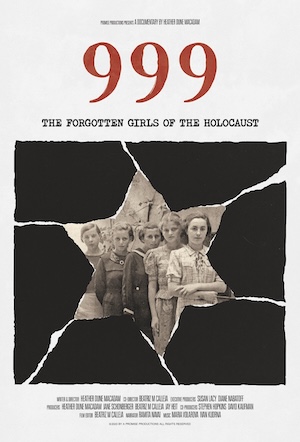
In February, I attended the Canadian première of the movie 999: The Forgotten Girls, directed by Heather Dune Macadam, who also wrote the book on which it is based, 999: The Extraordinary Young Women of the First Official Transport to Auschwitz. Screened at the Rothstein Theatre, the documentary was presented by the Vancouver Jewish Film Centre.

image - poster for the film 999: The Forgotten Girls
Watching the film 999: The Forgotten Girls prompted Dr. Helen Karsai to write about her mother’s last-minute escape from the “work assignment” that had some of her friends taken to Auschwitz, where most were killed.

This is a brilliantly made movie, which combined clips from home movies, historic film footage and photos, interviews with survivors and others, Slovak folk songs, and more. The movie explained how the Hlinka Guards (Slovak militia) rounded up young, unmarried Jewish girls from small towns in eastern Slovakia. The Jewish girls from the city of Humenné were put on buses and transported to the city of Poprad, where they were put into military barracks. On March 25, 1942, when the number of girls reached 999, they were put into a cattle-car train and left Poprad and their native Slovakia for an “unknown destination.” The train went into the Third Reich for “volunteer work.” This was the first transport to Auschwitz. Most of these girls died there.

I heard a similar story from my mother, Klara (Tamara) Kulkova, who was born in northern Slovakia, in the town of Zilina. She remembered that, in the summer of 1940, she attended a Jewish camp of the Maccabi movement, and that she enjoyed that summer very much with her classmates and some older girls. She fondly remembered these days as being full of fun and laughter.

Then came the years of repression for Jews. They were not allowed to go to school or summer camp. In March 1942, my mother heard from her friends that they had received a letter, which summoned them to volunteer for a work assignment. She asked her parents for permission to volunteer, too.

At the time, nobody had any idea where these Jewish girls were going. For some reason, my mom’s father was not suspicious, despite that he had, by this time, given away his Ripper liquor-producing business to a Slovak employee for the company to continue functioning and given up the family’s spacious middle-class apartment, as Jews were forced to live in smaller accommodations. He gave my mom permission to go with her friends. So, my mom and her parents went to the gathering place in Zilina. The Hlinka Guards read the names of the invited girls and my mom’s name was not on the list. At this point, my mom asked a guard if she could join. He said, “Well, you are already here, I will add your name and you can come with your friends.”

The boys who had also been in the Maccabi summer camp decided to come help the girls with their luggage. My mom mentioned Duri Singer and I met Martin Schpitzer, who told me that the boys felt fear for the fate of these girls. They asked the guards in charge of these Jewish girls, where is this transport going? They got no answer. They also asked how long the working assignment would be, and again they did not get any answer, only smiles from the guards.

The train arrived in Poprad and the girls went into a military barrack. My mom remembers that her cousin, Erika Tellemanova, was with her, as well as some friends: Dita Linksova, Rosa Scheinbergerova, Iluska Weilova, Zuzka Policerova and Anika Grossmanova. She recalled that the military barrack did not have toilets. There was a hole in the ground, called a Turkish toilet, which they had to use. They slept on hay, on one side was Erika Tellemanova and on her other side was Rita Brownova. They stayed there for a few days, waiting for more girls to arrive from other towns, as the train out of Slovakia was, in my mom’s memory, to have around 1,000 unmarried Jewish girls on it.

In the meantime, after the boys returned, Duri Singer went straight to my grandparents and insisted that my grandfather try to get my mother out of the transport. My grandfather, Leon Kulka, listened. He then went to his lawyer and they traveled to the capital city of Bratislava, to the department of the Hlinka Guards. They met the head of the transport department and explained that they had not received a response about their application for “economically needed Jews” to be exempted from the deportations. They asked for my mom to be released and their request was granted. A telegram was sent from Bratislava to Poprad to release my mom.

My grandfather went back to Zilina and filled up his car with liquor, then traveled to Poprad to get my mother. The head of the camp said this was the first request he had received to release somebody and suggested that my grandfather take my mom and leave quickly. There was the possibility that some other Hlinka Guard would object to the release. Of course, all the liquor was left for the guards in the camp. Much later, my mom understood that the day after she left was the third transport of Jewish girls from Poprad to Auschwitz concentration camp.

After all this happened, my grandparents decided to send my mom away from Zilina, and she became a babysitter to her niece, Maya Berger, in the town of Sučany.

It took many years for my mom to be able to tell me about March 1942. It was only after the Second World War that the fate of the women transported became known. My mom lost her good friends, so she was only able to add very slowly some details about this tragic time in her life. 

Helen Karsai is a retired medical doctor, who used to work at BC Cancer Agency. In the 1980s, she was a co-chair of the Western Association of Holocaust Survivors, Families and Friends. Her previous printed article was “Secrets of My Native Town,” published in the Spring 2022 Zachor, the magazine of the Vancouver Holocaust Education Centre.

Posted on April 12, 2024April 10, 2024Author Helen KarsaiCategories Op-EdTags film, history, Holocaust, Slovakia, Vancouver Jewish Film Centre, VJFF

Mitzvah to return lost items

During the winter and spring in Winnipeg, sometimes one sees a child’s toy or a colourful mitten attached to a tree or hedge along a sidewalk. These are lost items. The neighbourly thing to do when you see something in a snowbank or on the packed snowy sidewalk is to pick it up and prop it up at adult eye level. It helps others. Maybe it will stop toddlers’ tears. 

Our household found somebody’s bike lock key last fall. This was harder to post. We took a piece of paper and wrote “Is this your key?” on it in large capital letters. Using clear tape, we attached the key and the sign to a powerline pole. A long time passed. One day, someone finally found their key. Relieved, we took down the sign.

I’ve been studying the Babylonian talmudic tractate of Baba Metzia, which covers civil law, including the rules around how to deal with lost items. It examines details that I often ponder. For instance, if a person finds an inanimate object, it has different obligations attached than if one finds an animal. We must return lost animals. If we don’t know how to return them, the finder must care for the animal, including feeding and watering the animal. If the animal’s upkeep is a burden, provisions exist for selling the animal and keeping the money to compensate the person who lost their animal. The particulars can be complex.

I became interested in a category that isn’t easy to describe – an object that isn’t alive or animate but still needs care. Things like books, which, in the days of the Talmud, were scrolls made of parchment made from animals. The finder had to rotate the scrolls occasionally to maintain them until they could return them. The finder couldn’t use the scrolls for study in a way that might cause undue wear on these hand-scribed texts. 

Another thing in this category, in Bava Metzia 29b, says: “If one found a garment, he shakes it once in thirty days and he spreads it out for its sake, to ventilate it, but he may not use it as a decoration for his own prestige.” As someone who makes and cares for natural fibre textiles (handspun and knit sweaters, for instance), I understood this immediately. Clothing wasn’t mass produced then. There were no factories. Everyone used spindles and spun and wove clothing. It wasn’t fast fashion. Clothes took skill and a lot of time to make. So, if someone found a garment, he knew its value. It wasn’t disposable. He must keep it well-aired, to be sure it was clean and cared for, and not attracting destructive pests like moths. Since he didn’t own or make it, he also couldn’t use the garment himself. 

Bava Metzia also explores when someone loses a garment and “despairs” of its return. That is, when one gives up entirely on getting it back.

For anyone who has seen images of the destroyed cars, homes and belongings left after Oct. 7 on the kibbutzim in southern Israel or from the Nova festival, these details hit hard. Some Israelis from these areas escaped with their lives but have “despaired” of ever getting back what they lost, they don’t want to return and try to reclaim things. Others asked for help or sifted through the remains of their homes to find precious items. Still others have managed to return home to their belongings and restart their lives.

This despair and reclamation reminded me of my in-laws and their stories of displacement after the Second World War. Their possessions, buried or left behind years earlier in Poland, were impossible to claim. Non-Jews had moved into their homes and taken their things. After four years in five different displaced persons’ camps, my father-in-law, his sisters and parents moved to the United States. Decades later, my husband’s grandmother would describe her family’s bakery in Mezritch and what they lost. Even in her despair, there was an acknowledgement that she worked daily to let go of that loss, and be grateful for a new, rich life for her family. 

This family refugee story, of loss and rebuilding, contrasts sharply with the UNRWA concept of intergenerational Palestinian refugee status. As Jewish communities have been forced to move over thousands of years, we have, perhaps, been lucky to have these talmudic guidelines, now 1,500 to 2,000 years old, on how we can claim lost items and how we can accept loss and move on. As we tell the Passover story, we remind ourselves of the many times our people have had to leave everything behind and start again. 

Teaching how to navigate lost items starts young. A PJ Library book sent to our children, called Sara Finds a Mitzva, helped us with this. Sara, the protagonist, follows through with the mitzvah (commandment) to return lost items when she finds a toy duck. She tours her Orthodox New York City neighbourhood to find the duck’s owner. My kids loved this book and its beautiful illustrations, which offered glimpses of my mother’s childhood, as well as taught a valuable lesson.

We also work with our children to help them understand that sometimes things go missing, and how to move on. After all, we say, it’s just a thing. People matter more than things. With war on our minds, we must focus on what counts most. I am praying for the safe return of the Israeli hostages. We cannot fall prey to despair – our tradition teaches that, when we despair, we have given up hope of an eventual return. Further, we must make sense of a situation where thousands of Israelis have lost their physical belongings but must now make a new life for themselves. Across the border, there are civilians in Gaza who must also rebuild their homes and lives after the war.

It’s one thing to study the rabbis’ ancient debates as an intellectual exercise. It’s another thing altogether to return pets and livestock, find belongings, and make new households amid this destruction. We have a history of past loss that offers guidance, as those affected by war are physically finding their way through this difficult experience. 

We must work together to find new paths after loss. Even if it’s familiar territory, as Jews, it doesn’t mean it’s easy. Perhaps each of us, like Sara in the children’s book, can be lucky and find something – whether it’s physical or intangible. Then we, too, can do the mitzvah of returning lost things, and observe Passover, too. Creating a joyful holiday after trauma also offers a third mitzvah, that of tikkun olam, or “repairing the world” – bringing a bit of joy back to someone who needs it. 

Joanne Seiff has written regularly for the Winnipeg Free Press and various Jewish publications. She is the author of three books, including From the Outside In: Jewish Post Columns 2015-2016, a collection of essays available for digital download or as a paperback from Amazon. Check her out on Instagram @yrnspinner or at joanneseiff.blogspot.com.

Posted on April 12, 2024April 10, 2024Author Joanne SeiffCategories Op-EdTags Bava Metzia, education, Hamas terror attacks, Israel, loss, mourning, Oct. 7, Talmud
Many make gala successful

Many make gala successful

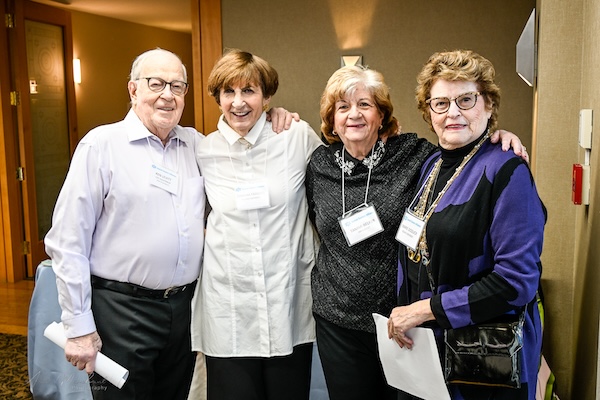
Left to right: Ken Levitt, Tamara Frankel, Tammi Belfer and Marie Doduck. (photo by Marchant Photograophy)

photo - A Night at the Catskills emcee Michael Geller
A Night at the Catskills emcee Michael Geller. (photo by Marchant Photograophy)

The Jewish Seniors Alliance commemorated their 20th anniversary with a gala titled A Night in the Catskills, which showcased Jewish humour from past to present.

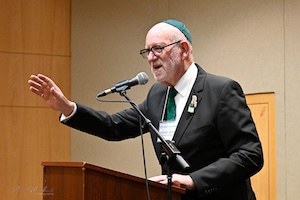
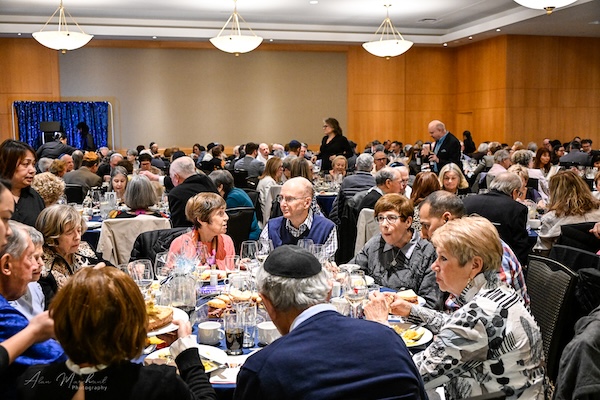
On March 17, Schara Tzedek Synagogue was filled with more than 230 supporters and guests who reveled in an evening of good food and timeless humour. I was co-chair of the event with Michael Geller, who masterfully emceed the proceedings.

photo - More than 230 people attended the Jewish Seniors Alliance gala, which took place at Schara Tzedek Synagogue on March 17
More than 230 people attended the Jewish Seniors Alliance gala, which took place at Schara Tzedek Synagogue on March 17. (photo by Marchant Photograophy)

The night commenced with a warm welcome from JSA president Tammi Belfer and a tribute to the late Serge Haber, whose foresight laid the foundation for the seniors alliance two decades ago. The JSA is dedicated to supporting the welfare of all seniors, irrespective of race, religion or sexual orientation, through advocacy, peer support, education and outreach.

photo - MLA Michael Lee makes one of the night’s 50-50 draws, as Tim Bissett and Marilyn Berger await the result
MLA Michael Lee makes one of the night’s 50-50 draws, as Tim Bissett and Marilyn Berger await the result. (photo by Marchant Photograophy)

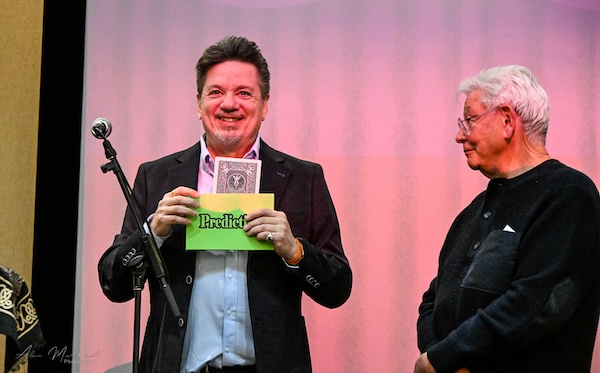
The entertainment lineup featured archival footage of renowned Jewish comedians, whose jokes still elicit laughter, alongside contemporary comedians like Kyle Berger and David Granirer, founder of Stand Up for Mental Health, and magician Stephen R. Kaplan, also known as “The Maestro,” all of whom enchanted the audience with their humour. I capped off the night with my “bucket list” stand-up sit-down comedy act, leaving the crowd in high spirits. (I delivered my routine from my wheelchair, if you’re wondering about the sit-down part of my stand-up.)

photo - Gala attendee Gary Averbach waits as magician Stephen R. Kaplan forms his prediction
Gala attendee Gary Averbach waits as magician Stephen R. Kaplan forms his prediction. (photo by Marchant Photograophy)

Guests enjoyed deli offerings from Omnitsky Kosher and desserts and service by Nava Creative Kosher Cuisine. Tim Bissett provided concierge service, working in tandem with JSA volunteers, who merit special recognition for their efforts in facilitating every aspect of the event, from its inception to festive conclusion. A special acknowledgment is also due to JSA staff members Miguel Méndez, Rita Propp and Jenn Propp for their dedication and extra hours spent supporting the volunteers.

Heartfelt gratitude is extended to all who generously contributed to the success of JSA’s 20th-anniversary celebration. 

Marilyn Berger is a past president and a life governor of Jewish Seniors Alliance. She was a co-host of and performer in JSA’s gala, A Night in the Catskills.

Format ImagePosted on April 12, 2024April 10, 2024Author Marilyn BergerCategories LocalTags comedy, Jewish Seniors Alliance, JSA, seniors

Posts pagination

Previous page Page 1 … Page 91 Page 92 Page 93 … Page 667 Next page
Proudly powered by WordPress