Skip to content
  • Home
  • Subscribe / donate
  • Events calendar
  • News
    • Local
    • National
    • Israel
    • World
    • עניין בחדשות
      A roundup of news in Canada and further afield, in Hebrew.
  • Opinion
    • From the JI
    • Op-Ed
  • Arts & Culture
    • Performing Arts
    • Music
    • Books
    • Visual Arts
    • TV & Film
  • Life
    • Celebrating the Holidays
    • Travel
    • The Daily Snooze
      Cartoons by Jacob Samuel
    • Mystery Photo
      Help the JI and JMABC fill in the gaps in our archives.
  • Community Links
    • Organizations, Etc.
    • Other News Sources & Blogs
    • Business Directory
  • FAQ
  • JI Chai Celebration
  • JI@88! video

Recent Posts

  • האלימות בישראל מורגשת בהרבה מגזרים
  • טראמפ עוזר דווקא לנושא הפלסטיני
  • New rabbi settles into post
  • A light for the nations
  • Killed for being Jewish 
  • The complexities of identity
  • Jews in time of trauma
  • What should governments do?
  • Annie will warm your heart
  • Best of the film fest online
  • Guitar Night at Massey
  • Partners in the telling of stories
  • Four Peretz pillars honoured
  • History as a foundation
  • Music can comfort us
  • New chapter for JFS
  • The value(s) of Jewish camp
  • Chance led to great decision
  • From the JI archives … camp
  • עשרים ואחת שנים להגעתי לונקובר
  • Eby touts government record
  • Keep lighting candles
  • Facing a complex situation
  • Unique interview show a hit
  • See Annie at Gateway
  • Explorations of light
  • Help with the legal aspects
  • Stories create impact
  • Different faiths gather
  • Advocating for girls’ rights
  • An oral song tradition
  • Genealogy tools and tips
  • Jew-hatred is centuries old
  • Aiding medical research
  • Connecting Jews to Judaism
  • Beacon of light in heart of city

Archives

Follow @JewishIndie
image - The CJN - Visit Us Banner - 300x600 - 101625

Tag: Ed Asner

Ed Asner shines in final role

Ed Asner shines in final role

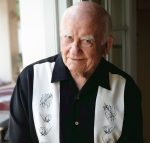
Ed Asner gives a remarkable performance in Tiger Within, which is part of the online Vancouver Jewish Film Festival, April 15-19. (tigerwithin.info/press-photos)

I had the privilege of interviewing Ed Asner several years ago. It was an experience I (and my mother, who also got to speak with him) won’t forget. So, it was with some sentimentality that I watched his last film, Tiger Within, which can be screened online April 15-19, as part of the Vancouver Jewish Film Festival, which has other movies being presented at the Rothstein Theatre April 12-14.

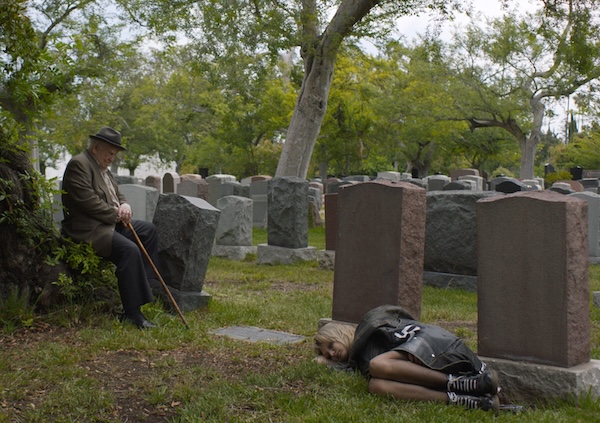
Asner, who died in 2021, gives a wonderful, understated performance in Tiger Within, as widower and Holocaust survivor Samuel, who takes a troubled young woman under his wing, and changes her life for the better. His performance is the main reason to watch this film. People old enough to know Asner will understand when I say Tiger Within would have fit perfectly into the ABC Afterschool Special lineup. Well-intentioned, it is not well written and, with the exception of Asner, the acting is middling.

Casey, played by Margot Josefsohn, is a rebellious teenager with a struggling mother who prefers to keep her nasty boyfriend happy than care for her daughter. Casey’s father has started a new family and their suburban life isn’t a place for the mouthy, punk-loving, artistic teen. Another highlight of Tiger Within is Casey’s art, which makes appearances throughout, further communicating her frustrations and other feelings.

Out on her own, Casey is lucky to meet Samuel, who sees her inner light and inherent worth, even if she doesn’t. He manages to see beyond the swastika someone spray-painted on her jacket, which she didn’t bother to wash off, and her antisemitic opinions, including that Jews made up the Holocaust, which were taught to her by her mom and others. He gives her the unconditional love, snippets of wisdom and space to “tame the tiger within” and make her place in the world.

The movie has a timely and important message. And a younger audience might be just the one to receive it in the manner it was intended. 

“One of the biggest tragedies is the misuse of love, the most powerful force there is,” writes director Rafal Zielinski on the movie’s website (tigerwithin.info). “Loving oneself, family, group, race, country (narcissism) and being incapable of loving the other equally, as oneself, is the misuse of love, it breeds hate.

“That is the message, I feel, in this film – Samuel overcomes hate for this girl and shows her unconditional love. 

“It’s the greatest gift anyone can receive on this earth, and he keeps his promise, he once made to his wife – ‘to forgive all before he dies.’”

For tickets to Tiger Within and other festival films, visit vjff.org. 

Format ImagePosted on April 12, 2024April 10, 2024Author Cynthia RamsayCategories TV & FilmTags Ed Asner, Tiger Within, Vancouver Jewish Film Festival, VJFF
Grouchy Historian’s lessons

Grouchy Historian’s lessons

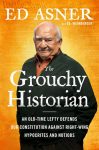
The gruff yet endearing Jewish character actor Ed Asner is instantly recognizable to many people for his portrayal of the equally gruff yet amiable Lou Grant in the classic 1970s television sitcom The Mary Tyler Moore Show and its spinoff drama Lou Grant. Fewer people realize that the Emmy Award-winning actor is also a well-known political activist, whose views became more prominent in the 1980s during his two terms as president of the Screen Actors Guild. Asner, now 88 and far from retirement – he just performed here in April in a one-man stage play – has written The Grouchy Historian: An Old-Time Lefty Defends Our Constitution Against Right-Wing Hypocrites and Nutjobs (Simon & Schuster, 2017) with Ed Weinberger, longtime screenwriter for The Mary Tyler Moore Show.

In this compelling read, Asner attempts – in his own words – to “reclaim the [U.S.] Constitution” from far-right conservative pundits. Making no secret of his ideological perspective, Asner argues, “The constitution is the cornerstone of the Republican party’s agenda, along with small government, less regulation and making sure the rich pay less taxes than the rest of us.” Yet, he maintains, the constitution was written to form a robust central government – giving sweeping powers to Congress (not the states) – secured by an equally strong executive branch. He further asserts, “Nothing in the constitution suggests, let alone enforces, the concepts of limited government, limited taxes and limited regulations.” Far from hating taxation, the framers of the constitution, writes Asner, desperately needed taxes because “[t]hey had a war to pay off.”

Asner notes that John Adams had wanted the presidential role to have even more powers by not requiring the “advice and consent” of the Senate to make federal and cabinet appointments, “a clear signal that Adams, like [Alexander] Hamilton, believed in a strong central government headed by an executive with vigorous powers.”

About the constitution’s founders and framers, Asner says they were “petty, flawed, inconsistent and all too human,” but, he concedes, they were highly educated “eloquent orators and brilliant writers,” who, “[u]nlike the current right-wing doomsayers and fearmongers, they were all, truly, apostles of optimism.”

Asner spends several chapters discussing God and the constitution – notably God’s absence from the preamble, as well as the Presidential Oath of Office – and speculates why the framers took their approach. He points out George Washington was a Grand Master Mason on whose Bible he took his oath of office, noting, “Masonic Bibles do not acknowledge the divinity of Jesus Christ.” As for Benjamin Franklin, Asner says, “you can quote endlessly about Franklin’s faith in Christian ethics, but none about his faith in Jesus the Christ.” Regarding Adams, Asner mentions that, as a member of the New England branch of the Unitarian Church, Adams and fellow “Unitarians did not believe in the divinity of Jesus Christ, the infallibility of the Bible, the Holy Trinity or Original Sin.” In other words, Asner takes a swipe at the Christian right who claim Christian origins for the American constitution. Asner points out that the entire career of James Madison Jr., as “a politician, lawmaker, intellectual – was devoted to the separation of church and state.” Yet Asner defends First Amendment rights for freedom of religion.

Not only does Asner explore in great detail the actual writing of the constitution and the financial backgrounds of all 55 delegates to the Constitutional Convention, but he does so in the gruff and thorough style of newsman Lou Grant. About these delegates – whom he claims conservative legal theory holds were “infallible patriots” who behaved “solely to establish national unity, economic development and the civil liberties of all citizens” – Asner concludes, “One thing is for certain: they are not the saints living in the imagination of the right wing, acting out God’s will.”

Asner notes that more than 40 delegates held government bonds, more than 15 were slave owners, and several were land and debt speculators. Most participated in more than one category, like Washington, who was not only “a slave owner [but] a money lender, a land speculator and the largest holder of government IOUs in the country.” Asner points out that small farmers, shopkeepers, labourers, Revolutionary War veterans and slaves, among others, were not at the convention. Hence, he paints a picture of a small group of “capitalist elites” with personal interests – two notable exceptions being Madison and Hamilton – who framed the constitution. In reaching his conclusions, Asner draws on the ideas of American historian Charles A. Beard’s admittedly controversial early 20th-century economic views of the document.

Asner shows his creativity in a humorous way, like in his “Open Letter to Senator Ted Cruz, Written in the Style of 1787,” where he states, “I am prompted to write this upon discovery of a foreword you penned to The U.S. Constitution for Dummies.” He proceeds to carefully address, in language of the day, five of Cruz’s assertions, after which he closes with “Whilst This Flame Exists Within Me, I Remain Your Most Staunch Adversary.”

Not many could pull this off as well as Asner. Same goes for his scathing review of the controversial personal and constitutional views of Dr. Ben Carson, neurosurgeon and secretary of housing and urban development. And Asner goes further in his criticism of such contemporary conservative social critics as Ann Coulter.

Asner critiques the origins of the Bill of Rights using language of the era in the inventive form of a series of letters from Madison to heighten the drama of the time. After all, as Asner correctly notes, “It is the Bill of Rights – guaranteeing our freedoms of speech, conscience, religion, and the press – that is the centrepiece of America’s exceptionalism.” However, he also argues its practical limitations over the centuries through a careful description of a series of legal cases.

Asner even shares his own set of constitutional amendments, both humorous and real, including his desire for a guaranteed minimum income, which he is careful to note was not just a liberal idea but was also advocated by conservative economist Milton Friedman and nearly implemented by Richard Nixon in the 1960s. Yet, for a self-declared “old-time lefty,” Asner surprises the reader with his qualified defence of the Second Amendment. He devotes an entire chapter to it.

Asner says he is “not against guns and the good people who own them.” He even admits to owning a Glock 15 – obtained for reasons of self-defence after receiving a death threat in 1979 – and a Beretta Px4, because he “liked its look and the heft of it” in his hand. However, he convincingly argues that American “gun culture” has led to too many deaths. He concedes, “It’s a bloody trail that leads right back to the Second Amendment,” specifically, “the right wing’s interpretation of it: an unfettered licence for every American to own, carry, collect, trade and eventually shoot a gun.” He maintains that this item in the Bill of Rights was not the clearest constitutional amendment ever written because, when it states the need for “a well-regulated militia,” that does not automatically imply a concurrent “personal right” for the individual citizen “to keep and bear arms.”

Asner takes this view from a close examination of the wording used by the framers of the constitution. “The only two subjects in the Second Amendment,” notes Asner, “are collective nouns: ‘state militia’ and ‘people.’” Asner asks, “where, then, can anyone find an individual right to own a weapon except as part of a ‘well-regulated militia’”? He maintains that, historically, Madison’s intent was to limit the Second Amendment “only to state militias” and that the United States was, in fact, “founded on gun control,” with a balance between gun ownership and the desire for public safety. He goes on to outline a very persuasive argument to support his case while emphasizing that “today, despite the evidence, the gun lobby has the chutzpah to claim that the Second Amendment belongs to them and them alone.” According to Asner, the issue boils down to whether the Second Amendment represents a fundamental or absolute right that cannot be limited nor regulated – Asner maintains the former view.

Ultimately, Asner feels it’s time to return to the kind of America its founders envisioned, including a “government that rules by reason, tempered with compassion and advanced by science,” that guarantees free speech and respects liberties for all while protecting its most vulnerable citizens.

Whether left, right or centrist, readers will learn much from Asner, who comprehensively studied the topic and arrived at a serious analysis along with amusing takes. Since his voice is heard throughout the book, it’s easy to imagine this tome being transformed into a one-man stage play some day. But no one could do it as well as Asner. As for why an award-winning actor like him would write about the U.S. Constitution, Asner states without equivocation, “Well, why not me? After all, I have played some of the smartest people ever seen on television.” Newsman Lou Grant would be the first to agree.

Arthur Wolak, PhD, is a freelance writer based in Vancouver and a member of the board of governors of Gratz College. He is author of The Development of Managerial Culture and Religion and Contemporary Management, available in hardcover and ebook formats from all online retailers.

Format ImagePosted on July 20, 2018July 18, 2018Author Arthur WolakCategories BooksTags Ed Asner, politics, United States
My chat with Ed Asner

My chat with Ed Asner

Ed Asner stars in A Man and His Prostate, which is at the Anvil Centre Theatre for two nights only: April 27-28. (photo from ACT)

I did my homework. I had read and watched interviews. I had my questions ready. I was prepared. But Ed Asner is a force of nature – a funny, caring and curious one, but a force of nature nonetheless. And nature is more powerful than the proverbial man. I learned that in high school English class – man has a chance against another man or his own internal demons, but not so much against nature.

I was calling Asner about his upcoming performances in New Westminster at the Anvil Centre Theatre April 27-28. He stars in A Man and His Prostate, written by his longtime friend Ed Weinberger, a multiple-award-winning scribe (including a Writers Guild of America Lifetime Achievement Award), who has written for countless TV series – for soooo many comedies. Both Weinberger and Asner know funny, so this show promises to be hilarious. But its purpose is also to make a point: “that point being,” Asner told me succinctly, “get examined.” Hear that, guys?

I’ve interviewed famous people before so that wasn’t the reason I got somewhat flustered in speaking with Asner. Admittedly, I loved and watched every episode of The Mary Tyler Moore Show and its spinoff drama Lou Grant. I have enjoyed Asner in various other roles over the years, including on Murdoch Mysteries (as Santa Claus, of all things) and, of course, as the voice of Carl Fredricksen, the grumpy protagonist in Up, who made me cry. Hearing such a well-known voice respond to your questions is very cool, and a little unnerving, but there was more to it.

I called Asner at the number I was given by the publicist for the local show. The woman who answered the phone simply said he’d had to leave and that I should try his cell, so I did, thinking nothing of it. The connection wasn’t great, but I reached Asner – he was in an L.A. hospital waiting to get a CT scan. When I wished him well and said we could reschedule the interview, he said, “Let’s try to talk now. It’ll help me pass the time.”

As I started asking him questions, he stopped me: “Are you uncomfortable doing this?”

“No,” I said, “I’m happy to keep your mind off things if that’s going to help.” I got as far as finding out that Weinberger had approached Asner about a year and a half ago to take on this role, but the line really was bad and we weren’t hearing each other – he said he’d call me back. But it was Asner’s righthand man (Nick, I think) who phoned, telling me that Asner had gone in for his CT, and they would call again once it was complete.

Next call: “Are you OK?” I asked.

“I’m fine. Well, maybe a little dizzy,” said Asner. Or, at least that’s what I think he said. After a spike of feedback came through the phone, I admitted, “I can barely hear you.”

In a louder voice, enunciating carefully and speaking slowly, he responded, “I said, maybe a little bit of syphilis.”

I might have taken a beat before saying, “Oh my. Really?! Is that the headline I can put?”

While it may not be apparent on first meeting, I can be bawdy with the best of them, and I enjoy such banter when all involved are of age and it’s in good fun. And this would turn out to be one of the most fun interviews I’ve conducted.

Laughing, I said, “So it all went well, the CT scan?”

It had indeed. He’d had a fall but was OK. I thanked him for calling me back, and he let me know, “Well, I’m reversing the charges.”

“You should!” I said. “You’re paying for this now. Oh my gosh. I was hoping to get my parents to pay for it.” (I was in Ottawa, and was calling him from my parents’ house.)

“Ah, no, no, no,” he assured me. “Anyway, you’ve got a lovely voice.”

“As do you, of course. But a little more famous than mine.”

“Well, I’ve been working at it longer.”

We eventually returned to where we had left off. “Were you involved in any of the writing process, or is there improv involved?” I asked about the show.

“Not on this,” said Asner. “I worked with him [Weinberger] on our book together, called The Grouchy Historian, which came out in October. We worked together on that, but he wrote A Man and His Prostate all by himself.”

“And you obviously liked what he wrote.”

“I love it.”

Asner said his first performance of A Man and His Prostate was in the fall of 2016, but then he stopped the interview again, leaving the phone with Nick – the two were still at the hospital, about to grab a very late lunch. Getting into a rhythm for this interview was proving impossible. Case in point, when Asner returned to the line, he started interviewing me. Why was I calling from Ottawa? I explained I was at home for Passover and asked if he had attended a seder. “No, we were on the road,” he said, going on to ask me about the weather in Ottawa, how many were in my family, whether I had grown up in Vancouver. When I let him know that I had grown up in Winnipeg, he said, “Oh, God.” And, while I fumbled to regain my role as interviewer, he continued his train of thought, “Froze your ass off didn’t you?”

“I did,” I admitted. “And that’s why I live in Vancouver now.”

After some PG-rated politically incorrect exchanges, I managed to get back to my questions.

The first shows of A Man and His Prostate were in California, he said, then they did a few in New York.

“Do you do what the show preaches? Do you get regular prostate exams?” I asked.

“Well, I’m due for one, I must tell you,” he said.

Asner called A Man and His Prostate “wonderfully funny,” and said “it stresses a very important point – that point being, get examined.”

He said the show is “very rewarding to do because the laughter is prevalent.”

At 88, he has no plans to retire. As for his beginnings in the profession, he said his desire to be an actor “didn’t achieve consciousness until I did the lead in the play at university.” He said, “I had done radio in high school, and loved it, but full-fledged stage-acting, I hadn’t thought of that.”

That doesn’t mean he didn’t like the spotlight as a kid. “I loved to get up and sing Adon Olam louder than anyone else,” he said, adding, “My bar mitzvah was a failure.”

He explained, “I spoke too fast, and angered my father. I put my hands behind my back, hovering over my ass, that angered him, as well. I was a prize student … but that bar mitzvah was not of prime quality.”

Asner grew up in an Orthodox home and, he said, “I’d say I pursued acting, probably, as part of my atonement” for his bar mitzvah. He said acting was at least a partial atonement in that it involved “pleasing the crowd, reciting or reading the script correctly and empathetically … all kinds of things.”

While no longer religious, Asner attributed his activism to “the intensity of my raising, the love of my parents, the constant identification as a Jew, [being] born in the time of Hitler.”

The actor has seven grandchildren. When I asked about whether he actively tries to engage them in the world around them, he joked, “Nope. I don’t like ’em.”

“You only hang out with them when you have to?” I asked.

“Uh huh. They don’t like me. It’s a perfect fit.”

I told him how much I enjoyed the Funny or Die video Old People Don’t Care About Climate Change, in which he took part. I mentioned it because one of his lines in it is, “My grandkids are spoiled anyway. They could use a little hardship.” The video’s message, of course, is that younger people must take action to protect the environment.

“I worship the earth,” Asner told me. “I don’t necessarily worship any god.”

Returning to the reason for the interview, I asked him whether he had anything else to say about A Man and His Prostate. “You’ll be there, and you’ll see how right I was to urge you to come,” he said.

The show is about Weinberger’s “journey to discover his inner self both literally and figuratively,” reads the press material. “This near tragedy is masterfully transformed into a poignant monologue perfectly portrayed by Asner as he visits the hospital in preparation for a surgery he needs but doesn’t want.”

“There’s mostly jokes all the way, or building up to a joke,” Asner said. “But then we get to that little section where I talk about the celebrities who have died – it’s a long list of celebrities – and I make the serious point that, every 16 minutes, a man dies of prostate cancer in the United States.”

As we wound up, he said, “You’re a wonderful interviewer, I don’t care what they say about you.”

“You should only believe half the rumours,” I returned.

A charmer to the end, he said, “I can’t wait to meet you.”

After I told him I didn’t think that was an option for me, he asked, “Why not?”

“Because you’re you!”

He told me to tell the publicist, “Well, say that I asked for you.”

“OK,” I said. “And I’ve now got it on tape, so I can actually prove that I’m not just making that up.”

“That’s right,” he agreed. “That’s absolutely right.”

He said, I “could even bring Momma” – my mother had answered the phone when he called back.

“Momma might even fly to Vancouver for that,” I responded before handing the phone over to my mom so she could say goodbye.

For tickets ($75) to A Man and His Prostate at the Anvil Centre Theatre April 27-28, 7:30 p.m., visit ticketsnw.ca or call 604-521-5050.

Format ImagePosted on April 20, 2018April 18, 2018Author Cynthia RamsayCategories Performing ArtsTags Anvil Centre, Ed Asner, Ed Weinberger, health, Judaism, prostate cancer, theatre
Proudly powered by WordPress