Skip to content
  • Home
  • Subscribe / donate
  • Events calendar
  • News
    • Local
    • National
    • Israel
    • World
    • עניין בחדשות
      A roundup of news in Canada and further afield, in Hebrew.
  • Opinion
    • From the JI
    • Op-Ed
  • Arts & Culture
    • Performing Arts
    • Music
    • Books
    • Visual Arts
    • TV & Film
  • Life
    • Celebrating the Holidays
    • Travel
    • The Daily Snooze
      Cartoons by Jacob Samuel
    • Mystery Photo
      Help the JI and JMABC fill in the gaps in our archives.
  • Community Links
    • Organizations, Etc.
    • Other News Sources & Blogs
    • Business Directory
  • FAQ
  • JI Chai Celebration
  • JI@88! video

Recent Posts

  • Sharing her testimony
  • Fall fight takes leap forward
  • The balancing of rights
  • Multiple Tony n’ Tina roles
  • Stories of trauma, resilience
  • Celebrate our culture
  • A responsibility to help
  • What wellness means at JCC
  • Together in mourning
  • Downhill after Trump?
  • Birth control even easier now
  • Eco-Sisters mentorship
  • Unexpected discoveries
  • Study’s results hopeful
  • Bad behaviour affects us all
  • Thankful for the police
  • UBC needs a wake-up call
  • Recalling a shining star
  • Sleep well …
  • BGU fosters startup culture
  • Photography and glass
  • Is it the end of an era?
  • Taking life a step at a time
  • Nakba exhibit biased
  • Film festival starts next week
  • Musical with heart and soul
  • Rabbi marks 13 years
  • Keeper of VTT’s history
  • Gala fêtes Infeld’s 20th
  • Building JWest together
  • Challah Mom comes to Vancouver
  • What to do about media bias
  • Education offers hope
  • Remembrance – a moral act
  • What makes us human
  • המלחמות של נתניהו וטראמפ

Archives

Follow @JewishIndie
image - The CJN - Visit Us Banner - 300x600 - 101625

Ways to defy dementia

Dr. Allison Sekuler of Toronto’s Baycrest Centre for Aging and Brain Health Innovation. (photo from baycrest.org)

On June 5, National Council of Jewish Women Canada (NCJWC) welcomed Dr. Allison Sekuler of Toronto’s Baycrest Centre for Aging and Brain Health Innovation as the featured speaker in the Zoom webinar titled Defy Dementia: Learn How to Reduce Your Dementia Risk.
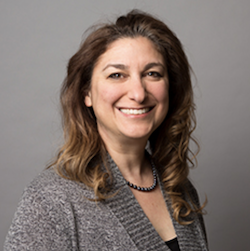
photo - Dr. Allison Sekuler of Toronto’s Baycrest Centre for Aging and Brain Health Innovation
Dr. Allison Sekuler of Toronto’s Baycrest Centre for Aging and Brain Health Innovation. (photo from baycrest.org)

Sekuler is the Sandra A. Rotman Chair of Cognitive Neuroscience at Baycrest’s research institute and the president and chief scientist at the Baycrest Academy for Research and Education. She is known for her foundational research in perception, cognition and brain function, as well as her clinical and translational work on age-related sensory and cognitive decline. She is the inaugural Canada Research Chair on Cognitive Neuroscience and has received numerous national and international honours, including being named one of Canada’s Top 100 Most Powerful Women by the Women’s Executive Network in 2019.

The recent webinar began with an introduction from Monica Simon, chair of NCJWC’s ageism committee. Then, with the help of AI-generated images, Sekuler presented attendees with an optimistic view of what she hopes the future holds. “We want to see a world where every single person is living a life of purpose, fulfilment and dignity,” she said.

Baycrest is at the forefront of a new field called predictive neuroscience for precision aging – an individualized approach that examines one’s brain, body and environment to detect the best ways to prevent the onset of dementia or delay it for as long as possible. This approach not only encompasses the pre-diagnosis stage, but helps medical professionals and loved ones navigate caring for someone with dementia. 

“If you think about what precision medicine has done for cancer, that’s what we want to do for aging, brain health and dementia,” said Sekuler.

Through innovations in predictive neuroscience, the Baycrest team is working toward a goal of no new cases of preventable dementia being diagnosed by the year 2050 – currently, 750,000 Canadians are living with dementia, and that figure is expected to more than double by 2050.

“What we want to do is nip that in the bud as much as possible,” Sekuler said, acknowledging that, while they cannot entirely eradicate the condition, they can do more to decrease the risk for those who do not already have dementia. Research suggests that, if the onset of dementia can be delayed by even five years, the prevalence of the condition can be decreased by 50% worldwide, she said.

While there are several risk factors – such as age, sex and genetics – that cannot be controlled, Baycrest’s Defy Dementia program raises awareness of the lifestyle changes people can make to reduce their dementia risk and improve their cognitive health.

“At least 40% of the risk factors for dementia are things that we can change by changing our lifestyle,” said Sekuler.

On the podcast Defy Dementia, co-hosts Sekuler and Jay Ingram, one of Canada’s leading science journalists, cover a different risk factor every month. Each episode features a guest with lived experience with dementia and an expert on the risk factor under discussion, such as stress, sleep, diet, exercise and environment.

There are currently 12 episodes available on the website defydementia.org, or any streaming platform. Many episodes have accompanying infographics and minute-long videos summarizing the topic at-hand, also available on defydementia.org.

“Whether you like to listen to things, read things, watch things or look at things, we’ve got you covered,” Sekuler said.

Sekuler gave a high-level overview of the risk factors, sharing how each correlates to one’s dementia risk and what one can do to manage them. She reminded attendees that genetics are not the be-all and end-all, but, rather, a piece of the puzzle that can often be counteracted by managing the risk factors.

Regarding sensory loss, Sekuler explained how strains on one’s hearing and/or vision can negatively impact cognitive abilities. She pointed to tools such as Baycrest’s free online hearing test and the importance of regular check-ups for hearing and vision loss. Further, she explained that loneliness has been proven to increase dementia risk by 50%, and that social engagement in any form is key to maintaining cognitive health. She emphasized that a healthy balance of diet, exercise and sleep helps, as does lowering stress as much as possible and embracing opportunities to try new activities and learn new things.

Sekuler also turned the group’s attention towards the vital role of caregiver. She shared that “one in every two people” will assume this role, if they do not get dementia themselves. However, caregivers often sacrifice a healthy diet, proper sleep and social engagement, she said, making them six times more likely to develop the condition. Sekuler stressed that “a caretaker cannot take care of someone else if they are not taking care of themselves,” and that inviting more professionals, caregivers and loved ones into the equation lessens the burden on one individual and may be a saving grace for that person’s health.

During the question-and-answer period, which was moderated by NCJWC’s Rochelle Garfinkel, Sekuler was asked what organizations like NCJWC can do to fight dementia. She highlighted the importance of sharing information and resources widely, and encouraged involvement in dementia research wherever possible. As well, she said, promoting tools like Baycrest’s online cognitive assessment test to “get your baseline” – as one would do with a regular vision test – is crucial for early detection. 

According to Sekuler, when it comes to protecting your cognitive health, “everyone can make these changes. You don’t have to be perfect, but you do have to start somewhere.” 

Alisa Bressler is a graduate of Queen’s University in Kingston, Ont. She is an avid reader and writer and will be pursuing a master’s of journalism at Boston University in the fall. Bressler is a member of the Vancouver Jewish community, and was the inaugural Baila Lazarus Jewish Journalism Intern.

Format ImagePosted on June 28, 2024June 27, 2024Author Alisa BresslerCategories LocalTags aging, Allison Sekuler, Baycrest, dementia, education, health, innovation, National Council of Jewish Women of Canada, NCJWC, podcasts
Teaching the spirit of Israel

Teaching the spirit of Israel

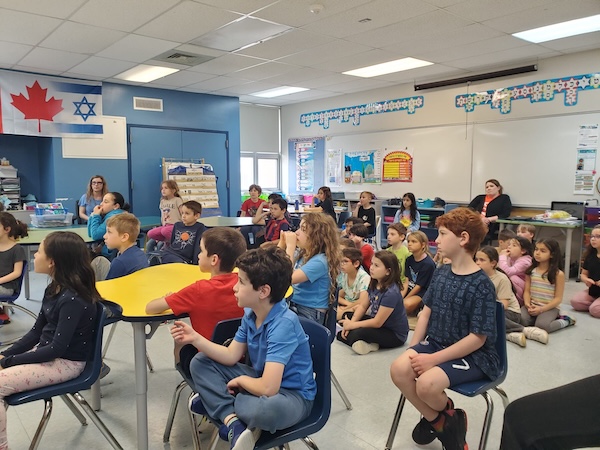
Kayemet LeYisrael – Jewish National Fund activities in Winnipeg took place at Brock Corydon school, Gray Academy (above) and Herzliya Synagogue. (photo from KKL-JNF)

A variety of educational and experiential activities conducted by teams from the department of Zionist education in the diaspora, part of the education division at Kayemet LeYisrael – Jewish National Fund, took place in Jewish communities around the world during “National Month,” which includes Memorial Day, Independence Day and Jerusalem Day. Activities took place at schools, kindergartens, Sunday schools, synagogues, Jewish organizations and elsewhere in 16 countries, including Canada.

photo - A Kayemet LeYisrael - Jewish National Fund activity at Brock Corydon school in Winnipeg
A Kayemet LeYisrael – Jewish National Fund activity at Brock Corydon school in Winnipeg. (photo from KKL-JNF)

In Canada, teams conducted activities in Toronto, Windsor and London, Ont., and in Winnipeg, Man. Activities included a virtual art and graffiti tour of Tel Aviv-Jaffa, lectures on life in Israel post Oct. 7, a Kites for Hope event, and activities for children about Independence Day. 

photo - Kayemet LeYisrael - Jewish National Fund at Herzliya Synagogue
Kayemet LeYisrael – Jewish National Fund at Herzliya Synagogue. (photo from KKL-JNF)

“Activities organized with the envoys from Israel were incredibly meaningful to our communities here in Canada,” said Yifat Bear Miller, KKL-JNF envoy to Canada. “As we are distant from Israel here in Canada, such activities fostered a deep connection to Israel, Judaism and the current situation in the region.” 

– Courtesy Kayemet LeYisrael-Jewish National Fund

Format ImagePosted on June 28, 2024June 27, 2024Author Kayemet LeYisrael-Jewish National FundCategories NationalTags Diaspora, education, Israel, KKl-JNF, Toronto, Winnipeg
Community milestones … Cowens, Federation, Doctor, Lane, Wolthuizen & Wosk

Community milestones … Cowens, Federation, Doctor, Lane, Wolthuizen & Wosk

Rabbi Dr. Eytan Cowen, his wife Rabbanit Caroline Sarah Bitton-Cowen and their family will take up the mantle of spiritual and rabbinic leadership at Congregation Beth Hamidrash. (photo from Beth Hamidrash)

Rabbi Dr. Eytan Cowen has agreed to become the next rabbi and spiritual leader of Congregation Beth Hamidrash and leader of the Vancouver Sephardi community.

The congregation is excited for Rabbi Cowen, his wife Rabbanit Caroline Sarah Bitton-Cowen and their family to join them and take up the mantle of spiritual and rabbinic leadership. The start date is yet to be determined, to best enable the family to navigate the challenges of moving to Vancouver from Toronto.

Cowen served as rabbi of Tiferet Israel Sephardic Congregation in Toronto from 2014 to 2017. He returned to his hometown, Toronto, from Indianapolis, where he served for two years as full-time rabbi of Etz Chaim Sephardic Congregation, a 100-year-old community.

Cowen pursued and completed his rabbinical studies at Rabbi Isaac Elchanan Theological Seminary of Yeshiva University and the Sephardic Rabbinical College of Rosh Kollel. In addition, he is a graduate of the University of Toronto with a double major in microbiology and Jewish studies, as well as four years of postgraduate study at the Canadian College of Naturopathic Medicine. He is a licensed naturopathic doctor, practising integrative medicine for the past 20 years, and endeavours to combine Torah and health.

Bitton-Cowen was born in Paris, France, with Sephardi heritage from Morocco and Tunisia. She is a graduate of Stern College and Sy Syms School of Business. She enjoys teaching others, sharing wisdom with women of the congregation, and is an accomplished certified professional accountant.

The rabbi and rabbanit are the proud parents of Eliyahu-Yaacov (23), Nissim-Nahum (21), Simcha-Mazal (20), Rivkah-Chaya (16), Efrayim-Menashe (13), Tehila-Adelle (9), Batsheva-Esther (6) and Batya-Emunah (4). They have one granddaughter, Sofia Adina (14 months).

* * *

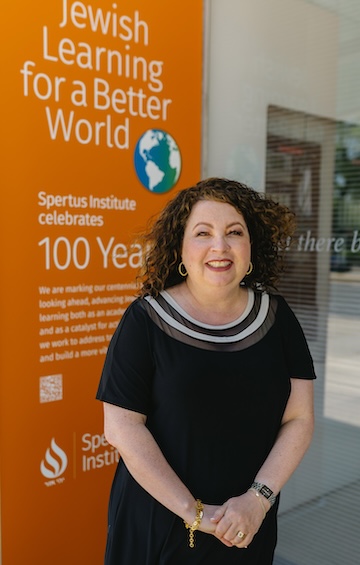
photo - Alexis Doctor received her master of arts in Jewish professional studies at Spertus Institute
Alexis Doctor received her master of arts in Jewish professional studies at Spertus Institute. (photo by Maggie Russo)

On May 5, Chicago-based Spertus Institute for Jewish Learning and Leadership awarded master’s degrees to 18 graduates who embody the vital Jewish tradition of learning, which grounds us in our history and equips us to face contemporary challenges.

Vancouver resident Alexis Doctor, director of member and guest services at the Jewish Community Centre of Greater Vancouver, is among this year’s graduates. She received a master of arts in Jewish professional studies, completing a creative leadership-building program designed to advance careers and strengthen the organizations students serve. 

“It’s something I will take with me for the rest of my life – the program has given me fresh new ideas to take back to my team,” said Doctor. “This has been one of the most challenging things I’ve ever done, but it’s also one of the most rewarding.”  

Spertus Institute, which was founded in 1924, is an institution of higher Jewish learning dedicated to real-world action. At its core are degree and certificate programs in which students engage with Jewish ideas in the service of personal growth, community leadership and professional advancement. These offerings, which merge theory and practice, educate Jewish professionals, community leaders and those who seek quality, reflection-driven scholarship. Those interested in becoming a future Spertus Institute graduate should visit spertus.edu for program and application information or contact assistant director of recruitment Amie Barrish at [email protected].

* * *

The Jewish Federation of Greater Vancouver’s 2023 annual campaign generated $10.3 million for the community, thanks to the generosity of some 2,500 donors.

As a result of this year’s $10.3 million total, Federation will be able to provide crucial stability to its more than 30 partner organizations by ensuring that they can count on funding that helps fuel their important front-line work. Plus, they will be able to access additional funding through grants for programs and services that deliver on the strategic priorities for the community.

An additional $1.25 million in funding directed to special projects was also raised, as was $20.4 million through Federation’s Israel Emergency Campaign (IEC).

In addition to addressing immediate needs after the Oct. 7 Hamas attack on Israel, the IEC allocation committee, chaired by Stephen Gaerber, is committed to addressing the medium- and long-term needs of Israelis who continue to be affected by the ongoing war and hostage situation.

* * *

The Vancouver Holocaust Education Centre has presented the 2024 Meyer and Gita Kron and Ruth Kron Sigal Award for Excellence in Holocaust Education to Ben Lane (Collingwood School) and Mike Wolthuizen (Rutland Senior Secondary School). Both have demonstrated exceptional commitment to Holocaust education throughout their careers and have significantly impacted their students, colleagues and school communities.

The Kron Sigal Award was established in memory of Meyer and Gita Kron and their daughter Ruth Kron Sigal, Lithuanian Jewish survivors of the Holocaust who re-established their lives in Vancouver. Through their lifelong involvement with education and community, the family touched the lives of thousands of students. 

photo - Ben Lane
Ben Lane (photo from vhec.org)

During his tenure at Collingwood School in West Vancouver, Lane led the development of a comprehensive Holocaust education program at the school. He created classroom resources and lesson plans and implemented school-wide events, commemorative programming and co-curricular opportunities for students, colleagues and the community to engage with the history of the Holocaust.

An alumnus of Yad Vashem’s International School for Holocaust Studies, Lane’s approach to Holocaust education demonstrates creativity, depth of knowledge in subject matter and pedagogical quality. This is reflected in his bespoke lesson plans and robust teaching materials, which combine engaging history lessons with innovative project-based learning. These allow students to navigate complex issues of antisemitism, genocide and the legacies of the Holocaust with accuracy, sensitivity and a sense of responsibility for the subject matter.

Exposing students to primary sources of Holocaust history has been a priority for Lane, and he regularly incorporates VHEC programs into his curriculum through exhibition tours, workshops and survivor outreach speaker engagements. As well, he has facilitated a co-curricular student group to participate in the Dora Love Prize, a Holocaust education program sponsored by the University of Essex. For the past three years, this student group has engaged with scholars and survivors internationally and produced innovative projects annually to raise awareness of the Holocaust and human rights.

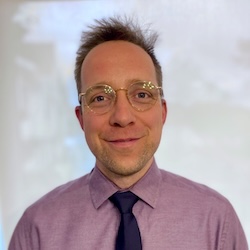
photo - Mike Wolthuizen
Mike Wolthuizen (photo from vhec.org)

Wolthuizen teaches Genocide Studies 12 and Social Studies 10 at Rutland Senior Secondary School in Kelowna. He has been instrumental in advancing Holocaust education in the Central Okanagan School District, where he recently co-developed Holocaust 12: Beyond the Shoah, a social studies elective course to be introduced into classrooms in September 2024.

Colleagues, administrators and students attest to Wolthuizen’s thoughtful and innovative teaching approach, which creates a supportive environment for students to express their thoughts and critically analyze events in Holocaust history. He fosters meaningful discussions and ethical reflections on human choices. Through exposure to survivor testimony and primary sources, he cultivates in his students an appreciation for the stories of the individual. One student shared:

“Because of his teaching, one of my key takeaways from the course was the importance of the stories of individuals that were impacted by the Holocaust and other genocides, rather than just statistics. When learning from him, it became very evident that he cares so much about each individual and their rights, and that their stories hold an immense amount of power and importance when discussing the Holocaust.”

Also an alumnus of Yad Vashem’s International School, Wolthuizen has attended dozens of workshops and conferences, locally and internationally, to enhance his knowledge of Holocaust study. He has shared this knowledge and expertise beyond his own community, leading professional development programs and teaching in multiple school districts as a guest lecturer on Holocaust history.

* * *

photo - Becky Wosk is the winner of the 2024 Earl Parker Award for Jewish Film, an honour given by the Edmonton Jewish Film Festival
Becky Wosk is the winner of the 2024 Earl Parker Award for Jewish Film, an honour given by the Edmonton Jewish Film Festival. (photo from Becky Wosk)

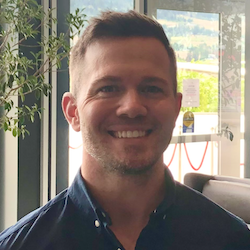
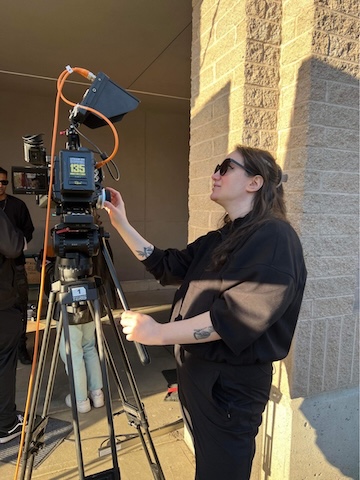
Becky Wosk is the recipient of the Edmonton Jewish Film Festival’s 2024 Earl Parker Award for Jewish Film. The $1,500 award will go towards Wosk’s production of a documentary on Jewish identity and how we are all connected.

Wosk is a directing student at Langara College in the film arts program. She has been immersed in the arts since a very young age and is a multidisciplinary artist and performer – her band Hollow Twin recently released a new LP on vinyl and digitally.

Wanting to gain more technical skills and hands-on experience in directing, to make music videos for her and other bands, as well as documentaries and shorts, Wosk applied to the Langara film program. It was her instructor who sent her the application to the Earl Parker award for a Jewish-related film project. Wosk’s pitch was One Thread.

One Thread is a documentary-style short that will be filmed in Vancouver. Interviewees will range from age 18 to 99+, including Holocaust survivors.

“I see this potentially becoming a series that can eventually be all tied together spanning globally to see how, regardless of where we live, our backgrounds, we are one people – a tribe of resilient humans who have overcome all odds to be here today. A look at the diversity of the diaspora and how we all have one common thread,” wrote Wosk in her submission. “The participants will not be limited by religious sect, as I want the overarching theme to be our DNA, not necessarily religion – but I would like to touch on customs and traditions within the interviews.”

Wosk is hoping to incorporate klezmer music and archival photos from various sources into the film. She will be putting a call out soon for interviewees of all ages, genders and backgrounds who identify as Jewish. The filming will take place this fall.

Format ImagePosted on June 28, 2024June 27, 2024Author Community members/organizationsCategories LocalTags Alexis Doctor, annual campaign, Ben Lane, Beth Hamidrash, Caroline Sarah Bitton-Cowen, Eytan Cowen, Jewish Federation, Kron Sigal Award, Mike Wolthuizen, Spertus Institute, Vancouver Holocaust Education Centre, VHEC
Unique heritage trip to China

Unique heritage trip to China

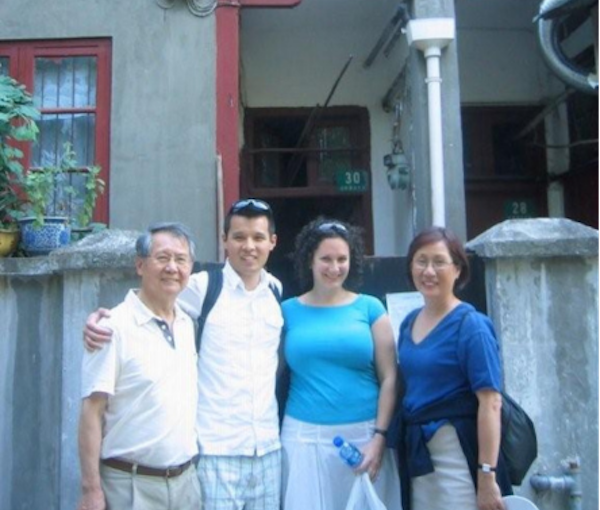
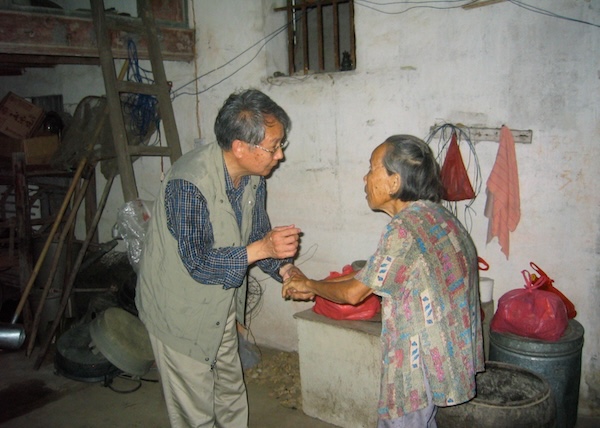
Len, Jeffrey, Sharon and Valerie on their family trip to China in 2009. (photo from Valerie [Chan] Hum)

Little did we realize when our son, Jeffrey, married Sharon Szmuilowicz in August 2008 that we would find ourselves visiting China nine months later as a family and visiting all our ancestral homes.

My family comes from the village of Sui Nam, Toi San district, Guangdong province. My grandfather was sponsored by a tailor and moved to Victoria in 1893 as a 16-year-old from a very poor family. He eventually married, started a restaurant business (the Panama Café) and fathered 12 children. Today, more than 140 Chan family members have been born in Canada over five generations and 131 years.

My husband Len’s family was from a small village of 30 houses in Chongkou, Kaiping district, Guangdong province. Len’s father traveled back and forth between China and New Westminster to earn money to support his family. In 1950, Len and his grandmother left China for Vancouver and then met up with Len’s father, who had moved to Ottawa. Two years later, the rest of Len’s family arrived in Canada. The family owned a number of restaurants over the years.

When our son married a Jewish woman from Toronto, we never thought we would learn that her family has ties to China as well.

The idea for the trip to China was initiated by Sharon. She felt it was important to learn about Jeffrey’s culture and family history. However, since the Szmuilowicz clan also had a direct link to China via Shanghai, it was an opportunity to explore both their histories.

On May 13, 2009, 62 years after Sharon’s family left China, our tour guide Hao brought us to the Shanghai Jewish Refugees Museum, the former Ohel Moishe Synagogue, at Sharon’s request, where we were able to access a computer database listing all the refugees who had lived in Shanghai. We were so pleased to see Sharon’s grandfather and great-grandfather listed in the database, including their former address. Jacob and Samuel Szmuilowicz, age 59 and 21, were listed as Polish refugees living at 30-50 Zangyang Rd. What a tremendous discovery! And, to top it off, 30-50 was next door to the synagogue and was still standing.

photo - Valerie and Sharon outside the Shanghai Jewish Refugees Museum, the former Ohel Moishe Synagogue
Valerie and Sharon outside the Shanghai Jewish Refugees Museum, the former Ohel Moishe Synagogue. (photo from Valerie [Chan] Hum)
We decided to knock on their door and see if anyone remembered Sharon’s family. The present residents moved into the building in 1950 and had no recollection of the previous Jewish residents who had crammed into these small apartments more than 70 years ago. Although we could not find anyone who knew Sharon’s family, it was still a remarkable discovery to find the records and the home they had lived in.

For the purposes of our trip, Sharon’s story begins with her grandfather, Samuel. To escape conscription into the Russian army, Samuel and his father, Jacob, left their homes, by foot, in 1939, making their way to Japan via Manchuria. At the time, Samuel was at university in Vilna (now Lithuania; then under Polish occupation), studying mathematics, and Jacob was running a general store in Lida, then in Lithuania (now in Belarus). 

Their transit visas were issued by Japanese diplomat Chiune Sugihara. He was giving out these visas without the knowledge of his government. It was dangerous for him to do so, but he knew that he needed to do something to save as many Jews as possible. In 1985, Sugihara was the first and only Japanese citizen to be listed by Yad Vashem as a Righteous Among the Nations.

With visas in hand, the journey took nearly two years to complete. They traveled by day and hid at night, finally arriving in 1941. In January 1942, they were transferred to Shanghai, where they joined the approximately 20,000 Jews who had migrated there in three waves beginning in the 1800s.

During their five years in Shanghai, Jacob sold rice while Samuel, who was attending the American School and learning English, ended up driving jeeps for the American army. They made enough money to leave for Mexico City in 1947, where they ran a textile factory that manufactured cotton goods, and started the Spanish-speaking arm of the Szmuilowicz clan. Sharon’s parents met in Mexico and moved to Canada, so her dad could pursue a career in medicine.

We learned that there were many Jews who fled Eastern Europe and ended up in Hong Kong or China.

The next part of our discovery trip found us traveling by ferry from Hong Kong over to the mainland city of Zha Hai, where we were then met by distant Hum clan relatives, who drove us to my paternal grandfather Chan’s hometown of Sui Nam. I suspect I am the only descendant who has made the trek back to the town of Sui Nam, which appears very old and somewhat decayed, but still standing. 

photo - In the village of Lohk Hing Leih, 90-year-old Mrs. Tam remembered Len, who used to play with her eldest son
In the village of Lohk Hing Leih, 90-year-old Mrs. Tam remembered Len, who used to play with her eldest son. (photo from Valerie [Chan] Hum)
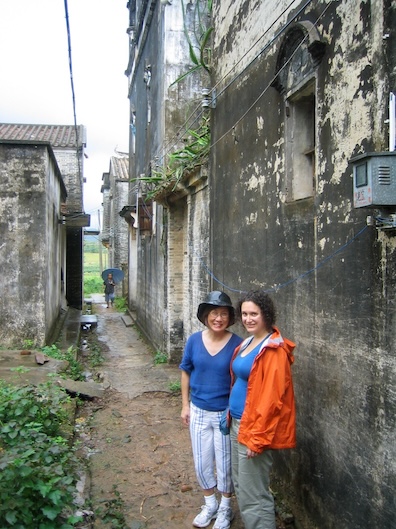
Half an hour later, we arrived in the small village of Lohk Hing Leih, a cluster of 27 buildings housing the remaining Hum clan. Len’s family left the village in 1949, spending a year-and-a-half in Hong Kong awaiting their papers for entry into Canada. The village remains very poor, comprised of mostly vacant buildings surrounded by rice paddies and vegetable gardens.

Ninety-year-old Mrs. Tam, looking remarkably spry and pleasant, incredibly, remembered Len, who used to play with her eldest son. The other village residents were too young to remember him, but they swiftly brought out some food offerings, the incense, paper money to burn before the family altar, and lit some Chinese firecrackers. These are age-old traditions, in honour of the Hum ancestors. There were no young people living in the village. They had all left to find jobs in the cities. We wonder if the village will even exist in 20 years’ time.

Call it fate or bashert that, from the 1940s, three different families who started off in China, one a Jewish refugee family in Shanghai and two native Chinese families living in small villages near Canton, would be reunited in Canada through marriage 70 years later. The biggest blessing is that, on May 11, 2024, a Szmuilowicz-Hum great-great-granddaughter celebrated her bat mitzvah in Toronto. We were all be thrilled to be there. 

Valerie (Chan) Hum lives in Ottawa. She was born in Victoria, where her family have lived since 1893. Her grandparents ran the Panama Café at 1407 Government St. for many decades. This article was originally published by the Ottawa Jewish Bulletin.

Format ImagePosted on June 28, 2024June 27, 2024Author Valerie (Chan) HumCategories NationalTags Canada, China, family history, Holocaust, travel
Srulik, meet Handala

Srulik, meet Handala

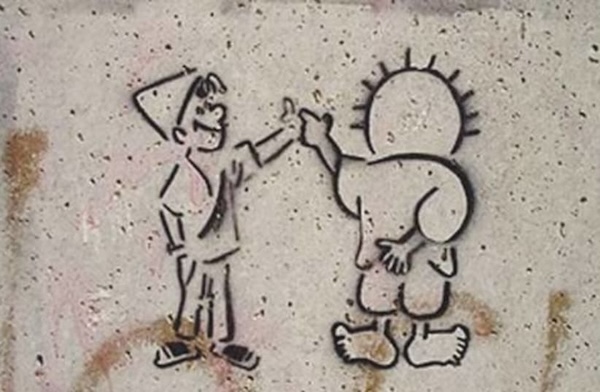
The ways in which the characters of Srulik, left, and Handala epitomize the historical and cultural narrative of the Israelis and Palestinians, respectively, imbue these cartoons with an impact stronger than words. (photo by Gil Zohar)

Driving east from Jerusalem on the winding Jordanian-built road that once led down from the Mount of Olives to the Dead Sea, one passes through a series of picturesque Arab suburbs and soon comes to a dead end in front of the grotesque West Bank barrier.

Called Geder ha-Hafrada (separation fence) in Hebrew and jidar al-fasl al-’unsuri (apartheid wall) in Arabic, the insurmountable (if still incomplete) eight-metre-high concrete barrier has no doubt contributed to a reduction in terrorism and car theft. However, my objection to it is more existential: like some of those in West Berlin who spray-painted their protest for freedom on the Bundesrepublik side of die Mauer even as armed GDR guards used deadly force to prevent anyone from approaching the wall’s eastern side, I believe all walls must fall.

It is a metaphor that has repeated itself from Joshua’s encircling of Jericho, to the Berlin Wall and its remaining East Side Gallery, to Garth Hewitt’s ballad “They’ve Canceled Christmas in Bethlehem,” about the stranglehold the wall has placed on both day-to-day life and religious pilgrimage in the place where Jesus, “the Prince of Peace,” was born 2,000-plus years ago.

The world today is caught between two conflicting ideologies: some democratic countries joining in unions with open borders, joint legal systems and a common currency, of which the European Union – notwithstanding its problems – is a great success. Then, there are other countries – many repressive and undemocratic – defending their borders with minefields and walls. Like John Lennon, I prefer the first vision – of a growing global union without barriers. Imagine that.

Thus, armed with the tools of the graffiti artist – an X-ACTO knife, cardboard stencil and spray paint – I recently made my way to Abu Dis with my friend Hajj Ibrahim Abu el-Hawa, my daughter Bareket and fellow artist Eva Feld to make our mark. Reasoning that a picture is worth a thousand words, we chose a symbolic image whose meaning is unequivocal.

The image we created depicts Handala raising hands with Srulik (see picture). The two iconic cartoon characters are respectively well known by Palestinians and Israelis – yet, each is equally unknown by the other. It is a symmetry of ignorance of the other’s narrative that will have to be overcome before true peace can be achieved.

Allow me to explain the mirror meanings of the twin caricatures.

Handala – an omnipresent image on T-shirts and key chains in the aswaq (plural of suq, market) of Jerusalem, the West Bank and Gaza Strip – was created by Naji al-’Ali in 1969. A 10-year-old child driven in 1948 from his Galilee village of ash-Shajara (14 kilometres from Tiberias) to the ‘Ain al-Hilweh refugee camp in Lebanon, al-’Ali went on to become the leading political cartoonist in the Arab world.

Before being assassinated in London in 1987, he produced more than 40,000 bitingly sarcastic cartoons lampooning Arab leaders and lamenting the stateless status of his people. His autobiographical image of Handala – a barefoot, faceless, refugee youth – remains a potent symbol of the struggle of the Palestinian people for justice and self-determination.

Al-’Ali wrote: “Handala is my signature. I gave birth to this child in the [Persian] Gulf. He was born 10 years old, and he will always be 10. At that age, I left my homeland and, when he returns, Handala will still be 10, and then he will start growing up. The laws of nature do not apply to him. He is unique. Things will become normal again when the homeland returns.”

Impish Srulik – a diminutive of Yisrael (Israel) – carries an equally rich symbolism in depicting nascent Israel and, in particular, its native-born Sabras. The illustrated character was first drawn in 1956 by the cartoonist Kariel Gardosh, better known by his nom de plume, Dosh. The Hungarian-born Holocaust survivor drew Srulik for decades in the pages of the daily Maariv, until his death in 2000.

Dosh generally depicted Srulik as a young man wearing a kova tembel hat, “biblical sandals” and khaki shorts. He drew him as a pioneering Zionist and lover of the land of Israel, a dedicated farmer who in time of need dons an Israel Defence Forces uniform and goes out to defend the state of Israel, equipped with an Uzi machine gun. In contrast to the antisemitic stereotype of the weak or cunning Jew, which appeared in the Nazi weekly Der Stürmer and other European and Arab newspapers and journals, Dosh’s Srulik was a proud, strong and sympathetic Jewish character.

Shalom Rosenfeld, editor of Maariv from 1974 to 1980, wrote: “Srulik became not only a mark of recognition of [Dosh’s] amazing daily cartoons, but an entity standing on its own, as a symbol of the land of Israel – beautiful, lively, innocent … and having a little chutzpah and, naturally, also of the new Jew.”

Introducing Srulik to Palestinians and Handala to Israelis is not a bad way to begin to redress each side’s ignorance of the other’s narrative. The ways in which they epitomize the historical and cultural narrative of their own people imbue these cartoons with an impact stronger than words.

When a peace treaty is ultimately implemented between Israel and Palestine (as I’m sure it must), perhaps the image of Handala and Srulik holding hands could be adopted as a neutral symbol of coexistence and nonviolence. Their creators, Naji al-’Ali and Kariel Gardosh, both knew firsthand of persecution and exile, and the iconic figures they bequeathed us share the hope of living in freedom and peace. When peace finally arrives, new and emotionally satisfying images and symbols will need to be created to bridge the chasm between Jews and Arabs in our broken Promised Land. 

Gil Zohar is a writer and tour guide in Jerusalem.

Format ImagePosted on June 28, 2024June 27, 2024Author Gil ZoharCategories Op-EdTags cartoons, Handala, history, Israeli-Palestinian conflict, Kariel Gardosh, Naji al-’Ali, peace, Srulik

Community and relationships

Recently, I came across a LinkedIn post. It suggested that people could evaluate their work by asking if it “made  money, saved money or saved time.” One of the responses suggested that nurses, for instance, would not fit into this model. Neither would teachers, therapists or social workers, for that matter. While education or therapy do eventually probably save money and time for society, their worth isn’t measured by these markers. As a writer, my work is also worthless in this evaluation, as it doesn’t earn lots of money or save time. But caring/thinking professions are still meaningful. I did a silent revision to the post. I added: Does your work create meaning? Is your work creating value? Meaning and value aren’t always measured in monetary terms.

I didn’t respond to this piece I read online. I don’t know who posted it originally, but priorities are different than mine. It isn’t a bad thing to save money, make money or save time, but I was left wondering – if these are a person’s top priorities, what will they do with the money or time saved? I wonder where “making meaning” comes into this person’s life.

My household is just recovering from our twins’ b’nai mitzvah. Out-of-town relatives and friends were here for several days before and after. I managed many details and events, multiple meals, a tent, chair and table rental, games and more. The synagogue service my children led was very meaningful, and looking out at the congregation was amazing. I felt so supported by family, friends and community.

For days afterwards, Jewish community members wished us mazal tov and non-Jewish neighbours and friends continued to congratulate us. My twins got gifts from places we didn’t expect. Both kids were truly flummoxed by the love and generosity showered on them.

I won’t lie: I’m exhausted after this lifecycle experience. I was the main organizer for everything other than services. Everything went smoothly, far better than I’d expected, especially given that our synagogue is under renovation.

When guests suggested a future as an event planner, I said no! I couldn’t wait to get back to my freelance writer/editor day job. Perhaps what I have learned is that, while I’m good at organizing and details, I don’t find meaning in doing those things. For me, it’s only the relationships and community that makes meaning.

A snippet of learning I did this week made that clear. I was studying the Babylonian Talmud tractate of Bava Metzia 109 when I read this story:

“Rav Yosef had a certain planter, a contractor whose job was to plant trees. He died and left behind five sons-in-law. Rav Yosef said: Until now I had to deal with only one person; now there are five. Until now, they did not rely on each other to plant the trees and did not cause me a loss, as the responsibility was their father-in-law’s, but, now that they are five, they will rely on each other to plant the trees and cause me a loss. Rav Yosef decided to discontinue the agreement with them. Rav Yosef said to them: If you take the value of your enhancement that you brought to the field and remove yourselves, all is well, but, if not, I will remove you without giving you the value of the enhancement.”

The rabbis then debate if Rav Yosef’s behaviour as a businessman was acceptable. Their conclusion is that canceling the agreement was acceptable, but sending the sons-in-law off his land without compensation wouldn’t be right. When I read Rav Yosef’s choices here, as a person in business, I saw why he made his choices. Rav Yosef had a business relationship with a contractor. When that ended due to death, he didn’t have the same agreement or support from the five sons-in-law, all of whom might have left the job to someone else. He wanted to pay them for what had been done and cut his losses.

I worried about the contractual commitments I’d made for our family event. Would the tent, tables, chairs, catering, servers, games, six-person bike, fancy vegan popsicle cart all arrive as scheduled? In the end, it all worked out. However, if I’d been faced with an issue like Rav Yosef’s – the death of someone I trusted and a time-sensitive need to get something done – I too might have wanted to pay for the work done so far and cut my losses.

Sometimes, we recognize that, without the original helper, chaos might erupt. Our synagogue caterer provided food for 75 people as take-out for us, but had no servers, due to the building closure and renovations. I worried about what to do. Luckily, through Jewish community connections, I found someone who used to work at the synagogue, and three others who worked at a different Jewish congregation. My brother (former manager of a fine-dining restaurant) stepped in to help. My neighbour volunteered her oven as a backup to warm up food, though we did not need it in the end.

This experience helped me realize that, although we moved to Canada in 2009, we had built community over time. People volunteered to support us and connections with businesspeople made the event happen. A “team” of loving people, both from far away and close by, pulled together to make meaning for us as a family.

Long before I had kids, I loved attending Shabbat services that celebrated a new baby, an upcoming wedding, a birthday or bar or bat mitzvah. Now I see that, as part of the extended community, I too created meaningful connections. The congratulations, singing “Simon Tov U’Mazel Tov,” and warm smiles matter. Being a witness and a celebrating participant are valuable.

For some, our twins’ b’nai mitzvah helped people make money. Months of work as the “organizer/Mom/event planner” saved money. If recent world events, or Rav Yosef’s contractor agreement, have taught anything, it’s that our lives could be short – time matters. It matters that we do straightforward, moral business with others. So many things can go wrong. There is absolutely nothing like a few days of love, support and meaningful interactions with people who care about us. We can also always use more love and community support. 

Joanne Seiff has written regularly for the Winnipeg Free Press and various Jewish publications. She is the author of three books, including From the Outside In: Jewish Post Columns 2015-2016, a collection of essays available for digital download or as a paperback from Amazon. Check her out on Instagram @yrnspinner or at joanneseiff.blogspot.com.

Posted on June 28, 2024June 27, 2024Author Joanne SeiffCategories Op-EdTags Judaism, lifestyle, meaning, value, work

האנטישמיות בקנדה גדלה משמעותית מאז השבעה באוקטובר

אפשר להבין את החרדה שדבורה ליונס חשה מצפייה בחדשות מאז שמונתה לשליחה המיוחדת של קנדה על ידי ג’סטין טרודו, להנצחת זכר השואה ולמאבק באנטישמיות בסתיו האחרון. העלייה המדאיגה בשנאת יהודים בקנדה נדונה בתקשורת באופן קבוע

ברור מהנתונים שאנחנו רואים, בעיקר מאלה המגיעים ממשטרת קנדה, שיש עלייה אדירה באנטישמית במונחים של פשעי שנאה, אומרת ליונס. וזה בלי להזכיר את התקריות האיומות אבל חוקיות נגד יהודים שאנחנו שומעים עליהן לעיתים קרובות. לדעתה של ליונס רמת האנטישמיות בקנדה נמצאת עכשיו בשיא של כל הזמנים וזה חסר תקדים

ארגון בני ברית קנדה פרסם לאחרונה את הדוח השנתי שלו על תקריות אנטישמיות במדינה. לפי הדוח הארגון חלה עלייה דרמטית מאז טבח השבעה באוקטובר. על פי המקרים שדווחו לבני ברית גם באמצעות עבודה עם המשטרה, אשתקד נרשמו קרוב לששת אלפים מעשי אלימות, הטרדה וונדליזם כלפי יהודים. זאת יותר מפי שניים מאשר שנה קודם לכן

בין פשעי השנאה המוזכרים נמנים הצתת מעדנייה בטורונטו, ירי לעבר בית ספר יהודי במונטריאול, ונדליזם בחנות ספרים בטורונטו של רשת אינדיגו שמייסדה הוא יהודי, פגיעה בבתי כנסת ובשכונות ועסקים יהודיים שונים. וכן השחתה של בתים פרטיים בסמלים ובביטויים אנטישמיים

לאחרונה סיסמאות משלהבות במאהלי מחאה שהוקמו באוניברסיטאות ובייחוד בעצרות אנטי־ישראליות בוונקובר ובאוטווה הוסיפו שמן למדורה. ליונס רוצה שחברי הקהילה היהודית ידעו שהיא רואה ושומעת את החששות שלהם לנוכח ההסלמה ברטוריקה האנטישמית ובוונדליזם. ליונס מוסיפה שהיא רואה את הכאב שלהם כשבהפגנות מובילי המחאה קוראים יחי השבעה באוקטובר והקהל מריע

ליונס רואה את הייסורים שחשים יהודים קנדים כשאנשים מתייחסים בביטול או ממעיטים בעובדה שמארגני העצרות מובילים את הקריאות האלה ואחרות, כמו תחזרו לאירופה ולהפוך את האינתיפאדה לגלובלית. על רקע המציאות הזאת היא מבינה שמתנהלות שיחות בבתים ובמשרדים על עתיד הקהילה היהודית בקנדה. זה לא קביל ולא הוגן. קנדה התמודדה כבר עם עלייה בשנאת יהודים לפני הזינוק הנוכחי. יש לשקול בכלל את העלייה העצומה באנטישמיות העולמית לאור זוועות השבעה באוקטובר. עוד הרבה לפני מלחמת ישראל והחמאס הייתה רמה גבוהה של אנטישמיות בקנדה. היא התחילה לעלות בצורה די קבועה לפני כשש שנים ועוד יותר במהלך מגפת הקורונה. היא הייתה במגמת עלייה, שהפכה לנסיקה דרמטית אחרי השבעה באוקטובר. עם התמשכות המלחמה בעזה ועד שיושג פתרון, חושבת ליונס שהסביבה שלנו תמשיך להיות סוערת

זה עלול להיות התרחיש הטוב יותר אם לא יהיה שינוי בתגובת המנהיגים. ליונס מאמינה שאנחנו באמת נתונים במשבר. והיא חוששת שלא מספיק אנשים מבינים את זה, או שאם הם מבינים זאת, הם לא יודעים מה הם יכולים לעשות לגבי זה

ליונס מקווה שהגענו לשיא העגום של האנטישמיות, ושהמצב לא יחמיר עוד יותר, אבל היאי לא יודעת. זה תלוי בעיקר במידה שסה המנהיגים השונים יפעלו בהתאם לאחריות שניצבת לפניהם

ליונס, שאינה יהודייה מכירה בכך שאין פתרון קל, ואומרת שהמצב הנוכחי לא יכול להיפתר ברמת הממשלה בלבד, וגם לא על ידי לשכה של שליח בודד. תחת זאת, לדבריה, האנטישמיות דורשת את טיפולה של ההנהגה בכל הרמות, לכן לשכתה עובדת עם ראשי ערים ברחבי קנדה כדי לעודד אותם לאחד את הקהילות שלהם סביב המטרה

חצי שנה לאחר שניכנסה לתפקידה ליונס מבינה כעת טוב יותר מה צריך לעשות לאחר שדיברה עם איסנפור אנשים על המצב וקראה רבות על הנושא

Posted on June 26, 2024June 12, 2024Author Roni RachmaniCategories עניין בחדשותTags antisemitism, B’nai Brith Canada, Canada, Deborah Lyons, Oct. 7, אנטישמיות, ארגון בני ברית קנדה, דבורה ליונס, השבעה באוקטובר
Victoria’s Walk to Remember

Victoria’s Walk to Remember

On May 25, members of the Rwandan community in Victoria held a Walk to Remember, in memory of the victims and in solidarity with the survivors of the 1994 Rwandan genocide. (photo from Victoria Rwandan community)

This spring, members of the Rwandan community in British Columbia have been commemorating the 30th anniversary of the Rwandan genocide. On May 25, a group in Victoria held the Walk to Remember in memory of the victims and in solidarity with the survivors of the 1994 genocide, also known as the genocide against the Tutsi. 

Afterwards, a ceremony was held at Camosun College’s Gibson Auditorium. Throughout the event, called Kwibuka30, speaker after speaker, most of whom told their stories in Kinyarwanda, the national language of Rwanda, recalled members of their immediate families who were killed during that horrific period. (Kwibuka is the word for “remember” in Kinyarwanda.)

In the organizers’ words, the event was intended to offer “blessings for continued courage and resilience to remember and unite,” and express their desire to “renew our resolve to pursue the transformation of tragedy into triumph.”

Anselme Hategekimana, one of the leaders of the Rwandan community in Victoria, stressed the importance of remembering. “Remembering is an expression of an enduring love for those we’ve lost during the genocide against the Tutsi. Remembering makes us better citizens, as we do everything we can to combat hate speech, exclusion and any type of discrimination.”

Among those in attendance were the children – many of whom are now in their late teens and early 20s – of Rwandan genocide survivors. Hategekimana said he and other survivors were encouraged to see young people take leadership in the march and commemoration.

“Due to social media, young people are now more informed and can understand the consequences of bad governance and intolerance,” he said. “These young people are the leaders of tomorrow, and we are pleased to see more and more engaged young people for the cause of peace and understanding.”

From April 7 to July 19, 1994, Hutu militias in Rwanda killed members of the Tutsi minority. Hundreds of thousands of people were massacred – estimates vary from 500,000 to more than one million – in a 100-day period, which also included the killing of moderate Hutus and members of the Twa population.

The killings were preceded by decades of stigmatization, marginalization and dehumanization and fueled by hate speech. By the early 1990s, Rwanda’s population was 85% Hutu and 14% Tutsi. At the time, Hutu extremists within Rwanda’s governing elite blamed the Tutsis for the country’s social and economic problems. 

In October 1990, civil war broke out when a Tutsi rebel group, the Rwandan Patriotic Front, invaded the country from Uganda. Extremist Hutus held the Tutsis in Rwanda responsible for supporting rebel forces from another country.

The civil war, which ended with the signing of a peace agreement in August 1993, did not appease the anger of extremist Hutus, who took to the airwaves to dehumanize the Tutsis further, referring to them as “cockroaches.”

In April 1994, a plane carrying Rwanda’s president, Juvénal Habyarimana, a Hutu, was shot down by a missile as it tried to land in Kigali, the country’s capital. Though it is unknown which group fired the missile, extremist Hutus used the downing of the plane as a reason to massacre Tutsis. Militias, equipped with machetes and trained by the Rwandan government, launched a killing spree – which to this day still shocks because of its rapidity and size – taking the lives of thousands of people each day.

Though some schools in British Columbia cover the Rwandan genocide, Hategekimana believes it would be beneficial to incorporate the subject in the high school curriculum to educate youth to be more tolerant and learn from the tragedy.

“Having a memorial monument dedicated to the victims of the genocide against the Tutsi will also help educate more Canadians,” he said.

Thirty years later, Rwanda, geographically one of the smallest countries in Africa, stands out as a model of prosperity, with one of the fastest-growing economies on the continent. A post-genocide government pursued a policy of “unity and reconciliation” and maintained a focus on economic growth.

As Hategekimana sees it, Rwanda had hit its lowest conceivable point and the only choice was to rebuild and rise. He credits Paul Kagame, the president of Rwanda since 2000, for being a visionary leader who came at a crucial time.

“Paul Kagame has been God-given. You may like him or not, but what he has done for Rwanda is indisputable: the empowerment of women, free health care, anti-corruption measures, peace and economic prosperity. Rwandans see themselves as capable citizens able to take their future in their own hands,” Hategekimana said.

Today, tourism in the country is booming, including luxury hotels, and the #visitrwanda hashtag even appears on the jersey of English soccer powerhouse Arsenal. Kigali boasts a new convention centre and a new stadium to host professional basketball games.

Tech startups have also abounded, as has collaboration with Israeli companies. Netafim, a Tel Aviv-based precision irrigation firm, has teamed with the Rwandan government to develop farming in land that was previously unsuitable for agriculture. In 2014, Israel’s Energiya Global invested in a solar power plant project in Rwanda. 

Regarding the horrors of 1994, Nina Krieger, the executive director of the Vancouver Holocaust Education Centre (VHEC), offered these words to the Independent, “As we mark the 30th anniversary of the genocide against the Tutsi in Rwanda, we reflect on the significance of bearing witness to atrocities and the enduring power of survivor testimony. 

“At the VHEC, we understand the critical role these narratives play in educating future generations and preventing such horrors from reoccurring. The resilience and courage shown by the survivors of the Rwandan genocide inspire us to continue our mission of Holocaust education, underscoring the universal necessity of compassion, remembrance and the commitment to justice.” 

In the 2022 commemoration of Kristallnacht presented by the VHEC at the Jewish Community Centre of Greater Vancouver, keynote speaker Liliane Pari Umuhoza, a child survivor of the Rwandan genocide, told the crowd it was important to remember what happened, to preserve the memories of victims and survivors for future generations. 

Umuhoza added it was crucial to learn from history and create awareness. Yet, she continued, it was not enough.

“What matters the most is how we use that history to create a better world,” she said. “It’s our duty, not only to remember but also to remember with purpose.” 

Sam Margolis has written for the Globe and Mail, the National Post, UPI and MSNBC.

Format ImagePosted on June 14, 2024June 13, 2024Author Sam MargolisCategories LocalTags Anselme Hategekimana, commemoration, education, genocide, genocide against the Tutsi, Nina Krieger, Rwanda, Rwandan genocide, Vancouver Holocaust Education Centre, VHEC, Victoria
Arson at synagogue

Arson at synagogue

The doors and the flooring outside the entrance of Congregation Schara Tzedeck were damaged when an arsonist set fire to them the night of May 30. (photo from B’nai Brith Canada)

Around 9:30 p.m., after evening prayers on Thursday, May 30, a group of people were shmoozing on 19th Avenue, outside Schara Tzedeck synagogue. A passerby alerted them that there was a fire at the main Oak Street entrance to the shul. 

The group ran around the corner to the scene and a man used his jacket to put out the fire.

The arson attack was brazen – it was barely past sundown on a busy Vancouver artery. A resident across the street videotaped the scene from their apartment window.

The synagogue’s spiritual leader, Rabbi Andrew Rosenblatt, was immediately alerted by phone but his reaction was disbelief. The congregant who called him is an Israeli whose first language is not English and the rabbi wondered – perhaps hoped – that there was a miscommunication.

On Rosenblatt’s arrival, two fire trucks were on the scene and the rabbi let firefighters and police into the building, which was pervaded by the smell of the accelerant used to light the fire. The doors and the flooring outside the entrance were damaged, but the fuel had already begun burning out by the time the flames were doused.

Rosenblatt said he wasn’t focused on his emotions in the immediate aftermath.

“Honestly, I went very quickly into crisis management mode,” he told the Independent. “I wasn’t really processing any kind of deep emotions or letting the whole thing sink in.”

He dealt with police, notified the synagogue’s leadership and prepared for what he knew would be a media frenzy beginning the following day.

Support has been encouraging. Civic leaders, fellow clergy, multicultural representatives, members of the Jewish community and strangers have brought or sent well wishes and made donations.

Although Rosenblatt was in disbelief initially, he acknowledged that he and others have been warning about precisely this sort of escalation for months, including in a private meeting with Prime Minister Justin Trudeau earlier this year.

No arrests have been made but Rosenblatt said that the perpetrator is “theoretically identifiable” from photographic evidence. Police have asked Rosenblatt and others with firsthand knowledge not to share any additional details as they do not want any potential for affecting witness testimonies.

While the arson attack is deeply alarming, Rosenblatt believes it is a manifestation of a broader “mainstreaming” of antisemitism – a phenomenon he sees worryingly exhibited in last week’s decision by the BC Teachers’ Federation to reject the creation of a provincial specialist association, or PSA, addressing antisemitism and Holocaust education. 

“When people ask me what I’m concerned about, I’m honestly more concerned with what’s happening in the public schools,” said the rabbi. “Not that someone being brazen enough to light the synagogue on fire isn’t a horrible thing. It’s reflective of a willingness to go to violence. But the person who did that, at least, was ashamed enough to obscure his identity.”

Those who voted against an association for Holocaust and antisemitism education not only did so publicly but seem to view their actions as a form of righteousness, he said.

“Those people are proud and giving themselves a pat on the back,” he said. “That, to me, is the one which is going to cause more lasting harm.”

Other incidents, in which Jewish artists have been removed from exhibitions and Jewish-themed plays have been canceled, send a dangerous message to young Jewish artists and performers that their identity, and their associations with Israel, could have negative consequences, said the rabbi.

Meanwhile, he is hearing from colleagues across the country about habitual harassment and vandalism, from broken windows to dead animals thrown on synagogue property.

“People are just sort of inching over the lines,” he said. 

Rosenblatt said it is vital that all incidents be reported to authorities. The BC government has a Provincial Racist Incident Helpline at 1-833-457-5463. The website of the Jewish Federation of Greater Vancouver has information on reporting hate crimes. B’nai Brith Canada has an app and other resources for reporting hate incidents on their website. Individuals or institutions requiring legal advice due to a suspected antisemitic incident can access pro bono legal consultation through a new helpline, 778-800-8917 or [email protected].

The arson took place less than a week before Mosaic, Schara Tzedeck’s major annual gala celebration. It was referenced at the event, but Rosenblatt said it did not cloud the celebration.

“It has not changed who we are or what we do and how we think about Schara Tzedeck,” he said. “You can’t let antisemites define you.” 

Format ImagePosted on June 14, 2024June 13, 2024Author Pat JohnsonCategories LocalTags Andrew Rosenblatt, antisemitism, arson, hate, hate crimes, Schara Tzedeck

Small wins amid gloom

The rescue of four Israeli hostages from Gaza last week and their reunions with their loved ones is a bright spot amid much dismal news – though there remain 120 hostages whose reunions with their families we dream of and hope will happen soon.

This rescue has been a source of tempered joy for Israelis and others. In a time of tragedy and despair, these moments are worth appreciating. Amid the relief, we mourn the life of the Israel Defence Forces officer who died from wounds received during the operation and we mourn the lives of the many innocent Gazans lost. Holding this tension is weighing mightily on many of us, knowing that placing hostages among civilians is a deliberate and overwhelmingly cruel strategy of Hamas.

Closer to home, we are not without bleak news, but neither are we bereft of hopefulness.

The arson attack on Schara Tzedeck Synagogue two weeks ago is deeply troubling and scary. The outpouring of support and empathy from so many is a silver lining. Clergy, elected officials, multicultural community leaders and ordinary folks have expressed solidarity with Schara Tzedeck and the broader Jewish community.

A few less monumental but hopeful items crossed our desks recently.

The Vancouver Comic Arts Festival, which had earlier canceled the participation of artist Miriam Libicki, issued an apology for their actions – and announced that “the vast majority” of individuals who had perpetrated Libicki’s banning had resigned from the organization’s board.

Suffice to say, this is not the foremost news story this year. But it is surprisingly uplifting when a glimmer of common sense emerges where intolerance had once prevailed.

Libicki had been canceled ostensibly because she had served, once upon a time, in the Israeli army. IDF service was also the excuse used when inspirational speaker Leah Goldstein, a BC resident, was canned from an International Women’s Day event in Ontario in March. 

Assertions that an artist (or performer or whoever) is being excluded because they served in a military that we see every day in the news engaged in a tragic conflict may seem legitimate, or at least not quite as blatant as, say, posting a sign that reads “No Jews allowed.” Notably, though, no such litmus test, to our knowledge, has ever been applied to any artist (or whoever) in Canada based on their service in any other national armed forces – and, given the diversity of our country, we can be pretty much assured that we have citizens who have served in many of the world’s most tyrannical and nasty, even genocidal, militaries.

Other excuses to ban Jews or pull Jewish- or Israel-related work from events, exhibits, performances, etc., have also included enough plausible deniability to steer just clear of indisputable antisemitism.

Goldstein’s cousin, local photographer Dina Goldstein (it’s sadly becoming a family affair), was recently removed from a group exhibition. In this instance, the gallery claimed financial considerations were the deciding factor.

Then there are cases where venues pull an event or performer based on security concerns, as the Belfry Theatre in Victoria did with their scheduled performance of the play The Runner. They had reason to fear violence – the theatre was vandalized amid the controversy. But cancelations based on security concerns, as valid as they may seem, give an effective veto to those who are potentially violent.

In the shadow of the Belfry decision, The Runner was pulled from the PuSh Festival in Vancouver, the stated reason being that another artist threatened to pull their work from the event if the play was mounted. 

In addition to cancelations, there is plenty to raise alarm bells about anti-Israel bias in the public education system, as well, as we are forced to outline in discouraging detail elsewhere in this issue, with the BC Teachers’ Federation making some controversial decisions. But, again, here some reason prevails, though not from the BCTF.

The Burnaby school district took what it called “immediate action” when it became known that elementary students had been given an exam question asking them to make a case for and against the existence of the state of Israel. We could fill volumes with outrage about the unmitigated nerve of a teacher thinking this was a legitimate subject for grade sixers (if it was on the exam, one can only imagine what the same educator said in the classroom) but let’s take some solace that there were reasonable people in a position of authority to respond when this became public.

In further good news in the education realm, on June 1, the University of British Columbia’s Vancouver Senate soundly rejected (by a vote of 49 to 16) a motion urging the university to cut ties with institutions in Israel.

In challenging times, it is even more necessary to acknowledge and celebrate small victories and acts of decency. It is an act of individual and communal resistance to remain hopeful and steadfast in pursuit of peace and justice. 

Posted on June 14, 2024June 13, 2024Author The Editorial BoardCategories From the JITags antisemitism, arson, BC Teachers' Federation, BCFT, cancelations, Dina Goldstein, education, Gaza, hope, hostages, IDF, Israel Defence Forces, Israel-Hamas war, Leah Goldstein, Miriam Libicki, PuSh Festival, Schara Tzedeck, The Belfry, UBC, University of British Columbia, Vancouver Comic Arts Festival

Posts pagination

Previous page Page 1 … Page 83 Page 84 Page 85 … Page 667 Next page
Proudly powered by WordPress