Skip to content
  • Home
  • Subscribe / donate
  • Events calendar
  • News
    • Local
    • National
    • Israel
    • World
    • עניין בחדשות
      A roundup of news in Canada and further afield, in Hebrew.
  • Opinion
    • From the JI
    • Op-Ed
  • Arts & Culture
    • Performing Arts
    • Music
    • Books
    • Visual Arts
    • TV & Film
  • Life
    • Celebrating the Holidays
    • Travel
    • The Daily Snooze
      Cartoons by Jacob Samuel
    • Mystery Photo
      Help the JI and JMABC fill in the gaps in our archives.
  • Community Links
    • Organizations, Etc.
    • Other News Sources & Blogs
    • Business Directory
  • FAQ
  • JI Chai Celebration
  • JI@88! video

Recent Posts

  • Eby touts government record
  • Keep lighting candles
  • Facing a complex situation
  • Unique interview show a hit
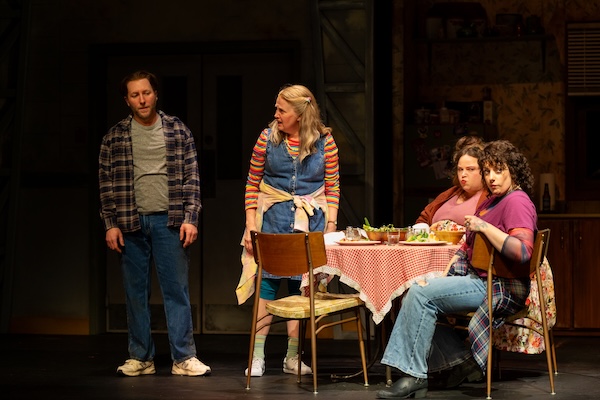
  • See Annie at Gateway
  • Explorations of light
  • Help with the legal aspects
  • Stories create impact
  • Different faiths gather
  • Advocating for girls’ rights
  • An oral song tradition
  • Genealogy tools and tips
  • Jew-hatred is centuries old
  • Aiding medical research
  • Connecting Jews to Judaism
  • Beacon of light in heart of city
  • Drag & Dreidel: A Queer Jewish Hanukkah Celebration
  • An emotional reunion
  • Post-tumble, lights still shine
  • Visit to cradle of Ashkenaz
  • Unique, memorable travels
  • Family memoir a work of art
  • A little holiday romance
  • The Maccabees, old and new
  • My Hanukkah miracle
  • After the rededication … a Hanukkah cartoon
  • Improving the holiday table
  • Vive la différence!
  • Fresh, healthy comfort foods
  • From the archives … Hanukkah
  • תגובתי לכתבה על ישראלים שרצו להגר לקנדה ולא קיבלו אותם עם שטיח אדום
  • Lessons in Mamdani’s win
  • West Van Story at the York
  • Words hold much power
  • Plenty of hopefulness
  • Lessons from past for today

Archives

Follow @JewishIndie
image - The CJN - Visit Us Banner - 300x600 - 101625

Unique, memorable travels

I know what my wife and I will do for at least part of our winter break – go through the latest edition of Robin Esrock’s The Great Canadian Bucket List: One-of-a-Kind Travel Experiences together and make plans. For when? I’m not sure. But plans. Wish lists.

Published by Dundurn Press, and released just last month, this is the third edition of Esrock’s popular book. I interviewed Esrock when the original book came out in 2013, and it has evolved substantially since then. Notably, as he points out in the introduction, this new list “casts an overdue lens on Indigenous tourism,” which he hopes will result in powerful and personal connections this country desperately needs.” 

New experiences have been added and some revisions have been made. In tandem with the books, there has always been a website, canadianbucketlist.com, because, as Esrock writes, “Tourism is a constantly evolving industry. Tour operators, restaurants and hotels often change names or ownership, adapt their services or cease operations altogether. Records fall, facts shift and practical information needs to be constantly updated.”

image - The Great Canadian Bucket List book coverThe Great Canadian Bucket List is organized by province, west to east, then up to Yukon, the Northwest Territories and Nunavut. It wraps up with a national section, which has some “Canada’s best” lists, among other things. There are fabulous colour photos throughout. Esrock highlights four to 17 experiences in each chapter, with his home province of British Columbia having the most entries. 

You will hear no complaints from me about this! During COVID, I saw more of British Columbia than I had in the previous 28 or so years of living here. What I love about Esrock’s bucket list choices is their range, from, for example, houseboating on Shuswap Lake, which I could see myself doing, to heli-skiing, which is a hard no, to visiting Haida Gwaii, which I hope to do next year, to things that I’ve done, like visit the Malahat Skywalk on Vancouver Island, and things that probably all of us have done, such as take a stroll along the Seawall. 

The range is as varied for the rest of Canada: there are places I’ve been, things I’d never do, and things I’d jump at the chance to do. 

Years ago, I visited Head-Smashed-in-Buffalo Jump in Alberta and found it fascinating, learning a lot about Indigenous hunting practices. According to Esrock, the “UNESCO World Heritage Site is the most significant and best-preserved buffalo jump site on the continent.”

I’m “hometown” proud of Magnetic Hill in Moncton, NB, where I was born. I’ve rolled “up” the hill more than once and still get a kick out of the cheesiness of it all. As Esrock explains, it’s all an optical illusion, but it’s still magic to me.

I’ve had the privilege of wandering, and occasionally buying something, in every one of Esrock’s best urban markets in Canada: Granville Island here, St. Lawrence Market in Toronto, ByWard Market in Ottawa and the Forks in Winnipeg.

I’m not a big risk taker, so won’t be leaning off the top of the CN Tower in Toronto anytime soon, even with all the safety cords in the world, or scaling a frozen waterfall in Mont-Sainte-Anne, Que. And I will never jump off anything much higher than a curb.

That said, there are so many experiences that I would like to have. In the context of Esrock’s book, one of the top ones is cycling the Kettle Valley Railway, especially now that I’ve learned from Esrock that there’s a company that will provide the bikes, accommodation – and carry our bags! I’d like to check out the tunnels in Moose Jaw, Sask., which “were access corridors for steam engineers, then used as a safe haven for Chinese migrants fearing for their lives, and finally by bootleggers and gangsters.” 

I would love to get to Churchill, Man., something I never managed to do when I lived in Winnipeg. Visiting L’Anse aux Meadows, in Newfoundland and Labrador, where there are the remains of a Norse settlement from 1000 CE, would be cool. Cruising the Northwest Passage would be a once-in-a-lifetime experience (hopefully). There are hikes and kayaking adventures that call to me….

But, for now, I will flip the pages of The Great Canadian Bucket List, contemplating all the possibilities. I’ll worry about what’s affordable, what’s doable physically and mentally, what’s possible time-wise, etc., later. 

Posted on December 5, 2025December 4, 2025Author Cynthia RamsayCategories BooksTags Canada, Great Canadian Bucket List, Robin Esrock, travel

Family memoir a work of art

Karen Bermann’s The Art of Being a Stranger: A Family Memoir, published by New Jewish Press, an imprint of University of Toronto Press, is a work of art. It is moving in ways hard to describe. It might not capture every detail of her family’s history – in fact, wide swaths of that history are missing. What’s not missing, what is powerful, are the feelings this book evokes.

Bermann, who lives in Rome, is professor emerita of architecture at Iowa State University. Her father, Fritz, was born into an Orthodox Jewish family in Vienna. At 15 years old, he and his younger sister, Elsa, who was 10, fled Europe, alone, in the late 1930s. They were separated in Haifa, his sister being taken to an orphanage with the other children who were too young to work. Fritz, as lucky as one can be after losing one’s family and home, ended up with a Russian farming family who treated him well. Nonetheless, at 18, he left the farm and headed off to live on a kibbutz.

image - The Art of Being a Stranger book coverThe way in which Bermann intertwines her father’s words with her own commentary and descriptions is so effective. For example, when Fritz tells her about getting in trouble, at 10 years old, for writing a story about building a bomb to blow up the school, Bermann writes, “‘Oh, Dad, that is really bad.’ Yes, that was a particularly bad one. ‘Were you always so angry?’ I was born angry. And scared. As was my father before me. ‘Even before the Nazis, you were so angry and scared?’ Well, yes. But the Nazis didn’t help.”

This dark sense of humour permeates The Art of Being a Stranger. Bermann doesn’t sentimentalize or sensationalize, she just tells us what her father tells her and sometimes shares her reactions. We also learn – and feel – what she went through as Fritz’s daughter. She writes succinctly, poetically, in both words and images. 

From pre-state Israel, Fritz went to New York City, where he worked in building maintenance. After an incident with an antisemitic boss, he found work at a company, where, over 20 years, he rose up the ladder. “Somehow from being a peasant in Palestine I found myself a bigshot in the world of New York building maintenance,” he tells his daughter. 

But New York never became, for him, a city of museums and operas, but remained one of crooks and bribes. Just like his Vienna wasn’t the city tourists visited to eat sachertorte and go skating, but rather was “a shtetl of poor religious Jews, a ghetto of ignorant bastards who beat their children for making noise on Shabbos, but who knew in their bones that they were not welcome, who recognized the stench of antisemitism in the street while others were perfuming their noses in the rose gardens.”

Fritz’s trauma, inherited from his ancestors, is passed on to his daughter in full force. Yet, Bermann, as a teenager, would defend her father against her friends’ calling him a Nazi, for instance. He was brutally abusive. She only talks about this in relation to herself, not others in the household. To survive, she built “a parallel structure to the one I live in my father’s house.” 

“Fritz was ruthlessly (one of his favorite words) honest about the danger of hope. Hope was more than pointless, it was stupid, and led to suffering,” writes Bermann. “People disappointed by life were stupid people; they made him angry…. He taught us about the strength of character that hopelessness required.”

In addition to sharing some of her childhood experiences, Bermann shares some of her experiences working, at the age of 19, on the rehabilitation of one of the more than 1,000 abandoned buildings on the Lower East Side that she and a group took over from the city: “Ditched by landlords who couldn’t squeeze a profit out of a tenement in need of heat, in need of maintenance, a building that leaked from every weak pore.”

We meet other family members, we find out how Fritz’s story ends. From fragments of a life, we see how complex we humans are, how many contradictions we hold within us, how we can be that which we hate, how we can hurt who we love and how we can love the broken, how beauty exists, sometimes inextricably with the ugly. The stranger of the title is Fritz, it’s Bermann, it’s us. Yet, experiencing The Art of Being a Stranger made me feel more part of humanity, kind of like when we chant Ashamnu together as a congregation: we have abused, we have betrayed, we have been cruel…. None of us is perfect, none of us gets through life unscathed or without hurting others. Yet, we keep getting up in the morning and living. Until we don’t. 

Posted on December 5, 2025December 4, 2025Author Cynthia RamsayCategories BooksTags Art of Being a Stranger, Holocaust, intergenerational trauma, Karen Bermann, memoirs

A little holiday romance

One of my guilty pleasures is Hallmark-style holiday movies. Fine, they’re Christmas movies mainly. But, whenever there is a Jewish character, plotline or, in rare instances, it’s a Hanukkah movie, I am even more a fan. Comfortable in their predictability, especially the happy ending, my body relaxes just thinking about the break from reality they offer. In the last few years, I’ve also read more than my share of  Hallmark-style novels, and this is why I was excited to receive an email from Amelia Doyle, author of Two Weeks in Toronto, which was published last year but was just named a finalist in the romance category of the Canadian Book Club Awards. The winners will be announced in February.

Doyle, a Jewish author based in Dublin, Ireland, has written a few romance novels and has another on the way for next year. Two Weeks in Toronto would make a wonderful holiday movie – and a welcome gift for anyone who’s admitted to you that they like romance novels. There’s no will-they-or-won’t-they-fall-in-love here, just how they will, what obstacles they will have to overcome, what role their best friends or family members will play.

image - Two Weeks in Toronto book coverIn Two Weeks in Toronto, our protagonists are Ciara and Ethan.  They live in Dublin and know each other because Ethan is Ciara’s dentist – and Ciara is terrified of the dentist. Not of Ethan, but of the dentist as a larger concept, its root canals, teeth-cleanings, etc. Ethan does what he can to help Ciara overcome her fears. So, though the two have known each other awhile, it’s been a professional relationship, and they don’t know each other well.

This changes when Ciara’s sister’s wedding requires Ciara to return to her family in Toronto, which she really doesn’t want to do because of a brutally harsh mother and a very difficult sister, and Ethan must go home for the celebration of his parents’ 40th anniversary and of his brother’s engagement, which will be awkward, to say the least, because his brother’s fiancée is Ethan’s former girlfriend.

Ethan suggests to Ciara that he join her in Toronto for the wedding (and Hanukkah) and she join him in Galway over New Year’s – as “boyfriend” and “girlfriend,” so neither will have to face their situations alone. While Ethan is not Jewish, he ends up feeling quite at home with Ciara’s family. Turns out her father, who’s from Ireland, knows Ethan’s parents, and there are connections with other folks in Ciara’s realm. Ciara’s dad also makes sure Ethan knows what’s going on with the candlelightings and what Hanukkah is all about.

I had some trouble believing the sheer horridness of Ciara’s mother and sister, in part because her dad and brother are so friendly and caring, but also because I’m lucky enough not to have such nasty people in my family. I would have been more heavy-handed in the editing process, but, overall, Two Weeks in Toronto is a light, fun read. I’ll keep Doyle in mind when I’m looking for my next escape. 

Posted on December 5, 2025December 4, 2025Author Cynthia RamsayCategories BooksTags Amelia Doyle, romance novels, Two Weeks in Toronto
The Maccabees, old and new

The Maccabees, old and new

A postcard featuring the work “In Prayer – In War” by Polish-American artist and cartoonist Mitchell Loeb (1889-1968). (internet photo)

Of all the Jewish holidays, Hanukkah is the one most intimately connected to Israel and the Zionist dream. It mirrors the struggle to reestablish the Jewish state, and is perhaps more political in nature than religious. 

Hanukkah represents Jewish military power and Jewish independence, which, in the case of the Hasmoneans, lasted 80 to 100 years. The Hasmoneans and their fellow second-century BCE Judeans were able to establish a state despite having had to face a strong and well-equipped empire. The odds were heavily stacked against them, yet they prevailed. This is why some people say that the Hanukkah story parallels the struggles and achievements of Israel’s first Jewish residents and founding pioneers, surrounded as they were by hostile neighbours.  

It is hard to claim that the miracle in which a tiny bit of oil lasted, not for one day, but for eight days, is a critical part of an Israeli Hanukkah. However, oil is a crucial part of the holiday. Sufganiyot (filled donuts), fried in oil, go on sale at least a month before the first candle is lit. (I saw them on sale in a Tel Aviv bakery on Nov. 10!) Nowadays, Jerusalem coffee houses and bakeries even have their sufganiyot rated by the media. 

Potato pancakes (levivot, in Hebrew; latkes, in Yiddish) take second place to sufganiyot. Perhaps because levivot are generally products of one’s private kitchen, rather than a bakery, or perhaps because, as an historically Ashkenazi Eastern European food, it appeals to only half the Jewish population in Israel. The other half is Sephardi, meaning people whose long-ago origins were in Iberia, while, in the United States, no more than 10% of the Jewish population is either Sephardi or Mizrachi (Jews who came from Muslim-ruled lands). I couldn’t find any recent figures for Canada’s Jewish population by these measures.

As for levivot, they are no longer made just with potatoes. There might be additions or substitutions like sweet potatoes or zucchini, featuring spices such as cumin and paprika.

As many know, Israel’s climate is well suited to growing olives, and olive trees have grown here for centuries. The trees like the semi-arid climate, with our long, hot, sunny summers and mild, cool winters, as well as Israel’s rocky terrain. Generally, Israeli-grown olives are ready for picking starting just before Hanukkah. There are olive-picking festivals and such events highlight another difference between diasporic and Israeli  observances of Hanukkah. 

Those living in pre-state Palestine knew what Hitler was doing in Europe. According to historian Benny Morris,  the Jewish population in Palestine was reading several newspapers at the time, like Ha’aretz, Davar and Do’ar ha-Yom.

The pre-1948 cultural products reflect not only what Palestinian Zionists knew about the fate of European Jewry, but also an ideological effort at creating a new national character. This “new” Jew would not be a victim. He would be a kind of new Maccabee. According to historian Reuven Firestone, the new Zionist Jew would be strong, confident and effective, and the very act of developing the land of Israel would, in turn, develop the Jewish psyche and person.

So, Hanukkah songs written in either the pre-state or early statehood days focus on the success of Zionist fighters more than they do the accomplishments of the Maccabees. In 1936, Menashe Ravina composed the song “Mi Yimalel.” Its lyrics are: “Who can retell the mighty deeds of Israel, who can count them? / In every generation a hero will arise, a redeemer for the people. / Listen! / In those days in this time / The Maccabee saves and redeems / And in our day the whole people of Israel / Will join together and arise and be redeemed.”

In the 1940s, Sara Levi Tanay wrote the words and Emanuel Amiran wrote the music for “Ba’anu Choshech Legaresh.” The idea is that, by banding together, the state can survive: “In our hands are light and fire. / Each person is a small light, / And all of us a great light. / Go away darkness, away, obscurity! / Make way for the light.”

Starting in the 1940s, the Young Maccabees organization began a torch race on Hanukkah. This race was unique to Israel’s celebration of the holiday. It began in the Modi’in area, where it is believed the Maccabees are buried, and was held in all kinds of weather. In December 1954, for example, when the runners reached Jerusalem, it was pouring rain. Israeli youth organizations like the Scouts hold marches and hikes on Hanukkah. 

Ironically, the original torch races, called lampadedromia or lampas, took place in ancient Greece, as part of religious festivals honouring the gods of fire. I say ironically, as the Maccabees fought for their independence from the Syrian Greeks of the Seleucid Empire, which was a Greek successor state to Alexander the Great’s empire. The Seleucid empire, under Antiochus, ruled over Judea. It desecrated the Temple in Jerusalem and sought to forcefully impose Hellenistic culture and religion on the Jewish population.

Today, in both Israel and in the diaspora, chocolate coins, usually wrapped in gold or silver foil – the 1920s brainstorm product of Loft Chocolate Company – are given to children during Hanukkah. Probably not too many people are aware of this, but, according to Rabbi Deborah Prinz, this edible gelt (money, in Yiddish) recalls the booty, including coins, that the Maccabees distributed to Jewish widows, soldiers and orphans, possibly at the first celebration of the rededication of the Jerusalem Temple. Also, in ancient Israel, striking, minting and distributing coins expressed Hanukkah’s message of political autonomy. The Maccabees’ descendants, the Hasmoneans, ruled Judea, as mentioned above, and issued their own coins.

Finally, a column in the Great Mosque of Gaza once bore inscriptions in Hebrew and depicted a seven-branched menorah (like the one used in the Temple), a shofar and an etrog, indicating a Jewish community in the area during the Roman/Byzantine and talmudic eras. These inscriptions apparently disappeared after the First Intifada in 1987. The Hanukkah menorah, or hanukkiyah, by contrast, has nine branches, commemorating the eight days the oil burned in the rededicated Temple, plus a shamash (helper) candle to do the lighting of the symbolic candles. 

Deborah Rubin Fields is an Israel-based features writer. She is also the author of Take a Peek Inside: A Child’s Guide to Radiology Exams, published in English, Hebrew and Arabic.

Format ImagePosted on December 5, 2025December 4, 2025Author Deborah Rubin FieldsCategories Celebrating the HolidaysTags Diaspora, Hanukkah, history, Israel, Jewish customs, Maccabees, Zionism
My Hanukkah miracle

My Hanukkah miracle

Last year, a great miracle happened here:  Beaver Point Hall on Salt Spring Island. (photo by R. Shefa)

Hanukkah is a celebratory festival with oodles of delicious food – mostly fried – songs, candles and gatherings.

It is also considered a miracle festival. Jews rededicated the Second Temple when a small amount of oil for the Temple menorah lasted for eight days. This is why we eat fried foods, such as potato latkes and melt-in-your-mouth donuts, which also increases our calorie consumption, so we sigh with relief on the last day of the holiday.

Personally, I consider any day that runs smoothly from beginning to end a miracle. Take this past Hanukkah, when I lost a hearing aid on Salt Spring Island.

I had been invited to sing at a Hanukkah party. Although it was a dark, stormy night, my husband and I were excited to meet the locals and unwind in the quaint and character-filled Beaver Point Hall. At 92 years old, the hall has been a regular staple in the community. It hosts a diverse range of activities, such as concerts, workshops, kids programs, dancing and weddings.

A large fire welcomed us and there were some 20 hanukkiyot waiting to be lit before the large potluck dinner began. However, despite numerous announcements to kindly wait until the candles were lit and blessings made, the crowd plunged into the myriad dishes: salads, kugels, mung bean hummus (hey, this is Salt Spring), perogies, lasagna, homemade breads. The volunteer latke makers rushed to serve the latkes.

The hall acoustics became poor, so I took out one hearing aid and placed it in my purse. I could now hear my voice clearly for singing.

As I headed to the smaller room to tune the guitar, the remaining left hearing aid, still in my ear, made its usual beeps to inform me that I had left an aid behind. I ignored it.

After a very pleasant evening, we made the 20-minute trek home to the other side of the island. My hearing aid did not.

After tearing through my handbag, guitar case and car, it was officially not with me. There were only two places it could be: at the hall, or in the garbage, which would have been carted to one of the volunteer’s homes.

We were leaving at noon the next day, so an urgent search was necessary. But the hall was closed and my friend was not answering her phone. After much thought, I Googled the hall’s website. It displayed the calendar with all the rentals, including a dance improv the next day.

Miracle #1: the dance improv’s contact information was on Facebook.

Miracle #2: the organizer responded to my request and messaged back that the hall would open at 9 a.m. for the cleaners.

Miracle #3: after several texts, the organizer decided it was safe to give me the lock code to enter. And so we did. At 11 p.m., my kind husband, Steve, drove me back to the hall, as it’s a bit tricky to drive in the dark on rough roads, with deer occasionally darting out and heavy rain falling.

Steve parked the car so the headlights shone on the lock code and I was inside. Finding the light switches took a good few minutes and I never did find the kitchen ones. I headed to the stage, where my purse had been. Nothing but a few decorations. And then, suddenly, my left hearing aid, still firmly in my ear, began to beep with excitement – its partner was in the hall!

Steve joined the search. My left hearing aid clutched to his ear, he looked in every possible nook. He got excited. When he walked into the middle of the room, he said the beeping was loudest there. If someone had walked into the hall at that point, they probably would have thought there were two aliens loose.

What motivated me to look under an electric outlet, I will never know, but that’s where I found my hearing aid – completely covered by some Hanukkah gelt wrappers, most likely swept under them by one of the volunteers.

It was truly the best Hanukkah miracle! 

Jenny Wright is a writer, music therapist, children’s musician and recording artist.

Format ImagePosted on December 5, 2025December 4, 2025Author Jenny WrightCategories Celebrating the HolidaysTags Hanukkah, hearing aids, miracles, Salt Spring Island

After the rededication … a Hanukkah cartoon

image - Judah cleaning up after the Temple rededication - a cartoon by Beverley Kort

Posted on December 5, 2025December 4, 2025Author Beverley KortCategories Celebrating the HolidaysTags cartoons, Hanukkah, Maccabees

Improving the holiday table

These latkes can be made vegan, gluten-free and with reduced oil – or not. (photo by Michelle Dodek)

They tried to kill us, we survived, let’s eat. This refrain encapsulates how Jews celebrate a number of holidays and view our tumultuous history. In September, Congregation Beth Israel hosted a three-part High Holiday Cooking series. It was so popular that classes have been scheduled throughout the coming months to coincide with various holidays. Luckily for those who like to learn new cooking techniques and the history and symbolism behind Jewish food, there are plenty of holidays between now and the end of May.

First on the list is Hanukkah. Associated with oil, this winter holiday is a chance for Greater Vancouver Jews to throw off the shackles of green smoothies and embrace greasy carbs, for religious reasons. 

The central event celebrated at Hanukkah is the liberation of the Temple in Jerusalem from the Seleucid Greeks, who had conquered the land of Israel and were attempting to forcibly convert all Jews. These events took place after the biblical era, so Hanukkah is not one of the holy days mentioned in the Torah. It is recorded in the Books of Maccabees.

Although not so religiously significant, Hanukkah is one of the most popular Jewish holidays, especially in North America. It’s dark outside and lighting candles to illuminate the darkness both literally and figuratively is cheering. In modern times, the heroic story of the small band of Jewish rebels taking on a mighty army and winning is especially poignant, given the many struggles facing the tiny modern state of Israel. And, let’s face it, having a fun Jewish foil to Christmas is helpful.

There is no requirement to refrain from work during Hanukkah, as there is for many other Jewish holidays. To accompany the week-plus of nightly candlelighting, we have special foods. Potato latkes are the most recognizable on the Ashkenazi menu, but rugelach are also traditionally prepared for Hanukkah. Why? The three ingredients in the dough are flour, butter and cream cheese. Lots of fat. Yum.

Sephardi and Mizrachi Jews connect the culinary dots much more succinctly. Sfinge is a delicious Moroccan free-form, deep-fried dough eaten on Hanukkah. Filled donuts, known widely as sufganiyot, have been part of Sephardi and Mizrachi traditions as well. Popularized in Israel by the Labour government in the 1950s, the making of donuts for Hanukkah was the tastiest of many job creation projects for Israel’s struggling economy. Although it was seasonal, encouraging bakeries to hire extra staff in November and December to fry up holiday cheer resulted in a national culture of amazingly tasty filled donuts.

The Dec. 2 Hanukkah cooking class at the BI was dedicated to helping people make out-of-the-box latkes with interesting toppings, as well as a couple of desserts that don’t require a pot of deep-frying oil. While the recipe for rugelach is simple, technique is needed to get the flakiest dough. There is a lot of room for creativity in the filling, but not everything will be a success, so spread thinly if you plan to try out the recipe below and see if your idea works first before producing a huge batch. 

For more “Kitchen Judaism,” watch for other holiday cooking classes at Beth Israel. Classes will include Tu b’Shevat Temptations; Stuffed for Purim, featuring two classic filled foods; Seder and Shabbat Dinner Vegetarian-style; and Shavuot Dairy Delights.

SEASONAL LATKES
(These latkes can be made vegan, gluten-free and with reduced oil. The substitution of vegetables other than potatoes lowers the glycemic index, making the latkes better for diabetics, and more satiating and visually attractive.) 

1 large onion, grated and  squeezed
4 cups of the any of the following, grated: beets, winter squash (like kabocha, acorn, banana or butternut), carrots, turnips or parsnips
2 eggs
4 tbsp corn or potato starch
salt and pepper to taste
oil for frying

photo - These latkes can be made vegan, gluten-free and with reduced oil – or not
These latkes can be made vegan, gluten-free and with reduced oil – or not. (photo by Michelle Dodek)

Once the vegetables are grated and the excess liquid is squeezed out, combine all the ingredients, coating the vegetables well. Take a heaping tablespoon of the mixture and drop it into the hot oil. Do not squish them down, just spread out the mixture so the edges are thin and the middle has some volume. Repeat, making sure the latkes are spaced out enough to flip. Once the edges begin to brown, flip the latkes and fry a few more minutes. If you plan to freeze and reheat, cook for fewer minutes, then cool on layers of paper towels. To freeze the latkes, fully cool them, remove the paper towel and lay the latkes out in individual layers on trays for best results. Once frozen, put them into an airtight container. 

To make a vegan version of this recipe, use flax eggs (one tablespoon of ground flax plus three tablespoons of water/”egg”). The baked version includes two tablespoons of olive oil in the mixture and is baked at 375˚F until brown.

RUGELACH

250g cream cheese (room temperature: leave out a maximum of 2 hours)
1 cup butter (room temperature: can be left out overnight)
2 cups flour
filling of choice: cinnamon, sugar, raisins, Nutella, jam (be creative)

photo - Rugelach are so much better when eaten the day they’re made
Rugelach are so much better when eaten the day they’re made. (photo by Michelle Dodek)

Mix the cream cheese and butter until well creamed. Add the flour and mix until a soft dough is formed.  Ideally, cover and refrigerate for two hours or overnight.

Preheat the oven to 350˚F. Line two cookie sheets with parchment or a baking mat. Divide the dough into four balls. Roll into three-millimetre-thick circles. They should be almost 25 centimetres wide.

Cover the dough with a thin layer of filling. Don’t be tempted to make it too thick because it will burn and make an enormous mess. If you’re using cinnamon and sugar, sprinkle three parts sugar and one part cinnamon all over the dough.

Cut the circles into 10 or 12 “pizza-shaped” slices. Roll from the outer edge into the centre, making a cute rolled-up shape. Put the rugelach on the cookie sheet and either freeze them on the pan and then transfer them to an airtight container or bake them immediately. Bake for 25 minutes or until lightly golden.

Rugelach really are 1,000 times better when eaten the day they’re made. 

Michelle Dodek is a long-time contributor to the Jewish Independent and is a cooking instructor who specializes in Jewish and vegetarian cooking.

Posted on December 5, 2025December 4, 2025Author Michelle DodekCategories Celebrating the HolidaysTags baking, cooking, cooking lessons, frying, Hanukkah, Kitchen Judaism, latkes, recipes, rugelach
Vive la différence!

Vive la différence!

French is one of the main languages one hears on the streets of multicultural Jerusalem today, along with Hebrew, Arabic, English and Russian. More than 2,170 French Jews moved to Israel in 2024. The number in 2025 is projected to exceed 3,000. The wave of aliyah – driven by antisemitism and violence targeting Jews – has resulted in the establishment of scores of new patisseries, boulangeries and charcuteries – all kosher. Seen here is Foodies on Yoel Moshe Salomon Street. Nearby is Napoleon, one in a cluster of gourmet restaurants in Kikar Hamusica (Place de la Musique), established by former Parisian Laurent Levy, who is building Le Grand Hôtel.  

Format ImagePosted on December 5, 2025December 4, 2025Author Gil ZoharCategories Celebrating the HolidaysTags aliyah, France, Hanukkah, immigration, Israel, sufganiyot
Fresh, healthy comfort foods

Fresh, healthy comfort foods

Nico Pallota’s Greek Orzo Salad. (photo from hilltoprecipes.com)

My house, my rules. And those rules were recently transformed. No more fatty foods, no more carbs, no more booze. OK, an amendment is in order. Fewer fatty foods, fewer and more curated carbs, and still no booze. Apparently, I am my husband’s keeper, as far as food goes. Or, at least, food he consumes in our home. If he sneaks out for a sabich, it’s beyond my control. But, at home, I’m the food boss. Or, at least, while I’m awake. What Harvey does in the middle of the night or when I’m not around is another story. One that rarely ends well.

Lest I sound like an ogre or a nag-wife, let me assure you that I am both. But in a good way. I only want my hubby to be healthy and live a long life – if my nagging doesn’t kill him first, G-d forbid. I know, I know, I should stay in my own lane. But hey, don’t the rules of engagement (and marriage) stipulate that we look out for each other’s health and welfare? I’m sticking to that theory like velcro.

In the service of eating healthier meals, I found a refreshing hearty salad that will not only fill you up, but satisfy your tastebuds. Salads often present as side dishes, but this one can easily stand independently and confidently as a main dish. I found the recipe on one of my forays down the rabbit hole of Instagram. This super-easy recipe for Greek Orzo Salad with Marinated Chickpeas (by Nico Pallotta) jumped out at me as something that doesn’t call for a bunch of fancy-pants ingredients. It’s certifiably healthy, contains a respectable amount of protein (thanks to the feta cheese and chickpeas) and is ridiculously refreshing. Note: I omitted the onion, since onions and I have a love-hate relationship. Mostly hate.

GREEK ORZO SALAD WITH MARINATED CHICKPEAS

1 1/4 cup orzo pasta
1 can chickpeas (15oz/400g)
1 1/2 cups cherry tomatoes, halved or quartered
1 1/2 cups Persian cucumbers, diced
1/2 red onion, chopped (optional)
1/3 cup pitted Kalamata olives
4oz/100g feta cheese, crumbled 

dressing
4 tbsp extra virgin olive oil
2 tbsp lemon juice and lemon zest
1 tbsp honey
1 tbsp Dijon mustard
1 1/2 tsp dried oregano
1/2 tsp salt and black pepper

In a bowl, whisk together all the dressing ingredients – olive oil, lemon juice and zest, honey, mustard, oregano, salt and pepper until smooth. Add the chickpeas (drained and rinsed), toss to coat and let sit 10 minutes. If you warm the chickpeas for 15-30 seconds in the microwave before tossing them with the dressing, they will soak up more flavour.

Boil the orzo pasta in salted water until al dente. Drain, rinse under cold water for 10 seconds and shake off excess water. Let it cool.

Add the cherry tomatoes, cucumber, red onion, olives and feta cheese to the chickpeas and dressing, and toss. Mix in the cooled orzo and serve right away or chill for 30 to 60 minutes for a more melded flavour.

This salad is a nice break from heavier meals that feature more aggressive proteins like meat or chicken. Never thought I’d anthropomorphize meat, but there it is. Harvey pronounced it “guest-worthy” (his highest accolade). He graciously told me I could make it anytime.

Colourful and vibrant, you can serve it with a baguette or sourdough bread and you’ve got yourself a complete meal. It keeps well in the fridge overnight, if you happen to have any left over. If you insist on consuming more protein, a light piece of salmon would pair nicely with it, or maybe a bowl of soup. I would rarely consider a salad a full-fledged dinner, as I’m a hardcore meat-and-potatoes kind of gal, but, in this case, it really did fill me up.

As for other nourishment, I recently stumbled upon an easy and luscious butternut squash soup recipe. It’s basically a sheet pan soup, where you roast the veggies, transfer them to a pot, add broth and then blend. Harvey proclaimed it “the world’s best soup!” (exclamation mark included).

BUTTERNUT SQUASH SOUP
(adapted from Sivan’s Kitchen on Instagram)

1 medium butternut squash
3 yams, peeled
4-5 carrots, peeled
tiny piece of white onion (since onion hates me)
1 whole garlic head with top cut off
2-inch piece of ginger,  sliced thin
7 cups chicken broth
olive oil
salt and pepper
cinnamon

Preheat the oven to 400˚F. Line a cookie sheet with parchment paper and lightly drizzle with olive oil. Peel the carrots and rub with olive oil. Drizzle the garlic head with oil and wrap in foil.

Soften the squash by putting it in the microwave for two minutes – make sure to poke it with a knife a few times to let the steam escape. 

Cut the squash and yams in half lengthwise (scoop out and discard the squash seeds), rub with olive oil, then season with salt, pepper and cinnamon.

Place the veggies cut side down on lightly oiled parchment. Add the onion, ginger and foil-wrapped garlic. Bake for one hour.

Scoop out the squash and put all the veggies into a large pot. Squeeze out the baked garlic into the pot. Add chicken broth and simmer for about 15 minutes, breaking up the roasted veggies. Let it cool a bit then puree it.

This soup is so silky smooth that you’d swear there was cream in it, but no cream was poured (or harmed) in its making. I swear. If there was ever a fall comfort food, this is it. According to Sivan’s Kitchen, the soup’s Israeli name is marak katom (orange soup). In whatever language, it’s spectacular. I think the cinnamon puts it over the top. So, stop wasting time and get your gourd on! 

Shelley Civkin, aka the Accidental Balabusta, is a happily retired librarian and communications officer. For 17 years, she wrote a weekly book review column for the Richmond Review. She’s currently a freelance writer and volunteer.

Format ImagePosted on December 5, 2025December 4, 2025Author Shelley CivkinCategories LifeTags cooking, recipes, salad, soup
From the archives … Hanukkah

From the archives … Hanukkah

The editorial in the Dec. 8, 1939, issue of the Jewish Western Bulletin.

We’ve come a long way in many ways, though some readers may disagree. I read, kind of in horror, the newspaper’s Dec. 8, 1939, editorial in which the lesson drawn from Hanukkah was that, “More formidable than the most rabid anti-Semite is the unfaithful Jew in our ranks. More threatening than all the malicious libels and frauds of such papers as DER ANGRIFF and DER DEUTSCHE BEOBACHTER, is the Jew who is IGNORANT of his history, ignorant of his literature, his tradition, his TORAH and his God.”

I can appreciate the Maccabean victory “was not by a superior might but with a superior SPIRIT, that untrained Judean forces did meet the enemy and vanquished him.” I agree that Jewish education is vital to Jewish continuity, but yikes. I’m not sure all the “yelling” capital letters encourage the message that: “There must be a closer alliance, a sense of closer affinity, a warmer consciousness of brotherhood between Jew and Jew and between the individual Jew and Jewry at large if we are to succeed – nay, if we are to insure our future as a people!”

I am also always surprised at how much of the advertising in the early years of the Jewish Western Bulletin was for alcohol. As but one example, given the time of year, is the Dec. 24, 1941, ad from United Distillers Ltd., “The Happy Holiday List” that readers are asked to “cut out and keep for reference,” which I guess I’ve done, though I don’t think any of the brands still exist.

I did enjoy some of the Hanukkah trivia that made the front cover of the Dec. 11, 1936, paper, though it was a jarring juxtaposition with the world news. As it happens, the first item, on the melody of the traditional Hanukkah song “Maoz Tzur,” mentions Martin Luther, as does the article on the cemetery in the German City of Worms that is featured in this week’s issue – on this very page, in fact – which discusses briefly Luther’s legacy.

In his “Lights on Hanukah” article, Rabbi Abraham H. Israelitan points out: “The familiar melody of ‘Maoz-Tzur,’ the well-known hymn that is sung after the kindling of the lights, is not Jewish at all, as is commonly supposed, but is really an adaptation of an old German folk song of the Middle Ages. This German folk melody has also been utilized by the Christians. The famous Martin Luther, for example, utilized it for his German chorals.”

The rabbi also notes, “One of the poems in Lord Byron’s ‘Hebrew Melodies’ – ‘On Jordans Bank’s’ [sic] – was set to the music of Maoz-Tzur by the great poet’s close friend Isaac Nathan.” He goes on to reveal “the origin of latkes,” and a few more of what we now call “fun facts.” Israelitan was not a local rabbi. His article was distributed by Seven Arts Feature Syndicate, which, according to Google, was an American group that provided content to Jewish papers from the 1920s through the 1960s.

Holiday parties, concerts, menorah lightings and more have always been promoted or covered in the newspaper, of course. Almost every Hanukkah issue has included recipes, gift ideas, personal holiday stories. And pretty much every Hanukkah-themed editorial aims to point out what the Maccabees can teach us today or what light we can shine to diminish the darkness in the world – though we do it a little less harshly than the editors of 80, 90 years ago, I think. Most certainly, we do it with fewer capital letters. 

image - An adl in the Dec. 24, 1941, issue of the Jewish Western Bulletin
An ad in the Dec. 24, 1941, issue of the Jewish Western Bulletin.
image - An article on Hanukkah trivia in the Jewish Western Bulletin Dec. 11, 1936
An article on Hanukkah trivia in the Jewish Western Bulletin Dec. 11, 1936.
Posted on December 5, 2025December 4, 2025Author Cynthia RamsayCategories From the JITags archives, editorials, fun facts, Hanukkah, history, Maoz Tzur, trivia

Posts pagination

Previous page Page 1 Page 2 Page 3 Page 4 … Page 650 Next page
Proudly powered by WordPress