Skip to content
  • Home
  • Subscribe / donate
  • Events calendar
  • News
    • Local
    • National
    • Israel
    • World
    • עניין בחדשות
      A roundup of news in Canada and further afield, in Hebrew.
  • Opinion
    • From the JI
    • Op-Ed
  • Arts & Culture
    • Performing Arts
    • Music
    • Books
    • Visual Arts
    • TV & Film
  • Life
    • Celebrating the Holidays
    • Travel
    • The Daily Snooze
      Cartoons by Jacob Samuel
    • Mystery Photo
      Help the JI and JMABC fill in the gaps in our archives.
  • Community Links
    • Organizations, Etc.
    • Other News Sources & Blogs
    • Business Directory
  • FAQ
  • JI Chai Celebration
  • JI@88! video

Recent Posts

  • Zionism wins big in Vegas
  • Different but connected
  • Survival not passive
  • Musical celebration of Israel
  • Shoppe celebrates 25 years
  • Human “book” event
  • Reclaiming Jewish stories
  • Bema presents Perseverance
  • CSS honours Bellas z”l
  • Sheba Promise here May 7
  • Reflections from Be’eri
  • New law a desecration
  • Resilient joy in tough times
  • Rescue dog brings joy
  • Art chosen for new museum
  • Reminder of hope, resilience
  • The national food of Israel?
  • Story of Israel’s north
  • Sheltering in train stations
  • Teach critical thinking
  • Learning to bridge divides
  • Supporting Iranian community
  • Art dismantles systems
  • Beth Tikvah celebrates 50th
  • What is Jewish music?
  • Celebrate joy of music
  • Women share experiences 
  • Raising funds for Survivors
  • Call for digital literacy
  • The hidden hand of hate
  • Tarot as spiritual ritual
  • Students create fancy meal
  • Encouraging young voices
  • Rose’s Angels delivers
  • Living life to its fullest
  • Drawing on his roots

Archives

Follow @JewishIndie
image - The CJN - Visit Us Banner - 300x600 - 101625

Talking helps reduce stigma

Talking helps reduce stigma

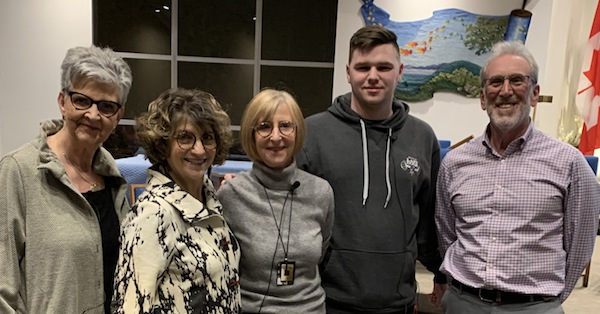
Left to right: Peggy Allen, Shelley Karrel, Shelley Rivkin, Jordan Bowman and Howard Harowitz. (photo from JACS Vancouver)

The capacity for transformation and healing was front and centre at the event Optimism and Hope: Erasing Stigma of Mental Illness, Addiction and Homelessness.

Co-sponsored by Jewish Family Services (JFS), Tikva Housing and Jewish Addiction Community Services (JACS) Vancouver, the panel discussion on Feb. 26 was held at Temple Sholom. It featured Shelley Rivkin of the Jewish Federation of Greater Vancouver, Abbotsford entrepreneur and volunteer Peggy Allen, and Jordan Bowman of Last Door treatment and recovery centre in New Westminster.

Temple Sholom’s Rabbi Dan Moskovitz welcomed those gathered by talking about the Aleinu prayer, which, he said, asks us “to go out into the world and do what we’re praying for. And so, if I can make a request of all of us, myself included, it’s to go out from this room and to do and to share what we’ve learned and what we’ve heard tonight with our families and with our broader circle. That’s our shlichut, that’s our sacred mission, beyond just coming here today to get what we need for ourselves.”

JACS Vancouver board chair Howard Harowitz briefly described the missions of each of the event sponsors before introducing the night’s speakers, beginning with Rivkin, who shared the stories of a few community members who have been impacted by the risk of homelessness. She prefaced her remarks by saying homelessness is not limited to people living on the street or who live in shelters. Rather, the growing concern in our community is “relative homelessness, the lack of suitable, consistent and predictable housing,” she said.

She also noted that “it is not a natural equation that addiction, mental health and homelessness are faced by all people” in need. “Each person has to be approached individually and uniquely,” she said, then listed six sources of support in our community: JFS, Tikva Housing, Yaffa Housing, JACS, the Kehila Society of Richmond and the community’s synagogues.

Originally from Regina, Sask., Allen has lived in Abbotsford for a long time. She lives in an area where homeless people have gathered since the Salvation Army moved into the neighbourhood in 2004. A wife and the mother of two children, the situation was very difficult initially. She shared stories of her young granddaughter witnessing people having sex and shooting up, and of being chased out of her home by a crack addict.

“I was quite a happy person and then the homeless moved in and I changed forever,” she said. “I got angrier and angrier and angrier and I ended up making, in 15 years, I made 463 calls to the police. And they came every time and did nothing, because what are they going to do?”

Allen said she became very depressed. Then, she was invited to a meeting at city hall about the homeless. She challenged attendees to come and see the extent of the problem for themselves, and two women from Fraser Health took her up on it. Over coffee, Allen shared with them her concerns and, despite her self-described antagonism to them, they invited her to speak at a meeting of the Drug War Survivors, a peer-based user group that participates in the development of harm-reduction policies, among other things.

Reluctantly, she agreed. Expecting an audience of maybe 10 drug addicts, “there were 110 of them,” she said. “I look around and I open my mouth and I just let it all out. I don’t know what happened, it was a miracle, really. I talked about my father and I talked about him beating my mother so desperately,” waking Allen’s sister, who was told to return to bed by their mother, and did. “That’s what we were raised with,” said Allen. “I had never spoken about it, and I just let it all out,” including how she was kicked out of a school in her teens for selling drugs.

After her remarks, audience members lined up, but she didn’t know why, so she started to leave. “As I’m walking out, the first guy comes up and hugs me. They were all standing there to hug me,” she said, holding back tears.

One of the men recognized Allen from secondary school. He shared with her that he was raised with such anger that he went down the path of drugs, whereas she – who his family warned him about as a teen, since she sold drugs – did not. He said to Allen, “I see now that I, too, can change my life.”

This interaction, she said, changed her life. “I went home, and I was walking up the driveway to get the mail and this crazy lady that lived on the street and was a huge drug addict and was nasty and did not like me, she came running up my driveway swearing and yelling at me with this other guy. I was so emotional, I went running at her, I don’t know what I was going to do, and I stopped. I changed my mind. I turned around and I went home. And my life changed. Everything on our street is still happening and nothing has changed much there, except me.”

Allen started giving to the homeless. She joined the city’s Business Engagement Ambassador Project, which works to build relationships between Abbotsford residents, business owners, homeless and others to strengthen the sense of community. “What I do is I speak all over the place and raise money to help them help themselves,” she said of those who are homeless.

The project is a year-and-half old and she described it as a success. One aspect in particular that is working, she said, is that the program pays homeless people to clean up area businesses and parks.

The last speaker, Bowman, now 22 years old, has been clean for just over four years. He is a youth program support worker at Last Door, the centre at which he was set on the path of recovery.

Bowman said he had a good upbringing, went to Jewish summer camp and day schools, was into sports, has lots of friends and has a great family. Having lost his mother to cancer when he was 10, he said, “That was obviously tough, but by no means do I point my finger at that and say, ‘that’s when I started using drugs.’”

He described his life as normal, living with his dad and brother. There were no indications, he said, that he would become an addict. Addiction does not discriminate, he said, and people need to know that. His family, he said, were completely surprised to find out about his drug use and were “unversed in the topic of addiction.” Luckily, he had a cousin who works as a drug and alcohol counselor and “she saved the day” when it came to him seeking help.

At age 14, Bowman started to experiment with marijuana. He couldn’t say exactly why he started using harder drugs, but perhaps he had just gotten in with the wrong crowd. He described the process as progressive. “It went from using once in awhile to using every day, to doing whatever it takes,” he said.

“I’m not going to get too much into the things I did to get to get high every day but it definitely involved a lot of stealing from the people very close to me. It didn’t matter if you would love me, if you would hate me, if you were older, if you were younger, if I had the chance, I would try and rip you off if I was with you, and that was the reality of my life.”

From age 16 to 18, he was using opiates every day, while still going to school, while still trying to cover up that he was an addict. “I wanted help, but I didn’t,” he said. “I wanted help because I knew in my mind that I could be a better person than I’m being right now but, in the other part of my mind, I was scared and I wanted to keep getting high.”

The breaking point came when he stole a significant amount of money from his brother. From that day, when his brother reacted with love rather than anger – Dec. 22, 2015 – the efforts at recovery began, with the help of his father, brother, cousin and others. There were a few false starts, a couple of detox and treatment centres, before he landed at Last Door in mid-January 2016. He has not used drugs since.

Waiting times and the cost of treatment were among the topics discussed in the question-and-answer period. Giuseppe Ganci, director of community development for Last Door Recovery Society, was in the audience. He explained some of the different levels of care, ranging from assisted living residences, for which there are minimal guidelines, to treatment centres, which will have psychiatrists and other professionals on site. The definitions of the levels differ between regions in the province, he said, making the system hard for people to understand and, therefore, access.

“The problem is,” he said, “you always hear there are not enough beds in British Columbia. That’s actually a myth. There are so many beds. Last Door runs probably at 80% capacity every day [and has] for years. We have about 100 beds and only 35 of them are funded [by government]; the rest, there’s no funding for them, so it’s a shortage of funding for treatment, it’s not a shortage of beds.” This means that people who can afford it are able to get treatment within 24 hours, rather than join the queue of six to eight weeks or longer, he said.

After a couple more questions, Harowitz wrapped up the event. Addiction is not a choice, he stressed, citing JACS speaker Steve Whiteside. “It’s not a weakness of character, it’s not anything other than any other kind of disease that people have,” he said, challenging the audience “to keep the conversation going.”

Format ImagePosted on March 13, 2020March 12, 2020Author Cynthia RamsayCategories LocalTags addiction, homelessness, JACS Vancouver, JFS, Jordan Bowman, Peggy Allen, recovery, Shelley Rivkin, Tikva Housing
Israeli pucksters visit

Israeli pucksters visit

Members of the Hockey Academy of Israel. (photo from Kyle Berger)

The Jewish Community Centre of Greater Vancouver, along with the Jewish Federation of Greater Vancouver, played host earlier this month to 27 young hockey players from Israel’s Northern District who were in town for an eight-day visit.

The stops for the athletes, ages 10 to 14, on their March 5-13 Vancouver trip included a fundraising exhibition game against the JCC league (which had some former NHL players in attendance), the JCC Purim party March 9, which had a hockey workshop for kids in the gym, and a Canucks game on March 10, where Vancouver took on the New York Islanders. The Israeli junior players also had a practice skating session with Barb Aidelbaum, one of Canada’s top power-skating coaches, and ate meals at the Israeli-owned Chickpea and the Palestinian-run Aleph restaurants.

The co-ed group, comprised of youth from a variety of backgrounds – Jewish, Muslim, Christian and Druze – is part of the Hockey Academy of Israel (HIA). Situated in Metula, Israel’s northernmost town – along the border with Lebanon – the HIA (formerly the Canada-Israel Hockey School) was started in 2010 thanks to the drive and ambition of a local Israeli apple farmer and hockey aficionado, Levav Weinberg, and the initial financial support of Canadian media mogul Sidney Greenberg. Presently funded by donors from around the world, the HIA sees as its goal to make hockey fun and affordable for kids who otherwise would not get the opportunity to play.

Since its inception a decade ago, the HIA has witnessed a growing passion for the game in Israel and now boasts more than 400 young players in its academy, all of whom play at the Canada Centre in Metula, home to the only full-sized hockey rink in Israel. This is the second time a group from the HIA has visited Vancouver, a trip that was organized by the JCC and financially supported by the Jewish Federation. Members of the HIA also have visited other NHL towns, such as Ottawa, Pittsburgh and Winnipeg.

The existence of a camp in an area that has frequently made headlines for regional animosities has shown that much good can arise from sport. Many lasting friendships between players of different ethnicities have been formed at the academy.

“There are few things in the world that bring people together the way sports can,” said Kyle Berger, sports coordinator at the JCC and local delegation head for the Maccabi Games. “Sports bonds teammates together, it bonds countries together and, in some rare cases, sports can even bring peace and unity when such things seems almost impossible. This is the magic of the Hockey Academy of Israel, which brings both Jewish and Arab youth and their families together in the name of hockey.”

The HIA says it has found that, as passion for hockey grows in a region surrounded by political conflict, so too grow the bonds and respect these teammates from different cultural and political backgrounds have for one another.

Berger, along with other members of the Metro Vancouver Jewish community, has visited the hockey academy on several occasions, starting in 2012. He told the Independent that he “was blown away” by what he saw when he first arrived. “I had no idea as to the extent of the passion and the intensity the hockey academy has created for the game in Israel, and how much it has done to unite people of different cultures,” he said.

Hockey in Metula, which was featured in the 2013 TSN documentary Neutral Zone, has had a short, yet storied, history. Before the HIA was created, Canadian coaching legend Roger Neilson taught a camp in Metula in the late 1990s and played an integral role in establishing a fervour for the game in Israel.

The HIA is presently coached by Torontonian Mike Mazeika, who believes “the main goal of the academy is to integrate Jewish and Arab kids together, playing hockey, so that they can understand each other and make a difference for the future. Is that going to get us peace in the Middle East? No, probably not. But, if you don’t start small and take small steps, you’ll never be able to take a big step.”

The JCC and Jewish Federation were helped in various ways to support the HIA’s visit, including by host families, sponsors or venue/activity donors. For more information, contact Berger at [email protected] or 604-638-7286.

Sam Margolis has written for the Globe and Mail, the National Post, UPI and MSNBC.

Format ImagePosted on March 13, 2020March 12, 2020Author Sam MargolisCategories LocalTags HIA, Hockey, Hockey Academy of Israel, JCCGV, Jewish Community Centre, Jewish Federation, Kyle Berger, sports, youth
Celebrate spring with music

Celebrate spring with music

Wendy Bross Stuart leads singers Lisa Milton, Kat Palmer and David Urist in the JSA program With a Song in My Heart, which takes place March 29 at the Peretz Centre. (photo from Wendy Bross Stuart)

This year’s Jewish Seniors Alliance of Greater Vancouver Spring Forum features a concert with music director and pianist Wendy Bross Stuart and singers Lisa Milton, Kat Palmer and David Urist. The program, called With a Song in My Heart, takes place March 29 at the Peretz Centre for Secular Jewish Culture.

“We are planning a program of Jewish-related songs all pertaining to our love of music,” Bross Stuart told the Independent. “‘With a Song in My Heart’ is a famous song by Rodgers and Hart (Jewish writers) from the 1929 musical Spring is Here. Very true that, by March 29, spring will indeed be here!

“We will include that song in our program as an ensemble piece,” she said. “We will have duets – in Yiddish – ‘Her Nor Du, Sheyn Meydele’ and ‘Vu Ahin Zol Ikh Geyn’; and many solos from Jewish-themed musicals, for example Rags, Milk and Honey, The Rothschilds and a song that was deleted from Fiddler on the Roof!”

Bross Stuart has contributed to more than a dozen seasons of Theatre Under the Stars, as conductor, music director and pianist, and has been music director and pianist for many other theatre companies, including the Arts Club, the Electric Company, Famous Artists, Touchstone Theatre, Presentation House and Snapshots Collective. She has composed numerous choral arrangements and recorded four CDs of Jewish music with soprano Claire Klein Osipov.

Of the ensemble that will join her on March 29, Bross Stuart said, “These three singers are very accomplished. They must have an opportunity to sing what inspires them, but which also fits into the theme of the program.”

She noted that Milton is Klein Osipov’s younger daughter. “She spent many years observing her mother’s performances and rehearsals. She knows all the arrangements I created for Claire – perfectly. When I accompany Lisa, it’s magic,” said Bross Stuart. “I see and hear Claire! What a delight!”

In addition to being an award-winning musician, Bross Stuart is an ethnomusicologist. She has written two books – Gambling Music of the Coast Salish Indians and, with John Enrico, Northern Haida Songs. She and her husband, Ron Stuart, collaborate in the making of documentary films shot in South Africa.

“Ron and I just returned from two-and-a-half months in Cape Town, where we started working on our eighth documentary there,” said Bross Stuart. “This one is called Gugulethu Warriors – Making Things Right! It’s a documentary based on the grassroots efforts of township residents to cope with the social issues of crime, safety, unemployment and community cohesion.”

The Stuarts established Cultural Odyssey Films, notes the website culturalodysseyfilms.com, “to provide a platform for the production and distribution of documentary films about contemporary cultural groups and individuals committed to social change.”

The Stuarts also formed WRS Productions, which has numerous producing credits, including the Vancouver Holocaust Education Centre’s annual community commemoration of Yom Hashoah, Holocaust Remembrance Day. Bross Stuart said that, while preparing for the JSA Spring Forum, she, Milton, Palmer and Urist are also working on the Yom Hashoah commemoration.

“After that,” she said, “I jump into rehearsals for Theatre Under the Stars’ upcoming production of Disney’s Beauty and the Beast and Perry Ehrlich’s Gotta Sing! Gotta Dance! – year 26!

Bross Stuart is a co-founder of the Gotta Sing! Gotta Dance! musical theatre program, which is held at the Jewish Community Centre of Greater Vancouver every summer. The deadline for youth to apply to this year’s sessions is April 1.

Not one to rest on her laurels, Bross Stuart recently adapted an indie pop song. “I just completed a new choral arrangement,” she said. “Of one of my daughter Jessica’s new songs. A first for me!” (The original “Simple Little Song” can be heard at jessicastuartmusic.com.)

As to why she is making the time to perform at the JSA forum, Bross Stuart said, “The JSA is run by a group of very talented, diligent, kind and caring individuals. They provide a wonderful service to the community, where we share with one another. It is my pleasure to contribute to this.”

With a Song in My Heart starts at 2 p.m. on March 29. Refreshments will be served and underground parking is available at the Peretz Centre – cars must enter the alley from 49th Avenue, as 45th is closed to traffic. The nominal cost of the event is $5. For more information and to register, call 604-732-1555 or email [email protected].

Format ImagePosted on March 13, 2020March 12, 2020Author Cynthia RamsayCategories MusicTags Jewish Seniors Alliance, JSA, musical theatre, Wendy Bross-Stuart, Yiddish music

Religion and the state

A week is a lifetime in politics, goes an adage. And so it would seem. Just one week ago, we posited that Binyamin Netanyahu’s coalition of the right was likely to form the next government in Israel. Since then, Benny Gantz, head of Israel’s Blue and White party, has been reinvigorated by Netanyahu’s challenges in pulling together a coalition, after original exit polls had the Likud-led coalition at 60 seats out of the 120 in the Knesset. This number has dropped through the actual vote count to 58, and it has changed the outlook.

As it has in the previous two elections, the result will hinge on the decision of Avigdor Liberman and his Yisrael Beitenu party, a right-wing but defiantly secular movement. Liberman has publicly released his demands for support. Among them: he will not support a government led by Netanyahu (or any other individual under indictment) and he wants to increase the number of ultra-Orthodox serving in the military, introduce civil marriage, thereby taking control of this lifecycle event from the exclusive purview of the rabbinate, and hand decision-making about commerce and transportation on Shabbat to local governments. Meanwhile, Gantz is having a rebellion in his own ranks about seeking support from the largely Arab Joint List in parliament. So, the process is largely back to where it’s been for more than a year, with no more certainty of who will form the next government.

Whatever happens, Liberman’s sweeping secularist proposals are nothing to ignore. The ally-turned-nemesis of Netanyahu, Liberman seems to have learned from the masters how to leverage minimal electoral success to enormous political advantage. In the past, it has been the religious parties that conditioned their support for desperate-to-make-a-deal leaders on getting key benefits and concessions for their respective communities. If Liberman succeeds in helping create a Blue and White government that implements some of his plans, it will represent the same tail-wagging-dog effect that religious parties used to assert Orthodox standards across much of Israeli society. Except Liberman will leverage his seven seats to repeal some or much of what those religious parties have achieved.

This Israeli moment brings to mind other rapidly changing political fortunes. Joe Biden, whose campaign was struggling to survive a few weeks ago, is suddenly (again) the undisputed front- runner for the Democratic nomination in the United States. There is another parallel between Israel and the United States that is currently evolving, this one less publicly known. While Liberman strives to diminish the connection between religion and state in his country, U.S. President Donald Trump is moving his country more in the direction of Israel’s religiously influenced society.

As in Canada, many religious organizations in the United States do an enormous amount of good, in many cases filling in gaps where government services can’t or won’t. Republican administrations have tended to expand – contract out, if you will – some social services previously delivered by governments, while the Obama administration, for example, introduced safeguards to prevent those agencies from discriminating against individuals or groups who they might deem outside their theological teachings.

Writing in the New York Times Sunday, Katherine Stewart, author of a book on religious nationalism, warned that Trump is eliminating those Obama-era safeguards and making it easier for publicly funded agencies to discriminate. For example, clients receiving services from a taxpayer-supported Christian organization could be forced to profess allegiance to Jesus in order to access services or an employee could be fired for not living a “biblical lifestyle,” the definition of which the religious organization, presumably, could define at their own whim.

A test case in Missouri seems innocent enough: a church maintains it should get federal funding to build a kids’ playground; that being refused such money represents discrimination against religion. The corollary is clear: if preventing tax money from funding religious organizations (even for something as innocuous as a playground) is discrimination, Stewart warns, “then the taxpayer has no choice but to fund religion.” This would represent an abrogation of one of the most fundamental cornerstones of the U.S. Constitution: the First Amendment, which declares, “Congress shall make no law respecting an establishment of religion, or prohibiting the free exercise thereof….” The framers of the Constitution were concerned not only that eliminating the barrier between government and religion would corrupt a government intended to serve all citizens but, perhaps equally, that it would corrupt religious institutions themselves. A number of the people on the test case’s side are also leaders among Trump’s evangelical constituency.

What was especially jarring when perusing the Sunday Times was a far more prominent story – on page A4, to be specific – about how Quebec’s secularism law is having a detrimental effect on civil servants, mostly women, from cultural minorities. The law, which precludes people who work in most roles in the public service from showing any external indications of religiosity – a kippa, a headscarf, a crucifix, a turban – is preventing individuals from beginning or advancing in their careers and, in some cases, effectively chasing them out of the province.

These disparate examples from three very different societies indicate the folly both of excessive religious interference in governmental affairs and heavy-handed efforts to have the opposite effect. Somewhere in the middle must be a commonsensical approach to these extremities. Of the three countries in the examples, Israel is perhaps the one where the challenges are most concrete and affect the most people. What, if anything, happens as result of Liberman’s gambit will be a fascinating experiment to watch.

Posted on March 13, 2020March 12, 2020Author The Editorial BoardCategories From the JITags Avigdor Liberman, Benny Gantz, Binyamin Netanyahu, democracy, Donald Trump, elections, extremism, freedom, Israel, Quebec, religion, secularism, United States

Be sure to wash your hands

Before bed each night, our kids practise their reading, both in Hebrew and in English. We have a routine where I knit and sit next to a kid, listening to him reading his Hebrew Grade 3 stories, and their dad does English with the other kid. Then we switch. Recently, I’ve heard two separate easy-reader versions of the story about Hillel and the mitzvah of cleanliness.

For those of you who might not be up on Grade 3 curriculum, Hillel was a great teacher of Torah. One day, he is rushing off and his students ask him, “Where are you going?” He answers, “To do a mitzvah!” And they say, “What is the mitzvah?” And he says, “Cleaning is a mitzvah!” as he heads to the bathhouse.

In one story, it points out that Hillel was also trying to show that, in general, keeping clean is important. We should clean our fruits and vegetables before eating, clean our bodies, clean our houses, etc. This is obviously a useful lesson for kids. It’s good to know that Hillel taught us to keep clean. (I’ll need to mention this next time I’m asking everyone to tidy up their toys and things!)

Even in the Torah, there are multiple reminders to wash. While this isn’t news for Jews, frequent washing isn’t every culture’s practice. During outbreaks of the Black Death in Europe, Jewish communities were often spared because of their insistence on cleanliness, while those around them were dirty and, therefore, more prone to catching this illness. This meant most Jews avoided the plague (Black Death), which was transmitted by rats and fleas. Unfortunately, this also led to situations in which the Jewish community was blamed for the illness, because why weren’t the Jews getting sick, when everyone else was? Through the lens of history, we know why – they washed and, therefore, had fewer fleas and rats around.

In the Torah portion Ki Tisa (Exodus 30:11-34:35), G-d tells Moses to construct a fancy washstand for Aaron and his sons in the Tent of Meeting. Essentially, being clean is part of doing holy work.

The weird thing about all this isn’t that our tradition spends a lot of time on how to properly wash and keep clean and, therefore, be ready for holy work. The weird thing is how often we forget to wash despite this information.

The outbreak of COVID-19 (the coronavirus) is a firm reminder of what we can do, every day, to stay well. We can wash our hands, with soap, with some frequency. You can recite the alphabet or the aleph-bet to be sure you’ve washed long enough. Washing well is not some mystical religious ritual. It’s essential to our health and well-being.

We can also practise social distancing, another tradition straight out of the Torah. Lepers had to stay outside the camp for several days, for example. This is not new information, folks! It was old news by the time the rabbis were creating our oral tradition, what became the Talmud.

The advice around a virus outbreak changes every day, so I cannot predict what officials will know or say when this article is published. However, disease outbreaks aren’t new. We’ve been wrestling with how to deal with them for as long as the Jewish people has been around. Considering things like skin diseases and leprosy as part of this, then, as mentioned, there’s information about how to deal with that going to the Torah.

One parallel that I can’t skip is – remember the golden calf? When Moses was getting the Ten Commandments, there was a mad rush to collect valuables and build the golden calf as a way to reassure the scared and frustrated Israelites. But it didn’t turn out so well. Acquiring wealth or idols didn’t help us avoid scary or frustrating things. We can’t know the future and alas, no amount of gold – or toilet paper – can keep us healthy.

The gold calf story reminds me of the reports of preppers, who are madly hoarding hand sanitizer, toilet paper, masks and other essentials. They are afraid, of course, but this illogical amount of acquisition causes shortages. It also gouges others by trying to resell these items at high prices. Of course, medical professionals haven’t advised anyone to do this hoarding – and Moses didn’t tell anyone to build a golden calf either.

We have to rely on the best medical advice we can get and do practical, everyday things to stay safe, like washing and social distancing.

I hope everybody stays healthy, but it would be wrong of me not to do my part in encouraging that. So? In the words of another famous character in our household, Ernie from Sesame Street, “Now everybody wash! Everybody – wash your hands!”

Some things just don’t change.

Joanne Seiff has written regularly for CBC Manitoba and various Jewish publications. She is the author of three books, including From the Outside In: Jewish Post Columns 2015-2016, a collection of essays available for digital download or as a paperback from Amazon. Check her out on Instagram @yrnspinner or at joanneseiff.blogspot.com.

Posted on March 13, 2020March 12, 2020Author Joanne SeiffCategories Op-EdTags coronavirus, health, Hillel, Judaism, lifestyle, Talmud, Torah
A focus on the environment

A focus on the environment

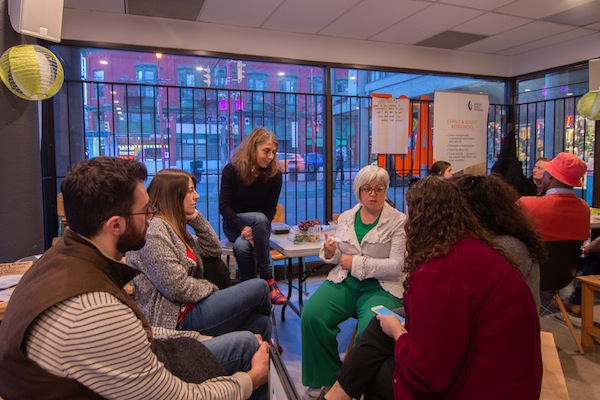
Transportation and sustainability consultant Tanya Paz, centre, participates in Tu b’Shevat Circle: Teachings from the Earth, an event spearheaded by Or Shalom Synagogue in partnership with Jewish Family Services, JQT Vancouver and UNIT/PITT Society for Art and Critical Awareness. Or Shalom’s Rabbi Hannah Dresner is seated on the stool to Paz’s right. (photo by Matt Hanns Schroeter)

More than two dozen individuals whose work involves food security and climate change issues met on Feb. 9 for Tu b’Shevat Circle: Teachings from the Earth, an event spearheaded by Or Shalom Synagogue in partnership with Jewish Family Services, JQT Vancouver and UNIT/PITT Society for Art and Critical Awareness.

Those who gathered work or devote time to such organizations as Grandview Woodland Food Connection, Sustainabiliteens, Coquitlam Farmers Market and Extinction Rebellion. They came together to explore various topics, including how their Jewishness intersects with their work in secular organizations, envisioning a sustainable world and the Jewish community’s role in social justice.

“I noticed that so many of these organizations are spearheaded by young Jews and felt it important to create an opportunity for them to see one another and recognize this aspect of kinship in their work … and whether this commonality enhances the work, draws them into kinship or stimulates any collaboration,” said Or Shalom’s Rabbi Hannah Dresner.

Or Shalom brought on Carmel Tanaka to organize a gathering. Through meetings with young adults and stakeholder groups, Tanaka met a number of people whose careers relate to food security and social justice, but most weren’t working for Jewish organizations nor were they connected to one another within a Jewish context. She and Dresner agreed it was worth bringing them together to see what conversations would blossom.

Tanja Demajo, chief executive officer of Jewish Family Services, said JFS provided funding for the event because they believed in the value of the project.

“There are a lot of Jewish and young Jewish people who are interested in food security and questions of accessibility, which is very interesting from a perspective of … whether this work is modulated by [Jewish] values and how this translates to day-to-day practice,” she said. “At the end of the day, it didn’t really matter if the different participants were working in a Jewish or non-Jewish community.”

Some attendees revealed that, for them, being Jewish is secondary to their focus on environmental issues.

“The room was full of people who identify in varying degrees with their Jewishness and, for some, it’s an important aspect of their identity and, for others, it isn’t integral,” Tanaka said.

Dresner spoke to the indelible connection between environmental action and Judaism. “In my understanding of Judaism, saving our world is at the heart of what it means to have a Jewish spiritual life,” she said. “Creative energy, or the vitality of spirit, is always flowing toward us. It’s what I’d call the ‘world that’s always coming,’ or the ongoing nature of creation. We can encourage and aid this vitality, helping to direct it where most needed, or we can impede the flow. When we are selfish and impede creative flow, the result is a deprivation of generative spirit, spirit denied to corners of creation, and we see results like species blinking into extinction.”

The rabbi wants to spend more time with young Jews working in social justice. “The Judaism I believe in mandates their work as the highest mitzvah of our moment,” she said. “It’s a misconception born of the compartmentalized Judaism in which many of us were raised not to understand that attention to the environment is a Jewish priority.”

Aaron Robinson, chair of Grow Local Society Tri-Cities, a food security group that runs the Coquitlam Farmers Market, said his work for the organization won’t ever have a Jewish mandate, but his Judaism is tied into what he does. “Personally, I can never underestimate the role that Jewish values play in the way I see the world, especially when it comes to tikkun olam,” he said, adding, “I guess it’s become engrained in me, but it was nice to bring it back to the surface to see, wow, there is this Jewish connection to all this work that we’re doing.”

Robinson appreciated the opportunity to connect with other Jews working in similar fields and hopes the conversations will continue.

Some people discussed not feeling supported by the Jewish community to undertake the work they do within a Jewish context. Tanaka said she believes the Vancouver Jewish community hasn’t focused attention on these issues until recently, citing the 2019 climate march and protests as a galvanizing factor, and said it’s time for the local community “to support young Jewish adults who are doing this kind of work … because these are Jewish issues at the end of the day.”

Some at the event suggested funding for environmental advocacy was needed. Dresner said there was also a desire for bridge building. “They seem to be asking for an arm of organized Jewish community to create some occasional containers for their gathering, just to share within the hybrid of their niche or to explore potential collaborations,” she said. “Or Shalom will be looking at finding funding to continue holding this group and its outgrowth in a loose, nurturing embrace.”

Demajo said the JFS food security program has already benefited from the event. “Being exposed to more city-wide programs and initiatives and being exposed to all different voices gives a different perspective to JFS,” she said, “because it opens up new ideas.”

Shelley Stein-Wotten is a freelance journalist and comedy writer. She has won awards for her creative non-fiction and screenwriting and enjoys writing about the arts and environmental issues. She is based on Vancouver Island.

Format ImagePosted on March 13, 2020March 12, 2020Author Shelley Stein-WottenCategories LocalTags Aaron Robinson, Carmel Tanaka, climate change, environment, food security, Hannah Dresner, JFS, Judaism, justice, Or Shalom, Tanja Demajo, tikkun olam, Tu b’Shevat, youth
For Nanaimo-area kids

For Nanaimo-area kids

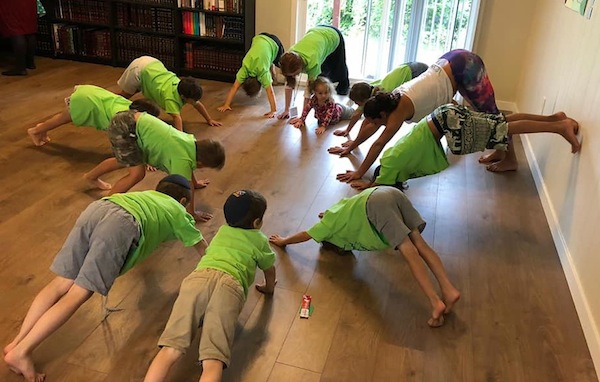
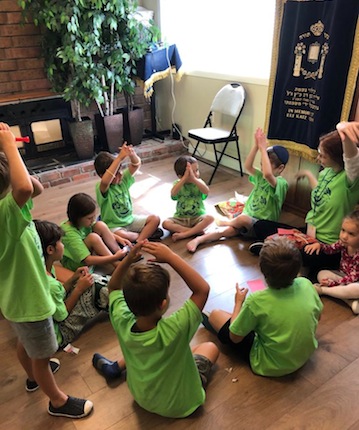
The first Camp Gan Israel in Nanaimo was last summer at the Shemtovs’ home, which doubles as the Chabad Nanaimo centre. (photos from Blumie Shemtov)

For the first time last summer, Blumie Shemtov offered a Jewish day camp for kids 5- to 10-years-old from her home in suburban Nanaimo, where she and her husband, Rabbi Bentzi Shemtov, operate Chabad Nanaimo and Central Vancouver Island. With no dedicated Jewish infrastructure in the city, families in the small and relatively disparate Jewish community are enthusiastic about the day camp.

A few years after Chabad Nanaimo started up, Blumie Shemtov met several families interested in having their young kids experience Jewish camp. She offered the five-day Camp Gan Israel in July 2019. Shemtov was struck by the sense of belonging that developed among the 10 children who attended, most of whom are the only Jews in their schools, she said.

“The idea was a week where children could be around other Jewish children and gain that sense of pride … and know that they are not the only ones” in the community who are Jewish, she told the Independent.

photo - The first Camp Gan Israel in Nanaimo was last summer at the Shemtovs’ home, which doubles as the Chabad Nanaimo centreJewish prayer, songs, culture and history were taught against a backdrop of recreational activities. Much of the day was spent in the Shemtovs’ backyard and large downstairs recreation room, but, to expand the activities, Shemtov and her counselors took campers on day trips to the beach, forested trails and even a trampoline gym.

She said, while some families attend holiday events throughout the year, the camp was the first immersive Jewish experience for many of the children.

“There’s something that’s holding everyone together,” she said. “The Jewish aspect that they don’t get regularly, I think, is an extra plus that makes people feel automatically closer together. Some people don’t feel the need [to be in Jewish community] until they have it.”

Research in recent years about the value of Jewish day camps has suggested they create long-term personal investment in Jewish community, much like overnight camp experiences, but have a lower barrier to entry financially and may have the ability to reach more children and families.

A 2018 report by Judith Samuels for the Foundation for Jewish Camp noted that day camps engage parents in the experience as well and allow “for a greater partnership between the camp and the camper’s parents surrounding the growth and skill-building that takes place at summer camp…. Unlike in overnight camp, day campers return home to their families each evening to share stories, songs and new learnings from their day.”

A companion report authored by Ramie Arian suggests why day camps might work so well in regions with no formal Jewish community space. It concludes, “Day camps can operate with much greater flexibility in the size and shape of their facility” than overnight camps.

Basha Bishop wanted her two daughters to attend the Nanaimo camp so that they would have more exposure to Jewish culture and history and “learn more about their heritage.” Both girls have grown up in Nanaimo and attend some events at Chabad throughout the year. While Bishop believes her daughters already had a strong sense of being Jewish, the camp was “important for them to have the exposure” to Judaism. At home, they talk about Jewish values and discuss Jewish-related topics, but, mainly, Bishop wants to teach her kids that “they have options available as their faith.”

“They’ve always adopted this idea of everything is kind of fluid – there’s no one way of doing anything,” she explained. “They can take what they need and feel like a part of community.” She said they will attend the camp again this summer.

Shemtov thinks the effort people made to have their kids attend is a testament to their dedication to community-building and Jewish learning.

“The beautiful thing I see here is, in other places, people send their kids to camp to get them out of the way, to give them something to do,” Shemtov said. “Over here, some parents are almost sacrificing their family time and vacations because they feel this camp is more important … and the experience [their kids] are going to gain is important.”

If more families come forward, Shemtov will consider extending the camp to two weeks this July. For more information, visit jewishnanaimo.com.

Shelley Stein-Wotten is a freelance journalist and comedy writer. She has won awards for her creative non-fiction and screenwriting and enjoys writing about the arts and environmental issues. She is based on Vancouver Island.

Format ImagePosted on March 13, 2020March 12, 2020Author Shelley Stein-WottenCategories LocalTags Blumie Shemtov, camp, Camp Gan Israel, Chabad Nanaimo, children, Judaism
Balabusta does nothing

Balabusta does nothing

(photo from pexels.com)

Lest you think this Accidental Balabusta has been slacking off, let me set the record straight. I’ve been sick since the middle of November and haven’t had the koach to do anything, including writing or cooking. No need for the gory details; suffice it to say that it’s worn me down to a nub.

It’s been a struggle to find the silver lining in all this, and months of illness has taken its toll both physically and emotionally. There were days I couldn’t see the end in sight, and felt like my life had no purpose – a soul-destroying way to feel. There was no energy to do what I love: volunteering, attending Torah classes, meeting with friends.

In the absence of meaningful activities, my mind became a slave to anxiety and rumination, and the negativity spilled over into my various relationships. Let’s face it, no one likes a chronic complainer. Desperate to snap out of that funk, I didn’t have the mental or physical energy to attempt it.

Fast forward. I’m almost fully recovered. So, which came first – recovery or a sense of optimism?

Since regaining the bulk of my energy and well-being, I can now look at that period of suffering and negativity with a more balanced perspective. Which answers the aforementioned question – recovery came first. Which stands to reason, as it’s nearly impossible to feel positive in the midst of ongoing poor health. At least for regular folk.

A short video I watched while I was sick, by Goldie Plotkin, called Inner Strength – Courage and Faith for Life’s Challenges, was pretty inspirational, albeit vague. It emphasized the importance of “seeing the blessings in the challenges,” and learning how to use these challenges as “springboards for good.” Having overcome and embraced her own personal life challenges, Plotkin views adversity and struggle as “impetuses to grow and learn” from, and resiliency as an integral character trait. What puzzles me is this: How exactly do people “access” these blessings while they’re in the throes of illness? Or can we? Maybe it’s only after the fact that we can perceive the blessings.

The question remains: Is there a way to cope more effectively while we’re in the eye of the storm?

It got me thinking. What do Jews of great faith do when faced with illness and suffering? They think positively. Since they trust that G-d does everything for the good, they have faith that something positive will come from every experience. “Tracht gut vet zein gut” – “Think good and it will be good.” A life-affirming attitude, for sure. And one that probably takes a lifetime to cultivate. Unless you happen to be a Chassid. And still.

As my health improves, and the negativity lifts, I’m reminded of a joke from a book called There Must be a Pony, where a boy wakes up on Christmas morning and finds a pile of horse manure under the tree, instead of gifts. Possessing an extraordinarily optimistic outlook, the boy immediately starts shoveling the manure, exclaiming enthusiastically, “With all this manure, there must be a pony somewhere!”

If only faith and trust in G-d were that easy.

During the latter part of my recovery, when I actually had the energy to get dressed, I promised myself that I would do something every day to get out of my head: go for a walk, listen to a Jewish-themed podcast, read something inspiring. Anything to distract my mind from its endless loop of pessimistic storylines.

I started reading a book called Positivity Bias: Practical Wisdom for Positive Living. It gave me some practical tools to help stop my cycle of negativity. One such tool is the concept of “cognitive restructuring” or “reframing,” which was integral to me turning the corner. It’s a technique that helps people view situations from a different perspective and, when a person’s perspective changes, their thinking and behaviour often change as well. It helps one challenge the veracity of negative, often inaccurate, perspectives, and reframe their thinking. Based on cognitive behavioural therapy, the long and short of it is this – if you want to feel better, change your mind.

The essence of the book is simple yet profound. Since our thoughts and words influence how we feel and behave, each of us has the power to reshape our lives. Mindfulness and consciousness are huge parts of this process. If our thoughts are not helping us or moving us forward, then we need to change how we think. The catch is that it’s difficult to do and it’s an ongoing challenge.

An article I read recently – “Ten Hacks for Mental Control that Every Human Being Should Know” by Tzvi Freeman – was also helpful. It talks about negative thoughts and how to counteract them in a healthy way. (Read: from a Chassidic perspective.) Naturally, most of the references are to religious thought and practice. According to Freeman, the challenge is not just stopping ourselves from having negative thoughts, but finding wholesome thoughts and actions to replace the negative ones.

Relaxation techniques, like breathing meditation, and distractions such as paying attention to external stimuli, work well, too. Basically, getting outside your own head. While both approaches work, I personally think replacing unhealthy thoughts with healthy ones is the better alternative, since it not only redirects your mind, but also retrains it in a significant, consequential way.

If I’ve learned anything from this experience, it’s that cultivating positivity requires superhuman vigilance and self-control. It demands that we learn to regulate, train and discipline ourselves in how we behave, how we speak and, most importantly, how we allow ourselves to think. And it’s key to living a more intentional, meaningful, happy life.

Am I walking the walk? All I can say is I’m trying. Day by day. Moment by moment. Every one of us is a flawed human being, but each of us has the potential to make our life better, more purposeful. My advice is to use whatever works for you. Just remember that there’s something to learn from everybody.

If all that fails … try prayer. I’m a huge fan. Surrendering to something greater than oneself isn’t a sign of weakness; it’s a sign of strength and faith. And it’s just a thought, but maybe don’t ask G-d to heal you. Maybe, instead, ask G-d to give you the emotional and physical strength and courage to heal yourself. Just saying.

Shelley Civkin aka the Accidental Balabusta, is a happily retired librarian and communications officer. For 17 years, she wrote a weekly book review column for the Richmond Review. She’s currently a freelance writer and volunteer.

Format ImagePosted on March 13, 2020April 2, 2020Author Shelley CivkinCategories LifeTags Accidental Balabusta, depression, health, Judaism, lifestyle
Gotta Sing! Gotta Dance! deadline April 1

Gotta Sing! Gotta Dance! deadline April 1

(photo from Gotta Sing! Gotta Dance!)

The deadline to apply for Gotta Sing! Gotta Dance! at the Jewish Community Centre of Greater Vancouver July 7-30 and Aug. 4-27 is April 1. With participants ages 9 to 19 from various parts of Canada and elsewhere in the world, director and creator of the program Perry Ehrlich will be joined this year by faculty including musical directors Wendy Bross Stuart and Diane Speirs; director Chris McGregor; choreographers Jason Franco, Keri Minty and Meghan Anderssen; acting coach Amanda Testini; and Mariana Munoz, set construction and costume co-ordination. The final production of each session will be Wild Wild West Side Story, featuring an original script and a repertoire from Broadway and movie musicals. Also being offered is the finishing school, for serious musical theatre students attending Gotta Sing! Gotta Dance!, and a boot camp dance program. Scholarships are available.

Format ImagePosted on March 13, 2020March 12, 2020Author Gotta Sing! Gotta Dance!Categories Performing ArtsTags education, JCC, Jewish Community Centre, musical theatre, Perry Ehrlich, youth
Supporting gender diversity

Supporting gender diversity

Ara Morris, principal of Brock Corydon School, left, and Naomi Finkelstein, co-founder of Parents Family Friends of Transgender Individuals. (photo from Morris and Finkelstein)

The Winnipeg School Division recently assembled a panel to discuss ways to best support trans and gender diverse children and youth, especially in school settings.

Ara Morris, principal of Brock Corydon School, was invited to sit on the Jan. 22 panel, which took place at Prince Charles Education Resource Centre. “Our school has been very active in talking about gender,” said Morris. “We’ve been making changes to our school as a result of having children in our school who are transgender. We want all of our students, all of our families, to feel included, important, and as equal members of our community and so, to do that, sometimes we have to reflect on the different ways that we are speaking, the different language that we are using.

“We know that many times children identify themselves in all different ways,” she said. “We want to be respectful of that. We have had a lot of professional development for our teachers and that has included programs from the Rainbow Resource Centre,” which offers support, counseling and educational programs for LGBTQ2S+ individuals and allies.

Brock Corydon has invited the parent of a transgender student to speak with school staff, and teachers have led sessions among themselves, as well as having had other teachers come to share how they work on being inclusive in the classroom.

“Our school division has a policy and it was updated in June 2018 for diversity and equity,” said Morris. “With all the research that our school division has been doing, I’d be surprised if other school divisions weren’t doing the same.”

Morris has received many phone calls from other principals asking for suggestions, and she works with parents to identify any needs, such as the need for a gender-neutral bathroom, which the school now has.

Even though full-time staff has been educated on the topic, part-time or causal staff also need to be informed about the proper way for teachers to speak at the school, including the use of gender-neutral language.

Naomi Finkelstein, a retired teacher and the mother of a trans child, was also on the event panel. Finkelstein was dealing with the situation 13 years ago and recalled having tried to find proper supports, which were lacking. She started a support group with another parent, called Parents Family Friends of Transgender Individuals (PFFOTI).

“I had a daughter and, when she was about 20 and a half, she came out and shared that she was transgender,” said Finkelstein. “I knew that this was something I was going to have to get support for, so I went to the Rainbow Resource Centre.”

PFFOTI started out with the two founding members and is now providing support to 170 parents. “Of course, that many do not come to all the meetings and, really, what happens is people kind of grandfather out. Their children are older now, they’ve made their transitions … maybe some have had surgery and they don’t feel the need to attend anymore. We’re always getting new people,” said Finkelstein.

“Our group is specifically for parents,” she continued, “because there are some parents who have just found out and they need the support. And there are always Kleenex boxes on the table. For some parents, it is a real shock.

“I was shocked, too, but I did my crying at home in the shower, which was really very good. There was something, I don’t know why, it was almost like being in a womb, feeling protected in there…. We want the parents to be able to share their fears and concerns; you can’t do that if a child is there.”

Over the years, Finkelstein has developed a list of do’s and don’ts for parents who suspect that their child might be trans.

The do’s list includes respecting your child’s identity and following your child’s lead and listening to them about what trans is all about. Each child is different and there’s no right way to be trans. As Finkelstein pointed out, “some go on hormones, some don’t, and some just dress in what they consider the gender’s clothing.”

The list encourages parents and others to learn about the difference between sex and gender – gender is a social construction, whereas sex is biological.

PFFOTI advises parents to start by helping and educating themselves so they can better help their child. “This involves reading and coming to support groups,” said Finkelstein. “And parents need to take into account if there are other siblings. There can be issues for the other siblings, and they need to be educated, too.”

If the children are minors, parents need to take the lead in setting up doctors’ appointments, buying appropriate clothing, getting haircuts, etc.

“Truly, the key to success is offering the kids your unconditional support,” said Finkelstein. “One of the support groups online, their motto was, ‘Fake it until you make it.’ But, we also talk about what parents need to do within the school system and that they need to advocate for their children. Although the human rights law says that they have rights, not all school divisions are on board. Winnipeg [School Division] 1 is totally on board and they have a process. We need parents to take part in the process and get the school to take part in the process.

“And a critical thing is bathroom talk,” she said. “You have to talk to your child before you go to the administration, so you’re both on the same page as to what the child wants to do. Some schools now have non-gender-specific bathrooms, which is great. I wish every school would have one.

“And then they have to talk to the administration about what their rights are. They should know those rights before they go in.”

Setting up a safe person at the school, with the help of administration, who the child can go to, someone who affirms their identity, if they are having problems, is also important, as is talking about the school’s anti-bullying policy and how that is handled.

“Past the age of 12 and up, you’re also dealing with all these hormones that rage through the child’s body,” said Finkelstein. “So, some kids are going to have to get on blockers to prevent their periods and their breasts from developing, and stuff like that.”

Parents and others must understand that a child’s identification as trans is not likely a passing phase. Although some children identify as trans and later change their mind, that is uncommon. So, do your best to avoid calling your child by their previous name, said Finkelstein.

Parents “really have to make an effort not to misgender,” she said. “Misgendering kind of denies their existence as a person, and that’s a big negative. But, as a parent, if you screw up, you just apologize. I think kids are very understanding about that. As long as you don’t deliberately misgender a child, they are open to the fact that, you’ve had them for 13, or 18, or 20 years, and, yeah, that other name is going to come out. It takes you awhile to reformat.”

Another PFFOTI recommendation is to never out your child – let them do it when they are ready.

“Statistics have proven that, [even] with children who are trans who get support from their parents and their family … four percent commit suicide,” said Finkelstein. “The statistics are much higher – about 45% – for those who do not get support. This past summer, we lost four kids (three in Winnipeg and one who had moved to Vancouver).”

Finkelstein regularly checks in with her son to talk about his mental health and to assure him she accepts him as he is.

Rebeca Kuropatwa is a Winnipeg freelance writer.

Format ImagePosted on March 13, 2020March 12, 2020Author Rebeca KuropatwaCategories NationalTags Ara Morris, Brock Corydon School, education, gender, health, LGBTQ2S+, Naomi Finkelstein, parenting, Parents Family Friends of Transgender Individuals, PFFOTI, sex, transgender, Winnipeg, youth

Posts pagination

Previous page Page 1 … Page 271 Page 272 Page 273 … Page 664 Next page
Proudly powered by WordPress