Skip to content
  • Home
  • Subscribe / donate
  • Events calendar
  • News
    • Local
    • National
    • Israel
    • World
    • עניין בחדשות
      A roundup of news in Canada and further afield, in Hebrew.
  • Opinion
    • From the JI
    • Op-Ed
  • Arts & Culture
    • Performing Arts
    • Music
    • Books
    • Visual Arts
    • TV & Film
  • Life
    • Celebrating the Holidays
    • Travel
    • The Daily Snooze
      Cartoons by Jacob Samuel
    • Mystery Photo
      Help the JI and JMABC fill in the gaps in our archives.
  • Community Links
    • Organizations, Etc.
    • Other News Sources & Blogs
    • Business Directory
  • FAQ
  • JI Chai Celebration
  • JI@88! video

Recent Posts

  • Zionism wins big in Vegas
  • Different but connected
  • Survival not passive
  • Musical celebration of Israel
  • Shoppe celebrates 25 years
  • Human “book” event
  • Reclaiming Jewish stories
  • Bema presents Perseverance
  • CSS honours Bellas z”l
  • Sheba Promise here May 7
  • Reflections from Be’eri
  • New law a desecration
  • Resilient joy in tough times
  • Rescue dog brings joy
  • Art chosen for new museum
  • Reminder of hope, resilience
  • The national food of Israel?
  • Story of Israel’s north
  • Sheltering in train stations
  • Teach critical thinking
  • Learning to bridge divides
  • Supporting Iranian community
  • Art dismantles systems
  • Beth Tikvah celebrates 50th
  • What is Jewish music?
  • Celebrate joy of music
  • Women share experiences 
  • Raising funds for Survivors
  • Call for digital literacy
  • The hidden hand of hate
  • Tarot as spiritual ritual
  • Students create fancy meal
  • Encouraging young voices
  • Rose’s Angels delivers
  • Living life to its fullest
  • Drawing on his roots

Archives

Follow @JewishIndie
image - The CJN - Visit Us Banner - 300x600 - 101625

Jewish media struggle, revive

Jewish media struggle, revive

Launching within hours of each other in May, the Canadian Jewish Record and TheJ.ca come at journalism from different perspectives.

Like print media as a whole, Jewish newspapers worldwide have been struggling in recent years. The coronavirus, with its economic impacts, was the last straw for Canadian Jewish News, which announced its closure in a message to readers April 13, with the words: “Everything has its season. It is time.”

From the ashes of that flagship media outlet, though, has emerged not one but two new ventures – and rumours of a possible revival of CJN itself.

Launching within hours of each other in May, the Canadian Jewish Record and TheJ.ca come at journalism from different perspectives and the people behind them think there’s room for a range of online voices, even if a national hard-copy print media option isn’t in the picture.

The Record is the brainchild of Bernie Farber, former chief executive officer of the now-defunct Canadian Jewish Congress, and Ron Csillag, a longtime reporter and editor with CJN, whose writing has appeared in the Jewish Independent. TheJ.ca, which has been in the planning stages longer, was started by Winnipeggers Marty Gold and Ron East. The editor is Dave Gordon, a Torontonian whose writing has appeared frequently in the Independent, as well as scores of other Jewish and non-Jewish publications.
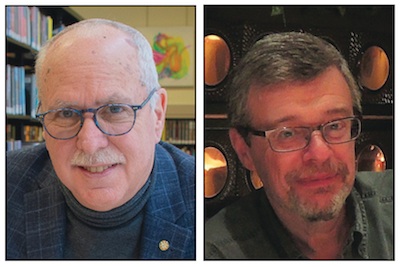
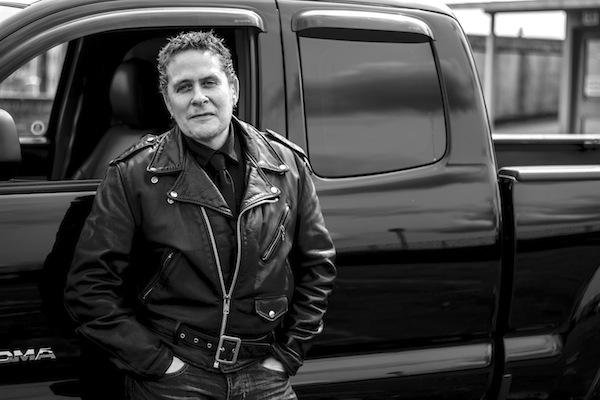
photo - The Canadian Jewish Record’s Bernie Farber, left, and Ron Csillag
The Canadian Jewish Record’s Bernie Farber, left, and Ron Csillag. (photos from the Record)

Farber and Csillag admit they don’t have a business plan beyond getting writers and editors to work for free – and they see their online venture as a stopgap that would probably cease or merge were CJN to return. The individual rumoured to be considering a rebirth of the paper opted to not comment for this story.

Farber, who was with CJC from 1984 until it was subsumed by the Centre for Israel and Jewish Affairs in 2011 and served as its head from 2006, said they launched CJR on the fly, trying to fill a need in the immediate aftermath of CJN’s demise.

“Our goal is not to become a new Canadian Jewish News,” he said. “When and if they were able to come back up … we would find some way to amalgamate. Nothing is written in stone…. We expect to continue into the fall at this point, hopefully.”

The online news and commentary site operates under the auspices of a nonprofit organization and has no money to speak of, other than enough to cover registration fees and miscellaneous costs, said Farber.

“Everybody who wrote and who is continuing to this day to write for the newspaper is doing it pro bono,” he said. “These are skilled, professional journalists who are, for the most part, people who are used to being paid for their work and have chosen to do this as a donation at this time to the community. It really is a grand mitzvah, Canadian Jewish-style, and it’s working.”

The platform got 22,000 hits in the first week, said Farber, who serves as publisher. “It’s going up from there almost exponentially.”

The model upon which their editorial approach is based is akin to CJN, he said, with a range of opinions represented.

“We’re trying to have a big tent,” he said. “We already got into some hot water because we published a piece by Dr. Mira Sucharov. She’s a wonderful writer, she’s on the edge, people don’t like what she writes, but tough shit. People are allowed to have their opinions.”

JI readers will be familiar with Sucharov’s writing. As for coverage of Israel-related topics, Farber said they will follow a similar open approach.

“It’s not that we don’t support Israel,” he said. “We’re a news source, we’re an information source. We run opinion. We’re not going to [say] you can only write good things about Israel or good things about the Jewish community. We want there to be some spark to it where people can say, no, I disagree with that. We do have an option for feedback and we do get letters to the editor. That’s the Jewish community, right? They are vibrant, they come from all over the place and we want to be able to reflect that.”

Farber and Csillag are well-known figures in the Jewish and larger Canadian scene, which is one of the reasons, they say, that the president of York University reached out to them before releasing a much-awaited report of an investigation around a violent confrontation on campus last November between pro- and anti-Israel groups. The Record got embargoed exclusive access to the report before other media. “It demonstrates how, in a short period of time, we have become a reasonable voice in the community,” Farber said.

Csillag, the editor, said they chose, at the launch on May 21, to “flood” the site with stories to keep readers engaged and coming back. Now, the aim is to post two stories a day plus any breaking news.

“People are talking about it, people are complaining about it,” he said. “I got my first bit of hate mail, which is good. That’s when you know you’re making a difference.”

Finding writers to work for free has not been a challenge. “People have been coming out of the woodwork. I never knew that pretty much everyone on the planet was a writer,” Csillag said, laughing.

Challenges they have not ironed out, they admit, include finding reliable reporters outside Ontario and a steady source of news from Israel, since they don’t have the resources to pay for a news service.

If CJN is not revived, Farber said, “I think we have to get together with serious-minded people within the community and say the CJN is gone and we are here. We don’t have a real business model to be honest. What you see is what you get…. We would have to ramp up to a real business model.”

Farber added that Canada, with the world’s fourth-largest Jewish population at 400,000, should be able to sustain at least two national Jewish media platforms.

That confidence is shared by Gordon, who equates the situation to the old joke about the Jew who, when rescued from a deserted island, was asked why he built two synagogues on the island. One, he told rescuers, was his shul; the other was the one he would never set foot in.
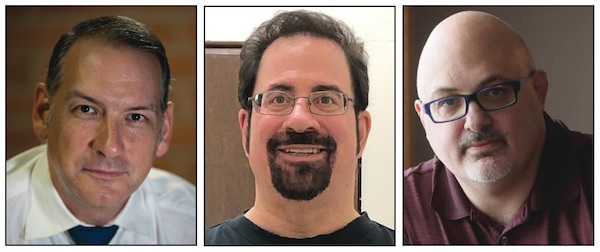
photo - Left to right, TheJ.ca’s Dave Gordon, Marty Gold and Ron East
Left to right, TheJ.ca’s Dave Gordon, Marty Gold and Ron East. (photos from TheJ.ca)

TheJ.ca has been in the planning stages for more than a year. Gordon came on a few weeks before launch. Like the Record, TheJ.ca has little overhead, since everyone associated with it works remotely. They have a few investors and some steady advertising agreements. The online nature of the platform also means no printing or distribution expenses.

Gordon touts the diversity of the large stable of writers.

“One of the things that I think is our proudest asset are individuals from the widest array possible, individuals who are liberal to conservative, Jew and Arab, religious to secular,” he said. “We have four gay columnists, we have Jews of colour who are contributing, we have coast-to-coast contributors and, in that respect, I want to say that, not only do we deliver the unexpected, but we represent the previously unrepresented.”

On Israel coverage, though, they aim to determine suitability of opinions based on the “three Ds” formulated by Natan Sharansky to determine if criticism of Israel is antisemitic: delegitimization of Israel, demonization of Israel, and subjecting Israel to double standards.

“In terms of Israel, we’re not going to make it a secret: we’re very pro-Israel, very Zionistic,” said Gordon. “It’s a good read to say that we are centre-right. We will still strive to maintain a kind of balance in terms of Israel reporting … we will tilt from time to time liberal but not left.”

Their aim is to post a batch of new content twice a week.

While Gordon is based in Toronto, TheJ.ca was born in Winnipeg. Marty Gold, a longtime broadcast journalist and publisher, and Ron East, a former pro wrestler and physical education teacher who has also been involved in publishing, are longtime friends who were critical of existing Jewish media.

East is son of the late Israeli military commander, author and counterterrorism expert Yoram Hamizrachi East. When Winnipeg saw an influx of Israeli immigrants a few years ago, the father and son launched a Hebrew-language publication to help the newcomers navigate their city. The 500 copies were routinely snapped up, he said.

The idea for the new media platform came after Gold and East felt that the established Jewish media and communal organizations in the city were not adequately confronting anti-Israel activity.

“There wasn’t really a pro-Israel, Zionistic platform out there,” said East. “We found that our local media here in Winnipeg, as well as when we started looking at Canadian Jewish News and others, were giving more and more room … and more and more credibility to what we would describe as anti-Israel, anti-Zionistic and, in some cases, pro-BDS Jewish movements. Those voices became louder and louder and the Zionistic pro-Israel voices seemed to be drowned out. We felt that it was important to provide a platform that would allow for those voices.”

While TheJ.ca is an online media platform, they are mooting a print digest that might be issued a couple of times a year. They are also working on a way to format content so that it can be easily downloaded and printed for people who prefer to hold their newspaper in their hands. Also in the hopper are plans for region-specific landing pages, so readers in Vancouver or Halifax, say, could access both items of national and international interest, as well as local news relevant to them.

The design of their site, said East, is particularly aimed at reaching younger readers. They credit Gordon’s experience in the field for bringing together a diverse group of writers from across the country.

***

The Jewish media scene has faced unprecedented challenges in recent years. The emergence of the internet more than two decades ago has undermined print media of all types, with publications for small or niche demographics experiencing particular challenges as well as advantages. The pandemic, which led to an unprecedented global economic shutdown in March, had immediate repercussions. Much of the advertising in the Independent, for example, is for upcoming community events, all of which were summarily canceled. Non-essential retailers closed, making advertising extraneous.

The Independent has continued publishing on a reduced schedule.

Winnipeg’s Jewish Post & News announced in April that it was ceasing printing, but started publishing a print edition again at the end of May.

The difficulties nearly led to the dissolution of the world’s oldest English-language Jewish newspaper, Britain’s Jewish Chronicle, which was saved by a conglomerate of philanthropists. The rival Jewish News, which had also announced its liquidation and was set to merge with the Chronicle before the surprise bailout, will, for now, continue publishing independently.

In an article recently about the state of Jewish journalism, the Times of Israel reported that New York’s Jewish Week made a dire plea for support and a leader in the American Jewish Press Association – of which the Independent is a member – acknowledged that COVID has presented a serious challenge to an already struggling sector.

The world’s third-largest Jewish community, in France, is in a different boat. In the 1980s, the French government opened radio airwaves to private groups and Jewish radio stations play a role in that country similar to the role newspapers play in most other Jewish communities.
Format ImagePosted on June 26, 2020June 24, 2020Author Pat JohnsonCategories NationalTags Bernie Farber, Canadian Jewish News, Canadian Jewish Record, CJN, CJR, coronavirus, COVID-19, Dave Gordon, economy, JI, journalism, Marty Gold, Ron Csillag, Ron East, theJ.ca, Toronto, Winnipeg
Dancing with purpose

Dancing with purpose

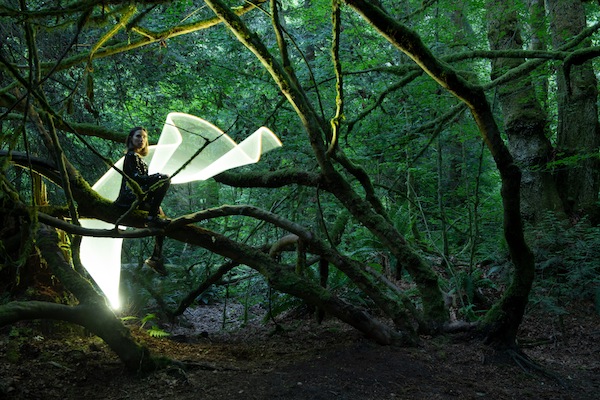
Vanessa Goodman (photo by David Cooper)

One could be forgiven for thinking there was a Jewish dance festival coming up, as there are so many community members participating in this year’s Dancing on the Edge, which takes place July 2-11.

Adapting to the circumstances of the pandemic, which limits public gatherings, DOTE festival producer Donna Spencer recently announced that, while it won’t be possible to present the initially planned 30-plus live performances, the festival “will be offering instead some specially curated digital programming with live-streamed performances, premières of dance films, dance discussions, four outdoor live performances in the Firehall’s courtyard and one dynamic theatre performance at the Firehall Arts Centre theatre (all live performances for very limited audiences with safety precautions in place).”

Among the featured dance companies and choreographers are, in alphabetical order, Action at a Distance (Vanessa Goodman), All Bodies Dance (Naomi Brand, with Carolina Bergonzoni), Ben Gorodetsky, Ne. Sans Opera and Dance (Idan Cohen), Radical System Art (Shay Kuebler), the response. (Amber Funk Barton) and Tara Cheyenne Performance.

* * *

Action at a Distance is presenting Solvent, a new work created in collaboration with musician Loscil (Scott Morgan).

“I have been incorporating video footage into my work for years, and the recent time at home has provided an opportunity to generate material and experiment with new editing techniques,” said Goodman. “In some ways, this is an extension of our previous work together. Our first video collaboration was for a song on his album, Monument Builders. Since then, we have built four works together for my company Action at a Distance, including Never Still, which was presented by the Firehall Arts Centre in 2018.”

When the pandemic hit, Goodman said, “At first, I found myself grasping for something substantial to hold onto and tried to reschedule all the tours and premières that were being canceled. It was challenging to let go of everything. Eventually, I came to terms with the downtime and embraced the slow pace as best I could.”

When the need to isolate began, she said, “I started making short dance films for myself and my 96-year-old grandmother to help us stay connected. At times, it has been tough to stay motivated during the shutdown, and this was a simple way to stay creative.

“There’s no way to compare these sketches to a staged dance performance,” she said. “However, when I shifted my frame of mind and started to approach video as a whole new medium instead of an altered version of an existing piece, I became more comfortable with the idea of sharing work this way. I am very grateful to DOTE for bringing the community together to share work right now.”

Even in such times, arts and culture are “absolutely vital,” said Goodman. “Without them, we’re living in the dark ages. It is essential to have creative outlets for expression. Right now, finding connections through creativity can help cut through the isolation. Art can provide much-needed escape and levity in challenging times, as well as reframing current issues and inspiring insight around movements of essential social change.”

* * *

photo - Naomi Brand
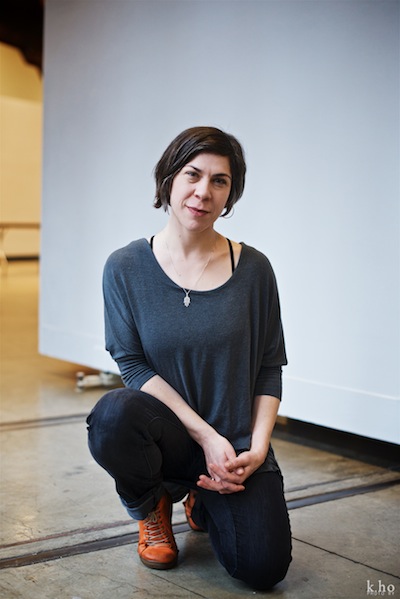
Naomi Brand (photo by K. Ho)

All Bodies Dance Project (ABDP) is bringing Ho.Me to the festival. “The film was commissioned by F-O-R-M, Festival of Recorded Movement, last year … and is a collaboration between longtime ABDP company members Carolina Bergonzoni (choreographer/director), Peggy Leung (dancer), Harmanie Rose (dancer), Mathew Chyzyk (dancer) and Vancouver-based artist Gemma Crowe (cinematographer/editor) and Alex Mah (composer),” said Brand. “Ho.Me explores themes of belonging and comfort in relation to inhabiting one’s own body. The film is comprised of three personal solos shot inside the dancers’ own apartments. In the piece, we get to see these three very different bodies dancing within the privacy of their own homes among the objects that have meaning to them.

“While the film was created long before the pandemic, the significance of moving inside our homes feels really different now since we’ve all been spending so much time inside. Many dancers have been figuring out how to turn our living spaces into places where we can also practise, explore and move, as studios haven’t been an option.”

Since the start of the pandemic, ABDP has moved some of its community dance programming online.

“We also started a weekly virtual gathering for our community of dancers in order to prevent social isolation,” said Brand. “Many of our projects have been on hold. There is so much about what we do as a company that just isn’t compatible with the necessary restrictions of COVID life. Our work is based on bringing people with different bodies, backgrounds, experiences and abilities together to move, share and make in real-time. We’ve been thinking a lot about what kinds of things translate into the digital space and what things just can’t be replaced.”

She said, “Now more than ever we need community and collective experiences, as so many have been isolated during these past few months. People with disabilities in particular have experienced a lot of isolation and so we are even more committed to our purpose at All Bodies Dance Project.”

She added, “Dance is about each of our essential relationship to our own bodies. During COVID times, many of us have learned a lot about our own physical experience of moving through the world and the social choreography of physical distancing. There has been so much choreography on the sidewalks, grocery stores and, of course, in the streets during the incredible protests during this pandemic.”

* * *

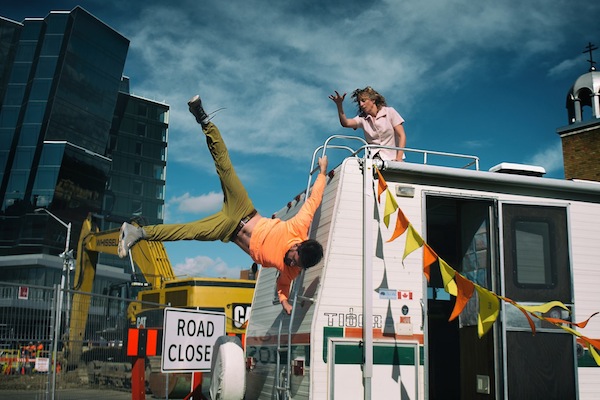
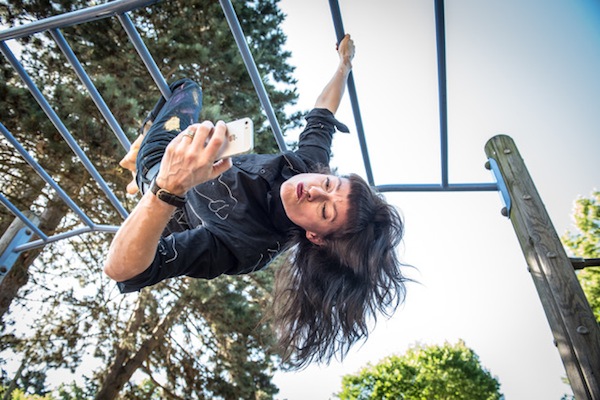
photo - Ben Gorodetsky hangs on to an RV’s ladder in There Yet by Edmonton’s Mile Zero Dance
Ben Gorodetsky hangs on to an RV’s ladder in There Yet by Edmonton’s Mile Zero Dance. (photo by Marc J. Chalifoux)

Gorodetsky, who is Russian-Canadian, is one half of the political comedy duo Folk Lordz, with Cree co-creator Todd Houseman. The pair tackle racism, among other social ills, and have created a 15-part series “[r]eflecting urban-Indigenous, immigrant and activist perspectives through the lens of biting satire.” A second series of sketches is on its way, but Gorodetsky is bringing a very personal work to this year’s DOTE.

“It’s a movement video piece honouring my grandfather, Dolik (David) Lutsky. He died on April 3, 2020, and, since we could not gather for his funeral due to the pandemic, we were left to sort through our grief alone,” he shared. “One small relief was my grandmother mailing me a box of his clothes. Using these garments as performance artifacts, I created a digital video piece reimagining grieving rituals in the age of COVID.

“I explore the ceremony of wearing Dolik’s clothes and reactivating the narrative, cultural and physical threads of his life. Spoken oral histories exploring my grandfather’s immigration (I was born 10 days after they landed in Canada), identity (he was the official communist ‘propagandist’ at the coalmine he worked at in Ukraine) and faith (he went from being an ardent anti-religious communist to a practising Lubavitcher Jew) provide textual counterpoint to the dance video. The visuals themselves were all created through aerial drone photography, creating a fluid visual style for this interdisciplinary new video work. Country roads, forests and lakes frame this physical score exploring grief, memory and family history.”

Gorodetsky said, “I think if I had been able to grieve, remember and connect with my family after Dolik’s death, I would have no need to explore these ideas artistically. But, since I have not, I have a nagging need to articulate this particular pain through movement, story and visual composition.”

Since COVID, Gorodetsky has become the fulltime caregiver for his 2.5-year-old son. “Time and energy have become scarce resources,” he said, “so I’ve had to get better at working furiously fast while he naps. Focused blasts of creativity.

“Also, my family has been displaced from our home and all our possessions in Brooklyn, N.Y. We were in Kelowna (where I was teaching on a one-term contract at UBC in the performance program) when the border closed and we could not return to our home as planned. So, we’re in Waterloo, living at my sister-in-law’s house, until [who knows when]. Honestly, my mental health is brutal right now. Anxiety grips me in a way I had never experienced before, and I have had to find tactics for replenishing my depleted stores of happiness and hope. One thing that really helps is long bike rides with my son Gus. We get out of the city and follow country roads – we live near Amish country! It’s a small way to feel free, alive and empowered in the midst of these deeply destabilizing times.”

For Gorodetsky, who grew up in Metro Vancouver – in Burquitlam – “dance is a way of moving your grief around. It helps me shake the weight and sediment of catastrophe off and meet my grief as an equal, rather than as a victim.

“Gus and I developed a habit of walking to a beach or body of water, finding a big tree stump, climbing on top and dancing to a playlist called ‘Klezmer Dance Party at Home’ (lots of Klezmatics, Michael Winograd, Frank London, Socalled and Di Naye Kapelye). It’s been a real lifesaver.”

* * *

photo - Idan Cohen
Idan Cohen (photo by Or Druker)

Ne. Sans Opera and Dance’s Trionfi Amore (The Triumph of Love) was commissioned by Peter Bingham for EDAM’s Spring Choreographic Series, April 2019.

“It is a trio created for three phenomenal Vancouver-based performers, Kate Franklin, Jeremy O’Neill and Ted Littlemore,” said Cohen. “Besides being excellent dancers, these three are also trained musicians, and the piece utilizes their many talents.

“The trio is inspired by the opera Orfeo ed Euridice and is a part of my ongoing research on the theme of Orpheus,” he explained. “It speaks of love, and of the power of music and art to move, entertain and touch us. It also speaks of the power of manipulation and control on the individual and, as we prepare it for DOTE during this time, we find that new meanings present themselves to us.”

Cohen said, “The act of presenting something as abstract as the notion of love in a dance performance is quite a challenge by itself, and nowadays even more so – how do you speak of love without being able to touch, to be close to one another? Instead of looking at this as an obstacle, we choose to look at it as a source of inspiration, a new adventure. As artists, we reflect what we experience and then monitor, or direct, those notions into our actions and creative choices. My responsibility here is to stay true to the origins of this piece, but also to protect the viewers and the performers while offering art that speaks of relevant issues and current experiences.”

It hasn’t been easy.

“Ne. Sans had to stop our season and rethink and rearrange our commitments,” said Cohen. “It has been painful to see how many creative ventures that have been in the planning for quite awhile have been postponed or canceled, and to realize the ensuing financial and emotional toll…. I believe in the value and presence of arts in our community and in our lives, in countless ways, and tackle issues that I find not just relevant for myself, but that reflect on many lives. At the same time, I recognize how privileged I am to be here, in Vancouver, and to be safe and healthy.”

Whether theatre, music or dance, one thing common to all forms of live performance, said Cohen, “is that they are alive.” They all involve the human body, both “the performing bodies and the ones watching.”

“As an artist who uses movement as a primary artistic discipline,” he said, “I have a huge love and respect for the human body in its most basic form. When you learn to love and accept your body, you can truly love and respect people. That love is also where my queer identity(ies) meet my Jewish ancestry. So much hate is being inflicted on the body; if we don’t learn to love and appreciate our bodies, how can we truly love and appreciate someone else’s? How can we heal? With so much violence in our history and in our present, in a world polluted with ignorance and hate, how do we learn to love and forgive our ancestors, our pasts? The arts bear a huge responsibility. Artists need to change our priorities, acknowledge our inherited racism and create new stories.

“Ne. Sans is an organization that is centred on Western European music and dance, and my origins are in Western Europe,” he continued. “Our main goal in Ne. Sans is not to present a notion of nostalgia, romanticism and artificial beauty, but to raise the issues of violence and inequalities created by that culture, recreate its narratives and bring those up into the surface.”

In Jewish teaching, there is the concept of tikkun olam, repairing the world. “We can all be involved in tikkun olam at any given moment,” said Cohen, “and we need to keep adapting and correcting our values, individual or systemic. We have a responsibility to help and support one another. We have survived horrible historical events. Looking straight at our bleeding past and present: in the face of injustice, we cannot and will not stay silent.”

* * *

photo - Shay Kuebler
Shay Kuebler (photo by JoyceTorres)

Kuebler, who has performed at the Chutzpah! Festival and is connected to the Jewish community through his sister’s family, will be presenting Momentum of Isolation at DOTE. Started last year, he said, “This first chapter of research is a chain of solos, for seven performers, that was developed by company artists online and in isolation.”

Given the restrictions required to control COVID, this part of “the project has taken on a much more singular focus on each artist’s personal interpretation,” said Kuebler. “As these solos were developed in home spaces and in isolation, the artists are performing their solos in smaller performance spaces – averaging six-by-nine feet – as well as performing these solos in relation to walls and surfaces in their environment.”

Of COVID’s impacts, he said, “There was certainly sadness and stress from losing work and touring opportunities. The company was two weeks away from a European tour when all the social protocols came into place. We were fortunate to receive some support and, after assessing the financial losses, we were able to move forward with a different creative practice for this phase of this project.

“The new creation practice of working online and in isolation actually revealed some very interesting new approaches and beneficial tactics. This online format had us focus on different dance techniques and improvisation tasks that could both challenge our individual movement skills and develop more group unity in movement. It also opened a window for focused study around the social content in the project.”

Kuebler said, “For myself as an artist, this time has offered me some space to ‘fill the well.’ I have been creating, traveling and supporting multiple projects simultaneously for a solid amount of time. This time in isolation, although not in the form that I would have wished for, or for anyone for that matter, has offered me space and time to just research and train…. I’ve found that, with this space, I’ve been more creative and have developed further outlets to express my creativity.”

He said, “I think that art holds a very important place in society. It offers people an escape from certain stresses and can help inspire them to find their own creativity. I believe that being creative can help you live with greater curiosity, humility and awareness of the world around you, which can make you a better member of society…. From this standpoint, I believe that art and artists gain greater relevance during challenging times and times of change.”

* * *

photo - Amber Funk Barton
Amber Funk Barton (photo by Chris Barton)

Barton’s company, the response., will host a special-edition, two-day version of Dance Café, which will feature eight Vancouver-based professional dance artists during DOTE.

“Together with my administration assistant, Kaia Shukin, we have been presenting Dance Café since 2017,” said Barton. Originally, it was held once a year as an informal, free event in studio, but, since May of this year, they have been presenting professional dance artists online using Instagram Live, and did so in June, as well. Given the positive response, Barton would like to keep the free event going monthly until the end of the year, but it will depend on resources, and she hopes people will donate to help make that happen.

With the arrival of the pandemic, Barton said, “It felt like many of the things I do changed overnight. At first – and there are still many moments at present – I felt overwhelmed with the learning curve of teaching and rehearsing on platforms such as Zoom. I feel that the act of participating in these online platforms, whether you are ready to or not, forces you to be creative just by showing up. In many ways, the act of applying for grants and the typical administration side of what I and the company do haven’t changed, but the artistic side of it is what I find is in question. How can we continue and how can we share and create work in a safe environment? Those are my biggest questions right now.”

For Barton, “Art can be a reflection of what we are experiencing in the world and can act as a mirror. It can be cathartic. It can also help us escape. We are all listening to music, watching films and trying to make sense of what is happening and/or trying to make time pass by. No one can deny that their consumption of art is interwoven in the daily fabric of their lives.”

* * *

photo - Tara Cheyenne Friedenberg
Tara Cheyenne Friedenberg (photo by Wendy D Photography)

At DOTE, Tara Cheyenne Performance will share two films made in collaboration with Allison Beda/Amuse Productions and possibly a live online performance, said Tara Cheyenne Friedenberg. “These works are a continuation of my solo I can’t remember the word for I can’t remember, which premièred at the Firehall in 2018.”

For Friedenberg, life during COVID has been “up and down.”

“Some days are good – home schooling actually happens (we have an 8-year-old), I might even take an online dance class and have a virtual rehearsal with my dramaturge Melanie Yeats. Other days, making lunch and trying to figure out Grade 3 fractions is too much,” she said. “I’m not loving the many, many Zoom meetings. I feel like our brains and bodies are compromised being in front of screens so much.

“Artistically, it has been invigorating and challenging – also very frustrating and often sad, to be honest – to try to reach my audience. I was recently working on a video of past work and noticed that, in every show, I literally climb into/onto the audience. My focus right now is how do I break the fourth wall when it is a virtual fourth wall.”

When asked the importance of the arts in such a stressful social and economic period, Friedenberg said, “We absolutely need to share stories and experiences right now. I feel like it is my duty to offer levity, commentary and my own feelings in order to facilitate those moments of community and recognition. My grandfather toured Europe playing piano for Maurice Chevalier leading up to the war, then here in Canada during the war. I feel like it’s in my blood to offer what I make, especially during difficult times. I’ve been making these very silly satire videos of my character Laura Lockdown, which people are enjoying I think because they allow us to laugh at the extreme situation we are all living through.”

Friedenberg also has been recording, for almost a year now, the podcast Talking Sh*t with Tara Cheyenne.

“I interview artists about their work, their lives and how they manage,” she said. “These interviews are even more interesting in the time of COVID-19. Creativity, and how we navigate its absence in the face of difficulty is so useful for all of us. Right now, I’m leaning towards interviewing artists of colour – voices, art and ideas that need to be heard.”

* * *

For the full DOTE schedule, visit dancingontheedge.org.

(Note: This article has been edited to reflect that Action at a Distance’s performance at DOTE is called Solvent.)

Format ImagePosted on June 26, 2020June 24, 2020Author Cynthia RamsayCategories Performing ArtsTags Amber Funk Barton, Ben Gorodetsky, coronavirus, COVID-19, dance, Dancing on the Edge, DOTE, Idan Cohen, Naomi Brand, Shay Kuebler, Tara Cheyenne Friedenberg., Vanessa Goodman
The festival must go on

The festival must go on

SD Holman, artistic and executive director of the Queer Arts Festival, which takes place July 16-26. (photo from QAF)

“Since the very beginning, I said not doing the festival was not an option … because my belief is that they [the arts] are really, really important – I would say essential.”

Sharing their appreciation for the vital work being done by those on the frontlines of the COVID-19 crisis, SD Holman, artistic and executive director of the Queer Arts Festival, said, “art is really keeping people alive, in different ways than the amazing health workers that are taking care of folks right now. Even people who say they don’t like art – if you read a book, if you watch Netflix, you take part in the art world.”

This year’s Queer Arts Festival, which takes place July 16-26, will happen mostly online. This is, of course, not what was initially planned.

By mid-May, Holman said, “we had to have a plan. And, right now, we’re still working on how the delivery is going to look because it’s not all digital. One of the things that was really important to us, to me, is that, not all people have computers, not all people have a stable wi-fi access, people can’t go to the libraries [now] if they don’t have computer, so how do people access it? If they’re not privileged enough to have this little box in front of them, how do we deliver a festival?”

One of the things being considered is billboard art. As well, there is the possibility of using parks as venues.

The planning of such a festival normally starts a year in advance, not the couple of months that COVID has allowed for a reimagined version. Some elements – such as the visual arts show – have been adapted for the new circumstances, while some will have to be postponed, as they do not lend themselves to online viewing, because they are interactive on some level, or the artists can’t make it to Vancouver.

When asked about the process for choosing festival artists, Holman said, “I talk a lot to people, I try and keep abreast of what’s going on. I always want to support local artists and also bring in folks from away, so that there are great conversations that happen of what’s going on in the world, as well as what’s happening here.”

The festival programmer does research and people can also apply to be part of the festival. As well, Holman said, “There’ll be people that talk to me about wanting to do something, and that usually percolates for two or three years before anything ever happens.”

Holman has been with the festival since its beginnings as a volunteer collective in 1998. “Two-spirit artist Robbie Hong, black artist Jeffrey Gibson were the main founders of Pride in Art [Society],” they explained. “I was an artist and then I became involved in the collective in 2005, when Robbie was wanting to step away … and I called in Dr. Rachel Kiyo Iwaasa because she had approached me about something and I said, ‘Come and join me on this.’ And we spearheaded making it professional, making it a festival…. It was a community visual art show up until that point…. As an artist myself, I wanted to pay artists – too often artists are expected to do stuff for free, and that’s impossible.”

According to the festival website, PiA became a not-for-profit in 2006, mounted its first festival in 2008 and rebranded to become the Queer Arts Festival in 2010, obtaining charitable status in 2012.

“Rachel has finally managed to extricate herself,” said Holman, “because we also both have our own arts practices and it’s very hard to run this organization and also have an arts practice; it might have fallen a bit by the wayside, but Rachel is a concert pianist. [She’s] no longer staff with us, [but] she’s still doing some contract work with us and passing over her organizational knowledge.”

While Holman is a photo-based artist, the festival remains their focus. It is the belief that “art changes people and people change the world” that motivates them, “because it’s important work” – “when a country is taken over, the first people they suppress are the artists.… You take over the media and you get rid of the artists because people can be completely destroyed – the first thing they start doing [to recover] is making art, whether it’s in a mud puddle, making a mud pie, they start, that is, expression; that’s what brings them back.

“Art reaches you on a visceral level,” Holman continued. “There’s this thing called confirmation bias, so we take in more what we already agree with, but art can get you in a way that can transform our ways of thinking.”

For Holman, being queer and Jewish are parts of their larger identity. Holman has self-described, for example, as “a queer pagan Jew” and “a Jewish, butch, bearded dyke.”

“I come from L.A.,” they told the Independent. “I was born and raised in L.A., and I have had several Jewish friends be, ‘Oh, you’re too much for Vancouver.’ And I’ve been here for a long time … [but] people are, ‘Why aren’t you in New York, why aren’t you in L.A.? Why aren’t you where you can be more?’ I always get this feeling here … that people are always trying to be, ‘Shh, could you just be a little bit quieter, could you just be not quite so much?’ There’s this too-muchness about Jews. And there’s kind of this too-muchness about queers, too. There’s this assimilation. My family assimilated – I got, from my bubbie and my great-aunt, I would get Christmas cards. We’re Jewish! But we assimilated because that was what was safe for us. And so there’s all this assimilation and erasure that happens with queers and Jews, because, also, many of us can pass; we can pass as straight, we can pass as not Jewish.”

Despite skepticism about the possibility of Jews being fully accepted – the white supremacist rally in Charlottesville a couple of years ago featured chants of “Jews will not replace us,” for example – Holman is completely out there in her Jewishness and queerness, in a seemingly fearless way.

“Oh no, I’m afraid of everything, that’s why I do it,” they said. “Although, that’s not true anymore. Since my wife died [in 2009], I don’t fear anything because the worst thing has already happened to me. But I used to be, I was quite fearful.… [However] I’ve never been able to be in the closet about anything really. And, I guess, for me, that’s kind of Jewishness, [being] more emotive and not afraid to debate, not always trying to please people. For me, it comes from my Jewish heritage.”

Despite the many accolades for their art and for their work with the Queer Arts Festival, including the 2014 YWCA Women of Distinction Award in Arts and Culture, Holman said, “I have been a failure all my life.” Among their reasons for that description, Holman said they are dyslexic. They added, “I’m butch, so that’s a failure as a woman; feminists were called failures as women.” But, they said, they are working with that in their art and, on the positive side, being a failure “frees you up to make your own rules, so make your own rules.”

The theme of this year’s Queer Arts Festival is “Wicked.” The press release quotes Oscar Wilde: “Wickedness is a myth invented by good people to account for the curious attractiveness of others.”

“It’s always really multi-layered the theme and then people take different stuff out of it,” said Holman. “So, there’s also the book Wicked … because Wicked is about it’s not easy being green, it’s not easy being different. It’s not easy being a Jew, it’s not easy being queer. It’s not easy being butch, it’s not easy being an activist. It’s all actually about activism, the book Wicked.”

In addition, there is, as Holman writes in the press release, the question, “What do we lose – who do we lose – if we accept induction into the dominant order, and reframe ourselves as a ‘moral minority’?”

“It’s a bit of a double pun,” they explained to the Independent. “The ‘Moral Majority’ years ago, who were trying to say [what’s acceptable in society], the right-wing, and there’s the ‘model minority,’” the Asian community, whose perceived greater-than-average success and stereotypical politeness are used to downplay the existence of racism. “It totally ties in with what I was talking about ‘too-muchness’ and excess and how we, as queers, work towards justice and inclusion.”

While becoming “more acceptable,” Holman said, “it’s still, ‘please don’t scare the horses.’… So, it’s OK if you want to be gay and lesbian and you want to get married and you want to have kids and you want to buy a house and be part of the whole heteronormative [framework] … be part of society’s morals, but could you leave the drag queens and the leather dykes at home?… Even with gender stuff. We know now that it’s a real spectrum and people are getting [more accepted], trans are really out in the world [for example] and it’s OK if you want to be a ‘real woman’ or a ‘real man,’ whatever that is, but people in between are still, ‘Come on, could you choose a side?’

“There’s this whole [feeling like], we’ve given you these things, we’ve given you marriage rights, you can have children, you can affirm your gender, you can do those things, but could you now just be nicer to us? And, I think, we have to be careful of that – being sanctioned by the state of what’s OK [because] then people get left behind, and that’s what we’re seeing right now … the more privilege you gain, you have to be really careful of that,” of remembering that not everyone is being treated well.

The QAF opens on July 16. “And we’re going to have a binge/party at the end, on the 26th, and there’ll be prizes,” said Holman. “We’re going to play the whole entire festival. I think it’s going to be 12 hours or something – we’re inviting people to get into their best dress jammies.

“Everything is going to be pay-what-you-can, by donation…. Pay as much as you can, please, because we want to support the artists.”

Among those artists are Jewish community members Avram Finkelstein, from New York, who helps open the festival (see jewishindependent.ca/political-art-of-living) and locally based Noam Gagnon, whose work This Crazy Show (July 25-26) is described as “a reflection on the quest for love, through revisiting the worlds of childhood, both real and imagined.” In it, he “choreographs and performs, pushing himself to his physical limit to explore and expose ‘the art of artifice’ in a culture obsessed with pretending authenticity. This Crazy Show explores just how precarious and ambiguous identity can be, through the evolution of the body and the self, as both are continuously morphing, unfixed and boldly celebrated.”

For more information on the festival, visit queerartsfestival.com.

Format ImagePosted on June 26, 2020June 24, 2020Author Cynthia RamsayCategories Performing ArtsTags art, dance, LGBTQ2S+, photography, QAF, Queer Arts Festival, SD Holman
Poet writes of world events

Poet writes of world events

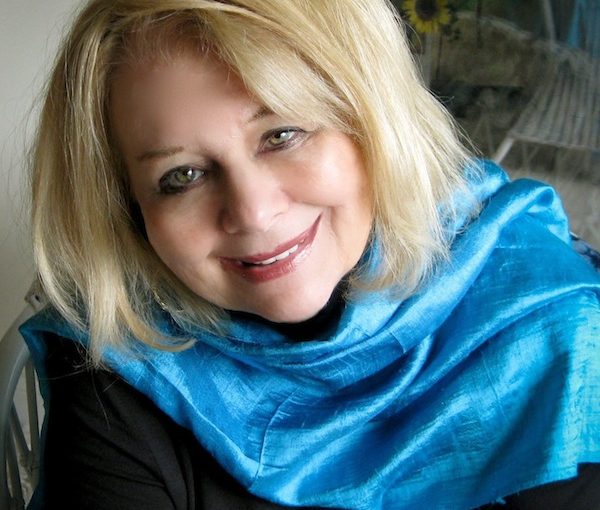
Lillian Boraks-Nemetz has a new poetry compilation, called Out of the Dark, which will be released by Ronsdale Press in the fall. (photo from Lillian Boraks-Nemetz)

The death in late May of George Floyd, while he was pinned down on the ground by a Minneapolis police officer, has sparked continuing protests throughout the United States and the world. The tragic incident struck a nerve with Vancouver author and poet Lillian Boraks-Nemetz, and she composed “The Arm,” a poem about racism, in Floyd’s honour.

The poem begins: “Today I am George Floyd / I am a Jew / so I know how it feels / To be stifled / By the arm of hate / That extends toward anyone / Who is different in colour / Culture or creed.”

“Before he died, George Floyd said, ‘I can’t breathe.’ When I think of the enormity of the Holocaust and its implications in my life, I can hardly breathe,” Boraks-Nemetz, a Shoah survivor, told the Independent in a recent interview from her home in Vancouver.

“There were moments during the Holocaust when fear froze my throat and I couldn’t breathe,” she said. “The first time, I stood at the Nazi checkpoint dividing the Warsaw Ghetto from the rest of the world, I had to let go of my father’s hand and walk alone through the checkpoint, hoping the German guard holding a rifle won’t shoot me. The second time I couldn’t breathe was when I found out that my little sister was murdered by a policeman during the war only because she was a Jew. Like poor George Floyd, my sister didn’t survive.”

When asked what she hopes people who read the poem will take from it, she replied: “There are people in our community who do not identify with the anti-racism goings on. I do.”

She explained, “They talk about the black injustice, the indigenous injustice. I am talking about the Jewish injustice and the rise of antisemitism around the world. It seems as if this topic has been completely omitted from all conversations on racism by both Jews and non-Jews. These incidents, like the killing of George Floyd, touch every survivor of trauma one way or another.”

“The Arm” ends: “As the world burns / From loss, guilt and disgust / May the good people of this Earth / Rise and open their arms / Far and wide to release / Love, kindness and justice for all / Because today each one of us / Is George Floyd.”

The poem comes ahead of the release of Boraks-Nemetz’s new poetry compilation, Out of the Dark, which will be released by Ronsdale Press in the fall.

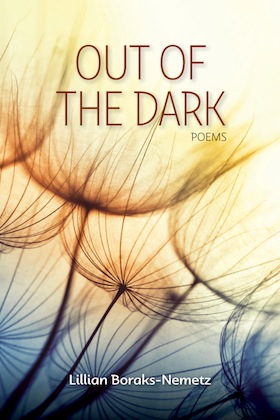
image - Out of the Dark book coverThe 100-page collection offers a cycle of poems in three parts about the poet, who has had to live with the memories of the Holocaust all her life. The first section describes the evils of suffering and prejudice, of war and destruction, and the loss of loved ones, even the loss of self.

“This is a ghetto / where humans live in neglected cages / within a fire that burns sleep out of their eyes,” one verse proclaims.

The second section offers “flickers of light” in locating paths to a more fulfilling life, once the poet understands, “We must always seek / new ways / of reaching one another / though each of us / is a world unto itself.”

The third section pays homage to the creative minds who preceded us and who have bequeathed us their gifts. And it explores the ability to live and love: “I run toward you / carrying the glow of marigolds / lighting your path to my love.”

Boraks-Nemetz is well-known in British Columbian and Canadian literary circles. In 2017, she published Mouth of Truth, a novel that also addressed the power of speaking up for justice. In it, the protagonist must confront secrets from her family’s past in Warsaw during the Holocaust, issues of guilt and discrimination, and verbal, psychological and physical abuse.

Canadian poet John Robert Colombo called Mouth of Truth “a work of great insight and fine delicacy about the human condition.”

Previous works by Boraks-Nemetz – The Old Brown Suitcase, The Sunflower Diaries, The Lenski File and Tapestry of Hope – have garnered Canadian and international awards, as well as praise in literary publications.

Outside her literary endeavours, Boraks-Nemetz is a campaigner for Holocaust education. She speaks frequently at local schools and at international events about the Shoah and is deeply involved with the Janusz Korczak Association of Canada.

To read “The Arm” in its entirety, visit Boraks-Nemetz’s website, lillianboraks-nemetz.com/2020/06/04/the-arm/#more-647. To pre-order her upcoming book of poetry, visit ronsdalepress.com/all-books/out-of-the-dark.

Sam Margolis has written for the Globe and Mail, the National Post, UPI and MSNBC.

Format ImagePosted on June 26, 2020June 24, 2020Author Sam MargolisCategories BooksTags anti-racism, George Floyd, Holocaust, Lillian Boraks-Nemetz, poetry

Canada fails to get seat

There is no way to determine definitively why Canada failed to secure a temporary seat on the United Nations Security Council last week.

Since the UN was created after the Second World War, Canada had generally been elected to one of the temporary seats once per decade. This ended in 2010, when Canada lost its bid, and last Wednesday’s vote represents the second decade of Canadian absence from the prestigious council.

Prime Minister Justin Trudeau contended that the successful countries – Ireland and Norway – had been campaigning longer. Also significant may have been the fact that Canada’s contributions to foreign aid and UN peacekeeping efforts have declined in recent years. Not to be dismissed also is the perception of Canada as an ally of Israel.

Since 2006, under Conservative and Liberal governments, Canada has voted against or abstained from the annual litany of 16 recurring anti-Israel resolutions at the UN General Assembly. That trend was broken last winter, when Canada unexpectedly endorsed a resolution condemning Israel.

Jewish and other pro-Israel Canadians have viewed Canada’s pro-Israel UN votes since 2006 as a principled position in the face of a global dogpiling – the votes are routinely passed with numbers like 160 to six, with Israel, the United States and American-aligned South Pacific micro-nations in the minority. No other country is singled out with such multiple routine censures.

Canada’s abrupt reversal of this stand last year was seen by some as an effort to distance Canada from Israel in advance of last week’s vote, particularly among the nearly 60 Arab and Muslim countries in the General Assembly.

While Trudeau made the case that Canada’s principled voice was necessary for the world in this challenging time, Opposition voices, like Conservative (and former Liberal) MP Leona Alleslev, argued that the government had betrayed its principles and, as a result, undermined its own argument for putting a Canadian representative on the Security Council.

The point is fair. To base our country’s campaign for the seat (at least partly) on the idea that we are a principled voice on the world stage and then do a 180 puts the whole venture into a weird light. For those countries who dislike our history of pro-Israel votes, the last-minute reversal must have seemed too little too late. For those (admittedly few) who admired our chutzpah, the recent vote must have been a disappointment, if not a betrayal. It’s almost a wonder that we got as many votes as we did.

Posted on June 26, 2020June 24, 2020Author The Editorial BoardCategories From the JITags Canada, Israel, politics, Security Council, UN, United Nations

The complex skin we’re in

As a young adult, I was often criticized for being too blunt. I didn’t always behave the way that my family wished I would. I would call people out when they were being inappropriate. This got me into trouble. And, to be honest, that didn’t always bother me enough to stop doing it.

Others made me feel embarrassed – because my job, throughout my teen years, was to behave properly, say the right things and “act like a lady.” In Virginia, this was necessary. My mother served the Jewish community as a director of education and, later, as a temple administrator, and her children’s behaviour was sometimes a reflection on her.

Though my mom was in charge of a $6 million renovation the year before she retired, she was often slighted in her professional life because of her gender, which affected me, too. My body and behaviour were policed, for example. I was told that I shouldn’t be running by the temple in my leggings (running clothing), as “people” looked at me. What was meant by that?

I looked like my mom, and my (in today’s view, entirely appropriate) exercise clothes caused men to look at me – and, therefore, were an embarrassment. Even as a Reform Jewish professional, my mom was a woman. That was problematic. As her daughter, my body and presence could be embarrassing, too.

Being Jewish in Virginia meant there weren’t many Jewish kids in my public school classes. Even weirder, it was being the daughter of a Jewish professional in what was then a small Jewish community that made me understand what it felt like to feel “othered.” People looked at me differently.

It also made me see those who were always treated “differently” – like people of colour. I saw how much harder things were for them. This isn’t ancient history. I graduated from high school in 1991.

After I finished university, I went into a special inner-city accelerated teacher’s program. This allowed new graduate students earning their master’s in education a chance to do their student teaching by replacing teachers who “needed training” in the Washington, D.C., public schools. This program supported an ailing inner-city school system where the (largely African-American) teachers worked longer to earn their retirement pension than anywhere else. These tired and burnt-out high school teachers lacked opportunities for continuing education and basic classroom supplies. They often just needed a break. Most of the students’ families struggled financially and, yes, most of the kids that I taught were African-American or from immigrant families.

In those classrooms, I saw how privileged I’d been in the suburbs. The D.C. public schools were underfunded and in terrible disrepair. Imagine magnificent historic buildings with high ceilings and real slate chalkboards – but it rained inside, the copiers were broken and there were no class sets of books to assign.

When there were fires, the fire trucks didn’t show up. In Anacostia High School, the African-American principal put out the fires himself. These communities weren’t offered basic city services. Instead, there were frequent arrests, for things like “driving while black,” as my friends put it.

I’ve been sad, angry and frustrated about this racial injustice for a long time. I’ve witnessed it – and Jewish tradition tells us to speak out, to pursue justice and to try to fix the world’s wrongs.

Yet, just as Judaism teaches us what it means to be set apart, or even discriminated against, ostracized and singled out, our (mostly male, white, privileged) culture has pushed us to behave according to its norms.

“Being a lady” often meant not embarrassing our families by calling out people who said racist or inappropriate things. It meant that I shouldn’t run by, entirely covered up, because my female body might be a distraction.

Being ladylike? It’s learning that how one looks is distracting, offends others, is reason enough to stay home, or feel ashamed. It’s struggling between speaking out and keeping quiet, so as not to pick a fight.

Sometimes, I’ve just chosen to keep my mouth shut, because it’s not worth the fight, it’s not ladylike, or “Honey, now’s not the time.” But it was wrong to stay quiet when I heard people making others “less” or demeaning them. It’s wrong to say nothing as someone uses degrading language, tells racist stories or implies that someone “deserved what he got” essentially by being a black person or an indigenous person in the wrong place at the wrong time.

Growing up as a Jewish person in a non-Jewish area, and as a female, gave me some insights into this discrimination, but, if I behaved the “right way,” or didn’t act “too Jewish,” (?!) I could pass where I grew up and where I live now, in Winnipeg.

In the Talmud, in Shabbat 95a, there’s a discussion about how to properly sprinkle the floor of a room on Shabbat. It’s a way of cooling a hot space, but it isn’t allowed by the rabbis on Shabbat if the floor is dirt because a dirt floor could be changed by water remolding it. If the floor were stone, it might provide cooling and still be allowed. One sage concludes that a wise woman would know how to do this and avoid breaking Shabbat rules.

The rabbis gave credit to smart women for knowing how to follow the rules and make a change for the better.

This pandemic year has been about colossal change. It might also be time to ditch the “ladylike” models in favour of those talmudic wise women, who make change happen, “cool things down” during a hot summer and find ways to do it while mostly abiding by the rules.

The rules themselves, whether talmudic or modern, are still largely made by men. It’s time to recognize that the “others” – Jews and members of other minority faiths, women, those in the LGBTQ+ community, people of colour and everyone who still faces discrimination and racism – deserve the equality and justice we are all due.

It’s time. In fact, it’s long overdue. Our history as Jewish people, as Canadians and North Americans, requires us to own this injustice and fix it. It’s time to change ingrained, prejudiced habits and speak out.

Jewish tradition teaches that we’re all made in the Divine Image, in every colour and gender. Now we must step up, say so and act as if we mean it.

Joanne Seiff has written regularly for CBC Manitoba and various Jewish publications. She is the author of three books, including From the Outside In: Jewish Post Columns 2015-2016, a collection of essays available for digital download or as a paperback from Amazon. Check her out on Instagram @yrnspinner or at joanneseiff.blogspot.com.


Format ImagePosted on June 26, 2020June 24, 2020Author Joanne SeiffCategories Op-EdTags anti-racism, Judaism, lifestyle, racism

More than $8.9 million raised

When COVID-19 hit, the Jewish Federation of Greater Vancouver quickly refocused its organizational resources on closing the annual campaign and addressing urgent community needs. Now, it is circling back to announce some terrific news, which is that the 2019 Federation annual campaign raised more than $8.9 million.

Here is a general breakdown of the funds raised:

  • $7.9 million in unrestricted funds to support programs and services locally, nationally and in Israel through the allocations process – an increase of $100,000 from last year;
  • $1 million in special project funding from donors who give above and beyond their annual campaign commitments to support programs that meet high-priority community needs; and
  • $40,000 to support the work of specific agencies from donors directing a portion of their increased gifts through Federation’s Plus Giving program.

The community’s generosity is making an impact here and around the world. Thirty-two local Jewish families will have safe, stable homes when they move into new affordable housing units this summer. Youth in Israel who were once considered at-risk are now skilled professionals whose expertise is sought after.

Federation gives a huge thank you to everyone who contributed and to everyone who volunteered to make the annual campaign a success, including the more than 250 community members who volunteered as canvassers and team captains.

Federation’s campaign chair, Jonathon Leipsic, once again demonstrated outstanding leadership, energy and passion for community as he led the Annual Campaign Working Cabinet. Kol hakavod and todah rabah to Leipsic and to each of these community leaders, who are on this dedicated team: Shay Keil, major gifts co-chair; Lana Pulver, major gifts co-chair; Michael Averbach, men’s philanthropy co-chair; Daniel Dodek, men’s philanthropy co-chair; Susan Hector, canvasser development; Al Szajman, marketing chair; Alvin Wasserman, campaign advisor; and Catherine Epstein, agency liaison.

The funds raised in this campaign will be distributed locally, nationally and in Israel during the 2021 allocations cycle, which will take place next summer. This is part of the two-year allocations cycle that Federation established after the 2008 economic downturn in order to provide greater predictability to its partners and to provide a measure of protection in the event of unanticipated fluctuations. The prudent contingency planning that Federation has been able to do as a result is part of what enabled it to provide emergency funding in April to community organizations that were hit hardest by COVID-19.

In addition, the community also depends on Jewish Federation to work with donors throughout the year to generate special project funding to meet high-priority needs. Combined with the annual campaign result, the total Jewish Federation raised this year was $10.3 million. While this strong result will help sustain the community, more resources will still be needed to address increased community needs related directly to the pandemic. A healthy annual campaign is just the start. With the challenges we’re all currently experiencing, Jewish Federation’s central role has never been more important.

Posted on June 26, 2020June 24, 2020Author Jewish Federation of Greater VancouverCategories LocalTags annual campaign, coronavirus, COVID-19, Jewish Federation, milestones
Inspiring achievers honoured

Inspiring achievers honoured

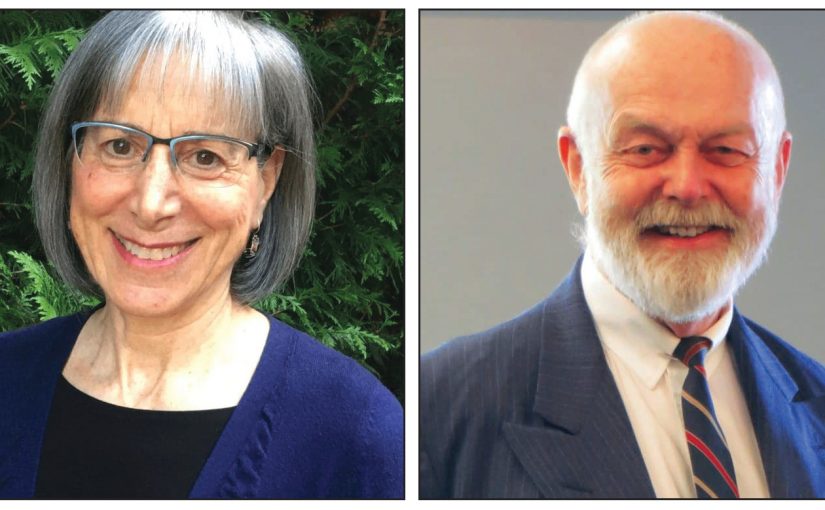
Dr. Paige Axelrood and Ivan Sayers were among the 25 British Columbians honoured with a 2020 BC Achievement Community Award. (photos from BC Achievement Foundation)

On April 27, Premier John Horgan and Anne Giardini, chair of the BC Achievement Foundation, named this year’s recipients of the BC Achievement Community Award. Among those honoured were Jewish community members Dr. Paige Axelrood and Ivan Sayers. “These days more than ever, our communities are made stronger by British Columbians who go above and beyond,” said Horgan. “Thanks go to all of the BC Achievement 2020 Community Award recipients for helping build a better province for everyone.”

“It is an honour to celebrate the excellence and dedication of these 25 outstanding British Columbians,” added Giardini. “On behalf of all of us at the BC Achievement Foundation, I thank each of them for strengthening their communities and inspiring others to community action.”

As the founder of the Scientist in Residence Program, Axelrood developed and built an educational program to support teachers and help students discover their inner scientist. Elementary students across the Vancouver School District have experienced real science and discovered the natural world through the Scientist in Residence Program. Axelrood’s vision to partner teachers with scientists to facilitate hands-on, inquiry-based lessons has helped change the delivery of science education.

Sayers is the honorary curator of the BC Society for Museum of Original Costume and curator emeritus, Museum of Vancouver. Specializing in the study of women’s, men’s and children’s fashions from 1700 to the present, Sayers has produced historical fashion shows and museum exhibitions all over western North America. A lecturer and mentor, his fashion shows have supported countless nonprofits over the years.

The BC Achievement Foundation is an independent foundation established in 2003, whose mission is to honour excellence and inspire achievement. This year’s selection committee members were Mayor Lee Brain of Prince Rupert, Mayor Michelle Staples of Duncan, and past recipients Lolly Bennett, Aart Schuurman Hess and Andy Yu.

The recipients of the 2020 Community Award will be recognized in a formal presentation ceremony in Victoria, in the presence of Janet Austin, lieutenant governor of British Columbia. Each recipient receives a certificate and a medallion designed by BC artist Robert Davidson. For more information on the award and its recipients, past and present, visit bcachievement.com.

Format ImagePosted on June 26, 2020June 24, 2020Author BC Achievement FoundationCategories LocalTags BC Achievement Community Award, clothing, education, fashion, history, Ivan Sayers, Paige Axelrood, science, textiles
Muslim leader an ally

Muslim leader an ally

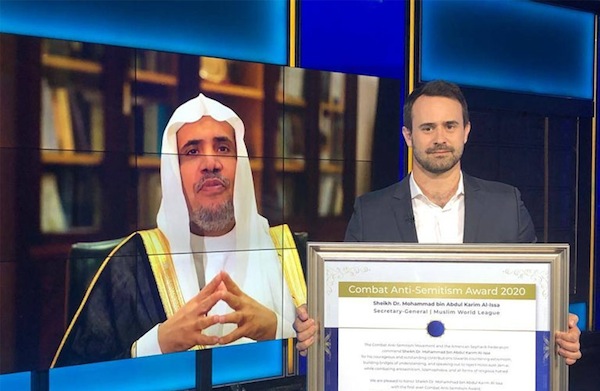
Sheikh Dr. Muhammad Al-Issa receives an award, virtually, from Sacha Roytman-Dratwa, director of the Combat Antisemitism Movement. (screenshot)

During a worldwide virtual event this month involving Jewish leaders and government officials from various countries, one of the leading figures in Sunni Islam was recognized for his work opposing antisemitism and Holocaust denial.

Sheikh Dr. Mohammed Al-Issa is the secretary-general of the Muslim World League and is a former minister of justice of Saudi Arabia. The Muslim World League is funded by the Saudi government, is based in Mecca and positions itself as a force for modernization and moderation in Saudi Arabia and the Muslim world. Earlier this year, Al-Issa led an historic trip of senior Muslim clerics and leaders to Auschwitz-Birkenau.

The online event, titled How Muslims and Jews Can Combat Anti-Semitism Together, featured Al-Issa via video from Saudi Arabia, joined by U.S. government officials including Sam Brownback, a former senator now ambassador-at-large for international religious freedom, and Elan Carr, special envoy for monitoring and combating antisemitism. The event was sponsored by the American Sephardi Federation and the Combat Antisemitism Movement, which bills itself as a non-partisan, global grassroots movement of individuals and organizations, across all religions and faiths, united to combat antisemitism. The organization’s director, Sacha Roytman-Dratwa, presented Al-Issa with the movement’s first annual award recognizing Muslim leadership against antisemitism.

“We have been reminded that, even in countries as advanced and multicultural as the United States, misunderstanding and mistrust is dangerous when allowed to fester,” Al-Issa said in an address that was translated from Arabic. “It can lead to anger, violence and social divisions that help no one. Everywhere in the world, we face challenges in building the bridges of communication, partnership and friendship. But, in a world with many complicated threats, from terrorism to global pandemics, our partnerships are more important than ever.”

He talked about the unifying global fight against coronavirus which, he said, “does not care if a person is Muslim or non-Muslim, Jew or non-Jew, Christian or non-Christian … rich or poor, educated or non-educated.”

That unity is a model for opposing the spread of hatred and intolerance, he said, even as extremists attempt to exploit the current uncertainty to push hatred and division.

He spoke of his visit in January to the death camp in Poland, as well as his numerous visits to synagogues and Jewish museums.

“I stood united alongside my Jewish brothers and said, ‘never again.’ Not for Jews, not for Muslims, not for Christians, not for Hindus, not for Sikhs, not for any of God’s children,” said Al-Issa. “History’s greatest horror, the Holocaust, must never be repeated.… The 1.1 million people murdered at Auschwitz were human beings, just like any other, just like any Muslim. And even though it has been 75 years since the gates of the Auschwitz death camp were torn down, creating a better world for future generations is a constant struggle that we must not give up on.”

He cited murders of Muslims in New Zealand, Christians in Sri Lanka and Jews in the United States as indications of the work remaining to be done.

“Whereas Jews and Muslims lived centuries together, in these last decades we have sadly grown apart,” he said. Since taking the helm of the Muslim World League in 2016, he has tried to build bridges with Jewish and Christian communities. He has also been vocal in fighting Holocaust denial in Muslim circles.

“There are those who still try to falsify history, who claim the Holocaust, the most despised crime in human history, is fiction,” he said. “We stand against these liars, no matter who they are or where they come from, for denying history can only serve to further the aims of those who perpetrate hateful ideas of racial, ethnic or religious purity.”

Continued genocides, in Darfur, Rwanda, Bosnia and now Myanmar, show that the lessons of the Holocaust are universal, he said.

“Muslims have a responsibility to learn them, heed the warning of history and stand as part of the international community to say, ‘never again,’” Al-Issa said. “We will act together to make just peace a reality for Jews and Muslims, and for all people, religions, civilizations and cultures.”

Format ImagePosted on June 26, 2020June 24, 2020Author Pat JohnsonCategories WorldTags American Sephardi Federation, anti-racism, Combat Antisemitism Movement, Mohammed Al-Issa, Muslim World League, tikkun olam

Uprising observed

The Vancouver Holocaust Education Centre and the Jewish Community Centre of Greater Vancouver were among 125 partners presenting a global commemoration of the 77th anniversary of the Warsaw Ghetto Uprising recently.

Beginning and ending with stirring renditions of the “Partisans’ Hymn,” the online event, which also commemorated the end of the Second World War 75 years ago, featured a long list of singers and performers from Hollywood, Broadway and elsewhere, including Dr. Ruth Westheimer, Mayim Bialik, Whoopi Goldberg, Adrien Brody, Lauren Ambrose and dozens more.

We Are Here: A Celebration of Resilience, Resistance and Hope, which took place June 14, was produced by the Museum of Jewish Heritage: A Living Memorial to the Holocaust, Sing for Hope, the National Yiddish Theatre Folksbiene and the Lang Lang International Music Foundation.

“Zog Nit Keyn Mol” (“Never Say”) is generally called “The Partisans’ Song” or “The Partisans’ Hymn” in English and is an anthem of resilience amid catastrophe sung at Holocaust commemorative events. Written in the Vilna Ghetto by Hirsh Glik after he learned of the six-week uprising by Jews in the Warsaw Ghetto, its stirring concluding lines translate as, “So never say you now go on your last way / Though darkened skies may now conceal the blue of day / Because the hour for which we’ve hungered is so near / Beneath our feet the earth shall thunder, ‘We are here!’”

Other musical performances included a Yiddish rendition of Leonard Cohen’s “Hallelujah,” adapted and performed by pianist and singer Daniel Kahn; “Over the Rainbow,” from the 1939 film The Wizard of Oz, composed by Harold Arlen with lyrics by Yip Harburg, two friends from the Lower Eastside of Manhattan, against the spectre of a darkening Europe; and “Es Brent” (“In Flames”), a musical cri de coeur written in 1936 by Mordechai Gebirtig after what he viewed as the world’s indifference to a pogrom in the Polish town of Przycik.

Andrew Cuomo, governor of the state of New York, spoke of his father, the late former New York governor Mario Cuomo, who helped ensure the creation of the Museum of Jewish Heritage, the world’s third-largest Holocaust museum.

One of the other presenting partners, the National Yiddish Theatre Folksbiene, is the longest continuously producing Yiddish theatre company in the world, now in its 105th season. It was founded to entertain and enlighten the three million Jews who arrived in New York City between 1880 and 1920.

Sing for Hope, another partner, believes in the power of the arts to create a better world. Its mission is to “bring hope, healing and connection to millions of people worldwide in hospitals, schools, refugee camps and transit hubs.”

The Lang Lang International Music Foundation aims “to educate, inspire and motivate the next generation of classical music lovers and performers and to encourage music performance at all levels as a means of social development for youth, building self-confidence and a drive for excellence.”

The program, which runs approximately 90 minutes, is available for viewing at wearehere.live.

Posted on June 26, 2020June 24, 2020Author Pat JohnsonCategories WorldTags commemoration, Holocaust, JCCGV, Jewish Community Centre of Greater Vancouver, memorial, Museum of Jewish Heritage, performing arts, theatre, Vancouver Holocaust Education Centre, VHEC, Warsaw Ghetto, Yiddish

Posts pagination

Previous page Page 1 … Page 258 Page 259 Page 260 … Page 664 Next page
Proudly powered by WordPress