Skip to content
  • Home
  • Subscribe / donate
  • Events calendar
  • News
    • Local
    • National
    • Israel
    • World
    • עניין בחדשות
      A roundup of news in Canada and further afield, in Hebrew.
  • Opinion
    • From the JI
    • Op-Ed
  • Arts & Culture
    • Performing Arts
    • Music
    • Books
    • Visual Arts
    • TV & Film
  • Life
    • Celebrating the Holidays
    • Travel
    • The Daily Snooze
      Cartoons by Jacob Samuel
    • Mystery Photo
      Help the JI and JMABC fill in the gaps in our archives.
  • Community Links
    • Organizations, Etc.
    • Other News Sources & Blogs
    • Business Directory
  • FAQ
  • JI Chai Celebration
  • JI@88! video

Recent Posts

  • Zionism wins big in Vegas
  • Different but connected
  • Survival not passive
  • Musical celebration of Israel
  • Shoppe celebrates 25 years
  • Human “book” event
  • Reclaiming Jewish stories
  • Bema presents Perseverance
  • CSS honours Bellas z”l
  • Sheba Promise here May 7
  • Reflections from Be’eri
  • New law a desecration
  • Resilient joy in tough times
  • Rescue dog brings joy
  • Art chosen for new museum
  • Reminder of hope, resilience
  • The national food of Israel?
  • Story of Israel’s north
  • Sheltering in train stations
  • Teach critical thinking
  • Learning to bridge divides
  • Supporting Iranian community
  • Art dismantles systems
  • Beth Tikvah celebrates 50th
  • What is Jewish music?
  • Celebrate joy of music
  • Women share experiences 
  • Raising funds for Survivors
  • Call for digital literacy
  • The hidden hand of hate
  • Tarot as spiritual ritual
  • Students create fancy meal
  • Encouraging young voices
  • Rose’s Angels delivers
  • Living life to its fullest
  • Drawing on his roots

Archives

Follow @JewishIndie
image - The CJN - Visit Us Banner - 300x600 - 101625

Fighting for women’s equality

Fighting for women’s equality

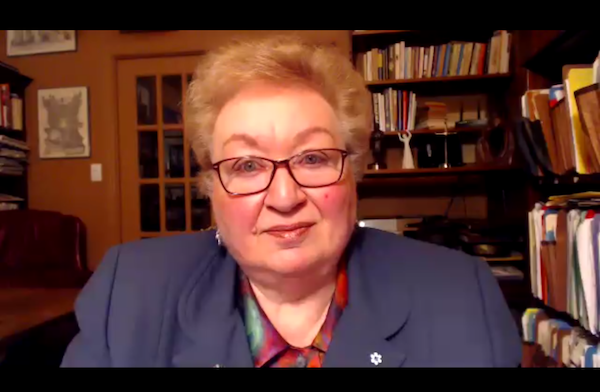
Linda Silver Dranoff kicked off the four-part National Council of Jewish Women of Canada Women and Justice speaker series on Sept. 23. (screenshot)

National Council of Jewish Women of Canada started its four-part Women and Justice Speaker Series on Sept. 23 with retired family law lawyer Linda Silver Dranoff, who lives in Toronto.

The online setting allowed NCJWC members from across the country to be involved. The talk was opened by national president Debbie Wasserman, in Toronto, and closed by co-vice-president Debby Altow, in Vancouver; the question-and-answer period was handled by a committee chair, Bianca Krimberg, in Calgary.

Silver Dranoff’s talk was sobering, explaining how women in Canada have been defined by their subordinate role in the family, in relation to a man. She gave examples of laws that have reinforced this status, but also offered possible solutions, as legal reform has been an important part of her career. Among the books she has written is a memoir, called Fairly Equal: Lawyering the Feminist Revolution.

“Throughout human history, women were unprotected and vulnerable. Husbands controlled the purse strings, all property, any pension and the children,” she said. “A woman did not even own her own clothing, which was called ‘the wife’s paraphernalia.’ Women and children were property, not people. Once a woman was married, she was stuck, even if her husband beat or starved her. What we call domestic violence was considered, until very recently in human history, a private family matter that the state and the community did not get involved in.

“There was no divorce law in Canada until 1968,” she continued. “If a woman was guilty of marital misconduct, such as adultery, she could lose her right to have custody of her children and often even access to visit with them.”

Silver Dranoff became a lawyer in family law in 1974. At the time, she witnessed women staying in abusive marriages because they had little choice – if they left, they could become destitute and lose their children, too. “Marital misconduct ended any right to financial support, even if it happened after separation and divorce,” she said, explaining that settlement agreements often included a dum casta clause, a “while chaste” clause.

If a woman left her abusive husband, she said, anyone helping or harbouring her could be charged as a criminal. “This was an offence in our criminal law until the 1970s – that’s how recently it was. The law permitted a man to disinherit his wife and leave her destitute, no matter how long they’d been married and even if she was the model of a perfect wife.

“The husband controlled the wife’s reproduction. Contraception and abortion were criminal offences. A husband and wife were considered one person in law – the husband. This concept of the legal unity of husband and wife is what allowed a man to control his wife in every respect.” Until 1983, a husband could legally rape his wife – “marriage was considered consent to conjugal relations,” explained Silver Dranoff, who stressed that, of course, many men didn’t take advantage of their power – “but those who did could do so with impunity” and with legal sanction.

In addition to these restrictions, married women were discouraged from working outside the home. “In 1941,” said Silver Dranoff, “fewer than four percent of married women were employed. It wasn’t until 1955 that married women were eligible to be employed in the federal civil service. In any event, there was almost no publicly supported childcare – this actively discouraged women from employment. Even if women worked, usually out of necessity, there were no laws protecting them from discrimination in employment.” This meant that women could legally be paid less, disregarded for promotion consideration and fired if a man needed a job. “There was no law against sexual harassment in the workplace; it didn’t even exist until the early 1980s in law.”

In the public arena, said Silver Dranoff, “women were invisible.” While most women have had the right to vote since 1918 – a right won by the efforts of the first-wave women’s movement – government policy usually overlooked issues of concern to women. “Only five women were elected to Parliament before 1950,” she said. “It wasn’t until 1957 that the first woman ever was appointed as a federal cabinet minister. And a woman lawyer was a rarity – in 1951, there were 197 women lawyers in all of Canada out of a total of 9,000.”

This was the world in which Silver Dranoff grew up, and it energized and impelled her to action, as it did others. “I believe the most significant transformation allowing women a less dependent role in society came about when women could control our reproductive powers,” she said. “The birth control pill was developed in 1961. While contraception and abortion were still criminal offences, the pill gradually became publicly available in the 1960s, and that is when the second-wave women’s movement began.”

Women’s groups proliferated in the 1970s and 1980s. “The National Action Committee on the Status of Women comprised most of the major women’s organizations of the day, totalling, at its height, 700 women’s organizations that all gathered together to promote the rights of women with one voice.”

Silver Dranoff went to law school in 1969. She was a single parent with a 2-year-old and had been out of school for eight years. “Other women were also seeing a life outside the family as a possibility,” she said. “In my law school class, there were 14 women out of 300; we were five percent of the class. Had I attended eight years earlier, when I graduated from history, I would have been the only woman in a law school class in Toronto.”

With more women lawyers, there was more pressure for change and Silver Dranoff spoke about some of the advances that have been made in family law reform, Charter equality rights, abortion, violence against women, childcare, pay equity, and representation and power.

When Silver Dranoff came to the bar in 1974, women had no right to share property accumulated during a marriage, and spousal and child support amounts were “paltry and difficult to enforce.” By the 1980s across Canada, improvements had been made both in multiple laws and in their enforcement. “These changes enabled women to leave bad marriages and live independently,” she said.

However, there is more to be done. Husbands and their lawyers still “use the legal system and its processes and delays as a club to intimidate women.” As well, she added, “It is often too expensive to seek the rights which the law gives, and legal aid is severely underfunded.” Another problem is that mediation and arbitration are replacing the courts in some cases and, “as a result, women may be encouraged to make a deal that doesn’t give them the benefit of the laws we fought long and hard for.”

When the Canadian Constitution was repatriated from Great Britain in 1982, a new Charter of Rights and Freedoms was enacted. Women’s groups lobbied the government of the day, led by then-prime minister Pierre Trudeau, “to include constitutionally entrenched equality rights in the Charter – by the way, a right that American women still don’t have. Our women lawyers provided the wording to protect us, using the lessons taught by the ineffective Bill of Rights passed in the 1950s.”

One of those lessons was the need to make sure the rights were actually protected. “We had to lobby, we had to organize, we had to participate in court cases that would affect our equality rights. So, we founded the Women’s Legal and Educational Action Fund, known as LEAF, in 1985, when equality rights came into effect, to try and ensure that court interpretations of the Charter did not erode, but enhanced and ensured women’s equality rights.”

In the late 1960s, Trudeau, as justice minister under then-prime minister Lester B. Pearson, brought in amendments to the Criminal Code that permitted abortion under defined conditions. The amendments did not legalize abortion, but said the prohibition would not operate if a medical committee deemed a pregnant woman’s life to be in danger if she carried to term. This law did not work, said Silver Dranoff. Among other things, there was inconsistency among hospital abortion committees in rulings and there were no guidelines on what constituted endangerment.

“Dr. Henry Morgentaler became women’s champion,” she said. “He opened a clinic in Montreal and women traveled there from across Canada to be assured of getting and having a safe abortion.”

Morgentaler challenged the medical committee law, she said, and his goal was to get abortion removed as an offence under the Criminal Code; he also challenged provincial laws. “The main challenge was decided in 1988 by the Supreme Court of Canada,” said Silver Dranoff, “which agreed with defence counsel’s constitutional argument that the abortion provisions of the Criminal Code breached the rights of Section 7 of the Charter to life, liberty and security of the person and, therefore, was unconstitutional.”

There is no longer any federal law preventing or criminalizing abortion, or requiring anyone’s consent to the procedure other than that of the pregnant woman. There have been challenges to the change, though, including the federal government under then-prime minister Brian Mulroney, which tried twice – unsuccessfully – to form an anti-abortion law that wouldn’t violate the Charter.

“This shows how important it is to keep vigilant and organized and focused,” said Silver Dranoff. “There’s no such thing as a permanent victory, only a continuing struggle.”

A case in point is the progress that has been made with respect to dealing with violence against women. The courts used to accept the argument that, if a woman had ever had sex before with anyone, she probably consented to the approach by the accused. Victims can no longer be cross-examined on their previous sexual experience, unless the trial judge determines there is some compelling reason to allow it, said Silver Dranoff. However, “victims are still being mistreated by the courts,” she said. “As a result, many women are reluctant to complain.”

In addition to a need for more education of lawyers, police and others in the system before attitudes will change, Silver Dranoff spoke of the need for prevention, offering the example of proactive imprisonment, which is practised in some communities in the United States. Whereas a bail hearing assesses whether an accused is likely to flee before trial, this process assesses how likely an accused is to murder their accuser. If the risk of murder is high, the accused would be imprisoned until their trial and the victim (and their children) would be able to stay at home instead of having to seek shelter and protection, for example.

“I think it’s a plan that’s worthy of consideration in Canada,” said Silver Dranoff. “We also need gun control. In the hands of men who are violent against women, guns are dangerous. And the only way to control violent men using guns is to control guns. Canadian statistics show that access to firearms by an intimate partner increases the likelihood of murder by 500%.”

Childcare is another integral issue, she said. “I personally think that women will never be able to take their full place in our workforce unless we have proper health- and childcare. We need government-paid, government-subsidized childcare centres, regulated places for our children to go and be cared for while women are employed in the paid labour force.”

She said that, 50 years ago, in 1970, the importance of childcare was recognized in the Royal Commission on the Status of Women, “which called for a national childcare plan. The royal commission identified the care of children as the responsibility to be shared by mothers, fathers and society, without which, women cannot be accorded true equality. Just as true today as it was in 1970.”

She pointed to other instances in which a national childcare program had been recommended or dismissed by a federal government. Most recently, on Sept. 23, Prime Minister Justin Trudeau’s government “announced plans for a significant long-term investment in a national childcare and early-learning system, including before- and after-school care, and built on the [publicly funded] Quebec model.”

Silver Dranoff warned that government announcements, and even the making of laws, do not necessarily translate into changes. In Ontario, for example, there have been equal pay laws since 1951, she said, while the Pay Equity Act, which applied to the federal public service, didn’t come until 1984. Changes to the various laws have occurred as a result of complaints from workers, she said, and different governments and employers have either progressed or hindered pay equity.

“Statistics tell the story, too,” she said. “In 1965, women earned, on average, 41% of men’s pay…. Today, Ontario women earn, on average, 70 cents for every dollar a man earns.” While an improvement, it took more than 50 years and it’s not good enough, she said. “These statistics repeat themselves all over the world. Women are still paid less than men in every country in the world, according to research by the World Economic Forum.” And the pay gap is even larger for Indigenous, racialized and immigrant women, she said.

Potential solutions include a law requiring pay transparency, wherein a wage is assigned to a particular job, not the gender of the person filling it, and requiring companies to get equal pay certification from the government or be fined. The latter policy has been implemented in Iceland, she said.

After a few more examples of ways to improve pay equity, Silver Dranoff moved on to her final topic – representation and power. She noted that, in 2013, there were six female premiers, now there is only one (Caroline Cochrane, in the Northwest Territories).

“We need more women in positions of power and we’re having great difficulty in achieving it,” said Silver Dranoff. One deterrent is that women in politics receive significantly more abuse and nastiness than male politicians. Much of this abuse is online in social media and even anonymous; two factors contributing to the fact that few perpetrators are charged or convicted.

She said, “The law could be strengthened in this way: make social media platforms legally responsible for the content they post, just as newspapers have a responsibility to ensure that the content they print is not defamatory.”

She noted there are no provisions in the Criminal Code for online bullying, online criminal harassment, online misogyny. “The Criminal Code only deals with in-person offences,” she said. Of course, to make these types of new laws work, she added, anonymity on the internet must be curtailed or eliminated.

To sustain the advances made by the women’s movement, she said, “Feminists must run for office and be elected. Parties must nominate feminists in electable ridings.”

In Silver Dranoff’s use of the term, feminists can be any gender, just as patriarchs can be any gender. Not every woman, she said, will stand up for the interests of women.

In addition to electoral reform – she believes that proportional representation of the mixed member proportional type is the best bet, “both for society as a whole and for women in particular because it requires consensus decision-making” – Silver Dranoff would like to see changes made in the corporate world, as well. She sees a need for things like mandatory quotas for women on boards, to ensure equal representation. “Voluntary doesn’t work,” she said.

Canada also needs a national women’s organization, she said, “like we had in the early days of the women’s movement. The National Action Committee on the Status of Women represented all of us…. We need that national voice to ensure that women’s issues are monitored and our interests are heard.”

Such an organization should not be dependent on government funding, she said, “which can be, and has been, withdrawn due to the ideology of the day. And, in fact, that’s what happened to NAC in the end. The National Action Committee was relying on government funding and an unsympathetic government removed it.”

Women cannot just accept the status quo, she said, or “that makes us complicit.”

She concluded, “My message to you all is carpe diem, seize the day. There is work to be done. It is, without a doubt, long past time for women to achieve equality and justice.”

***

Note: This article has been amended to make clear that it was married women who weren’t permitted to work in the federal public sector until 1955.

Format ImagePosted on October 9, 2020October 10, 2020Author Cynthia RamsayCategories LocalTags abortion, childcare, divorce, economics, employment, equality, healthcare, human rights, justice, law, Linda Silver Dranoff, marriage, National Council of Jewish Women of Canada, NCJW, pay equity, women
Unpacking Israel education

Unpacking Israel education

Dr. Noam Weissman, senior vice-president of OpenDor Media. (photo from OpenDor Media)

King David High School is one of 50 Jewish high schools worldwide participating in Unpacked for Educators, a series of educational videos and podcasts on Israel created by OpenDor Media with the goal of providing a nuanced, thoughtful and thorough approach to Israel education.

“Theirs is high-quality material available for free, and usually those two things don’t go hand in hand,” said Rabbi Stephen Berger, head of Jewish studies at KDHS. “OpenDor Media is passionate about education and Israel and we are blessed to be able to work with them.”

The videos, approximately 10 minutes each, deal with a wide range of material that ranges from lighthearted topics like falafel, Eurovision and hip-hop music to contemporary conflicts, terrorism and the Israeli settlements. The goal is for educators to select the subjects they want to address with their students and use the videos and podcasts as points for discussion, debate and engagement.

“For years, Israel education has been behind other education, so our goal here was to sandwich nuance with love and to educate rather than indoctrinate,” said Dr. Noam Weissman, senior vice-president of OpenDor Media. “We want our students to end their sentences with question marks, to foster curiosity and deepen exploration by showing multiple sides to an issue. We love Israel and, yes, it’s complicated and nuanced, with lots to debate. We have to allow our young people to make up their own minds and deliver good education.”

OpenDor’s mission is to change Israel education the world over and make Jewish and Israel education available and accessible to everyone, regardless of their location. Other participating schools are in South Africa, Australia, the United Kingdom, Israel, Hungary and the United States. In Canada, KDHS is among six participating schools.

OpenDor is working on increasing the number of podcasts and videos in its repertoire, and hopes to reach a point where Jewish schools, of all religious denominations, can be unified about how to engage their students with Israel education. To that end, in terms of sharing resources and improving pedagogy, Weissman said, “We make a whole suite of videos and podcasts you can pick from, so, if you don’t like one, pick another. We’re not telling schools what to teach – we’re trying to help them develop tools for how to teach.”

That’s a great resource at KDHS, Berger said. “Sometimes, our teachers don’t know all the information either, and these videos help our educators develop professionally. The videos are there to spark thought, and then to stop, explain and discuss with students. It’s not a movie. What OpenDor is doing is so well needed.”

Weissman said Seth Rogen’s opinions on the Israel education he received growing up in Vancouver are telling. “The Seth Rogen fiasco is another example of a Jew going through an educational institution and saying, ‘they did a disservice to me,’” he said, referring to a conversation between Rogen and Marc Maron in an episode of Maron’s WTF podcast in July. In that podcast, Rogen stated that he was “fed a huge amount of lies about Israel my entire life.”

“I don’t blame Seth Rogen, but I think the Jewish community needs to look inwardly and ensure Israel content and education is accessible to everyone,” Weissman said. “Israel education is at the point where we as a field know how to do this well. We have the resources, confidence and context to make a nuanced experience possible for all students.”

The videos and podcasts are targeted at ages 18 through 34. They are freely available on YouTube and are an educational resource for Jews of any age seeking to understand events in Israeli history. For more information, visit opendormedia.org.

Lauren Kramer, an award-winning writer and editor, lives in Richmond. To read her work online, visit laurenkramer.net.

Format ImagePosted on October 9, 2020October 10, 2020Author Lauren KramerCategories LocalTags education, Israel, KDHS, King David High School, Noam Weissman, OpenDor Media, Stephen Berger, Unpacked for Educators
Do we care about being fair?

Do we care about being fair?

In its decision on Uber Technologies Inc. v. David Heller, the Supreme Court of Canada determined that the freedom of contract is not so absolute in its technical application as to undermine its purpose of allowing people to craft their own destinies. (photo from wikipedia)

Does fairness play a role in how we interpret and apply law? After all, doesn’t a person have the right to make bad decisions?

The Torah gives us the written law, similar to legislation, and the Talmud gives us the oral law and commentary, similar to the doctrines and jurisprudence of common law.

So, are we to interpret and apply law strictly, even if it seems unjust? Is there authority to temper the interpretation of law based on the circumstances? The Talmud tells us, yes. In June, the Supreme Court of Canada agreed.

Every businessperson knows that it’s a good idea to get an agreement in writing. We use written agreements to make a record of what the parties have agreed is their shared vision of their business relationship. Part of that shared vision might include agreeing that certain rights ordinarily afforded by the law of the land won’t apply to this relationship. The right to give up a right is central to the freedom of contract.

The freedom of contract is based on the idea that a person knows what’s best for them and wouldn’t agree to something if the bargain weren’t to their liking. The law doesn’t protect you from your own bad decisions, but it is supposed to protect you from bad decisions that you didn’t make freely.

In June of this year, the Supreme Court of Canada decided the case of Uber Technologies Inc. v. David Heller. Heller was an Uber food delivery driver. As such, he signed a standard agreement with Uber – the kind of agreement that is a “take it or leave it” proposition. Very few people read such contracts and, even if they do take the time to read and understand them, they don’t have the opportunity to create the “shared vision” that the freedom of contract is supposed to protect.

One of the terms of the Uber contract was that any dispute would be dealt with through a mediation and arbitration process in the Netherlands, rather than through the court system in Canada. Doing so would require up-front fees of $14,500 US, not including the cost of lawyers and travel. Heller’s annual earnings from Uber are between $20,000 and $30,000 Cdn. In other words, it would cost at least half of his annual earnings just to file his dispute, let alone pursue it.

The Supreme Court of Canada found in Heller’s favour.

If this had been a freely negotiated contract, Heller would have made a bad decision, but it would have been his decision to make and thus enforceable. However, it was clear to the court that Uber put this clause into the contract to make sure their drivers simply could not bring any dispute against them.

The court could have said that, according to the strict letter of the law, Heller agreed to the contract and is, therefore, bound by it. It doesn’t matter if you now find unfair a contract that you freely agreed to.

Instead, the court said the law in its strictest form is not always applicable, and we must determine whether it is inhumane to apply it strictly or whether circumstances demand we temper it. The court found that, rather than providing an alternative means to justice (i.e. arbitration), Uber imposed an unreasonable barrier to justice; they found a way to make sure that their drivers could not access justice no matter the merit of their complaint.

Many of us are familiar with the first three verses of parshat Shoftim in Devarim (Deuteronomy 16:18-16:20). First, a system of judges is established. Second, the judges are commanded to judge fairly on the merits of the cases. The third verse contains one of the most well-known phrases in the Torah: “Justice, justice shall you pursue.”

Why is the third verse there, and why does it use the word “justice” twice? The second verse has commanded the judges to follow the law without prejudice. Why then tell us to pursue justice? Isn’t that implicit in the establishment of a rule-of-law justice system? And what is “justice, justice” as opposed to “justice”?

In Chapter 2 of tractate Avot in the Mishnah, we are told, “warm thyself by the fire of the sages, but beware of their glowing coals, lest thou be burnt, for their bite is the bite of a fox, and their sting is the sting of a scorpion, and their hiss is the hiss of a serpent, and all their utterances are like coals of fire.”

At the distance where coals keep you warm, you can learn. At this distance, you can also see the coals in the context of providing warmth. If you are close enough that they can bite, sting and hiss, you lose sight of their purpose (warmth) and will be burnt. This applies to law.

Chapter 1 of Avot provides three interpretations of law’s purpose in the olam, world – olam also means the universe and everything in it.

Verse 2 of Chapter 1 says that the world stands on Torah (law), work (the practice of law) and kindness.

Verse 12 directs us to love peace, to pursue peace and to love all creatures bringing them closer to the Torah (law).

Verse 18 tells us that the world stands on justice, truth and peace.

The inclusion of kindness and peace alongside law tells us not to get so close to the coals that we forget their purpose is warmth.

“Justice, justice” is not only law, but law with purpose. Law without purpose may wear a badge of justice, but it is not truly just. Law used for the purpose of subverting justice is not just.

The court determined, in the Uber decision, that the freedom of contract is not so absolute in its technical application as to undermine its purpose of allowing people to craft their own destinies. In this case, Uber’s contract precisely contradicted that purpose: Uber imposed a contract that expressly denied Heller the right to craft his own destiny without his freely given consent.

Jeremy Costin is a business and estates lawyer practising in Vancouver. He sits on the board of directors and the governance committee of the Vancouver Holocaust Education Centre, and is a frequent guest instructor at the Law Society of British Columbia.

Format ImagePosted on October 9, 2020October 8, 2020Author Jeremy CostinCategories NationalTags David Heller, Judaism, justice, law, Mishnah, Supreme Court, Uber
What if critical illness strikes?

What if critical illness strikes?

(photo from flickr)

We all wonder and fear what would happen if we were diagnosed with one of many critical illnesses or suffered a heart attack or stroke.

You work hard to achieve personal and financial goals during your lifetime. Your plan is working and you have accumulated savings and investments, using tax-efficient investment strategies such as your registered retirement savings plan (RRSP). If you have to sell investments prematurely or stop investing in order to manage recovery costs, your future plans may never recover. So what should you do?

The survival rate of these critical illnesses has risen over the years and we are now most likely going to survive “the big one.” In Canada, these are the statistics: 63% likelihood of surviving at least five years after a cancer diagnosis, 90% will survive a heart attack, and there is an 80% survival rate after a stroke and hospitalization.

Here’s the problem

The issue is that there are significant costs associated with the treatment and recovery from such an illness. There can be large medical bills that are not covered by our various healthcare plans. In Canada, many will want to pursue treatments offered by private clinics at home or abroad, which can be extremely costly.

In addition to these costs, we often neglect to consider the other realities that people face, such as not being able to work. The most obvious is the loss of income suffered when one cannot work or run the family business or professional practice for an extended period of time. This might also affect the income of the spouse and other family members, those who are needed to provide home care.

What are the options?

To deal with the unexpected costs and loss of family income there are really two choices:

  1. One may choose to self-insure, meaning that one accepts the risks and has put money aside to cover the eventuality, or
  2. One may purchase critical illness insurance, which provides a lump sum after one is diagnosed with one of the critical illnesses covered in the policy.

The options in more detail

Removing the costs and lost income from one’s financial plan is a considerable setback to the financial plan. The projected retirement income is suddenly reduced and, for most people, it will never be made up. The impact is even greater if one is forced to withdraw from RRSP accounts, as these amounts are fully taxable as income.

As an example, if one needed to cover $100,000 of costs and had to withdraw it from a RRSP account, at a marginal tax rate of 50%, the person would have to withdraw $200,000 of savings intended for retirement.

The eventual impact on one’s projected retirement must be considered carefully, taking into account the income tax issues based on the source of funds, plus the loss of compounding that will no longer be enjoyed on the growth of those funds from the time of the critical illness until the time one planned to retire.

Suffice it to say, the decision to self-insure needs to be taken very seriously. Unfortunately, there are statistics that reaffirm the risks of falling ill with a critical illness are significant.

Critical illness insurance is sometimes referred to as “new insurance,” as it is a newer solution than traditional life insurance. In the past, before the many medical advancements we have enjoyed, life insurance was the solution because it was more rare to survive the illnesses.

Critical illness policies are designed to pay out a lump sum, say $100,000, typically 30 days after the diagnosis. The illnesses are defined and one can purchase a basic plan that covers heart, stroke and cancer, or the more comprehensive plans that have up to 25 covered conditions and include long-term-care insurance as well.

As of the end of 2019, one major life insurance company reported the following statistics:

  • It has paid out $520 million on 5,360 claims. In 2019, 67% were for cancer, 13% for heart attack, four percent for strokes and the remainder for coronary bypass, multiple sclerosis and other illnesses. The average age of claimants was 53 for women and 55 for men.

The lump sums paid out are used to cover medical costs, replace lost income, retire debt such as loans and mortgages, cover salaries within a business and often pay for time off and bucket list-type vacations.

There are programs available where, if one has been fortunate enough to not have made a claim, in other words, not have fallen ill with a critical illness, the policy can be canceled and all the premiums refunded. The only cost, in that case, is the time value of money on the premiums, as 100% is refunded.

It is even possible to model such a plan where one uses funds earmarked for a RRSP contribution to cover the premiums. This is more effective than one might first think, as the refund of premiums is tax-free.

The first step is to identify and understand the risks to one’s retirement plan. The second step is to consult a qualified professional to consider what protection works best for you.

Philip Levinson, CPA, CA, is an associate at ZLC Financial, a boutique financial services firm that has served the Vancouver community for more than 70 years. Each individual’s needs are unique and warrant a customized solution. Should you have any questions about the information in this article, he can be reached at 604-688-7208 or [email protected].

***

Sources: Manulife Insurance – Critical Illness: Asset Protection: Keep Your Retirement Savings for the Future, and Critical Illness: Retirement Protection Handbook.

Disclaimer: This information is designed to educate and inform you of strategies and products currently available. The views (including any recommendations) expressed in this commentary are those of the author alone and are not necessarily those of ZLC Financial. This information is not to be construed as investment advice. It is for educational or information purposes only. It is not intended to provide legal, taxation or account advice; as each situation is different, please seek advice based on your specific circumstance. This commentary is not in any respect to be construed as an offer to sell or the solicitation of an offer to buy any securities.

Format ImagePosted on October 9, 2020October 8, 2020Author Philip LevinsonCategories NationalTags critical illness, economics, financial planning, healthcare, insurance, retirement, RRSPs
Contemplating walls

Contemplating walls

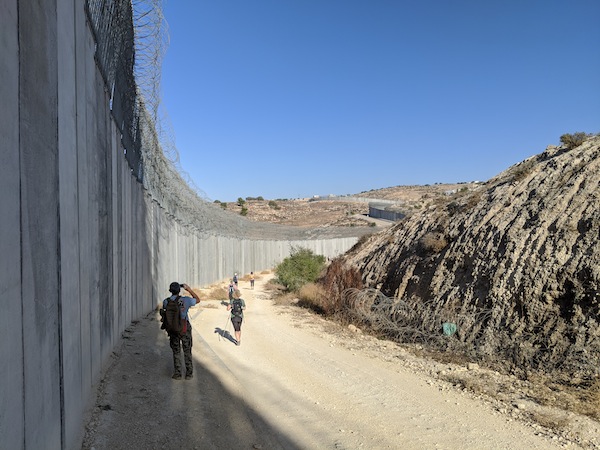
The separation wall, Bayt Mirsim. (photo by Kevin Keystone)

In this three-part series, the author recounts some of his experiences on Masar Ibrahim Al-Khalil, the Path of Abraham the Friend, in the West Bank, which he visited in 2019. The articles have been adapted from a few of the letters he wrote home to family. The events and people described are real but, for reasons of privacy, the names are fictitious. To read Part 1, click here; for Part 2, click here.

Today was our last day on the trail. After many late nights of parlour games, beers and anticipation, we were tired. One of our fellow hikers, Felix, had to stop periodically: the soles of his shoes had worn through, he could feel the tiny stones biting underneath. Uncharacteristically, he was in pain, but he muscled through.

We descended into a valley, dotted with pale green brush, reminiscent of our first days on the trail. The valley opened into expansive views of olive groves, steppes cut into the hills, tidy rows of trees buttressed by stone walls. It could have been Tuscany but was the Middle East, with a warm breeze and soft, popcorn-shaped clouds overhead.

Admiring the scenery, I thought of what lay ahead. I would be spending tonight in Jerusalem. It was a place I hadn’t been since my Birthright trip eight years ago. My rabbi had once invited me on a congregational tour of Israel, in recognition of my service to the synagogue, but I turned it down. A friend rightly pointed out that, as an Arab Muslim, he couldn’t visit the Holy Land as readily as I could. In solidarity, he suggested I shouldn’t go. That seemed fair, so I didn’t. But here I was, so close to Jerusalem and the Wailing Wall. How could I not go?

* * *

It was a hot day on my Birthright tour. We weaved our way through the Old City, through its various souks and alleyways, to arrive at a platform high above the Wailing Wall plaza. Our guides wanted us to see it there first for a clear, unobstructed view. It wasn’t busy, just another day in Jerusalem at the Wall and the holiest site in Judaism. The wide-open plaza was sleek and clean, the great stone wall standing pink and golden.

We descended towards it, and I could feel the heat. I was dehydrated and a bit dizzy. Our guides released us and we ambled forward, dazed, in the wall’s general direction. A man stopped me and asked if I wanted to put on a prayer shawl. I did. He asked me if I wanted to lay tefillin. I had never done it before. He helped me. “Repeat after me,” he said. “Baruch atah Adonai …” as he wrapped the leather band around my forearm.

Prepared, I approached, pulled in by the wall’s gravity. I slipped off my sandals to stand on the ground with my bare feet. I pressed my hand to the mottled stone and closed my eyes. “Baruch atah Adonai,” I began. Strangely, I felt both heavy and light, a yearning and also a surrender. I said the Avot v’Imahot, the prayer that recognizes our descent from Abraham and Sarah, tracing us back through the generations. I didn’t know, then, how important that moment and that prayer would be.

When I was finished, I slipped on my sandals and stepped away.

* * *

“This might be the most beautiful day on the trail,” said Jane, a soft-spoken homeopath, a Mancunian and longtime friend of fellow hikers Eve and Oliver. Her husband George was in business software. He regularly meditated.

She was right. I was worn out but had to agree. It was beautiful. Picturesque, even. Idyllic. We pulled over, as we had during our first week, to have coffee with olive harvesters and help them rake the trees. A young mother with her toddler, husband and parents: harvesting is so often a family affair. Hospitable as ever, much coffee and tea was poured and drank, olives collected, tobacco rolled, puffed and exchanged. We waved our goodbyes – shukran, aleykum salaam – and continued on.

A stretch of valley gave off onto a final stretch of orchards and, as I clambered over the low stones, I looked up and saw the separation wall. From a distance, the 25-foot concrete wall, scrawled with barbed wire, rose through the canopy of the trees. Hesitatingly, I walked towards it, tracing its contour in my mind. In some parts of the West Bank, the barrier is composed of giant slabs of concrete dotted with military towers; in others, it is coiling pyramids of barbed wire or electrified fence bordered by wide swaths of sand to detect trespassers. Here, it is rebar and cement, two-and-a-half storeys high, and cuts through olive groves and the hills around it. I pressed my hand to it; it was cold and abraiding. I closed my eyes and said a prayer for a future without it.

photo - Dawn at the Dead Sea
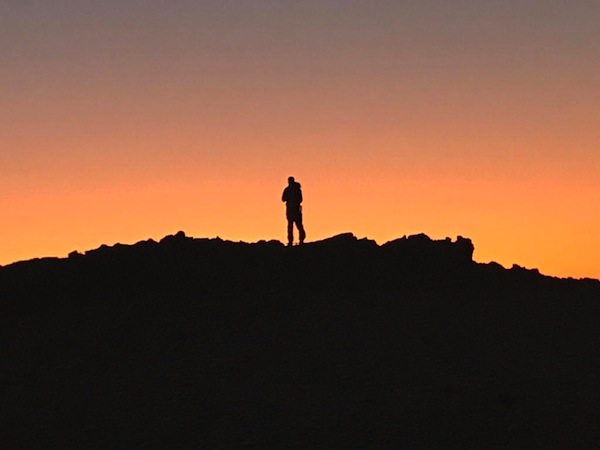
Dawn at the Dead Sea. (photo from Kevin Keystone)

* * *

Compared to the West Bank, downtown Jerusalem feels like another planet. I spent that night in a small apartment hotel off Jaffa Street, a few blocks from the Old City. It was a one-bedroom suite with a fully equipped kitchen and three-piece bathroom. The water was hot, the shower had walls and a showerhead, and I could drink the water. It was unlike many nights on the Masar.

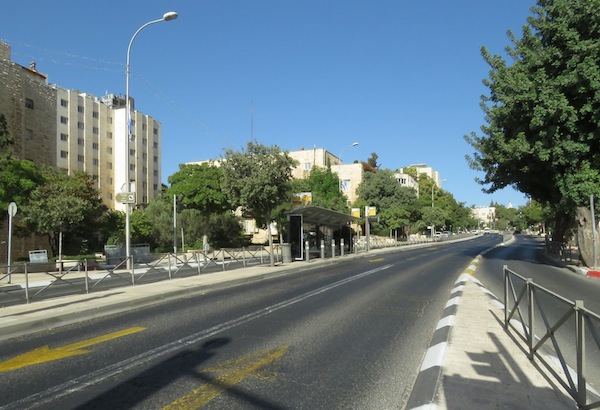
Jaffa Street reminded me of places like Vienna or Vancouver: the pavement was so clean you could eat off of it. The pedestrian walkways alongside were spacious and wide, paved with smooth and even slate-gray tiles. The streetcars were sleek and punctual. Art galleries and museums, ornamental lights and public transportation, urban and urbane. First world versus developing; moneyed versus struggling. The contrast was deeply uncomfortable.

My friend Marta and I wound our way through the narrow, dreamlike alleyways of Nakhalat Tziyon, the walls lined with thick slabs of golden Jerusalem stone. A playful breeze danced through the trees. We stopped for lunch at a picturesque café, complete with colourful outdoor seating and painfully handsome servers. The food was delicious and expensive; we ordered hummus that came with falafel and sweet lemonade.

“How is this real?” I asked her.

“I know,” she said. “It’s shocking.”

After lunch, I returned to the place I had been many years before. I followed the signs in the Old City, the pull magnetic, feeling a mix of dread and anticipation. I saw it first as before, from above, the top of the staircase leading down to the Kotel.

Few tourists were out today, just the heat and people praying. Orthodox tradition dictates separating the genders; indeed, on the women’s side, a fraction the size of the men’s, Torah scrolls are still officially prohibited. Today, the women’s side was packed, the men’s side dotted with the odd worshipper. At the tefillin tent, an old man shawled me in his tallit. A red-headed, black-hat wearing Charedi named Isaac helped me with the tefillin. He looked about my age, or a few years younger. In another life, I wondered, would I have been him?

“Did you do this yourself?” he asked, pointing to the forearm I had already bound.

“I did,” I said. For a month, in the intervening years, I had done it every morning. “I just can’t remember how to do the hand part.”

“I can help,” he said. Isaac said many things: about God, what God wanted, the prayers I could say at the Wall. “Sometimes, you might feel like the worst Jew ever,” he said. I didn’t. I never felt that way. I wasn’t a “good Jew” or a “bad Jew,” I was just Jewish.

“Say a prayer for all your loved ones, then say a prayer for yourself,” he said. “Then maybe you’ll say a prayer for me, too.”

Blocks of stone peppered with bits of paper: the wall hadn’t changed, but I had. I pressed my hand to it, feeling its soft, pockmarked face, and closed my eyes.

* * *

I’m home now, in Canada, and wonder about my travels. I came back “with eyes wide open,” as my rabbi had prayed: to the painful, joy-filled and resilient lives of the Palestinians I met. I think about the separation wall and the Kotel, how they’re connected and what it meant to pray at them, different but related prayers. If the Wailing Wall is part of us as Jews, then perhaps its future and our spiritual liberation is bound together with the separation wall. Perhaps the Kotel will never truly be honoured until we bring down the separation wall. As I contemplate the stories of our freedom from bondage, I’m reminded of the idea that our liberation, spiritual and otherwise, is bound up with the liberation of others.

Kevin Keystone is a Toronto-based freelance writer, editor and researcher. When not hiking long-distance trails, he can be found reading, spending time with friends and family, or with his beloved partner, Aaron. His writing has been published in the Literary Review of Canada, the Jewish Independent and Good Old Boat. For this series, he thanks the guides and staff of Siraj (the Masar Ibrahim Thru-Hike tour operator), the host families and locals he met along the way and his fellow hikers, as well as friend and editor Matt O’Grady.


Format ImagePosted on October 9, 2020October 8, 2020Author Kevin KeystoneCategories IsraelTags education, hike, Israel, Israeli-Palestinian conflict, Masar Ibrahim Al-Khalil, Palestine, Path of Abraham the Friend, peace, politics, separation wall, Siraj Centre
Israel on lockdown

Israel on lockdown

(photo from Ashernet)

Jerusalem on erev Sukkot, Oct. 2: Keren Hayesod Street (above), the Mamilla open-air mall and the First Station complex (both below). Normally, these places are full of people, especially the day before a holiday. However, for the foreseeable future, Israel is on a total lockdown – the country has one of the highest per capita COVID-19 infection rates in the world. Traffic around the country and in the cities has been exceptionally light, as people are only allowed to travel to essential work or to buy necessities at supermarkets and drugstores.

photo - The Mamilla open-air mall
The Mamilla open-air mall (photo from Ashernet)
photo - The First Station complex
The First Station complex (photo from Ashernet)
Format ImagePosted on October 9, 2020October 8, 2020Author Edgar AsherCategories IsraelTags coronavirus, COVID-19, Israel, lockdown, Sukkot
הימורים לא חוקיים באונטריו

הימורים לא חוקיים באונטריו

(Wikimedia)

סגירת בתי הקזינו באזור מחוז אונטריו הגבירה את משמעותית את מאמצי העבריינים באזור להגדיל את חלקם בהכנסות מהימורים לא חוקיים. משטרת יורק ניהלה זה חודשים חקירה מסועפת ומסובכת אחר המתחרש בווילה מפוארת באזור מרקהאם שמצפון לטורונטו. זאת לאחר שנתקבל מידע על קזינו מחתרתי שפעל במקלט של הבית המפואר, כאשר סכומי כסף גבוהים מאוד עוברים מיד ליד. התקבל גם מידע על כלי נשק שמוחזקים במקום, כמו גם אלכוהול רב וקרוב לוודאי שגם נערות ליווי הועסקו בשירות לאורחים המהמרים.

במשטרה העניקו עדיפות לחקירה של הקזינו הבלתי חוקי, כרגיל כמו בכל אירוע בנושא פשע מאורגן. חלק מחקירת המשטרה המתמשכת כלל שימוש באמצעים טכנולוגיים כולל מעקב באמצעות כלי טיס מהאוויר. זאת עד שהוחלט שהגיע הזמן לפשוט על הווילה המפוארת. במבצע השתתפו עשרות שוטרים ובלשים מיחידות שונות של המשטרה. שווי הווילה נאמד בכתשעה מיליון דולר והיא מתפרשת על פני כעשרים אלף סווקר פיט.

חוקרים ביחידות אכיפת הפשע המאורגנת של משטרת יורק בהם היחידה למודיעין והיחידה לטיפול בנשק, כנופיות ואכיפת סמים, פשטו על הבית המפואר לאחר שקיבלו צו חיפוש מבית המשפט, בו פעלו לכאורה כקזינו וספא בלתי חוקיים. המשטרה תפסה בפשיטה אחד עשר כלי נשק ולמעלה ממיליון דולר במזומן.

בחודש המאי השנה, יחידת המודיעין האזורית של יורק והיחידה לטיפול בנשק, כנופיות וסמים החלו בחקירה סביב קיום משחקים לא חוקיים, בעיקר בתקופת הקוויד. זאת לאחר שהמשטרה קיבלה מידע בדבר בתי קזינו תת-קרקעיים שפועלים באזור מרקהאם.

בראשית חודש יולי השנה החוקרים ערכו פשיטה לאחר שקיבלו צו חיפוש מבית המשפט על חנות שממוקמת בשדרת מידלנד במרקהאם. בחנות התנהלה פעילות של משחקי מזל לא חוקים. נתפסו שולחנות משחק, מכונות מזל וידיאו ויותר מעשרים אלף דולר דולר. חמישה אנשים ששהו במקום נעצרו.

בשבועות האחרונים יחידות שונות במשטרת יורק, בסיוע צוותים טקטיים ממשטרת מחוז אונטריו ושירות המשטרה האזורית דורהאם, קיימו מעקבים הדוקים על הבית המפואר (שנמצא ליד שדרות מקנזי). לאחר שהתקבל אישור מבית המשפט לצו חיפוש, פשטו השוטרים על הווילה ומצאו שבמקלט שלה פעל קזינו בלתי חוקי ברמה גבוהה. שלושים ושנים אנשים חשודים נעצרו במקום. לאחר חיפוש נרחב בווילה נתפסו אחד עשר כלי נשק עם תחמושת רבה, יחד עם יותר ממיליון דולר במזומן, מכונות משחק ושולחנות. וכן למעלה ממיליון וחצי בקבוקי אלכוהול. האחוזה נסגרה ונאטמה לחלוטין על ידי השוטרים.

חוקרי המשטרה הספיקו עוד לפשוט על בית מגורים באזור וודלנד שבעיר ווהאן לאחר שהתקבל אישור מבית המשפט לצו החיפוש. נמצאו עדויות לפעילות של משחקים לא חוקיים במקום, שלושה אנשים נעצרו ונתפסו למעלה משבעים אלף דולר.

במשטרה מציינים כי הפשיטות שביצעו הן משמעותיות, אך אלה הן רק תחילת המאמצים לפרוק קבוצות פשע מאורגנות, שמפעילות משחקים לא חוקיים באזור יורק. לדברי החוקרים הכסף שעובר בבתי קזינו מחתרתיים אלה מוביל לרווחים עצומים של עבריינים, שמממנים מיזמים אחרים כמו זנות וסחר בסמים. הימורים בלתי חוקיים אלה, גורמים גם לאלימות נשק, מעשי שוד מזויפים, חטיפות, סחיטה באיומים ועוד. המשטרה תמשיך להתמקד בפשע מאורגן באזור יורק ותשתמש בכל כלי העומד לרשותה, כולל חשבונאות משפטית, בכדי להבטיח כי פושעים אלו יישאו באחריות.

בכל החקירות השנה נעצרו עד כה ארבעים וחמישה איש כאשר שלושים ושלושה מהם, הואשמו ביותר משבעים עבירות פליליות.

Format ImagePosted on October 7, 2020October 6, 2020Author Roni RachmaniCategories עניין בחדשותTags drugs, gangs, illegal gambling, Ontario, police, Wuhan, York, אונטריו, ווהאן, יורק, כנופיות, משחקי מזל לא חוקים, משטרה, סמים
School year has begun

School year has begun

Head of school Russ Klein welcomes back King David High School students. (photo from facebook.com/kdhsvancouver)

Metro Vancouver’s five Jewish day schools are officially in session – student orientation began the week of Sept. 8. But, while the schools are working hard to create a “normalized” and consistent atmosphere for learning, the new procedures set in place by the Ministry of Education’s Back to School program will likely take a bit to get used to.

In July, the Ministry of Education announced new guidelines for class sizes and safe attendance as it prepared to return students to the classroom. Elementary and middle school cohorts are limited to 60 persons each, while high school learning groups are capped at 120 students. The province requires masks to be used at middle and high schools whenever social distancing cannot be maintained.

King David High School’s head of school, Russ Klein, acknowledged that having to wear a mask at school may be awkward for many. As well, the two-metre social distancing requirements will, at times, be difficult, forcing students to study on their own, rather than buddying-up for group assignments. That means, said Klein, “you are also then reducing opportunities for group work. You’re not facing the kids together, you are not sitting them in bunches,” methods that have often proven to be effective approaches in large classrooms. Teachers, he added, “really like to help their kids and needing to stay six feet away from them at all times changes how you help somebody and how you interact with them.”

Many schools began implementing changes to classrooms, common rooms and lesson plans last school year when it became evident that social distancing would affect how classes were taught. Rabbi Don Pacht, who oversees the Vancouver Hebrew Academy daily operations, said the move to a brand-new building last spring helped with that transition.

The larger building, he said, “gives us a very desirable ratio of space per student. Keeping distance between learning groups and allowing for distance between desks will be easily achieved.”

Like other schools in the area, VHA has also implemented see-through “sneeze guards” and other preventive measures to reduce chances of transmission. “We have also invested in Plexiglass screens and additional hand sanitizing stations throughout the school,” said the rabbi.

Vancouver Talmud Torah began making changes to the curriculum last school year as well. Jennifer Schecter, who serves as the communications and admissions director for VTT, said the speed with which the school began implementing changes to address the coronavirus threat appears to have paid off.

“Our retention was at an all-time high this past year because I believe parents value our product and the sense of community we provide more now than ever. This is a testament to our faculty’s superb skill in pivoting and offering a robust remote learning program last spring,” Schecter said.

Technology plays an oversized role in teaching modules this year. All of the schools the Jewish Independent spoke with said they are prepared for a return to remote learning, should it occur.

“Every single faculty member has a VTT-issued MacBook Air to use at school and at home and each classroom is equipped with screencasting technologies,” said Schecter. “Our IT department is incredibly responsive, knowledgeable and stays ahead of the curve with respect to tools that can facilitate instruction, especially if VTT needs to go remote again.

“Last year, we put a solid infrastructure in place that allowed us to pivot quickly to remote learning,” she said. “We will be able to lean on this structure this year. Teachers are planning in anticipation of a potential shift to remote and will be acquainting their students with many of the same tools they did last year, such as Google Classroom.”

Meira Federgrun, who runs Shalhevet Girls High School, said students are outfitted to work either in-class or at home, when necessary. “All our students have personal laptops … and, in case students are self-quarantining/isolating, they have that as a resource to Zoom into classes on their regular schedule.”

KDHS’s Klein said teachers and administration are also preparing for increased absenteeism. “Because, when people are not feeling well, they are supposed to not come to school. And that could be the student or the teacher,” he said.

According to the B.C. Centre for Disease Control, children in this province have a lower rate of infection than adults. Still, preparing for the chance that some students may have to study from home while they are quarantining has required some out-of-the box thinking when it comes to lesson planning.

“Managing to keep the educational program uninterrupted and keep students that are absent in the educational flow, I think that’s going to be the challenge,” Klein said.

Pacht said parents will be expected to keep the school informed about students’ health status on a regular basis. “We know that there is stress on the parents as well,” said Pacht. “There will be questionnaires, waivers and health checks. If a child has as much as a sniffle, they will not be allowed to attend school until seen by a healthcare professional.”

Provincial COVID-19 health and safety guidelines require schools to maintain daily health checks for all students, staff, administrators and visitors, and parents’ participation with that process helps reduce the chance of an accidental infection at school.

Pacht added that the students’ sense of safety is important, too, as they adjust to this new environment. “This will be stressful for students, too, and we will focus on social and emotional support for students,” he said. “They will have to adapt to a new way of experiencing school (again!), and we want to ease that transition.

“I know that if we work together we can provide an exceptional experience for our children.”

image - Dr. Lara Aknin says kids may need extra support this year to prepare them for new learning experiences
Dr. Lara Aknin says kids may need extra support this year to prepare them for new learning experiences. (photo from sfu.ca/vpresearch/Research50/abundance.html)

Dr. Lara Aknin, a social psychologist at Simon Fraser University, said kids may need extra support this year to prepare them for new learning experiences.

“Helping kids feel safe and secure during the pandemic is important as we return to school this fall,” she said, offering the following research-proven ways to help young students gain confidence in today’s “new normal” classroom.

  1. Encourage gratitude. “The pandemic has exacted a large toll on many,” said Aknin. “When possible, try reflecting on what you are grateful for.” Help students “focus on what’s good, rather than what’s lost.”
  2. Be kind and help others. Research has shown that we feel good when we help others. It can be as simple as donating tzedakah to a special charity or comforting another student, she said, “but finding ways to help others can make you feel grateful and boost your mood.”
  3. Maintain a daily routine that kids can follow. Doing so provides predictability and structure during challenging times.
  4. Keep up that exercise regimen. It’s a known fact that exercise helps boost serotonin and elevate mood. Aknin pointed out that exercise doesn’t have to be a workout. It can be a dance party, a family stroll after dinner or a favourite game.
  5. And don’t forget to socialize. “Distant socializing,” even when it’s virtually or two metres apart, reinforces kids’ social connections with their friends, extended family, schoolmates and new acquaintances,” said Aknin. “[Ensuring] physical distance from others doesn’t mean we should cut off all contact with others. Find creative ways to stay connected and have meaningful contact with friends and family with Zoom, FaceTime, or distanced visits outside.”

Jan Lee’s articles and blog posts have been published in B’nai B’rith Magazine, Voices of Conservative and Masorti Judaism, Times of Israel, as well as a number of business, environmental and travel publications. Her blog can be found at multiculturaljew.polestarpassages.com.

***

New Hebrew school opens

B.C. Regional Hebrew Schools, run by Lubavitch BC, has launched a new Hebrew school for elementary students in the East Vancouver area. The Mount Pleasant location will be Lubavitch BC’s third school in the Lower Mainland.

“This program has been created uniquely for children who attend public school or non-Jewish private schools, and aims to present a comprehensive curriculum, including Hebrew language, reading and writing; Jewish pride and sense of community; Jewish holidays and customs,” said a press release announcing the opening. Rabbi Dovid and Chaya Rosenfeld serve as the directors for the three schools in the Lower Mainland. Riki Oirechman will be the new school’s principal.

Classes will take place Wednesdays, 3:45 to 5:30 p.m., at Mount Pleasant Neighbourhood House, accompanied by a complimentary kosher meal.

The organization said it is abiding by all COVID-19 protocols and, as such, asks that parents understand they will not be able to accompany their children inside during classes or drop-offs. Parents can inquire about classes by calling 778-878-2025 or emailing [email protected]. The class schedule can be found at ganisraelbc.com.

– JL


Format ImagePosted on September 25, 2020September 23, 2020Author Jan LeeCategories LocalTags coronavirus, COVID-19, Don Pacht, education, Gan Israel, Jennifer Schecter, KDHS, kids, King David High School, Lara Aknin, Lubavitch BC, Meira Federgrun, parenting, Russ Klein, schools, SFU, Shalhevet Girls High School, Simon Fraser University, Vancouver Hebrew Academy, Vancouver Talmud Torah, VHA, VTT
Virtual VIFF now streaming

Virtual VIFF now streaming

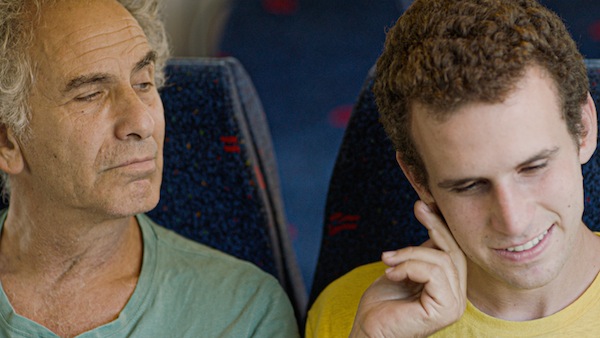
Shai Avivi, left, and Noam Imber are excellent as father and son in Here We Are. (still courtesy VIFF)

Understated and poignant are just two of the words I’d use to describe the screeners I watched in anticipation of the Vancouver International Film Festival, which opened Sept. 24 and runs to Oct. 7.

As with most everything these days, much of VIFF has moved online; however, there are still in-person screenings and talks, with audience sizes limited. And, as with other film festivals, online viewing is geo-blocked to British Columbia, meaning that you can only watch the movies if you are physically inside the province. The new format should allow for more access to the festival offerings and, while there will be those who miss dressing up and going out to the movies, there will be many people excited to be able to attend VIFF in their pajamas at home, me being one of them.

Last week, I watched two full-length features and two shorts: the narrative Here We Are, directed by Nir Bergman (Israel/Italy); the documentary Paris Calligrammes, directed by (and about) Ulrike Ottinger (Germany/France); The Book of Ruth, directed by Becca Roth (United States); and White Eye, directed by Tomer Shushan (Israel).

Every year, the Jewish Independent sponsors a selection at VIFF and, this time round, we’ve chosen a wonderfully written, acted and filmed movie. We generally have zero time and little information on which to base our choice, so I feel particularly grateful to have lucked out with this gem.

Here We Are is the story of a father who both will do almost anything for his autistic son, but who also uses his son as an excuse to not deal with the larger world. Aharon (played with incredible delicacy by Shai Avivi) has left his job to care for his son Uri (acted by Noam Imber, who gives an empathetic and strong performance). Aharon and his wife Tamara (played by Smadar Wolfman, who does a wonderful job, too) are no longer together, and Uri’s care has been left in his father’s capable and loving hands.

But Uri is an adult now and, to grow, we need space and the ability to direct our own lives. Tamara recognizes this and has worked hard to find Uri a good home, where he will be able to make friends and participate in activities with his peers. Aharon, however, is unable to let go and, though he also wants the best for Uri, he undermines Tamara’s actions – not only in words, but he takes Uri on the run.

The script by Dana Idisis leaves room for the pauses and emotions that make Here We Are an excellent film. Avivi’s face speaks more than a thousand words and you can see the inner conflict as his character struggles to accept that his son no longer needs him as much. The chemistry between Avivi and Imber makes the father-son relationship believable and compelling. And there are no “bad guys” here, even though mother and father differ in their opinions on parenting.

“I love the characters, the relationships, the way Aharon has reduced his needs to accommodate his son’s, and the transformation they experience throughout their journey,” reads the director’s statement. “I believe that, if I’m able to convey these characters as they are, from the written page to the screen, together with the bittersweet and humorous tone of the script, the audience will also fall in love with them.” Bergman accomplished his goal, and then some.

image - Ulrike Ottinger with her portrait of Allen Ginsberg, Paris 1965, and the work in colour (below)
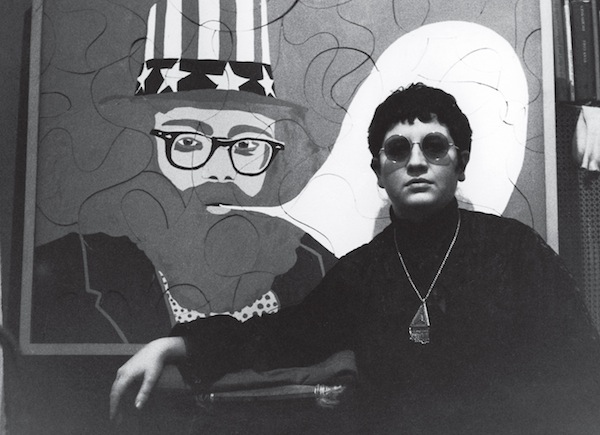
Ulrike Ottinger with her portrait of Allen Ginsberg, Paris, 1965, and the work in colour (below). (©Ulrike Ottinger courtesy VIFF)

Paris Calligrammes is also very watchable and engaging. I’ll admit to never having heard of Ottinger before, so I was looking forward to learning more about her, her artwork, her photography and what eventually inspired her to filmmaking. However, while I thought the documentary was esthetically pleasing and gave a tangible sense of how exciting it would have been to live among the artistic elite in Paris during the 1960s, I couldn’t tell you much about Ottinger herself and what she contributed to the thoughts, images and culture of those turbulent times. But, I guess, perhaps it is assumed that one knows these things already.

image - Allen Ginsberg, Paris 1965
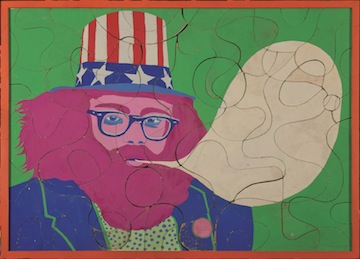
Allen Ginsberg, Paris, 1965. (©Ulrike Ottinger courtesy VIFF)

Ottinger does offers some interesting and valuable commentary – read by British actress Jenny Agutter – but, for whatever reason, I didn’t think it was enough. The film is named after the bookstore Librairie Calligrammes, which specialized in antiquarian books and German literature, and was where Jewish and political émigrés hung out, along with others who we would now call cultural influencers. Ottinger drove to Paris in 1962 from Konstanz, Germany, to become, in her words, a great artist; to follow in the footsteps of her heroes and heroines. She not only follows those footsteps but walks alongside the likes of Tristan Tzara, Marcel Marceau, Raoul Hausman, Jean-Paul Sartre, Simone de Beauvoir and countless others as well known.

Some of the most interesting parts of the film are about Algeria’s years-long war of independence from France (1954-1962) and the situation at the time with respect to the appalling treatment of Algerians living in Paris. Clips are shown of a peaceful demonstration held on Oct. 17, 1961, that was violently broken up by police. According to the film, 200 to 300 people were killed that night alone and, to this day, there has not been an investigation and no one has been held accountable for the deaths; even opposition newspapers didn’t report on it at the time and photos vanished from newsrooms. Ottinger notes that the order for the police to attack was given by then-chief Maurice Papon, who, under the Vichy government, had organized the rounding up of Jews to be murdered during the Holocaust.

This is a film that, I think, would be most appreciated on a big screen, but is still worth watching, for its content, yes, but mainly for its creative use of archival footage and interview clips, photographs and current-day images and filming. The documentary starts with a quote from Conseils au Bon Voyageur by Victor Segalen, advice that Ottinger has “gladly followed”: “Advice to the good traveler – A town at the end of the road and a road extending a town: do not choose one or the other, but one and the other, by turns.” If one needed inspiration to live by the conjunctions “and/both” rather than “either/or,” Paris Calligrammes might offer it.

image - Tovah Feldshuh plays a grandmother with a secret past in The Book of Ruth
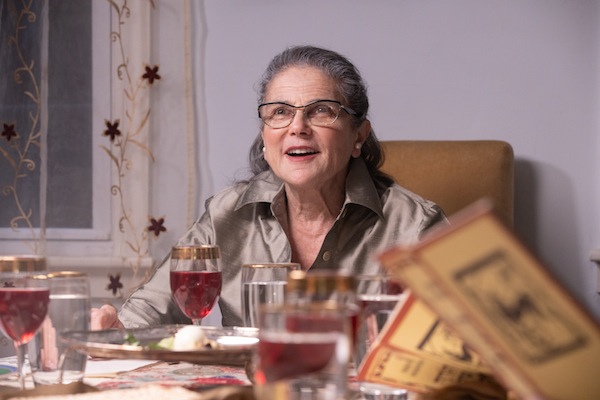
Tovah Feldshuh plays a grandmother with a secret past in The Book of Ruth. (still courtesy VIFF)

While Paris Calligrammes is the product and vision of a longtime filmmaker, The Book of Ruth comes from the imagination of Chen Drachman, and is the first film Drachman has written and produced. She also co-stars in this exploration of how important it is to have symbols – in this instance, represented by an historical figure – around which to rally or by which to live one’s life.

The short takes place during the happiest, smallest (five people) and shortest seder that I’ve ever seen, and focuses on Ruth – played by veteran actress Tovah Feldshuh – and whether she is really the grandmother her granddaughter, played by Drachman, grew up knowing. While the scenario postulated is unbelievable, Feldshuh offers the gravitas and has the talent to make viewers look beyond that fact and consider the questions raised in the film about the stories we build around some people – their role in a war or a political movement or an artistic endeavour, whatever – and how that story or image can help make us, living in another time, feel less alone, more understood, etc.

image - Dawit Tekelaeb, left, and Daniel Gad co-star in the short film White Eye
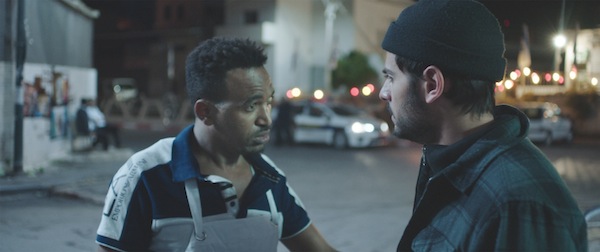
Dawit Tekelaeb, left, and Daniel Gad co-star in the short film White Eye. (still courtesy VIFF)

Symbolism, of course, can be positive and negative. Racist views and bigotry also come from the stories we have learned and tell ourselves. And White Eye, both directed and written by Shushan, does a superb job of illustrating how prejudices and privilege we may not even know we have can lead to disastrous consequences.

The main character of Omer is played by Daniel Gad with convincing stubbornness and obliviousness at first, then quiet shock at what happens as a result of his desire simply to take back what is his. When he comes across his bicycle, which had been stolen, that’s all he wants to do: cut the lock off and take it back. Even after he meets the bike’s new owner, Yunes – actor Dawit Tekelaeb will win your heart with his touching portrayal of a hardworking father and husband who bought the bike so he could take his daughter to kindergarten – Omer wants his property back. Even when Yunes’s boss (Reut Akkerman) argues on her employee’s behalf, Omer refuses to budge even the smallest bit. Only after the police become involved and Yunes, an immigrant from Eritrea whose visa has expired, is taken away, does Omer realize the full implications of his actions. By then, of course, the damage has been done. And it’s much more devastating than having had one’s bicycle stolen.

For the full film festival lineup, schedule and tickets, visit viff.org.

Format ImagePosted on September 25, 2020September 23, 2020Author Cynthia RamsayCategories TV & FilmTags Becca Roth, Chen Drachman, Dana Idisis, Daniel Gad, Dawit Tekelaeb, France, Germany, Israel, Italy, Nir Bergman, Noam Imber, Shai Avivi, Tomer Shushan, Tovah Feldshuh, Ulrike Ottinger, United States, Vancouver International Film Festival, VIFF
Life goes on amid crises

Life goes on amid crises

Left to right: Bahrain Minister of Foreign Affairs Abdullatif al-Zayani, Israeli Prime Minister Binyamin Netanyahu, United States President Donald Trump and United Arab Emirates Minister of Foreign Affairs and International Cooperation Sheikh Abdullah bin Zayed sign the Abraham Accords on Sept. 15 at the White House in Washington, D.C. (photo by Avi Ohayon/IGPO via Ashernet)

The news on erev Rosh Hashanah that U.S. Supreme Court Justice Ruth Bader Ginsburg had passed away at age 87 cast a pall over many celebrations. Some in our community shared a teaching that says that a person who dies on Rosh Hashanah is a tzaddik, a righteous person. As tributes poured in for the late jurist, it was clear that many viewed Ginsburg as a tzaddeket, irrespective of the timing of her passing. Grief over her death was joined by the inevitable political implications of a Supreme Court vacancy mere weeks before U.S. general elections.

While Ginsburg’s death, at an advanced age and after years battling successive experiences with cancer, may not have been a complete shock, it was, for many, a tragic conclusion to the Jewish year 5780. The pandemic will be the imprinted memory of this time, but a succession of other events – uncontained climate change-driven wildfires and other natural disasters, political unrest, racial violence and police brutality, plus a litany of other crises and inconveniences – will be included when the history of this year is written.

Bad times can also bring out the best in people, though, and there is an uplifting inventory of good deeds. Locally, the way the Jewish community has rallied around those in need of food, social services and support has been heartening. This local unity and kindness have been mirrored in communities worldwide.

Among the few brighter spots on the international scene has been an opening of relations between Israel and parts of the Arab world. Suddenly, or so it appeared to most casual observers, the United Arab Emirates announced it would initiate diplomatic relations with Israel. The Kingdom of Bahrain followed suit. Other countries are alleged to be considering similar paths. When the Arab League was called upon to condemn this historic shift in relations, the body opted against. With the exception of Palestinians, the commentary from most Arab countries has been positive.

This has perhaps less to do with any newfound admiration for Israel than it does self-interest in the form of economic potential in bilateral relations with the region’s economic superpower. Geopolitical self-interest is also a factor. Nothing makes friends like shared enemies and Iran, with its nuclear initiative and ambitions for regional hegemony, makes whatever complaints the Arab world had against Israel pale in comparison. To say nothing of what’s in it for Israeli Prime Minister Binyamin Netanyahu’s political ambitions or the electioneering of the U.S. president just prior to elections in that country.

Self-interest is most likely at play in another sudden development. If there wasn’t enough happening in the world, on Monday, B.C. Premier John Horgan called a snap election, a year ahead of schedule. The wisdom of holding an election during a state of emergency has been challenged by opposition leaders and others, but the governing party did significant polling on the subject and must have concluded that whatever reticence there may be on that front was canceled out by the New Democrats’ strong position in opinion polls. By the time voting ends, on Oct. 24, most British Columbians will hopefully be more focused on the issues than on the timing.

The timing, though, is another wrinkle. The law that set fixed election dates – and which Horgan, therefore, flouted by calling the vote early – also fixes the date for the third Saturday in October. While British Columbians vote in municipal elections on Saturdays, provincial (as well as federal) elections have always been on weekdays. Observant Jews will have to make accommodations and vote early. Autumn being what it is, it is theoretically possible to race to the polls after sundown and before the 8 p.m. cutoff. Less frantically, there are seven days of advance voting, an increase from six days in the 2017 election. All voters can request mail-in ballots – early reports from avid voters suggest the process is simple and takes only a couple of minutes. It is possible to pick up (call first!) and return your vote-by-mail package at an electoral district office. For people with disabilities, there is an opportunity for voting by phone.

The pandemic has created all range of challenges in our lives. Voting in the midst of it comes with its own difficulties, but, however one feels about the decision to call an early vote, the wheels are in motion. Turnout was up in 2017 to 61.2%, an improvement from the mid-50% turnout in the previous two elections. We face important decisions about the path to an economic recovery and the management of the ongoing pandemic. We must each of us make a plan to vote, and encourage friends and family to do the same. Find out more at elections.bc.ca.

Format ImagePosted on September 25, 2020September 23, 2020Author The Editorial BoardCategories From the JITags Arab League, Bahrain, coronavirus, COVID-19, democracy, economics, elections, Israel, John Horgan, peace, politics, Ruth Bader Ginsburg, United Arab Emirates, United States

Posts pagination

Previous page Page 1 … Page 247 Page 248 Page 249 … Page 664 Next page
Proudly powered by WordPress