Skip to content
  • Home
  • Subscribe / donate
  • Events calendar
  • News
    • Local
    • National
    • Israel
    • World
    • עניין בחדשות
      A roundup of news in Canada and further afield, in Hebrew.
  • Opinion
    • From the JI
    • Op-Ed
  • Arts & Culture
    • Performing Arts
    • Music
    • Books
    • Visual Arts
    • TV & Film
  • Life
    • Celebrating the Holidays
    • Travel
    • The Daily Snooze
      Cartoons by Jacob Samuel
    • Mystery Photo
      Help the JI and JMABC fill in the gaps in our archives.
  • Community Links
    • Organizations, Etc.
    • Other News Sources & Blogs
    • Business Directory
  • FAQ
  • JI Chai Celebration
  • JI@88! video

Recent Posts

  • Story of Israel’s north
  • Sheltering in train stations
  • Teach critical thinking
  • Learning to bridge divides
  • Supporting Iranian community
  • Art dismantles systems
  • Beth Tikvah celebrates 50th
  • What is Jewish music?
  • Celebrate joy of music
  • Women share experiences 
  • Raising funds for Survivors
  • Call for digital literacy
  • The hidden hand of hate
  • Tarot as spiritual ritual
  • Students create fancy meal
  • Encouraging young voices
  • Rose’s Angels delivers
  • Living life to its fullest
  • Drawing on his roots
  • Panama City welcoming
  • Pesach cleaning
  • On the wings of griffon vultures
  • Vast recipe & story collection
  • A word, please …
  • מארק קרני לא ממתין לטראמפ
  • On war and antisemitism
  • Jews shine in Canucks colours
  • Moment of opportunity
  • Shooting response
  • BC budget fails seniors
  • Ritual is what makes life holy
  • Dogs help war veterans live again
  • Remain vital and outspoken
  • An urgent play to see
  • Pop-up exhibit popular
  • An invite to join JWest

Archives

Follow @JewishIndie
image - The CJN - Visit Us Banner - 300x600 - 101625

May the force be with you

In my world, you can never have enough lamb. Or, to be more specific, lamb shanks. It used to be what I called “fancy food,” for which I splurged only on special occasions, like New Year’s Eve, or a birthday ending in zero. But since the pandemic started, up is down and right is left, and every day that you’re healthy is a day that’s meant to be celebrated. Goodness knows we could all use a little splurging. So, hubby Harvey sold a kidney and bought five pounds of lamb shanks. Lest you think we’re complete chazers, let me add that we had another couple over for dinner. For the first time in two-and-a-half years.

After two years of strict isolation and adherence to Dr. Bonnie Henry’s pandemic protocols, it was a wondrous event, to be sitting less than six feet away from two close friends, masks discarded, acting as though we did this every day. There wasn’t a shred of anxiety anywhere to be seen, and it just felt so normal. To say I felt ridiculously elated and grateful at the same time would not be an exaggeration. It was pure joy. I wondered why we hadn’t done it sooner. And then I remembered … that pesky pandemic. Oh, and my COVID anxiety, which can often be seen from space.

But back to the main event. The lamb. I’d sent Harvey to the butcher to pick up the lamb and, when he returned home, he handed me the bag-o-meat. Which weighed nearly as much as me. I asked him: “So did they throw in a ram for free?” To which he replied: “I told them I wanted the biggest lamb shanks they had.” Long story short, each shank was the size of a small country. Maybe slightly bigger. All of a sudden, my four hours of estimated cooking time was looking more like half a day. Luckily, I’m an early riser.

I hauled out my biggest roaster, proceeded to dirty every fry pan, pot and utensil in the apartment – we’re talking squeezers, mincers, graters, peelers, a multitude of various-sized knives, cutting boards and a healthy shot of Scotch (just kidding about the Scotch, but after it was all said and done, I sure could’ve used a glass) – and had at it.

The recipe, which Harvey found on the internet, is called Tom Valenti’s Lamb Shanks, and it’s spectacular! I won’t bore you with the details – Google it. Never mind that it calls for a bottle of wine, four cups of broth and a whole whack of other stuff. When it was all assembled, I couldn’t even lift the roaster, never mind take it in and out of the oven every 30 minutes for the next five hours. I happily handed over the reins to Harvey to do the heavy lifting. While I sat around and ate bonbons. Not.

All modesty aside, the lamb shanks were a huge hit. But, I was left with cups and cups of gorgeous, rich, winey braising liquid, flavoured with onions, carrots, celery, garlic and thyme, to name just a few of the players. I actually considered drinking it. Is that wrong? Of course, the thyme sprigs might get caught in my teeth.

So, I did what any self-respecting 21st-century cook with a few gallons of leftover braising liquid would do – I Googled it. Which is where I found an article by Mackenzie Stratton in The Spruce Eats, called “What to do with leftover braising liquid.” Imagine that. I learned many things, like the fact that chefs often refer to braising liquid as “liquid gold” because of its ability to transform whatever it touches into something fabulous.

I know some of you will wonder why I bothered keeping the seemingly useless flotsam and jetsam of a meal. It’s because I hate throwing stuff out that I could possibly use. Operative word here is “possibly.” My father, alav ha-shalom, always used to rib me about how thrifty I am. He’s right. I hate to waste food and, if I can repurpose it, why the heck not? When I told Harvey my plans for the braising liquid, he informed me that the army used to call that a “force multiplier.” May the force be with you, too.

If Mackenzie Stratton is to be believed, you can elevate just about any dish with leftover braising “gold.” But first you have to let the “gold” cool overnight in the fridge, then skim off the fat from the top. You’ll be left with a lovely (?) gelatinous bowl of the aforementioned “gold.” Next step requires you to sacrifice your ice cube trays. Fill each one with a big glob of “gold,” freeze them, and then put the nuggets in a Ziploc baggie or in small containers for future use. This is where the “gold” comes in, because at $16 to $18 a bottle for the wine and another $60 for the lamb and the rest of the ingredients, it’s not something you relish throwing down the sink once everyone’s had a good burp.

What all can you do with these little brown, gelatinous gems? You can incorporate them into other recipes, like soups, pasta or grain dishes; use them to poach chicken or tougher cuts of meat; or put them in stews. You can also use them as the supreme weapon of decadence: boil potatoes in the thawed braising liquid, then turn them into the ultimate side of mashed potatoes. I have no words. The drool is dribbling down my chin.

I usually like to include a photo of my culinary creations/discoveries and, well, not to be crass or anything, but Harvey says these “gold” blobs look like something people pick up with those little green baggies on their hand. Need I say more? Now just try and un-see that visual.

Like the thrifty Accidental Balabusta that I am, you might just be on the receiving end of my leftover braising “gold” next time you come for dinner. But you won’t know it. To paraphrase John F. Kennedy: ask not what your lamb shanks can do for you – ask what you can do for your lamb shanks.

Once again, you’re welcome. Bon appetit!

Shelley Civkin, aka the Accidental Balabusta, is a happily retired librarian and communications officer. For 17 years, she wrote a weekly book review column for the Richmond Review. She’s currently a freelance writer and volunteer.


Posted on April 8, 2022April 7, 2022Author Shelley CivkinCategories LifeTags Accidental Balabusta, cooking, frugality, lamb
Tikva builds in accessibility

Tikva builds in accessibility

Dogwood Gardens, which is due to open later this year, features an open garden space with shading that is set off from the street. (photo by Lior Noyman Productions)

In October last year, Tikva Housing Society, in conjunction with YMCA Metro Vancouver and the Association of Neighbourhood Houses, opened Kerrisdale’s newest affordable housing project at Arbutus Centre. Named xwƛ̓əpicən (pronounced “hook la’pitzen,” Musqueam for “the Hollow”), the 125-unit project is designed to meet a vital need in one of Vancouver’s most exclusive and high-priced residential areas: affordable housing that is also universally accessible to anyone with a disability.

“[The new project] includes nine adaptable units that are designed for people with mobility challenges who do not need a wheelchair or walker,” explained Anat Gogo, who serves as Tikva’s manager of programs and donor relations. The nonprofit finds creative ways to increase affordable housing, primarily for Jewish low- to moderate-income families and individuals.

Adaptable units mean that individuals who have accessibility needs are able to have the unit modified to meet their individual requirements, whether it’s grab bars in the hallway, structural adaptations that make it easier to cook or special lighting for low-vision needs. Many apartment buildings don’t allow tenants to make structural modifications, even to accommodate disabilities. By offering a limited number of adaptable units, fully accessible apartments can be reserved for individuals who require a wheelchair-adapted unit. Tikva manages five such rentals at the Arbutus property.

photo - The Arbutus Centre project has units in which the kitchen counters and appliances are lowered to accommodate wheelchairs and walkers
The Arbutus Centre project has units in which the kitchen counters and appliances are lowered to accommodate wheelchairs and walkers. (photo from Tikva Housing)

Projects like the one at Arbutus Centre are reflective of Tikva’s vision of affordable housing. “We are committed to fostering inclusive housing that serves all populations within the community,” said Gogo. It’s a mission that continues to adapt to the increasing demand for affordable housing in Greater Vancouver’s Jewish communities.

One of the drivers for finding new ways to increase accessible housing is Vancouver’s aging population, noted Gogo. “It’s important to recognize that our aging baby boomers will benefit from enhanced accessibility for those with mobility challenges.”

But it also benefits families and individuals of all ages who face barriers in their day-to-day living, she added. According to Statistics Canada (2017), more than six million Canadians live with one or more types of disability. Invisible disabilities are among the most frequent conditions noted, with housing options constricted by accessibility barriers, discrimination and employment limitations.

photo - An accessible bathroom features a roll-in shower and open design to accommodate walkers, wheelchairs and other mobility considerations
An accessible bathroom features a roll-in shower and open design to accommodate walkers, wheelchairs and other mobility considerations. (photo from Tikva Housing)

As a result, the B.C. Building Code now requires new and renovated buildings to be accessible to anyone with a disability, which includes “a person who has a loss, or a reduction, of functional ability and activity and includes a person in a wheelchair [or] a person with a sensory disability.” Adaptable housing that can be modified economically and at a later date is British Columbia’s newest technology to meeting that growing and variable demand.

According to Gogo, Tikva is exploring ways to ensure that accessible housing addresses all needs, including those associated with invisible disabilities, such as autism spectrum disorder, vision disorders, and autoimmune conditions like multiple sclerosis and rheumatoid arthritis. She said Tikva actively seeks partnerships with other organizations that can support that expanding effort. “We have a great partner in the Jewish Family Services that is open to this initiative,” she noted.

The society also regularly networks with builders to explore new ways of meeting that goal. She said improved designs include features like “well-ventilated spaces, soundproof walls, signage that makes all tenants and visitors to the building know that this is an inclusive building.”  Tikva also holds workshops and training for staff to help them engage with residents and stakeholders in the community.

The demand for accessible housing has also created new funding incentives that in turn will increase the amount of inclusive housing on the market. “Canada Mortgage and Housing Corporation is responsible for delivering [Canada’s] National Housing Strategy,” Gogo explained. The program offers reduced financing rates for nonprofits and developers whose housing developments comprise at least 20% of fully accessible units or universal design throughout the project.

“We take advantage of opportunities to advocate to all levels of government for special features to be included in design requirements that would improve quality of life for residents, including push-button door openers for accessible suites and amenity rooms, grab bars in all bathrooms, and wheelchair access to all outdoor amenity spaces,” said Gogo.

And Tikva is exploring ways to address other types of invisible disabilities, such as those triggered by environmental conditions. Gogo said the housing society is in the process of retrofitting one of its older buildings and is actively participating in the design stages. “We’re still in the very early stages of this planning,” she said, “but all considerations are on the table to create a living environment that would benefit our tenants no matter what their medical condition may be.… More research and public education would help build the case for those with invisible disabilities. Inclusive communities are those that recognize the diversity of our population, and that everyone deserves to have access to services, recreation and civic engagement.”

At the present time, three of the six properties Tikva operates have accessible housing. Dogwood Gardens, on 59th Avenue in the Marpole community, is due to open later this year, managed in joint cooperation with SUCCESS. For more information about available rentals, go to tikvahousing.org.

Jan Lee is an award-winning editorial writer whose articles and op-eds have been published in B’nai B’rith Magazine, Voices of Conservative and Masorti Judaism and Baltimore Jewish Times, as well as a number of business, environmental and travel publications. Her blog can be found at multiculturaljew.polestarpassages.com.

Format ImagePosted on March 25, 2022March 24, 2022Author Jan LeeCategories LocalTags accessibility, Arbutus Centre, development, Dogwood Gardens, housing, inclusion, ssociation of Neighbourhood Houses, Tikva Housing, xwƛ̓əpicən, YMCA
BI scholar-in-residence

BI scholar-in-residence

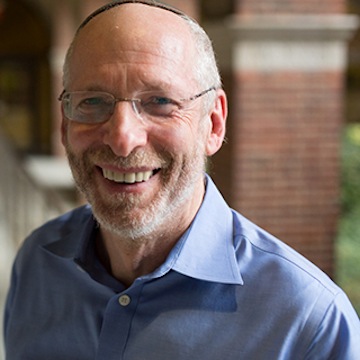
Rabbi Eliezer Diamond (photo from jtsa.edu)

“I am particularly interested in the way that Torah can help us look inward. Each of the topics is about religious character formation, various ways in which we create a more godly character and personality,” said Rabbi Eliezer Diamond in a Zoom conversation with the Jewish Independent ahead of his visit to Vancouver next month.

Congregation Beth Israel will be hosting Diamond as its scholar-in-residence for three in-person talks under the collective title Making a Life of Meaning. A professor of Talmud and rabbinics at the Jewish Theological Seminary of America, in New York, Diamond will speak on Addiction and Judaism (April 28, 7:30 p.m.), the Power of Gratitude (April 29, 6 p.m., with a dinner to follow) and Seeking and Granting Forgiveness (April 30, 9:30 a.m.).

In regard to addiction, the rabbi compares the 12-step process of Alcoholics Anonymous with the laws of repentance by Maimonides and notes the parallel paths taken towards sobriety and repentance: acknowledgement, regret and acceptance.

“Not drinking and being sober are not the same thing. To recover from alcoholism, one has to change one’s way of living and thinking,” said Diamond, who discusses addiction from both a personal and professional perspective.

“I am a recovering alcoholic and I know about addiction from the inside,” he said. “Even though I am not a therapist or addiction counselor, what I can do is help people to be honest with themselves and say ‘I have a problem,’ which is an acknowledgement of the sin and a step towards repentance. It is important to help people see where they are at so that they can begin to make changes.”

It is also helpful, he added, for his rabbinical students to know that their teacher is a recovering alcoholic because there is frequently a shame involved in addiction and a sense that one is a diminished person as a result.

“I am there to say to them, those may be the cards one has been dealt. You can still be a productive human being and, if you take the steps you need to take to deal with addiction, there is no reason for shame. On the contrary, there is a reason for pride. You have been faced with a challenge and you have addressed it,” he said.

Diamond pointed out that, in a broad sense, there has been an acknowledgement in the past couple of decades within the Jewish community that Jews, like everyone else, have problems with addiction.

“We are not immune to addiction, as people think or would like to think,” he said. “In my own lifetime, the community has become more open. The founding of Jewish Addiction Community Services [JACS] is an example of that.”

In addition to Congregation Beth Israel, Diamond’s talks in Vancouver are being sponsored by JACS Vancouver, Jewish Family Services Vancouver and Jewish Federation of Greater Vancouver.

Diamond’s discussion on gratitude is tied to the teachings of Rabbi Eliyahu Eliezer Dessler, an early 20th-century leader in the mussar (Jewish ethics or values) movement, who saw giving as being at the heart of the religious personality. In Dessler’s teachings, God, by providing life, is the ultimate giver. Therefore, to follow in God’s path, we must be givers ourselves. There are times, however, when we must also be receivers, and the best way to receive is through gratitude, Diamond explained.

Expanding on the theme of gratitude, Diamond added, “Ultimately, whether or not we experience ourselves as wealthy or poor is intimately connected to finding happiness and satisfaction with what we have. If we focus on what we have and the happiness that it can bring us, then we can feel wealthy. This is a choice that all of us, especially in a first-world situation, have.”

On forgiveness, the rabbi cited Christian theologian C.S. Lewis, who spoke of the human desire to seek forgiveness yet the difficulty humans have in granting it.

“Forgiving is a hard thing to do,” said Diamond. “What does it actually mean to forgive someone? Because, unless we lobotomize ourselves, we are not going to forget what happened. The essence of what I will be talking about is the relationship between forgiveness and recognizing the essential humanity of every human being, including those who have wronged us.”

What often stands in the way of forgiveness, he said, is the inability to view another person as anything other than evil, and not as a flawed individual who has stumbled, as we all stumble. The path towards forgiveness, according to Diamond, is to make that distinction.

Amid social and political divisiveness, which causes rifts in families and communities, Diamond further emphasized the importance of being able to listen to and appreciate the inherent humanity and sincerity in belief of those with whom we may strongly disagree.

“Rabbi Diamond is one of most well-respected scholars in the Conservative movement today,” said Beth Israel’s Rabbi Jonathan Infeld. “He is exceedingly bright, knowledgeable and eloquent. He is also passionate about the human value of gratitude and the importance of recovery. Considering the fact that drug and alcohol addictions and overdoses have been less spoken about during the pandemic, we knew that Rabbi Diamond should be our first in-person scholar-in-residence since the beginning of COVID-19. We are so happy that other community agencies are joining us. We look forward to welcoming Rabbi Diamond to Vancouver and learning from this incredible rabbi.”

To register for the April 29 dinner, visit bethisrael.ca.

Sam Margolis has written for the Globe and Mail, the National Post, UPI and MSNBC.

Format ImagePosted on March 25, 2022March 24, 2022Author Sam MargolisCategories LocalTags addiction, Beth Israel, education, Eliezer Diamond, forgiveness, gratitude, JACS Vancouver, Jewish Federation, JFS Vancouver, Judaism, mussar

Canada’s new direction?

Jewish Canadians were instrumental in building the Canadian labour movement and, by extension, the Cooperative Commonwealth Federation, which would go on to become the New Democratic Party.

Political scientists and others have observed that, as immigrant communities integrate into their new societies and become more economically secure, their voting patterns and ideological outlooks tend to move across the spectrum. While Canada has seen a small but steady growth of Jewish immigration in recent decades – with spikes during significant events like the end of the Soviet empire – the community, as a whole, is now firmly established.

Canadian Jews, like other groups that have deep roots in our relatively new country, have experienced economic and social success. Individual Jewish households, of course, face every range of economic and social challenge, issues that are addressed by a network of social service agencies guided by the principle Kol Yisrael arevim zeh bazeh, all Israel is responsible for one another. While there is a sacred instruction for Jews to care for our own, Jewish values have also played a role in the actions of Jewish Canadians in relation to the broader Canadian society. Through individual and collective activism, from individuals like David Lewis in the last century to groups like the Centre for Israel and Jewish Affairs today, Canadian Jews have influenced public policy and made the country better and more welcoming for all.

Despite whatever economic advances Canadian Jews have made as a group, it is often noted that, as a community, Jews tend to remain politically progressive. In a practical sense, this has been complicated by positions taken by some on the left, including trade unions, the New Democrats and the Green party. Jewish Canadians are overwhelmingly Zionist and, over the past 50 years, picking up steam in the past two decades, the left has become less and less supportive of Israel and Jewish self-determination. The debate about where anti-Zionism ends and where antisemitism begins is for another day. Stated simply, many Canadian Jews are progressive voters who, due to foreign policy issues, find themselves politically homeless. (The pro-Israel stands of the Stephen Harper government also shook many Jews away from their traditional political allegiances.)

With this context in mind, the surprise announcement Tuesday that the federal Liberal government has signed a supply and confidence agreement with the New Democrats may allow some progressive Zionist voters to have their cake and eat it too.

Under this deal – the same kind of agreement that the NDP and Greens in British Columbia signed to topple the B.C. Liberals in 2017 – the parties have agreed to advance things that have long been on the NDP agenda, such as a national dental care program and national pharmacare. It will apparently enhance ongoing reconciliation work through investments in Indigenous housing and continuing to confront the tragedy of missing and murdered Indigenous women and girls. Changes to the tax system and reducing barriers to participation in elections are also among the points released Tuesday.

The thorny issue of affordable housing will also be part of the mix – although what any government can successfully and substantively do on this issue remains a big question mark.

The provision of affordable universal child care – a promise made repeatedly by the Liberals and still not realized – is another marquis issue, as is addressing climate change and supporting workers.

The deal hearkens back to a similar one between then-prime minister Paul Martin, a Liberal, and the New Democrats, under Jack Layton, which buoyed a minority Liberal government in exchange for a $4.6 billion injection of federal funds into social programs.

For Canadian Jews who remain committed to progressive political values, the rather sudden announcement this week could be very welcome. Canada will (presumably) get a raft of new legislation on issues from environmental protections to economic justice, without subjecting Canadian foreign policy to the whims of a party that has signaled disregard to Jewish Canadians’ familial, historical and emotional ties to the state of Israel.

For those Canadian Jews who do not subscribe to this agenda, well, there is an opportunity for shaping an alternative. The federal Conservative party is in the early stages of what will be, it appears, a fight for the ideological soul of the party. The response to the Liberal-NDP deal by interim Conservative leader Candice Bergen was predictably skeptical. She called it a “power grab” by Trudeau, though time will tell whether a three-year reprieve from a snap election will allow the new Tory leader to cement their role before facing voters.

In any event, the battle lines for the next several years are being drawn. A Liberal-NDP agenda on one side and a possible new approach at the head of the Conservative party on the other.

We hope that Canada avoids the level of polarized partisanship we see in the United States and some other countries. It is, in fact, Canada’s history of moderation and compromise that has made it a welcoming place for Jews and other minority communities. However, it is always healthy in a democracy to have clear, definable choices.

The NDP and Liberals will be laying out their apparently ambitious agenda for the coming years. Those vying for the Conservative party leadership will now have a plethora of fresh policy initiatives to sink their teeth into to define themselves in contrast with this unexpected new informal coalition.

Posted on March 25, 2022March 24, 2022Author The Editorial BoardCategories From the JITags Canada, Conservative, Liberals, NDP, politics, social programs, Trudeau, Zionism
The ideologies of war

The ideologies of war

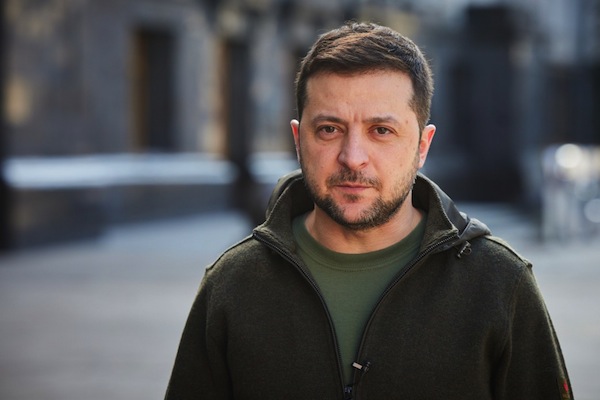
Hebrew University academic Samuel Barnai said Ukrainian unity extends beyond political parties and politicians, such as President Volodymyr Zelensky (pictured here), and the war is viewed as a great patriotic fight for Ukraine. (photo from president.gov.ua)

In the July 12, 2021, essay “On the Historical Unity of Russians and Ukrainians,” Russian President Vladimir Putin declares, “I am confident that true sovereignty of Ukraine is possible only in partnership with Russia. Our spiritual, human and civilizational ties formed for centuries and have their origins in the same sources. They have been hardened by common trials, achievements and victories. Our kinship has been transmitted from generation to generation. It is in the hearts and the memory of people living in modern Russia and Ukraine, in the blood ties that unite millions of our families. Together we have always been and will be many times stronger and more successful. For we are one people.”

This quote from Putin’s 2021 essay was shared by Prof. Yitzhak Brudny at a March 15 Hebrew University of Jerusalem webinar focused on “the ideological sources of the Russian-Ukrainian War.” The webinar featured Brudny, a professor of political science and history, and Samuel Barnai, an adjunct lecturer at the European Forum and at the HU’s Rothberg International School.

Brudny explained that Putin went even further in his claims just over a year after that essay. On Feb. 21, 2022, three days prior to the Russian invasion of Ukraine, Putin stated that “modern Ukraine was entirely created by Russia, more precisely, by the Bolshevik, communist Russia. This process began almost immediately after the 1917 revolution” and “Ukraine never had a tradition of genuine statehood.” Later in the speech, Putin points to Russia as being the main enemy in the eyes of the United States and NATO.

According to Brudny, these statements show a denial by Putin of Ukraine’s right to exist without an alliance with Russia and that the current Ukraine state is a “forepost of NATO” run by an “illegitimate, puppet government.” In Putin’s mind, he can justify the war because he sees it as rectifying an historical injustice caused more than a century ago, as well as remedying the security issues posed by a NATO-friendly state as Russia’s neighbour.

Brudny outlined the more recent history of Ukraine, from its 1991 independence from the Soviet Union (during its dissolution) to the present day. Ukraine stands in stark contrast to Russia in that it has accepted democratic electoral processes. Russia, meanwhile, has grown increasingly authoritarian and views a democratic state positioned between it and NATO countries, especially those that were part of the former Eastern Bloc, as a threat.

Barnai spoke to Russia’s military goals at the outset of the current conflict: destruction of Ukrainian air forces, destruction of Ukraine’s military headquarters, the besiegement of the capital Kyiv and the creation of a puppet government.

“Now that we are talking on the 20th day of the war, none of the targets have been reached,” said Barnai. “How can this be explained? In my opinion, one of the main reasons is the consolidation of Ukrainian society. There is widespread support for the president [Volodymyr Zelensky] and the government, which was not even the case two months ago. There is also support for accession to the EU and NATO, even in the Russian-speaking parts of Ukraine, which were less sympathetic to joining these alliances before,” he said.

In Barnai’s view, the present state of Ukrainian unity extends beyond current political parties and politicians, such as Zelensky, and the war is viewed as a great patriotic fight for Ukraine.

Barnai added that Putin, who has led Russia since Dec. 31, 1999, may have fallen victim to his own propaganda, “that Ukrainian-ness is an artificial tool to cause damage to the Russian people.”

The belief that Ukrainian culture is dangerous and must be eliminated runs deep in the Russian collective consciousness. Barnai gave several historical examples that illustrate this point. There was the suppression of the Ukrainian language by Czar Peter I in 1720. In 1763, Catherine the Great issued a decree banning the teaching of the Ukrainian language at the Kyiv-Mohyla Academy. In 1876, Alexander II prohibited the printing of all Ukrainian literature within the Russian Empire. And, in 1914, there was a decree by the last czar, Nicholas II, prohibiting the Ukrainian press. Despite a range of views on other historical matters, these and other Russian leaders shared a common desire to suppress Ukrainian cultural identity.

Barnai explained that there are close ties – historical, religious, and personal – between Russians and Ukrainians, and many have family connections to both countries. He said the real threat to Putin today is not NATO or the European Union, but “the success, even if it is limited success, of political and economic reform in Ukraine.”

This threat, Barnai concluded, plays out in the lack of true participation the Russians have in the political and economic processes of their country. “The main struggle of Putin for the last 22 years,” said Barnai, “has been to deprive Russians of their rights in the political arena.”

Sam Margolis has written for the Globe and Mail, the National Post, UPI and MSNBC.

Format ImagePosted on March 25, 2022March 24, 2022Author Sam MargolisCategories WorldTags CFHU, education, Hebrew University, history, ideology, politics, Rothberg International School, Russia, Samuel Barnai, Ukraine, Vladimir Putin, Volodymyr Zelensky, war, Yitzhak Brudny
Celebrating together

Celebrating together

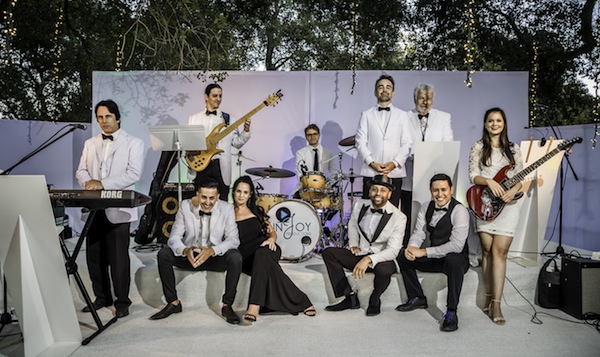
InJoy, led by Gilat Rapaport (centre), comes to Vancouver for the community’s Yom Ha’atzmaut celebration on May 4 at Vogue Theatre. (photo by Linda Kasian)

Tickets are now on sale for the community’s celebration of Israel’s 74th Independence Day. This year’s Yom Ha’atzmaut event will be held, COVID permitting, at the Vogue Theatre on May 4.

“The Yom Ha’atzmaut committee, Federation staff and I are really excited about our first large community gathering since before the pandemic,” said Pam Wolfman, chair of the committee. “This year also marks our 20th anniversary of this event, making it an extra special celebration for the whole community!”

Emcees Lu Winters, Kyle Berger and Adora Harel will guide attendees through the night’s festivities, which will include special guest performers Gilat Rapaport and the InJoy band, as well as local community dance groups, and Vancouver Talmud Torah and Richmond Jewish Day School students. Once again, a community song video will be screened – to participate, submit a video of yourself singing Jewish Federation’s version of “Salaam” by March 31. Video submissions will be edited into one that will première on May 4 at the Vogue. For details, including the audio and lyrics of the song, visit jewishvancouver.com/community-song-2022.

Rapaport was born and raised in Israel and has been performing on stages in Israel and around the world since the age of 12. After her service in the Israel Defence Forces’ entertainment groups, she moved to Los Angeles in 1998.

Rapaport began her career with classical training at the Israel Conservatory of Music in Tel Aviv and continued at the Rimon School of Music branch in Boston. She founded her company, InJoy Productions, just over 20 years ago.

Rapaport and InJoy have been touring – South America, South Africa, Australia, Europe and the United States – performing their joyful and energetic music for Jewish and non-Jewish communities around the world. For Metro Vancouver’s Yom Ha’atzmaut celebration, they will perform traditional and contemporary Jewish and Israeli repertoire, with the hope that audience members will dance and sing along.

For more information about Rapaport and InJoy, visit injoyprod.com. For tickets to the May 4 event, go to jewishvancouver.com/yh2022.

– Courtesy Jewish Federation of Greater Vancouver, and InJoy Productions

Format ImagePosted on March 25, 2022March 24, 2022Author Jewish Federation & InJoyCategories LocalTags dance, Gilat Rapaport, Independence Day, InJoy Productions, Israel, music, Yom Ha'atzmaut
CHW’s Fashion Blooms

CHW’s Fashion Blooms

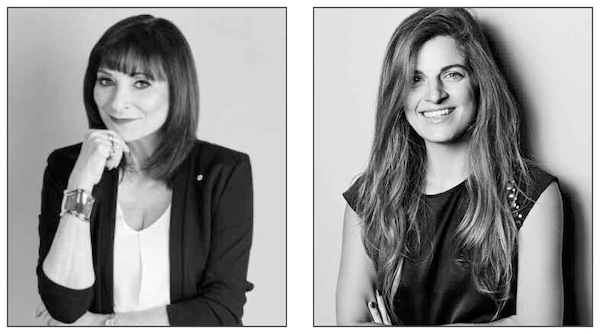
As part of Fashion Blooms on March 31, Canadian journalist, media personality and fashion entrepreneur Jeanne Beker, left, will interview Israel’s Sharon Tal, head designer of Maskit. (photos from CHW)

Canadian Hadassah-WIZO (CHW) presents the second annual Fashion Blooms on March 31. The national virtual fundraising event – highlighting innovation, sustainability and the future of Israeli fashion – will feature Canadian journalist, media personality and fashion entrepreneur Jeanne Beker interviewing Sharon Tal, head designer of Maskit.

Israel fashion house Maskit was conceived in 1954 by then-designer Ruth Dayan, as a contemporary luxury clothing brand. Known for its intricate ethnic embroidery, Maskit was revolutionary in advancing economic opportunities and bridging cultural divides by employing thousands of Jewish, Arab and Bedouin women artisans. Since Tal took over the helm in 2014, she and Maskit have launched collections that are shown internationally and adored by celebrities. One of Tal’s latest designs, a peacock-embroidered caftan, was created in close collaboration with Sarah Jessica Parker and featured in the first episode of And Just Like That, the HBO revival of Sex and the City. Tal continues to honour and innovate, revitalizing a brand while earning plaudits for Maskit’s designs.

“As the former head of embroidery at Alexander McQueen and intern under Alber Elbaz at Lanvin, Sharon’s appreciation for tradition is matched only by her diligence and willingness to reinvent,” said Beker, event emcee. “She has what it takes to build upon the Maskit dynasty while also creating a legacy of her own.”

Fashion Blooms is also the Canadian debut of two trailblazing female fashion designers based out of Tel Aviv: Maya Reik Belfer, founder and designer of Marei1998, a luxury brand focused on sustainability and eco-conscious materials; and Danit Peleg, founder and creative director of Danit Peleg, known for its disruptive and innovative approach that is revolutionizing the fashion industry through open-source designs and 3D printed technologies.

Restrictions permitting, CHW centres across the country will host VIP invitation-only in-person viewing parties for Fashion Blooms. The virtual event will include an exclusive online auction, featuring fashion accessories and luxury brands, and an online vendor marketplace for a virtual shopping experience.

To register, participants can visit chw.ca/fashion-blooms. Tickets start at $40. Fashion Blooms proceeds support the CHW Neri Bloomfield Academy of Design in Haifa, Israel, supporting student scholarships and ultramodern equipment to enhance the future of the Israeli fashion industry.

The CHW Neri Bloomfield Academy of Design awards academic degrees in a wide variety of creative fields, including graphic design, architecture and fashion. This institution is building academic excellence and becoming an influencer and innovator in the world of design. It nurtures individual creativity among its pluralistic student body while instilling a sense of community and coexistence.

For more information, contact Rebecca Bowslaugh, CHW director of marketing and communications, at [email protected] or 416-477-5964, ext. 111.

CHW is a non-political, nonpartisan national network of volunteers and professionals who believe that the advancement of education, healthcare and social services transcends politics, religion and national boundaries. Over the last century, CHW has been involved in all aspects of Israeli life, supporting women, children and families in Israel and here in Canada. Learn more about CHW at chw.ca.

– Courtesy Canadian Hadassah-WIZO

Format ImagePosted on March 25, 2022March 24, 2022Author Canadian Hadassah-WIZOCategories NationalTags CHW Neri Bloomfield Academy of Design, fashion, Fashion Blooms, fundraiser, Israel, Jeanne Beker, philanthropy, Sharon Tal
Climate action update

Climate action update

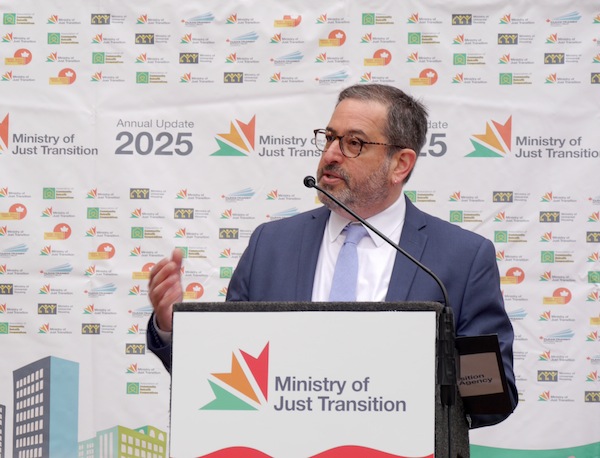
Seth Klein speaks at the Press Conference from the Future on March 12. (photo by Lorne Mallin)

On March 12, hundreds turned out for a creative event that imagined what could be accomplished by 2025 with climate movement leaders in government.

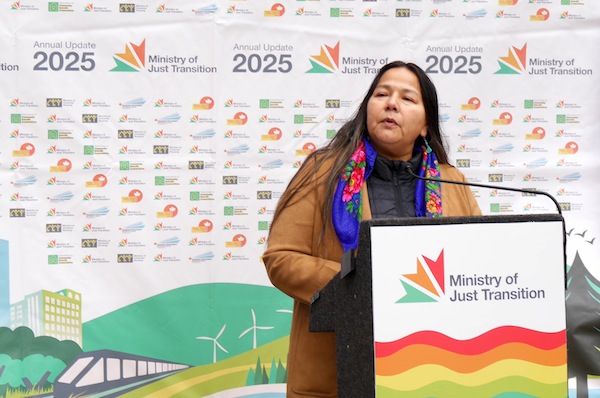
“With the money that would have gone to piping some of the worst oil in the world to the West Coast, we have instead unleashed a wave of investment in healthy people and healthy land,” Kukpi7 Judy Wilson told A Press Conference from the Future in front of Vancouver Public Library’s central branch.

Wilson, secretary-treasurer of the Union of British Columbia Indian Chiefs, was speaking as if the twinning of the Trans Mountain (TMX) pipeline had been scrapped in 2023 and a TMX reparations and healing secretariat had been created.

The press conference event was under the banner of a fictional ministry of just transition presenting an update on new programs and institutions slashing pollution, creating meaningful work, and addressing injustice and inequality in energy, Indigenous rights, housing, transit, public health and more.

There were two Jewish speakers: Seth Klein of the Climate Emergency Unit and filmmaker Avi Lewis as the minister of just transition, as well as Secwépemc/Ktunaxa filmmaker Doreen Manuel, director, Bosa Centre for Film and Animation, Capilano University; Rueben George, Sacred Trust, Tsleil-Waututh Nation; Khalid Boudreau, climate youth activist/organizer; Christine Boyle, Vancouver city councilor; Alison Gu, Burnaby city councilor; and Anjali Appadurai, Sierra Club BC.

photo - Kukpi7 Judy Wilson addresses the Press Conference from the Future
Kukpi7 Judy Wilson addresses the Press Conference from the Future. (photo by Lorne Mallin)

Klein, author of A Good War: Mobilizing Canada for the Climate Emergency, spoke as chief executive officer and commissioner of the fictional Just Transition Transfer Agency. “Winning [on emissions reductions] also means leaving no one behind,” he said, “especially the regions that have long relied on revenue and jobs from oil and gas.”

Klein said that, like the Bank of Canada’s qualitative easing policies in the first year of the COVID-19 pandemic, the just transition could be financed in a similar way.

“Most of that year, the Bank of Canada was buying up federal government securities to finance the COVID emergency response to the tune of $5 billion every week for a year,” said Klein. “Once we embedded our climate emergency goals within the mandate of the Bank of Canada, the bank proceeded to do this again for a mere four weeks a year, generating $20 billion for climate and just transition programs.”

Lewis said his government is committed to climate action, having carefully studied the conditions and capacities of Canada’s advanced industrial economy. “We conducted an inventory of our conversion needs to determine how many heat pumps, solar arrays, wind farms and electric buses we needed to electrify virtually everything and end our reliance on fossil fuels,” he said.

Lewis encouraged the audience to make the future presented in the event happen. “Do you want to live in this future? Are we ready to fight for this future? Because this future we described here today is the work of all of us – the fruits of our imagination and struggle – and that’s what we came here today to commune around: the future we can build together.”

Manuel, portraying the chair of the land back secretariat, updated progress of an imagined Land Back Act, whose goal is “to reverse the land theft that underlies the colonial nation state of Canada. That means that 80% is being systematically returned to Indigenous jurisdiction.”

After the speakers, and entertainment by the Carnival Band, volunteers engaged members of the audience on their thoughts and feelings about the climate emergency.

The March 12 event was part of a national day of action calling for the passage of a national Just Transition Act.

“The Just Transition Act is the most important missing piece of climate legislation in Canada and it needs to pass this sitting of the House of Commons,” said Katie Rae Perfitt, senior organizing specialist with 350.org, one of the press conference’s sponsoring organizations.

“We cannot tackle the climate crisis without rapidly phasing out fossil fuels,” said Perfitt. “Canadians deserve immediate action from our federal government to make that shift happen in a way that puts workers and communities first.”

– Courtesy A Press Conference from the Future ogranizers

Format ImagePosted on March 25, 2022March 28, 2022Author A Press Conference from the FutureCategories LocalTags Avi Lewis, climate crisis, Doreen Manuel, Judy Wilson, Just Transition Act, Katie Rae Perfitt, politics, Seth Klein, social justice
Snapshot of Jewish life

Snapshot of Jewish life

Looking Back, Moving Forward is available for purchase from the Jewish Museum and Archives of British Columbia. (photo from JMABC)

The first thing many readers will do upon opening the Jewish Museum and Archives of British Columbia’s Looking Back, Moving Forward: 160 Years of Jewish Life in BC is try and find their friends’ writeups and those of the organizations with which they volunteer or work. That is, if they didn’t submit their own writeup for the publication. If they did send in their bio or one for their family, then that’s the first page to find.

Even people who grew up in the province and have a multigenerational presence here will find novel tidbits in this 284-page hardcover (or soft) coffee table book. Published to celebrate the museum’s 50th anniversary last year, it is appropriately dedicated to Irene Dodek (1930-2019) and Cyril E. Leonoff (1925-2016). Leonoff was founding president of the Jewish Historical Society of British Columbia, which was established in January 1971. Dodek, also a founder of the museum and archives, “helped define its direction early on and conducted more than a hundred oral history interviews with members of our community.” More about Dodek and Leonoff can be found in the first pages of the book, before the greetings from Prime Minister Justin Trudeau and Premier John Horgan.

In her president’s message, Carol Herbert writes, “Our stories are fascinating, and demonstrate the evolution over time of our communities, from a few small clusters of Ashkenazi Jews from Eastern Europe in late 19th century to present-day diverse Jewish communities, comprised of individuals who originated from across the world; Sephardic, Mizrahi and Ashkenazi; secular and religious; leaders, activists and advocates for Jewish and general community causes.”

Both Herbert and the book’s editor, Michael Schwartz, director of community engagement for the JMABC, acknowledge that this publication is a partial snapshot of the community. They both encourage readers who haven’t done so yet “to share your memories of where we’ve been, celebrate with us where we are, and join us in envisioning where we might be headed,” writes Schwartz.

A chapter on the history of the JMABC begins the book proper. It is followed by brief regional histories – Victoria, Vancouver, Kootenay/Boundary, Okanagan, Prince George, Sunshine Coast, Central Vancouver Island and Whistler. The chapter on organizations is divided into those that work in advocacy and activism; religious observance; education; youth groups and camps; seniors; arts, culture and leisure; Zionism; Holocaust education; and anchor organizations. That last one, by the way, is where you’ll find the Jewish Independent (pages 126 and 127).

The Notables chapter is sorted chronologically: pioneers (1886-1945), postwar (1945-1970), modern (1970-2000), contemporary (2000-2010) and emerging (2010-present). Within each section, people are listed alphabetically by surname, as are the entries in the Family Album chapter. Rounding out the publication is a list of donors and an index.

Looking Back, Moving Forward offers a broad overview of many of the major players in the B.C. Jewish community over the 160 years since Jews first arrived here. It focuses on accomplishments and takes readers right up to 2021. It is easy reading, and no one need worry that any dirty laundry is aired. Given the celebratory nature of the book, none of the submitters (including the JI) talk about the challenges they’ve faced or controversies, and neither do any of the introductions to the various sections.

Some history is given only passing mention, such as what community fundraising structures were in place prior to the Jewish Federation of Greater Vancouver’s emergence in 1987, for example, but the book isn’t meant to be a comprehensive historical tome. Rather, it’s a fun, page-flipping community yearbook of sorts, which will hopefully motivate people to both learn more about the community and contribute their stories to its archival record.

Looking Back, Moving Forward is available in hardcover ($100) and softcover ($50). To place an order, contact the museum offices at 604-257-5199 or [email protected]. Shipping is available across Canada for a fee of $20 per book.

Format ImagePosted on March 25, 2022March 24, 2022Author Cynthia RamsayCategories BooksTags British Columbia, Carol Herbert, history, Jewish museum, Michael Schwartz
Gallery’s new guides

Gallery’s new guides

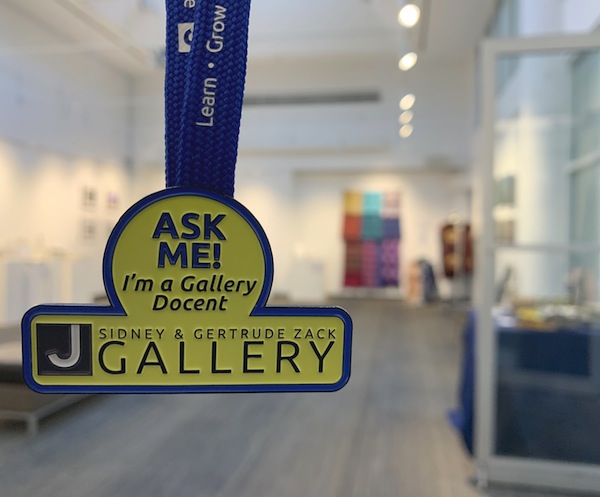
New docent program at the Zack gets underway. (photo from Zack Gallery)

Sidney and Gertrude Zack Gallery director Hope Forstenzer recently instituted a new docent program, to train guides for the art gallery.

“I came up with the idea of creating a group of volunteer docents for the gallery right after I got here, which means right before the pandemic,” Forstenzer told the Independent.

Unfortunately, the pandemic made it impossible to implement the idea at that time, and the initiative only became reality in the past few months.

“My job as the gallery director is only half-time,” Forstenzer said. “Even when I’m working, I’m frequently in meetings or visiting studios or doing other work that takes me away from engaging the people in the gallery. I created the docent program to make sure the gallery was staffed with friendly and available faces, with people who knew about the shows, could make sales, and could answer questions.”

Initially, about a dozen people responded to her invitation to become volunteer docents at the Zack. “Some dropped out for various reasons as we were getting underway,” she said. “Others have come along since.

Currently, we have six docents on our active roster.”

Before the docents could perform their assigned duties, they needed a certain amount of training on the gallery rules and procedures.

“The docents each attended two training sessions, both lasting about an hour,” said Forstenzer. “Sometimes, we’d do the whole training in one session, but it varied. The second training shift was usually about our sales system, which isn’t difficult, but isn’t something most of the docents have seen or used before. In the first training session, I explained what their responsibilities were, we discussed scheduling, and I’d either show them how to use our sales system or invite them back to learn it on a different day…. Then they did a shift with me in the gallery as backup. Then they were ready to go.”

The first docent started at the Zack last October. “Some of them have taken breaks due to the Omicron,” said Forstenzer, “but others have stayed throughout.”

She has lots of plans for her volunteer docents. “The primary purpose of having the docents in the gallery right now is to have a knowledgeable and friendly presence that welcomes visitors,” she said. “They can also make sales. As the restrictions due to COVID lift (hopefully), the docents will also help me run events in the gallery, both for kids and for adult groups. Eventually, I hope they’ll be able to run some of these events themselves. We might even schedule some docent-led viewings of shows.”

At the moment, most docents do one shift a week, each shift three or four hours long, but Forstenzer is flexible about that. “Some do two shifts a week. Some split their shifts and go for a swim or a workout in the middle and then come back. It is up to them, and I create a schedule based on their availability and the gallery’s needs.”

She added that all the docents take their volunteering seriously. “If someone can’t make their shift, they let me know,” she said. “If I can cover it, I will. If not, the gallery won’t have a docent that day.”

The docents vary widely in age and experience. Some are students. Others are retirees or people participating in various community centre programs. Gail Bloom shared with the Independent a bit about herself and why she became a docent at the gallery.

Bloom worked as a city planner in San Francisco. “I studied city planning in college and then worked as a practising planner,” she said. “I love cities and was interested in public utilities. My chief role for over a dozen years was sorting out public financing of major infrastructure projects in San Francisco.  It was very satisfying to see the fruition of that work across the city.”

She retired about 20 years ago. “My home is still in the Bay Area. I live there with my husband, and my son’s family also live nearby, but, last fall, I came to Vancouver for an extended winter visit with my daughter – she lives here and teaches at Emily Carr.”

Bloom, who turns 70 this month, has been volunteering in many fields since her retirement. “I lead the Board of Children’s Book Project and presently serve on a regional public health agency at the Marin/Sonoma Mosquito and Vector Control District,” she said. “I have also enjoyed working on state, local and federal election campaigns, mentoring youths, and helping with the major fundraising event for the Oakland Museum of California.”

She has always been interested in art. “I love cities, as I said, and the museums are a big part of that – especially art museums. In the last couple months, I visited the Vancouver Art Gallery and a small community gallery at the Deep Cove Cultural Centre. There is a show at the VAG now that I’d recommend – Emily Carr and Edith Heath. Heath was a local San Francisco ceramic artist; she started her iconic tile and pottery company out of her little apartment in San Francisco in the ’40s.”

Of course, when she visited the Jewish Community Centre of Greater Vancouver for the first time, the Zack Gallery attracted her. “As I’m interested in the arts personally and enjoy art museums, their new docent program seemed like a good fit,” she said. “And my family were thrilled that I found the gallery and something meaningful to do with my time. Now, I’m at the gallery every week. My docent days are Mondays.”

Besides volunteering, Bloom takes advantage of several other programs the JCC offers. “The aquatics program is pretty great,” she said. “I also attended several sessions of the book fair last month, and I just started watching VJFF [Vancouver Jewish Film Festival]. I’m fortunate to have time to participate in them all.”

Olga Livshin is a Vancouver freelance writer. She can be reached at [email protected].

Format ImagePosted on March 25, 2022March 24, 2022Author Olga LivshinCategories Visual ArtsTags art, docents, Gail Bloom, Hope Forstenzer, JCC, Zack Gallery

Posts pagination

Previous page Page 1 … Page 177 Page 178 Page 179 … Page 662 Next page
Proudly powered by WordPress