Skip to content
  • Home
  • Subscribe / donate
  • Events calendar
  • News
    • Local
    • National
    • Israel
    • World
    • עניין בחדשות
      A roundup of news in Canada and further afield, in Hebrew.
  • Opinion
    • From the JI
    • Op-Ed
  • Arts & Culture
    • Performing Arts
    • Music
    • Books
    • Visual Arts
    • TV & Film
  • Life
    • Celebrating the Holidays
    • Travel
    • The Daily Snooze
      Cartoons by Jacob Samuel
    • Mystery Photo
      Help the JI and JMABC fill in the gaps in our archives.
  • Community Links
    • Organizations, Etc.
    • Other News Sources & Blogs
    • Business Directory
  • FAQ
  • JI Chai Celebration
  • JI@88! video

Recent Posts

  • BGU fosters startup culture
  • Photography and glass
  • Is it the end of an era?
  • Taking life a step at a time
  • Nakba exhibit biased
  • Film festival starts next week
  • Musical with heart and soul
  • Rabbi marks 13 years
  • Keeper of VTT’s history
  • Gala fêtes Infeld’s 20th
  • Building JWest together
  • Challah Mom comes to Vancouver
  • What to do about media bias
  • Education offers hope
  • Remembrance – a moral act
  • What makes us human
  • המלחמות של נתניהו וטראמפ
  • Zionism wins big in Vegas
  • Different but connected
  • Survival not passive
  • Musical celebration of Israel
  • Shoppe celebrates 25 years
  • Human “book” event
  • Reclaiming Jewish stories
  • Bema presents Perseverance
  • CSS honours Bellas z”l
  • Sheba Promise here May 7
  • Reflections from Be’eri
  • New law a desecration
  • Resilient joy in tough times
  • Rescue dog brings joy
  • Art chosen for new museum
  • Reminder of hope, resilience
  • The national food of Israel?
  • Story of Israel’s north
  • Sheltering in train stations

Archives

Follow @JewishIndie
image - The CJN - Visit Us Banner - 300x600 - 101625

Category: Music

Klezcadia a June highlight

Klezcadia a June highlight

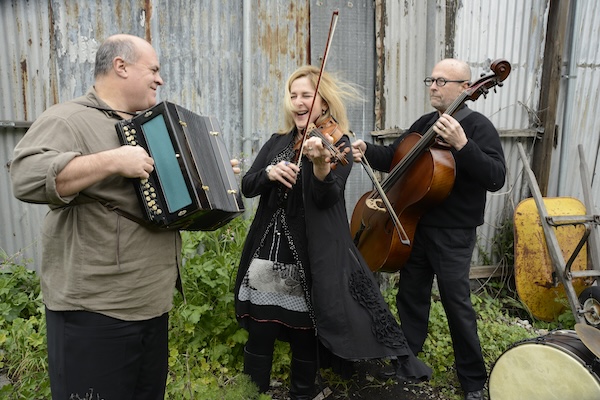
Veretski Pass – Joshua Horowitz, left, Cookie Segelstein and Stuart Brotman – will be joined by clarinetist Joel Rubin to present the world première of music from their new album, Makonovetsky’s Scion. (photo from Klezcadia)

Victoria will host Klezcadia, a hybrid klezmer and Yiddish culture festival showcasing a West Coast lineup of musical mastery and mavenry. Running June 4-9 in-person and online, there is no charge to attend.

According to festival director Laura Rosenberg, Klezcadia intends to position Victoria as a focal point for klezmer and Yiddish cultural tourism. In conjunction with the music, the six-day event will present classes, workshops, lectures, demonstrations and open rehearsals conducted by artists, language faculty and other guests.

“Klezcadia’s audiences can expect cutting-edge performances – including three world premières – by some of the world’s leading klezmer artists. Additionally, participants at any level of experience will have opportunities to attend classes, workshops and presentations by these same artists and their Yiddish-language colleagues,” Rosenberg told the Independent.

“Our guiding principle is to make the safe in-person attendance experience and the virtual attendance experience as equivalent and rich as current technology allows, as well as to give the same level of respect to all attendees,” she said.

Some of the featured artists will be Veretski Pass, a Bay Area trio that will perform with clarinetist Joel Rubin; Vancouver musician Geoff Berner; and Jeanette Lewicki in her new show as Pepi Litman, an early 20th-century Yiddish theatre drag star.

Comprised of Cookie Segelstein (violin), Joshua Horowitz (19th-century button accordion) and Stuart Brotman (bass), Veretski Pass offers a wide mix of East European influences. Reuniting with Rubin, they will present the world première of music from Makonovetsky’s Scion, their new album for the Borscht Beat label. 

Berner, a singer, songwriter, accordionist, novelist and political activist, will stage the première of Second Fleet, the Yiddish song cycle he recently co-wrote with Canadian writer Michael Wex, author of the bestseller Born to Kvetch, a humorous and scholarly look at the Yiddish language.

Lewicki will transmit the spirit of Litman, the original “drag king” of Yiddish theatre, in another première. The Pepi Litman Project will examine the time when a groundbreaking performer literally “wore the pants,” led her own touring troupe, turned taverns into theatres, and tested societal boundaries with her satire. Litman toured Europe and reportedly North America, too, singing, in male garb, at spas, inns and private homes in small towns and large cities alike. 

Some of the talks and workshops on offer at the festival are The Barry Sisters: America’s Yiddish Swingsters, with Andy Muchin, the host of the Sounds Jewish radio show on PRX; Yiddish Through Song Lyrics, with Seattle-based Marianne Tatom, a Yiddish teacher and klezmer musician; and Yiddish Through Conversation, with Sasha Berenstein, a multi-instrument musician and fellow with the Yiddish Book Centre’s Yiddish Pedagogy Program. 

On June 5, Christina Crowder of the Klezmer Institute will speak about the Kiselgof-Makonovetsky Digital Manuscript Project, an international endeavour connecting participants with the work of important klezmer musicians from the late-19th and early-20th centuries.

The festival will take a walk on the vilde side on June 8 with what organizers describe as “musical mash-ups, klezmer-adjacent adventures, song parodies, unusual instruments” and offering the forecast “you never know what will pop up in this clearing in the klezmer/Yiddish jungle.” The evening will feature Seattle neo-vaudevillian Mai Li Pittard, as well as local klezmer bands Kvells Angels and the Klezbians. A new klezmer ensemble, Kvells Angels, gave a concert last fall at the University of Victoria in which they performed works previously unavailable to musicians. The Klezbians, meanwhile, are a well-known band of “chutzpah-licious” musicians, and the group goes back many a year.

Victoria’s Congregation Emanu-El, under whose auspices Klezcadia is being produced, will host the finale concert at the Cameron Bandshell, located in Beacon Hill Park. The closing concert will be a gift to the city in celebration of the congregation’s 160th anniversary. 

Festival organizers have made a concentrated effort to ensure that all participants enjoy a safe experience. The hybrid environment, they stress, will prioritize the well-being of immunocompromised and high-risk participants, for both those onstage and in the audience. Indoor activities will include protective protocols, such as supplemental air purification, required masking and daily onsite COVID testing. 

“Klezcadia was inspired by deep listening to an online meeting of immunocompromised and high-risk musicians and Yiddish-language enthusiasts in early 2023,” Rosenberg said. “During the first two years of the pandemic, they had finally felt included in the klezmer/Yiddish community, since everyone’s only option was to gather online.”

The same groups felt marginalized again when most festivals returned to unmasked, in-person formats. Through dialogue with these groups, Rosenberg realized, Victoria had a chance “to become a host community for an inclusive form of cultural tourism.”

Rosenberg said her 45-year arts administration career came in handy when building a music festival from the ground up; she had already done so with two other festivals. It has been a year’s worth of full-time work to plan the format, bring in the artists and teachers, scout venues, initiate community engagement and, importantly, raise the money.

Locals seem eager for the festival to start. “I am optimistic based on expressions of pride I have heard from Victoria residents, on how quickly Klezcadia’s in-person registration reached capacity and on the eagerness of local tourism-sector businesses to be included in our visitors’ guide,” Rosenberg said.

People from more than a dozen countries have signed up to view events streamed online.

For more information, visit klezcadia.org. 

Sam Margolis has written for the Globe and Mail, the National Post, UPI and MSNBC.

Format ImagePosted on May 10, 2024May 22, 2024Author Sam MargolisCategories Music, Performing ArtsTags Congregation Emanu-El, culture, health, Klezcadia, klezmer, Laura Rosenberg, Victoria, Yiddish
Writing music for life

Writing music for life

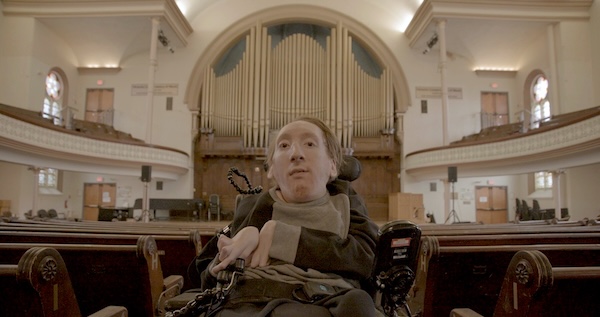
Composer Ari Kinarthy writes music using interactive hardware and software systems that form sounds from movements. His story is told in the documentary Ari’s Theme, which will screen at Hot Docs in Toronto, then be available on TELUS originals. (photo from Salazar Film)

Ari’s Theme, about Victoria composer Ari Kinarthy, will make its world première this spring at Toronto’s Hot Docs Film Festival. Directors Jeff Petry and Nathan Drillot said the idea for the documentary came from an article about Kinarthy in the Jewish Independent, which was published in April 2020.

Petry and Drillot, who run Salazar Film, a production company located in Vancouver, were intrigued and inspired by Kinarthy upon discovering his method for composing music. By using interactive hardware and software systems that form sounds from movements, Kinarthy can use the movements he makes with his wheelchair to produce music that is recorded into multimedia platforms. For example, movements closer to the recording device create lower notes and movements further away result in higher notes.

“As we learned more about Ari’s story, we thought about how interesting it would be to work with a composer like Ari, who has a very particular life experience, and ask him to compose music about the most impactful moments, dreams and experiences of his life and let us create cinematic scenes around them,” Petry said.

Petry and Drillot pitched the project to TELUS originals, which supports local documentaries by independent filmmakers in British Columbia and Alberta, with the objective of bringing films on various social topics to wider audiences.

“As the filmmaking relationship between Ari and ourselves developed, it turned into a really deep collaboration, and other themes we hadn’t expected started to grow and evolve,” said Petry. “Ari showed a lot of strength and vulnerability in creating this film with us and, for this, we are really honoured by his trust.”

Kinarthy, now in his 30s, has used a wheelchair since childhood because of type-2 spinal muscular atrophy, a condition that continues to weaken his muscles. Kinarthy is profoundly cognizant of his mortality and Ari’s Theme delves into his desire to tell his story, as he endeavours to create a new composition inspired by some of the most meaningful moments in his life.

“This film has been nothing short of a gift from God,” Kinarthy said. “The ability to install my music in a visual project is already amazing, and my dream, but to have that project be a complete portrayal of my life is truly special. I have always wanted a way to not only inspire others but to have my memory, or legacy, encapsulated so that I live on beyond my body.”

Kinarthy said he enjoys the challenge of creating grand symphonic music of the sort John Williams writes – the kind composed for a hero. There have been times in his life, he said, when he has had to fight like one.

For Kinarthy, the process of working on the film was a journey from stress to happiness. 

“Looking back and reflecting on my past, myself, and my life was challenging and rewarding. I have been through a lot and I got to write music about key moments,” he said.

“Working with Salazar was a wonderful experience,” he added. “The studio was always very understanding of my situation and gave me tons of flexibility to write how I write. They were also very helpful in helping me articulate my thoughts. The directors and I became close during the process of the film, and I am so glad I got to meet them. I will never forget them.”

Petry and Drillot have several documentaries to their credit, including Becoming Sumo, the story of Ōsunaarashi Kintarō, the world’s first Arab Muslim professional sumo wrestler; Handsome and Majestic, a short film about a teenage transgender boy growing up in Prince George; and Wizard Mode, a feature-length movie (eventually acquired by Netflix US) about Robert Gagno, a world champion pinball player.

Over the past decade, Petry and Drillot have filmed around the world, from Nunavik to Bolivia, to the Democratic Republic of Congo. They received Juno and Grammy nominations for best full-length music documentary for their work with Canadian indie rock duo Tegan and Sara. 

Despite some problems, which were recently reported in the entertainment media, it appears the show will go on for Hot Docs Canadian International Documentary Festival, now in its 31st year. In late March, director Hussain Currimbhoy stepped down for personal reasons, according to the festival. Ten other members of the programming team also left, for undisclosed reasons.

Ari’s Theme will first screen in Toronto on April 30, followed by another festival screening on May 2. After its Hot Docs run, the film will be available on TELUS Optik TV Channel 8 and online at TELUS originals.

To read the article that sparked the idea for Ari’s Theme, visit jewishindependent.ca/no-barriers-to-music. To view the documentary following its showing at Hot Docs, go to watch.telusoriginals.com. 

Sam Margolis has written for the Globe and Mail, the National Post, UPI and MSNBC.

Format ImagePosted on April 12, 2024April 10, 2024Author Sam MargolisCategories Music, TV & FilmTags Ari Kinarthy, composers, documentary, Jeff Petry, Nathan Drillot, Salazar Film, TELUS originals
Many invaluable contributions

Many invaluable contributions

Harley Rothstein has just released a three-CD compilation of Jewish music and secular folk songs. (photo from harleyrothstein.ca)

A little over a year ago, my friend and musical colleague Harley Rothstein – cantor, songwriter, folk singer – shared with me his freshly minted three-CD compilation of both Jewish music and secular folk songs. The recordings, several years in the making, are Modim: Songs of Spirit and Gratitude; Songs of Love and Humanity: Folk Songs of Fifty Years, Volume I; and Songs of Love and Humanity: Folk Songs of Fifty Years, Volume II.

Before getting into more “nuts and bolts,” let me say something well understood by all hardworking creatives: the life of an artist is, in a very real sense, an act of service to the community in which they live. This contribution to the community is what stands the test of time, and Harley Rothstein is undoubtedly one such indefatigable contributor, an artist who has dedicated himself to serving the community in which he lives, and sharing his work unselfishly. The compilation under discussion here is only the most recent of the many invaluable gifts of music Harley has given us over the years.

As many readers may know, Harley is a scion of the philanthropic Rothstein family; indeed, his parents are the benefactors of the Norman and Annette Rothstein Theatre. So, he comes by “service to the community” quite honestly.

Harley Rothstein has been singing since the age of 6, and he learned to play the guitar at age 18. Since then, he has played and performed folk songs in many locales – from Vancouver’s Bunkhouse coffeehouse in 1965 to the Princeton Traditional Music Festival from 2016 to 2019, and numerous other venues and occasions in between. He was inspired by a trip to New York’s Greenwich Village coffeehouses in 1965 and to the Berkeley Folk Festival in 1966. 

Harley also played in rock bands in the late 1960s, taught elementary music and university-level music education from 1975 to the early 1990s, and sang for 10 years in the 150-voice Vancouver Bach Choir. He studied Jewish liturgical music with several cantorial teachers and has led congregations in synagogue services for 40 years. Harley has led many sing-alongs at political and social gatherings.

Harley’s musical contributions to local Jewish life have included years of performing, teaching and mentoring others who wish to lead services. He regularly conducts services at Or Shalom and Beth Israel, and has recorded a seven-CD set of instructional recordings, which are on the Beth Israel website.  

Now to the music at hand. On Modim: Songs of Spirit and Gratitude, Harley’s meticulous work makes accessible a raft of songs for the Jewish community, for prayer and for simple enjoyment. There is a variety of offerings – a klezmer song, two songs in Ladino, and two Israeli folk songs from the 1950s. The majority of the songs are prayers from the siddur, set to music composed by pioneer songwriters such as Shlomo Carlebach and Debbie Friedman, as well as contemporary songwriters including Hanna Tiferet Siegel, Myrna Rabinowitz, David Shneyer, Jeff Klepper and Dan Freedlander, plus five of Harley’s own compositions. Harley notes: “I focus on these because all of these writers have inspired a whole new repertoire of contemporary Jewish spiritual music.”

Indeed, the music of the synagogue has been transformed by contemporary songwriters, like Harley, who, over the past generation or so have introduced the melodic and harmonic sensibilities of North American folk song into congregational song. Harley’s compositions reflect this line of creative work, and are part of a revival, for many, of a Judaism that is closer to the people, enabling all attendees to participate in services in a meaningful way. This folk music thread serves as a common sinew running through the entire three-album project. 

The Songs of Love and Humanity: Folk Songs of Fifty Years recordings are a unique compilation of folk music that, I hope and expect, will help a younger generation become aware of the significant thoughts and hopes of their forebears. This in itself, apart from being an authentic and loving look back upon the artist’s personal musical history, makes the project irreplaceable. I salute Harley for his singular dedication.

The two CDs of folk songs are comprised of numerous pieces, 32 in all, which cover a truly large sweep of folk music history. Being Harley’s contemporary, I recognized many of these songs, but there were some that I was not aware of, or only dimly so, such as those that make up the track “Union Medley,” for example, and the rare gem “Toy Gun,” a 1960s antiwar song. There are classics by Woody Guthrie (“Blowing Down the Road”; “Hard Travelin’”), Bob Dylan (“Don’t Think Twice It’s All Right”; “I Shall Be Released”) and Pete Seeger (“God’s Counting On Me God’s Counting On You”). And other heroes of folk music are well represented – Tom Paxton, Ian Tyson, Gordon Lightfoot and Stan Rogers, among others. It’s a heady mix of work and labour songs, spirituals, political songs from the 1960s and Canadian songs. Harley says, “the unifying theme was that each song has been important to me in my career of over 50 years. This is why I refer to the recordings as a ‘legacy project.’”

Regarding the production elements, I really loved the focus on voice as foreground, unfettered by excessive tech. The songs are thus presented as primary and the accompaniment is just that, in support. It is also evident that these songs have been loved by the artist for many years, and one can hear this in his renditions. On Modim: Songs of Spirit and Gratitude, check out Harley’s own settings of “Yosheiv B’seiter” (“Dwelling in the Shelter of the Most High”), “Luley He’emanti” (“Mine is the Faith”) and the titular piece “Modim” (“We Give Thanks to You”). On Songs of Love and Humanity, I was delighted by his renditions of “Pack Up Your Sorrows,” “Follow the Drinking Gourd” and “Blowing Down the Road,” among many others. Throughout the recordings, Harley’s lyric baritone voice is always a pleasure to listen to.

Included with each CD is an informative booklet, with texts and backgrounders for all the songs. To find out more about the recordings, how to purchase them digitally or in hard copy, visit harleyrothstein.ca. 

Moshe Denburg is a Vancouver-based composer, bandleader of the Jewish music ensemble Tzimmes, and the founder of the Vancouver Inter-Cultural Orchestra (VICO).

Format ImagePosted on April 12, 2024April 10, 2024Author Moshe DenburgCategories MusicTags composers, folk music, Harley Rothstein, history, Judaism, labour songs, liturgical music, prayer
Dance as an act of solidarity

Dance as an act of solidarity

Iraqis in Pajamas’ new album is a tribute to the victims of the Oct. 7 massacre.

In the wake of the Oct. 7 massacre of Israelis…. And the celebrations that followed worldwide – glorifying the raping, burning and decapitating of my people…. 

And the subsequent mass destruction of posters raising awareness of Israeli hostages being tortured in captivity by Hamas…. 

And the simultaneous call for a violent uprising against Jews worldwide…. 

And the astronomical spike in hate crimes against Jews – among other things, leading to incessant harassment, assaults and death threats of students at my alma mater, Columbia University, and additionally leading to the murder of a kind Jewish man I knew in Los Angeles….

And the international mob chants of “From the river to the sea,” harkening back to the harrowing cries my father heard on Arabic radio stations as a child in Iraq, “We will throw the Jews into the sea.”…

And the palpable terror I then felt as a Jew, whose family had seen this before, had fled this before, in a pro-Nazi uprising in Baghdad, where a similar massacre had taken place during my father’s childhood….

And the deafening silence in the wake of all this – not even one word of care or kindness from the vast majority of non-Jewish people I had loved, had lived with, had broken bread with….

And I felt as if I had died.

I stopped journaling, stopped writing poetry, stopped writing music, stopped singing, stopped playing bass, stopped dancing. I got sick repeatedly and continuously over the course of two months, even ended up in the emergency room with symptoms of a possible stroke at 2 a.m. one night – this, after years and years of never getting sick, not once, not even when my ex got COVID and I nursed him back to health. 

I couldn’t sleep, had nightmares, woke up in the middle of the night, lying awake for hours, my mind circling around and around, imagining the horror and terror the hostages must be suffering through. I was haunted by the video image I accidentally had seen of a young Jewish woman who was naked and chained, publicly being dragged around by Hamas, as they filmed her – one of the many Jewish women they gang raped and mutilated that day, often next to the dead bodies of these women’s friends – filming that violence, too, in something akin to snuff porn. 

I could feel it in my body.

I couldn’t breathe.

I couldn’t move.

Despite the impact on me, I felt that, somehow, by energetically experiencing and, by extension, by physically experiencing the pain that my people were enduring, I was communicating a telepathic message to them: I will not forsake you, I will not forget you. 

No, I will not frolic on the beach beneath the misty grey soothing skies. No, I will not enjoy the quiet, peace and comfort of the vast rainforest just outside my door. No, I will not detach myself from something “happening on the other side of the world,” as a non-

Jewish acquaintance kindly advised, because there is no “other side of the world” when it comes to Jews. You are me, and I am you, and we are connected. I cannot control the world’s response, but I can control mine. I will face, see, hear and feel your pain, until it is gone.

But wait…. That’s exactly what Hamas wants, isn’t it? To demoralize and destroy Jews. To suffocate us, hijack our imagination. To strip us of our dignity, safety, peace and, perhaps most of all, joy.

So, to reclaim my joy is, in fact, a radical act of Jewish power and solidarity. To flip imagination on its head – instead of visualizing all the horrors and shrinking in my body, to instead expand in my body and visualize all the hostages, injured people and 

grieving families as resilient, grounded, surrounded by love, and the dead as soaring freely and peacefully, wrapping their loved ones in comfort.

Nothing is black and white, but this is an article, not a book, so I’m trying to keep it short and sweet. Suffice it to say, I actively and repeatedly attempted to turn the images around over the course of two months – to send white light, to bless the hostages, to emit some kind of protective energetic shield, but it kept seeming silly, foolish, without actual impact, perhaps just making myself feel better, like a hollow New Ager. My prayers would not stop a psychopathic Hamas gunman with absolute control over a hostage, I reasoned, because G-d gave humans both the gift and curse of free will. 

But then….

But then I went to a concert of Yemen Blues, which was more of a primal howl of freedom than a “performance,” and which featured an Israeli woman dancing with a defiant, raw ferocity that brought back to life the sanctity, dignity and power of the Jewish female body – and, with that, permission to dance.

And, after that, I started dancing again. And, after that, I started singing again. And, after that, I started frolicking with my beautiful dog beneath the misty grey, soothing skies on the beach, and through the vast rainforest just outside my door.

And I came back to life.

In this very difficult but transformative journey, I learned that life begets life begets life, and artistic self-expression is not an indulgence, but rather, a superpower. 

As I danced on the beach with my dog over a couple of days, a vision emerged – a global movement of Jews and our allies taking videos of ourselves dancing joyfully, and sending those videos to the people wounded in the Oct. 7 massacre, the families of those who died, the families of those taken hostage, and the young women and men on the frontlines defending Israel from further attack – turning “we will dance again” into “we will dance for you until you can dance again” – sharing whatever strength, freedom and joy we have to uplift those who are in the thick of it, struggling and suffering.

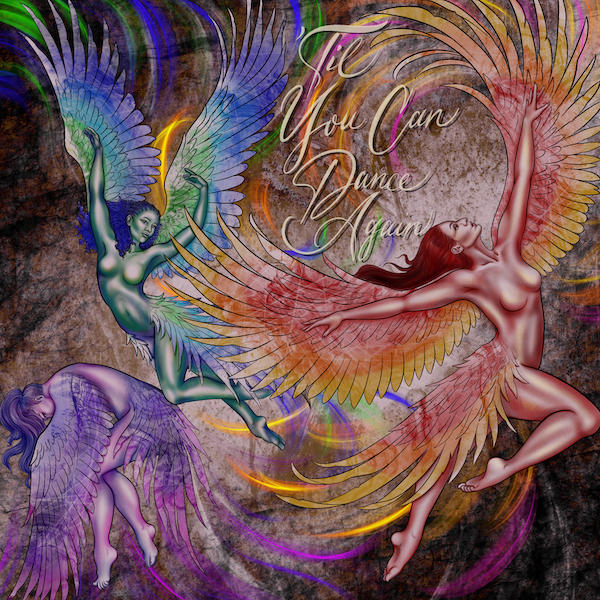
Having snapped out of an emotional coma of sorts, I then picked up my bass, and out poured both the melody and lyrics of a new song, “’Til You Can Dance Again.” That same day, I finally finished the song I had started a few weeks after Oct. 7, “Dear Hostages.” Not having touched my bass for the better part of three months, I played until my fingers were blistered and almost bleeding. Over the next 24 hours, I wrote two additional songs, and then worked with my band on developing a full album, ’Til You Can Dance Again, offering both my journey and my joy as a catalyst for healing and transformation.

It is through song, dance, story, prayer and food that Jews historically have not only overcome tragedy, but have taken that very experience and transmuted it into an vehicle for joy – the ultimate “f*** you” to those who have tried to destroy us. For this reason, my band released our new album on March 23, at the start of Purim, a holiday marking one of many historical traumas that the Jewish people have turned on its head and morphed into a cause for celebration. My heartfelt prayer for this album is that, as broken as we may feel right now, we shall once again rise up, sing and dance ourselves back to wholeness, and honour the victims of Oct. 7 not only through our grief and pain, but also through our fierce and irrepressible Jewish joy – emerging, once again, like that unstoppable phoenix, soaring up and out from the ashes. 

Loolwa Khazzoom (khazzoom.com) is the frontwoman for the band Iraqis in Pajamas and editor of The Flying Camel: Essays on Identity by Women of North African and Middle Eastern Jewish Heritage (theflyingcamelbook.com). She has been a pioneering Jewish multicultural educator since 1990, and her writing has been featured in the Washington Post, Marie Claire, Rolling Stone and other top media worldwide. This article was originally published in the Times of Israel.

More about the album

On March 23, Iraqis in Pajamas released the album ‘Til You Can Dance Again, as a tribute to the victims of the Oct. 7 massacre.

Its creation served as a vehicle for Khazzoom’s processing and healing, and the tone of the songs evolved as Khazzoom herself evolved from feeling despair to outrage to core power.

“Dear Hostages” is a love song to those held in captivity, in which Khazzoom pledges, I will not forsake you, I will not forget you, as she explores what it means to act in solidarity from afar. 

“’Til You Can Dance Again” is a spin on the Israeli promise, “We will dance again” – vowing to spread the life energy of dance, to help uplift the spirits of those who were shattered by the massacre. 

“Bataween” draws from a conversation with an Iraqi Muslim friend, exemplifying the healing imperative of Arab Muslims recognizing and caring about the history of indigenous Middle Eastern Jews, including the experience of Arab Muslim oppression. 

“Kids from the Sandbox” builds on that imperative, holding out a vision for Arabs and Jews to embrace the complexity of shared history, using art to express love and hate in healthy ways, effectively co-creating a new reality. 

“I’m a F***-You Jew” fuses ancient and contemporary stories of Jewish defiance and soul power in an unabashed expression of Jewish pride and strength amid an onslaught of global accusation and condemnation. 

“These Boots” is a campy spin on “never again,” calling out the left’s hypocrisy and betrayal in the wake of Oct. 7, and refusing to contribute Jewish energy and resources to those who do not offer the same in turn. 

“Bloody Cross” is a scathing critique of the Red Cross’s racism and hypocrisy in its failure and refusal to properly care for the Israeli hostages in Gaza.

For the full press release, and to listen to the recordings, visit khazzoom.com/blog and click on ’Til You Can Dance Again – New Album Release.

– Courtesy Iraqis in Pajamas

Format ImagePosted on April 12, 2024April 10, 2024Author Loolwa KhazzoomCategories MusicTags creativity, Iraqis in Pajamas, Israel, mourning, Oct. 7, terror attacks
Songs released since Oct. 7 

Songs released since Oct. 7 

At Beth Tikvah Synagogue on April 2, Israeli music expert and radio personality Josh Shron will present A Musical Hug from Israel. (photo from Josh Shron)

Beth Tikvah Synagogue in Richmond welcomes Israeli music expert and radio personality Josh Shron on April 2. Shron, longtime host of the radio show and podcast Israel Hour Radio, will be in Calgary and Vancouver as part of a North American tour. He will present A Musical Hug from Israel, which explores songs that have been released in Israel since Oct. 7.

For Shron, Israeli music has always meant more than just nice tunes in Hebrew. It’s been a window into Israeli society, providing a meaningful glimpse into the heart and soul of the Jewish state. “I’ve long believed that Israeli music has the power to connect us to our homeland unlike anything else,” Shron said. “The songs are great, but the stories behind them often teach us a great deal about the amazing spirit of Israel.”

It’s that amazing spirit that has enabled Israelis to cope with the horrific events of Oct.7.  Music has been a large part of the healing process.

“The music that’s emerged from this tragedy has been nothing short of inspirational,” said Shron. “It makes us cry, makes us sigh and makes us proud to be supporters of Israel – sometimes all in the same song.”

The presentation will feature a selection of Israeli songs, seen on video with English subtitles. The music will highlight the unity, optimism and determination that have characterized the Israeli people throughout this challenging period, showcasing the resilience and strength that unite them in the face of adversity. The repertoire will include songs that touch on themes of sadness and death. Other songs will shed light on the plight of Israeli hostages in Gaza, serving as a reminder of the desperation felt around the world to bring them all home.

Several Vancouverites have previewed Shron’s presentation and agree that it is a powerful and unique way for the local community to understand the rollercoaster of emotions that Israelis and other Jews around the world have been experiencing.

A former resident of New Jersey, Shron recently fulfilled a lifelong dream by making aliyah with his wife and four of his five children, moving to Modi’in in August 2023.

“I’ve immersed myself in Israeli music for more than 25 years,” he said, “and the more I listened, the more I felt like I belonged there. We put it off for years, but, with our kids getting older, we realized it’s now or never – and we weren’t prepared to say never. Obviously, we wish the circumstances were different, but, during this challenging time, it just feels right to be there. It’s only been a few months, but we can’t imagine living anywhere else.”

Thanks to sponsor support from the Kehila Society, Richmond Jewish Day School and the Vancouver Israeli Folkdance Society, tickets to A Musical Hug at Beth Tikvah April 2, 7 p.m., are only $10 each. As part of the event, Hadas Klinger will lead an Israeli dance session immediately following Shron’s presentation.

The event is for adults 19+ and registration is recommended, as space is limited. Visit tinyurl.com/28anpjab. 

– Courtesy Beth Tikvah

Format ImagePosted on March 22, 2024March 20, 2024Author Beth Tikvah CongregationCategories MusicTags Beth Tikvah, Israel Hour Radio, Josh Shron, music, Oct. 7, social commentary, terrorism
Lanyi’s live Canadian debut

Lanyi’s live Canadian debut

The Vancouver Recital Society hosts London, England-based pianist Ariel Lanyi on March 3. (photo © Kaupo Kikkas)

“Art is there to remind us that there is something bigger and greater than the present moment, something that will remain long after we are gone, which is worthy of our devotion and commitment,” pianist Ariel Lanyi told the Independent in a recent interview. Lanyi will perform an afternoon concert at Vancouver Playhouse March 3.

Hosted by the Vancouver Recital Society, Lanyi will play works by Ludwig van Beethoven (1770-1827), Frédéric Chopin (1810-1849) and Max Reger (1883-1916). In a Facebook post, the London, England-based pianist noted his pleasure at working on Reger’s Variations and Fugue on a Theme by Bach, calling it an “underrated masterpiece of the late-Romantic era” that he couldn’t wait to bring to the stage in 2024.

“Max Reger had a problem: writing fugues was too easy for him. He could jot down fugues with the same ease that Picasso could scribble drawings. Hence, his music sometimes falls into a trap of gratuitous polyphony. However, when he put his heart and soul into a work, as he did with the Bach Variations (which he considered to be his finest work), the result is worthwhile,” Lanyi explained to the Independent. “We hear a multitude of styles in this work – at times, we hear the world of Brahms and his traditional harmonic language; at times, we enter the post-Wagnerian sphere, and we even get a glimpse of more decadent music that was yet to be written. Still, it hangs together organically, and comes to a rousing ending, as all threads convene and the piano truly emulates the sound of the organ. 

“The reason this work is underrated and underplayed is quite obvious,” he added. “People tend to avoid Reger, and it takes a Herculean effort to learn this work. However, I earnestly believe that it is a masterpiece of piano literature.”

Last spring, Lanyi was awarded the Prix Serdang, which is given to young pianists at the beginning of their careers who excel in musicianship and artistic vision. The head of the selection panel, Austrian pianist Rudolf Buchbinder, said of Lanyi: “His playing is precise, nuanced and virtuosic, but he is no superficial virtuoso. What sets him apart is his ability to delve deeply into the music and to establish a connection with it. He doesn’t simply play the notes, he lives the music, seeks to capture its essence, and reflects it with extraordinary intensity, sensibility and expressive maturity.”

If one reads Lanyi’s posts and blogs, one gets a hint of the research that he puts into his performances, which have garnered critical acclaim. In addition to the Prix Serdang, Lanyi won third prize at the 2021 Leeds International Piano Competition. Also in 2021, he was a prize winner in the inaugural Young Classical Artists Trust (London, England) and Concert Artists Guild (New York) International Auditions, as well as being a finalist in the Arthur Rubinstein International Piano Master Competition. Other honours for the 26-year-old pianist include first prize at the 2018 Grand Prix Animato Competition in Paris and first prize in the 2017 Dudley International Piano Competition in the United Kingdom.

Born in Jerusalem, Lanyi studied piano at the Conservatory of the Jerusalem Academy of Music and Dance and moved to London in 2015 to study at the Royal Academy of Music. He remained in the city after graduating in 2021. Last month, he was among those selected by the Royal Academy for a 2023-2024 associate honour, which will be conferred in April: the award recognizes former students who have made “significant contributions to the musical landscape.”

Lanyi has performed around the world, both as a soloist on his own and with orchestras, and as a chamber musician. When he plays concertos or chamber music, he said of his preparation, “I always make sure to study the full score, in order to grasp the music from all points of view, not just through the prism of my individual part. When playing alone, obviously, this doesn’t apply.”

Among the highlights listed on Lanyi’s website for this season is the VRS concert next month. In 2021, during COVID, the recital society shared Lanyi’s Virtually VRS recorded performance on its YouTube channel. The March concert will be his live debut in Canada. In addition to the Reger composition, it will feature Beethhoven’s Sonata No. 30 in E Major, Op. 109; Chopin’s Mazurkas, Op. 59; and Chopin’s Polonaise-Fantaisie in A-flat major, Op. 61.

“Beethoven’s Sonata Op. 109 is a work that has been in my repertoire for quite awhile,” Lanyi told the Independent. “It was the first of the late Beethoven sonatas I worked on as a teenager, so coming back to it now feels enormously gratifying, as my idea of it has evolved in the years since. (It is also, if I remember correctly, the first work for piano to have ever moved me to tears.) The first two movements are concise and contrasting – from the relative serenity of the first movement to the fearful obsessiveness of the second. The third movement begins and ends with a hymn of gratitude and, in between, we are taken on a comprehensive journey through six distinct variations, each inhabiting its own world, deviating from the theme in the most fascinating ways while retaining the same epicentral connection to it.

“The two Chopin works in this program – the Op. 59 Mazurkas and the Polonaise-Fantaisie, Op. 61 – both stem from the composer’s late period, which is characterized by harmonic and structural exploration we seldom find in his earlier works. The mazurkas are elegant and poignant at the same time – in the midst of mellifluous music, Chopin finds ways to express intense distress with bold, dissonant harmonies, often left exposed. The Polonaise-Fantaisie is among his most symphonic works, I find. He never wrote any symphonies and, in my view, some of the late works make up for that by using the piano orchestrally. In the slow middle section of the Polonaise-Fantaisie, we almost hear a foretelling of Bruckner in the long, interwoven lines, which lead to the most unexpected places.”

Lanyi said he doesn’t have any specific formula for choosing performance repertoire.

“Usually, I have an idea of one or two central works I want to include in a program, and look for works which will complement them in a balanced way,” he said. “In the case of this program, the Reger has been on my mind for many years, so I was looking to combine it with works which aren’t as heavy.”

Lanyi’s March 3 performance takes place at 3 p.m. and is followed by a talkback. For tickets, visit vanrecital.com/concert/ariel-lanyi-2. 

Format ImagePosted on February 9, 2024February 8, 2024Author Cynthia RamsayCategories MusicTags Ariel Lanyi, Beethoven, Chopin, piano, Reger, Vancouver Recital Society, VRS
Ventanas return to city

Ventanas return to city

Tamar Ilana & Ventanas play at the Rothstein Theatre Feb. 3. (photo by Ali Wasti)

The Chutzpah! Festival and Caravan World Rhythms co-present Tamar Ilana & Ventanas on Feb. 3, 8 p.m., at the Rothstein Theatre.  Founded in 2011, Ventanas interweaves flamenco, Sephardi and Balkan music and dance. They have released three albums and have toured extensively throughout North America. They have been nominated for four Canadian Folk Music Awards.

The six-piece Toronto-based music ensemble is fronted by vocalist and dancer Tamar Ilana. They perform in more than 20 languages, including Ladino, Spanish, Bulgarian, Macedonian, Hebrew, French, Romani and Arabic, drawing inspiration from worldwide themes such as migration and the questioning of one’s identity.

Ilana is a powerful and versatile Canadian singer and flamenco dancer of mixed descent, renowned for her ability to sing in multiple languages and collaborate with various artistic communities from around the world. Her childhood was spent gathering songs from small villages on the edge of the Mediterranean and dancing flamenco. (For more, see jewishindependent.ca/ventanas-come-to-b-c and jewishindependent.ca/ventanas-to-play-at-folk-fest.)

Ventanas’ band members are from across the globe and, together, in true Canadian fashion, they and Ilana intertwine their musical cultures to create an all-encompassing world of their own in which they lead audiences down the less-traveled paths of the Mediterranean, mixing in contemporary interpretations of ancient ballads, original compositions and new choreographies, inviting audiences of all backgrounds into their music.

For tickets to Tamar Ilana & Ventanas ($40 regular, $34 senior/student), visit chutzpahfestival.com or call 604-257-5145. 

– Courtesy Chutzpah! Festival

Format ImagePosted on January 12, 2024January 11, 2024Author Chutzpah! FestivalCategories MusicTags Caravan World Rhythms, Chutzpah! Festival, Tamar Ilana, Ventanas, world music
From poems to songs

From poems to songs

Loolwa Khazzoom (photo by Moriel O’Connor)

“Dear Hostages, as the world rallies to celebrate your desecration I will not forsake you,” begins the poem written by Seattle-based multimedia artist and educator Loolwa Khazzoom. Posted on her Facebook page, with a #BringThemHomeNow poster featuring photos of Israelis kidnapped on Oct. 7, it continues, “My instinct is to deprive myself of oxygen / Because you are underground / And I will not forget you // But I know that you would dance / In the sun / If given the chance / So I now rise up / And dance for you.”

Many of Khazzoom’s songs begin as poems. In this case, she told the Independent, “I felt as if I could not breathe and as if I did not even want to breathe, out of solidarity with the hostages and with all of Israel, in particular, all the victims of the Oct. 7 massacre. It’s like I wanted to physically feel their pain and suffering, as a way of physically demonstrating that I would not forsake them or forget them.”

In a traumatized mental state, Khazzoom returned to the “healing tools of poetry and music,” which was another way she could show her solidarity and do her part in keeping the issue of the hostages in front of people.

Similarly, Khazzoom and her band, Iraqis in Pajamas, recently released another poem-turned-song, “#MahsaAmini.” They did so this past Sept. 16, the first anniversary of the death of 22-year-old Mahsa Amini at the hands of Iranian “morality police.”

Finding out about Amini’s murder soon after it took place, from TikTok videos posted by Iranian women, Khazzoom “jumped into action.” She wrote to her political representatives, raised funds for United 4 Iran and reposted Iranian women’s videos on her feed constantly, to help boost the content’s views. “In addition,” she said, “a day after I found out about what happened, a poem with my feelings poured out of me, and I posted it on social media. Months later, I put that poem to a melody, and the band developed it into a full band song, which we released on the [anniversary of the] day of Amini’s murder.”

The death affected Khazzoom deeply for many reasons.

“First, the women in my family wore the abaya, the Iraqi equivalent of the hijab – Jewish women throughout the region were subject to Muslim dress codes, so it’s a Jewish issue, too,” she said. “Second, so many people assume that Islam is indigenous throughout the Middle East and North Africa, but it’s not. Arab Muslims rose up from the Arabian Peninsula and conquered the entire region, forcibly converting masses under the threat of death. So many indigenous ethnicities and religions predated the Muslim conquest, including Jews, Persians, Berbers and Kurds. The Iranian women protesting and burning their hijabs felt to me like challenging that Muslim conquest and awakening the ancient Persian warriors. Third, Persia is central to Jewish history and the origins of the Mizrahi community, dating back nearly three millennia ago…. And, lastly, the fire of these women, and the men who joined them, and their willingness to risk their lives for their dignity and freedom was just breathtaking and profoundly inspirational.”

Another of Iraqis in Pajamas’ releases this year was also intensely personal for Khazzoom.

“I wrote ‘The Convert’s Quest’ in response to some friends on social media sharing how hurt they were, coming under attack during the process of their conversion to Judaism. I had ample experience witnessing variations on this theme throughout my life – both first-person, seeing it happen to friends, and through my research as a Jewish multicultural educator. For decades, I felt very disturbed by this seemingly growing trend.

“I am the daughter of a Jew by choice, as my mother called herself, so the matter of conversion to Judaism is very personal for me,” she said. “I remember understanding very clearly as an Orthodox Jewish child that, according to halachah (Jewish law), once you convert, you are no longer to be called ‘a convert,’ but rather, a Jew, period. So, even from a religious Jewish perspective itself, I was very distraught by the ways that Jewish leaders and communities were rejecting or harassing converts, or even all-out forbidding people from converting. It all flies in the face of Jewish history, theology and practice.”

The band released “The Convert’s Quest” on May 24, on the harvest holiday of Shavuot, which celebrates the giving of the Torah to the Jewish people and on which the Book of Ruth is read. It tells the story of Ruth, a Moabite woman who converted to Judaism, whom Jewish tradition teaches will be the ancestor of the Messiah.

“To me, Jewish converts are the lifeblood of the Jewish people,” said Khazzoom. “I have a provocative line in my song, saying that converts are ‘the most Jewish Jews of all,’ because they are intentionally and consciously practising the foundational precepts of Judaism, which so many either take for granted or do rote, as is often the case in the Orthodox Jewish world where I was raised. In addition, amidst life-threatening levels of racism and violence against Jews, converts choose Judaism…. Why would we reject, in any way, from subtle to blatant, someone with such a heroic Jewish soul?”

Even when delivered in a playful manner, Khazzoom’s song are serious to the core. The campy “Kitchen Pirate,” for example, “emerged from my choice to reject the conventional option of surgery, in the wake of a cancer diagnosis in 2010,” she said. “Instead, I chose to radically alter my diet and lifestyle. Simply by overhauling my diet, I cold-stopped the growth of the nodules, which remained stable for the next five years – neither growing nor shrinking – until I returned to my lost-love of music, following which they began shrinking.”

Khazzoom said her songs “are always questioning, always challenging, always defiant. Sometimes, it’s more explicit, other times it’s embedded in silliness, which, parenthetically, I also see as defiant. I am and forever will be a curious, playful and awe-inspired child. I think that, if and when we ‘outgrow’ that, we die inside. And I refuse to capitulate to that norm of expected behaviour once we enter adulthood. By way of example, to this day, at age 54, when I am flying in a plane, if there is nobody sitting next to me, I will stretch out my arms and pretend I’m a bird, during takeoff.”

Not everyone has appreciated this aspect of her personality. “I have constantly gotten into trouble for it and have been at odds with my family, my community and society at large,” said Khazzoom. “I have endured terrible loneliness and often even self-doubt as a result. But I always come back to my core. And all of my songs emerge from that place – that raw, gut-wrenching place of being fiercely alive and allowing the clash with everything around me, and then writing about it.”

It is this enthusiasm that Victoria-based band member Mike Deeth enjoys about being in Iraqis in Pajamas, whose third member is Chris Belin.

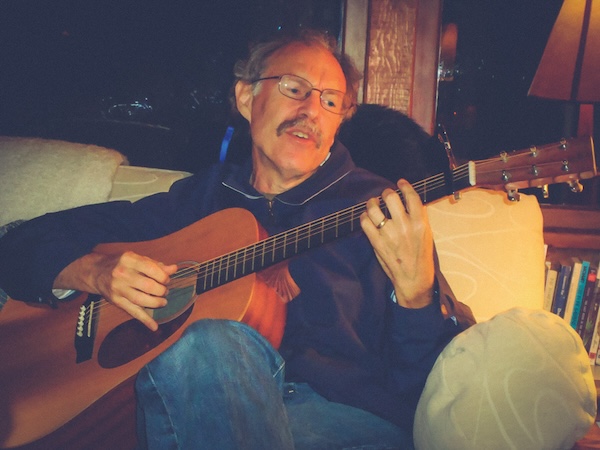
“Loolwa and Chris are both easy-going, creative people. The energy is very positive, which makes collaborating with them fun and organic,” Deeth told the Independent. “Further, I appreciate the passion Loolwa has for the subject matter she writes about. One thing I always struggled with as a musician is ‘What do I have to say?’ At the end of the day, I’m a privileged guy who has never had to face oppression, hate, war or genocide. I have a lot of respect for artists who have experienced darker parts of humanity and have the courage to bring that perspective into their art.”

Born in Toronto, Deeth, who is not Jewish, spent most of his adolescence in Calgary, and moved to Vancouver Island when he was 18. He first picked up a guitar a few years earlier and has been playing ever since. “I was in my first band at 18 and played in bands throughout my 20s. For the past several years, I have been mainly focused on recording,” he said.

photo - Mike Deeth
Mike Deeth (photo from Mike Deeth)

Deeth got hooked on music production in his teens, getting his first digital recorder at age 16. “I still remember pulling all-nighters with friends trying to write songs and get ideas down on tape. Production was always fascinating to me, as I could layer parts together into something bigger than I could ever play on my own.”

Deeth and Khazzoom met a couple of years ago through a Craigslist posting. “She was looking for a guitarist to contribute to an early version of her track ‘The Convert’s Quest,’” he explained, complimenting Khazzoom on the fact that she “puts her full heart into her songs.”

“I recorded some initial guitar demos and, about a year later, we reconnected and worked up the current releases,” he said.

Deeth adds guitar to the songs and completes the mix and master of the songs when they are ready for those steps. Khazzoom sings, writes and plays bass, while Belin – who lives in Pennsylvania – composes the drum parts and performs them.

Among his other music ventures, Deeth has “played the guitar with Bryce Allan, a country musician here on the island, and recorded a few tracks with him. I also work closely with Jennie Tuttle, another musician from Victoria. We have been recording together for seven or eight years now.”

For Deeth, “recording is such an interesting combination of art and science. I get to be musically creative, but I also get to play with cool machines, solve problems and think about gain staging, compression ratios and other technical aspects. I thoroughly enjoy both the artistic and scientific parts of the process – they work my mind in different ways.

“I also love how each project starts as a blank canvas and ends with a new piece of music out in the world. There are an almost infinite number of possibilities when recording a track (all the possible settings on the equipment, the subtleties of different instruments) and it always fascinates me how each song takes shape during the process.”

“Mike has an exquisite sensitivity in his musical composition, performance and recording,” said Khazzoom. “He’s not only super-talented and -skilled, but he’s warm, upbeat, enthusiastic and professional. It’s a joy to create music with him. As is the case with our drummer Chris Belin, Mike has an uncanny ability to capture the essence of the songs I write, to the point that I feel he is playing back to me the sound of my soul. I have literally sat and cried after hearing the mixes.”

For more on Khazzoom, visit khazzoom.com. For more on Deeth’s production and sound services, visit glowingwires.com. 

Format ImagePosted on December 1, 2023November 30, 2023Author Cynthia RamsayCategories MusicTags conversion, hostages, Iran, Iraqis in Pajamas, Israel, Judaism, Loolwa Khazzoom, Mahsa Amini, Mike Deeth, Oct. 7, politics, punk music, recording, social commentary, terrorism
Reviving suppressed works

Reviving suppressed works

ARC Ensemble (photo from Royal Conservatory of Music)

Over the span of three decades, the ARC Ensemble (artists of the Royal Conservatory) has provided a voice for exiled composers who had graduated from Europe’s finest conservatories and enjoyed successful careers, but were subsequently forced into exile by antisemitism and bigotry, their works forgotten. As it marks its 20th anniversary, the ARC Ensemble remains dedicated to the research, recovery and recording of the music produced by these extraordinarily gifted exiles.

It was Dr. Peter Simon, president and chief executive officer the Royal Conservatory of Music, who envisioned creating an ensemble showcasing faculty musicians as part of the RCM’s overarching mission to develop human potential. The conservatory is one of the largest music education institutions in the world. More than 500,000 students study its RCM Certificate Program through a network of 30,000 independent music teachers and its more than five million alumni include Glenn Gould, Oscar Peterson, Shania Twain, Sarah McLachlan and David Foster.

Comprised mainly of the senior faculty of the Royal Conservatory’s Glenn Gould School, with special guests drawn from its most accomplished students and alumni, the ARC Ensemble has become one of Canada’s cultural ambassadors. Its concerts and recordings have garnered multiple Grammy and Juno nominations.

“Over the past 20 years, the ARC Ensemble has done important work in ensuring that the contributions of composers who were marginalized under the 20th century’s repressive regimes are heard and given their due,” said Simon.

ARC has released nine recordings (on RCA Red Seal and, more recently, on Chandos Records), including six in its Music in Exile series. Through its quest to uncover neglected and forgotten 20th century composers, a growing roster of works is now entering the classical canon.

ARC Ensemble artistic director Simon Wynberg’s musical detective work might begin with a footnote in a biography, an old concert program, an email from a composer’s relative, or a suggestion from the network of musicologists active in the area of suppressed music. “Fortunately, many scores have survived and are hiding in plain sight in large library collections and archives,” he said.

Wynberg tracks down potential treasures scattered across the globe, from Israel to India, from Austria to Argentina, and resources closer-to-home in Bloomington, Ind., and Winnipeg, Man.

In recognition of his work with the ARC Ensemble, Wynberg was inducted into CBC Radio’s In Concert Hall of Fame and featured on a special broadcast on Sept. 24.

In resurrecting music forgotten from the boxes of library archives, the ARC Ensemble has created renewed appreciation for a growing list of gifted composers: for example, Ukrainian nationalist Dmitri Klebanov, who was suppressed under Stalin; Sephardi composer and musicologist Alberto Hemsi, who fled Turkey and Egypt to settle in Paris; and Walter Kaufmann, who found sanctuary in Bombay (Mumbai) and created a uniquely personal language by fusing Indian and Western traditions. As a direct result of ARC’s research and recording, Kaufmann’s works are now published by Viennese publisher Doblinger, and both European and American orchestras are now programming his works. Kaufmann’s Indian Symphony will be reintroduced to an audience at Carnegie Hall in 2024.

ARC’s Music in Exile series continued with the Nov. 17 release of a recording of premières by Robert Müller-Hartmann (1884-1950), who fled Hamburg with his wife in 1937 to escape rising Nazism, and settled in England.

“He was an émigré people knew about because of his relationship with [Ralph] Vaughan Williams, but whose music no one had explored,” said Wynberg. “When I met the composer’s grandson in Israel, he arrived with a huge sports bag and a backpack crammed with manuscripts and early editions of Müller-Hartmann’s scores, but the family had never heard a note of his music.”

image - Chamber Works by Robert Müller-Hartmann CD coverLike so many of his contemporaries, in addition to his professional work as a composer, teacher, administrator and musicologist, Müller-Hartmann had a broad range of intellectual interests. He enjoyed considerable success in Germany with major conductors like Richard Strauss, Fritz Busch and Otto Klemperer performing his works. Fired from his post at Hamburg University in 1933, he taught at a Jewish girls’ school before fleeing to England.

In England, Müller-Hartmann spent much of his time in Dorking, some 25 miles south of London, living with Eugenia and Jacob (Yanya) Hornstein, friends from Hamburg. Through Gustav Horst’s daughter Imogen, he met Vaughan Williams, who became a valuable friend and colleague, and who intervened in Müller-Hartmann’s internment on the Isle of Man, where Jewish internees were obliged to live alongside Nazi sympathizers. Despite his connections to influential British musicians, Müller-Hartmann’s career stalled, and his music fell into obscurity. This was partly the result of the war and the economic privations that followed, his sudden death in 1950, and his modest and rather retiring personality. 

The pieces performed on Arc Ensemble’s Chamber Works by Robert Müller-Hartmann, likely written in the early 1920s and mid-1930s, are examples of why Müller-Hartmann’s music deserves a place in today’s classical repertoire. Among Wynberg’s favourites are Two Pieces for Cello and Piano, and the Sonata for Violin and Piano, op. 5, which is dedicated to Müller-Hartmann’s friend and legendary pianist Artur Schnabel. The recording also features Sonata for Two Violins, op. 32, characterized by the duet’s dramatic contrapuntal interplay; the Three Intermezzi and Scherzo for Piano, op. 22, short but technically demanding works for piano; and String Quartet No. 2, op. 38.

Every one of the exiled composers that ARC has introduced has both a compelling story of flight and exile, and a body of music of extraordinary range and quality. Twenty years on, with an alarming rise in antisemitism and new waves of cultural repression, the ARC Ensemble’s mission is a reminder of how easily lives and careers can be devastated by political and social oppression. 

“My hope,” said Wynberg, “is that our introductions to these chamber works will encourage further research, exploration and adoption of music that has been unjustifiably ignored.”

Learn more at rcmusic.com/performance/arc-ensemble. 

– Courtesy the Royal Conservatory of Music

Format ImagePosted on December 1, 2023November 30, 2023Author Royal Conservatory of MusicCategories MusicTags ARC Ensemble, classical music, Music in Exile, Robert Müller-Hartmann, Royal Conservatory of Music, Simon Wynberg
A fresh take on Hanukkah

A fresh take on Hanukkah

Chicago a cappella in June 2022. The ensemble released Miracle of Miracles: Music for Hanukkah last month. (photo by Kate Scott)

The CD Miracle of Miracles: Music for Hanukkah arrived at the Jewish Independent unsolicited. The album, released last month by Cedille Records, features a range of songs from the American Jewish musical tradition, performed by Chicago a cappella vocal ensemble. As someone who spent a good portion of her teenagehood in a choir at a Conservative synagogue and about a decade singing in another Conservative synagogue choir later in life, I have been happily singing along to this recording, enjoying the fresh take on songs with which I am mostly quite familiar.

Miracle of Miracles will appeal most, I think, to someone like me, who grew up in a Conservative Judaism milieu where a cantor and choir formed a large part of the service, or someone who appreciates classical music, as Chicago a cappella are classically trained A-listers, who perform a repertoire of music from the ninth to the 21st centuries. The current artistic director is John William Trotter, and Miracle of Miracles was recorded over a few days last January at Northeastern Illinois University in Chicago.

image - Chicago a cappella CD coverThe CD opens with an arrangement of “Oh Chanukah / Y’mei Hachanukah” by Robert Applebaum that the liner notes describe as “modern versions of the song form from the confluence of at least two streams, the first springing from Hebrew lyrics, the second flowing together from Yiddish and English sources. Turning again to [composer] Harry Coopersmith’s mid-20th-century collection … to create something of a mash-up of ‘Oh Chanukah’s’ popularity.”

There are several Applebaum arrangements. His “Haneirot Halalu” (“These Lights We Light”) mixes English translation and commentary into the traditional Hebrew lyrics, and his “Maoz Tzur” is a cantor-choir interplay that comprises elements most of us will recognize and be able to join initially, but then becomes more complex. His finger-snapping arrangement of Samuel E. Goldfarb’s well-known “I Have a Little Dreidl” – called “Funky Dreidl” – is in English with the Hebrew “nes gadol haya sham,” “a miracle happened there,” as a kind of chorus. It’s followed on the CD by a lively rendition of Mikhl Gelbart’s Yiddish “I Am a Little Dreidl (Ikh bin a kleyner dreidl).”

Other Yiddish offerings are Mark Zuckerman’s arrangement of “O, Ir Kleyne Likhtelekh” (“O, You Little Candle”), the lyrics of which were written by poet and lyricist Morris Rosenfeld, and an arrangement by Zuckerman of “Fayer, fayer” (“Fire, Fire”) by Vladimir Heyfetz, about burning the latkes while frying them.

Applebaum’s jazzy “Al Hanism” (“For the Miracles”) is one of three versions of the song on this recording. There is also an arrangement by Elliott Z. Levine that is the traditional, fast-paced version I’ve sung countless times and love, and the expansive, movie soundtrack-sounding arrangement by Joshua Fishbein.

Levine also contributes “Lo v’Chayil” (“Not by Might”), based on text from the Book of Zechariah, which is not a Hanukkah song per se, but, as the liner notes say, “rather the more transcendent spirit that underlies the commemoration of Hanukkah.” Translated from the Hebrew, the verse is: “Not by might nor by power, but by My spirit, saith the Lord of Hosts.”

Other composers/arrangers whose work is featured on this CD are Steve Barnett (“S’vivon” / “Little Dreydl”), Gerald Cohen (“Chanukah Lights”), Daniel Tunkel (four movements of his “Hallel Cantata”), Jonathan Miller (“Biy’mey Mattityahu” / “In the Days of Mattityahu”).

Two bonus tracks are included: an arrangement by Joshua Jacobson of Chaim Parchi’s Hanukkah tune “Aleih Neiri” and Stacy Garrop’s take on the prayer for peace “Lo Yisa Goy”: “Nation shall not lift up sword against nation, neither shall they learn war any more.”

In the program notes, Miller, who is Chicago a cappella’s artistic director emeritus, talks about the limited number of Hanukkah songs that are appropriate for an ensemble to perform, commenting that “Jewish choral music is a recent phenomenon, begun in earnest only about 200 years ago in Berlin, so there’s a simple quantity issue: we have much less repertoire to peruse than in other choral traditions. Given all of this, we are especially grateful for the composers and arrangers whose persistence and skill have given us the works found here.”

photo - Chicago a cappella artistic director John Trotter
Chicago a cappella artistic director John Trotter. (photo from Cedille Records)

Despite the dearth of Hanukkah choral music, Trotter, the ensemble’s current artistic director, observes that the CD comprises “a sprawling variety of styles.”

“There are at least two reasons for this breadth,” he writes. “On the one hand, we are in debt to the fertile imaginations of our composers, who envisioned so many different sound worlds and so many different ways to clothe these texts. But there is also the nature of Hanukkah itself, which offers so many different modes of personal, social and spiritual practice. Consider just three of these. Hanukkah offers the chance to reflect on the historical significance of the Maccabean revolt, with its consequences echoing through to the present day. It invites quiet contemplation of the candle flames, set aside from any utilitarian purpose. And it provides an opportunity to gather with family and have a really great party with really great food.”

Miracle of Miracles would provide a perfect acoustic background for a Hanukkah gathering. To purchase a CD or buy or stream the music digitally, visit cedillerecords.org/albums/miracle-of-miracles.

Format ImagePosted on November 24, 2023November 23, 2023Author Cynthia RamsayCategories Celebrating the Holidays, MusicTags Cedille Records, Chanukah, Chicago a cappella, choral music, Hanukkah

Posts pagination

Previous page Page 1 … Page 3 Page 4 Page 5 … Page 22 Next page
Proudly powered by WordPress