Reviving suppressed works

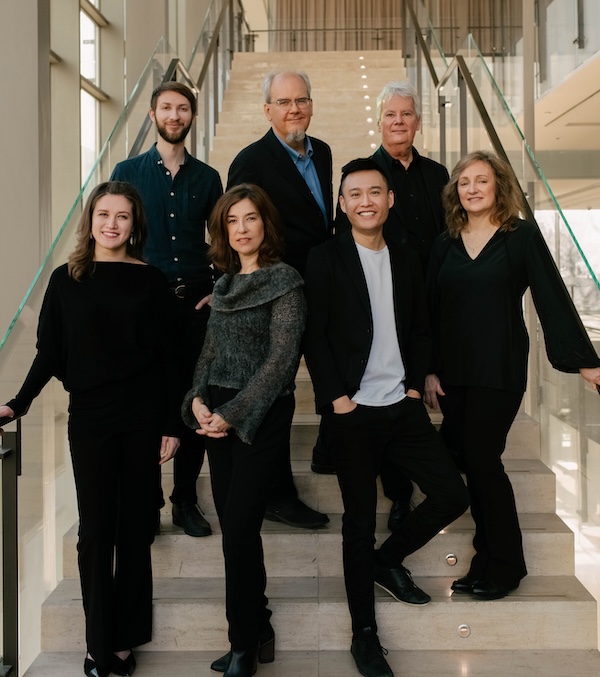
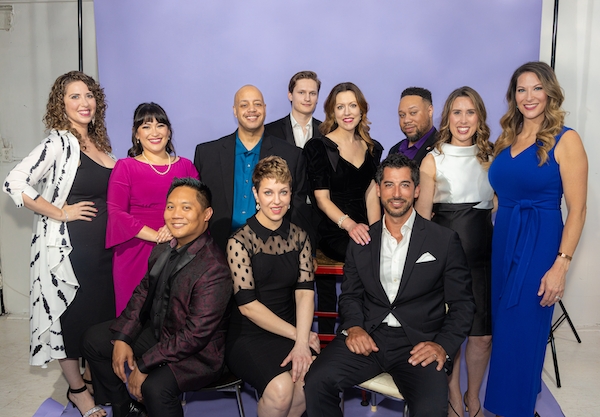
ARC Ensemble (photo from Royal Conservatory of Music)

Over the span of three decades, the ARC Ensemble (artists of the Royal Conservatory) has provided a voice for exiled composers who had graduated from Europe’s finest conservatories and enjoyed successful careers, but were subsequently forced into exile by antisemitism and bigotry, their works forgotten. As it marks its 20th anniversary, the ARC Ensemble remains dedicated to the research, recovery and recording of the music produced by these extraordinarily gifted exiles.

It was Dr. Peter Simon, president and chief executive officer the Royal Conservatory of Music, who envisioned creating an ensemble showcasing faculty musicians as part of the RCM’s overarching mission to develop human potential. The conservatory is one of the largest music education institutions in the world. More than 500,000 students study its RCM Certificate Program through a network of 30,000 independent music teachers and its more than five million alumni include Glenn Gould, Oscar Peterson, Shania Twain, Sarah McLachlan and David Foster.

Comprised mainly of the senior faculty of the Royal Conservatory’s Glenn Gould School, with special guests drawn from its most accomplished students and alumni, the ARC Ensemble has become one of Canada’s cultural ambassadors. Its concerts and recordings have garnered multiple Grammy and Juno nominations.

“Over the past 20 years, the ARC Ensemble has done important work in ensuring that the contributions of composers who were marginalized under the 20th century’s repressive regimes are heard and given their due,” said Simon.

ARC has released nine recordings (on RCA Red Seal and, more recently, on Chandos Records), including six in its Music in Exile series. Through its quest to uncover neglected and forgotten 20th century composers, a growing roster of works is now entering the classical canon.

ARC Ensemble artistic director Simon Wynberg’s musical detective work might begin with a footnote in a biography, an old concert program, an email from a composer’s relative, or a suggestion from the network of musicologists active in the area of suppressed music. “Fortunately, many scores have survived and are hiding in plain sight in large library collections and archives,” he said.

Wynberg tracks down potential treasures scattered across the globe, from Israel to India, from Austria to Argentina, and resources closer-to-home in Bloomington, Ind., and Winnipeg, Man.

In recognition of his work with the ARC Ensemble, Wynberg was inducted into CBC Radio’s In Concert Hall of Fame and featured on a special broadcast on Sept. 24.

In resurrecting music forgotten from the boxes of library archives, the ARC Ensemble has created renewed appreciation for a growing list of gifted composers: for example, Ukrainian nationalist Dmitri Klebanov, who was suppressed under Stalin; Sephardi composer and musicologist Alberto Hemsi, who fled Turkey and Egypt to settle in Paris; and Walter Kaufmann, who found sanctuary in Bombay (Mumbai) and created a uniquely personal language by fusing Indian and Western traditions. As a direct result of ARC’s research and recording, Kaufmann’s works are now published by Viennese publisher Doblinger, and both European and American orchestras are now programming his works. Kaufmann’s Indian Symphony will be reintroduced to an audience at Carnegie Hall in 2024.

ARC’s Music in Exile series continued with the Nov. 17 release of a recording of premières by Robert Müller-Hartmann (1884-1950), who fled Hamburg with his wife in 1937 to escape rising Nazism, and settled in England.

“He was an émigré people knew about because of his relationship with [Ralph] Vaughan Williams, but whose music no one had explored,” said Wynberg. “When I met the composer’s grandson in Israel, he arrived with a huge sports bag and a backpack crammed with manuscripts and early editions of Müller-Hartmann’s scores, but the family had never heard a note of his music.”

image - Chamber Works by Robert Müller-Hartmann CD coverLike so many of his contemporaries, in addition to his professional work as a composer, teacher, administrator and musicologist, Müller-Hartmann had a broad range of intellectual interests. He enjoyed considerable success in Germany with major conductors like Richard Strauss, Fritz Busch and Otto Klemperer performing his works. Fired from his post at Hamburg University in 1933, he taught at a Jewish girls’ school before fleeing to England.

In England, Müller-Hartmann spent much of his time in Dorking, some 25 miles south of London, living with Eugenia and Jacob (Yanya) Hornstein, friends from Hamburg. Through Gustav Horst’s daughter Imogen, he met Vaughan Williams, who became a valuable friend and colleague, and who intervened in Müller-Hartmann’s internment on the Isle of Man, where Jewish internees were obliged to live alongside Nazi sympathizers. Despite his connections to influential British musicians, Müller-Hartmann’s career stalled, and his music fell into obscurity. This was partly the result of the war and the economic privations that followed, his sudden death in 1950, and his modest and rather retiring personality. 

The pieces performed on Arc Ensemble’s Chamber Works by Robert Müller-Hartmann, likely written in the early 1920s and mid-1930s, are examples of why Müller-Hartmann’s music deserves a place in today’s classical repertoire. Among Wynberg’s favourites are Two Pieces for Cello and Piano, and the Sonata for Violin and Piano, op. 5, which is dedicated to Müller-Hartmann’s friend and legendary pianist Artur Schnabel. The recording also features Sonata for Two Violins, op. 32, characterized by the duet’s dramatic contrapuntal interplay; the Three Intermezzi and Scherzo for Piano, op. 22, short but technically demanding works for piano; and String Quartet No. 2, op. 38.

Every one of the exiled composers that ARC has introduced has both a compelling story of flight and exile, and a body of music of extraordinary range and quality. Twenty years on, with an alarming rise in antisemitism and new waves of cultural repression, the ARC Ensemble’s mission is a reminder of how easily lives and careers can be devastated by political and social oppression. 

“My hope,” said Wynberg, “is that our introductions to these chamber works will encourage further research, exploration and adoption of music that has been unjustifiably ignored.”

Learn more at rcmusic.com/performance/arc-ensemble. 

– Courtesy the Royal Conservatory of Music

A fresh take on Hanukkah

Chicago a cappella in June 2022. The ensemble released Miracle of Miracles: Music for Hanukkah last month. (photo by Kate Scott)

The CD Miracle of Miracles: Music for Hanukkah arrived at the Jewish Independent unsolicited. The album, released last month by Cedille Records, features a range of songs from the American Jewish musical tradition, performed by Chicago a cappella vocal ensemble. As someone who spent a good portion of her teenagehood in a choir at a Conservative synagogue and about a decade singing in another Conservative synagogue choir later in life, I have been happily singing along to this recording, enjoying the fresh take on songs with which I am mostly quite familiar.

Miracle of Miracles will appeal most, I think, to someone like me, who grew up in a Conservative Judaism milieu where a cantor and choir formed a large part of the service, or someone who appreciates classical music, as Chicago a cappella are classically trained A-listers, who perform a repertoire of music from the ninth to the 21st centuries. The current artistic director is John William Trotter, and Miracle of Miracles was recorded over a few days last January at Northeastern Illinois University in Chicago.

image - Chicago a cappella CD coverThe CD opens with an arrangement of “Oh Chanukah / Y’mei Hachanukah” by Robert Applebaum that the liner notes describe as “modern versions of the song form from the confluence of at least two streams, the first springing from Hebrew lyrics, the second flowing together from Yiddish and English sources. Turning again to [composer] Harry Coopersmith’s mid-20th-century collection … to create something of a mash-up of ‘Oh Chanukah’s’ popularity.”

There are several Applebaum arrangements. His “Haneirot Halalu” (“These Lights We Light”) mixes English translation and commentary into the traditional Hebrew lyrics, and his “Maoz Tzur” is a cantor-choir interplay that comprises elements most of us will recognize and be able to join initially, but then becomes more complex. His finger-snapping arrangement of Samuel E. Goldfarb’s well-known “I Have a Little Dreidl” – called “Funky Dreidl” – is in English with the Hebrew “nes gadol haya sham,” “a miracle happened there,” as a kind of chorus. It’s followed on the CD by a lively rendition of Mikhl Gelbart’s Yiddish “I Am a Little Dreidl (Ikh bin a kleyner dreidl).”

Other Yiddish offerings are Mark Zuckerman’s arrangement of “O, Ir Kleyne Likhtelekh” (“O, You Little Candle”), the lyrics of which were written by poet and lyricist Morris Rosenfeld, and an arrangement by Zuckerman of “Fayer, fayer” (“Fire, Fire”) by Vladimir Heyfetz, about burning the latkes while frying them.

Applebaum’s jazzy “Al Hanism” (“For the Miracles”) is one of three versions of the song on this recording. There is also an arrangement by Elliott Z. Levine that is the traditional, fast-paced version I’ve sung countless times and love, and the expansive, movie soundtrack-sounding arrangement by Joshua Fishbein.

Levine also contributes “Lo v’Chayil” (“Not by Might”), based on text from the Book of Zechariah, which is not a Hanukkah song per se, but, as the liner notes say, “rather the more transcendent spirit that underlies the commemoration of Hanukkah.” Translated from the Hebrew, the verse is: “Not by might nor by power, but by My spirit, saith the Lord of Hosts.”

Other composers/arrangers whose work is featured on this CD are Steve Barnett (“S’vivon” / “Little Dreydl”), Gerald Cohen (“Chanukah Lights”), Daniel Tunkel (four movements of his “Hallel Cantata”), Jonathan Miller (“Biy’mey Mattityahu” / “In the Days of Mattityahu”).

Two bonus tracks are included: an arrangement by Joshua Jacobson of Chaim Parchi’s Hanukkah tune “Aleih Neiri” and Stacy Garrop’s take on the prayer for peace “Lo Yisa Goy”: “Nation shall not lift up sword against nation, neither shall they learn war any more.”

In the program notes, Miller, who is Chicago a cappella’s artistic director emeritus, talks about the limited number of Hanukkah songs that are appropriate for an ensemble to perform, commenting that “Jewish choral music is a recent phenomenon, begun in earnest only about 200 years ago in Berlin, so there’s a simple quantity issue: we have much less repertoire to peruse than in other choral traditions. Given all of this, we are especially grateful for the composers and arrangers whose persistence and skill have given us the works found here.”

photo - Chicago a cappella artistic director John Trotter
Chicago a cappella artistic director John Trotter. (photo from Cedille Records)

Despite the dearth of Hanukkah choral music, Trotter, the ensemble’s current artistic director, observes that the CD comprises “a sprawling variety of styles.”

“There are at least two reasons for this breadth,” he writes. “On the one hand, we are in debt to the fertile imaginations of our composers, who envisioned so many different sound worlds and so many different ways to clothe these texts. But there is also the nature of Hanukkah itself, which offers so many different modes of personal, social and spiritual practice. Consider just three of these. Hanukkah offers the chance to reflect on the historical significance of the Maccabean revolt, with its consequences echoing through to the present day. It invites quiet contemplation of the candle flames, set aside from any utilitarian purpose. And it provides an opportunity to gather with family and have a really great party with really great food.”

Miracle of Miracles would provide a perfect acoustic background for a Hanukkah gathering. To purchase a CD or buy or stream the music digitally, visit cedillerecords.org/albums/miracle-of-miracles.

Oktopus tours province

Oktopus performs at Massey Theatre Oct. 21. (photo © Emmanuel Crombez)

Juno-nominated klezmer group Oktopus brings their unique sound and high energy performance to Massey Theatre on Oct. 21. The New Westminster concert is the culmination of a BC tour that includes Oliver, Quadra Island, Duncan, Nanaimo, Salt Spring Island and Victoria.

Oktopus’s eight virtuoso musicians meld various components of classical, Quebecois and jazz repertoires. Their distinctive music is undeniably rooted in the klezmer tradition, reflecting the rich history of a thousand-year-old community, its persecutions and celebrations, tears and laughter, or both at the same time. Musicians of yesteryear incorporated in their repertoire the music they encountered on their journeys and, just like them, the members of Oktopus are inspired by the music they hear throughout their own travels.

The Montreal-based Oktopus octet was formed in 2010 at the initiative of clarinetist Gabriel Paquin-Buki, creator of musical arrangements and several original compositions. (See jewishindependent.ca/blues-klezmer-at-mission.)

After releasing its debut album, Lever l’encre, in 2014, Oktopus released Hapax in 2017, which earned nominations as Instrumental Album of the Year at the Juno Awards and World Music Group of the Year at the Canadian Folk Music Awards. For more on the ensemble, visit oktopus.ca. For tickets to the Oct. 21 concert, go to masseytheatre.com/event/massey-presents-oktopus.

– Courtesy Rona Goodman Music & Publicity

Live music at JSA party

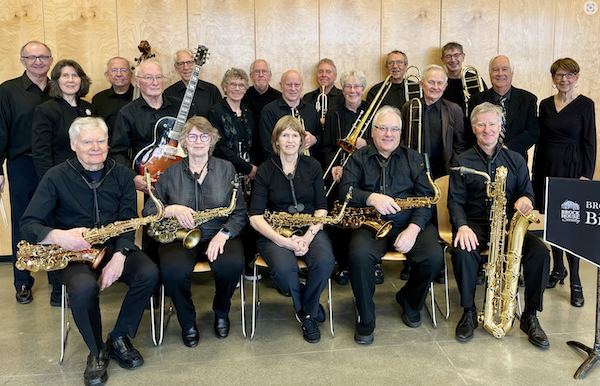
The Brock House Society Big Band performs after the Jewish Seniors Alliance AGM Oct. 26. (photo from JSA)

The Brock House Society Big Band will take part in the festivities that follow the Jewish Seniors Alliance’s annual general meeting Oct. 26, 2 p.m., at Beth Israel Synagogue.

JSA is celebrating its 20th anniversary. For the last 20 years, the organization, founded by Serge Haber, has served the Jewish and general communities through its education, advocacy and peer support programs.

The Oct. 26 AGM will consist of committee reports and the election of board members, and the birthday party/reception that follows at 3 p.m. will feature live music by the Brock House Society Big Band, balloons and loot bags. There will be a late, light lunch catered by Nava, at the cost of $36/person.

The Brock House band is an 18-piece ensemble that plays a wide variety of jazz and popular music. Their repertoire includes classic tunes from Count Basie, Duke Ellington and others, Latin and jazz standards and big band arrangements of contemporary popular music.

To register, call 604-732-1555 or email office@jsalliance.org.

– Courtesy Jewish Seniors Alliance

Tzimmes helps close festival

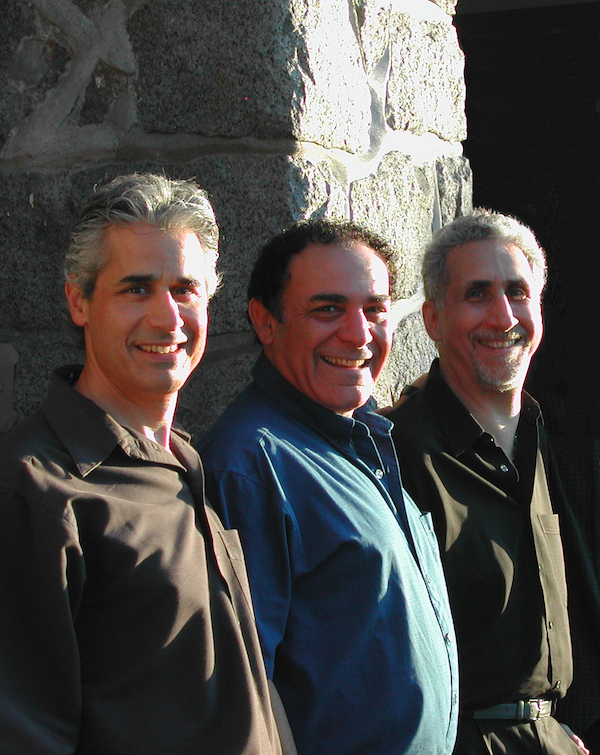
Left to right, Tzimmes’s Saul Berson, Yona Bar Sever and Moshe Denburg perform in the Ukrainian Hall Community Concert and Social on Nov. 5. (photo from Heart of the City)

A festival favourite, Tzimmes, will perform at the 20th Annual Downtown Eastside Heart of the City Festival, taking part in the Nov. 5 Ukrainian Hall Community Concert and Social, which closes out the 100-plus live and online events that take place at more than 40 venues over 12 days.

Presented by Vancouver Moving Theatre with the Carnegie Community Centre, the Association of United Ukrainian Canadians and other community partners, this milestone year of the festival – with the theme “Grounded in Community, Carrying it Forward” – starts Oct. 25.

“We have performed at DTES Heart of the City Festival on several occasions over the years,” Tzimmes founder and band leader Moshe Denburg told the Independent.

“November 2008 was the first time and, two years later, in October 2010, we performed again. We were invited a few years ago, in the fall of 2020, but couldn’t make it due to a scheduling conflict.”

In addition, said Denburg, a small group from the Vancouver Inter-Cultural Orchestra (VICO), which Denburg founded, played the festival in 2011. “The repertoire was, of course, intercultural, but included klezmer and Hebraic pieces as well,” he said. “Every time we played the festival, there was a truly welcoming atmosphere, and I would like to say it is an honour to be part of the mitzvah (good deed) that Heart of the City is performing for the neediest amongst us.”

“For 20 years, the Heart of the City Festival has been grounded in the Downtown Eastside and focused on listening and learning from the cultural practices of the community,” notes the press release. “The festival works with, for and about the Downtown Eastside community to carry forward our community’s stories, ancestral memory, cultural traditions, lived experiences and artistic processes to illuminate pathways of resistance and resilience.” The festival’s mandate “is to promote, present and facilitate the development of artists, art forms, cultural traditions, history, activism, people and great stories about Vancouver’s Downtown Eastside.”

The closing event at which a trio of musicians from Tzimmes will play – Denburg (lead vocal/guitar), Yona Bar Sever (lead guitar/backup vocal) and Saul Berson (clarinet/flute/saxophone) – will also feature the Barvinok Choir, Dovbush Dancers and the Vancouver Ukrainian Folk Orchestra. The concert will be opened by cultural speaker Bob Baker of the Squamish Nation and DTES resident, artist, poet and community activist Diane Wood will read “100 Years of Struggle” by the late Sandy Cameron, an historian and poet, among other things, who was very involved in the Downtown Eastside.

About what the Tzimmes trio will play at the concert, Denburg said, “The Tzimmes repertoire is always made up of Jewish music in the larger world context. So, there will be aspects of klezmer and Yiddish song (European), Ladino (Judeo-Spanish/Mediterranean), and pieces in a more Middle Eastern style as well. If anyone wants a primer on our repertoire, they can visit our YouTube page: @BigTzimmesProductions. Have a look/listen to ‘Dror Yikra,’ ‘Cuando’ and ‘Moishe’s Freylakh,’ and you’ll get an idea of what’s to come.”

The Independent last spoke with Denburg in 2021 about Tzimmes’s then-new two-CD album The Road Never Travelled. Since that interview, the group released, in 2022, a remixed and remastered version of their first album, calling it Sweeter and Hotter.

“In 2020, as we were creating our fourth album, The Road Never Travelled, I realized that there was almost enough material for a second disc, but it needed a few more pieces,” said Denburg. “Around that time, my dear friend and band mate, Yona, suggested that I try to remix our debut recording. We always felt that we were constrained by a simpler technology back in 1993, and that certain aspects of the mix could be improved – vocals could be clearer, instruments brought into better relation and so on. Looking around, I found a fine facility in Red Bank, N.J., that specialized in transferring old reel-to-reels to a digital format. The tapes of Sweet and Hot were 27 years old, but they transferred wonderfully to digital tracks.

“On the second disc of The Road Never Travelled, we included several remixed liturgical pieces from Sweet and Hot,” Denburg said, noting that the group continued the process and worked on every track of their 1993 debut album. He said, “The result, we believe, is an enhanced version of Sweet and Hot that does not compromise the original at all; in fact, we humbly submit, the result of all this work is that the sweet parts are even sweeter, and the hot stuff even hotter!”

The closing concert/social of the Heart of the City Festival – called Building Community: 20 Years of Friendship – takes place at the Ukrainian Cultural Centre, with doors opening at 2 p.m. and the concert at 3 p.m. Tickets ($30/$20) are available at eventbrite.ca.

***

photo - Among the many Heart of the City events is a month-long exhibit at Carnegie Community Centre of photographer David Cooper’s work for the festival over its 20 years
Among the many Heart of the City events is a month-long exhibit at Carnegie Community Centre of photographer David Cooper’s work for the festival over its 20 years. (photo from Heart of the City)

Among the many other events taking place during Heart of the City is an exhibit of photographer David Cooper’s work for the festival over its 20-year history, curated by Vancouver Moving Theatre co-founder Terry Hunter. (For more on Cooper, see jewishindependent.ca/capturing-community-spirit.)

Cooper will attend the Nov. 1, 4 p.m., opening reception in the third-floor gallery at Carnegie Community Centre. The exhibit, which runs to Nov. 30, will feature two to four photos from each of the festival’s 20 years, displayed chronologically with the festival poster for each year.

Organizers said Cooper provided guidelines for selecting the images: “simple, elegant, expressive images with energy, movement and/or emotion that represent the cultural and social diversity of the festival’s programming and people.” The exhibit also will include photos of festival participants who have passed away.

For more information, visit heartofthecityfestival.com.

Following historic footsteps

Elam Rotem, founder and director of Profeti della Quinta, which plays in Vancouver Nov. 9. (photo by Theresa Pewal Photographie)

Swiss ensemble Profeti della Quinta, directed by Elam Rotem, brings Stars of  the Italian Renaissance: Monteverdi & Rossi to Vancouver Nov. 9. Part of Early Music Vancouver’s 2023/24 season, the concert takes place at Christ Church Cathedral.

“Salomone Rossi and Claudio Monteverdi are two composers we like very much,” Rotem told the Independent. “We find the fact that they were colleagues – they played together as instrumentalists and collaborated as composers – very interesting. Even more interesting is the fact that the Jewish singers and musicians in Mantua had this double musical life, where sometimes they sang madrigals and participated in the opera productions at the court (collaborating with Monteverdi and other non-Jewish musicians) and, at other times they sang Hebrew polyphony in the synagogue.

“In this program,” said Rotem, “we follow in the footsteps of those Jewish musicians from Mantua who, unlike Jews in other places (in Italy or elsewhere), participated in the arts. This particular constellation allowed Salomone Rossi to develop his polyphonic music for the synagogue, and it is also the reason why, despite the hopes of Rossi and his followers, this tradition never took off elsewhere.”

Rotem – who was born in Sdot Yam, Israel – has a bachelor’s in harpsichord from the Jerusalem Academy of Music and Dance, and he came to Basel, Switzerland, at the end of 2008 to specialize in early music at Schola Cantorum Basiliensis, from where he received his doctorate in a joint program with the University of Würzburg, in Germany. His PhD thesis was on early basso continuo practice.

“Throughout the 16th century, music was primarily polyphonic – typically composed of four to five parts. Towards the end of the century,” he explained, “new ideas led to the development of a new technique in which only two parts were composed: a vocal part and a basso continuo part – an instrumental bass line on which the player had to fill in the harmonies above it. The possibility of having only one singing voice allowed a much more direct and expressive communication with the audience and played an important role in the creation of early operas. The difference between the older polyphony and the new monodic style is so great that it changed the course of music history, and some examples of this will be heard in our concert.”

The origins of Profeti della Quinta go back to Rotem’s studies at Kibbutz Kabri High School, where he organized a vocal quintet with fellow students. Rotem is also a singer.

“I started Profeti in the corridors of my high school, wherever we could find some church-like acoustics” he said, “but the group only became professional after we won the York Early Music Competition in 2011.”

The ensemble now performs throughout Europe, North America, Israel and elsewhere. Focusing on the vocal repertoire of the 16th and early 17th centuries, the group “aims to create vivid and expressive performances for audiences today while, at the same time, considering period performance practices.”

About how he approaches this dual goal, Rotem said, “First and foremost, I’m interested in music from the period that I find interesting and beautiful. Then, I’m also interested in how it was performed and in what context – and, for that, you have to research and try things out. For example, we sing from (copies of) original partbooks and not from modern scores, so each singer has only his or her own line. This makes listening and making music very different. Then we also try to understand the music better. Finding out the motivations behind the decisions of composers, we feel that we can deliver their music better.”

In response to a question about how Rossi’s music is perceived with regard to its Jewishness – including his liturgical compositions – Rotem said, “It depends on what people mean by ‘Jewish music.’ If, for some people, Jewish music means Eastern European klezmer music, then Rossi’s music doesn’t sound Jewish. Rossi’s music is written in the language of his time – what we can categorize (if we must) as late Renaissance Italian style. If we compare the music of his prayers, for example, with the contemporary love madrigals (also his own), we see that the prayers are more solemn and simpler. But this is hardly surprising – the way composers created their music was based on the text, and so a heart-wrenching madrigal text would be composed in a very different way than a psalm praising the Lord. Another way to look at Rossi’s prayers is not so much as pieces of music in the normal sense, but simply the text of the prayers served on a plate of harmony – with the goal of elevating and glorifying the prayer.”

Joining Rotem (bass vocals, harpsichord and musical direction) from Profeti della Quinta on the Western Canadian tour that will take the musicians to Vancouver, Edmonton and Calgary, are Doron Schleifer (countertenor), Andrea Gavagnin (countertenor), Lior Leibovici (tenor), Loïc Paulin (tenor) and Ori Harmelin (chitarrone, which is a kind of lute). After the concert in Vancouver, there will be a talk and Q&A with Rotem, hosted by Suzie LeBlanc, artistic and executive director of Early Music Vancouver.

For tickets to the performance on Nov. 9, 7:30 p.m., at Christ Church Cathedral, visit earlymusic.bc.ca.

Lanyi debuts in March

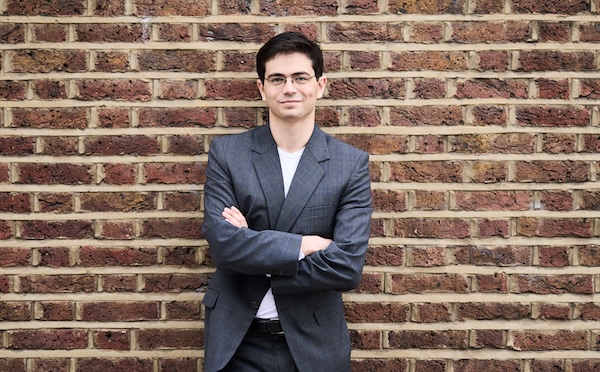
Israeli pianist Ariel Lanyi performs in Vancouver March 3. (photo by Kaupo Kikkas)

Israeli pianist Ariel Lanyi will make his Canadian debut on March 3, 3 p.m., at the Vancouver Playhouse in a concert presented by the Vancouver Recital Society.

Born in Jerusalem in 1997, Lanyi is now based in London, England, having recently completed his studies at the Royal Academy of Music. In 2023, he received the Prix Serdanag, a Swiss prize awarded by Austrian pianist Rudolf Buchbinder, and was nominated as a Rising Star Artist by Classic FM. In 2021, he won third prize at the Leeds International Piano Competition and was a prize winner in both the Young Classical Artists Trust YCAT (London) and Concert Artists Guild (New York) International Auditions. Also in 2021, Linn Records released Lanyi’s recording of music by Schubert, with other releases also planned. Lanyi’s 2021 Virtually VRS recorded performance can be viewed on the Vancouver Recital Society’s YouTube channel.

Lanyi has appeared with orchestras in Israel, the United Kingdom, Argentina and the United States, and highlights include playing with the Israel Philharmonic, Royal Liverpool Philharmonic Orchestra and City of Birmingham Symphony Orchestra, the latter of which he will return to this season for Mozart K503. Other notable future engagements include his debut with the Mahler Chamber Orchestra at the Grafenegg Festival, a return to Australia at the Sanguine Estate Music Festival, followed by a tour to China, and the Stars & Rising Stars concert series in Munich.

An avid chamber musician, Lanyi has collaborated with members of the Berliner Philharmoniker and Concertgebouw Amsterdam, as well as with musicians such as Maria João Pires, Marina Piccinini, Charles Neidich and Torleif Thedéen. He also recorded with the Mozarteumorchester Salzburg under the auspices of the Orpheum Stifftung, as part of their Next Generation Mozart Soloist series, and gave recitals at the Kissinger Sommer, Fundaçion Juan March in Madrid, and Festspiele Mecklenburg-Vorpommern.

Lanyi’s March 3 performance in Vancouver will feature Ludwig van Beethoven’s Sonata No. 30 in E major, Op. 109, Frédéric Chopin’s Mazurkas, Op. 59, and Chopin’s Polonaise-Fantaisie in A-flat major, Op. 61, as well as Max Reger’s Variations and Fugue on a Theme by Bach, Op. 81. The concert will be followed by a talkback session. For tickets, visit vanrecital.com.

– Courtesy Vancouver Recital Society

Vazana at Chutzpah! Fest

Nani Noam Vazana performs at the Rothstein Theatre Nov. 11 as part of this year’s Chutzpah! Festival. (photo from NaniMusic.com/ProLadino)

Gracing the cover of this year’s Chutzpah! Festival guide and posters is Nani Noam Vazana. The Amsterdam-based musician is one of the only artists in the world writing and performing new songs in Ladino, or Judeo-Spanish. The JI spoke with her when she last came to Vancouver, in 2017, and did so again, ahead of her Nov. 11 Chutzpah! show at the Rothstein Theatre.

“The concert in Vancouver is a part of my international Ke Haber tour that will take me through 15 countries,” said Vazana. One of the highlights of the tour will be a concert at the Library of Congress in Washington, DC, she said, “where I’ll have the honour of documenting my new Ladino songs for libraries and universities all over the world and make them available for Ladino research.”

The tour features mostly songs from Ke Haber but will also include “some traditional Sephardic songs and surprise covers – different to each show!” she said.

Ke Haber incorporates a millennial’s perspective – hers – into the writing of songs “in an old, almost extinct language,” she said, explaining that “Ladino is a language of the Sephardic Jews who were expelled from the Iberian Peninsula in the Middle Ages (Spain and Portugal of our days). My grandmother has roots in Portugal and she and her family sailed to Morocco from Porto in the 1400s. That’s where she grew up and where my parents were also born.

“In the ’50s, both my parents’ families immigrated to Israel and my father wanted to leave the past behind so he actually forbade us to speak Ladino at home,” she continued. “The only times I had contact with the language was when I was left alone with my grandmother. It was the language of witchcraft and mystery because she would only use it to speak to me in secret and tell me magical fairy tales that I actually thought she made up herself, because nobody else knew them. We sang songs in the kitchen while cooking, and it was all seeping in through the senses, very inviting and very curious.”

Vazana’s grandmother passed away when she was 12 years old.

“One of my first memories is of me and my Nona (Grandma) sitting at the kitchen table, peeling beans and singing ‘Los Guisados De La Berendjena,’ a song about seven recipes for eggplants. She hardly spoke Hebrew and my father forbade us to speak Ladino…. But, it seems, you carry this love subconsciously in you wherever you go, because, 15 years after my Nona passed away, I visited Morocco for the first time and heard people on the street singing the same lullaby she used to sing to me when I was a little girl. All of a sudden, those forgotten kitchen songs came alive and I started a long journey searching for songs and melodies that led me to release my traditional Ladino album Andalusian Brew. Sometimes, all it takes is just a sound or a scent and you’re transported to a life you’ve forgotten.”

After performing traditional repertoire for a few years, Vazana felt a yearning to write her own songs, and she dove into an exploration of the language. “I visited a scholar in Leiden, who showed me a lot of texts at an ancient Jewish library, but I wanted more,” she said. “So, I dug deep into medieval poetry and started learning the rhythm of the stanzas. Based on existing rhythmical formations, I started writing my own lyrics in Ladino, concerning questions we ask ourselves today, and, I must admit, I found a lot of correlation between where we are now and the medieval Iberian population.”

Vazani described Ke Haber as “an album of new songs that sound old, or maybe the other way around.”

“There are songs in the album that speak about female empowerment, like my song ‘No Kero Madre,’ a mother-daughter dialogue about the will to break free from the arranged marriage tradition and marry out of love,” she explained. “What a lot of people don’t know about Ladino is that it is a matriarchal language, so the relationship between mother and daughter is put on a pedestal, as the highest form of love in existence.

“In my song ‘Sin Dingun Hijo Varon,’ I describe the transformation of a transgender teenage girl who wants to be recognized as a boy. The father tries to kick her out of the house but the mother steps up and accepts her child as a boy.

“My song ‘Una Segunda Piel’ is about a Sephardic retirement ritual where your family and friends sow around you the shroud of the dead! You lie down in a cocoon, meditate and think about the troubles you want to leave behind. When the cloth is done [with], it goes into the cupboard, symbolizing all your troubles, and you emerge from it as if shedding your skin. That’s why the title is ‘Una Segunda Piel,’ which means ‘A Second Skin.’

“For my song ‘El Gacela,’” she said, “I composed music to an ancient text by Shmuel Hanagid, which is a love poem between two men. When the song was published, some people claimed that I was ‘outing’ the Jewish saint, but I think if he already published this work, he was out in the first place.”

The recording of Ke Haber, which started in London, England, in 2020, was complicated by COVID.

“I had to figure out a creative way to finalize the project, so we started recording remotely,” she said. “That’s really hard, because programs like Zoom have latency, so you can’t really record with other musicians simultaneously. We had to overdub – can you imagine playing music when the band is not in the same room? We all came to the studio whenever we were able to travel from Columbia, Chile, the Canary Islands, Bosnia, Israel, India, the Netherlands and Poland! That’s why the album is also a colourful tapestry of musical traditions and cultural aspiration from all over the world.”

While COVID was a quiet time touring-wise, “it was also a turmoil of creativity,” said Vazani, “because I just couldn’t sit still at home and wait for the world to pass by. So, I broadcasted house concerts every week, learned to edit video and record sound, which led to facilitating multicam broadcasts for other artists, such as the West East Orchestra.

“I also started doing voiceover gigs, overdubbing cartoon characters for animation and narration for documentaries and commercials. I also dabbled in emceeing when hosting online events and I hosted my own weekly podcast, interviewing [professionals] from the music industry about tips for emerging musicians.”

She received offers from music colleges and music industry conventions worldwide and hosted masterclasses and panel discussions for more than 30 institutions. “Eventually,” she said, “I was commissioned by the Dutch national TV broadcast NPO to create and host my own television series that will start airing in 2024.”

In addition to all that, Vazani teaches at the London Performing Academy of Music and the Jerusalem Music Academy, and is chair of the Amsterdam Artist Collective. She is also a guest lecturer at Codarts University, Rotterdam.

She enjoys being active – “for the mind and the soul to stay agile, we gotta train them,” she said. “This is my mental gym.”

And she’s not that interested in achievements, she said, though she has garnered several awards. “I am interested in being on the road as much as possible with my music,” she said. “This translates in my mind into happiness, and that’s not a fleeting experience, it’s a state of existence.”

To support Vazani’s music and receive content in return – all the music she has released, for example, and exclusive meet-and-greet sessions – readers can join her music family at nanimusic.com/family. For tickets to her performance at Chutzpah! and the whole festival lineup, visit chutzpahfestival.com. The festival runs Nov. 2-23.

Empowered by piano, song

From left to right: Leslie Rosen, Toby Rubin, Tammy Klass and Marilyn Berger dance to the music of singer and pianist Miriam Davidson. (photo from JSA)

The last session of the Jewish Seniors Alliance-Snider Foundation Empowerment 2022-23 season was held on June 26 at Beth Tikvah Synagogue in Richmond. It featured Miriam Davidson playing and singing show tunes, and people joined in and even danced.

The event was co-sponsored by JSA, Kehila Society’s Seniors Program and Beth Tikvah. Attendees were treated to a BBQ lunch of hamburgers, hot dogs and veggie dogs with all the trimmings. More than 60 seniors from around the Lower Mainland attended.

photo - Miriam Davidson
Miriam Davidson (photo from JSA)

The crowd was welcomed by Toby Rubin, the coordinator of the Kehila program. She explained that Lester Soo, the scheduled entertainer, was unable to perform, but that Davidson, a pianist and vocalist, was able to step in.

Davidson began with some songs from The Sound of Music that were very familiar to the audience, and she encouraged everyone to sing along. The program included such tunes as “Ain’t Misbehavin’,” “Fly Me to the Moon” and “Only a Paper Moon.” She played “Memory” from the musical Cats and a request for Abba’s “Dancing Queen” had the audience swaying and waving their arms in time to the music. There was even a bit of dancing.

The concert ended with “Here Comes the Sun” by the Beatles.

The afternoon wrapped up with greetings from Tammi Belfer, president of the JSA, and a thank you to Davidson, who was wonderful.

Shanie Levin is a Jewish Seniors Alliance Life Governor. She is also on the editorial committee of Senior Line magazine.

Connect with music

The Oot n’ Oots band helps launch Mission Folk Music Festival. (photo from Mission Folk Music Festival)

Family band the Oot n’ Oots helps kick off the Mission Folk Music Festival on July 21, as part of the main-stage lineup that opens the weekend of concerts and workshops. Several other Jewish community members are also participating over the weekend, including Boris Sichon, Jesse Waldman and Abigail Lapell, who helps close out the annual event on the evening of July 23.

The theme of this year’s festival builds on last year’s, said artistic director Michelle Demers Shaevitz, also a member of the Jewish community.

“In 2022,” she said, “I programmed a festival that reflected the experience of homecoming, the coming back together of our community, our festival family. This year, I’m digging into the process and ideas of connection and reconnection, as we move through our experiences beyond that initial homecoming and return to the festival. For me, the idea of reconnection speaks to getting to know who we are as a community post-pandemic and how we have changed/emerged as a result of our experiences.

“I was drawn to our 2023 artists through the ways they express their connection to their homelands, their languages, their heritage and cultures, and musical traditions,” she continued. “It’s how Okan celebrates their roots to their homeland of Cuba and her languages and stories, while Terra Spencer sings of the Maritime landscapes and communities around her.

“It could be reconnecting to language, as Cedric Watson and Jourdan Thibidoux explore their roots in the Creole community based in Louisiana alongside Wesli, who sings in his Haitian Creole of home and in French from his newly adopted community in Quebec.

“It’s the ways that Leonard Sumner and Twin Flames sing their connections to their heritage or how Alysha Brilla presents her identity in her songs.”

And, she said, it’s how the Jewish musicians weave their Jewishness into their stories and songs.

screenshot - Boris Sichon on TikTok, playing an instrument he made himself
Boris Sichon on TikTok, playing an instrument he made himself. (screenshot)

Sichon, a classically trained percussionist, plays more than 400 different instruments from around the world, many of which would send most of us to the internet to find out what they are, such as mayuri, zurna and agogo bells. He can also make music from wrenches, plastic containers, kitchen bowls and even rocks – basically, anything. His TikTok videos are quite entertaining and mind-broadening. It’s easy to see why he is in demand for school and other educational workshops. He told the Independent he is currently “in the process of preparing a new program with an accent on voice and wind instruments.”

“I love to perform for kids,” he said. “It gives them an opportunity to travel around the world with exotic musical instruments.”

In performances, Sichon sings songs about “love, friendship and freedom [in] Ukrainian, Gypsy, Russian and Yiddish.” He also plays klezmer, and has taken part in the International Klezmer Festival in Jerusalem for many years. He has played at and collaborated with the Mission folk fest many times and, at this year’s festival, he takes part in a Sunday afternoon session, called Global Routes, with Dongyang Gozupa and Robin Layne & the Rhythm Makers.

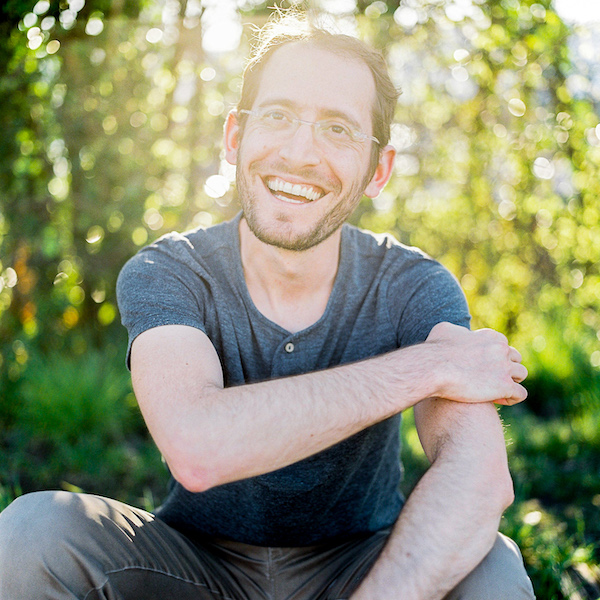
photo - Jesse Waldman
Jesse Waldman (photo from Mission Folk Music Festival)

Earlier that Sunday afternoon, Waldman takes to the stage as well. A blues and folk artist, the Independent spoke with him ahead of his participation in the 2019 festival (jewishindependent.ca/blues-klezmer-at-mission). A couple of years ago, he shared more about himself and the importance of family in a piece for the JI about being inspired by his great-grandmother, Adele Waldman, to reimagine the Yiddish song “Papirosen” (jewishindependent.ca/a-great-grandmothers-song).

Making her debut at the Mission Folk Music Festival is Lapell, with a shared session on Saturday (with Alysha Brilla) and on Sunday (with Terra Spencer), as well as being part of the festival closing concert. She said “there’s so much great music on the lineup – personally, I’m especially excited for the workshop stages, to have a chance to collaborate with and get inspired by artists from across Canada and beyond.”

Based in Toronto, Lapell’s latest album, Stolen Time, which came out last year, earned her a 2023 Canadian Folk Music Award for English songwriter of the year. She was similarly recognized in 2020 for her album Getaway and she received a CFMA for contemporary album of the year in 2017 for Hide Nor Hair.

“I’m always trying to challenge myself as a writer and collaborator,” she said. “I’ve had the chance to work with so many great players and personnel on these albums and I think it’s really helped me grow from one project to the next.”

Lapell has always sung.

“Singing and writing songs is very intuitive to me and definitely a big source of comfort and community,” she said. “Ultimately, I think it’s such a primal thing, singing and sharing music – for me, it’s a way of connecting with myself, with nature and with the world at large.”

photo - Abigail Lapell
Abigail Lapell (photo by Jen Squires)

Her Jewishness finds its way into her work subtly.

“I find my writing is infused with a lot of biblical and natural imagery,” she said. “I’m very drawn to stylized, sometimes repetitive language, whether prayerful or playful or both. I was raised in a religious Jewish family, and I think there’s a reverent spirit to my music – and sometimes a touch of gentle dissonance or wry humour – that reflects some of the Hebrew and Yiddish traditions I grew up with.”

For the Oot n’ Oots – 16-year-old Ruthie Cipes (voice, ukulele) with her dad Ezra (voice, guitar, keys) and uncles Ari (voice, guitar, keys), Gabe (voice, bass) and Matthew (voice, drums) – Judaism and Jewish community are important parts of their lives, but don’t necessarily influence their music.

“We’re grateful for the wisdom of our ancestors and the culture bestowed since Abraham,” wrote Ezra and Ari in an email interview with the Independent. “It’s a great gift that makes our lives rich and meaningful. We’re members of the Okanagan Jewish Community and supporters of Chabad Okanagan.”

The family lives in Kelowna.

“Our parents moved us from Westchester County in New York to Kelowna, B.C., in 1987,” said the brothers. “They wanted to get off the money-go-round and be farmers living in connection with the earth. They ended up founding Summerhill Estate Winery.”

The Oot n’ Oots was formed in 2007, when Ruthie was born, “but it really got going in 2015 once Ruth joined the band. We released our first album in 2016, although it was mostly recorded back in 2007. Then we made two more albums after our elder brother Matthew joined the band on drums.”

The group is currently recording their fourth album. Their third album, Ponderosa Bunchgrass and the Golden Rule, was nominated for a 2023 CFMA for children’s album of the year and it also garnered a 2022 Juno Award nomination – they were named Children’s Artist of the Year at the 2022 Western Canadian Music Awards.

“We write songs to make each other laugh and to inspire each other. That’s what we’ve always done and it’s what we continue to do,” said the brothers. “It’s a practice that’s ongoing. We want it to continue to be meaningful as we all grow.”

While the awards may refer to children’s music, the Oot n’ Oots describe their music as “all generations together music.”

“That’s the sweet spot for us – when it’s toddlers, teenagers, parents and grandparents all on the dancefloor together,” said Ezra and Ari. “We have a couple of other musical projects that we do, but the Oot n’ Oots is our focus because it seems to provide the most tangible value, and it feels really good to bring that energy of joy to the world.”

In addition to the festival opener, the Oot n’ Oots play a few sessions with other musicians over the weekend, which takes place at Fraser River Heritage Park. The festival includes food and artisan market vendors, as well as a licensed bistro, and attendees can choose to camp in the park for an additional fee. For the full lineup and tickets, visit missionfolkmusicfestival.ca.