


British Columbians vote Oct. 17 in municipal elections across the province. The Independent interviewed several candidates who are members of the Jewish community about issues relevant to them, their constituents and the Jewish community. For details on when, how and where to vote, click here.
Moira Stilwell, candidate for Vancouver City Council
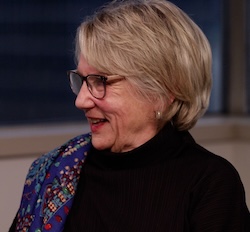
Moira Stilwell brings a varied resumé to her bid for city council: more than three decades in medicine, eight years in the British Columbia legislature and cabinet experience under two premiers.
Stilwell, who is running with the Vancouver Liberals, practises nuclear medicine at St. Paul’s Hospital. She was elected as the BC Liberal MLA for Vancouver-Langara in 2009 and served until 2017, holding cabinet positions including minister of advanced education and labour market development under Gordon Campbell and minister of social development under Christy Clark.
Her community involvement has included women’s health advocacy, chairing the Canadian Breast Cancer Foundation’s BC/Yukon chapter and serving on the national board of Weizmann Canada. More recently, she has served on the Jewish Federation of British Columbia’s antisemitism task force.
Stilwell says antisemitism is an issue on which municipal government has both a responsibility and practical tools.
“Council has real levers here,” she told the Independent. “We can properly resource the VPD [Vancouver Police Department] hate crimes unit and enforce the laws already on the books. We can help secure synagogues, the JCC, schools and community centres, including coordinating the provincial and federal security funding that too often goes unclaimed. And we can lead: a council that names antisemitism plainly and consistently instead of staying quiet. Silence from city hall is its own message.”
On one issue that has repeatedly generated controversy at Canadian municipal councils – motions relating to Israel and other international conflicts – Stilwell takes a jurisdictional approach. Foreign policy, she said, belongs with the federal government, and she would not support city council adopting positions, boycotts or divestment measures relating to overseas conflicts. Such debates, she argues, can divide Vancouver residents while consuming attention that could instead be devoted to municipal responsibilities such as housing, public safety and services.
Stilwell also supports reviewing municipal funding for organizations that exclude people based on religion, national origin, ethnicity or identity. Organizations receiving public money, she said, should be accessible to all residents, with funding potentially withdrawn if discriminatory practices are not corrected.
She similarly draws a distinction between protecting protest rights and protecting access to religious and community institutions. Stilwell supports what she describes as content-neutral safe-access measures around institutions that are targeted, alongside enforcement of laws against intimidation or blocking entrances.
Beyond issues of particular concern to Jewish voters, Stilwell identifies affordability, public safety and access to family doctors as priorities she is hearing from residents. Her party proposes a 50% property-tax reduction for family doctors and walk-in clinics in Vancouver, intended to help keep medical practices operating in the city.
Jonathan Weisman, candidate for Vancouver City Council
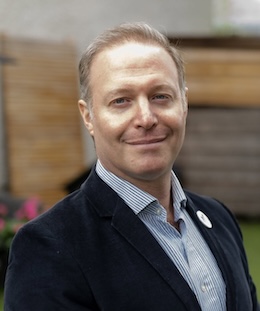
Jonathan Weisman is running for Vancouver council with TEAM for a Livable Vancouver, led by mayoral candidate Colleen Hardwick.
Weisman moved to Vancouver with his wife in 2009. He has practised law for the past decade with Dolden Wallace Folick, specializing in construction and commercial disputes, and has been recognized for his pro bono work.
He has chaired the Dunbar Residents’ Association, RealWheels theatre company and Choice School, the province’s only certified special education school for gifted elementary students.
Since 2023, Weisman has served as chair of the Jewish Community Centre of Greater Vancouver, helping lead the organization through negotiations surrounding the JWest development of the new JCC building and campus.
He is also active with Scouts Canada and was selected to help lead Canadian youth to the 2027 World Scout Jamboree in Poland.
Weisman is a member of Congregation Beth Israel, where he occasionally reads Haftarah and helps lead services. His mother grew up in Barbados and his father was born in Uzbekistan. In 2023, he joined Vancouver’s cohort of the Wexner Heritage Program.
This is Weisman’s first run for public office, although he has worked on political campaigns since 1992, including municipal, provincial, federal and US state races. He has also held Liberal party roles, including involvement with former Vancouver Quadra MP Joyce Murray’s riding association and election committees.
Weisman identified two priorities in addressing antisemitism at the civic level: communicating the realities facing Jewish communities, including threats such as fire-bombings and cyberattacks, and building relationships that allow people to encounter Jewish community members as people rather than merely as participants in political disputes. He distinguished legitimate protest from intimidation directed at places of worship.
Weisman opposes city council adopting positions on foreign conflicts, boycotts or divestment campaigns.
“We cannot allow anyone to make our community a site for proxy battles in those conflicts,” he said, arguing that foreign affairs fall beyond municipal authority and that Vancouver should instead provide space for people divided by overseas conflicts to live and engage peacefully.
On municipally funded arts, sports and recreational organizations, Weisman said, “Artists’ voices, short of active incitement of hatred, should be protected. They should even be protected from arts organizations.”
Exclusions based on national or ethnic identity are not acceptable, he said.
“Where agencies are not amenable to standing by the principles of free speech and human rights, we believe that they should not be entitled to public funding,” he said.
Weisman also supports police protection and assistance with private security where protests threaten access to synagogues or other community institutions, with security measures developed in consultation with affected groups.
Weisman cites affordability and economic opportunity as major concerns. He supports using public land for “genuinely affordable housing” and establishing an arm’s-length Vancouver Economic Development Commission to pursue economic diversification and coordinate with the federal government.
Darren Boidman, candidate for Vancouver School Board
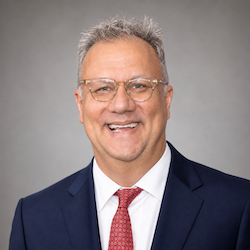
Darren Boidman is running for Vancouver school trustee with the Vancouver Liberals, promising to bring financial literacy, accountability and a results-oriented approach to the board.
Boidman is a Vancouver parent and business owner who has spent nearly 30 years in the film and television industry, and runs Carrier Talent Management. He holds a BA in economics and political science from McGill University and an MBA, specializing in finance. His son graduated from Vancouver Talmud Torah and King David High School, his daughter attended Vancouver Talmud Torah, and Boidman and his wife have belonged to the Jewish Community Centre of Greater Vancouver and Temple Sholom since 2007.
Boidman said his top priority is ensuring school resources reach students. He supports protecting teachers, education assistants, mental health services, and arts and music programs, while examining administrative costs before reducing classroom supports. He also wants closer coordination between the school district and city as neighbourhoods grow, including planning school capacity alongside new housing and expanding childcare in existing facilities.
On controversial political and social issues in classrooms, Boidman said schools should promote critical thinking rather than political advocacy. Teachers, he said, should distinguish fact from opinion, use credible and age-appropriate materials, present differing perspectives and ensure students do not feel their grades depend on agreeing with an instructor. He said school boards should ensure that outside political advocacy, including positions taken by teachers’ unions, does not determine classroom instruction. Parents should have access to teaching materials and a fair process for raising concerns, he added.
Boidman said Jewish students and families need clear ways to report antisemitism, consistent responses when incidents occur and staff trained to recognize and address it. He also supports teaching Jewish history and contemporary Jewish life while ensuring students are not expected to defend or answer for world events simply because they are Jews. He supports professional training and reliable resources on Holocaust education, developed with educators, specialists and Jewish community organizations, including instruction not only about the Holocaust but about antisemitism and Jewish life more broadly.
Boidman said schools should handle Jewish holidays and religious accommodation respectfully, track discrimination incidents and strengthen partnerships with Holocaust and antisemitism education organizations.
“It has been more than three decades since a Jewish trustee served on the Vancouver school board,” he said. “We should be part of the conversation about our children’s safety and education, not simply the subject of it.”
Ishi Dinim, candidate for Vancouver School Board
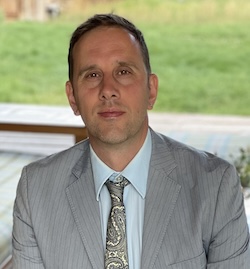
Ishi Dinim is running for Vancouver school trustee with the Vancouver Liberals.
Born and raised in Vancouver, Dinim is a filmmaker and photographer who spent about 12 years working in camera roles in the motion-picture industry, and holds a photography degree from Emily Carr University. He has also spent more than eight years involved in parent advocacy, including three years as a member-at-large of the Vancouver District Parent Advisory Council and service as DPAC’s parent representative on the Vancouver School Board’s policy and governance committee.
Dinim said Oct. 7, 2023, marked a turning point that led him to deepen his involvement in Vancouver’s Jewish community.
He had his bar mitzvah at the Peretz Centre for Secular Jewish Culture and has traveled to Israel six times. His seventh trip will begin the day after the election – win or lose – when he joins professionals from around the world as part of the Halutz Initiative, a Ben-Gurion University of the Negev leadership program focused on the future of the Negev.
Dinim said his foremost school board priority is creating a safe and inclusive learning environment. That includes seismic safety, maintaining the school liaison police officer program, sufficient counseling supports and ensuring students do not feel compelled to conceal parts of their identity, including being Jewish.
On controversial political and social issues, Dinim supports age-appropriate standards, professional development for teachers and instruction that is balanced rather than ideological. He said some parents, including himself, have encountered Middle East content they considered one-sided or inappropriate for students’ ages.
Dinim said Jewish voices should be represented in district anti-racism and equity, diversity and inclusion initiatives, and that administrators should consult directly with recognized Jewish community leadership. His concern is personal: he said his daughters have experienced antisemitism repeatedly at school, sometimes without satisfactory resolution despite following established complaint procedures.
Dinim also expressed concern about outside political advocacy influencing classroom instruction. He said teachers should be able to discuss current events and conflicts, but in ways that present a fuller picture rather than a single ideological position. He supports clearer guidance for educators when political advocacy crosses into classroom teaching.
On Holocaust education, Dinim said teachers should receive mandatory professional development and use resources developed or vetted by credible Jewish and Holocaust-education organizations. He specifically cited the Vancouver Holocaust Education Centre and the Holocaust and Antisemitism Educators Association as potential sources of expertise.
Dinim said his broader responsibility is fair treatment for students while strengthening their ability to think critically about difficult issues.
“The responsibility of the school board should be to emphasize fair and equal treatment for all students,” he said, “regardless of who or what they may be.”
Adam Dobrer, candidate for Richmond City Council
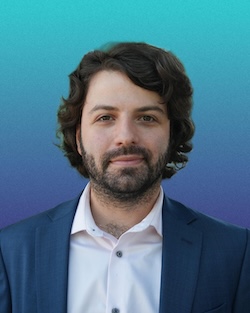
Adam Dobrer, a first-time candidate for city council with the Conservative Richmond slate, is a community organizer with a background in politics and communications.
Dobrer said he is running in part because younger residents need greater representation in decisions that will shape their future. He works for Mobilize Media Group in digital strategy and software development and holds a political science degree from the University of British Columbia. At UBC, he became active in Jewish campus life through Alpha Epsilon Pi, the traditionally Jewish fraternity, and served as president of UBC Israel on Campus, where he organized against a boycott, divestment and sanctions motion before the Alma Mater Society.
Dobrer was born in Jerusalem and raised in Richmond. He is descended from Holocaust survivors on both sides of his family, and his parents’ families made aliyah from the Soviet Union. He volunteers annually as staff on Birthright trips.
On antisemitism, Dobrer pointed to Richmond’s adoption of the International Holocaust Remembrance
Alliance working definition of antisemitism and said he sees a councilor’s role as providing what he called the “moral clarity and fortitude” needed to apply existing laws and educational tools. He said he would use his personal and professional experience to help educate colleagues and other levels of government about contemporary antisemitism.
Dobrer opposes using municipal council to pursue foreign-policy positions, boycotts or divestment campaigns.
“We’re electing people to city council, not to be delegates at the United Nations,” he said.
On discrimination by municipally funded organizations, Dobrer said organizations that discriminate based on a protected characteristic should not continue receiving city funds. At the same time, he said he would first try to engage organizations where exclusion stemmed from ignorance or what he described as a “bandwagon effect.”
He supports stronger enforcement where protests cross into intimidation or interfere with access to religious, cultural or ethnic institutions. Dobrer said council should hold the RCMP accountable for enforcement, advocate for easier access to security-infrastructure funding and work with police and community security organizations, including Bitachon, the volunteer Jewish community security team.
Dobrer sees affordability, housing, employment opportunities for younger residents and fiscal responsibility as central issues. He supports reducing red tape and completing major infrastructure projects, including the Richmond Hospital expansion, Massey Tunnel replacement and dike upgrades, on schedule and on budget.
He also cited opposition in Richmond to a safe-injection site near the hospital and to the temporary-use permit for Aster Place, a 40-unit supportive-housing complex. The facility’s permit was extended by council this year, despite opposition from some residents concerned about neighbourhood impacts, drug use and public safety. These are examples, Dobrer said, on which council should listen closely to residents.
Dobrer said a Conservative majority on council would focus on local issues, including lower taxes, safer streets and a more accountable city hall.
Howard Jampolsky, candidate for Richmond City Council
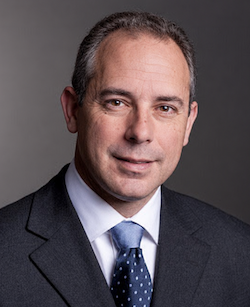
Howard Jampolsky grew up in Vancouver, attended the University of Victoria and has lived in Richmond for nearly 30 years. He is running for city council on the Richmond Forward slate, which is headed by Rob Howard, a former MLA and city councilor.
Jampolsky’s business background includes water and wastewater automation technology, and, since 2014, he has served as executive director of the Schara Tzedeck Cemetery Board. He has chaired Richmond’s Board of Variance, represented Richmond on the Vancouver Airport Authority board for nine years, and chaired a task force on airport noise. He currently chairs the city’s economic advisory committee.
Jampolsky describes himself as “a proud Jew, a husband, a father of three,” and says his work with Jewish families through the cemetery board has deepened both his community ties and his sense of responsibility.
He identifies public safety, affordable housing, transportation, fiscal responsibility, clean streets and economic development as key municipal concerns, and says his business and public board and committee experience has taught him to focus on policies that can be delivered with measurable results.
Something he does not think local councils should be involved in is foreign policy.
“People have every right to hold and express strong views about events overseas,” he said. “City council, however, is elected to serve the people of Richmond. I would oppose using council motions to conduct symbolic foreign policy campaigns.”
Those same overseas conflicts, though, can impact local affairs, and councilors do have a role to play in confronting that, he argues.
Jampolsky said councilors can ensure consistent responses to threats, vandalism, harassment and intimidation. He would work with Richmond RCMP and affected institutions, establish direct lines of communication between Jewish organizations and city leaders, and speak publicly when antisemitic incidents occur. He said the same standard should apply to every community in Richmond.
Jampolsky said city-supported agencies should provide fair access to programs and that exclusion based on Jewish, Israeli or other protected identity is unacceptable. When an incident of discrimination occurs, he said the city should require corrective action and review continued funding or access to municipal facilities through a fair and consistent process.
He supports peaceful protest but says residents must be able to enter synagogues, churches, mosques and community institutions without intimidation. His approach would include advance coordination between institutions, police and city staff, keeping entrances and sidewalks accessible, and the use of law enforcement where people obstruct access, threaten others or break the law.
“My Jewish identity is an important part of who I am,” Jampolsky said, adding that it informs his commitment to opposing antisemitism while defending the right of every community to live openly and safely.
Karen Novorr-Pezzuto, candidate for Richmond City Council
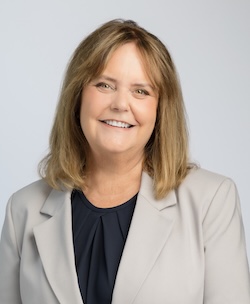
Karen Novorr-Pezzuto is running for council with Richmond Strong, alongside mayoral candidate Alexa Loo.
Novorr-Pezzuto immigrated to Richmond from California with her husband and two daughters in 2021 and became a Canadian citizen earlier this year. A former police officer, practising attorney and substitute teacher, she was heavily involved in her daughters’ schools in the United States and later became involved with the parent advisory committee in Richmond. Since arriving in Canada, she has served on the Richmond Aquatics Board and the board of the Minoru Seniors Society, where she is currently treasurer.
Novorr-Pezzuto said her Jewish upbringing was influenced significantly by her paternal grandparents, who were involved with the Brandeis-Bardin Institute in California, and by the years she spent at Camp Alonim, in Simi Valley.
She said her daughter’s experience, following Oct. 7, 2023, of being rejected by classmates for a group project after disclosing that she was Jewish also intensified the family’s engagement with Jewish life.
On antisemitism, Novorr-Pezzuto said she would like stronger communication among Jewish organizations, Richmond RCMP and city council. She emphasized better reporting, advance planning and stronger relationships so the city can respond proactively to threats or demonstrations affecting Jewish institutions. She noted that the Richmond Strong team has met with representatives of Beth Tikvah, Chabad and the Bayit to discuss community concerns.
She said municipal government should not involve itself in foreign-policy campaigns, boycotts or divestment efforts.
“I honestly think that local municipal politics have no business dealing with the outside affairs that are happening,” she said, adding that the city’s responsibility is to ensure residents can participate safely in community life.
On discrimination by municipally funded organizations, Novorr-Pezzuto said allegations should be examined case by case. If exclusion were shown to be based on Jewish or Israeli identity, she said municipal funding should be reconsidered.
She supports peaceful protest but said the city and police should ensure that demonstrations do not block or intimidate people attempting to access community institutions. Her background as a former police officer, she said, informs her emphasis on intelligence gathering, advance communication and community relationships.
Among the top concerns in the civic election, Novorr-Pezzuto said she wants Richmond to reduce red tape in the permitting process, expand drug education for young people, increase appropriate housing options for seniors and make municipal information more accessible to residents who do not speak English fluently.
Jonathan Lerner, incumbent candidate for Lantzville district council
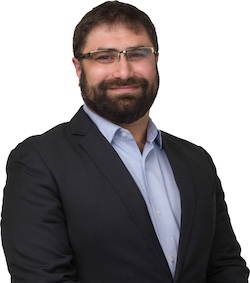
Jonathan Lerner is seeking a second term on council in Lantzville, the semi-rural Vancouver Island community north of Nanaimo. First elected in 2022, Lerner currently represents Lantzville on the Vancouver Island Regional Library board, where he serves as chair.
Lerner is director of development at the Regional Animal Protection Society and has spent much of his career in the nonprofit sector. He is also active in Jewish communal life, having worked or volunteered with Jewish Family Services, Hillel BC, the Jewish Federation of BC, the Vancouver Holocaust Education Centre and the Jewish Museum and Archives of BC.
On antisemitism, Lerner said municipal leaders have a responsibility to condemn prejudice and to act on community safety, including through policy and cooperation with local police.
“Antisemitism has no place in our society, full stop,” he said, adding that racism should be confronted not only rhetorically but through concrete measures.
Lerner opposes municipal councils taking positions on foreign conflicts, including boycott, divestment and sanctions campaigns.
“I do not believe that foreign conflicts have any place in municipal politics,” he said, arguing that such initiatives risk dividing communities along national, religious or ethnic lines.
He also opposes public funding for organizations that discriminate based on characteristics such as ethnicity or nationality.
Asked about demonstrations that interfere with access to religious or cultural institutions, Lerner said every community should be able to use its institutions safely and peacefully. He noted that Lantzville has not experienced significant problems of that kind, but said municipal leaders should promote respectful conduct and press senior governments to protect minority communities through legislation and enforcement.
More broadly, Lerner said Lantzville’s principal challenge is managing growth while preserving its semi-rural character. He cited the pressures of population growth, inflation and reduced services from other levels of government, and said his priorities include financial stability, affordable taxes, improved amenities and options for residents at different stages of life.
Lerner said his first term, combined with his background in nonprofit management and community organizing, has prepared him to continue advocating for the community.
“I am so fortunate to have spent the past four years representing and serving the people of Lantzville,” he said.
Ed Shapero, candidate for Sunshine Coast school board
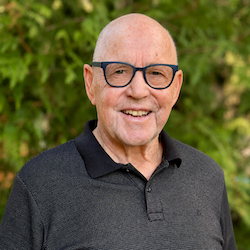
Ed Shapero is running for school trustee in District 46 (Sunshine Coast).
A chartered accountant by training, Shapero spent most of his career in technology, holding roles ranging from programming and systems design to consulting, chief financial officer and chief executive officer. His career took him through Toronto, London, Munich, Los Angeles, Edmonton, Seattle, New York, Vancouver and Santa Fe before he settled on the Sunshine Coast two years ago.
Raised in Toronto in an Orthodox Jewish household, Shapero attended Hebrew school. Wherever his career took him, he said, he sought connections with local Jewish communities.
On the Sunshine Coast, he participates in regular Shabbat dinners, and said his involvement there helped prompt him to run for trustee.
Drawing on his experience as a turnaround consultant, Shapero identified financial management as one of his principal priorities. He wants the district to examine its approximately $67 million budget for efficiencies that could free resources for teachers and educational assistants. Longer term, he favours greater sharing of technology, expertise and resources among BC school districts.
He also wants greater attention paid to student mental health and well-being, including closer examination of where students are experiencing stress and which interventions produce results. Shapero argues that provincial education funding has not kept pace with changes, including the pandemic, social media and their effects on young people. He says trustees should advocate for changes to the funding model.
Shapero said school boards should remain nonpartisan and ensure outside political advocacy does not shape classroom teaching. He supports clear district policies, regular monitoring and reporting, and the use of outside subject-matter expertise to develop best practices. He pointed to interfaith collaboration as a model for addressing racism and bigotry without promoting a particular political ideology.
For Holocaust education, Shapero supports relying on nationally and internationally recognized organizations with expertise in Holocaust history and antisemitism.
His broader principle, he said, is “fair and equal treatment for all students,” with schools helping young people develop the critical-thinking skills needed to grapple with difficult issues, including antisemitism.



