A musical Canada Day

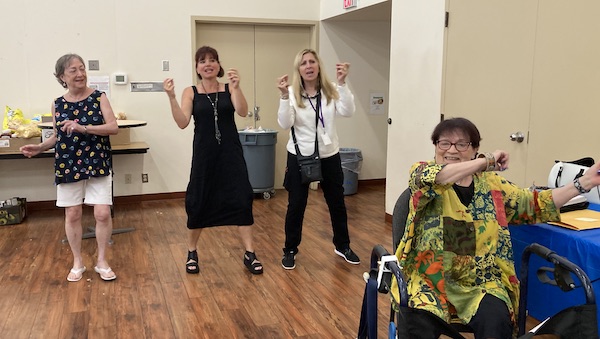
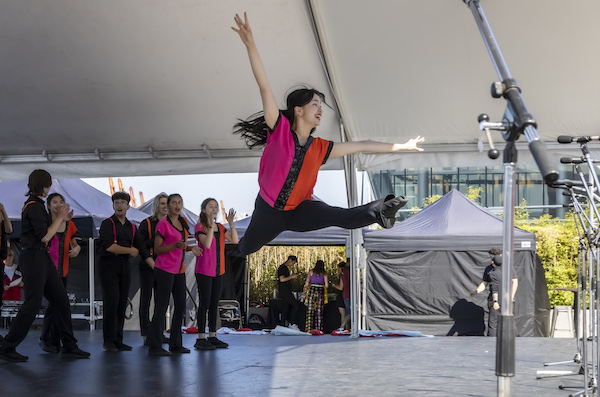
Perry Ehrlich’s ShowStoppers at Jack Poole Plaza (photos by David P. Feng)

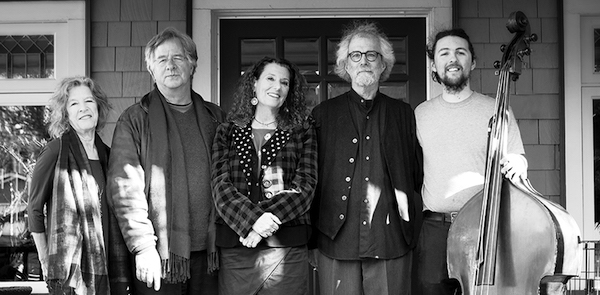
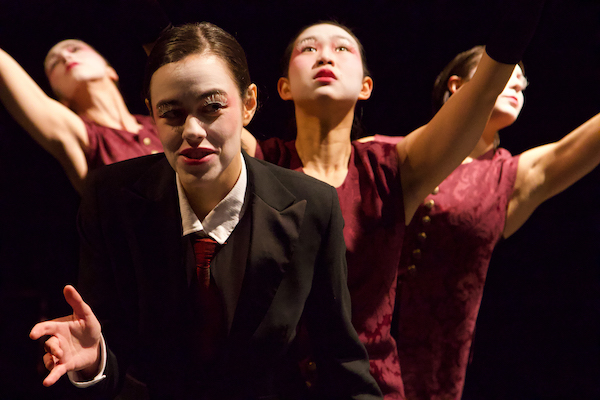
Perry Ehrlich’s ShowStoppers performed at Jack Poole Plaza on Canada Day – it was Ehrlich’s 29th year celebrating Canada Day at Canada Place.

photo - Perry Ehrlich’s ShowStoppersShowStoppers is a glee troupe that performs in concert, on radio and television, and at galas, awards shows, conventions, corporate and charitable events.  Previous shows include with Barry Manilow and Eric Church at Rogers Arena; with the group Foreigner at various venues; at the Pacific National Exhibition; on the Variety Club Telethon; and singing the national anthems at Vancouver Canucks games. The troupe’s repertoire includes everything from Motown and disco medleys to Canadian favourites and pop songs like “Let’s Get Loud” and “Shut Up and Dance.”

For more information about ShowStoppers, visit theimpresario.ca or contact Ehrlich at ehrlich@kzellaw.com or 604-315-1850.

– Courtesy Perry Ehrlich

Immerse yourself in music

Screenshot from the video for the song “Medicine,” made by Gigi Ben Artzi, featuring Yonatan Gat and the Eastern Medicine Singers. “Medicine” comes off Gat’s album Universalists.

You never know when a life-changing moment will happen. For musician Yonatan Gat and members of the Eastern Medicine Singers, a chance encounter at the 2017 South by Southwest (SXSW) Music Festival in Austin, Tex., has led to a unique continuing collaboration that melds experimental and powwow music in a way that is simultaneously ancient and contemporary, energizing and hypnotic.

Fans of Gat and the Medicine Singers will be happy to know they are performing at this year’s Vancouver Folk Music Festival, which runs July 14-16 at Jericho Beach Park. They will be joined by Daniel Monkman (Zoon), an experimental Anishinaabe musician from Toronto (Tkaronto), and local oud player and guitarist Gord Grdina, who also mixes multiple musical styles. For newcomers to Medicine Singers’ music, definitely go down the internet rabbit hole. Chances are that you’ll want the in-person experience, to be immersed in the sound.

The Eastern Medicine Singers are an Algonquin drum group from Rhode Island “dedicated to keeping the eastern woodlands American Indian culture alive.” They sing and drum in the language of Massachuset and Wampanoag dialect, and have produced several CDs together. To differentiate from their traditional powwow style, they call themselves Medicine Singers for collaborative projects with musicians of other traditions, like Gat. Their debut full-length album in this capacity is the self-titled Medicine Singers, which came out in 2022 on Stone Tapes, a sub-label of Joyful Noise, and Mothland in Canada.

“The result is a spellbinding musical experience, cycling through a kaleidoscope of sounds, from psychedelic punk to spiritual jazz and electronic music,” reads the description on Joyful Noise’s website. “But the genre-smashing album remains firmly rooted in the intense physical power of the powwow drum and the Medicine Singers’ connection to their ancestral music, creating a daring and ambitious record that celebrates tradition, while boldly breaking away from its restrictions or, in the words of Medicine Singers’ leader Daryl Black Eagle Jamieson: ‘These two cultures can work together, and blend together, to show people how we can work together and make something beautiful.’”

Gat is accustomed to these kinds of partnerships and musical innovation. In Israel, he was part of the punk band Monotonix. In the United States, he has released a few full-length albums, each more varied than the last, with the latest being American Quartet (Stone Tapes, 2022), described as a “punk slash-and-burn reimagining of one of the defining works of the Western classical canon – Antonín Dvořák’s legendary string quartet – written while Dvořák was, like Gat, an expatriate living in New York City.”

A good place to start your exploration of Gat and the Medicine Singers is by watching the video of the 2018 track “Medicine,” which was included on Gat’s second album, Universalists (Joyful Noise, 2018). The fruit of an impromptu recording session, this release caught a larger public’s imagination and the rest, to be cliché, is history – yet continues to be groundbreaking.

The Jewish Independent had the chance to talk with Gat via email this week.

JI: What was it about the Medicine Singers’ performance/repertoire at SXSW 2017 that so mesmerized you?

YG: I was playing a show in a club during SXSW and Eastern Medicine Singers were playing outside. I didn’t know them personally and my band were watching them outside just before we went on. I thought their style (six people powerfully hitting a drum and singing call-and-response vocals) could mesh well with my trio and, also, just like them, we played on the floor in the middle of the audience. So, after they were done playing, I invited them to sit in with us. They famously said no at first and then changed their mind after they heard our music.

Our improvisation style leaves a lot of room for new musicians to join and freely do their thing. I think Eastern Medicine Singers noticed that, too, and when they joined us – it quickly became one of the most incredible shows we’ve ever played. The audience was feeling that as well. When I looked up, I noticed everyone in the crowd was crying, and that’s how our collaboration began, and we’ve been touring nonstop around the world since 2017.

JI: In an interview, you talked about taking piano lessons as a kid and, even then, improvising. What do you love about improvising?

YG: I took piano lessons as a kid but I never cared about learning to read sheet music. I just wanted to improvise. At some point, I started playing bass, but when we did Monotonix, we wanted a trio of guitar-drums-vocals, so I moved to a 77 Fender Mustang tuned two tones down to C with bass strings running through a custom-made humbucker pickup to make it sound more low-endy. I learned to play the harmony on the open strings while doing the lead on the highs.

We played 1,000 shows that way with Monotonix and I discovered myself as a guitarist along the way. I never practised or cared about technique, but being the only instrument except drums made me work hard and grow as a player. When I started my own band, I was able to build it around improvisation, which helped me learn even more about myself as a musician and human. Improvisation doesn’t have to be confined to jazz, long solos or anything like that – it’s more a way to live life, to respond to the world around you, get to know yourself better every night.

JI: From where do you draw inspiration for your compositions?

YG: When we record, we like to create a zone that’s radically free, where it’s all about the musician’s self-expression as it relates to the collective and we just let the tapes roll and have fun with it. Our studio days are very fun and wild and free. We also record other situations – practices, soundchecks, hangs. Sometimes, we record in some of the best or most interesting studios in the world, sometimes we record on iPhones or broken tape machines someone left behind.

It doesn’t matter what it is, we just gather material (usually hours of music) and then the process of editing begins, which is when the “composition” happens. In that way, most of the writing is actually the editing. Everything else is just about having a good time and making sure every musician gets documented the way they envisioned.

JI: You have played in Vancouver before. What are you most looking forward to on this upcoming visit?

YG: I was always lucky to play inspiring shows in Vancouver. My first time in town was a wild DIY punk show in a place called Emergency Room back in ’08. People were going crazy, falling on the band (we were playing on the floor). That vibe just continued to Biltmore Cabaret, where we played so many times after that. Just a sweaty haze with everyone losing their minds and melting into one another.

The last time I was in town was for Vancouver Jazz Fest back in 2019 with Medicine Singers. That was fun. I’m not used to playing jazz fests (they probably think we’re too loud or something) but it was so cool to play to an audience that was following the instrumental parts and appreciating the playing that comes with the freedom and energy.

Vancouver Folk will be a special one for sure. We don’t often play on the floor nowadays, but Medicine Singers transcend the stage. This show really creates a kind of connection between audience and musicians I’ve never seen before. It still has all the magic we discovered in 2017, the first time we played together.

My experience working and learning from Medicine Singers led us to start a label together, Stone Tapes, which is more like a community of musicians, or a collective. I think that represents what we do in the best way possible, and I’m looking forward to coming back to Vancouver and backing Medicine Singers along with other musicians from that collective.

For the full Vancouver Folk Music Festival lineup and tickets, visit thefestival.bc.ca.

Sizzlin’ Summer in June

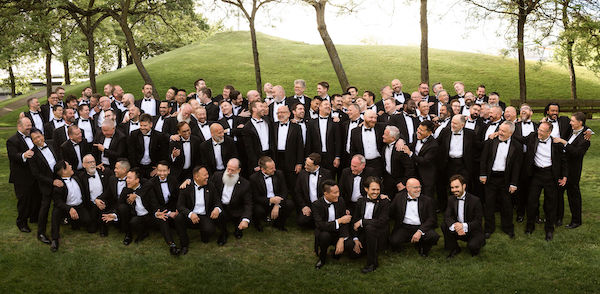
The Vancouver Men’s Chorus “brings such an effervescent joy to the shows and the spring season in particular is a big party for the chorus and audience alike.” (photo by Mark Burnham Photography)

The Vancouver Men’s Chorus (VMC) Sizzlin’ Summer concert promises to be a lively and entertaining experience.

“The VMC is more than just your average choral concert – we have the chops to pull off some pretty complex vocal arrangements, but we also like to mix that up with pure upbeat fun,” said Jewish community member Dr. David Rothwell, who is one of the choreographers of the show, which sees several performances June 9-17 at Performance Works on Granville Island. “The group brings such an effervescent joy to the shows, and the spring season in particular is a big party for the chorus and audience alike,” he said. “Whether it’s pulling out some disco moves for a nostalgic trip to ABBA’s heyday, or donning umbrellas after a hairy forecast from the Weather Girls, the choreography put together by myself and my fellow choreographers (Randy Romero and Jason Yau) helps tell the story of our music and elevates that entertainment factor even higher. We even get the entire chorus to join along in their own way.”

Humphrey Tam, VMC’s vice-president of marketing and communications, as well as a singer in the choir, shared a sneak peek at the repertoire.

“In Sizzlin’ Summer,” he said, “we have music ranging from your pop classics like ‘The Raining Men,’ ‘Girls Just Wanna Have Fun,’ ‘Summer Breeze,’ to new hits like ‘Summer Time Sadness’ by Lana Del Rey and ‘New Rules’ by Dua Lipa, to the world première performance of ‘Ocean Songs’ by composer Gerry Ryan (former arranger and first tenor of the VMC) who, sadly, passed away few years ago.”

Conducting Sizzlin’ Summer will be VMC artistic director Willi Zwozdesky, who has been with the chorus since its inception; resident accompanist Dr. Stephen Smith has been with the VMC since the 1990s.

“Both of them are instrumental in the success of the Vancouver Men’s Chorus,” said Tam. “In 2021, we expanded our musical team to include an assistant conductor, David Buchan, who brought in another layer to our sound. On top of that, we have a full orchestra band in our concerts!”

The chorus rehearses every Wednesday, except during July and August, when they take a break; there are also extra rehearsals on Sundays a month or two before a concert.

While VMC is an audition-required group, Tam said the “singers are a mix of people with tons of background in music and theatre to someone who has no previous musical experience. We welcome everyone to audition and, even if you can’t sing, there are plenty of opportunities to join the chorus as a volunteer to help out with productions.” He said he was, before joining the chorus, “one of those who had no musical background except for playing the clarinet for one year back in Grade 8.”

Rothwell, who used to teach dance before moving to Canada from Australia, is an animator by trade, so “movement is my bread and butter, whether on the stage or the screen,” he said.

“After moving to Vancouver in 2018 with my husband, we saw the VMC performing their hearts out in the annual Pride Parade. We were quick to reach out to see if they were taking new members and, five years later, we’re basically part of the furniture!” said Rothwell. “We both grew up immersed in music, and it’s been a perfect way to pursue our interests and build a network of vibrant, talented friends in Vancouver’s queer community.”

About Jewish community, Rothwell said, “My mum reconnected with our family’s Jewish roots when I was a teen, so while I wasn’t immersed in that side of my heritage until that point, I’ve grown to recognize and appreciate the tenacity, humour and joie de vivre that I feel is ingrained in the Jewish spirit, including my own. These days, I’ll gladly join a seder and keep everyone’s cups full to the brim!”

For VMC member Dr. Etienne Melese, much of his connection to Judaism also came from his mother. “When I was young,” he shared, “she taught me about all the Jewish traditions, holidays, and growing up in New York helped, too.”

Proud of being Jewish, he said, “I feel the history deeply.” While Melese’s paternal grandfather survived the Holocaust, other members of his family did not. “We still visit their memorial in Paris (Mémorial de la Shoah) every time we visit, and I think about the courage it took survivors to live through that time,” he said.

Melese, who earned his PhD in immunology from the University of British Columbia and is currently working in biotech on designing new therapeutics for diseases such as cancer, said, “I came to the Vancouver Men’s Chorus because I wanted the opportunity to sing again. I had spent six-plus years doing my PhD and, during that time, had not been singing in a choir, which I used to enjoy so much! Also, the community – I wanted to expand my network of friends.”

Melese has been in many choirs over the years. What draws him to singing, he said, is “being able to express yourself. I find, through music, I am able to access so many feelings that are hard to just put into words…. I find there is an energy to choirs that can really change your outlook that day.”

Knowing that such benefits can come from choral singing, the Vancouver Men’s Chorus remained active during the pandemic, albeit in different ways.

“It was a very difficult time for the chorus,” said Tam. “From a choir point of view, not being able to sing as a group and perform was a huge loss to us; but, on top of all things, the VMC is a huge support group for our members, it’s a huge chosen family. Every week when we meet, we share our stories and we socialize. Not having that bonding time with each other definitely was strange and hard for some of us. Luckily, despite not being able to sing together, we still continued to have Zoom activities throughout the entire 2020 and 2021, and we recorded two digital concerts to keep doing what we love. Starting September 2021, we rehearsed together again but with masks and social distancing, and performed our first in-person concert in two years with Making Spirits Bright 2021 (also with masks on). Thinking back, I really don’t know how we did that.”

The VMC is a diverse and inclusive group, with members ranging from 18 to 70+ years old, said Tam. “We have open rehearsals every September and January for anyone to come join us at our rehearsals and sing with us,” he said. “From there, they can see if we are a good fit for them and sign up for an audition.”

Rothwell is keen for more people to experience the choir. “In addition to our spring season in June, the VMC also is well underway in preparing for our December season, Making Spirits Bright,” he said. “As always, our music selection committee makes sure to include songs for all holidays of the season; celebrating Hanukkah continues to be a mainstay of our setlist, along with the winter solstice and more. We’re gearing up for another great show this December, so I’d also encourage readers to keep an eye out for our next show, Cheers!, later this year.”

But, returning to Sizzlin’ Summer, Melese shared his favourite song: “‘The Summer Nights,’ a play on Grease, so fun!”

For tickets and more information, visit vancouvermenschorus.ca.

Powerfully against othering

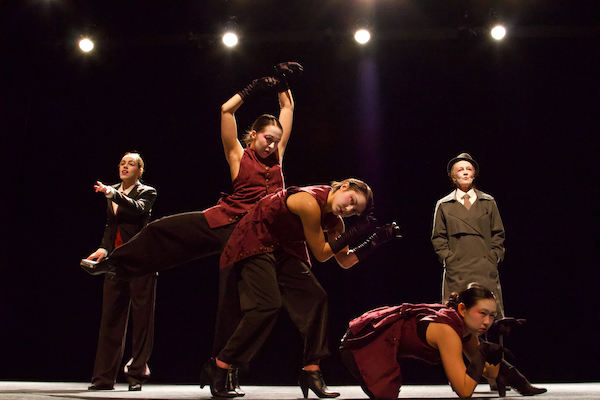
Into the Little Hill runs May 19 and 20 at SFU Goldcorp Centre for the Arts, Fei and Milton Wong Experimental Theatre. (photo by Flick Harrison)

Into the Little Hill is a powerfully emotional opera,” soprano Heather Pawsey told the Independent.

Pawsey is the artistic director of Astrolabe Musik Theatre, which, with Simon Fraser University Woodward’s Cultural Programs, is presenting the opera’s Canadian première May 19-20. A multidisciplinary, modern take on the medieval story of the Pied Piper of Hamelin, Into the Hill features two singers, three dancers and live music. Written by English composer George Benjamin with libretto by Martin Crimp, Jewish community member Idan Cohen of Ne.Sans Opera and Dance is the local production’s director and choreographer.

“From the moment I first heard Into the Little Hill, I knew I had to have dancers in the production,” said Pawsey. “My company, Astrolabe Musik Theatre, has been experimenting with dance and movement in classical music, in varying degrees, for over 10 years now. Dance and movement are such normal, natural, innately human ways of expression, yet we see it so rarely in opera and classical music.”

When she heard Into the Little Hill, she said, “I literally saw the dancers in my mind … and knew that this was the perfect opera to intentionally incorporate them as amplifications of the characters, as commentators on the story, and as true partners with the singers (who are also precisely choreographed).”

After that, she was just “waiting for the perfect person with whom to work.” And she found that person in Cohen – his company, Ne.Sans, exists to reimagine and reconnect opera and dance.

“When Idan and I met in Amsterdam in 2018 on an opera I was singing and he was directing, I knew at the first rehearsal that he was the person I’d been waiting for: someone who knows music, who knows dance, who can work with professional dance artists and with singers who may have little or no dance training, and whose knowledge and experience come together in a profound understanding of the possibilities of singing and dance.”

“We’ve connected on so many levels,” said Cohen of Pawsey, who introduced him to Into the Little Hill. “Since then,” he said, “we’ve enjoyed many long conversations about this wonderful opera that is so close to both our hearts. I am so excited to finally be able to share our version of this brilliant work.”

“As far as I know,” said Pawsey, “l’Opéra de Montréal is the only other company in Canada to have produced one of George Benjamin’s operas (Written on Skin, his second). In 2014, I watched Written on Skin on MediciTV and literally got goosebumps. Singing contemporary music is a huge part of my career, yet I had never heard of this composer nor heard music anything like his: crystalline, precise, profound, spare, yet filled with emotion, colour, shadow, passion and power. I looked him up immediately and discovered that Into the Little Hill was (at that time) the only other opera he’d written…. I knew then that I had to produce (and sing!) it; that it would have dancers; and, voilà! A decade later, here we are. This opera speaks so profoundly against ‘othering.’ I know that people will come away having experienced something powerful, intense and beautiful.”

Pawsey and mezzo-soprano Emma Parkinson sing all six of the opera’s characters.

“One of the things I love the most about Into the Little Hill is its exquisite precision,” said Pawsey. “Vocally, orchestrally, dramatically, dramaturgically there are no extraneous notes, no extraneous words, and the power of this concentration is intensified by having only two singers portray all the roles. We aren’t distracted by multiple singers coming on and off the stage, nor by the differing ranges and timbres of their voices – we have focus.

“We also have gender-neutrality, something that is difficult to achieve in traditional opera, where characters’ genders have historically been determined by voice-type (ie. tenor, soprano, etc.). Having only two singers sing all the roles makes gender, sexual orientation or how one presents to the world irrelevant, and leaves the make-up of the characters to each individual audience member’s imagination. As an artist, it frees me from having to imagine or recreate assumptions about how ‘men’ or ‘women’ move, behave and speak (sing), and allows me to enter fully into what that character is actually expressing. My hope is that this also helps audiences to identify more freely with the characters.”

The opera speaks to Cohen on many levels.

“As a queer artist, a descendant of Holocaust survivors, coming to Canada from Israel/Palestine, I have always valued the importance of raising voices of underserved communities and to acknowledge our troubled past, learn from it, and aspire to do better,” he said. “I chose to leave my country in search of a better future and, as I arrived in Canada in 2017, I was amazed to find how relevant the history of Canada is to my own, from multiple angles, both as the oppressed and the oppressor, often against my will.

“My work is embedded in this life experience and perspective, and I am passionate in telling classical stories through alternative lens,” he continued. “Into the Little Hill is such a powerful opera that speaks of the human condition in a very creative way. There are different ways to speak of the tragic history of Western culture, and one of the reasons I chose to be an artist is because I see the importance of speaking of the violence and hurt, and to fight against discrimination.

“This opera is such a great, complex example of the fact that there is no one source of harm, and not one source of knowledge and perspective,” he said.

Critics have generally lauded Into the Little Hill, though some have expressed concern over the way in which the story is told.

“The narrative style of this opera imposes a certain detachment or distancing,” Pawsey said. “Traditionally, opera is all about emotion – big, huge, dare I say OPERATIC emotion! Here, Martin Crimp’s libretto uses Brechtian techniques (such as the Narrator directly addressing the audience, breaking the fourth wall, etc.) to discourage the audience from becoming too emotionally involved. Brecht used these techniques to encourage a deeper focus on the socially significant aspects of the story. This is particularly relevant in this opera’s tale of ‘who are we labeling as the “rats” in our society, what are we willing to do to get rid of them and what happens when we refuse to “pay the piper,” ie. take responsibility for the consequences of our actions?’

“Detachment, distancing – this is what we, as humans, do when we label, when we ‘other,’ when we divide into ‘us’ and ‘them.’ It’s a part of the de-humanizing process, which allows us to plan or to undertake horrific acts. But this is not to say that audiences will feel emotionless at the end of Into the Little Hill,” she stressed. “Fascinatingly, the muting of emotion evoked for individual characters and their stories makes us feel even more deeply and keenly the emotion of the story overall and how its outcome affects all the characters – and, by extension, us.”

Into the Little Hill takes place at SFU Goldcorp Centre for the Arts, Fei and Milton Wong Experimental Theatre. Conductor Leslie Dala is music director for the production, whose orchestration includes bass flute, basset horns, mandolin and banjo. Lighting design is by Victoria Bell, with costume design by Elena Razlog. The dancers are Juolin Lee, Daria Mikhalyluk and Hana Rutka.

For tickets and more information, visit littlehill.eventbrite.ca.

Frost album release

Harriet Frost and the Universal Band (photo from Harriet Frost)

image - Harriet Frost and the Universal Band logoHarriet Frost and the Universal Band are holding an album release party on April 15, 8 p.m., at Or Shalom. The Universal Band is Martin Gotfrit (strings, vocals), Wendy Rubin (keyboard, flute, vocals) Andréas Kahre (percussion, cello) and Noah Gotfrit (basses). Tickets – for the live show and for the stereo livestream on YouTube – are available from eventbrite.ca.

– Courtesy Universal Band

Pied Piper in music, dance

Into the Little Hill is a multi-disciplinary re-telling of the classic Pied Piper tale. Performances take place May 19 and 20 at SFU Goldcorp Centre for the Arts, Fei and Milton Wong Experimental Theatre. (photo by Flick Harrison)

In partnership with Simon Fraser University’s Woodward’s Cultural Programs, Astrolabe Musik Theatre presents the Canadian première of the chamber opera Into the Little Hill, a contemporary re-telling of the Pied Piper tale, with direction and choreography by Idan Cohen of Ne.Sans Opera and Dance, and musical direction by conductor Leslie Dala. Performances take place May 19 and 20, 7:30 p.m., at SFU Goldcorp Centre for the Arts, Fei and Milton Wong Experimental Theatre.

Into the Little Hill – by composer and classical musician George Benjamin with libretto by playwright and theatre translator Martin Crimp – is an unflinching look at our response to the “Other.” A mysterious stranger rids a town of its rats, only to also make its children disappear when his promised payment is withheld. The story evokes many questions. Who do we deem as “rats” in our society? Who gets to decide? What are we willing to do to get rid of them? And what are the consequences when we refuse to “pay the piper,” i.e. refuse to accept responsibility for the outcomes of our actions?

All six characters (the Crowd, the Stranger, the Narrator, the Minister, the Minister’s Wife and the Minister’s Child) are sung by mezzo-soprano Emma Parkinson and soprano Heather Pawsey. The orchestration for this production includes bass flute, basset horns, mandolin and banjo. And, in a multi-disciplinary staging, Astrolabe’s production incorporates dancers Juolin Lee, Daria Mikhalyluk and Hana Rutka.

“It has always been my vision to have dancers as part of this intensely dramatic opera,” said Pawsey, Astrolabe’s artistic director.

Lighting design for the production is by Victoria Bell; the costume design, by Elena Razlog.

Ne.Sans Opera and Dance’s Cohen was born and raised in Israel, on Kibbutz Mizra. After being trained as a classical pianist, he studied theatre and fine arts at the Art Colony, in Israel. At the age of 20, he participated in a video-dance project by Batsheva dance company dancer Lara Bersak before joining, in 1998, the Kibbutz Contemporary Dance Company, where he danced for seven seasons. Since 2005, Cohen has been creating, performing and teaching.

For tickets to Into the Little Hill, go to eventbrite.ca/e/into-the-little-hill-tickets-609025460547.

– Courtesy Astrolabe Musik Theatre

Erez’s new CD shows mastery

Itamar Erez’s May Song is inventive on many levels.

The most difficult thing for artists to do, and the aim which is most central to their consciousness, is to create something original, something new, something that is their own. We recognize the music of the greats because of their distinctive musical signatures, and all artists work towards this, with varying degrees of success. Itamar Erez, as evinced on his five previous recordings, and no less on his latest musical offering, May Song, is just such a distinctive artist – one with a voice and musical signature all his own.

An Israeli-Canadian guitarist, pianist and composer based in Vancouver, Erez is already quite celebrated, and deservedly so, and has been recognized by his musical peers and reviewers the world over (including the Jewish Independent). He is a globetrotter, musically and literally. His music is tinged with timbres, melodies and rhythms that evoke the confluences of the many cultures of the world.

Created and recorded in 2021, and released in October 2022, May Song is the most recent step on his musical journey, and it breaks new ground in a number of ways. Significantly, Erez’s guitar is not present here – the emphasis is on composing and improvising from the keyboard.

“Over the last three to four years, piano is definitely more my focus,” he said. “Music was written with the piano in mind, and involved some polyrhythms and layers that are not possible to be performed on the guitar without some overdubs, which was not the direction I wanted to take.”

Erez began his career as a writer of through-composed music for others to play. Though he still creates such compositions, he has evolved as a composer, and is in a creative phase where he celebrates the improvisational qualities of music.

“I think that there is a shift in my music over the years,” he said, “going from through-composed music and being a composer who writes for others in the early days to a composer/performer/improviser, where the improvising part is growing to be just as important as the rest.” About May Song, he said, “I felt that the best part of the music is in what happens in the moment. The tunes will sound different each time. So this is a time of letting go of controlling the music and letting it unfold.”

His collaborating musicians on this recording have been working with him regularly for some years now. Jeff Gammon on bass and Kevin Romain on drums are tremendously in sync with Erez, bringing out the nuances of his musical gestures and style. No less, his longtime collaborator on clarinet, the world-class and gifted François Houle, carries the melodies on several tracks.

Conceived, prepared and recorded during the pandemic, Erez describes the project on his Bandcamp page as being “all about, for me, emerging from darkness and doubt into lightness and joy….”

Picking up on this thought, permit me to put forward my own take on this progression in the recording – as the moods and content move, generally speaking, from darkness to light, from doubt and concern to resolution.

The album begins with “Chant,” an invocation, as it were. Beginning with sparse piano string harmonics, it moves into Middle Eastern-sounding modal patterns, finding in-between notes as harmonies, evoking maqam-like (maqam = Arabic mode) gestures. The music gives way to sweet chords, a simpler melodic setting, a chant with out-there harmonic invention, always questioning.

“Hourglass,” with its quick five-beat underpinning, evokes a state of restless anticipation. Here the polyrhythmic utterance is quite pronounced, as the clarinet states the melody in a different metrical frame. The ensemble is tight and the rhythmic threads are followed excellently. There is an interweaving of improvisations followed by an extended solo for drums.

About polyrhythms, and in the hope of clearing away any mental barriers to the enjoyment of the music, let me briefly explain the concept. Polyrhythmic work is the putting together of two different beat patterns simultaneously. In “Hourglass,” the repeated five-beat pulse is overlaid by a melody in a different beat pattern. This gives the music a sense of suspension, and may even sound improvisatory while being a compositional device. So it is freer and more indeterminate than a strict groove.

Track 3, “Catch Me If You Can,” continues this five-pulse underpinning, but is brighter and livelier, a playfulness, a glimmer of hope. It segues into a quick three-beat, and there is a conversation between this three and the five, free and harmonically uncluttered.

“You And Me” features a steady three-beat underpinning, with a sadder more contemplative mood. A call-and-answer dialogue gives way to a piano improvisation over the groove. A bass solo intervenes, and the dialogue continues until its plaintive ending.

“March” reintroduces the clarinet, and very much sounds like a movement out of darkness into light. The darker chords never take over the mood, though some darkness lingers. By turns, explosions of melody give way to broader strokes. The clarinet solo begins to soar, inviting all to break free.

“May Song,” the title track, opens by stating the melodic theme contemplatively, then gives way to a five-beat pattern overlaid with the theme in cross-rhythm. This is varied with a second theme, which is somewhat anthemic and declarative, yearning and even victorious. By the end, there is a sense of quietude, gratitude and resolution.

Finally, “Long Way Home” begins in a quiescent manner, with a bit of a crying voice, but it continues the declarative, resolved and personal statement previously arrived at. The piano is answered in bass and drums, and a dialogue ensues, giving way to a slow, patterned statement of increasing force. Yes, there may still be some darkness to be overcome, but we have arrived at a hopeful state nonetheless.

May Song is inventive on many levels – melodic, harmonic and rhythmic. Never idle, the music is varied, always searching, with an intensity even in its quieter moments. There is a mastery here, especially in the use of polyrhythmic elements, but complexity is always balanced with an enjoyable harmonic and melodic richness. Erez’s musicians all evince a depth of feeling and understanding that give the music great integrity.

About his future direction, Erez shared, “My upcoming album will be a duet album with Hamin Honari (an amazing Persian percussionist). We went to the studio for two days recording improvisations … this is the first time I did something like that, it felt very exciting.”

Speaking for myself, I truly look forward to following Erez on his continuing musical journeys. He is a singular artist of prodigious talent, to whose music it is always rewarding to listen.

May Song is available for digital download at itamarerez.bandcamp.com. For information about upcoming shows and all things Itamar Erez, visit itamarerez.com.

Moshe Denburg is a Vancouver-based composer, bandleader of the Jewish music ensemble Tzimmes, and the founder of the Vancouver Inter-Cultural Orchestra (VICO).

Beckow’s music legacy – CDs now available

Left to right: Wendy Bross Stuart, Jessica Stuart and Katey Morley in a Joan Beckow Legacy Project performance at Holy Blossom Temple, Toronto, on Nov. 19. (photo by Robert Saxe)

The Joan Beckow Legacy Project performance at Holy Blossom Temple, Toronto, on Nov. 19,  included a preview screening of the documentary Unsung: the Joan Beckow Story. The project features 30 musicians from across Canada who got together to make the first-ever professional recording of Joan Beckow’s music. (See jewishindependent.ca/beckows-music-will-live-on.)

To purchase the double-CD set of 22 songs, representing a cross-section of Beckow’s vast catalogue, visit joanbeckowlegacy.com.

Hochman joins Fung in VRS concert

Zlatomir Fung (cello) and Benjamin Hochman (piano). (photo from vanrecital.com)

The Vancouver Recital Society (VRS) presents American cellist Zlatomir Fung and Israeli pianist Benjamin Hochman at the Vancouver Playhouse Jan. 15. Fung has racked up a slew of awards: in 2019, he was the first American in four decades and youngest musician ever to win first prize at the International Tchaikovsky Competition, cello division, and was the recipient of an Avery Fisher Career Grant in 2020 and a Borletti-Buitoni Trust Fellowship in 2022.

The Juilliard alum was originally booked for the VRS in 2020 but the pandemic thwarted plans. In January, Fung will perform with Hochman, who first performed in a VRS series in 2003, with violinist Elisabeth Batiashvili. Hochman is a graduate of the Curtis Institute of Music, where he studied with Claude Frank, and the Mannes College of Music, where he studied with Richard Goode.

The concert repertoire will feature the music of Yuri Shaporin (6 Pieces, arranged for cello and piano by Viktor Kubatsky), Nikolay Sokolov (Romance for Cello and Piano, Op. 19), Leo Ornstein (6 Preludes for Cello and Piano), Alexander Glazunov (Entr’acte from Raymonda, Op. 57, arranged for cello and piano) and Dmitri Shostakovich (Cello Sonata in D minor, Op. 40).

Tickets for the Jan. 15, 3 p.m., concert can be purchased at vanrecital.com.

vanrecital.com

The music of Shabbat

image - Az Yashir CD coverAz Yashir is an original Jewish music album of songs for Shabbat from singer and composer Yair Rosenberg. As a journalist, Rosenberg has interviewed White House officials, profiled Israeli prime ministers, covered Jews in baseball, and even chronicled the translation of Harry Potter into Yiddish. But, for the last seven years, he has been working on something different.

Az Yashir takes listeners through the experience of the Jewish Sabbath, combining centuries-old lyrics with contemporary musical influences ranging from Irish folk to EDM. With this debut album, Rosenberg follows in the footsteps of his grandfather, Rabbi Israel David Rosenberg, a Chassidic composer who escaped the Holocaust through Shanghai and whose songs from that time are still sung to this day.

Az Yashir features eight original compositions and two new adaptations, performed by Rosenberg, backed by 20 different musicians and produced by Charles Newman of Mother West.

Visit yairrosenberg.com.

– Courtesy Worldisc