Skip to content
  • Home
  • Subscribe / donate
  • Events calendar
  • Business Directory
  • FAQ
  • News
    • Local
    • National
    • Israel
    • World
    • עניין בחדשות
      A roundup of news in Canada and further afield, in Hebrew.
  • Opinion
    • From the JI
    • Op-Ed
  • Arts & Culture
    • Performing Arts
    • Music
    • Books
    • Visual Arts
    • TV & Film
  • Life
    • Celebrating the Holidays
    • Travel
    • The Daily Snooze
      Cartoons by Jacob Samuel
    • Mystery Photo
      Help the JI and JMABC fill in the gaps in our archives.
  • Community Links
    • Organizations, Etc.
    • Other News Sources & Blogs
  • JI Chai Celebration
  • JI@88! video

Recent Posts

  • SFU honours Gloria Gutman
  • Lifting people’s spirits
  • Wedding a ray of light
  • Indigeneity and Zionism
  • Rule of law broken: councilor
  • Football and its roles
  • The burden of defence
  • Fish Café returns after fire
  • All right in what goes wrong
  • Nuns & mermaids at TUTS
  • Camp offers holiday retreat
  • Students and mentors inspire
  • Once-in-a-lifetime trip
  • 100 dancers, one heart
  • Money for the sciences
  • What “Jewish food” means
  • Have a cookie, schnitzel too
  • Federation now across BC
  • Israel fighting for its existence
  • Deal strengthens Iran
  • Patriotic belonging diminishes
  • A campaign to engage
  • Upstanders’ first live event
  • Responding to Carney
  • Having your own home
  • Music a family tradition
  • Musical to warm heart
  • Community milestones … June 2026
  • Sharing her passion for Israel
  • Or Shalom reopens its doors
  • JFS from past to future
  • Need holistic approach
  • Sharing stories, advice
  • Journalist shares fears
  • Skills to live together
  • Road to independence

Archives

Follow @JewishIndie
image - CJN box ad Rockowers 2026

Byline: Rebeca Kuropatwa

Treating children’s asthma

Treating children’s asthma

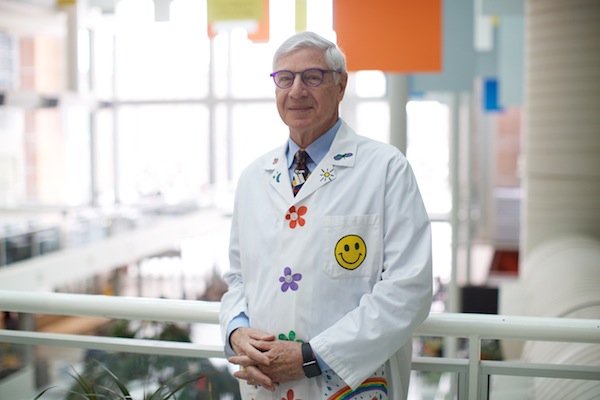
Dr. Allan Becker has devoted much of his life’s work to the study of asthma and how it affects children who have it. (photo from Allan Becker)

As Jewish community member Dr. Allan Becker was starting his career as a general practitioner, his daughter was diagnosed with asthma. As a result, he has devoted much of his life’s work to the study of the condition.

“My interest really started when my oldest daughter began having a wheezing episode at about two years of age,” Becker told the Independent. “It was pretty obvious that this was an infection – something we call bronchiolitis, which is fairly common in young children.”

Becker was working in Dauphin, Man., at the time of his daughter’s diagnosis, in the 1970s, and was beginning to see more and more kids with asthma coming into the emergency room.

“Since 1980, when I returned to academics, I’ve been trying to understand why the epidemic started – what the developmental origins of asthma and allergies are,” said Becker, who is now based in Winnipeg. “And, really, they’re the canary in the coal mine when you think about the increase in chronic diseases.

“Asthma is by far the most common chronic disease in children and it’s the earliest to start,” he said, “but we’re seeing parallel increases of other chronic diseases, like diabetes, inflammatory bowel diseases, various forms of arthritis, and others.”

Over the course of a five-decade career, so far, Becker has seen chronic diseases become more prominent. And, while the reasons for this change remain elusive, it seems clear that it involves genes and the environment.

In the early 1990s, Becker and Vancouver-based Dr. Moira Chan-Yeung embarked on a study of ways to potentially prevent the development of asthma.

“Think about the environment in terms of things we breathe and eat … and things like pets in the home, like tobacco smoke exposure, like pollution, like bad nutrition, Western-style diets, etc.,” said Becker. “We started a multifaceted prevention of asthma program in 1994.”

While that study did not reap substantial results, it did eventually lead to a current study examining the environmental impact on expectant mothers in all areas, including the benefits of decreasing stress, which Becker feels may be the most important factor.

Information about the study, called Canadian Healthy Infant Longitudinal Development (CHILD), can be found at childstudy.ca.

“CHILD started in 2008 and is an observation study, because we don’t believe we know enough to prevent the disease as yet,” said Becker. “We’re now seeing the children at 8 and 9 years of age, and we’re looking way more broadly at the environment. We’re looking at stress very specifically, both for parents and children.

“We’re looking much more in terms of diet, but also at the microbiota, the bacteria and other organisms that live in us, with us and on us, and which are likely extremely important – maybe critical – in helping to shape children’s immune responses in early life.”

According to Becker, there are more bacteria in our gut than there are cells in our body, and microbiota are now being considered as the cause of and potential cure for all sorts of illnesses.

One of the biggest hurdles is trying to determine if a young child who is wheezing has asthma and should be treated as such, or if the child has a respiratory infection that causes wheezing. Becker said part of the problem is how to more accurately define wheezing, which is described as a whistling noise coming from the chest.

“The key thing is that it’s not just the whistling noise in the chest,” said Becker. “It’s also that tugging in, particularly tugging in under the ribs, with the tummy pulling in when breathing. That’s a very good indication that those airways are narrowed and that the child has to work hard at moving air, particularly moving air both in and out. That’s what we teach our trainees to work on with the families they see.

“And, obviously, any time a child is distressed – if they’re looking distressed, particularly if there’s a change in colour of the lips – those are urgent issues. And, some children have such severe narrowing of the airways that you don’t hear wheezing, because they’re not moving enough air, but they will be struggling to breathe. You’ll see them pulling in their tummy and you’ll see their shoulders heaving,” he said. “And you’ll often see toddlers and older kids with their hands braced on their knees, hunched forward, trying to get air in. That type of tripoding is really a worrisome sign, as is a change in lip colour – that’s an emergency. Those children need to be brought to emergency quickly.”

If it gets to the point that the child is given inhalers, Becker pointed out that blue puffers are for particularly bad episodes, while orange or red puffers are for management.

For a bad episode, he said, two inhales from the blue puffer should be taken. “An inhalation and a bit of a pause, and then a second puff and inhalation … in many cases, that will be enough to help control things,” said Becker. “If it doesn’t help make things better, then, in five to10 minutes, it should be repeated. If the child is still distressed, that’s an indication they need to be brought to a hospital.”

The blue puffer should not be used for asthma management, he warned, as the body will develop resistance to it. So, if the controller medications are not providing enough control, he said parents should talk to the doctor who prescribed the puffer to determine a solution.

“If people are needing to use the blue puffer on an ongoing basis, even once or twice a week, week after week, that’s really telling you that you don’t have control of what’s going on and is very worrisome,” said Becker. “There should never be a death from asthma. But, sadly, every year there are some. And, these deaths are – rather surprisingly – not necessarily in kids with the most severe, persistent asthma; they’re in kids who are thought to have mild asthma. But, in fact, when you look at it, if you are using the blue puffer and need to get a new one every month or two, that’s a big red flag … needing to use the blue puffer in the middle of the night, that’s a big red flag. Nighttime symptoms are really a worry – those are kids who need to be seen and properly assessed and, in most cases, they need to be using controller medication.”

Becker is proud of having led the development of a national certification for asthma educators in Canada – Canada was the first country to provide this type of certification.

“We have a children’s allergy and asthma education centre in Winnipeg attached to our children’s hospital,” he said. “It’s one of the only real free-standing ones in North America. The website is asthma-education.com.”

Rebeca Kuropatwa is a Winnipeg freelance writer.

Format ImagePosted on February 28, 2020February 26, 2020Author Rebeca KuropatwaCategories NationalTags Allan Becker, asthma, children, education, health care, Winnipeg
Camp helps lift spirits

Camp helps lift spirits

A moment of levity during the taking of Justine and Stewart Silver’s wedding photos. (photo from Justin Silver)

The late Stewart Silver was born and raised in Montreal. He had worked as a standup comedian, and moved to Toronto in hopes of furthering his career. Justine Silver grew up in a Houston suburb. In late 1990, she followed her sister, who had moved to Toronto, and, there, she joined Jewish online dating site Jdate. So had Stewart.

“There was a thing where you had to describe your perfect date,” recalled Justine. “Profile after profile included long romantic dinners and were all gushy and gross … but his said, ‘Yeah, after we grab a drink, we step out of the restaurant and trip over a big bag of money.’ I was like, ‘Oh my gosh … that’s the perfect date!”

The couple took their time getting to know each other and, after a year and a half, got married.

To all appearances, Stewart was a healthy 44-year-old. He had biked up hills in Christie Pits Park the day before he had a fatal heart attack while the couple was having a conversation on Nov. 16, 2011.

Left shocked and widowed, Justine embarked on a healing path, including taking a hiatus from her event-planning business.

“It’s been quite some time since then and there’s been grief bursts,” said Silver. “In the early days, there was a lot of therapy and some peer support groups. Then, I found Camp Widow and have been to a few of those. I was pleased it wasn’t at all associated with any religion and was welcoming…. There was one in Tampa, and so a couple of widow friends that I had met up with, here, in Toronto, in a peer support group for young people who’d lost their spouses under the age of 55 … decided to make a whole trip of it. We went to the beach, museum, and then to Camp Widow. It’s a very transformational experience when you feel that you’re surrounded by people who understand the topsy-turvy world that you’re starting to barely understand yourself.”

The first camp Silver went to, in Tampa, was in the spring of 2018. Then, in November 2018 and November 2019, she attended the camps in Toronto. She and her friends have already signed up for the next November 2020 camp in Toronto.

While it’s called a “camp,” the weekend is more like a conference, with people coming together for sessions on various topics.

“One of the neat things I like at Camp Widow is that the name tags, everyone has one, but there are a couple features to it,” said Silver. “One of them, there’s a ribbon at the bottom. For example, in my work as an event planner, if you’re a presenter, your ribbon will say ‘presenter,’ or, if you’re on the organizing committee, it will say ‘organizing committee’ or ‘volunteer.’

“But, these [also] have the number of years ago that your loss occurred. So, for me, that was six years. So, let’s say it’s a teal ribbon. All of a sudden, you notice the six-year people … and there’s a bond, because you’re in a different place than, say, the six-month people. Everyone is compassionate to everyone else, but it’s just a really interesting way to bond with people.”

As far as the camp schedule, there are some group meals, as well as meals on your own. There are various types of sessions offered.

“There are tracks, like for people who are five years out, one year, or one to five,” said Silver. “I can’t remember the exact breakdown, but you can decide to go to everything along a certain track, or you can decide in the moment what you’ll do, which sessions you’ll go to. Then, there are some networking evening events, different ways of getting to know people.”

One is designed like speed-dating, but not for that purpose. You get the chance to talk to someone for a certain amount of time, and then you move on to the next person and chat with them. “It’s really interesting to see where the commonalities fall,” said Silver.

On Saturday night, there is a banquet with a theme and people dress up – some participants may not have gone out since their loss. After dinner, each person says the name of their loved one out loud, while some 200 others quietly listen. Then, there is a dance, which gives the opportunity to destress and socialize. The DJ doesn’t play any music that could potentially trigger anyone’s grief, like slow songs.

At the camp, there are people from their mid-20s to people in their 70s and 80s; people from all religions, cultures and political leanings.

For Silver, Camp Widow “creates community and support amongst widows and widowers…. Sometimes, when you’ve lost someone, it can be very isolating, which can be in different and unexpected ways. I wouldn’t say never, but it doesn’t go away. The intensity definitely lessens and you find new ways to live with grief. And there are plenty of people who, we say, are ‘re-partnered.’ When you’ve been widowed and then you meet someone else and you have a boyfriend/girlfriend, wife/husband or partner, we say you’re ‘re-partnered,’ because we don’t think that means you’re not still widowed.”

The camp provides tools and connections that widows and widowers may not otherwise find on their own.

“I feel camaraderie in sharing my story and being heard, or hearing someone else’s story and being helpful to them,” said Silver. “At this past Camp Widow, I did an art thing. I can do crafty things OK, but I’m not really an artist. But, one of the workshops I went to was all about healing through art and it was just a whole different facet. We all had paint and they set it up so well…. We had a white piece of paper and I got white paint and I painted a white heart. Then, I put a line through it – a squiggly line, like it was broken – and you could barely see it … like you couldn’t see that my husband had a heart problem…. Then, everyone shared in the room what theirs was about. When you do that, it’s like opening up a wound, and then the scar heals better next time.”

Six months ago – eight years into her healing journey – Silver and her older sister, Eileen Jadd, who is a social worker, started the charity Good Grief Bereavement Healing Services.

“We have a roster of counselors in different parts of Toronto for bereaved people,” said Silver. “We’re also offering workshops on eye movement desensitization, which is a thing for trauma victims. It really helps you compartmentalize the trauma, so you can talk about it without being retraumatized. So, we’re doing a workshop on that.

“We’re starting a group on sibling loss and, eventually, will have a physical building. We want to have a centre, so people who’ve lost someone, it’s like a snap of the fingers and they’ll know where to go. When you know there’s an accident, you know to dial 911. We want it to be, ‘Wow, you’re in need, you’ve lost someone, and you know exactly where to go.

“I think widows and widowers need their person’s name to be said. People are so afraid of saying it, because they don’t want to bring it up in fear. But, they want their names to be said, so that’s a big part of it. I happen to talk about Stewart all the time, but a lot of people don’t have those opportunities in their own lives.”

In addition to talking about him when memories arise, Silver said, “Every year, I go to shul and I say his name and a prayer for him, and commemorate it that way. I remind people that we got married in that synagogue, and I remind people that he was a person that existed and stood in that space with me, and that his influence is still there. Just because he’s not standing next to me in that moment … he’s still there. In those ways, we talk about him.”

Camp Widow is put on by Soaring Spirits International. For more information, visit soaringspirits.org, campwidow.org, widowedresilience.org and goodgriefhealing.ca.

Rebeca Kuropatwa is a Winnipeg freelance writer.

Format ImagePosted on February 28, 2020February 26, 2020Author Rebeca KuropatwaCategories NationalTags Camp Widow, death, grieving, health care, Justin Silver, lifestyle, mental health, widows
Teaching kids reading skills

Teaching kids reading skills

With Hoot Reading, kids and teachers can see and hear each other via video chat. (screenshot)

Hoot Reading allows kids to get in their desired screen time, while also improving their reading skills. Jewish community member Carly Shuler, co-founder and chief executive director of the online tutoring company, came up with the educational concept while working on Sesame Street.

“While I was there, I was working on a research project aimed at understanding how to help kids learn through video chat,” Shuler explained. “Fast forward a couple of years and my co-founder, Maya Kotecha, and I decided the idea was too good to stay in the lab. So, we got the rights, formed Hoot Reading, and here we are.

“Something a lot of parents don’t know is that there is a deadline for reading,” she said. “We talk a lot about the fourth-grade reading slump, which is this phenomenon that happens in Grade 4, when children need to make the leap from learning how to read to reading to learn.”

The school system is based on the assumption that, by Grade 4, kids will be reading fluently. While some kids are indeed fluent readers by then, some 60% of students are reading below grade level as they start Grade 5. And, from then on, the ability to read is needed for every single topic, from math to science to social studies to music and to health, not to mention for activities outside of school.

“What happens is that those kids, come Grade 4, that we thought were average students, fall behind,” said Shuler. “They lose confidence and they disengage from school. And so, while we don’t believe at Hoot Reading that earlier is better, we do believe that there is a deadline for becoming a fluent reader – and that deadline is Grade 4.

“Hoot Reading, in particular, is good for all kids from kindergarten through to Grade 4 and, then, also any kids who are struggling after that point,” she said. “So, we have kids up to Grade 10 reading with us. They are in that 60 percentile of kids who are reading below grade level.”

The tutoring is done online with classroom teachers, one-on-one, in 20-minute lessons, two to three times a week. The app is basically Facetime meets Kindle, said Shuler. Kids and teachers can see and hear each other via video chat, and both the teachers and the students can point to things and see where the other is pointing.

“It allows for that dialogic reading, but it’s the interactive back and forth that is so important as a child progresses as a reader,” said Shuler. “Kids can do it from the comfort of their own home, from their family car, from their sibling’s piano lesson, or wherever they are. It can really happen anywhere at any time, so parents find it very convenient.”

Weighing in on screens, Shuler said, “At Hoot Reading, we don’t believe all screens are created equal. As parents, we should be paying more attention to what our kids are doing on screens, rather than just focusing on how much time they are spending on them. There are some really great things they can do.

“We believe screens can sometimes have a real benefit to our children’s learning, such as by allowing us to offer an affordable way to do one-on-one reading tutoring. So many kids can get access to it, whereas they couldn’t before. So, we encourage parents to think about it that way.”

Further to this, Shuler encourages parents to be reading mentors and role models, showing their kids that they, too, are using their screens to read.

“It’s really important that our children know that we are reading, so that they can see that it can be a really fun part of their media world,” she said. “Whether we are reading on a Kindle or reading a hard copy book, we want to show them and do it in front of them … and talk about the books and stories at the dinner table, because it’s really important that kids see reading can be fun.”

Shuler feels strongly that parents should help their kids choose apps and games that encourage reading. The ability to comprehend what you are reading and to be able to follow instructions is an important skill. While enjoying some games that do not involve reading is OK, she recommended finding games that do provide a different medium for kids to further their love of reading.

Just like any other skill, the more you practise, the better you get at it and Shuler maintains that kids should read aloud with a grown-up for at least 10 minutes a day, five days a week.

“In the same way that, when learning to play basketball, some kids might be a little better at it than others, but the best way to improve anything is through practise,” she said. “We have to practise and we have to practise out loud, with a grown-up there. Whether that grown-up is a parent, a Hoot Reading teacher, or someone else, kids need to be practising – and that’s not what’s happening in so many households. We’re so busy nowadays, between after-school activities and all the amazing things our kids get to do. But, reading cannot fall onto the backburner, because, if kids don’t practise, they’ll probably end up in that 60% by Grade 4.”

Shuler said kids need to have what they learn in school reinforced at home and, therefore, increasing public awareness is critical.

“A lot of parents don’t know – they just think about reading in terms of literacy or illiteracy so, once their child can read, they think, ‘Great! My child can read. We’ve got this!’ But, the truth is, again, reading is a skill, and you get better at it the more you read. That’s where most parents don’t know how important it is to continue the reading out loud, even if their child is reading.”

She added that “the key is in knowing how important it is and in making sure we prioritize reading practice in the same way we prioritize brushing our teeth.”

Finding books and other material that interest kids and make them excited about reading is paramount. “Just try to keep it a positive experience as much as possible,” said Shuler, “and do what you need to do as a parent to make that happen.”

Shuler and Kotecha recently launched a new initiative, called Hoot for All, sponsored by Spin Master, that will allow them to provide reading tutoring for kids at Boys and Girls Clubs across Canada at no cost to the kids’ families.

For more information, visit hootreading.com.

Rebeca Kuropatwa is a Winnipeg freelance writer.
Format ImagePosted on February 28, 2020February 26, 2020Author Rebeca KuropatwaCategories WorldTags Carly Shuler, children, education, Hoot Reading, technology
From Soviet to Nazi rule

From Soviet to Nazi rule

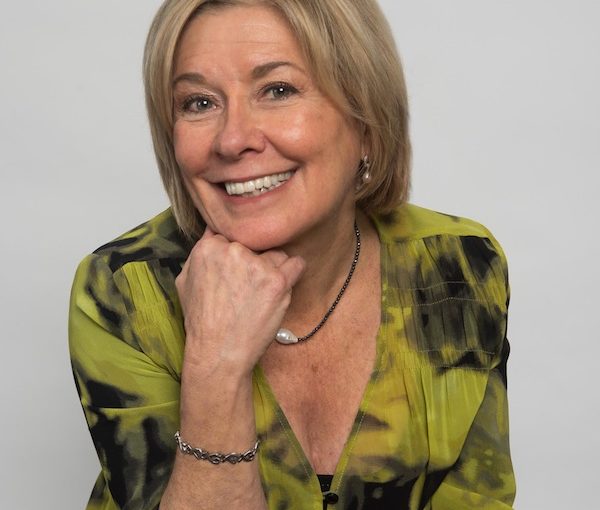
Aileen Friesen has researched how Mennonites living the area of current-day Ukraine reacted to the Nazis. (photo from Aileen Friesen)

An event titled Jews, Mennonites and the Holocaust took place in Winnipeg at the Rady Jewish Community Centre a few months ago. Organized by the Jewish Heritage Centre of Western Canada, it featured Mennonite historians Aileen Friesen, executive director of the D.F. Plett Historical Research Foundation, and Hans Werner, a retired University of Winnipeg professor, who discussed Russian Mennonite reaction as the Nazis invaded Russia during the Second World War.

“I am from a Mennonite background,” said Friesen in a post-event interview with the Independent. “That is, on both sides of my family – one side came to Canada in the 1870s, with the migration of Mennonites from the Russian Empire during that time, and the other part of my family came to Canada in the 1920s, with the migration from the Soviet Union.”

The Nov. 5 discussion focused on the area that comprises current-day Ukraine, which, during the time of the Nazi invasion, was occupied by what was then the Soviet Union. Mennonites who were in the region at that time were not of German heritage, but they spoke German and were viewed by the Nazis as allies. As well, the Russians expected that these Mennonites would be sympathetic to Germany and did what they could to relocate them to eastern Russia prior to the Nazi invasion.

“The way we think of this nation’s state … is just not what it is in the 18th century,” said Friesen. “It’s a very multi-ethnic space in which we have a lot of German speakers, and we talk about the Polish-Lithuanian commonwealth as a very multi-ethnic territory.

“We don’t have the concentration camps – we have a lot of mass shootings that are going to take place in this territory. So, Mennonites are living in a space that becomes under Soviet control, and they live under Stalinism. And then, it will become occupied by German forces, and then they will be living under German occupation.”

As the Nazis invaded, they were looking for people from the local population with German affiliation to integrate into the administrative system, while targeting the Jewish population – to have them register, to wear the Star of David and to separate them from other sections of the population.

According to Friesen, many Mennonites looked at the Nazis as liberators from the Stalinist occupation, which oppressed the Mennonite community in the area and enforced an atheistic existence. The responses of other Mennonites to the Nazi treatment of Jews were mixed: some responded in horror, but most remained silent.

“Sometimes, they say in memoirs that they said something to the German occupying forces, that they can’t do this,” said Friesen. “But, this is a time when people have been demoralized by Stalinism and have learned to keep their mouths shut…. But you will see that some people are very upset about what’s happening to the Jewish population…. Where there is a mix of Mennonites and Jews, there is also some intermarriage, so there were people who felt a great affiliation with their Jewish neighbours and felt very upset about this.

“My topic, specifically, focuses on a segment of the Mennonite population that joined into the secret police (SS), the local police, and are, therefore, implicated in the massacres that took place, as the local police were participants in these massacres.” Friesen said there were “Ukrainians, Mennonites and other types of ethnic Germans in the Ukrainian local police.”

As the Nazis invaded, they ranked the population, placing the Mennonites higher than the Ukrainian/Russian population, as they were considered by the Nazis to be Volksdeutsche (German folk). This allowed Mennonites access to more resources and they were better treated.

Before the Nazis invaded, she said, Mennonites and Jews “occupied a space together.” For example, “in Chortitza, there was a synagogue and there was also a Russian Orthodox church, and a Mennonite church that was in operation before the Soviets took power. It’s a space in which people organized and interacted with each other and, yet, these forces that get imposed upon them, there’s a reaction from within the local community that, in the case of the Mennonites, I don’t think that was a response that served them … at least some people … bought into these ideas that the Germans brought into this territory. It dovetails with some of the ideas they had of their own suffering under the Soviet regime and they accepted the dehumanization and sometimes participated in the dehumanization of others, which is really a sad story.”

Friesen encouraged readers to watch the event video on YouTube.

“There were some interesting questions and responses from the audience,” said Friesen. “We had a good turn out, from both the Mennonite and the Jewish communities, discussing these very difficult issues. I think the lectures online will give you a much better background to this story than I’ve been able to share.”

Rebeca Kuropatwa is a Winnipeg freelance writer.
Format ImagePosted on February 21, 2020February 19, 2020Author Rebeca KuropatwaCategories NationalTags Aileen Friesen, history, Holocaust, Mennonites
Finding ’n’ riding the WAHVE

Finding ’n’ riding the WAHVE

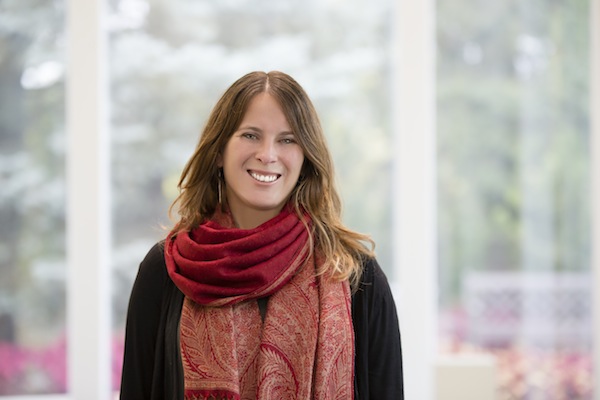
Sharon Emek, founder and owner of Work at Home Vintage Experts (WAHVE). (photo from WAHVE)

Sharon Emek’s company, Work at Home Vintage Experts (WAHVE), celebrates its 10th anniversary this year.

WAHVE matches experienced professionals who are transitioning into retirement with businesses that are looking for the professionals’ specific skills and expertise. One of the draws for what WAHVE calls “pretirees” is that the pretiree can work from home. “By removing the requirement that workers be in the office, we break down the walls that confine businesses to a smaller talent pool,” notes the website. “Wherever the best talent is for the job, we help make it happen.”

Company founder Emek was raised in a moderate Chassidic home, but her parents refused her request to pursue a higher education. Nonetheless, she went to university, earned a doctorate and became a professor. Being computer and tech savvy, however, she started consulting for companies that were developing efficiency procedures and protocols. In the early 1980s, she went into business for herself.

When she was consulting for brokers in New York, New Jersey and Connecticut, she said, “The insurance companies began noticing how the work I was doing helped them run a better operation, so they asked if I’d like to start my own insurance brokerage firm. They said, ‘We don’t have any women,’ so I said, ‘Great. I’ll be happy to.’ I’d never actually sold insurance before, but I know a lot of people, so I wrote a business plan.”

Emek’s agency became one of the largest female-owned agencies in the area, before it merged with a larger brokerage firm in 2003.

“The industry began to worry about a potentially huge talent drain to come … everyone was turning grey,” said Emek. “It was a huge boomer industry. Young people hadn’t come into the industry and everyone was concerned at what we were going to do and how we’d get our work done.

“For me,” she said, “for every problem, there’s a solution. The research started to show that the more active you are, the more you engage your brain, and the longer you live.”

Within a few years, smartphones came out and laptops were gaining popularity. A couple of years later, voice systems and video calls became commonplace.

“You can [work] … at home and no one would know that you weren’t in the office, so it occurred to me, why don’t people do that? I bet people want to continue to work, but they don’t want to be in an office any longer,” said Emek. “After 30 years of driving to work, they are ready to retire from the regular office setting … but they’re not ready to retire from work.

“We did a whole survey in the industry of people over 55, asking them about that. All of them said that they love what they do, that they don’t want to stop working – they just don’t want to work in the office. And, also, that they are worried they don’t have enough money for retirement. So, all that came together in my head and I woke up one day and said, ‘Duh!’”

While people were ready to work from home, brokerage firms did not know how to make that a reality, so Emek developed a methodology for qualifying people interested in going this route. Creating a matrix of questions similar to dating sites, but for business purposes, she assessed 50-to-80-year-olds and helped them create a resumé to qualify them for remote positions in the insurance industry.

For the past 10 years, WAHVE has been connecting “vintage” experts with brokerage positions, filling needs on both sides of the spectrum.

Neither side meets in person, she said, so the potential employer has no idea of the applicant’s ethnicity or physical attributes.

“Our clients fill out a whole job request that includes their work culture, their daily functions, etc.,” said Emek. “We created this very sophisticated software and the whole point is to transform how everyone views retirement. These people are ‘un-retiring’ … retiring from the office, not from work. That’s the key.”

While Emek acknowledges that many other industries could benefit from this type of worker, her focus for now is on the insurance and financial services sectors.

“People are still old-fashioned, thinking the only way to supervise is to see you in the office, but they are beginning to understand that they can have a flexible work environment. They also realize that you can’t always find the right talent in your backyard,” she said.

Although many younger people also would love the opportunity to work from home, Emek recommended that they start by working in an office, to gain experience and expertise.

“That’s the problem with millennials,” said Emek. “They want to work from home, but they don’t have institutional knowledge yet. How are they going to learn it unless they work with people? A 25-year-old has to be trained. They don’t yet have the knowledge to work from home.

“My customers will hire my people because they know they are experts with 25 or 30 years of experience. Within two days, they are 100% productive. My people fill a need immediately. And there’s no turnover, they aren’t looking for a promotion – they just want steady work for the rest of their lives.

“WAHVE is more than a placement agency,” she said. “It provides support to clients, insurance and tech support…. In a sense, it provides home office management services, so professionals can do their jobs. I call it the ‘independent contractor model.’”

Emek gave the example of a woman who contacted WAHVE several months ago. In an email of thanks, the woman shared, “I moved to be near my daughter and granddaughter. I’ve been in the business 30 years and I have excellent credentials, but, every time I walk into the office for an interview, they’d see my age and that I have a limp. So, for over a year, almost a year-and-a-half, I could not find a job. I applied on WAHVE and, within a month-and-a-half, I now have a job I love. And nobody knows how old I am or that I have a limp.”

Of this, Emek said, “That’s why, that’s the purpose of WAHVE.”

WAHVE is not yet in Canada, but Emek would like to see it branch out here and beyond. “At this point,” she said, “we are trying to finish penetrating the big insurance companies. Once we do that, we’ll head to Canada – in two years, we hope.”

For more information, visit wahve.com. 

Rebeca Kuropatwa is a Winnipeg freelance writer.
Format ImagePosted on February 14, 2020February 12, 2020Author Rebeca KuropatwaCategories WorldTags aging, business, Sharon Emek, WAHVE, workforce
Canadian refugee law study

Canadian refugee law study

Shauna Labman (photo from Shauna Labman)

Amid the world’s largest refugee crisis since the Second World War, Winnipeg-based legal scholar Shauna Labman has come out with the book Crossing Law’s Border: Canada’s Refugee Resettlement Program, an in-depth look at how national and international law and policies have shaped Canada’s resettlement programs.

After growing up in Winnipeg, Labman did her undergraduate degree in English and religion at the University of British Columbia, then went into law school at the University of Victoria.

“At the end of law school, I was called to the bar in Ontario, and then I got a contract with the United Nations High Commissioner for Refugees in New Delhi, India,” said Labman. “I went to India, knowing about refugee laws that I’d studied in law school … which meant I knew about the Canadian context of refugees – how refugee claims are made in Canada, how the Immigration and Refugee Board works. I didn’t know anything about how refugees receive protection in a country like India, which has not signed the [United Nations] Refugee Convention or anything.”

After returning to Canada, Labman accepted a consultancy with the Canadian embassy in Beijing. Realizing that the life of a diplomat was not for her, she returned to UBC in 2007 for a master of laws, which was followed by a PhD. Her graduate supervisor was the current dean of the university’s Allard School of Law, Prof. Catherine Dauvergne.

Of her master’s thesis – “The Invisibles: An Examination of Refugee Resettlement” – Labman said, “It’s about the fact that refugees waiting for resettlement don’t get seen. We only see them when they are resettled … but the program is very ad hoc and there was very little attention given to it at the time.”

As Labman was starting her PhD, the ships Sun Sea and Ocean Lady arrived off the coast of British Columbia, carrying several hundred Tamil migrants seeking asylum from civil war in Sri Lanka. She recalled how resettlement was being discussed then. “The relationship between law and refugee protection and what I call ‘the layer legality of it all,’ how different laws work to position different refugees differently, became the basis of my doctoral work and this book,” she said.

After moving back to Winnipeg 10 years ago, she worked as a law professor at the University of Manitoba. Last July, she joined the University of Winnipeg and its Global College. As a human rights professor, she teaches courses on refugees, resilience, and concepts and conventions of human rights.

“I find this really rewarding work,” she told the Independent. “I sit on the board of the Immigrant and Refugee Community Organization of Manitoba and, in that program, I meet a lot of incredible people who spend a lot of time committed to creating a place of welcome for newcomers in our community.”

Labman’s book looks at Canada’s refugee resettlement program from the 1970s, when there were large numbers of people fleeing Vietnam, Cambodia and Laos, up to the Syrian resettlement that’s been happening in the past decade. It covers the different ways that Canada resettles refugees – the government’s resettlement program and the private sponsorship program, including the newly created Blended Visa Office-Referred program, which works with refugee referral organizations to screen refugees before connecting them with private sponsors.

“One way you can think of it is that resettlement itself is a complement to Canada’s inland refugee protection program,” she explained. “Because not that many refugees are able to come to Canada to claim protection, we have a resettlement program. Within that resettlement program, the government is doing resettlement, but the private sponsorship program allows the broader Canada population, individual citizens, to complement the government resettlement program by resettling refugees as well.

“We need only to look south at the U.S. to see how a change in government can affect refugee resettlement,” she said. “We have a legal obligation to asylum-seekers, but a lot of conversation about the border-crossers right now is about whether they are illegally entering the country and whether they are coming in violation of the law when they cross a border. I would say they’re not. I’d say that part of our recognition in the Refugee Convention is that they cannot be penalized for their entry and that, even within our Immigration and Refugee Protection Act, we recognize that refugees may need to cross in a different way or manner to make their claims of asylum.

“In the same way,” she added, “refugee resettlement isn’t a legal obligation, but law still plays out … in how these refugees are selected for resettlement before they enter our borders, which means that, when they are entering our borders, they are entering with a legal document permitting their entrance. They have a legally valid means of entering the country, even though they didn’t have a legal right to enter the country until they were selected for resettlement. So, the book looks at different ways the law operates within these two programs.”

image - Crossing Law’s Border book coverOne area in which the book does not delve, but that Labman said is important, is that the required forms are becoming more complicated to fill out, forcing applicants to seek help from lawyers. “It was too complicated for me to fill out when my family did a private sponsorship application,” she said.

While Labman’s book is academic, it is accessible to a broader readership. “It’s not going to be a page-turner if you’re not interested in refugee resettlement,” she said. “But, if you’ve, say, sponsored refugees and want to understand the program in more detail, it might be of interest. If you’ve worked with refugees, whether in a medical or educational context, in a settlement context … individuals working with refugees, there’s so much history and contextual details to the program. When I was writing this book, that information didn’t exist anywhere particularly clearly. So, if you want a comprehensive understanding of what resettlement in Canada is, this book has that.”

Also, for the main target audience – academics and graduate students in history, philosophy, political science, social work, sociology, law and others – Crossing Law’s Border provides a starting point for their own research on refugee resettlement and sponsorship.

“And, as Canada in the past few years has been promoting the expansion of private sponsorship to other countries, and other countries are taking up private sponsorship models, there’s lots of international interest by governments and policy makers and NGOs in those countries, in what Canada’s resettlement program is about,” said Labman.

The Winnipeg launch of her book took place on Jan. 16, and Labman is planning a launch at the Allard School of Law sometime in May.

Rebeca Kuropatwa is a Winnipeg freelance writer.

Format ImagePosted on February 14, 2020February 12, 2020Author Rebeca KuropatwaCategories BooksTags government, immigration, law, refugees, resettlement, Shauna Labman
Drawing more women to tech

Drawing more women to tech

Jodi Kovitz, founder and chief executive officer of #movethedial. (photo by photagonist.ca)

What began as Jodi Kovitz’s personal desire to increase the technology industry’s minimal efforts to attract women leaders is now a broad movement – #movethedial.

Kovitz was born in Calgary and moved to Toronto with her mom when she was 5, while her dad remained in Calgary. Growing up, Kovitz’s role models included her grandmother, Dr. Muriel Kovitz, who served as the first female chancellor of the University of Calgary, and who today lives in Vancouver.

“I had a very loving home and was always pushed and encouraged to be true to myself, be creative and build things,” said Kovitz. “I started my first business when I was 16, which was a greeting card company. I have always pursued entrepreneurship throughout my career, in various forms.”

After graduating from the University of Western Ontario’s Ivey Business School, in London, Ont., Kovitz worked at a consulting firm over the summer. Her mentor there advised that she do something more entrepreneurial, so Kovitz joined a tech start-up.

“I ended up meeting an amazing woman leader in banking after a couple of years,” she said. “Even though I really enjoyed myself and was getting a lot out of it … I left the start-up and went to join her at the bank, where I learned a ton about leadership. I was working specifically in HR [human resources] and leadership development.”

After going to law school and a brief stint working as a lawyer, Kovitz became the chief executive officer of the nonprofit Peerscale, a peer-to-peer group for tech CEOs.

“Peerscale is when I started #movethedial, which very much started as a passion project while I was in my other role,” said Kovitz. “But, it soon became so large that it called me to create it in a formal sense and to move into it full-time.”

Since then, #movethedial has become a global movement and a social enterprise, working to advance the participation and leadership of women in technology.

“While there’s work we need to do over the long term,” Kovitz told the Independent, “we need to ask what we can do now to better engage, include and advance either women in the ecosystem in the moment, as well as those that are just graduating, even just considering going into STEM [science, technology, engineering and math]…. It’s a multifaceted approach.”

The kick off of #movethedial in 2017 was to be a cosy 30-person event posted on social media – 1,000 people came.

Kovitz asked attendees who wanted to help. Fifty people responded, she said, “and we did a whole bunch of initial pilots and experiments. After a year, there was just so much passion and excitement that I was very fortunate to be approached by someone I’ve been friends with for a long time, who cared deeply about this mission and offered to back me … so I could start and create the vision I had … and that I wouldn’t be as afraid to take the risk as a 40-year-old single mother starting something as a full-time job. He was there, supporting me, and partnered with me in many ways, in terms of his advice and experience in building a very large-scale, global, billion-dollar business, as well as tactically helping me through things and scaling the organization.”

The organization #movethedial works with tech companies to attract and recruit women – all people who identify as women, just not people born as women – as well as advance, engage and retain women in their companies. It also works with community groups on a platform called #movethedial stories, showcasing the experiences of women technology leaders around the world.

“We’ve touched thousands of people that way,” said Kovitz. “We have an annual global summit. Last year, we had 2,802 people at our summit in Toronto, where we’d brought speakers in from around the world, and we connected our audience to one another in a really profound, magical way…. We’re creating what the future of #movethedial can look like, thinking through youth and how we can really impact … the ecosystem … and create a different future.

“What really drives me is that we can’t actually build technology solutions for everyone in the population [without including everyone in the population]. And, by the way, everything is tech, right? Banks, taxis, food … everything is tech. We can’t design solutions relevant to the masses if we don’t have representation from our population at our design leadership and governance tables. We just can’t build solutions that work for all the people.

“The urgency for me is around AI (artificial intelligence). It’s really starting to dominate how we use technology. Everything is going to, if it doesn’t already have an algorithm … and AI is taught. If all humans that teach and create AI are men, these machines will develop different patterns of behaviour and algorithms. My fear, and there’s a lot of research to back this up, is that we will build our human biases right into the solutions and algorithms, and we will never be able to undo it. For me, the urgency to create teams that reflect the population is to ensure that we don’t put our bias in forever.”

For more information, visit movethedial.com.

Rebeca Kuropatwa is a Winnipeg freelance writer.

Format ImagePosted on February 14, 2020February 12, 2020Author Rebeca KuropatwaCategories NationalTags #movethedial, education, Jodi Kovitz, STEM, technology, women
Addiction a risk for all

Addiction a risk for all

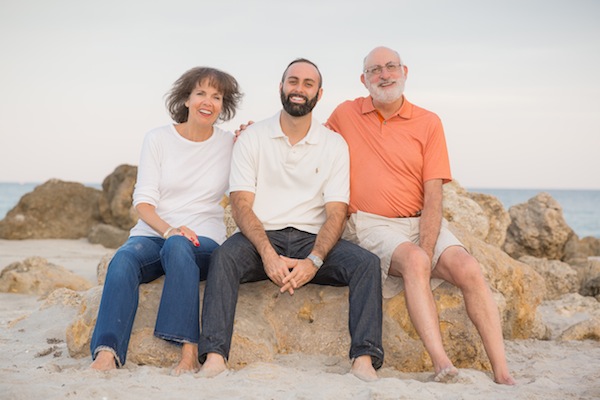
Left to right: Lisa, Jacob and Richard Hillman. (photo from Lisa Hillman)

“I had a fairly demanding and public position in the health system. I was president of our hospital foundation, had a very large board of about 25 people and a staff of about a dozen people. We were raising a lot of money to build a new hospital campus at the time, and so I was very public and very out and about. And, my fear was, as sick as it is to say today, that, if somebody would find out that my son had a drug problem, what would that say about me? What kind of mother could I be? What kind of person was I if I had a son who was using illicit drugs?” Lisa Hillman, author of Secret No More: A True Story of Hope for Parents with an Addicted Child, told the Independent.

“That was my feeling at the time,” she said. “I was not at all prepared to have addiction in my household. I was both ashamed and terrified at the same time.”

Hillman and her now-sober son, Jacob, shared their story at a Jewish Child and Family Service (JCFS) event at Congregation Shaarey Zedek in Winnipeg late last year.

Lisa and Richard raised their family in Annapolis, Md. Jacob was in high school when they found out he was using drugs. With almost 40 years of experience in the healthcare industry and being the healthcare decision-maker for the family, Lisa was determined to help Jacob overcome his addiction, while also keeping it a secret.

Like many others, however, she learned the hard way, after a couple of years, that this was not something she could fix. Although she held out hope that Jacob’s use of drugs was just a normal coming-of-age rite of passage, like trying cigarettes or alcohol, and that he would return to being the high-achieving person she knew him to be, that is not what happened.

“At first, we had him evaluated,” said Hillman. “I asked him if he would see a psychologist. He said ‘yes.’ He had bi-weekly meetings with a psychologist. At one point, my son gave me permission to talk to him – Jacob asked me, ‘If he tells you I’m alright, will you get off my back?’ And, I said, ‘sure.’

“This was when he was still in his senior year of high school. I visited with the psychologist, who said to me, ‘I told your son to smoke a little less.’”

Jacob was arrested during a holiday week after graduation, and the situation became more serious. As the family worked to get Jacob help, he resisted it, as addicts often do.

“The question I always get is, ‘How do you get them to accept treatment if they don’t want it?’” said Hillman. “I wish I had an answer for that. What we did with our son is finally say to him, ‘Jacob, you have a choice. You can continue to use, but you can’t live under our roof, or Dad and I will pay for inpatient treatment.’ Fortunately, he accepted inpatient treatment.

“Keep in mind, I’m very blessed,” she added. “I had some insurance and other resources. We were able to afford to send him someplace, which I know a lot of families can’t afford to do. I’m very, very lucky.”

The Hillmans found a place in Maryland, because Jacob did not want to leave the state. The place seemed to be very lovely and spiritual. They were hopeful he would get better there. But, after 12 days, the Hillmans visited their son and Lisa knew he had been using. Sure enough, the next day, Jacob’s counselor asked them to come pick Jacob up, that Jacob could no longer stay there.

“We brought him home to Annapolis,” Lisa Hillman said. “He entered the addiction treatment centre inpatient [program] that is part of my health system, where I was then and am still today, on the board. So, my drive for anonymity in this situation was about to crumble. The counselor my son was seeing said to me, ‘You have to tell somebody at work.’ So, I told my boss, the CEO of the hospital, and he was very empathetic and extremely understanding.”

Jacob went in for two weeks, after which the counselors suggested the Hillmans allow him to go to Florida for continued treatment, where he could live in a sober living house and continue to get outpatient treatment.

“The day he left, the counselor said to me, ‘Your son is going to have his program. What are you going to do for yourself?’” said Hillman. “My immediate reaction was that the counselor must have had 10 hits too many, because I didn’t have an addiction. I wasn’t the sick one, my son was the sick one. And yet, I realized I was crying all the time, I was obsessed with where he was and I couldn’t go to sleep at night until I knew he was home.

“I was isolated, I was depressed,” she said. “I wasn’t sharing anything with family and friends. So, I tried Al-Anon. And, from my very first time, I realized I’d [found] a home. These people understood me and were going through the same thing. I wasn’t alone anymore. I had people around me who got it and who were going through the same thing. Meanwhile, my son was in Florida and was getting better.”

Midway through that first year, Jacob had a minor relapse and told his parents about it over the phone. In that conversation, his mother said to him, “Jacob, we love you. Thank you for being honest and telling us. Please take care of yourself. You’re the only one who can.’ And Jacob replied, “Mom, thank you. That’s exactly what I needed to hear.”

Hillman recalled, “Pre-Al-Anon, I would have been on the phone screaming at him, angry. Fast-forward another six months, and he has another much more serious situation. We were told, ‘Your son needs detox.’ He was using heroin IV, a horrible scenario. So, we were asked to pay for a third inpatient treatment centre.

“I remember clearly asking the counselor, ‘How many times do we have to pay for this?’ And he said, ‘Tell your son that this is the last time.’ So, we did and, at the time, we did mean it, really. This was the last time we’d pay for him to have inpatient treatment.”

Although Hillman cannot say for sure that this ultimatum is what did it, Jacob stayed there for 100 days. After that, he moved, got a job and stayed for six months in a sober house. He kept the job for several years and eventually moved into an apartment. He has been active in AA ever since and has been clean for almost eight years.

Hillman has continued going to Al-Anon. She asked her husband to come with her and try it out at least once. They went to a different meeting than she had been going to. “We walked into the room and there were two couples who we know really well,” she said. “Both of them had children with similar problems and we had no idea. We’ve been going to that same meeting now for almost nine years, every Thursday night.

“That first meeting was a huge relief,” she said. “I couldn’t speak at the first meeting. I couldn’t open my mouth, with lips quivering as I cried. They let me cry. Other people at that meeting cried. And I heard a phrase that night, that I think really guided me: ‘Detach with love’ – meaning you have permission to detach from your loved one’s problems, that you’re not responsible for them, that you can’t fix their problems, but that you still love them.”

Hillman realized, over time, that Jacob would have to find his own way and that she couldn’t enable him by sending money or paying for things for him. “But, we never stopped loving him the whole way, the whole time,” she said.

image - Secret No More book coverAs she healed, Hillman felt the desire to write a book about her experiences. She asked her son for permission to publish it.

“The reason for writing it was, I knew there were other families in hiding and ashamed, and that shame and fear just makes it worse,” she said. “It makes it worse for you if you love someone in addiction, and it doesn’t help the person with addiction. The whole purpose in writing this was to help particularly other moms and dads and sisters and brothers and boyfriends and aunts and uncles and grandfathers who I knew were sort of in hiding and had secrets and weren’t sharing – giving them hope that they can do it, too.

“Don’t hide,” she stressed. “Find professional help for yourself. My message is not to those with addiction, it’s to those who love people with addiction. My son says, ‘Mom, remind people that this is your story. Not mine.’

“If you have somebody in your life that is using or drinking, please go get help for yourself,” she said. “If one person in the family can get healthy and understand addiction, boundaries, and how to take care of themselves, then it will affect the rest of the family.

“That’s what happened in our family. I got stronger, my husband got stronger. Jacob saw that we were trying to understand him, that we were trying to get ourselves right again. He was getting better and we had a common language.”

Hillman said, “I think people who recover from an addiction and somehow live every day clean and healthy, year after year after year, to me, they are the most amazing, profound people. My son has become just an astonishingly profound young man and I’m very, very proud of him.

“I think that Judaism hasn’t helped us here today,” she added. “I think it’s getting better, but, looking back on it, part of my shame was that this doesn’t happen to Jews. We’re smart, educated, driven, are achievers, we don’t have addiction – but that’s not true.”

The Nov. 25 event with the Hillmans was sponsored by the JCFS and Gray Academy of Jewish Education. Panelists included an addictions physician, a therapist and an Addictions Foundation of Manitoba consultant on youth.

“Recovery is individual. There is no single treatment that works for everyone. There is no easy fix, like there is no single cause. It’s a combination of factors,” said Ivy Kopstein of the JCFS. “As a community, we need to end stigma and judgment, and replace it with compassion and understanding so we have no need for secrets anymore.”

Rebeca Kuropatwa is a Winnipeg freelance writer.
Format ImagePosted on February 7, 2020February 6, 2020Author Rebeca KuropatwaCategories NationalTags addiction, health, JCFS, Lisa Hillman, Winnipeg
Youth feed homeless people

Youth feed homeless people

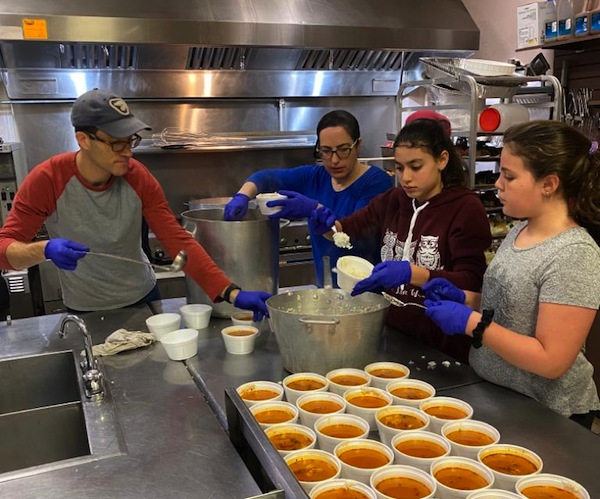
Youth from Temple Beth Ora and Gathering Angels in Edmonton help out at Boyle Street Community Services shelter. (photo from Rabbi Gila Caine)

In Edmonton, Rabbi Gila Caine and Muslim leader Nesrine Merhi-Tarrabain have combined forces to serve their local community.

Caine is spiritual leader of Temple Beth Ora, a Reform synagogue in Edmonton with nearly 100 families, which celebrated its 40th anniversary last year. Merhi-Tarrabain is director of Gathering Angels, which runs an educational centre that teaches Muslim girls Islamic values.

Caine grew up in Jerusalem and moved with her husband, Ariel, and their two young children to Edmonton more than two years ago to lead Temple Beth Ora. Their kids attend the local Talmud Torah school.

Growing up, Caine learned early on, and more so in her early teens, to always be looking for ways to strengthen and help community. She wanted to bring that same mindset – of taking responsibility for your local community – to b’nai mitzvah-age kids at her Edmonton congregation.

“We’ve wanted to go out of the classroom and do stuff outside for a few years now,” Caine told the Independent in a recent interview. “And then, through another connection I have, with Salaam Shalom group, I asked one of them if perhaps they have somebody in their community that does stuff with kids … and that maybe we could do stuff together.

“I thought that would be really cool if we could get the b’nai mitzvah kids to go out and do stuff in the community, but with other youth of a different faith group,” she said.

Caine was connected with Merhi-Tarrabain. After some effort and time, the synagogue and educational centre managed to get together on a Saturday in November, preparing and serving both breakfast and lunch at Boyle Street Community Services shelter.

“We brought food with us, had her girls, my kids, and some parent volunteers working in two shifts there that day – working together, preparing sandwiches, cooking,” said Caine. “It was actually funny to see – it was more the parents that were connecting and talking … [while] the kids were basically doing their work quietly. But, the parents got into really nice conversations with each other and they served the food. And everybody from both sides came away feeling that we should do this again.”

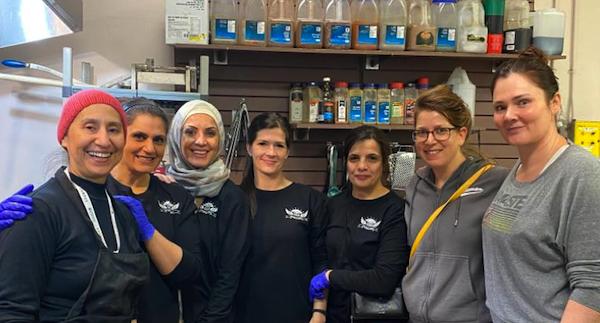
photo - The interfaith initiative at Boyle Street Community Services was led by Nesrine Merhi-Tarrabain, third from the left, and Rabbi Gila Caine, second from the right
The interfaith initiative at Boyle Street Community Services was led by Nesrine Merhi-Tarrabain, third from the left, and Rabbi Gila Caine, second from the right. (photo from Rabbi Gila Caine)

Caine is hoping to make serving the community a tradition at Temple Beth Ora, possibly with Gathering Angels again, as well as with other groups.

When thinking of the best activity to launch the b’nai mitzvah community service initiative, Caine chose this particular one – preparing and serving food – as she knew from experience that many of the kids really enjoy dealing with food service, having seen them help out at the shul.

“Some of these kids are b’nai mitzvah kids and they want to volunteer again,” said Caine. So, the youth group counselors “will sit with them and talk to them about what they want to do. This is the next step,” she said.

After the November project, there was another food-related volunteering opportunity for the kids last year. They joined the Edmonton Jewish community as a whole to prepare a Christmas meal for another shelter. “They really wanted to take part in that,” said Caine. “And now we will see what they will come up with next.”

According to Caine, having Merhi-Tarrabain at the Boyle Street Community Services kitchen was beneficial for several reasons, including that she had volunteered there with the girls in the past and had experience. That meant Merhi-Tarrabain could offer tips about what food to bring and how to best help in the food’s preparation and serving.

“Now, some of the parents who were there, they want to initiate more of these things,” said Caine. “And now, we have a better idea of how to do that.”

Both faith groups understand that more such gatherings are necessary before the youth can make lasting connections.

Caine said her synagogue is trying to create a project with another Muslim youth centre in Edmonton and also with one of the city’s churches. “We’re trying to create a program,” she said, “where they will have meetings, talk and learn and do stuff together … hopefully resulting in some real connection-making.”

Rebeca Kuropatwa is a Winnipeg freelance writer.

Format ImagePosted on January 31, 2020January 28, 2020Author Rebeca KuropatwaCategories NationalTags Boyle Street Community Services, Edmonton, Gila Caine, interfaith, Jews, Muslims, Nesrine Merhi-Tarrabain, tikkun olam, youth
Promoting fair trade in Israel

Promoting fair trade in Israel

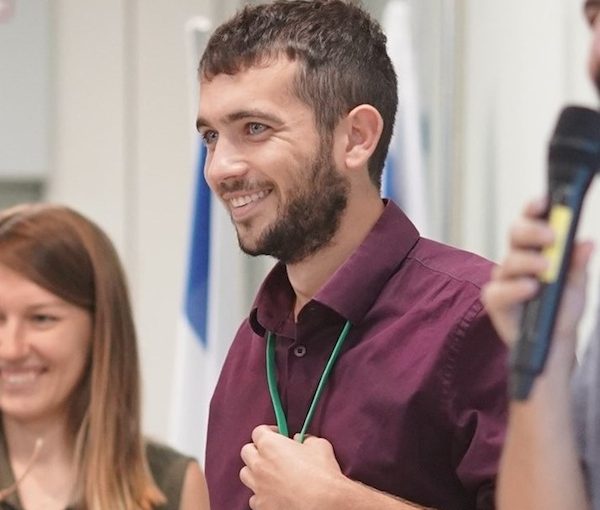
Raz Frogel (photo from Fair Trade Israel)

Raz Frogel, 23, has taken it upon himself to increase the number of fair trade items on Israeli store shelves.

Frogel, who lives in Dror Israel commune in Haifa, first read about child labour and improper working conditions when he was 16 years old. The article was about people working in cocoa fields and, after reading it, he announced to his parents that he would no longer eat chocolate, and explained why. He then spent the next two years in search of a solution.

“When I was 18 years old, I found fair trade and started doing research about it and looked into where I could find fair trade products,” Frogel told the Independent. “When I was released from the army, I started the fair trade movement in Israel.”

In his research, Frogel came across a 2016 article in the Independent: jewishindependent.ca/many-benefits-of-fair-trade.

“I realized nobody in Israel tried to promote fair trade or was trying to change the situation,” said Frogel. So, he took on the responsibility “and started to spread word of fair trade in Haifa, trying to make Haifa the first Fair Trade City in Israel. There are 2,000 cities in the world with the designation of fair trade towns,” he said, “but none in Israel.”

Frogel said many people try to shame companies into becoming fair trade employers, but he sees this as a wrongheaded approach, akin to movements and groups promoting the boycott of Israeli companies and products.

“We try to focus on the good companies and give them our support, and not on companies with what we see as wrong or bad practices,” he said. “I don’t want to shame anybody. I just want everybody to go fair trade.”

As a first step to achieve this goal, Frogel is trying to raise awareness.

“When you walk on a street in Israel, you can ask 10 people what fair trade is and maybe one will know,” he said. “So, before we can go to the companies and ask for fair trade products and change behaviour, we need to educate the public, create awareness.

“Ten years ago, there were no vegan products in Israel, but, when the community and demand grew and grew … there is now no coffee shop without soy milk or something like that. So, with fair trade, we need to copy this process. We need to raise awareness, create demand, and create communities that create demand. Then, we need to go to companies and ask for fair trade products.”

About 20% of Israelis live in poverty, the majority of whom are women, some of whom are paid less than minimum wage and suffer from other unfair labour practices. With this in mind, Frogel connected with an organization working to empower women. So far, Achoti (My Sister) is the only business in Israel that uses fair trade.

While fair trade in the food industry is a relatively known issue, Frogel pointed out that the fashion industry is also problematic.

If workers need to be paid more, that extra cost could be added to the price of the product. But, the extra money paid to the workers could come from another part of the industry chain. And, while investors want the highest possible return, it is up to us – the end users – to determine the value of a product by voting with our dollars or shekels, said Frogel. If the demand is high enough, more producers could be encouraged to enter the market, thereby increasing supply and placing a downward pressure on prices.

“I think there is no price to pay,” contended Frogel, “because, when you look at the U.K., the cheapest products in the store are fair trade, like Cadbury or Nestle … and Starbucks. When you look at fair trade in places where it’s common, it’s cheaper than non-fair trade products. When we talk to people, we try to explain to them that, when there is a demand, the prices of products will come down and everybody can support it.

“Right now, it’s very expensive to buy fair trade in Israel,” he admitted. “I can’t lie. But, we’re working on it and I don’t think fair trade should be more expensive.”

While Frogel is working on bringing fair trade to Israel, he hopes that readers will join the global movement, wherever they are, and join a local fair trade initiative to promote it in their communities.

Currently, Fair Trade Israel has a Facebook presence and the organization can offer tax receipts to donors through Achoti.

“We are trying to raise Friends of Fair Trade, wanting to raise a lot of support from all over the world, to show that fair trade is part of Jewish values,” said Frogel. He wants to see Israel become “a fair trade movement leader.”

Starting by focusing on Haifa, and Israel in general, Frogel is organizing events and doing advocacy work in schools and businesses. As far as getting Haifa recognized as a Fair Trade City, he is working to fulfil the requirements for such recognition, such as attaining a high level of fair trade awareness and product availability. “We have a lot of support from the city council and have a group of great people leading this project,” said Frogel. “We have stores with fair trade products, but not in every neighbourhood. We started programs in schools in the last month and we have special programs on campuses to raise fair trade awareness and product availability.”

For more information, visit achoti.com (which is in Hebrew) or contact Frogel at [email protected].


Rebeca Kuropatwa is a Winnipeg freelance writer.
Format ImagePosted on January 31, 2020January 28, 2020Author Rebeca KuropatwaCategories IsraelTags economics, free trade, justice, Raz Frogel, tikkun olam

Posts pagination

Previous page Page 1 Page 2 Page 3 Page 4 … Page 31 Next page
Proudly powered by WordPress