Skip to content
  • Home
  • Subscribe / donate
  • Events calendar
  • News
    • Local
    • National
    • Israel
    • World
    • עניין בחדשות
      A roundup of news in Canada and further afield, in Hebrew.
  • Opinion
    • From the JI
    • Op-Ed
  • Arts & Culture
    • Performing Arts
    • Music
    • Books
    • Visual Arts
    • TV & Film
  • Life
    • Celebrating the Holidays
    • Travel
    • The Daily Snooze
      Cartoons by Jacob Samuel
    • Mystery Photo
      Help the JI and JMABC fill in the gaps in our archives.
  • Community Links
    • Organizations, Etc.
    • Other News Sources & Blogs
    • Business Directory
  • FAQ
  • JI Chai Celebration
  • JI@88! video

Recent Posts

  • Sharing her testimony
  • Fall fight takes leap forward
  • The balancing of rights
  • Multiple Tony n’ Tina roles
  • Stories of trauma, resilience
  • Celebrate our culture
  • A responsibility to help
  • What wellness means at JCC
  • Together in mourning
  • Downhill after Trump?
  • Birth control even easier now
  • Eco-Sisters mentorship
  • Unexpected discoveries
  • Study’s results hopeful
  • Bad behaviour affects us all
  • Thankful for the police
  • UBC needs a wake-up call
  • Recalling a shining star
  • Sleep well …
  • BGU fosters startup culture
  • Photography and glass
  • Is it the end of an era?
  • Taking life a step at a time
  • Nakba exhibit biased
  • Film festival starts next week
  • Musical with heart and soul
  • Rabbi marks 13 years
  • Keeper of VTT’s history
  • Gala fêtes Infeld’s 20th
  • Building JWest together
  • Challah Mom comes to Vancouver
  • What to do about media bias
  • Education offers hope
  • Remembrance – a moral act
  • What makes us human
  • המלחמות של נתניהו וטראמפ

Archives

Follow @JewishIndie
image - The CJN - Visit Us Banner - 300x600 - 101625

Author: Cynthia Ramsay

Virtuoso musician, impresario

The reasons why Wendy Atkinson, who owns Ronsdale Press, wanted to publish Have Bassoon Will Travel: Memoir of an Adventurous Life in Music by the late George Zukerman, are the reasons people should read it. Zukerman had a long and impressive solo career as a bassoonist, was a pioneer in organizing concerts and tours, and gave remote communities across Canada the rare chance to hear classical music performed live. 

“She recognized that his anecdotes capture a vital period in Canada’s musical history and are vivid reminders of the lengths musicians will go to tour our vast country,” reads the afterword. “George’s memoirs go beyond simply capturing a life. He expanded the cultural reach of classical music in Canada; no small feat and Canada is better for it.”
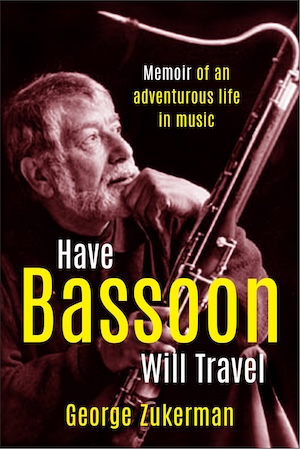
image - Have Bassoon Will Travel book coverHow Zukerman’s memoir came to be is an example of the communities he created in his life. When he died Feb. 1, 2023, in White Rock, the manuscript had been written, but it took several volunteers – each with their own connections – to bring it to publication quality and get it printed. After reading Have Bassoon Will Travel, you will know why they did it. Not only was Zukerman a world-class musician and impresario, but he was a world-class human being: humble, funny, innovative, hardworking, fairness-driven, adventuresome, the list goes on.

Zukerman was born in London, England, on Feb. 22, 1927. Well into the book he talks about how he never liked his name, George – his parents, both American citizens living abroad, named him after the United States’ first president, George Washington. His middle name, Benedict, was in honour of 17th-century Jewish philosopher Baruch (Benedict) Spinoza, who was expelled by his community for his ideas. Zukerman also discusses his surname, the spelling of which differs across family thanks to the North American melting pot. There is something to be said about living up to one’s name, and Zukerman certainly was a leader in his fields of music, both as performer and impresario; he certainly forged his own path, uplifting the place of the bassoon in the orchestral world, creating opportunities for fellow musicians to perform and bringing classical music to the remotest of areas; and he lived in several places and traveled, mostly for work, around the world.

It is incredible how much of life is directed by (seeming) happenstance. Zukerman’s first encounter with the bassoon was at 11-and-a-half years of age. It was an accidental meeting, as his older brother showed him around the London prep school Zukerman was about to attend.

“We wandered past the windows of a basement chapel and glanced down to where an orchestra was rehearsing,” writes Zukerman. “A row of tall pipes seemed to reach for the ceiling. I could see and hear very little through the moss-covered stone walls and grimy opaque windows of the old school, and I wondered what on earth these strange-looking instruments were. My brother, already in Form IV, authority on much, including most musical matters, declared them to be bassoons, and the piece in rehearsal the annual Messiah. We walked on to explore my new school, and any awareness that I would spend my life playing that instrument would have been uncannily prescient. The bassoon remained buried deep among early memories.”

His next encounter was as random. As the Second World War began, the family – less Zukerman’s journalist father, who joined later – left London for New York City. There, Zukerman attended the newly established High School of Music and Art. 

“By way of an audition,” he shares, “I played [on the piano] my one and only party piece (a simple Beethoven sonatina). To my surprise as much as anyone else’s, I was admitted to the class of 1940! Dare I suspect that my acceptance had as much to do with short pants and an English accent as with any evident musical skill?”

On the first day of school, the kids were told to pick an instrument. “No British prep school could have readied me for such democratic and independent action, so I hesitated,” writes Zukerman. “On all sides of me, the pushy American kids ran furiously and grasped what they could most easily identify. The violins, clarinets, flutes, trumpets, cellos and drums disappeared into groping hands. When I finally reached the shelf, all that remained was an anonymous black box. I lifted it gently and carried it toward a teacher standing nearby. ‘Excuse me, Sir,’ I asked timidly, ‘but what is this?’

“He looked down, and a broad smile covered his face. ‘Why, you are our bassoonist!’ he declared.”

With faint remembrance of the tour with his brother, he thought, “Was I now going to play such an instrument?”

Indeed, he was, and to eventual great acclaim, both as part of orchestras and as a soloist. But, as you can imagine, bassoonist was not exactly a living-wage career, at least not in Zukerman’s time, and his parallel career arose from a need for more work. Having learned during his time with the St. Louis Sinfonietta in the 1940s about community concerts – where money was raised in advance through subscriptions rather than individual ticket sales, and no contracts were signed until the money to pay for everything had been raised – Zukerman, who was by then living in Vancouver, brought the idea to Canada. His offer to an American company to be their representative here declined, Zukerman decided to do it on his own. 

“Canada was coming of age, and Canadian communities were ready to make their own concert plans and to welcome Canadian groups and soloists, even if at the time they were equally unknown,” he writes. “Within a decade, Maclean’s magazine would write that I had successfully outsmarted the Americans at their own game.”

It is fascinating to read of Zukerman’s efforts to expand the reach of classical music in Canada and other countries – he visited the Soviet Union eight times between 1971 and 1992, as performer and concert organizer, and brought Soviet musicians to Canada to tour. Decades earlier, he spent a year-plus in Israel, part of the nascent Israel Philharmonic. He was also part of the Vancouver Symphony Orchestra in its early days, and of the Vancouver Jewish community – Abe Arnold, publisher of the Jewish Independent’s predecessor, the Jewish Western Bulletin, had a small but notable impact on Zukerman’s life.

Have Bassoon Will Travel is a truly engaging read. The way in which Zukerman writes is like how he would have spoken, though likely more concise and organized. The effect is that we the reader are having a chat with him, reminiscing. We get a feel for what life was like back in the day for a musician and entrepreneur. We feel nostalgia for a time many of us never experienced personally.

Posted on October 11, 2024October 10, 2024Author Cynthia RamsayCategories BooksTags autobiography, bassoon, business, entrepreneurship, George Zukerman, history, impresario, Israel Philharmonic, memoir, music, travel, Vancouver Symphony Orchestra
Happy Sukkot 2024!

Happy Sukkot 2024!

Format ImagePosted on October 11, 2024October 10, 2024Author Beverley KortCategories Celebrating the HolidaysTags cartoon, Sukkot

מונטריאול למטייל הישראלי

מונטריאול היא עיר נמל וגם אי ששוכנת על נהר סנט לורנס. היא התגלתה לראשונה במאה השש עשרה על ידי מתיישבים צרפתים. במאה שלאחר מכן החלו להתיישב בה בדרך קבע, עד לשנת אלף שבע מאות שישים ושלוש, בסופה של מלחמת שבע השנים בין צרפת לבריטניה, אז כבשו הבריטים את העיר והפכו אותה לחלק מהאימפריה הבריטית. במהלך המאה התשע עשרה מונטריאול הפכה לנקודת סחר חשובה שבה ישבו דוברי אנגלית וצרפתית, והרב-תרבותיות הזאת נשמרה גם לאחר הקמתה של קנדה. במאה העשרים, ובעיקר לאחר מלחמת העולם השנייה, הגיעו אליה מהגרים ממדינות רבות, בהם גם יהודים אירופאים, שהחלו לעצב את אופייה המיוחד והססגוני של מונטריאול, שחלקו נשמר ומורגש עד היום

אף שהשפות הרשמיות כאן הן צרפתית ואנגלית, הצרפתית נחשבת לשפה העיקרית בעיר, ואת ההשפעות האלו מרגישים במהלך הביקור כאן, רוב מי שתפנו אליו יענה לכם בצרפתית לפני האנגלית, וזהו למעשה דבר שהחוק מחייב אותו לעשות, שכן חוקי השפה הנוקשים כאן נועדו לשמר את קידומה של הצרפתית בקוויבק על חשבונה של האנגלית, והדבר הזה עלול לגרום לתסכול מסוים בקרב התיירים. לכן, לפני שתתכננו את הטיול שלכם כאן, חשוב שתדעו שכמעט הכול פה בצרפתית – בשלטים שבכתב ובעל פה. האנגלית מוצנעת מאוד עד לא קיימת, וככל שתתקדמו מזרחה בעיר תפגשו פחות ופחות דוברי אנגלית

מונטריאול היא עיר שכיף לבקר בה בחודשי האביב והקיץ ולחקור ברגל. זה לא שאין מה לעשות פה בחורף, אבל למי שרגיל לאקלים הישראלי יהיה מאוד-מאוד קר. בין הרחובות ששווה להכיר תמצאו את שדרת סנט לורן שתציע לכם חנויות היפסטריות צבעוניות לצד

מסעדות וברים שפתוחים עד השעות הקטנות של הלילה. ברחוב קרסנט משקיף. משקיף דיוקן ענק של האגדה המקומית לאונרד כהן. ברחוב תמצאו מקומות שכיף לעצור בהם לדרינק או לארוחה טובה. במדרחוב סנט דני תמצאות מגוון של חנויות. תמצאו מסעדות

כשתסתובבו ברחבי העיר כדאי שתפתחו את העיניים – תמיד יהיה מעבר לפינה איזה מיצג שיפתיע אתכם. למעשה, מונטריאול מפורסמת בין היתר בשמונה מאות מיצגי האמנות הציבוריים הפרושים ברחבי העיר, דרך גרפיטי הענק ועד לתופעות נוספות שהפכו לחלק בלתי נפרד מהווי העיר, וכך כל סמטה סתמית לכאורה יכולה להפוך בן-רגע למופע אור-קולי שלא יוכל להשאיר אתכם אדישים. בקיץ מתקיימים בעיר פסטיבלי תיאטרון, מוזיקה והופעות רחוב, ומונטריאול היא גם עיר הבית של הקרקס הבינלאומי המפורסם סירק דה סוליי. ואיך מתניידים? התחבורה הציבורית בעיר נוחה ושימושית מאוד. המטרו, על כל שישים ושמונה התחנות שלו, יעיל מאוד ויוכל לקחת אתכם כמעט לכל נקודה שאליה תרצו להגיע. גם מערכת האוטובוסים מקילה על ההתניידות ברחבי העיר. אגב, משום מה יש ברחבי העיר שיפוצים בכביש במשך כל השנה, אז אל תופתעו אם פתאום הדרך תיחסם ותצטרכו לעקוף אותה

העיר העתיקה של מונטריאול היא אזור שחייבים לבקר בו, והיא גם התפרסמה כלוקיישן לכמה סרטים בינלאומיים. מרכזה ברחוב סנט פול שרובו מדרחוב ומצדדיו מבני אבן יפים שחלקם עוד מימי ראשיתה של העיר מהמאה השבעה עשר, שיגרמו לכם להרגיש שאתם בכלל באירופה הקלאסית. חוץ מכל ההיסטוריה שנמצאת בין המבנים, ומייחדת אותם ממקומות רבים בצפון אמריקה, תמצאו פה שלל גלריות, חנויות מזכרות, מסעדות ובתי קפה שפשוט נעים לעצור ולשבת בהם. מכאן מומלץ להמשיך כמה דקות הליכה לנמל העתיק בעיר, שמצויד גם בגלגל ענק ובדוכני מזון ושתייה. מכאן תוכלו להשקיף על הסירות, היאכטות והספינות, וגם לראות את מגדל השעון הלבן והמפורסם של העיר

Posted on September 25, 2024September 4, 2024Author Roni RachmaniCategories עניין בחדשותTags Montreal, tourism, מונטריאול, תיירות
Eby talks about record, plans

Eby talks about record, plans

BC Premier David Eby says election is “about the values of who we are as a province and how we move forward on the big issues of our time.” (photo from news.gov.bc.ca)

David Eby, the incumbent BC premier and leader of the New Democratic party, assured Jewish voters that, if reelected Oct. 19, his government would have their backs.

Speaking with the Jewish Independent, Eby said the loss of Selina Robinson as a cabinet minister and then as a New Democrat caucus member earlier this year was a blow, but that his government is committed to the issues that are important to Jewish British Columbians.

“It was really tough for our caucus and for our government to lose Selina,” Eby said. “She was a major contributor to our team. It’s hard to really quantify that kind of emotional feeling that a lot of people on our team have around the loss, of not having her being part of our team going forward. But it hasn’t slowed down our work and our commitment to the overall Jewish community and our efforts to fill the role that she did as a critical bridge between our caucus and the broader Jewish community.”

Eby and his party have been working with community agencies to fight antisemitism and to increase security for Jewish institutions, he said. 

“We’ve been working closely with a number of Jewish organizations to identify ways that we can provide support in this incredibly challenging time where we see this rise in antisemitism and some really disturbing behaviour targeting Jews, everything from the horrific arson attack [against Schara Tzedeck Synagogue] to slurs that people are enduring in the street,” he said. “From increasing support for security for synagogues and Jewish community centres, mandatory Holocaust education deployment, making sure that that is a reality in our schools in the province, we’re working on that together.”

He also cited British Columbia as “having the strictest standards around hate crimes” and promised that prosecutors will ensure that hate crime cases make it to court.

“We’re going to continue to do that work,” he said.

Speaking just days before the official start of the campaign period, Eby predicted that affordability, particularly around housing, will emerge as a top concern for voters. 

“The availability of housing in the province, regardless of where, is a huge issue for so many people,” said Eby. “It’s a drag on our economy that we’re not providing adequate housing for people.”

Young people who cannot afford to own a home are questioning whether they have a future in the province, he said.

“I really think that housing will be, if not the issue, certainly one of the main issues, because there’s a fairly bright line between ourselves and the BC Conservatives on this issue,” Eby said. “They [the Conservative party] appear to think that people are best left to the market when it comes to housing, that government does not have a role to play in initiatives like using public lands to build more attainable housing or restricting the excesses of platforms like Airbnb or people buying vacant homes as an investment.”

Eby pointed to a recent report that said rental costs have increased across Canada by 5% while in British Columbia they have fallen by 5%.

“We are finally starting to see rents come down across the province,” he said. “The most recent report shows that we’re on the right track and we can’t stop now.”

Eby cited climate change as a topic where his party and the Conservatives have diametrical opinions. 

Last week, Eby announced that his party is now committed to eliminating the consumer carbon tax, a sudden reversal of an environmental policy that was first implemented by the BC Liberal government in 2008. While the NDP have altered course, putting them on the same side as the Conservatives on the future of the tax, Eby positions the shift as an affordability issue in a time of economic pressures for consumers and went on the offensive against what he characterizes as the BC Conservative leader John Rustad’s climate change denial.

“John Rustad has taken the very bizarre position that climate change is not real,” Eby said. “It is bizarre, but it’s also dangerous for British Columbians. Will a premier who doesn’t believe that climate change is real protect your community from floods or forest fires, make the necessary investments around infrastructure for protecting communities right across the province?”

Other issues likely to take centre stage in the campaign are the related topics of mental health, addiction and homelessness.

“A lot of people want to see the folks that they see suffering on the sidewalks in our communities get the care they need,” Eby said. “And they are also feeling anxious when people with mental health, brain injury, chronic addiction are banging on the hood of their car, or engaging in petty theft or, in some cases, quite dramatic and awful violent incidents.”

The upheaval among the opposition parties – with the folding of the BC United campaign and the unification of right and centre-right candidates under the Conservative banner – in some ways did not come as a surprise to Eby, he said.

“We were expecting a unified right-wing vote,” he said. “The surprise for me was really that the unification came around the far-right side of the political spectrum and not the centre-right side that the BCU [BC United party] represented.”

Eby said he has been reaching out to former BC United supporters who he said “feel quite abandoned.”

“I know these are people who don’t see themselves in a party where the leader is a climate change denier and who supported anti-vaccine convoys as they were rolling up their sleeves to get vaccinated,” he said. “I know those aren’t the values of British Columbians.”

He said former BC United supporters are sending emails, letters and donations, telling Eby, “I never thought I’d vote NDP but this time I will.”

Eby is asking those who do not feel comfortable in the BC Conservatives “to lend us their votes this election.”

The concept of “lending” a vote was employed by the late federal NDP leader Jack Layton in the 2011 Canadian election when that party made unprecedented breakthroughs, winning more than 100 seats and forming the official opposition for the first and only time. Asked if that was a deliberate echo of his former federal leader, Eby suggested this moment in BC politics is unique.

“I’m not asking for a commitment of lifelong fealty from these voters,” Eby said. “I want to prove myself as committed to British Columbians and their priorities and doing our best to address the big challenges. This election, in my opinion, has become less and less about partisan politics and more about the values of who we are as a province and how we move forward on the big issues of our time, whether we do it together and united as a province that welcomes everybody and ensures that we’re stronger together or whether we start to divide ourselves along culture war lines and use internet conspiracy theories as a compass for deciding how we address certain issues.”

Format ImagePosted on September 20, 2024September 18, 2024Author Pat JohnsonCategories LocalTags antisemitism, BC election, BC NDP, climate change, David Eby, democracy, housing, politics, safety
Rustad revives Tories

Rustad revives Tories

BC Conservative leader John Rustad believes “we need to have a heavy focus on getting our economy back up and running in this province.” (photo from conservativebc.ca)

John Rustad’s party has been on a bit of a losing streak. It’s been 96 years since the BC Conservatives last won a provincial election. But Rustad – and plenty of keen political observers – see a once-in-a-century opportunity when voters choose a new government Oct. 19.

Opinion polls show Rustad’s Conservatives, who took less than 2% of the vote in the last provincial election, close to, tied with, or in some cases surpassing the incumbent New Democrats. 

In a dramatic deal to unite right-of-centre forces and forestall a reelected NDP government, the BC United party folded its tent last month. Kevin Falcon, who rebranded the official opposition BC Liberals to the BC United party last year, made a deal with Rustad to end the United campaign and endorse the Conservatives. Falcon’s party had plummeted so far in the polls that complete obliteration seemed likely. The move blindsided members of Falcon’s caucus, some of whom are now running as independents, a few of whom are running as Conservatives and several more of whom have retired from politics.

Speaking to the Jewish Independent, Rustad said Jewish British Columbians should see him as a friend.

“The community will find an ally in me,” said Rustad, citing rising antisemitism as unacceptable.

“What’s happening within communities and people not feeling safe, and what’s happening in our universities and in our school system and, quite frankly, in government – that is something that I will work very hard to bring to an end,” he said.

Rustad supports the current government’s commitment to mandatory Holocaust education.

“That was actually something I [said] we would be implementing before even the government talked about doing it,” said Rustad, who reflected on the impact a visit to the Vancouver Holocaust Education Centre had on him during a tour of the Jewish Community Centre of Greater Vancouver. “There are too many people in British Columbia that don’t understand our full history and need to understand it – not just British Columbia’s or Canada’s history, but world history.”

Rustad was moved by the words of a Jewish woman in her 60s who recently told the Conservative leader she is considering leaving the province because of the antisemitism here. Her parents were Holocaust survivors, Rustad recalled the woman saying, and the climate in BC right now feels “a lot like 1932 from what her parents had described,” he said.

“I was shocked at that, to think that that’s how people could feel about what’s going on here in British Columbia,” he said. “So, to me, that really hit home in terms of changes that we need to be able to do in British Columbia.”

Standing against antisemitism and against hate in any form, said Rustad, is core to who he is.

“People should be able to be safe, people who come here, they should be able to raise their children and not feel as though they’re being persecuted or not feel that sort of fear,” he said.

Issues Rustad is hearing from voters include employment and affordability, which he said are leading too many people to consider abandoning the province.

“With one in three people in BC thinking about leaving this province, and particularly one in two youth thinking about leaving this province, having them being able to build a future in BC is critical and that means we have to be able to address affordability, which includes housing,” he said. “You can address those things but if people don’t have a job, they’re not going to stay. So, we need to have a heavy focus on getting our economy back up and running in this province, and start to address this massive deficit that we have.”

Keeping people in the province also requires that people feel safe, he added.

“It means we have to address addictions and crime, to make people feel safe in British Columbia – and that crime is not just physical crime but also hate crimes,” Rustad said.

Appropriate access to health care is another topic Rustad will raise throughout the campaign.

The folding of the BC United party and the agreement to incorporate some United MLAs and candidates into the Conservative slate has been a sometimes-public struggle. The Conservatives had already identified candidates in the vast majority of the province’s 93 ridings. BC United also had most of their candidates in place. The Falcon-Rustad deal meant many candidates, mostly BC United, had to bow out.

“It’s been interesting, obviously, having options,” Rustad said of his party’s juggling act with a surplus of nominees. “But, at the same time, I believe strongly in loyalty to my candidates, to people who have worked hard to help us build this party and so I’ve tried my best to honour that as part of this process, but also to make sure that we honoured the discussion that we had between the United party and the Conservative party.”

He estimated that somewhat fewer than a dozen BC United candidates have now been nominated by the Conservatives and said his party is still in talks with United officials about other issues. BC United still exists as a party, even though it has stopped campaigning. It could be revived in future and must run at least two candidates in the election after this one to maintain its registration.

The BC Conservatives have not elected a member to the BC Legislature since a 1978 by-election. 

Rustad and the seven other members of his caucus were all elected as BC Liberals. Rustad was fired from the Liberal caucus two years ago by Falcon and became Conservative leader last year. He represents the sprawling central BC riding of Nechako Lakes and was first elected in 2005. He served as minister of aboriginal relations and reconciliation and as minister of forests, lands and natural resource operations under former premier Christy Clark.

Format ImagePosted on September 20, 2024September 18, 2024Author Pat JohnsonCategories LocalTags addiction, antisemitism, BC Conservatives, BC election, BC United, economy, health care, housing, John Rustad, Kevin Falcon, politics democracy, safety
Greens seek breakthrough

Greens seek breakthrough

BC Green Party leader Sonia Furstenau wants to “make sure we have a province that is centred around well-being, that is centred around everybody’s basic needs being met and is centred around creating communities where everybody can thrive.” (photo from facebook.com/SoniaBCGreens)

Sonia Furstenau is hearing from Jewish voters that they feel abandoned. The BC Green Party leader wants to rebuild trust between the Jewish community and the province’s elected officials, she said.

“Trust comes from relationships, it comes from understanding and it comes from people really being reliable,” Furstenau told the Jewish Independent. “I think we have shown that we are committed to approaching the work we do from a place of building relationships.”

The Green leader, who hopes to exponentially expand her two-member caucus in the legislature in the Oct. 19 election, reflected on what she has heard from Jewish British Columbians recently.

“I’ve had many conversations in the past month with members of the Jewish community who have expressed to me … that people feel abandoned, that people are concerned about growing incidences of antisemitism,” she said. “It’s a recognition of the need to continue conversations and stay connected.

“But, at a provincial policy level, it’s education, education, education,” Furstenau said. “I know that the premier has made a commitment to [mandatory] Holocaust education and I think that is important and necessary. I want to expand that. We need every student in BC to graduate with a very firm and reliable fact-based understanding of 20th-century history. We need people to be able to withstand the disinformation that is now becoming so dominant in discourse, political and otherwise.” 

To address the challenges, Furstenau said students need to be equipped against disinformation so that they can navigate the contemporary world with a solid grounding in history and what it means to be an engaged citizen in a democracy. That means understanding the Holocaust in the context of the 20th century, she said, but also in the context of the antisemitism that has existed for centuries.

“The key piece is that we are building an informed and inclusive community here in BC that does not tolerate hatred or discrimination or racism of any kind,” she said.

As much as she wants voters to consider policies or issues, Furstenau is urging British Columbians to think first and foremost about representation. 

“When we go into the ballot box, we’re not voting for a party or a premier,” she said. “We’re voting for the person who is going to be our voice in the legislature.”

She is asking people to take seriously “the question of who is going to be the best representative for me in my community,” she said.

“We have a first-past-the-post system,” she said. “We elect, in this case, 93 representatives to the legislature and, in the best-case scenario, we have a diversity of voices and viewpoints and ideas and we have a legislature where people can find the capacity to work together and across party lines.”

In addition to a number of independent candidates, likely including a few incumbents made politically homeless by the suspension of the BC United party’s campaign, Furstenau hopes voters will consider Green candidates and elect enough members who do not belong to either of the two largest parties to result in a minority government.

“What I think would be an ideal outcome in this election is [a scenario where] no single party has all of the power,” she said, “that we have a legislature with a diversity of voices and representation and we are seeding the conditions where we’re working collaboratively, finding common ground and focusing on solutions for people.”

Furstenau is knocking on doors and the issue she hears about most from voters are affordable housing, cost-of-living, access to reliable health care and climate change.

“When people talk about housing, of course they talk about the fact that we have a growing homelessness crisis in this province,” she said. “The vast majority of people that I talk to about this want to see solutions so that we don’t have people who are living without homes in our communities. That’s a really key piece and some of the politicization and rhetoric that we are already hearing in this election misses the mark, as far as I’m concerned. We can solve this. We can make sure that nobody in our community is living without housing, and we should. For us, the key thing is that British Columbia could be the best place on earth to live. It’s a beautiful place, it’s full of extraordinary people, it’s got an enormous amount of richness and diversity and what we want … is to ensure that everybody here has the best chance to have a good life in British Columbia.”

The coalescence of right and centre-right candidates is not a positive development for democracy, in Furstenau’s view. 

“I don’t think that having fewer choices on the ballot is a good thing,” she said. “I think, in a democracy, more choice is better. I think this was an unfortunate loss for the people of BC and I think that suggesting that we should have concentration of political parties and fewer political parties is the wrong direction. We just have to look south of the border to see where that leads us. I was disappointed by the decision that Kevin Falcon and a small number of people apparently made to fold an entire political party. That’s not the kind of leadership that we need right now and it’s not an approach to democracy that we need right now.”

Barring unforeseen developments, there are three main parties to choose from, and Furstenau hopes for a Green electoral breakthrough.

“We are determined to elect the biggest Green caucus in history,” she said. “We have six or seven key ridings where we see that possibility.” In addition to her own riding of Cowichan Valley, she cites other Vancouver Island ridings as possible pickups, including Saanich, Courtenay-Comox, Esquimault and Victoria-Beacon Hill, as well as West Vancouver-Sea to Sky, which the party narrowly lost last election, and opportunities in the Kootenays.

“We’ve built our platform around the idea of well-being, that when we have a society that is rooted in the well-being of its citizens, of its communities and its natural world, we get to a place where we don’t have the kind of conditions to create more hatred and more discrimination,” Furstenau said. “We know that political parties will scapegoat groups of people, including Jewish people. We know that, when people don’t feel safe and secure, we get into political discourse that is dangerous and so our response to that is let’s make sure we have a province that is centred around well-being, that is centred around everybody’s basic needs being met and is centred around creating communities where everybody can thrive and we have to be focused on that and that’s what we are doing.”

Format ImagePosted on September 20, 2024September 18, 2024Author Pat JohnsonCategories LocalTags antisemitism, BC election, BC Greens, climate change, democracy, education, health care, politics, Sonia Furstenau

Vote – and volunteer

CJPAC, the Canadian Jewish Political Affairs Committee, wants you to vote in the Oct. 19 British Columbia provincial election. But they want you to do more, too.

“Yes, you should vote,” said Kara Mintzberg, CJPAC’s director for BC. “But you should also remember that volunteering will give you potentially even more impact than your one vote in the ballot box.”

CJPAC is a national, independent, multipartisan organization with a mandate to engage Jewish and pro-Israel Canadians in the democratic process and to foster active political participation. 

“CJPAC is here to make it easy,” Mintzberg said. That includes giving people who have never volunteered on a campaign before the lay of the land and identifying activities where they can use their interests or skills to help the candidate of their choice.

“There’s really something for everyone,” she said, whether one prefers getting out and meeting people or working in an office. 

Matt Woods Baum, director of marketing and communications for CJPAC, said that, whether it is hammering lawn signs in the ground, phone banking, organizing events or canvassing door-to-door, it is important for Jewish voters to get involved in the process.

“Now more than ever, it’s critical that people take action to get involved,” he said.

CJPAC has a designated volunteer sign-up page for the BC election at cjpac.formstack.com/forms/bc24. Mintzberg also urges people to opt in to CJPAC emails, as there is a range of online briefings, webinars and other opportunities around this and future elections.

CJPAC will be present with an information table at an election town hall, Sept. 22, 6:45 p.m., at Beth Tikvah Synagogue. Richmond election candidates will discuss issues of relevance to Jewish voters in a forum moderated by Shane Foxman. Pre-registration is required at bethtikvah-ca.shulcloud.com/event/townhall. For more information and to submit questions for the candidates, email [email protected]. 

Posted on September 20, 2024September 18, 2024Author Pat JohnsonCategories LocalTags BC election, Canadian Jewish Political Affairs Committee, CJPAC, democracy, Kara Mintzberg, Matt Woods Baum

A different new year

The experience of the Jewish calendar is ever-changing because, while the week’s parshah is the same every year, the people experiencing it have changed. This seems especially true for the year just passed.

Pesach held stark resonance this spring, as Jews worldwide held in our hearts the captives in Gaza and pain around the ongoing war. Every happy moment in the calendar was darkened by the shadow of Oct. 7. Every solemn moment seemed laden with deeper significance.

It is a rare Jew whose life has not changed dramatically since that day. Israelis and Jews had ripped from us a sense of historical, collective and personal security that the Jewish state was supposed to provide. While 75 years of conflict and insurrection have reminded us that Jews have never been entirely free from the hatred of others, the collective defence embodied in the state of Israel massively reduced the vulnerability experienced by previous generations. We also understand that this security has come at a cost and that the last 75 years have also been a source of suffering for our Palestinian neighbours and cousins. This is a juxtaposition we struggle with daily.

And then Oct. 7 ripped away our sense of communal security in a profound way. For Jews worldwide, it provoked what can be considered significant intergenerational trauma, recalling times when soldiers and their civilian collaborators could enter Jewish homes, perpetrate atrocities, annihilate families, separate us from our loved ones, loot our possessions, force conversions, exile and expel us, and take us captive.

Worldwide today, Jews have experienced a different, related trauma. In too many cases, Jews in Canada and elsewhere have been betrayed by our neighbours, let down by our ostensible friends and had our awareness wrenched open to the potential for abrupt changes in political climates.

This will be the first Rosh Hashanah since Oct. 7. It will be followed by the anniversary of the terror attacks, a commemoration that will be added to the black dates of Jewish history over millennia.

Day after day we hope for the return of the captives, and it will be a joyous moment when surviving hostages come back home. Between this writing and your reading, may that dream have become real. If not by then, let us hope for their redemption by the new year or certainly before the calendar turns on a full annual cycle since their capture. Every moment is a moment too long for their captivity. And every moment is a moment too long for continued war, and the destruction experienced by innocent Palestinians who are caught in it.

We can all well remember the holy days of just a few years ago when a global pandemic kept us from celebrating in person with our loved ones. For most of us, that forced separation has passed. That togetherness is reason enough to celebrate. Even so, it is precisely the idea of togetherness – when we know that so many families have been torn apart either temporarily or permanently – that adds sad resonance to our own sense of unity. 

While we mourn those who will never again celebrate with their loved ones and we hope and pray for the return of the hostages so that they can rejoice in freedom with those they love, we should also take special appreciation for the gifts of those with whom we gather.  

In Jewish fashion, the changed reality in which we find ourselves is already being woven into a sort of makeshift liturgy, as more than one article in this special issue of the paper describes. Thoughtful people have developed ways to memorialize and hold spiritual space for the hostages and all affected by this historical moment.

As we complete another cycle of the calendar, the immutable foundations of our tradition provide strength and familiarity. At the same time, as individuals and as a people, we are profoundly changed. 

Posted on September 20, 2024September 18, 2024Author The Editorial BoardCategories From the JITags hostages, Israel-Hamas war, Jewish calendar, memorial, Oct. 7, Rosh Hashanah

A solemn anniversary

The Vancouver and Victoria Jewish communities will each hold a memorial ceremony Oct. 7 to honour and remember the victims of the attacks on Israel a year ago. 

Led by the Rabbinical Association of Vancouver (RAV) and in partnership with the Jewish Federation of Greater Vancouver and many others, an evening event in Vancouver will be an opportunity for people of all ages to come together.

A special gathering for young adults will take place from 6 to 7 p.m., providing a space for reflection and connection. The main ceremony will begin at 7 p.m., and will include what is being described as a poignant tribute led by our community’s rabbis. The location of the event will be emailed upon registration. Register at  jewishvancouver.com/october-7th-memorial.

Following the ceremony, Jewish Family Services will offer “living rooms,” in both Hebrew and English, where attendees can share their thoughts and find comfort. An Israeli sing-along will also take place, with the intention of helping participants find strength in unity and to support one another.

Relatives of Oct. 7 victims will present representative stories of the heroes and victims and organizers are planning interactive elements so participants can actively memorialize. There is an intention to ensure that all the victims’ names, as well as fallen soldiers’ names, can be articulated in the course of the program. 

Politics – local or international – are to be kept out of the program. Elected officials may attend but the focus is on memorializing and honouring the dead.

While Oct. 7 created an unprecedented new world, in many ways, there is a precedent for the sort of memorial event planned, according to Beth Israel’s Rabbi Jonathan Infeld, who is head of RAV.

The Yizkor service will be the template for this commemoration, said Infeld.

“We know that the Yizkor service is something that the synagogue-going Jew can relate to, but we know that not all the members of our community go to synagogue on a regular basis,” he said. “We want to make sure that it works for everyone. Yizkor is the framework, but there will be creative pieces in it as well that will work for everyone in the community.”

As the anniversary approaches, Infeld said the community should be “thinking first and foremost of the memory of those who were murdered in this horrific, horrible terror attack.”

There are 97 hostages still being held in captivity in Gaza of the more than 240 Israelis and others kidnapped by Hamas on Oct. 7. (Four other hostages have been held since 2014/15.)

People need to be reminded of the absolute necessity to support the people of Israel at this moment, and to support fellow Jews here in Canada and around the world against the rise of antisemitism, said Infeld. “We would like to see everyone really rally together and gather together to support each other and to show our support for Israel and the Jewish people, and to comfort each other as well.”

A memorial in Victoria will take place at the same time on Oct. 7, at the Esquimalt Gorge Pavilion. Pre-registration is mandatory at jewishvictoria.ca.

On Sept. 28, as part of Beth Israel’s Selichot service, Rabbi Infeld will lead a conversation with Thomas Hand, whose daughter, Emily, was a hostage in Gaza. Emily, who turned 9 in captivity, was kidnapped along with her friend and the friend’s mother. The two girls were released in November. Hand will talk about the “spiritual, emotional and moral roller coaster” of his daughter’s captivity and eventual freedom.

Posted on September 20, 2024September 18, 2024Author Pat JohnsonCategories LocalTags commemoration, hostages, Israel-Hamas war, Jewish Federation of Greater Vancouver, Jonathan Infeld, memorial, Oct. 7, Rabbinical Association of Vancouver, RAV, terrorism, Vancouver, Victoria, Yizkor
Ari’s Theme opens VIFF

Ari’s Theme opens VIFF

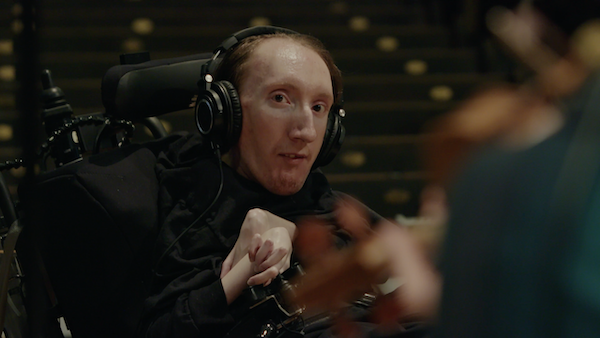
Ari Kinarthy’s nightmare before the live recording session. (screenshot from Salazar Film)

The 43rd Vancouver International Film Festival (VIFF) officially opens Sept. 26 with the screening of Ari’s Theme, a TELUS original feature documentary about local composer Ari Kinarthy by local filmmakers Jeff Lee Petry and Nathan Drillot, who run Salazar Film.

Jewish Independent readers will be familiar with all three creatives, who will attend both VIFF screenings, ready to answer audience questions, as well as participate in a panel discussion.

Sam Margolis first wrote about Victoria Jewish community member Kinarthy in 2020 – Kinarthy, 30 years old at the time, had released two albums, won an international music competition and was looking for people who might want original music for a project they were working on.

“I create all my music entirely with the computer,” he told the Independent. “Sometimes, I will have access to a guitar player or singer but normally the music will be all done by the samples I use. I usually start with just piano and sometimes will write out a score. I think of a melody and/or harmony and continue from there. I love making themes.”

Kinarthy uses a special computer system to record his music, as he has spinal muscular atrophy type 2, a symptom of which is worsening muscle weakness.

When Margolis interviewed Kinarthy a second time for the Independent, it was because Ari’s Theme was about to première at Toronto’s Hot Docs Film Festival. In the article, which was published in April, the filmmakers share that the documentary was inspired by the first JI article.

“We hired Vaka Street Casting to help find us subjects for potential documentaries. They found the JI article while searching for individuals with unique stories,” Drillot told the Independent in an interview last week.

Drillot said the number one factor he and Petry look for in possible documentary subjects is that the individual has a unique perspective – “You’ve got to be an outside the box thinker,” he said, “which Ari most definitely is.”

“As we learned more about Ari’s story, we thought about how interesting it would be to work with a composer like Ari, who has a very particular life experience, and ask him to compose music about the most impactful moments, dreams and experiences of his life and let us create cinematic scenes around them,” Petry told the Independent in April.

It was hard to imagine just how Petry and Drillot would create those scenes and how Kinarthy would not only choose the times in his life to highlight, but be able to compose the music to accompany those emotional times. We learn in the film that Kinarthy doesn’t just want to write any song – he wants to leave a legacy, to make an impact on the world, so that his life will have been, in his words, “worth it.”

screenshot - Ari Kinarthy in a recording session with musicians at the Alix Goolden Performance Hal
Ari Kinarthy in a recording session with musicians at the Alix Goolden Performance Hall. (screenshot from Salazar Film)

Kinarthy’s honesty with his feelings, fears and ambitions, is remarkable. He undergoes a transformation during the film. His physical challenges and the dangers to his health if he gets sick have led to him being isolated for much of his life, relying on a few key caregivers and his parents. He is mentally strong, though, and this is made clear as he questions the walls he has built to protect himself and as he lives seemingly at peace with his limitations, while also knowing what he is capable of beyond them. That he allows the filmmakers – and us – to see just how vulnerable he is, is proof of his sheer strength.

“Watching Ari go through the process of making the film was incredibly rewarding,” said Drillot. “He overcame a lot of creative obstacles and consistently impressed the whole filmmaking team with his drive, determination and creativity. Personally seeing him watch the footage in the movie theatre was the most impactful. It’s a very unique experience to sit in a movie theatre and see your life reflected back at you. I really have a lot of respect for Ari for trusting the process and for constantly rising to the occasion.”

Kinarthy opens himself up creatively in ways even he may have thought not possible. We see him working with fellow musicians Allan Slade and Johannes Winkler, who provide feedback and guidance, and help him translate his vision into reality. It is in these scenes that we witness both Kinarthy’s confidence and anxiety, and the filmmakers capture it incredibly well, unobtrusively filming the men creating together, with other shots of Kinarthy talking about the process. There is an especially powerful scene, where Kinarthy sits alone in the Alix Goolden Performance Hall, on stage, as pages of music swirl madly about him.

Ari’s Theme uses such special effects, as well as animation and reenactments, to help tell Kinarthy’s story. There are home videos of Kinarthy and his family, and it is so moving to hear him talk about his family – describing his sister as a drum, driving him to enjoy himself; his dad as a cello, supporting from the background; and his mom as a piano, providing the strong underlying cords binding the family together. “And then there was me. I was a flute,” he says. “A little sound that would come in and out. I wasn’t integral to the song, but I added something unique. I often miss that version of myself, when life was expanding, free of concern and anxiety. As I’ve gotten older, these memories have become more and more important to me.”

In the film, Kinarthy questions whether other people will be interested in his memories. Anyone who sees the documentary will likely respond with a resounding, yes! Not only interested in the memories, but inspired by the man who shared them and the man who created their impressive soundtrack. 

Passages of that soundtrack will be performed live at the opening event by members of the Vancouver Symphony Orchestra. For tickets to either screening of Ari’s Theme (Sept. 26 or 28) and any other VIFF offerings, visit viff.org. The festival runs to Oct. 6. 

Format ImagePosted on September 20, 2024September 18, 2024Author Cynthia RamsayCategories TV & FilmTags Ari Kinarthy, documentary, Jeff Petry, music, Nathan Drillot, Salazar Film, Sam Margolis, Vancouver International Film Festival, VIFF

Posts pagination

Previous page Page 1 … Page 72 Page 73 Page 74 … Page 667 Next page
Proudly powered by WordPress