Skip to content
  • Home
  • Subscribe / donate
  • Events calendar
  • News
    • Local
    • National
    • Israel
    • World
    • עניין בחדשות
      A roundup of news in Canada and further afield, in Hebrew.
  • Opinion
    • From the JI
    • Op-Ed
  • Arts & Culture
    • Performing Arts
    • Music
    • Books
    • Visual Arts
    • TV & Film
  • Life
    • Celebrating the Holidays
    • Travel
    • The Daily Snooze
      Cartoons by Jacob Samuel
    • Mystery Photo
      Help the JI and JMABC fill in the gaps in our archives.
  • Community Links
    • Organizations, Etc.
    • Other News Sources & Blogs
    • Business Directory
  • FAQ
  • JI Chai Celebration
  • JI@88! video

Recent Posts

  • Sharing her testimony
  • Fall fight takes leap forward
  • The balancing of rights
  • Multiple Tony n’ Tina roles
  • Stories of trauma, resilience
  • Celebrate our culture
  • A responsibility to help
  • What wellness means at JCC
  • Together in mourning
  • Downhill after Trump?
  • Birth control even easier now
  • Eco-Sisters mentorship
  • Unexpected discoveries
  • Study’s results hopeful
  • Bad behaviour affects us all
  • Thankful for the police
  • UBC needs a wake-up call
  • Recalling a shining star
  • Sleep well …
  • BGU fosters startup culture
  • Photography and glass
  • Is it the end of an era?
  • Taking life a step at a time
  • Nakba exhibit biased
  • Film festival starts next week
  • Musical with heart and soul
  • Rabbi marks 13 years
  • Keeper of VTT’s history
  • Gala fêtes Infeld’s 20th
  • Building JWest together
  • Challah Mom comes to Vancouver
  • What to do about media bias
  • Education offers hope
  • Remembrance – a moral act
  • What makes us human
  • המלחמות של נתניהו וטראמפ

Archives

Follow @JewishIndie
image - The CJN - Visit Us Banner - 300x600 - 101625

Images

Many tributes for Rabbi Bulka

Many tributes for Rabbi Bulka

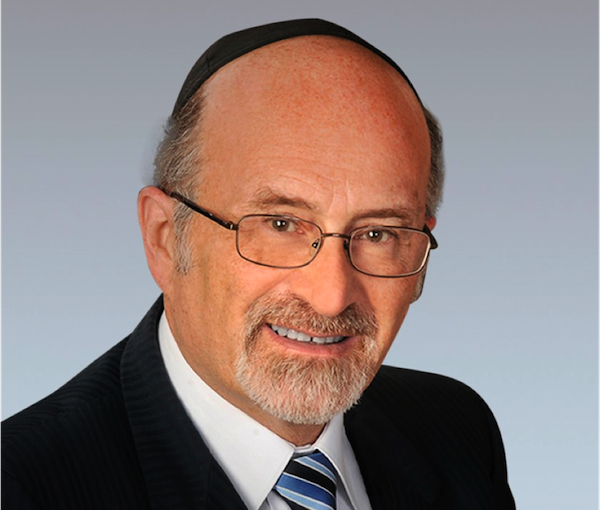
Rabbi Reuven Bulka (photo from thecjn.ca)

Rabbi Reuven Bulka, who served as spiritual leader of Ottawa’s Congregation Machzikei Hadas for 48 years, died of cancer early on June 27 in New York. He was 77.

Bulka moved to New York to be closer to his five children following a diagnosis of terminal liver cancer earlier this year. His funeral service took place there later on June 27, a video of which can be watched in its entirety online, via thecjn.ca/rabbi-bulka-obit.

Tributes to the beloved rabbi poured in.

Prime Minister Justin Trudeau praised Bulka for his commitment to his country and for inspiring parliamentarians to adopt Kindness Week.

“The Jewish community has lost a giant, the Canadian community has lost a giant and the world at large has lost an unbelievable person,” eulogized Bulka’s son, Shmuel Bulka, at the funeral service.

Shmuel Bulka noted that God “had called for the lefty” – a nod to his father’s love of baseball. “His life’s work was about making the world a better place than it was before he got here.”

He said, “A lot of people today, when they see people who are different, all they do is go toward the differences. Some people make a career out of exploiting the differences. My father was the exact opposite. He would always look for commonalities.”

Sen. Jim Munson, a close friend whose Kindness Week bill, inspired by Rabbi Bulka, received royal assent earlier this year, tweeted that his “heart aches” over Bulka’s death.

Ottawa Mayor Jim Watson praised Bulka as an outstanding community leader.

“He epitomizes kindness,” said Watson, who knew the rabbi for more than 30 years. “He was a larger-than-life figure in our community. He was a great supporter when the community needed him most.”

Andrea Freedman, president of Jewish Federation of Ottawa, told CBC that Bulka “had this amazing ability to just think through how something could be phrased that would help other people feel better.”

Retired Ottawa Police chief Charles Bordeleau said, “Rabbi Bulka was a pillar in our community and changed our country for the better. He was always there for Ottawa Police and a proud supporter of the men and women who keep Ottawa safe.”

Bulka’s passing “leaves an enormous void in our country,” tweeted CTV chief news anchor Lisa LaFlamme. “He was a man who built bridges and inspired goodness. A healer in a divided nation. I will miss our personal conversations and his public Remembrance Day benedictions.”

At a worldwide virtual prayer service for Bulka in January, former prime minister Stephen Harper said he’d had many opportunities to see the rabbi at local and national public events, and to visit with him.

“It is not for nothing Rabbi Bulka has been called Canada’s rabbi,” said Harper. “Throughout his long life, he has been a credit to his faith, to the wider community and great country.”

Harper said the main lesson he learned from Bulka is to live life from two perspectives, gratitude and hope. “Gratitude for all that we have, all that God has given us, and hope for what the future may bring,” said Harper.

Bulka was born to Rabbi Chaim Yaakov and Yehudis Bulka in London, England, on D-Day, June 6, 1944. Two years later, the family moved to the United States, where his father taught at Hebrew schools in Providence, R.I., and Rockaway, N.Y., before becoming rabbi of a synagogue in the Bronx.

Rabbi Reuven Bulka received semikhah (ordination) from the Rabbi Jacob Joseph Rabbinical Seminary in 1965, and earned a bachelor of arts degree in philosophy from City University of New York the same year.

He briefly served as an associate rabbi at Congregation K’hal Adas Yeshurun in the Bronx, before becoming rabbi of Congregation Machzikei Hadas in Ottawa in 1967. He received master’s and PhD degrees from the University of Ottawa in 1969 and 1971, respectively, concentrating on the life and work of Holocaust survivor and psychiatrist Viktor Frankl.

Bulka was an authority on Frankl’s use of logotherapy, which teaches that humans’ search for meaning in life is their prime motivational force. He later became the founder and editor of the Journal of Psychology and Judaism. He authored some 30 books and dozens of columns in the Ottawa Citizen. He was the go-to rabbi for reporters seeking a quote on a Jewish issue.

Bulka’s local initiatives included interfaith outreach and work with the United Way and with Canadian Blood Services.

A fixture at national Remembrance Day ceremonies in Ottawa for many years, Bulka’s name was “synonymous” with Remembrance Day, Maj.-Gen. Guy Chapdelaine, chaplain general of Canada’s Armed Forces, told last January’s prayer service.

He also noted Bulka’s support for Armed Forces chaplains and the Royal Canadian Legion.

Bulka was also awarded the Canadian Forces Medallion for Distinguished Service “for inspiring sermons, venerable presence and meaningful messages to Canadians during the national Remembrance Day ceremonies.”

The rabbi founded Kind Canada, a nonprofit that encourages kindness. In 2019, the city named Rabbi Bulka Kindness Park in Ottawa’s Alta Vista neighbourhood. The first national Kindness Week is slated for February 2022, and Canadians are called on to carry out acts of kindness in their communities during the third week of February every year.

The week could “potentially raise the Canadian consciousness of the importance of kindness, and the ensuing commitment thereto, to levels that will make our great country even greater and make a large dent in some of the critical issues we face, including mental health, the cost of health care and bullying, among others,” Bulka told the senate committee studying the kindness bill.

In 2010, the rabbi was awarded the key to the City of Ottawa. He was named to the Order of Canada in 2013.

He addressed the COVID pandemic at the prayer service for him, saying that, if anything was learned from it, “it’s that we’re all in this together, and the more together we are in this, the better we’re going to get out of it.”

He said the most important thing in life “is to appreciate each other.” Differences “fade into insignificance when we realize the blessings we have.”

Rabbi Bulka is survived by his wife, Leah, and five children: Yocheved Shonek, Rina Levy, Shmuel Bulka, Eliezer Bulka and Binyomin Bulka. His first wife, Naomi, died in 2001. He is to be buried in Israel in a private service.

– This article originally appeared on thecjn.ca.
Format ImagePosted on July 9, 2021July 7, 2021Author The CJN StaffCategories NationalTags Machzikei Hadas, memorial, Ottawa, Reuven Bulka
Future of Film Showcase starts July 9

Future of Film Showcase starts July 9

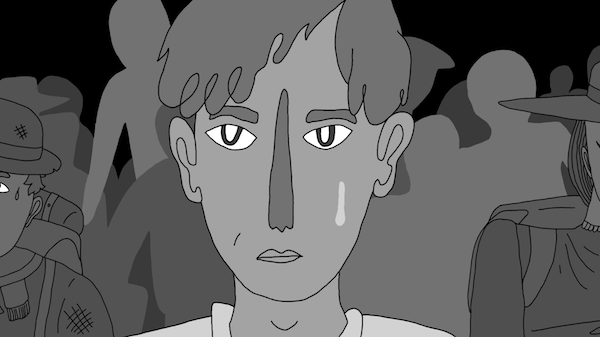
A still from Max Shoham’s animated film Sophie and Jacob.

The Future of Film Showcase, an annual short film festival and professional development conference dedicated to fostering the future of emerging Canadian filmmakers, features 11 shorts from Canada’s most promising new voices aged 40 and younger. This year’s slate includes Toronto Jewish community member Max Shoham’s animated film Sophie and Jacob, based on the true story of his great-grandparents, who find love while fleeing Nazi-occupied Romania in 1939. Shoham is a graduate of Etobicoke School of the Arts, where he majored in film, and is currently at Concordia University studying film animation.

The Future of Film Showcase takes place July 9 to 22, with films available to stream for free on the CBC Gem streaming service.

– Courtesy Future of Film Showcase

Format ImagePosted on July 9, 2021July 9, 2021Author Future of Film ShowcaseCategories TV & FilmTags animation, CBC, FOFS, Future of Film Showcase, Gem, Holocaust, Max Shoham
Libby Yu plays music for soul

Libby Yu plays music for soul

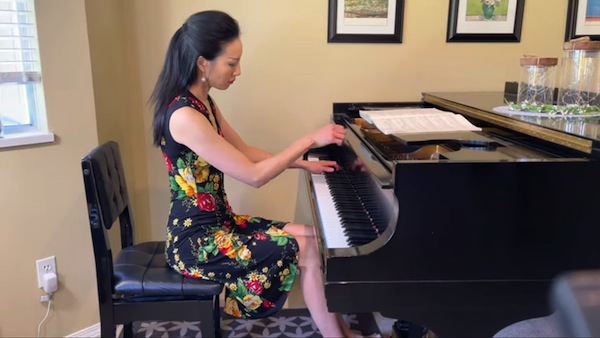
Libby Yu performed A Concert for the Soul on June 28, hosted by Jewish Seniors Alliance and the Kehila Society of Richmond. (screenshot)

On June 28, Jewish Seniors Alliance and the Kehila Society of Richmond presented classical pianist Libby Yu in performance via Zoom. A Concert for the Soul was the last session of the 2020-21 JSA Snider Foundation Empowerment Series.

Toby Rubin, coordinator of Kehila Society, welcomed everyone to the concert and introduced Yu, who was born and grew up in Richmond. An accomplished performer, collaborator, teacher and adjudicator, Yu has graced international stages and has appeared as soloist with major symphony orchestras. She brings her passion for music to audiences of all ages and venues. She is an artist for the Health Arts Society’s Concerts in Care, which allows her to share her music in residential care homes and hospitals. Rubin encouraged us all to watch Yu’s fingers as they moved on the keyboard.

Yu greeted everyone from her home, saying how much she enjoys performing for JSA and Kehila and that she looks forward to playing for us in person in the future. She told us that she would be playing Ludwig van Beethoven, Franz Schubert and Frédéric Chopin.

The first piece was Beethoven’s Moonlight in three movements. The first was slow, the second light and happy, while the third was dramatic with many runs and chords.

The next piece was Schubert’s Impromptu, 4th Opus in A Flat Major. This piece is full of cascades, arpeggios, with a beautiful melody. It is in the ABA format, where the third movement returns to the melody of the first.

This was followed by two of Chopin’s Etudes, the first in F minor and the second his well-known revolutionary étude that reflects his turmoil over the instability of his native Poland.

Yu ended her performance with a Chopin Ballade, in G minor. The main theme is a quiet, still melody that builds in virtuosity and then flourishes to huge dramatic chords. The coda is fast and exciting.

It is indeed a pleasure to watch Yu in her intensity and concentration. After her performance, she thanked us and said she hoped the music brought us all joy.

Gyda Chud, co-president of JSA, thanked Yu for the program. She reminded everyone that, in the past, events with Kehila have included lunch and, hopefully, we will all be able to enjoy both lunch and a performance in person soon.

Chud again thanked Yu, saying the concert was not only an inspiration for the soul, but also for the heart and mind.

The Empowerment Series will continue with the theme “Be Inspired” for the 2021-22 season.

Shanie Levin is program coordinator for Jewish Seniors Alliance and on the editorial board of Senior Line magazine.

Format ImagePosted on July 9, 2021July 7, 2021Author Shanie LevinCategories MusicTags Jewish Seniors Alliance, JSA, Kehila Society, Libby Yu, music, piano, seniors
The need to support caregivers

The need to support caregivers

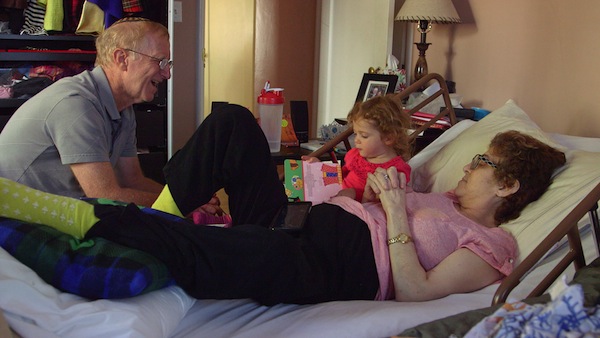
Rick Tash is the primary caregiver of his wife, Bambi Fass, who is dying of cancer. (still)

A new short film by Dr. Jessica Zitter and Kevin Gordon gives an intimate look at the toll involved in caring for a loved one at the end stages of their life.

Zitter happened upon palliative care, she said, before “anyone even knew how to spell the word ‘palliative,’” after she had “finally realized I’d been feeling a lot of burning walls of stress in the way that I had been practising medicine.”

A physician in Northern California, Zitter said, “I’d been treating patients like objects on a conveyor belt, instead of as people, and then began to practise, for the next two decades, palliative care and critical care at the same time, providing me with a strange vantage point within the world of medicine.

“I was inspired to write and share stories about what’s going on in hospitals, and about how we’re treating the seriously ill among us … and I also continue practising medicine.”

Zitter at first opted to educate the public via books, but then she encountered the power of film. “I realized, all these messages I’m trying to get across to people – about medical culture and about what we want to think about differently – they’d lend themselves so well to film, to show the experience of the patient. If a picture is worth 1,000 words, I realized that a movie is worth much more than 1,000 pictures.”

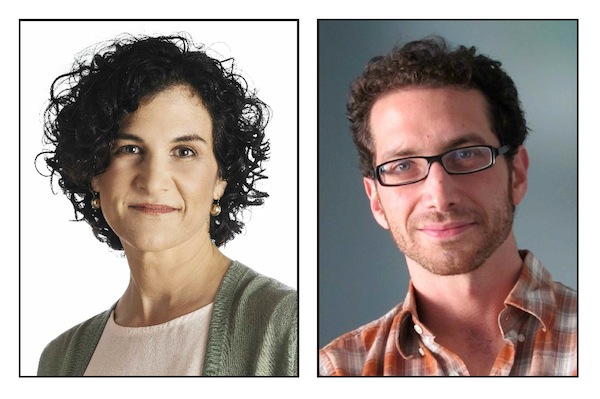
photos - Dr. Jessica Zitter and Kevin Gordon are directors of the short film Caregiver: A Love Story
Dr. Jessica Zitter and Kevin Gordon are directors of the short film Caregiver: A Love Story. (photos from Jessica Zitter)

In the 24-minute Caregiver: A Love Story, the audience meets a woman Zitter met at synagogue, Bambi Fass, and Fass’s husband, Rick Tash. Fass was dying of cancer and Zitter offered palliative care, but was refused, until Fass’s condition became dire.

“She called me and she was extremely sick and had deteriorated,” Zitter told the Independent. “She said she needed help and, that day, we got her into hospice care. She was so, so sick and in so much pain and suffering. That day, her life turned around for the better. All of a sudden, she was living again.”

That is when Zitter asked Fass if she would be willing to be filmed. “She replied, ‘I want to help someone else … if you want to write about me or anything.’ She knew about my book. That’s when we got a film crew. I thought the film would be about her, an amazing woman. What I didn’t realize then is that it would actually end up being about her husband as the main focus. I thought he was just going to be the guy who opens the door for the hospital, but he ended up being a central character.”

Fass had sat a few rows in front of Zitter at their synagogue. “She had a long braid of hair,” recalled Zitter. “I’d always see it from behind. I didn’t know her really, but I did wonder…. She was very, very sick…. I knew she was, because she had brain metastasis. She was vivacious and funny. She was staring her death in the face and she still had a sense of humour. She was a hero, a really fascinating character.”

It took almost two years to put the movie together and to fully grasp the importance of sharing it with the world.

“I never realized – the invisible public health crisis, family caregiver burden – how much this story needed to be told,” said Zitter. “The original intention I had for this film was to show how, once you make the right decision, everything will be OK…. I then realized how naïve that message was. It’s not that easy. You can make decisions that feel like they’re going to be the right choice for the patients, but will it be the right choice for the family as a whole? We have to be much more holistic when we think about our patients. It really needs to include our families as well.

“Even in a loving, caring and organized community like ours, we aren’t necessarily focusing on and supporting the family caregivers among us,” said Zitter. “And there are a lot of family caregivers – rising numbers – with very little support. An organized community has been unable to attend to this man [Tash] who is deteriorating in front of our eyes, because they don’t know what to do with him. We’re not primed to think about caregiver burden as an urgent task.”

Zitter found that her synagogue had no committee to assist family caregivers, and her hospital community was also not paying attention to caregivers.

“They’re an invisible workforce that we don’t pay attention to,” said Zitter. “We don’t attend to them, we don’t think about them, we don’t identify them, we don’t include them in the conversation. But they’re a huge part of our workforce … and we’re just ignoring them.”

Zitter’s hope is that people from various communities, including synagogues, churches and mosques, will watch this movie and then establish a workshop for family caregivers and identify ways to support caregivers. To that end, she has created a keynote message and an hour-long program to raise awareness of this crisis and do something about it.

“The best place to start is at caregiveralovestory.com,” she said. “You can go on the website and see public screenings that are coming up and other ways to watch the film yourself, whether bringing it to your organization or watching it privately.”

Currently, Zitter is working on a film about deathbed spirituality and prayer, as well as on a movie about Ethan Sisser, a Jewish Buddhist.

“Ethan was an amazing, amazing guy,” said Zitter. “He died about two or three months ago. He has a community following on social media. A lot of young people were just so moved by the way he viewed his death and the bravery and beauty of his final days…. We’re making a film about him, which will be beautiful and, hopefully, you’ll see that soon.”

Rebeca Kuropatwa is a Winnipeg freelance writer.

Format ImagePosted on July 9, 2021July 7, 2021Author Rebeca KuropatwaCategories TV & FilmTags Bambi Fass, cancer, caregiver, education, health, Jessica Zitter, Kevin Gordon, Rick Tash
Addicted to streaming

Addicted to streaming

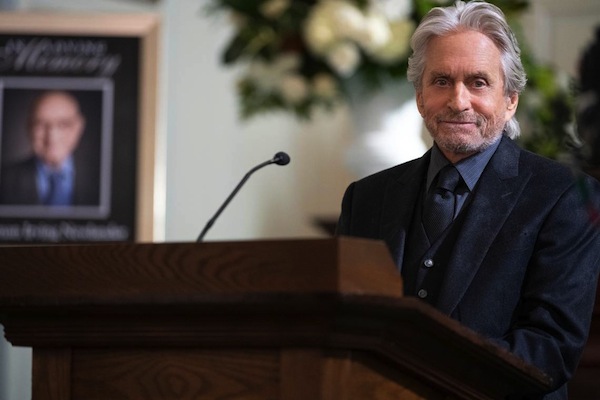
Michael Douglas stars as Sandy Kominsky in The Kominsky Method on Netflix. (photo by Anne Marie Fox / Netflix)

I admit to watching movies and television series on Netflix, kanopy.com, Amazon Prime, TIFF, VJFF and any other website that offers movies and TV shows. I watch Netflix and Amazon Prime on my television set and everything else on my desktop PC. I do not feel guilty nor am I ashamed!

I may never go to a movie theatre again. I like setting my own schedule, I like not having to find parking. I like not standing in line. And I love subtitles. I wear two hearing aids, so, even though I can hear, I sometimes have trouble understanding what the actors are saying, especially if they have accents (I love foreign films). I watch everything with subtitles. What a relief.

Total freedom is at hand. I can stop the show and go to the bathroom, I can prepare a meal and then sit down to eat it while watching my show, I can watch three or four episodes in a row. I am in control! I can start a series and, if I do not like it, I stop watching – too violent, too slow, whatever! I can watch the first season of a series and decide that one season is enough, or I can continue to watch. My record is nine seasons of Doc Martin. Instant gratification you say; you bet!

After one-and-a-half years of COVID-19 restrictions, I can honestly admit that I am addicted to streaming. It has been a wonderful way to be entertained, educated and inspired. I will watch movies, especially foreign films, documentaries and TV series. I now watch much less news on the television. COVID-19 and the pandemic have dominated all newscasts, Israeli politics is getting weird and, frankly, I am tired of seeing Prime Minister Justin Trudeau in need of a haircut.

Raise your hand if you also exhibit some of these symptoms! Ah, wonderful, how comforting to know that I am not alone. By the way, I still managed to create and publish four editions of Senior Line magazine for Jewish Seniors Alliance, do my four physical workouts a week, study twice a week with Hebrew teachers and walk the dog four times a day. I am not a reprobate.

Here are some of my favourite television shows (in alphabetic order):

Amazon Empire: The Rise and Reign of Jeff Bezos: A documentary about the man who changed almost everything. Love him or hate him. Always fascinating.

Blackspace: The most evil bunch of high school students you never want to meet. (one season)

Diagnosis: A documentary that highlights difficult case studies in medicine.

Halston: Elegant and wicked, love the fashion and New York City. (one season)

Jeffrey Epstein, Filthy Rich: A revealing documentary of exploitation and excess.

Lupin: Smart, witty and stylish heist/drama. (two seasons)

New Amsterdam: A medical soap opera of the finest quality. (two seasons)

Nomadland: A woman wanders in her van, grieving her loss, in search of meaningful connections. A soulful and beautiful film.

Shtisel: A warm and delightful view of the ultra-Orthodox lifestyle in Jerusalem. (three seasons)

Snowpiercer: Shocking, violent and riveting end-of-the-world scenario. (two seasons)

The Crown: Queen Elizabeth et al. Just marvelous. (four seasons)

The Kominsky Method: Geriatric best friends, their loves and lives. (three seasons)

Dolores Luber, a retired psychotherapist and psychology teacher, is editor-in-chief of Jewish Seniors Alliance’s Senior Line magazine. She works out four times a week, studies Modern Hebrew twice a week, and is constantly reading books and watching movies. Her motto is “Never underestimate an old lady who can deadlift you.”

Format ImagePosted on July 9, 2021July 7, 2021Author Dolores LuberCategories TV & FilmTags coronavirus, COVID-19, reviews, streaming
Sweet summer dessert treats

Sweet summer dessert treats

(photo from twopeasandtheirpod.com)

They don’t make ’em like they used to. And, almost without exception, recipes from yesteryear are tastier, precisely because they’re reminiscent of gentler times. When I think Rice Krispie squares, I recall sitting on our old brown couch in the den, watching Ed Sullivan with the whole family. And I longingly remember eating Mom’s cheesy broccoli soufflé during Rosh Hashanah. Or, I’m back in 1966, enjoying a mountain of fried onions with my mother’s world-class chicken livers. And those salmon patties! And how about that creamed tuna in patty shells? Does anybody even eat this stuff anymore? If not, it’s a crying shame.

Maybe it’s a longing for those days when you could send your children out into the neighbourhood armed with only roller skates, in the certainty that they would be back, safe and unharmed, for lunch (or dinner, depending). A time when TV dinners were acceptable and ubiquitous. (I especially liked the one with fried chicken, corn, peas and tiny, unnaturally square carrots, mashed potatoes and canned pears/peaches.) I remember when an hourglass figure was desirable, and women actually ate to their fill. Of course, most of them smoked, too, but that’s a whole other column. I’m talking food right now. Uncomplicated, unapologetic, unfussy food. Anybody remember chip steaks? How about fondue? Sloppy Joes? Pineapple upside down cake? Aspic (now that’s one heinous creation)?

What’s old can always be new again. Especially if you’re willing to look the other way when it comes to nutrition, calories and cholesterol. Some of my favourite desserts are classic 1950s and ’60s numbers. In other words, any recipes that call for Jello or Dream Whip. And, preferably, have fewer than five ingredients.

My dad, alav hashalom, loved one particular dessert I made. Not that my repertoire was so enormous back then, but, still, it was always a winner with Dad. He’d take one bite and look at me like I’d just discovered fire. It was an easy (understatement of the millennium) recipe given to me by a woman I used to work with when I was a librarian at West Kildonan Library, in the North End of Winnipeg. Naturally, I just call it Liz Westlake’s Jello Dessert. I don’t make it very often, because I’m afraid of being shamed by my fancy foodie friends. But, occasionally, I break down and splurge. Let it be known, however, that no one – I repeat, no one – ever turns down a second piece of this dessert. It’s quaint, refreshing and … old-fashioned.

LIZ WESTLAKE’S JELLO DESSERT

1 can (398 ml or 14 oz) fruit cocktail (drained)
1 1/3 cup Graham cracker crumbs
1/3 cup melted butter
1/4 cup brown sugar
1 box cherry Jello

Preheat oven to 375°F. Mix the Graham cracker crumbs together with the melted butter and brown sugar and pat it into the bottom of a springform pan. Bake for five to seven minutes.

Make the Jello according to the instructions on the box and, when half congealed, but still smooth enough to stir (approximately 1 1/4 hours), add the drained fruit cocktail to the Jello and mix it together. Pour this on top of the Graham cracker crust and refrigerate until completely firm. (If you want to get really fancy shmancy, you can put whipped cream on top. I don’t – I’m a purist.)

Even the most kitchen-challenged soul can make this dessert. And I guarantee it’s a winner, especially on a hot day. Once again, you’re welcome.

Now to a sturdier sweet – the ubiquitous chocolate chip zucchini brownie. Anyone who grows zucchini knows that it can take over your entire garden. If you let it. This is all hearsay, of course, since I’m known far and wide to have a black thumb. But I read a lot. And I’ve heard of people whose gardens produce so much zucchini that they sneak out in the dead of night and drop bags of zucchini on neighbours’ doorsteps, then flee into the darkness, nary a trace of their identity to be found. Personally, I just buy mine at Safeway. But I’m getting off track. This dessert is easy, healthy (OK, let’s just say it’s in the general vicinity of health) and satisfying for those with a hankering for chocolate.

CHOCOLATE CHIP ZUCCHINI BROWNIES

1 1/2 cup white sugar
1/2 cup canola oil or vegetable oil
2 cups all-purpose flour
1/4 cup unsweetened cocoa powder
2 cups shredded zucchini (but don’t squeeze out the liquid)
2 tsp vanilla extract
1 tsp salt (or a little less)
1 1/2 tsp baking soda
1 1/4 cup semi-sweet chocolate chips

Preheat oven to 350°F. Grease a 9”x13” baking pan and set it aside.

In an electric stand mixer, or using a hand mixer, combine the sugar, oil and flour. It will look dry, but that’s OK. While mixing on low speed, add the cocoa, shredded zucchini, vanilla, salt and baking soda. Mix until well combined. Stir in the chocolate chips.

Pour the batter into the greased pan and bake for 28 to 32 minutes or until a toothpick inserted in the centre comes out clean. The brownies should look set, not mushy. Cool completely on a wire rack. Cut into squares and serve.

Don’t even consider asking me how many calories there are in one square. Think of it as a serving of vegetables. I mean, there is something green in there. Beigey-green? For goodness sake, just enjoy, and stop with the guilt. They’re a nice, moist alternative to regular brownies and you get to feel all high and mighty because they’re [semi] healthy.

If neither of these desserts float your boat, try making your own popsicles. Nothing spells old-school quite like those plastic popsicle molds with the multi-coloured tops. You can over-spend and get the molds at one of those highfalutin, hoity-toity kitchen stores, or you can rock it like it’s 1964 and buy them at your local dollar store. I chose Door #2, and it works just fine. (There’s also the ice-cube tray option, with toothpicks as the popsicle sticks.) There are a gazillion recipes for popsicles on the internet, most of them calling for Greek yogurt, frozen fruit, juice and honey. Check ’em out and keep cool.

Shelley Civkin, aka the Accidental Balabusta, is a happily retired librarian and communications officer. For 17 years, she wrote a weekly book review column for the Richmond Review. She’s currently a freelance writer and volunteer.

Format ImagePosted on July 9, 2021July 7, 2021Author Shelley CivkinCategories LifeTags Accidental Balabusta, baking, brownies, cooking, desserts, Jello, nostalgia, recipes
Picnic sandwiches and salads

Picnic sandwiches and salads

(photo from vancouversnorthshore.com)

The sandwich as we know it was created in England in 1762 by John Montagu, the fourth Earl of Sandwich, a British statesman and gambler. He asked for a serving of roast beef to be placed between two slices of bread so he could eat with his hands and not have to get up from the table when he was playing cards or gambling. Here are some sandwiches good for your table – or a picnic.

MIDDLE EASTERN PITA SANDWICH
(makes eight sandwiches)

1 15-ounce can chickpeas
1 tbsp lemon juice
1/4 cup chopped onions
1 minced garlic clove
2 tsp vegetable oil
1/4 cup tahini
1/2 cup toasted sesame seeds
8 pieces pita
shredded lettuce
sliced olives
chopped tomatoes
chopped dill pickles

  1. Drain chickpeas and reserve three tablespoons of liquid.
  2. Place chickpeas, liquid and lemon juice in a blender or food processor and blend until pureed.
  3. Heat oil in a frying pan and sauté onion and garlic until tender.
  4. Combine pureed chickpeas, onion-garlic mixture, tahini and sesame seeds in a bowl.
  5. Split pita and fill with chickpea mixture. Add any of the accompaniments: lettuce, olives, tomatoes and/or pickles.

TUNA SANDWICH
(makes two cups)

6 tbsp cream cheese
1 cup sour cream
7/8 cup flaked tuna
2 tbsp finely chopped onions or scallions
2 tsp horseradish
1 tsp Worcestershire sauce

  1. Beat cream cheese and sour cream in a bowl until fluffy.
  2. Add tuna, onion, horseradish and Worcestershire sauce and blend.
  3. Let stand in refrigerator at least two hours. Remove and spread on bread or rolls.

GAZPACHO SANDWICHES
(makes eight servings)

8 round hard rolls
butter or margarine
4 medium or 6 small thinly sliced tomatoes
2 thinly sliced cucumbers
4 tbsp minced green peppers
2 tbsp minced onions
oil-and-vinegar dressing

  1. Cut tops from rolls and remove some bread from the tops and bottoms, leaving a thin shell. Spread sides of rolls with butter or margarine.
  2. Put tops and bottoms together, wrap airtight and refrigerate.
  3. In a bowl, combine tomatoes, cucumber, green peppers and onion. Add enough dressing to moisten well and toss. Cover and refrigerate at least one hour.
  4. Fill roll bottom with gazpacho mixture, replace tops and cut in half. Serve at once.

* * *

Many people think of potato salad as a good accompaniment for summer picnics, but they can also be used as a meat or poultry accompaniment at the dinner table, as well. In Europe, often, potato salad is served warm with vinegar and oil and herbs as a dressing, while Americans add mayonnaise. Here are a few of my favourites.

CREAMY POTATO SALAD WITH LEMON AND FRESH HERBS
(This recipe is adapted from one in Bon Appetit magazine. It makes four servings.)

1 1/2 pounds baby red potatoes
1 1/2 tbsp rice vinegar
salt & pepper
3/8 cup mayonnaise
1 to 2 green onions, thinly sliced
half a celery rib, cut into 1.5-inch slices
1 tsp dry parsley
1 tsp dry basil
1 tbsp chopped fresh dill
3/4 tsp grated lemon peel

  1. Drain cooked potatoes and let stand 20 minutes.
  2. Cut potatoes in small pieces and place in a bowl. Toss with vinegar, salt and pepper.
  3. Add mayonnaise, onion, celery, parsley, basil, dill and lemon peel and toss. Cover and chill until ready to serve.

DIJONNAISE POTATO SALAD
(makes three cups)

1/2 cup light mayonnaise
2 tbsp Dijon mustard
2 tbsp cider vinegar
1 tbsp fresh or 1/2 tsp dry dill or parsley
salt & pepper to taste
1 pound cooked, cubed red potatoes
1/2 cup minced celery
1/4 cup minced green onions

  1. In a bowl, combine mayonnaise, Dijon mustard, vinegar, dill or parsley, salt and pepper.
  2. Add potatoes, celery and onions. Cover and chill until serving.

NIÇOISE POTATO SALAD
(The original Niçoise salad came from Nice, France, in the 19th century; it had tomatoes, anchovies and olive oil. In a 1903 French cookbook, artichokes, red pepper, black olives and a vinaigrette were added. Over the years, tuna, hard-boiled eggs and green beans also have been added. This recipe makes four servings.)

1 1/2 pounds cooked and drained red potatoes
1/4 pound cooked green beans in one-inch pieces
2 ribs cut celery
1 sliced red pepper
1/2 sliced red onion (optional)
1 1/2 tbsp Dijon mustard
1 6.5-ounce drained can tuna packed in olive oil
10 pitted, sliced black olives
8 halved cherry tomatoes
3 cut up hard-boiled eggs
minced tarragon or chives

dressing
1/2 cup olive oil
1/4 cup lemon juice
2 tbsp red wine vinegar
3 rinsed & dried anchovies
3 tbsp minced fresh or 1 1/2 tsp dry tarragon
salt and pepper to taste

  1. Combine olive oil, lemon juice, wine vinegar, anchovies, tarragon, salt and pepper in food processor or blender and mix until smooth.
  2. Place potatoes in bowl, add dressing and toss.
  3. Add green beans, celery, red pepper, red onion, Dijon, tuna, tomatoes, eggs, tarragon and chives. Toss gently and serve!

Sybil Kaplan is a journalist, lecturer, book reviewer and food writer in Jerusalem. She created and leads the weekly English-language Shuk Walks in Machane Yehuda, she has compiled and edited nine kosher cookbooks.

Format ImagePosted on July 9, 2021July 14, 2021Author Sybil KaplanCategories LifeTags cooking, picnics, potato salad, recipes, salads, sandwiches, summer
Help find son, brother

Help find son, brother

Bernard Grempel with his sister, Ettie Shurack. (photo from Grempel family)

Ettie Shurack’s life has been upside down since May 14, her emotions a chaos of desperation, pain, anxiety, frustration and grief, peppered with pinpricks of immense gratitude, appreciation and, always, a glimmer of hope.

May 14 is the date her brother, Bernard Grempel, age 28, went missing. He was last seen at 11 p.m. on the SkyTrain and on bus 340, heading towards the North Delta/Surrey area. Since that time, Shurack, her husband, her parents, friends and volunteers in the Jewish community and beyond have been searching relentlessly for any traces of the young man who mysteriously disappeared. They have scoured the bus routes, knocked on the doors of strangers in those neighbourhoods, interviewed commuters on the transit system and sought out footage from video cameras in relevant areas.

Shurack has created a Tehillim (Psalms) signup sheet with the goal of having the entire book of Tehillim recited until Grempel has been found. She has launched weekend searches, posted flyers, liaised with RCMP in multiple cities of the Lower Mainland and her family is offering a $20,000 reward for anyone with information leading to his safe return home.

She’s emerged, five weeks into the search, feeling very disillusioned with the efforts of the RCMP to help locate and bring her brother home. She noted that the photograph of Grempel initially used was more than a year old. She was also concerned that a police release requested the public’s assistance in locating a missing person who, the release stated, “is apprehendable under the Mental Health Act.”

“Yes, he has mental health problems, but he was living on his own prior to disappearing. I’m confused why they would state he should be returned to the hospital,” she said.

“A mental health diagnosis does not equate to suicide,” she said, responding to one of the theories of what might have happened to Grempel. “My brother was taking his medication daily, seeing his counselor regularly and attending appointments with his psychiatrist. His mental health team had seen him the week he went missing.”

If determination had a face and name, it would be Ettie Shurack. She, her husband and parents are deeply committed to continuing the search for their missing son and brother and thank those who share their quest.

“I ask the public to continue helping with our search parties and to share our search on social media. In Surrey, 64th and Scott Road, and 72nd and Scott Road, are our focal points but we ask that anyone and everyone in the Lower Mainland continue to keep their eyes out for him.”

She asks that anyone with information or the ability to help email her at bringbernardhome@ gmail.com or call 778-838-5095. She has a WhatsApp group at 631-320-8225 and a Facebook page called Let’s Find Bernard Grempel.

Lauren Kramer, an award-winning writer and editor, lives in Richmond. To read her work online, visit laurenkramer.net.

Format ImagePosted on June 25, 2021June 24, 2021Author Lauren KramerCategories LocalTags Bernard Grempel, Ettie Shurack, family, missing person, RCMP
Honouring women’s courage

Honouring women’s courage

Anne Petrie (photo from Maurice Yacowar)

The University of Calgary has organized a virtual exhibition to honour the efforts of Jewish women in the Canadian Armed Forces during the Second World War. Called She Also Served, it comprises a series of nine banners by various artists.

Originally scheduled to be displayed at the Military Museums in Calgary during Jewish Heritage Month in May, it has been made available online throughout 2021 and will be physically hung in May 2022. Of the 17,000 Jews who served in the Canadian armed services, more than 275 were women.

Among those selected to display their work is Anne Petrie of Victoria. For her banner, a digital print called “In the Tradition of Service,” Petrie chose to list all the known names of the Jewish Canadian servicewomen. She used a font that is reminiscent of the typewriters of the 1940s. Another layer of the banner has the names of 12 biblical heroines, confirming the tradition of Jewish women’s courage and dedication to serving their communities.

“I was immediately struck by knowing that, although they would not have had to hide their Jewish identity, it was still in those days not something that you would be comfortable being completely open about,” Petrie told the Independent. “Even if it was, at best, very casual antisemitism, it was a reality when they would have signed up. So, there you are fighting (even if it’s only at a desk) for something – a religion, a people, a culture – that you can’t really be openly passionate about.”

image - Anne Petrie’s “In the Tradition of Service,” 2021. Part of the She Also Served exhibit, now online
Anne Petrie’s “In the Tradition of Service,” 2021. Part of the She Also Served exhibit, now online.

For Petrie, She Also Served is an opportunity to reveal and contextualize the “Jewishness” of that other “them, the unsung and – worse – unidentified Jewish-Canadian women soldiers.” She said she is honouring them by naming them in “their doubly suppressed identities, as women and Jews.”

Petrie’s intention was to present the full names and rank (where available) of all the Jewish women known to have served. The collection of names fills the background layer of the 75-by-165-centimetre banner. Each name is in the colour of their respective services: olive green for army, dark navy for the navy and a lighter “air force blue” for the Women’s Army Corps. Emerging from the background in a larger, translucent Hebrew script, and in a camouflage pattern, are the names of Judaism’s biblical heroines, “themselves often subordinated by patriarchal tradition to the male heroes,” said Petrie.

“In making the banner itself, I was struck by how powerful it was to actually write out all the 279 names of the Jewish servicewomen that have so far been identified. I knew none of them personally, of course, but I felt that typing each name was a kind of acknowledgement and, strange as it sounds, I did feel a kind spirit or presence as I typed each of the names. I only wish we did know more about them, but I understand that research is continuing and, hopefully, there will eventually be stories attached to each of these women’s names,” she said.

Petrie thanked Janice Shulman and Rabbi Lynn Greenhough for their assistance with the project.

Prior to beginning her work as an artist, Petrie’s career spanned more than 30 years in radio and television, where she worked as a researcher, producer, documentary-maker, columnist and commentator in news and current affairs. She is also the author of several non-fiction books: Ethnic Vancouver, Vancouver Secrets and Gone to an Aunt’s: Remembering Canada’s Homes for Unwed Mothers.

After retiring from the CBC, she returned to school and obtained a bachelor of fine arts from the Alberta College of Art and Design in 2008. Since then, she has had a number of exhibitions. Her next exhibit, said/unsaid, is a two-person show with Jane Coomb – it opens at the errant artSpace gallery in Victoria (975 Alston St.) on July 9.

The other artists whose work is featured in She Also Served are Razieh Alba, Sophia Borowska, Alysa-Beth Engel, Lily Rosenberg, Talie Shalmon, Jules Schacter, Bev Tosh and Susan Turner. The representations exploring the servicewomen’s experiences range from naturalistic to abstract. Some works use archival photographs, while others use media include oil painting and paper-cutting.

The stories of 41 Jewish servicewomen are also featured on the website. These accounts were an impetus for the call for submissions for the exhibition, which was curated by the University of Calgary’s Prof. Jennifer Eiserman and librarian emerita Saundra Lipton. They ask for help in “completing the story” from anyone who has more information about the featured servicewomen and any of those identified in the list of names collected.

To view the exhibition, visit live-ucalgary.ucalgary.ca/she-also-serves/exhibition.

Sam Margolis has written for the Globe and Mail, the National Post, UPI and MSNBC.

Format ImagePosted on June 25, 2021June 24, 2021Author Sam MargolisCategories National, Visual ArtsTags Anne Petrie, art, Canada, memorial, Military Museums, Second World War, She Also Served, University of Calgary, women
Having the hard discussions

Having the hard discussions

Rabbi Hanan Schlesinger, above, and Noor A’wad of Roots Palestinian-Israeli Network were the featured speakers at Vancouver School of Theology’s Two Truths in One Heart; Two Peoples in One Land event May 27. (photo from friendsofroots.net)

Two Truths in One Heart; Two Peoples in One Land, a discussion on the Roots Palestinian-Israeli Network, with speakers Rabbi Hanan Schlesinger and Noor A’wad, took place on May 27 as part of the Religion and Thoughtful Activism conference organized by the Vancouver School of Theology (VST).

Formed in 2014 by peace activist Ali Abu Awwad and Schlesinger, Roots is a group based in the Gush Etzion settlements of the West Bank that believes the path towards peace between Palestinians and Israelis is through dialogue.

“In the West Bank, Jews and Arabs live completely separately with no connections at all,” said Schlesinger, an Orthodox rabbi, passionate Zionist settler and director of international relations for Roots. Everything, he explained – from legal systems to health systems, transportation to universities – is separate. The separation is so complete that Palestinians are forbidden from entering Israeli areas and vice versa.

“If I were to say that there is no common ground between Jews and Palestinians, I would not be exaggerating, and I would not be speaking metaphorically. There is literally no common ground as far as geography goes. If there had been a place for a crazy Israeli Jew and a Palestinian who wanted to meet for coffee, there would have been no place to do it,” he suggested.

At least, this was the case, he said, until seven years ago, when Roots was formed and when the Dignity Centre, a community centre where the two sides can meet with equality and mutual recognition, was created.

Schlesinger spoke of the great apprehension and trepidation each side has in coming together at such a place. Yet, often, at the end of an event at the centre, people come to Schlesinger, saying how wonderful the simple experience of conversing with a member of the other side is.

“People are amazed to discover that ‘the other’ is a lot like us. It’s hard to fathom after all the stereotypes and all we on both sides have been taught,” he said.

He likened the animosity each side has to a disease he called “the hubris of exclusivity,” which infects people with a “virus” that makes them believe that their people are the only legitimate people in the region.

Charting his own journey, Schlesinger recounted that, during his first encounters with Palestinians, he began learning that there were not one but two stories in the land where he lives. “For 33 years, I lived in my story and the Palestinians didn’t exist. They were part of the grey drab scenery that passes in the background of a movie but not part of the plot,” he recalled.

He spoke of his initial distrust of Palestinians and his profound reluctance to meet them – a distrust and reluctance shared by his Palestinian interlocutors during their first meetings. Implicit, too, in the unwillingness to meet was the fear that each side had of the other, Schlesinger said.

Noor A’wad, a licensed Palestinian tour guide based in Bethlehem, where he takes English speakers on geopolitical tours, spoke of his family’s long history in the land.

photo - Noor A’wad of Roots Palestinian-Israeli Network
Noor A’wad of Roots Palestinian-Israeli Network (photo from friendsofroots.net)

“I remember growing up during the Second Intifada – some of my family members were killed, others arrested – realizing that this is not a normal life and asking myself why am I living this abnormal life under occupation? The simple answer to the question is, because I am a Palestinian,” A’wad said.

He considered leaving the area, but that urge was outweighed by a sense of responsibility and a sense that there was no other option but to stay in order to best serve his people. Ultimately, he came to learn about nonviolent solutions to conflict.

A’wad described his change of heart upon getting involved with Roots: “When Rabbi Hanan spoke about his identity as a Jew and a settler, these are very loaded words and terminology that is connected to the conflict. For him, I was able to see how beautiful this terminology is because it is part of his identity.

For me, the same terminology is connected to the suffering my people have.”

For A’wad, as with Schlesinger, the acts of sitting and listening to the other were enormously challenging. Nonetheless, each persevered and, in the process, they discovered a partner in dialogue and perhaps the most effective way of understanding the humanity of the other – finding mutual empathy and thereby creating a means to achieve peace.

“What I discovered in Roots is the foundation for any peace process,” said A’wad.

The event was organized by Rabbi Laura Duhan-Kaplan, VST’s director of inter-religious studies. “Our students – most but not all are Christian – are very interested in news about Israel and Palestine. They see Israel as their beloved Holy Land. So, we wanted to introduce them to one of the many NGOs there doing collaborative peace-building work,” she told the Independent.

“I’ve been a supporter of Roots for some years now. Rabbi Schlesinger is a colleague and friend from Clal’s Rabbis Without Borders fellowship program. Still, this event would not have happened without the help of Quebec psychotherapist Colleen MacDougall, another Roots supporter,” she added.

For more information on Roots, visit friendsofroots.net.

Sam Margolis has written for the Globe and Mail, the National Post, UPI and MSNBC.

Format ImagePosted on June 25, 2021June 25, 2021Author Sam MargolisCategories Israel, LocalTags dialogue, Hanan Schlesinger, Israeli-Palestinian conflict, Laura Duhan Kaplan, Noor A’wad, peace, Vancouver School of Theology, VST

Posts pagination

Previous page Page 1 … Page 140 Page 141 Page 142 … Page 492 Next page
Proudly powered by WordPress