Skip to content
  • Home
  • Subscribe / donate
  • Events calendar
  • News
    • Local
    • National
    • Israel
    • World
    • עניין בחדשות
      A roundup of news in Canada and further afield, in Hebrew.
  • Opinion
    • From the JI
    • Op-Ed
  • Arts & Culture
    • Performing Arts
    • Music
    • Books
    • Visual Arts
    • TV & Film
  • Life
    • Celebrating the Holidays
    • Travel
    • The Daily Snooze
      Cartoons by Jacob Samuel
    • Mystery Photo
      Help the JI and JMABC fill in the gaps in our archives.
  • Community Links
    • Organizations, Etc.
    • Other News Sources & Blogs
    • Business Directory
  • FAQ
  • JI Chai Celebration
  • JI@88! video

Recent Posts

  • Sharing her testimony
  • Fall fight takes leap forward
  • The balancing of rights
  • Multiple Tony n’ Tina roles
  • Stories of trauma, resilience
  • Celebrate our culture
  • A responsibility to help
  • What wellness means at JCC
  • Together in mourning
  • Downhill after Trump?
  • Birth control even easier now
  • Eco-Sisters mentorship
  • Unexpected discoveries
  • Study’s results hopeful
  • Bad behaviour affects us all
  • Thankful for the police
  • UBC needs a wake-up call
  • Recalling a shining star
  • Sleep well …
  • BGU fosters startup culture
  • Photography and glass
  • Is it the end of an era?
  • Taking life a step at a time
  • Nakba exhibit biased
  • Film festival starts next week
  • Musical with heart and soul
  • Rabbi marks 13 years
  • Keeper of VTT’s history
  • Gala fêtes Infeld’s 20th
  • Building JWest together
  • Challah Mom comes to Vancouver
  • What to do about media bias
  • Education offers hope
  • Remembrance – a moral act
  • What makes us human
  • המלחמות של נתניהו וטראמפ

Archives

Follow @JewishIndie
image - The CJN - Visit Us Banner - 300x600 - 101625

Images

Weddings to stop plagues

Weddings to stop plagues

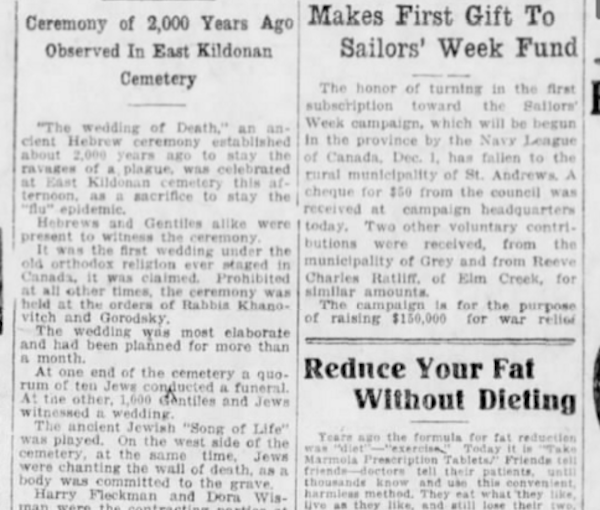
According to the Nov. 11, 1918, Winnipeg Tribune, Rose Schwartz and Abraham Lachterman were married in a plague wedding in Winnipeg, Man. More than 1,000 people attended, Jews and non-Jews.

Relatively early in the evolution of the coronavirus pandemic, in March 2020, there was an unusual wedding in Israel. The ceremony took place in Bnei Brak’s Ponevezh Cemetery. The bride (kallah) and groom (hatan), both orphans, had not previously known each other. Even in the ultra-Orthodox community, where there is a range of arranged to forced marriages, such an event – a black (shvartse) or plague (mageyfe) wedding – is extremely rare.

Written accounts of plague weddings date back almost 200 years, to eastern Europe. In these accounts, one learns that “targeted” couples were people who were orphaned, homeless, or had physical or intellectual challenges. In these scenarios, the community contends it is doing a favour to these brides and grooms, as it assumes that the couple has only a slim chance of marrying otherwise.

Had this contemporary couple under the wedding canopy been free to choose, or had they been coerced or something in between? Were they promised something to get them under the chuppah? Maybe they were gifted, respectively, their wedding dress and suit? There again, however, these outfits could have come from a wedding gemach, a charity warehouse from which people borrow items of clothing. Or perhaps, as was customary in earlier times, some well-to-do community member offered to “set up house” for them.

One thing is clear: even though it wasn’t their families who sat down and discussed terms, this was an arranged marriage. The couple had been picked to stop the ravages of the coronavirus. In a way, they were a sacrificial appeasement to G-d, who was thought to have brought on the pandemic.

The wedding was purposely not conducted in a synagogue, in a wedding hall or in someone’s house. The reasoning was that the community hoped that the souls of those interred in the cemetery would reward this act of marrying two orphans and intercede to block the evil decree. Perhaps, G-d would be induced to have pity on the couple and, by extension, halt the spread of disease.

The first record of a plague wedding goes back to 1831, in Russia, during a cholera pandemic. Another written reference to this type of ceremony dates to 1849, in Krakow, Poland. Another publication, from the early 20th century, deals with stories about Rabbi Elimelekh Weisblum of Lizhensk, who apparently arranged such a marriage in 1785, during a cholera outbreak. Some historians argue that the tradition is older still. In any case, the ritual became firmly entrenched in the Jewish communities of the Russian Empire during the 1892 cholera outbreak. (See Jeremy Brown’s comprehensive article, “The plague wedding,” at traditiononline.org/plague-weddings.)

Over time, the ceremonies became more elaborate. Hanna Wegrzynek writes of “several instances” where part of the cemetery was demarcated, symbolically closing off the affected area, so to speak. Some ceremonies were accompanied by feasts and dancing.

Brown notes that Eastern European Jews who resettled in the United States early in the 20th century brought the plague wedding custom with them. Across the country, during the Spanish flu epidemic (in which my own maternal grandfather almost died), desperate Jewish communities married off dozens of young couples. One of the most celebrated and widely reported plague weddings took place between Harry Rosenberg and Fanny Jacobs in October 1918 at a cemetery near Cobbs Creek in Philadelphia. The event was attended by more than 1,000 people. Unfortunately, genealogical research suggests that neither Harry nor Fanny survived the Spanish Flu, dying along with 50 million others.

In November 1918, Rose Schwartz and Abraham Lachterman were reportedly married in a similar ceremony in Winnipeg, Man.

Yizkor, or memorial, books of Jewish communities wiped out in the Holocaust record a number of black weddings. And three of the most famous 20th-century Yiddish and Hebrew writers make reference to plague weddings.

In 1945, I.B. Singer wrote about a cemetery wedding in his short story Gimpel the Fool: “It so happened that there was a dysentery epidemic…. The ceremony was held at the cemetery gates, near the little corpse-washing hut. The fellows got drunk. While the marriage contract was being drawn up I heard the most pious high rabbi ask, ‘Is the bride a widow or a divorced woman?’ And the sexton’s wife answered…. ‘Both a widow and divorced.’ It was a black moment for me. But what was I to do, run away from under the marriage canopy?”

S.Y. Agnon mentions such a wedding in his 1945 Only Yesterday –  “and they’ve already held a wedding for two orphans on the Mount of Olives to stop the plague.”

This past summer, Jerusalem’s Khan Theatre performed a dramatic adaptation of I.L. Peretz’s 1909 short story In the Time of Pestilence, in which there is a discussion about orphans marrying during an outbreak. The theatre company performed the work at Hansen House, the site of a former hospital for people suffering from Hansen’s disease (also called leprosy).

Since the 1800s, when the first plague wedding was reported, there have been a number of global pandemics. In chronological order, they include cholera, bubonic plague, measles, Russian flu, Spanish flu, Asian flu, HIV/AIDS, SARS and COVID-19. (See “Pandemics That Changed History,” at history.com/topics/middle-ages/pandemics-timeline.)

Even though plague weddings don’t seem to be at all effective in stopping outbreaks of diseases, for the guests, at least, the ceremonies could be seen as a means of escape, for a short time, from worry and despair.

Deborah Rubin Fields is an Israel-based features writer. She is also the author of Take a Peek Inside: A Child’s Guide to Radiology Exams, published in English, Hebrew and Arabic.
Format ImagePosted on March 25, 2022March 24, 2022Author Deborah Rubin FieldsCategories LifeTags cemetery weddings, history, Judaism, pandemics, plague weddings
A roadmap to remembering

A roadmap to remembering

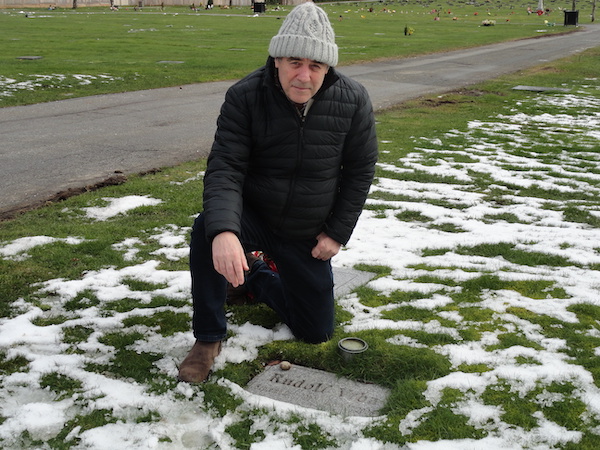
Alan Twigg, author of Out of Hiding: Holocaust Literature of British Columbia, at the gravesite of Rudolf “Rudi” Vrba, who died in 2006. (photo from JCC Jewish Book Festival)

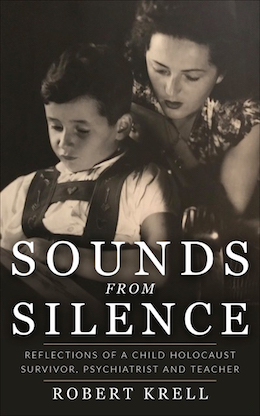
Fittingly for a man who has dedicated his life’s work to the written word, Alan Twigg has compiled a fascinating bibliography. Out of Hiding: Holocaust Literature of British Columbia is one of two books to be launched in a JCC Jewish Book Festival epilogue event on April 5. The other is Sounds from Silence: Reflections of a Child Holocaust Survivor, Psychiatrist and Teacher by Dr. Robert Krell, to whom Twigg’s book is dedicated.

image - Sounds from Silence book cover“More than anyone in Canada, Robert Krell has continuously carried the torches of healing, investigation and discourse about the Shoah since the 1970s to counteract ever-encroaching racism, denial and wilful ignorance,” writes Twigg, whose book is also dedicated to the late publisher and editor Ronald Hatch, who died last November. Hatch and his wife Veronica co-managed Ronsdale Press, which published Out of Hiding.

Among other things, Twigg is the founder of the BC BookWorld newspaper, The Ormsby Review (now called The British Columbia Review), the ABCBookWorld reference site, the Literary Map of BC and the Indigenous Literary Map of BC, as well as many of the province’s literary prizes. He has published 20 books and made seven literary documentaries.

Twigg wrote Out of Hiding with the help of many, including, notably, Yosef Wosk, who wrote the book’s afterword, in which Wosk discusses various kinds of hiding – from one’s mission, from persecution, in dreams, in silence, from truth. Wosk notes that the perpetrators of the Holocaust also tried to hide: “The Nazis engaged in fraud, deception and secrecy on a massive scale,” he writes.

“The secrecy was complete and, to a large extent, effective,” he adds. “The very monstrosity of the crime made it unbelieveable. In fact, the Nazis speculated that the unimaginability of their Aktionen would work in their favour.” But this expectation “was frustrated by the Allied victory. [What remained of] Nazi archives were opened, contemporary Jewish documents were discovered, and facts were ferreted out by courts and scholars. Moreover, by 1942, the Free World had gradually learned the truth, albeit not always complete and precise.”

Wosk concludes, “There is much to remember and even more to know as the Holocaust comes out of hiding.”

And this is one of the reasons Twigg compiled this collection.

“I am not a Jew. I am not a German. I simply believe it is the responsibility of everyone on the planet to know more than just a little about the Holocaust,” begins Twigg in the foreword. “It is our collective responsibility to teach our children – with details – about why the Shoah is unique among the many genocides.”

He points out: “No other political regime has ever systematically murdered at least 1.5 million babies and children.”

As well: “Never before or after has a modern, industrial state mobilized all of its resources to systematically commit murder at least six million times in about eight years (from Kristallnacht in 1938 to 1945) and no other government has established a separate killing ground to murder approximately 50,000 women (at Ravensbruck, north of Berlin).

“No other regime has so thoroughly and consistently degraded its victims,” writes Twigg. “Estimates vary but the United States Holocaust Memorial Museum claims Germans created 980 concentration camps, 30,000 slave labour camps, 1,150 Jewish ghettos, 1,000 prisoner-of-war camps and 500 brothels where women were sex slaves.” And yet, Holocaust education surveys have shown that most people would struggle to name one or two camps, other than perhaps Auschwitz.

Twigg believes that, “if the most-heinous, most-planned and most extensive genocide can be deep-sixed by mankind, all genocides thereafter can be shrugged off as natural – as inevitable as forest fires, plagues, droughts, locusts or tidal waves.” If that happens, he argues, then genocide becomes “someone else’s problem.” As for something the magnitude of the Holocaust, he writes, “Most certainly it can happen again.”

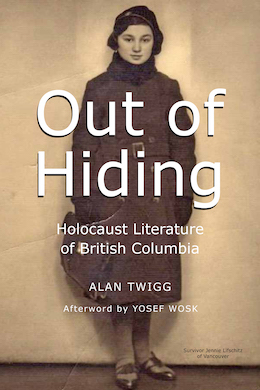
image - Out of Hiding book coverOut of Hiding is an intensely personal project for Twigg. He describes the book as “a roadmap back to places and experiences that must never be forgotten, offering a wide range of perspectives from the Holocaust-related books of British Columbian authors.” In total, he covers some 160 books in four sections. Some authors have written, edited or otherwise helped bring into being more than one memoir, novel, report or study; some of the people discussed are the subjects of the publications, rather than the writer.

Part One features relatively long expositions on Rudolf Vrba, Robert (Robbie) Waisman and Krell.

Twigg considers Vrba – who lived in Vancouver for the last few decades of his life – the “most important author of British Columbia.”

Writes Twigg in Out of Hiding, “Historian Ruth Linn estimates there were about 500-700 attempts to escape from Auschwitz-Birkenau, and most failed. Some 75 of these attempts were made by Jews; only five Jews made it successfully to freedom. The most significant of these five was Rudolf ‘Rudi’ Vrba, the main author of the most authoritative report on the true nature of the concentration camps, co-authored with co-escapee Alfred Wetzler.”

The Vrba-Wetzler Report, dated April 25, 1944, “finally revealed to the Allies the true nature and extent of the Holocaust.”

Twigg provides a biography of Vrba and some of what he learned from him as a friend. He also shares that Vrba, who died in 2006, was buried in a “seldom-visited cemetery, known to few people, where there is only a simple headstone.”

The April 5 event will include a video of Wosk chanting a Jewish blessing for Vrba at the graveside – something that apparently has not been done before.

Both Waisman and Krell are discussed in as much depth as Vrba, from their brief childhoods before the Holocaust through to recent history, sharing some of their writings and accomplishments, giving readers a sense of who they are and why their contributions are so vital.

Part Two offers shorter personal summaries on dozens of authors and publications. This section includes Lillian Boraks-Nemetz, Claudia Cornwall, Peter Hay, David Lester, Robert Mermelstein, Heather Pringle, Peter Suedfeld, Mark Zuehlke and many others. It features survivors of the Holocaust, as well as researchers, educators, journalists, graphic artists and editors who have studied the Holocaust, members of the Second or Third Generation, and a few non-Jews.

Part Three features an eclectic mix of 26 writers/artists, including Olga Campbell, Esi Edugyan, Jean Gerber, Rabbi Marvin Hier, Nikolaus Martin, Isa Milman, Norman Ravvin, Colin Upton and others.

Part Four:  One Doctor, Two Rabbis comprises three essays. The first is on Dr. Tom Perry, who served with the U.S. Army Medical Corps in the Second World War, and “took a series of rarely seen photos that his widow Claire Perry donated to the Vancouver Holocaust Education Centre in 1994 along with a five-page letter he wrote to her from ‘somewhere in Germany,’ describing his feelings and impressions of Buchenwald.” The letter is included in this section – and it is a powerful testament, though words don’t capture the horror as much as do his photographs.

The second essay, “Lulek’s Story,” flows from a well-known photo taken by Tim Gidal on July 17, 1945, in a refugee compound near Haifa – front and centre is Israel Meir “Lulek” Lau, holding a Buchenwald banner. Rabbi Meir Lau, who became Ashkenazi chief rabbi of Israel, was the youngest survivor of Buchenwald and his story is moving and inspirational.

Wosk’s afterword rounds out the collection with his thought-provoking reflections on hiding.

“Soon all witnesses will be gone,” concludes Twigg in his author’s statement. “The Holocaust must not be relegated to being merely the psychic preserve of Jews and Germans.”

The double-book launch event is presented with the Vancouver Holocaust Education Centre and takes place at the Rothstein Theatre. Admission is free but registration via jccgv.com/jewish-book-festival/events or at eventbrite.ca is required. To read a discussion of Krell’s Sounds from Silence, visit jewishindependent.ca/a-child-survivor-reflects.

Format ImagePosted on March 11, 2022March 10, 2022Author Cynthia RamsayCategories BooksTags Alan Twigg, Holocaust, JCC, JCC Jewish Book Festival, literature, Robert Krell, Vancouver Holocaust Education Centre, VHEC, Yosef Wosk
Peace hopes still alive

Peace hopes still alive

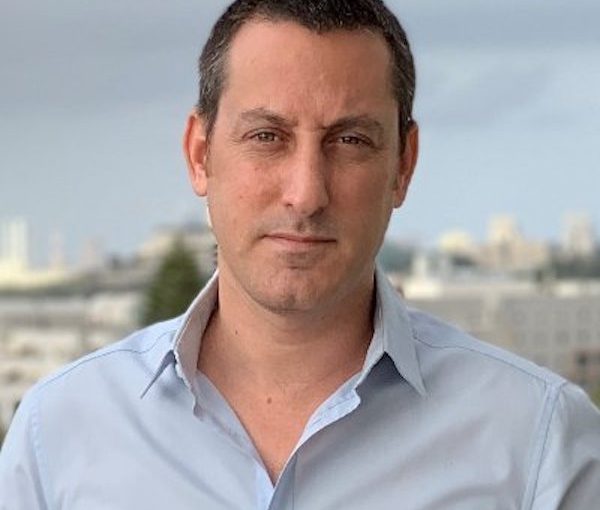
Barak Ravid (photo from Twitter)

An end to the Israeli-Palestinian conflict may be nowhere in sight, but the Israeli-Arab conflict may be coming to an end, says a leading Israeli diplomatic journalist.

Barak Ravid spoke virtually Feb. 20 in a presentation organized by the Jewish National Fund of Canada. Ravid, who reports for Axios from Israel, was formerly with Ha’aretz, where he worked for a decade as diplomatic correspondent and columnist, and is also a familiar face on Israeli TV. He was interviewed by Cynthia Ramsay, publisher and editor of the Jewish Independent.

Ravid spoke about his new book, Trump’s Peace: The Abraham Accords and the Reshaping of the Middle East, which is currently available only in Hebrew but should be out in English this summer.

Ravid acknowledges that Trump is a controversial figure and that the book’s title has received some pushback. “Peace is not the first thing that comes to mind when you say the word Trump,” he said. “I chose that name because it happens to be true.”

The author maintains that the Abraham Accords and the expanding normalization between Israel and Arab states would not have occurred under any other president.

“At the end of the day, Trump’s policies in the region closed down the trust gap that was open between the U.S. and the Israeli government … a gap that was opened during Obama’s term in office,” he said. “Whether it was warranted or not doesn’t matter. The gap was there. Trump’s policies in the region, mainly on Iran, closed down the gap and brought Israel and the Arab countries closer together.”

Trump’s decision to appoint his son-in-law, Jared Kushner, to deal with peace in the Middle East was key, according to Ravid. In interviews with Israelis and Arabs for his book, Ravid found that both sides viewed the appointment as proof of how central this issue was for Trump and served as an assurance that, when they spoke to Kushner, they were speaking to the president.

The ultimate reason the Abraham Accords were cinched, said Ravid, is that Trump did what he always claimed as his strength – he made deals. In return for normalizing relations with Israel, each party to the accords got something they wanted.

“For the United Arab Emirates, it was the arms sales, the sales of the F-35 fighter jets,” he said. “For Bahrain, it was an upgraded trade deal [with the United States]. For Sudan, it was removing them from the [U.S.] state department’s terrorism list. For Morocco, it was the U.S. recognition of Moroccan sovereignty over the Western Sahara…. Without those tangibles, those countries would not necessarily agree to take those steps.”

Ravid contends that Trump is not the only leader who deserves credit – Binyamin Netanyahu, who was Israeli prime minister at the time, was pivotal to the success. Ironically, he noted, the decision by most Arab politicians in Israel to reject the accords led Mansour Abbas to break away from the Joint (Arab) List and form a new party, Ra’am, whose participation in the new coalition government ultimately brought Netanyahu’s reign to an end.

“For the first time in history, an Arab party is a part of the coalition in Israel,” Ravid said. “In a strange way, the Abraham Accords enabled this change in Israel where Jews in Israel feel more comfortable towards Arabs and Arabs feel more comfortable joining the coalition and, therefore, Netanyahu’s biggest foreign policy achievement created the political conditions to get him out of office.”

It has long been an assumption that peace between Israel and Arab states would come only after a resolution of the Palestinian issue. When Netanyahu earlier tried to bypass the Palestinians and make friends in the neighbourhood, he was publicly shunned, said Ravid. But he kept plugging away behind the scenes, building relations in the region.

“It’s hard to go from zero to 100 in one step,” said Ravid. “You need to get to a situation where you narrow this gap and Netanyahu managed to take Israel and the Arab world from zero to, let’s say, 70. So, when the decision for the Abraham Accords came, the Arab countries didn’t have to go zero to 100, they needed to go 70 to 100.”

A third crucial contributor – who Ravid said deserves perhaps the most credit and who wants the least recognition – is the Crown Prince of Abu Dhabi, Sheikh Mohamed bin Zayed, the de facto leader of the United Arab Emirates. Bin Zayed has been trying to modernize his nation and he saw normalization with Israel as advantageous to his project. At the time, Netanyahu was threatening to annex about 30% of the West Bank into Israel. According to Ravid, bin Zayed saw a way to manoeuvre.

“He decided to be the most vocal opponent of annexation,” Ravid said. Bin Zayed told the Trump White House that, if Netanyahu dropped the annexation initiative, he would be ready to sign a peace deal with Israel.

For the White House, the annexation issue was a huge headache, said Ravid, and bin Zayed’s offer solved that problem while delivering a generational diplomatic breakthrough at the same time.

The big question is, what’s next? What about Saudi Arabia?

“That’s the crown jewel,” Ravid said. U.S. President Joe Biden sent his national security adviser, Jake Sullivan, to Riyadh and received a list of demands from Crown Prince Mohammed bin Salman Al Saud. All the demands were on the United States, not Israel, including that the Saudi monarch be invited to the White House.

Bin Salman has been an international pariah since the Washington Post commentator and Saudi dissident Jamal Khashoggi was murdered and dismembered in the Saudi consulate in Istanbul in 2017. The U.S. Central Intelligence Agency concluded that bin Salman ordered Khashoggi’s killing.

“Biden will have to take a very hard decision if he wants to move ahead with the Abraham Accords,” said Ravid, walking the fine line between rewarding a foreign leader who American intelligence has dubbed a murderer of a journalist and seeking to advance peace in the Middle East. But, if it works, the dominos will almost certainly fall into place, said Ravid.

“If Saudi comes in, then Indonesia comes in, then Kuwait comes in, then Oman comes in, then Muslim countries in Africa join, Pakistan,” he said. “It’s literally the end of the Arab-Israeli conflict – while the Israeli-Palestinian conflict will continue, obviously.”

In this regard, Ravid said, “The Palestinians decided to boycott the Trump administration in December 2017 after Trump announced he is recognizing Jerusalem as the capital of Israel and moving the embassy there. While I can understand Palestinian frustration and anger, and it makes complete sense to protest, the decision to boycott Trump until his last day in office, I think, was counterproductive to their goals, and didn’t get them anything in the end.”

On the flip side, Ravid argued, Netanyahu’s annexation of a big chunk of the West Bank would have put another nail in the coffin of the two-state solution.

“I think the Abraham Accords, even though the Palestinians won’t admit it, saved the two-state solution, at least for now,” said Ravid. “Some people think it’s gone already, but if you think the two-state solution is still alive, the reason it’s still alive is that the UAE normalized relations with Israel and stopped Netanyahu from annexing the West Bank.”

Bernice Carmeli, president of JNF Canada Pacific Region, opened the event, and Michael Sachs, executive director of JNF Pacific Region, closed it. Lance Davis, chief executive officer of JNF Canada thanked Ravid.

Format ImagePosted on March 11, 2022March 10, 2022Author Pat JohnsonCategories BooksTags Abraham Accords, Barak Ravid, Israel, Israeli-Arab conflict, Israeli-Palestinian conflict, Jewish National Fund of Canada, JNF Pacific Region, Middle East, politics, Trump's Peace, two-state solution
Sharansky joins Freilach

Sharansky joins Freilach

Natan Sharansky will be the keynote speaker at Freilach25, Chabad Richmond’s 25th anniversary celebration, on June 19. (photo from Chabad Richmond)

On June 19, human rights advocate Natan Sharansky will be the keynote speaker at Freilach25, Chabad Richmond’s 25th anniversary celebration. Sharansky’s talk will focus on the importance of dialogue and cooperation between Jews from both sides of the Iron Curtain in the struggle for the release of Soviet Jewry, and the importance and challenges of this dialogue today in the battle against antisemitism. He will also address the urgency of building and strengthening Judaism in our community.

A Soviet refusenik, Sharansky was a “Prisoner of Zion” in the former Soviet Union and a leader in the struggle for the right of Soviet Jews to immigrate to Israel. Following his request to make aliyah (immigration to Israel), Sharansky was arrested on trumped up charges of treason and espionage. He was convicted and served nine years in the Gulag. Sharansky was released in 1986, making aliyah on the very day of his release. Since then, he has served in four successive Israeli governments, is the recipient of two international medals and has authored four books.

Freilach25 also honours Rabbi Yechiel and Chanie Baitelman, who have served Chabad Richmond and the community for 25 years.

“Join us and toast these distinguished honourees while celebrating this community milestone. Freilach25 happens to fall on Father’s Day, so this could just be the perfect gift,” said Shelley Civkin, co-chair of Freilach25, which takes place at Schara Tzedeck Synagogue.

Tickets are limited, so reserve at chabadrichmond.com/freilach25. For a sneak preview, visit youtu.be/55QENG60nK4. To get involved with Freilach25, email [email protected].

– Courtesy Chabad Richmond

Format ImagePosted on March 11, 2022March 10, 2022Author Chabad RichmondCategories LocalTags anniversary, Baitelman, Chabad Richmond, Natan Sharansky
Bunny at Cultch

Bunny at Cultch

Emma Slipp co-stars in Bunny. (photo by Emily Cooper)

Emma Slipp co-stars in Bunny, written by Jewish-Canadian playwright Hannah Moscovitch, and presented by the Search Party in the Cultch’s Vancity Culture Lab March 17-27.

In Bunny, Sorrel – a young woman raised by unconventional parents – tries to reconcile her love of Victorian literature, her intellectual Marxist-feminist upbringing, and her burgeoning sexuality. From high school, through college and into adulthood, Sorrel’s story reveals a woman who feels the weight of societal expectations, wants to make the “good” and “right” choice, while simultaneously embracing her own sexual nature.

Bunny premièred in 2016 at the Stratford Festival, and garnered rave reviews for its bold and honest portrayal of female sexuality. With this upcoming run, the Search Party presents the play for the first time in Western Canada. A relatively new theatre company, their 2019 production of Florian Zeller’s The Father won six Jessie Awards. Mindy Parfitt, artistic director of the Search Party, directs this Vancouver première, which features Slipp, Ghazal Azarbad, Kayvon Khoshkam, Jay Hindle, Nathan Kay, Pamela Carolina Martinez and Liam Stewart-Kanigan.

– Courtesy the Cultch


Format ImagePosted on March 11, 2022March 10, 2022Author The CultchCategories Performing ArtsTags Hannah Moscovitch, Search Party, theatre
New school lunch pilot

New school lunch pilot

Food insecurity by province or territory, using data from Statistics Canada’s Canadian Community Health Survey, 2017-18. (image from proof.utoronto.ca/food-insecurity)

Jewish Family Services Vancouver (JFS), Richmond Jewish Day School (RJDS) and Kehila Society of Richmond are piloting a new food program to enhance students’ access to healthy and nutritious food in a way that promotes privacy, availability and inclusiveness.

When RJDS needed support with their school lunch program after a contract with a former caterer ended, Kehila Society saw an opportunity to work with JFS and create a food program that benefits all families throughout the week, regardless of income.

With start-up funds provided by Jewish Federation of Greater Vancouver, once a week, JFS delivers hot meals to RJDS at no cost to the students or their families. These meals are healthy, plant-based, and available to all students. In addition, a community fridge and pantry program is in operation throughout the week. The start-up funds provided to the Kehila Society enabled the purchase of a fridge and pantry cupboard, which JFS, the Kehila Society and Richmond Food Bank keep stocked. Students and their families can access healthy snacks, dry goods, fresh produce and meals during school hours.

“The students at Richmond Jewish Day School have absolutely loved the weekly hot lunches sponsored through JFS and the Kehila Society,” said Sabrina Bhojani, principal of RJDS. “Our parents have also expressed their delight with this program, knowing that their children are receiving a warm, healthy and nutritious meal at school. The research is clear – good nutrition helps our children to focus, concentrate and self-regulate, which, in turn, results in improved learning and student performance.”

Proper nutrition plays a central part in learning, yet one in eight households in Canada struggle to access nutritious food, according to PROOF, a research program investigating household food insecurity – defined as “the inadequate or insecure access to food due to financial constraints” – across the country (proof.utoronto.ca). That amounts to “4.4 million people, including more than 1.2 million children living in food-insecure households.”

Healthy, universal school meal programs play an important role in giving children and families access to nutritious and safe food in a non-stigmatizing manner when they need the support.

“School meal programs can play a crucial role in ensuring that all children … can eat healthy and nutritious foods – which, in turn, supports their ability to learn,” said Lynne Fader, co-director of the Kehila Society. “School meal programs are uniquely placed to address under-nutrition, by promoting healthy diets. Serving a free school meal increases children’s intake of healthy foods, especially among children with lower socioeconomic status.”

“All students deserve access to healthy, safe, nutritious and easily accessible food,” said Ilana Labow, director of food security, JFS Vancouver. “We are inspired by this vision and are committed to helping uplift students’ lives through delicious, good food. We look forward to nourishing this program together and watching it thrive and grow.”

– Courtesy JFS Vancouver

Format ImagePosted on March 11, 2022March 10, 2022Author JFS VancouverCategories LocalTags education, food security, health, Ilana Labow, Kehila Society, Lynne Fader, Richmond Jewish Day School, RJDS, Sabrina Bhojani
UN not hopeless, says Danon

UN not hopeless, says Danon

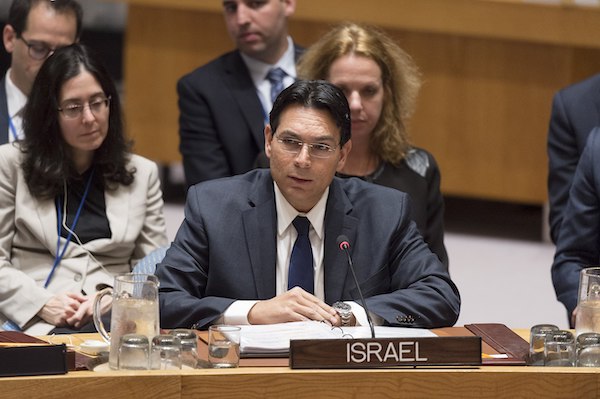
Danny Danon addresses a United Nations Security Council meeting in 2017, when he was Israel’s ambassador to the UN. (UN photo/Rick Bajornas via Wikimedia Commons)

Many Israelis and their overseas allies may see the United Nations as an assembly of antagonists, but a former top diplomat who spent five years there sees plenty of reason for optimism.

Danny Danon, who served as Israel’s ambassador to the UN from 2015 to 2020, spoke candidly during a livestreamed conversation Feb. 8 with Jonas Prince, chair and co-founder of Honest Reporting Canada, which hosted the event.

Danon was a Likud party member of the Knesset from 2009 to 2015 and served as minister of science, technology and space, as well as deputy minister of defence and deputy speaker. He is also an author and world chairman of the Likud party.

“I’m optimistic because we are starting to see change,” Danon said. “We are starting to convince countries to read the resolutions before they talk about them and we are able to see a few victories at the UN, including in the General Assembly.”

He cited two examples of victories during his time at the international body. Working with then-U.S. ambassador Nikki Haley, Danon proposed a resolution condemning the terrorist group Hamas. To pass, it required a two-thirds majority, which was not attained, but a plurality of the member-states supported the motion.

“For us, it was a victory,” he said. “People speak about disappointments but we have to also speak about achievements.”

One unequivocal achievement was when Danon was elected chairman of the legal committee of the UN.

“We got the support of 109 member-states who voted for me and only 44 voted against me,” said Danon. “I became the first Israeli ever to chair a UN committee.”

How did it happen? Secret ballots, he said. On resolutions where the votes of each country are publicly counted, Israel routinely experiences massively lopsided defeats. In secret ballots, the outcomes can be quite different. For example, there are 57 members of the Organization of Islamic Cooperation, which officially opposed Danon’s candidacy. Yet only 44 countries voted against him, he noted.

In his time at the UN, Danon also learned that ambassadors from the smallest countries are often the most persuadable. They do not have large foreign affairs apparatuses in their capitals and so they do not have bureaucrats overseeing their behaviour at the UN, giving them more freedom to vote as they wish.

One regret he has is that Israel did not run for a seat on the Security Council.

“I convinced the prime minister we should run because it’s a secret ballot,” he said. “Unfortunately, the diplomats in the ministry in Jerusalem convinced the prime minister that we don’t have the budget and the energy to run a successful campaign and we had to drop out at the early stage of the campaign, which for me was a big disappointment and I think it was a grave mistake.”

Over time, somewhere between 75% and 80% of country-specific condemnations at the UN have been directed at Israel.

“I call it diplomatic terrorism,” he said. “It has no connection to the reality. When you speak about human rights resolutions, you cannot ignore what’s happening in Syria, in Libya, in Yemen and blame Israel.”

Danon said the situation goes back to the very earliest era of the UN, when the Arab world rejected the Partition Resolution to create a Jewish and Arab state in the area of Palestine. To justify that rejection, and the rejection of every olive branch since, the Arab bloc has had to initiate resolutions against Israel, he said. This took off in earnest in the 1970s, with the infamous (since rescinded) “Zionism equals racism” resolution of 1975, he noted.

The UN General Assembly also engages in a sort of Groundhog Day every year, in which the same series of condemnatory resolutions against Israel is brought out and passed, year after year.

“I come from the Knesset, from the parliament,” he said. “Like every parliament in the world, once you pass a bill or a piece of legislation, you move on. That’s not the case at the UN. Every General Assembly takes the same resolutions you adopted last year and brings them back to the table.”

For all the energies expended against Israel at the UN, Danon argues little of it helps actual Palestinians.

“When you look at the outcome of those resolutions, we can agree that they are not helping the Palestinian cause,” he said. “On the contrary, it gives them empty victories so maybe they get a few headlines for a day or two and then what?… I call them feel-good resolutions, so maybe the Palestinians feel good for a day, but the Palestinian people don’t get anything.”

Danon said he also tried to raise awareness of Palestinian incitement to violence among his UN colleagues.

“Nelson Mandela once wrote that you are not born with hate, someone is teaching you to hate,” Danon said. “I focused on the Palestinian incitement, what they are teaching the kids in school, what they are showing them on Palestinian television, and I proved my case. I said, we can argue about a lot of things, but we cannot allow the Palestinians to continue with the education of hate propaganda against Jews. I showed them the textbooks of the Palestinians [and] what you can find on the internet telling Palestinian children how to stab a Jew, which knife to use and how to be effective.”

The former ambassador insisted he has nothing against humanitarian aid to Palestinians.

“On the contrary,” he said. “But make sure that the funds you are giving are not being used for terrorism and for incitement. Ask tough questions about … the results…. Instead of teaching the Palestinians and giving them the proper education, they did exactly the opposite.”

UN member-states should demand to see results from the billions of dollars poured into UNRWA, the United Nations Relief and Works Agency for Palestine Refugees in the Near East, which is a unique entity that acts as a quasi-governmental body for Palestinians. Rather than resolving the issue of refugees or other challenges facing Palestinians, Danon argues that UNRWA perpetuates the problems in order to justify and prolong its own existence.

The Palestinian refugee issue gets a great deal of international attention, he said, while the parallel number of Jewish exiles from that same era he calls “the forgotten Jewish refugees.”

“When my father’s family fled Alexandria, Egypt, in 1950, they left everything behind,” said Danon. “Nobody is coming and asking the Egyptian government to pay compensation, but at least it should be recognized and I think it’s a claim we shouldn’t abandon. We have to speak about it and make sure it will be brought up in future discussions as well.”

The Palestinian Authority’s President Mahmoud Abbas is 87 years old and Danon hesitates to predict whether the next leader will be a genuine partner for peace.

“I hope that, in the days after President Abbas, a leader will emerge that will care more about education, infrastructure, rather than coming to the UN and speaking against Israel,” he said.

Israel’s defensive actions, like those during the war with Hamas less than a year ago, can make the country unpopular, Danon admitted. While it would be nice to be liked by the world, Danon said some things are more important.

“I prefer the situation where we are today, where we are strong, independent and we have borders, we can protect our people rather than being a place where we beg for mercy from the international community,” he said.

Format ImagePosted on February 25, 2022February 23, 2022Author Pat JohnsonCategories IsraelTags Danny Danon, Honest Reporting, Israel, politics, UN, United Nations
Ominous Sounds premières

Ominous Sounds premières

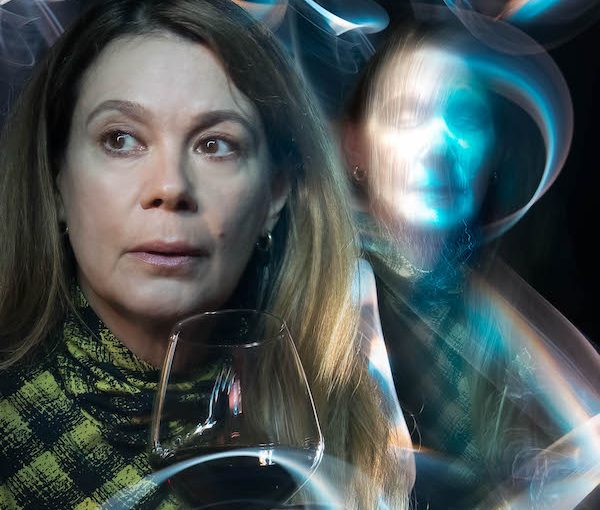
Kerry Sandomirsky co-stars in Ominous Sounds at the River Crossing by Jason Sherman, which has its world première at Performance Works March 6-13. (photo by David Cooper)

Who is permitted to tell stories? This is the main theme of Ominous Sounds at the River Crossing; or, Another F–king Dinner Party Play, playwright Jason Sherman told the Independent.

The world première of Ominous Sounds takes place March 6-13 at Performance Works on Granville Island. Not only is Sherman a member of the Jewish community, but so are cast members Alex Poch-Goldin and Kerry Sandomirsky and lighting designer Itai Erdal. The production is being staged by Touchstone Theatre, whose artistic director is Roy Surette.

Ominous Sounds is described as “a provocative and darkly comedic piece of metatheatre that dives into hot-button issues including the ethics of representation, climate responsibility, and social power in a reality marked by colossal cultural shifts and blurring meanings.”

“In exploring the central theme,” said Sherman, “characters in the play reject a number of storytelling approaches, old and new, notably the dinner party play, of which there are many fine examples, to be sure, but which one of our characters is desperate to escape from. The play keeps returning to various versions of a dinner party play, interspersing it with attempts at other forms of storytelling, before finding a synthesis in a new story.”

photo - Playwright Jason Sherman
Playwright Jason Sherman (PR photo)

The launching point of Ominous Sounds was a planned follow-up to Sherman’s play Patience, which Surette directed some 20 years ago. Patience is “a contemporary retelling of the story of Job; the new play was to pick up with news of the death of the earlier piece’s main character,” said Sherman. “But I found myself balking at returning to the earlier story – for reasons of both form and content – and instead incorporated some of its elements into what would become Ominous Sounds.”

Erdal described some of the considerations in lighting a play like Ominous Sounds. “In a naturalistic play,” he said, “the lighting usually wants to be invisible; it should move the story forward and set the mood and the tone for the scene but it should do all that without pulling any attention to itself…. In an abstract play, the lighting doesn’t have to be justified – it can be part of the architecture and the dramaturgy of the piece. This play is about making theatre, so it moves between the two approaches – sometimes the lighting is invisible and sometimes it can be very dramatic and noticeable.

“We have a brilliant projection designer,” he added, “and many of the locations will be done with video projection, so I will have to … work closely with the projection designer to determine which scenes will be done with lighting only and which scenes with lighting and projections. We are still very early in the process so a lot of those decisions are still being made.”

When Poch-Goldin spoke with the Independent, there had been only three days of Zoom rehearsals.

“It was a bit exhausting using that format, but very enlightening,” he said. “The writer, Jason, was part of our rehearsals and he was able to clarify things for us, which was very helpful.

“I hope people will come see the show now that things are opening up. While COVID is hovering in the background, I have to be optimistic. I want to share this play with people. I want to work with other actors without masks on and I want a sense of normalcy to prevail. I’m not nervous about having restrictions loosen and a full theatre appreciate the work.”

Sandomirsky echoed this last sentiment. “We have all been inside now for two years, many of us living on a diet of Netflix and Skip the Dishes,” she said. “This play does what theatre does best – engages in the cultural conversation of the moment in a provocative, entertaining way. It’s an opportunity to see theatre that you will keep discussing post-show. It’s an opportunity to leave your bubble and safely let a group of experienced actors delight and enrage you. You don’t need to go to New York. You can hear a script that has intelligence, humour and heart right here, on Granville Island.”

Both Poch-Goldin and Sandomirsky play more than one character.

Among Sandomirsky’s roles, she said, “is a 50-something actor trying to navigate the minefield of what stories she is and is not allowed to tell. Is her voice still relevant?”

“We start as numbered entities and then we start to play other characters in little plays along the way, but always return back to our numbered entity,” explained Poch-Goldin. “My character starts vulnerable and becomes quite strident and outspoken, longing for the good old days, when theatre was something he understood. As for the other characters I play, Peter is a bit of a wisecracking dad who is trying to be a better person and facing a lot of struggles. I also play the character of Ruben, who is someone who has passed away and comes back in a flashback to talk about his struggles, and to learn to accept himself and his failings. I love all the characters, they’re profound and reflect many things I feel about the changes in society.”

Poch-Goldin has been busy since the pandemic began. He moved to Winnipeg two years ago and has been doing a lot of TV and film, he said. For example, the première of the series The Porter started on CBC Feb. 21, and Poch-Goldin is in five of the eight episodes.

“I also just finished writing a new play called The Trial of William Shakespeare,” he said. “After three years of development, we’re finally starting to share the script after several workshops. I also have a play called The Great Shadow, about the first film studio in Canada in 1919. It’s going to première this summer at 4th Line Theatre, which is an outdoor theatre in Millbrook, Ont.”

For her part, Sandomirsky continued to teach acting for film and television at Langara’s Studio 58.

“I gathered a group of friends and directed A Midsummer Night’s Dream on Galiano Island in a field,” she said. “It was an opportunity to have experienced Bard on the Beach actors mix with local islanders and create a bit of magic on a few warm August nights.”

As well, she, her son Ben (who is in Los Angeles shooting The Mysterious Benedict Society) and her mom (who lives in Saskatchewan) “started doing nightly themed Zoom sessions to amuse ourselves and stay in contact. We’d choose a theme and then give ourselves half an hour to whump up costumes and props using only what we had at hand.” They shared photos with friends and “began to take thematic requests and covered everything from Bergman to Batman to Brueghel.”

Next for her is the play Courage Now at Firehall Theatre.  Written by Manami Hara, it’s a piece about Japanese consul Chiune Sugihara, who helped thousands of Lithuanian Jews flee Europe. “The director, Jane Heyman, is herself a descendant of a family saved by Sugihara’s actions,” said Sandomirsky.

For tickets to Ominous Sounds, visit ticketscene.ca/series/926.

Format ImagePosted on February 25, 2022February 23, 2022Author Cynthia RamsayCategories Performing ArtsTags Alex Poch-Goldin, Itai Erdal, Jason Sherman, Kerry Sandomirsky, Ominous Sounds, Performance Works, social issues, theatre, Touchstone Theatre
Diverse and innovative films

Diverse and innovative films

A still from Amanda Kinsey’s documentary Jews of the Wild West, a series of vignettes that shines a light on a noteworthy and usually overlooked history.

The Wild West, Jews in Germany and a surprisingly vivacious Israeli seniors home feature among the diverse films at the Vancouver Jewish Film Festival this year.

Somehow, we tend not to associate Jews with the legends that have built up around the development of the American West, a serious oversight that is in the crosshairs of filmmaker Amanda Kinsey’s documentary Jews of the Wild West.

The mythology of the Wild West is perhaps as much an invention of Hollywood as of history, so it is notable that the 1903 film The Great Train Robbery, which introduced the genre of the cinematic Western, featured Gilbert “Broncho Billy” Anderson – né Max Aronson.

The myth of the West was no less inspiring to Jews than to other Americans and dreamers from around the world. Perhaps one of the most famous names in the lore was Wyatt Earp. The film introduces us to Josephine Marcus, who fled her family in San Francisco to become an actress and ended up being Earp’s wife. Earp himself is buried along with the Marcus family in a Jewish cemetery.

The gold rush drew Jewish peddlers and merchants to the West Coast in the late 19th century including, most famously, Levi Strauss, who left the Lower East Side and, via Panama, arrived in San Francisco. His brothers sent dry goods from New York and Levi sold them up and down the coast. When Jacob Davis, a tailor, was asked by a woman to construct pants that her husband wouldn’t burst out of, he imagined adding rivets. He took the idea to Strauss and the rest is American clothing history. As one historian notes, it was a Jew who invented “the most American of garments.”

The rapid industrialization in the mining sector is where the Guggenheim family got its start and so, while the name is now most associated with Fifth Avenue, the finest address in New York City, their start was in the gritty West of the 19th century.

We meet Ray Frank, the first woman said to have preached from a bimah. Called the “golden girl rabbi,” she was not ordained, but was apparently a phenomenon that drew crowds to her sermons.

Many people will know that Golda (Mabovitch/Meyerson) Meir spent formative years as an immigrant from Russia in Milwaukee and then Denver. This footnote to her history is often considered curious and interesting, but in this film it integrates the Jewish experience of the 20th century and its roots in the American West with the development of the Jewish state – the opening up of another frontier, one might say.

The Hebrew Immigrant Aid Society, seeing the poverty in the Lower East Side, actively encouraged migration to the West. The film introduces families who have worked the land for generations, some of whom have maintained their Jewish identity and at least one of whom was raised Methodist. But, it suggests, the thriving Jewish community of Denver owes much to the failed farmers of the West who made their way to the nearest metropolis to salvage their livelihoods.

The documentary is really a series of vignettes and at times the shift from one story to another is confusing but, as a whole, Jews of the Wild West successfully shines a light on a noteworthy and usually overlooked history.

* * *

The festival features two German films that complement each other in interesting ways.

In Masel Tov Cocktail, a short (about 30 minutes) film, high schooler Dima (Alexander Wertmann) welcomes viewers into his life just as he is suspended for a week as a result of punching a classmate in the face during an altercation in the washroom. The “victim,” Tobi (Mateo Wansing Lorrio), had taunted the Jewish Dima, graphically play-acting a victim in a gas chamber, a performance enhanced by the austere, sterile setting of the restroom’s porcelain-tiled walls. So begins an interplay of victim and perpetrator that is just one of several provocative themes weaving through this powerful short.

Dima’s family, it turns out, heralds from the former Soviet Union, like 90% of Jews in today’s Germany. After the fall of the Soviet Union and the reunification of Germany, the German government actively encouraged migration of Jews to revitalize Jewish life in the country. This fact, like other statistics and tidbits, is flashed across the screen.

Juxtapositions pack a punch, including Dima’s switching between a baseball cap and a kippa, perhaps reflecting his complex identities, as well as the schism in the identities of post-Holocaust Jews more broadly in a society that struggles to assimilate the idea of contemporary, living Jews in the context of the blood-soaked soil of their state. A shift from colour to black-and-white also evokes the stark break between the present and the past.

But the present and the past are themselves in conflict as Dima recounts how other Germans react when they learn he is Jewish. Why does he only meet Germans whose grandparents weren’t Nazis, he wonders. Statistic: a survey indicates that 29% of Germans think their ancestors helped Jews during the Holocaust, while the screen text helpfully informs us the number was more like 0.1%.

Dima’s teacher, who can’t utter the word Jew and struggles to get the word Shoah out of her mouth, wants Dima to share his family’s Holocaust story with the class. The film’s implication is that Dima’s family was largely spared the trauma of the Holocaust, but he decides to play along because, “There’s no business like Shoah business.”

Dima’s grandfather is taken in by the AfD, the neo-fascist Alternative for Germany party, convinced that their pro-Israel and anti-Muslim rhetoric means that they are defenders of the Jewish people. In a moment that confounds the AfD campaigner (and causes the viewer to reflect), Dima drags his grandfather away from the campaigner while yelling: “Don’t let foreigners take away your antisemitism.”

The film is kooky, funny and light, while also serious, dark and thoughtful throughout.

That description applies to the similarly named feature film Love and Mazel Tov, which features Anne, a non-Jewish bookstore owner who has Munich’s largest selection of Jewish titles and who herself is more than a little obsessed with all things Jewish – including potential romantic partners.

“Some are into fat. Some are into thin. Anne is into Jews,” a friend explains. This turns out to be more than a romantic or erotic attraction, perhaps a disordered response to national and family histories.

Thinking she has found not only a Jewish boyfriend but a doctor at that, Anna (Verena Altenberger) courts Daniel (Maxim Mehmet), who in typical cinematic fashion lets her believe what she wants to believe until the inevitable mix-up explodes in a farcical emotional explosion – though not before an excruciating family dinner.

Parts of the film exist on a spectrum between cringey and hilarious. The film features (at least) two fake Jews who don this identity for extremely different reasons, inviting reflections on passing, appropriation and the fine line between veneration and fetishization.

Both of these films use humour to excavate deeply troubling concepts of identity and addressing horrors of the past. They approach these challenging themes in truly innovative and entertaining ways.

* * *

Understated comedy is key to the success of Greener Pastures, an Israeli film in which Dov, a retired postal worker, has lost his home after a “pension fiasco” involving the privatization of the postal service.

He is a curmudgeonly old square when it comes to marijuana, which the government has decided should be available to anyone 75 and over, but he sees a moneymaking opportunity. Dov (Shlomo Bar-Aba) enlists a network of seniors to order medicinal cannabis and mail it to him so he can distribute it to his “connection,” who shops it around to younger consumers. This “kosher kush,” guaranteed “Grade A government-approved stuff” sold in tahini bottles, brings Dov into conflict with a two-bit drug kingpin in a wheelchair and, of course, a snooping police officer.

There is romance and suspense in this madcap caper, but there is also the theme of elder empowerment, along with the laughs.

The Vancouver Jewish Film Festival runs online only March 3-13. For the full festival lineup and tickets, visit vjff.org.

Format ImagePosted on February 25, 2022February 23, 2022Author Pat JohnsonCategories TV & FilmTags antisemitism, comedy, culture, drama, Germany, Gold Rush, Golda Meir, Guggenheim, history, Holocaust, Ray Frank, Vancouver Jewish Film Festival, VJFF, Wild West
Jewish history’s exciting bits

Jewish history’s exciting bits

Dr. Henry Abramson’s lecture series Jewish History, But Skipping the Boring Parts continues on March 9. (photo from Henry Abramson)

What do country music superstar Shania Twain and Orthodox academic Dr. Henry Abramson have in common? They both spent plenty of time in Timmins, Ont., before moving on to adventures in New Zealand and the United States.

While not as widely known as Twain, Abramson – the dean of arts and sciences at Tuoro’s Lander College in Flatbush, N.Y. – is popular in different circles. For example, during this interview, he mentioned an in-depth article about him in Der Veker, a Yiddish-language journal. He is known as a knowledgeable and entertaining lecturer – facts that the local community can check out for themselves in his five-part series Jewish History, But Skipping the Boring Parts, which began on Feb. 9. Sponsored by the estate of Sara Elias and hosted by Congregation Beth Israel, the series is open to the entire community.

The first lecture zipped through Jewish history touching on, as promised, the non-boring bits of history that are supported by archeological evidence. Many of the earliest artifacts are negative views or accounts of what we now call the Jewish people and Abramson was quick to point out, with humour, that these ancient people wrote nasty things about Jews but we’re the ones still around thousands of years later.

By the end of a well-polished 45-minute presentation, which included lots of images to break up the narrative, and a 15-minute Q & A, the 100-plus attendees were up to speed on the Maccabean revolt. One highlight was numerous examples of medieval depictions of a famous battle in which Judah Maccabee’s brother, Eleazar, kills an elephant. This story was popular with Christian medieval artists but their knowledge of elephants was clearly lacking.

About Abramson

Born in Iroquois Falls, Ont., Henry Abramson was the only Jewish boy in town. His grandparents had fled Lithuania in 1904 and found themselves in this town with a population of about 1,000. Abramson’s grandfather, and then his father, ran the town’s dry goods store. His parents’ commitment to ensure that he had a Jewish home life, education and sense of community are how he found himself in Timmins every Sunday as a child. His parents drove 100 kilometres each way, every week, to take him to learn with other Jewish children from the area. Abramson’s comment about Jews in tiny rural places was, “Break open a roll, out pops a Jew.”

Three years before his bar mitzvah, his parents went one major step further with his Jewish education. They found an apartment in Toronto and enrolled him, for a few years, in Eitz Chaim, a religious day school. His mother stayed with him during the week and his father took the train down on the weekend. Abramson said his father’s greatest talent in preserving the Jewish identity of his family was his ability to listen to the women in his family.

“My whiplash-like experience – going from being the only Jewish kid in town to the only northerner kid who knew what 40-below felt like – tempered my understanding of how Jews fit in the world as a whole,” he said.

After high school, Abramson enrolled at the University of Toronto, where he obtained a bachelor’s degree in philosophy. Disillusioned with his studies, he flew to New Zealand to become a ski instructor. There, he fell in love with another ski instructor. Having grown up skiing, Abramson was living the dream and had planned to continue traveling the world, but he was involved in a ski accident that severed his femoral artery. During the six-month recovery that followed, he rethought his future and focus. He and his then-soon-to-be wife Ilana returned to Toronto, where Abramson earned a master’s in history.

Although the pair was involved in a Conservative shul during the early years of their marriage, they became attracted by the BAYT (Beth Avraham Yoseph Shul) in Toronto and began moving towards Orthodox observance. To complete his doctorate, Abramson went to Jerusalem to work at Hebrew University. After earning his PhD, he spent a year learning at Ohr Somayach Yeshivah, cementing his life as an Orthodox Jew. He went on to complete post-doctoral work at universities including Harvard and Oxford, and has written seven books.

To join the lecture series and find out how well Abramson delivers only the most exciting parts of Jewish history, visit bethisrael.ca. The remaining lectures take place on Zoom March 9, April 6, May 11 and June 1, 7 p.m. Visit bethisrael.ca.

Michelle Dodek is a freelance writer living in Vancouver.

Format ImagePosted on February 25, 2022February 23, 2022Author Michelle DodekCategories LocalTags Beth Israel, Henry Abramson, history, Maccabees, Shania Twain

Posts pagination

Previous page Page 1 … Page 119 Page 120 Page 121 … Page 492 Next page
Proudly powered by WordPress