Skip to content
  • Home
  • Subscribe / donate
  • Events calendar
  • News
    • Local
    • National
    • Israel
    • World
    • עניין בחדשות
      A roundup of news in Canada and further afield, in Hebrew.
  • Opinion
    • From the JI
    • Op-Ed
  • Arts & Culture
    • Performing Arts
    • Music
    • Books
    • Visual Arts
    • TV & Film
  • Life
    • Celebrating the Holidays
    • Travel
    • The Daily Snooze
      Cartoons by Jacob Samuel
    • Mystery Photo
      Help the JI and JMABC fill in the gaps in our archives.
  • Community Links
    • Organizations, Etc.
    • Other News Sources & Blogs
    • Business Directory
  • FAQ
  • JI Chai Celebration
  • JI@88! video

Recent Posts

  • Sharing her testimony
  • Fall fight takes leap forward
  • The balancing of rights
  • Multiple Tony n’ Tina roles
  • Stories of trauma, resilience
  • Celebrate our culture
  • A responsibility to help
  • What wellness means at JCC
  • Together in mourning
  • Downhill after Trump?
  • Birth control even easier now
  • Eco-Sisters mentorship
  • Unexpected discoveries
  • Study’s results hopeful
  • Bad behaviour affects us all
  • Thankful for the police
  • UBC needs a wake-up call
  • Recalling a shining star
  • Sleep well …
  • BGU fosters startup culture
  • Photography and glass
  • Is it the end of an era?
  • Taking life a step at a time
  • Nakba exhibit biased
  • Film festival starts next week
  • Musical with heart and soul
  • Rabbi marks 13 years
  • Keeper of VTT’s history
  • Gala fêtes Infeld’s 20th
  • Building JWest together
  • Challah Mom comes to Vancouver
  • What to do about media bias
  • Education offers hope
  • Remembrance – a moral act
  • What makes us human
  • המלחמות של נתניהו וטראמפ

Archives

Follow @JewishIndie
image - The CJN - Visit Us Banner - 300x600 - 101625

Tag: travel

Sketching historic shuls

Ben and Carla Levinson (photo by Sam Margolis)

With the speed of a street-corner caricaturist yet the precision of someone who seemingly misses nothing, Ben Levinson has for decades been capturing the cityscapes of the many places to which he has traveled with his wife, Carla. No pencil, no erasing. Just a black ink pen and a small sketchbook.

“My architectural career taught me to sketch quickly and furiously, and I am able to see details that most would not see,” Levinson told the Independent in an interview earlier this fall.

During these adventures, Levinson has sketched everything of architectural interest to him: churches, cathedrals, mosques, pyramids and, of course, synagogues, while Carla would station herself at a café.

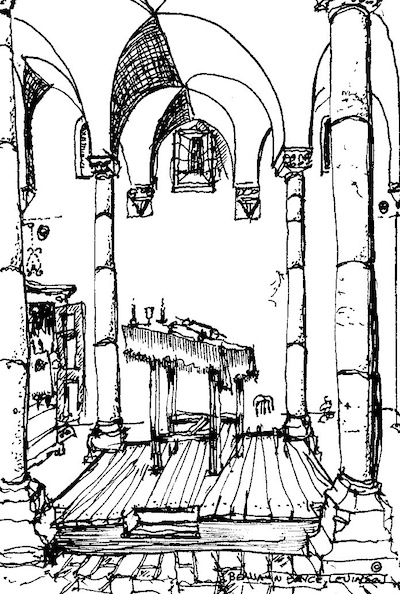
image - Synagogue at Tomar, Portugal. Sketch by Ben Levinson
Synagogue at Tomar, Portugal. Sketch by Ben Levinson.

By the time she was done with her coffee and croissant, Ben would have a complete rendering to show her. During the infrequent occasions she would finish first, incomplete drawings would be filled out when they reached their hotel.

The alacrity, accuracy and artistry of the sketches were at times the envy of those whom they encountered on their travels.

“We met artists whose wives and partners waited all too patiently and were ready to move on, whereas Ben was long done,” Carla said.

After looking through Ben’s sketchbooks one day, Carla suggested he do a show devoted to synagogues. Carla, who ran Victoria’s Gallery 1248, helped curate the selection of sketches that appeared at the Wings of Peace Gallery at Victoria’s Congregation Emanu-El from Sept. 4 through Yom Kippur. Now those sketches have been compiled into a book which is tentatively titled In Search of Identity: The Story of the Wandering Jew.

The book’s 49 sketches transport the viewer throughout the old and the new worlds. Many of the sketches are connected by the common experience of Jews moving on because of antisemitic treatment, despite centuries of coexistence in a community.

The figurative journey, which includes interiors and exteriors and is really the result of several holidays the Levinsons took over the span of two decades, sets off in Toledo, Spain, home to one of the few remaining synagogues left after the Spanish Inquisition scattered Jews throughout Europe and the Americas. Levinson’s exhibit and book spend a lot of time in Sephardi lands: a 14th-century Moorish-style synagogue in Cordoba; a tiny shul in Tomar, Portugal, the only pre-Renaissance temple in the country; larger houses of worship in Morocco, home to the largest Jewish population in the Arab world; and, finally, to the Portuguese Synagogue in Amsterdam, completed in 1675.

Poignant reminders of the once-thriving Jewish communities of Eastern Europe follow. Levinson leads the viewer through Berlin, Prague and Budapest, along with artistic reconstructions of the Terezin sleeping barracks and an ancient dig in Vienna.

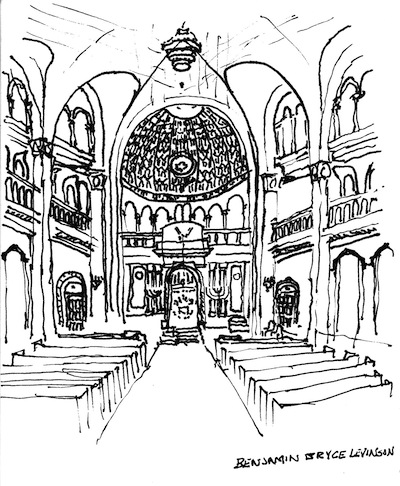
image - Templo Libertad in Buenos Aires, Argentina. Sketch by Ben Levinson
Templo Libertad in Buenos Aires, Argentina. Sketch by Ben Levinson.

The voyage shifts to France, Italy and Scandinavia, with the majestic Marais synagogue in Paris, the synagogue at the Museum of Jewish Life in Trieste and the Gothenburg Synagogue, the scene of a firebomb attack in 2017.

Levinson also presents active scenes of a crowd forming outside a Venice synagogue on a sunny Shabbat morning, passersby in front of an Antwerp temple and a sea of bicycles by the Great Synagogue of Copenhagen.

The visual trip wraps up with drawings from Mexico City and the Byzantine-style building of Libertad Synagogue in Buenos Aires.

Born in Medicine Hat, Alta., in 1942, Levinson graduated from the University of Manitoba’s architectural program. In 1966, he moved to Victoria and worked for various firms before starting his 30-year private practice as president of Benjamin Bryce Levinson Architects in 1980. In addition to leading his practice, he continued sketching and showing his work at various venues, including the Architectural Institute of British Columbia and the Jewish Community Centre of Greater Vancouver.

Levinson was instrumental in restoring Congregation Emanu-El in the early 1980s. When he arrived in town, he felt an initial disappointment upon seeing the synagogue with “its pink stucco, balcony balustrade pickets, missing fence and hidden dome ceiling.” He helped the synagogue’s leadership in obtaining grants and helped steer the building and fundraising committees to get the money necessary to revitalize the region’s most historic Jewish building.

Small Town Architect, the name of his first book, documents his 40-year career in architectural design and recounts his travels and artistic endeavours. His work can be found throughout Victoria and in numerous communities throughout the province; in elementary schools, municipal halls, grocery stores and restaurants, among other buildings.

Sam Margolis has written for the Globe and Mail, the National Post, UPI and MSNBC.

Format ImagePosted on December 13, 2019December 12, 2019Author Sam MargolisCategories Visual ArtsTags architecture, art, Ben Levinson, Emanu-El, history, Judaism, travel
Ride to help Israeli veterans

Ride to help Israeli veterans

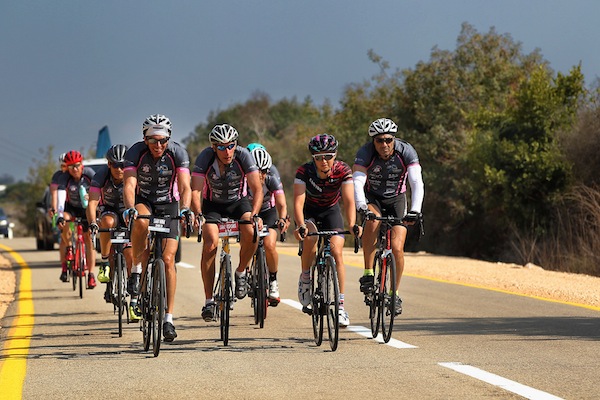
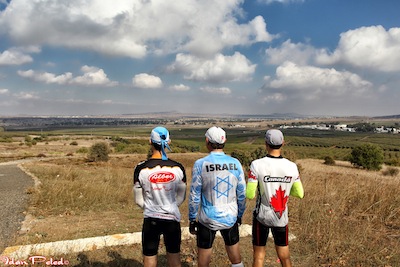
Beit Halochem Canada’s Courage in Motion saw many riders return to do the five-day annual cycle in Israel again. (photo from Beit Halochem Canada)

The 12th annual Courage in Motion, an initiative of Beit Halochem Canada, Aid to Disabled Veterans of Israel, welcomed cyclists from across Canada, joined by some Americans and Israelis. From Oct. 27-31, these international cyclists rode alongside Israel’s disabled veterans on five fully supported routes through northern Israel’s archeological sites and landscapes.

Fundraising is open until Dec. 31, and it is expected that the ride will raise approximately $750,000 Cdn. Sponsors’ support and cyclists’ fundraising facilitated the participation of more than 100 injured Beit Halochem Israel members this year. Money raised also funds programming at Beit Halochem centres in Israel. Thanks to the ongoing success of the ride, cycling has steadily grown in popularity at the state-of-art centres.

Lisa Levy, national executive director of Beit Halochem Canada, is the ride’s founder. An avid cyclist herself, she said, “Cycling in Courage in Motion means visiting Israel, supporting an incredible cause, and connecting directly with our members. Beyond the ride’s huge fundraising component, I never fail to be excited by witnessing lifelong friendships taking shape. It is truly a life-altering experience that you never forget and one that participants want to repeat!”

photo - 3 cyclists
(photo from Beit Halochem Canada)

Annually, the ride welcomes both new and repeat participants. This year, returning cyclists included Toronto-born Keith Primeau, who rode in last year’s CIM for the first time. Primeau enjoyed the experience so much that his daughter Kylie accompanied him this time.

Primeau played 15 seasons in the National Hockey League, most notably with the Philadelphia Flyers, prior to his career being cut short due to multiple concussions. He co-wrote the book Concussed! Sports-Related Head Injuries: Prevention, Coping and Real Stories (2012), detailing life after concussion.

Other international returnees included former cycling champion Eon D’Ornellas, who competed throughout the 1970s and 1980s on behalf of both Canada and his native Guyana. The proprietor of Toronto’s D’Ornellas Bike Shop, he started a cycling club more than 25 years ago. In 2011, D’Ornellas, then 59-years old, suffered a stroke during a training ride.

Among the Beit Halochem members participating in Courage in Motion 2019 was Asi Mekonen. In 2012, just prior to his release from the Givati Brigade, Mekonen suffered severe head injuries, with resulting brain damage, vision and hearing impairment, and memory loss. Following five years of physical and cognitive rehabilitation at Beit Halochem, he is now a Jerusalem-based musician. Besides experiencing several Courage in Motion rides, he has completed two marathons. Mekonen was already known to many of the ride’s Canadian participants through his on-stage appearances in this year’s Beit Halochem Canada Celebration of Life concerts.

This year, cyclists may have ridden alongside a future Paralympics hand-bike medallist. Critically wounded in 2002 in a military operation while serving in the artillery corps, Amit Hasdai was left with paralysis on the right side of his body. During rehabilitation, he benefited from equestrian therapy, later competing internationally. Since turning to hand-bike racing at Beit Halochem Tel Aviv, Hasdai has enjoyed participating in Courage in Motion. Hasdai’s natural talent, enhanced by Beit Halochem’s support of his training and coaching, has resulted in his current ranking of eighth in the world. He is training to qualify for the 2020 Paralympics in Tokyo.

Courage in Motion’s participants enjoyed group activities, including a cycling tour of the agriculture region of the Hula Valley and an evening with Israel’s heroes – all Beit Halochem members – who shared their personal stories of tragedy and resilience.

The next Courage in Motion takes place in Israel from Oct. 18-22, 2020. Registration is expected to open in March 2020. See courageinmotion.ca.

Format ImagePosted on December 13, 2019December 12, 2019Author Beit Halochem CanadaCategories IsraelTags Beit Halochem Canada, Courage in Motion, cycling, disabled veterans, health, Israel, philanthropy, tikkun olam, travel
טיול במזרח קנדה

טיול במזרח קנדה

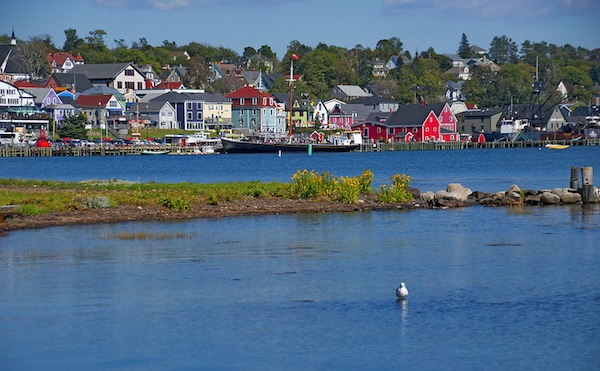
נובה סקוטיה (Ron Cogswell)

 נובה סקוטיה היא מחוז מזרחי מבודד כמעט אי המחובר ליבשה ברצועה צרה שבו השתמר סגנון כפרי פשוט ותמים, כמו פעם. כך מפרסם יוסי רוזנבלום באתר של ווינט. מקור ההכנסה העיקרי נותר הדיג, ולפיכך ישנם אינספור כפרי דייגים אמיתיים ופעילים. בכל כפר ומפרץ מתנוסס מגדלור, וימי הסגריר הערפיליים מסייעים להבין את חשיבותם של המגדלורים האלה. במוזיאון המגדלור בדינגוול למדנו פרק מרתק על החיים בבדידות. המגדלור ניצב על אי המרוחק יום הפלגה מהאי השכן.

מפעיל המגדלור התגורר בו עם אשתו ושמונת ילדיו עשרים וחמש שנים בבדידות מוחלטת, שבועיים חופשה בשנה וניתוק של שישה חודשים ללא ספינות בגלל החורף העז. כל ארבע שעות, גם בלילה, היה עליו לצאת מהבית בקור מקפיא, למתוח את הקפיץ המכני ולוודא שהמגדלור לא כבה. בהרבה עיירות קטנות מצויים מוזיאונים על נושאים שונים וכדאי לבקר בה.

קהילות הקטנות, הבידוד והחורף העז תורמים לחיי קהילה ערים, והתושבים מאירי פנים וחפצי שיחה. לבית של מרי וג’ו, ליד פגיס קוב, נקלענו במקרה כי היה שם שלט של גלריה. הם אירחו אותנו בחום ובשמחה בביתם בן שני החדרים, וסיפרו שגודל הבית נובע מהצורך בחימום עז ובפינוי שלג.

ההפרדה המוחלטת בין דת ומדינה גורמת למוסדות הדת לקיים פעילות חברתית וקהילתית כדי לגייס כסף ולשרוד. כך הוזמנו לארוחת ערב כפרית המאורגנת על ידי הכנסייה האנגליקנית, ותמורת שבעים וחמישה שקלים נפרש בפנינו מזנון של אכול כפי יכולתך, עם שלל פירות ים שרק לפני שעות ספורות נשלו מהמים ולצידם סלטים וקינוחים.

המחירים בקנדה מפתיעים לטובה. בקצה הצפוני והנידח של נובה סקוטיה, במרכול כפרי המקבל את כל מצרכיו ממשאיות הנוסעות אלפי קילומטרים, מצאנו עגבניות אדומות, עסיסיות ועשירות בטעם שעלו כמחצית ממחירן בישראל.

אין במחוז בנובה סקוטיה מלונות חמישה כוכבים, אבל האירוח פשוט ומפנק. את לילותינו העברנו בפונדקים ובמלונות קטנים, לרוב על קו המים נהר, אגם או אוקיינוס, זכינו באירוח חם ושילמנו שליש ממה שהיינו משלמים על צימר בגליל.

טיול נופי וחווייתי כזה מצריך נהיגה מרובה. קשה לקלוט כמה הארץ גדולה, ואילו מרחקים יש לגמוע בדרך ממקום למקום. אבל הנהיגה קלה והכבישים מתוחזקים ומעולים. הדרך מלאה בשלטים המזהירים מפני מפגש עם איילים, אבל אנחנו פגשנו בדרך רק סנאים, דביבונים, כלבי ים ובעלי כנף מכל סוג ומין. את האייל הקורא החיה הלאומית של קנדה פגשנו רק על חולצות טי.

חופי מזרח קנדה משופעים בלווייתנים, ובשיט במעבורות המחברות בין האיים מקבלים תצפית נפלאה על משפחות של לווייתני בלוגה לבנים. בנוסף, בכל עיירה מציעים הפלגות לתצפית בלווייתנים, חלקן על סירות זודיאק שמהן ניתן לגעת ממש בחוטם הלווייתן, אבל גם בישיבה נינוחה על החוף במפרצים רבים אפשר לראותם מצוין.

איך אפשר לכתוב על קנדה מבלי להתייחס לסירופ המייפל? האדר, העץ הלאומי, מניב כמויות ענק של סירופ מייפל המזוקק במפעלים מוסדרים ובמבשלות ביתיות. הוא נמכר במגוון צבעים ודרגות איכות, כשהסירופים ממזקקות בוטיק בצבע חום כהה הם הטובים והיקרים ביותר. שווה לעצור, לטעום ולהצטייד לארץ. קשה למצוא סירופ באיכות כזו מחוץ לקנדה, והטעם באמת מיוחד. בנוסף, במחוזות הכפריים ולאורך הדרכים פזורות סדנאות רבות של אמנים מקומיים. ציירים, פסלים בעץ, יוצרים בזכוכית, קדרים, צורפים ועוד. בכל סדנה ניתן לקבל משקה חם, לרכוש מזכרות ייחודיות ששונות מהזבל התיירותי הנפוץ, וחשוב מכל להתחכך, לדבר ולהתרשם מהקנדים והחיים במחוזות כה רחוקים ושונים.

Format ImagePosted on December 4, 2019December 3, 2019Author Roni RachmaniCategories עניין בחדשותTags Canada, Nova Scotia, travel, נובה סקוטיה, נסיעות, קנדה
טורונטו  למטיילים

טורונטו למטיילים

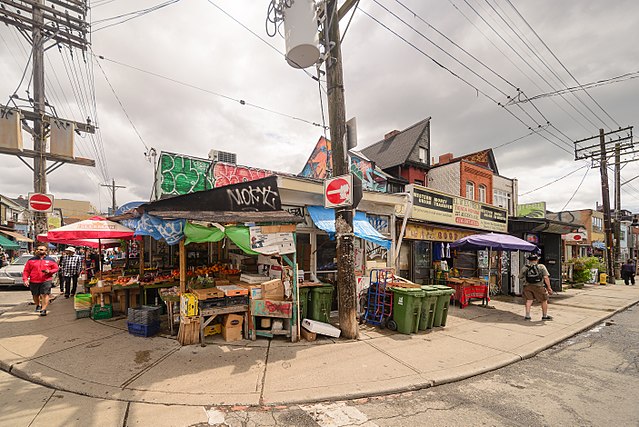
שכונת קנסינגטון מרקט. (Arild Vågen)

טיול בטורונטו הוא חוויה מיוחדת, והעיר מתאימה לכל סוג טיול. לטיול עם הילדים, וגם בלי, למי שרוצה טיול שלו וגם כטיול עירוני. העיר מומלצת לכל מי שמגיע לקנדה והסביבה. טורונטו היא העיר הגדולה ביותר בקנדה וגרים בה למעלה מארבע וחצי מיליון תושבים. במטרו טורונטו גרים כשישה וחצי מיליון איש. כשישית מכל מקומות העבודה בקנדה מתרכזים בטורונטו שהוכרזה מדינה שהכי טוב לגור בה על פי האקונומיסט.

טורונטו הוקמה בשנת אלף שבע מאות תשעים ולשלוש לחופי אגם אונטריו, ונקראה בשם יורק. ארבעים ואחת שנה לאחר מכן הוכרזה כעיר ומאז היא נקראת טורונטו, שפירושו הוא: מקום מפגש בשפת המקומיים. מהמאה התשע עשרה החלה הגירה לעיר בעיקר מבריטניה, אירלנד. ולאחר מלחמת העולם השנייה גם ממזרח אירופה. בשנות השבעים החלה הגירה לעיר ממדינות אסיה.

מכל מקום בעיר תוכלו לראות את המגדל תקשורת הגבוה הסי.אן שמתנשא לגובה של חמש מאות חמישים ושלושה מטרים. הוא נחשב כאטרקציה המרכזית של העיר. מומלץ מאוד לעלות לתצפית שמגדל ולהסתכל על הנופים המדהימים שנשקפים ממנו. אם אתם חובבי ספורט אקסטרים ואם אין לכם פחד גבהים, תוכלו ללכת לנקודת התצפית הנמוכה יותר שרצפתה שקופה, ומי שזה לא מספיק לו יוכל להשתתף בפעילות שבה הולכים בגובה של שלוש מאות חמישים ושישה מטרים על המעקה החיצוני שמחוץ לבניין, קשורים ברתמה. כמו כן למגדל עצמו מגיעים במעלית שקופה שאפשר לראות ממנה את כל העיר, יש בו מרכז קניות נעים, ולמי שרוצה יש גם מסעדה במקום.

כמו בערים נוספות בקנדה גם בטורונטו החורף הוא קר מאוד, וגם כאן הקימו עיר תחתית מיוחדת שתוכל לשרת התושבים בימי החורף. העיר משתרעת על פני עשרים ושבעה ק”מ, ויש בה מגוון חנויות, מרכזי בידור, יציאות לבניינים חשובים, מרכזי קניות ועוד.

אם אתם רוצים להרגיש קצת אירופה לכו אל טירת לומה, בה תוכלו לטייל בחדרים מפוארים, במסדרונות מסתוריים, ואפילו במנהרה עתיקה באורך שמונה מאות מטרים. אחר כך תוכלו לעשות פיקניק בגנים שמחוץ לטירה וליהנות מהשלווה במקום. הטירה נבנתה במשך שלוש שנים והיא אתר חובה לכל אחד.

אם אתם אוהבים הופעות לכו אל גן המוזיקה. ההופעות בו מתקיימות בדרך כלל בקיץ (בין החודשים יוני לספטמבר) ואם אתם נמצאים בחודשים האלה בטורונטו אל תפספסו אותן. הגנים הוקמו על ידי הצ’לן הצרפתי-סיני-אמריקאי יו-יו מה. ההופעות הן בחינם ומתקיימות מתחת לכיפת השמיים כמובן.

אם אתם אוהבים את הסיקסטיז לכו לטייל בשכונת קנסינגטון מרקט. מדובר בשכונה היפית, צבעונית, עם אווירה שמזכירה את מסן פרנסיסקו של שנות השישים. יש כאן את החנויות עם הבגדים הכי מיוחדים, אנשים שאפשר לראות רק בשכונה הזו, אוכל אורגני וואווירה מיוחדת.

אחרי שחוויתם את האווירה המיוחדת בשכונת קנסינגטון לכו אל השכונה הקרובה והלא פחות מיוחדת – צ’יינה טאון. יש בה מסעדות סיניות מעולות, חנויות עם מוצרים מהמזרח, חנויות רהיטים, סופרמרקטים ייחודים ועוד. עדיף להגיע לצ’יינה טאון באמצע השבוע.

מדי שנה בחודש ספטמבר נערך פסטיבל הקולנוע המפורסם של טורונטו. הוא נמשך עשרה ימים, פתוח גם לקהל הרחב ומגיעים אליו למעלה משלוש מאות אלף איש. בהם אנשים מתעשיית הקולנוע מרחבי העולם. הפסטיבל החל בשנת אלף תשע מאות שבעים ושש, והוא נחשב לאחד מפסטיבלי הקולנוע החשובים בעולם, לצד פסטיבל קאן והפסטיבל בברלין. הפסטיבל מסמל את תחילת המרוץ לקראת האוסקר. האירוע מדגיש את הקולנוע עצמאי ואיכותי, בנוסף לקולנוע מיינסטרימי הוליוודי.

Format ImagePosted on November 20, 2019November 19, 2019Author Roni RachmaniCategories עניין בחדשותTags The Economist, Toronto, travel, האקונומיסט, טורונטו, נסיעות
טיסות ישירות בין ריקאוויק לוונקובר

טיסות ישירות בין ריקאוויק לוונקובר

חברת ואוו אייר האיסלנדית תפעיל לראשונה במהלך הקיץ הקרוב טיסות ישירות בין ריקאוויק לוונקובר. חברת הלואו-קוסט תפעיל שש טיסות עונתיות בשבוע בקו ריקאוויק-ונקובר – בין החודשים יוני עד אוקטובר. ישראלים שמעוניינים להגיע לוונקובר יכולים לטוס בוואו אייר מתל אביב לריקאוויק ומשם להחליף מטוס שיטוס עד ונקובר. הטיסות של ואוו אייר מתל אביב יפעלו גם כן בחודשים יוני עד אוקטובר, ארבע פעמים בשבוע (ראשון, רביעי, חמישי ושישי).

ואוו אייר מפעילה כבר טיסות בקו ריקאוויק-טורונטו ובקו ריקאוויק-מונטריאול. ישראלים יכולים להגיע עם ואוו אייר לצפון אמריקה (עם עצירה בבירת איסלנד) בין היתר לערים הבאות: ונקובר, טורונטו, מונטריאול, ניו ג’רסי, וושינגטון די.סי, בוסטון, דטרויט, שיקגו, סן פרנסיסקו, לוס אנג’לס, דאלס, פיטסבורג, סנט לואיס, סינסינטי, קליבלנד ובולטימור. הם ישלמו לפי הערכה כאלף ומאתיים דולר. בין יעדי החברה באירופה: ברלין, קופנהגן, ורשה, בריסל, פריס, אדינבורו, לונדון, דיסלדורף, קורק, טנריף ודבלין.

ואוו אייר פועלת מזה כשמונה שנים והיא מגיעה לשלושים ושישה יעדים בצפון אמריקה, אירופה ואסיה. החברה הטיסה בתחילת דרכה כארבע מאות אלף נוסעים בשנה. ואילו כיום היא מטיסה קרוב לארבעה מיליון נוסעים בשנה. בחברה מועסקים כיום למעלה מאלף עובדים והיא מפעילה ארבעה עשר מטוסים.

קרן הקיימת בקנדה מגיבה לפרשת העברת התרומות לפרוייקטים צבאיים בישראל

מנכ”ל קרן קיימת קנדה לאנס דיוויס החליט להגיב על החלטת הארגון להפסיק להעביר תרומות לפרוייקטים צבאיים בישראל, לאור חקירה של רשות המיסוי הקנדית (סי.אר.איי).

רשות המיסוי הקנדית בודקת מזה מספר שנים את פעילותה של קרן קיימת קנדה, לאור מידע שהתקבל לידיה כי הארגון עבר על כללי החוק הקנדי למתן תרומות מצד קרנות צדקה. קרן קיימת קנדה כך התברר תרמה כספים לפרוייקטים הקשורים לצה”ל בניגוד לכללי המס בקנדה. במקרה כזה קרן קיימת קנדה לא זכאית לפטור במס. כן גם התורמים שלה עצמם לא זכאים לפטורים במס.

דיוויס אמר לאתר החדשות בנושאי היהודים בקנדה (סי.ג’י.אן) את הדברים הבאים: “קרן קיימת קנדה תמשיך לעבוד במשותף עם רשות המיסוי הקנדית לבדיקת כל הפעילויות שלנו. לכן בשלב זה אנו מוגבלים במה שאנחנו יכולים להגיד בנושא. השליחות של קרן קיימת קנדה היא להטיב את איכות החיים בישראל. בעבר היינו מעורבים בפעילויות צדקה הקשורות בעקיפין בצה”ל. רבים מהפרוייקטים היו לטובת בין היתר איכות חיים של ילדים ובני נוער, כמו תרומות למגרשי משחקים ופארקים. כל הפרוייקטים האלה נמצאים על שטחים השייכים לצה”ל והכסף לא הועבר לצבא. בסך הכל היקף התרומות הקשורות בפרוייקטים צבאיים נמוך והגיע לכאחוז מסך כל התרומות שלנו במשך כעשור. אז האמנו שקרן קיימת קנדה עומדת בדרישות החוק הקנדי, משום שמדובר בתרומות לצדקה שנועדו לעזור בעיקר לילדים. אנו לא ידענו שהפרוייקטים שלנו יהיו מטרה לחקירה של רשות המיסוי הקנדית, כיוון שהם נמצאים על אדמה בבעלות צה”ל. מייד שקיבלנו מידע על כך לפני מספר שנים הפסקנו את התמיכה בפרוייקטים אלה. כאמור מזה מספר שנים אנו לא תורמים יותר כספים לפרוייקטים על אדמת בצה”ל”.

לפי פרסומי קרן קיימת קנדה הארגון תמך בפרוייקטים רבים הקשורים בצה”ל. בהם: פיתוח כיתות לימוד, אולמות אירועים, חדרי הקרנות, מועדוני חיילים, הקמת מגרשי משחקים עבור ילדים (שמתגוררים עם בני משפחותיהם בבסיס), שידרוג מרכזי מבקרים, שיפוץ כיכרות מרכזיות, הקמת מתקני נוחות לחיילים, בניית נקודות מפגש לאפשר לחיילים לראות את בני משפחתם וכן תמיכה פרוייקט הגדנ”ע.

Format ImagePosted on January 23, 2019January 23, 2019Author Roni RachmaniCategories עניין בחדשותTags Canada Revenue Agency, CRA, Jewish National Fund Canada, JNF, Lance Davis, travel, Wow Air, ואוו אייר, לאנס דיוויס, נסיעות, סי.אר.איי, קרן קיימת קנדה
Empowering Negev women

Empowering Negev women

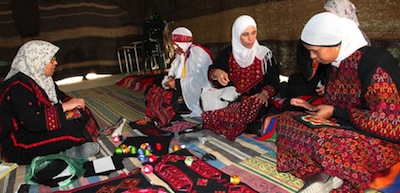
In Lakia, Israel, there are 160 women throughout the village who are responsible for designing and developing embroidery materials. (photo from Michelle Sitbon)

Our trip took us to the southern part of Israel, where we traveled to Beersheva. There is a small sign along the way, that you can miss quite easily, and it says Lakia. Lakia is one of the many Bedouin villages in this part of the country.

The Bedouins are a group of nomadic tribes who have lived in the Negev Desert for hundreds of years. Their heritage can be traced back to the traders along the ancient Spice Route, which happened to cross this region. Most traditional Bedouin hospitality experiences include camel riding, Bedouin food and staying inside a Bedouin tent overnight. However, in the village of Lakia, you are probably not going to find any of those things.

When you stop there, you are in for quite a different and unexpected experience. We arrived in Lakia in the middle of a hot summer day at the end of July and our main goal was to visit the Desert Embroidery. As we drove along the unpaved roads of the village, we quickly realized that Lakia might be small, but the Embroidery was extremely difficult to find. There was no sign telling us which direction to go, even though it is a tourist attraction.

When we finally found our destination, we got out of our vehicle and were warmly welcomed by Naama Al-Sana. She is the Bedouin woman who today runs the Desert Embroidery, and also founded the place together with other women from the community in 1996.

As we entered the visitor centre, we saw a display of beautiful art that was recently made by the local women. These women create the art in their homes in between their chores, and they use the money they earn from it to help support their families.

We were invited to sit inside a beautiful and colourful hand-woven tent, while Al-Sana offered us traditional Bedouin coffee that was scented with local spices. She was excited to hear that we had come all the way from Vancouver, as she has a sister who is currently in Canada, studying at the University of Toronto. Her sister often gives lectures about women in the Bedouin society, as a way to keep the history of this region alive.

The Desert Embroidery doesn’t offer the typical Bedouin tent experience, which includes being served a traditional meal. Instead, you will have the chance to contribute to the empowerment of Bedouin women in your own way. When you participate in one of the workshops or purchase any of their artwork, you will be actively improving the life, health and education of Bedouin women.

The Desert Embroidery was known as the Association for the Improvement of the Status of Women when it first began. The business has grown tremendously over the years and there are now 160 women throughout the village who are responsible for designing and developing embroidery materials. They also provide worker training and product marketing, and there is another group of women who work part-time to provide quality control checks on the products.

The system is very well organized. The women visit the Desert Embroidery twice a week to collect embroidery materials, drop off their finished items, learn about new patterns and designs, and participate in educational workshops and lectures. All of the women are allowed to choose how many hours they work, and they are paid by what they are able to produce within that time. A few of the women have chosen to preserve the traditional jewelry-making that was done by previous generations. They spent time learning how their mothers and grandmothers made jewelry and are now creating their own jewelry to include in the Desert Embroidery collection.

photo - With the help of the Desert Embroidery, Bedouin women in the Negev create the art in their homes, and use the money they earn to support their families
With the help of the Desert Embroidery, Bedouin women in the Negev create the art in their homes, and use the money they earn to support their families. (photo from Michelle Sitbon)

The Desert Embroidery is continuing to achieve its goal of providing employment and income for Bedouin women while empowering them and improving their self-confidence. More than 40 different artistic products can be found on display in the visitor centre, as well as other collaborations that help generate revenues for their work. An example of one of those collaborations is with Kibbutz Gan Masarik, which assists with strengthening the coexistence of Bedouin and Israelis.

The Desert Embroidery is also currently involved in improving the education and health of Bedouin children. And they want to expand to other Bedouin communities within the Negev, so that all Bedouin women can achieve economic independence. There are still so many challenges that women face in Bedouin society and this group is trying to help every woman overcome them.

The main reason I chose to visit Lakia was that I wanted to learn about this destination and the work that the Desert Embroidery is doing. My goal is to share what I have learned and to take other travelers to Lakia, so that they can see it firsthand. Of course, such activities aren’t only being done in the Negev region. In the northern part of the country, in the Galilee region, Israeli and Arab women also create traditional artwork to create a change in the lives of women.

I have made a visit to Lakia part of my itinerary in an upcoming small group tour to Israel, because I believe that travel can support and strengthen local communities. Since I am a travel agent who creates itineraries that are art-oriented, this is a perfect way to show everyone that they can appreciate art while making a difference in both children’s and women’s lives.

In the Mishnah Torah, Rambam organized the different levels of tzedakah, or charity, into a list from the least to the most honourable. Sometimes it is known as the “Ladder of Tzedakah.” The highest form of charity is to help sustain a person before they become impoverished, by offering a substantial gift in a dignified manner, by extending a suitable loan or by helping them find employment or establish themselves in business. These forms of giving allow the individual to not have to rely on others.

Projects such as those led by the Desert Embroidery can be found around the globe in places like Jordan, Mexico and Canada. When we travel, we know the many ways in which we benefit. However, I believe we should also try to find ways to benefit others as we travel, even in small ways. We should become more involved with local communities and support them in respectful ways that will, among other things, help them preserve their tradition and art.

Michelle Sitbon is an art travel adviser who organizes small group tours to Israel among other art-related destinations around world. For more information, visit yourartvoyage.com.

Format ImagePosted on November 30, 2018November 28, 2018Author Michelle SitbonCategories Israel, TravelTags art, Bedouin, embroidery, Empowerment, Negev, travel, women
Courage ride sells out

Courage ride sells out

Courage in Motion 2018. (photo from Beit Halochem Canada)

More than 100 Canadian cyclists participated in the recent Courage in Motion (CIM). The fundraising ride, now in its 11th year, has grown steadily in popularity over its first decade and, this year, like many before, was sold out.

The CIM initiative of Beit Halochem Canada, Aid to Disabled Veterans of Israel, welcomed cyclists from across Canada, joined by some Americans and Israelis. From Oct. 22-26, the visiting cyclists rode alongside Israeli veterans with disabilities on four fully supported routes, taking them through southern Israel’s archeological landmarks and its landscapes.

With the fundraising drive open until Dec. 31, it is expected that Courage in Motion 2018 will raise approximately $850,000. Cyclists’ efforts enabled members of Zahal Disabled Veterans Organization/Beit Halochem to participate in the ride and will also fund programming at Beit Halochem Centres in Beer Sheva, Haifa, Jerusalem and Tel Aviv, which provide individualized therapies, specialized sports rehabilitation training and cultural arts and family-oriented programming.

Lisa Levy, an avid cyclist and national executive director of Beit Halochem Canada, is the founder of Courage in Motion. “I’m pleased that the ride was, once again, sold out,” she said. “It’s evident that our cyclists embrace the aspect of riding alongside those who are directly helped by their efforts. This year, we’re incredibly proud that more than 120 wounded Israeli veterans participated due to the fundraising by our 110 Canadian riders. We are also gratified that many of our Canadian participants feel that they get more out of the experience than the disabled veterans.”

While many cyclists return year after year, several others were new to Courage in Motion 2018. Two of these first-time participants are internationally renowned sports figures.

Toronto-born Keith Primeau was a National Hockey League centre, playing 15 seasons (1990–2005) with various teams. He co-wrote Concussed! Sports-Related Head Injuries: Prevention, Coping and Real Stories (2012) and is now based in New Jersey.

CIM also welcomed cycling champion Eon D’Ornellas. Born in Guyana and having immigrated to Canada, D’Ornellas represented both countries during his career, winning numerous medals. He has owned D’Ornellas Bike Shop in Scarborough, Ont., for 30 years and, in 2011, he suffered a stroke during a club training ride. Like Beit Halochem members, he knows the challenges in reclaiming his life after serious medical trauma.

All Courage in Motion participants enjoyed group activities following each day’s ride, including a night walking tour of Jerusalem and an evening with members of Beit Halochem, who shared their personal stories of tragedy and triumph. Next year’s CIM takes place in Israel Oct. 27–31. Registration is expected to open in March.

Format ImagePosted on November 23, 2018November 28, 2018Author Beit Halochem CanadaCategories IsraelTags Beit Halochem Canada, cycling, disabilities, tikkun olam, travel, veterans

Neighbourly relations

The lineups at local border crossings to the United States over the Canada Day long weekend suggest rhetoric about Canadians avoiding visits to our neighbour have been largely overblown. We may be repulsed by the Trump administration’s treatment of would-be refugees, especially children, but cheap gas, cheese and milk – as well as the plethora of delights at Trader Joe’s – mean many of us just can’t stay away.

Ironically, it is partly because our dairy products are so expensive – because of our supply management system – that the U.S. president is raging at Canada in the first place and why we amped up our tariffs July 1 in a trade war Trump launched.

At the same time, most of us know that our immediate neighbours are much like ourselves. The places we are most likely to drive to – Bellingham, Seattle and smaller centres dotting the American Pacific coast – are inhabited by some of the most liberal voters in that country. These are not places where Trump bumper stickers or MAGA caps are widely prevalent.

Likewise, if we jump on a plane, the destinations we choose tend to be similar in attitudes: the beaches, amusement parks or golf resorts of Southern California, the wine country of Northern California, oases in Arizona that are likely to have as many Albertans as native-born Arizonans. Punishing businesses in these locations because their president has xenophobic views doesn’t seem particularly sensible.

On the other hand, we might have more reticence about stepping out of these familiar spots. We might rethink road-tripping across the country; that generations-tested means of memorable family bonding, backseat battles and boredom. Almost anyone who has traveled through rural America returns with stories of salt-of-the-earth kindness and folksy friendliness. Yet, knowing that some counties in the most picturesque parts of the United States voted for Trump – and still support him by huge margins – one might be forgiven for looking askance at the family in the next booth at the roadside diner. What is behind the smiles and extroverted affability that can turn so mean in the ballot box and when responding to public opinion polls about immigrants and minorities?

Leaving aside whether we would feel personally comfortable in some locations, there is the larger issue of whether Canadians should boycott American products. On social media this week, you can find suggested product choices that make it easier to buy Canadian instead. It’s a matter of individual choice whether this is a productive use of energy, but, if it makes people feel better and helps the Canadian economy in a time of challenge, it seems like a fine enough gesture.

It is notable, though, to compare the nascent cross-border boycott to the BDS movement against Israel. Admittedly, the U.S.-Canada clash is mere weeks old, while the Israeli-Arab conflict has been in high gear for seven decades, giving sides more time to organize. But, while a significant number of Canadians seem to think that a boycott of Israeli products, ideas and people is a legitimate tactic, it is doubtful that a similarly organized movement will coalesce around the idea of boycotting Americans.

Some BDS supporters have maintained that their boycott targets Israeli “policies,” although the founder of the movement, Omar Barghouti, has no qualms about his position that Israel should cease to exist as a Jewish state. In any event, how bad would American “policies” need to become before BDS advocates devoted their substantial energies to boycotting U.S. products? Certainly we are unlikely to see a Canadian consensus that suggests a total economic, cultural, academic and social boycott of America, as the BDS movement promotes with Israel. It would be impossible, of course, given the interconnectedness of our countries, but the question remains: Why do some take the hard line with Israel but not with other countries?

Indeed, consider the approach held by most people, even those who are likely to support BDS: with North Korea, Iran and anyone else with whom we have not insubstantial differences, the consensus approach is engage, mediate, negotiate. It’s the approach we are pursuing with the United States on one hand, while retaliating with tariffs on the other. Yet, when it comes to Israel, in economic matters, academic interactions, sporting competitions and every level of human interface, a sizeable group demands that we make Israel an international pariah, isolate it in every way, exclude it from the global community. What can that possibly be about?

Posted on July 6, 2018July 5, 2018Author The Editorial BoardCategories From the JITags antisemitism, boycott, Canada, economics, racism, travel, United States
Around the world in 382 days

Around the world in 382 days

Naomi Steinberg has toured the world with Goosefeather and is now working on a book of her travels. (photo from Naomi Steinberg)

Naomi Steinberg’s Goosefeather started in 2011. “It began with interviewing my French maternal grandfather in Paris before he died,” she said. “I wanted to know how he had helped my Jewish grandmother survive the Second World War and why he was a collector of maps, weights and scales. Given his work with the metric system, I also thought it would be interesting for us to talk about measurements in general.”

Fascinated by her grandfather’s story, the kernel of Goosefeather was born. “I made him a promise that he would see the final result,” she said.

She immersed herself in research. “Measurements are extremely important to humans,” she said. “We measure everything, but we have to realize that no measurement is 100% accurate; we have to accept that…. As I went deeper into it, I wanted to know how we measure the truth. What is the truth? What is reality? Same as when measuring length and weight, measuring reality can’t be 100% accurate. We have to accept this area of the unknown. We have to let ourselves ‘not know.’ We have to let everyone just be.”

The show that emerged out of her research is a multifaceted tale involving maps of places and relationships, measurements of physical elements and of abstract concepts. “How should we measure the space between me and another person? Between me and the planet?” she asked herself. “It soon became clear not only that I had a complicated story to tell, I also had an entertaining show that wanted to be on the road…. Goosefeather was going adventuring and I would be going around the planet, by land and sea, carrying a performance with me. As I journeyed, I would be carrying my own prime meridian in the form of presence. I had hypothesized that if, with this, I charted the space-time between myself and others, I might be guided in a good way.”

As the show was still coming into form, Steinberg’s grandfather was dying in a hospice in France. In 2013, she visited him in the hospice one last time and showed him the first draft of Goosefeather. “I shared with him all my ideas, and he said I got it ‘correctly.’ For a man obsessed with measurements, that was a high praise.”

The first performance of Goosefeather occurred in 2014 in Vancouver. (For a short review, see jewishindependent.ca/storytellers-excel-at-fringe.) But Steinberg needed to take it on the road. “I knew the show should travel like a Canada goose, all around the world,” she said. “I love traveling. I have a nomad soul, and I value my experience as a traveler, but I care very much about the environment. I didn’t want to just take a plane. You don’t experience your travels fully when you fly. It should be closer to the ground, slower, so I could stop and perform.”

In November 2014, she left Vancouver for California, where she boarded a cargo ship heading to Australia, which started her journey around the world. “It was easy,” she said. “The cargo companies sell tickets. They often have a couple cabins vacant – an owner’s cabin and a pilot’s cabin. That’s where I stayed on the cargo ships.”

She also performed Goosefeather on the first ship, as a Christmas gift for the sailors. When the captain asked her for a repeat performance, she bartered: a show for a phone call to her father, who celebrated his birthday while she was on the water.

It took her 21 days to reach Australia. From there, she took another cargo ship to China. Her further travels – by boat, bus and train – included Japan, Russia, Belgium, France, Switzerland, the United States and, finally, back to Canada. The entire trip took 382 days.

In every country, she performed Goosefeather, facilitated workshops and participated in creative collaborations. In every country, she stayed with friends. “I came back with $100. I lived in a cash economy for over a year and I fully supported my journey with my shows and workshops,” she said. “In the entire time I was away from home, I only paid for a hotel for seven nights.”

Despite the crazy itinerary, she didn’t prepare all her stops beforehand. “Sometimes, I didn’t even know where I would spend the night when I arrived in a city or a country, but I always found friends,” she said. “I researched storytelling organizations on the internet. I put my scheduled countries on my Facebook page and asked my friends for help. They asked their friends, and the word spread around the world like a goose feather. Everywhere, people wanted to see my show. I got contacts in every city and country. Everywhere, people wanted to help.”

Even the language barrier in countries like Japan and Russia didn’t deter Steinberg. She can perform Goosefeather in either English or French, and she always found a translator when she needed one.

“In Japan, they asked me to perform for children, and I created a special show for them: a Kamishibai show.”

For Steinberg, a professional storyteller, a storytelling tradition like Kamishibai is extremely compelling. According to Wikipedia, “Kamishibai is a form of Japanese street theatre and storytelling popular during the Depression years and the postwar period … until the advent of television.” Storytellers would travel from town to town, performing on “street corners with sets of illustrated boards … narrat[ing] the story by changing each image.” Some consider Kamishibai to have influenced manga and anime.

“For my first Kamishibai show, the adventures of a little goose feather, a talented 8-year-old drew the illustrations,” said Steinberg. “It was a big success. Now, I perform it with the pictures created by a wonderful Japanese artist, Shiho Oshita Beday.”

Currently, Steinberg is busy writing a book, a travelogue of her journey around the world with Goosefeather. She aims to publish it next year. To learn more, visit goosefeather.ca.

Olga Livshin is a Vancouver freelance writer. She can be reached at [email protected].

****

Note: This article has been edited to reflect that Steinberg’s total journey took 382 and not 386 days.

Format ImagePosted on June 29, 2018May 28, 2020Author Olga LivshinCategories Performing ArtsTags family, Goosefeather, Naomi Steinberg, storytelling, travel
Traveling with family

Traveling with family

Levinsky Market (photo by Daniel Dodek)

The decision to travel with your family to Israel is a big one. It’s so expensive and the long distance requires going for at least two weeks to make it worthwhile. My husband and I debated for years on the merits of taking our children on such a trip. Finally, our daughter’s bat mitzvah convinced us it was time. At nearly 13, she would get a lot out of it, and our 11-and-a-half-year-old son seemed ready as well. To mitigate jet lag, I traveled a week early with the kids to London, England, where we laid low, staying with friends and taking in a few sights. We then met my husband in Jerusalem.

photo - Michelle Dodek with Max and Naomi
Michelle Dodek with Max and Naomi. (photo by Daniel Dodek)

The morning after we arrived, we went on a walking tour. Our guide, Dvir, specializes in tours of the Old City, which must be done on foot. Not only did he take us to all of the highlights, find us the best food in the Old City and explain the geopolitics of Jerusalem but, also, he knew where to find all of the clean toilets. And our children surprised us with the knowledge they had gleaned from their years of Jewish education, enriching our experience, as well. That day, we walked more than 13 kilometres, helping us sleep well and rid us of any jet lag that might have been lingering.

The next day, we returned to the Old City to buy special gifts of Judaica, and managed to pick up plenty of beautiful treasures for ourselves. We finally found use for our son’s bargaining skills, which had previously only been used to negotiate things like screen-time and treat consumption.

One of the best decisions we made was to stay in apartments. With two preteens, the need for food sometimes comes fast and furious. Knowing breakfast was in the fridge and we could make nutritious snacks to take along with us every day contributed enormously to the success of our trip. The other element that made it the best vacation we’ve ever had with our children was the planning my husband did, combining some days with a tour guide and other days with age-appropriate activities. Since neither of us is interested in driving in Israel, he also worked our plans around all the different kinds of transit. Our centrally located lodging enabled us to walk many of the places we wanted to go.

photo - Daniel and Max Dodek enjoy the beach
Daniel and Max Dodek enjoy the beach. (photo by Daniel Dodek)

We were invited by a friend, who was also visiting Israel with her family, to join their tour one morning of an agriculture reserve called Neot Kedumim. Near Modi’in, the site is of archeological significance and takes visitors back to biblical times through the landscape, agriculture and activities. Our experience included tree-planting, za’atar-grinding, pita-making, cooking and pulling water up from a cistern. My husband’s dream now is to spend his birthday working as a shepherd there. Another morning, with the same friends, was spent in fierce competition at the Tower of David doing something called the Amazing Race. It was good fun and educational, too.

We ventured one windy day to Ein Gedi and did a hike. Luckily, before driving to Masada, we discovered that, when it’s too windy for the cable car to run, Masada is closed. However, the Dead Sea was open for business as usual and, while we took in the experience of the mud and the floating, we also loved the variety of people from around the world visiting the waters.

In Jerusalem, we loved the green spaces like Station One. Formerly a train station and tracks, it is beautifully landscaped and is perfect for cycling, so we rented bikes. The public art in Israel makes the parks and streets even more interesting. Markets are favourites when we travel and Machane Yehuda did not disappoint. We returned there a number of times to buy Israeli essentials like halva, rugelach and dates, as well as more mundane food like fruit, vegetables and bread. The dinner scene is like the best food court in the world.

photo - Max Dodek dressed as Aaron Chelouche, founder of Neve Tzedeck, and Noam Rumsack, the guide
Max Dodek dressed as Aaron Chelouche, founder of Neve Tzedeck, and Noam Rumsack, the guide. (photo by Daniel Dodek)

We all enjoyed the food in Israel. Gone are the days when every corner had falafel, fly-covered shawarma and pizza with corn and tuna. You can still find those delights in a few places but, these days, no matter what you like to eat, you can find it in Israel (except on Shabbat or holidays in Jerusalem). Keeping kosher for Passover, once the holiday began, was certainly easier than we find it in Vancouver.

Two days before Passover started, we took the bus from Jerusalem to Tel Aviv. Comfortable, cost-effective and an experience in Israeli culture, the bus took only 45 minutes. Our lovely apartment in Tel Aviv was in an area in transition. Just over a block from the beach and a short walk from Shuk HaCarmel (where we went almost daily), the location was excellent. We were able to walk to many places, including Sarona (the market is like an upscale Granville Island), Shenkin (shopping), the Tachana (eclectic Israeli items) and Neve Tzedeck (artists and fancy touristy stores). We ended every day relaxing at the beach on the powdery sand.

The seder was delightful at my cousin’s house in Ramat Hasharon. Seeing my secular Israeli cousins argue over the tunes and forget the words occasionally showed us that they observe Passover similarly to how we celebrate it. The only difference was that they served twice as much food as I do, including seven types of meat. The food was almost as unreal as the traffic jam at 12:30 a.m., as people left their respective seders.

Other excellent parts of our trip included a fun and informative walking tour of Jaffa. Our guide, Noam, dressed in Turkish garb of 1905 – and, for awhile, our son dressed up as well, beard and all. We spent a day in Ramat Aviv, between the Museum of the Diaspora (Beit Hatfutsot) at Tel Aviv University and the Palmach Museum, just down the road. All of us took full advantage of the many types of exercise equipment in the public parks all around Tel Aviv and rode bikes along the Yarkon River, in addition to enjoying the lively promenade (Tayelet) along the ocean. One day, we took a fabulous full-day private tour up north to Akko, Haifa and Caesarea. The guide enabled us to get the most out of the day.

When we saw the family dynamic start to go sideways, we split up. Our ability to keep good snacks handy and to make sure everyone got enough outdoors time each day made everything we were able to see and do a wonderful experience for all of us. I would recommend a trip to Israel to anyone.

Michelle Dodek is a freelance writer living in Vancouver who spent enough time in Israel in her youth to speak sufficient Hebrew to communicate with taxi drivers and vendors in the shuk.

Format ImagePosted on June 15, 2018June 14, 2018Author Michelle DodekCategories TravelTags family, Israel, travel

Posts pagination

Previous page Page 1 … Page 3 Page 4 Page 5 Next page
Proudly powered by WordPress