Skip to content
  • Home
  • Subscribe / donate
  • Events calendar
  • News
    • Local
    • National
    • Israel
    • World
    • עניין בחדשות
      A roundup of news in Canada and further afield, in Hebrew.
  • Opinion
    • From the JI
    • Op-Ed
  • Arts & Culture
    • Performing Arts
    • Music
    • Books
    • Visual Arts
    • TV & Film
  • Life
    • Celebrating the Holidays
    • Travel
    • The Daily Snooze
      Cartoons by Jacob Samuel
    • Mystery Photo
      Help the JI and JMABC fill in the gaps in our archives.
  • Community Links
    • Organizations, Etc.
    • Other News Sources & Blogs
    • Business Directory
  • FAQ
  • JI Chai Celebration
  • JI@88! video

Recent Posts

  • Sharing her testimony
  • Fall fight takes leap forward
  • The balancing of rights
  • Multiple Tony n’ Tina roles
  • Stories of trauma, resilience
  • Celebrate our culture
  • A responsibility to help
  • What wellness means at JCC
  • Together in mourning
  • Downhill after Trump?
  • Birth control even easier now
  • Eco-Sisters mentorship
  • Unexpected discoveries
  • Study’s results hopeful
  • Bad behaviour affects us all
  • Thankful for the police
  • UBC needs a wake-up call
  • Recalling a shining star
  • Sleep well …
  • BGU fosters startup culture
  • Photography and glass
  • Is it the end of an era?
  • Taking life a step at a time
  • Nakba exhibit biased
  • Film festival starts next week
  • Musical with heart and soul
  • Rabbi marks 13 years
  • Keeper of VTT’s history
  • Gala fêtes Infeld’s 20th
  • Building JWest together
  • Challah Mom comes to Vancouver
  • What to do about media bias
  • Education offers hope
  • Remembrance – a moral act
  • What makes us human
  • המלחמות של נתניהו וטראמפ

Archives

Follow @JewishIndie
image - The CJN - Visit Us Banner - 300x600 - 101625

Tag: travel

Traveling with young kids

Traveling with young kids

(photo by Masada Siegel)

Taking a red-eye flight was no way to end a glorious Hawaii vacation with my nine-month-old, but it was the only nonstop and I figured everyone would go to sleep. Ah, how wrong I was! My little guy, who just had started walking, was so excited that we were not only awake the entire flight, but we spent it walking up and down the aisle.

Having little ones is a game-changer. After having traveled solo for months at a time, where I could follow any whim and not plan if I didn’t want to, my travel style has been turned completely upside down, but for all the right reasons.

So, while I always pack lots of extra food and supplies for my little guy, who’s now a toddler, I’ve learned to pack light for myself. Everything needs to be multipurpose. For example, my go-to travel uniform consists of a wrap-sweater because I use it as a baby blanket, and many friends use it as a nursing cover-up. Also, because it’s attractive, it can dress up a simple outfit.

Part of the travel experience is keeping your kids entertained. The best compliment I got recently was when a woman two rows behind me exclaimed, “What, you have a toddler with you? I had no idea. Thank you for making this a pleasant flight for all of us.”

Truth is it helps to be extremely prepared with planned activities, as well as making sure your little one is excited about the journey. A happy kid makes for a pleasant flight for all. Prior to our trip, I gave my son his own luggage, a super-cute airplane-themed rolling suitcase that also turns into a backpack. He loves it and constantly drags it around with him. I find it helpful for him to feel as if he is one of us, and part of the adventure.

I always pack a number of toys – they all must be useful both on the long flights and at the destination. I never leave home without our Bubzi, a stuffed owl that plays lullabies and projects stars on the ceiling, as it helps with sleep. Another lightweight item to bring is the Cinemood, an ultra-light three-inch portable projector that can be used just about anywhere with a flat surface, as its preloaded with lullabies, books and kid-friendly content. Be sure to pick up kid-safe headsets that protect little ears; Buddyphones are especially good on planes to help drown out the noise, too.

Traveling with a toddler has its ups and downs. On a recent trip, my son, who has always disliked cribs, was sleeping in a bed. Even though he was right next to me, he still flew off of it in the middle of the night, leading to a bruised up nose and an upset mom. There seem to be a million tiny situations that need to be thought through, some as simple as piling pillows all over the floor around a bed.

I’ve also learned that the details matter, such as keeping my little one out of the sun. While I tan easily, my son is blond and fair, leading me to explore a million different sunscreens, many sticky, which led to complaints. While we do use sunscreen, I’ve heard conflicting reports of how useful they are and how bad some of the chemicals are, so I finally changed my travel stroller to one that has on oversized canopy, as extra protection.

A sturdy stroller is also important because you can place your bags in it and my son can walk alongside me or even push the stroller. I’ve realized, the more active he is in the airport, the more tired he will be on the airplane. I always research the airport we are flying into, to see if there is anything to see, such as an aquarium, museum or viewing deck, so as to keep everyone entertained.

However, being organized takes a lot of effort and, while I try my best to keep everything in its place in my diaper bag, sometimes I don’t. I’ve had to dig around for my wallet, plane tickets and all sorts of odds and ends. Usually, a box of milk or other liquid slips my mind and then security zeroes in on me.

Even with a baby in tow, I have been patted down on every single flight I have taken with my son. Security is in no rush and generally don’t care if you miss your plane. On my last flight, I had to run through the airport holding my son to make it in time.

Traveling with a toddler certainly keeps you on your toes, but isn’t that why we travel in the first place, because we want to have new experiences? So, while the getting to the destination is part of the journey, my best advice is to try to enjoy the ride.

Masada Siegel is an award-winning journalist and photographer. Follow her at @masadasiegel and visit her website, masadasiegel.com.

Format ImagePosted on June 15, 2018June 14, 2018Author Masada SiegelCategories TravelTags children, family, travel
A rabbi’s dream come true

A rabbi’s dream come true

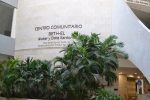
New York Rabbi Aaron Laine first arrived at Beth El, an Ashkenazi congregation in the Panama subdivision of Paitilla, 23 years ago. (photo by Lauren Kramer)

Imagine being a rabbi at the helm of a community where Judaism is actively embraced. A city where Jews enthusiastically attend synagogue and classes, keep Shabbat, send their kids to Jewish day school and honour the laws of kashrut. A rabbi’s dream, right? Then Panama City is that dream come true.

photo - Congregation Beth El
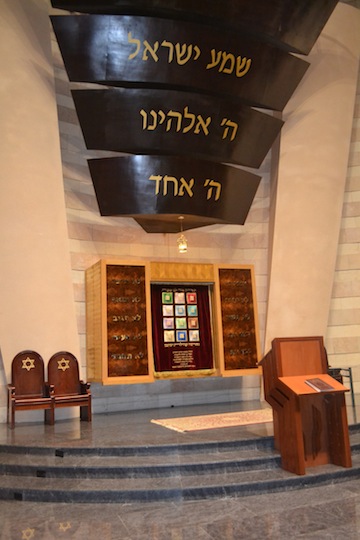
Congregation Beth El (photo by Lauren Kramer)

New York Rabbi Aaron Laine first arrived at Beth El, an Ashkenazi congregation in the Panama subdivision of Paitilla, 23 years ago. “Ninety-five percent of the community keeps kosher,” said the rabbi with pride. “On Sukkot, there used to be 10 sukkot built in the whole city but today everyone has a sukkah. And, where we once brought just 185 sets of lulav and etrog, we now bring in 1,700!”

Panama City’s 15,000 Jews can choose from six synagogues, three Jewish day schools, two large kosher grocers and 25 kosher restaurants. Laine’s congregation of 400 families boasts two sanctuaries, a massive social hall, two mikvahs, classrooms and a football court on the roof. On Shabbat in Paitilla, Jews are so conspicuous you have to look hard to find anyone non-Jewish.

I attended services in July with my family, watching from the women’s section as male congregants embraced their rabbi, joining hands as they sang and danced their way around the bimah in a spontaneous, joyful celebration of Shabbat. Accustomed to a very different tradition in Vancouver, I asked Laine how the community had become so religious.

“It’s a predominantly Sephardi community here and there’s much less assimilation than there is in North America,” he reflected. “Adults are engaged in Jewish learning and their kids are raised in a very traditional environment in Panama. Almost all go to Jewish day schools, where they get a traditional outlook on life that automatically brings less intermarriage. And the community also uses the old system of pressure to make sure kids marry Jewish.”

In a country of 4.1 million, Jews are very influential in Panama. The past 60 years have seen two Jewish presidents: Max Delvalle, who served for just under a month in 1968, and, later, from 1985 to 1988, his nephew, Eric Arturo Delvalle. Jews play a heavy role in tourism, retail and construction, and have financed many of the gleaming high-rise buildings and condominium towers in Paitilla.

“We feel greater in number than 15,000,” noted Allan Schachtel, whose family-owned companies include a major tourism firm, the cruise ship port and the ferry boats that deliver tours of the Panama Canal. Laine summed it up succinctly. “Take away the Jewish investment in construction in Panama and the country would still look like a shtetl,” he observed.

photo - The Plaza de Francia in Panama City recalls the 22,000 French workers lost to malaria and yellow fever in the 1880s
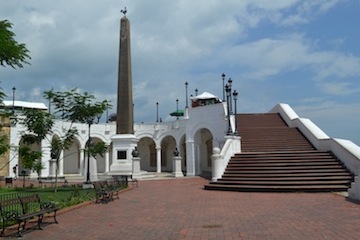
The Plaza de Francia in Panama City recalls the 22,000 French workers lost to malaria and yellow fever in the 1880s. (photo by Lauren Kramer)

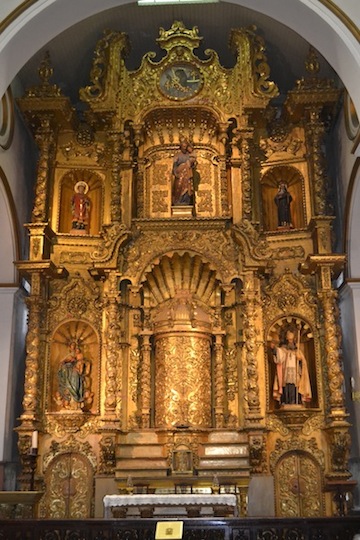
In some places, it does. There’s a stark transition between the new, well-heeled Panama, with its tall, contemporary hotels, casinos and expansive malls, and the old. In Casco Viejo, the old city, we peeked inside Iglesia de San Jose to marvel at a massive altar flaked with gold that stretches 25 feet high. It’s the only thing that was saved in 1671 when the English pirate Henry Morgan ransacked and destroyed the city, burning it to the ground and making off with the loot. Local legend has it that a Jesuit priest painted the altar black to disguise it, and then told Morgan the original altar had been stolen by a different pirate. Today, supplicants still pray at the altar, four centuries after it was built.

Casco Viejo is full of charming passageways and ancient buildings that have only recently been gentrified. These days, they’re being transformed to house boutiques, gelato shops, galleries and restaurants, and the area buzzes with youthful energy and a vibrant night life. But there’s sadness here, too.

Iglesia de San Jose in Casco Viejo was the only thing saved when, in 1671, the English pirate Henry Morgan ransacked and destroyed the city, burning it to the ground. (photo by Lauren Kramer)

At the southern point of the quarter, the Plaza de Francia pays tribute to the French role in the construction of the Panama Canal. The French were the first to try and build the 80-kilometre canal in 1881, but their efforts were confounded by engineering troubles, bad planning and mosquito-born illness. Malaria and yellow fever felled 22,000 before the French gave up on the job. The Panama Canal Museum tells more of this story in a beautifully restored old-quarter building once home to the French Canal Company.

Back in Paitilla, life is good for the Jews of Panama City. Laine’s Spanish has grown fluent as he’s watched the community grow – not just in observance, but also in number. It’s swelled by Jews immigrating from Venezuela, Argentina, Uruguay and Peru. At a Chabad Friday night table, we met Israelis and Canadians who have chosen the city as their home and love its Jewish opportunity and spiritual warmth. This is a sweet life for a rabbi, Laine affirmed. “The Jews in Panama are good Yiddishe Neshamas,” he said, “they’re warm, traditional and deeply committed to family life.”

Lauren Kramer, an award-winning writer and editor, lives in Richmond. To read her work online, visit laurenkramer.net. This article was originally published by CJN.


Format ImagePosted on September 15, 2017September 14, 2017Author Lauren KramerCategories WorldTags Judaism, Panama, travel

Notary services here

Until recently, Israeli families with children in British Columbia were required to travel to Toronto to renew or extend their children’s Israeli passports. The Israeli Consulate in Toronto is now collaborating with three local notaries public – one each in Vancouver, Calgary and Winnipeg. In Vancouver, Adam Brosgall, owner and principal lawyer at Brosgall Legal, has been approved by the Israeli Consulate General in Toronto to be the notary public in British Columbia to assist Israeli citizens who wish to renew or extend their under-18 children’s travel documents.

Brosgall will notarize the parents’ signatures on their children’s passport renewal or extension forms and identify the minors appearing before him, with their updated passport photos, and sign the back of the photos.

Parents wishing to use the notary public’s services must arrange a meeting and come together with their child and the following documents: forms for renewal/extension of a passport, filled in but unsigned (the parents will both sign in front of the notary public); birth certificate of the minor with the names of both parents; photocopies of the parents’ passports; and two recent five-by-five-centimetre passport photos of the child.

Both parents must come to the meeting with the notary public, along with the child, and the notary public’s service comes at a fee. After the notarization, the signed forms and the children’s photographs must be sent by mail to the Consulate General in Toronto. Only requests signed by Brosgall (in Vancouver) will be approved by the consulate.

Those who choose not to appear before the notary public may continue to travel to the consulate in person to renew/extend their children’s passports.

For more information and to book an appointment, email to [email protected] or call 604-685-ADAM (2326).

Posted on August 25, 2017August 22, 2017Author Adam Brosgall and Consulate General of Israel in TorontoCategories LocalTags Adam Brosgall, Israel, travel
Lunch with bestselling author

Lunch with bestselling author

Robin Esrock speaks at the Jewish Family Service Agency’s Seniors Lunch program. (photo from JFSA)

Well-known travel writer Robin Esrock gave an inspirational talk to the Jewish Family Service Agency’s Seniors Lunch program, which took place at Congregation Beth Israel on July 11.

Esrock has written for several publications, has been a TV host and his book The Great Canadian Bucket List was on the bestseller list in Canada and Australia. He told the approximately 40 guests the story of how his adventure-focused career began and how he has been very fortunate in the unorthodox path he has chosen. He also shared his philosophy, which is “you are just where you are supposed to be.”

JFSA’s Seniors Lunch program comprises a kosher meal once a month at Beth Israel and twice a month at Temple Sholom on Tuesdays at noon. All Jewish seniors are welcome. For more information and reservations, call Queenie Hamovich at 604-558-5709.

Format ImagePosted on July 21, 2017July 19, 2017Author Jewish Family Service AgencyCategories LocalTags Canada, Jewish Family Service Agency, JFSA, Robin Esrock, seniors, travel
What made your list?

What made your list?

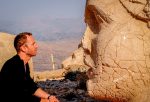
Robin Esrock contemplating ancient wonders in Turkey. (photo by Paul Vance/EWM)

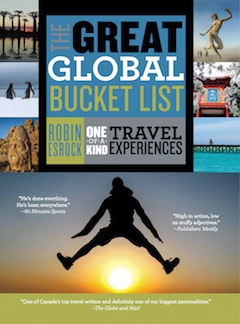
Read about Robin Esrock’s visit to a fountain of youth in Colombia, his rail journey across Siberia, his diving lessons in Papua New Guinea. Esrock has traveled to more than 100 countries and, as he writes in the introduction to The Great Global Bucket List, the hybrid guidebook and essay collection “draws together the best of these adventures.” What’s more, Esrock hopes that you won’t just read about his exploits, but make plans for your own.

book cover - The Great Global Bucket ListEsrock is one of the many writers participating in this year’s Cherie Smith JCC Jewish Book Festival, which runs Nov. 27-Dec. 1. The local author and journalist has not only been featured in the Jewish Independent before – for The Great Canadian Bucket List, among other things – but has written for the paper as well, so it was nice to catch up with him in anticipation of his Nov. 27, 5 p.m., presentation at the Jewish Community Centre of Greater Vancouver, appropriately called Travel Dreams.

While his career as an intrepid traveler only started after a bike accident – from which he received a broken kneecap and, eventually, a $20,000 insurance settlement that was “just enough,” he writes, “if used sparingly, to book a solo one-year adventure around the world” – he had traveled before.

“My first trip overseas was to Israel when I was 11, on a discovery tour, with my family and grandparents,” he told the Independent. “It was a hop-on, hop-off bus trip to tick off Israel’s greatest hits. I did a European bus tour after high school, memorable in that I can’t remember much of it, a two-month stint to a kibbutz, and then backpacked up East Africa to Zanzibar. I didn’t get malaria, but I did get the travel bug. I lived in London for a couple years and used that as a base to visit various odd spots in Europe, but the idea of traveling around the world always seemed like an impossible dream. Once it finally manifested, the result of a modest insurance settlement for my accident, I couldn’t believe I’d waited so long.”

The accident occurred as Esrock was approaching his 30th birthday. On that first yearlong trip, he visited 24 countries and was “published in newspapers on five continents.”

He writes, “A year later, my Hail-Mary pitch for a TV show landed on the right desk at the right time and, seven months later, I found myself as a co-host, writer and producer for a 40-part adventure series filmed in 36 countries. Funded by television networks, I was tasked with seeking out experiences that conformed to my bucket list criteria: Is this destination or activity unique? Is it something I will never forget? Will it make a great story? Is it something everyone can actually do?

“Tick off all those subjective items, and the journey began.”

These were the same criteria Esrock used to compile his shortlist for The Great Global Bucket List. Then, he said, “I had to cut 27 chapters for size in my book, but, fortunately, I have a Bucket List blog (globalbucketlist.com) to find them a home, and add new experiences. In my book, you’ll find far-flung adventures (Antarctica! the Galapagos! the Azores! the Amazon!) but you won’t find the Eiffel Tower or Tower of Pisa. This is a book of inspiring stories and photographs, not a guide to popular tourist traps.”

In addition to experiencing many a far-flung adventure over the last decade or so, Esrock has also found the time to start a family. How has that changed his travel plans?

photo - Robin Esrock camping in Antarctica
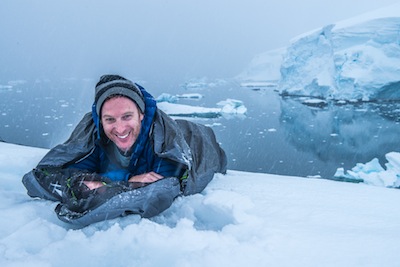
Robin Esrock camping in Antarctica. (photo by Jeff Topham)

“There seems to be a subtle flow in the career of travel writers: you start with hardcore budget travel, transition into hard adventure, then soft adventure, romance, family, cruise, food, wine, spa, and end up in golf!” he said. “I don’t take the risks I once did, or have the energy to sleep in roach hotels. People have become more important than ever and, since I’ve managed to tick off so much, I’m very drawn to unique experiences. My kids are a little young (3 and 3 months) to start ticking off a family bucket list, but I’d love to take them to countries like India, Cambodia, Israel and Turkey, where locals embrace children. Disneyland can wait.”

And his own bucket list?

“Write a novel that explains, in an entertaining way, everything I have learned on my journey. Raise my kids to be curious and up for anything, so they can join me on future adventures. And I’d love to get to the five ’Stans on the Silk Road in Central Asia, which has a rich history, few tourists, and is undergoing a fascinating modern transformation.”

Esrock added, “There’s too much bad news out there. The 24/7 news cycle dictates that bad news must be happening somewhere, all the time. The goal with my bucket lists, and with my career in general, is to provide some much-needed good news. In all my journeys, I’ve never been robbed, attacked, violently ill or had my organs harvested (at least to my knowledge!). The world is far more welcoming, reasonable, peaceful and beautiful than you’d imagine.

“Some people see bucket lists as a silly, ultimately harmful pastime that creates unrealistic goals. I see them as a mechanism for positive inspiration. You don’t have to go sandboarding on a volcano in Nicaragua or cage swim with crocodiles. You just have to do that thing you’ve always wanted to do, even if it’s just fixing the garden. We don’t have nearly as much time as we think we do. Every chapter in my book concludes with ‘Start Here,’ and an online link to practical info for readers to follow in my footsteps. More important, I think, is to start now.”

For the full book festival schedule and tickets, visit jccgv.com/content/jewish-book-fest.

The idea behind a bucket list is that life is finite and, if there are things we would like to do, we should do them while we can. The Cherie Smith JCC Jewish Book Festival opens the night of Nov. 27 with San Francisco-based writer and psychiatrist Dr. Irvin D. Yalom in conversation with Vancouver psychotherapist Larry Green. The title of Yalom’s most recent book, Creatures of a Day, comes from Marcus Aurelius’ The Meditations, to which Yalom refers more than once in his writings, and from which he quotes at the beginning of his latest book: “All of us are creatures of a day; the rememberer and the remembered alike. All is ephemeral – both memory and the object of memory. The time is at hand when you will have forgotten everything; and the time is at hand when all will have forgotten you. Always reflect that soon you will be no one, and nowhere.” Creatures of a Day is a collection of 10 stories based on his patients’ experiences with loss and illness, and their – and Yalom’s – efforts to live a life of both meaning and pleasure.

Format ImagePosted on November 11, 2016November 11, 2016Author Cynthia RamsayCategories BooksTags bucket list, Jewish Book Festival, mortality, travel
A precious space in Ireland

A precious space in Ireland

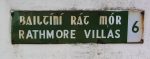
Machzikei Hadas can be found on Rathmore Villas in Dublin. (photo from jewishgen.org)

When my bride and I lived in Dublin, we were strangers in a foreign land. Our refuges were the synagogues of the tiny Jewish community. It was there we found instant acceptance. We were in Dublin, escapees from the harsh extremes of temperature in the places where we used to live. Original products of Winnipeg, we had left Ottawa to pursue a life of retirement in Ireland. Recently married, we were getting to know each other again after leading separate lives since acquaintance in our teen years.

In Ireland, we benefited from the welcoming embrace of the country’s cradle-to-the grave social system, in spite of being alien residents. Seeking community associations, we joined a synagogue, the Dublin Jewish Progressive Congregation. It had the merit of permitting men and women to sit together, important to us at the time. However, we found that environment less fulfilling, and I began to attend another, more orthodox, establishment. Although it was in the main synagogue in Dublin where we had our Orthodox marriage – we were married previously by a justice in Canada and a progressive rabbi in Jerusalem – in the end, we found it, as well, less welcoming than we liked. Finally, we became firmly attached to a shtiebel, which is the subject of this memoir.

When I attended, Machzikei Hadas had maximum capacity of about 50 male worshippers. It was located in the annex of a house. Among the benches for seating were tables, which were used, after the services, for food and drink. About a third of the space was devoted to seating for women, behind a barrier with a curtained screen. Alcoves at the back had a small kitchen and a children’s playroom, with a door providing a separate entrance for women. A pulpit stood in the centre of the main room on the traditional raised area, used for reading from the Torah. The cantor, a volunteer from the group, led the services. The room was bare. The only adornments were a decorated cover for the cubicle where the scrolls were kept in the front of the room, and an embellished covering on the pulpit where the Torah was read.

The synagogue is managed by a group of about 10 men, with the assistance of some of their wives. The total membership is small. Aside from holidays, the congregation convenes once weekly, every Saturday morning. Ritual (Ashkenazi) is strictly observed. Men and women sit separately except for the Kiddush. When the time comes to eat and drink, men and women are seated cheek by jowl. One of the abiding attractions of this place is the generous table that is set after services each week, complete with bottles of Irish whiskey. Rarely are these returned to the cupboard with any contents. The participants look to salvation in their spirits and I have many times departed this place elevated in spirit, but somewhat the worse for wear.

The men in this congregation are of an independent-minded cast. They have resisted the blandishments of the main congregation in Dublin for decades, to maintain their independence. Every Saturday involves a struggle to ensure that the necessary 10 men are assembled for a formal service. Each attendee is precious, and his arrival is greeted with appreciation for his presence, as a member of a select group. Each regular has his appointed place to sit.

A unique feature of services is that they are often unruly, as the members exchange news and discuss notable occurrences during the past week. All join in the service at the appropriate places, but otherwise the exchange of news and views continues, nearly unabated, during their time in this place. I gloried in the down-to-earth atmosphere.

Members are chosen each week to mount the central platform, to have their name, and their father’s name, celebrated, in reading portions from designated chapter in the Torah. I was always thrilled to be called up, to have my father’s name announced. To me, it was as if my father could hear his name called out and he could witness that I was keeping his memory alive. Each time I had the opportunity, I loudly exclaimed the requisite prayer, to awaken my father from his slumbers.

Each of the principals in the synagogue I grew to know was in some way markedly distinct from my experience with any other group to which I have belonged. Each, in his way, was key to the successful operation of the synagogue. Attendance, management, security, accumulation of food and drink supplies, almost everyone played a role, often supplementing needs from their own pockets.

David, the secretary, a young man, seemed to be a prime mover. He carried the concerns of the synagogue in his mind at all times. Inhabiting the rough-and-tumble world of classic car sales, he was nonetheless devout in his observance.

Michael, the president, seemed to perform his role under David’s prompting, taking everything with collegial grace. More “laissez-faire,” he was an enthusiastic participant in the consumption of Irish whiskey. He often brought his beautiful, wilful, but adorable 5-year-old son with him to synagogue.

The triumvirate was rounded out by Terry, the inveterate cantor. A convert to Judaism, he progressed through the prayer agenda, in spite of the babble behind him, and would cheerfully give up his place to visiting presenters. With his American wife, Karen, he was a mainstay of the synagogue, and a fierce defender of all elements of ritual observance. We looked over our shoulders to see if he was watching when we transgressed. We are hoping and prayerfully expecting the Deity to be more lenient in His judgments of us than was Terry.

Melvin, my seatmate, took care that I did not blunder in my observance, using the right book, reading the right page. Richard, an Irish convert who spent time on kibbutz in Israel, sat behind us. A civil servant, he has shared with me the mysteries and intricacies of Irish bureaucracy and politics. Sturdy participants in the demolition of many a whisky container, I would gladly have them by my side, anywhere, whatever I had to face.

Joe, a truly lovable mensch, sat across the aisle. He and his brother Robbie, many years in Ireland, still bear the accents they brought with them from Slovakia. Purveyors of parchment, they are the synagogue Cohens, necessary for the reading of the scrolls. Robbie is the synagogue treasurer, openly eager for a tip on the stock market.

Alec sits at the back. He is a retired person of the legal profession and the real brains of our outfit. He was usually at the centre of discussions, dispensing wisdom and wit.

Monty was my real favorite, and we had a meeting of the minds. With him, I shared my deepest secrets and my tendency to violent extremism in defence of Israel. He sat far forward in splendid isolation, focused on his worship. He did occasionally join us for a bite and a wee dram. I am regularly in contact with him to this day, years after I have departed the Emerald Isle.

Eddie was a more recent returnee, coming from some other Irish place. A Levi, he played a ritual role. He was our mellifluous cantor on many occasions, generous with his time and effort. Enthusiastic of voice and social commentary, he disapproved of our unruly behavior in the back of the room. He appeared to be discomfited by too much public attention to the Jewish fact and the attention garnered by Israel’s struggle to survive. We have different views as to Jewish public policy, but he was often a cheerful addition to our services.

There are too many others to enter into detail. What a pleasure it was to have been to be a part of all this! How can I express fully the depth of my feeling of kinship, the strength of my appreciation for having been made so welcome within this community? The participants may have seemed at times cavalier in observance, but they cling fiercely to their synagogue and its perpetuation. I have been moved to tears there by my readings in the scrolls, and filled with joy, my enthusiasm raucous, in singing some of the prayers together with my fellow Jews. When we sang out together, my voice roared – I wished to sing louder and louder so the Divine would hear – and my heart soared to be there with my brothers in that place.

A stranger, I was embraced and made to feel a part of this tribal fellowship. There, I felt free to worship in my own way. There, one’s foibles might be the subject of critical humor, but they were accepted. Some of my best times in Ireland were spent in that place. I am grateful and thankful for all those who made that precious corner of Jewish life what it was. It remains with me always as something I seek in other congregations. I celebrate it and its members. Am Yisroel chai!

Max Roytenberg is a Vancouver-based poet, writer and blogger. His new book, Hero In My Own Eyes, is forthcoming.

Format ImagePosted on October 28, 2016October 27, 2016Author Max RoytenbergCategories Op-EdTags Ireland, synagogue, travel
התחרות לתיירות ונסיעות

התחרות לתיירות ונסיעות

קנדה נמצאת במקום העשירי והמכובד ואילו ישראל מדורגת רק במקום ה-71 והלא מכובד, במדד התחרות העולמי לתיירות ונסיעות. (צילום: reports.weforum.org)

קנדה נמצאת במקום העשירי והמכובד ואילו ישראל מדורגת רק במקום ה-71 והלא מכובד, במדד התחרות העולמי לתיירות ונסיעות. כך עולה מהדוח לשנת 2015 שכולל 141 מדינות. הדוח של הפורום העולמי מתפרסם אחת לשנתיים. עם זאת יש מקום לציין שקנדה נמצאת הרחק מאחור לגבי סוגיית המיסים הגבוהים הנגבים בשדות התעופה המקומיים, שמרביתם בבעלות הממשלה הפדרלית. העלויות הגבוהות כרוכות בדמי שכירות גבוהים והארנונה גבוהה. שדה התעופה היקר ביותר בקנדה הוא זה שבמונטריאול. ירידת מחירי הדלק וחולשתו של הדולר הקנדי משפיעים לטובה על ענף התעופה הקנדי, אך המיסים והיטלים גבוהים מצד הממשלה מונעים מחברות התעופה המקומיות, לעמוד בתחרות מול החברות הזרות. הנוסע הקנדי הוא זה שבסופו של דבר שמשלם את המחיר. מניסיוני האישי אני יכול לספר כי כרטיס מוונקובר לטורונטו וניו יורק היה זול בכ-200 דולר קנדי, לעומת כרטיס מוונקובר לטורונטו ומונטריאול.

עשר המדינות הראשונות במדד התחרות לתיירות ונסיעות העולמי הן: ספרד, צרפת, גרמניה, ארצות הברית, בריטניה, שווייץ, אוסטרליה, איטליה, יפן וכאמור קנדה עשירית. חמש המדינות האחרונות בדירוג העולמי הן: מאוריטניה, תימן, אנגולה, גינאה ובמקום ה-141 והאחרון צ’אד. בחלוקה לפי אזורים גיאוגרפים קנדה נמצאת במקום השני בצפון אמריקה והקריביים לאחר ארצות הברית. אחרונה באזור זה שכולל שש עשרה מדינות היא האיטי. במזרח התיכון מתוך שש עשרה מדינות מדינות ישראל שוב יוצאת רע, כיוון שהיא ממוקמת רק במקום השביעי. שש הראשונות לפניה: איחוד האמירויות הערביות, בחריין, מרוקו, ערב הסעודית ועומאן. במקום האחרון במזרח התיכון נמצאת תימן.

מחברי הדוח מציינים כי ב-2015 נרשם גדול תיירות ונסיעות למרות ההאטה הכלכלית בחלק ממדינות העולם. ענף הנסיעות והתיירות מהווה תשעה אחוזים מהתל”ג העולמי ועומד על שבעה טריליון דולר. לפי מחברי הדוח הגידול בענף התיירות והנסיעות עומד על כארבעה אחוזים מדי שנה.

הדוח מתחלק למספר תחומים בענף התיירות והנסיעות. אווירה עיסקית: סינגפור במקום הראשון, קנדה במקום ה-16, ישראל במקום ה-51 וונצואלה במקום האחרון. ביטחון ובטיחות: פינלנד במקום הראשון, קנדה במקום ה-21, ישראל במקום ה-99 וניגריה במקום האחרון, בריאות והגיינה: אוסטריה במקום הראשון, ישראל במקום ה-36, קנדה רק במקום ה-58 ומוזמביק במקום האחרון. משאבי אנוש ושוק העבודה: שווייץ במקום הראשון, קנדה במקום השביעי, ישראל במקום ה-39 ומאוריטניה במקום האחרון. מוכנות: פינלד במקום הראשון, קנדה במקום ה-27, ישראל במקום ה-32 וצ’אד במקום האחרון. מתן עדיפות לתיירות ונסיעות: מלטה במקום הראשון, קנדה במקום ה-36, ישראל במקום ה-64 ובורונדי מקום האחרון. פתיחות בינלאומית: סינגפור במקום הראשון, קנדה רק במקום ה-66, ישראל רק במקום ה-99 ואנגולה במקום האחרון. מחיר תחרותי: במקום הראשון והמפתיע איראן, קנדה הרחק מאחור במקום ה-124, ישראל במקום עוד יותר גרוע -136 ובמקום האחרון שווייץ. קיימות סביבתית: שווייץ במקום הראשון, קנדה במקום ה-26, ישראל רק במקום ה-101 ובמקום האחרון פקיסטן. תשתיות לתחבורה תעופתית: קנדה במקום הראשון, ישראל במקום ה-50 וצ’אד במקום האחרון. תשתיות לנמלים ותחבורה קרקעית: הונג קונג במקום הראשון, קנדה רק במקום ה-46, ישראל במקום ה-52 ומאוריטניה במקום האחרון. תשתיות לשירותי תיירות: אוסטריה במקום הראשון, קנדה במקום ה-14, ישראל במקום ה-72 ובורונדי במקום האחרון. משאבים טבעיים: ברזיל במקום הראשון, קנדה במקום העשירי, ישראל במקום ה-99 ובמקום האחרון האיטי. משאבי תרבות ותיירות עסקית: ספרד במקום הראשון, קנדה במקום ה-15, ישראל רק במקום ה-52 ולסוטו במקום האחרון.

Format ImagePosted on July 27, 2016July 20, 2016Author Roni RachmaniCategories עניין בחדשותTags tourism, travel, נסיעות, תיירות

A complex cultural mosaic

Think you know everything about Israel? Looking for an extraordinarily special book to give to someone who has been to Israel or is interested in the unusual aspects of the country that rarely, if ever, get press coverage? The answer to both of those questions is Unexpected Israel: Stories You Never Read in the Media (Gefen Publishing House, 2016) by Ruth Corman.

Corman is a British photojournalist and art consultant who splits her time between London and Jerusalem. Her first publication was with photographer David Rubinger, and his book Israel Through My Lens: Sixty Years as a Photojournalist, which she co-authored and edited.

book cover - Unexpected IsraelWith her latest book, with 84 vignettes, she writes, “I decided to try a side of Israel that rarely receives attention – the creative, amusing, quirky and moving aspects of the country.” She used the services of Alon Galili, a guide, and John Harlow, a consultant. Many of her tales have appeared in the Jerusalem Post. Her husband, Charles Corman, was the book’s editor.

Writes Corman on the publisher’s website, “Four years ago, I embarked on an expedition through the complex cultural mosaic that is Israel to introduce readers to aspects of the country that never appear in the media…. I was introduced to places that few know about, fossilized trees in the Negev dating back 120 million years and a leopard shrine from a mere 10,000 years ago. I marveled at magnificent pure white chalk hills near the Egyptian border and discovered sculptural rock forms near Timna, the remains of copper mining. I was delighted by a derelict Mandate-era spa by the Dead Sea where hand-painted murals depicting regional topography adorn the walls, and fascinated by the history of perfume production at Ein Gedi and the efforts to recreate the scent that so captivated our ancestors.”

Corman also “encountered some unforgettable individuals.” Her entries begin with Tsegue-Mariam, a 93-year-old Ethiopian nun who has written original music and plays the piano. It ends with “A Happy Ending: Rescue in the Skies,” the story of a young child who was on an El Al flight with her. The child was heading to London to undergo a liver transplant, and Corman helped raise from the passengers the money the girl needed. Corman did not keep in touch with the child, who must be over 30 by now.

In between are stories about typical and atypical Israeli aspects – the camel, falafel, floor cleaning (sponga), garinim (sunflower seeds), folk dancing, Machaneh Yehudah (where this author leads weekly walks in English), sabras (the fruit), standing in line, sheshbesh (backgammon), the Temple Mount sifting project (which originated with a friend of this author, Prof. Gaby Barkay), volunteerism and more.

For those who know – or want to know – Israel, it is a delightful read that you won’t be able to put down. There is humor, there is wit, great research and special photographs.

If you happen to be in Jerusalem on May 15, the official book launch of Unexpected Israel will take place at Menachem Begin Heritage Centre. Guests will include Daniel Taub, former ambassador to the Court of St. James, and Steve Linde, editor-in-chief of the Jerusalem Post. Corman will present stories and images from the book. RSVP to [email protected] or via gefenpublishing.com (or 02 538 0247).

Sybil Kaplan is a journalist, foreign correspondent, lecturer, food writer and book reviewer who lives in Jerusalem. She also does the restaurant features for janglo.net and leads weekly walks in English in Jerusalem’s market.

Posted on May 6, 2016May 5, 2016Author Sybil KaplanCategories BooksTags Corman, culture, travel, Unexpected Israel
Red rocks, Jewish lullabies

Red rocks, Jewish lullabies

Today’s Sedona Jewish community is spread out over the surrounding Verde Valley. (photo by Lauren Kramer)

“Whatever you do, please don’t write about vortex or New Age stuff!” I was socializing after Friday night services with congregants at Sedona’s synagogue when one of them, overhearing I was a travel writer, approached me with this earnest request. The “vortex stuff” was nonsense, she added – a real estate ploy that had gotten way out of control. Her warning: avoid the vortex at all costs.

I’d come to this Arizona city of 10,000 to check out the red rocks for which it is famous, and couldn’t resist stopping into shul for services. The synagogue was bustling with locals and visitors as Rabbi Alicia Magen’s melodic voice wafted through the sanctuary, serenading us with Sabbath lullabies as she strummed her guitar. After services, my husband and I joined the congregation for a kiddush, noshing on enchiladas and cheesecake as we chatted with locals. Most were retirees from afar who had settled in Sedona, lured by its combination of rugged good looks and the many amenities and festivals, created to cater to the two million visitors who come each year.

Some of them are only too happy to partake in the “New Age stuff” I’d been warned about, an industry spawned from the notion that vortexes, or spiritual energy points, are clustered around Sedona. Vortex tour brochures touted everything from spiritual growth and self-improvement to yoga and personal guidance at those sites.

But you either believe in that stuff, or you don’t – and, since I don’t, I chose to head out on horseback for a better view of the monolithic red stones that have made Sedona a tourism magnet. And it’s no exaggeration to say this: they truly are magnificent. The first time you glimpse them, as you head towards Sedona on Highway 179, you could easily be forgiven for distracted driving. You round a corner and there they are: striking, massive, dignified and unmistakably fiery red.

Later, on a bumpy pink Jeep tour that takes us closer to the red rocks, I learn that these are not mountains but sand dunes that rise up to 6,592 feet. The rocks get their blazing hue from hematite, a reddish form of iron oxide deposited as water seeped through layers of ancient sandstone millions of years ago. Time has carved spirals, hills and camelback shapes into the sandstone, structures that extend their arms to the sky and create a vivid backdrop that can’t help but startle and amaze. “No matter how long I live here, I never get tired of the view,” one congregant told me.

photo - The author and her husband appreciate Sedona’s red rocks, which are not mountains but sand dunes that rise up to 6,592 feet
The author and her husband appreciate Sedona’s red rocks, which are not mountains but sand dunes that rise up to 6,592 feet. (photo by Lauren Kramer)

The average age is 65-plus at Sedona’s Shabbat service; somewhat puzzled, I inquired if there were any children in the community. There are kids, indeed, I was told, but their families can’t afford to live in the city, where home prices start at $500,000 and climb to $2 million. Instead, they have established homes in the surrounding Verde Valley, in areas like Cottonwood, Camp Verde and Prescott. The Sedona Jewish Centre, whose facilities include the synagogue and a Hebrew after-school program, serves the entire valley.

With our Jeep bumping over rocky terrain in the Coconino National Forest, just minutes from Sedona’s retail strip, our guide pointed out agave plants, prickly pear cactus and Arizona cypress trees. Though it may look dry and arid, red rock country is biologically rich, with a range of different plant communities that support a huge variety of wildlife, from peccary herds to fox and coyote, bears, badgers and roadrunners. For archeologists, the ground below us is a living museum littered with fragments from the past, including pottery shards from the Sinagua people who resided in the area until 1400 AD.

Later, back in Sedona’s uptown cluster of stores, I sampled the fruit of the desert: syrupy sweet prickly pear ice cream and a plate of hot cactus fries, before ambling around the strip. Its stores are a touristy mix of art and pottery galleries and made-in-China souvenirs, interspersed with resort timeshare sales people inside so-called tourist info offices. So I cut short the window-shopping and instead, hit the road to try an adventure treetop experience called Flagstaff Extreme.

I admit, I was scared when I strapped on a harness and climbed ladders into the upper reaches of Ponderosa pine trees. I nearly talked myself out of the experience, and it was only my husband’s coaxing assurances that the obstacles looked scarier than they were, that kept me moving. But after a few minutes of navigating through the forest’s pines using swings, ziplines and bridges, my confidence soared. The wind was blowing through the treetops as I found courage I never knew I had. After completing each of the five levels of adventure, an exhilarating wave of achievement washed over me, propelling me forward.

On my final day in Arizona, we joined Mary McDowall for an ATV tour a half-hour from Sedona in Prescott National Forest. The owner of Arizona Offroad Tours, she took us 25 miles into the hilly Verde Valley, pointing out desert willows, manzanita, hollies and other desert shrubs along the way. “This is one of the most beautiful parts of the state,” she said, gesturing at the million-acre forest around us and the mountain plateaus in the distance. Clambering on the spanking new ATVs we powered up a dirt road, then took a sharp turn from it and zoomed noisily along a meandering, dry creek bed created by the swirling waters of flash floods during monsoon season. It was a striking contrast to the boutiques and gift shops we’d been browsing a day earlier in Sedona.

McDowall agreed. “You go to Sedona, you’re going to see Ferraris,” she said with a shrug. “It’s touristy. But if you’re an outdoor person, this is the place for you, because there’s nature everywhere.”

Lauren Kramer, an award-winning writer and editor, lives in Richmond, B.C. To read her work online, visit laurenkramer.net.

If you go:

  • For Jeep tours, call 1-800-873-3662 or visit pinkjeeptours.com.
  • Horsin’ Around Sedona offers 90-minute trail experiences starting at $98; 1-800-403-1690 or horsinaroundsedona.com.
  • Arizona Offroad Tours offers guided tours in Prescott National Forest starting at $46; 1-928-451-1777 or myarizonaoffroadtour.com.
  • Flagstaff Extreme courses start at $49 for adults and $25 for children; 1-888-259-0125 or flagstaffextreme.com.
  • Stay: The writer was a guest at Sedona Rouge Hotel & Spa; 1-866-312-4111 or sedonarouge.com.
  • General information: 1-800-288-7336; visitarizona.com or visitsedona.com.
Format ImagePosted on January 16, 2015January 14, 2015Author Lauren KramerCategories TravelTags Sedona, travel

Siegel wins travel-writing award for article in JI

photo - Masada Siegel
Masada Siegel (photo from travelingboy.com)

Masada Siegel, a journalist and media personality known as “The Fun Girl Correspondent,” has won silver in the Personal Comment category of the 2014 Lowell Thomas Travel Journalism Competition. The award, sponsored by the Society of American Travel Writers Foundation, is given “for outstanding print, online and multimedia works and for travel photography and both audio and video broadcast.” Faculty members of the University of North Carolina-Chapel Hill School of Journalism and Mass Communication judge the competition.

Siegel was recognized for her article “World Opens Up Solo,” published by the Jewish Independent.

The gold for Personal Comment went to Tony Perrottet, “Rich Tourist, Poor Tourist,” published by the New York Times; the bronze to Sean Carlson, “The Reach of a Single Village,” in the Irish Times; and an honorable mention to Christopher Solomon, “A Case for Getting Far, Far Away,” the New York Times.

Posted on September 26, 2014September 25, 2014Author The Editorial BoardCategories From the JITags award, Lowell Thomas, Masada Siegel, travel

Posts pagination

Previous page Page 1 … Page 4 Page 5
Proudly powered by WordPress