Skip to content
  • Home
  • Subscribe / donate
  • Events calendar
  • News
    • Local
    • National
    • Israel
    • World
    • עניין בחדשות
      A roundup of news in Canada and further afield, in Hebrew.
  • Opinion
    • From the JI
    • Op-Ed
  • Arts & Culture
    • Performing Arts
    • Music
    • Books
    • Visual Arts
    • TV & Film
  • Life
    • Celebrating the Holidays
    • Travel
    • The Daily Snooze
      Cartoons by Jacob Samuel
    • Mystery Photo
      Help the JI and JMABC fill in the gaps in our archives.
  • Community Links
    • Organizations, Etc.
    • Other News Sources & Blogs
    • Business Directory
  • FAQ
  • JI Chai Celebration
  • JI@88! video

Recent Posts

  • Sharing her testimony
  • Fall fight takes leap forward
  • The balancing of rights
  • Multiple Tony n’ Tina roles
  • Stories of trauma, resilience
  • Celebrate our culture
  • A responsibility to help
  • What wellness means at JCC
  • Together in mourning
  • Downhill after Trump?
  • Birth control even easier now
  • Eco-Sisters mentorship
  • Unexpected discoveries
  • Study’s results hopeful
  • Bad behaviour affects us all
  • Thankful for the police
  • UBC needs a wake-up call
  • Recalling a shining star
  • Sleep well …
  • BGU fosters startup culture
  • Photography and glass
  • Is it the end of an era?
  • Taking life a step at a time
  • Nakba exhibit biased
  • Film festival starts next week
  • Musical with heart and soul
  • Rabbi marks 13 years
  • Keeper of VTT’s history
  • Gala fêtes Infeld’s 20th
  • Building JWest together
  • Challah Mom comes to Vancouver
  • What to do about media bias
  • Education offers hope
  • Remembrance – a moral act
  • What makes us human
  • המלחמות של נתניהו וטראמפ

Archives

Follow @JewishIndie
image - The CJN - Visit Us Banner - 300x600 - 101625

Tag: terrorism

A blind view of terror

A blind view of terror

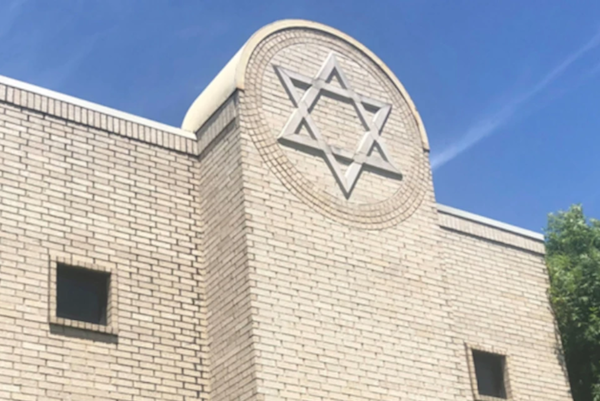
Another violent attack on a North American synagogue, this one in Texas, has undermined the feelings of security among Jewish people everywhere.

It is important to see the incident in perspective. Thankfully, the rabbi and three other hostages survived the 11-hour ordeal and the only physical casualty was the perpetrator himself. Second, although such incidents happen too frequently, it must be remembered that, in the context of the many Jewish institutions in North America, this remains a highly unusual phenomenon. Third, the community – Jewish and non-Jewish – locally and internationally condemned the attack and celebrated the escape of the hostages. This differs from situations we have seen in other times and places in which those in power – police, political leaders, the general public – were either complicit or indifferent. A service of healing two days after the incident brought a thousand people of many religious and demographic backgrounds together in response. Police, interfaith leaders and elected officials were united in their expressions of condolence and solidarity.

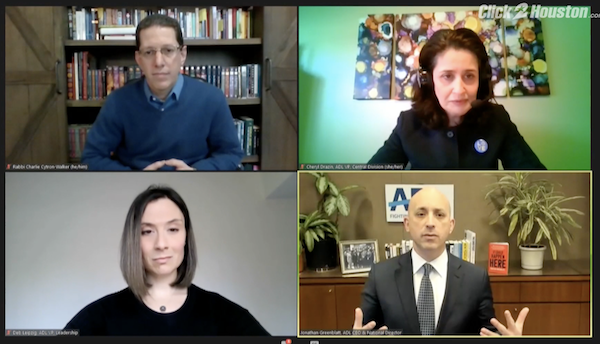
As Rabbi Charlie Cytron-Walker noted in a presentation with the Anti-Defamation League (click here for story), Jewish community organizations benefit from the (sadly necessary but well-developed) security protocols created and implemented in partnership with Jewish organizations and law enforcement officials. These precautions are familiar to anyone who has set foot in a Jewish institution in recent decades. The visible presence of security can be a reassurance but also is a reminder of the potential for such an attack for people entering a synagogue for services or a Jewish community centre for a workout or sending their children to a Jewish day school. However, another byproduct of this increase in security and comfort for some Jews is the discomfort and lack of safety these protocols elicit in racialized Jews and others who experience more harm from policing. The answer to the problem of a lack of security cannot only be addressed by ever-increasing security, be it walls, cameras, guards, or bollards.

It is perhaps one of the most enduring cognitive disconnects that, while almost any Jew has, at least in the back of their mind, the potential for attack, whenever such an incident does take place, a seemingly opposite reaction occurs among some non-Jewish observers.

In the Texas case, it was exemplified by Matthew DeSarno, the FBI agent in charge of the case, who, in the midst of the crisis, told media that the perpetrator “was singularly focused on one issue, and it was not specifically related to the Jewish community, but we are continuing to work to find motive.”

Even without knowing the details of the individual perpetrator or his motivations, the idea that an official would insist that an attack on a synagogue is unrelated to the Jewish community is jaw-dropping. Unfortunately, it is a common response.

The most celebrated example was after terrorists in Paris targeted a kosher supermarket in 2015, when then-U.S. president Barack Obama condemned those who “randomly shoot a bunch of folks in a deli in Paris.” If the Islamist terrorists who perpetrated the attacks on multiple Jewish targets that day didn’t know that Hypercacher was a kosher supermarket with a primarily Jewish clientele, it was an incredibly lucky coincidence for them.

This refusal to see explicit attacks on Jews as explicit attacks on Jews may be a psychological phenomenon beyond our realm to unravel. Yet there seems to be some socio-psychological need to search for any alternative explanation than plain old antisemitism when a synagogue or other Jewish institution is attacked.

To be kind, perhaps it is wishful thinking. Decent people might search for a rationale that alleviates the fear that the oldest prejudice is as alive today as ever. More realistically, there is a web of conscious and, probably more commonly, unconscious biases that blind people to the blatantly obvious.

As we learned more about the perpetrator, we discovered that he subscribed to a form of conspiracy thinking that sees Jews as having unparalleled power – in this case, the ability to induce the American government to release an imprisoned terrorist. Nevertheless, because the perpetrator was using Jews as an avenue meet his objectives, rather than being motivated solely by a desire to attack Jewish people, the FBI agent eliminated antisemitism as a motive – a truly confounding perspective from a law enforcement official standing outside a synagogue where Jews were being held hostage.

This reaction happens too frequently to be dismissed as a coincidence. There is something baked into the Western imagination that makes denial and deflection the default response to an attack on Jewish people.

One explanation may be that the very ideas that the Texas assailant held – that Jews are inordinately powerful – although rarely expressed so crudely, is actually held by a large swath of the general public, perhaps leading people to conclude that, no matter what befalls an individual Jew or two, “the Jews,” as a people, still hold all the cards or will be just fine.

Other obfuscations dismiss clear and unequivocal attacks on Jews as mere “political statements” on Middle East affairs. Interestingly, those who sometimes explicitly blame Israel or Israeli policies for overseas antisemitic incidents are playing into another familiar and ancient trope about Jews: whatever befalls them, they have brought upon themselves.

It is never bad advice for Jews to be vigilant about our individual and collective security and each violent attack is a timely reminder. But what we need to see are more non-Jews, especially those in positions of authority, addressing the blindness they have as individuals and institutions to what is, to Jewish eyes, absolutely obvious.

Format ImagePosted on January 28, 2022January 27, 2022Author The Editorial BoardCategories From the JITags antisemitism, Charlie Cytron-Walker, FBI, security, terrorism, Texas

Sadly, not a new experience

Some of us are likely struggling to recover from the hostage-taking event at Congregation Beth Israel in Texas, along with pandemic stress. Perhaps most stressful is that we know a synagogue invasion could happen anywhere, during any service. Most of us figure out where the exits are when we go to synagogue, a Jewish community centre or other Jewish institution. We know the history. We need to be on guard when we gather.

On Jan. 15, we streamed our local congregation’s services to our Winnipeg living room and watched a kid my children knew from elementary school lead services. He was becoming a bar mitzvah. Jewish life continues despite the pandemic.

Antisemitism and traumatic events continue, too. When I realized what was happening in Texas, thanks to Jewish social media, it was hard to look away, even though it was Shabbat. Initially, non-Jewish news reports said there was an “apparent hostage-taking event.” This language was used despite the event being livestreamed. Why wasn’t it “real” from the beginning? Even after the hostages were freed, alive, thank G-d, the FBI didn’t immediately use the word antisemitism or hate.

There was no immediate answer from the FBI on why this person chose a synagogue during Shabbat services. There was a rush in some quarters to discuss why Islamophobia is wrong. Even as the hostage-taker identified his cause as aligned with that of Dr. Aafia Siddiqui, a convicted felon who was outspoken in her antisemitism at her trial, others (including the synagogue president and the FBI) suggested this was a random event. Some articles said the hostages were “detained” – somehow implying they were at fault by being at synagogue on a Saturday morning.

When Jewish leaders, as well as President Joe Biden, Vice-President Kamala Harris and Prime Minister Justin Trudeau spoke about this as an antisemitic act of terrorism, it wasn’t a narrative immediately embraced elsewhere. I found this unsettling. The feeling – of pointing out an issue but not being believed or heard – felt all too familiar. Language and how we tell our stories can twist our understanding of events, and this experience already seemed to be depicted in a way that didn’t ring true.

Certainly, the hostages will be debriefed, the hostage-taker’s family and history will be examined. We’ll learn more about what his motivations might have been. However, my instincts follow that of many Jewish people, as Rabbi Rick Jacobs, Union for Reform Judaism president, told MSNBC, “There’s no doubt that the underlying whole premise … was antisemitism,” he said, “The hostage-taker didn’t go to McDonald’s, didn’t go to some random place, and that is part of the story of antisemitism, to single Jews out.”

Remembering similar recent experiences hasn’t helped. Since the May 2021 war in Israel and Gaza, I’ve spent time reminding myself that I’m not crazy, and that I studied a lot of Middle East history as part of my long-ago undergraduate degree and graduate work. I knew that some of the narratives being touted online about the Israel/Palestine conflict were incorrect and badly mangled interpretations of the relevant history. I was particularly upset by the idea circulating on social media that Israelis were simply “white colonizers” subduing a brown people. This narrative didn’t reflect our thousands of years of history in Israel, nor did it account for the detail that, in fact, more than 50% of Israeli citizens are people of colour.

I recently studied a text in the Babylonian Talmud, Megillah 29A, which brought these issues to mind. It explored where Jews could find the Divine Presence in Babylonia. Rabbis were discussing how to find a holy place in the Diaspora after the destruction of the Temple. Rabbi Abaye says the Divine Presence visits the ancient synagogue in Huzal and the synagogue that was destroyed and rebuilt in Neharde’a. From there, two different stories are told about when the Shechinah, the Divine Presence, made itself known in Neharde’a.

Abaye died in 337 CE. So, we know that nearly 1,700 years ago, synagogues existed where Jewish people went to pray and study, and some of them were ruins that were rebuilt. Our need for holy places of gathering in the Diaspora is not new. Further, according to the stories on this page of Talmud, these places didn’t always feel safe. Sometimes, even the Divine Presence herself, the Shechinah, dropped by and that was frightening – never mind modern-day hostage-takers with guns.

A bit farther down on the page, Rabbi Eleazar haKappar, a late tannaitic rabbi (who lived roughly around 220 CE) suggests that, one day, in the future, all the synagogues and study halls in Babylonia will be transported and reestablished in Israel. Even then, there was a longing for return to Israel. Archeology shows us that Rabbi Eleazar haKappar was a real person, a colleague of Judah HaNasi, who likely spent most of his life in Katzrin. There is a door lintel originally from his beit midrash, his house of study, in the Golan Museum. Found in a mosque in the Golan Heights, its inscription says, “This is the Beit Midrash of Rabbi Eleazar haKappar.”

I felt reassured by reading about the Babylonian synagogues and the longing for Israel that was felt so long ago. Our religious connection to Israel is old. It’s in every synagogue service, every Passover seder, and deep within the Talmud. Our stories are tied to Israel. Despite others’ “versions” of history, the Jewish connection to Israel cannot be made into just a 19th-century European political movement.

Also, like the rabbis, I believe that those who are inclined to do so can feel the Shechinah within ourselves and in our synagogues. Jews and allies prayed world over for the safety of the hostages at Congregation Beth Israel. It would also take the hostages’ training and bravery and the intervention of police and FBI. Many people, including Rabbi Angela Buchdahl in New York, called 911 in the effort to try to help things turn out OK.

The trauma of this experience will linger with the Jewish community of Colleyville, Tex., for a long time. A man with mental health issues was offered shelter in a synagogue and given a cup of tea by Rabbi Charlie Cytron-Walker. That man became an armed hostage-taker. He took Jews as hostages. That rabbi and his congregants bravely handled the situation. The rabbi threw a chair at the right moment – and then, this man died there.

We’ll surely learn more detail over time. Meanwhile, we continue to be on our guard. Our congregations are holy because we come to be inside them. Sometimes, the Shechinah is there, too. This is the powerful story of the synagogues in Huzal and Neharde’a.

The text reminds us that we must keep track of our Jewish identity and narrative. Journalists who call Jews “apparent” hostages or say that Jews were “detained” in their own place of worship and an FBI spokesperson who doesn’t mention antisemitism? This isn’t our narrative. We can’t let it become the history that matters.

We’re People of the Book. We’re a people with a long, well-documented history. This ages-old written and oral history, and even archeological evidence, gives us confidence to believe in who we are and our story. Our words and the way we use them matters, so we must choose carefully. No story is perfect, we are only human. Even so, we should be the ones to tell it and guard it for future generations.

Joanne Seiff has written regularly for CBC Manitoba and various Jewish publications. She is the author of three books, including From the Outside In: Jewish Post Columns 2015-2016, a collection of essays available for digital download or as a paperback from Amazon. Check her out on Instagram @yrnspinner or at joanneseiff.blogspot.com.

Posted on January 28, 2022January 27, 2022Author Joanne SeiffCategories Op-EdTags antisemitism, Charlie Cytron-Walker, FBI, history, hostage-taking, Judaism, Shechinah, Talmud, terrorism, Texas

Relationship with the earth

At the dinner table, I asked my family what I should write. One of my kids, age 10, immediately said, “Climate change. People think the problem’s all hot air, but the problem’s really hot water.” There was a smirk at his joke, but his twin nodded in agreement.

Hurricane Ida’s just made landfall and is churning its way up through swaths of the United States as I write this. Haiti is in shambles from its most recent earthquake, only compounded by the storm that followed. In Manitoba, we’ve lived through a hot, smoky summer, surrounded by wildfires and besieged by drought. When it finally rained, there was so much of it that some places flooded.

The weather has, at times, felt apocalyptic. While I’m not superstitious, the recent uptick in truly awful weather and world events made me think back to Yom Kippur, 20 years ago.

In 2001, my husband and I sat in Yom Kippur services in Durham, N.C., where we lived at the time. Just a little over two weeks after Sept. 11, the terrorist acts in New York, Pennsylvania and at the Pentagon were on most people’s minds in that congregation.

Like many, I have images burned in my brain from that time, as both my family near D.C. and my husband’s in New York City, were alive, thank goodness, but personally affected. At synagogue, when we reached the prayer Unetaneh Tokef, the room fell silent, electrified. This ancient prayer, perhaps written by Yannai in the sixth century, is familiar to most who’ve attended services on the High Holidays or listened to Leonard Cohen:

“On Rosh Hashanah will be inscribed and on Yom Kippur will be sealed – how many will pass from the earth and how many will be created; who will live and who will die; who will die after a long life and who before his time; who by water and who by fire, who by sword and who by beast, who by famine and who by thirst, who by upheaval and who by plague, who by strangling and who by stoning. Who will rest and who will wander, who will live in harmony and who will be harried, who will enjoy tranquility and who will suffer, who will be impoverished and who will be enriched, who will be degraded and who will be exalted. But Repentance, Prayer and Charity mitigate the severity of the Decree.”

In Temple Beth El in Durham, there was loud sobbing and then, the most elemental keening and grief that I’ve ever heard. Twenty years later, I can’t forget my brother-in-law running down Broadway as the second tower fell behind him, covered in its dust as he escaped Manhattan on the Staten Island ferry, or my father-in-law, who walked five miles through Manhattan in the middle of the street, only to stand in Central Park, afraid to go indoors. My father and brother, away from D.C. on business trips, waited days, unable to get home. My sister-in-law, stuck in D.C. overnight, was finally able to leave the city and walked home to her apartment in Virginia, only to suffer through continual sonic booms, as fighter pilots raced overhead, shaking her high-rise building.

I will never hear this prayer, which is primarily part of the Ashkenazi liturgy, without being shaken by that keening sound.

However, just as I remember it, it’s also helpful to keep reading. It says that, by doing repentance, prayer and charity, we can change the severity of the outcome. We’re taught clearly that repentance is not simply feeling badly about past behaviour, it’s about making amends. We must apologize to those we’ve wronged and try to fix our mistakes. Our prayers are not simply rote, but must come from our hearts, with the right kind of kavannah, or intention.

Finally, it mentions we must do tzedakah, which some translate as charity, but really also means righteousness. It is the obligation to do the upstanding, just thing, and to act with integrity.

Although I can’t help but think of this prayer in context of those who died, both on Sept. 11 and those who, each year, aren’t written in the Book of Life for the next year, it’s not just about that. This prayer says we must act now to make change and to stop bad things from happening to us.

Even for those who don’t believe in its literal power, the message is clear. If we want to be able to live with ourselves later, we’re taught that we must repair our relationships promptly, practise introspection through prayer, and make a big effort to step up and do the right thing.

Those who’ve lived through floods, wildfires, earthquakes and hurricanes this summer would argue that bad things are happening. The rest of us, living through the pandemic, would be hard-pressed to disagree. Yet, Jewish tradition teaches us that we aren’t passive observers. We aren’t meant to simply submit and accept this.

More than one rabbi has told the joke about the man on top of his roof in the middle of a flood. He ignores the orders to leave, turns down a neighbour’s offer of a ride, says no to the rescue boat and refuses to be saved by helicopter.

The floodwaters rise higher. He drowns. Then he gets to speak with G-d. He says, “Lord, I believed in you. Why didn’t you save me?” And G-d responds, “Well, I sent you an evacuation order, a carpool, a boat and a helicopter!  What else do you want?”

While we battle a pandemic, forest fires, rising temperatures in ocean waters and on land, it’s helpful to remember that our tradition teaches us that “G-d helps those who help themselves.”

This is a strange year, where some of us, used to sitting in synagogue, will instead be streaming services at home again, or perhaps spending time praying outdoors. It could also be the year where we decide that, upon reflection, it’s important to repair our relationship with the earth and to start doing the right thing personally. Climate change is upon us. It’s going to take everyone’s efforts to make a difference.

Wishing you an easy fast. May you be written for good in the Book of Life.

Joanne Seiff has written regularly for CBC Manitoba and various Jewish publications. She is the author of three books, including From the Outside In: Jewish Post Columns 2015-2016, a collection of essays available for digital download or as a paperback from Amazon. Check her out on Instagram @yrnspinner or at joanneseiff.blogspot.com.

Posted on September 10, 2021September 9, 2021Author Joanne SeiffCategories Op-EdTags 9/11, climate change, High Holidays, repentance, Rosh Hashanah, terrorism, Unetaneh Tokef, Yom Kippur

Extremism will not win

The latest explosion of terrorism from Gaza, the reaction from Israel, the violence in and around Jerusalem and the international response to these events continues to reverberate. Things have calmed somewhat in Israel, although violence continues, but a second, related front continues to rage in the public dialogue.

Anti-Israel rallies worldwide have seen explicit antisemitic imagery and threats openly and prominently exhibited. Such expressions are now commonplace at protests, in online spaces and in public squares. Anyone who insists there is some sort of hermetically sealed wall between anti-Zionism and antisemitism needs to explain why bands of thugs in London drove through Jewish neighbourhoods screaming “F**k the Jews, rape their daughters.” Social media has logged millions of overtly Jew-hating statements and images, including thousands of instances of the phrase #Hitlerwasright.

These examples are obviously extreme. Far more common, even from ostensibly mainstream voices, including elected officials in Canada, the United States and Europe, is language employing the apartheid libel or that Israel is a “settler-colonial” regime.

The settler-colonial motif is particularly effective in the Americas because we, unlike Israel, are actual settler-colonial societies. The assertion that Jews are, basically, an invasive species in the Land of Israel meets fertile soil just as global attention again focuses on the situation of Palestinians.

While the antisemitic language and violence is deeply worrisome, it raises a secondary issue about the motivations of anti-Israel voices. Villainizing, isolating and denouncing Israel seems to fulfil some primal urge in a great number of people. What it does not do is hasten Palestinian self-determination.

Any resolution to the conflict and, therefore, Palestinian statelessness, will come from the rejection of this approach. Put plainly: one cannot be pro-Palestinian and anti-Israel at the same time. If you seek the destruction of Israel, you reject compromise, coexistence and peace – the only things that will ever bring about an independent Palestine.

The binary that defines the Israeli-Palestinian situation is a false one. Being pro-Israel demands being pro-Palestinian – seeking a compromise in which both peoples live in peaceful coexistence. Being pro-Palestinian requires being pro-Israeli because only when the Palestinians, the region and the world accept Israel’s right to exist will we have a scenario where coexistence and a Palestinian state will emerge.

People overseas, many with no personal stakes in the conflict, prolong the problem. Among self-defined “pro-Palestinians” are many who seem content to fight for Palestine to the last Palestinian. Evidence of this macabre attitude can be seen every time overseas “allies” revel in the supposed moral victory of Palestinian victims exceeding Jewish victims when conflict erupts.

Similarly, too common among our own folks are rantings on social media along the lines that “there is no such thing as a Palestinian people.” Call them what you will (decent people refer to others by the terms they prefer), there are people who call themselves Palestinians and semantic arguments will not change that. We win no awards or disagreements by proving that the people who call themselves Palestinian are something other than what they say – just as those who subscribe to the kooky Khazar conspiracy of Jewish origin to refute Jewish indigeneity to the Holy Land deflect from the issue at hand. In both cases, it does not negate the core issue: both peoples – and many more whose identity gets short shrift in the binary – exist and live there now. That will not change.

Israel is not going anywhere and Israelis are not going, as the late American political reporter Helen Thomas suggested, “back to Poland.” Neither are Palestinians. The first step – it seems ludicrous that it needs to be said – is acknowledging that both peoples (and others!) are there now and deserve to be.

There are countless complexities in the Israeli-Palestinian mess. But there is one certainty that is not the least bit complicated: Palestinian self-determination will come and Israel’s right to exist will be secured because of coexistence and compromise. Neither side’s extremists will ever win.

Posted on June 25, 2021June 25, 2021Author The Editorial BoardCategories From the JITags Gaza, Hamas, Helen Thomas, Israel, Israeli-Palestinian conflict, peace, politics, terrorism
Bias in Mideast reporting

Bias in Mideast reporting

Israeli Arab journalist Khaled Abu Toameh knows firsthand that foreign correspondents routinely send back reports that are wildly prejudicial against Israel. He spoke to HonestReporting Canada cofounder and chairman Jonas Prince in an April 25 webinar. (screenshot)

Western reporters “parachute” into Israel and routinely send back reports that are wildly biased against Israel, while ignoring panoramic human rights violations and corruption in the Palestinian territories. This is the firsthand observation of an Arab Israeli journalist with decades of experience shepherding foreign reporters around the region.

Khaled Abu Toameh is a senior distinguished fellow at the Gatestone Institute. For almost two decades, he has been a reporter on Palestinian affairs for the Jerusalem Post. He spoke to a Canadian audience April 25, in a webinar presented by HonestReporting Canada, an organization promoting fairness and accuracy in Canadian media coverage of Israel and the Middle East. He was interviewed by the organization’s cofounder and chairman, Jonas Prince.

“It’s not about being pro-Israel or pro-Palestine,” Toameh said. “It’s about telling the truth. Being able to … portray a balanced picture to your readers.”

Toameh has worked with hundreds of international reporters and journalists, helping guide them around the complexities of the conflict between Israelis and Palestinians. But, he said, complexity is not something for which many journalists are looking.

“I would say that most of them, the majority, they look at this conflict as a conflict between good guys and bad guys,” he said. “The good guys are the poor Palestinians and the bad guys are Israel…. Some of them come to this part of the world already with this perception and it’s like, Khaled, please don’t confuse us with the facts.”

Many of these journalists wake up in the morning and search for any story that reflects negatively on Israel, he said.

“Why is it that many of these journalists turn a blind eye to corruption in the Palestinian Authority, to lack of freedom of speech under the Palestinian Authority in the West Bank and under Hamas in Gaza? These are questions that we need to ask,” he said.

If, during the Oslo process, Western media had more broadly reported the misuse of billions in foreign aid to Palestine, Toameh said, Western governments might have been pressured to hold Yasser Arafat and other leaders to account.

“Only a few journalists did,” he said. “Yasser Arafat got away with the corruption. He deprived his people of the international aid. That played into the hands of Hamas and look where we are now. It’s a total mess.”

Toameh said some foreign reporters tell him that they are afraid.

“We can’t report [about Palestinian corruption] because we need to go back to Ramallah, we need to go back to Gaza, it’s dangerous,” Toameh paraphrased. “I tell them, excuse me, if anyone should be afraid, it’s me, the local Arab journalist who is living here. You guys have embassies, you have consulates, you have your own governments that will protect you. Secondly, why are you going to cover a conflict if you’re going to allow yourselves to be intimidated by one party? You will never be able to do your job. You need to quit journalism and go find yourself another job.”

He added: “Ironically, some of these journalists sometimes tell me, we can’t report anything that reflects negatively on the PLO, Hamas, because it’s not like Israel, it’s not a democracy.”

Other, less physical, fears also inhibit balanced reporting, Toameh said.

“Some of the foreign journalists are afraid that, if they report positive stories about Israel, they will be accused of working for the Jewish lobby or they will be accused of being Zionist agents or they will be accused of being anti-Palestinian or propagandists,” he said. “That’s how it is. That’s the last thing they want. But there are many good stories out here. There is no shortage of good stories. The question we always need to ask ourselves is, who wakes up in the morning and decides what the story is? Who sets the agenda?”

Some of the reporters, whom Toameh calls “parachute journalists,” arrive preprogrammed with false information.

“I’ve met other journalists who have asked me to take them to see the mass graves in Jenin where Jews massacred thousands of Palestinians in 2002,” he said, referring to a false report of a mass killing, a lie that remains today, unaltered, on the website of the BBC. “You can’t send someone who is covering sports in France to do stories over here. It doesn’t work like that.”

Palestinian society does not have the tradition of press freedom or civil criticism that democracies enjoy, he said. Journalists in Palestine operate under very different constraints than those in Israel or the West.

“I don’t think there’s anything unusual about reporting about corruption, for example, in the Palestinian Authority,” he said. “Why is that considered a taboo? Why is it that, when an Arab writes about Arab corruption, he becomes a Zionist agent? While, if a Jew writes about the corruption of the Israeli government, he’s praised as a liberal, as progressive and things like that? I can understand where it comes from, because I come from a culture – the Arab culture, the Muslim culture, the Palestinian culture, if you want – where criticism of the government and the president and the prime minister, or of your people, is considered an act of treason.”

While Palestinian and overseas media may shy away from reporting Palestinian corruption, ordinary Palestinians are fully aware of the situation, Toameh said. Protests during a short-lived “Palestinian Spring” were crushed by Hamas in Gaza and the Palestinian Authority in the West Bank. And Palestinians know there could be repercussions for any complaints.

“Not only are people afraid of being arrested or killed or harassed by these two governments – the Palestinian Authority and Hamas – they’re also afraid of losing their jobs,” he said. “The Palestinian Authority is the largest employer in the West Bank and people are worried. They don’t want to lose their jobs. They don’t want their relatives to be deprived of jobs, so that’s one of the reasons you don’t see this intifada or uprising against bad government.”

Toameh has been lionized as a hero for the work he does. But he dismisses the accolades.

“There is nothing heroic about telling the truth,” he said. “I don’t understand. Since when are people awarded for telling the truth, for not lying?”

Not everyone admires Toameh’s work, of course. Since he began uncovering Palestinian corruption for the Post, in 2002, foreign outlets that used to employ his expertise have abandoned him.

“I lost 95% of my work with the international media,” he said. “Why? Because I dared to challenge the narrative that says, in this conflict, the Israelis are the bad guys and the Palestinians are the good people and we don’t want to hear anything [different]…. I don’t fit into the category of journalists who are known for their severe criticism of Israel and who are ready to give the Palestinians a pass on everything. In that sense, I consider myself to be more pro-Palestinian than many of them. Being pro-Palestinian does not mean that you spew hatred against Israel. Being pro-Palestinian, for me, is when you demand reform, democracy, good government for the Palestinians … when you criticize Palestinian leaders for arresting journalists, for arresting social media users, for skimming the money of their own people. That’s what is really pro-Palestinian.”

Toameh was speaking before the latest conflagration between Hamas and Israel. But the long-range possibility of people remains dependent on the whims of two Palestinian factions.

“The Palestinian Authority, in public, say we support the two-state solution,” Toameh summarized. “But they are also saying, Israel must give us 100% of what Israel took in 1967, which means give me all of East Jerusalem, give me all of the West Bank, give me all of Gaza and then we will talk about the right of return for the Palestinian refugees and other issues. But give me 100% and there will be a deal.

“Hamas, on the other hand, have their own vision. They haven’t changed. I’ve been following Hamas from Day One. I was actually sitting in Gaza at the press conference when Hamas was established in 1988 and I give them credit for being very honest, very consistent and very clear about their strategy and it’s very simple. They say: listen folks, this land, all of it, from the Mediterranean Sea to the Jordan River is wakf land, land that belongs to the Muslim trust. No non-Muslim is entitled to any part of it. We want to replace Israel with an Islamic state and, if there are some Jews who would like to live as a minority under our new Islamic state, they are welcome. Otherwise, all of you get out of here or we will kill you and destroy you. These are the two visions that we have so far.”

Mike Fegelman, executive director of HonestReporting Canada, told the audience that, since its founding 17 years ago, the organization has inspired 2,500 corrections, retractions and apologies in different Canadian media outlets and has an overall success rate of 80%.

Format ImagePosted on May 28, 2021May 27, 2021Author Pat JohnsonCategories IsraelTags free speech, Hamas, HonestReporting, Israeli-Palestinian conflict, Jonas Prince, journalism, Khaled Abu Toameh, Middle East, Mike Fegelman, Palestinian Authority, politics, terrorism, violence

Antisemitism unleashed

As Israel announced a ceasefire in its latest conflagration with Hamas in Gaza, the world sifted through the entrails to declare victors. In reality, neither “side” has won. Both “sides” have lost a great deal. There are, of course, implications for domestic politics on both sides, with Israeli Prime Minister Binyamin Netanyahu apparently benefitting politically from the conflict and Hamas achieving their goal of seizing the Palestinian narrative from the Palestinian Authority. These factors aside, this conflict was avoidable and, when civilians die, it is morally dubious to discuss “winners.” We are deeply distressed by this latest round of hostilities and the loss of life and security experienced by all the people of Israel and Palestine.

We also note, once again, that the conflict between Israel and its neighbours seems to attract global interest that eclipses any other issue on earth – demonstrated, among other things, by the litany of United Nations General Assembly resolutions that single out the Jewish state while ignoring or giving short shrift to victimized populations everywhere else on the planet. Indeed, the overseas reactions to the events in Israel and Palestine over recent weeks are illuminating, as “pro-Palestinian” activists have taken to the streets in cities around the world, in large numbers.

Not unrelated, in recent days, there has been a horrific spike in antisemitic incidents around the world, including in Canada. Identifiably Jewish people, businesses and institutions have been attacked. Pro-Israeli demonstrators in Toronto have been physically assaulted, and rocks have been thrown at them in Montreal; there have been reports of people seeking out Jews to harass in cities across our country. Jews walking in New York City and dining in Los Angeles have been assaulted, synagogues have been defaced in Chicago, Skokie and Tucson.

Then there are those like the BBC journalist who posted “Hitler was right” or the CNN contributor who posted “the world today needs a Hitler.” Members of groups who invaded a pro-Israel rally in Chicago a few days ago chanted, “Kill the Jews.” The Anti-Defamation League said there were more than 17,000 tweets using variations of the phrase “Hitler was right.”

There is a phrase that Israel’s critics repeat like a mantra: anti-Zionism is not antisemitism. This supposed tautology, uttered as though the speakers can make something true simply through repetition, has always been problematic. Some anti-Zionism is absolutely and undeniably antisemitic, such as when it veers into blood libels, Holocaust analogies and stereotypical representations of Jews and power. Part of the reason that a large number of people are able to spout such words is that they lack knowledge or understanding of the expressions and permutations of antisemitism in previous eras and don’t have the self-awareness to see the bigotry they are obliviously replicating. That’s to say nothing of their complete lack of any awareness or knowledge of Jewish history, cultural and religious traditions, scholarship, heritage or epistemology.

Are these people anti-Zionists? Who knows. Are they “pro-Palestinian”? Well, if scaring Jews is pro-Palestinian, then sure. But there is no doubt about the other part. This is antisemitism, in its most recognizable form.

In the past days, we have seen more overt Jew-hatred and incitement to harm and kill Jews, from more sources, than most of us have seen in our lifetimes. Not criticism of Israel, mind you. Outright, murderous Jew-hatred. A number of Canadian Jewish leaders have said this time feels different.

Here is the bigger problem: while far too many people are screaming, tweeting or otherwise expressing explicitly antisemitic hatred, far more appear to be sitting on the sidelines, somehow convinced that there are complexities around the subject.

There are deep complexities in Israel-Palestine, yes. But, when Jewish people and institutions are targeted around the world because of a conflagration in Israel and Gaza, that conflict is not a cause; it’s an excuse.

Good people of the world should be coming to the aid of Jewish people. In a conflict with a genocidal terrorist entity that launches thousands of rockets at civilians, the world should stand with Israel, too, but let’s leave that aside for today. Some political leaders, religious figures and others have expressed disgust with the antisemitism and expressed solidarity with Jewish people. But we should be seeing a global grassroots uprising in defence of Jews – and we’re not.

We hope that the ceasefire between Israel and Hamas holds. We hope for a return to negotiations that will result in a just two-state solution with Israelis and Palestinians in their own respective homelands. We hope, as always, for lasting peace. And we should all commit to doing our part to end the occupation and secure a democratic Jewish homeland. But, in the aftermath of this latest “round” in the conflict, we have learned another lesson. There are many people in the world who look at explicit calls for the murder of Jews, the annihilation of Israel, assaults on individuals and institutions and conclude there are better things to devote their energies to fighting.

Of course, there are well-informed critics of Israel who are not motivated by anti-Jewish animus. But these people – whatever their numbers are – seem untroubled to be part of a larger movement that is absolutely fueled by the worst impulses. They have, almost to a person, chosen to welcome support for their cause whatever hateful strings are attached.

Recent events have shown how easy it is still – despite all our advances in the area of human rights – for so many people to slide right into antisemitism, whether from anti-Zionism or other perhaps not even conscious feelings about Jews.

Posted on May 28, 2021May 27, 2021Author The Editorial BoardCategories From the JITags anti-Zionism, antisemitism, human rights, Israeli-Palestinian conflict, Jew-hatred, terrorism
Mourning, then celebration

Mourning, then celebration

Pam Wolfman is chair of the Yom Ha’atzmaut committee and Geoffrey Druker leads the Yom Hazikaron committee. (photos from Jewish Federation)

For many years, Vancouver has been home to North America’s largest celebration on erev Yom Ha’atzmaut. While Israel’s Independence Day is marked in many cities around the world, Vancouver is unusual in that it marks the occasion on the day it occurs – many bigger communities celebrate on an adjacent weekend or later in the spring. The event is usually the largest Jewish community gathering of the year in British Columbia, which is a statement about the connection between Vancouver’s Jewish community and the state of Israel, say organizers.

Last year, with the pandemic declared mere weeks before Israel’s anniversary, the tough decision was made to cancel the local event and join an international celebration convened virtually by Jewish Federations of North America.

While Pamela Wolfman, chair of the Yom Ha’atzmaut committee of the Jewish Federation of Greater Vancouver, wishes the community could come together in person, being online does have a silver lining – it allows the program to be more expansive. Every Yom Ha’atzmaut features an Israeli musical performer or group. This year, the committee has arranged for five performers who have joined the Vancouver celebrations in years past to return in a virtual “best of” concert.

“We decided to bring back five of the favourite artists from recent years who performed here already, so they already had a connection with Vancouver, they’d already visited us and gotten to know us and vice versa,” said Wolfman, who has chaired the event since 2014.

She credits Stephen Gaerber, who preceded her as event chair, and his brothers and father, as the impetus for the focus on Israeli talent at the annual get-together.

“Our community really responds to that,” said Wolfman. “A majority of our community really does feel connected to Israel, wants to celebrate all the positive things about Israel. We want to take a break from the news and we want to celebrate Israel, the miracle of Israel – Israeli art, Israeli culture, Israeli music – and to do that together is just really fun for everybody, really positive.”

Wolfman herself became involved via an earlier involvement with Festival Ha’Rikud, the Jewish Community Centre of Greater Vancouver’s festival of Israeli dance for young people. Since the festival began 18 years ago, the kids have participated in Yom Ha’atzmaut celebrations every year.

“This year, especially, there’s a lot to celebrate, with everything positive that’s going on with Israel … with the Abraham Accords, with the vaccine rollout, it’s a really good year to get together and celebrate – and lots and lots of great music has come out of Israel this year, too.”

In addition to the “five favourites,” Wolfman promises “cute kids and a few surprises.” Lu Winters and Kyle Berger will emcee, and keep an eye out, as well, for many other familiar faces, as scores of community members have come together virtually for a community song – the iconic 1970 Israeli ballad “Bashana Haba’ah” (“Next Year”).

Since the community event always sells out, this year’s virtual version will turn no one away – plus, it’s free. (Donations are welcome during registration at jewishvancouver.com. Food can also be ordered online via links at the same time.)

There can be no Yom Ha’atzmaut without Yom Hazikaron. Israel’s Independence Day is celebrated the day after Israel’s national day of remembrance for those lost defending the country or killed in terror attacks. This year’s commemoration of Yom Hazikaron will also be online, but the committee, led by Geoffrey Druker, has experience at a virtual version of the solemn commemoration – they delivered a virtual commemoration last year.

Like Yom Ha’atzmaut, Yom Hazikaron holds a special place in Vancouver’s Jewish community. Many other cities in North America mark the occasion, but ours is somewhat unusual, said Druker. Gaby Peled, an Israeli-Canadian who passed away in 2019, was pivotal in structuring our commemoration along the lines of the Yom Hazikaron he knew on his kibbutz, Givat Haim.

When Druker, also from Israel, arrived here in 1988, he was surprised to discover how many members of the Vancouver Jewish community had lost loved ones – family and friends – in Israel’s various conflagrations. A slide show every year remembers the individuals who are connected to British Columbians – and, every year, more faces are added. Often, local people have not shared their stories of loss, and so, as they come forward with their experiences with bereavement, their people are added to the ceremony. Druker invites anyone to contact Federation to add a loved one to be acknowledged and mourned communally.

This year’s gathering will share the story of, among others, Shaul Gilboa, a pilot shot down in 1969 and a cousin of Vancouverite Dvori Balshine. Shimi Cohen will remember his brother, Shlomo Cohen, by reciting Yizkor.

“The ceremony itself is for the bereaved families,” Druker said. “That’s how I see it. We want to remember their loved ones and we want to give them a community hug to recognize their loss and their pain. Everything is geared toward that.”

The event has grown significantly over the years, partly because the Israeli population in Metro Vancouver has grown significantly. Many or most of the participants in the annual Yom Hazikaron commemoration have Israeli ties and it is a hugely significant day in Israel.

The virtual format does not allow the person-to-person interaction that a regular gathering does, where people can share condolences and commiserate, said Druker. But virtual is absolutely preferable to no commemoration at all.

“It’s a significant date for many,” he said, “so that’s why we have to keep going.”

To join the ceremonies, visit jewishvancouver.com.

Format ImagePosted on March 19, 2021March 18, 2021Author Pat JohnsonCategories LocalTags entertainment, Geoffrey Druker, Israel, Jewish Federation, mourning, Pam Wolfman, terrorism, war, Yom Ha'atzmaut, Yom Hazikaron
Dogs aiding recovery

Dogs aiding recovery

Sheba is a trained physiotherapy dog. One of the patients he’s helping at Sheba Medical Centre is Nathaniel Felber, who suffered a head injury in a terror attack in December 2018. (photo from IMP)

Nathaniel Felber is an Israel Defence Forces soldier who suffered a critical head injury in a terror attack in December 2018. He has been slowly recovering, against all odds. After being in a coma for several months, he was moved to Sheba Medical Centre, where he’s been receiving intensive rehabilitation. After a brief setback following brain surgery last May, Felber has made remarkable progress, and a lot of the credit goes to Sheba – not only the hospital but its namesake, a trained physiotherapy dog.

“The dog relates to Nathaniel in a nonjudgmental way, happily accepting the food that Nathaniel offers or any other attention,” said Judi Felber, who has been at her son’s side almost constantly since the attack that upended their lives.

Prof. Israel Dudkiewicz, who heads Sheba’s orthopedic rehabilitation program, has noted a marked improvement in compliance, strength and endurance in patients like Felber, when performing physical therapy exercises with the dog.

“The dog takes attention away from the pain and difficulty of the exercise, enabling the patient to try to do more and to do it better,” explained Dudkiewicz. “I’ve watched patients who ordinarily wouldn’t be able to stand for just two or three minutes, but, when they pet the dog, they can be standing for 30 minutes and more without even realizing it.”

Felber builds strength and balance in his legs by standing and petting Sheba. He also throws a ball for the dog to retrieve, a game that repeatedly flexes his elbow, but without the tedium of the standard physio exercises for the same purpose. When brushing Sheba, Felber must exert enough pressure to run the brush through the dog’s fur, but not too much that would cause him pain.

The Felbers made aliyah from Silver Spring, Md., about 14 years ago, settling in Ra’anana with their three children and a dog. “Nathaniel loved our dog, and I think that interacting with Sheba the dog is very healing for him,” said his mother.

Dudkiewicz is delighted with Felber’s positive response to Sheba, as well as the responses of patients working with therapy dogs in general.

“We have seen dramatic improvement in patients performing physical therapy with dogs from both a physical and emotional perspective,” he said. “We aim to incorporate this as another treatment tool, such as hydrotherapy and other nonconventional therapies, for patients who can benefit from it.”

At just seven months old, Sheba is still a puppy, but his performance thus far points to a successful future. Dogs used in physical therapy must undergo a yearlong, rigorous training period. The staff must likewise be trained how to integrate the dog into their rehab programs. In the course of training, the dogs are tested periodically to see that they’re up to scratch. Dudkiewicz explained that different dogs are trained for different types of patients and their abilities. The cost of each dog, including training, is more than $30,000, meaning that its implementation in the department must be limited; however, Dudkiewicz said the results certainly justify the financial outlay.

“Neurorehabilitation is slower than anything else I’ve ever experienced,” said Judi Felber. “Nathaniel is not walking, or talking, or eating even independently – yet. But I try to focus on the positive: he’s responding to people, to us, his family. He’ll turn his head and give us his hand. He can nod yes and no and show us the number of fingers that we ask. We’ve still got a long way to go, but I’m hopeful.”

– Courtesy International Marketing and Promotion (IMP)

Format ImagePosted on September 11, 2020September 10, 2020Author Sharon Gelbach IMPCategories IsraelTags animal therapy, health, IDF, Israel Defence Forces, Judi Felber, Nathaniel Felber, Sheba Medical Centre, terrorism
Showing appreciation

Showing appreciation

Israeli President Reuven Rivlin with firefighters near the Gaza border earlier this week. (photo from IGPO via Ashernet)

Israeli President Reuven Rivlin visited the Coordination and Liaison Administration (CLA) at the Erez border crossing point and sites where fires have been set in the area by incendiary-laden kites and balloons. The president thanked the firefighters for their determination and dedication.

“You have to deal with threats that deliberately and consistently harm Israeli citizens going about their daily lives,” the president told them. “Terrorism using incendiary devices is terrorism just like any other…. We have nothing against the people living in Gaza. On the contrary, we want them to be able to live in peace and quiet and raise their children. But they are being held hostage by Hamas, which also thinks it has us in its control. Hamas should know that this is not a game. The time will come when they must decide and, if they want war, they will get war.”

Speaking about the damage done by the fires, he said, “There is nothing more painful than seeing this good earth go up in flames. I want to offer my support to the farmers at this difficult and painful time, when they must deal with the threat of fires as well as with the economic crisis from corona. The way the residents, the farmers, the civilian security forces and you, the firefighters, stand firm is an inspiration for us all.”

Format ImagePosted on August 21, 2020August 20, 2020Author Edgar AsherCategories IsraelTags Gaza, Hamas, Reuven Rivlin, terrorism
Israel’s soldiers not forgotten

Israel’s soldiers not forgotten

The grave of an unknown soldier on Mt. Herzl in Jerusalem. (photo by Deborah Rubin Fields)

As of Israel Independence Day last year, 23,741 Israeli soldiers had died during their service. The country has come to memorialize its fallen soldiers in one of three ways: 1) most commonly, it provides a grave and a headstone in a military cemetery, with information provided on the soldier, 2) when there is no official grave (that is, when no one really knows where the body of the deceased is), it inscribes the name either on a memorial wall or marker, and 3) it furnishes a grave and a headstone, but little or no information about the deceased is engraved on the stone.

Today, when a soldier dies, the following identification is to be established: the name of the soldier, their army identification number, national civilian identification number, army rank and army unit, as well as their job in the army. When they are buried, the headstone notes the full name of the deceased, their parents’ first names, country of birth (if outside of Israel), date of birth (according to both the Hebrew and Gregorian calendars), aliyah date, date and place of death and age at the time of death. The stone also contains the emblem of the Israel Defence Forces. In a military cemetery, the tombstone’s content reflects a high degree of uniformity. One monument pretty much contains the same details as the next one.

In pre-state Israel and in the War of Independence in 1948, these practices were not yet in place. Young men and women – many of whom had just survived the Holocaust – fought to establish the state. They (and all other soldiers) had little military training. They might not have known Hebrew very well. Not uncommonly, they were the only survivor of their families.

Times were tense, at times verging on the chaotic. The fighting left limited time for socializing, for establishing relationships. So, if a soldier died, it was not surprising to have known them only by their first name. Under the circumstances, most fellow fighters would not have been acquainted with the soldier’s parents, would not have even known their names.

At the end of the War of Independence, about 1,000 of the 4,500 fallen were considered missing. It was the chief rabbi of the IDF, Rabbi Shlomo Goren, who initiated an intensive project of identifying the dead. The establishment of military cemeteries helped the identification process move forward, but, even after that, there remained anonymous soldiers, and headstones with missing information.

Recognizing this situation, Dorit Perry and Uri Sagi started Giving a Face to the Fallen. The organization has been in existence fewer than 10 years. Its team of some 52 volunteer investigators and activists comes from a variety of backgrounds. It includes bereaved family members, friends of fallen soldiers, judges, former career army officers and others. As the organization’s website states, all volunteers believe there is “a duty to remember and, in so doing, to … repay the debt we owe to those who gave their lives for the establishment of the state of Israel.”

All of the volunteers are in a race against time, trying to piece together information on 500 soldiers who fell fighting either in pre-state Israel or in the War of Independence. They ask the following questions: Did you (or maybe your grandfather or an older neighbour) know the fighter we are researching? Maybe you fought with such person either before the creation of the state or in the War of Independence? Maybe you still have pictures of your fighting unit?

The volunteers also try to fill in blanks by asking to see old photos of youth movement activities, aliyah preparation groups (aliyah registration cards have provided investigators with correct birth dates and with the names of relatives, see blog.nli.org.il/en/baumgarten) and family albums. Some soldiers do not even have a photo on file.

Besides trying to find people still alive who were acquainted with these fallen soldiers, volunteers search archives. It is real detective work. When successful, there is the rededication of a tombstone with the added information. To date, out of the more than 800 “untraceable” soldiers, they have pieced together the missing information for 120 of them.

The stories of the fallen soldiers of this period are poignant. Take the example of Tobias Marmolstein, who came from Bitshekov, Czechoslovakia. His father had died in Tobias’s arms at Mauthausen concentration camp. Twenty-year-old Tobias was killed as his Haganah unit fought to open the road to Jerusalem. He had been in Israel for just nine days. He is buried on Mt. Herzl.

Each life story has its twists and turns. For instance, over two decades passed before Shaul Yekutiel Urbach came to be buried in Israel. He arrived in Palestine in 1939 to visit Tel Aviv relatives. When the Second World War broke out, he was unable to return to his large family in Kielce, Poland, so he volunteered to fight for the British. The British sent him to fight in Greece. There, the Germans took him prisoner. The Nazis sent him to do hard labour in Schlesien, Germany. In a revolt against a Nazi camp officer, Shaul was wounded, and he died in a German hospital. After the war, his only surviving brother, Raphael Fishel – the rest of the family had been murdered at Treblinka – tried to have Shaul’s remains brought to Israel. For 22 years, the British stalled in releasing his body from their military cemetery. Finally, in 1967, Shaul was reinterred, on Mt. Herzl.

Uri Sagi has maintained that a blank headstone or one that is missing information makes the soldier invisible. A fallen soldier, Sagi said, should not be invisible.

As time passes, it becomes harder and harder to find acquaintances and family who can fill in the blanks with firsthand testimony. For more information on Giving a Face to the Fallen, visit latetpanim.org.il.

Deborah Rubin Fields is an Israel-based features writer. She is also the author of Take a Peek Inside: A Child’s Guide to Radiology Exams, published in English, Hebrew and Arabic.

Format ImagePosted on April 24, 2020April 24, 2020Author Deborah Rubin FieldsCategories Celebrating the HolidaysTags Giving a Face to the Fallen, IDF, Israel, memorial, soldiers, terrorism, Yom Hazikaron

Posts pagination

Previous page Page 1 … Page 7 Page 8 Page 9 … Page 17 Next page
Proudly powered by WordPress