Skip to content
  • Home
  • Subscribe / donate
  • Events calendar
  • News
    • Local
    • National
    • Israel
    • World
    • עניין בחדשות
      A roundup of news in Canada and further afield, in Hebrew.
  • Opinion
    • From the JI
    • Op-Ed
  • Arts & Culture
    • Performing Arts
    • Music
    • Books
    • Visual Arts
    • TV & Film
  • Life
    • Celebrating the Holidays
    • Travel
    • The Daily Snooze
      Cartoons by Jacob Samuel
    • Mystery Photo
      Help the JI and JMABC fill in the gaps in our archives.
  • Community Links
    • Organizations, Etc.
    • Other News Sources & Blogs
    • Business Directory
  • FAQ
  • JI Chai Celebration
  • JI@88! video

Recent Posts

  • Sharing her testimony
  • Fall fight takes leap forward
  • The balancing of rights
  • Multiple Tony n’ Tina roles
  • Stories of trauma, resilience
  • Celebrate our culture
  • A responsibility to help
  • What wellness means at JCC
  • Together in mourning
  • Downhill after Trump?
  • Birth control even easier now
  • Eco-Sisters mentorship
  • Unexpected discoveries
  • Study’s results hopeful
  • Bad behaviour affects us all
  • Thankful for the police
  • UBC needs a wake-up call
  • Recalling a shining star
  • Sleep well …
  • BGU fosters startup culture
  • Photography and glass
  • Is it the end of an era?
  • Taking life a step at a time
  • Nakba exhibit biased
  • Film festival starts next week
  • Musical with heart and soul
  • Rabbi marks 13 years
  • Keeper of VTT’s history
  • Gala fêtes Infeld’s 20th
  • Building JWest together
  • Challah Mom comes to Vancouver
  • What to do about media bias
  • Education offers hope
  • Remembrance – a moral act
  • What makes us human
  • המלחמות של נתניהו וטראמפ

Archives

Follow @JewishIndie
image - The CJN - Visit Us Banner - 300x600 - 101625

Tag: terrorism

Shalev’s latest not her best

Shalev’s latest not her best

In an interview with the Jewish Independent in 2014, after her book The Remains of Love came out in English, Israeli writer Zeruya Shalev said that, until that novel, she had been avoiding writing directly about what she called “the Israeli reality.” She said at the time: “And yet, still I am wrestling with the dominance of this reality, and try not to let it take over my books – it’s enough that it controls my life.”

Shalev’s latest novel to be translated into English is all about the Israel reality, but not in the engaging and provocative way that The Remains of Love was (see jewishindependent.ca/zeruya-shalev-opens-jewish-book-fest). Concisely called Pain, Shalev’s story about a Jerusalem woman suffering post-traumatic stress syndrome, which flares up on the 10-year anniversary of when she was seriously injured in a terrorist attack, is anything but concise. Translated ably by Sondra Silverston, the book needed a better editor, as Shalev gets lost in the physical and emotional suffering of her protagonist Iris, who is not portrayed likeably.

image - Pain book coverDespite being the respected principal of a successful school, despite being married to a perhaps dull but well-meaning husband (who could well be distant because of his wife’s indifference to him) and despite raising two competent and kind but vulnerable children, one of whom desperately needs her help, Iris cannot let go of a lost love from her teenage years. When, by chance, at a clinic, she meets Eitan, the man who left her so abruptly so long ago – he is now a doctor who specializes in the treatment of pain – Iris goes headlong into the fantasy of what her life could have been with him, despite all indications that he’s a selfish and emotionally stunted ass. She considers leaving everything tangible and good that she has built for herself for a life that never was.

There are some astute observations in this novel – about trauma and how it affects not only the person injured but those who love them, about the harmful effects of living in the past, about forgiveness, about the fickle nature of life, and more – but it gets lost in Iris’s nearly interminable self-pity and self-delusion. Pain is not Shalev’s best work.

Format ImagePosted on April 3, 2020April 2, 2020Author Cynthia RamsayCategories BooksTags fiction, health, terrorism, Zeruya Shalev
May there one day be peace

May there one day be peace

Operation Protective Edge, on Aug. 3, 2014. (photo from flickr.com/photos/idfonline)

Part 3 of a three-part series, in which the author shares his diaries from the homefront, providing a glimpse of daily life under missile threat during Operation Protective Edge in 2014. For Part 1, click here; for Part 2, click here. 

July 23

Day 16. Iron Dome success rate at 90%. Missiles still get through. Today, an errant rocket hit a house. No casualties. This prompted yet again another lecture from Dad to his kids. Don’t be over-confident and continue taking the Code Red alerts seriously.

Six hundred and sixteen dead in Gaza. Mostly civilians. Locked in a war zone. A human catastrophe. Simply put, as American Civil War general William Sherman put it, “War is hell.”

Hamas fighters seen emerging from their hideout in an ambulance. Balancing war aims with the desire to avoid collateral damage, the Israel Defence Forces decided against bombing the ambulance.

More missile action in Rehovot. Spoke with our son while huddled in our protective room. He was out with friends at a nearby café. They talked with us from under a table.

July 28

Huge uncertainty. Again that word. Shuffling from ceasefire to ceasefire. Meantime, my Code Red app doesn’t stop beeping.

What is sure? The death and devastation in Gaza is tragic. The continued threat to Israel from Hamas’s missiles and terror tunnels is unacceptable. Two ends of a very sharp sword that Hamas must sheathe to bring quiet.

Israel cannot rest until the Hamas threat is eradicated. Or at least severely beaten. In the past 12 months, more than 200 missiles have been fired at our southern communities. Another 200 rockets were fired at the same communities in the 10 days leading to our military offensive. Since the start of Operation Protective Edge, a staggering 2,500 rockets fired at Israel. Yikes!

Exceptionally telling was a picture in our morning paper. Israeli soldiers carrying a wounded bomb-sniffing dog in a stretcher to a waiting helicopter. Contrast to Hamas terrorists firing from behind women and children.

Returning from Tel Aviv with my wife and daughter, a Code Red sounded. A known routine. Pull over. Exit car. Crouch down on roadside. Cover heads with hands (!). My wife huddled over our daughter and I huddled over my wife. Double protection for my daughter. Unbeknownst to my daughter, while the Iron Dome chased and intercepted its target overhead, I managed a quick and loving grope of my wife. Nothing like some comic relief. Another Love Is moment.

July 31

Driving home from work as a missile barrage hit the south. Three people lightly injured by falling missile fragments. Text messages from my loving family:

Wife: “Where’s Dad?”

Son: “Think he’s at work. Tough luck for him – ha ha!”

My son inherited my dark and cynical sense of humour.

A country at war: 65,000 reservists now called up; 18,000 pending call-ups. Flags strung up along our main roads. War jingles on the radio. Billboards supporting our troops. Famous Israeli singers touring the front (which is one city over!). Patriotic teenagers waving flags and dancing at major intersections.

Nonstop beeping of the Code Red app. Heard everywhere. Movie theatres. Restaurants. Grocery stores.

Soldiers’ funerals attended by hundreds.

Solidarity with impacted businesses in the south, holding market days in major cities. Large public service campaign to buy “blue and white.”

Aug. 2

Sixty-three of our bravest boys killed. Three civilians killed. One soldier, Hadar Goldin, captured. Dead or alive?

U.S. President Barack Obama asked Hamas – one of the most barbaric terrorist movements in the world, who flagrantly have violated six humanitarian ceasefires, who hide behind innocent women and children, who plant arsenals and war rooms in hospitals, schools and mosques – to please set the soldier free. Pretty please. With sugar on top. Don’t think the president gets it.

Aug. 5

Three times I told my son to get up for work. Each time, he mumbled OK. Each time, he fell back asleep. Then, running to our safe room at 7:15 a.m. with Code Red apps blaring, he finally got out of bed.

Leaving home this morning, I told my daughter that today should be relatively quiet. Entering another ceasefire. “Ya, like Hamas will respect that,” my 12-year-old quipped.

A tough day yesterday. More than 85 rockets rained on Israel. Terror attacks in Jerusalem. Terror alerts in Tel Aviv. Entering a 72-hour truce, which will hopefully usher in … something.

Preparing for the inevitable “day after.” Fists clenched. Hearts palpitating. Brow sweating.

Aug. 6

Halfway into the truce. So far, quiet met with quiet. Yesterday, I woke to the sounds of missiles and my Code Rep buzzing. Today, I woke to the sounds of silence – well, actually, to the sounds of my kids arguing and my dog barking. Beautiful noise.

There’s an atmosphere of victory. Our soldiers – our children – are heroes. Hamas was dealt a severe and long-term blow. Is more isolated in the Arab world. Some strategic shifts in alliances per the dictum “My enemy’s enemy is my friend.”

Will not forget those who fell in our defence, as well as the few civilian casualties. Saddened by the death and destruction in Gaza. Pray that one day soon Gazans will rise above Hamas, save themselves.

Hope our enemies are deterred from other misadventures. Pray that peace will be upon us. Am Yisrael chai.

Aug. 11

A bit premature with my last entry. Suffering from wishful thinking. Looks like victory has not yet arrived. While Hamas took a severe beating and is largely isolated, they continue their disregard for a real truce.

Both sides met in Egypt to negotiate a settlement while the ceasefire took effect, but huge gaps. Not surprisingly, talks broke down. Hamas resumed their missile barrage. Israel reactivated our air defences and continues to pound Gaza.

International condemnation of Israel totally disproportionate. Fierce anti-Israel and antisemitic rallies throughout the world, especially in Europe. Jews surrounded in synagogues (France). Jew-free areas (United Kingdom). A rabbi killed on his way to synagogue (United States). Jewish kids bullied in schools (Australia).

Still feel safer in Israel than in Europe. Even now. Think the mass immigration of Arabs to European lands and poor absorption processes taking effect.

Going to Italy next week for a family vacation. Need to minimize our “Israeliness.” English will be our language of choice. A bit scary.

Amid a second three-day truce, am doubtful the truce will last.

Aug. 13

The truce ends at midnight. Lots of anxiety. What comes next?

Didn’t Netanyahu once say he would never negotiate with terrorists? The world looks different at the top, when the decision is yours.

Am working late tonight. If the truce ends early, I hope it lasts at least till I get home.

Aug. 17

Waiting on the outcome of an extended ceasefire. Expires midnight Monday.

The solid backing and relative discipline Netanyahu enjoyed from the government is starting to crack. Lots of conflicting postwar opinions, positions and plans. Two Jews, three opinions.

Heading to Italy for our long-awaited family respite.

Aug. 26

Back from Italy. Fiftieth day of Operation Protective Edge.

While away, we tried, as best we could, to unwind from the tensions of our little shtetl. You can never really escape the reality of your country being hit by missiles. Especially with the Code Red app going off when eating pizza in a town square, when visiting the Coliseum, when at the Vatican, when touring the medieval hamlets of Tuscany. Could have just turned off the app but, for a sense of identity, some twisted need to remain connected, didn’t.

After 50 days, Gaza is burning. Death and devastation are immense. But Hamas – like that Duracell rabbit – just keeps going.

In a Sisyphus-like manner, another ceasefire is in the making.

Israel is awash in the ALS Ice Bucket Challenge. Escapism of any kind, however temporary.

Aug. 29

Waited a few days before writing this entry. Wanted to be sure this ceasefire held. It has. But gaps remain wide. Hamas remains a wild card.

Discussions in Israel are intense. Significant introspection. If Netanyahu thought the Gaza battlefield was tough, here comes the national post-mortem. This soul-searching (self-flagellation?) is indicative of the Israeli psyche, our democracy. This constant search inwards may be the secret to our success as a people, as a country.

A contrast to the other side. Celebrating their “victory.” Dancing in the streets. Shooting in the air. Proclamations of battles won that never happened. A lack of critical introspection that will, unfortunately, keep our enemies from making any real progress in developing a strong, forward-looking society.

Former National Security Council head Ya’acov Amidror: “One of the main differences between Israeli and Palestinian societies is that, if Israel has a glass of water three-quarters full, it will complain about and search for the missing quarter. If the Palestinian glass is only one-quarter full, it will celebrate the one quarter and even imagine a second quarter.”

What was? What will be? I defer to our pundits and leaders. To hopefully bring, if not peace, at least quiet to this wonderful, ever-challenged, always robust, constantly developing and very happy country.

May peace be upon us. As-salumu alayna. Shalom.

Bruce Brown, a Canadian-Israeli, made aliyah 25 years ago. He works in high-tech and is happily married, with two kids. He is the winner of a 2019 American Jewish Press Association Simon Rockower Award for excellence in Jewish writing.

Format ImagePosted on December 13, 2019December 12, 2019Author Bruce BrownCategories IsraelTags family, Gaza, Hamas, Israel, memoir, Operation Protective Edge, terrorism
The missiles continue

The missiles continue

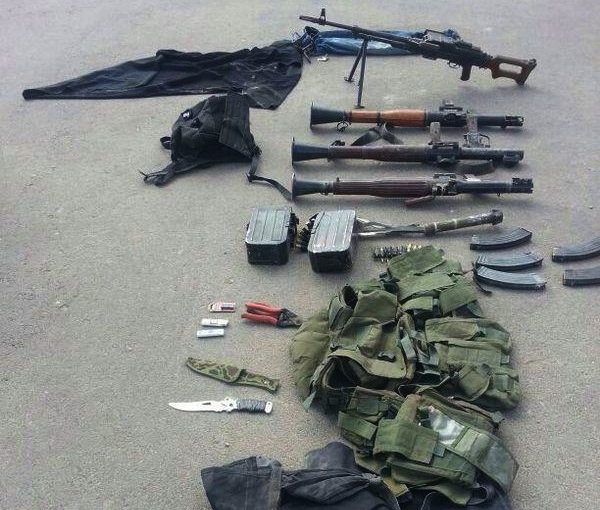
Weapons seized from terrorists who infiltrated Israel through an underground tunnel to carry out a massacre in an Israeli community. This photo was taken on July 19, 2014. (photo from flickr.com/photos/idfonline)

Part 2 of a three-part series, in which the author shares his diaries from the homefront, providing a glimpse of daily life under missile threat during Operation Protective Edge in 2014. For Part 1, click here; for Part 3, click here.

July 13, 2014

Day six. Woke up at 4 a.m. Browsed the headlines on my smartphone. Some talk about talk about considering talk about a truce. Fell back asleep. Rudely awoken at 6:11 – I angrily checked the time – by a siren. Incoming. So much for all the talk. My wife and I groggily made our way to our daughter’s room, our protective room.

Son Dor is enjoying Eilat. Returning by bus this evening. Maybe it makes more sense to take the afternoon bus. Think the skies are quieter in the daytime.

Sides still too far apart for a truce.

When Prime Minister Netanyahu talks about a long-term truce, what does he mean? With my son going into the army in two years, I don’t want another ceasefire like we had in 2008 and 2012, which allowed Hamas to rearm and wage new wars so soon after. Not acceptable. Our cabinet reconvenes today to further consider a ground offensive. What a job our prime minister has!

So much damage in Gaza. How can Hamas not cry uncle? Despite its macho threats, its salvos of rockets – more than 100 fired over the weekend – the impact to Israel is minimal. Largely due to a poor-quality arsenal. The constant pressures of our offensive. Our amazing Iron Dome. And the well-prepared and trained homefront (that’s us!).

July 15

Ceasefire to take effect at 9 a.m. Final terms to be agreed. Somewhat ass-backward. Shouldn’t terms be agreed first? What do I know? Hope it brings quiet. Peace.

Gazans needs new leadership. The classic choice of guns or butter, they need to decide if they want to continue being human shields in a war they cannot win.

My son returned from Eilat. Without incident. With a great tan and funny stories. But frustrated. Tossing the morning newspaper aside, he growled, “We’re crushing them. We need to continue until they are clearly defeated! This truce is bullshit. We’ll only face more missiles next year. You don’t stop when on the verge of victory. It allows your enemy to retrench and rebuild.” The rashness of youth has a point.

I left for work with a delicate sense of calm. Maybe I can worry less today. Alas, an hour into the ceasefire, missiles were again fired at Israel. Errant missiles? Or continued, self-defeating defiance by Hamas? Previous operations also had a number of false truces. Then there was quiet. To paraphrase from Sting, I only hope the Gazans love their children, too.

But another beat prevails. More and more missiles fired by Hamas since the ceasefire went into effect. The kids, alone at home, went scurrying to our safe room for a third time in the last hour.

From her Tel Aviv office, my wife sounds somewhat flustered. A mother’s distress. Loud booms heard overhead from the Fab in Kiryat Gat. My daughter called from the protective room. Safe. Frustrated. Not understanding what Hamas doesn’t understand about a ceasefire.

In the meantime, Israel is holding its fire. Hoping for the best. Preparing for the worst.

Anyway, I need to complete a report for work.

July 17

The war continues. The truce that wasn’t never took hold, despite Israel’s willingness. We’ve agreed to a five-hour unilateral, humanitarian ceasefire, to give Gazans a respite. Effective 10 a.m. today. We continue building our military reserve – 50,000 soldiers patiently await their orders.

We thwarted an infiltration. Thirteen terrorists heading towards a border community through an underground tunnel were stopped.

We continue rendering the Hamas war machine ineffective, while Hamas continues to subject Gaza to suffer Israel’s might. Uncertain where this leads.

Received a pretty frantic call from my wife and son. On their way to Tel Aviv, they witnessed an Iron Dome sound and light show – we shot down four missiles. They could almost feel the heat of the sky-high blasts. Scattering out of the car, they held each other as they ran for cover in a nearby shelter. Talking to me, their voices a mixture of exhilaration, excitement, fight. Then they continued their drive to work.

The true hero of this war is the Iron Dome. Probably one of the greatest military defence breakthroughs of the last hundred years. Can’t imagine the situation without it.

July 18

Fearful. Hopeful. Last night, at 10:38 p.m. (precisely), Israel embarked on a long-anticipated ground operation. For peace. I am fearful for our sons, brothers, fathers, some sisters, too. Trusting our nation will soon hammer Hamas’s swords back into plowshares (Isaiah 2:4).

We fell asleep around midnight, huddled in our den watching nonstop news. Reporting was spotty. Events happening very quickly. Full disclosure not a privilege. Lots of uncertainty – that word again – adding to fears and hopes.

Also concerned about our neighbours in Gaza, caught in the crosshairs of Hamas insanity. I like to think the majority of Gazans are innocent pawns, fiercely used by Hamas to terrorize Israel with crude and indiscriminate missile attacks. Israel makes a clear distinction: this war is with Hamas, not Gaza.

Hamas waited not a second after the humanitarian ceasefire ended to resume its barrage of missiles. They also fired a few during the ceasefire.

July 20

Updated my smartphone. Another brilliant Israeli application. Designed under extreme pressures. Called Code Red. Brilliant. Beeps with every missile attack, even advising the location. Seems everyone downloaded this app – the office can be quite noisy at times.

Went to Tel Aviv with the kids for lunch yesterday. Needed a break from our pressure-cooker existence. We hung out along Rothschild Boulevard. Lots of cool cafés and shops. With 50,000 reservists down south fighting for our security, quite a contrast.

There was a missile attack as I was leaving Rehovot this morning. I was outside the mall – running a quick errand – so sought cover in a doorway with five others. My daughter home alone. Called her. Asked if she wanted to come with me to work. “No, Dad, I’m fine. Be careful.” How quickly they mature.

My son is still going out evenings with his friends. I’d prefer he stay home, but teenagers will be teenagers, even in wartime.

July 21

Yesterday was a tragic day for Israel. Thirteen of our best, killed defending our country. Now 18 soldiers killed since the start of hostilities. A collective weeping. Each soldier someone’s child, sibling or parent. Taken from routine to defend life and country from this insanity from Gaza.

Again, Israel found Hamas terrorists attempting to infiltrate the country from their tunnels of hell. Intending to carry out a terrorist rampage in one of our border communities. Targets not soldiers, but innocent, unsuspecting families. Grandparents. Children.

Israel goes to great lengths to protect civilians in Gaza. When Israel targets terrorists hiding and firing from a civilian building, it first warns the local population by dropping leaflets, blaring the message on loud speakers, even making phone calls and sending text messages. Or, does a “knock on the door” – shoots small, precise, non-explosive ordinance at a roof to urge inhabitants to vacate before attacking. Israel aborts an attack if noncombatants are in harm’s way.

Hamas has different values. Not rational. Not humane. They urge and sometimes force Gazans into targeted areas. Hamas counters Israel’s pre-attack announcements by threatening retaliation, even execution, to those who heed the warnings. Hamas strategically locates command-and-control operations within hospitals, schools, mosques. This is their defensive shield. As our prime minister said, “They don’t give a whit about the Palestinian people.”

Our war is not against the people of Gaza, but against the terror organization ruling and subjugating Gaza – Hamas.

A mother was quoted today: “Knowing my son is entering this strip of land governed by such demons is frightening enough. Aware that he is doing so with a weapon in one hand and a law book in the other – representing the Israeli approach to asymmetrical warfare – is beyond my capacity as a mother to bear. Israeli parents, famous for over-protectiveness at the playground, must make their peace with such parental cognitive dissonance. It is a feat I wish on my enemies. Only then will there be hope of genuine coexistence.”

Bruce Brown, a Canadian-Israeli, made aliyah 25 years ago. He works in high-tech and is happily married, with two kids. He is the winner of a 2019 American Jewish Press Association Simon Rockower Award for excellence in Jewish writing.

Format ImagePosted on December 6, 2019December 12, 2019Author Bruce BrownCategories IsraelTags family, Gaza, Hamas, Israel, memoir, Operation Protective Edge, terrorism
Operation Black Belt diaries

Operation Black Belt diaries

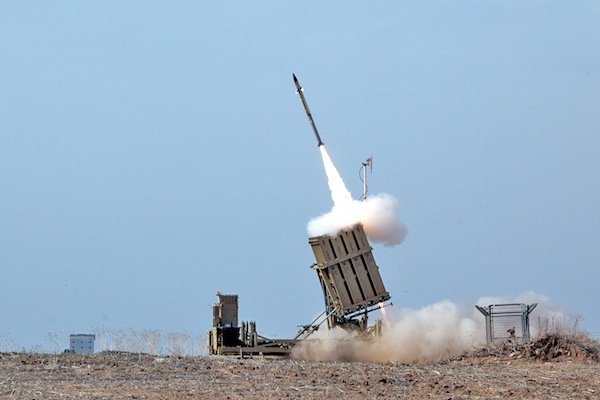
A missile from Israel’s Iron Dome is fired to intercept a missile coming from the Gaza Strip, in November 2012. (photo by Nehemiya Gershuni-Aylho/IDF)

Interesting. Sad. Frustrating. Predictable. Some five years after Operation Protective Edge, there are the same tensions and military conflagrations between Gaza and Israel. As my three-part homefront diaries from 2014 is being printed as a retrospective in the Jewish Independent (see other article on this page), Israel continues to defend itself from indiscriminate missile fire from Gaza. With this diary, I hope to capture the same sense of homefront resilience. From the mundane to the philosophical, this is how I experienced it.

Tuesday, Nov. 12, 2019: Again. A little bit tedious. This business of war. Woke up just after 6 a.m. to a siren. Incoming. Oh well. Time to get up anyway. Just a few hours earlier, Baha Abu al-Ata (try say that while standing on your head) was assassinated in a targeted killing by the Israel Defence Forces. He was a top Palestinian Islamic Jihad (PIJ) commander in Gaza.

Not much later, a text message from the school district. School canceled. My daughter happy. Twenty minutes later, several of her friends show up for breakfast. Their conversation: missiles, sirens, stress levels, locations hit. Where is the giggling? The talk of boys? Of parties? OK, there was also that. Teenagers in the homefront.

Missiles hitting as far north as Tel Aviv. Several months ago, this was a red line. An exception. Now, the norm.

My wife called her mom, who lives just outside Tel Aviv. We’re bringing her here until the missiles stop.

Wednesday, Nov. 13: Two hundred missiles slammed into Israel. Remarkably, very little damage. Did the PIJ ever hear of GPS? Shhh. Don’t tell them.

The enemy is the Palestinian Islamic Jihad. Not Hamas. Not sure the difference. Or how important it is. Both radical Islamic parties. Both fire missiles at Israel. Both want to destroy Israel. Both want to kill Israelis.

Thursday, Nov. 14: A very quiet night. And then, around 6 a.m., the missiles started again. Raining on the south. By late afternoon, another 100 missiles fired on us. Yikes.

Told to brace for several days of fighting. Most of the missiles fired today fell around the Gaza periphery. PIJ not ready for a ceasefire. Acting as if they own this game. Maybe they do. Where is our might? Our deterrence? Our “make my day” attitude? Must put an end to this constant threat. To the PIJ. To Hamas. To their ability to fire indiscriminately and nonstop at Israel. It’s not fair. “Fair.” Like that’s a concept in war.

My big question, somewhat rhetorically, but also looking for answers: how did Gaza develop so many darn missiles? Shouldn’t we have stopped this stockpiling before it got out of hand? Same mistake in Lebanon, where Hezbollah has 150,000 missiles aimed at my home. Double yikes!

Regarding the current threat – 42 missiles fired at us in last 15 minutes. Triple yikes!

And, as I was sleeping in our apartment up north, where I stay occasionally during the week because of work, a missile was shot down over Rehovot. My daughter was woken at 11:30 p.m., alone at home. She excitedly recounted the difficulty she had shutting the fortified window in our protective room. The recently replaced screen is the culprit. By the time she finally got it shut, boom! The missile was shot from the sky by our trusty Iron Dome interceptor.

I need to fix that screen for next time.

Friday, Nov. 15: The fighting has been called Operation Black Belt. A ceasefire agreement reached. Not surprisingly, the ink not yet dry, more missiles fired into Israel.

Just wondering. When ceasefires agreements signed, does the PIJ – not Hamas, I remind you – and Israel sit around a table, sign a document, exchange pens, take a few selfies? OK, silly thought. But, if they did, might be a way to reduce animosity. They could even share a drink at an “after event.” Ha.

How does Operation Black Belt impact Israel’s political woes? Still a country without a functioning government.

And Gaza has a functioning government? A rhetorical question I couldn’t refuse to ask.

More than 400 missiles fired into Israel since Tuesday. Fifty-eight Israeli civilians injured, but none seriously (I think, I hope). Not sure our number of retaliatory attacks but reportedly significant.

Our ability to pinpoint attacks is just amazing. Baha Abu al-Ata (and his wife) were taken out while sleeping in his apartment. No other deaths or damage.

Saturday, Nov. 16: My morning news feed: “Intermittent Rockets Continue to be Launched by Palestinian Islamic Jihad.” Now, isn’t that lovely. Actually, it’s difficult to distinguish the morning thunderstorm – finally raining – from the sounds of missiles and anti-missiles clashing overhead. A boom is boom is a boom.

This is a ceasefire? Middle East-style, anyway. The proverbial beat goes on.

Bruce Brown, a Canadian-Israeli, made aliyah 25 years ago. He works in high-tech and is happily married, with two kids. He is the winner of a 2019 American Jewish Press Association Simon Rockower Award for excellence in Jewish writing. This article originally appeared in the CJN.

Format ImagePosted on November 29, 2019November 27, 2019Author Bruce BrownCategories IsraelTags Gaza, Hamas, Iron Dome, Israel, memoir, Operation Black Belt, Palestinian Islamic Jihad, terrorism
Protective Edge retrospective

Protective Edge retrospective

Drivers take refuge from rockets in Tel Aviv, July 9, 2014. (photo from flickr.com/photos/idfonline)

Part 1 of a three-part series, in which the author shares his diaries from the homefront, providing a glimpse of daily life under missile threat during Operation Protective Edge in 2014. For Part 2, click here; for Part 3, click here.

July 8

Operation Cast Lead, 2008. Operation Pillar of Defence, 2012. Now, Operation Protective Edge, 2014.

Naïvely, I disassociate the unraveling events from the grisly murders of teenagers Gilad Sha’er, Eyal Yifrach, Naftali Fraenkel. Then the murder of teen Muhammad Abu Khdeir. Gripping the country in horror, fear and dismay. I hope a sense of normalcy will prevail.

It doesn’t. Last evening was disrupted by 15 rockets fired over Rehovot, my little shtetl. Our Iron Dome intercepted several of them. The rest missed their targets, falling into open land. Two hundred missiles fired at Israel over the past week.

The attack took us by surprise. Pizza ordered, my son just finished his shower, my daughter hanging in her room, which doubles as our reinforced shelter. The siren sounded. Together with our dog, we ran to join my daughter in her room. A bit invasive to a teen. But she forgave us.

I took a few extra seconds. I had 30, after all. Grabbed a large bottle of water, some chocolate, a few asthma inhalers. “Dad! Get your ass in here!” my son shouted as I was scouring the kitchen for more goodies.

Then. All clear. We left my daughter’s room. I mean, the protective room. The doorbell rang. Pizzas here.

Amazed the delivery boy was still doing his rounds. I admonished him for not seeking shelter. He says he waited out the attack in our stairwell (also a reinforced area). Quite impressed with his delivery skills, gave him a large tip. The pizza arrived in less than 30 minutes, as advertised. Great job.

Went to bed a few hours later. My daughter had a difficult night. Couldn’t fall asleep and came into our room a couple times. Did our best to comfort her. But what can we say? We were attacked with missiles.

We promised our daughter she wouldn’t have to stay home alone, that she could join me at work. Not sure this was a wise promise. My office is located more south. My big worry – the drive to work. Driving there, I imagine myself in an episode of Wagon Train.

Looks like we are moving into a major ground offensive. A pending call of up to 40,000 reservists. Imagine the impact this will have on our economy, on our society. Fortunately, my son’s army duty is two years away. Somewhat reassuring, but not much, as these operations tend to repeat themselves every couple of years.

July 9

Visited our safe room twice last night. Hamas fired missiles as far north as Tel Aviv. Even targeted our capital. Didn’t expect such a quick escalation. We responded. Pounded 150 targets inside Gaza. I pity the poor Gazans suffering the slings and arrows of their leaders.

Heard another siren while walking my dog this morning. Poncho and I ran to the nearest shelter, the stairwell of a neighbouring building. Waited the mandatory 10 minutes with a mother and her child. Adding to an already complicated situation the child had cynophobia – started panicking at the site of my dog. Poncho and I chivalrously moved one floor up.

Poncho also feels the stress. Waiting in the stairwell, amid the booms and sirens, he started crying, pawing me.

I think about my son and his friends, who have a trip to Eilat planned for tomorrow. They are debating whether to go. Tough call. My wife and I also are struggling with this. That dang security factor! But there is also the heroic, stoic pizza delivery guy message. Life in Israel.

July 10

Operation Cast Lead cost $50 million a day; total cost, one billion bucks. Pillar of Defence cost $2 billion. Where is this money coming from?

We’ve destroyed more targets in the last 36 hours than in all of Operation Pillar of Defence.

More than 90 missiles were fired at Israel yesterday. Thirty were struck down by the Iron Dome. Rehovot was pretty quiet, with only one evening siren. I was home alone while my wife and kids were at the mall, which they said was totally empty. So, why were they there? Great question. One I ask every time they’re at the mall. Missiles or not.

Yesterday, we received an automated call from our mayor. Rehovot, along with other southern municipalities, has declared a state of emergency. Not sure what this means. Think we need to stay within 90 seconds of a protected space. Try factoring that into your busy day!

Morning papers filled with instructions on how to stay safe. Definitely a well-prepared country with this sort of thing. Facts speak for themselves. No casualties, despite more than 300 missiles fired at us since hostilities broke out.

My gym routine at work was disrupted by a double siren (one after the other). While waiting in the protected area, I positioned myself for a dash to the bench press once the all clear was sounded. Priorities!

The situation was becoming routine. How quickly we adapt. Calling home, I asked the standard questions. What’s up? What are you doing? What’s for lunch? Any missiles? Reading your book? A totally ordinary conversation.

My son and his friends went to Eilat, which is outside the battle zone. So, in the meantime, just the regular parental worries for a vacationing teen.

On a patriotic note, I hung a flag on our balcony today. Nothing like a good war to bring out the blue and white in me.

That night, the 1970s comic strip Love Is came to mind. Discovered a new one – love is … being alone with your wife in a bomb shelter.

July 11

A siren went off this morning while I was driving to the supermarket. Always dreaded being in a car during a siren. Seems the least safe place. There I was at an intersection, a little jittery, looking for a place to pull over and exit the car – then run for fortified cover … or lie down with my hands over my head. Spotted a place just down the road. Reminded myself I had 90 seconds to get to relative safety.

The red light took forever to change. Waiting. Waiting. Waiting. Green! A car zoomed out from behind. Cut me off. Took my coveted spot. Dang! Most drivers stopped on the spot, like when the sirens sound on Remembrance Day, so I did the same. Then bolted from my car. Crouched down. Put my hands over my head and hoped for the best.

Crouching next to me was the guy who cut me off. He also didn’t get to “the spot” in time. He apologized. We exchanged pleasantries about the unpleasant situation. And then, moved on.

What’s with the covering our heads with our hands stuff? Will that protect us from burning debris falling from the sky? I told my daughter I’m going to start driving around with her bike helmet. Though not a bad idea, it was quickly nixed. If I did that, she warned, she’d never drive with me again. Too embarrassed I guess. Teens. Even during war. Go figure.

Yesterday afternoon, the Iron Dome intercepted several missiles over Rehovot. Parts of the Weizmann Institute of Science were covered with bomb fragments. Especially by the pool. The lifeguard had ensured the kids were out of the water and ushered to safety. A miracle no one was hurt. One panicked child ran back to reclaim his sandals. The lifeguard ran after him. Unable to drag him back in time, he covered the child with his body. Bomb fragments littered the ground around them. Another Israeli hero. Like the pizza delivery guy.

A missile was fired towards the Upper Galilee from Lebanon this morning. We fired back. Hope our Lebanese friends are deterred. Certainly prefer not to open another front.

The Israel Defence Forces also has struck 1,100 Hamas targets in Gaza: 210 targets over the last day, including 81 underground rocket launchers, 21 command and control centres, 15 attack tunnels, 10 training centres, seven administrative buildings. And a partridge in a pear tree.

July 12

Woke up this morning to find my daughter watching the news. Instead of her usual Saturday morning teen programs, she was actually watching the news. One of the first tragedies of war is innocence. On the positive side, we finally got our daughter interested in the news.

Another casualty of war? Certainty. We are no longer certain about so many things. Things that affect today, things that affect tomorrow, things that affect next year. Small things, large things. Lots of things. Not certain.

Two missile attacks on Rehovot today. Surreal. Scary.

Trying to keep a normal routine. Went to a matinée today. Still planning our summer vacation. Busy with work. Busy at home. Baking chocolate chip cookies. Watching Friends reruns. Doing everything with this horrendous situation in the background. Or the foreground.

A bit despondent today. Want this to end. But what’s the end? What about the economic fallout of a $2 billion bill? What about the political and diplomatic fallout? Waiting for some good news.

Bruce Brown, a Canadian-Israeli, made aliyah 25 years ago. He works in high-tech and is happily married, with two kids. He is the winner of a 2019 American Jewish Press Association Simon Rockower Award for excellence in Jewish writing.

Format ImagePosted on November 29, 2019December 12, 2019Author Bruce BrownCategories IsraelTags family, Gaza, Hamas, Israel, memoir, Operation Protective Edge, terrorism
Bedside visit

Bedside visit

(photo from Ashernet)

Israeli President Reuven Rivlin talks to Rabbi Eitan Shnerb at Hadassah Medical Centre in Ein Kerem on Aug 26. On the right is Shnerb’s son, Dvir, 19, who was also seriously wounded in a bomb blast near the settlement of Dolev. The rabbi’s 17-year-old daughter Rina was killed instantly. The three were hiking when the bomb was detonated. Rina’s funeral was held in the family’s hometown of Lod on Aug. 23. The blast was the latest in a series of terrorist attacks and clashes recently in Jerusalem and the West Bank.

Format ImagePosted on August 30, 2019August 29, 2019Author Edgar AsherCategories IsraelTags Reuven Rivlin, Shnerb, terrorism, West Bank
החיזבאללה פועל בקנדה

החיזבאללה פועל בקנדה

(LinkedIn) עלי קוראני

ארגון הטרור השיעי החיזבאללה שקשור באיראן אסף מידע ביטחוני רגיש על שדה התעופה הבינלאומי “פירסון” שבטורונטו. כך מסרה רשות הביטחון בתחבורה האווירית של קנדה לפני מספר ימים. מתברר שסוכן רדום של החיזבאללה שגר בארצות הברית, עלי קוראני, ביקר לפחות שבע פעמים “בפירסון” – שדה התעופה הגדול שך בקנדה (מדי שנה עוברים בו לא פחות מכחמישים מיליון נוסעים).

קוראני שהוא אזרח אמריקני ונשוי לאזרחית לבנונית-קנדית, אסף מידע מודיעיני נרחב על אמצעי הבטחה בשדה התעופה הבינלאומי. המידע שהועבר למפעילו של קוראני בלבנון כלל בין היתר את הנושאים הבאים: מיקום מצלמות האבטחה, מיקום גלאי המתכות, מהם נוהלי הביטחון בשדה, מה לובשים אנשי האבטחה במשמרות שלהם ומי מהם נושא עימו נשק.

קוראני התגייס לחיזבאללה לאחר שהבית של משפחתו נהרס במלחמת לבנון השנייה, שהתקיימה בין ישראל לחיזבאללה (בקייץ של אלפיים ושש). על קוראני הוטל עליו להעביר נשק מקנדה לארה”ב ולבצע שם פעולות טרור. זאת תוך התמקדות בעיקר באנשי עסקים יהודים שגרים בניו יורק, נספחי צה”ל שעובדים בעיר ואף הקונסוליה הישראלית בניו יורק. הטרוריסט שנמצא במעצר בארה”ב מזה כשנתיים הורשע כבר בדין. הוא צפוי לקבל מאסר עולם וגזר דינו יתפרסם במהלך ספטמבר הקרוב. עורכי דינו של הנאשם הזדרזו והודיעו כבר כי יערערו על עונשו הכבד.

קוראני סיפר לחוקריו באף. בי.איי כי קבוצת הפעולה החיצונית של החיזבאללה (המכונה יחידת תשעה מאות ועשר) פעילה בקנדה, אף יותר מאשר ארה”ב. הוא מסר לחוקרים שמות של חמישה עשר איש מרשימת ההתקשרות הפרטית שלו, שחלקם הגדול גר דווקא בקנדה.

קנדה מתברר עוד משמשת מרכז חשוב להלבנת כספים של החיזבאללה שמקורם ממכירת סמים. הלבנת הכספים מתרחשת במספר ערים ובעיקר בוונקובר. ערים נוספות ברשימה הלא מכובדת הזו: טורונטו, מונטריאול, קלגרי והליפקס. הסמים מועברים לקנדה דרך מספר דינות באמריקה הלטינית ובעיקרן קולומביה ומקסיקו. זאת על ידי הפעילים של ארגון הטרור הלבנוני. הכספים ממכירת הסמים מולבנים ומשמשים למימון פעולות הטרור של הארגון, במקומות שונים בעולם.

הפעילות של איראן וארגוני הטרור המסונפים לה התרחבה בשנים האחרונות למדינות אמריקה הליטינית, בשל הסנקציות האמריקניות הקשות שהוטלו עליה. נשיא ארה”ב, דונלד טראמפ, הטיל רק לאחרונה עוד סנקציות כלכליות על איראן. טראמפ מאמין שבדרך הלחץ הוא ישיג משהו אך בדרך כלל התוצאות הפוכות. במדינות אירופה ומומחים בתחום הביטחוני בארה”ב, קנדה וישראל, מאמינים בניגוד לטראמפ כי הסכם הגרעין עם איראן, היה טוב לכל הצדדים. אל טראמפ הצטרף עד כה רק מנהיג אחד שתמך בביטול ההסכם עם איראן והוא: ראש ממשלת ישראל בנימין נתניהו.

בשנים האחרונות החלה המשטרה הפדרלית הקנדית (האר.סי.אם.פי) לחקור לעומק את נושא הלבנת הכספים מצד החיזבאללה. פעילים של ארגון הטרור הלבנוני מלבינים כספים בהיקפים גדולים מאוד, בעזרת מספר ארגוני פשע וקרטלי סמים מקומיים ובינלאומיים.

לפי החקירות המסובכות של האמריקנים בשיתוף בין היתר של הרשויות בקולומביה, עולה כי החיזבאללה פועל במשותף עם ארגוני פשע בינלאומיים ברחבי העולם. בין היתר במדינות כמו סין וההונג קונג, בשיתוף עם שכירי חרב, סוחרי סמים וקרטלי סמים גדולים (בהם קרטל מדיין של פאבלו אסקובר שחוסל לפני כעשרים ושש שנים). מהאזנות לשיחות טלפון רבות של פעילי החיזבאללה מתברר, שהארגון מפעיל את קשריו לפעילויותיו הפליליות השונות, ברחבי העולם. ובעיקר במדינות הבאות: ארה”ב, קנדה, אוסטרליה, פנמה, ירדן, דובאי וכמובן גם לבנון.

Format ImagePosted on July 3, 2019July 3, 2019Author Roni RachmaniCategories עניין בחדשותTags Ali Kourani, Canada, Hezbollah, money laundering, terrorism, Toronto, הלבנת כספים, חיזבאללה, טורונטו, טרור, עלי קוראני, קנדה
To forgive and to save others

To forgive and to save others

Left to right are Megan Laskin, Sherri Wise, Karen James, Jane Stoller, Jeannie Smith, Alyssa Schottland-Bauman and Sharon Goldman. (photo from Jewish Federation)

For the past 14 years, the Jewish Federation of Greater Vancouver has organized a women’s philanthropy event called Choices. The evening is meant to inspire women to understand the power of their tzedakah and to feel part of the community. On Sunday, Nov. 4, in Congregation Beth Israel’s Gales Family Ballroom, the informal consensus in the room of more than 500 women was that Choices exceeded its objectives.

One of this year’s achievements, according to event co-chair Jane Stoller, was that there were 50 first-time attendees. Stoller explained that a table of Hillel BC students had been sponsored and there were new faces from Federation’s young adult program, Axis, in the crowd. In addition, she said a record number of Israeli women were among the new attendees.

As for the featured speakers this year, both not only spoke movingly, but they also tied in Federation as an important component of their respective stories.

Sherri Wise is a dentist who lives and works in Vancouver. She survived a triple bombing on Ben Yehuda Street in Jerusalem on Sept. 4, 1997.

Wise described the sequence of events that led her to be at a café on a beautiful sunny day and what transpired after three Palestinian terrorists each blew themselves up in the immediate vicinity. Wise was seriously injured, with more than 100 nails embedded in her limbs and second- and third-degree burns on many areas of her body. After recounting the details of this tragedy, Wise was able to focus on some of the positives that arose from the horror. “Someone from Jewish Federation in Vancouver contacted Federation in Jerusalem and a kind woman named Trudy came every day to visit me.… I never even learned her last name,” she said.

Wise said she has managed to get on with her life not only with the help of her parents and the Jewish community, but also by making a decision not to harbour anger or hatred toward those who injured her, killed seven and injured 200 others. “Those men were born innocent babies and they were taught to hate – what chance did they have?”

Wise has since helped craft, advocate for and see enacted the Justice for Victims of Terrorism Act. This bill includes deterrents to those who would support terrorist organizations financially and materially, and grants rights to Canadian victims of terrorism. Wise imparted a message of healing, gratitude and finding a way to make a positive difference.

Jeannie Smith, the daughter of Irene Gut Opdyke, was the second speaker. Opdyke, who passed away in 2003, saved the lives of 12 Jews in Poland during the Holocaust and was recognized by the Israeli Holocaust Commission as one of the Righteous Among the Nations. Smith recounted many details of her mother’s story to a captivated crowd.

At the age of 17, Gut was forced to work in, among other places, the home of a high-ranking German officer stationed in Poland near her hometown. Prior to “keeping house” for this officer, she had worked in a laundry facility at a German officer’s camp. When she learned that she would be relocated to a villa in the town and that the Jews of that town would be liquidated, she managed to smuggle the group of Jews she had worked with in the camp’s laundry into the basement of the villa.

Eventually, the officer discovered the hidden Jews but, for a variety of reasons – none of them altruistic – he did not turn them in. As the Soviets approached and the Germans fled Poland, the 12 Jews, one of whom was pregnant, fled to the forest and joined the partisans.

There are many more twists and turns to Gut Opdyke’s story, but she ended up in California, where she married an American man who was the only person in the United States who knew anything about her painful and heroic past. Gut Opdyke was moved to begin speaking about her experiences only after she received a random call from a Holocaust denier. For the rest of her life, she was a Holocaust educator who shared the story her daughter, Smith, shared with the women at Choices.

Smith expressed gratitude toward the Jewish Federation of Portland because they paid for her father to live out his life in the Jewish seniors home once he developed Alzheimer’s. Commenting about Federation, she said, “One person can make a difference, and an organization can make a mighty difference.” She concluded with what she said her mother used to end her speeches with as well: “Every day we have an opportunity to be kind, to stand up for what is right and to go against what is wrong. We can be the difference in someone’s life.”

Both Wise and Smith received standing ovations for their heartfelt stories of love and resilience.

Leanne Hazon was one of the first-time attendees at the event. Having lived in Toronto for the last 18 years, the Richmond native returned to Metro Vancouver earlier this year for work.

“I thought the whole event was amazing!” she said. “It had such a nice vibe and feeling of community, very warm and welcoming. And the speakers were exceptional…. Sherri Wise’s message of forgiveness was so powerful and Jeannie Smith’s story about her mom was very moving.”

For more information on Jewish Federation and its annual campaign, visit jewishvancouver.com. 

Michelle Dodek is a freelance writer living in Vancouver.

Format ImagePosted on November 16, 2018November 15, 2018Author Michelle DodekCategories LocalTags Choices, forgiveness, Holocaust, Jeannie Smith, Jewish Federation, philanthropy, Sherri Wise, terrorism, tikkun olam, women
Resilience, despair in Sderot

Resilience, despair in Sderot

Inside the caterpillar shelter, an orange line indicates where one can safely stand beyond the range of flying shrapnel. (photo by Gil Zohar)

Miri Asulin personifies the contradictions of those who live in Israel’s cities and settlements bordering the Gaza Strip.

The 41-year-old mother of seven and principal of a brand-new elementary school in Ashkelon’s southern suburbs, 15 kilometres from the coastal enclave, commutes from her home in nearby Sderot, where she has been living for 26 years since she married. Until the barrage of 40 rockets fired from Gaza on the Sabbath of Oct. 26-27, she had dutifully and quietly followed Home Front Command orders. Though no one was killed in that bombardment, for Asulin it was the straw that broke the camel’s back.

photo - Miri Asulin, mother of seven and principal of a brand-new elementary school, hosted the media recently to talk about the impacts of the rocket and mortar attacks from Gaza
Miri Asulin, mother of seven and principal of a brand-new elementary school, hosted the media recently to talk about the impacts of the rocket and mortar attacks from Gaza. (photo by Gil Zohar)

Addressing a pool of journalists in an air-conditioned classroom in her fortified building – the week before this Monday’s attacks from Gaza, which included more than 300 rockets or mortar bombs that day alone – Asulin asked that we not mention the name of her school since she has not received permission from the Ministry of Education to host the media. But she is unwilling to risk holding the interview outside on a pleasant fall day, lest a Colour Red rocket alert siren begin wailing.

“After 17 years [of rocket fire], I decided not to be quiet any longer about what is happening to us in Sderot and the south,” she began. “An attack on any Jew is an attack on all the Jewish people.”

What was it like that Shabbat as the sirens went off?

“The children were screaming,” she recalled. The worst part, she said, was the feeling of helplessness in the face of a “merciless enemy. We worship life. They worship death. One side has to be defeated.”

She said, “I’m no longer willing to remain silent. I’m not a politician or a cabinet member. I’m a mother.”

Asulin has witnessed the creeping paralysis of post-traumatic stress disorder. “Children have reverted to [being] bed-wetters, afraid to go to the bathroom alone. We’re going to have a generation of IDF soldiers who are traumatized,” she warned.

Ninety-four percent of Sderot’s children have PTSD symptoms, she said.

Mental health professionals treating PTSD say the best strategy for coping with psychological warfare is to maintain one’s daily routine. But those professionals urging resilience are themselves vulnerable and suffering from chronic burnout.

Asulin couldn’t sleep all night following the rocket barrage. “My body is in trauma,” she said. “I’m in shock.”

“With a snake, you cut off its head,” she said. Calling for reprisal attacks, she urged the Israeli government to kill 10 Hamas terrorists for every rocket fired.

***

As visceral as Asulin’s trauma is, Sderot itself shows few signs of the 25,000 Qassam rockets and mortars that have targeted the city and nearby kibbutzim for 17 years, killing 56 people. The city of 26,000 has no shattered glass, no bomb craters and no burned-out buildings. Superficially, Sderot looks green and prosperous.

Alon Davidi was reelected mayor in the Oct. 30 municipal elections, reflecting the satisfaction – or the apathy – of Sderot’s populace.

“Sderot is one of the most bombarded cities [in the world] since World War II,” according to Noam Bedein, the founder of the Sderot Media Centre. To his abiding frustration, there is no military solution to the rockets fired intermittently from Gaza, he said.

photo - Sderot’s growing skyline
Sderot’s growing skyline. (photo by Gil Zohar)

Paradoxically, Sderot has been experiencing a construction boom in recent years, he explained. Founded in 1952 as a dumping ground for new immigrants from Morocco, the development town struggled in obscurity even as newcomers arrived from the Soviet Union, Ethiopia and India. The turning point came in 2013, he said, when the rail line opened, linking Sderot and nearby Ofakim and Netivot with Tel Aviv and Beer Sheva. Attracted by low real estate prices and tax benefits, tens of thousands of people have relocated to the former development towns and nearby communities. Construction cranes, new shopping malls and a burgeoning skyline of high-rise apartment towers reflect the wave of commuters who flock to Sderot’s underground train station. Two thousand apartments have been purchased in Sderot since the 2014 war. The population is projected to double in the coming years, to 50,000 people. Relatively few families abandon Sderot, in part because the value of their homes won’t allow them to purchase equivalent housing in the more expensive centre of Israel.

Everywhere in the city, bomb shelters have sprouted like mushrooms after a rain, making Sderot the bomb shelter capital of the world. Hoping to lower the odds in the game of Russian roulette, the ubiquitous reinforced concrete structures have been strategically placed so that one can race to a shelter anywhere in the 15 seconds notice that the siren provides. Every bus stop has an adjoining shelter.

A colourful concrete caterpillar crawls through a playground. There are no steel doors. Bedein explained that the precious seconds it takes a child to pull open a heavy door could mean the difference between life and death. Inside the caterpillar shelter, an orange line indicates where one can safely stand beyond the range of flying shrapnel.

***

photo - A chanukiyah, made from Qassam rockets, at Sderot’s Hesder Yeshiva
A chanukiyah, made from Qassam rockets, at Sderot’s Hesder Yeshiva. (photo by Gil Zohar)

Rabbi Ari Katz, the director of public relations at Sderot’s Hesder Yeshiva – where soldiers combine religious studies with army service for five years – has broad perspective on the rockets targeting Sderot. Originally from Chicago, he lived in Gush Katif until 2005, when the Israeli government uprooted the 8,000 Jews living in the Gaza Strip. It was that unilateral disengagement, followed by the 2007 Hamas takeover of Gaza from the Palestinian Authority, which created the conditions for the current rocket campaign, he said.

“We’re in a standing pattern, waiting to see what will be,” he said. Standing on the roof lookout point, which offers a panoramic view towards Gaza, one kilometre away, he proudly pointed to the new construction edging towards the frontier.

“They see the cranes,” he said, referring to the people of Gaza. “They think we’re crazy.”

Gil Zohar is a journalist based in Jerusalem.


Format ImagePosted on November 16, 2018November 15, 2018Author Gil ZoharCategories IsraelTags Ari Katz, Gaza, Hamas, Miri Asulin, Noam Bedein, Sderot, terrorism
Rivlin visits Netivot

Rivlin visits Netivot

Israeli President Reuven Rivlin addresses a group of local residents in a protected space in the northern Negev city of Netivot on Nov. 13. (photo by Ashernet)

On a tour of the city, Netivot Mayor Yehiel Zohar told President Reuven Rivlin about how buildings there are protected and about the events of the previous 24 hours. Rivlin also heard details about the work of the psychological and mental support services in the city, and the help given to children and the population as a whole after Monday’s missile launches from Gaza. “We are all under attack, under fire, whose aim is to disrupt our daily life,” said Rivlin. “Your strength gives us all strength. I have said in the past and I will continue to say, the area around Gaza is part of Israel. When the sirens are screaming here, we hear them in our hearts in Jerusalem, Tel Aviv and all over the country.” The president then visited one of the shelters in the town. In meeting local residents, he repeated appeals to follow the Israel Defence Forces’ orders.

Format ImagePosted on November 16, 2018November 15, 2018Author Edgar AsherCategories IsraelTags Hamas, Netivot, Reuven Rivlin, terrorism

Posts pagination

Previous page Page 1 … Page 8 Page 9 Page 10 … Page 17 Next page
Proudly powered by WordPress