Skip to content
  • Home
  • Subscribe / donate
  • Events calendar
  • Business Directory
  • FAQ
  • News
    • Local
    • National
    • Israel
    • World
    • עניין בחדשות
      A roundup of news in Canada and further afield, in Hebrew.
  • Opinion
    • From the JI
    • Op-Ed
  • Arts & Culture
    • Performing Arts
    • Music
    • Books
    • Visual Arts
    • TV & Film
  • Life
    • Celebrating the Holidays
    • Travel
    • The Daily Snooze
      Cartoons by Jacob Samuel
    • Mystery Photo
      Help the JI and JMABC fill in the gaps in our archives.
  • Community Links
    • Organizations, Etc.
    • Other News Sources & Blogs
  • JI Chai Celebration
  • JI@88! video

Recent Posts

  • SFU honours Gloria Gutman
  • Lifting people’s spirits
  • Wedding a ray of light
  • Indigeneity and Zionism
  • Rule of law broken: councilor
  • Football and its roles
  • The burden of defence
  • Fish Café returns after fire
  • All right in what goes wrong
  • Nuns & mermaids at TUTS
  • Camp offers holiday retreat
  • Students and mentors inspire
  • Once-in-a-lifetime trip
  • 100 dancers, one heart
  • Money for the sciences
  • What “Jewish food” means
  • Have a cookie, schnitzel too
  • Federation now across BC
  • Israel fighting for its existence
  • Deal strengthens Iran
  • Patriotic belonging diminishes
  • A campaign to engage
  • Upstanders’ first live event
  • Responding to Carney
  • Having your own home
  • Music a family tradition
  • Musical to warm heart
  • Community milestones … June 2026
  • Sharing her passion for Israel
  • Or Shalom reopens its doors
  • JFS from past to future
  • Need holistic approach
  • Sharing stories, advice
  • Journalist shares fears
  • Skills to live together
  • Road to independence

Archives

Follow @JewishIndie
image - CJN box ad Rockowers 2026

Tag: terrorism

Bedside visit

Bedside visit

(photo from Ashernet)

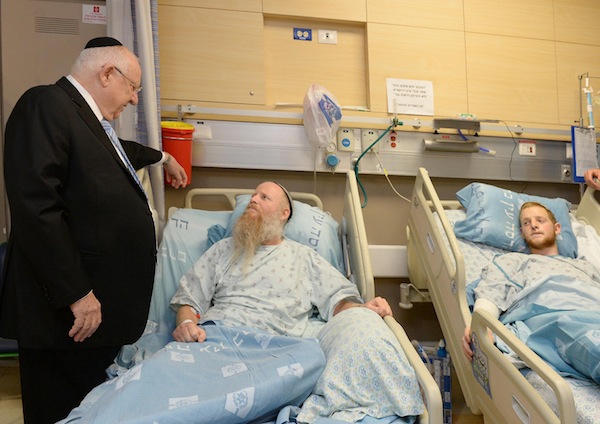
Israeli President Reuven Rivlin talks to Rabbi Eitan Shnerb at Hadassah Medical Centre in Ein Kerem on Aug 26. On the right is Shnerb’s son, Dvir, 19, who was also seriously wounded in a bomb blast near the settlement of Dolev. The rabbi’s 17-year-old daughter Rina was killed instantly. The three were hiking when the bomb was detonated. Rina’s funeral was held in the family’s hometown of Lod on Aug. 23. The blast was the latest in a series of terrorist attacks and clashes recently in Jerusalem and the West Bank.

Format ImagePosted on August 30, 2019August 29, 2019Author Edgar AsherCategories IsraelTags Reuven Rivlin, Shnerb, terrorism, West Bank
החיזבאללה פועל בקנדה

החיזבאללה פועל בקנדה

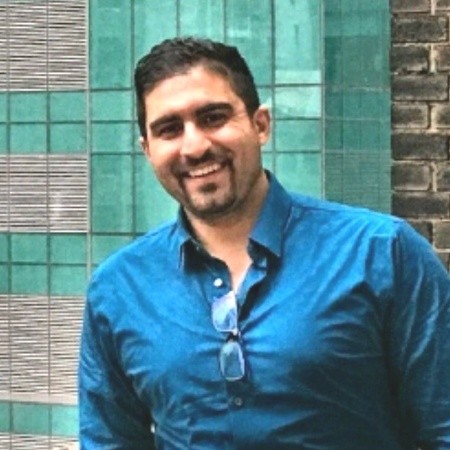
(LinkedIn) עלי קוראני

ארגון הטרור השיעי החיזבאללה שקשור באיראן אסף מידע ביטחוני רגיש על שדה התעופה הבינלאומי “פירסון” שבטורונטו. כך מסרה רשות הביטחון בתחבורה האווירית של קנדה לפני מספר ימים. מתברר שסוכן רדום של החיזבאללה שגר בארצות הברית, עלי קוראני, ביקר לפחות שבע פעמים “בפירסון” – שדה התעופה הגדול שך בקנדה (מדי שנה עוברים בו לא פחות מכחמישים מיליון נוסעים).

קוראני שהוא אזרח אמריקני ונשוי לאזרחית לבנונית-קנדית, אסף מידע מודיעיני נרחב על אמצעי הבטחה בשדה התעופה הבינלאומי. המידע שהועבר למפעילו של קוראני בלבנון כלל בין היתר את הנושאים הבאים: מיקום מצלמות האבטחה, מיקום גלאי המתכות, מהם נוהלי הביטחון בשדה, מה לובשים אנשי האבטחה במשמרות שלהם ומי מהם נושא עימו נשק.

קוראני התגייס לחיזבאללה לאחר שהבית של משפחתו נהרס במלחמת לבנון השנייה, שהתקיימה בין ישראל לחיזבאללה (בקייץ של אלפיים ושש). על קוראני הוטל עליו להעביר נשק מקנדה לארה”ב ולבצע שם פעולות טרור. זאת תוך התמקדות בעיקר באנשי עסקים יהודים שגרים בניו יורק, נספחי צה”ל שעובדים בעיר ואף הקונסוליה הישראלית בניו יורק. הטרוריסט שנמצא במעצר בארה”ב מזה כשנתיים הורשע כבר בדין. הוא צפוי לקבל מאסר עולם וגזר דינו יתפרסם במהלך ספטמבר הקרוב. עורכי דינו של הנאשם הזדרזו והודיעו כבר כי יערערו על עונשו הכבד.

קוראני סיפר לחוקריו באף. בי.איי כי קבוצת הפעולה החיצונית של החיזבאללה (המכונה יחידת תשעה מאות ועשר) פעילה בקנדה, אף יותר מאשר ארה”ב. הוא מסר לחוקרים שמות של חמישה עשר איש מרשימת ההתקשרות הפרטית שלו, שחלקם הגדול גר דווקא בקנדה.

קנדה מתברר עוד משמשת מרכז חשוב להלבנת כספים של החיזבאללה שמקורם ממכירת סמים. הלבנת הכספים מתרחשת במספר ערים ובעיקר בוונקובר. ערים נוספות ברשימה הלא מכובדת הזו: טורונטו, מונטריאול, קלגרי והליפקס. הסמים מועברים לקנדה דרך מספר דינות באמריקה הלטינית ובעיקרן קולומביה ומקסיקו. זאת על ידי הפעילים של ארגון הטרור הלבנוני. הכספים ממכירת הסמים מולבנים ומשמשים למימון פעולות הטרור של הארגון, במקומות שונים בעולם.

הפעילות של איראן וארגוני הטרור המסונפים לה התרחבה בשנים האחרונות למדינות אמריקה הליטינית, בשל הסנקציות האמריקניות הקשות שהוטלו עליה. נשיא ארה”ב, דונלד טראמפ, הטיל רק לאחרונה עוד סנקציות כלכליות על איראן. טראמפ מאמין שבדרך הלחץ הוא ישיג משהו אך בדרך כלל התוצאות הפוכות. במדינות אירופה ומומחים בתחום הביטחוני בארה”ב, קנדה וישראל, מאמינים בניגוד לטראמפ כי הסכם הגרעין עם איראן, היה טוב לכל הצדדים. אל טראמפ הצטרף עד כה רק מנהיג אחד שתמך בביטול ההסכם עם איראן והוא: ראש ממשלת ישראל בנימין נתניהו.

בשנים האחרונות החלה המשטרה הפדרלית הקנדית (האר.סי.אם.פי) לחקור לעומק את נושא הלבנת הכספים מצד החיזבאללה. פעילים של ארגון הטרור הלבנוני מלבינים כספים בהיקפים גדולים מאוד, בעזרת מספר ארגוני פשע וקרטלי סמים מקומיים ובינלאומיים.

לפי החקירות המסובכות של האמריקנים בשיתוף בין היתר של הרשויות בקולומביה, עולה כי החיזבאללה פועל במשותף עם ארגוני פשע בינלאומיים ברחבי העולם. בין היתר במדינות כמו סין וההונג קונג, בשיתוף עם שכירי חרב, סוחרי סמים וקרטלי סמים גדולים (בהם קרטל מדיין של פאבלו אסקובר שחוסל לפני כעשרים ושש שנים). מהאזנות לשיחות טלפון רבות של פעילי החיזבאללה מתברר, שהארגון מפעיל את קשריו לפעילויותיו הפליליות השונות, ברחבי העולם. ובעיקר במדינות הבאות: ארה”ב, קנדה, אוסטרליה, פנמה, ירדן, דובאי וכמובן גם לבנון.

Format ImagePosted on July 3, 2019July 3, 2019Author Roni RachmaniCategories עניין בחדשותTags Ali Kourani, Canada, Hezbollah, money laundering, terrorism, Toronto, הלבנת כספים, חיזבאללה, טורונטו, טרור, עלי קוראני, קנדה
To forgive and to save others

To forgive and to save others

Left to right are Megan Laskin, Sherri Wise, Karen James, Jane Stoller, Jeannie Smith, Alyssa Schottland-Bauman and Sharon Goldman. (photo from Jewish Federation)

For the past 14 years, the Jewish Federation of Greater Vancouver has organized a women’s philanthropy event called Choices. The evening is meant to inspire women to understand the power of their tzedakah and to feel part of the community. On Sunday, Nov. 4, in Congregation Beth Israel’s Gales Family Ballroom, the informal consensus in the room of more than 500 women was that Choices exceeded its objectives.

One of this year’s achievements, according to event co-chair Jane Stoller, was that there were 50 first-time attendees. Stoller explained that a table of Hillel BC students had been sponsored and there were new faces from Federation’s young adult program, Axis, in the crowd. In addition, she said a record number of Israeli women were among the new attendees.

As for the featured speakers this year, both not only spoke movingly, but they also tied in Federation as an important component of their respective stories.

Sherri Wise is a dentist who lives and works in Vancouver. She survived a triple bombing on Ben Yehuda Street in Jerusalem on Sept. 4, 1997.

Wise described the sequence of events that led her to be at a café on a beautiful sunny day and what transpired after three Palestinian terrorists each blew themselves up in the immediate vicinity. Wise was seriously injured, with more than 100 nails embedded in her limbs and second- and third-degree burns on many areas of her body. After recounting the details of this tragedy, Wise was able to focus on some of the positives that arose from the horror. “Someone from Jewish Federation in Vancouver contacted Federation in Jerusalem and a kind woman named Trudy came every day to visit me.… I never even learned her last name,” she said.

Wise said she has managed to get on with her life not only with the help of her parents and the Jewish community, but also by making a decision not to harbour anger or hatred toward those who injured her, killed seven and injured 200 others. “Those men were born innocent babies and they were taught to hate – what chance did they have?”

Wise has since helped craft, advocate for and see enacted the Justice for Victims of Terrorism Act. This bill includes deterrents to those who would support terrorist organizations financially and materially, and grants rights to Canadian victims of terrorism. Wise imparted a message of healing, gratitude and finding a way to make a positive difference.

Jeannie Smith, the daughter of Irene Gut Opdyke, was the second speaker. Opdyke, who passed away in 2003, saved the lives of 12 Jews in Poland during the Holocaust and was recognized by the Israeli Holocaust Commission as one of the Righteous Among the Nations. Smith recounted many details of her mother’s story to a captivated crowd.

At the age of 17, Gut was forced to work in, among other places, the home of a high-ranking German officer stationed in Poland near her hometown. Prior to “keeping house” for this officer, she had worked in a laundry facility at a German officer’s camp. When she learned that she would be relocated to a villa in the town and that the Jews of that town would be liquidated, she managed to smuggle the group of Jews she had worked with in the camp’s laundry into the basement of the villa.

Eventually, the officer discovered the hidden Jews but, for a variety of reasons – none of them altruistic – he did not turn them in. As the Soviets approached and the Germans fled Poland, the 12 Jews, one of whom was pregnant, fled to the forest and joined the partisans.

There are many more twists and turns to Gut Opdyke’s story, but she ended up in California, where she married an American man who was the only person in the United States who knew anything about her painful and heroic past. Gut Opdyke was moved to begin speaking about her experiences only after she received a random call from a Holocaust denier. For the rest of her life, she was a Holocaust educator who shared the story her daughter, Smith, shared with the women at Choices.

Smith expressed gratitude toward the Jewish Federation of Portland because they paid for her father to live out his life in the Jewish seniors home once he developed Alzheimer’s. Commenting about Federation, she said, “One person can make a difference, and an organization can make a mighty difference.” She concluded with what she said her mother used to end her speeches with as well: “Every day we have an opportunity to be kind, to stand up for what is right and to go against what is wrong. We can be the difference in someone’s life.”

Both Wise and Smith received standing ovations for their heartfelt stories of love and resilience.

Leanne Hazon was one of the first-time attendees at the event. Having lived in Toronto for the last 18 years, the Richmond native returned to Metro Vancouver earlier this year for work.

“I thought the whole event was amazing!” she said. “It had such a nice vibe and feeling of community, very warm and welcoming. And the speakers were exceptional…. Sherri Wise’s message of forgiveness was so powerful and Jeannie Smith’s story about her mom was very moving.”

For more information on Jewish Federation and its annual campaign, visit jewishvancouver.com. 

Michelle Dodek is a freelance writer living in Vancouver.

Format ImagePosted on November 16, 2018November 15, 2018Author Michelle DodekCategories LocalTags Choices, forgiveness, Holocaust, Jeannie Smith, Jewish Federation, philanthropy, Sherri Wise, terrorism, tikkun olam, women
Resilience, despair in Sderot

Resilience, despair in Sderot

Inside the caterpillar shelter, an orange line indicates where one can safely stand beyond the range of flying shrapnel. (photo by Gil Zohar)

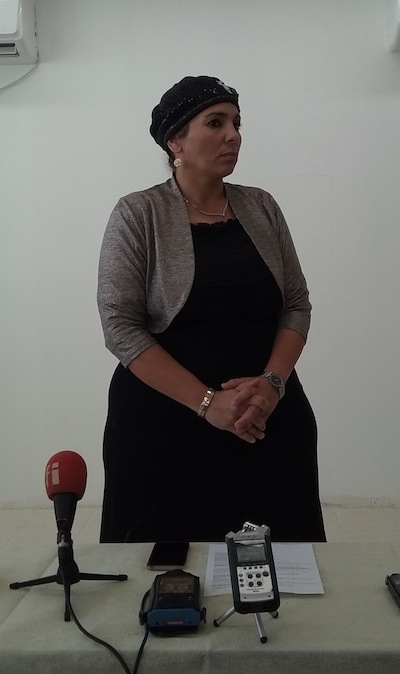
Miri Asulin personifies the contradictions of those who live in Israel’s cities and settlements bordering the Gaza Strip.

The 41-year-old mother of seven and principal of a brand-new elementary school in Ashkelon’s southern suburbs, 15 kilometres from the coastal enclave, commutes from her home in nearby Sderot, where she has been living for 26 years since she married. Until the barrage of 40 rockets fired from Gaza on the Sabbath of Oct. 26-27, she had dutifully and quietly followed Home Front Command orders. Though no one was killed in that bombardment, for Asulin it was the straw that broke the camel’s back.

photo - Miri Asulin, mother of seven and principal of a brand-new elementary school, hosted the media recently to talk about the impacts of the rocket and mortar attacks from Gaza
Miri Asulin, mother of seven and principal of a brand-new elementary school, hosted the media recently to talk about the impacts of the rocket and mortar attacks from Gaza. (photo by Gil Zohar)

Addressing a pool of journalists in an air-conditioned classroom in her fortified building – the week before this Monday’s attacks from Gaza, which included more than 300 rockets or mortar bombs that day alone – Asulin asked that we not mention the name of her school since she has not received permission from the Ministry of Education to host the media. But she is unwilling to risk holding the interview outside on a pleasant fall day, lest a Colour Red rocket alert siren begin wailing.

“After 17 years [of rocket fire], I decided not to be quiet any longer about what is happening to us in Sderot and the south,” she began. “An attack on any Jew is an attack on all the Jewish people.”

What was it like that Shabbat as the sirens went off?

“The children were screaming,” she recalled. The worst part, she said, was the feeling of helplessness in the face of a “merciless enemy. We worship life. They worship death. One side has to be defeated.”

She said, “I’m no longer willing to remain silent. I’m not a politician or a cabinet member. I’m a mother.”

Asulin has witnessed the creeping paralysis of post-traumatic stress disorder. “Children have reverted to [being] bed-wetters, afraid to go to the bathroom alone. We’re going to have a generation of IDF soldiers who are traumatized,” she warned.

Ninety-four percent of Sderot’s children have PTSD symptoms, she said.

Mental health professionals treating PTSD say the best strategy for coping with psychological warfare is to maintain one’s daily routine. But those professionals urging resilience are themselves vulnerable and suffering from chronic burnout.

Asulin couldn’t sleep all night following the rocket barrage. “My body is in trauma,” she said. “I’m in shock.”

“With a snake, you cut off its head,” she said. Calling for reprisal attacks, she urged the Israeli government to kill 10 Hamas terrorists for every rocket fired.

***

As visceral as Asulin’s trauma is, Sderot itself shows few signs of the 25,000 Qassam rockets and mortars that have targeted the city and nearby kibbutzim for 17 years, killing 56 people. The city of 26,000 has no shattered glass, no bomb craters and no burned-out buildings. Superficially, Sderot looks green and prosperous.

Alon Davidi was reelected mayor in the Oct. 30 municipal elections, reflecting the satisfaction – or the apathy – of Sderot’s populace.

“Sderot is one of the most bombarded cities [in the world] since World War II,” according to Noam Bedein, the founder of the Sderot Media Centre. To his abiding frustration, there is no military solution to the rockets fired intermittently from Gaza, he said.

photo - Sderot’s growing skyline
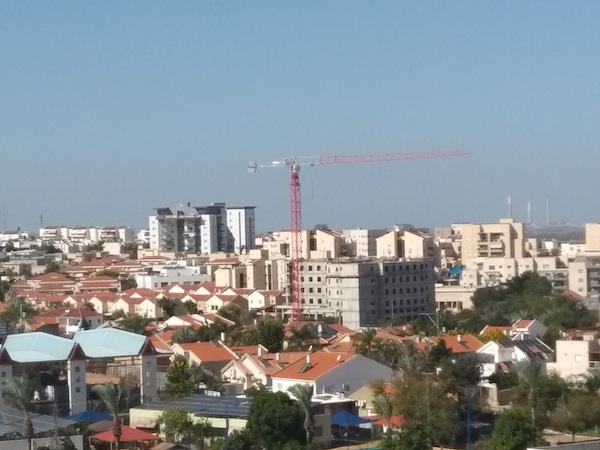
Sderot’s growing skyline. (photo by Gil Zohar)

Paradoxically, Sderot has been experiencing a construction boom in recent years, he explained. Founded in 1952 as a dumping ground for new immigrants from Morocco, the development town struggled in obscurity even as newcomers arrived from the Soviet Union, Ethiopia and India. The turning point came in 2013, he said, when the rail line opened, linking Sderot and nearby Ofakim and Netivot with Tel Aviv and Beer Sheva. Attracted by low real estate prices and tax benefits, tens of thousands of people have relocated to the former development towns and nearby communities. Construction cranes, new shopping malls and a burgeoning skyline of high-rise apartment towers reflect the wave of commuters who flock to Sderot’s underground train station. Two thousand apartments have been purchased in Sderot since the 2014 war. The population is projected to double in the coming years, to 50,000 people. Relatively few families abandon Sderot, in part because the value of their homes won’t allow them to purchase equivalent housing in the more expensive centre of Israel.

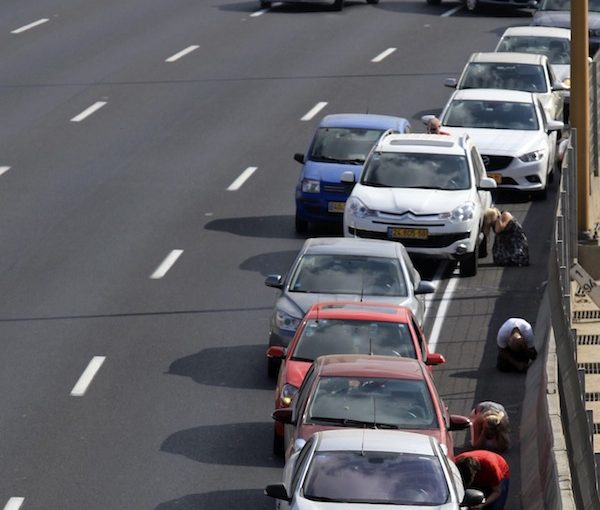
Everywhere in the city, bomb shelters have sprouted like mushrooms after a rain, making Sderot the bomb shelter capital of the world. Hoping to lower the odds in the game of Russian roulette, the ubiquitous reinforced concrete structures have been strategically placed so that one can race to a shelter anywhere in the 15 seconds notice that the siren provides. Every bus stop has an adjoining shelter.

A colourful concrete caterpillar crawls through a playground. There are no steel doors. Bedein explained that the precious seconds it takes a child to pull open a heavy door could mean the difference between life and death. Inside the caterpillar shelter, an orange line indicates where one can safely stand beyond the range of flying shrapnel.

***

photo - A chanukiyah, made from Qassam rockets, at Sderot’s Hesder Yeshiva
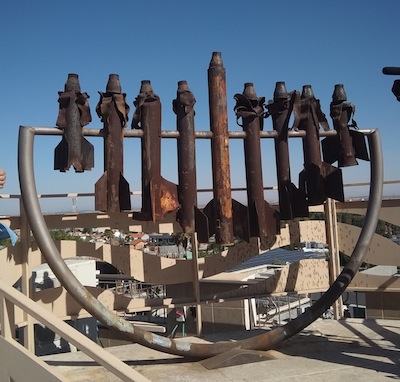
A chanukiyah, made from Qassam rockets, at Sderot’s Hesder Yeshiva. (photo by Gil Zohar)

Rabbi Ari Katz, the director of public relations at Sderot’s Hesder Yeshiva – where soldiers combine religious studies with army service for five years – has broad perspective on the rockets targeting Sderot. Originally from Chicago, he lived in Gush Katif until 2005, when the Israeli government uprooted the 8,000 Jews living in the Gaza Strip. It was that unilateral disengagement, followed by the 2007 Hamas takeover of Gaza from the Palestinian Authority, which created the conditions for the current rocket campaign, he said.

“We’re in a standing pattern, waiting to see what will be,” he said. Standing on the roof lookout point, which offers a panoramic view towards Gaza, one kilometre away, he proudly pointed to the new construction edging towards the frontier.

“They see the cranes,” he said, referring to the people of Gaza. “They think we’re crazy.”

Gil Zohar is a journalist based in Jerusalem.


Format ImagePosted on November 16, 2018November 15, 2018Author Gil ZoharCategories IsraelTags Ari Katz, Gaza, Hamas, Miri Asulin, Noam Bedein, Sderot, terrorism
Rivlin visits Netivot

Rivlin visits Netivot

Israeli President Reuven Rivlin addresses a group of local residents in a protected space in the northern Negev city of Netivot on Nov. 13. (photo by Ashernet)

On a tour of the city, Netivot Mayor Yehiel Zohar told President Reuven Rivlin about how buildings there are protected and about the events of the previous 24 hours. Rivlin also heard details about the work of the psychological and mental support services in the city, and the help given to children and the population as a whole after Monday’s missile launches from Gaza. “We are all under attack, under fire, whose aim is to disrupt our daily life,” said Rivlin. “Your strength gives us all strength. I have said in the past and I will continue to say, the area around Gaza is part of Israel. When the sirens are screaming here, we hear them in our hearts in Jerusalem, Tel Aviv and all over the country.” The president then visited one of the shelters in the town. In meeting local residents, he repeated appeals to follow the Israel Defence Forces’ orders.

Format ImagePosted on November 16, 2018November 15, 2018Author Edgar AsherCategories IsraelTags Hamas, Netivot, Reuven Rivlin, terrorism
ביקור מוצלח

ביקור מוצלח

שרת החוץ של קנדה כריסטיה פרילנד ניפגשה עם נשיא המדינה ראובן ריבלין. (צילום: Mark Neiman, GPO)

שרת החוץ של קנדה כריסטיה פרילנד קיימה ביקור בישראל לפני כשבועיים, שנחשב למוצלח מבחינת שתי המדינות. מדובר בביקור ראשון של השרה פרילנד בישראל. זאת מאז נכנסה לתפקידה בחודש ינואר אשתקד (עת החליפה את סטפן דיון), בממשלה הליברלית של ראש הממשלה הנוכחי ג’סטין טרודו.

פרילנד קיימה בישראל שלוש פגישות רשמיות. היא ניפגשה עם ראש הממשלה בנימין נתניהו. לאחר מכן עם נשיא המדינה ראובן ריבלין. ולבסוף עם יושב ראש הכנסת יולי אדלשטיין. השרה הקנדית קיימה אף ביקור בכותל המערבי.

לאחר הביקור בישראל כמתוכנן שרת החוץ הקנדית ביקרה גם במחנה פליטים פלסטיני, וכן היא ניפגשה עם שר החוץ של הרשות הפלסטינית ריאד אלמלכי. יצוין כי הביקור הרשמי בישראל של שרת החוץ לא זכה לדיווחים נרחבים במיוחד בתקשורת המקומית. בישראל כנראה מתייחסים עדיין לקנדה כאל מדינה שולית כבעבר. ובכך מתעלמים מעליית קרנה של קנדה בעולם בעיקר נוכח העומד בראשה טרודו. עוד שוכחים בישראל את העובדה שבקנדה יש כיום את אחד הריכוזים הגדולים ביותר של יהודים בעולם.

פרילנד ציינה בצער את הפגיעות ביהודים הגרים בקנדה. היא אמרה בסוגייה הקשה הזאת את הדברים הבאים: “אני מצטערת להגיד שהיהודים הם הקבוצה הפגיעה ביותר כיום בקנדה מפעילות של פשעי שנאה. בין אם מדובר בוונדליזים, גרפיטי, תעמולה של שינאה או תגובות גיזעניות ברשת”. השרה הוסיפה כי בניין הג’ואיש קומיונטי סנטר באזור הבחירה שלה בטורונטו, קיבל איומים על פצצה שכביכול הוטמנה בו בשנה שעברה.

בנושאים המדיניים אמרה פרילנד: “לגבי מה שקורה בגבול עם עזה זו תזכורת לכולנו כמה הביטחון שם שברירי, ושצריך לעבוד יחד ולחתור לשלום ביחד. אנחנו תומכים בזכות של ישראל לחיות בשלום במזרח התיכון”. לדברי שרת החוץ ישראל וקנדה ירחיבו את שיתוף הפעולה בנושא מלחמה בטרור.

פרילנד הודיעה עוד בפגישה עם ראש ממשלה כי קנדה מתעתדת להעביר כסף במזומן לרצועת עזה, כדי לתרום לשיפור המצב הכלכלי שם. בפועל מדובר על מיליוני דולרים שקנדה תעביר לרצועת עזה. פרילנד אמרה בנושא: “קנדה נענתה לבקשה בנושא של שליח האו”ם למזרח התיכון ניקולאי מלדנוב, אשר הסביר כי ברצועה יש מחסור במזומנים וזה מאוד מקשה על קיום מסחר”. נתניהו מצדו אמר כי ישראל אינה מתנגדת לכוונת קנדה לעביר מזומנים לרצועת עזה, אך ביקש להדגיש כי יש לדאוג לכך שהכסף לא יגיע לידי טרוריסטים ולא לידי אונר”א.

בפגישה עם הנשיא אמרה שרת החוץ הקנדית כי הביקור מהווה הזדמנות להעמיק את קשרי הידידות בין שתי המדינות, וכן לשוחח על האתגרים עימם מתמודדות כיום הדמוקרטיות השונות ברחבי עולם. הנשיא ריבלין אמר לשרה כי יקיים בשנה הבאה ביקור גומלין בקנדה. על כך הגיבה פרילנד: “אני שמחה ונרגשת מביקורך ואנו מצפים לקבל את פניך בברכה”.

בפגישה עם יו”ר הכנסת אמרה פרילנד: “היחסים החמים בין שתי המדינות אינם צריכים להיות מושפעים מפוליטיקה. טיב היחסים בין קנדה לישראל הוא אסטרטגי. עבדנו קשה ואנחנו שומרים על כך בהצלחה”. שרת החוץ אמרה עוד כי אוכלוסיית היהודים בקנדה היא השלישית בגודלה בעולם, והקהילה היהודית בקנדה פעילה ומשפיעה מאוד במדינה”.

קנדה וישראל החליטו בעקבות הביקור של שרת החוץ הקנדית בישראל, לקדם מספר פרוייקטים משותפים. ובהם: אישרור אמנת הסחר החופשי המעודכנת, קידום שיתוף הפעולה בטנכנולוגיה, בסחר, בחלל, בתעופה ובביטחון הסייבר. ובמקביל לשתף פעולה עם מדינות שלישיות כמו עם מדינות אחדות באפריקה.

Format ImagePosted on November 14, 2018November 8, 2018Author Roni RachmaniCategories עניין בחדשותTags Canada, Chrystia Freeland, Gaza, Israel, terrorism, trade, UNRWA, אונר"א, טרור, ישראל, כריסטיה פרילנד, סחר, קנדה, רצועת עזה

Stand up, be counted

Canada’s behaviour at the United Nations last week is being analyzed and found wanting by many Canadian Zionists. Canada abstained from a vote on a resolution that condemned Israel in a one-sided manner for the recent violence at the Gaza border.

The four-page resolution denounced the “excessive, disproportionate and indiscriminate force by the Israeli forces.” The resolution passed 120-8, with 45 countries, including Canada, abstaining.

An American amendment that would have condemned Hamas for sending rockets at Israeli targets was defeated 78-58, with 26 abstentions. Canada voted in favour of the failed amendment.

According to Canadian Jewish News, Canada’s ambassador to the UN, Marc-André Blanchard, said the abstention was due to the resolution’s failure to explicitly name Hamas.

“Hamas has been oppressing Palestinians. Hamas and other terrorist groups have been inciting violence and hatred and this should be clear in the resolution. The resolution explicitly names Israel, while failing to name any other groups involved,” Blanchard said.

The question, then, is why Canada did not vote against, rather than abstain, as Shimon Koffler Fogel noted.

“Ironically, Ambassador Blanchard’s explanation of the vote made the most compelling case for why Canada should have joined with the U.S., Australia and Israel in voting against the resolution,” said Koffler Fogel, chief executive officer of the Centre for Israel and Jewish Affairs.

The larger issue is that the United Nations, created with such idealism and optimism after the Holocaust and the Second World War, has become beholden to ideological blocs dominated by dictatorial regimes. In a world with no shortage of humanitarian catastrophes, the General Assembly’s time and resources are wasted with obsessive attention on Israel.

Additionally sad is that the superb, irreplaceable work done by so many subsidiary agencies of the UN suffers by association with the actions of the General Assembly.

Some have suggested, in light of the UNGA silliness, that democratic countries should withdraw and form their own alternative UN-type organization. Whatever value that might have, walking away is not the right choice. Canada and other countries with common sense foreign policies should remain as a voice of reason.

Which is all the more reason why our choice to remain silent on the latest anti-Israel resolution is the wrong one. If we are going to serve as best we can in a flawed assembly, the least we can do is stand up and be counted.

Posted on June 22, 2018June 19, 2018Author The Editorial BoardCategories From the JITags anti-Israel, Gaza, Hamas, Israel, terrorism, UN, United Nations
Terror infrastructure discovered

Terror infrastructure discovered

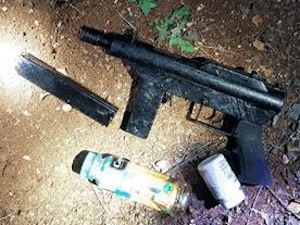
Some of the terror weapons found by Israel Security Agency (ISA) personnel. (photos by ISA via Ashernet)

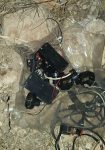
photo - Terror weapons found by Israel Security Agency (ISA) personnelIn recent months, the ISA, Israel Defence Forces and Israel Police have uncovered a large and active terrorist infrastructure that operated in the Nablus area on the West Bank from October 2017 until late April 2018, when more than 20 members of the group were detained by Israeli security forces. Most of the group’s members belonged to Hamas; some had extensive experience in terrorist operations, including the production of explosives. ISA investigations found that the group intended to carry out several attacks in various Israeli cities. Among the items seized were improvised explosive devices, including one weighing 10 kilograms; materials for the production of explosives; weapons; and instructions for the manufacture of bombs and explosive materials.

Format ImagePosted on June 22, 2018June 19, 2018Author Edgar AsherCategories IsraelTags Hamas, Israel, terrorism
Operation Ezra update

Operation Ezra update

Khalaf and Gawre’s family is the 10th to come to Winnipeg thanks to Operation Ezra. (photo from Michel Aziza)

What started as a small local initiative has grown to be a leader, by example, and a reminder of what can be achieved when an intention is set and action is taken.

About a year ago, the Jewish Independent ran a story about Operation Ezra in Winnipeg that, at the time, was aiming to sponsor five Yazidi refugee families. Led by Michel Aziza, a local businessman and once a refugee himself (from Morocco), and a small group of individuals connected to the Jewish community, the initiative was a response to the plight of the Yazidi people being viciously persecuted by ISIS in Iraq.

Nafiya Naso, now a young woman, who came to Winnipeg as a child with her family, has been an instrumental figure in Operation Ezra.

“She was reaching out to people outside their community to raise awareness of the genocide that was going on, March of 2015,” said Aziza, recalling Naso’s early involvement. “I was semi-retired and looking for something to occupy myself, and this was a good opportunity for me to get involved with a volunteer-type of project. Essentially, that’s what I have been involved with over the last almost three years.

“At the beginning,” he said, “we knew nothing about the Yazidi people. After talking with Nafiya, we identified a family of eight people and thought we could raise the necessary funds to submit a sponsorship application. We started lining up a few speaking engagements for Nafiya…. We started speaking to people, making calls, and … the original target was $34,000 for this family of eight … [and] within three or four weeks, we raised $34,000. And that number kept on growing as people talked to other people.”

To date, with the generous help of people in Winnipeg and elsewhere, Operation Ezra has raised just over $500,000. This has made it possible for them to sponsor 10 Yazidi families – 55 people – with the last family having arrived in March.

“As soon as we realized this was bigger than a grassroots project, we decided to incorporate Operation Ezra within the organized Jewish community,” said Aziza.

Jewish Child and Family Service (JCFS) saw this as an opportunity to do something in line with what they were already doing – helping with the settlement of immigrants and refugees – so they came on board, gradually reaching out to other organizations and agencies.

Gray Academy of Jewish Education and the Jewish Foundation of Manitoba joined the effort and, currently, Operation Ezra is an umbrella group of some 20 different agencies and organizations. Most of the members are Jewish, but not all. There are two churches involved, the Salvation Army and a number of corporate partners, with IKEA being the biggest name.

Many volunteers help Operation Ezra in various aspects of the settlement process. Naso has been hired by JCFS to manage everything.

One service Operation Ezra offers is an English-as-an-additional-language (EAL) program, which takes place at a synagogue every Thursday, with 70 to 80 refugees attending and about 20 volunteer teachers. Some Yazidi participants are government-sponsored.

Out of the total 250 refugees who are government-sponsored, about 100 have asked for help from Operation Ezra. “So, we are touching the lives of about 200 people,” said Aziza. “We have organized and have helped organize many community events for the Yazidi people. We celebrated Yazidi New Year’s 6768 on April 18, 2018, with a very large number of people coming out for that dinner,” he said by way of example. “We’re trying to help this group of newcomers to get organized, and to organize themselves as a community … to socialize and to help each other and so on.”

According to Aziza, Operation Ezra is the only multifaith group doing this work in North America.

One recipient family of Operation Ezra is Majid and Safya, along with their children. They shared their thoughts on their experience to date, with translating help as needed from Naso.

“My name is Majid. I was born and raised in a small village…. I am married with two kids – one boy who is 4 and one girl who is 6. My wife, Safya, and I are currently enrolled in EAL classes, hoping to learn English and find work in the near future.

“On August 3rd, 2014, at around 9 a.m., my family, community members and I fled to Mount Sinjar. We were lucky to have escaped when we did. If we had stayed any longer, I would be in a mass grave with many other Yazidis. I can still hear the rapid gunfire as ISIS members surrounded everyone who wasn’t able to flee and started shooting.

“We then reached Mount Sinjar, where we stayed for seven days with little to no food or water. As we were coming down the mountain closer to the Kurdistan region, we were able to hop into a truck. But, soon after, we saw ISIS members driving at us, firing round after round. I still don’t know how we escaped that day. Everything was such a blur. All I really remember was covering my kids and wife, hoping they would make it. Fortunately, we all made it to a refugee camp in Dohuk.

“The conditions in the camp were very scary. We were always worried about getting enough to eat, drink … about medical treatment. And we stayed for a few months, but couldn’t make it. So, we left for Turkey hoping for better living conditions.

“After spending almost two years in Turkey,” he said, “we heard about Operation Ezra and reached out. And, by some miracle, we were sponsored. Everything felt like it was going to be OK after we received confirmation we would be coming to Canada.

“I will never forget the welcome we received coming down at the airport. I was in awe of all the people who had come to greet us and welcome us into their community.”

Majid said they arrived in Canada in December 2016. “My experience in Canada has been great and could not be any better!” he said. “I have many friends and family who are in refugee camps in Iraq and Turkey who call me and tell me that the situation in the camp is getting worse by the day. My dreams are that my family and I are able to live in Canada without the fear we faced back home – the constant fear for our lives, hate and discrimination we faced because of our religious beliefs.

“I encourage all Canadians to reach out to Operation Ezra and learn about this amazing program, the only program of its kind in the world today. We have thousands of Yazidi still living in segregated refugee camps, fearing for their lives and waiting for anyone to reach out and lend a helping hand. I also encourage the Canadian government to support groups like Operation Ezra to help out more refugees.”

Khalaf and Gawre’s family are the most recent Operation Ezra arrivals to Winnipeg. (Although they were the last family Operation Ezra had planned to sponsor, the group has unanimously decided to continue their efforts.)

“My name is Khalaf and I arrived in Winnipeg on March 29th with my mother, who is 83 years old, my wife, and five kids – two boys and three girls, ages ranging from 12 to 24. I was ripped away from my four older kids after ISIS attacked our village (Dugere).

“At 8 a.m., we heard gunshots and got calls from other Yazidi villages that ISIS had murdered hundreds of men and was kidnapping all the women and young girls. Ten minutes later, my family and I started walking toward the mountain. My mom and dad were so lucky they were able to get rides to the refugee camp in Dohuk. My wife, Gawre, and five children were stranded on the mountain for seven days.

“We were able to escape the mountain with the help of PKK [Kurdistan Workers’ Party]. We lived in a refugee camp on Dohuk for six months. The conditions were horrible and heartbreaking. Many people died in the camps, because there was no humanitarian aid, no water and no medical care. My father passed away, because we could not get him the medical attention he needed.

“Shortly after, we decided to go to Turkey. It was no better there, but we did not have a choice and could not afford to move back to Iraq again.

“My sister and her family were sponsored by Operation Ezra just over a year ago. We got on the list when we heard about this amazing project from the people in the refugee camp.

“Months after contacting Nafiya [Naso] and Asmaeil, we were told we would be sponsored! My family and I definitely won the lottery here. We will always be grateful for everyone who made this possible.

“My dream is to see my family and Yazidis around the world live free of persecution. We hope and encourage all Canadian and other countries around the globe to support groups like Operation Ezra and help them in saving lives.”

Naso added, “Operation Ezra is working to raise more funds and keep sponsoring Yazidi refugees. There are thousands waiting who are in desperate need of help. They have no voice, so we must be a voice for them and speak out for them.”

For more information and to make a donation, email [email protected] or visit jewishwinnipeg.org/community-relations/operation-ezra.

Rebeca Kuropatwa is a Winnipeg freelance writer.

Format ImagePosted on May 4, 2018May 2, 2018Author Rebeca KuropatwaCategories NationalTags immigration, Iraq, ISIS, Michel Aziza, Nafiya Naso, Operation Ezra, refugees, terrorism, tikkun olam, Winnipeg, Yazidi
Healing after tragedy

Healing after tragedy

Mishelle Cuttler has the challenge of supervising the musical elements of The Events, which features a different community choir every show. (photo from Pi Theatre)

In 2011, while he was out with his son, who was then 12 years old, writer David Greig read the news that Anders Breivik had killed 77 people in Norway – eight using a car bomb in Oslo, which also injured more than 200 other people, and then traveling to the island of Utøya to a summer camp for teens, where he shot and killed another 69 and injured more than 100.

“My son saw I was very affected and, because he was wondering why, I began to try and tell him what the news was and its implications,” said Greif in an interview with BBC Writersroom. “He just kept repeating the question why? why? why? and I found the discussion quickly became very profound, about the nature of evil and whether it is ever possible to understand someone who shoots children for a political reason. I found trying to answer these questions became a compulsion I had to try and understand.”

The result was The Events, which came into being when Greig met producer Ramin Gray at the Edinburgh Fringe. Gray had been having similar thoughts, said Greig. “That meeting made me know it had to be a play.”

It’s a play that has been staged around the world, and presenting it in Vancouver are Pi Theatre and the PuSh International Performing Arts Festival. After every performance, there will be a post-show discussion and, after the Jan. 17 preview, Rabbi Laura Duhan Kaplan, director of inter-religious studies at Vancouver School of Theology, will speak about various aspects of the play.

While its initial questions came from the terrorist attack in Norway, The Events centres on Claire, a priest who works and lives in her community, including leading a community choir. When The Boy attacks that choir, Claire survives the shooting, setting her on a quest similar to Greig’s – and that of most of us, when such a horrific act is committed. She needs to know, why?

There are only two actors in the production. In Vancouver, Luisa Jojic will play Claire, while Douglas Ennenberg will play six characters opposite her, including The Boy, a grief counselor, the shooter’s father, a school friend of the shooter, Claire’s lover, and various others to whom Claire speaks in her effort to find understanding. A unique aspect of this play is that the choir is “played by” real community choirs, who have practised the music (score by John Browne), sing some songs from their own repertoire, and have some lines to read, but are not given the script.

Jewish community member Mishelle Cuttler has the challenge of being the musical supervisor and accompanist for the local show, which is directed by Richard Wolfe.

“The great thing about The Events is that the choirs are given ownership of the music,” Cuttler told the Independent. “We’ve provided each choir director with the material they need to learn, and my job is to facilitate their integration into the show each night…. I’ll be visiting each choir during their regular rehearsals and hearing how they’ve interpreted the music. I’ll talk them through how they will fit into the play, but they don’t ever see the full script. There will certainly be a lot of variables onstage each night, and that’s what makes this piece so exciting. The singers will be witnessing the show for the first time along with the audience.”

And the focus will be on the dialogue and music, without many other distractions.

“There will be a very small amount of recorded sound in the show,” said Cuttler, “but the majority of the aural experience will come from the singers, the actors and one upright piano.”

Pi Theatre has spent several months planning the logistics. “Essentially,” notes the press material, “more than 220 community members from 12 different choirs will participate over the show’s run.”

It also notes that, while Claire “struggles to understand the event that changed her life, we are asked to decide whether love and hope can survive in the wake of an inexplicable act of violence.”

The Events previews Jan. 17 and runs Tuesdays to Sundays until Jan. 28, with evening and matinée performances, at the Russian Hall, 600 Campbell Ave. Tickets ($31/$26) are available from pitheatre.com/the-events.

Format ImagePosted on January 12, 2018January 10, 2018Author Cynthia RamsayCategories Performing ArtsTags hope, music, religion, terrorism

Posts pagination

Previous page Page 1 … Page 9 Page 10 Page 11 … Page 17 Next page
Proudly powered by WordPress