Skip to content
  • Home
  • Subscribe / donate
  • Events calendar
  • News
    • Local
    • National
    • Israel
    • World
    • עניין בחדשות
      A roundup of news in Canada and further afield, in Hebrew.
  • Opinion
    • From the JI
    • Op-Ed
  • Arts & Culture
    • Performing Arts
    • Music
    • Books
    • Visual Arts
    • TV & Film
  • Life
    • Celebrating the Holidays
    • Travel
    • The Daily Snooze
      Cartoons by Jacob Samuel
    • Mystery Photo
      Help the JI and JMABC fill in the gaps in our archives.
  • Community Links
    • Organizations, Etc.
    • Other News Sources & Blogs
    • Business Directory
  • FAQ
  • JI Chai Celebration
  • JI@88! video

Recent Posts

  • Sharing her testimony
  • Fall fight takes leap forward
  • The balancing of rights
  • Multiple Tony n’ Tina roles
  • Stories of trauma, resilience
  • Celebrate our culture
  • A responsibility to help
  • What wellness means at JCC
  • Together in mourning
  • Downhill after Trump?
  • Birth control even easier now
  • Eco-Sisters mentorship
  • Unexpected discoveries
  • Study’s results hopeful
  • Bad behaviour affects us all
  • Thankful for the police
  • UBC needs a wake-up call
  • Recalling a shining star
  • Sleep well …
  • BGU fosters startup culture
  • Photography and glass
  • Is it the end of an era?
  • Taking life a step at a time
  • Nakba exhibit biased
  • Film festival starts next week
  • Musical with heart and soul
  • Rabbi marks 13 years
  • Keeper of VTT’s history
  • Gala fêtes Infeld’s 20th
  • Building JWest together
  • Challah Mom comes to Vancouver
  • What to do about media bias
  • Education offers hope
  • Remembrance – a moral act
  • What makes us human
  • המלחמות של נתניהו וטראמפ

Archives

Follow @JewishIndie
image - The CJN - Visit Us Banner - 300x600 - 101625

Tag: terrorism

Hearing from Nova survivor

Hearing from Nova survivor

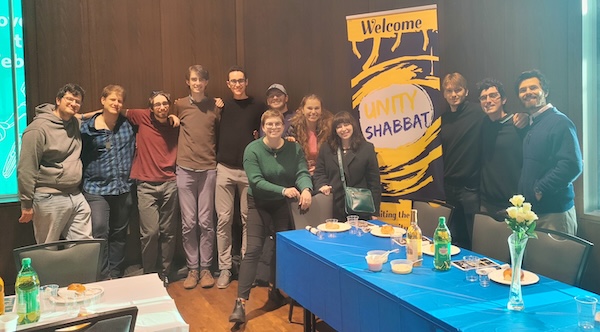
Volunteers and organizers of Unity Shabbat, which this year took place on March 1. (photo from Chabad UBC)

On March 1, more than 100 Jewish students and faculty came together for a Shabbat dinner on the University of British Columbia campus. The annual event, called Unity Shabbat, was organized by Chabad Jewish Student Centre-Vancouver in partnership with Hillel BC, Israel on Campus Club, Jewish Student Association, Jewish Law Student Association and the local chapter of the AEPi fraternity. It was co-sponsored by the Jewish Federation of Greater Vancouver.

The guest speaker was Shalev Biton, a 25-year-old man from Israel who survived the Nova festival terrorist attack on Oct. 7, 2023. You could hear a pin drop as Biton told the sequence of events, which included him running from the Hamas terrorists for hours and hiding in fields and then under a building while the terrorists searched the area. The building was on the property of an Israeli Arab who subsequently saved Biton’s life – and the lives of Biton’s friends – by telling the terrorists that there was no one there.

During those hours, Biton was sure he was about to die, and repeated the Shema Yisrael prayer over and over. He told of his gratefulness to be alive and his decision to follow his passion of pursuing a career in music. Those gathered on Shabbat were inspired by his message of hope and resilience despite everything that he has been through.

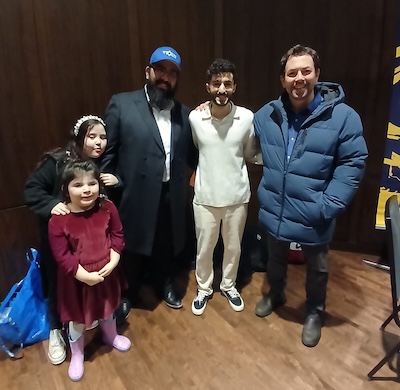
photo - Left to right: Chaya and Dassie Loeub; Rabbi Chalom Loeub of Chabad UBC; Shalev Biton, a survivor of the Oct. 7 terror attacks; and Ohad Gavrieli of Hillel BC
Left to right: Chaya and Dassie Loeub; Rabbi Chalom Loeub of Chabad UBC; Shalev Biton, a survivor of the Oct. 7 terror attacks; and Ohad Gavrieli of Hillel BC. (photo from Chabad UBC)

“These past few weeks have been a very difficult time for Jewish students at UBC,” said Rabbi Chalom Loeub, co-director of Chabad Jewish Student Centre. “Unity Shabbat could not have come at a better time. It was a chance for Jewish students and faculty members to get together in a safe, inclusive atmosphere and enjoy a traditional three-course dinner. It reminds us that, despite our external differences, we are one people and we need to stick together.”

To learn more about Chabad Jewish Student Centre-Vancouver visit chabadubc.com or follow them on social media. 

– Courtesy Chabad Jewish Student Centre-Vancouver

Format ImagePosted on March 22, 2024March 21, 2024Author Chabad Jewish Student Centre-VancouverCategories LocalTags Chabad UBC, Chalom Loeub, Oct. 7, Shalev Biton, terrorism, UBC
Rally highlights women

Rally highlights women

On March 3, many stories of heroism were shared at the weekly rally for Israeli hostages, of whom 13 are women, still being held by Hamas. The gathering marked International Women’s Day, which takes place on March 8. (photo by Pat Johnson)

On Oct. 7, Amit Mann, a 22-year-old paramedic, spent six hours treating the wounded and dying in a dental clinic on Kibbutz Be’eri. 

“Six hours during which she did not stop treating the wounded, six hours during which she did not lose hope,” recounted Ruth Jankelowitz at the weekly rally for Israeli hostages March 3. “Amit Mann, a Magen David Adom paramedic, treated the wounded at Kibbutz Be’eri with her dedication and heroism with the sounds of gunfire all around her and the threatening voices of the murderers getting closer. Together with a nurse and a dentist … she tried to do everything to save everybody as she had done since she was 13, until the bullets of the vile terrorists hit her, too.”

Mann’s tragic story of heroism was one of numerous shared at the gathering Sunday, marking International Women’s Day, March 8, where speakers called for the release of all the hostages, including 13 women still being held. 

Ofra Sixto, owner of Ofra’s Kitchen restaurant, whose pro-Israel activism in recent months has attracted threats and intimidation, led a moment of silence for female victims of Oct. 7.

“The world is angry when women are being raped, abused, disrespected and brutally murdered by men – unless they are Jewish women,” she said. “Then the world is silent, complacent and, at the time, had the audacity to question the acts.

“What gets me the most is the young and old women that support Hamas, knowing what they know of how they treat women in general and our women in particular,” Sixto said. “It’s beyond me.”

Masha Kleiner, an Israeli-Canadian who co-founded NOAH, Nonviolent Opposition Against Hate, said that, for every Jew, “Oct. 7 is absolutely personal.”

“Each and every single one of us knows it could have been me who was tortured and kidnapped and killed,” she said. “I am selfishly lucky that nobody I personally know was killed or kidnapped on Oct. 7, but many of our tribe have been, so this is a personal loss for every one of us.”

Jews worldwide are grieving the loss of life, she said, but Jews lost something else that day and in the months since, she said.

“One other thing that we are all grieving in the post-Oct. 7 world is our illusions, the illusion that the world around us is safe and sane and friendly,” she said. “We grieve, and this grief can be lonely because some people that we considered friends chose to keep their distance and some of them turned their backs on us. But, while this happens, we become so much closer to the people who do have the moral clarity and the courage to stand with us.”

Mirit Murad – an Israeli who came to Vancouver two decades ago and has two nieces, Gal Klein and Ofek Elias, serving as reservists since the onset of the war – urged people to take time on International Women’s Day to honour and celebrate Israeli women, both civilians and soldiers.

“These women are demonstrating unparalleled strength, resilience, resourcefulness, bravery, intellect and protective instincts,” she said. “They embody the very essence of courage, never hesitating to leap into action or shield others from harm.”

The week’s rally took place at Jack Poole Plaza, rather than the usual location at the Vancouver Art Gallery because that space was provided to organizers of Vancouver’s International Women’s Day event.

That event’s theme was Palestinian women and featured images of “activists” including Fatima Bernawi, Ahed Tamimi and others. 

Bernawi served a decade in Israeli prisons after planting a bomb in a Jerusalem movie theatre in 1967, which was discovered before detonation. Tamimi is something of a social media star, a young woman who came to prominence as a 16-year-old when a video of her assaulting an Israeli soldier in 2017 went viral. After the Oct. 7 attacks, Tamimi wrote on social media: “We will slaughter you and you will say that what Hitler did to you was a joke, we will drink your blood and eat your skulls.”

“These women are arbiters of Palestinian resistance who advocated for the rights and freedoms of Palestinian people and are continuing to do so every day,” organizers of the Vancouver IWD event said in a statement.

“International Women’s Day belongs to everyone, everywhere,” said Daphna Kedem, organizer of the weekly vigils. “Where are you, women’s organizations? Believe Israeli women. Release our women.” 

Israeli women among the hostages still being held by Hamas

Liri Albag, soldier, 18
Noa Argamani, student, 26
Karina Ariev, soldier, 19
Agam Berger, soldier, 19
Shiri Bibas, 32, kidnapped with husband and two children
Amit Esther Buskila, fashion stylist, 28
Carmel Gat, occupational therapist, 39
Daniella Gilboa, soldier, 19
Romi Gonen, dancer, choreographer, medic, 23
Naama Levy, soldier, 19
Doron Steinbrecher, veterinary nurse, 30
Arbel Yehoud, astronomy guide, 28
Eden Yerushalmi, bartender, 24

Format ImagePosted on March 8, 2024March 7, 2024Author Pat JohnsonCategories LocalTags Amit Mann, hostages, International Women's Day, Israel-Hamas war Oct. 7, Masha Kleiner, Mirit Murad, Ofra Sixto, Ruth Jankelowitz, terrorism, Vancouver, women

Selina Robinson’s resignation letter to the BC NDP caucus: You broke my heart…. Silence is not leadership – it’s cowardice.

My colleagues,

You broke my heart – not just on February 5 when the Premier told me that after the caucus talked about me he did not see a way back, that folks were wondering why I hadn’t already resigned and that the only path forward was a resignation. Resigning was not my choice but I told the Premier that if this was what he wanted and what caucus wanted I wouldn’t fight him on it – but let’s be clear – others asked for my resignation, so I gave it.

You actually broke my heart in the days after October 7 – the day terrorists went into Israel and brutally murdered, slaughtered, raped, mutilated, killed and kidnapped 1,200 civilians. These terrorists didn’t target the military, they killed children, concert goers, grandmothers, peace activists and a young British Columbian named Ben Mizrachi.

The Jewish community was in shock – we are about 40,000 here in British Columbia and we were reeling.

I had offered to the Premier that as a member of the Jewish community, I could speak at a vigil that was being planned a few days after the massacre – this was my community and our two Premiers had tasked me with strengthening the NDP relationship with the community. I put out the call for you to join me. The community was grieving, in mourning and we needed to show them as a caucus and as a government that we are there for them.

 I sent out a group email. Two maybe three responded – that’s it. How is it that with more than 35 lower mainland/valley MLAs only three or four would be on stage with me – I had no idea how many UCP would be there and a poor showing would not reflect well on us. I did not have the emotional capacity to reach out individually, so Alissa offered to help … still not much response. My heart cracked.

In the end there were 7 or 8 of us, two came from the island but I was terribly embarrassed.

And then, within days of the massacre, Aman and Katrina decided that it was appropriate to ‘reply all’ to my initial email asking folks to stand with the Jewish community in grief and mourning, and ask that government make a public statement about the plight of the Palestinians.

We just witnessed the slaughter, rape, mutilation and murder of 1,200 mostly Jews. We watched as the terrorists celebrated this horrific act. Ben Mizrachi hadn’t yet been buried. The IDF hadn’t yet taken any action. The world was stunned. And two of my colleagues wanted to move quickly past what had happened and refocus government on a geopolitical conflict that has been going on for years.

But it wasn’t their antisemitism that broke my heart. It was your silence to their antisemitism that hurt the most. Not a single one of you responded to their insensitive, disrespectful and inappropriate email. No one.

Your silence broke my heart that day.

You abandoned me and my community that day.

I would have hoped that someone, anyone would have replied all to Aman and Katrina and suggested that their email was inappropriate – your silence spoke volumes to me and suggested that either you agreed with them or that you just didn’t want to deal with it because it’s messy.

It is messy. It’s complex. It’s emotional. It’s hard. You just want it to go away. I understand. I want it to go away too – but my community needed you in that moment to be there in their grief and in my grief and none of you were prepared or willing to stand up to colleagues who were antisemitic – minimizing the Jewish experience, the slaughter of innocent civilians by terrorists countering with mirrored message about the plight of Palestinians. In that moment it was not so complex – People were murdered because they were Jewish and people here in British Columbia were needing us to mourn with them.

How eager you all are to join in the #NeverAgain campaign – that the crime of being Jewish that resulted in the death of six million Jews at the hands of the Nazis should never happen again.  That we should fight against Jew hatred – a hatred that repeats itself over and over and over again throughout history. How eager you all are to join the few remaining Holocaust survivors as Nicholas plays Kol Nidre on the cello and we bow our heads, light candles in honour of those murdered – yet when the hordes gather and chant “from the river to the sea” – a Hamas mantra referring to their desire to destroy Israel and the Jews, you are nowhere to be found.

Holocaust survivors have been retraumatized and some have wound up in hospital in the days and weeks after the massacre as they relive the horrors they experienced some 75 years ago. They see the marches, the chanting in our streets, the threats to Jews around the world and they say “it’s happening again.”

Where are you when protesters, their faces covered, march through our campuses intimidating young Jewish adults who now hide their Jewish identity? Where are you when young Jewish students who get trapped in bathrooms on campus because the marching is happening in hallways, and they are afraid to step out into the hall for fear of becoming a target of their hate? Where are your ideals of a broad, inclusive society? How have you been standing up for your declared values?

Almost 300 Jewish physicians signed a letter calling on UBC medical school to address antisemitism on campus. Students are bringing their hate into healthcare and they were speaking on behalf of their Jewish patients and their families. In fact, it was so bad that Ted Rosenberg, a prominent physician quit, citing a toxic work environment and antisemitism in the Faculty of Medicine – I am not sure how we expect to train more physicians when almost 300 of them are refusing to work with students coming from UBC’s faculty of medicine. It was a public leaving and I heard nothing from any of you – not the Minister of Health who committed to more physicians in the system, not the Premier – no one.

In December the four Tri-Cities MLAs received a letter from the Coquitlam Teacher’s Association rife with rhetoric, misinformation and lies about the modern state of Israel. The letter was also posted on their website (which has since been taken down). Jewish parents in SD 43 are now considering pulling their children from public schools because they don’t have faith that teachers in the district will keep their Jewish children safe. I asked Fin if he received the same letter. He did and when I asked him what he was planning to do with it he said, “nothing – I am going to ignore it.” Ignore the fact that Jewish constituents feel unsafe – Is this how we stand up for our constituents?

In January the Vancouver Police Department publicly shared a startling report about the dramatic increase in antisemitic incidents since October 7. And what was government’s response to this report?

Silence.

Shortly afterward I reached out to the Attorney General, as the racism file is under her ministry. Niki had been assigned the point of contact for the Jewish community given the historical antisemitism that the Jewish community has experienced from Mable, the parliamentary secretary for antiracism.

Let me refresh your memory, in 2004 during an interview with Seven Oaks, Mable claimed “we have vocal Zionists in our work sites, and we have had to battle them” regarding her anti-war activism in her union. Carole James, as leader, had to disavow and apologize for the comments. But the Jewish community carried on noting a certain mistrust of Mable, as she never apologized for her comments and when Mable’s recent 2-minute statement in November alarmed the community again of Mable’s antisemitism and asked for her resignation the Jewish community was merely told that Niki would now be the point of contact for anti-racism work in the Jewish community.

So I reached out to Niki at the end of January, two months after she became the designated point of contact for a community that is experiencing a spike in antisemitism, a community that is grieving and fearful. It turns out that the community leadership hadn’t even heard from her. And when I asked her what she is doing about the rise in antisemitism all she could talk about what legislation she is working on, collecting data and the small amount of money that I worked on with PSSG and the PO to make available for additional security measures that the community needed.

Her response to my query was a response you would give the opposition.

There was no acknowledgement of my personal connection to the community or how my contacts and relationships could be useful. There was no sense of understanding that this community is feeling threatened, that people are afraid, that antisemitism was on display in civil society, that Jewish parents don’t want to send their children to public school, that Jewish post-secondary students are being terrorized on campus, that Jewish owned businesses need additional security, that Holocaust survivors are reliving trauma, that plays with Israeli content that actually help to provide dialogue about the conflict are being silenced, that hundreds of Jewish physicians are calling on UBC leadership to address antisemitism on campus, that members of our own public service have started incorporating the Palestinian flag in their email signature and even making a Palestinian land comment when doing a First Nation land acknowledgement at the beginning of meetings resulting in discomfort and fear. No acknowledgment and no action.

Over the past five months a few of you have reached out after caucus discussions about me without me in the room, the first right after Aman and Katrina sent their emails and then again after the February caucus meeting, offering hugs and heart emojis. My response to many of you is that I don’t need your hugs and your emojis. What my community needs however is for you to stand up to antisemitism. When I shared this with Lisa just a few weeks ago, she responded “of course, we always do.” As a government we have not been standing up to antisemitism. If you believe that then it would appear to me that you haven’t been paying attention or you don’t know what antisemitism is or what Jew hatred looks like.

Antisemitism is calling for the destruction and annihilation of Israel, where half the world’s 15.8 million Jews live. Antisemitism is making Jewish people afraid to show their identity. Antisemitism is silencing an openly identified Jewish person who is speaking out about antisemitism. Your collective decision to silence me is antisemitism and you don’t even know it.

Antisemitism is the double standard that we have consistently shown. When any of my colleagues have made antisemitic remarks it was expected that apologies should suffice. It’s not only Mable who has made antisemitic comments. In 2012 Jennifer Whiteside shared content from the anti-Israel website the electronic intifada and posts from Occupy Wall Street that attributed Israeli ‘theft’ of Palestinian land to capitalism and in 2014 shared articles that accused Israel of ‘pinkwashing’ for their acceptance of LGBTQ2S+ community and again in 2016 shared content promoting the BDS movement and was forced to apologize and distance herself from her past support of the BDS movement.

In 2017 it came to the attention of the Jewish community that Ronna Rae invited people to support Haneen Zoubi, a former Palestinian member of the Israeli Knesset who negated the existence of Israel. Ronna Rae also compared the police to Nazis in 2013.

Jagrup quoted Goebbels in 2020 when he was pushing back at the Official Opposition during a speech in the house saying “Someone has said – if you repeat a lie often enough people will believe it” – he apologized the next day for his offence, retracted his comments and that was to be sufficient.

Last year Janet Routledge apologized for comments of Holocaust minimization by comparing the criticisms by the official opposition to Nazi rhetoric when she said “the Holocaust ended in death camps, but started with words.”

I raise these examples not to humiliate or shame any of you, but to point out the double standard. When an elected person says something that harms the Jewish community whether the comments or position is intended or unintended, the expectation is that a simple apology is sufficient. But when a Jewish elected person says something she “has deep work to do” according to the Premier and is no longer trusted. This double standard is antisemitism.

The final straw came for me last week.

I pitched an idea to the Premier 10 days after I was asked to resign that perhaps government could show leadership on this hate and division we are seeing in two hurting communities by bringing these communities together. I suggested that perhaps I could work with the Jewish community and engage with the Arab Muslim community to facilitate dialogue – find a different path for two communities in agony. As part of that work all of caucus could participate in anti-Islamophobia and antisemitism training – set an example of how as leaders we could better understand their respective pain and fear. And government could show leadership by bringing people together.

Last week Matt Smith told me that this work was ‘too political’ and that government was not interested at this time. Antisemitism and anti-Muslim sentiment are at an all-time high and government doesn’t see itself as having a role in helping these communities.

This shattered what was left of my broken heart.

This is not the party I signed on with – it has become a party that is afraid to stand with people, people who are hurting. It is now a party that puts politics and re-election before people.

It is with all of this in mind that I am leaving caucus to sit as an independent. I can no longer defend the choices this government is making, and I need to mend my broken heart and I can’t do that when you simply offer me hugs and heart emojis but don’t care to educate yourselves or understand the fear and anguish of being Jewish in this moment.

Silence is not leadership – it’s cowardice.

And I cannot be silent.

Posted on March 7, 2024March 7, 2024Author Selina RobinsonCategories LocalTags BC NDP, David Eby, Israel-Hamas war, Oct. 7, politics, Selina Robinson, terrorism
Rallies help keep hope alive

Rallies help keep hope alive

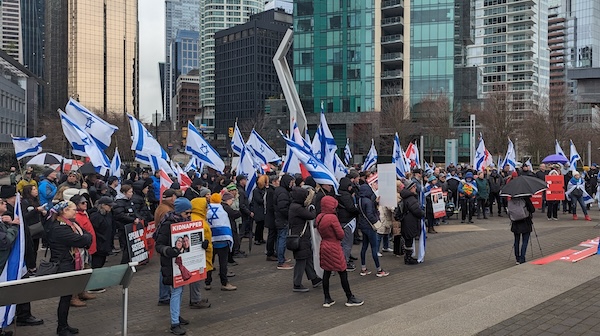
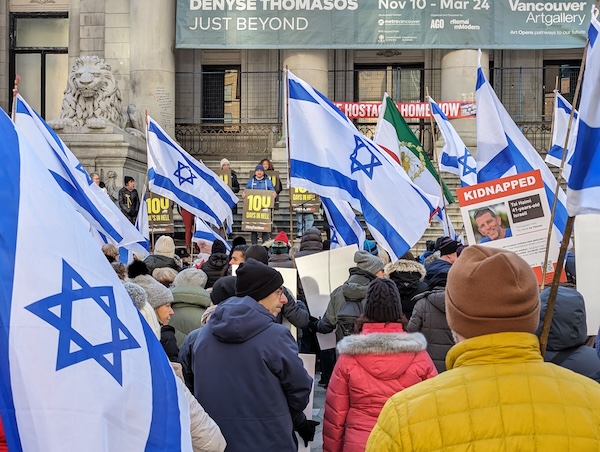
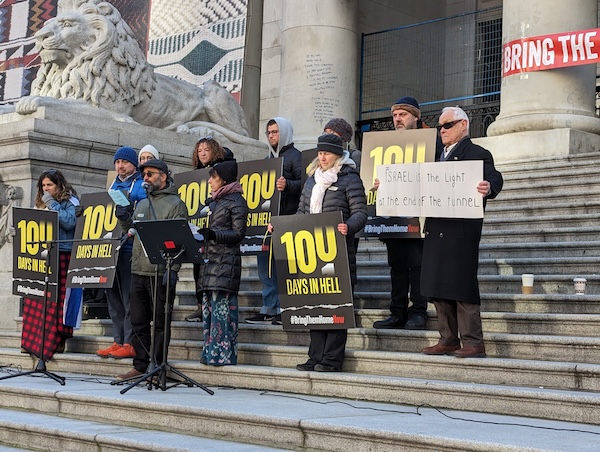
Jewish Federation of Greater Vancouver chief executive officer Ezra Shanken addresses those who gathered at the Vancouver Art Gallery Jan. 14. (photo by Pat Johnson)

Vancouverites gathered Jan. 14 to mark the 100th day since the Oct. 7 terror attacks and to demand the release of hostages. The weekly vigils – which have taken place since the day after the attacks with the exception only of two weeks during the December holidays – continue to gather hundreds, with police escorts accompanying marchers through downtown streets after speeches outside the Vancouver Art Gallery.

“This is the moment for leaders of the world to take a stand against terrorism, to call on Hamas to release the hostages,” said event organizer Daphna Kedem. “Where are you, world leaders? You stay silent while girls are held in tunnels and Hamas are abusing women of all ages. Where are you? [There are] 136 hostages: 17 women, two children, 15 men and women over the age of 65, 94 men and youngsters, eight foreigners. We will not rest until they are all back.”

Kathryn Zemliya spoke of the commitment she made to Israel when she became a Jew by choice 17 years ago.

“Israel is the Jewish homeland,” she said. “Israel is also the birthplace and source of our Jewish faith. Our religious holidays reflect all the seasonal changes in the state of Israel and we celebrate those throughout the year.”

Her commitment to Israel, she said, is also a very personal one. 

“Israel is one of a very few handful of Middle Eastern countries where people are not punished as criminals simply because of their sexual orientation or gender identity,” said Zemliya. “For me, this is tremendously important. There are lots of places in the world where I could not travel with my family, where I could not travel with my wife, but I know that I would always be welcomed in Israel.”

She called for justice and defined what that justice would look like.

“Justice requires that we listen to and believe those who have given testimony of rape, brutality and torture that they have experienced or witnessed at the hands of terrorists,” she said. “Justice requires that we recognize and care for those who have been displaced from their homes due to conflict on all fronts in Israel because the war is not happening just in Gaza. Justice requires that we recognize and care for those who have lost family members, who have been traumatized and who, because of their life circumstances, are retraumatized daily by this terror. My hope is that we will see this justice soon and in our time, that is what we pray for.”

Rabbi Hannah Dresner, senior rabbi at Or Shalom Synagogue, and Rabbi Arik Labowitz, assistant rabbi, addressed the crowd.

“We are here to console one another through the power of gathering in such a difficult time,” said Dresner. She noted that the week’s Torah portion featured the demand by the Israelites to the tyrant of their time to let their people go. “We, likewise, are commanded by everything we know to be decent, to demand of the tyrant of our time, let our people go.”

Labowitz spoke of “waves of grief, fear and deep concern for the existential realities of our precious home in the land of Israel.”

“We are all heartbroken by the loss of life, the ever-deepening chasm and the generations of repair that will be required to heal from this moment in our shared history,” he said. “We know that the Jewish people have a heart that is bigger than any malicious attempts against us. The love and support that has come together to repair the fabric of Israeli society, of our local communities and of each of our hearts, is made up of the strength whose origin is in the plight of our ancestors to be free people in a land of our own, a land where our people were sovereign for centuries and a land that we returned to after 2,000 years of exile.”

photo - Rabbi Arik Labowitz, assistant rabbi of Or Shalom, standing next to his colleague, Rabbi Hannah Dresner, the congregation’s senior rabbi. The two spoke at the Jan. 14 rally marking 100 days since Oct. 7
Rabbi Arik Labowitz, assistant rabbi of Or Shalom, standing next to his colleague, Rabbi Hannah Dresner, the congregation’s senior rabbi. The two spoke at the Jan. 14 rally marking 100 days since Oct. 7. (photo by Pat Johnson)

Adi Keidar, who moved to Vancouver from Israel in 2000, shared the lesson she has learned since Oct. 7.

“Life, I used to think, matters to all,” she said. “But these past 100 days, I am sad to say, I’m wrong.”

Evil exists, she said, but must not be allowed to be the dominant voice. 

Ezra Shanken, chief executive officer of the Jewish Federation of Greater Vancouver, acknowledging the day’s below-freezing temperatures, said of the hostages: “The least we can do is stand here in the cold if they live in the cold depths of the tunnels.

“Let them know that, even in the coldest days of the year, we will stand out here and we will stand with them because we know that they need it,” he said, urging attendees to “keep showing up.”

Kedem, who has organized the events week after week, read aloud the names of the 136 hostages.

107 days

A week later, the King David High School community was front and centre at the Jan. 21 rally. Students of the Jewish school sang and spoke at the gathering, which ended in a downpour of rain as the group marched through city streets.

“You’re a link in a chain that has been growing stronger for thousands of years,” event organizer Daphna Kedem told the students.

Erica Forman, a 2022 alumna of King David, and brother Max Forman, a Grade 12 student, spoke of the strength they gathered during this time of unprecedented antisemitism from their respective communities at the University of British Columbia Hillel and at King David.

Rutie Mizrahi, parent of a Grade 12 student, spoke of her uncle and aunt, Oded and Yocheved Lifshitz, who were abducted from their home in Kibbutz Nir Oz Oct. 7. Yocheved, 85, was among the first hostages released, after 17 days in captivity, because her captors believed she was near death.

The captors underestimated her aunt, Mizrahi said, and she has survived, despite arriving back in Israel appearing to be about half the weight she was when kidnapped. Yocheved had been rolled in a carpet and driven away on a motorcycle, but not before she saw her 83-year-old husband being savagely beaten outside their home. She did not believe he could have survived, but another hostage, freed later, confirmed that Oded was alive in Gaza but, without his blood pressure medication, had repeatedly fainted and was then taken to a hospital. 

“The odds that we will see him back alive are close to zero,” Mizrahi said.

King David’s head of school Russ Klein said he is grateful his father, Emerich Klein, a Holocaust survivor who passed away earlier in 2023, is not witnessing the hatred in the world since Oct. 7.

“He instilled in us the need for Israel,” the principal said. “Only Jews, he said, would take care of Jews. I spent much of my time growing up not believing him. As I found with so many things as I got older, I learned my father was right.”

Klein called the school assembly on Oct. 10, when students and faculty gathered to mourn the Hamas murder of alumnus Ben Mizrachi, 22, and the other victims of the pogrom, the hardest moment of his career.

He urged people of all ages to inform themselves of facts to better engage in the discussion around events in Israel and Gaza, specifically directing attendees to resources released recently by the Jewish Federation of Greater Vancouver, an online toolkit called “The Power of One” and a messaging guide called “Real Peace Now.” Both are available at jewishvancouver.com. 

Format ImagePosted on January 26, 2024January 24, 2024Author Pat JohnsonCategories LocalTags antisemitism toolkit, Daphna Kedem, hostages, Israel-Hamas war, Jewish Federation, KDHS, King David High School, Oct. 7, rally, terrorism
CANCELED – See The Runner at PuSh

CANCELED – See The Runner at PuSh

Christopher Morris as Jacob in The Runner, which is at Fei and Milton Wong Experimental Theatre Jan. 24-26. (photo by Dylan Hewlett)

Since this article was published, PuSh has canceled the production. For the statement, click here.

Among the offerings of this year’s PuSh International Performing Arts Festival is Christopher Morris’s The Runner, which runs Jan. 24-26 at Fei and Milton Wong Experimental Theatre.

The one-man play is dedicated to Jakoff Mueller, a ZAKA member in Israel who died in 2018. The main character is Jacob, an Orthodox Jew with the Israeli volunteer emergency response organization. In one of the emergencies depicted, Jacob helps an injured Arab woman before he tends to a soldier, and his choice has significant repercussions. The actor in the role – in Vancouver, it will be Morris – performs the whole 60 minutes of the play while walking/running on a treadmill.

The Jewish Independent interviewed Morris by email before the playwright stepped back from doing media after a scheduled Victoria run of the play was canceled due to pressure from protesters, who objected to the story being told “from an exclusively Israeli perspective.”

JI: Can you share more about your relationship with Jakoff Mueller, how you came to meet him, to be invited into his home, and how he contributed to writing of The Runner?

CM: I first met Jakoff in 2009 at a small get-together in the house I was staying at in Jerusalem. This was during my first research trip to Israel to write this play. The owner of the house was a friend of Jakoff and she thought it would be interesting for me to speak with him, seeing as I was doing research about ZAKA. Jakoff was an incredibly thoughtful man with a great sense of humour, and we hit it off. He invited me to come and visit him where he lived in northern Israel and I did, over many occasions during the research trips I made to Israel. Though no event or fact from Jakoff’s life is represented in the play, his compassion for valuing all human life and his spirit of questioning is in the play. The world was a better place with him in it.

JI: When did you start writing The Runner and when and where did it première?

CM: My curiosity with ZAKA began when I was a teenager in Markham, Ont., in the 1990s. I heard a media interview about the work ZAKA did and it really struck me. I kept thinking that ZAKA’s work would be an interesting premise for a play but didn’t know how to do it. So, in 2009, I made my first trip to Israel to begin researching the play. I spent nine years (on and off) writing it and it premièred at Theatre Passe Muraille in Toronto in 2018.   

JI: You’ll be playing the role of Jacob, but I see in much of the material Gord Rand as the actor. Are you stepping in for him, does the role rotate, is he no longer part of the production?

CM: Yes, I’ll be playing the role of Jacob in Vancouver. The show had critical success when it premièred in Toronto, winning three Dora Mavor Moore Awards (best script, best production and best direction for the late Daniel Brooks). We were receiving a lot of interest to tour the show, so we rehearsed in multiples of every role in the production (actor, stage managers, director, designers) in the event that one person from the original team may not be available. Daniel Brooks rehearsed me into the role so I could play it when Gord wasn’t available. Over the years, I’ve played it on and off a few times and am really looking forward to performing the role in Vancouver.

JI: You’ve written a one-pager offering guidance for venues presenting The Runner. Is there anything you’d add to that, given the Israel-Hamas war? Not only because tensions are higher, but, for example, there are direct parallels in the description of victims in the mass grave in Ukraine [where ZAKA members, including Jacob, travel in the play] and what happened to Israelis on Oct. 7, which could be triggering.

CM: It’s always been important when presenting The Runner in collaboration with theatres to give some social context when the show is being presented. I am always available to the staff at the theatre to offer any specific insight about the play in the context it’s being presented in. PuSh and I have been in constant contact about how to support the play and the audiences who will see it in January.  

JI: When were the PuSh shows booked and, if there have there been other productions mounted since Oct. 7, what has reaction been overall?

CM: We’ve been discussing doing this show with PuSh for over a year and it was officially booked last May. We completed a run of the show from Nov. 2nd to the 19th, 2023, at the Thousand Islands Playhouse in Gananoque, Ont., and the reaction to the show was extremely positive. A few hours ago, it was publicly announced that the Belfry Theatre will not be presenting The Runner in March.

I support the conversations taking place in response to The Runner right now, I always think it’s important to discuss things. It’s hard to know how audiences will experience any play right now, let alone one set in Israel, like The Runner. But the power of this production, and why so many people have connected with it since it premièred in 2018, is that it’s a nuanced and thoughtful conversation about the preciousness of human life.

JI: Are you a member of the Jewish community? Either way, why did you choose to write a play about terrorism from the perspective of an Orthodox Jewish man?

CM: I’m not a member of the Jewish community. I was brought up Catholic but regard myself as an ex-Catholic (since the age of 13). I wrote a play about medical triage in the perspective of an Orthodox Jewish man because I wanted to write a play about ZAKA.

JI: I’m struck by what I interpret, perhaps mistakenly, as calls for humanity/morality only from Jews/Israelis, not from terrorists or people who see terrorism as a valid form of resistance. In the thinly veiled Gilad Shalit reference, for example, Jacob bemoans the un-Jewishness of Israel keeping the remains of dead terrorists in case of an exchange but he doesn’t seem to question the morality or humanity of the terrorists. Similarly, the only ones who seem to be called to account for killing in this play are Jews – presumably an Israeli shot the Arab woman in the back, an Israeli shooting an Arab protester leads to an Israeli boy being killed, a Jewish Israeli accidentally shoots another Jew when trying to shoot a terrorist, and another gunshot by a Jew, after a vehicular terrorist attack, has fatal consequences for a Jew.

CM: Because it’s a one-person show, Jacob’s view is a singular perspective, and I wrote about the unique situations he would be facing as a ZAKA member. Jacob is dismayed by all the violence that surrounds him and, throughout the play, he advocates for seeing all human life as equal. As a disempowered, isolated person, with limited interactions to people outside of his community, I believe Jacob feels his best bet to effect change is by addressing those around him.

JI:  While ZAKA prioritizes victims over terrorists, other Israeli medical professionals are supposed to triage patients. In the play, an ambulance takes the Arab girl away and obviously keeps her alive. Why does no Jew in the play support Jacob or show him kindness?

CM: It is true that Israeli medical professionals give care to patients, like the ambulance described in the show that takes the Palestinian teenager away and a hospital which no doubt helped her with her wounds. When writing the complex character of Jacob, it was important to include examples in the play of how hard it was for him to connect to other people before he offers medical care to the teenager. This was important to create a complex human being and an interesting dramatic context. Jacob’s mother supports him and shows him kindness. As does the Palestinian teenager when he arrives unexpectedly at her door, and the Palestinian man who saves him by helping Jacob get to his car.

JI: There is a line in the play that has been highlighted by reviewers as powerful, and that’s [Jacob’s brother] Ari’s dictate about why he’s a settler on the land – “because it’s mine!” Again, this doesn’t come up in your play, but is relevant: the chant for Palestine to be free from the river to the sea. What hope do you see, or does Jacob see, if you’d rather – can one get off “the treadmill” alive?

CM: Though my play is set in Israel, I feel I lack the experience or expertise to offer a fully informed answer to the complexities of the overall conflict. But the biggest hope for me in the play and the only statement about life I feel I wrote (as opposed to the numerous questions I ask in the play) is Jacob’s description of how the Palestinian teenager treated him with kindness:

Her hand on my shoulder.
Are you alright.
That’s all that matters.
Kindness.
An act of kindness.

This is my offering for the complex world we live in. 

To read my op-ed on the Belfry Theatre’s cancelation of The Runner, click here. To read other statements on the cancelation, including from Morris, click here.

For tickets to the PuSh Festival, which includes BLOT, co-created by Vanessa Goodman, and Pli, co-presented by Chutzpah! Festival, go to pushfestival.ca.

Format ImagePosted on January 12, 2024January 12, 2024Author Cynthia RamsayCategories Performing ArtsTags Belfry Theatre, Christopher Morris, Israel, PuSh Festival, terrorism, The Runner

הגנה על סטודנטים יהודים באוניברסיטאות קנדיות ועוד חדשות

חמישה חברי פרלמנט ליברלים בקנדה שלחו מכתב לראשי עשרים וחמש אוניברסיטאות במדינה, בו ביקשו מהם להצהיר האם קריאה לרצח עם נגד יהודים או חיסול ישראל מפרה את מדיניות האוניברסיטאות שלהם

שאלה דומה שהופנתה כלפי ראשי שלוש האוניברסיטאות היוקרתיות בארה”ב נתקלה בתשובה מזעזעת של יתכן, תלוי בהקשר, מה שהוביל לזעם וביקורת ציבוריים רחבים ואף התפטרות של נשיאת אוניברסיטת פנסילבניה

חברי הפרלמנט הקנדי גם דרשו במכתב ששלחו לראשי האוניברסיטאות להגן על הסטודנטים היהודיים בקמפוסים בעקבות העלייה הדרמטית באנטישמיות גם בקנדה

מה שקורה ליהודים ברחבי קנדה, ובמיוחד בקמפוסים של אוניברסיטאות ברחבי המדינה, הוא בלתי מקובל לחלוטין. ראינו יריות שנורו לעבר בתי ספר יהודיים, פיגועי ירי לעבר מוסדות יהודיים, איומים בחרם על עסקים בבעלות יהודית ודיווחים ברחבי הארץ על סטודנטים יהודים שחשים לא בטוחים בקמפוסים שלהם. זה מלווה בחוסר פעולה מצד הנהגת האוניברסיטאות כדי להגן על סטודנטים יהודי. כך כתבו חברי הפרלמנט בקנדה: אנתוני האוספאט’ר, דיוויד למטי, בן קאר, מרקו מנדיסינו ואנה גייני

המכתב גם פורסם על ידם באופן פומבי ברשתות החברתיות. חמשת חברי הפרלמנט הקנדי ציינו עוד במכתבם כי שמענ על סטודנטים יהודיים שהוטרדו ונתונים לסביבה עוינת בקמפוסים, וכן על עיתוני סטודנטים המסרבים לפרסם מאמרים של תומכי ישראל מאז פרוץ המלחמה בין ישראל לחמאס בשבעה באוקטובר

חברי הפרלמנט מבקשים מראשי האוניברסיטאות להעביר להם תשובה עד סוף החודש (ינואר), לרבות פירוט הצעדים שנקטו ראשי האוניברסיטאות על מנת להגן על הסטודנטים היהודיים בקמפוסים שלהם

שיחה בן טרודו לגנץ

השר בני גנץ שוחח לאחרונה עם ראש ממשלת קנדה ג’סטין טרודו. בהודעה מטעם גנץ נמסר כי הוא הביע בפני טרודו הערכה על תרומתה ומחויבותה של קנדה לביטחון ישראל ולשחרור החטופים משבי ארגון הטרור חמאס

עוד נמסר כי גנץ עדכן את טרודו בהתפתחות המלחמה בעזה ובגבול הצפון. הוא הביע את חשיבות התמיכה הבינלאומית בשלילת יכולותיו הצבאיות והשלטוניות של חמאס, בכדי להביא ליציבות האזור כולו. השניים שוחחו גם, כך נמסר, על הצורך לחזק את הארכיטקטורה האזורית, בדגש על הכוח הימי

בכדי להתמודד עם האיום של החות’ים, שליחי איראן, המאיימים על הכלכלה העולמית במעשי הטרור שלהם בים האדום. לפי ההודעה, גנץ וטרודו סיכמו להמשיך ולעמוד בקשר בהמשך

הפדרציות היהודיות בקנדה גייסו שמונים מיליון דולר לטובת ישראל

עד כה גייסו יהודי קנדה באמצאות הפדרציות ברחבי המדינה סכום של שמונים מיליון דולר קנדי שינותבו כסיוע לעיר שדרות, תושבי העוטף והמדינה. מדובר בגיוס הגדול ביותר של הפדרציות היהודיות בקנדה עבור ישראל מאז מלחמת לבנון השנייה, אז גויסו כארבעים ושישה מיליון דולר קנדי

היעד של ארגון הפדרציות היהודיות של צפון אמריקה הוא להגיע לתרומות של כחצי מיליארד דולר עבור ישראל, לאור המלחמה עם החמאס. התרומות יוקדשו לסיוע כספי עבור נפגעי הטרור, שיקום היישובים שנפגעו ונהרסו ומימון ציוד חירום רפואי, מזון ואספקה על מנת לסייע למפונים והפצועים בשיתוף פעולה עם הסוכנות היהודית והג’וינט. סכום גדול יעבור לשיקומה של העיר שדרות, שמקיימת קשר ארוך שנים עם יהדות קנדה ופדרציית טורונטו בפרט, שתרמה לעיר כחמישה עשר מיליון דולר קנדי לאורך השנים. הגיוס הנוכחי התאפיין בהתגייסות רחבה של חברי הקהילה היהודית מכלל שכבות החברה, כאשר משפחות רבות התעקשו לקחת חלק בתרומה. במגבית קנדה ישראל אומרים: ישראל היא הבית של העם היהודי. אנחנו רוצים להרגיש בטוח בבית שלנו

Posted on January 10, 2024Author Roni RachmaniCategories עניין בחדשותTags antisemitism, fundraising, Gantz, Hamas, Jewish Federations, Liberal members of parliament, Sderot, terrorism, Trudeau, universities, אוניברסיטאות, אנטישמיות, גנץ, הגנה על סטודנטים יהודים, חברי פרלמנט ליברלים, חמאס, טרודו, טרור, פדרציות היהודיות, שדרות

Imagination flies free

I was driving home from work the other day. Left the office early to reduce driving time in the evening hours. Hamas likes their 6 p.m. missile barrage and I’m honing my missile-avoidance routine.

I was listening to talk-radio, but have kind of had enough of the news. Too much war talk and it’s getting a bit overwhelming. So, I switched to Spotify and up popped Supertramp, “The Logical Song.” How “wonderful, beautiful, magical” life once felt. Before Oct. 7. Before Hamas.

Then, as if on cue. I gazed towards the sky and saw missiles flying overhead. At first, it didn’t really click. And then, yikes! I quickly switched back to the news where, in a very calming voice, they were announcing areas under missile attack, which is another reason to listen to the radio while driving during war – real-time information. Lesson learned.

Suddenly, my smartphone’s flashlight started flashing, which was pretty darn cool! And there I was, on Star Trek, standing on the bridge. I even recalled the vessel number, NCC-1701. I was with Captain Kirk. No! I was Captain Kirk, Dr. McCoy by my side, Sulu and Chekov at the controls. The Klingons were attacking and Mr. Spock, standing to the side, was calmly advising the attack coordinates. No, wait! That was the radio announcer. Seriously, this all took place within a split second in my over-active imagination.

The flashing continued. I realized my cellphone was communicating with me, warning of danger. I have the Home Front Command application, which sounds an amazingly loud alarm during a missile attack in my area, but changing between the radio and Spotify prevented the siren from going off. So, instead, the phone activated my flashlight, sending out an SOS. Now how neat is that?! In a geeky sort of way. Like for someone who imagines himself on Star Trek during a real-life missile attack.

Reality set in. There were Home Front Command instructions to follow.

Momentary panic set in. Where was my wife, to tell me what to do? Like she always does … but that’s another story. This time, I wanted her there, instructing me.

All these thoughts raced through my mind in milliseconds. As I calmly slowed the car and veered to the shoulder, like other cars around me, I put on the blinkers. More flashing lights, but the bridge of the USS Enterprise was now a distant thought. Looking both ways, I left the car and hopped over the road barrier, moving away from the car, although probably not far enough, because there was a steep decline just below. It was getting dark and, suffering from poor night vision, I didn’t want to trip and hurt myself. I heard my son laughing at me. “Nerd!” he called out. But that was just my imagination.

I should have laid flat, prostrating myself for maximum protection. But it had rained earlier that day, the ground was wet and I didn’t want to get muddy. “Nerd!” This time, it was my daughter in my mind’s eye. “OK,” I said to no one in particular, “I’ll squat.” Good enough, but not really.

The family in the car ahead were huddling together but too close to their vehicle. I shouted for them to move further away, but they didn’t react. Maybe they didn’t understand me, given my still heavily accented Canadian Hebrew. This time, I heard both my kids teasing me – 30 years and still talking like an immigrant! “Hey, they just don’t hear me,” I said to the darkness.

It was very moving seeing the father crouching down on top of his brood, in a protective sort of way. “Isn’t that touching,” I said to my wife in my imaginings. “For sure,” she responded, somewhat sarcastically, in the back of my mind. “I know you’d do the same.” 

Then it was over. The sky went quiet. People returned to their cars. The nestled family broke apart and entered theirs. We should have stayed in place several more minutes. Ten minutes is the recommended time. But it was dark, getting late, also a bit cold. I just wanted to get home, back to the real chiding of my kids and to my wife, somehow longing for her ordering me about.

A few minutes later, my wife called, to make sure I was safe. And then routine set in. “Don’t forget to pick up some milk and bread from the corner store,” she instructed me.

Am Israel chai. 

Bruce Brown, a Canadian-Israeli, made aliyah 25 years ago. He works in high-tech and is happily married, with two kids. He is the winner of a 2019 American Jewish Press Association Simon Rockower Award for excellence in Jewish writing.

Posted on December 15, 2023December 14, 2023Author Bruce BrownCategories IsraelTags Hamas, Israel, missiles, Star Trek, terrorism
Contemplating the war

Contemplating the war

Prime Minister Yitzhak Rabin meets in Casablanca with PLO Chairman Yasser Arafat, 1994. (photo from flickr.com/photos/government_press_office/6324960139)

With all the darkness surrounding us since Oct 7, since the shattering of that tranquil Shabbat, have the people of Israel witnessed a miracle?

When Israel’s guard was fully down, when the south was under a vicious blitzkrieg by the monstrous Hamas, why did Hezbollah – with their 150,000 missiles pointed towards Israel – not exploit this excellent opportunity to open a second front? When Israel was existentially exposed, Hezbollah chose not to respond, at least not in any real-time, meaningful way. Complex geopolitical and military and conspiracy theories abound, attempting to explain why and why not. Pundits speculate and postulate and surmise. But maybe, just maybe, at some very esoteric level, the simplest and most logical answer, according to my close friend, a rabbi: it was a modern-day miracle. Pftt, pftt, pftt, as my great-grandmother would add.

***

The lights! Growing up, I was conditioned to shut the lights when leaving a room. I attempted to teach the same to my kids – and to my wife, although sometimes it seems she opens the lights when leaving a room. And then the missile sirens go off. Whoa! Slow it down. We have 90 seconds. Certainly time enough to shut the lights when racing to our shelter. My shouts muted by the screeching of the red alert, “Lights! Lights! Shut the lights!” I yell. To no avail, of course.

***

The day after … too soon to start thinking about it? That is where discussions about the war ultimately end up, each of us with our own theory, our own concerns, our own hopes. Once Israel achieves victory, in whatever form that takes, Gaza must then be rebuilt. But first it must be deradicalized – no more Hamas. Demilitarized – no more bombs hidden in schools, mosques and hospitals. And democratized – according to Winston Churchill, it’s the worst form of government … except for all others.

For this to succeed, Gaza should be divided into three cantons, similar to Germany, post-Second World War, each managed by a strong, Western or westward-looking country with enlightened self-interest for a stable and less radical Middle East. Maybe the United States. Maybe Britain. Maybe Germany. Maybe Egypt or Jordan. Escorted by a massive 21st-century Marshall-like plan. Maybe the Blinken Plan. Channeling the equivalent of $15 billion in 1948 purchasing power, that’s $191,569,917,012.48. OK, not that much, as the Gaza Strip is tiny compared to Germany, but enough funds to restore its economic infrastructure, to rebuild the Strip and rehabilitate its citizens, and make Gaza the Singapore of the Middle East – shipping, tourism, industry, maybe even offshore natural gas – like it could have become in 2005, when Israel fully withdrew. But then, what do I know.

***

Well before the day after, we need to take care of the Israeli hostages, including babies, children and octogenarians, both those still held in unknown condition by Hamas and other terrorists in Gaza, and those who have been returned. Interesting, but not necessarily surprising, is that neither the United Nations General Assembly nor UNICEF nor even the Red Cross demanded their unconditional release. Let alone a humanitarian visit.

As related by Liat Collins of the Jerusalem Post, Guelah Cohen – a 1980s right-wing parliamentarian, 2003 Israel Prize winner and mother of current senior Lukid lawmaker Tzachi Hanegbi – summarized this tragic situation best. Back during the First Lebanon War, when Tzachi was a combat solder, Cohen was asked what she would do if he were taken prisoner. She thoughtfully responded that, as a mother, she would be outside leading the protests to bring her son home, shouting with a megaphone outside the Prime Minister’s Office for the government to do anything and everything in its power to achieve his release. But, as a member of the government, she would be sitting quietly in the Prime Minister’s Office, advising him not to listen to the public. 

Prime Minister Yitzhak Rabin, during the controversial days of the 1993 Oslo Peace Accords process and accompanying Palestinian terror, said, “We must fight terrorism as if there’s no peace process and work for peace as if there’s no terror.” How utterly profound.

So, with the tragic circumstances of the hostages, the government must listen to the cries of the hostages’ families. But they also must lead and not be swayed by public opinion. The government must fight the war on Hamas as if there were no hostages and must, at the same time, bring all the hostages home. Alive.

***

As for economic recovery, I share a very micro, personal anecdote. About 18 months ago, we redid our condo, buying much of our furniture from BaKatzer, a wonderful and unique boutique furniture store located in a moshav (agricultural community) just outside the Gaza periphery, not too far from Ashkelon, which receives the brunt of the rockets from Gaza. While not the easiest of customers – I can be very demanding on price and service – I recently sent the owner a WhatsApp message. “Hey!” I wrote. “Hope all is well during these difficult times and hope to be back soon for more shopping.” Given my unforgiving consumerism, maybe she saw that as another threat. Alas, I can also be a very loyal consumer.

***

And there we were, my wife and I sitting around our Shabbat table with my daughter and her best friends, one with a brother who is a paratrooper and fighting in Gaza, the other an intelligence officer whose service was just extended, and still another, who was on a weekend leave from his Golani unit stationed up north. The conversation quickly moving from the trivial and benign to questioning and 

responding to issues and concerns that should be far away from them, that should not trouble the young minds of these 20-somethings, who should not deal with the complexities of miracles and hostages and day-after theories. Alas, there we were, talking of war and survival, looking hopefully to tomorrow. Am Israel chai. 

Bruce Brown is a Canadian and an Israeli. He made aliyah … a long time ago. He works in Israel’s high-tech sector by day and, in spurts, is a somewhat inspired writer by night. Brown is the winner of the 2019 AJPA Rockower Award for excellence in writing, and wrote the 1998 satire An Israeli is…. Brown reflects on life in Israel – political, social, economic and personal.

Format ImagePosted on December 1, 2023November 30, 2023Author Bruce BrownCategories IsraelTags history, Israel-Hamas war, lifestyle, peace, politics, terrorism
Sip for Solidarity campaign

Sip for Solidarity campaign

Joshua Greenstein, vice-president of the Israeli Wine Producers Association, showcases the array of wines produced in Israel. (photo from IWPA)

The world of wine in Israel, perhaps the oldest wine-producing region in the world, has become collateral damage of the atrocities that occurred on Oct. 7. To raise awareness, and in support of Israel and Israeli wineries, the Israeli Wine Producers Association (IWPA) is asking consumers to “Sip for Solidarity.”

The massacre has had an immediate, concrete impact, particularly on picking, sorting and winemaking teams. Harvest had begun shortly before the attacks, which meant that the sorting, crushing and fermentation processes were, in many cases, done under the constant threat of attack and bombardment. For many wineries, production teams have been hollowed out, as the young men and women who normally would be shepherding the crucial winemaking process have been called up to help defend the nation.

“Winemaking has its own schedule, unlike other industries, where you can pause production or run with limited staff. Grapes grow and ripen when they do. The winemaking process is very hands-on. Without staff, many wineries face an impending crisis,” said Joshua Greenstein, vice-president of the IWPA, a trade organization promoting 30-plus Israeli wineries through wine education and events.

“Additionally, wine is usually something enjoyed when you go out to eat or to a party, and people in Israel aren’t feeling particularly celebratory these days,” Greenstein added. “It’s catastrophic not just for this year’s sales, but for the vintages harvesting now that won’t be ready for sale for years to come.”

To help the situation, Greenstein suggested, “Buy a bottle of Israeli wine. Not only will the purchase help the wineries, but we’re donating 10% of every case shipped from Nov. 1, 2023, to Dec. 31, 2023, to Israeli relief efforts. With the wine-consuming public’s support, these challenges are surmountable, and wineries will still craft wines that accurately and deliciously reflect the character of the vintage and of Israel, just as they always have.” 

– Courtesy Israeli Wine Producers Association

Format ImagePosted on December 1, 2023November 30, 2023Author Israeli Wine Producers AssociationCategories IsraelTags farming, Israel-Hamas war, Sip for Solidarity, terrorism, wine, wineries
From poems to songs

From poems to songs

Loolwa Khazzoom (photo by Moriel O’Connor)

“Dear Hostages, as the world rallies to celebrate your desecration I will not forsake you,” begins the poem written by Seattle-based multimedia artist and educator Loolwa Khazzoom. Posted on her Facebook page, with a #BringThemHomeNow poster featuring photos of Israelis kidnapped on Oct. 7, it continues, “My instinct is to deprive myself of oxygen / Because you are underground / And I will not forget you // But I know that you would dance / In the sun / If given the chance / So I now rise up / And dance for you.”

Many of Khazzoom’s songs begin as poems. In this case, she told the Independent, “I felt as if I could not breathe and as if I did not even want to breathe, out of solidarity with the hostages and with all of Israel, in particular, all the victims of the Oct. 7 massacre. It’s like I wanted to physically feel their pain and suffering, as a way of physically demonstrating that I would not forsake them or forget them.”

In a traumatized mental state, Khazzoom returned to the “healing tools of poetry and music,” which was another way she could show her solidarity and do her part in keeping the issue of the hostages in front of people.

Similarly, Khazzoom and her band, Iraqis in Pajamas, recently released another poem-turned-song, “#MahsaAmini.” They did so this past Sept. 16, the first anniversary of the death of 22-year-old Mahsa Amini at the hands of Iranian “morality police.”

Finding out about Amini’s murder soon after it took place, from TikTok videos posted by Iranian women, Khazzoom “jumped into action.” She wrote to her political representatives, raised funds for United 4 Iran and reposted Iranian women’s videos on her feed constantly, to help boost the content’s views. “In addition,” she said, “a day after I found out about what happened, a poem with my feelings poured out of me, and I posted it on social media. Months later, I put that poem to a melody, and the band developed it into a full band song, which we released on the [anniversary of the] day of Amini’s murder.”

The death affected Khazzoom deeply for many reasons.

“First, the women in my family wore the abaya, the Iraqi equivalent of the hijab – Jewish women throughout the region were subject to Muslim dress codes, so it’s a Jewish issue, too,” she said. “Second, so many people assume that Islam is indigenous throughout the Middle East and North Africa, but it’s not. Arab Muslims rose up from the Arabian Peninsula and conquered the entire region, forcibly converting masses under the threat of death. So many indigenous ethnicities and religions predated the Muslim conquest, including Jews, Persians, Berbers and Kurds. The Iranian women protesting and burning their hijabs felt to me like challenging that Muslim conquest and awakening the ancient Persian warriors. Third, Persia is central to Jewish history and the origins of the Mizrahi community, dating back nearly three millennia ago…. And, lastly, the fire of these women, and the men who joined them, and their willingness to risk their lives for their dignity and freedom was just breathtaking and profoundly inspirational.”

Another of Iraqis in Pajamas’ releases this year was also intensely personal for Khazzoom.

“I wrote ‘The Convert’s Quest’ in response to some friends on social media sharing how hurt they were, coming under attack during the process of their conversion to Judaism. I had ample experience witnessing variations on this theme throughout my life – both first-person, seeing it happen to friends, and through my research as a Jewish multicultural educator. For decades, I felt very disturbed by this seemingly growing trend.

“I am the daughter of a Jew by choice, as my mother called herself, so the matter of conversion to Judaism is very personal for me,” she said. “I remember understanding very clearly as an Orthodox Jewish child that, according to halachah (Jewish law), once you convert, you are no longer to be called ‘a convert,’ but rather, a Jew, period. So, even from a religious Jewish perspective itself, I was very distraught by the ways that Jewish leaders and communities were rejecting or harassing converts, or even all-out forbidding people from converting. It all flies in the face of Jewish history, theology and practice.”

The band released “The Convert’s Quest” on May 24, on the harvest holiday of Shavuot, which celebrates the giving of the Torah to the Jewish people and on which the Book of Ruth is read. It tells the story of Ruth, a Moabite woman who converted to Judaism, whom Jewish tradition teaches will be the ancestor of the Messiah.

“To me, Jewish converts are the lifeblood of the Jewish people,” said Khazzoom. “I have a provocative line in my song, saying that converts are ‘the most Jewish Jews of all,’ because they are intentionally and consciously practising the foundational precepts of Judaism, which so many either take for granted or do rote, as is often the case in the Orthodox Jewish world where I was raised. In addition, amidst life-threatening levels of racism and violence against Jews, converts choose Judaism…. Why would we reject, in any way, from subtle to blatant, someone with such a heroic Jewish soul?”

Even when delivered in a playful manner, Khazzoom’s song are serious to the core. The campy “Kitchen Pirate,” for example, “emerged from my choice to reject the conventional option of surgery, in the wake of a cancer diagnosis in 2010,” she said. “Instead, I chose to radically alter my diet and lifestyle. Simply by overhauling my diet, I cold-stopped the growth of the nodules, which remained stable for the next five years – neither growing nor shrinking – until I returned to my lost-love of music, following which they began shrinking.”

Khazzoom said her songs “are always questioning, always challenging, always defiant. Sometimes, it’s more explicit, other times it’s embedded in silliness, which, parenthetically, I also see as defiant. I am and forever will be a curious, playful and awe-inspired child. I think that, if and when we ‘outgrow’ that, we die inside. And I refuse to capitulate to that norm of expected behaviour once we enter adulthood. By way of example, to this day, at age 54, when I am flying in a plane, if there is nobody sitting next to me, I will stretch out my arms and pretend I’m a bird, during takeoff.”

Not everyone has appreciated this aspect of her personality. “I have constantly gotten into trouble for it and have been at odds with my family, my community and society at large,” said Khazzoom. “I have endured terrible loneliness and often even self-doubt as a result. But I always come back to my core. And all of my songs emerge from that place – that raw, gut-wrenching place of being fiercely alive and allowing the clash with everything around me, and then writing about it.”

It is this enthusiasm that Victoria-based band member Mike Deeth enjoys about being in Iraqis in Pajamas, whose third member is Chris Belin.

“Loolwa and Chris are both easy-going, creative people. The energy is very positive, which makes collaborating with them fun and organic,” Deeth told the Independent. “Further, I appreciate the passion Loolwa has for the subject matter she writes about. One thing I always struggled with as a musician is ‘What do I have to say?’ At the end of the day, I’m a privileged guy who has never had to face oppression, hate, war or genocide. I have a lot of respect for artists who have experienced darker parts of humanity and have the courage to bring that perspective into their art.”

Born in Toronto, Deeth, who is not Jewish, spent most of his adolescence in Calgary, and moved to Vancouver Island when he was 18. He first picked up a guitar a few years earlier and has been playing ever since. “I was in my first band at 18 and played in bands throughout my 20s. For the past several years, I have been mainly focused on recording,” he said.

photo - Mike Deeth
Mike Deeth (photo from Mike Deeth)

Deeth got hooked on music production in his teens, getting his first digital recorder at age 16. “I still remember pulling all-nighters with friends trying to write songs and get ideas down on tape. Production was always fascinating to me, as I could layer parts together into something bigger than I could ever play on my own.”

Deeth and Khazzoom met a couple of years ago through a Craigslist posting. “She was looking for a guitarist to contribute to an early version of her track ‘The Convert’s Quest,’” he explained, complimenting Khazzoom on the fact that she “puts her full heart into her songs.”

“I recorded some initial guitar demos and, about a year later, we reconnected and worked up the current releases,” he said.

Deeth adds guitar to the songs and completes the mix and master of the songs when they are ready for those steps. Khazzoom sings, writes and plays bass, while Belin – who lives in Pennsylvania – composes the drum parts and performs them.

Among his other music ventures, Deeth has “played the guitar with Bryce Allan, a country musician here on the island, and recorded a few tracks with him. I also work closely with Jennie Tuttle, another musician from Victoria. We have been recording together for seven or eight years now.”

For Deeth, “recording is such an interesting combination of art and science. I get to be musically creative, but I also get to play with cool machines, solve problems and think about gain staging, compression ratios and other technical aspects. I thoroughly enjoy both the artistic and scientific parts of the process – they work my mind in different ways.

“I also love how each project starts as a blank canvas and ends with a new piece of music out in the world. There are an almost infinite number of possibilities when recording a track (all the possible settings on the equipment, the subtleties of different instruments) and it always fascinates me how each song takes shape during the process.”

“Mike has an exquisite sensitivity in his musical composition, performance and recording,” said Khazzoom. “He’s not only super-talented and -skilled, but he’s warm, upbeat, enthusiastic and professional. It’s a joy to create music with him. As is the case with our drummer Chris Belin, Mike has an uncanny ability to capture the essence of the songs I write, to the point that I feel he is playing back to me the sound of my soul. I have literally sat and cried after hearing the mixes.”

For more on Khazzoom, visit khazzoom.com. For more on Deeth’s production and sound services, visit glowingwires.com. 

Format ImagePosted on December 1, 2023November 30, 2023Author Cynthia RamsayCategories MusicTags conversion, hostages, Iran, Iraqis in Pajamas, Israel, Judaism, Loolwa Khazzoom, Mahsa Amini, Mike Deeth, Oct. 7, politics, punk music, recording, social commentary, terrorism

Posts pagination

Previous page Page 1 … Page 4 Page 5 Page 6 … Page 17 Next page
Proudly powered by WordPress