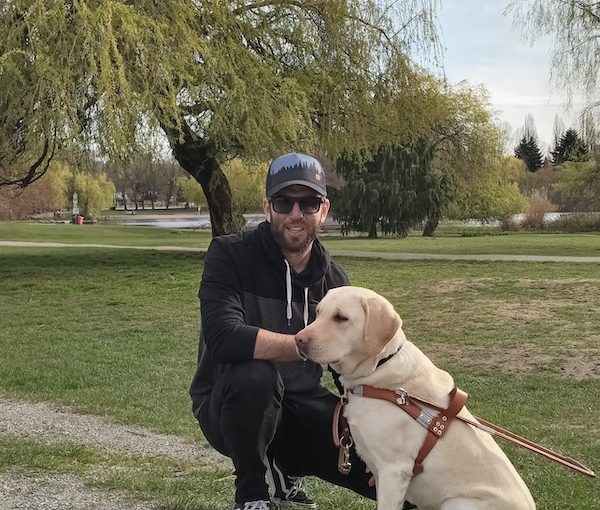
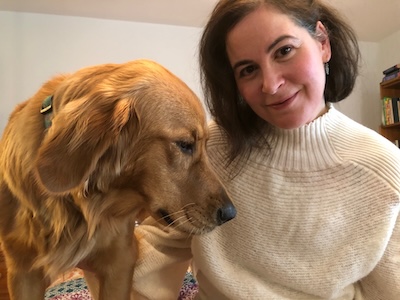
When Achiya Klein awoke after surgery, doctors began asking simple questions. Could he see this? Could he see that? “First, take off the bandages,” he told them.
“We already did,” they replied.
Klein was injured during a 2013 military operation near the Gaza border. His team discovered a two-kilometre, reinforced tunnel extending 400 metres into Israel. Klein led an Israel Defence Forces mission into Gaza to investigate further. As he approached an opening above the tunnel, a hidden booby trap detonated, with Klein, at the front of the team, taking the worst of the blast. The explosion caused severe burns, multiple facial fractures and catastrophic damage to his eyes, leaving him permanently blinded. He was evacuated under fire while rockets and gunfire erupted in the area.
Klein, now 34, grew up on a small religious kibbutz in the Judaean mountains. His childhood unfolded during the Second Intifada, surrounded by soldiers and a culture that expected young Israelis to serve. As a teenager, he and his friends competed to see who would make it into the most elite units.
In hospital, Klein initially believed surgery would fix the damage and allow him to return to his command. Realizing he could not see forced him to confront a completely different future.
Instead of dwelling on what might have been, he focused on recovery. Within months, he began rehabilitation through sport – cycling on tandem bikes, swimming, and running with guides. Eventually, he joined Israel’s para-rowing program and went on to compete internationally, representing Israel at the Tokyo Paralympic Games, in 2021.
A turning point in his independence came when he received his first guide dog from the Israel Guide Dog Centre. The dog, Knight, allowed him to navigate campuses, travel independently and rebuild everyday life.
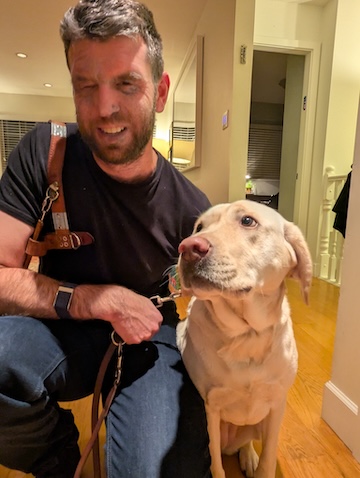
Today, Klein lives in Toronto with his guide dog Joy. For him, the dog represents far more than mobility – she makes it possible to work, travel and be fully present with his children, like walking them to school.
Klein shared his story with the Independent on a previous visit to Vancouver (jewishindependent.ca/freedom-and-friendship) and he shared it here again recently as part of a cross-Canada tour sponsored by Canadian Friends of the Israel Guide Dog Centre. He and Joy were joined by fellow IDF veteran Nave Rachman, and his dog Jack.
Rachman trained in flight school before serving in an elite combat unit. During a military operation, what should have been routine turned into an ambush. Several soldiers were severely injured and Rachman helped evacuate them under fire.
Physically unharmed, Rachman initially continued with his life, even moving to Hong Kong for work. But the trauma lingered. PTSD (post-traumatic stress disorder) symptoms gradually emerged – depression, anxiety, avoidance and difficulty with relationships. Without visible wounds, he received no immediate treatment and tried to push through alone.
Over time, his condition worsened, straining his marriage and leaving him isolated. After his wife left, Rachman sought professional help and began intensive therapy. His recovery took another turn when he was paired with Jack, a service dog from the Israel Guide Dog Centre.
At first, Rachman doubted he could care for a dog – but Jack soon became essential in his life. The yellow Labrador helps him manage anxiety, navigate crowded environments and detect rising stress before panic sets in.
Rachman and Klein shared their stories with invited guests at the home of Ellen Wiesenthal and Eyal Daniel on Feb. 26. They were joined by Noach Braun, who founded the Israel Guide Dog Centre 40 years ago, and Atarah Derrick, executive director of Canadian Friends of the Israel Guide Dog Centre. While in British Columbia, they also spoke at Congregation Schara Tzedeck and at Vancouver Talmud Torah, as well as at a ski-and-learn event in Whistler. Their tour included presentations in Calgary and Toronto.
Braun said he was motivated by his love of people and dogs in founding the Israel Guide Dog Centre for the Blind, drawing on his experience training dogs in the IDF.
Each year, he said, the centre raises about 150 puppies, many of them Labradors. After two months with their mothers, the dogs spend about a year with volunteer families – often university students – who provide early socialization and care before the animals return to the centre for formal guide-dog training.
Expanding out from service dogs for the visually impaired, the centre also provides animals for emotional support and other needs, with PTSD being an increasingly common condition for which service animals deliver a range of supports.
The rise of PTSD in soldiers and civilians after Oct. 7, 2023, is putting added strain on the Israel Guide Dog Centre, Braun said. Training dogs is an intensive, multi-year undertaking and maintaining quality while increasing quantity requires significant investments of money and human resources.
“It will take time,” Braun said. “We need more money, more people, more dogs, more land, more vehicles.… We need to build it properly.”