Skip to content
  • Home
  • Subscribe / donate
  • Events calendar
  • News
    • Local
    • National
    • Israel
    • World
    • עניין בחדשות
      A roundup of news in Canada and further afield, in Hebrew.
  • Opinion
    • From the JI
    • Op-Ed
  • Arts & Culture
    • Performing Arts
    • Music
    • Books
    • Visual Arts
    • TV & Film
  • Life
    • Celebrating the Holidays
    • Travel
    • The Daily Snooze
      Cartoons by Jacob Samuel
    • Mystery Photo
      Help the JI and JMABC fill in the gaps in our archives.
  • Community Links
    • Organizations, Etc.
    • Other News Sources & Blogs
    • Business Directory
  • FAQ
  • JI Chai Celebration
  • JI@88! video

Recent Posts

  • Sharing her testimony
  • Fall fight takes leap forward
  • The balancing of rights
  • Multiple Tony n’ Tina roles
  • Stories of trauma, resilience
  • Celebrate our culture
  • A responsibility to help
  • What wellness means at JCC
  • Together in mourning
  • Downhill after Trump?
  • Birth control even easier now
  • Eco-Sisters mentorship
  • Unexpected discoveries
  • Study’s results hopeful
  • Bad behaviour affects us all
  • Thankful for the police
  • UBC needs a wake-up call
  • Recalling a shining star
  • Sleep well …
  • BGU fosters startup culture
  • Photography and glass
  • Is it the end of an era?
  • Taking life a step at a time
  • Nakba exhibit biased
  • Film festival starts next week
  • Musical with heart and soul
  • Rabbi marks 13 years
  • Keeper of VTT’s history
  • Gala fêtes Infeld’s 20th
  • Building JWest together
  • Challah Mom comes to Vancouver
  • What to do about media bias
  • Education offers hope
  • Remembrance – a moral act
  • What makes us human
  • המלחמות של נתניהו וטראמפ

Archives

Follow @JewishIndie
image - The CJN - Visit Us Banner - 300x600 - 101625

Tag: politics

Interesting time to live

It is said that a week is a lifetime in politics and – well, would you look at that? – it is almost exactly a week before the Liberal Party of Canada selects its new leader to replace Prime Minister Justin Trudeau.

Conventional wisdom says that leader will be Mark Carney. Of course, if conventional wisdom were dependable, prime ministers John Turner and Kim Campbell would have gone down in history as figures in the biggest landslides in electoral history. Of course, those “fresh faces” were indeed involved in two of Canada’s most decisive electoral sweeps – just not in the ways they had hoped. Both had taken what appeared to be their respective parties’ hopeless chances and revived their fortunes temporarily before being devastated in their parties’ worst showings to date when the votes came in.

Both Campbell and Turner were, to an extent, known quantities, though Turner had been out of the political scene for close to a decade and Campbell was a single-term cabinet minister without the deepest roots in federal politics when she became the country’s first (and, to date, only) female prime minister.

So, while conventional wisdom tells us that Carney will be the next Liberal leader – and, by convention, as leader of the governing party, prime minister – conventional wisdom can be bubkes, as Turner and Campbell learned.

Carney, former head of both the Bank of Canada and the Bank of England, has never held elective office. Many Canadians wouldn’t recognize him in the lineup at Tim Horton’s. In a time of economic anxiety, Carney’s undeniable credibility on that topic is the selling point that has brought members of the Liberal caucus to his campaign by an almost four-to-one margin over presumed second-place candidate Chrystia Freeland, whose shock resignation led to Trudeau’s retirement in the first place.

In any event, surveys suggest that, under Carney, the Conservatives under Pierre Poilievre would go from shoo-ins to a neck-and-neck race. One poll suggests that, given Anyone-But-Trudeau, centre-left voters would rally around Carney to keep the Conservatives out, with New Democratic Party support crashing to half of what it gained in the last election.

Whoever wins the probably-almost-immediate general election after the leadership vote will inherit one of the most unenviable scenarios. With the once and once again US President Donald Trump reprising his role as global disruptor, threatening the Canadian (and global) economy with tariffs, aggression and assorted chaos, the new Canadian leader will walk a tightrope of defending Canadian interests while not unnecessarily rattling the cage of the Most Powerful Man in the World ™. Trump injects variables into politics that can never be accurately predicted – and Canadian leaders will be forced to react.

It is almost inevitable that everything will be seen through a prism of Trumpism, including the flashpoint issue of the Middle East conflict. With the US president repeatedly promising variations on the theme of “all hell” if developments do not go in Israel’s favour, fragile diplomacy, such as it ever has been between Israel and its neighbours, seems to be a thing of the past – particularly with Israel’s Prime Minister Binyamin Netanyahu largely echoing Trump’s  sociopathic scheme for some sort of Las Vegas in the Gaza Strip. 

Canadian voters tend to make electoral decisions on domestic issues, not foreign policy. Nevertheless, there is another variable that could play a sleeper in the coming election. It’s something few people seem to have on the radar but that may emerge as things unfold.

Anti-Israel activists (call them “pro-Palestinian” if you will, though it is hard to see how stopping traffic, chanting slogans, burning flags, etc., are aiding Palestinians) are no doubt planning to continue disrupting any public event where they can make their case against Israel. While justifying the atrocities of Oct. 7 as “brilliant” and justifiable, for example, is probably a bridge too far even for those most sympathetic to the Palestinian people and those who desire peace, depend on these extremists to nonetheless disrupt political events across the country – and do not expect them to do so in stereotypically polite Canadian style. 

There are a lot of external variables facing Canadian politicians in the coming weeks. Responding to harangues from Washington by an unprecedented leader will force our own leaders to respond. Closer to home, expect disruptions and pandemonium from so-called “pro-Palestinian” activists. How politicians react to these unpredictable interventions could change the trajectory of the race. How Canadians, in turn, respond to the politicians’ reactions could prove one of the most volatile variables in the unsettled political firmament.

A profoundly false (we think) assumption says that Canadian politics and history are boring. In this era, a more ancient dictum – the curse “May you live in interesting times” – seems more apt. 

Posted on February 28, 2025February 26, 2025Author The Editorial BoardCategories From the JITags Canada, elections, leadership, Liberal party, Mark Carney, politics, Trump
JSA revamps advocacy

JSA revamps advocacy

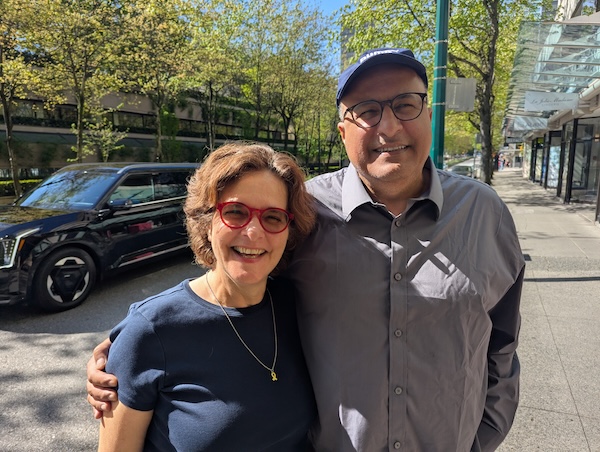
Jewish Seniors Alliance of British Columbia’s Margot Beauchamp, left, and Jeff Moss, right, with advocate for seniors’ rights Howard Glick and Parliamentary Secretary for Seniors’ Care and Long-Term Care Susie Chant. (photo from JSA)

Jewish Seniors Alliance, whose mission is to reduce isolation, build connection and uplift and support Jewish and other seniors    in the province, started 2025 with a new name. 

At its annual general meeting last November, the organization chose to rename itself the Jewish Seniors Alliance of British Columbia. Formerly, it was called the Jewish Seniors Alliance of Greater Vancouver. One of the motivations for the change was to better reflect the organization’s goals and the services it provides.

The new name comes as JSA expands its advocacy work throughout the province, with efforts such as extending its reach, via its Senior Line magazine, to more communities. The new name, it maintains, recognizes the need to connect with more seniors in the province. Initially, JSA intends to partner with outreach programs in the Sea-to-Sky, Burquitlam and Surrey regions.

Similarly, the JSA Peer Support Services program has been rebranded. It will now be known as Community Support Services (CSS), which the organization believes will express its objectives and more clearly define the services it offers with senior volunteers and clients: senior peer support and friendly visiting/calling.

Concurrently, JSA has relaunched its advocacy work around free home support for all BC seniors, stating that it had success with this effort in the run-up to the provincial election. It will continue to meet with government and opposition MLAs, as well as work with and through community partners to ask people to contact their MLAs to voice their support for the initiative.

“The JSA approach to advocacy and government relations has been focused and targeted on decision-makers,” said JSA executive director Jeff Moss during a Jan. 22 Zoom event, in which he discussed the proposal for universal home care in British Columbia as a way to reduce the burden on individuals and government spending.

Moss summarized a recent mandate letter to Susie Chant, parliamentary secretary for seniors’ care and long-term care, which advocated for increased health-care availability, cost containment, responsive health systems, increased senior care, engagement with stakeholders and communication with the health ministry.

Howard Glick, an advocate for seniors’ rights and barrier-free healthcare, joined Moss on the Zoom panel. Glick had recently produced a short video, The Home Care Imperative: A Humanitarian Solution, on the need for free home support in the province, which was shown to the audience. 

The video emphasized the advantages of home care, including aging in place, which can allow seniors to preserve their independence and dignity. It can also produce systemic savings that reduce waits for long-term care and free up hospital beds. And its implementation can be expedited, as home care can be scaled more quickly than construction for long-term care facilities. 

Also stressed in the video was the idea of accessible, personalized home care as a better way to benefit seniors in their daily lives. The video argued that such a measure would foster independence and connection while strengthening the health-care system overall. This issue is particularly pressing, as the number of seniors in the province, and across the country, is set to increase in the coming two decades. 

Most older adults, the video pointed out, would prefer to stay at home. Research from the Office of the Seniors Advocate, under the leadership of both former seniors advocate Isobel MacKenzie (now a JSA board member) and current advocate Dan Levitt, shows that many admissions to long-term care could have been treated at home with the right supports. Women, people in rural communities and those living alone make up a greater percentage of those moving into long-term care, according to the office’s report.

According to the video, British Columbia, when compared to Ontario, is lacking in several features that pertain to senior care, such as funding, services, eligibility, caregiver support and integration. The costs associated with accessing care for seniors in British Columbia greatly exceed those of other provinces as well, the video contends, noting that Alberta, Ontario and other provinces offer free home support for older adults.

Following the video, Moss reviewed a long list of advantages of providing free home care.

“The benefits are personalized at-home care, ease of access, reduced hospitalizations, fewer unnecessary admissions to long-term care, better health outcomes, increased independence and peace of mind,” he said.

During the question-and-answer session, it was conceded that the home-care model proposed in the video is, at present, far from the current reality. 

“At this point, the system is fragmented, disorganized and unreliable, and there are a whole bunch of other problems. What our video is advocating is how to make things work for people in the future and that means reevaluating the structure of the system completely,” Glick said.

“Before any changes can be made, we have to have influence and contacts, we don’t have that yet. We’re just in the starting process of trying to get our foot in the door with the people who have the money and make policy,” he added.

photo - Jewish Senior Alliance of British Columbia executive director Jeff Moss, left, with Conservative Party of Canada leader Pierre Polievre
Jewish Senior Alliance of British Columbia executive director Jeff Moss, left, with Conservative Party of Canada leader Pierre Polievre. (photo from JSA)

The January event was part of the JSA-Phyliss and Irving Snider Foundation Empowerment Series and was co-sponsored by the Kehila Society of Richmond, COSCO and West End Seniors’ Network. 

Moss, Glick and Margot Beauchamp, JSA’s quality assurance liaison, have since met with Chant. According to Moss, Chant gave them her support to move the initiative forward by way of making an introduction to the ministers of finance and health, along with opportunities to speak with all MLAs. JSA is also seeking the support of Brennan Day, opposition critic for rural health and seniors’ health.

JSA is working to advance the interests of seniors at the national level as well. During Conservative Party of Canada head and leader of the Official Opposition Pierre Poilievre’s visit to Temple Sholom on Feb. 2, Moss said he took a moment to let Poilievre “know that 65% of BC seniors are living on less than $40,000 annually and that adjustments are needed in the Guaranteed Income Supplement for seniors so that they can ensure more sustainability to age better.”

Poilievre directed Moss to follow up with his policy team.

For more information on JSA’s home-care advocacy, visit jsalliance.org/advocacy. 

Sam Margolis has written for the Globe and Mail, the National Post, UPI and MSNBC.

Format ImagePosted on February 28, 2025February 27, 2025Author Sam MargolisCategories LocalTags advocacy, health care, home care, Jeff Moss, Jewish Seniors Alliance, JSA, Pierre Poilievre, politics, seniors, Susie Chant
Spread of extremism

Spread of extremism

Terry Glavin, right, in conversation with Rabbi Dan Moskovitz Jan. 30, traces the evolution of anti-Israel extremism in Canada. (photo by Pat Johnson)

At times, the world seems to be going off the rails, with Canadian activists overtly cheering on terrorists and   celebrating the atrocities of Oct. 7. But Terry Glavin, a BC writer and thinker with a lifetime of experience on the ground as a journalist in the Middle East, thinks a reckoning is coming.

Speaking with Rabbi Dan Moskovitz at Temple Sholom Synagogue Jan. 30, Glavin, who says he comes from the political left, sees “a very, very disturbing and destructive phenomenon in all of the places where the left used to be.”

Part of that is a consequence of a change in global dynamics.

“Where there was once a fairly robust sort of proletariat internationalism on the left, there was something that was emerging by the ’60s and ’70s that was kind of a Third Worldist, anti-Western substitution for a genuinely progressive working-class internationalism,” he said. “That has had enormous implications in the trajectory of human history – very disturbing implications.”

The socialist or communist ideal never took hold in the West and that sent proponents seeking a spark that could catch fire.

“The working class simply didn’t take up the offer of overthrowing the state and seizing the means of production,” said Glavin, “so a lot of people on the European left went looking for a new proletariat and found it in Third World revolutionaries. Sometimes that was actually a legitimate thing to do. But, in the context of the so-called Arab world, what has often as not occurred is that bonds of solidarity would be forged with some of the most reactionary, anti-liberal, anti-progressive, theocratic, fascistic movements.”

Lacking a coherent political ideology, the movement coalesced around “anti-imperialism,” whose unifying principle was simply sharing the same enemies.

“All you have to basically do is say ‘I’m against the Americans, I’m anti-imperialist,’ and you’re in,” Glavin said.

The collapse of the Soviet Union was disorienting to the left, which then discovered the politics of anti-globalization. This created more strange bedfellows, Glavin said, because denouncing the International Monetary Fund and the World Economic Forum had once been the purview of the right.

Then, after the 9/11 terror attacks, anti-globalism took a backseat to what its adherents called an “antiwar” movement. Glavin takes exception to the term, because he said it was not an antiwar movement so much as a movement that sided with the West’s enemies in the wars in Iraq and Afghanistan.

“That’s a fairly serious charge to levy,” he said, “but organizationally and institutionally, that is actually a fact, in Canada particularly.”

A series of annual conferences in Cairo during the first decade of this century brought together global organizations including Canadian groups like Toronto Stop the War Coalition, the Canadian Peace Alliance, the Vancouver Coalition to Stop the War and others. In Cairo, they were joined by representatives of terror groups including Hezbollah, Hamas, Palestinian Islamic Jihad and the Popular Front for the Liberation of Palestine. These ostensible antiwar groups, and these decidedly violent groups, developed a program that opposed “imperialism.” And, vilified above every evil was the perceived imperialism of Zionism.

“At its very birthing, at its very centre, was anti-Zionism,” Glavin said.

While most of these Canadian activists probably self-identified as leftists, they had made common cause with the descendants of history’s most extreme right.

“We sort of imagine that there was this horrible phenomenon of Nazism that consumed millions and millions and millions of people in a world war and then we won and then it was over,” he said. “People forget that the same philosophy, the same ideology, the same antisemitic hatreds, were spreading throughout the so-called Arab world, throughout the Maghreb and the Levant, and Iran as well, in the 1920s and 1930s. It persisted.”

Glavin explained the direct line from the Nazi collaborationist Arab leaders of the 1940s and successive decades of forces in the region that translate and promulgate Mein Kampf and keep the flame of fascism alive.

Despite this seeming ideological incongruity, Canadian activists returning from Cairo found some receptive audiences for particularly Canadian reasons. Canada is a decentralized, multicultural constitutional monarchy, post-nationalistic and less driven by a cohesive patriotic impulse than some other states, according to Glavin. These fluidities caused Canadians to search for an identity.

“We needed to find a way to figure out our place in the world,” he said.

Canadians were very engaged with the creation of the United Nations, including its Declaration of Human Rights. “So, the United Nations and its protocols have always significantly informed Canadian foreign policy,” he said. “If you vest your foreign-policy principles in an institution that, without anybody noticing for some reason, became largely a function of the police-state bloc and the Organization for the Islamic Conference, you’re going to find yourself in a bit of a spot.”

This may have created fertile soil for the sorts of ideas that these activists brought back from Cairo, he said. It may also explain why “Israel Apartheid Week,” a global anti-Israel phenomenon, began at the University of Toronto and why an anti-Israel boycott movement began in Canada three years before the boycott, divestment and sanctions (BDS) movement was originated by Palestinians.

Meanwhile, as activists claimed to be advocating for peace in places like Afghanistan and Iraq, Glavin said they were instead often working at direct cross-purposes with those peoples’ self-defined interests. Such was the case, he argued, with those who opposed Canada’s engagement in Afghanistan.

“The Afghan left, the Afghan women’s movement, the Afghan student movement, Afghan intellectuals, poets, Afghan socialists, liberals, were all ‘troops in,’” he said. “All these white people in North America and Europe were all ‘troops out.’ Right away, that should tell you something. Something has been broken in the traditions of left-wing solidarity among and between working people around the world.”

Journalists Glavin knew in Afghanistan were baffled by Canadian activists.

“They would see another protest in Toronto,” he said, and they would ask: “Why would they do that to us?”

The left has to be held to account, Glavin said, naming the New Democratic Party specifically.

“Where the hell were you when this was happening? What were you saying when trade union leaders were meeting with Hezbollah, were meeting in Damascus with these blood-soaked tyrants? Where were you?” he asked. “The women of Afghanistan were begging – begging you – to stay with them, just hang on for a couple more years. [They were saying] ‘We’ve got an entire generation of young people coming up now, they’re graduating and they are going to be taking over, and you walk away from us? How could you do this?’”

All of these threads of ideological extremism came together with a particular fervour after Oct. 7, 2023, Glavin argued.

“Immediately, across this country, people were pouring into the streets celebrating the bloodiest pogrom since the time of the death camps,” he said. 

This was new, Glavin noted. A couple of decades earlier, at the height of the antiwar movement, activists were not overtly championing the terrorists.

“You didn’t have hundreds and hundreds of people in the streets saying, ‘We are Al Qaeda, we support Al Qaeda, yay Al Qaeda,’” he said. “You have that now – people who are openly, enthusiastically, deliriously, hysterically praising Hamas. That’s different. Something big has changed. Something very big has happened.”

This has affected Canadian Jews severely.

“On Oct. 8, Canadian Jews just didn’t wake up to find that the fabric of the country had been kind of torn by this, but rather that something had been woven into the very fabric of the country itself,” he said.

As things have deteriorated to the point where clusters of Canadians are literally celebrating the mass murder of Jews, Glavin sees a ray of hope. By showing their true colours, these activists have made it more difficult for aware Canadians to ignore the extremism that has consumed parts of our society, including the anti-Israel left. He foresees a reckoning.

“I am optimistic,” he said, “because I do think that most normal people, on any number of fronts, have simply had enough.” 

Format ImagePosted on February 14, 2025February 13, 2025Author Pat JohnsonCategories LocalTags antisemitism, extremisim, Oct. 7, politics, Terry Glavin

Choose your next PM

By the time Justin Trudeau emerged from the front door of Rideau Cottage last week to announce his intention to end almost a decade as Canada’s prime minister, any element of surprise had evaporated. His future was sealed – and not by his choice.

As is so typical in our polarized times, Trudeau’s reign has been neither as masterful as his PR flaks suggest nor as disastrous as the monster truck crowds with their “[Expletive] Trudeau” stickers would have us believe. The truth lies somewhere in between. Despite the apocalyptic rhetoric of some opposition figures depicting Canada as a failed state in line with Somalia or Haiti, we remain arguably the most fortunate people on the planet and any commentary to the contrary is either self-serving propaganda or the worst example of First World ingratitude. 

Among those who are glad to see Trudeau go there is a prevailing crankiness that he waited too long. True, abandoning ship days before our greatest trading partner and rather obtrusive (at the best of times) neighbour is set to (re)inaugurate an unpredictable kook as their head of state does raise some concerns. But let’s get some perspective. 

Canadians are sleeping with an elephant, as the current prime minister’s late father, Pierre Trudeau, famously quipped. “No matter how friendly and even-tempered is the beast, if I can call it that, one is affected by every twitch and grunt.” Under the incoming US president, that country seems destined to become twitchier and gruntier.

Trump is proposing an Anschluss in which Canada becomes the 51st state. Why 51st, we have to wonder? Why not the 51st to, at a minimum, the 61st? How do Lilliputian Vermont and Rhode Island and the practically unpeopled Wyoming justify statehood, two senators each and the assorted benefits of statehood but our 3.8 million square miles is mooted to get a single state and a measly two senators? Canada’s 40 million people exceed the combined populations of the 21 smallest US states so excuse us for being a little miffed at the idea that our landmass and people deserve an American presence equivalent to Arkansas or New Mexico. But perhaps we’re getting ahead of negotiations here.

We josh, of course. But this much is deadly serious: were an American president to genuinely promote annexation – either militarily or through the economic bullying Trump suggested last week – Canadians would have little defence but throwing Timbits and snowballs at the invading forces. There is plenty of comedic fodder around this subject but laughing has a tendency to stop abruptly when an underestimated madman gets his hands on the levers of power.

The idea that who occupies 24 Sussex Drive makes a whit of difference in the circumstance is an exercise in national self-delusion. In the event of an American invasion of Canada, Greenland or Panama, who ya gonna call for backup? Perhaps China or Russia might be willing to come to our aid. There’s a cheery idea – although not entirely out of the realm, given evidence that both these countries have already had their fingers in our democratic processes, and geopolitical and economic interests in the Arctic landmass.

The Liberal party is now charged with finding a new leader to pull it back from an apparent electoral abyss. In most instances, we would argue that this is an internal party matter for partisans to decide. The added wrinkle of our constitutional conventions, in which the leader of the party in power effectively automatically becomes PM, adds gravitas to the current situation.

Whether or not one is a Liberal partisan, it may be worth participating in the process. In the last bun toss, in which Trudeau was selected, it was an effective free-for-all in which, without even coughing up a membership fee, anyone was pretty much welcome to cast a vote – sort of like a “no purchase necessary” cereal box contest for a balsa-wood airplane. 

We are in a challenging political environment right now, where single-interest groups are flexing their disruptive muscles – anti-Israel activists, for example, are trying to cancel Christmas, they are disrupting public events, have shut down theatre performances and generally are making their small numbers have outsized impacts. While there is not on the horizon, at this point, a standard-bearer for the hate-Israel demographic, count on the myopic activists to inject this issue into the contest, likely to the detriment of the Jewish community’s safety and interests and, we would argue, to Israelis and Palestinians. 

Those who believe in a multiculturalism where Jews are welcome, a world where both Israelis and Palestinians are safe, and a body politic where dialogue trumps flag-burning should really pay attention to the process the Liberal party is about to adopt to select their next leader – who will be our next prime minister – and ensure that our views and interests are at least as well represented as the regressive mobs, be they on one side or the other of the issues we care most deeply about. 

Posted on January 17, 2025January 14, 2025Author The Editorial BoardCategories From the JITags Canada, elections, Liberal party, multiculturalism, politics, Trudeau, Trump, United States

Leadership keeps us afloat

There are so many huge transitions lately when it comes to world leaders in the news. From impeaching the South Korean president to the fleeing of Syria’s Bashar Al-Assad, or the issues around Netanyahu, Trump or Trudeau, there’s political change afoot.

It’s natural to feel worried about uncertainty. A friend from university days tells her teen daughters in Jerusalem that we should “think globally but act locally.” This was our popular slogan as undergrads in the 1990s. I repeat this in my household as well. While we can get absorbed in political drama, there’s also a lot to do close to home.

A story I read recently reminded me of what solid leadership can mean. This story (aggadah) was in Tractate Sanhedrin, page 14, in the Babylonian Talmud. Jan. 5 marked five years since I’ve been studying Daf Yomi, a page a day of Talmud. This commitment has been both deep and superficial. Deep, because finding time to commit to this for any mom of school-aged twins is a big ask. It’s superficial because I’m only doing it for 20 minutes a day and I’m mostly reading in translation. My goal to improve my talmudic Aramaic/Hebrew reading skills fell by the wayside long ago. What has remained is a habit. I learn the page every day whether I find it interesting or not.

Sanhedrin hasn’t been the most interesting bedtime reading so far: understanding the law and administering it, and how many judges it takes to rule on different cases. Then, I read this story. The summary, with background information from Rabbi Lexie Botzum, an author at My Jewish Learning, helped me learn more. Rabbi Yehudah ben Bava was an elder during the early second century, facing a period of Roman repression. It recalls the rabbi with great respect, because there was concern that Jewish law and the enforcement of those laws would be lost due to persecution.

The rabbis recount: “… because at one time the wicked kingdom [of Rome] issued decrees of religious persecution against the Jewish people. The sages therefore said that anyone who ordains [judges] will be killed, and anyone who is ordained will be killed, and the city in which they ordain will be destroyed, and the boundaries in which they ordain judges will be uprooted.”

Rav recounts that Rabbi Yehudah ben Bava enabled the judging and enforcing of laws around fines to continue, by doing the following: “What did Rabbi Yehuda ben Bava do? He went and sat between two large mountains, between two large cities, and between two Shabbat boundaries, between Usha and Shefaram, and there he ordained five elders. And they were: Rabbi Meir and Rabbi Yehuda and Rabbi Shimon and Rabbi Yosei and Rabbi Eleazar ben Shammua. Rav Avya adds Rabbi Nehemya also.”

When the Romans discovered them, the Gemara explains that Rabbi Yehuda ben Bava told his young students (now his colleagues) to run. He was old and couldn’t run, but used his body to distract the soldiers, and was killed. The Roman soldiers “pierced his body like a sieve” with 300 iron spears. We remember Rabbi Yehudah ben Bava’s heroism during the story of the Ten Martyrs, which we recite on Yom Kippur. 

Sanhedrin concerned itself with how many people it takes to ordain a judge or rabbi. The rabbis conclude that there were other rabbis with Rabbi Yehuda ben Bava, but this story keeps Rabbi Yehudah ben Bava’s name alive and recognizes his bravery.

There’s a lot to unpack here. After all, does it matter if the Jewish laws concerning fines were taught or enforced today? Maybe not, but this is how law-making and, by extension, politics, work even now. Legislators spend lots of time on minutiae, but it’s those details that make societies function. Today, we still need laws to enforce payments of fines, otherwise governments might not have enough income to pay for infrastructure like roads or police or courts. 

Beyond administrative details, without Rabbi Yehudah ben Bava’s foresight and leadership, Jewish people might not have gathered the courage to ordain (appoint) more judges. Without those rabbi/judges, Jewish tradition might have foundered and, perhaps, died out. The Romans’ goal was to force assimilation. This approach to eradicating Jewish culture and learning has occurred multiple times throughout history. For examples, consider the Soviet Union’s repression of Jewish observance and learning, the Nazis during the Second World War, or the Inquisition in Spain and Portugal. When Jews are forced to hide, some brave souls go underground and continue to teach, learn and lead, despite great challenges. Rabbi Yehudah ben Bava’s story helps us remember this is important for survival.

I’m not worried that we’ll have to go underground to keep Jewish identity alive. At least, I hope not. In an upside-down world, this is what Jews in Israel have done – using shelters (underground bomb shelters, for instance) to stay safe. What I concluded from the Talmud story is different. It’s so important to have leaders who keep us afloat, via brave and innovative plans, during difficult times. We can’t stake our future on just one person, either. The tractate indicates that Rabbi Yehudah ben Bava was not the only one there, but he stands for all the brave leadership that followed.

In Canada, local Jewish leaders are stepping up on behalf of our communities. This leadership isn’t limited to those in paid positions but extends to courageous volunteers speaking out, too. There are social media warriors, fighting against hate online, and heads of various Jewish organizations on the radio and in the news media. Right now, we need all these advocates plus Jewish lawmakers and their allies, too, working to combat hate. Sometimes, the solutions are in the details – not in how we enforce fines, but in how we legislate bubble zones around places of worship and schools, or how to decide what’s free speech and what’s hate speech.

We shouldn’t have to risk death. Nobody wants to be skewered to death, as the Romans killed Rabbi Yehudah ben Bava, but the other rabbis are also part of the story. We must thank these unnamed people, and their named students. The defence of our identity, learning and tradition is all of our responsibility, and not just for brave leaders. Some run to safety and fight another day; others are allies; and some keep Jewish tradition alive amid changing times. We can all make an effort, and be thankful, for the chance to protect our Jewish identities in Canada, and worldwide. 

Joanne Seiff has written regularly for the Winnipeg Free Press and various Jewish publications. She is the author of three books, including From the Outside In: Jewish Post Columns 2015-2016, a collection of essays available for digital download or as a paperback from Amazon. Check her out on Instagram @yrnspinner or at joanneseiff.blogspot.com.

Posted on January 17, 2025January 14, 2025Author Joanne SeiffCategories Op-EdTags Judaism, leadership, lifestyle, politics, Talmud

Surveying Canadian Jews

“Canada’s Jewish community is divided over Israeli and domestic Canadian politics, even though rising antisemitism and war seem to have increased the emotional attachment of Canada’s Jews to Israel,” writes sociologist Robert Brym in the executive summary of Arguments for the Sake of Heaven: A Jewish Community Divided. The report imparts the results of a poll sponsored by the New Israel Fund of Canada, JSpaceCanada, and Canadian Friends of Peace Now.

From Aug. 28 to Sept. 16, 2024, the polling firm Leger surveyed 588 Canadian Jews. The sample “was drawn from a large online panel of Canadian adults. It was weighted by characteristics of the Canadian Jewish population based on the 2021 Census of Canada and the 2018 Survey of Jews in Canada,” which was prepared by Brym, Keith Neuman and Rhonda Lenton for the Environics Institute, University of Toronto, and York University. The composition of the sample “is believed to be broadly representative of Canadian Jewry.”

“We undertook this survey in response to conservative establishment Jewish institutions and anti-Zionist Jewish groups co-creating a polarized, black-and-white public debate that didn’t reflect the diverse, nuanced Jewish community we know and love,” write Maytal Kowalski, JSpaceCanada executive director, Gabriella Goliger, national chair of Canadian Friends of Peace Now, and Ben Murane, executive director of NIF Canada, in the introduction to the report, which was released last month.

“Our research confirms that there is no such thing as ‘the Jewish community’s opinion’ as a monolith, nor can any segment of the community (or any institution) claim to speak for all others. In many cases, we see no majority opinion as well as high levels of uncertainty. Therefore, not only are claims of monolithic support misrepresentations of Canadian Jewish diversity, they also erase the spirited nature of Jewish life in Canada.”

image - Arguments for the Sake of Heaven coverExplaining the report’s title, they note: “One of the noblest ideals in Judaism is ‘arguments for the sake of heaven’ – that disagreement and debate are in fact coveted and celebrated as long as the disagreement is ‘for the sake of heaven,’ meaning an argument that seeks to uncover truth.”

They call upon “Jewish communal leaders to uphold and support the variety of opinions and ideas held by Canadian Jews – and to foster arguments for the sake of heaven,” and warn that “Canadian political leaders must engage all of Canada’s Jewish communities and not stereotype us based on a false monolith.”

Brym lists the poll’s highlights, which include that “Canadian Jews express stronger emotional attachment to Israel than in four previous surveys dating back to 2018. Specifically, 84% of Canada’s Jews say they are ‘very’ or ‘somewhat’ emotionally attached to Israel [compared to 79% in 2018]. Ninety-four percent support the existence of Israel as a Jewish state.”

Brym notes, “Just 3% say Israel lacks that right, while another 3% say they don’t know or don’t answer the question. Belief in Israel’s right to exist does not vary significantly by gender, educational attainment, income or denomination. It does vary significantly by age and political party support. Ninety-eight percent of those over the age of 34 say Israel has the right to exist as a Jewish state, compared to 81% of those under the age of 35. Ninety-seven percent of Conservative and Liberal party supporters say that Israel has the right to exist as a Jewish state. Some 79% of NDP supporters concur, although the number of NDP supporters in the sample is too small to provide a highly reliable estimate.”

When asked “Do you consider yourself a Zionist?” however, 51% of respondents said yes, 15% claimed ambivalence, 27% said no and 7% said they didn’t know, or didn’t answer the question.

“Given their strong emotional attachment to Israel and their nearly universal belief that Israel has the right to exist as a Jewish state, one might be tempted to speculate that more Canadian Jews do not consider themselves Zionists because they confuse Zionism with certain policies of the Netanyahu government that they find objectionable,” writes Brym. “Future research needs to probe this issue.”

When asked whether continued building of Jewish settlements in the West Bank helped, harmed or didn’t make a difference to the security of Israel, 34% of respondents said it hurts Israel’s security while 27% said it helps, 22% thought it made no difference and 18% didn’t know or didn’t answer.

Half of respondents favoured a two-state solution, while 25% wanted an Israeli state (the annexation of West Bank and Gaza), while 8% believe that “the best resolution to the conflict is a single, secular, binational state that favours equal rights for Jews and Palestinians.”

“When asked whether Canadian politicians should increase pressure on Israel and the Palestinians to engage in a meaningful peace process, 55% of Canadian Jews agree and 23% disagree,” summarizes Brym. “When asked whether politicians should sanction Jewish West Bank settlers who engage in acts of vigilante violence against Palestinian civilians, 35% of Canadian Jews agree and 41% disagree. When asked whether politicians should recognize a Palestinian state in the near future, 21% of Canadian Jews agree and 53% disagree. When asked whether Canadian politicians should impose an embargo on the arms trade with Israel, 69% of Canadian Jews say no and 10% say yes.”

The survey also asked respondents to rank, in view of an upcoming federal election, their priorities among 11 different issues. From most to least important were cost of living, antisemitism, health care, housing, Israel-Palestine conflict, climate change and environment, crime and public safety, immigration, threats posed by China and Russia, discrimination against Indigenous people, and Islamophobia.

The question was asked, “Which political party did you vote for in the last (2021) federal election?” and also “If a Canadian federal election were held tomorrow, which party, if any, would you vote for?”

“Among decided voters, support for the New Democratic Party remained steady at about 9% between 2021 and 2024,” writes Brym. “Support for the Liberal party fell from 39% to 26%. And support for the Conservative party increased from 36% to 55%. These trends are similar to those in the general population, but the decline in Liberal support and increase in Conservative support is more pronounced among Jews.”

The whole report can be found at jspacecanada.ca/arguments_sake_of_heaven. It includes much more data – including more analysis of responses according to age, gender, level of education, household income, denominational identification and political party support – as well as commentary and recommendations from the survey’s three sponsoring organizations. 

Posted on January 17, 2025January 14, 2025Author Cynthia RamsayCategories NationalTags Canada, Canadian Friends of Peace Now, Canadian Jews, government policy, Israel, JSpaceCanada, Judaism, New Israel Fund of Canada, opinion polls, politics
The complexities of humanity

The complexities of humanity

Mitch and Murray Productions’ presentation of Heroes of the Fourth Turning co-stars, left to right, Jennifer Clement, David Kaye, Elizabeth Barrett, Aaron Craven and Nyiri Karakas. (Shimon Photo)

This is a story about the interesting and intersecting balance of faith, peace, politics, sex, sexuality, deceit, forgiveness and mysticism with the modern world. How do we grapple with the changing self, while clasping hands with those we no longer align with, but feel we must commune?” said Mitch and Murray Productions’ Kate Craven about Will Arbery’s play Heroes of the Fourth Turning, which has its Western Canadian premiere Jan. 31-Feb.9 at Studio 16.

“It’s about letting go of preconceived notions,” she said. “It’s about being wrong, even when convinced otherwise. It’s complex and startling and astonishing and I truly think it is one of the great plays of this generation.”

Heroes of the Fourth Turning has won multiple awards and was a Pulitzer Prize finalist. In it, reads the synopsis, “four young conservatives have gathered to toast the newly inducted president of their tiny Catholic college – one week after the Charlottesville riots in 2017. Their reunion spirals into spiritual chaos and clashing generational politics, becoming less a celebration than a vicious fight to be understood.”

“The play’s title is a take on the book The Fourth Turning by William Strauss and Neil Howe, which hypothesizes the cycles of history and attempts to teach us how to live through these cycles via examples from past generations,” explained Craven, who is the theatre company’s board chair and operations manager. “They base their hypothesis on the past 500 years of American history and uncover what they deem as a distinct pattern: that modern history moves in cycles, each one lasting about the length of a long human life and each composed of four times 20-year eras, aka ‘turnings’ that comprise history’s seasonal rhythm of growth – maturation, entropy and rebirth. Otherwise broken down as the High, a period of confident expansion, followed by the Awakening, a time of spiritual exploration and rebellion. Then, the Unraveling, in which individualism triumphs over crumbling institutions. Finally, the Crisis (the Fourth Turning), when society passes through a great and perilous gate in history, a specific time that requires a generation of heroes to rise up, resolve crisis and reset imbalances created in prior turnings. 

“The Fourth Turning was written in 1997, at the tipping point between Gen X and the Millennial generation,” said Craven. “It references the Fourth Turning being in line with the coming of age of Millennials, a generation which three of the play’s characters fit into.”

One of those characters is played by Jewish community member David Kaye.

“I play a Catholic man in his late 20s named Kevin who is currently experiencing tremendous crises of identity and faith while struggling with alcohol abuse,” Kaye told the Independent. “A graduate of the Transfiguration College of Wyoming, Kevin received wilderness training, learned to scale mountains, ride horses, build igloos, memorize poetry and speak conversational Latin. Initially believing that he was being groomed to become ‘a leader of the world,’ Kevin has realized that he was woefully underprepared to actually live in the real world.”

While the character is drunk for most of the show, he is the only one asking questions, said Kaye. “He is often the butt of the joke but, ultimately, I think Kevin is the wise fool. Kevin wants so badly to connect with other people, regardless of their political leanings or religious affiliations. He wants to have hard conversations and expand his mind and is open to new ideas; unfortunately, he is not the greatest conversationalist.”

The role has certainly expanded Kaye’s mind. Having attended Vancouver Talmud Torah and King David High School growing up, the actor said “all of the knowledge of Catholicism I have is from pop culture, so building my character’s world has involved quite a lot of reading in theology and philosophy that I was completely unfamiliar with. As far as being a Jewish actor in the context of this play, I think that Kevin is actually the easiest character for me to identify with because he is constantly questioning things, and that was a core part of my Jewish education and exploration.”

Craven, who is also Jewish, “had the unique experience of growing up in a bi-faith family, one half Jewish, the other Pentecostal Christian.”

“It’s a difficult thing to belong to a family unit which falls on both sides of the faith divide and subsequently (often) political divide,” she said. “Perhaps this prepared me for a play like Heroes of the Fourth Turning. I find myself reaching for empathy for these often confused, sometimes wildly misguided characters and that makes this play very uncomplicated and uniquely human.”

She added that it feels like Arbery, the playwright, “is managing a perilous dance between faith, violence, truth and real-world events as his characters evolve and devolve in front of us. It feels much less about faith, religion and belief than it does about the crisis of being human. That’s relatable no matter who you are or which people you belong to.”

“This show can be viewed through many different lenses and each one will have a different takeaway,” said Kaye. The play will “ruffle some feathers,” he said. “But, if you are open to it, this is a show that will provoke thought, challenge perceptions, and might make you question the world around you.”

For Kaye, that is one of the main things he has learned from the character he is portraying – “that it is OK to question everything you have ever known to be true. It may be ugly and uncomfortable, but challenging your beliefs can lead to more authentic connections and a more fulfilling life.”

Craven said Mitch and Murray Productions’ goal has always been to present “bold, smart pieces that require the audience to be willing participants in the discourse and discussion. Our hope is that our productions showcase what it is to be a complex, imperfect human, as opposed to being a human who fits into a specific political, religious or cultural box, the aftermath of which potentially opens us up to empathy and understanding instead of division and despair.”

Set in rural Wyoming, Heroes of the Fourth Turning references hunting, there is a prop rifle on stage and gunshots are heard throughout the play. Other warnings include the use of coarse language and “heavy political debates which cover a range of difficult topics,” said Craven. “With this in mind,” she encourages people to come to the play with “a spirit of open-mindedness and an attitude of willingness – to see, hear and learn. All of which hearkens back to what I mentioned earlier about the plays Mitch and Murray attempts to produce – stories about a conflicted and imperfect humanity. We may not be able to see ourselves uniquely and specifically reflected in these characters, but there is certainly a reflection of humanity that is profound and deeply moving.”

Stories, she said, have “the capacity, when told well, to move and shape our molecules in a unique way. If we can be even a small part of creating compassionate debate, then we’re doing our job.”

For tickets ($15-$37) to Heroes of the Fourth Turning, visit mitchandmurrayproductions.com. 

Format ImagePosted on January 17, 2025January 15, 2025Author Cynthia RamsayCategories Performing ArtsTags David Kaye, play, politics, religion, The Fourth Turning, theatre
Robinson kicks off book fest

Robinson kicks off book fest

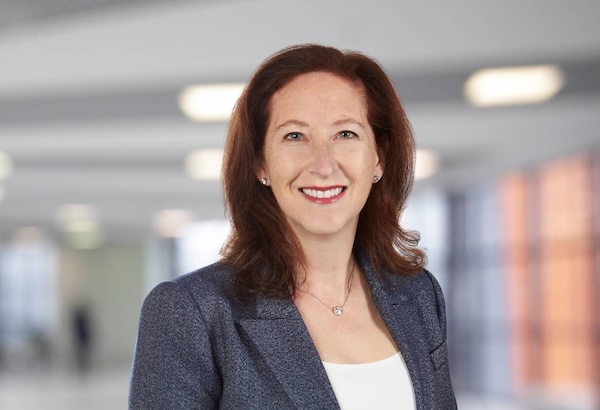
The JCC Jewish Book Festival opens Feb. 22 with Selina Robinson talking about her memoir, Truth Be Told. (photo from JCC Jewish Book Festival)

This year’s JCC Jewish Book Festival opens Feb. 22 with Selina Robinson talking about her recently published memoir, Truth Be Told.

Most Jewish Independent readers will be familiar with the events that propelled Robinson to write this book. The first chapter, called “Four Fateful Words,” starts at what some people may think is the beginning – when, during a Jan. 30, 2024, webinar, Robinson said the state of Israel was reestablished on a “crappy piece of land.” But she believes she had been targeted for months.

“It was sloppy language, nothing more, but it provided the Gotcha! for anti-Israel extremists to build a case that I was racist, Islamophobic, intolerant and an evil monster that needed to be canceled,” she writes.

“In an ideal world, it would have been the extremists who were dismissed, not me. In an ideal world, we would be blessed with leaders who can differentiate between right and wrong.”

Truth Be Told covers the fallout from her comments. Premier David Eby initially seemed prepared to stand by Robinson, but the political pressure – including from a group of Muslim clergy who threatened the NDP’s access to Muslim voters unless Robinson was dismissed – soon led to him firing her from cabinet, though he never used the word.

“I told the premier that if he wanted my resignation, I would give it to him, but he needed to ask for it,” writes Robinson.

“In the end, he didn’t fire me and I didn’t resign, although the undeniable conclusion of the call was that I was no longer in cabinet.”

After taking some time to absorb the situation, Robinson rallied. 

“As part of my t’shuvah [repentance], the premier asked that I make a series of calls to Muslim community leaders,” she shares. “I began to think: What if I could engage with these groups and bring the Jewish community and the Arab and Muslim communities together in some way? These two heartbroken communities, both fearful for their families overseas and feeling powerless to effect change, could find commonality in that shared experience, at the very least. Action is always an antidote to hopelessness and helplessness. I could do this as part of my role as an MLA and the government could take credit for doing something meaningful that makes a positive difference for both these aching communities. For me, this would be a profound form of redemption, of t’shuvah, and also of tikkun olam [repair of the world].”

But this ray of light was soon extinguished, the idea being deemed “too political.”

“I knew in that moment that this was no longer my place, no longer my government, no longer my political party,” writes Robinson. “A place and a party where I belonged would recognize the opportunity for someone who was seen to have transgressed to do some good. My place, my party, would recognize the value of bringing people together. A place where I belonged would not be afraid to try something unique and potentially powerful.”

Robinson quit the NDP and finished her term as an MLA as an independent. She was going to retire anyway, but this was not how she wanted her political career to end.

And it was quite a career. With a master’s degree in counseling psychology, Robinson spent most of her working life as a family counselor and in senior roles in various social service agencies.

“I never planned to enter politics,” she writes. “The first real engagement I had was speaking to Coquitlam City Council, my hands shaking, in support of an emergency cold weather refuge for homeless people proposed by a church in my neighbourhood.”

image - Truth Be Told book coverOne of the councilors suggested she run for council, and she did. She was elected to Coquitlam City Council in 2008 and reelected in 2011. Truth Be Told gives readers a glimpse of what that experience was like, what Robinson accomplished as a councilor, and more. We find out how and why she made the leap to provincial politics in 2013 – a decision in which the late John Horgan played a pivotal role. The memoir is dedicated to Horgan, for whom Robinson had great respect and a close relationship. As premier, Horgan was the one who appointed Robinson minister of finance after the 2020 election that gave the NDP a majority government. She held that position through COVID, the government managing to file budget surpluses despite the challenges the pandemic brought.

“What saddens me right now is that people are losing faith in government,” writes Robinson. “That is especially distressing because if anything should have renewed people’s faith in government, it was the collective response to the pandemic.”

When Horgan stepped down as premier in 2022 because of the toll his cancer treatments were taking on him, Robinson began to more seriously reflect on her own future. She had been in public service for so long, she wanted to spend more time with her family. In Truth Be Told, we learn more of her own fight against cancer – a fight that started in 2006, a fight she seems to have won, finding out on Oct. 6, 2023, that her cancer had disappeared. The celebration was short-lived. That evening, news started coming in of Hamas’s terror attacks on Israel.

Robinson’s ambivalence about running for reelection was one of the reasons she didn’t pursue the party leadership vacancy Horgan’s departure opened. Other candidates bowed out, and Eby was anointed the new leader of the BC NDP and became premier in November 2022.

Robinson calls herself an “eternal optimist,” and that attitude has served her well. Despite being effectively demoted by Eby after he became premier, Robinson threw herself into the position of post-secondary education and future skills minister. It is interesting to read about some of the issues in that sector, and of the other portfolios Robinson held, as well as get some insider knowledge of how politics works and about the personalities of the people who represent us.

The crux of Truth Be Told is Robinson’s “four fateful words,” the reactions to them, and what was said and done – or, more importantly, what was not said and what was not done. Many of her colleagues were “quiet allies,” not willing to speak out.

“There are lessons from my experience that transcend my personal story,” she writes. “There are lessons for our democracy about the necessity to stand up to coercion from interest groups and harassment from mobs. There are lessons for leaders about how to act (and how not to act) when presented with choices between what is easy but wrong and difficult but right. There are lessons about speaking up rather than remaining silent.”

Truth Be Told is about a person doing what they passionately believe in, a person living their values – some of which were instilled at Camp Miriam, where Robinson was a counselor in her youth – and trying to make what they feel are positive contributions to the world. 

Given what happened to her, Robinson could be forgiven for giving up and going quietly into obscure retirement. But that’s not who she is. She asks Canadians to have the courage to speak up, while recognizing that we should not “kid ourselves that a millennia-old problem will be resolved in a day.” She ends her book with calls to action, suggestions of what we each can do to counter antisemitism, as Jews (for example, don’t hide, “engage respectfully or not at all” and don’t give up) and non-Jews (speak up and engage with Jews, among other things), and as a society (for instance, protect students and nurture real inclusion). She includes some resources for readers wanting to explore various topics more.

In the “Final Reflections” chapter, Robinson writes, “We will never be perfect. The world will never be faultless. But repairing the world must always be our guiding star. Our reach must always exceed our grasp.”

Profits from the sale of Truth Be Told will be donated to the Parents Circle-Families Forum (theparentscircle.org/en) and Upstanders Canada (upstanderscanada.com). 

The JCC Jewish Book Festival runs Feb. 22-27. For the full list of events and participating authors, visit jccgv.com/jewish-book-festival.

Format ImagePosted on January 17, 2025January 15, 2025Author Cynthia RamsayCategories BooksTags antisemitism, JCC Jewish Book Festival, memoir, politics, Selina Robinson, Truth Be Told
Standing up to the PM

Standing up to the PM

MK Dan Illouz opposes legislation that would enshrine the exemption of Haredim from military service. (photo from Knesset)

Dan Illouz, a Montreal-born Likud rookie member of the Knesset, is making a name for himself in Israel’s Parliament by speaking against his own party’s policy of opposing the draft of Haredim (ultra-Orthodox Jews) into the Israel Defence Forces.

“Exempting such a large group of people from their obligation to serve in the IDF at such a critical time is anti-Zionist,” the freshman lawmaker tweeted recently on X. 

Responding to the challenge to Prime Minister Binyamin Netanyahu’s leadership, the Likud has taken steps to clamp down on internal dissent by party lawmakers opposed to legislation that would enshrine the exemption of members of the ultra-Orthodox community from military service.

The IDF’s personnel shortage has become acute in the wake of Hamas’s Oct. 7, 2023, surprise attack on Israeli cities and kibbutzim ringing the Gaza Strip, followed by Hezbollah’s rocket campaign against the Galilee and Central Israel that began the next day. Reservists, called miluimnikim in Hebrew, have been repeatedly called up for months at a time. But, Netanyahu must balance his party’s stability in government with military personnel considerations, not to mention growing casualties.

In a move widely seen as linked to then-defence minister Yoav Gallant’s opposition to the controversial military draft exemption legislation – which has been demanded by ultra-Orthodox coalition partners whose support Likud needs to stay in power – Netanyahu fired Gallant last month and appointed Israel Katz in his stead. The prime minister then pushed for party discipline against dissenters like Illouz, who holds the rank of captain in the IDF reserves.

Coalition whip Ofir Katz informed Illouz that he was being removed from the Knesset’s economic affairs committee and foreign affairs and defence committee due to his “statements regarding coalition discipline and his conduct in recent days,” a spokesperson for Katz said.

In a further slap on the wrist, Illouz was barred from submitting private bills for six weeks.

Illouz has long spoken out against efforts to pass new legislation regulating exemptions for yeshivah students following a High Court ruling in June that they must enlist in the IDF unless a new bill is passed.

Digging in recently, Illouz announced his opposition to the coalition’s Daycare Bill, which seeks to circumvent a High Court ruling preventing state-funded daycare subsidies from going to the children of ultra-Orthodox draft dodgers.

“Exempting such a large group from the duty to serve in the IDF in such a critical period is a non-Zionist act that is unworthy of us as a nation – whether it be called ‘the enlistment law’ or ‘the daycare law,’ whose purpose is to cancel the daycares sanction and restore the funding,” Illouz declared.

The Daycare Bill was removed from the Knesset agenda last month after it failed to garner sufficient coalition support.

A member of the Quebec and Israeli bar associations, and a former legislative adviser to the Knesset’s coalition chair, Illouz previously served in a legal capacity at Israel’s Foreign Ministry. He is a graduate of McGill University Law School and the Hebrew University of Jerusalem’s master’s program in public policy.

Drawing on his legal expertise, Illouz co-authored a law banning any Israeli interaction with the United Nations Relief and Works Agency (UNRWA), due to some of its members’ being involved with Hamas in general and in the Oct. 7 massacre in particular.

Humanitarian aid and services to the two million people in Gaza must now be based on alternative agencies such as the UN High Commissioner for Refugees, the UN International Children’s Emergency Fund and the World Food Organization, said Illouz. (More than 200,000 Gazans have fled to Egypt and elsewhere since war broke out in their coastal enclave 15 months ago.)

Born in Canada to Moroccan immigrants, Illouz made aliyah in 2009 after completing his law studies. Like all newly elected MKs holding foreign citizenship, he was required to surrender his second passport before being sworn in as a member of Israel’s Parliament.

Illouz continues to serve as the chair of the Knesset delegation to the Organization for Economic Cooperation and Development and be a member of the Knesset delegation to the Inter-Parliamentary Union, an international body that brings together parliamentarians from 180 countries. 

Gil Zohar is a writer and tour guide in Jerusalem.

Format ImagePosted on December 20, 2024December 19, 2024Author Gil ZoharCategories IsraelTags conscription, Dan Illouz, governance, Haredim, IDF, Israel Defence Forces, Knesset, law, Montreal, Parliament, politics

הסכנה הגדולה של ישראל היא הפילוג הפנימי

ישראל נמצאת כיום במצב בטחוני מסובך ביותר כולל חזיתות רבות. הצבא ומערכת הביטחון נקראים כל העת לפעול לביטחונה של המדינה ובמקביל להכות באיומים מכל הכיוונים

למרות זאת הסכנה הגדולה ביותר שמאיימת על קיומה היא הפילוג הפנימי הגדול שלא ניתן לאחותו עוד. ישראל מחולקת כיום בברור לשני מחנותשמתנגדים אחד לשני: מחנה המרכז-ליברלים-שמאל ומולו מחנה הימין-דתיים-משיחיים

ראש הממשלה הנצחי של ישראל בנימין נתניהו, הוא הנושא באחריות העיקרי ליצירת שני מחנות ניצים אלה. אחדשמתנגד לו ואחד שתומך בו. במדיניות הפרד ומשול נתניהו שולט ביד רמה בישראל, שהפכה לבובת הסמרטוטים שלו

שוחחתי עם אשתו של חבר ותיק שגר בירושלים והיא אמרה לי מפורשות כי הפילוג הפנימי היא הסכנה הגדולה ביותר המאיימת על קיומה של מדינת ישראל. או במילותיה: מדינת יהודה מול מדינת ישראל. לדבריה היום רבים הולכים ונוטים ימינה אך במקביל ההתנגדות לנתניהו ושלטונו גם היא צוברת תאוצה

כבר זמן מה שאני שומע ישראלים שמתבטאים בצורה דומה ורואים איך המדינה שלהם מחולקת כבר לשני חלקים: מדינת יהודה ומדינת ישראל. ולרבים רבים ברור כי כבר לא ניתן לחבר בין שני המחנות והשינאה ביניהם הולכת ומתגברת. נתניהו מעצימה כדי שיוכל להמשיך ולשבת על כיסא המלך, למרות שהוא ראש הממשלה פחות ממלכתי שישראל ידעה מעולם

מספיק לראות את התנהגותם של תומכי נתניהו ממדינת יהודה שלא בוחלים בשום דרך להביע את עמדתם הניצית, ומנסים לפגוע בכל דרך במתנגדים שלהם. הם אלו שרוצים בהפיכה המשפטית כדי למלט את נתניהו הנוכל מגזרות בית המשפט נגדו, ולאפשר לו לשלוט עוד שנים רבות, תוך שהוא הופך את קופת המדינה לכיסו הפרטי

זה מביש לראות את ממשלת נתניהו המושחתת שממשיכה לנהל את ענייניה כאילו לא התרחש אסון השבעה באוקטובר, כאשר בכיריה לא לוקחים אחריות על המחדל הגדול, מתפטרים ונעלמים מעין הציבור. אחד האפסים הגדול ביותר באופוזיציה לנתניהו, גדעון סער, שטען כי אסור לראש הממשלה הזה להמשיך בתפקידו, חזר על ארבע לממשלתו. זה מביש איך זה שטען שהוא בעל ערכים העדיף את ערך הכיסא על ערך האופוזיציה לראש הממשלה הגרוע בתולדות ישראל. סער ודומיו רק ממשיכים לחזק ולתדלק את נתניהו, שממשיך לצחוק כל הדרך לבנק

מבישה ביותר התנהגות פעילי הרחוב של נתניהו שמתקיפים פיזית את משפחות החטופים, יורקים עליהם, מרביצים להם מכות, מנסים לדרוס אותם ועוד. במדינת ישראל של פעם היו ערכים בסיסיים והכל נתנו כבוד למשפחות של חטופים וחללים, ואף אחד לא ניסה לפגוע בהם ולטעון שהם אנשי שמאל אשכנזים שמתנגדים לנתניהו. לא ראינו שנתניהו יוצא להגנת המשפחות של החטופים ומבקר את פעיליו שפוגעים בהם. כל עוד זה משרת את מטרתו להמשיך ולשלוט אז הם יכולים להמשיך ולבזות את המדינה וערכיה

נתניהו ומשפחתו ממשיכה להפעיל את מכונת הרעל הכוללת תעמולה שקרית, כדי להמשיך ולחזק את עמידתה בראש המדינה. לא נראה שאכפת למשפחת המלוכה החולנית הזו כי המדינה – שהם אחראים עליה – הולכת ומתפרקת מנכסיה. הם לא מבינים כי המשבר החברתי-פוליטי הגדול הזה ועוד בזמן של מתיחות ביטחונית נוראית, עוזר להחלשת המדינה והנצחת הפילוג. לא פלא שישראלים רבים נוטשים את המדינה ורבים אחרים נערכים לעשות זאת בעתיד הנראה לעין

אני מציע לישראלים שחושבים שהם חווים רק באיום בטחוני מהשכנים, וכי השבעה באוקטובר הוא עונש מאלוהים להתעורר ולקלוט שהעונש הוא נתניהו

Posted on December 17, 2024December 17, 2024Author Roni RachmaniCategories עניין בחדשותTags corruption, Israel, Netanyahu, Oct. 7, politics, security, ביטחונה, ישראל, נתניהו, פוליטיקה, שבעה באוקטובר, שחיתות

Posts pagination

Previous page Page 1 … Page 5 Page 6 Page 7 … Page 35 Next page
Proudly powered by WordPress