Skip to content
  • Home
  • Subscribe / donate
  • Events calendar
  • News
    • Local
    • National
    • Israel
    • World
    • עניין בחדשות
      A roundup of news in Canada and further afield, in Hebrew.
  • Opinion
    • From the JI
    • Op-Ed
  • Arts & Culture
    • Performing Arts
    • Music
    • Books
    • Visual Arts
    • TV & Film
  • Life
    • Celebrating the Holidays
    • Travel
    • The Daily Snooze
      Cartoons by Jacob Samuel
    • Mystery Photo
      Help the JI and JMABC fill in the gaps in our archives.
  • Community Links
    • Organizations, Etc.
    • Other News Sources & Blogs
    • Business Directory
  • FAQ
  • JI Chai Celebration
  • JI@88! video

Recent Posts

  • Sharing her testimony
  • Fall fight takes leap forward
  • The balancing of rights
  • Multiple Tony n’ Tina roles
  • Stories of trauma, resilience
  • Celebrate our culture
  • A responsibility to help
  • What wellness means at JCC
  • Together in mourning
  • Downhill after Trump?
  • Birth control even easier now
  • Eco-Sisters mentorship
  • Unexpected discoveries
  • Study’s results hopeful
  • Bad behaviour affects us all
  • Thankful for the police
  • UBC needs a wake-up call
  • Recalling a shining star
  • Sleep well …
  • BGU fosters startup culture
  • Photography and glass
  • Is it the end of an era?
  • Taking life a step at a time
  • Nakba exhibit biased
  • Film festival starts next week
  • Musical with heart and soul
  • Rabbi marks 13 years
  • Keeper of VTT’s history
  • Gala fêtes Infeld’s 20th
  • Building JWest together
  • Challah Mom comes to Vancouver
  • What to do about media bias
  • Education offers hope
  • Remembrance – a moral act
  • What makes us human
  • המלחמות של נתניהו וטראמפ

Archives

Follow @JewishIndie
image - The CJN - Visit Us Banner - 300x600 - 101625

Tag: music

Shira Choir focus of lecture

Shira Choir focus of lecture

Reverend Hazan Daniel Benlolo (photo from Kolot Mayim)

“To repair the often-shattered world, I cannot think of a better way than to give a voice to those less heard,” said Reverend Hazan Daniel Benlolo, leader of the Montreal Shira Choir, a vocal ensemble comprised exclusively of people with physical and intellectual challenges.

Benlolo was speaking at a Feb. 13 lecture co-hosted by Montreal’s Spanish and Portuguese Synagogue and Victoria’s Kolot Mayim Reform Temple during Jewish Disability Awareness and Inclusion Month, or JDAIM.

Born in Morocco, Benlolo settled with his family in Canada in the 1970s and became the cantor of Montreal’s Spanish and Portuguese Synagogue at the age of 17. He is also a rabbi and an artist who, among other things, designs ketubot (Jewish marriage contracts). Despite his many hats, Benlolo’s true passion, as evidenced throughout his talk, is to provide a stage for those who have seldom been listened to, accepted or appreciated in the community.

While working in Ottawa in 2002, he helped lead the Tamir Neshama Choir, which toured throughout Canada, the United States and Israel.

“It really inspired me and opened my eyes to a new life that I never explored before. To be able to spend time with people of special abilities made my life that much better in so many different ways,” Benlolo said of his Ottawa experience, for which he received a Governor General’s Caring Canadian Award in 2013.

The move back to Montreal came a few years ago. There, Benlolo and his wife Muriel Suissa founded the Shira Choir in 2019, with the assistance of Federation CJA and the Jewish Community Foundation of Montreal. The choir, made up of singers from many cultural backgrounds, performs a wide range of music, from liturgical to Broadway and pop.

Not long after the choir’s formation, the pandemic struck in early 2020. Nevertheless, Benlolo has managed to keep the music playing through Zoom rehearsals and socially distanced visits with choir members.

Benlolo stressed that, too often, people with special needs come in and out of our lives, without our taking the time to engage with them. His simple request to the Zoom audience was “to take the time,” as “it could make a world of difference.”

“They teach me more than I could ever teach them,” is the view Benlolo expresses regularly, saying there is no way to place a value on these relationships.

He emphasized the importance of not patronizing anyone in the choir. That is, audiences should give them a standing ovation only because members of the choir deserved one for the quality of their singing, not for the act of performing itself.

“They have hopes and aspirations. Some are going to fulfil them, some are not,” asserted Benlolo.

The future for the choir, he declared, is to continue to spread love, positivity, inclusion and the sense of community, but not tolerance, a word to which he has a particular aversion. “I don’t want to tolerate you, I want to love you. I want to count you in the community as a full member,” he said.

“We want to continue building from here,” he added. “It can only come to fruition if everyone puts in some effort. Just a little bit of an effort, the results will be so satisfactory, both for the individual and the community, [and] we will learn some new things, we will learn a way of life, that for so long has been hidden.”

Benlolo’s talk covered the recently premièred documentary Just As I Am, which can be viewed on CBC Gem (gem.cbc.ca/media/absolutely-canadian/s21e26). The film, a profile of the adults with special needs in the choir, explores the universal language of music and its ability to transform lives.

Benlolo also presented two short videos, both available on YouTube, showing members of the Shira Choir singing Ed Sheeran’s “Perfect” and Leonard Cohen’s “Hallelujah.”

In his concluding remarks, Benlolo urged the audience to not look upon those who are differently abled as “different” in a pejorative sense. “Different is great,” he said. “Different is beautiful. There is so much untapped talent out there that I am always in search of these people who are hidden gems.”

The Spanish and Portuguese Synagogue in Montreal is the oldest in Canada, tracing its history back to 1760, when the first Jewish settlers arrived in Quebec, making it as old as the province itself.

Now in its 14th year, JDAIM is a unified effort among Jewish organizations and communities throughout the world to build awareness and foster inclusion of people with disabilities and those who love them.

Benlolo’s presentation was the fifth in Kolot Mayim’s six-part series on the theme of Building Bridges: Celebrating Diversity in Jewish Life. The final session in the series features Indigenous artist Patricia June Vickers and Rabbi Adam Cutler of Adath Israel Congregation in Toronto, which is co-sponsoring the event. The topic on March 20, 11 a.m., is An Indigenous and Jewish Dialogue on Truth and Reconciliation. To register, visit kolotmayimreformtemple.com.

Sam Margolis has written for the Globe and Mail, the National Post, UPI and MSNBC.

Format ImagePosted on February 25, 2022February 23, 2022Author Sam MargolisCategories MusicTags Building Bridges, choral singing, Daniel Benlolo, JDAIM, Kolot Mayim, Montreal, music, Shira Choir, Spanish and Portuguese Synagogue
Singing on social issues

Singing on social issues

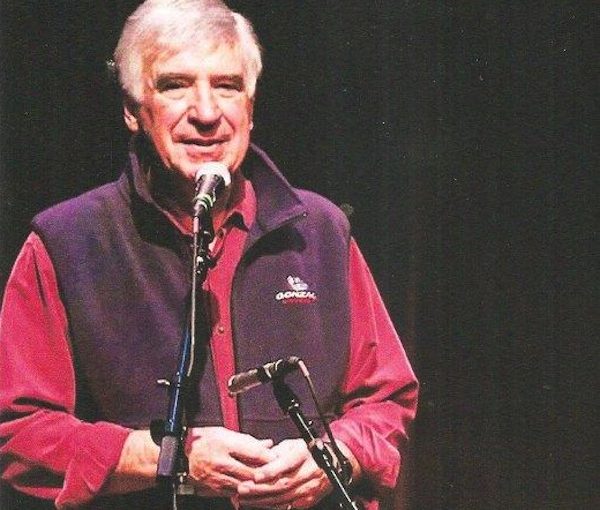
Mike Kobluk (the Chad Mitchell Trio) is one of the musicians featured in Under the Radar, by David Eisenstadt. (photo from Trail Times)

image - Under the Radar book coverUnder the Radar: 30 Notable Canadian Jewish Musicians, which I wrote with Alan L. Simons (editor), takes an historical approach, covering musicians of most genres and genders, some alive and others having passed on, all skilled, but excelling somewhat out of sight. This is the third in a three-part series of excerpts from the book, which was released last November, and is available in paperback and as an ebook from amazon.ca. The excerpts feature performers with B.C. roots: Robert Silverman, Ben Mink and Mike Kobluk.

In 1958, as students attending Gonzaga University in Spokane, Wash., William Chadbourne Mitchell, Mike Kobluk and Mike Pugh formed the Chad Mitchell Trio. Their repertoire criticized the Cold War and the Vietnam War while championing civil rights. Many of John Denver’s early songs were part of their songlist.

Kobluk, who is Jewish, was born in Trail, B.C. As a child, he sang for fun, but “singing for a career … never entered [his] mind.” He majored in English and math at Gonzaga. He spent 10 years – the longest-serving vocalist with the trio – before leaving in 1969.

But, going back. In the summer of 1959, a friend of Mitchell’s “hatched the plan that started us on a professional career” and the trio journeyed to New York to begin that chapter in their lives, according to Kobluk.

By May 1960, they signed with Harry Belafonte’s management company and performed with Belafonte, Pat Boone and Arthur Godfrey.

After two albums were pressed – The Chad Mitchell Trio and In Concert – Everybody’s Listening – Pugh left the group in the fall of 1960 to return to university. Mitchell and Kobluk auditioned more than 150 vocalists, including Tom Paxton. They chose Joe Frazier and, according to The Virgin Encyclopedia of Popular Music, the group cut nine albums together.

Initially, the trio recorded on the Colpix label. Their sound soared recording for Kapp Records, with tunes like “Lizzie Borden” (about the accused axe murderer), “Mighty Day” (remembering the Galveston, Tex., hurricane of 1900) and the Prohibition-era tune “Rum by Gum.” Other songs included “The Ides of Texas” (about financier Billie Sol Estes) and “The John Birch Society.” On their live album, they sang “Moscow Nights” in Russian, a controversial decision at the time.

Interviewed by the Trail Times, Kobluk said that, “in the early 1960s, we worked with Belafonte, culminating in a Carnegie Hall concert he hosted featuring Miriam Makeba, Odetta, the Belafonte Singers and us.” As part of a U.S. cultural exchange program, the trio also toured South America in 1962.

“Over time,” he added, “we’d renew our association with Belafonte and, years later, when the Selma, Ala., march with Dr. Martin Luther King was being organized, our reputation put us on Belafonte’s list.”

They left Belafonte Enterprises in 1962 for Mercury Records, adding provocative songs like “The Draft Dodger Rag” and “Barry’s Boys,” the latter of which lampooned Barry Goldwater’s Republican 1964 presidential run.

Mitchell quit the band in 1965, replaced by John Denver, then a relatively unknown singer/songwriter. The musicians retained the well-known Mitchell Trio name with Denver, “who stayed for three years, writing many of the group’s songs,” notes The Virgin Encyclopedia. In 1966, Frazier was replaced by David Boise. In 1969, when Kobluk departed, Michael Johnson joined. Because of contract legalities, the Mitchell name could no longer be used and the group became known as Denver, Boise and Johnson. But it was shortlived – they disbanded in 1969.

Kobluk told the Trail Times, “[We] performed songs of political and social commentary, not exclusively, but such material was an important part of any program. Equal opportunity and voting rights for all were high on our personal and professional priority list and fodder for such commentary.”

Kobluk, Frazier and Boise moved to careers outside the music business, Mitchell cut various solo albums and Denver’s career as a solo performer soared. Johnson recorded more than 15 solo albums and Frazier became an Episcopal Church priest.

On Nov. 15, 2014, in Bethesda, Md., the trio shared a final stage at a “farewell” concert, with singer/guitarist Ron Greenstein replacing Frazier, who died in March of that year.

Format ImagePosted on February 11, 2022February 10, 2022Author David EisenstadtCategories BooksTags Chad Mitchell Trio, Mike Kobluk, music, Under the Radar
Classical pianist & educator

Classical pianist & educator

Robert Silverman is one of the musicians featured in Under the Radar, by David Eisenstadt. (photo from Robert Silverman) 

***

photo - David Eisenstadt
David Eisenstadt (photo from tcgpr)

Under the Radar: 30 Notable Canadian Jewish Musicians, which I wrote with Alan L. Simons (editor), takes an historical approach, covering musicians of most genres and genders, some alive and others having passed on, all skilled, but excelling somewhat out of sight. This is the first in a three-part series of excerpts from the book, which was released last November, and is available in paperback and as an ebook from amazon.ca. The excerpts feature performers with B.C. roots:  Robert Silverman, Ben Mink and Mike Kobluk.

***

Robert Herschel Silverman is one of Canada’s premier pianists. He was born in Montreal, Que., on May 25, 1938, to Jewish parents from the Ukraine and Romania. Globe and Mail reporter Marsha Lederman wrote, “when he was just 4, after seeing how he was drawn to classical music programs on the radio, he was signed up (by his parents) for piano lessons. By his second lesson, Silverman could identify notes by ear. He could read sheet music before he could read words. But even as he continued with his lessons through high school and university, he never considered a career in piano.”

At 6, Silverman played his first recital. His debut at 14 was with the Montreal Symphony Orchestra. At 23, he planned to become an engineer but decided to be a classical pianist. Lederman reported Silverman saying, “It was really, really late. It’s not the way to do it.”

He earned undergrad arts and music degrees in the 1960s from Sir George Williams (now Concordia) University. He studied with Dorothy Morton (the daughter of Silverman’s childhood piano teacher) at McGill University, and with Cecile Genhart at the Eastman School of Music, Rochester, N.Y. He also earned a Canada Council grant to enrol at the Vienna Academy of Music.

Silverman won the top piano prize at the Jeunesses Musicales Canada national competition, playing twice at Expo ’67. His Allied Arts piano competition success earned a recital debut in Chicago’s Orchestra Hall in 1970. He made his New York Lincoln Centre debut before he turned 40, in 1978, where the New York Timesdescribed him as “a polished and thoroughly finished technician and an extremely articulate [virtuoso].”

image - Under the Radar book coverSilverman performed with global and Canadian orchestras conducted by John Eliot Gardiner, Neeme Jarvi, Kiril Kondrashin, Zdenek Macal, Seiji Ozawa and Gerard Schwarz.

In his 30s, he was an artist-in-residence at Nazareth College in Rochester, N.Y.; he also taught at the University of California in Santa Barbara from 1969 to 1970, and the University of Wisconsin-Milwaukee 1970-73. He moved to Vancouver to join the University of British Columbia as professor of music (piano) in 1973. He was the director of UBC’s music school 1991-95, retiring as professor emeritus of music in 2003. Celebrating his 30-year tenure, Silverman received an honorary doctorate in 2004.

Working with Adrienne Cohen, the former music program director at Toronto’s Koffler Centre of the Arts, Silverman, in 2002, was the artist-in-residence.

“My relationship was informal with no written contract. I received an honorarium for seasonal concerts. I appreciated the opportunity to maintain a visible presence in Toronto’s music life and to help Adrienne enhance and enlarge classical music’s role. Although I’m not observant from a religious standpoint, I am keenly aware of my Jewish heritage and pleased to be affiliated with Koffler, whose programs were attuned to the Jewish community in its traditional sense,” he said.

“I grew up when many North American Jewish luminaries were visible – Horowitz, Rubinstein, Bernstein, Reiner, Heifetz, Menuhin and the up-and-comers, Fleisher, Graffman and Rabin. My musicality was shaped by their warm manner of phrasing and attention to tonal beauty, qualities I hold dear and continue to strive towards.”

He returned to Montreal in 2008 to initiate the Dorothy Morton Visiting Artist series at McGill University’s Schulich School of Music, performing there on its 10th anniversary. He and his wife also endowed a biannual Robert and Ellen Silverman Piano Concerto Competition.

His discography numbers 30-plus CDs and 12 LPs. He received an Order of Canada in 2013.

As a Vancouver-based retiree and a Steinway artist, Silverman devotes himself full-time to recordings and concerts and is heard often on the CBC and Radio-Canada networks.

Format ImagePosted on January 14, 2022January 13, 2022Author David EisenstadtCategories BooksTags classical music, music, piano, Robert Silverman, Under the Radar

Singing for my supper

Do you sing? I’ve always fancied myself as one who had a good singing voice. I love to sing. I’m always ready to join in when there’s a sing-song, particularly if I know the tune and especially if I know the words. Although I’ve never had ambitions to be a singing star, I’ve always been first in line to make a musical noise.

For me, singing is associated with all those times around the campfire. The nostalgia for those times may be the underlying reason for the positive response I have toward the whole idea. Those memories carry a strong positive emotional content.

When I was a kid, I never had the least idea about singing. I never was a fan of singers. I never bought records or tapes. I was too busy reading all those delicious books.

My greatest exposure to singing was my experience in the chorus when my high school – St. John’s Tech, in Winnipeg – annually presented operettas by Gilbert and Sullivan. I loved that. I was in the chorus every year I was at that school. I appeared in HMS Pinafore, Yeoman of the Guard and The Mikado. It was a lot of work, and we spent many hours after school in practices before we could get things right. It shouldn’t be a surprise then that some of the tunes are still with me after more than 60 years. The excitement, and even the thrill, of the performance occasions lends a rosy glow to my memories of those days.

It was only in later life, in Montreal, when I tried to repeat my vocal exploits, that I really learned to appreciate how small my talents were in this area of endeavour. I discovered that I was prone to take up the tune of anyone who stood beside me. I found out that my capacity to keep strictly to the notes of the part I was supposed to sing was variable. I had no knowledge of how one could sustain a note. In short, it was a hazardous undertaking for anyone to include me in a respectable chorus. To make things worse, I was known to become confused as to where we were in a production, and to launch myself forcefully into song when the rest of the chorus was steadfastly silent. These were the only solos I ever performed.

To the detriment of those who might be concerned about sound pollution, these small negatives have never discouraged me from forcing my voice on an unappreciative public. I leap with lusty abandon at any chance to show off my limited abilities.

Over time, I have passed from tenor to muffled baritone, and I continue to be eager to share my gifts. While I have never been offered money to do this, I feel it is my duty, nonetheless, to do so, especially when participating allows me to share in the buffet that can sometimes accompany such occasions. It is only fair that I sing for my supper.

When I am engaged in my full-throated roar, I am too busy to note the pained expressions of those around me. This is just good fun for all of us, isn’t it? I am just entering into the spirit of things, and covering for those lacking a musical sense, aren’t I? Or perhaps they are just too shy, a failing from which I do not suffer. Surely, they are enjoying the noise just as much as I am?  I worry only if people start to leave.

I sometimes sing in the rain, something like whistling in the dark, to keep up my spirits as I venture into unknown places. Let the winds blow the clouds away to deliver to us another sunny day, I say.

We were fortunate enough, at one time, to have had a second home in Arizona. Really only a trailer, it permitted us to spend the worst winter months away from the cold and dreariness of both Ireland, when we lived there, and the wet fall and winter seasons in the rain forest where we’ve lived lately. What had brightened our time even more was to have fallen in with a group of Canadians fleeing the winter cold. Wonder of wonders, one of them played the guitar and liked to sing.

Was I happy? You betcha! We were just a small group and when I was belting out songs as loudly as I could, it was as if I were back at camp. And they tolerated my enthusiasm. And, sometimes, they fed me. I was singing for my supper, again.

Now, in our current hideaway, we’ve joined a group, mostly oldsters, who meet weekly to reprise all the melodies reaching back across recorded history. My Bride is a witness – and if I perform as required, she will serve me a hearty brunch as a reward when we return home. I can do this!

Max Roytenberg is a Vancouver-based poet, writer and blogger. His book Hero in My Own Eyes: Tripping a Life Fantastic is available from Amazon and other online booksellers.

Posted on January 14, 2022January 13, 2022Author Max RoytenbergCategories Op-EdTags memoir, music, singing

Inspiring songs and stories

Inspired by Story and Song – this was the topic of the JSA Snider Foundation Virtual Empowerment Series session held on Dec. 2, in partnership with the Louis Brier Home and Hospital.

Jewish Seniors Alliance co-president Gyda Chud welcomed the 45 Zoom participants, as well as the 35 Louis Brier residents, who joined to hear Shanie Levin’s stories and Myrna Rabinowitz’s singing.

Rabinowitz opened with a Chanukah song in Yiddish, “Drei Zich Dreidele” (“Spin Yourself Dreidel”), which was followed by Levin reading Sholem Aleichem’s Hanukkah Gelt (Hanukkah Money). In this story, Motl and his brother take part in the beloved customs of a favourite holiday: the lighting of the chanukiyah, eating potato latkes, playing dreidel, and the gift of gelt.

In the course of the program, Rabinowitz sang songs in Hebrew, Yiddish and Judeo-Spanish. She sang “Oh Hanukkah,” a song in Judeo-Spanish about the holiday’s eight candles, as well as more personal songs, including one she wrote on the occasion of her grandson’s birth and one she wrote for her father. She offered the audience a treat by singing the classic and sentimental Yiddish song by the Barry sisters from the 1950s, “Wie Nemt Men a Bissele Mazel?” (“Where Can You Get a Little Luck?”).

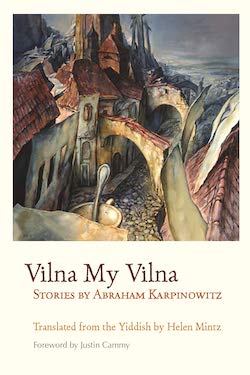
Levin chose the story by Abraham Karpinowitz titled Jewish Money, from the book Vilna My Vilna, which is a volume of his work that was translated into English by local storyteller Helen Mintz. Karpinowitz was known for his detailed and vivid descriptions of the city of Vilna and the odd characters who lived there.

The Spice Box is an anthology of Canadian Jewish writers and Levin read an illuminating story written in 1968 by Larry Zolf, who was a CBC personality and writer for the program This Hour Has Seven Days. The story, Boil Me No Melting Pot, Dream Me No Dreams, deals with the difference between the American and Canadian immigrant experiences.

Preposterous Papa, the final story read by Levin, was an excerpt from a book by Lewis Meyer. Meyer’s father grew up in a small town in Oklahoma, which had very few Jewish families. Unable to commute to the synagogue in the larger city, his father bought a house and converted it into a chapel, offering a place for the few Jewish families in nearby towns to socialize and pray on High Holidays.

Rabinowitz ended the program with an upbeat song in Yiddish, the title of which translates as “We Are All Brothers and Sisters.”

Nathalie Jacobs of the Louis Brier thanked the performers and expressed her wish to partner again with JSA in the future.

Tamara Frankel is a member of the board of Jewish Seniors Alliance and of the editorial committee of Senior Line magazine. She is also a board member of the Jewish Community Centre of Greater Vancouver.

Posted on December 17, 2021December 16, 2021Author Tamara FrankelCategories Music, Performing ArtsTags Jewish Seniors Alliance, Louis Brier Home, music, Myrna Rabinowitz, RJDS, seniors, Shanie Levin, storytelling, The Storytelling Festival
Chanukah Market at JCC

Chanukah Market at JCC

Chanukah treats will be plentiful at the JCC Chanukah Market. (photo from JCCGV)

Come celebrate the Festival of Lights on Nov. 28 at the first-ever Chanukah Market. From 11 a.m. to 5 p.m. that day, the parking lot at the Jewish Community Centre of Greater Vancouver will be transformed into a marketplace for all to enjoy.

Under large heated tents, visitors will be able to shop at arts and crafts vendors, peruse affordable art, seek out that perfect gift, enjoy live, all-ages entertainment and participate in family activities – or just soak up the ambiance and enjoy a nosh from one of the food vendors on site. The day’s festivities will culminate in the lighting of the first candle on the chanukiyah at sundown.

Performances will include the music of Tzimmes, singer/guitarist Anders Nerman, children’s entertainer Monika Schwartzman, the Vancouver Jewish Folk Choir, singer-songwriter Auto Jansz, the klezmer sounds of the Klezbians plus other bands and singers, dancers and surprises. Kids and their families will find lots of things to do, from playing on bouncy inflatables to joining in some hands-on art-making specially designed and delivered by the JCC early childhood department.

More than 20 vendors will be on tap to offer jewelry and other creative, useful and decorative items and chachkas. In addition, an 11-member arts and crafts group is presenting an exhibition and sale, offering items such as giclée prints, ceramics, woodwork, glass design, photographs and textiles.

Food trucks and vendors will offer Mediterranean and Mexican cuisines – and Chanukah treats, including latkes and sufganiyot.

The market is presented with the assistance of Canadian Heritage and admission is free with a donation to the Jewish Food Bank. For the full vendor list and more information, visit jccgv.com/chanukah-at-the-j.

– Courtesy Jewish Community Centre of Greater Vancouver

Format ImagePosted on November 19, 2021November 18, 2021Author Jewish Community Centre of Greater VancouverCategories Celebrating the HolidaysTags art, Chanukah, food, gifts, JCC, marketplace, music
A story of Hava Nagila

A story of Hava Nagila

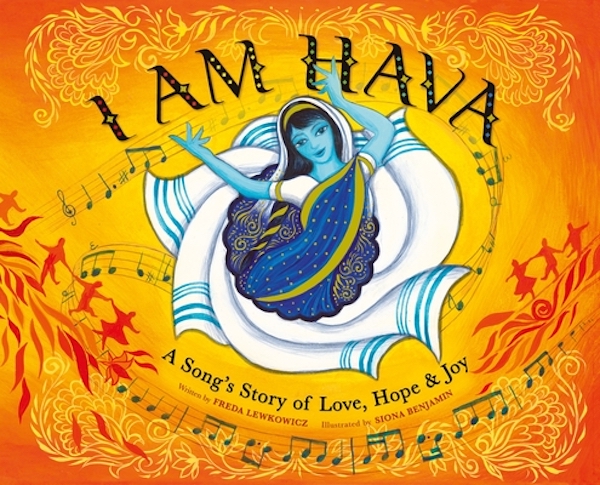
Among Intergalactic Afikoman’s newest picture books is I Am Hava: A Song’s Story of Love, Hope & Joy, written by Freda Lekowicz and illustrated by Siona Benjamin. It tells the story of the song “Hava Nagila,” from its birth as a niggun (melody without words) in Ukraine, to Jerusalem, to when it received its name and lyrics (though exactly from whom is still a mystery), and its journey around the world to popularity well beyond the Jewish community.

Hava Nagila means “Come and Rejoice,” explains the book, and this story – told by the song herself, personified as a blue-skinned Indian-Jewish girl in a sari – is full of movement and colour. It boldly celebrates the diversity of the Jewish people and our culture.

“For me, Hava’s story is a story of universality and multiculturalism,” Benjamin, who grew up as a Bene Israel Jew in India, writes at the end of the book. “Universality is always born from the specifics. The specifics for me are my Jewishness, my Indianness and my Americanness.

“Many blue-skinned characters populate my paintings,” she continues. “Hava is blue because blue is the colour of the sky and the ocean. Blue is the colour of the globe. Blue is also such a Jewish colour. It’s in the tallit. It’s in the tzitzit. It’s in the Israeli flag.”

Montreal-born Lekowicz also connects personally with the story. She shares that her parents, after the Holocaust, were in a displaced persons camp in Germany. “Like other Holocaust survivors,” she writes, “they were broken and in mourning. Yet the joyful sounds of Hava Nagila sometimes echoed in the camp. ‘Let us celebrate,’ it urged. The song symbolized hope and resilience.”

This lovely and imaginative book does joyous justice to this well-known song.

Format ImagePosted on November 19, 2021November 18, 2021Author Cynthia RamsayCategories BooksTags children's book, diversity, Freda Lekowicz, Hava Nagila, history, Intergalactic Afikoman, music, Siona Benjamin, songs
Gritty, moving, funny stories

Gritty, moving, funny stories

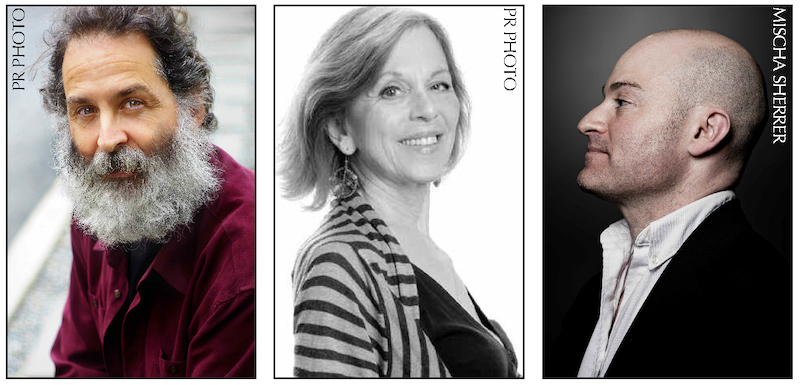
Stephen Aberle, Nicola Lipman and Geoff Berner will perform stories from Vilna My Vilna: Stories by Abraham Karpinowitz, as translated by Helen Mintz, as part of Western Gold Theatre’s Virtual Gold series.

Vilna My Vilna: Stories by Abraham Karpinowitz (Syracuse University Press, 2016) is a collection of 13 short stories and two brief memoirs by Abraham Karpinowitz (1913-2004), translated from Yiddish into English by local storyteller Helen Mintz.

Thanks to Mintz, “more of us can now visit Karpinowitz’s Vilna – a city full of colourful characters, both real and not, and share in a small part of their lives.” (jewishindependent.ca/vilna-the-place-its-people) And, thanks to Western Gold Theatre, even more people will be able to visit Karpinowitz’s Vilna this Chanukah.

When Vilna My Vilna was published, actor Stephen Aberle both helped present the book and interviewed Mintz at the JCC Jewish Book Festival.

“As part of the presentation, Helen and I read excerpts from several of the stories. I was struck immediately by how engaging and naturally theatrical these stories and characters were, and I’ve been thinking ever since that a dramatic rendition would be a great thing,” Aberle told the Independent. “Then, earlier this year, Tanja Dixon-Warren, Western Gold Theatre’s artistic director, approached me with the idea of curating one of their Virtual Gold series around Chanukah time. I immediately thought of Vilna My Vilna as the perfect material for such a project, pitched it to Tanja, and she loved the idea, as did Helen. So, I set about to recruit my luminously wonderful co-presenters, Geoff Berner and Nicola Lipman, to be part of it all.

“When Helen and I first began talking about some kind of performance of these stories, we thought of Geoff and it just clicked perfectly. His ‘klezmer-punk’ material and presentation and his beautiful selection and rendition of Yiddish songs provide exactly the flavour to suit these rather gritty stories,” said Aberle. “And I had got to know Nicola through working together on the development of a wonderful new play by Manami Hara, Courage Now (coming soon to a theatre near you – but that’s another story) about Chiune Sugihara, the Japanese diplomat who helped thousands of Polish and Lithuanian Jews escape the Nazis.”

Lipman was “another perfect fit,” said Aberle. “And here we are!”

Western Gold Theatre will release individual video recordings of the selected stories, one at a time, throughout Chanukah, said Aberle, “and Geoff will frame each of them with some of his stirringly beautiful Yiddish music – an intro and an ‘extro,’ if you like – thematically linked to the content of the story. I won’t say a lot more except to add that, when Geoff and I were talking about which songs to do where, what connections to make and so forth, I think we both found it haunting and moving. Chills.”

image - Vilna My Vilna book coverDeciding which of the short stories to include in the production wasn’t easy.

“I have pages and pages of notes about the stories, characters, settings, arc of the narrative and so forth,” said Aberle. “In the end, I felt like a lot of my choosing was helped along by the format: we’ll be recording ourselves reading over Zoom, so we need to keep things fairly simple, with not too many characters and not too much complex action. I chose stories where the scenes tend to involve one or two characters at a time, so the performers can dig in and work off each other.

“I also tried to choose a variety of themes and moods. The stories are written against the backdrop of the writer’s awareness of what was to come: the Nazi annihilation of Vilna’s Jewish community. We have to be true to that bleak awareness; at the same time, there’s a lot of joy and humour. I tried to make choices to honour the depth and balance Karpinowitz brings to his work.”

Of the stories to be presented, the production’s press release highlights “Vilna Without Vilna,” describing it: “A Vilna native (a pickpocket in his youth, now grown up and respectable) comes back to visit his home city and finds that not a trace of what he remembers remains.”

In “The Folklorist,” a “researcher into Yiddish folklore finds himself professionally drawn to the Vilna fish market – and personally drawn to one particularly expressive fishwife.” And “Chana-Merka the Fishwife” picks up this story, “continuing the adventures of the Vilna fishwife and the school of Yiddish Institute scholars who swim after her.”

Finally, “Tall Tamara” recounts how a “Vilna prostitute and her friend find their way out of the brothel and into very different lives.”

The performances will all be online.

“Theatres are just starting to re-reopen up to in-person performances, but, for this project, we’re sticking to video presentations,” said Aberle, thanking Dixon-Warren and Western Gold “for their vision in creating the Virtual Gold series.”

“When the pandemic shut things down,” he said, “they decided they weren’t going to let it stop their work. They also decided it was important to provide opportunities to artists from a diverse spectrum of communities. And to make all the presentations free! That all takes courage and generosity of spirit.”

For those who watch the Virtual Gold series, Aberle said, “I think I can pretty much guarantee there will be laughs; there may be a few tears. It’s an honour to help share these works so more people can get to know them.”

The stories from Vilna My Vilna will be posted throughout the week of Chanukah, Nov. 28-Dec. 6, at westerngoldtheatre.org/virtual-gold. The full name of the series is Look! Listen! and Learn! Virtual Gold, and the Learn! segment will feature a video interview with Mintz about Vilna, Karpinowitz and being a translator, which will be posted on the Virtual Gold page, as well as on Western Gold Theatre’s YouTube page.

Format ImagePosted on November 5, 2021November 4, 2021Author Cynthia RamsayCategories Performing ArtsTags Abraham Karpinowitz, Geoff Berner, Helen Mintz, music, Nicola Lipman, Stephen Aberle, storytelling, theatre, Vilna, Yiddish
Remembrance Day Revue

Remembrance Day Revue

The Hot Mammas – left to right, Mary Ella Young, Julie Brown and Georgina Arntzen – with Tom Arntzen. (photo by Dee Lippingwell)

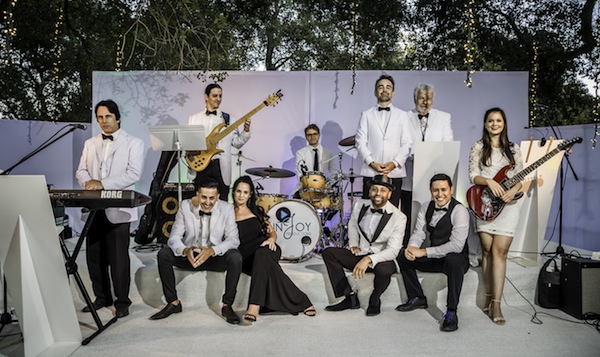
The Hot Mammas – Mary Ella Young, Julie Brown and Georgina Arntzen – with Tom Arntzen perform a Remembrance Day Revue on Nov. 10 and 11 at the Corner Stone Bistro in North Vancouver. With careers spanning decades, they have done it all, from folk to jazz, radio to musical theatre, Vancouver to New York; these women know how to work a room. Long-time friends Arntzen, Brown (who is a member of the Jewish community) and Young formed the Hot Mammas in 2004 and they entertain audiences with the kinds of stories and harmonies that can only come from such a friendship. For reservations, call 604-990-3602 or visit thehotmammas.com.


Format ImagePosted on November 5, 2021November 4, 2021Author The Hot MammasCategories MusicTags Corner Stone Bistro, music, Remembrance Day, women
Highlighting social goodness

Highlighting social goodness

The Nov. 1 online event Finding Grounds for Goodness includes the première presentation of Finding Grounds for Goodness in the Downtown Eastside, which was created during last year’s Heart of the City Festival. (photo from Jumblies Theatre)

This year’s Downtown Eastside Heart of the City Festival, which runs Oct. 27-Nov. 7, includes the screening of short videos from Jumblies Theatre and partners on the theme of “social goodness.”

Jumblies’ multi-year Grounds for Goodness project is an artful exploration of why and how people sometimes act in good ways towards each other. As it has adapted to community-engaged art-making during pandemic times, this project has generated a varied and whimsical collection of short videos with communities and artists from around Canada.

At the Nov. 1, 4 p.m., online event Finding Grounds for Goodness, hosted from Toronto by Jumblies staff, a sampling of these short films will be shared, including the première presentation of Finding Grounds for Goodness in the Downtown Eastside, which was created during last year’s Heart of the City Festival with DTES creative community members and Vancouver and Toronto artists.

Jewish community member Ruth Howard is the founder and artistic director of Jumblies Theatre, which makes art in everyday and extraordinary places with, for and about the people and stories found there. The Jumblies project was originally inspired by the history about the rescue of Albanian Jews during the Second World War by Albanian Muslim people.

Composer Martin van de Ven, an expert in klezmer and Jewish music, who has been involved in many Jumblies projects, told the Independent, in an interview last year about the DTES’s Grounds for Goodness, about besa, “an Albanian Islamic concept about hospitality and the need to help and protect guests and those in need within and beyond your community.

“In Albania,” he explained, “during the Second World War (and Italian and then Nazi occupation), this meant that almost all Jewish people living and finding refuge in Albania were sheltered and hidden, and Albania ended up with a larger Jewish population at the end of the war than at the beginning.” (See jewishindependent.ca/highlighting-goodness.)

The festival at large

The 18th Annual Downtown Eastside Heart of the City Festival is presented by Vancouver Moving Theatre in association with Carnegie Community Centre, the Association of United Ukrainian Canadians and a host of community partners. It will feature more than 100 events throughout the DTES and online.

This year’s festival theme, “Stories We Need to Hear,” resonates today as people grapple with the dramatic impact of the pandemic, ongoing displacement, the fentanyl crisis, and the reality of bigotry and systemic racism.

In the words of late DTES poet Sandy Cameron, “When we tell our stories we draw our own maps, and question the maps of the powerful. Each of us has something to tell, something to teach.”

The 12-day festival includes music, stories, poetry, theatre, ceremony, films, readings, forums, workshops, discussions, art talks, history talks and visual art exhibitions. The Art in the Streets program features surprise pop-up music and spoken word activities on sidewalks and small plazas throughout the historic district.

A few highlights of this year’s festival are We Live Here, a large-scale outdoor project projecting hyper-speed videos of Downtown Eastside artists’ artwork, produced by Radix Theatre; Honouring Our Grandmothers’ Healing Journey Launch, three days of ceremony, teachings and storytelling honouring grandmothers who traveled to the DTES (with Further We Rise Collective and Wild Salmon Caravan); and Indigenous Journeys: Solos by Three Woman, which profiles local artists Priscillia Mays Tait (Gitxsan/Wet’suwet’en), Kat Zu’comulwat Norris (Lyackson First Nation) and Gunargie O’Sullivan aka ga’axstasalas (Kwakuilth Nation).

Elder and activist Grace Eiko Thomson reads from and talks about her book Chiru Sakura (Falling Cherry Blossoms), which chronicles her and her mother’s journey through racism, and Eiko Thomson’s advocacy for the rights of Canadians of Japanese ancestry. In My Art Is Activism: Part III, DTES resident Sid Chow Tan shares videos from his archival collection that highlight Chinese Canadian social movements and direct action in Chinatown, particularly redress for Chinese head tax and exclusion. And the ensemble Illicit Projects presents Incarcerated: Truth in Shadows, three shadow plays dedicated to people who have faced unjust treatment in Canada’s incarceration system.

Other events honour various DTES performing artists and shared cultures. The festival involves professional, community, emerging and student artists, and lovers of the arts.

For tickets and more information, visit heartofthecityfestival.com.

– Courtesy Heart of the City Festival

Format ImagePosted on October 8, 2021October 14, 2021Author Heart of the City FestivalCategories Performing Arts, TV & FilmTags activism, art, Downtown Eastside, DTES, film, Heart of the City Festival, Jumblies, music, Ruth Howard, theatre

Posts pagination

Previous page Page 1 … Page 5 Page 6 Page 7 … Page 13 Next page
Proudly powered by WordPress