אירועי השבעה באוקטובר שהביאו למלחמה הקשה בין ישראל והחמאס ברצועת עזה הגבירו משמעותית את השנאה והאנטישמיות כלפי יהודים וישראלים שגרים בעולם. נשאלת השאלה האם הםנמצאים בסכנה קיומית? והאם השנאה והאנטישמיות יתמתנו לאחר סיום המלחמה בין ישראל והחמאס
לאור אירועי השבעה באוקטובר שהציגו תמונה קשה מנשוא של פעילות החמאס הרצחנית שכללה גם מעשי אונס והתעללות, ישראל, ישראלים ויהודים בחו”ל זכו לסימפטיה לתקופה קצרה שנמשכה כחודש ימים. אך כשהעולם רואה את מאות אלפי אזרחים בהם נשים ילדים רבים שנהרגו לאור הלחימה של צה”ל מול החמאס, הסימפטיה וההדה התחלפה בשנאה ואנטישמיות גלויה מול ישראל כמדינה, וכן כנגד ישראלים ויהודים שגרים ברחבי העולם. ככל הלחימה ברצועת עזה נמשכת, שמביאה להרס גדול תמונות קשות מתפרסמות בכל העולם של ילדים רעבים ורבים רבים שמתים בקרב האוכלוסייה המקומית, להבות השנאה גדלות בצורה חריפה ביותר
ישראלים ויהודים רבים בעולם המערבי שכולל את מדינות אירופה, ארה”ב וקנדה, מורידים פרופיל בחיי היום יום שלהם, מסתירים סממנים יהודים וישראלים ובודקים מי עוקב אחריהם. עד כה נרשמו הרבה תקריות נגד ישראלים ויהודים במדינות שונות וכנראה המצב אף יחריף, כל עוד נמשכת הלחימה ברצועת עזה ונרשמים הרבה קורבנות בנפש. לפי שעה אספקת מזון ומצרכים חיוניים לאוכלוסיה המסכנה של עזה רבתי, לא מספיקה
המלחמה בעזה הציתה כאמור את האנטישמיות בעולם שמגיעה לרמות גבוהות ביותר
יתכן ובמדינות דרום אמריקה זה לא מורגש אך בכל המערב זה מורגש כל הזמן וכל יום. תקריות נגד יהודים וישראלים נרשמות כל העת בערים רבות בעולם בהן ברלין, ניו יורק, לוס אנג’לס, לונדון, מונטריאול, טורונטו ועוד ועוד
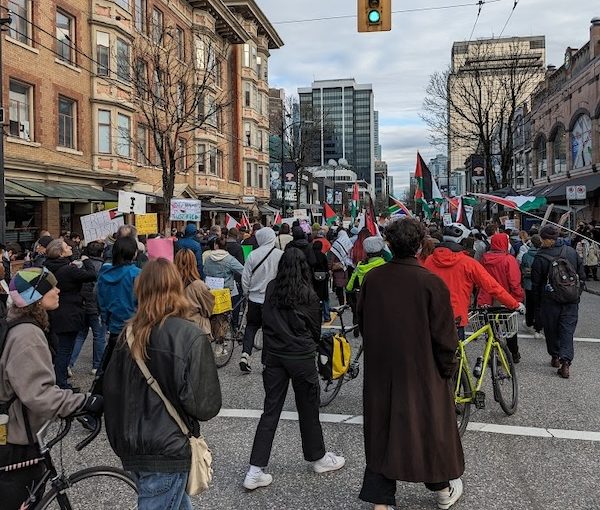
ונקובר כרגע יחסית שקטה אך מדי סוף שבוע יש כבר הפגנות של פלסטינים ותומכיהם. להערכתי כשלושת אלפים משתתפים מגיעים לאירועים אלה שמתקיימים בעיקר בדאון טאון. אלפים צועדים לעבר הכיכר המרכזית בעיר – בין הרחובות רובסון ווסט ג’ורג’יה -והמשטרה סוגרת את הרחובות. זו תמונה לא נעימה כלל וכלל. הפגנות התקיימו גם בגשרים מתחברים לדאון טאון (בוארדד וגרנוויל) והתנועה התעכבה במשך שעות. הפגנות קטנות יותר מתקיימות באזורים מרוחקים יותר במטרו ונקובר
אתה אף פעם לא יודע מי יעמוד מולך ברחוב או בחנות האוכל וכידוע שונאי ישראל לא מבחינים במי תומך במדיניות ישראל במאה אחוז ומי שמתנגד למלחמה בעזה שהביאה לקורבנות רבים ורעב גדול. רבים הפכו לעיוורים לאור הסכסוך הנוכחי. וזה מצב חמור בפני עצמו
בנסיעה להוואי לא לקחתי לראשונה ספר בעברית אלה באנגלית. לא רק לטיסה אלה גם לקריאה בחדר במלון. בחדר אני לא נועל את הדברים כיוון שזה רק יכול לעורר חשד שאני מחביא משהו בעל ערך. לכן אין יותר ספרים בעברית בנסיעות
אני כידוע לא מדבר עברית ברחובות אך כשיש מפגש עם חבר או שניים דוברי עברית בקפה אין לי ברירה, כי הם לא מוכנים להסתתר ולדבר באנגלית ודווקא מבקשים לדבר בעברית
כשאני מדבר באנגלית עם מקומיים הם מבחינים במבטא שלי. רובם חושבים שאני בא מרקע צרפתי או גרמני שזה לא רע. אך אין לדעת מה יכול לקרות אם מישהו שאינני מכיר ידע שאני ישראלי לשעבר
הדברים רק הולכים ומחמירים. לא ידוע לאף אחד מאיתנו האם תירשם רגיעה במצב או השנאה והאנטישמיות אף יחריפו. להערכתי יקח עוד זמן רב עד שנרגיש להקלה במתח והחיים יחזרו למסלולם במדינות המערב. התקווה בסוף תנצח
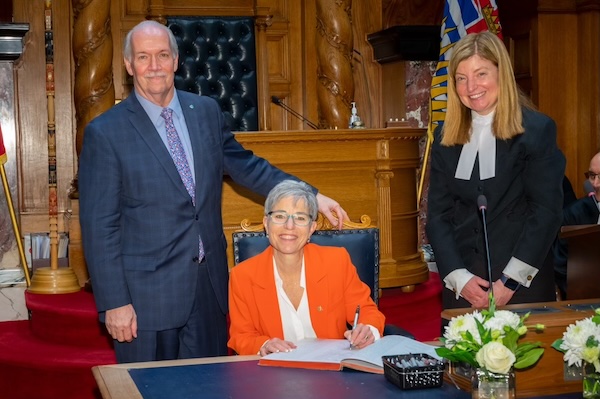
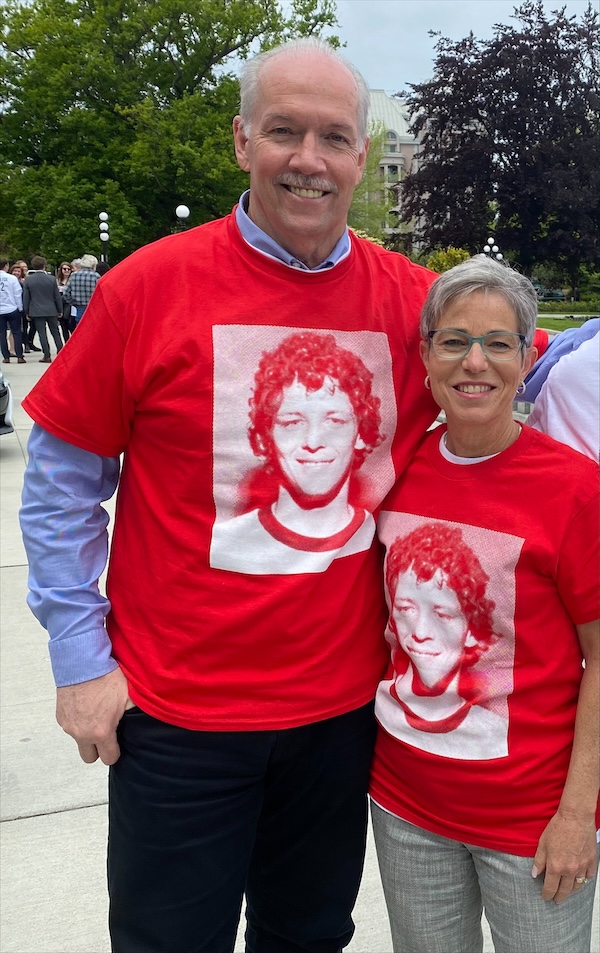
Selina Robinson, centre, with then BC premier John Horgan and Kate Ryan-Lloyd, clerk of the Legislative Assembly, at Robinson’s swearing-in ceremony in 2017. (photo from Selina Robinson)
Selina Robinson says she was fired from the British Columbia cabinet. Premier David Eby says she quit.
This is merely the tip of an iceberg in the conflicting stories that have roiled BC politics since Robinson’s cabinet career ended in February – and which burst into an even bigger storm when she left the New Democratic Party caucus March 6 with an incendiary letter to caucus colleagues.
Whether Robinson jumped or was pushed, Jewish community leaders and opposition politicians are denouncing what they say is a double standard, with multiple people – including the premier – getting second chances for remarks that were at least as impolitic as Robinson’s.
In a wide-ranging interview with the Independent, Robinson maintains the premier prevented her from doing precisely the work he called on her to do – another point that Eby contradicts. He thought her acts of contrition were proceeding just fine and suggests he was blindsided by her resignation from caucus.
Perhaps the prickliest aspects of the entire controversy are the motivations of the individuals involved. Robinson, opposition officials and many in the Jewish community see antisemitism at play. Government officials – including the cabinet minister Robinson says the premier “trotted out as the new Jew” – say that the evidence doesn’t amount to racial bias.
The bones of the story are familiar by now – but Robinson shared with the Independent personal reflections and sharp critiques of former colleagues, including Eby, fellow New Democrats who she accuses of profound insensitivity in the aftermath of the Oct. 7 Hamas terror attacks, a death threat that is now in the hands of international policing authorities, and how everything might have been different if John Horgan were still premier.
Poor choice of words
The drama began with words Robinson spoke in a Jan. 30 webinar organized by B’nai Brith Canada featuring Jewish elected officials from across Canada – or, at least, that is how most media coverage frames the controversy. Robinson said she has had a target on her back since much earlier, as a Jewish woman with emotional, spiritual and familial connections to Israel. That targeting came from within her own party, she claims, and she went into some depth about her fights with fellow New Democrats in recent months and years over the issue.
During the January webinar, Robinson said that the area designated for a Jewish state under the 1947 United Nations Partition Resolution was “a crappy piece of land with nothing on it.”
She immediately clarified in the webinar that there were people living there and she was referring to the arability of the land and the limited economic development in the region. But the genie was out of the bottle. Robinson told the Independent that what happened in the succeeding weeks – and continues roiling – is not so much a result of what she said, but of who she is.
Marvin Rotrand, the outgoing national director of B’nai Brith’s League for Human Rights, was host of the now-notorious webinar. In a statement afterward, he said that a small part of Robinson’s speech was distorted and taken out of context, leading to a campaign against her by groups and individuals “too well known for their hate of Israel.”
Within days, thousands had signed a petition calling for Robinson’s firing. Leaders of more than a dozen mosques and Islamic associations sent a letter to Eby warning that NDP representatives would not be welcome in their sacred spaces as long as Robinson remained in cabinet. Days later, her constituency office was vandalized – including with the words “Zionism is Nazism” – and she received a death threat that international police organizations deem credible.
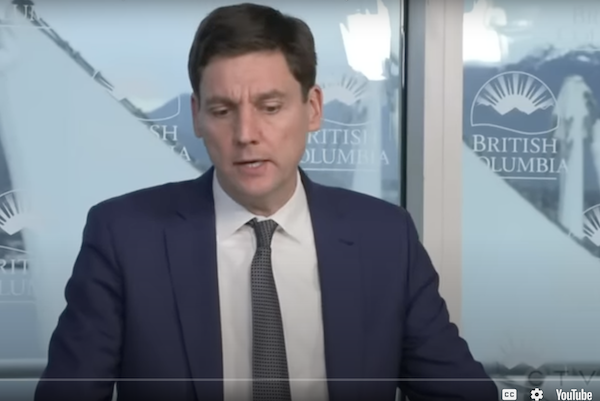
Feb. 5, 2024: Premier David Eby announces that Selina Robinson will step down from her cabinet position. (screenshot)
While pressure was building, Robinson and Eby both appeared to be feeling their way through uncharted territory. Robinson apologized – twice. She also offered to take anti-Islamophobia training.
“My words were inappropriate, wrong, and I now understand how they have contributed to Islamophobia and anti-Palestinian racism,” she said.
Parallels Robinson drew between Indigenous peoples in British Columbia and Jewish indigeneity in Israel also brought condemnations, and she specifically apologized for those remarks.
“The experiences of First Nations people are not mine to manipulate,” she said. “That was wrong and I am deeply sorry.”
“Her comments increase divisions in our province,” Eby told media. “They increase the feelings of alienation of groups of people, especially people of Palestinian descent and people who are concerned about the death and the destruction in Palestine that is happening right now.
“She has apologized unequivocally, as she should. And she’s got some more work to do,” Eby said. Robinson, the premier told media, was in the process of reaching out to community leaders to repair the damage her remarks caused.
What happened in those hours sowed the seeds for further conflict within the party, including, Robinson now says, the premier’s refusal to allow her to do what she could do – and wanted to do – torepair the damage she caused.
Was she wrong?
Some commentators have defended Robinson, saying that pre-state Israel was indeed a crappy piece of land in terms of arability. Robinson reflected on what she said and the reaction to it.
“I said things that I did not intend to hurt anybody,” she said. “I did not intend to make Arab, Muslim or Palestinian people feel like they are ‘less than.’ I understand that just the way I described Israel made them feel like they were poor land stewards, that they somehow were to blame for the conditions.”
Nevertheless, she said, she did not invent a narrative that Mandatory Palestine was a poor piece of land, she said.
“Other people have characterized [pre-state] Israel in that way,” she said. “I didn’t create that narrative. I was repeating a narrative that others had stated, from Mark Twain to land economists.”
For the purposes of historical accuracy, she said, she blames the Ottomans, whose empire had controlled the land for 400 years, for a lack of economic vibrancy in the region. That long-ago history, though, does not mean her words did not affect contemporary audiences, she acknowledged.
“Those words impacted them,” she said of people who expressed disappointment and other emotions at her remarks.
Criticism she rejects, though, are assertions that she espoused hate.
“I didn’t espouse hate,” she said, slowly, quietly and firmly. “I said words that hurt people. There was no hate in those words.”
These nuances, for what they may be worth, made no difference when it came to Robinson’s continuation as a cabinet minister.
Jumped or pushed?
“The depth of the work that Minister Robinson needs to do, in order to address the harms that she’s caused, is significant,” the premier told media Feb. 5. “[S]he screwed up, she made a really significant error and so we need to address the harm that was caused by that.”
At a news conference, Eby said a “joint decision” was made that Robinson would leave cabinet.
While she agreed to that wording, Robinson told the Independent, that is not a correct assessment of what happened.
“I didn’t think that I needed to leave cabinet,” she said. “That was not my choice. The premier was insistent that I had to.”
Robinson says Eby seized on something she said during discussions around her future.
“I said, ‘If you are asking me to step down from cabinet, if that’s what you want, I will,’” Robinson recalled. “It’s not what I want. And he said, ‘I can’t see a path forward for you in cabinet.’ So I said, ‘So you’re asking me to resign.’”
Robinson said she insisted the announcement from the premier’s office say that the premier asked her to resign.
“And they said, no, you offered your resignation,” Robinson continued. “And I said … the most you’ll get from me is that it was a joint decision and that’s what the press release [said], a ‘joint decision.’ But … let’s be really clear, as I said in my letter [resigning from caucus], I was told that there was no path back.”
Eby denies this.
“I did not remove her,” the premier told the Independent. “I can certainly believe that she didn’t want to do that, but I did accept her resignation.”
Leaving caucus
Robinson’s successive apologies and commitment to undergo anti-Islamophobia training didn’t save her cabinet job. But, she said, she was committed to making amends.
“The concept of teshuvah [repentance], for us as Jews, I take it seriously,” Robinson said, “It’s not enough to say you’re sorry, what are the deeds that go with it?”
Robinson came up with an idea she terms “The Project.”
In the aftermath of her firing, followed by the vandalizing of her constituency office and a death threat, Robinson and her family took off for a week in Mexico to recuperate.
“I called the premier from Mexico and said I have an idea, what do you think?” she recalled. “It was around outreach, working with the [Jewish and Muslim] communities, bringing them together … what did he think?
“And he said that’s a really interesting idea, let’s think about it,” Robinson said.
When she returned from Mexico, she talked to the premier’s chief of staff, Matt Smith. She fleshed the idea out some more, proposing that she and perhaps someone from the civil service – a Jewish person and a Muslim person – “would work with these communities and try to find ways to do dialogue and engagement and break bread and do the things that bring about peace and what could that look like,” said Robinson. She discussed the concept with Deborah Lyons, Canada’s special envoy on Holocaust remembrance and combating antisemitism, who was supportive and offered to do anything she could to support the effort, Robinson said.
After contemplating the idea, Smith came back with his decision: “Too political,” Smith said, according to Robinson.
The premier told the Independent that the idea that a civil servant would work on the project with an elected official is what was “too political.”
Robinson doesn’t believe that. “It was more, we’d prefer to be silent on the whole thing,” she said.
Silence, she contends, is a root of the entire problem – not just with her firing but around the government’s approach to antisemitism. The premier and the government, she contends, are more concerned with success in this fall’s election than with doing the right thing.
“We are in election mode,” she said. “And, frankly, we’ve been in election mode since [Eby] became the premier [in November 2022]. I get it. I’m a politician. I understand the gig, I know how these things work.
“However,” she said, “we are also government. We are a party trying to get reelected and we are government, and you have to be able to do both at the same time. It’s hard. I’m not saying it’s easy. But you can’t give up the governing part and just do campaign mode. You campaign and you govern simultaneously and I think what’s happened is they stopped governing. A government says, we have a problem, what are we going to put in place to help this community that is being terrorized? And it’s controversial, because there are others who think it’s appropriate to terrorize this community. I think what governments are supposed to do is bring people together. Right now, the actions are ripping people apart.”
The fact that the premier’s office would not allow her to engage her colleagues in a broader discussion about both antisemitism and Islamophobia led her to believe there was nothing she could do that would satisfy the government.
“I committed to a number of deeds and have acted on them and that still wasn’t good enough,” she said.
While the government seemed unsatisfied with her efforts, many Muslim people have been more forgiving, she said. Many have expressed forgiveness for her words and accepted her apologies – she has accepted Iftar invitations and extended seder invitations to Muslim friends and acquaintances, she said.
“There are Arab and Muslim leaders that I have had wonderful conversations with, heartfelt conversations,” she said. “I could hear the agony in their voice and they could hear the agony in mine.”
That kind of amity, though, was not something she found among her NDP colleagues. On March 6, her 60th birthday, Robinson released a statement resigning from the NDP caucus.
Harsh words for Heyman
The day after Robinson’s resignation, the premier’s office organized a news conference at the Legislature. George Heyman, BC minister of environment and climate change strategy, told the media that he took exception to the assertion that Robinson’s resignation represented “our government [having] lost the only Jewish voice in our caucus or cabinet.”
“They should know,” said Heyman, “that I’m also Jewish. I grew up as a Jew.”
His experience in the NDP, Heyman said, does not comport with Robinson’s perceptions.
“My experience is that our caucus and our cabinet are deeply committed to fighting antisemitism, to opposing hatred and I have found them to be personally supportive of me on an ongoing basis,” he said.
“He was trotted out as the new Jew, which was a shonda [shame], as they say, on so many different levels,” claims Robinson. “I believe George was put up to it. I know how things work. They didn’t want me to be the only Jewish voice.
“But George doesn’t identify as a Jew,” she said. “He’s told that to so many people. He’s not connected to the community.”
Robinson thinks Heyman allowed himself to be used.
“You thought it was OK? So, the premier asks you, you could have said I’m not going to do that.”
Heyman takes exception to Robinson’s comments about his identity and especially about the idea that he was put up to anything.
“People who know me know that I don’t do things that I don’t want to do,” he told the Independent. Heyman said he was moved to address the issue as soon as he heard opposition MLAs claim the government had lost its only Jewish voice.
On the larger issue of his identity, Heyman said it is up to individuals to self-define.
“I think it’s actually my and every Jew’s right and responsibility to determine in what ways they identify and connect with their own heritage, which is not the same as practising a particular religion,” he said. “My position as a child of Holocaust refugees and as a grandchild of Holocaust victims is, I think, fairly well known. I certainly haven’t hidden it. I may not be a member of the Jewish community in the same way that Selina is. I am not a practising Jew, but to say that I don’t identify as a Jew I think is simply inaccurate.”
Is it antisemitism?
Robinson said media have tended to misrepresent her comments about antisemitism in the NDP. She did not say the party was rife with antisemites. Her letter of resignation from caucus included several incidents – and most of these were matters of record. She herself has experienced antisemitism directly only from two colleagues, she said.
Immediately after the Oct. 7 terror attacks, Robinson said, she sent a message to her colleagues noting that the Jewish community in British Columbia was experiencing trauma as a result of what was happening, including the murder of a young Vancouver man, Ben Mizrachi, and expressions of solidarity and condolences were in order.
Days later, she said, two of her colleagues – Aman Singh, MLA for Richmond-Queensborough and parliamentary secretary for the environment, and Katrina Chen, MLA for Burnaby-Lougheed – responded to her message by stating that the government should express solidarity with Palestinians.
“Three days after, maybe four days after the massacre, [they] felt that it was appropriate to put out a statement about how Palestinians were treated,” Robinson said. “Ben Mizrachi hadn’t been buried yet. The [Israeli military] hadn’t responded.”
Robinson was outraged.
“This isn’t about that,” she said of responding to expressions of Jewish suffering with demands for solidarity with Palestinians. “Could you not take a moment – a moment – to reflect on how horrible it is that a terrorist group came in and slaughtered 1,200 people? Just acknowledge it. Just acknowledge that that was wrong and we need to fight against terrorism.”
Robinson does not understand how people cannot see antisemitism in the erasure of Jewish suffering.
“Jewish suffering is discounted,” she said. “It’s [perceived as] not real, it’s fake. It has no value and diminishes another group of people who are suffering.
“This isn’t a competition of who is suffering more,” Robinson said.
She called the premier immediately upon seeing the messages from Singh and Chen.
“I said, I can’t deal with this. I can’t deal with those two. I just can’t,” she said. “And he said, let me deal with it. I was grateful. It felt like he had my back.”
Robinson never heard from Chen, whose social media feed frequently shares Palestinian memes and messages. On the day Robinson released her resignation letter this month, Chen tweeted: “Not wanting to see more kids and people die in Gaza is not antisemitism.”
An hour after she took it up with the premier, Robinson said, she heard from Singh.
Neither Singh nor Chen responded to the Independent’s request for comment or clarification on Robinson’s version of events. However, the Independent has seen the text Robinson referenced and, in it, Singh called the Oct. 7 attacks “absolutely horrific” and said Hamas “should be brought down.” He also expressed empathy with Robinson and her family in Israel.
“I wanted us as a caucus just to recognize the pain in Gaza as well,” he wrote, adding that he was not calling on the government to make a statement in that regard, “[b]ut internally I felt that needed to be said.”
Additionally, the original email Singh sent was on Oct. 12 and, therefore, after the beginning of Israel’s military actions, not before, as Robinson had claimed.
While Chen and Singh did not comment to the Independent, Heyman defended them, also noting that the emails Robinson cited were “private communications within caucus.”
“It was disturbing to me that her interpretation of actions of a number of my colleagues were that they were antisemitic,” Heyman said. “These are colleagues I respect. I’ve had many conversations with them and I know how deeply committed they are to fighting antisemitism and to fighting all forms of hatred.”
Robinson, in any event, did not consider Singh’s text an apology and did not respond. Nor has she spoken to Singh since.
“If he had come up to me and said, ‘Selina, you never acknowledged my apology, can we talk about it?’ I would have,” she said. “But I really felt like he did not get it.”
Not getting it is, Robinson thinks, the problem. It is not that her colleagues are overt Jew-haters, but that they do not know what antisemitism looks like and refuse to take the time to find out.
“What I tell them is you don’t know enough about antisemitism in its newest form,” she said. “I think for them it’s name-calling, swastikas – I think that for them is really clear. The new form of antisemitism that we are seeing … [includes] the delegitimization of Israel, [the idea] that Jews are responsible for Israel’s political decisions or military decisions, Israel as colonizer, Jews as white people, therefore, the oppressor – I don’t think they have a frame for how to make sense of that.”
Criticism of Israel is not antisemitic, she said. Denying Israel’s right to exist, which is the position of many of the people who wanted her out of office, is.
“What you’re saying is Jews shouldn’t have a homeland, that their history of continually being pushed out of those lands over time, over millennia, you want that to continue,” she said. “If you don’t recognize the legitimacy of Israel as a nation-state, then that contributes to Jew-hatred.”
Taking the North American settler-colonialism model and applying that lens to Israel and Palestine is simply wrong, she said.
“It is inaccurate, it is a false narrative, it is patently not true. And, as a result, they are engaging in antisemitism,” said Robinson, whose own comparison of North American indigeneity to the Middle Eastern model drew condemnation. “I don’t think that they want to be antisemitic but they are, because they don’t understand and they’re not taking the time to learn how that history is different from this history here in North America. I think that’s where those folks are going wrong. What’s the solution? Education. Learn the history. And you’re not going to get it from TikTok and you not going to get it from Twitter, so you need to do some – I’ll use the premier’s words – you need to do some deep learning.”
When it comes to her former colleagues, Robinson believes their culpability comes from a combination of fear of failure and refusal to learn.
“They don’t recognize this form of antisemitism and so they are silent because they’re afraid of saying the wrong thing one way or the other,” she said. “But their silence is deafening and no one is saying, I want to learn more about this.”
Though that’s not quite accurate. One colleague, after she left cabinet, and another after she left caucus, reached out to Robinson and said they have been looking to learn more about antisemitism.
One asked her why they, as elected officials, are not trained in this.
“Well, you’d better ask the premier,” she responded.
Battling Zionists
In her letter of resignation from caucus, Robinson mentioned several colleagues by name, among them Mable Elmore, MLA for Vancouver-Kensington. Elmore’s example is one that has come up repeatedly among Robinson’s defenders in recent weeks as an example of someone who has gotten away with comments that are arguably worse than anything Robinson expressed.
In November, Mable Elmore rose in the house to make a routine statement. Instead, Robinson said, she went off script and delivered a two-minute talk about people dying in Gaza.
“But she never made reference to the massacre on Oct. 7,” Robinson said. “She never tied this as a response to terrorism.”
Elmore is parliamentary secretary responsible for antiracism initiatives under the attorney general.
Leaders in the Jewish community, Robinson said, have long been wary of Elmore. At the start of her political career, Elmore got in hot water for voicing a conspiracy about “vocal Zionists” in her workplace that she and other union activists had to “battle.”
“They were always anxious about Mable, given her history,” said Robinson of leaders in the mainstream Jewish community. “When she was made parliamentary secretary for antiracism, [Jewish communal leaders] expressed concerns to me but they said … we believe people can change [and] learn, and so they went along with it.
“Then, when Mable did her two-minute statement in November that sort of disconnected what’s happening in Gaza right now from the attack on Oct. 7 and left out a big chunk of the story, [Jewish community leaders] were outraged,” said Robinson. “They were absolutely outraged. I went to the premier’s office with my own outrage and then, of course, communicated the community’s outrage.”
Jewish leaders, according to Robinson, were asking for Elmore to be taken off the antiracism file completely. Instead, she said, the premier left Elmore in charge of antiracism initiatives but removed her responsibility for liaising with the Jewish community on issues involving racism. Dealing with the Jews on antisemitism and broader antiracism approaches would be handed over to Attorney General Niki Sharma.
“This is where the story gets really interesting,” Robinson said. Eight weeks after the premier removed antisemitism and liaising with Jews from the government’s point person on antiracism and handed those responsibilities over to the more senior attorney general, Robinson reached out to Sharma after the Vancouver Police Department released a report that anti-Jewish hate crimes in the city had spiked 62% in 2023.
“It’s been eight weeks now since [Sharma] has been responsible for the file. The Jewish community is reeling, numbers are through the roof,” said Robinson, who said she asked Sharma what the government was doing. “She had done nothing from November on. She hadn’t met with the [Jewish] community. She had no plan.”
Sharma promised to get Robinson a brief on how her department and the government intended to address the increase in hate-motivated crimes against Jewish individuals and institutions. Robinson never received it.
Disputed events
In the hours after Robinson released her letter to caucus, Premier David Eby addressed the controversy repeatedly with media.
“I wish she had brought her concerns to me directly so we could have worked through them together,” he said at one point. Later, he said, “She didn’t feel safe with me to bring forward her concerns and she felt she had to resign. So, I’ll examine that.”
Eby’s comments infuriate Robinson. “When the premier says that I never came to him – this is the part that really makes me crazy – I did,” she told the Independent. “I was even coming with solutions.”
Those solutions did not seem to move the dial in terms of any redemption Robinson might have expected for what she sees as good-faith efforts to make amends and her proposals to help address antisemitism and Islamophobia in government.
Target on her back
Robinson felt she had a target on her back – and not only since the “crappy piece of land” incident.
“There were targets even during convention,” she said. Before the BC NDP convention last November, Robinson warned the premier’s office that several delegates and groups were going to bring forward emergency resolutions about the war in Gaza.
“I kept saying, we are a subnational government, we don’t do international relations,” Robinson said. “I don’t even know why we would entertain international commentary.”
Convention organizers apparently felt there was a need to allow some delegates to blow off steam. Robinson said she and others then strove to create a relatively balanced resolution, “and that work happened behind the scenes.”
“But there were people calling for my head back then, back in November,” she said.
In her capacity as minister responsible for BC postsecondary institutions, Robinson gained the wrath in February of the Federation of Post-Secondary Educators of BC and the Canadian Association of University Teachers, who called on Eby to oust Robinson. The latter group accused Robinson of undermining “the democratic principles of freedom of expression, academic freedom, and a college and university system free of direct manipulation by the provincial government” because Robinson had retweeted a call for Langara College to fire Dr. Natalie Knight, an
English instructor who referred to the mass murders of Oct. 7 as “amazing” and “brilliant.”
As a result of Robinson’s vocal and visible presence on these issues, she said, there were people “paying very close attention to what I said, how I said it, when I said it. So, I was a target – I still am a target, I think.”
Warning signs?
While Robinson has felt a target on her back, including from some in her own party, there is a larger trend that has nothing directly to do with her, arguably going back to 1967 or before, when the Canadian left’s approach to Israel and Palestine began transitioning from a largely pro-Zionist position. With a few notable exceptions, NDP elected officials and rank-and-file members for several decades now have aligned more with the Palestinian cause than the Israeli one. While criticism of Israel may or may not be fair, depending on context, some people, including some longtime party members, have written the party off as poisoned by antisemitism.
Bernie Simpson is one of only a handful of Jewish British Columbians ever elected to the provincial Legislature. He was the New Democratic MLA for Vancouver-Fraserview from 1991 to 1996, but his roots in the party go back decades earlier. He was mentored by Dave Barrett, the first and still only Jewish premier of the province, and Simpson was at the upper echelons of the NDP from the 1960s.
Throughout that time, he told the Independent, he struggled against far-left “ideologues.” He eventually left the party about 25 years ago, in large part because of the prominence of anti-Israel voices like Svend Robinson and Libby Davies.
“I always felt, in the years that I was involved with the NDP, that there was underlying antisemitism,” he said. “I didn’t realize the extent of antisemitism in the NDP until Selina brought it to the world’s attention, and good for her.”
Simpson believes Eby is beholden to certain segments of his caucus.
“He has to appease the left-wing ideologues or else he’d have a revolt and probably they could undermine his leadership,” Simpson said. “They are quite capable of doing that, the left wing.”
“Can a party be antisemitic?” Robinson asked. “Well, people make up a party. So, it depends who is there.”
In 2021, she called on the resolutions committee of the federal NDP convention to get some perspective on foreign affairs.
“When they had their convention, they had the top 25 resolutions [and] 16 of them [or] 15 of them, were anti-Israel,” she said. “Really, people? Do you not care what’s happening in Chad, or the Congo, or to the Uyghurs? What is your obsession? I reached out to them and I called the people in charge of the resolutions committee and the response was, and I quote, ‘It has been ever thus.’ I was stunned.
“Can you not reflect on your obsession and where that’s coming from?” she asked. “I get it if you have one or two [resolutions about Israel]. I don’t like Israeli government decisions, what they’re doing. For sure, challenge this [Israeli] government in terms of the decisions that they are making. You only have so much time to debate your resolutions, but you want to spend three days debating Israel? Then you’re not a party I can take seriously to represent us as Canadians. Not on China, not on Iran, not on these really big, despotic nations. Nope. It’s just the Jews.”
Under the late Jack Layton, who was leader of the federal NDP from 2003 to 2011, Robinson said, things were not as bad as they are now.
“I blame Jagmeet Singh,” she said of the federal NDP leader. “I hold him completely responsible for the rhetoric and the outrageousness that we are seeing. He’s party leader. This is on him…. His attacks on me because I described Israel pre-1948 [Israel] as a crappy piece of land and his vociferousness towards me was vile.”
Singh had called Robinson’s comments “not only factually wrong, but offensive and irresponsible” and that “elected leaders must be voices for peace and justice.” The federal NDP leader said he had conveyed his “serious concerns” to Eby.
Singh’s office did not respond to the Independent’s request for comment.
Decision to retire
When Robinson left cabinet, she let it be known that she had earlier decided not to seek reelection in this fall’s provincial election.
She had planned to announce her retirement on March 6, her 60th birthday. After three terms as an MLA, following two terms on Coquitlam city council, Robinson thought it was time to leave public life after 16 years. In December, she shared the news with the premier.
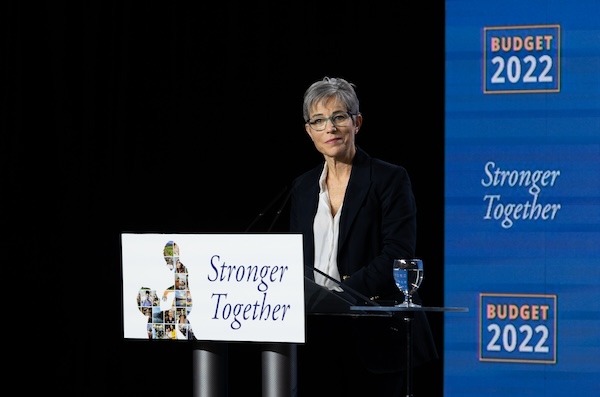
Selina Robinson taking part in the BC government’s 2022 budget announcement. Before the controversy that saw her resign from caucus, Robinson had decided, after 16 years in public service, to not run in this fall’s election. (photo from Selina Robinson)
There were lots of reasons to wind up her elected service, she said. Her (adult) kids are talking about having kids and she wants to be a hands-on bubbe. Her father turns 84 this year and she wants to spend more time with him, and with her husband’s parents, who are of a similar age. Her husband, Dan, wants to travel.
The premier, Robinson said, was kind when she shared her decision with him late last year.
“He was surprised I wasn’t running again,” she said. “He thought I’ve been a very competent minister. He had lots of nice things to say about me.”
But there was something else.
“I said, caucus hasn’t felt the same since Oct. 7,” she told Eby who, she said, opted not to ask her about that. “It just hung. He didn’t ask. He didn’t say, tell me more about that or what do you mean – he knew what I was referring to, of course – but he didn’t push, he didn’t pursue. It saddened me a little bit because I would have hoped he would have been at least a little bit interested to understand what that was about.”
Still, she acknowledges, the purpose of the call was to share her retirement decision and the conversation soon turned to logistics – when she would tell the party brass, whether she had groomed a successor, when to go public.
March 6 did involve a major announcement, of course, but it wasn’t about the decision that she wouldn’t run in the next election. Instead, she released an open letter to colleagues, telling them why she would no longer be sitting as part of the New Democratic caucus.
Death threat and vandalism
The hate Robinson experienced after her webinar comments went viral was extreme. At her offices, voicemail reached capacity. Staff were days behind keeping up with the bombardment of email.
It was a Saturday when an email came in threatening to shoot Robinson in the head, but staff didn’t discover it until four days later. They knew the procedure, having dealt with a similar incident a year earlier – a threat against Robinson not because she is a Jew but because she is a woman. Staff found the death threat email the same day they had arrived at the Coquitlam office to find it vandalized and festooned with hate messaging.
“The police have found the perpetrator,” Robinson said. The email came from the United States, so US Homeland Security and the FBI are involved. “It’s legitimate and it’s credible. It helps that it’s someone at a distance but it’s also in a place where guns are easily accessible, so it’s a bit of both.”
Robinson’s husband now keeps a baseball bat next to the bed.
Kindness amid chaos
To look at social media posts targeting Robinson is to dive down a rabbit hole of varying degrees of outrage and a great deal of hatred. In the real world, she said, she has experienced an outpouring of compassion.
An acquaintance sent her a bouquet of blue and white roses – Israel’s colours. Robinson was walking in the park with earphones in and a passerby made the heart sign. Heaps of cards, letters and emails have poured in. People have sent art, including a rendering of a woman reaching for the sky, which is displayed prominently in her office.
“I want to weep, actually, because it feels validating,” she said.
But that outpouring of support from the public is not mirrored in the reaction of her former cabinet and caucus colleagues, she said.
While Robinson’s experiences among the NDP officials with whom she spent more than a decade is a testament of profound loneliness, that is not entirely the case, she said. Some people have been dependable and supportive. She can count them, she said, on one hand. And she won’t mention them by name for fear of throwing them to the wolves.
“I’m not going to single them out, only because I’m worried about their backlash,” she said. “I want to protect them for being there for me.”
What ifs …
When she left cabinet, Robinson cleared out her personal possessions from her ministerial office. The day the Independent visited her, she had just been going through those boxes.
“I came across a card from John Horgan, when he stepped down,” she said, referring to the former BC premier, who retired in 2022, and was replaced by Eby. The card, she said, “just talked about how much he values my input and that I brought all of me to cabinet.
“He trusted my judgment vis-à-vis the Jewish community,” Robinson said. “He really wanted to understand that he was doing right by the Jewish community, so he would regularly check in with me about what did I think. I would say, ‘You were a mensch.’ He really took to that word, ‘Was I a mensch?’ ‘You were a mensch.’”
Might things have played out differently if Horgan had been in the top job when all this blew up? Robinson believes so.
“I think he might have heard my concerns differently earlier on,” Robinson said. “If I would have told him that, since Oct. 7, caucus hasn’t felt the same, he would want to know why. What’s changed? What’s it like for you? And that may have had a different outcome.”
When the webinar comment grew into a crisis, Robinson suspects the former premier might have responded differently than the current one did.
“I think he would have stood by me. I think he would have weathered the storm,” she said.
Second chances?
One of the things that Robinson’s defenders, including Jewish community leaders, have pointed out is that everyone seems to get second chances but the Jew. The offences outlined in Robinson’s letter of resignation, as well as documented incidents like Elmore’s multiple transgressions, suggest a willingness to forgive, if not forget.
When Robinson was hauled on the carpet for her comments and thrown out of cabinet within days, the official voices of the mainstream Jewish community noted that, mere days earlier, the Jewish community had been asked – and agreed – to overlook an egregious misstatement on the part of the premier himself.
On International Holocaust Remembrance Day, Jan. 27, the premier’s social media feed noted the occasion and declared: “We stand with the Muslim community throughout Canada on this sorrowful day of remembrance.”
The message was soon taken down and an apology posted.
“Do you know who managed that debacle for the premier’s office?” Robinson asked. “Me.”
Robinson was not the only one to catch the grievous error, of course. BC United, the official opposition party, screen-captured the post before it was deleted. Robinson, meanwhile, was on to her leader’s office to get to the bottom of it.
“I spoke to folks in the premier’s office,” she said. “I learned who made the error. I was assured it was an error.”
An apology is not enough, she told them. “You need to explain how this could happen.”
The explanation was that two days after International Holocaust Remembrance Day was the anniversary of the 2017 Quebec City mosque attack during which six people were killed and 19 were injured. A lower-level social media staffer had apparently mixed up the messages for the two separate days.
Until the clarification, some people wondered if the post was a deliberate act of baiting the Jewish community on one of the most solemn days of the year. Robinson is confident it was simple human error.
“I have to believe that, otherwise I’m way too cynical about the world,” she said. “I have to take people at their word … and that’s what I guess is heartbreaking for me, that people couldn’t take me at my word. They chose to think the worst of me, after all this time.”
Political fallout
Robinson’s departure – and the broader issues of antisemitism she raises – absorbed the Legislature and the press gallery for days.
Kevin Falcon, leader of the BC United official opposition (formerly known as the BC Liberals), has repeatedly called for an independent investigation into what he calls “the antisemitism that is rife not just within the government but within their own cabinet, caucus and party.”
Speaking with the Independent, Falcon raised what he and so many others have called a “double standard” in the treatment of Robinson, while there are members of the NDP who have not apologized for intemperate remarks and yet have suffered no consequences.
“I can’t help but note the worst that Selina could be criticized for is using perhaps a poor choice of words,” said Falcon. “But she did the honourable thing and fully withdrew the comments, apologized for the comments and, even after saying that she would go through anti-Islamophobia training, whatever that is, [it] still wasn’t enough for the premier to [not] drop her out of cabinet, which is in stark contrast to how they’ve dealt with other people within their own government who have made terrible statements in the past.”
Recent concerns about racism against Indigenous people in the healthcare system, Falcon said, resulted in quick action.
“They couldn’t move fast enough then to appoint an independent investigation into the allegations of racism in the healthcare system,” he said. “But, when it comes to investigating antisemitism within their own government, caucus, cabinet and party, well, nothing to see here. They just continue to delay.”
Another double standard, Falcon said, is the different reactions to claims of antisemitism versus other forms of racism.
“They’re always out there professing to be so concerned about racism, except when it comes to racism against the Jewish community,” he said. “The double standard is certainly so glaringly obvious. That’s the part that feels so remarkably different. That’s the part that none of us can just get over. It’s amazing to me that they say all the right things about [being] so concerned about this, we have thinking to do, we need to create safe spaces and this word salad of woke-isms that they can spew out very easily, but fail to address the two fundamental issues that concern us on this – the double standard as a result of Selina being fired out of cabinet and people who have said far worse antisemitic statements or tropes [but who] continue to serve, some of whom have never apologized.”
Falcon said that critics of Israel, like those who targeted Robinson, are missing crucial moral principles.
“In war, tragically, there are always innocent lives lost,” he said. “It is an unavoidable aspect of war. That breaks my heart when I see innocent people dying on both sides.
“We have to understand some important principles,” he continued. “One is that Israel has a right to exist and Israel has a right to defend itself.”
Politics, legendarily, makes strange bedfellows. Robinson seems to have few reliable friends among her former colleagues, but Falcon said her new seatmates are literally and figuratively on her side – she is now on the opposition side of the House, awash with BC United, Conservative and Green MLAs.
“She’s got a lot of supporters on the opposition bench,” Falcon said.
John Rustad, leader of the BC Conservative party, a long-moribund party that is showing surprising strength in opinion polls, said his heart goes out to Robinson.
“That Selina was brave enough to share that I think speaks volumes to what is going on within the caucus and within the [New Democratic] party,” Rustad told the Independent. “David Eby has known about this for months and he’s refused to take action. I think the province is not interested in having a premier that won’t stand up and defend British Columbians and Canadians.”
The Conservative leader echoes Robinson’s allegations that the premier is more concerned with politics than fighting antisemitism.
“I don’t think they are looking to doing what’s right,” he said, suggesting that electoral calculations based on the disparity of sizes of the Jewish and Muslim populations are driving their decisions. But, Rustad warns, this approach could blow up in their faces.
“I think, quite frankly, they are miscalculating where people in this province are because I think people are not interested in antisemitism, they’re not interested in hate, they want a government that’s going to stand up for everybody in this province,” he said.
The letter from Islamic leaders warning that New Democrats would be unwelcome in Muslim sacred spaces that came shortly before Robinson’s firing was concerning, Rustad said.
“When I saw it, the first thing that came to mind was government bowing to threats,” he said.
“It takes courage to do what Selina did, it takes courage for a government to stand up for what’s right and that’s where David Eby has failed,” said Rustad. “I was, I guess, a little shocked to see how quickly David Eby backed down and bowed to that pressure that was put out there. It was disappointing from my perspective because government sometimes has to do things that some people may be upset with because it’s the right thing to do.”
BC Green Party leader Sonia Furstenau called the Oct. 7 attacks “a devastating and terrible event,” and said that elected officials in this province have a responsibility to address the local repercussions of overseas developments.
“We really have to focus on the people of BC and that we are taking seriously the reality of antisemitism,” she said. The rise in hate crimes, which began most notably during the COVID pandemic, was addressed in a report from the Human Rights Commissioner in 2022. Furstenau believes the commissioner should consider actions to confront the growing prevalence of antisemitism now.
“It may be that the next steps could be for the Human Rights Commissioner to take on a project to help us recognize, address and reduce antisemitism in BC,” she said. “I think, given the very complicated nature of the war between Israel and Hamas, that we could be looking for the Human Rights Commissioner to look at antisemitism and Islamophobia and, really, how do we come out of this as a place that’s less divided and has less hatred?”
Responding to Robinson’s expressions about antisemitism in government, Furstenau said the former minister needs to be taken at her word.
“Selina is the expert on what Selina has experienced and we have to respect that,” said Furstenau. “When somebody indicates that they have experienced racism or discrimination, it’s not our place to question that.”
“I’m fine”
Robinson’s emotional health has been a concern for friends and supporters. Few people can imagine the impact of being at the centre of a public maelstrom like the one Robinson is enduring.
Amid all this, there have been physical health realities.
In 2006, Robinson was diagnosed with a rare form of intestinal cancer. She beat it. Then, in February 2023 – “February’s been a bad month for me the last few years,” she said – Robinson shared the news that routine screening indicated that cancer had returned.
After treatment, she got the good news eight months later that the tumour they had found in February was gone.
“I’m fine,” she said. “I’m on the chemotherapy that I’ve been on for years. I will be on this medication for the rest of my life.”
The treatment is not without side-effects.
“It makes me a bit more tired than most other people, although my husband says that might not be a bad thing in terms of people keeping up,” she said. “I get muscle cramps. They are inconveniences rather than serious implications. I really am fine.”
The joyful news that the cancer was gone came on Oct. 5.
“Lots of happy tears around that,” she said. Two days later, news from Israel turned those happy tears to something very different.
Selina Robinson with former BC premier John Horgan. Robinson believes the outcome of her remarks and apology might have been different if Horgan were still the party leader. (photo from Selina Robinson)
Points of pride
Although she didn’t share the news with the public until the controversy arose, Robinson was already planning for a life post-politics. She will not be the NDP candidate for Coquitlam-Maillardville in the election scheduled for Oct. 19. Every indication is that she would have been reelected easily. When she first ran provincially, in 2013, it appeared on election night that she had lost. When the final votes were counted in the days after, she squeaked in by 41 votes. Her next two elections were not at all close. In 2017, more than half the voters in the riding chose her and, in 2020, she nabbed just a hair under 60% of the vote.
During her first term, Robinson was an opposition MLA. When John Horgan formed government (under an agreement with the BC Greens), he appointed Robinson minister of municipal affairs and housing. This was a daunting role in one of the most expensive places to live in the world.
Several things really stand out for her from that time.
The BC government, under Horgan, with Robinson in the housing portfolio, was and remains the only provincial government to fund housing on Indigenous reserves.
“It’s a federal responsibility, but this is ridiculous,” she said. “They are British Columbians and they need housing.”
Another achievement she cites is that, when she became minister, she undertook to meet with officials from every municipality in the province – close to 200 local governments – and she said she still runs into current or former mayors and councilors who credit her for engaging with them.
After the election in 2020, Robinson was promoted to finance minister. Achievements from that gig? Robinson throws her arms in the air without hesitation: “The biggest surplus in the history of our province.”
Her control over the province’s wallet came in the midst of the COVID pandemic, with all that entailed. In addition to sound bottom lines, she said the government brought down “good budgets that delivered for people and that made a difference.”
When Eby replaced Horgan as leader and premier, Robinson was shifted to the ministry of postsecondary education and future skills.
In this role, she takes pride in removing the age limit for former youth in care to access postsecondary education. Those who age out of the foster system had been able to obtain tuition funding and additional supports – but only until age 26.
“If you’re a former youth in care, it takes a longer time to figure out how to adult,” said Robinson. Now, these young people (even if they are no longer so young) can access educational funding and cost of living supports to reach their academic or vocational goals.
It was also in her responsibility for postsecondary education that Robinson found herself on the frontlines of campus turmoil, with anti-Israel protests by students and pro-terrorism comments by some BC academics. She convened a meeting of the heads of all BC’s colleges and universities and laid out expectations for civil, peaceful dialogue on campus.
Voting advice?
The firestorm over Robinson’s comments, charges of antisemitism in the government and public service, complaints that the premier is not taking matters seriously enough and the related controversies come only months before British Columbians go to the polls. These crises are not coincidental to the proximity of the election, Robinson contends, but are a direct effect. The government is doing what they think is politically helpful, rather than what is right, she said.
So, where does that leave Jewish and sympathetic voters who would have cast a vote for Eby’s party in October but now feel adrift, wondering if the NDP represents their interests?
“I feel very adrift as well,” she said. “I think everyone has to make up their own mind. There is no perfect party. If you’re going to bring about change, then you need to use your voice to bring about change. That’s what this is all about.”
She puts the onus on members of her own (former) party.
“If people are silent, if New Democrats are silent on this, then you are complicit,” she said. “If you think this is wrong, if you think the direction the party is taking vis-à-vis Jews [is wrong], then you need to say something. You need to take action on it. That means challenge what’s become the status quo.”
Future plans
“Boredom terrifies me,” Robinson said.
Though boredom might seem a welcome respite from some of the emotions she has endured in recent weeks, Robinson insists she is not done contributing to the community. She just doesn’t know yet in what capacity.
“I don’t know what I’m going to do,” she said. “I’ll find something to do.”
“I’m learning to knit,” she said. She’s got local food maven Susan Mendelson’s classic cookbook Mama Never Cooked Like This and she’s thinking of pulling a Julie & Julia by trying every recipe in the book and posting them to social media.
Robinson has traveled across much of Western Europe but not Spain and she is reading about that country and its history.
She has promised her husband she will not make any long-term commitments before January.
Until the writ drops for the next election, she remains MLA for Coquitlam-Maillardville.
Premier David Eby announces on Nov. 15, 2023, that the province is taking action against hate-motivated violence in British Columbia by supporting community organizations throughout the province and by providing resources to individuals. (photo from Province of BC / flickr)
Jewish community leaders met with BC Premier David Eby March 8 in what participants describe as an emotional, intense and frank dialogue around antisemitism in British Columbia and the added impact of the loss of the community’s most prominent voice in government, Selina Robinson.
The meeting was convened by the Rabbinical Association of Vancouver and seven speakers from the Jewish community shared their experiences around antisemitism with the premier and three of his staff. Rabbi Jonathan Infeld, head of the rabbinical association, spoke, as did Ezra Shanken, chief executive officer of the Jewish Federation of Greater Vancouver, and others about incidents in the public school system, the post-secondary sector, healthcare, the legal profession, unions and the public sector.
“The general vibe was one of significant sadness, particularly around Selina’s departure from the NDP caucus and from cabinet, but also around just an array of examples of antisemitic activities in British Columbia that have been experienced by community members,” Eby told the Independent.
Even Jewish participants said that hearing the numerous personal encounters with antisemitism shared by various participants was emotionally taxing. Speakers conveyed not only their firsthand experiences but advised the premier and his staff on a range of incidents reported by civil servants and by students and families in public schools.
Among many examples drawn from the Vancouver school district alone, there was a teacher on call who asked if there were any Jews in the class. When two students self-identified, the teacher asked them to explain to the class, on the spot, what Israel was doing. In a Grade 9 science class, a teacher called Jews genocidal murderers. There have been multiple incidences of antisemitic graffiti, including swastikas and SS symbols, as well as students yelling “Heil Hitler” in hallways. Some teachers are wearing or displaying symbols indicating allegiance with a side in the conflict, such as wearing keffiyehs or displaying Palestinian flags in their classrooms. An elementary teacher made derogatory comments about Israel and Jews and, when a student complained, the student was made to sit in the hallway. A student overheard another student say “Allahu akbar, Hamas for life!” – when she told the principal, she was accused of calling the other student a terrorist. A librarian asked students: “What do you think about what is happening in Gaza?” One student said, “They’re doing what they did here to the Indigenous people” and another said, “They’re killing a lot of babies” and the instructor said “That’s right! It’s genocide!”
According to incident reports from civil service employees, a hostile atmosphere for Jews exists in many segments of the public service, with one-sided expressions of support for Palestinians being demonstrated in online meetings, on government bulletin boards and in staff meetings. One public employee was asked not to wear their Star of David necklace in meetings “as it may make my colleagues of colour uncomfortable because it is a symbol of genocide.”
Participants in the Jewish community meeting took particular exception to Eby’s statement in the Legislature denying systemic antisemitism and contended that a litany of examples from the public service refutes his assessment.
“It was extremely important that the premier heard what various leaders of the Jewish community had to say,” Infeld told the Independent after the meeting. “We are at a precarious moment in Jewish history in the province and in the country and the premier has let us down in a significant way.
“He seemed somewhat shocked by the degree of antisemitism that people are facing in the province,” the rabbi said. “He knew that there was antisemitism but, as people ran through case-by-case of experiences they know of, or that they experienced, he seemed surprised.”
Eby acknowledged that, after Jewish community members spoke, it did not seem appropriate to say, “Let me present to you this list of things [that we’re prepared to do],” noting that such a response would have “almost trivialized the emotion in the room and where everybody was at.”
“The next steps are about us working together,” the premier told the Independent. At the same time, he said, “I made a couple of commitments in the room.”
These included, said Eby, working together to weed out antisemitism anywhere it is identified in the province, including in government, and assisting with the “overwhelming security costs that have been incurred by the community.”
The premier admitted a reflexive response to Robinson’s allegations that the government has not adequately responded to antisemitism.
“I have to admit, my first instinct is to say, we have,” said Eby. “We’ve done these pieces around mandatory Holocaust education, around the Crown counsel definition of hate crimes, being present with the community in key moments.
“But, on reflection, here is someone who has the lived experience of being a person who has relatives in Israel that were called up to military service, that she knows through family and friends who died in the Oct. 7 attacks, and she hears every day from people in the Jewish community about the anxiety and the fear of the rise of antisemitism that we’ve seen following those attacks, across Canada and certainly in British Columbia, and so is it really up to me to tell her that we have done everything we can? So, instead, my response was, this is a time for me to reflect.”
Shanken said the meeting highlighted the seriousness of the issue.
“I’ve heard stories about people’s interaction with antisemitism and Jew-hatred within our province, but to hear it all together in one room, one speaker after another, it was really stomach-churning,” Shanken said. “I think the premier listened, I think his staff listened, so I do believe that people realize how serious this problem really is.”
On the issue of Robinson’s removal from cabinet, Shanken said, the premier has work to do.
“We need to be addressing the double standard that existed with Selina Robinson, there’s no doubt about that,” he said. “But we also need to be addressing the issues that people are facing.… We rely upon him to really set that tone for our community and for all the communities of British Columbia.”
Josh Epstein stars as Leo Frank in Raincity Theatre’s production of Parade, which runs until April 13. (photo by Nicol Spinola)
Raincity Theatre’s production of the musical Parade opened March 21 at 191 Alexander St., a heritage venue in Gastown. It runs until April 13.
The story of Leo Frank, who was kidnapped from the Georgia State Penitentiary by members of the Ku Klux Klan on Aug. 17, 1915, and lynched, might not seem the stuff of musicals. However, playwright Alfred Uhry and Broadway producer Hal Prince saw the potential of reaching new audiences with this important story that had already been told in novels, plays, film and television. With a book by Uhry and music and lyrics by Jason Robert Brown, the Prince-produced show opened on Broadway in 1998 – it won two Tony Awards. In 2023, Parade had a Broadway revival, again winning two Tonys.
Frank’s alleged crime was the rape and murder of a 13-year-old factory worker, Mary Phagan, but his real crime was being Jewish in the American South, which was, at the time, still feeling humiliation and anger over losing the Civil War.
Mary was last seen alive when she came to pick up her wages on the morning of April 26, 1913. Her body was found in the factory basement later that day. Frank was arrested and charged with the crime.
Several factors prevented a just trial, including a district attorney wanting a conviction to support his bid for governor, the antisemitism of a right-wing newspaper publisher, sloppy police work, the withholding of evidence, witness tampering, perjured testimony, and an all-white jury. This was America’s version of France’s Dreyfus Affair.
Frank’s wife, Lucille, lobbied everyone she could to intervene, and prominent newspapermen and others campaigned on Frank’s behalf. Finally, after two years in jail, Frank’s death sentence was reduced to life in prison, but the news was not welcomed by everyone. Mobs stormed the governor’s mansion and the National Guard was called out; martial law was declared. Frank was transferred into protective custody but the lynch mob – some of whom had been jurors in his trial – managed to kidnap and murder him.
“Our production will plunge our guests into the depths of human emotion, amidst the backdrop of a true historical event that still resonates today,” writes director Chris Adams in Raincity Theatre’s press material. “The passion and the tragedy of Leo and Lucille Frank’s story, enveloped in the haunting beauty of Jason Robert Brown’s score, will be simply unforgettable and I hope the undeniable resilience of the human spirit will deeply move audiences.”
Many Jewish community members are part of the show’s creative team, both on stage and off. Josh Epstein plays Frank. Warren Kimmel, Richard Newman, Stephen Aberle and Erin Aberle-Palm play various roles. Itai Erdal is the lighting designer, Michael Groberman the researcher and Kat Palmer, one of the producers. Rabbi Kylynn Cohen and Cantor Shani Cohen are consultants.
The Jewish Independent interviewed Epstein regarding his role.
JI: How did you get the part of Leo Frank?
JE: I was fortunate. I had it offered to me. I did not have to audition. I was asked to do this a year ago. I said yes immediately. Parade is my favourite piece of musical theatre. I am obsessed with it. I even went down to Seattle years ago to see it when the original Broadway cast toured it and got Jason Robert Brown’s autograph (my favourite composer) on the program, which I still have today. I remember just sitting there being gripped the entire show. The music is so gorgeous. However, it is not your typical Broadway production.
JI: The director said in an interview that you were born to play this part.
JE: I do feel like it is right for me. I have been waiting a long time to get a chance to play Frank and, when it was offered to me, I grabbed the opportunity. It was offered to me even before Oct. 7 and I knew it was an important role as, even then, there was a very antisemitic YouTube clip being circulated and, as a Jew, it was on the top of my mind with incidents happening and growing, and it is even more relevant today after Oct. 7.
JI: What research did you do to prepare for the role?
JE: I read what I could. The trial is a fascinating story that has everything in it, not just antisemitism but racism and women’s suffrage and children working in factories and people’s attitudes even 50 years after the Civil War is over. The parade was organized to honour the Confederate soldiers and then this explosion comes out of it with a resurgence of the KKK and the formation of the B’nai B’rith Anti-Defamation League. As far as the role goes, it is a deep acting role, but you also have to be able to sing. It has a lot of layers to it. I just read the script over and over to get some sense of the depth of Leo’s character.
JI: How would you classify the production?
JE: It is dark but there are moments of levity. It is the music that brings you joy. It will be an intense experience. It is such an incredible musical that you get swept away and it soaks into you. It is very visceral. People crave that. You won’t get that experience anywhere else.
JI: What can you tell us about the space and the cast?
JE: It is a gorgeous, intimate space with the audience close to the action and a really strong cast. The original production had a cast of 40. This one is pared down to 20. It is huge to have 20 people in a 70-seat space – it feels like a giant production yet there still is a sense of intimacy about it. Lucille is the real star in a way as she becomes the driving force behind Leo’s sentencing being reduced and the resurgence of their love.
JI: How has the experience of playing Frank been for you?
JE: This experience has been incredible. Sometimes, I can’t always speak about the experience but I feel it. When I am in the show, I trust it, the material is great. I don’t have to come up with any tricks or think of the next joke or push the drama, I just stay present in the scene and give my version of what Leo is going through.
JI: Why should people come and see it?
JE: People love true crime stories and it is one of the most interesting cases in history, still talked about today. The production takes everything interesting about the case and puts it to the most gorgeous music you will ever hear.
JI: What would you like to have the audience take away from the production?
JE: They don’t have to take any theatrical thing away. Just come and watch. The story is there. It is a true story. They should just come, watch and feel.
“We’re planning a family event in June.” That’s how I start nearly every contact with vendors while trying to arrange it. Sometimes, I say a “party with family and friends.” I avoid saying b’nai mitzvah. It’s just easier and safer.
One of my twins has a locker at junior high near a student who uses her body as a sign of protest. “Free Palestine” is written on her cheek. Other days, messages are emblazoned on a sweatshirt. My kid says she seems to stare at him, but I recommended he just stay away, don’t stare back, and don’t cause any kind of confrontation. “Do you know this person?” I ask him. “No,” he says, “she doesn’t know us.” What he meant is perhaps more obvious to us now – he doesn’t think she knows we are Jewish.
The transition from a bilingual Hebrew/English public elementary school to a junior high where Jewish kids are few and far between has been a big one. To my surprise, it went smoothly, but, over time, the ramifications have become clear. We knew our kids would figure out that we were, in fact, a small minority in Canadian culture. In elementary school, they would choose surprising moments to discuss Jewish things or use words in Hebrew with people at the dentist’s office or on public transportation. At first, our explanations about how people were different, with various religions and backgrounds were confusing. In their minds, they still believed everyone was Jewish.
On one hand, I loved that they didn’t have to learn to code-switch as early as I did. Code-switching is a way to describe how we switch between dialects, languages or personae in different settings. That is, a person might speak one language at home and another at work. In Jewish settings, one might use what linguists call “Jewish English,” English interspersed with Yiddish or Hebrew or other Jewish languages. At home, we might be encouraging someone to “daven at shul” with friends. We might shout “Dai, maspik!” (“Stop, enough!”) when someone misbehaves. In public, we might say “go to services” or “Behave yourself!”
Some people say that learning this kind of nuance takes maturity, but that doesn’t always ring true. I knew, by age 5 or 6 when my ethno-religious identity needed to be kept to myself. During times of extreme antisemitism, children were forced to keep this hidden, or even not told they were Jewish until old enough to manage the information. Giving my kids this extended time of safety felt like offering them a special oasis, a honeymoon that I missed.
Years ago, I worked with an editor and writer who shared with me that she had a Jewish background, although she was adamantly secular. I often felt the need to code-switch with her, as something made me feel like I was “too Jewish” for her comfort level. Since Oct.7, things have changed. She has become public in her Jewish identity, speaking out against antisemitism. Recently, she has been reading history and research for a book-length project. Today, she said, reflecting on an historic “golden age” for Jews in Polish history: “There is no safety in America now just because it’s been a golden age for my lifetime.” Yeah, I responded. I know.
Everyone copes differently. On social media and among friends, some dig into their Jewish identities. They’re consistently posting about their Jewish pride or activities and asking others to do so as well. One local friend who regularly attends synagogue told me that, if anything, this war has made her want to “do Jewish” even more, so she’s physically attending more services and gatherings than she had previously. Others decide to keep their kids home from school on days where there might be safety issues or have stopped attending anything at all connected with the Jewish community. They keep a low profile. Being loud and proud isn’t their way.
I have seen all these approaches (and many variations) from the Jewish people I know. And there are the minority Jewish viewpoints, too, on the political right and left. Those who claim more of an affinity with their progressive causes than with Jewish ones are often vocal on social media and at pro-Palestinian protests, either finding ways to disown their background or use their Judaism to explain their activism. Some particularly outspoken ones demonstrate, at least to me, that they don’t have a solid grounding in Jewish history and tradition, particularly as it relates to Israel, but instead embrace narratives around colonialism and apartheid instead.
Lately, I have been longing to ask where these “land back” Canadian Jewish activists live, if not in homes on occupied land taken from Indigenous communities. If homes here are on occupied ground, where do they believe it would be acceptable for Jews to live? I wonder how they mesh these theories with their everyday lives, or the archeological, historical and literary references to the Jewish past.
Living in grey areas of nuance is exhausting. There are so many references in Jewish texts to back this up. We have, after all, been struggling with these identity issues for millennia. We’re the ethnic group for whom the Greek word of “diaspora” was invented. Yet, this is one time where more evidence seems pointless. For those of us who feel this discord and disconnect, it’s not news. For others, who either manage to live wholly in the Jewish world or outside of it, these retellings of history aren’t useful. So many people have made their place, and it’s not in the margins of subtlety.
There’s no one response that suits. For me, I understand the value of having a rich interior and family life. The moment I’m absorbed in braiding challah and reciting the blessing blocks out some of this noise. Although I’m alone, it’s meaningful spending that small moment to send love and prayers for the hostages, the Jewish community and my family. I knit sweaters for ever-growing twins, anticipating their big birthday ahead this spring. I fall deep into intellectual arguments online, or into gazing at a pileated woodpecker whose rat-a-tat vibrates throughout the neighbourhood.
Finding one’s authentic self, the comfort zone where all the discord falls away, offers a brief respite. As we meet this complex moment in time, finding small outlets of escape can enable us to keep on going. Perhaps this is about good mental health or, as generations before us have explained, it’s nothing new. It’s about making a meaningful life in a diaspora, amid struggle.
Joanne Seiffhas written regularly for the Winnipeg Free Press and various Jewish publications. She is the author of three books, including From the Outside In: Jewish Post Columns 2015-2016, a collection of essays available for digital download or as a paperback from Amazon. Check her out on Instagram @yrnspinner or at joanneseiff.blogspot.com.
Last November, I interviewed my grandmother for an oral history project – one I had been meaning to do for a long time – about her experience surviving the Holocaust. As the grandson of two Holocaust survivors, I can affirm the reality of intergenerational trauma. Yet, as I listened to her story, I realized she was teaching me valuable, timeless lessons which the University of British Columbia community can apply on campus. That is why I am obligated to share her story – so that we avoid repeating the mistakes of the past.
My grandmother was 13 years young when her parents and most of her family were taken away from her and deported, either to be shot on their way to Bergen-Belsen or exterminated in the gas chambers of Auschwitz. My grandmother, my safta (as I call her in Hebrew), was a little girl, orphaned, vulnerable and left all alone. She had every right to be bitter and resentful, to identify herself as a perpetual victim and to rightfully blame the Nazis for her suffering. But she did not.
She could never forgive nor forget the evil perpetrated by the Nazis. However, with this in mind, she had to move on with her life. The way she redeemed tragedy was not to define herself as the victim of the past, asking, “Who did this to me?” but rather by taking responsibility for the future, asking, “Given these circumstances, how can I help to put this situation right?”
This is the greatest eternal lesson I have learned from my grandmother and all the Holocaust survivors I have met: never internalize a victim mentality. Otherwise, you will not only become consumed with hate but also enslaved to the past. As the late chief rabbi Lord Jonathan Sacks once said, “To be free, you have to let go of hate.”
My grandmother took the negative energy and elevated it toward a higher purpose: toward marrying my grandfather, toward raising a family, toward giving back to her community. Her all-encompassing identity, attitude and purpose in life has been not based on the hate of others. Rather, her identity is based on the love of her fellow Jews, of being grateful for her heritage and everything else she had.
“No one can make you feel inferior without your consent,” Eleanor Roosevelt once said. There was one thing from my grandmother that even the Nazis could never take away: her will to be proudly Jewish.
UBC campus today
For my grandmother, the Hamas massacre that took place on Oct. 7, 2023, triggered painful memories from the Holocaust. “Never again,” the lesson we learned from the six million Jews murdered, has now become “ever again.”
The amount of toxic hate I have seen on my campus (and other universities as well) since Oct. 7 has been both disheartening and overwhelming. From disrespectful comments on social media posts, to provocative posters on campus demonizing the other side, to verbal and physical harassment of students, there is a small, yet vocal, minority of students who create a highly flammable atmosphere on campus.
At UBC, I have witnessed students chanting the phrase “globalize the intifada,” a term that has historically been used in the context of the Israeli-Palestinian conflict not for “peaceful resistance,” but for terrorizing Jews with suicide bombings, shooting attacks, stabbings and other means of armed violence. I have witnessed students blacklisting other students because they do not agree with their opinions. I have witnessed students rudely spamming hateful comments (which are now taken down) on UBC’s social media page to take advantage of International Holocaust Remembrance Day to push a political message. When I hear that “hate has no place on campus,” I unfortunately continue to observe the opposite.
This is the reason why I dropped my Middle East studies minor. Every time I walked into the classroom, the negative energy was palpable. I was walking on eggshells bringing up my Jewish identity or even mentioning the word “Israel.” Every day, I had to hide my kippa under my hat so that my classmates with different viewpoints would not identify me as Jewish and publicly shame me. In short, I did not feel welcome.
At a university, a safe space should not be a place where you are protected by those with whom you agree from those with whom you disagree – that is called groupthink. Rather, a safe space should be a place where you make space for those who disagree with you so that each can listen to the other with respect.
Whether or not you agree with Israeli, Jewish, Palestinian, Arab, Muslim or any other claims, there is no justification whatsoever to scream, silence or slander those with whom you disagree. Right now, the university needs more civility and calm for all students.
Yes, we must acknowledge that there are significant casualties on both sides of the conflict. Yes, we must acknowledge each other’s suffering. At the very least, we can all agree that every human life is sacred with equal dignity.
While we cannot control external circumstances halfway across the world from us, we can control how we respond to it. We can choose to wallow in misery and demonize the other (asking “Who did this to me?”), or we can take action to recognize each other’s suffering and elevate it to something positive (asking “Given these circumstances, how can I help to put this situation right?”).
Now, how do we do that?
Listening, not labeling
Opening yourself up to someone whose colour, culture, class or creed is different from yours can seem daunting. In an age of echo chambers, filtered media and narrowcasting, we all have a tendency to tune in to that which aligns only with our own viewpoint, while tuning out others. However, it is precisely the people not like us that make us grow.
From clubs tabling on campus to classmates sitting next to you, there are plenty of opportunities to actively seek out diverse perspectives. We need to learn how to listen for the sake of learning, not labeling.
If one has a monopoly on the truth, then why bother listening to others? Because, as a mystical Jewish saying goes: “A full vessel cannot receive.” It is only by acquiring humility, the sense of opening ourselves up to something beyond ourselves, that we realize our own perspective is merely one finite fragment of an infinitely fractured truth. Thus, I’ve reflected on three ideas worth sharing.
First: there is no justice for any person or people without listening to the other side.
Second: true peace, in our relationships with others and toward ourselves, comes as a result of active listening.
And third: in the words of C.S. Lewis, “Humility is not thinking less of ourselves, but thinking of ourselves less.”
Listening to the other is the first step toward recognizing the “dignity of difference.”
The antidote to hate
Hate, like COVID-19, is a virus. Viruses do not distinguish between different types of people, but rather fester and grow into an infectious force that threatens us all. Historically, for example, the Nazi regime may have started with targeting Jews, but it didn’t end with Jews. Nazis also targeted Roma, Sinti, LGBTQIA+, people with disabilities and political dissidents. Hate knows no bounds.
With this in mind, I offer three practical suggestions for what each of us can do on an everyday level to bring more hope to campus – and perhaps other places.
First, take a moment to unplug your AirPods or headphones. Just do it! Whether it’s while sitting on the bus or walking on campus, withdraw from your isolated world for five minutes and acknowledge someone you don’t know by saying hello with a genuine smile. Give them your full, undivided attention and start a friendly conversation. Humanizing starts with acknowledging the other.
Second, take a class from a perspective you have never heard from before. I am a history major. I had never considered taking an environmental history course before simply because I was not interested. But it is precisely for this reason that I am taking the course. Now, I realize how I could see my preexisting knowledge and interests from a new, oblique angle I would never have seen otherwise.
And third, follow social media accounts of people with different viewpoints from your own. Just like our earbuds, we are constantly using our phones. Every time we open Instagram or Twitter, we are training ourselves to focus on our interests and are quick to judge other accounts as not worth our time. Instead of judgment, be curious and interact with accounts to train yourself to learn from others, not label them.
We are first and foremost a community, of students and professors, of friends and family, of human beings with human emotions. Divided, we are more susceptible to hate. United, however, we have the potential to become force multipliers of hope over hate.
Each one of us should ask ourselves: Are we taking actions to further fracture our world, or heal it?
If we are to heal our fractured world, we must first recognize that each and every one of us has the power and influence to turn negative energy into positive energy, just like my grandmother did. If she could continue to spread light after going through the darkest chapter in human history, how much more so can every one of us dispel the darkness of hate by becoming beacons of light in our communities at UBC and elsewhere.
It all starts with one positive thought, one friendly compliment, one good deed.
It all starts with you.
Eitan Feigeris a fourth-year history student and the vice-president and treasurer of the University of British Columbia’s Chabad Jewish Student Centre. This article was originally published in the Ubyssey.
On Nov. 1, about 200 Jewish students and their supporters engaged in a low-key demonstration at the University of British Columbia, with many holding posters of kidnapped Israelis. Since the terror attacks of Oct. 7 and the start of the Israel-Hamas war, universities and colleges worldwide have been hotbeds of conflict. (photo by Pat Johnson)
Jewish students and their supporters at the University of British Columbia celebrated a victory last week after the student government overwhelmingly rejected motions that critics say were openly antisemitic.
The Alma Mater Society (AMS), which represents UBC students, voted in the early hours of Feb. 29 not to include a number of referendum questions on the ballot during upcoming student elections.
One proposed question accused Israel of genocide and called for an end to UBC’s exchanges with Israeli institutions. It would have also invited students to vote on whether they believe Hillel BC, the organization that has represented Jewish students, faculty and staff at the university since 1947, should be evicted from campus. (Hillel’s lease is with the university and the AMS has no jurisdiction over whether Hillel does or does not remain on campus.) This question was rejected by a vote of 23 to 2.
A second proposed referendum question would have asked students to massively revamp the governing structure of the AMS, adding dozens of additional elected representatives of marginalized groups. The change would have assigned designated groups representation on student government, including the Social Justice Centre, UBC Solidarity for Palestinian Human Rights, UBC Trans Coalition, Black Student Union, Indigenous students, and the Women’s Centre. Explicitly excluded from representation were Jewish students and groups that represent them. This proposal was rejected 25-0.
Referendum questions can be submitted anonymously, so it is not known from which individuals or groups these proposals emerged, though they had support from the Social Justice Centre, which calls itself “a resource group that works toward progressive social change, inclusivity and equity through a survivor-centric, harm-reduction, radical, feminist, decolonial, anti-oppression framework.”
“I was very pleased and relieved that the AMS leadership chose not to include what I would say are very antisemitic referendum questions on the student voting ballots,” Rob Philipp, executive director of Hillel BC, told the Independent. The intention of the proposed ballot question was to intimidate Jewish students and the vote is a reassurance to Jewish students, he said. “It’s surprising that it took them close to five hours to discuss this. But the vote, in the end, was pretty overwhelming to turn it down, so that was very heartening for us.”
A few hours later, across town at Simon Fraser University, referendum results were announced, with an anti-Israel ballot question receiving overwhelming support. The compendious policy, adopted by the Simon Fraser Student Society in 2022, was put to a vote by the broader student population, endorsing the boycott, divestment and sanctions campaign and repeating the boilerplate condemnations of Zionism as “a colonial ideology” bent on “ethnically cleansing the Indigenous population.”
The referendum question passed 1,801-442 and, while the statement of results did not indicate percentage turnout, there are around 40,000 students at SFU. It appears perhaps one in 20 students voted in the elections, in which a new president was elected with a tally of 878 votes.
These are just two of the foremost fires the Jewish community has been attempting to put out on campuses across the province recently. Universities and colleges worldwide have been hotbeds of conflict since the atrocities of Oct. 7 and the beginning of the war between Israel and Hamas. Administrators have struggled to balance preservation of free speech with often dangerously inflammatory, sometimes clearly antisemitic expressions. The presidents of the University of Pennsylvania and Harvard University were forced to resign after their remarks before a congressional hearing late last year were viewed as insufficiently condemnatory of overt calls for violence against Jews.
Philipp emphasized that postsecondary administrators in British Columbia have all been supportive of the Jewish community’s concerns – the administrations are not where the problems are coming from, although they are inevitably placed in the middle of these dramatic conflicts.
At Langara College, a months-long controversy over the fate of Natalie Knight, an English instructor who called the Oct. 7 mass murder of Israeli civilians “an amazing, brilliant offensive,” may not be over. Knight was put on leave while the college undertook an internal investigation. She returned to work, albeit in a non-instructional role, after the investigation determined her comments were “not clearly outside the bounds of protected expression.” She then spoke at a rally on campus, where she declared: “I’ve been reinstated as an instructor with no disciplinary actions, which means we won. It means we won. It means I did nothing wrong.”
Knight was then fired. While not mentioning her by name, the college said that an employee had engaged “in activities contrary to the expectations laid out by the college and as a result this employee is no longer an employee.” Her union has taken up her case.
Philipp commended Langara’s president, Dr. Paula Burns, for her leadership.
At Emily Carr University of Art and Design, some instructors have encouraged students to leave classes to attend pro-Palestinian rallies, and what Philipp calls “very, very aggressive posters” have appeared on campus. Hillel has been in conversation with administrators there.
“They understand the issue and they are in process right now of making changes to help protect the student body,” said Philipp.
“All our relationships are pretty strong,” he said of administrators at the many institutions at which Hillel BC has a presence, adding that he was recently in Victoria and had dinner with the president of the University of Victoria.
“These administrators,” he said, “are encountering very, very challenging situations that are really stressing their organizations at different levels. Nobody’s able to figure out exactly how to handle these very tricky situations.”
Hillel is also dealing with a lawsuit from the Social Justice Centre, about which they are unable to speak publicly except to say that an independent contractor, not acting on behalf of the organization, participated in the distribution of contentious stickers around the UBC campus. Hillel terminated its relationship with the contractor but is facing a case that attempts to hold the organization responsible.
These are not easy times for Jewish students, but, in some cases, individuals are finding resources they did not know they have.
Rachel Seguin, a graduate of Vancouver Talmud Torah elementary and King David High School and a second-year psychology student at UBC, has become an accidental activist.
“Since Oct. 7, I’ve seen a new part of me that I didn’t even know existed – neither did my parents, honestly,” she said. The anti-Israel actions of the Social Justice Centre and the repeated stonewalling by the AMS in response to her complaints have driven Seguin to become a public voice against antisemitism on campus, including addressing the council last week in opposition to the referendum proposals.
“I didn’t imagine myself doing something like that,” she said. The fact that the AMS did what Seguin believes is the right thing was, she said, “really refreshing and satisfying.”
Leah Goldstein was supposed to speak today at an International Women’s Day event but her invitation was rescinded. (photo from Leah Goldstein)
Leah Goldstein, a BC woman who is a professional road-racing cyclist and inspirational speaker, was supposed to be sharing her story with an audience in Peterborough, Ont., today, International Women’s Day. Instead, first she, then the event itself, was canceled, a byproduct of tensions around the Israel-Hamas war and its overflow into domestic affairs in Canada and around the world.
Goldstein, who lives in Vernon, was told her invitation to share her story – one of resilience and recovery following a devastating 2005 road accident that nearly ended her career – had been rescinded by the group organizing the IWD event in the city northeast of Toronto. The event had become the target of protests and threats after local activists learned of Goldstein’s service in the Israeli military.
“Their sponsor threatened to pull support after receiving threats from a small group of activists,” Goldstein told the Independent.
Goldstein spent most of her 20s first in the Israel Defence Forces teaching the martial art krav maga, then in elite Israeli spy and police agencies.
“I was made in Israel,” Goldstein said. “I was born in Canada.” The family made aliyah when Goldstein was a child, and she has dual Canadian and Israeli citizenship.
Perhaps in keeping with her martial arts background, Goldstein pulls no punches over her cancelation. In the climate since the start of the war, in October, it is not just Israelis who are being targeted, she said, but Jews.
“It’s not the IDF or whatever,” she said. “Even if I didn’t serve in the IDF, I still question whether they would’ve had me present.”
If the shoe were on the other foot, Goldstein said she would have no problem listening to a person with a different perspective.
“I can promise you this, though. If I were a Palestinian woman, I would not have been canceled,” she said. “As a Jewish woman, I would also not be offended listening to a Palestinian woman talking about her life. Why would I be offended?”
Whatever caused the organizers to disinvite her, whether her identity or the fact of her military background, Goldstein said, the content of her presentation would not have been controversial.
“I’m not political,” she said. “I’ve been speaking for 11 years. Not one time has anyone ever come up to me, my manager or the organization I work for and said they felt offended by anything I said. Not one time in 11 years. I speak about my athletic career, about my crashes, my recovery, some of the hardships that many women go through. That’s it.”
By focusing on her past, rather than her current message, Goldstein said, it is other people who are making Israel and Palestine an issue.
“They are almost forcing me to be political by making a comment or a statement,” she said.
Goldstein’s story is one of literally too many to keep track of recently, with anti-Israel activists targeting individuals, groups and businesses for cancelation or boycotts. In some cases – the defacing of a statue in Toronto of the late Canadian Jewish actor Al Waxman with Palestinian slogans – there is no pretence that the target is Israel rather than Jews.
Here in Canada, recently, other incidents are just this side of plausible deniability of overt antisemitism.
An anti-Israel march through the streets of Toronto took a moment to linger outside Mount Sinai Hospital chanting for “intifada.” After condemnations from Toronto’s mayor, Canada’s prime minister and other top officials, protest organizers insisted there was no antisemitic intent in targeting a hospital with a Jewish name founded by Jewish doctors.
“[Mount Sinai Hospital] just happens to be along our regular rally route, which we pass by on a usual basis, as we head to rally in front of the U.S. consulate,” they said in a statement.
If any form of racism was at play, they insisted, it was on the other side.
“The irony is that portraying the raising of the Palestinian flag as a hate-motivated act of antisemitism is itself perpetuating anti-Palestinian racism,” they contended.
Days later, an anti-Israel rally at McGill University in Montreal blockaded the Samuel Bronfman Building on campus, home of the university’s management department, accusing the faculty of a “long history of complicity in the occupation of Palestine.” The choice of location had nothing to do with the famous Jewish name plastered on the front of the building, they said.
Closer to home, Muslim organizations in British Columbia threatened that representatives of the NDP provincial government would not be permitted in Muslim spaces as long as Selina Robinson remained in cabinet because she made an offhanded remark about the arability of desert land three-quarters of a century ago. As one of the country’s most prominent (and only) Jewish elected officials and one who has unashamedly defended Israel, Robinson’s expulsion was a big coup for the activists.
These are all of a piece with similar reported events and, doubtlessly, many more such incidents unreported.
The Jewish-American singer (American, note, not Israeli) Matisyahu is currently in the midst of a kerfuffle in which concerts in Arizona and New Mexico were canceled. The venues assured the public that the concerts were canceled because of security concerns and short staffing, not because he’s a Jew.
Comedian Jerry Seinfeld was recently subjected to chants of “genocide supporter” and “Nazi scum” while leaving the State of World Jewry address by author Bari Weiss at New York’s 92nd Street Y. He got, perhaps, a better sense of the state of world Jewry outside the event than he did inside.
The group Art Not GenocideAlliance is calling to exclude Israel from this year’s 60th Venice Biennale. Officials at the Eurovision Song Contest are fine-tooth-combing this year’s Israeli entry to make sure there are no hidden political messages. Soccer governing bodies from 12 countries – almost all of them among the world’s worst human rights violators – are calling for Israeli teams to be excluded from FIFA, the international football entity.
In each of these instances, there is an argument to be made that the targets were not chosen because they are Jews (or are institutions founded or funded by Jews) but because they were at a Zionist event, or they made an impolitic remark or the people in the building are guilty of some unspecified Zionist infraction. This, though, is to unjustly justify their actions.
Whether Israel is being fairly or unfairly untreated is not the point here. Goldstein’s cancelation and the raft of similar examples are not targeting a country but Jewish individuals and entities. Yes, we are assured, these Jewish individuals and entities are also Zionist people and groups, a differentiation that is presumed to excuse this extraordinary singling out. Yet, we do not see performing artists from China, a country that is holding hundreds of thousands of Muslims in concentration camps, denied admission to Canadian or European cultural festivals. Citizens of Saudi Arabia, which holds mass public executions and subjugates the female half of the population, is not excluded from world soccer events. Citizens of the 50 or so other countries in the world that (unlike Israel) are categorized as “not free” or “partly free” are not subjected to slanders on the streets of New York or banned from speaking in Peterborough.
Never mind human rights abominations like North Korea or Iran. The brutalities perpetrated by their governments are almost entirely ignored by commentators and activists fixated on Israel. Again, though, that is only part of the problem. What we are seeing here is not an attack on official representatives of those countries. Rather, it is akin to screaming at people leaving an exhibition of Iranian art or boycotting a Chinese-Canadian-owned business. It is the sort of guilt by proxy that led apparently millions of otherwise decent Canadians to see little wrong in interning “enemy aliens” during wartime – except even that parallel fails because Canada is not at war with Israel but has longstanding and justifiably friendly relations and shared values with that country.
Agree or not with the approach, movements targeting a country and its official representatives operate in a realm of legitimate political discourse. There is something parallel but significantly different happening here. People and organizations perceived even remotely as associated with Israel are being targeted for boycotts – in some cases, to all appearances, merely being Jewish is enough to earn condemnation and cancelation. This is a textbook case (well, a codified illustration) of antisemitism.
Holding Jews collectively responsible for actions of the state of Israel is one of the examples accompanying the International Holocaust Remembrance Alliance Working Definition of Antisemitism. This is largely moot, though, because the very people who employ these tactics explicitly reject the definition because it is accompanied by precisely examples like these. (If you don’t like being accused of xyz, redefine the meaning of xyz.)
Ultimately, there is no way to prove motivation. We can say the people shouting outside a Jewish hospital or calling Seinfeld “Nazi scum” are antisemitic, they can say they’re not, and no one is any further ahead.
There is something irrefutable, though. The Overton window, the spectrum of ideas that are deemed acceptable in a political discussion, is widening. Every time a Jewish speaker is targeted or a Jewish singer is subjected to cancelation and the public responds with a yawn, the bounds of what is acceptable broadens. It is by no means hyperbolic to suggest that this is precisely the way a society begins a slide into despotism or mob rule.
The context or content of the complaints cease to really matter. Organizations issue diktats demanding the ouster of a Jewish politician, thugs threaten to disrupt a concert, a religious group threatens a governing party’s standing in a few swing ridings and political leaders, event producers and concert venues capitulate. Pretty soon, activists and malcontents of all sorts see that threatening violence or boycotts is the easiest way to silence their targets because middle-of-the-road people fold instantly behind valid concerns for safety.
Motivation and intent probably matter less than outcome. These targetings have the effect of isolating, sidelining and menacing Jewish people – call them Jews, call them Zionists, call them whatever.
This is, without overstatement, a dangerous threat to bedrock ideas of a democratic society.
Although I have been doing Daf Yomi (studying a page of Talmud a page a day), I fell asleep a few days ago before I could finish learning my page of Talmud. I was worn out. And it was a page particularly relevant to my life.
Bava Kamma 99 talks about the value a craftsperson brings to the raw materials. For instance, if a customer brought wool to be dyed but something went wrong and the dyer made a mistake, the dyer would owe the customer the value of the wool. The value of the craftsperson’s enhancement is a different,additional calculation on top of the raw materials’ value. The skill and artistry that the craftsperson brings to their craft has economic value, which is part of what this tractate of Jewish law covers.
I’m a maker. I create lots of things, from baking bread to making labneh and many homemade family meals. I can make jams and pickles. I’m a hand spinner. I also dye yarn. I knit and design things. I even occasionally weave. I sew clothing, too, if in an elementary way. I appreciate it when I read about how a craftsperson adds value to raw materials in a Jewish text because it’s personally relatable. It shows that, in a time when everything was handmade, the rabbis valued the skilled work involved to make functional and sometimes beautiful things.
Since I had to study the rest of page 99 before heading on, I did half of that page and the next on the same day. Bava Kamma 100a talks about how teachers “go beyond” – not just in how they teach Torah, but in how they do mitzvot (commandments) and help others. Even though I trained as a teacher long ago, nobody’s an expert at everything. I teach some things, like hand spinning, and not others. I’m not able to “go beyond” as a sewing teacher, for example, and, instead, I searched for someone who could teach my kids.
My kids took sewing classes and attended sewing camp for two summers at a studio nearby. The small business owner was warm and inviting. It seemed to be a safe place. When she asked people to write blog posts for her, I did. It didn’t pay much but I thought it was a good community business, promoting slow fashion and reuse.
As many people were, I was in shock after Oct. 7. I didn’t immediately see anything concerning about this business, as it felt like it was “mostly” about sewing. Then, eventually, I began to realize that, in fact, there was an increasing trickle of activism on this social media feed. Like many Canadian progressives, this was part of a wider theme. Nothing was expressed in solidarity with the hostages or those who died on Oct. 7. Rather, the business began acknowledging and amplifying Palestinian influencers, posting participation in a raffle for the Red Crescent and posting ceasefire comments.
Every time I ask questions of someone I know – Why are you posting this? Do you support the right to a democracy to protect itself? – the exchanges, often disappointing, take an enormous amount of energy. Being brave and speaking out is tiring with so much antisemitism circulating.
I finally got up the nerve to ask the business owner … why are you posting about this, what does this activism about Israel and Gaza have to do with your small business? Are you Israeli or Palestinian? Are you an activist about a lot of things beyond slow fashion? If so, where is your outrage about Nigeria, Sudan, Syria, Uyghurs…?
In response, she did say she wanted all the hostages released, but she had never posted that publicly. Instead, she had reposted images promoting a tatreez (Palestinian embroidery) class. Fine, I thought, this aligned with her sewing business – but the image posted showed the outline of Israel with Arabic on top that read “PALESTINE” across the whole country. It erased Israel altogether.
I engaged via social media messaging, but saw it wasn’t likely to help. She asked, well, what do you want me to say? I suggested one could choose to be an ally of people you taught or worked with, or could choose to listen and to not amplify only one side. She didn’t choose either of those options. Instead, she decided to take down my writing from her site. I’d suggested that she could remove my name, if she chose, as it was her prerogative, that she’d bought my writing and owned it.
She then made things clear, saying it was “Only Jews who told her to ‘shut up’ or ‘stay in her lane as a Canadian.’” She said plenty of Jews aligned with her beliefs … although, based on the polls, I responded they were likely a minority. I suggested maybe only those Jewish customers brave enough to say something had spoken up.
I was initially sad to lose this community connection. I could have unfollowed this person without this discussion. My kids would never have taken another class. I’d never do business with her again. The depth of her concerning opinions wouldn’t have been revealed.
By exposing this small businessperson’s attitude, I learned more about what was “out there” in the local makers’ community. This included a willingness to lose business and relationships with students and clients who feel uncomfortable with these views.
I struggle sometimes to create a positive sewing lesson environment for my kids at home. However, there’s a different outcome here. I might grow as a person from “adding value to raw materials” as a craftsperson, to teaching more. This was something I could do. I falsely hoped that, if I tried hard to communicate, build bridges and connect with this person, things would change. But I need to continue learning and growing, too. Even this negative experience might have positive potential for growth.
When telling my family about the experience at the dinner table, my twins surprised me by saying, “Well, what took you so long? We could never go back there again.” Indeed, sometimes we give intolerant people too many chances to rise to the occasion, to become upstanding people. In this case, my kids knew the way before I did.
Joanne Seiffhas written regularly for the Winnipeg Free Press and various Jewish publications. She is the author of three books, including From the Outside In: Jewish Post Columns 2015-2016, a collection of essays available for digital download or as a paperback from Amazon. Check her out on Instagram @yrnspinner or at joanneseiff.blogspot.com.
Journalist Tristin Hopper speaks with an audience member after his talk at Congregation Schara Tzedeck Jan. 14. (photo by Pat Johnson)
Canada has plenty of dark chapters in its history. But, in terms of sheer malice, nothing compares to the celebration of mass murder seen in this country after Oct. 7, according to National Post commentator Tristin Hopper – and he says the media bears part of the blame.
Hopper, who lives in Victoria, spoke at Congregation Schara Tzedeck Jan. 14. He said he massively misjudged Canadian reactions to the violence perpetrated by Hamas and its collaborators, sketching out how he says he thought things would play out.
“I thought there would be ‘Pray with Israel’ placards displayed conspicuously outside mosques and Muslim community centres,” said Hopper. “I thought there would be Israeli flags seamlessly hung next to Ukraine flags in windows of public buildings and public libraries. I thought that Arab and Palestinian Canadians would gather in impromptu ‘Not in our name’ rallies to condemn Hamas. And then, after about a week or two, I thought this whole thing would basically disappear from the headlines.
“You’ll forgive my startling naïveté because obviously very little of that happened and in many cases the exact opposite happened,” said Hopper. “Canada was instead greeted with the largest and most sustained outpouring of hate in our entire history.”
Hopper, who clarified that he was not speaking on behalf of the National Post, said he writes frequently about the darker moments in Canada’s past, such as Japanese-Canadian internment, race-specific land covenants, Indian residential schools and the pro-fascist and antisemitic sentiments that Canada’s longest-serving prime minister William Lyon Mackenzie King shared in his diary.
“In all that, you never once, in all our 160 years, had what we saw in the immediate aftermath of Oct. 7,” he said. “We’ve had KKK rallies, anti-Catholic rallies by the Orange Order, race riots, pro-terror demonstrations by extremist Khalistanis, but not like this. Coordinated rallies in every single time zone, whose sole motivating purpose was to celebrate the deaths of civilians.”
This surprised him, Hopper said, but it did not surprise his Jewish friends.
“They had been telling it to me for years,” he said. “Did I think that Canada had antisemites? Yes, lots of them. But if you had asked me three months ago, I would have told you that however large a constituency of antisemites, they were Canadians and a Canadian knows that this is a place where primal hatreds are repressed and prejudice is not welcome.”
Hopper chastised the media for failing to dig into the nature of the groups organizing rallies in Canada.
“You may have heard of these peace rallies that keep blockading roads, desecrating war memorials and [that] intimidated Christmas shoppers [and assumed] they are just concerned citizens who want an end to violence,” he said. Instead, the social media feeds of some of these groups are packed with celebrations of violence, antisemitism and calls for the destruction of Israel.
Among the problems, he contends, is that there are some Palestinian advocacy organizations that exaggerate or lie and media repeat their statements without challenge.
“You refer to terror detainees as political prisoners, you call Israel an apartheid state, you obfuscate or deny every Palestinian terror attack, you circulate faked photos, you launder terrorist propaganda,” he said of some Canadian activists. “You don’t merely misrepresent Israeli actions, you invent Israeli actions that never existed. You use the word ‘genocide’ so often that it’s basically punctuation. Any time someone is killed who had a minor communications role with Hamas, you refer to them as a journalist. This is a level of brazen mendacity that you just do not encounter from any other political movement. You’ll get exaggerations, you’ll get omissions, you’ll get disingenuousness, faulty premises, but you’re probably not going to encounter someone who just lies about everything.”
He is not without sympathy for the journalists.
“How are you going to cover that in a typical 500-word piece of he said/she said news story?” he asked.
He read from one news report: “City Hall today saw 100 people gathered for a ‘stop the genocide’ rally. Demonstrators at a counter-rally said they support Israel.”
“OK, you got both sides there,” he said. “But if you are looking to tell the truth here, you would need an extended essay on how the genocide accusation is utterly unhinged from reality and overlooks how the people who organize this rally handed out candy on Oct. 7.”
There is no context of the larger geopolitical situation or how this particular conflict started, he said.
“You’re not getting into the history of rejected peace offers, why Hamas is subject to repeated blockades, repeated rocket attacks, none of these are in these stories,” Hopper said, adding that voices supporting terrorism are given equal time with voices defending Israel. “The extremist line on this issue is either favoured or at least equated as being morally equivalent to Israel.”
In a country where the vast majority of Jews support Israel, he said, media will enthusiastically give platforms to those who don’t.
Hopper believes that Canadian journalism is experiencing a replica of what he sees as having happened in academia.
“An activist element took over and are now, in the words of one critic, wearing the institution like a skin suit and demanding respect,” he said.
He was speaking just after the PuSh Festival announced they were canceling The Runner, basically because it featured a Jewish Israeli protagonist. In the arts community, Hopper said, activists with an agenda have infiltrated different organizations and bodies in a way that he compares with interest groups who get themselves elected to school boards because few people pay attention to such things and then parents suddenly discover their children are being taught creationism instead of evolution.
Hopper’s appearance was sponsored by the Centre for Israel and Jewish Affairs and Schara Tzedeck, whose Rabbi Andrew Rosenblatt introduced the program. Shelley Rivkin and Raquel Hirsch had the idea to invite Hopper to speak after being encouraged by his columns in the aftermath of Oct. 7.