Skip to content
  • Home
  • Subscribe / donate
  • Events calendar
  • Business Directory
  • FAQ
  • News
    • Local
    • National
    • Israel
    • World
    • עניין בחדשות
      A roundup of news in Canada and further afield, in Hebrew.
  • Opinion
    • From the JI
    • Op-Ed
  • Arts & Culture
    • Performing Arts
    • Music
    • Books
    • Visual Arts
    • TV & Film
  • Life
    • Celebrating the Holidays
    • Travel
    • The Daily Snooze
      Cartoons by Jacob Samuel
    • Mystery Photo
      Help the JI and JMABC fill in the gaps in our archives.
  • Community Links
    • Organizations, Etc.
    • Other News Sources & Blogs
  • JI Chai Celebration
  • JI@88! video

Recent Posts

  • SFU honours Gloria Gutman
  • Lifting people’s spirits
  • Wedding a ray of light
  • Indigeneity and Zionism
  • Rule of law broken: councilor
  • Football and its roles
  • The burden of defence
  • Fish Café returns after fire
  • All right in what goes wrong
  • Nuns & mermaids at TUTS
  • Camp offers holiday retreat
  • Students and mentors inspire
  • Once-in-a-lifetime trip
  • 100 dancers, one heart
  • Money for the sciences
  • What “Jewish food” means
  • Have a cookie, schnitzel too
  • Federation now across BC
  • Israel fighting for its existence
  • Deal strengthens Iran
  • Patriotic belonging diminishes
  • A campaign to engage
  • Upstanders’ first live event
  • Responding to Carney
  • Having your own home
  • Music a family tradition
  • Musical to warm heart
  • Community milestones … June 2026
  • Sharing her passion for Israel
  • Or Shalom reopens its doors
  • JFS from past to future
  • Need holistic approach
  • Sharing stories, advice
  • Journalist shares fears
  • Skills to live together
  • Road to independence

Archives

Follow @JewishIndie
image - CJN box ad Rockowers 2026

Tag: antisemitism

Protests, picketing alarm Jews

Protests, picketing alarm Jews

Screenshot of Nelson City Council’s Oct. 22, 2023, meeting. Left to right, Topaz Zafrir, Yael Finer and Judy Banfield of the Kootenay Jewish Community Association present their concerns about the rise in anti-Israel and antisemitic events to the council.

Last October, as tensions in Canada were mounting over the Israel-Hamas war, three members of the Kootenay Jewish Community Association in Nelson paid a visit to the city council meeting to convey a request: that the council refrain from taking sides when it came to the emotionally charged protest rally that had taken place the day before. Nelson residents Judy Banfield, Yael Finer and Topaz Zafrir said they were also there to ask the police to continue its protection of Jewish community events, as it had in previous years. “We are very grateful for that,” Banfield said. “Right now, our community is frightened.” 

The week before the meeting, Hamas had called to its supporters for a “day of rage.” The response was swift in Nelson, a college town that has seen an escalation of pro-Palestinian sentiment and anti-Israel demonstrations in recent years. About a hundred people turned out to hear speakers who gave accounts of what they believed was happening in Gaza. According to Kootenay Jewish community leader Yael Finer, the presentations included assertions about Israel’s role in Gaza that had already been debunked. The purpose of the rally, she felt, was to incite antisemitism and anti-Israel sentiment in the city. Finer, an Israeli-Canadian who moved to Nelson in 2016, told the council that one of the speakers also made a pitch on behalf of Hamas.

“A final speaker said, ‘Don’t hate Hamas. They’re our brothers, our sons, our fathers,’” Finer recounted.

“The event was supposed to be about peace and education,” she said. “I actually reached out to the organizer, asking to speak at the event as one of the Israeli or Jewish [residents].”

Finer told the council that she empathizes with the Palestinian people and shares concern over the current situation in Gaza. She had gone to the rally to learn. She said her request to speak at the event was denied. 

Finer added that one of the speakers was a city council member, “creating a perception of legitimacy” for the demonstration. The mayor later released a statement clarifying that only the mayor’s office represented the views of the city government, including at public events.

Not a new phenomenon

Banfield, who is a former Selkirk College instructor and has lived in Nelson since 1990, said antisemitism isn’t a new phenomenon in the city. She said the planned speech in 2013 of Greta Berlin, an accused antisemite, put the community on edge. Eventually, the Nelson library rescinded the offer for her to speak, but she was later offered a venue at the United Church. Although the gathering remained peaceful, Banfield said anti-Israel and antisemitic behaviour have only grown more evident.

“I have been in Nelson a long time and we’ve always been very open that we’re here and inviting,” she told the Jewish Independent about the local Jewish community. She said that, until recently, religious celebrations used to be open to the Nelson public. However, a couple of years ago, demonstrators picketed a Jewish holiday celebration.

“People were picketing us, basically as being Jews, being responsible for what is going on in the Middle East,” said Banfield. Since then, she said, the community has had to ask for police protection at religious and other community events and to conceal their locations from the public. “We do not feel safe gathering together in an announced venue,” she told the Nelson council.

Last November, demonstrators held another rally, this time calling on the city to formally advocate for a ceasefire. According to several attendees, there were also calls for boycotting local businesses that were assumed or known to do business in or with Israel.

Jeff Shecter, another long-time resident and one of the Jewish community’s first leaders, said even more people turned out for that rally. He said the protests and “river to the sea” chants have unnerved the Israeli members of the community.  “[They] were more shocked than the rest of us who were maybe used to it,” Shecter observed. While he said he is not afraid, “to have a demonstration supposedly in support of Palestine without anyone, not a single soul, denouncing what happened on Oct. 7 was a travesty.”

Zafrir, one Nelson’s most recent arrivals from Israel, told the council that the community isn’t trying to stifle anyone’s voice. “We’re not asking you to take sides,” she said. “The Palestinians and whoever supports them have the right to protest, as we have to do so, and still feel safe in our community. Any person in Nelson should feel safe, despite disagreement or place of origin.” 

On Dec. 5, acknowledging that it had received numerous calls for action, the city issued a formal letter “calling for peace in Gaza” and appealing for a “cessation of hostilities from all involved parties.” While the information shared among council members briefly mentioned the Oct. 7 attack by Hamas, the letter that was disseminated to the public did not. Nor did it mention the death toll from the terror attack or that more than 240 people had been abducted by Hamas and most were still missing.

Banfield said she is sympathetic of the pressure that the city council is under. “I mean, they did end up passing a resolution promoting a ceasefire. And I know there was a lot of discussion about it on council and they made it as lukewarm as possible,” she said. “And I guess at this point, the biggest thing for us is that they have given us protection.”

Asked whether she felt the city council understands the Jewish community’s concerns about safety at this time, Finer shook her head. “No,” she said, adding that she had hoped others would understand that anti-Israel protests and picketing of Jewish sites is alarming. “[Even] though there was no direct threat to the Jewish people in the town, it was implied. And that makes me feel terrified,” Finer told the council.

Still, Finer hasn’t given up hope that things could change in Nelson. As the new leader of the Kootenay Jewish Community Association, she’s already thinking about ways to bridge differences and enhance dialogue with those who don’t know, or don’t understand, Nelson’s small Jewish community. 

Jan Lee is an award-winning editorial writer whose articles and op-eds have been published in B’nai B’rith Magazine, Voices of Conservative and Masorti Judaism and Baltimore Jewish Times, as well as a number of business, environmental and travel publications. Her blog can be found at multiculturaljew.polestarpassages.com.

Format ImagePosted on January 26, 2024January 24, 2024Author Jan LeeCategories LocalTags anti-Israel, antisemitism, British Columbia, city council, Nelson, Oct. 7, protests

Critical thinking a vital skill

As a 20-something in the mid-1990s, I taught high school English. Part of my course load was a collaborative Grade 10 World Civilizations course that I co-taught with a social studies teacher. One day, I flippantly advertised our next assignment to a room of 16-year-olds, saying, “Oh, hey, we’re going to start reading Candide by Voltaire next week! You’ll love it! It’s full of sex, drugs and violence.”  

To my surprise, many of those students talked to their parents. I received a flurry of concerned phone calls, messages and emails. Parents were worried about the curriculum. In the end, my explanations were successful. Yes, it’s true that Candide is probably rated R, but this fantastical satire was first published in 1759. It’s a famous classic, it’s definitely “literature,” with lots of intrigue and ideas we can learn from – and, oh yeah, it’s not true. 

Literature teachers often speak of the great truths found in the classics, but fiction isn’t “the truth.” It’s complicated to untangle, and that’s why we study it to develop our critical thinking skills. In our multi-discipline history and English course, we had opportunities to discuss how history evolved, how we could examine primary sources to draw conclusions, and more. Literature was just a part of our opportunity to read and analyze important texts.

All this came to mind recently when some antisemitic posts came my way via social media concerning the Talmud. People started quoting the Talmud and inferring from brief quotations that Jews did all sorts of evil things. This was something of a modern blood libel approach; using brief snippets out of the huge body of law and literary work to condemn an entire ethnoreligious group. What followed was both a lot of nonsense and some deep belly laughs from Jews and scholars who study Talmud. Now, if you want to understand this text, buy all the tractates of the Babylonian (and don’t forget the Jerusalem) Talmud. You’re looking at a several-thousand-dollar purchase, which you can’t read unless you know Aramaic and Mishnaic Hebrew, as well as Rashi script, to read his commentary.

In recent years, Sefaria, an online database, has offered access to Talmud and many other Jewish texts, both in the original and in translation, for free. It’s been a tremendous gift and democratization of these ancient texts. However, having access doesn’t mean you have understanding. Like reading Candide for the first time, it’s helpful to have a teacher, some historical context, and lots of support to aid in your comprehension. These online X commenters, taking short rabbinic quotes out of context, had no idea what they were talking about. In many cases, the Talmud’s rabbinic musings explore arbitrary legal situations that never happened in order to explore and define the minutiae of Jewish law.

Also online, I saw others bemoaning how learning historical “facts” seemed solid and unquestionable – dates and events – but that, with modern events, it seemed hard to define what had happened and what was true as compared to misinformation. This anecdotal experience is common but it’s misleading. It takes a long time to establish a common narrative around a historical event, and “the winners” of war or political events create their version of history. Using multiple primary sources, as well as multiple historians’ accounts, helps learners see how historians lend their biases to their interpretation of what happened. We only get a full picture of “what happened” through exploring many perspectives from multiple sources. Even then, it’s hard to know if the history we’ve learned is “true,” or not.

Developing a mature understanding of literature and world events requires us to be critical thinkers. As F. Scott Fitzgerald wrote in 1936, “… the test of a first-rate intelligence is the ability to hold two opposed ideas in the mind at the same time, and still retain the ability to function.”

I’d say that, often, intelligent people explore complex political, historical, social or literary scenarios that hold multiple opposing ideas at once. But this kind of learning takes time and energy. It does not happen automatically. Our society loves binaries, where we get a quick yes/no answer.

My kids aren’t in high school. Yet, as a parent, I look forward to the day they come home excited about a “mature” literature assignment full of “sex, drugs and violence.” Each new milestone achieved fills me with hope. This year, for the first time, I have two kids who skate on their own, and I don’t always have to lace them up. At the same time, we’re trying to get to complex, but age-appropriate understandings of the Hamas-Israel war. We explore what is happening along with how the media depicts the situation. Who shapes our understanding of what’s happening? How? Most difficult is exploring the questions around whether anyone “wins” in a war when there is so much suffering involved. 

The world is complicated. We can use literature and ideas for enjoyment, but also as tools to help think about big issues. Thinking critically about complex issues is a sign of intelligence and maturity. We must cultivate this skill. I hope it’s something my kids achieve as those long-ago high school students did. 

Critical thinking is also a lens through which to examine the multiple simplistic social media and news narratives we’re facing every day. One can ask why the description of an event is so simplistic or who is consistently blamed in the narrative. Often, a short take on Talmud doesn’t demonstrate a deep understanding. A news article that fails to include the back story isn’t going to cut it. A view that always blames only one country – Israel – or one ethnoreligious group – Jews – might be similarly flawed.

Developing our thinking skills enables us to understand complexity. It also helps us discern an argument’s flaws. Let’s nurture smart thinkers so they can recognize and discard the nonsense, misinformation and hate that pops up so frequently now online and in the news. 

Joanne Seiff has written regularly for the Winnipeg Free Press and various Jewish publications. She is the author of three books, including From the Outside In: Jewish Post Columns 2015-2016, a collection of essays available for digital download or as a paperback from Amazon. Check her out on Instagram @yrnspinner or at joanneseiff.blogspot.com.
Posted on January 26, 2024January 24, 2024Author Joanne SeiffCategories Op-EdTags antisemitism, Candide, critical thinking, education, Israel-Hamas war, literature, social media, Talmud, Voltaire

Nuance is vital path to empathy

On the morning of Oct. 7, 2023, I was in Vancouver, celebrating the holiday of Simchat Torah with my family. We woke up, my father went to synagogue, and I lay on the couch sipping coffee and reading a book. Four hours later, I was sitting on the couch of the Mizrachi family. Ben Mizrachi z”l was one of my brother’s closest childhood friends, a pillar of joy in our community, and an attendee of the Nova Music Festival in Israel on Friday evening. I watched for two days in helpless disbelief as his parents waited to hear whether their son was alive. On the third day, his body was identified.

By Oct. 9, I had already unfollowed one of my friends on Instagram. By Oct. 19, the number had become too many to count. I opened my friends’ Instagram stories with a pit of dread in my stomach, wishing I could stop looking, but feeling compelled to know where they stood. Ignorance may be bliss, but knowledge is safety. I watched, feeling resentful and hopeless as friends with no lived experience in this conflict posted comparisons between the Israeli government and Nazi Germany, tokenized anti-Zionist Jewish voices, spread demonizing misinformation, labeled Israelis “European settler-colonialists” and justified sexual violence in the name of “resistance” and “liberation.”

Humans crave consistency. We naturally gravitate towards narratives with a clear villain and an undeniable victim. Research on cognitive dissonance theory has demonstrated that we experience intense psychological discomfort when faced with information that conflicts with a preconceived belief. In response, we can either change the preconceived belief, which requires us to admit we were previously wrong, or we can discount and discredit the new information to protect our self-image. The dominant narrative in liberal North American circles has become that Jews and Israelis are colonizers in a land stolen from Palestinians. In accordance with cognitive dissonance theory, if Jews and Israelis are oppressors, we cannot also be victims. So, we must not be victims, after all. This narrative feeds into classic stereotypes about Jews as powerful, wealthy, manipulative and, in modern parlance, privileged.

Prejudice and discrimination have psychological benefits. Research shows that the act of derogating a member of a stereotyped group has positive implications for self-esteem. One foundational study by Fein and Spencer (1997) found discriminating against a woman who fit the stereotype of a “Jewish American Princess” dramatically improved participants’ self-esteem after receiving negative feedback. In other words, putting others down makes us feel better. Many in my social circles would balk at the mere thought of discriminating against a marginalized group. Yet, if you can convince yourself that a marginalized group is privileged, you can reap the self-esteem benefits of derogation without suffering cognitive dissonance. If Jews are oppressors and not victims, then discrimination is not only warranted, it feels good.

In the study conducted by Fein and Spencer in 1997, research participants enacted their discrimination in private, by degrading the Jewish subject’s personality and job qualifications. Today, we can perform our discrimination publicly through social media. Public discrimination maintains the self-esteem benefits of private discrimination, with the bonus of entrenching belonging within a social in-group. Humans have a fundamental need to belong. We fulfil this need by affiliating ourselves with social in-groups based on race, ethnicity, disability, music preference and TV-show character fandoms. Posting socio-political stances on social media is not simply about sharing information, it is a means of signalling affiliation with a valued in-group of social justice advocates. The opportunity to simultaneously derive a self-esteem boost from the derogation of Jews is a heady combination.

Despite our pursuit of certainty in the face of cognitive dissonance, certainty is the enemy of knowledge, nuance and, in the context of the Israel-Hamas war and other conflicts or social divisions, empathy. Research in social psychology has shown that the more certain we feel about our socio-political opinions, the less likely we are to seek out information that might challenge our beliefs. Those who feel certain in their characterization of the current Israel-Hamas war as morally unambiguous cannot cave to nuance, lest their psychological well-being suffer. Yet, the embrace of two opposing truths is at the core of seeing each other as human, capable of being both villain and victim in the same breath. Sitting with cognitive dissonance is painful, but it is the only path to true empathy. 

Shira Mattuck, MA, is a clinical child psychology doctoral student in the Genetics and Neurobehavioural Systems: Interdisciplinary Studies (GENESIS) Lab at the University of Houston. She was born and raised in Vancouver and is a graduate of Vancouver Hebrew Academy and York House School.

Posted on January 26, 2024January 24, 2024Author Shira MattuckCategories Op-EdTags antisemitism, cognitive dissonance, derogation, discrimination, empathy, Fein and Spencer, Israel-Hamas war, psychology, self-esteem, social media, stereotypes

Poll addresses bigotry

For Jews around the world, 2023 was among the most traumatizing years in recent memory. The advent of a new secular year, the turning of the calendar page to 2024, presents a figurative new beginning, some optimism and hope for a potentially better time. These emotions do not come easily right now, which is why the results of a recently released opinion poll seem right for the times, reflecting a little darkness and a little light. 

An Angus Reid poll asked Canadians their opinions on the prevalence of antisemitism and anti-Muslim hatred and prejudice in Canada.

Addressing both types of prejudice – toward Jews and Muslims – 11% of respondents say there is “not really a problem at all in Canada.” However, about one in 10 respondents viewed antisemitism as a “minor problem” (11%), while 14% said the same about anti-Muslim hatred. More than half of respondents described antisemitism (52%) and anti-Muslim hatred (53%) as “a problem, but one among many others.” And just over one-quarter of respondents, 26%, said antisemitism is “a major problem requiring serious attention,” while 22% said the same about anti-Muslim hatred.

The overall impression left by the poll is that, among Canadians, there is genuine concern and recognition of these bigotries as an issue. Where more worrying numbers arise is when results are teased out based on Jewish and Muslim survey respondents. In both instances, perhaps unsurprisingly, members of the affected groups express the belief that the problems are of much greater severity than the general population seems to think. On the issue of anti-Muslim hatred and prejudice, 48% of Muslim respondents say it is a major problem, while 38% of overall respondents say it’s a problem, but one among many. The first number – with almost half of Muslims saying it is a major problem – is double that of overall respondents. 

Meanwhile, 75% of Jewish respondents said antisemitism is a major problem – almost triple the number of overall respondents who thought so. While a vast majority of respondents see antisemitism as a problem, to varying degrees, Jewish respondents are far more likely to view the severity of antisemitism as greater. Conversely, Muslim respondents were almost three times as likely as overall respondents (32% versus 11%) to say antisemitism is “not really a problem at all in Canada.” Fully 49% of Muslim survey respondents said antisemitism is a minor problem or not really a problem, indicating a schism in appreciation of the problem between these communities. Jewish respondents were slightly more acknowledging than overall respondents toward anti-Muslim bias, with 26% calling it a serious problem (compared with 22% overall), 55% as a problem but one among many (versus 53%) and only 4% saying it is not really a problem at all (versus 11%).

Polling is an imperfect science and recent electoral surprises have indicated its shortcomings in dramatic ways. Nevertheless, a poll of this sort probably captures fairly effectively the zeitgeist of Canadian opinion.

One indication seems to be that members of groups affected by prejudice and discrimination view them as much more serious problems than people who are not directly affected. It is human nature to be more concerned about things that affect us directly. However, when there are significant divergences of opinion around the seriousness of a social problem between people who are directly affected and those who are not, it is, at a minimum, a sign of a communication issue and potentially signals a threat to multicultural cohesion.

One might wonder whether those who experience antisemitism and anti-Muslim bigotry are not doing an effective job of explaining their experiences to the larger community, or whether the larger community is not listening – or, perhaps, a combination of both circumstances is at play.

It is often said that the first step in confronting a problem is the simple acknowledgment of its existence. What is absolutely encouraging is the apparently overwhelming recognition that these are problems that need addressing. There has been, in human nature and across history, a tendency among many people who are not affected by racism to be oblivious to it or to actively deny that it exists. We are fortunate that, if this poll is to be believed, we do not need to convince our neighbours that bias and discrimination are issues.

As we look ahead to the rest of 2024, as Jews and Canadians, let’s dedicate ourselves to tangible solutions to these problems and to really listening to other communities when they tell us they are facing prejudice and discrimination. These are two of the challenges we need to rise to meet. 

Posted on January 12, 2024January 11, 2024Author The Editorial BoardCategories From the JITags Angus Reid, anti-Muslim hatred, antisemitism, bigotry, Canada, poll, racism
CANCELED Play should not be canceled

CANCELED Play should not be canceled

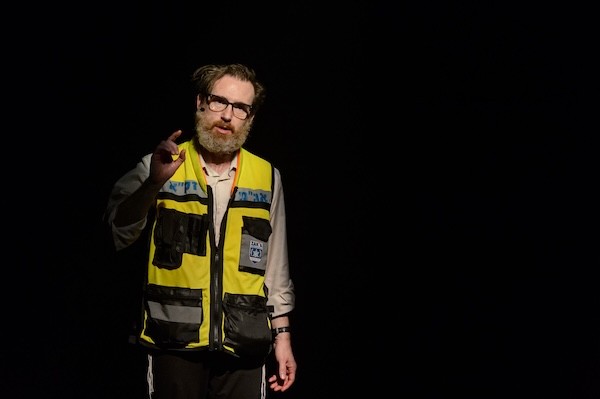
Christopher Morris as Jacob in The Runner. (photo by Dylan Hewlett)

Since this article was published, PuSh has canceled the production. For the statement, click here.

The Belfry Theatre in Victoria has removed Christopher Morris’s play The Runner from its 2024 lineup. I can see why it did so – the threats of violence are real, and scary. But it was the wrong decision.

“The Belfry Theatre presents contemporary work, with ideas that often generate dialogue. That is why, a year ago, we decided to bring the much-acclaimed play, The Runner, to Victoria. However, we believe that presenting The Runner at this particular time does not ensure the well-being of all segments of our community,” reads the Jan. 2 statement.

Last month, a petition was started to remove the one-man play about an Israeli rescue worker whose life is forever changed after he helps an Arab woman, who may have stabbed an Israeli soldier to death, before attending to the soldier. A counter-petition was started by members of the Jewish community to keep The Runner at the theatre. At press time, the protest petition had more than 1,400 signatures, while the counter-petition had more than 2,400.

The Belfry Theatre invited people to come and discuss any issues surrounding the play. That Dec. 22 meeting dissolved into chaos, overtaken by protesters with bullhorns and anti-Israel signs. The Belfry building was subsequently vandalized with multiple stickers that said “trash” and anti-Israel sentiments, topped off with a red-spray-painted “Free Palestine.”

The threat of more violence – implied by the aggressiveness of the protesters at the December meeting and the defacement of the theatre’s building – was probably a main reason for the Belfry canceling the show. It seems that the protesters have successfully bullied the theatre into changing its programming. Instead of contributing to a safe space in which ideas could be presented, considered, discussed, perhaps agreed upon, perhaps not, the protesters have created an atmosphere of fear. They have put other creatives on notice – unless you reflect only what we believe, we will shut you down.

By succumbing to the pressure, the Belfry has perhaps protected its staff and its building – the importance of which cannot be understated – but a dangerous precedent has been set. On the larger world stage, we have seen how screaming down other viewpoints, vandalism and worse violence, misrepresentation and misinformation, can win the day. The success of such tactics in Victoria is another reminder, if we needed one, of how easily freedoms can be removed. How easily voices can be silenced.

Accuracy and context matter, and the petition includes neither.

The petition describes The Runner as “a story of Israeli settlers in a dehumanizing exercise of whether Palestinian and Arab life is of value.” Its writers “demand[ed]” the Belfry “remove The Runner from [its] 2024 lineup,” claiming that it “features the violent and racist rhetoric of Zionism from an exclusively Israeli perspective.” They cite two unattributed, non-contextualized sentences from the script that ostensibly support their position.

The play is not about Israeli settlers, it does not celebrate Israeli settlers or militant Zionism. Jacob – a volunteer from Jerusalem with ZAKA (Israel’s nongovernmental rescue and recovery organization) – is the main character, the hero, the one the audience is rooting for, along perhaps with the Arab woman he helps save.

The quote chosen by the petitioners is spoken by Ari, Jacob’s brother, who is portrayed as a rabid settler nationalist. He is a jerk, and an awful brother. People like Ari do exist, but one of the points of the play seems to be that he is not the model human, that his views are not what people should think.

The petitioners have one aspect of the play almost correct: it does focus on Israeli perspectives (plural), as the main character is Israeli, and so are his mother and brother, and his colleagues. And I will admit that I had trouble with this aspect of the play, too. I felt that The Runner only asked questions about Israelis’ morality, that it disparaged Jews’ claims to the land, that it depicted every Israeli character other than Jacob harshly. While terrorism is shown, the terrorist characters aren’t held to any account, in my view, and there are no moral demands made of them.

I am proud that the petition to keep The Runner in the Belfry’s lineup was initiated by members of the Jewish community. I believe in Israel’s right to exist and to defend itself, at the same time as I believe in the right of people to criticize, question and protest. In a democratic country, I don’t see the need to attack people or destroy property to voice an opinion, especially not about the arts. It is no wonder there are multiple conflicts taking place around the world – even in Canada, where we enjoy multiple freedoms and are relatively rich in resources, we find it challenging to be open, civil and respectful of diversity.

If The Runner had encouraged violence or discrimination, I might have signed a petition against it, too, and even joined a rally, but I hope that I would have chosen to critique it instead, to share my point of view instead of trying to silence Morris’s. I certainly would not have chosen to threaten or commit violence against people or property.

Several aspects of The Runner bother me, but I think it is an excellent piece of work because it has taken up more of my brain space than almost any other play, movie or performance that I’ve seen or book or article I’ve read. It has made me angry, thoughtful, sad, and I continue to contemplate my various reactions. It has literally kept me up at night. In this respect, Morris has done his job extremely well. People should see this play. I sincerely hope the bullies will not succeed in silencing the PuSh Festival’s presentation of it as well. 

For my interview with Christopher Morris, click here. To read statements about the Belfry Theatre’s decision to remove The Runner from its lineup, click here. For more on the Victoria situation, see thecjn.ca/news/runner-play-victoria. 

Format ImagePosted on January 12, 2024January 12, 2024Author Cynthia RamsayCategories Op-EdTags antisemitism, Belfry Theatre, freedom of expression, Israel, The Runner
Prof: “no choice but to resign”

Prof: “no choice but to resign”

Dr. Ted Rosenberg (photo from BC College of Family Physicians)

Ted Rosenberg has stepped down from his post as a clinical assistant professor at the University of British Columbia’s faculty of medicine, citing an unsafe environment, following his repeated attempts to have the school do more to address antisemitism.

In a Jan. 1 letter to UBC, the award-winning geriatrician, who has taught at the medical school for more than 20 years – prior to that, he had a position at the University of Manitoba – wrote that because the faculty has failed to address concerns, he had “no choice but to resign.”

A tense atmosphere developed following the Oct. 7 Hamas attacks when a petition titled “A Call for Action on Gaza” first appeared at the faculty of medicine and was signed by more than 225 of its students. The petition went beyond calling for a ceasefire in Gaza. Rather, it condemned Israel as “a settler colonial state,” accused it of “collective punishment through indiscriminate bombing of civilians” and claimed that “Palestinian people have been continually abused, traumatized and killed by the settler state of Israel and its Western allies for over 75 years.”

In a Nov. 29 letter to UBC president Benoit-0Antoine Bacon, medicine faculty dean Dermot Kelleher and other top officials at the university, Rosenberg wrote, “This petition and other similar statements on campus, as well as the inaction by UBC, makes me wonder if antisemitism has become systemic in this institution.”

While praising UBC’s efforts to redress discrimination and promote diversity and inclusion, he asked, “Why do these efforts for diversity and inclusion come to an abrupt halt when it involves ‘including and protecting’ Jewish/Zionist students and faculty?” According to Rosenberg, the petition not only made him feel unsafe but also traumatized a medical student “who was left distressed, anxious and sleepless after reading it, and enduring the hostile reactions of colleagues and faculty.”

A Dec. 21 letter, co-signed with 283 other physicians – both Jewish and non-Jewish – stressed the growing polarization at the medical school due to events in the Middle East.

“This is resulting in hate speech, student intimidation and the feelings of many students and teachers that they are working in a toxic environment. Several of us have expressed concerns to you in writing and are waiting for specific responses,” the letter read.

The letter also called into question the validity of the anti-Israel petition, emphasizing that it contained several inaccuracies, caused deep divisions within the medical student community, and was one-sided and unrelated to medical care.

In requesting a response from university leadership to take action to protect the integrity of the medical school and the safety of medical students and staff, the letter urged that those who signed the petition “be made aware of the significance of their choice of contentious language.”

Additionally, the letter called on the offices of equity, diversity and inclusion (at both the university and the medical school) to receive sensitivity training regarding Jewish issues and antisemitism, encouraged the university to adopt the International Holocaust Remembrance Alliance definition of antisemitism, and asked the university to form a clear policy on the boundaries of free speech, “having zero tolerance for any speech that crosses the boundary to antisemitic or hate speech or language used to incite violence, either openly or covertly.”

Both letters received responses from Dean Kelleher of the medical school. Rosenberg, however deemed them inadequate. In the resignation letter, he said they “did not address any of our specific concerns re: the medical student’s petition, antisemitism within the faculty, or concerns that politicization and polarization of the Middle East conflict are creating a toxic work environment.

“I checked the recommended links to your and the president’s statements on respect and compassion…. Two words are conspicuously absent from all these documents: 1. Jew(ish) and 2. Antisemitism.”

Rosenberg added that he searched the websites for the offices of equity, diversity and inclusion at the university and the medical school for “antisemitism” and did not find the word included among the several anti’s that were mentioned.

In his most recent letter, Rosenberg said he lamented the deaths of innocent civilians on both sides, but denounced the “oversimplistic ahistorical demonizing narratives and rhetoric” taking place.

Rosenberg also expressed the hope “that the faculty of medicine and UBC will recognize this serious threat of antisemitism/Jew-hatred and the dangers of politicization and polarization of the faculty and student body.”

In his concluding remarks, he advised the school to consult with the physicians who collectively wrote the school leadership in December. “They can work with you to constructively, collaboratively and proactively rectify this situation and ultimately help restore respect, compassion, empathy and trust among colleagues and students,” he said.

Rosenberg told the CJN that he is aware of other faculty members who have considered resigning because of the present atmosphere at the medical school. Since his letter, he also has heard from people at the faculty who are prepared to do more to recognize antisemitism – and to do something about it when it appears at the school.

In response to a request for comment about Rosenberg’s resignation, a spokesperson for UBC wrote, “The faculty of medicine and the University of British Columbia have been very clear that antisemitism, or discrimination of any kind, is completely unacceptable. We are committed to creating a safe and respectful environment for all of our community members and will continue to take steps to do so.

“In response to concerns raised by faculty and learners, the faculty of medicine is also working expediently to develop educational opportunities for inclusive learning and respectful dialogue within the faculty in areas that directly reflect our stated values, including how we address issues such as discrimination, harassment and hate speech,” they added.

Rosenberg, a Victoria-based physician who makes house calls, is an advocate for keeping the elderly in their homes for as long as possible. His company, Home Team Medical Services, aims to improve quality of life and increase independence for older people and their families. The company provides home-based health care for people 75 to 105 with physiotherapists, rehabilitation aides and care coordinators, in addition to a team of nurses and physicians.

In 2016, Rosenberg received the BC College of Family Physicians Award of Exceptional Contribution in Family Medicine. 

Sam Margolis has written for the Globe and Mail, the National Post, UPI and MSNBC. This article was originally published at thecjn.ca.

Format ImagePosted on January 12, 2024January 11, 2024Author Sam MargolisCategories LocalTags antisemitism, medical school, Ted Rosenberg, UBC, University of British Columbia

הגנה על סטודנטים יהודים באוניברסיטאות קנדיות ועוד חדשות

חמישה חברי פרלמנט ליברלים בקנדה שלחו מכתב לראשי עשרים וחמש אוניברסיטאות במדינה, בו ביקשו מהם להצהיר האם קריאה לרצח עם נגד יהודים או חיסול ישראל מפרה את מדיניות האוניברסיטאות שלהם

שאלה דומה שהופנתה כלפי ראשי שלוש האוניברסיטאות היוקרתיות בארה”ב נתקלה בתשובה מזעזעת של יתכן, תלוי בהקשר, מה שהוביל לזעם וביקורת ציבוריים רחבים ואף התפטרות של נשיאת אוניברסיטת פנסילבניה

חברי הפרלמנט הקנדי גם דרשו במכתב ששלחו לראשי האוניברסיטאות להגן על הסטודנטים היהודיים בקמפוסים בעקבות העלייה הדרמטית באנטישמיות גם בקנדה

מה שקורה ליהודים ברחבי קנדה, ובמיוחד בקמפוסים של אוניברסיטאות ברחבי המדינה, הוא בלתי מקובל לחלוטין. ראינו יריות שנורו לעבר בתי ספר יהודיים, פיגועי ירי לעבר מוסדות יהודיים, איומים בחרם על עסקים בבעלות יהודית ודיווחים ברחבי הארץ על סטודנטים יהודים שחשים לא בטוחים בקמפוסים שלהם. זה מלווה בחוסר פעולה מצד הנהגת האוניברסיטאות כדי להגן על סטודנטים יהודי. כך כתבו חברי הפרלמנט בקנדה: אנתוני האוספאט’ר, דיוויד למטי, בן קאר, מרקו מנדיסינו ואנה גייני

המכתב גם פורסם על ידם באופן פומבי ברשתות החברתיות. חמשת חברי הפרלמנט הקנדי ציינו עוד במכתבם כי שמענ על סטודנטים יהודיים שהוטרדו ונתונים לסביבה עוינת בקמפוסים, וכן על עיתוני סטודנטים המסרבים לפרסם מאמרים של תומכי ישראל מאז פרוץ המלחמה בין ישראל לחמאס בשבעה באוקטובר

חברי הפרלמנט מבקשים מראשי האוניברסיטאות להעביר להם תשובה עד סוף החודש (ינואר), לרבות פירוט הצעדים שנקטו ראשי האוניברסיטאות על מנת להגן על הסטודנטים היהודיים בקמפוסים שלהם

שיחה בן טרודו לגנץ

השר בני גנץ שוחח לאחרונה עם ראש ממשלת קנדה ג’סטין טרודו. בהודעה מטעם גנץ נמסר כי הוא הביע בפני טרודו הערכה על תרומתה ומחויבותה של קנדה לביטחון ישראל ולשחרור החטופים משבי ארגון הטרור חמאס

עוד נמסר כי גנץ עדכן את טרודו בהתפתחות המלחמה בעזה ובגבול הצפון. הוא הביע את חשיבות התמיכה הבינלאומית בשלילת יכולותיו הצבאיות והשלטוניות של חמאס, בכדי להביא ליציבות האזור כולו. השניים שוחחו גם, כך נמסר, על הצורך לחזק את הארכיטקטורה האזורית, בדגש על הכוח הימי

בכדי להתמודד עם האיום של החות’ים, שליחי איראן, המאיימים על הכלכלה העולמית במעשי הטרור שלהם בים האדום. לפי ההודעה, גנץ וטרודו סיכמו להמשיך ולעמוד בקשר בהמשך

הפדרציות היהודיות בקנדה גייסו שמונים מיליון דולר לטובת ישראל

עד כה גייסו יהודי קנדה באמצאות הפדרציות ברחבי המדינה סכום של שמונים מיליון דולר קנדי שינותבו כסיוע לעיר שדרות, תושבי העוטף והמדינה. מדובר בגיוס הגדול ביותר של הפדרציות היהודיות בקנדה עבור ישראל מאז מלחמת לבנון השנייה, אז גויסו כארבעים ושישה מיליון דולר קנדי

היעד של ארגון הפדרציות היהודיות של צפון אמריקה הוא להגיע לתרומות של כחצי מיליארד דולר עבור ישראל, לאור המלחמה עם החמאס. התרומות יוקדשו לסיוע כספי עבור נפגעי הטרור, שיקום היישובים שנפגעו ונהרסו ומימון ציוד חירום רפואי, מזון ואספקה על מנת לסייע למפונים והפצועים בשיתוף פעולה עם הסוכנות היהודית והג’וינט. סכום גדול יעבור לשיקומה של העיר שדרות, שמקיימת קשר ארוך שנים עם יהדות קנדה ופדרציית טורונטו בפרט, שתרמה לעיר כחמישה עשר מיליון דולר קנדי לאורך השנים. הגיוס הנוכחי התאפיין בהתגייסות רחבה של חברי הקהילה היהודית מכלל שכבות החברה, כאשר משפחות רבות התעקשו לקחת חלק בתרומה. במגבית קנדה ישראל אומרים: ישראל היא הבית של העם היהודי. אנחנו רוצים להרגיש בטוח בבית שלנו

Posted on January 10, 2024Author Roni RachmaniCategories עניין בחדשותTags antisemitism, fundraising, Gantz, Hamas, Jewish Federations, Liberal members of parliament, Sderot, terrorism, Trudeau, universities, אוניברסיטאות, אנטישמיות, גנץ, הגנה על סטודנטים יהודים, חברי פרלמנט ליברלים, חמאס, טרודו, טרור, פדרציות היהודיות, שדרות

גידול משמעותי באנטישמיות נגד יהודים וישראלים בקנדה

 לאור אירועי המלחמה בין ישראל לחמאס בעזה נרשם גידול משמעותי באנטישמיות בקנדה, נגד יהודים וישראלים. זאת, בדומה לגידול באנטישמיות בארצות הברית הסמוכה ומדינות אירופה השונות. בקנדה יש לזכור קיים הריכוז של היהודים מהגדולים בעולם (מחוץ לישראל)

בשכונת פורסט היל בטורונטו שבה חיה הקהילה היהודית הגדולה בקנדה, רוססו כתובות נאצה על סניף של ענקית הקפה סטארבקס. מייקל לויט, מנכ”ל ידידי מרכז השואה על שם שמעון ויזנטל, פרסם תמונות של האירוע ברשתות החברתיות. זאת למקרה שמישהו מתקשה לקרוא את גרפיטי השנאה. כתוב שם ספל קפה ובעצם אתם מתכוונים לספל דם. תפסיקו להרוג תינוקות ודם על ידיכם. זו המציאות היומיומית של יהודי קנדה

השחתת הסניף על רקע הטענה כי סטארבקס תומכת בישראל היא רק דוגמה אחת לאירועים הקשים שהפכו מנת חלקם של יהודי טורונטו וערים אחרות. באירוע אחר ריססו פעילים פרו־פלסטינים צבע אדום על חנות ספרים בטורונטו, ותלו עליה כרזות עם תמונת המנכ”לית הת’ר רייזמן בצירוף הכיתוב אתם מממנים רצח עם. באירועים במונטריאול אלמונים ירו לעבר בית כנסת ושני בתי ספר. את האירועים גינה בחריפות ראש ממשלת קנדה, ג’סטין טרודו. לדבריו אירועי האנטישמיות הנוראים במונטריאול חייבים להיפסק. אף הורה לא צריך להידרש לספר לילדו כי ירו על בית ספר. אף רב לא צריך להסביר לקהילה שבית הכנסת שלה הותקף. במונטריאול מתגוררת הקהילה היהודית השנייה בגודלה במדינה

בטורונטו דיווח גם על תלישת מזוזות, ריסוס גרפיטי של מגיני דוד טבולים בדם על בתים של יהודים ובבית ספר. בכיר במשטרת טורונטו אומר, כי הממוצע היומי של פשעי שנאה נגד יהודים קפץ בכמאה שלושים אחוז מאז פרוץ המלחמה. לפי גורמים רשמיים, אף שדווחו גם אירועים אסלאמופוביים, מספרם זעום בהשוואה לאלימות הגואה נגד יהודים. שיעור המוסלמים בקנדה הוא קרוב לחמישה אחוזים ומהגדולים במערב, לעומת כאחוז ליהודים

באוניברסיטת קונקורדיה מונטריאול מתגבשת תביעה ייצוגית נגד המוסד האקדמי ואגודת הסטודנטים בטענה כי טיפחו מרחב מוגן לאנטישמיות לאורך השנים, וגרמו בכך לפגיעה רגשית בקרב סטודנטים ומרצים. התביעה מבקשת פיצויים בסכום של חמישה עשר מיליון דולר (קנדי) עבור התובעים, שעמם נמנים סטודנטים, אנשי צוות ומרצים יהודים שהשתייכו למוסד האקדמי בשלוש השנים האחרונות. אוניברסיטת קונקורדיה כשלה בחקירה ובתגובה לאירועים אנטישמיים בתחומה, דבר שאיפשר לאנטישמיות לשגשג ברחבי הקמפוס, טענו העותרים. בבקשה תוארה תקרית אלימה בין סטודנטים פרו־ישראלים לפרו־פלסטינים שהסתיימה במעצר של סטודנט ופציעתם של סטודנט נוסף ואנשי ביטחון. התביעה נגד קונקורדיה מתגבשת ברקע מאבקן של אוניברסיטאות ברחבי קנדה להתמודד עם המציאות הנפיצה בקמפוסים, מאז פרוץ המלחמה ומצטרפת לתביעה שהגישו בשבוע שעבר סטודנטים באוניברסיטת ניו יורק שבה הושמעו טענות דומות

ההסלמה באירועים האלימים נגד יהודי קנדה מאז מתקפת חמאס איננה מאפיינת רק את הערים הגדולות ביותר. במיסיסאוגה במחוז אונטריו, העיר השביעית בגודלה בקנדה, רופא יהודי קיבל איומים על חייו. ביישוב קטן יותר באונטריו, בריונים תלו מכתב איום על בית משפחה יהודית. אין ספק שאנחנו עדים להסלמה חדה באנטישמיות בעיר שלנו, בערים ברחבי קנדה וברחבי העולם מאז מתקפת חמאס, מציין נח שאק, סגן נשיא למלחמה בפשעי שנאה ואנטישמיות, במרכז בטורונטו. בין שמדובר באירועי בריונות נגד הילדים שלנו בבתי ספר משום שהם יהודים ובין שנגד סטודנטים באוניברסיטאות, או אפילו נגד אנשים שעוצרים לקפה בדרך לעבודה ונחשפים לוונדליזם אנטישמי וכתובות שטנה. מדובר במציאות מטרידה מאוד, הוא ציין עוד

Posted on December 20, 2023December 19, 2023Author Roni RachmaniCategories עניין בחדשותTags antisemitism, Canada, Concordia University, Friends of Simon Wiesenthal Centre for Holocaust Studies, Israel-Hamas war, Mississauga, Montreal, Starbucks, Toronto, אוניברסיטת קונקורדיה, אנטישמיות, טורונטו, מונטריאול, מיסיסאוגה, מלחמה בין ישראל לחמאס, מרכז השואה על שם שמעון ויזנטל, סטארבקס, קנדה

Rx for antisemitism?

A resident doctor in Vancouver was confronted by a fellow medical student demanding to know why Israel is exchanging three or more Palestinians for each Israeli hostage kidnapped by Hamas and held in the Gaza Strip. Is an individual Palestinian life of less value than a Jewish life? the student demanded.

This is one of many anecdotes making the rounds among Jewish doctors in British Columbia. These experiences, as well as an inflammatory anti-Israel letter signed by a sizeable number of University of British Columbia medical students, caused more than 100 doctors to assemble to discuss the issues Dec. 5.

“If the university doesn’t take these things seriously, I’m prepared to give up my UBC appointments,” said a Vancouver neurosurgeon who asked that their name not be used because they suspect activists would target them with vexatious complaints to professional governing bodies or harass them online or otherwise. “I don’t need to be associated with a university that does not speak out against antisemitism.”

Medical students in the province are trained in Indigenous awareness among other culturally relevant education, said the neurosurgeon.

“I consider myself to be part of the indigenous people of the land of Israel, and a minority,” the doctor said. “We’ve been labeled as settler-colonialists by a quarter of the medical students and our history has been completely ignored. I think those people should be forced to have some education about the indigenous people of Israel.”

The meeting, held at the Jewish Community Centre of Greater Vancouver, brought together about 50 doctors in person, with another 60 attending virtually. The neurosurgeon left uplifted after hearing from community leaders about strategies and actions being taken.

Addressing the meeting were Ezra Shanken, chief executive officer of the Jewish Federation of Greater Vancouver, Nico Slobinsky, Pacific region vice-president for the Centre for Israel and Jewish Affairs, and Ohad Gavrieli, assistant executive director of Hillel BC. The event was convened by Larry Barzelai, a recently retired family doctor, and Marla Gordon, a physician working in elder care and medical director for long-term care in Vancouver.

The gathering was a reunion of sorts, including some doctors who had been part of an informal cadre of Jews in the field who would get together informally a couple of times a year in recent decades. However, the turnout far exceeded expectations.

Gordon contacted Barzelai, thinking 10 or 20 doctors might want to get together over coffee. As of last week, 240 Jewish doctors, most of them in British Columbia, were part of a WhatsApp group of professionals concerned about antisemitism in their discipline, especially affecting younger doctors. About half attended last week’s event.

The letter that precipitated much of the meeting’s concern was signed by more than 300 UBC medical students – an estimated 20 to 25% of the total student body. The letter called on UBC’s new president, Benoit-

Antoine Bacon, to call for a ceasefire between Israel and Hamas, but also called Israel a “settler state” that is “dispossessing Palestinians of their homes” and stated that Palestinian people “have been continually abused, traumatized, and killed by the settler state of Israel and its Western allies for over 75 years” through “colonialism and imperialism.”

Gordon said the doctors are asking for the medical school’s diversity, equity and inclusion education modules to address antisemitism. 

“Just knowing that we are teaching these students who signed this letter, there is discomfort,” Gordon said. “We feel that everyone should be safe in their workplace. If you are a patient, you should feel safe getting care. What if one of your care providers had signed that letter and knows you’re Jewish?”

As much as the meeting had an agenda of fighting antisemitism and biased approaches to international affairs in the medical sector, Gordon said, it is also important for people to gather in mutual support when the community is feeling isolated.

Barzelai echoed Gordon, noting that several doctors told him that any future meetings should continue to be in person, or hybrid, rather than exclusively virtual, because the camaraderie was crucial.

“People are hurt,” said Barzelai. “They are having all sorts of negative experiences in their workplace, with the faculty, with other professors. They want to do something about it.”

Right now, the letter signed by hundreds of medical students is the foremost concern, he said.

“The fact that that many students would sign a letter I think shows the ignorance of the situation, or their lack of knowledge of what’s going on,” he said. “It just pointed to us that we need to educate these people, that it’s too easy to sign a letter and take sides. But the situation itself is a complex situation. To blithely sign a letter like that is kind of distressing. For us, as doctors, we think that people who get into medical school should have done some critical thinking to get there and would be a bit more nuanced about their opinions about the Middle East.”

A lawyer at the meeting stressed the importance of documenting each and every incident on campus, in the workplace or elsewhere. Pro bono legal assistance is available for students and an antisemitism hotline is likely to be operational in the new year.

An alternative letter, signed by Jewish and non-Jewish doctors and medical students, may be drafted and presented to university administrators. Successive meetings will determine next steps. 

Posted on December 15, 2023December 14, 2023Author Pat JohnsonCategories LocalTags antisemitism, doctors, Larry Barzelai, medical school, UBC, University of British Columbia
Dialogue to empower women

Dialogue to empower women

Caroline D’Amore, left, Hussein Aboubakr Mansour and Emily Austin spoke to an audience of more than 550 at Congregation Schara Tzedeck Nov. 26 for the event Women United. (photo by Kyle Berger)

Some 550 Vancouver women packed the sanctuary at Congregation Schara Tzedeck Nov. 26 for Women United, a talk arranged by Jewish National Fund, Jewish Federation of Greater Vancouver, Stand With Us Canada and Schara Tzedeck, and sponsored by the Diamond Foundation. Jewish women were encouraged to bring their non-Jewish friends, and Federation reported that 40% of attendants were non-Jewish.

“The idea was to bring together a diverse range of women from all faiths, to engage in dialogue and empower us to speak up with bravery,” said Megan Laskin, who initiated the concept for the event. She noted that there are just 15 million Jews worldwide “but we are the victims of half of the hate crimes that occur. Our pain, our fear and our loneliness are very real and very deep.” 

Emily Austin, 22, an American social media influencer who is the host of a National Basketball Association podcast called The Hoop Chat w/ Emily Austin, was the first speaker. She described how she took a deep dive into Jewish history to understand it better. “One thing Israel will always have on its side is facts,” she noted. “The Palestinians have truly sad videos with no facts, but people tend to overlook the facts because of the emotional nature of the narrative.”

Austin delivered some of those facts to the audience, refuting the Palestinians’ claims of genocide. “Go to UN.org and you’ll see that their population has quadrupled in the last 20 years,” she said.

In discussing land claims, she said, “this is not about land. It’s about Jew hatred.” She argued that, when Israel left Gaza in 2005, the Gaza Strip was a prosperous area filled with resorts, cafés and nightclubs. “They turned it into a terrorist capital,” she said of Hamas. 

Austin urged members of the audience to educate themselves so they can address false claims with confidence. “There are no excuses to not be a voice when we have the facts. If you’ve not been vocal, please be vocal now,” she said. “Silence is compliance, and those people who want Jews dead are not being silent.”

Austin warned that this conflict is not just about Israel, or even just about Jews. “When they say kill the infidels, the West is next. The common denominator is hatred, and it’s a disease,” said Austin.

Caroline D’Amore, 39, a single mom, social media influencer and the entrepreneur behind Pizza Girl pizza sauce, was the second speaker. She described herself as “a not-so-subtle, pink-haired, Malibu Italian chick” and a high school dropout. She said learning about the Holocaust and reading Anne Frank’s diary made a deep impression on her, but that she was unaware of antisemitism until Oct. 7, after which she started seeing it everywhere, and felt compelled to speak out.

D’Amore said she published a video expressing her dismay and a fact that was obvious to her. “The terrorists are the bad guys. There is no context on this earth that could justify rape and murder,” she told the audience.

The video went viral and D’Amore received hundreds of messages from mothers who were so relieved that a non-Jew could see what was going on.

“I could feel their pain, sadness and fear,” D’Amore said. “So many people are saying nothing, or shaming Jewish people for feeling this fear right now. Jews are being told to ‘stop playing the victim,’ and even I get accused of playing ‘the Zionist victim card.’ What I want to say to my accusers is ‘how dare you?’

“It’s very clear to me that this is about good versus evil,” she continued. “I dove right in and started screaming about this at the top of my lungs, and though I’ve been attacked online for over a month now, I’m still here, proudly showing my face. I plan on being on the right side of history, which means standing up against terror in the Middle East and against those who are justifying what happened on Oct. 7. My promise is that I’ll continue to use my voice to stand up against evil, to stand up for humans who are suffering, to speak up against terrorism, and to encourage and empower others to use their voices.”

D’Amore said the Jewish community was her inspiration. “You guys find the light and it shines so damn bright,” she said. “You come together in the most beautiful ways, and it’s inspired me in ways I’ve never known possible.”

Hussein Aboubakr Mansour, the third speaker, addressed the audience by Zoom from his home in Washington, DC. Now the director of the Endowment for Middle East Truth’s Program for Emerging Democratic Voices from the Middle East, he was born in Cairo, into an environment that he said inspired him and his peers to hate Jews and become jihadists. 

“From an early age, there was a story I heard everywhere, that there are people who epitomize wickedness, want to destroy Arabs and Muslims and steal our land, and want to destroy everything that is good and sacred. Those people are the Jews and Zionism is the embodiment of that ideal,” he said. 

Curious, he started teaching himself Hebrew and learning about Jewish history. That led him on a long journey that transformed his relationship with the world and turned him into an ardent Zionist and supporter of the Jewish people. 

His metamorphosis and his insistence on publishing, blogging and talking about what he learned, has cost him dearly. He was disowned by his family, was arrested on suspicion of being a Zionist spy, and was tortured in Egyptian jails before receiving political asylum in the United States in 2012. 

“I spend every day of my life thinking about how to help end this epidemic of antisemitism that’s been going on for so long,” he said. While the massacres on Oct. 7 destroyed much of his optimism, Mansour said he still believes a change for the better is possible.

He ended his remarks by saying that he is proud to be a friend of the Jewish people and of the state of Israel. “And I have no doubt that I’m not the only Arab who feels this way – I’m just ahead of the curve,” he said. “There will be more who will see this truth.” 

Lauren Kramer, an award-winning writer and editor, lives in Richmond.

Format ImagePosted on December 15, 2023December 14, 2023Author Lauren KramerCategories LocalTags allies, antisemitism, Caroline D’Amore, Emily Austin, Hussein Aboubakr Mansour, influencers, internet, Israel, women

Posts pagination

Previous page Page 1 … Page 16 Page 17 Page 18 … Page 45 Next page
Proudly powered by WordPress