Skip to content
  • Home
  • Subscribe / donate
  • Events calendar
  • News
    • Local
    • National
    • Israel
    • World
    • עניין בחדשות
      A roundup of news in Canada and further afield, in Hebrew.
  • Opinion
    • From the JI
    • Op-Ed
  • Arts & Culture
    • Performing Arts
    • Music
    • Books
    • Visual Arts
    • TV & Film
  • Life
    • Celebrating the Holidays
    • Travel
    • The Daily Snooze
      Cartoons by Jacob Samuel
    • Mystery Photo
      Help the JI and JMABC fill in the gaps in our archives.
  • Community Links
    • Organizations, Etc.
    • Other News Sources & Blogs
    • Business Directory
  • FAQ
  • JI Chai Celebration
  • JI@88! video

Recent Posts

  • Zionism wins big in Vegas
  • Different but connected
  • Survival not passive
  • Musical celebration of Israel
  • Shoppe celebrates 25 years
  • Human “book” event
  • Reclaiming Jewish stories
  • Bema presents Perseverance
  • CSS honours Bellas z”l
  • Sheba Promise here May 7
  • Reflections from Be’eri
  • New law a desecration
  • Resilient joy in tough times
  • Rescue dog brings joy
  • Art chosen for new museum
  • Reminder of hope, resilience
  • The national food of Israel?
  • Story of Israel’s north
  • Sheltering in train stations
  • Teach critical thinking
  • Learning to bridge divides
  • Supporting Iranian community
  • Art dismantles systems
  • Beth Tikvah celebrates 50th
  • What is Jewish music?
  • Celebrate joy of music
  • Women share experiences 
  • Raising funds for Survivors
  • Call for digital literacy
  • The hidden hand of hate
  • Tarot as spiritual ritual
  • Students create fancy meal
  • Encouraging young voices
  • Rose’s Angels delivers
  • Living life to its fullest
  • Drawing on his roots

Archives

Follow @JewishIndie
image - The CJN - Visit Us Banner - 300x600 - 101625

Worst traffic in the OECD

Worst traffic in the OECD

In central Tel Aviv, a driver slotted their car in between two properly parked vehicles. (photo from Ashernet)

Traffic density on Israel’s roads averages about 2,800 vehicles per kilometre, worst of all the OECD countries, for which the average is around 800 vehicles/kilometre; after Israel, Spain comes in at number two, with 1,300 vehicles/kilometre. As both the standard of living in Israel and the country’s population increase rapidly, the road and rail infrastructure, as well as the development of public transportation, are not keeping pace, even though there is a high price to pay for congestion. Israel’s Ministry of Finance put the cost of congestion in Israel at approximately $10 billion per year.

Format ImagePosted on February 14, 2020February 12, 2020Author Edgar AsherCategories IsraelTags Israel, parking, traffic
Community planning critical

Community planning critical

Alex Cristall, chair of the board of directors of the Jewish Federation of Greater Vancouver. (photo from JFGV)

Long active in the Jewish community, Alex Cristall started his current volunteer position as chair of the board of directors of the Jewish Federation of Greater Vancouver in June 2019. He spoke to the Jewish Independent about the role, and where he sees the organization as it enters a new decade.

JI: Could you go over your professional background and your work with Jewish organizations?

AC: I grew up in this community and was always surrounded by a culture of volunteerism. My professional background is in real estate investment, and my family’s values always drove our approach to business and to community involvement. From my grandparents to my parents to the way my wife Jodi and I are raising our children, giving back and getting involved with community has always been a priority, both in and out of the office. I started volunteering as a young adult and it’s grown from there.

JI: How did you become chair of Federation?

AC: Before taking on the role of board chair, I held a number of other leadership positions with Jewish Federation and with other organizations. At Federation, I served as chair of the 2016 and 2017 Federation annual campaigns, as chair of major donors, chair of men’s philanthropy and as a member of the board.

Anyone who knows me knows my love of sports, so my previous involvement with the JCC Maccabi Games and with Maccabi Canada came about very naturally. I also chaired the JCC Sports Dinner.

Serving as vice-president and then president of the JCC [Jewish Community Centre of Greater Vancouver] was instrumental in giving me a unique perspective that has been indispensable as chair of Jewish Federation. I got to see firsthand how important the partnerships between the organizations are, and how much partners rely on the community planning and fundraising expertise that Jewish Federation brings. At the time, Jewish Federation organized local missions, where we visited various partners, including the Jewish Food Bank and Tikva Housing Society, and learned about the range of needs in our community – and the range of responses.

It was very eye-opening, and that was when I got involved in men’s philanthropy at Jewish Federation and decided to learn more about the community. That ultimately led to a role on Jewish Federation’s allocations committee, where we were fully immersed in the entire breadth and depth of need – and opportunity for impact – in our community.

In my mid-30s, I was fortunate to travel to Ethiopia with members of Jewish Federation’s National Young Leadership Cabinet to see the work we were doing there with two of our international partners, the Joint Distribution Committee and the Jewish Agency for Israel. That was where I really began to understand the big picture of what we can accomplish for world Jewry in need.

More recently, I was able to visit our partnership region in Israel and learn about the particular challenges of living in the north, and the impact we’ve been able to make there as the result of a long-term strategic focus.

I’ve been in Israel many times, but, in terms of our partnership region and Beit Vancouver, this past spring was my first visit. It’s such a successful country overall, but I really saw the inequity that exists in the periphery. To see the contributions of our community and the future development plans of the region was inspiring, as was seeing what our Israel and overseas affairs committee, through annual campaign funds, and many local families are doing there with their investments…. It was very rewarding.

We need to continue to raise up that entire region…. Every mayor of our region came to greet us and that’s how you know how important our dollars are for youth. So many different things going on. When you see the respect that the different mayors have for the work we do and the people involved, it’s clear that our impact matters.

JI: What are your goals looking ahead?

AC: Our community is growing and changing all the time. As a Federation, we have been changing alongside it, which is positioning us to effect positive change in ways that can make an impact now and into the future.

We have a unique role in the community in terms of our planning function, and it’s a critically important piece that we bring to the table. We are focused on planning strategically to identify and prioritize needs locally, as well as in our partnership region in Israel. Our donors and fund-holders at the Jewish Community Foundation help us meet these needs. The partnerships we have developed over the decades are key to being able to get the work done in ways that are going to create lasting change.

We have made progress on every one of the areas of opportunity we identified in the strategic priorities, from affordability and accessibility, to seniors, engagement and, of course, community security. With big picture issues like these, the outlook is for the long term and so the work is ongoing.

At the end of the day, I would like people in our community to say that we made it easier for them to live Jewishly – whether that’s because we helped make a Jewish program more affordable, because we reached out to them where they live, because their aging parents were able to access a seniors’ program, or what have you.

JI: What challenges do you see before you?

AC: Our community is growing and its needs are constantly evolving, so there is always a lot of work to do, and that makes it exciting. I love a good challenge, and there are challenges everywhere we turn.

This community looks so different from when I was a child here. Even in the last decade it’s changed considerably. We’re more spread out and we’re more diverse.

More than half of our community is comprised of children, youth and young families, many of whom are really crunched by the high cost of living, and many of whom see their Jewish community engagement in ways that are very different from previous generations. At the same time, we have a growing population of Jewish seniors who need to stay connected and supported as they age. These are two of the big challenges facing our community right now. We also need to continue to meet our community’s needs through diverse revenue sources.

And last, of course, is the upcoming redevelopment of the JCC site into a true community hub. It’s still in the early stages, but Jewish Federation is poised to play an important role in this when the time comes. We’re proud to have entered into a memorandum of agreement with the JCC. [See jewishindependent.ca/historic-jcc-fed-agreement.]

JI: What excites you about the role?

AC: I feel very fortunate to work with an incredible group of volunteer leaders and professional staff, all of whom genuinely care about this community and about Israel.

From a personal perspective, some of the best lessons I’ve learned have come from volunteering with different community members and working with the Federation staff…. It’s very rewarding to meet with people in the community and see the reach and the impact of the good work we’re doing.

JI: What accomplishments are you most proud of thus far?

AC: One thing I am very proud of is how our donors have come to rely on Jewish Federation for our breadth of knowledge of community needs, our strategic approach and the strong relationships we’ve developed. Many of them trust us with all of their Jewish community philanthropy, and they come to us first when they have questions about where and how they want to make an impact.

I think we can be very proud of how we have taken a very strategic approach to growing the financial resources we generate, whether that’s through the annual campaign, through special project funding, or through legacy giving at the Jewish Community Foundation. As a result, our partners have more ways to access funding for the vital programs and services that align with high-priority community needs.

Community security is an area where we wish we didn’t have to focus our attention, but the reality is that we do. It was the first thing I really championed as chair of the annual campaign in 2016, and it was one of the first areas of strategic investment that we addressed from our 2020 Strategic Priorities [ourcommunity2020.jewishvancouver.com]. Since then, our community security advisory committee has taken an active role in addressing needs in this area and, on their advice, we hired a director of community security. Together, they are creating a culture of security consciousness.

Sam Margolis has written for the Globe and Mail, the National Post, UPI and MSNBC.

Format ImagePosted on February 14, 2020February 12, 2020Author Sam MargolisCategories LocalTags Alex Cristall, Jewish Federation, philanthropy, tikkun olam, volunteerism
Hurdles to become a doctor

Hurdles to become a doctor

Ruth Simkin with her dog, Kelly. (photo by Chris Wilson)

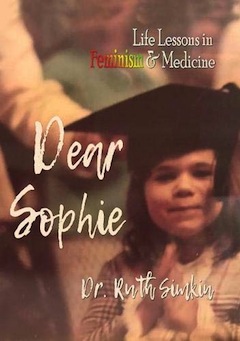
Feminism is really true equality between women and men; nothing more, and nothing less,” Ruth Simkin writes in her new book, Dear Sophie: Life Lessons in Feminism & Medicine, a memoir dedicated to her great-niece.

“There are many people who scoff at the word ‘feminism,’” Simkin adds. “But consider this – when I was in my first year of medical school, I, and any other woman, could not get a credit card in our own name. Until 1974, a husband’s signature was needed for women to have credit cards. At that time, I met women who were teachers who lost their jobs because they and their husbands wanted to start a family and they became pregnant – a no-no for working teachers until 1978. I could go on and on with examples like this to show why feminism was, and still is, such an important part of all our lives.”

Born in Winnipeg in 1944, Simkin has prevailed over many obstacles throughout her life and career. In Dear Sophie, readers join her as she struggles to get into medical school.

“There was stiff competition to get into an innovative medical program launched at the University of Calgary in the late 1960s,” she told the Independent from her home in Victoria. “I was one of 32 of roughly 1,200 applicants to be accepted.”

Admission to the program, however, would turn out to be an easier hurdle than those that were yet to come during her schooling and subsequent training. The length of her time in med school is replete with stories of sexual harassment and discrimination by both fellow classmates and senior members of the faculty.

“Male doctors, on more than one occasion, did all they could to get me expelled from med school, but I stood my ground,” Simkin said.

She managed to complete her residency, despite being blocked at almost every step, and clashing with the established medical community. But she prevailed. She was the first U of C med school graduate to open a practice – one that thrived – while also working as a professor and preceptor at the school.

image - Dear Sophie book coverIn the memoir, Simkin details her experiences from that time to the present and uses her account as a way to demonstrate to Sophie, and to other women, how to live a happy, feminist life. She hopes that Sophie, a pre-adolescent during the time Simkin was writing the book, will learn from her experiences before entering adulthood.

Simkin’s long and varied career has seen her undertake many ventures. In the 1980s, she learned acupuncture in Shanghai and, ultimately, became the first physician to be approved by the Alberta College of Physicians and Surgeons to incorporate acupuncture in a medical practice. Later that decade, she went to London, England, to study with Dr. Katharina Dalton, who brought premenstrual syndrome to the world’s attention and also coined the term.

Upon her return to Canada, Simkin opened the first PMS clinic in Western Canada. She also has opened Western Canada’s first hologram gallery, produced concerts, been involved in theatre projects and started the lesbian and gay political action group CLAGPAG.

In the 1990s, she moved to Salt Spring Island, where she became a farmer – growing “yuppie” veggies. A return to medicine saw her become the first fellow to study palliative care at the University of British Columbia. In 2014, she was honoured with a life membership from the College of Family Physicians of Canada.

Among her other published works, Simkin has written What Makes You Happy, a collection of short stories, both autobiographical and fictional; The Y Syndrome, a medical thriller set in 1990s Calgary; and Like an Orange on a Seder Plate, a feminist Haggadah. The Jagged Years of Ruthie J (2012) is an autobiographical account of her experiences in Winnipeg before medical school.

Over the years, she has written scores of medical papers and contributed to textbooks, as well as mixed media presentations. Having travelled extensively, she has an (as-yet) unpublished book, Come Away with Me, about her journeys through China.

Dear Sophie received the 2019 Rainbow Award in the LGBT biography/memoir category. In its review of the book, the prize committee said, “Dear Sophie is a flawless memoir that is not only a story of Dr. Ruth Simkin, but a story of feminism and women in Canada and the field of medicine, skilfully woven together with valuable life lessons.”


Sam Margolis has written for the Globe and Mail, the National Post, UPI and MSNBC.

Format ImagePosted on February 14, 2020February 12, 2020Author Sam MargolisCategories BooksTags family, feminism, history, LGBTQ+, medicine, memoir, Ruth Simkin, Victoria
Inherent love for business

Inherent love for business

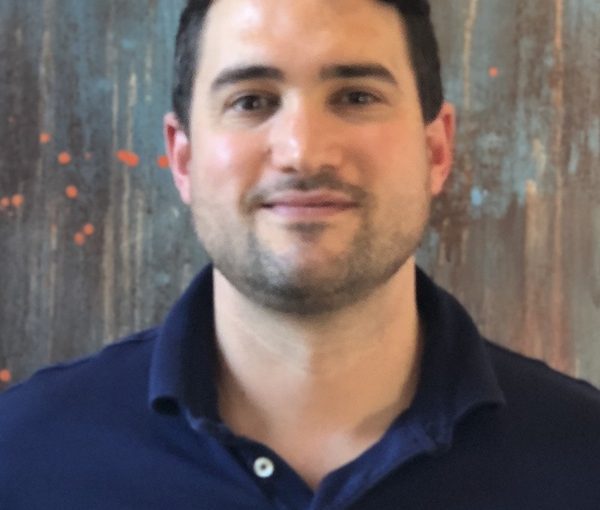
Ben Silverman (photo from Ben Silverman)

Ben Silverman is the managing director and co-founder of Integral Artists, a talent agency based in Vancouver. He’s also the president of media investment firm Various Things Entertainment and co-founder of James Charles Properties, a real estate development company focused on B.C. holdings. It takes a lot of energy, but Silverman, who was named on Business in Vancouver’s 2019 Forty Under Forty list, has a mind that’s always working.

“Even if I am trying to relax on vacation, my brain doesn’t seem to want to shut off the part which is observing the world around us and processing it in search of new opportunities and/or improvements,” he said. “As a lifelong student of the art of calculated risks and plan execution, I am naturally compelled to the life of an entrepreneur.”

The 39-year-old grew up in a creative environment, enjoying writing and performing.

“Growing up in Richmond, I used to perform in the Prozdor musical theatre productions put on by Joan Cohen at Beth Tikvah,” he recalled. “My entire family would partake – my brothers on stage with me, my dad playing in the live orchestra and my mom helping organize the program. Prozdor was a real contributor to my enjoyment and pursuit of the performing arts.”

While he continued that pursuit, which included obtaining an undergraduate degree in creative writing, his taste for the entrepreneurial was taking shape as well. In 2003, he launched his first formal start-up, Astone Fitness, off the back of an infomercial he produced for a product he trademarked – Ripcords Resistance Bands.

Now, the film and television industry is where he brings his passions together. “Film and TV are commercial art forms which I have always been drawn to as forms of great entertainment and storytelling,” he told the Independent. “There is an inherent overlap and compromise required between the creative and the business side in film and TV.”

This overlap is where he does his best work, he said, harnessing his communication skills and his ability to relate to the needs of his creative clients, as well as his business acumen.

Outside of his work endeavours, Silverman remains active in the Jewish community, and is connected to the Bayit.

“I have tremendous respect for Rabbi Levi Varnai, who is inspiring and doing incredible work galvanizing the community around him and helping people from all walks of life feel like they belong,” Silverman said. “The shul’s [past] president, Mike Sachs, is also one of the hardest working and dedicated individuals I know. Together, their approach is inspiring and makes me feel like my contributions matter, which motivates me to participate however possible, whether financially or with my time.”

Silverman continues to dream big. Last year, Various Things Entertainment acquired feature film distribution company levelFILM, which had seven movies at the 2019 Toronto International Film Festival, including Hope Gap, starring Annette Bening and Bill Nighy, and Ordinary Love, starring Liam Neeson.

As for Integral Artists, which also has offices in Toronto, Silverman said the agency is in “active discussions regarding a further expansion within North America. Our goal is to be the largest talent agency headquartered in Canada.”

Shelley Stein-Wotten is a freelance journalist and comedy writer. She has won awards for her creative non-fiction and screenwriting and enjoys writing about the arts and environmental issues. She is based on Vancouver Island.

Format ImagePosted on February 14, 2020February 12, 2020Author Shelley Stein-WottenCategories LocalTags Bayit, Ben Silverman, business, Business in Vancouver, entrepreneurship, levelFILM, Richmond, Various Things Entertainment
Sharing legends of Mossad

Sharing legends of Mossad

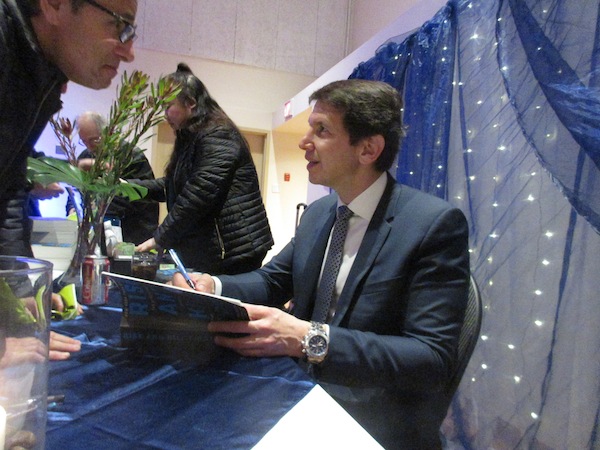
Ronen Bergman signs a copy of his book Rise and Kill First: The Secret History of Israel’s Targeted Assassinations for an attendee of his talk at Congregation Beth Tikvah Feb. 2. (photo by Pat Johnson)

Ronen Bergman, perhaps the leading historian on Israeli intelligence, spoke in Richmond recently, engaging a packed sanctuary at Congregation Beth Tikvah Feb. 2 with stories that make Ocean’s Eleven pale in comparison.

Bergman, a staff writer at The New York Times Magazine and senior political and military analyst for the Israeli daily Yedioth Ahronoth, shared the history of the Mossad as told in his bestselling book Rise and Kill First: The Secret History of Israel’s Targeted Assassinations. One had an extremely timely conclusion.

Imad Mughniyeh was the military commander of Hezbollah, who Bergman called “the most wanted and most capable and most diabolical terrorist who ever walked the face of the earth.” Mughniyeh is believed responsible for the 1983 bombing of the U.S. embassy in Beirut and truck bombings in the same city, which killed hundreds of U.S. and French military personnel, and also was involved in the 1992 bombing of the Israeli embassy in Buenos Aires and the 1994 bombing of the AMIA Jewish community centre there, as well as countless other atrocities worldwide.

“He was wanted by 41 different countries and the only thing they had from him is a vague photograph from 1983,” said Bergman. Finally, the Mossad located Mughniyeh in a safe house in Damascus, but, since Israel does not have diplomatic relations with Syria and, therefore, does not have an embassy there, they were at a disadvantage. Embassies are a great boon to spies, he said.

“You can have diplomatic immunity, you have cars, you have diplomatic mail, you can smuggle, it’s wonderful,” he said. “But they couldn’t get to him, they couldn’t kill him in Damascus, because it was so hard to operate, so Mossad turned to the only organization that could: the CIA. Because the CIA had something that Mossad will never have in Damascus: an embassy.”

The CIA required permission from then-U.S. President George W. Bush, so Ehud Olmert, who was then Israel’s prime minister, flew to Washington for a secret meeting with Bush and urged the president to help Mossad take out the terrorist, noting the number of Americans Mughniyeh had killed.

“George Bush was convinced, but he said on one condition – no collateral damage,” Bergman said. No bystanders or associates were to be harmed.

Working with the CIA, the Mossad set up the scenario and then aborted the operation 53 times because the target was not within the defined kill zone or because he was not alone or because, on one occasion, his identity could not be 100% verified because he was wearing a scarf due to inclement weather.

On Feb. 12, 2008, Mughniyeh left the safe house and the Mossad was about to push the button when they realized he was not alone.

“He’s walking with a man,” Bergman recounted. “Someone looks at the monitor and says, oh that’s not just a man, that’s Good Dog. Good Dog was the codename for Qasem Soleimani,” the top Iranian general and commander of the Quds Force, responsible for clandestine operations and global terror.

“So, someone said, how wonderful, let’s take them both,” said Bergman. “They called Meir Dagan [director of Mossad], who was sitting shivah for his mother. He calls Olmert and Olmert says no, abort, I promised President Bush that only Mughniyeh is killed.”

Later that same day, Mughniyeh was found alone outside the safe house and killed by an exploding car as he passed on foot. But Soleimani would live another dozen years – until he was killed Jan. 3 of this year, on orders of U.S. President Donald Trump, sparking a conflict that nearly led to all-out war between the United States and Iran.

Bergman, a lawyer and author of six bestselling books, recently received the Sokolov Prize, Israel’s equivalent of the Pulitzer. In undertaking Rise and Kill First, Bergman discarded all previous work on the subject and interviewed 1,000 intelligence officials and others with inside information on the Mossad and its operations. The book is now being turned into an HBO series.

Bergman recounted how, in 2018, Israel stunned the world when Prime Minister Binyamin Netanyahu invited the media to view a massive cache of documents and other materials related to the Iranian nuclear project. The moment was the culmination of two years of planning, involving 500 operatives, including 18 who located and infiltrated a secret archive outside Tehran, then swooped in, with a five-and-a-half-hour window in the middle of the night, to execute the deed and escape, relocating the ayatollah’s nuclear secrets to Israel.

Even with the Mossad’s expertise at safe-cracking, the team knew that they would not have time, once inside the archive, to fiddle with locks.

“So, Mossad establishes a front company in Europe who orders two empty safes from the same Iranian manufacturer. They ship the safes to Paris, then ship them to the Mossad lab in Tel Aviv, where they start drilling into them, trying to find what’s the fastest way to open them.”

They determined that it would require at least 3,600 degrees Fahrenheit to break into the archives’ security.

“Now imagine what sort of energy you need to shlep with you to Tehran in order to create such energy and do that in four different places because you need to open all the vaults,” said Bergman. They also had to bypass other security systems and interfere with video surveillance to make the cameras continue broadcasting as if nothing untoward was happening.

In the morning, when the heist was discovered by archives security officials, Bergman said, “no less than 12,000 troops, Revolutionary Guards, policeman, army” and others descended on the place, but could not discern how anyone could get in, grab all the contents and get out undetected. It would be two months until Netanyahu went public and the Iranians could finally confirm that the perpetrators were Mossad.

“Someone could ask, why should we write a book about the history of the Mossad? This is secret, right?” Bergman said. He acknowledges he left out a great number of secrets, some of which he will take to the grave, but added that it is impossible to tell the story of Israel without telling the story of the Mossad because any major decisions, any turning points in the dramatic story of the country, have the imprint of the intelligence services on it.

He warned, though, that this is not all derring-do and triumph. “If you want to read a book just glorifying Israeli intelligence, I suggest you don’t read Rise and Kill First,” he said. “Sometimes, the Jewish James Bond looks more like Inspector Clouseau.”

Many people ask Bergman how he got the top intelligence officials in the country – former heads of agency, high-level operatives, spies and agents – to talk, usually quite freely and almost always on the record.

“It was easy,” he said. “I smiled. When you smile to people, they feel comfortable to talk. But that’s not the whole answer. These people wanted to talk because they wanted people to know … what they have done in order to keep Israel safe.”

Some interviewees said they told Bergman things they had never told their spouses. But, when subjects were not forthcoming, he had a trick.

“If someone was not that enthusiastic to speak, I did to him or her the one thing that makes Israelis more ballistic and furious than anything else,” Bergman said. “I told him someone else took credit for his operations.”

He mooted a typical response: “What? He said that he was behind enemy lines, that he planned the operation, that he risked his life? Now I’m going to tell you the truth,” Bergman deadpanned. “Always works.”

In a remarkable number of the interviews, a single phrase frequently stood out: a quote from the Babylonian Talmud: “Whoever comes to kill you, rise up and kill him first.”

“Because the way they saw it, they had no other choice,” said Bergman, noting that outsiders cannot understand the DNA, the genome, the motives of Israelis, without understanding the imprint of the Holocaust and the determination to never be powerless again.

Hamas has bragged that they have more volunteers for suicide bombings than they have suicide belts.

“It turns out the only thing that stops these people from coming is the most extensive campaign of targeted killing ever launched in history – and not against the suicide bombers,” said Bergman. “When the Shin Bet [Israel’s internal security service] and Israeli Air Force started to target the layer above them – the bomb-makers, the indoctrinators, the recruiters, the regional commanders – then it turns out that these people who have no problem with sending everybody to their death, once the price tag is attached to themselves and their families, they say, well, we’ll die, but maybe not today.”

The targeting approach, said Bergman, was adopted by the United States, whose military leaders came to realize that taking out the top leadership of the enemy was ultimately less lethal and costly than the alternatives.

“And so, the CIA started following the successful Israeli experience, started to perform targeted killings,” said Bergman. “Do you know the president who organized the largest number of targeted killings in history? Barack Obama, because he realized that this is the weapon that, at the end of the day, takes less human lives than going into an all-out war. And it’s effective.”

Leanne Hazon, Beth Tikvah’s vice-president of programming, welcomed the audience and noted the size of the crowd despite it being Super Bowl Sunday. Rabbi Adam Rubin introduced Bergman. The author signed copies of his book after his talk.


Format ImagePosted on February 14, 2020February 12, 2020Author Pat JohnsonCategories BooksTags Beth Tikvah, journalism, Mossad, Ronen Bergman

When Joseph went missing

A friend recently went through a scary time and, as a result, I did, too. His niece in Minnesota, a young mother, simply disappeared. She went out on a date and didn’t come home. Her mother was with the woman’s children. When she didn’t know what to do, she contacted police, the story was in the media and the important, informal networks of the Missing and Murdered Indigenous Women and Girls (MMIWG) swung into action.

Like many friends, I tried to pass the word along about a woman who was missing. Her family needed her. My friend couldn’t sleep. He worried. I worried. The worst part seemed to be not knowing how to help, what to do and what happened. Things seemed very dangerous.

Some in the Jewish community may say, this isn’t about me. They would be wrong on several levels. First, and most apparent, your prejudice is showing. There are many Jewish community members who have ties to multiple other communities in Canada. Yes, there are indigenous Jews; as well, there are many other cross-cultural, interreligious and inter-ethnic family connections of which you may not be aware.

Second, anyone can be at risk. Missing people and human trafficking are as old as time. When Joseph’s brothers throw him into a pit and then sell him to the Ishmaelites (Genesis 37:28), they’re participating in human trafficking and slavery. They turn Joseph into a missing person. His parents go through the anguish of not knowing what happened to their child. If you’re a parent or, heck, if you’ve ever lost a pet, it’s not hard to imagine this anguish.

Rashi’s commentary says that Joseph was sold several times. According to Midrash Tanhuma, he’s sold from the Ishmaelites to the Midianites and, from there, into Egypt. This description is not unlike what happens now to women captured in wartime. News reports offer similar stories of women enslaved today – by Boko Haram or, to mention refugees closer to home, Yazidi women who were enslaved by ISIS, some of whom have found homes in Canada.

Some believe slavery is a thing of the past, tied to faraway, evil people – like the narratives I’ve heard from Canadians about the American South. People might be evil, but they aren’t far away. This is a modern issue. Once a person is being trafficked, it’s very hard to break free. She’s possibly been forcibly confined, addicted to drugs, beaten and sexually assaulted. She may be hidden, unable to get help, and brainwashed by those who kidnapped her.

There are charities that work against human trafficking, and many nongovernmental organizations do, as well. However, I was recently invited to participate in a raffle. The business offered a prize in exchange for donating to an anti-trafficking organization. I got as far as clicking through to the organization’s donation page before I saw that it did its work through a lens of Christian evangelizing. Here’s what I found: “Agape International Missions has an incredible team of staff members and volunteers who faithfully carry out our mission, day in and day out. At AIM, we believe that Christ through His Church will defeat the evil of sex trafficking, so we invite you, the Church, to join us in this fight!”

Further, if you wanted to work for them, and you’re not Christian? Too bad. Here’s what their job search info looked like: “You should consider pursuing a career with AIM if: You’re a Christian; You agree wholeheartedly with our Statement of Faith. As the foundation for all we do, our Christian faith is a uniting factor among volunteers and staff.”

Essentially, this Christian organization uses an “us” versus them narrative, in which this religiously motivated group is all good. They are out to conquer this evil that happens to faraway (non-Christian) others. Sadly, if you change the religious ideology, I’m not sure Jewish communities are much different in how we portray social action issues.

Kidnapping, human trafficking, using sex as a weapon – many people like to think these terrible things don’t happen to “us.” However, this naïve view harms victims, perpetuating the idea that these things only happen to people far away or long ago, or who somehow did something wrong to deserve it.

Joseph, according to Jewish tradition, was our relative, a part of our family. His brothers kidnapped and sold him. My friend’s niece went missing this winter. This isn’t some ancient or distant problem. Some argue that, if Joseph hadn’t been his father’s favourite, or if he’d behaved better, this wouldn’t have happened to him – this is blaming a victim.

In Joseph’s case, he lived. He was found, and he flourished over time, in Egypt. My friend’s niece came home to her mother and children after a week. It’s still unclear what happened to her. It sounds like something like human trafficking may have taken place. We (helpers outside the family) may never know.

Every time a missing person is found safe, it’s lucky – but it’s not a sure thing. Often, many hundreds of people’s efforts go into finding someone, and keeping others safe.

If you’re sent a missing person’s information, don’t judge whether or not the person is “worthy.” Send it onwards. Just imagine if your relative or friend went missing – wouldn’t you want everyone’s help, without judgment or religious prejudice?

Joanne Seiff has written regularly for CBC Manitoba and various Jewish publications. She is the author of three books, including From the Outside In: Jewish Post Columns 2015-2016, a collection of essays available for digital download or as a paperback from Amazon. Check her out on Instagram @yrnspinner or at joanneseiff.blogspot.com.

Posted on February 14, 2020February 12, 2020Author Joanne SeiffCategories Op-EdTags human trafficking, Judaism, lifestyle, slavery, tikkun olam, Torah, women
Canadian refugee law study

Canadian refugee law study

Shauna Labman (photo from Shauna Labman)

Amid the world’s largest refugee crisis since the Second World War, Winnipeg-based legal scholar Shauna Labman has come out with the book Crossing Law’s Border: Canada’s Refugee Resettlement Program, an in-depth look at how national and international law and policies have shaped Canada’s resettlement programs.

After growing up in Winnipeg, Labman did her undergraduate degree in English and religion at the University of British Columbia, then went into law school at the University of Victoria.

“At the end of law school, I was called to the bar in Ontario, and then I got a contract with the United Nations High Commissioner for Refugees in New Delhi, India,” said Labman. “I went to India, knowing about refugee laws that I’d studied in law school … which meant I knew about the Canadian context of refugees – how refugee claims are made in Canada, how the Immigration and Refugee Board works. I didn’t know anything about how refugees receive protection in a country like India, which has not signed the [United Nations] Refugee Convention or anything.”

After returning to Canada, Labman accepted a consultancy with the Canadian embassy in Beijing. Realizing that the life of a diplomat was not for her, she returned to UBC in 2007 for a master of laws, which was followed by a PhD. Her graduate supervisor was the current dean of the university’s Allard School of Law, Prof. Catherine Dauvergne.

Of her master’s thesis – “The Invisibles: An Examination of Refugee Resettlement” – Labman said, “It’s about the fact that refugees waiting for resettlement don’t get seen. We only see them when they are resettled … but the program is very ad hoc and there was very little attention given to it at the time.”

As Labman was starting her PhD, the ships Sun Sea and Ocean Lady arrived off the coast of British Columbia, carrying several hundred Tamil migrants seeking asylum from civil war in Sri Lanka. She recalled how resettlement was being discussed then. “The relationship between law and refugee protection and what I call ‘the layer legality of it all,’ how different laws work to position different refugees differently, became the basis of my doctoral work and this book,” she said.

After moving back to Winnipeg 10 years ago, she worked as a law professor at the University of Manitoba. Last July, she joined the University of Winnipeg and its Global College. As a human rights professor, she teaches courses on refugees, resilience, and concepts and conventions of human rights.

“I find this really rewarding work,” she told the Independent. “I sit on the board of the Immigrant and Refugee Community Organization of Manitoba and, in that program, I meet a lot of incredible people who spend a lot of time committed to creating a place of welcome for newcomers in our community.”

Labman’s book looks at Canada’s refugee resettlement program from the 1970s, when there were large numbers of people fleeing Vietnam, Cambodia and Laos, up to the Syrian resettlement that’s been happening in the past decade. It covers the different ways that Canada resettles refugees – the government’s resettlement program and the private sponsorship program, including the newly created Blended Visa Office-Referred program, which works with refugee referral organizations to screen refugees before connecting them with private sponsors.

“One way you can think of it is that resettlement itself is a complement to Canada’s inland refugee protection program,” she explained. “Because not that many refugees are able to come to Canada to claim protection, we have a resettlement program. Within that resettlement program, the government is doing resettlement, but the private sponsorship program allows the broader Canada population, individual citizens, to complement the government resettlement program by resettling refugees as well.

“We need only to look south at the U.S. to see how a change in government can affect refugee resettlement,” she said. “We have a legal obligation to asylum-seekers, but a lot of conversation about the border-crossers right now is about whether they are illegally entering the country and whether they are coming in violation of the law when they cross a border. I would say they’re not. I’d say that part of our recognition in the Refugee Convention is that they cannot be penalized for their entry and that, even within our Immigration and Refugee Protection Act, we recognize that refugees may need to cross in a different way or manner to make their claims of asylum.

“In the same way,” she added, “refugee resettlement isn’t a legal obligation, but law still plays out … in how these refugees are selected for resettlement before they enter our borders, which means that, when they are entering our borders, they are entering with a legal document permitting their entrance. They have a legally valid means of entering the country, even though they didn’t have a legal right to enter the country until they were selected for resettlement. So, the book looks at different ways the law operates within these two programs.”

image - Crossing Law’s Border book coverOne area in which the book does not delve, but that Labman said is important, is that the required forms are becoming more complicated to fill out, forcing applicants to seek help from lawyers. “It was too complicated for me to fill out when my family did a private sponsorship application,” she said.

While Labman’s book is academic, it is accessible to a broader readership. “It’s not going to be a page-turner if you’re not interested in refugee resettlement,” she said. “But, if you’ve, say, sponsored refugees and want to understand the program in more detail, it might be of interest. If you’ve worked with refugees, whether in a medical or educational context, in a settlement context … individuals working with refugees, there’s so much history and contextual details to the program. When I was writing this book, that information didn’t exist anywhere particularly clearly. So, if you want a comprehensive understanding of what resettlement in Canada is, this book has that.”

Also, for the main target audience – academics and graduate students in history, philosophy, political science, social work, sociology, law and others – Crossing Law’s Border provides a starting point for their own research on refugee resettlement and sponsorship.

“And, as Canada in the past few years has been promoting the expansion of private sponsorship to other countries, and other countries are taking up private sponsorship models, there’s lots of international interest by governments and policy makers and NGOs in those countries, in what Canada’s resettlement program is about,” said Labman.

The Winnipeg launch of her book took place on Jan. 16, and Labman is planning a launch at the Allard School of Law sometime in May.

Rebeca Kuropatwa is a Winnipeg freelance writer.

Format ImagePosted on February 14, 2020February 12, 2020Author Rebeca KuropatwaCategories BooksTags government, immigration, law, refugees, resettlement, Shauna Labman
Drawing more women to tech

Drawing more women to tech

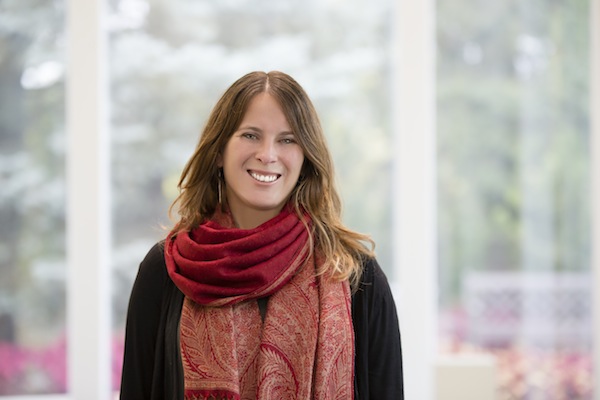
Jodi Kovitz, founder and chief executive officer of #movethedial. (photo by photagonist.ca)

What began as Jodi Kovitz’s personal desire to increase the technology industry’s minimal efforts to attract women leaders is now a broad movement – #movethedial.

Kovitz was born in Calgary and moved to Toronto with her mom when she was 5, while her dad remained in Calgary. Growing up, Kovitz’s role models included her grandmother, Dr. Muriel Kovitz, who served as the first female chancellor of the University of Calgary, and who today lives in Vancouver.

“I had a very loving home and was always pushed and encouraged to be true to myself, be creative and build things,” said Kovitz. “I started my first business when I was 16, which was a greeting card company. I have always pursued entrepreneurship throughout my career, in various forms.”

After graduating from the University of Western Ontario’s Ivey Business School, in London, Ont., Kovitz worked at a consulting firm over the summer. Her mentor there advised that she do something more entrepreneurial, so Kovitz joined a tech start-up.

“I ended up meeting an amazing woman leader in banking after a couple of years,” she said. “Even though I really enjoyed myself and was getting a lot out of it … I left the start-up and went to join her at the bank, where I learned a ton about leadership. I was working specifically in HR [human resources] and leadership development.”

After going to law school and a brief stint working as a lawyer, Kovitz became the chief executive officer of the nonprofit Peerscale, a peer-to-peer group for tech CEOs.

“Peerscale is when I started #movethedial, which very much started as a passion project while I was in my other role,” said Kovitz. “But, it soon became so large that it called me to create it in a formal sense and to move into it full-time.”

Since then, #movethedial has become a global movement and a social enterprise, working to advance the participation and leadership of women in technology.

“While there’s work we need to do over the long term,” Kovitz told the Independent, “we need to ask what we can do now to better engage, include and advance either women in the ecosystem in the moment, as well as those that are just graduating, even just considering going into STEM [science, technology, engineering and math]…. It’s a multifaceted approach.”

The kick off of #movethedial in 2017 was to be a cosy 30-person event posted on social media – 1,000 people came.

Kovitz asked attendees who wanted to help. Fifty people responded, she said, “and we did a whole bunch of initial pilots and experiments. After a year, there was just so much passion and excitement that I was very fortunate to be approached by someone I’ve been friends with for a long time, who cared deeply about this mission and offered to back me … so I could start and create the vision I had … and that I wouldn’t be as afraid to take the risk as a 40-year-old single mother starting something as a full-time job. He was there, supporting me, and partnered with me in many ways, in terms of his advice and experience in building a very large-scale, global, billion-dollar business, as well as tactically helping me through things and scaling the organization.”

The organization #movethedial works with tech companies to attract and recruit women – all people who identify as women, just not people born as women – as well as advance, engage and retain women in their companies. It also works with community groups on a platform called #movethedial stories, showcasing the experiences of women technology leaders around the world.

“We’ve touched thousands of people that way,” said Kovitz. “We have an annual global summit. Last year, we had 2,802 people at our summit in Toronto, where we’d brought speakers in from around the world, and we connected our audience to one another in a really profound, magical way…. We’re creating what the future of #movethedial can look like, thinking through youth and how we can really impact … the ecosystem … and create a different future.

“What really drives me is that we can’t actually build technology solutions for everyone in the population [without including everyone in the population]. And, by the way, everything is tech, right? Banks, taxis, food … everything is tech. We can’t design solutions relevant to the masses if we don’t have representation from our population at our design leadership and governance tables. We just can’t build solutions that work for all the people.

“The urgency for me is around AI (artificial intelligence). It’s really starting to dominate how we use technology. Everything is going to, if it doesn’t already have an algorithm … and AI is taught. If all humans that teach and create AI are men, these machines will develop different patterns of behaviour and algorithms. My fear, and there’s a lot of research to back this up, is that we will build our human biases right into the solutions and algorithms, and we will never be able to undo it. For me, the urgency to create teams that reflect the population is to ensure that we don’t put our bias in forever.”

For more information, visit movethedial.com.

Rebeca Kuropatwa is a Winnipeg freelance writer.

Format ImagePosted on February 14, 2020February 12, 2020Author Rebeca KuropatwaCategories NationalTags #movethedial, education, Jodi Kovitz, STEM, technology, women
Managing our potable water

Managing our potable water

Seth Siegel’s latest book is Troubled Water: What’s Wrong with What We Drink. (photo from Seth Siegel)

With approximately seven percent of the world’s renewable water resources within Canada’s borders, it would seem that we should have little to worry about when it comes to agriculture and potable needs. But our drinking water is at risk, said Seth Siegel, author of Troubled Water: What’s Wrong with What We Drink.

Siegel has spent the last half-decade studying the quality of drinking water. While his book focuses specifically on U.S. water sources, he said water quality is also a concern for Canadians and he worries that neither country is really prepared to address the threat of contaminants from our technological age: plastics, undetected chemicals and aging, inadequate infrastructure.

All of the issues that Siegel examines in his book regarding U.S. drinking water have been raised in recent years in Canada-based research. In many ways, Siegel’s exposé on the environmental impacts of toxic substances, chemicals and medication in the United States is a mirror into our own environmental dilemmas, as Canada is home to many of the same industries and technological challenges. It’s also home to its own significant problems with water purification in rural indigenous communities.

Lead in drinking water

The Flint, Mich., lead water crisis of 2014 may have faded from newspaper headlines, but researchers are still warning about the levels of lead in American and Canadian drinking water. While we are exposed to lead daily in minuscule amounts from the environment, both countries’ federal governments publish guidelines to stringently limit exposure – because lead is a neurotoxin. In Canada, old (pre-1970s or so) water pipes or solder were made with lead, while more recently made pipes do not contain the substance.

In March 2019, Health Canada tightened the guidelines for lead in potable water from a maximum of .01 micrograms (mcg) per litre to .0005 mcg/litre. The decision coincided with a yearlong investigation by Canadian journalists to determine how prevalent lead was in tap water. Some 300 homes in 11 cities were tested and, as expected, newer homes connected with updated water systems had acceptable readings but neighbourhoods with lead service lines or antiquated interior pipes had excessive lead in tap water. One older home in Whistler produced readings more than 12 times the maximum limit, and some 20 communities in Montreal were found to still have lead service lines.

What often makes things worse, Siegel told the Independent, is that updating service lines and interior water lines aren’t inexpensive undertakings and homeowners, who may not have the expertise to weigh the urgency of those changes, often have to bear the cost of upgrades.

Microplastics and more

Lead isn’t the only health risk homeowners face. Microplastic contamination, which has been traced, in part, to the use of plastic bottles, is a growing concern in Canada, home to a robust bottled water industry. Researchers at McGill University, the University of Toronto and several institutions in the United States are currently undertaking studies to determine the prevalence and effect of microplastics in the environment, including on local marine life.

While the World Health Organization states there isn’t enough evidence to confirm that ingesting microplastics is harmful to humans, Siegel and other researchers disagree. As he details in his book, there is now compelling research to suggest microplastics can actually “disrupt the human body’s hormone-related activity,” especially in children.

Becoming advocates

Still, Siegel cautions that his book isn’t an appeal to simply throw out the technology we use. “None of this is a call to ban plastic,” he said, noting that, “just more than 100 years since its first commercial use, plastic is the dominant material of our times. If one wanted to do so, it would be nearly impossible to go even a day without contact with it in some form.”

image - Troubled Water book coverThe answer, he said, is advocacy: educating ourselves and taking proactive approaches that steer both companies we invest in and the experts that oversee their products’ safety, so that materials are exhaustively tested and verified as safe for dependent, long-term use.

“Because your health and the health of your family rely upon your drinking water being of good quality, it’s important for you to get this right,” said Siegel, who said he hopes the data he has provided will help inspire a “citizen’s movement” to change the way drinking water is tested, approved and protected in the United States and elsewhere.

Troubled Water is Siegel’s second book on drinking water management. His New York Times bestseller, Let There Be Water: Israel’s Solution for a Water Starved World, published in 2015, delved deeply into Israel’s national water management system and the mechanisms that have made the country a sought-after resource on drought management in an era of climate change.

A graduate of the Hebrew University of Jerusalem and a successful entrepreneur and expert in patent law, Siegel said the book’s concept has been licensed in his name, but he is not charging royalties for its use. He said he wants to encourage other countries to use it as a template to inspire environmental change in their communities.

“[Every] country in the world is dealing with the same contaminants,” said Siegel. “They may have a different regulatory regime. Obviously, not everybody has the U.S. [Environmental Protection Agency] … but, whatever the local problems are, they are more similar than different.”

Both of Siegel’s books, as well as other resources, are available through his website, sethmsiegel.com.

Jan Lee’s articles and blog posts have been published in B’nai B’rith Magazine, Voices of Conservative and Masorti Judaism, Times of Israel, as well as a number of business, environmental and travel publications. Her blog can be found at multiculturaljew.polestarpassages.com.

Format ImagePosted on February 14, 2020February 12, 2020Author Jan LeeCategories BooksTags business, environment, government, health, policy, Seth Siegel, technology, water
מחויבים לפיתרון של שתי מדינות

מחויבים לפיתרון של שתי מדינות

בראשית החודש התקיים דיון בפרלמנט הקנדי בנושאי התוכנית החדשה של נשיא ארה”ב, דונלד טראמפ, תנועת הבי.די.אס וביטחון.

בנושא התוכנית של טראמפ שאל חבר הפלרמנט מטעם המפלגה הדמוקרטית החדשה, אלכנסדר בולריס: “הממשלה הליברלית הנוכחית מתרברבת על המונטין של קנדה על הבמה העולמית. עם זאת, הממשלה מסרבת לגנות את מדיניות המזרח התיכון החדשה של טראמפ, שתאפשר להעניק לגיטימציה לכיבוש הבלתי חוקי של שטחים פלסטינים, מחריפים המתחים בין הצדדים ומסתבכת האופציה להשגת פיתרון של שלום. במקום להוקיע את התוכנית, הליברלים רוצים ללמוד אותה. אין מה ללמוד. תוכנית זו לא תסייע לשני הצדדים לנהל משא ומתן לשלום בר-קיימא, או לשים קץ לעוולות שעומדות בפני הפלסטינים. מתי הממשלה תוקיע את המדיניות החדשה של טראמפ?”

ראש הממשלה, ג’סטין טרודו, הישיב לשאלת בולוריס: “המדיניות של קנדה ביחס למזרח התיכון נקבעה מזה זמן רב והיא ברורה מאוד. אנו מחויבים לפיתרון של שתי מדינות, באמצעות משא ומתן שיתנהל ישירות על ידי שני הצדדים המעורבים. זה לוקח בחשבון שישראל צריכה להיות בטוחה ודמוקרטית ופלסטין צריכה להיות בטוחה ודמוקרטית. אנו פועלים למען מטרה זו בצורה סבירה עם שותפינו באזור ובכל העולם”.

בנושא תנועת הבי.די.אס שאל חבר הפרלמנט מטעם המפלגה השמרנית, דיוויד סוויט: “תנועת החרם והסנקציות ממשיכה במערכה נגד ישראל בקמפוסים בערים השונות בקנדה. בחצר האחורית שלי, כשזה קרה לראשונה, כמה מתנועת הבי.די.אס קראו להטיל סנקציות נגד פרופסורים יהודים באוניברסיטת מקמאסטר בהמילטון. לאור העלייה המדאיגה של האנטישמיות בקנדה, בצפון אמריקה ובעולם, האם הממשלה הליברלית יכולה להבהיר אם היא רואה את תנועת הבי.די.אס כאנטישמית?”

שר החוץ, פרנסואה-פיליפ שמפיין, הישיב לשאלת סוויט: “אנו תמיד עומדים על הערכים הקנדיים והעקרונות הקנדיים ונמשיך לעשות זאת לא רק בקנדה אלא על הבמה הבינלאומית”.

בנושא בטיחות הציבור שאל חבר הפרלמנט מטעם המפלגה השמרנית, גראנט גנוס: “לפני כשנה וחצי הצעתי בפרלמנט לקבוע כי כוח קודס של משמרות המהפכה האיראניים הם ישות ארגונית טרוריסטית. הצעת החוק אושרה בתמיכת נציגי הממשלה הליברלית. המטוס האזרחי האוקראיני הופל על ידי משמרות המהפכה באיראן בחודש שעבר, וקנדים רבים נהרגו. אני רוצה הסבר מדוע הממשלה בחרה שלא לרשום את החוק הנ”ל?”

השר לביטון פנים ולהיערכות לשעת חירום, ביל בלייר, הישיב לשאלת גנוס: “אנו ממשיכים במחויבות שלנו לשמור על הביטחון של הקנדים. אנו ממשיכים לעבוד ביחד עם מדינות אחרות להבטיח שאיראן תישא באחראיות על תמיכתה בטרור. אנו הטלנו סקנציות על איראן ועל כוח קודס של משמרות המהפכה האיראניים, וכן על בכירים בהנהגתם. קנדה כבר עשתה מספר פעולות נגד משמרות המהפכה האיראניים ובהן רישום הארגון כארגון טרור. בשנה שעברה הוספנו שלוש קבוצות שקשורות לשלטון האיראני לחוק הפלילי, שמגדיר אותן כגופי טרור. רישום גורמים לרשימה הוא תהליך מתמשך. גורמי הממשלה ממשיכים לבדוק ולהעריך את כל קבוצות ולעקוב אחר התפתחויות חדשות”.

גנוס שאל שוב: “מדוע בחרה הממשלה שלא לרשום את כוח קודס כישות טרור, שנה וחצי לאחר שאושר החוק”.

בלייר ענה: “רישום גורמים אלה הוא תהליך מתמשך. אנו סומכים על גורמי ממשלה שימשיכו להעריך את כל הקבוצות ולעקוב אחר התפתחויות חדשות. כוח קודס כבר נרשם על ידי קנדה כישות טרוריסטית. בשנה שעברה עשינו צעד נוסף והוספנו עוד שלוש קבוצות איראניות לרשימת ארגוני טרור תחת החוק הפלילי. אנו ממשיכים לעסוק בתהליך הזה ולעקוב אחר ההתפתחויות ככל שהן מתגלות”.

Format ImagePosted on February 12, 2020June 30, 2020Author Roni RachmaniCategories UncategorizedTags Canada, Israel, Palestine, peace, security, Trudeau, Trump, two-state solution, United States, ארצות הברית, ביטחון, טראמפ, טרודו, ישראל, פיתרון של שתי מדינות, פלסטין, קנדה, שלום

Posts pagination

Previous page Page 1 … Page 277 Page 278 Page 279 … Page 664 Next page
Proudly powered by WordPress