Skip to content
  • Home
  • Subscribe / donate
  • Events calendar
  • News
    • Local
    • National
    • Israel
    • World
    • עניין בחדשות
      A roundup of news in Canada and further afield, in Hebrew.
  • Opinion
    • From the JI
    • Op-Ed
  • Arts & Culture
    • Performing Arts
    • Music
    • Books
    • Visual Arts
    • TV & Film
  • Life
    • Celebrating the Holidays
    • Travel
    • The Daily Snooze
      Cartoons by Jacob Samuel
    • Mystery Photo
      Help the JI and JMABC fill in the gaps in our archives.
  • Community Links
    • Organizations, Etc.
    • Other News Sources & Blogs
    • Business Directory
  • FAQ
  • JI Chai Celebration
  • JI@88! video

Recent Posts

  • Story of Israel’s north
  • Sheltering in train stations
  • Teach critical thinking
  • Learning to bridge divides
  • Supporting Iranian community
  • Art dismantles systems
  • Beth Tikvah celebrates 50th
  • What is Jewish music?
  • Celebrate joy of music
  • Women share experiences 
  • Raising funds for Survivors
  • Call for digital literacy
  • The hidden hand of hate
  • Tarot as spiritual ritual
  • Students create fancy meal
  • Encouraging young voices
  • Rose’s Angels delivers
  • Living life to its fullest
  • Drawing on his roots
  • Panama City welcoming
  • Pesach cleaning
  • On the wings of griffon vultures
  • Vast recipe & story collection
  • A word, please …
  • מארק קרני לא ממתין לטראמפ
  • On war and antisemitism
  • Jews shine in Canucks colours
  • Moment of opportunity
  • Shooting response
  • BC budget fails seniors
  • Ritual is what makes life holy
  • Dogs help war veterans live again
  • Remain vital and outspoken
  • An urgent play to see
  • Pop-up exhibit popular
  • An invite to join JWest

Archives

Follow @JewishIndie
image - The CJN - Visit Us Banner - 300x600 - 101625

A grandfather’s story – available online to May 7

A grandfather’s story – available online to May 7

The documentary How Saba Kept Singing had its world première last weekend as part of HotDocs. It can be accessed online until May 7.

The film starts with David Wisnia preparing for his return to Auschwitz-Birkenau after 70 years. Traveling with his grandson and musical partner, Avi, David reveals some new stories about his survival journey. Throughout his life, he had selectively shared details about his war experience, mentioning that his singing voice provided him with privileges that aided in his survival. However, he omitted a major detail – a love affair with a fellow prisoner is what actually helped save his life. Told through David’s perspective, the truth regarding his survival some 75-plus years ago is uncovered.

The film is written, directed and produced by Sara Taksler. It is executive produced by Hillary Rodham Clinton and Chelsea Clinton, and produced by Retro Report, HiddenLight Productions, in association with Burnt Umber Productions.

To buy a ticket to watch the documentary online, go to hotdocs.ca/whats-on/hot-docs-festival/films/2022/how-saba-kept-singing. 

– Courtesy HotDocs

Format ImagePosted on May 6, 2022May 4, 2022Author HotDocsCategories TV & FilmTags David Wisnia, documentary, film, Holocaust, storytelling, survivor

SFU students vote BDS

On April 20, the Simon Fraser Student Society (SFSS) voted in favour of boycott, divestment and sanctions (BDS) against Israel. The motion is in support of Palestinian liberation, which it defines as resistance against Israeli “settler-colonialism” and the occupation of historic Palestine – including the West Bank, Gaza and the present-day state of Israel.

The Hillel chapter at SFU issued a statement on April 20 denouncing the motion.

“Evidently, this motion, and the student council standing in support of it are not concerned with the safety of Jewish students on SFU campus,” reads the statement. “The adoption of the policy, which passed unanimously this evening, and which violates SFU, provincial and federal law, sets a dangerous precedent for Jewish safety, freedom of association and political mobilization on campus.”

The day after the SFSS vote, another campus group also voted on a motion related to debates over Israel.

On April 21, more than 60% of the Queen’s University Faculty Association (QUFA) voted in favour of a motion that opposed the adoption of the working definition of antisemitism from the International Holocaust Remembrance Alliance (IHRA).

The IHRA working definition of antisemitism was adopted in May 2016, and states that antisemitism is “a certain perception of Jews, which may be expressed as hatred toward Jews. Rhetorical and physical manifestations of antisemitism are directed toward Jewish or non-Jewish individuals and/or their property, toward Jewish community institutions and religious facilities.”

The document also lists many examples that could fall into the broader definition of antisemitism. Among the examples are statements about Jewish people and Israel, including “denying the Jewish people their right to self-determination, e.g., by claiming that the existence of a state of Israel is a racist endeavour.”

According to the QUFA motion, this definition threatens academic freedom and intersectional anti-racist and decolonial initiatives.

“The IHRA definition of antisemitism misconstrues antisemitism to include a broad range of criticism of the state of Israel, particularly targeting

decolonial and anti-racist critiques of the policies, structures and practices of Israel,” the motion reads. “Such targeted attacks, which primarily impact racialized faculty and students, will have a negative effect on the academic freedom of our members in the classroom, in their research and in campus politics more broadly.”

Jordan Morelli, QUFA president, said in an email that the motion was brought forward by individual members of the association, as is their right according to the association’s democratic processes. He also said the vote itself was preceded by a balanced discussion in which everybody who wanted to speak was given the opportunity to do so. Morelli further added that Queen’s recently revised policy on harassment and discrimination defines antisemitism in a manner consistent with the Ontario Human Rights Code policies, and that other faculty organizations at other schools, as well as at federal and provincial levels, have expressed similar concerns with the IHRA definition of antisemitism.

Before the vote, Queen’s Hillel published an open letter signed by more than 1,600 people – current Jewish and non-Jewish students, alumni, family members and community members – asking the faculty to vote against the motion.

“This statement contributes to the erasure of Jewish history, religiosity and values. To exclude the Jewish community from impacted ‘racialized faculty and students’ does harm to multi-racial, long-established Jewish communities. It overwrites our lived reality of centuries of constant displacement, colonization, conquest and migration,” the letter reads.

The letter also says that the fears about restricting criticism of Israel and academic freedom do not follow from a “fair” reading of the definition, as Israel is not mentioned in the definition itself, but only in the follow-up examples of what may constitute antisemitism. The letter also questioned why it does not fall to Jewish groups to define their own oppression.

“It is our understanding that a fundamental principle of anti-oppression work is allowing affected communities to define their own oppression,” reads the letter. “It is not the place of any organization external to our community…. It is the Jewish community, and the Jewish community alone, who get to decide this. This double-standard is antisemitic.”

The Hillel letter did note that some of the faculty who proposed the motion are Jewish, but said their views are out-of-sync with the vast majority of Canadian Jews.

After the motion passed, Queen’s Hillel published a statement that said they were “deeply saddened,” called the vote “an utter disgrace,” especially because no actionable steps were suggested in the motion to combat growing antisemitism on campus. However, the statement also said they were “immensely proud” of the support shown across the community.

At McGill, a similar motion in support of Palestinian solidarity that was passed by more than 70% of the Students’ Society of McGill University (SSMU) was not ratified by SSMU’s board of governors. In a statement published on April 22, the board said they could not adopt the policy because it contravened numerous SSMU governing documents, including its constitution, equity policy and Quebec law.

The original version of this article was published by The CJN. For more national Jewish news, visit thecjn.ca.

Posted on May 6, 2022May 4, 2022Author Alex Rose THE CJNCategories NationalTags anti-Zionism, antisemitism, BDS, boycott, campus, Hillel, IHRA, International Holocaust Remembrance Alliance, Israel, McGill, Palestinian solidarity, Queen's, SFU, Simon Fraser Student Society, students
With a Song returns to forum

With a Song returns to forum

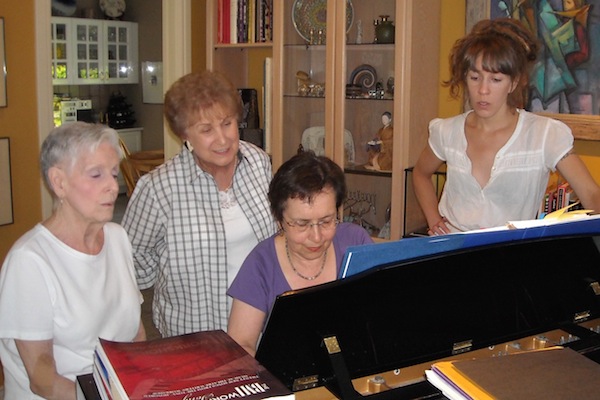
Left to right are Joan Beckow, Claire Klein Osipov, Wendy Bross Stuart and Jessica Stuart, in 2010. (photo by Ron Stuart)

Canceled more than two years ago because of COVID, With a Song in My Heart, a special concert for Jewish Senior Alliance’s spring forum, is back. And it’s even more special.

The May 15, 2 p.m., performance at the Peretz Centre, led by Wendy Bross Stuart, is dedicated to Claire Klein Osipov and Joan Beckow.

“We were originally scheduled to present this program in March 2020. We were well-prepared. Even Claire came over to rehearsal on March 16, 2020 – so she could shep naches from her daughter Lisa’s singing, and she gave us some ‘notes’ to include. Lisa [Osipov Milton] and I were using the very musical arrangements I had created for Claire. Then, COVID happened and the program was ‘postponed.’ In August 2020, Claire passed away.

“Fast-forward to 2022. Two of the singers [David Urist and Osipov Milton] were unavailable. Erin Aberle-Palm was available, and I was thrilled to have her on board. Kat Palmer and Chris Adams had been involved in the recording sessions for the Joan Beckow Legacy Project, completed in February. Chris agreed to join us for a Beckow duet – with Kat.”

Beckow passed away in January 2021.

“About 18 months before,” said Bross Stuart, “my daughter Jessica had come with me to the Louis Brier Home to visit Joan. She asked Joan for her blessing for us (mother and daughter) to record and orchestrate many of Joan’s songs. Joan was visibly touched. She gave us her blessing to proceed. And proceed we did. The Joan Beckow Legacy Project, funded generously by the Canada Council and the Ontario Arts Council, has included the recording and orchestration of 22 of Joan’s pieces, by 30 musicians, in Toronto and Vancouver. Plus a documentary on Joan’s life (directed by my husband, Ron Stuart) and much more. Assistance and support also came from Joan’s son, David.”

Most of the project has taken place during COVID. About the pandemic’s effects, Bross Stuart said, “To make an effort to be positive, I would say, having more time has allowed Jessica and I to create the Joan Beckow Legacy Project and collaborate in every way. The music and the mutual respect have been well beyond my expectations and – as [fellow community member] Sharon Kates added – a mitzvah for everyone. Especially for people who do not yet know the breadth of Joan’s musical output, it will be a stunning discovery.”

With the developments of the past two years, the musical program for the JSA forum has changed from what it was in 2020.

“It includes Yiddish songs – for example, ‘Tum Balalaika,’ ‘Rozhinkes Mit Mandlen’ – in Claire’s memory, and many Joan Beckow songs, recently recorded in studio, including ‘On the Other Side of Nowhere’ and ‘Tov L’Hodot,’” said Bross Stuart, noting that every composer of every song in the program is Jewish.

The Yiddish songs are from the repertoire that Klein Osipov and Bross Stuart presented over the many years they worked together.

“We have a piece of music which says, ‘Because I knew you, I have been changed … for good,’” said Bross Stuart, referring to the song “For Good,” written by Stephen Schwartz. She added, “David Beckow chose his mother’s own lyrics to inscribe on her gravestone: ‘When this life is over, we will meet somehow, on the other side of nowhere, on the far side of now.’ Kat will sing it.”

The Stuarts and Beckows are longtime friends.

“We met Joan about 50 years ago, when her husband, Jack, was Ron’s anthropology student at UBC. Joan’s music was absolutely magic. When she asked me to assist her with the music direction of a show she was working on, I said yes as soon as I saw/heard one of the lead singers – Claire Klein Osipov!

“Joan and I worked together on choral pieces, on musical theatre pieces, on Jewish liturgical pieces and on classical pieces. I organized the publication of a number of her works, and public performances as well. Her music and her friendship enhanced our lives – and inspired my daughter, Jessica, to become a composer and musician. Joan was a mentor.”

Bross Stuart explained her interest in Yiddish music.

“Growing up in a New York City suburb (Yonkers),” she said, “my grandmother lived with us while I was growing up. Although her most comfortable language was Yiddish (Galitzianer variety), she spoke accented English to me. Yiddish was not what my parents wanted me to speak. This, of course, made Yiddish so much more interesting to me. Years later, in Vancouver, working with Claire and creating musical arrangements for all those songs – four CDs’ worth – required a detailed understanding of the Yiddish. The German I had studied in high school and at McGill was helpful, but working with Claire was even more helpful. We did a lot of concert work together, and I would say that our daughter Fiona grew to love Yiddish as a result. Another mentor for us!”

With a Song in My Heart is JSA’s first hybrid event, taking place live at the Peretz Centre, with streaming links available for YouTube, Vimeo or Zoom. Registration is required in both instances. If attending in-person, proof of vaccination is also required. Visit jsalliance.org, email [email protected] or call 604-732-1555.

Format ImagePosted on May 6, 2022May 4, 2022Author Cynthia RamsayCategories MusicTags Claire Klein Osipov, concert, Jewish Seniors Alliance, Joan Beckow, JSA, Wendy Bross-Stuart, With a Song in My Heart, Yiddish music
StandWithUs Canada course

StandWithUs Canada course

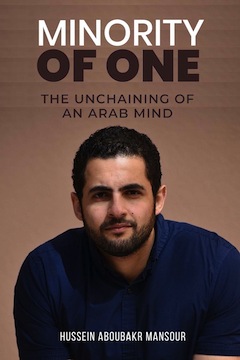
Hussein Mansour Aboubakr (PR photo)

After an almost three-year hiatus due to the pandemic, StandWithUs Canada is again holding events. On May 15, StandWithUs Canada and the Diamond Foundation are presenting the crash course Antisemitism and Anti-Zionism Today: What to Expect on Campus.

The course is a chance for high school (grades 11 and 12) and first-year university students to attend interactive sessions, hear from speakers, meet like-minded students and enjoy a free kosher dinner. Students who register and attend can also receive community service hours and a gift card.

image - Minority of One book coverSpeakers include Penina Edery, high school director, StandWithUs Canada, and Aviv Attia, StandWithUs educator and Israeli speaker. Special guest speaker Hussein Mansour Aboubakr was a dissident imprisoned in his home of Cairo, Egypt, for the crime of wanting to learn more about the country and the people he was raised to hate – Israel and Jews. One of the course sessions will be Aboubakr speaking about his journey. Other sessions will include a panel of students speaking about their experiences with antisemitism and anti-Zionism in high school and university.

The Diamond Foundation is sponsoring this crash course to reach out to Vancouver high school students and their families, to help them learn the skills, get the knowledge and find out about the resources available to support Israel and fight antisemitism. Also involved in presenting the event with StandWithUs Canada are Camp Hatikvah, Masa Israel Journey, King David High School and the Jewish Federation of Greater Vancouver.

The May 15 crash course will take place at KDHS from 4 to 8 p.m. Registration is required to attend. Students can register at forms.gle/hPncontVmAC4Jfor6.

– Courtesy StandWithUs Canada

Format ImagePosted on May 6, 2022May 4, 2022Author StandWithUs CanadaCategories LocalTags anti-Zionism, antisemitism, Camp Hatikvah, Diamond Foundation, education, Hussein Mansour Aboubakr, Israel, Jewish Federation, KDHS, King David High School, Masa Israel Journey, StandWithUs
Chance to meet local artists

Chance to meet local artists

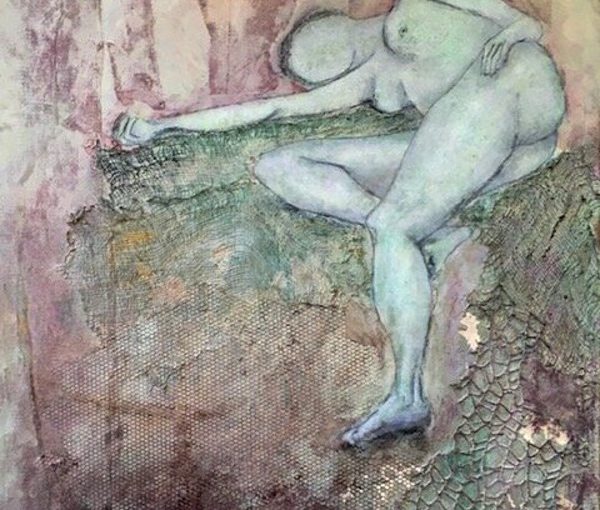
“At Rest” by Dov Glock, mixed media. Glock is one of several Jewish artists participating in this year’s West of Main Art Walk. (from artistsinourmidst.com)

The West of Main Art Walk Preview Exhibition and Sale kicks off at the Roundhouse Community Centre May 18-19. The West of Main Art Walk itself welcomes guests into artists’ studios May 28-29. Among the artists participating are many from the Jewish community, including Michael Abelman, Olga Campbell, Dov Glock, Pnina Granirer and Lauren Morris.

The preview – which is open for visitors 10 a.m. to 9 p.m. both days – features a reception at the Roundhouse on May 19, 7-9 p.m. Preview visitors will be able to buy the work of some of the 80 local artists taking part. There will be paintings, ceramics, jewelry, textiles and photography, as well as free art demos.

Artwork will also be for sale on the walk, which includes studios from Point Grey to Main Street, and from Granville Island to 41st Avenue over the May 28-29 weekend. Dozens more artists are showing their works all under one roof in larger hubs like Aberthau Mansion, Art at Knox and Pacific Arts Market. There, you’ll also find art demonstrations and more. At Lord Byng Mini School for the Arts, you’ll discover young emerging artists.

Also part of the month’s events is the annual (since 2018) Art for All Fundraiser. More than 70 artworks have been donated – and all are on sale for $50 each. Proceeds will go to the art program at Coast Mental Health. Its resource centre’s art room opened in 2000, and is a place where clients discover their creative potential while developing new ways of expressing emotions, healing pain and growing their self-esteem and self-awareness. Supported by volunteers – including clients and professional artists and art instructors – who give their time, feedback and encouragement, clients are able to work in a number of media, including paint and sculpture; supplies are provided. An annual art show brings together the artists, other resource centre members and Coast clients, family and friends and the general public to celebrate their work and their journey towards recovery.

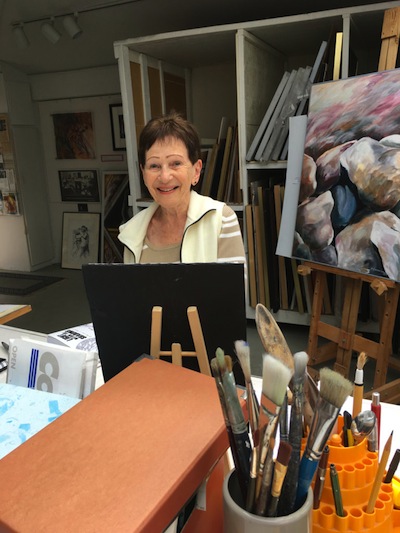
Granirer, who was a co-founder of the very first open studios walk in Vancouver in 1993, is doing something a little different from the main event. On May 18, 7 p.m., at the Roundhouse, she is launching her poetry-art memoir, Garden of Words. (For more on the book, see jewishindependent.ca/poetry-and-painting-flourish.) Some of the paintings featured in the book will be exhibited and the books will be available during the whole time of the preview and at Granirer’s studio during the walk weekend.

photo - Pnina Granirer in her studio
Pnina Granirer in her studio. (photo from Pnina Granirer)

During the walk, Granirer is inviting people to her studio, where she will be offering her works for 50% off, with proceeds being donated to Stand up for Mental Health, which has helped people suffering from mental health issues to do away with stigma all over Canada, the United States and Australia.

Artists will be opening their studios from 11 a.m. to 6 p.m. on May 28 and 29. This is a unique opportunity to meet the artists, enjoy the art and ask questions. More information and the interactive online map can be found at artistsinourmidst.com.

– Courtesy Artists in Our Midst and Pnina Granirer

Format ImagePosted on May 6, 2022May 4, 2022Author Artists in Our Midst & Pnina GranirerCategories Visual ArtsTags art, Artists in Our Midst, Coast Mental Health, Dov Glock, jewelry, Lauren Morris, mental health, Michael Abelman, Olga Campbell, painting, photography, Pnina Granirer, poetry, sculpture, tikkun olam, West of Main Art Walk
Mixing global music, dance

Mixing global music, dance

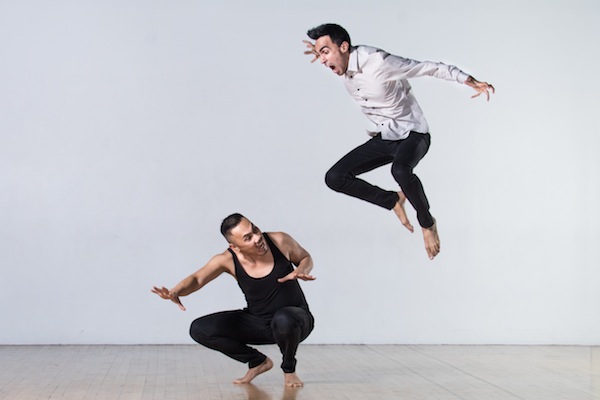
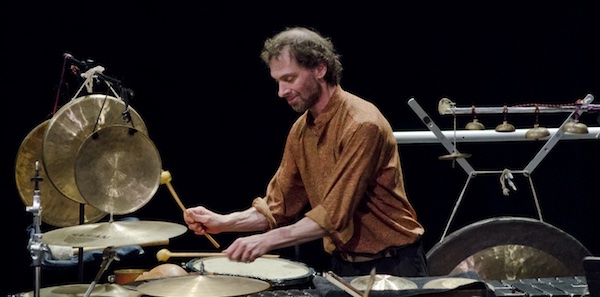
Dancers Alvin Erasga Tolentino, left, and Gabriel Dharmoo in Passages of Rhythms, in which Jonathan Bernard (below) is a percussionist. (photo by Yasuhiro Okada)

“Passages of Rhythms is inspired by a shared fascination with interculturalism, interdisciplinary activity, flamenco and collaborations between cultures,” percussionist Jonathan Bernard told the Independent about the Co.ERASGA production, which is being remounted May 19 and 20 at PAL Studio Theatre, in recognition of Asian Heritage Month. May is also Jewish Heritage Month.

“Canada is becoming well-known as an international centre of intercultural arts,” said Bernard, a member of the Jewish community. “I very much look forward to the remount and a bright future for the show on Canadian and international stages.”

In Passages of Rhythms, Co.ERASGA’s Alvin Erasga Tolentino highlights flamenco, Bharatanatyam and voices for the body, in a collaboration with local Chinese-Canadian flamenco artist Kasandra “La China,” Indo-Canadian Bharatanatyam dancer Sujit Vaidya and Montreal voice artist Gabriel Dharmoo. Ronald Stelting joins Bernard on the percussion music, and Jonathan Kim provides the lighting.

Bernard was in the original production, which took place at the Firehall Theatre as part of the Dancing on the Edge festival in 2018.

“The creation process of Passages was very smooth, full of joy and dedication, and the result brought a standing ovation from an enthusiastic audience,” he said. “Alvin is a director with a warm heart, an open mind, and is a passionate artist, so I’m overjoyed to be part of the remount.

“This is a dream gig for me,” he continued, “as I caught the flamenco bug back around 2005, I’ve traveled to the birthplace of flamenco in southern Spain to study and I’ve happily spent countless hours collaborating with flamenco dancers at local flamenco venues and on the concert stage. Kasandra was my first flamenco teacher, and we have had an artistic relationship going back to the mid-2000s. One of our groups, Orchid Ensemble, collaborated with Kasandra’s and Oscar Nieto’s Al Mozaico Flamenco Theatre to create a show named after the famous Café de Chinitas in Malaga, where Frederico Garcia Lorca penned some of his most famous works.”

photo - Passages of Rhythms is percussionist Jonathan Bernard’s “dream gig”
Passages of Rhythms is percussionist Jonathan Bernard’s “dream gig.” (photo from Jonathan Bernard)

Another reason this is a dream gig for Bernard, he said, “is that I have the pleasure of surrounding myself with many of my favourite instruments, collected from 25 years of travel and study around the world, scouring through ancient temple and traditional markets for the best sounding instruments. For example, you will see/hear temple bells and opera cymbals from Beijing and Sichuan province; tuned gongs found in Thailand, Cambodia and Laos; the riqq (Arabic frame drum), handmade in Cairo’s old city; bells from India; and, of course, the cajon, a box drum adapted into the flamenco tradition in the 1960s.

“My compositional ideas that form the soundscape for Passages are not only inspired by the dancers’ movement,” he said, “but by the instruments themselves and the ancient styles traditions they represent. Further, as most often I am busy interpreting the work of composers, Passages gave me a chance to compose my own original music.”

Since the mid-1990s, Bernard and his wife and artistic partner Lan Tung have been creating intercultural ensembles, mixing instruments and instrumentalists from traditions ranging from Chinese, South Asian, Persian, Arabic, North African and Western traditions, creating original Canadian music, and touring internationally. “We looked to ancient centres of interculturalism such as the Silk Road and El Andalus for inspiration, and as reflections of our own unique cultural environment,” he said. “Andalusia was a golden age of interculturalism, where Jews, Muslims and Christians lived in relative peace and shared knowledge and cultural traditions, from architecture to music to the culinary arts.

“Since the birthplace of flamenco – approximately one hour by train to the ancient Mediterranean port city of Cadiz – was located in the heart of Andalusia, I believe flamenco was certainly shaped by the liberal sharing and mixing of traditions,” he said. “For example, the 12-beat time cycles that are of central importance to West and North African traditions are also deeply embedded in flamenco forms; the castanets and palmas (interlocking handclaps) can be found in the carcabas and rhythms of the Gnawa and Berber people of Africa; the Ashkenazi cantorial traditions must have influenced the passionate flamenco vocal style. It might be said that flamenco borrowed rhythmic elements from North Africa, melodic elements from the pre-inquisition Ashkenazi Ladino song, and with simple harmonic structures and the guitar from Europe.”

Passages of Rhythms’ May 19 and 20 performances start at 8 p.m. Tickets are $30 ($20 for students and seniors) and can be purchased at eventbrite.ca.

Format ImagePosted on May 6, 2022May 4, 2022Author Cynthia RamsayCategories Music, Performing ArtsTags Alvin Erasga Tolentino, Co.ERASGA, dance, Jonathan Bernard, Passages of Rhythms, percussion
Our relationship to objects

Our relationship to objects

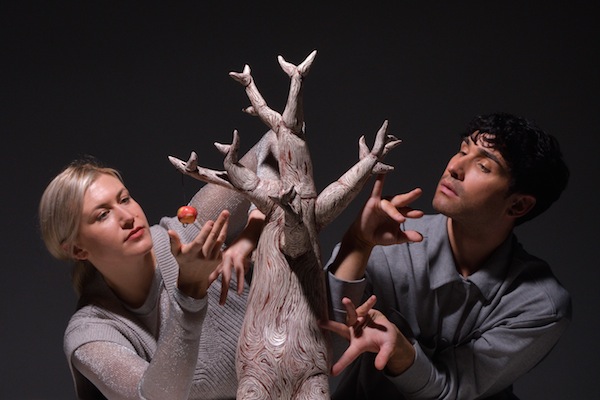
In DANCE:CRAFT, dancers Heather Dotto and Joey Matt interact with and reinterpret five elements – glass, metal, wood, fibre and ceramics – created by B.C. crafts artists. (photo by Michael Slobodian)

After years of development, DANCE:CRAFT will see its world première May 20-22, 7 p.m., at the SFU Goldcorp Centre for the Arts, Fei and Milton Wong Experimental Theatre. Among the craftspeople who contributed their creativity to the show is Hope Forstenzer, a glassworks artist, who also happens to be the director of the Gertrude and Sidney Zack Gallery.

“I was asked to be part of the project in October of 2016 and, at the time, the thinking was that it would take about two years to develop,” Forstenzer told the Independent. “It wound up taking longer than that for lots of reasons – I think one of the primary dancers went on maternity leave and, then, right as the project was about to begin rehearsals, COVID shut everything down.

“Initially, Joe [Laughlin] and I had all kinds of discussions and brainstorming sessions about ways to incorporate pieces into the dance. We rethought quite a bit of it when we started up again, and we wound up with some very interesting stuff that was quite different in some ways than we originally imagined. I think it’s going to be quite a bit different than any of us originally thought – the world isn’t what it was in October 2016.”

DANCE:CRAFT is described as “an exploration of two dancers interacting with numerous craft objects in a reconfigured theatre setting. It’s craft seen through the lens of dance and remixed, a look at our relationship to objects, creating and interacting with them.”

Presented by Joe Ink – which is led by Laughlin – and SFU Woodward’s Cultural Programs, DANCE:CRAFT also features five virtual reality films that give viewers a look into the artists’ studios.

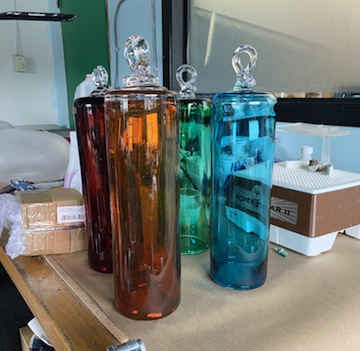
“I’ve made six large blown glass rock-like pieces with lights inside of them, a large acrylic box full of glass balls, and 12 hanging cylinders in various sizes,” said Forstenzer.

photo - Hope Forstenzer has created 12 hanging cylinders for the performance
Hope Forstenzer has created 12 hanging cylinders for the performance. (photo by Hope Forstenzer)

The whole creative endeavour began as a research project focusing on dance and art. Laughlin conceived of the concept and the dancers are Heather Dotto and Joey Matt. They worked with five B.C. artists, facilitated by the Craft Council of British Columbia, curators of the show. In addition to Forstenzer, Stefanie Dueck (metal), Patrick Christie (wood), Deborah Dumka (fibre) and Debra E. Sloan (ceramics) provide the five elements that the dancers and Laughlin reinterpret.

“I have been thinking about the earth, the environment, the elements, evolution, geography, migration and humans,” says Laughlin in the press release. “The tactile sensation of handmade objects juxtaposed with the ephemeral quality of the dancing body triggers a memory experience. Being immersed in an environment and watching the body respond to texture and colour is what anchors us in time and space. We are looking for connections between communities and the natural world, geography and the human family.”

Laughlin added, “The process for creating a dancer incorporates fibre, sinew, muscle, bone, water, pressure, agitation and repetition. Craft is a transformative process that incorporates stone, fibre, wood, metal, water, pressure, agitation and repetition.”

DANCE:CRAFT asks audiences to consider, “How do objects further extend the language of the body and its narrative possibilities?”

photo - Glassworks artist Hope Forstenzer
Glassworks artist Hope Forstenzer (photo from Hope Forstenzer)

“I come from a theatre background and have done a great deal of work with dancers and actors,” said Forstenzer in contemplating this question. “Objects – props, costumes, sets, and all things like them – become part of a performance completely. A knife becomes part of an arm, to use for harmless or harmful purposes; a table becomes a second stage if someone stands on it; a mask hides a face. The best performances use performers, environments and objects to tell a story fully. I think what we’ll see with DANCE:CRAFT is a full storytelling collaboration, in which the artists have given works to Joe, and he has created a story to tell with them.

“This has been a fun project to work on,” she continued. “It’s not that often you get to do a collaboration like this. I’m really excited to be part of it.”

Tickets for the performance are $30 ($25 for students and seniors) and they can be purchased at eventbrite.ca.

Format ImagePosted on May 6, 2022May 4, 2022Author Cynthia RamsayCategories Performing Arts, Visual ArtsTags Craft Council of BC, crafts, dance, DANCE:CRAFT, Hope Forstenzer, Joe Ink, Joe Laughlin, SFU Woodward’s Cultural Programs
Orcas inspire creative music

Orcas inspire creative music

The creation of Songs for a Lost Pod helped singer/songwriter Leah Abramson explore her family’s Holocaust history. (photo by Angela Fama)

The world première of Leah Abramson’s Songs for a Lost Pod was supposed to be part of this year’s PuSh Festival three months ago. Delayed because of COVID restrictions at the time, it now will debut May 28-29, 7:30 p.m., at Studio T, SFU Goldcorp Centre for the Arts.

Songs for a Lost Pod is a “nine-song cycle [that] makes spectacular use of orca vocalizations, transforming them into rhythmic beats in a musical exploration of historical trauma, environmental crisis and communication between species.” The theatrical production is the most recent development in a process that includes an album by the same name, released in 2017.

“It was just an outward spiral, really. The project started with dreams I had about whales, which turned into researching whales for fun, which then turned into a master of fine arts thesis, an album, a comic book, and now a stage show!” said Abramson when the Independent interviewed her in anticipation of the PuSh festival. “When I made the album, I knew there was so much research and information behind the lyrics and music of each song, and I felt like I wanted people to understand that context, so I made the comic book to highlight some of the research and stories. Then, as I was arranging the music to be performed live, I realized that I wanted people to have that context, too, so I’ve turned the research and background into a script. Then we decided that adding visuals would really help immerse the audience in the material. The project has just been expanding from the beginning.”

Abramson, who grew up in Burnaby, said she has been interested in music from a young age. “My grandma sang in her synagogue’s choir and my dad played the piano, so they tell me it runs in the family,” she said. “But I was also told that music was only for fun, and not a real career, unless you were a concert pianist or something like that. So, I tried to do other things, but I was miserable unless I was making music.

“Over the years, I’ve done lots of touring and playing in bands and teaching, but writing and composing has always been what I love the most. I have pretty varied interests – I’m fascinated by marine biology and I love learning about the environment, as well as human history. The great thing about writing songs is that you can research anything and put it into your work. Right now, I’m really excited about writing music for the stage, as well as choral music.”

Along with her MFA in creative writing (with a focus on lyrics) from the University of British Columbia, Abramson studied classical music at Capilano University, and also has studied traditional Appalachian balladry.

In addition to the song-cycle, Songs for a Lost Pod features the narrative script that Abramson mentioned, which “juxtaposes the whale histories with Leah’s own family and their experience surviving the Holocaust and its aftermath,” according to the program description. “Mind of a Snail’s handmade projections create an impressionistic and largely non-representational visual world to support the songs and narration, guiding the audience into a space of contemplation.”

“When I first started looking into whale histories, the parallels presented themselves pretty quickly,” Abramson told the Independent. “It was not my intention to delve into my family’s past, but, while learning about captures and commercial whaling practices, it was hard not to look at the bigger picture of human behaviour throughout history – aspects of cruelty and destruction that manifest in heartbreaking ways. But also, whales are similar to humans – whale intelligence is extremely high, and whale families are extremely tight knit.”

It was difficult for Abramson to explore her family’s Holocaust history – “the loss and pain are pretty overwhelming,” she said, “and it’s not always easy to find a way forward when that intensity is present. Whale families became a mirror for me, a way to understand and experience intergenerational trauma at a greater distance. The project allowed me to deal with my feelings in a more manageable way, through empathy for another species. And it provided a space for my grief, but also helped me find a way through it. Trauma is so common in families of all different backgrounds. Our ancestors may have lived through wars or other calamities and there are so many people living through these things right now. I think learning others’ stories can help people start to process their own family’s pain, even if the details are different. I felt like whale stories did that for me.”

Credit for Songs of a Lost Pod’s music and lyrics go to Abramson in collaboration with Antoine Bédard, J.J. Ipsen, Andrew Lee (Holy Hum), Aidan O’Rourke (Lau), Sandro Perri, Arliss Renwick and Marten Timan. The program notes that credit also could be given to the A5 whale pod, as the musicians “were given selected A5 pod orca vocalizations, along with Abramson’s other field recordings, to turn into beats and tracks, which formed the backbone of Abramson’s songwriting process, and the rhythms behind much of the music.”

Fellow Jewish community member Barbara Adler also has contributed to the project, and is the show’s narrator.

“Barbara and I have known each other for so long that we can’t remember when or how we officially met,” said Abramson. “It’s like that with people in creative community sometimes – you grow up making art alongside each other. We have shared some special experiences and projects over the years, and continue to work together and in parallel. We have some shared Czech-Jewish roots, which makes Barbara a really good fit for this project in particular. She’s working on a lot of interesting projects of her own, and I’m also happy to be one of her composer-collaborators for Mermaid Spring, which is a musical she’s making with Kyla Gardiner (who also happens to be our lighting designer).

“Barbara has been sending me song lyrics over the last few years, which I have been setting to music. I love working with the characters she has created, and it has truly been a joy to work on those songs. I also really admire Barbara’s artistic process. When she writes, she really digs into all the nuances of a situation or character. She welcomes complexity and the messy underside of creation. I think Barbara balances my impulsivity, and helps me step out from the shadows in my shyest moments. She’s also a great performer!”

Co-presented by Music on Main and SFU School for the Contemporary Arts, tickets for Songs for a Lost Pod ($15) can be purchased from musiconmain.ca/event/songs-for-a-lost-pod.

Format ImagePosted on May 6, 2022May 4, 2022Author Cynthia RamsayCategories Music, Performing ArtsTags Barbara Adler, environment, family history, Holocaust, Leah Abramson, music, Music on Main, narration, SFU School for the Contemporary Arts, Songs for a Lost Pod, storytelling, whales

A full life post-career

The latest JSA Snider Foundation Virtual Empowerment Series session was co-sponsored by Jewish Seniors Alliance (JSA) and Jewish Family Services (JFS). Held on April 26, it continued with the theme “Be Inspired.” Titled Retired, Rewired and Inspired, it featured three older adults expressing their feelings, ideas and experiences of “retirement.”

Gyda Chud, co-president of JSA, started things off by describing the series – which involves co-sponsorship with other community organizations, such as JFS – and its theme.

Program committee Fran Goldberg then introduced the speakers: Rosa Tesler, who was a counselor for abused women when she retired in 2018; Dr. Paul Steinbok, who retired from neurosurgery in 2017; and Tony DuMoulin, who retired from his law career about a decade ago.

The first speaker was Tesler, known as Chully. She described retirement as an up and down road. She missed her clients. She lost her husband and her mother within the same time period. She feels privileged that she had the support of a loving family. To weather the downs, she said, a person must develop patience, determination and self-compassion. It took her a year to overcome health issues, but now, with the correct medication, she is able to live her life. She thanked her many friends, her therapist and her yoga teacher for their ongoing support.

Chully took a course on friendly aging and also the peer counseling training at JSA. She is now an active peer counselor. The pandemic caused major changes in many of her pursuits, but she continued with tai chi, yoga and peer counseling, all virtually. She did have to forgo travel. Adapting, reframing and hope kept her going. We are defined not by what happens to us, but by what we do, she said, ending with a quote from a friend in Argentina who teaches healthy aging: what is in your power, continue; stop what you didn’t want and can’t do; and initiate what you do want to do.

Steinbok had been a pediatric neurosurgeon and, when he retired, he pursued his love of photography, walking and travel. He had been part of an amateur camera club for many years and won an award in 1970. After retirement, he joined a photo group at the University of British Columbia, and learned digital photography. He began looking at nature from a closer perspective, especially its textures and patterns. He started to use his camera more creatively. He shared some of his close-ups of tree bark, stumps, mushrooms and flowers. There were shots of manhole covers – many of which have lovely designs on them. The photos are beautiful and artistic and have been in many competitions. Steinbok said the art of photography adds meaning to his life and he shares them with family, friends and the photo club. He said it feels as if he is continuing to teach, as he did in neurosurgery.

DuMoulin was a practising lawyer for 40 years, managing a firm for 24 years and teaching law. He retired at age 67, because he had many interests that he wished to pursue but not the time or energy to do so. He also wanted to retire at the top of his game.

DuMoulin calls himself a recovering lawyer – he said he needed to rewire and although he was told that he would be bored, the opposite has been the case. He feels his worldview has widened and that he is lighter and freer. He is involved in many activities and spends time with his five grandchildren. He is also reading more and has started a book club. Before COVID hit, he was traveling more, and he is exercising more. He has designed and built a cabin and has done some watercolour painting. He teaches and plays chess. He is active in JSA – on the executive and board and as a member of the editorial committee of Senior Line magazine; he chairs the advocacy committee. He is inspired by volunteers in the nonprofit sector and said the future is our responsibility – and belongs to us as well.

Tamar Stein, seniors outreach coordinator for JFS, thanked the speakers. She said JFS’s programs take place on Tuesdays at 11 a.m. – on May 10, there is a talk on grief and loss and, on May 24, on Medical Assistance in Dying.

Chud brought up the three Rs that she had heard from a friend: relationships, reflection and restorative practice. DuMoulin commented on the recording of family histories and a specific program that helps with this, called Story Worth. Larry Shapiro, co-president of JSA, added that the speakers had been inspirational and that a senior should speak at every event, while Chud thanked Jenn Propp for her contributions, Stein and the speakers.

The next JSA event is its spring forum on May 15, which features the concert With a Song in My Heart, led by Wendy Bross Stuart. The final Empowerment Series session for 2021/22 is in June, with the Kehila Society of Richmond. Visit jsalliance.org.

Shanie Levin is program coordinator for Jewish Seniors Alliance and on the editorial board of Senior Line magazine.

Posted on May 6, 2022May 4, 2022Author Shanie LevinCategories LocalTags Chully, Empowerment Series, Jewish Seniors Alliance, JSA, Paul Steinbok, retirement, Rosa Tesler, Tony DuMoulin
Mausoleum work to resume

Mausoleum work to resume

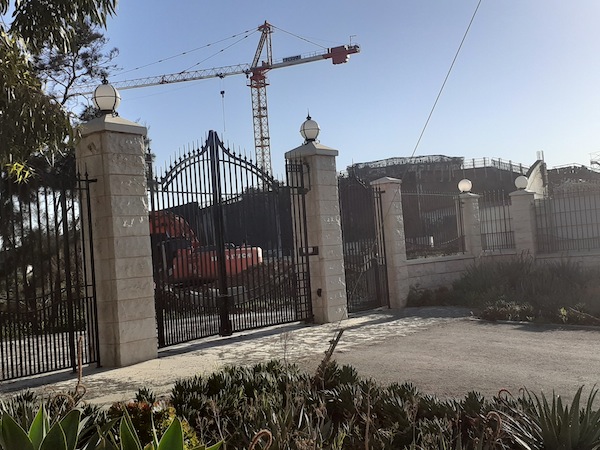
The construction site of the mausoleum for Bahá’í leader ‘Abdu’l Bahá, east of Haifa Bay, Israel. (photo by Gil Zohar)

Construction of Vancouver-based architect Hossein Amanat’s mausoleum for Bahá’í leader ‘Abdu’l Bahá (1844-1921) was set back when a fire on April 8 caused significant damage to the main building at the holy site just east of Haifa Bay, Israel.

The Iranian-Canadian architect’s design features a sloping geometric meditation garden rising in a sunburst pattern to form a dome covering the tomb. Amanat’s neoclassical Persian structure extends the Ridván Garden, which was a favourite oasis where ‘Abdu’l Bahá’s father, Bahá’u’lláh (1817-1892) – the founder of the Bahá’í faith – retreated after he was released from Acre Prison in 1877. The modest house in which he stayed during his visits there has been restored. After his father’s death, the Iran-born ‘Abdu’l Bahá’ popularized the new religion outside the Middle East in a series of visits to Montreal, and cities in the United States and Europe.

Amanat, 80, fled his native Iran after the 1979 Islamic Revolution and settled in Canada. He is best known for his Shahyad Freedom Tower in central Tehran, which was dedicated in 1972 to honour the Pahlavi dynasty. Following Iran’s revolution, the monumental 45-metre-high archway was renamed the Azadi Tower, after the square in which it stands.

Amanat also designed a series of Bahá’í administrative buildings on Mount Carmel, including the Seat of the Universal House of Justice, the Centre for the Study of the Sacred Texts, and the Centre for the International Counselors.

photo - Architect Hossein Amanat is best known for his Shahyad Freedom Tower in Tehran, Iran, which is now known as the Azadi Tower
Architect Hossein Amanat is best known for his Shahyad Freedom Tower in Tehran, Iran, which is now known as the Azadi Tower. (photo from flickr)

The April 8 blaze destroyed “several months of work” on the 2,900-square-metre circular platform and piazza, the Universal House of Justice (the governing council of the Bahá’í faith) said in an April 14 statement. Clouds of smoke billowed from the mausoleum, prompting firefighters to evacuate the nearby suburbs of Giv’at Hatmarim and Afgad.

The fire broke out when windblown sparks from welding on the dome ignited scaffolding and plastic forms being used to mold poured concrete, Ynet reported. The completed concrete walls and structures were undamaged, and the 250 million shekel ($77 million US) project – announced in 2019 – is insured, said the Universal House of Justice. The shrine and meditation garden are being paid for by donations from Bahá’í faith’s five million members around the world.

Bahá’í media representative Sama Sabet said construction “will resume soon.” She didn’t estimate the cost of the damage.

For the last century, ‘Abdu’l Bahá has been temporarily entombed in Haifa’s shrine of Siyyid ‘Alí-Muhammad Shírází (1819-1850), popularly known as the Báb (“Gate” in Arabic). Shírází was executed in Tabriz for apostasy after claiming to be the deputy of the promised Twelver Mahdi, or al-Qa’im. According to legend, the firing squad’s initial barrage of bullets failed to hit him, and a second team of shooters was brought in. As a Shiite heretic, his body was fed to dogs. It was rescued and hidden by believers.

In 1908, all Ottoman political and religious prisoners were freed by the Young Turk revolution. Newly released, ‘Abdu’l Bahá smuggled the Báb’s remains to Ottoman Palestine and built his iconic shrine midway up Mount Carmel, near where he himself was living. Its dome, visible from the Haifa harbour along the axis of the German Colony, was gilded in 1953.

screenshot - An aerial view of the Bahá’í shrine, designed by Vancouver-based architect Hossein Amanat, which caught fire on April 8
An aerial view of the Bahá’í shrine, designed by Vancouver-based architect Hossein Amanat, which caught fire on April 8. (screenshot from YouTube)

The mausoleum and garden south of the Tel Akko archeological mound will be one of seven Bahá’í holy sites, ornamental meditation gardens and administrative complexes in a western Galilee pilgrimage route stretching from Mazra’a near Nahariya south through Acre (Akko in Hebrew and Akka in Arabic) to Mount Carmel in Haifa. The serene mausoleums of the Báb and Bahá’u’lláh – together with their adjoining gardens, characterized by their sacred geometry and immaculate landscaping – were registered on UNESCO’s World Heritage List in 2008.

The Bahá’í faith believes in progressive revelation – that God has revealed himself in a series of manifestations, including Moses, Jesus, Muhammad and, most recently, Bahá’u’lláh.

In 1863, Bahá’u’lláh fulfilled the Báb’s prophecies by proclaiming the Bahá’í faith. The new creed eventually evolved into a global religion. Exiled from Persia to Ottoman Baghdad and then the imperial capital Constantinople (today Istanbul) in 1868, Bahá’u’lláh was imprisoned in Acre’s Turkish citadel in remote Palestine. For Israelis, the notorious jail and its gallows are best known for the prison breakout on May 4, 1947, near the end of the British Mandate of Palestine, in which gunmen from the Irgun underground freed 27 incarcerated freedom fighters.

After being released from Acre Prison, Bahá’u’lláh moved six kilometres north to Mazra’a, also called Mazra’ih. Two years later, he settled in the Mansion of Bahjí (meaning “delight”) in Acre. That palatial home was built in 1821 by ‘Abdu’lláh Páshá, then the Ottoman governor of Acre. Bahá’u’lláh remained there until his death in 1892.

In addition to the mausoleums of the Báb and Bahá’u’lláh, Bahá’í pilgrimage sites in Haifa and the western Galilee on UNESCO’s World Heritage List include the Shrine of Bahá’u’lláh and adjoining Mansion of Bahjí and Bahjí Gardens in Acre; the Shrine of the Báb; the 19 terraces of the Bahá’í Gardens and Bahá’í World Centre in Haifa; and the House of ‘Abbud in the Old City of Acre, where the Bahá’u’lláh spent time after being released from prison.

Gil Zohar is a writer and tour guide in Jerusalem.

Format ImagePosted on May 6, 2022May 4, 2022Author Gil ZoharCategories IsraelTags architecture, Bahá’í, development, history, Hossein Amanat, Israel, religion, ‘Abdu’l Bahá

Posts pagination

Previous page Page 1 … Page 172 Page 173 Page 174 … Page 662 Next page
Proudly powered by WordPress