Skip to content
  • Home
  • Subscribe / donate
  • Events calendar
  • News
    • Local
    • National
    • Israel
    • World
    • עניין בחדשות
      A roundup of news in Canada and further afield, in Hebrew.
  • Opinion
    • From the JI
    • Op-Ed
  • Arts & Culture
    • Performing Arts
    • Music
    • Books
    • Visual Arts
    • TV & Film
  • Life
    • Celebrating the Holidays
    • Travel
    • The Daily Snooze
      Cartoons by Jacob Samuel
    • Mystery Photo
      Help the JI and JMABC fill in the gaps in our archives.
  • Community Links
    • Organizations, Etc.
    • Other News Sources & Blogs
    • Business Directory
  • FAQ
  • JI Chai Celebration
  • JI@88! video

Recent Posts

  • Zionism wins big in Vegas
  • Different but connected
  • Survival not passive
  • Musical celebration of Israel
  • Shoppe celebrates 25 years
  • Human “book” event
  • Reclaiming Jewish stories
  • Bema presents Perseverance
  • CSS honours Bellas z”l
  • Sheba Promise here May 7
  • Reflections from Be’eri
  • New law a desecration
  • Resilient joy in tough times
  • Rescue dog brings joy
  • Art chosen for new museum
  • Reminder of hope, resilience
  • The national food of Israel?
  • Story of Israel’s north
  • Sheltering in train stations
  • Teach critical thinking
  • Learning to bridge divides
  • Supporting Iranian community
  • Art dismantles systems
  • Beth Tikvah celebrates 50th
  • What is Jewish music?
  • Celebrate joy of music
  • Women share experiences 
  • Raising funds for Survivors
  • Call for digital literacy
  • The hidden hand of hate
  • Tarot as spiritual ritual
  • Students create fancy meal
  • Encouraging young voices
  • Rose’s Angels delivers
  • Living life to its fullest
  • Drawing on his roots

Archives

Follow @JewishIndie
image - The CJN - Visit Us Banner - 300x600 - 101625

Fresh new start to year

Fresh new start to year

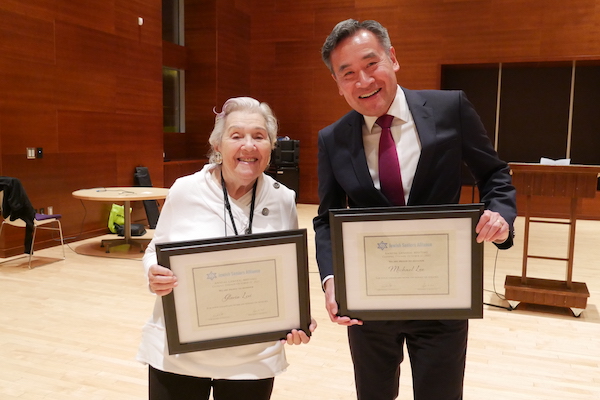
Gloria Levi and Michael Lee were honoured by Jewish Seniors Alliance for their contributions to the well-being of seniors in the community, as was Dolores Luber. (photo from JSA)

When you looked around the room at Congregation Beth Israel on Nov. 27, the pandemic of the last two-plus years would not have crossed your mind. The room was filled with more than 100 happy guests enjoying dinner together.

The occasion was the 15th annual general meeting and gala for Jewish Seniors Alliance of Greater Vancouver. Three people were honoured for their contributions to the well-being of seniors in the community: Dolores Luber, Gloria Levi and Member of the Legislative Assembly Michael Lee.

After welcoming the guests, emcee Rabbi Philip Bregman called upon Beth Israel Rabbi Jonathan Infeld to recite the Hamotzi. JSA board member Tony DuMoulin read an inspiring message from Serge Haber, the founder and visionary of JSA.

photo - Dolores Luber was awarded the first JSA Star. She received a collage made up of covers from Senior Line, a magazine she has edited for 10 years
Dolores Luber was awarded the first JSA Star. She received a collage made up of covers from Senior Line, a magazine she has edited for 10 years. (photo from JSA)

Then, Ken Levitt introduced Luber, the editor of Senior Line magazine. She is the first winner of the JSA Star for her commitment to enriching the lives of seniors through articles, book reviews, film reviews and news. Luber, who has served as the editor of the magazine for 10 years, emphasized the free hand she enjoyed in choosing the topics of the articles, artists’ profiles and other material for the magazine. Her goal was to enlarge the scope of the publication, so that it included people from many cultures and ethnic backgrounds. She was awarded a collage of select covers of Senior Line, with her and her dog, Kesem, in the centre of all the covers, which reflect JSA’s culture of diversity and support.

Levi was introduced by her friend Jane Heyman, who spoke about Levi’s fascination with seniors at the young age of 30, when she worked with the Golden Age Club. Levi went on to develop provincial programs for seniors. She is also the author of six books, most recently the creative memoir The Hotel Keeper’s Daughter, which was published this year.

Levi thanked JSA for the honour, as she received a standing ovation. She spoke lovingly about Haber, who would never take “no” for an answer.

Lee was introduced by Grace Hann, a trainer for the JSA peer support program. He was honoured for his ongoing work with seniors. Elected MLA for Vancouver-Langara in 2017 and 2020, he, along with Andrea Krombein, has launched the South Vancouver Seniors Network. This network has sponsored more than 100 webinars connecting seniors with various topics of interest and with one another.

Lee met Haber and Levitt in 2016. He was impressed with Haber’s passion and commitment and recognized the JSA as a leader in the development of seniors organizations in Vancouver.

Tamara Frankel, co-chair of the event, presented Gyda Chud and, in absentia, Larry Shapiro, with a gift in appreciation of their leadership as co-presidents of JSA over the last three years. A short video by incoming president Tammi Belfer, who spoke from Israel, was screened.

Following the dinner by Nava Catering, the winner of the 50/50 raffle was announced by Frankel – who was shocked to see that she was the winner. Frankel donated her winnings to JSA; the raffle raised more than $1,000.

Tamara Frankel is a member of the board of Jewish Seniors Alliance and Shanie Levin is a JSA Life Governor. Both Frankel and Levin are on the editorial committee of Senior Line magazine.

Format ImagePosted on November 11, 2022November 9, 2022Author Tamara Frankel and Shanie LevinCategories LocalTags AGM, Dolores Luber, Gloria Levi, Jewish Seniors Alliance, JSA, JSA Star, seniors
Which path to choose?

Which path to choose?

Left to right: Misha Kobiliansky (Luther), Matthew Bissett (Faustus) and Dylan Nouri (Hamlet) in United Players’ production of Wittenberg, which is at Jericho Arts Centre Nov. 11-Dec. 4. (photo by Nancy Caldwell)

The play Wittenberg tackles heady subjects – skepticism or faith? Divine plan or free will? – with fast-paced high- and low-brow humour, mixing the serious and the silly, an actual historical figure with characters from literature.

United Players brings David Davalos’s comedy to Jericho Arts Centre Nov. 11-Dec. 4. Directed by Jewish community member Adam Henderson, it also stars community member Misha Kobiliansky – as Martin Luther.

The play, described as a prequel to both Hamlet and Doctor Faustus, is set in the year 1517. Luther (whose writings would spark the Protestant Reformation but who also would become viciously antisemitic) teaches theology at the University of Wittenberg. His colleague is philosophy professor John Faustus (who has yet to make his deal with the devil for knowledge and pleasure, as he does in Christopher Marlowe’s Doctor Faustus). They debate each other and attempt to sway the views of one of their students, Hamlet (the indecisive Prince of Denmark penned by Shakespeare).

Hamlet has returned to school, in crisis after having studied Copernicus’s radical new theory of the universe, that the earth revolves around the sun. Meanwhile, as the play description explains, Faustus “has decided to make an honest woman of Helen, once ‘of Troy,’ aka ‘the Eternal Feminine,’ but she prefers her freedom” and Luther “is outraged at the abusive practices of the church to which he has sworn obedience.” In a college tennis tournament, Laertes (another character taken from Shakespeare’s Hamlet) competes against Hamlet for the championship title.

Wittenberg is Kobiliansky’s debut with United Players, but he is a veteran actor. When asked how he got into acting, he said, “That’s a nice story I like to tell. Back in the day, my mother worked as a piano player for the Moscow Art Theatre and she used to take me backstage with her when I was little. I remember watching a few plays from behind the scenes and watching actors go on and off stage – the atmosphere there was incredible! I was ‘scarred’ for life.

“A few years after, our family moved to Israel and somehow acting studies never came up, until I was in my early 20s. There were a few of us, theatre enthusiasts with no acting experience, and this very seasoned director who recently came to Israel from Ukraine. He wanted to find a young group of people and do some theatre together. He worked us through a pretty rigorous acting course for about a year and then we actually staged a few plays. Those were great times.”

Prior to winning the role of Luther, Kobiliansky was only minimally familiar with the historical figure on which his character is based.

“All I knew was that he led the Reformation and that the Lutheran Church is named after him,” said Kobiliansky.

While Luther’s antisemitism is a matter of historical record, with catastrophic consequences, of his concepts that a non-Christian might be sympathetic to, the actor said, “Well, Martin Luther’s relationship with God and his struggles with faith can apply pretty much to any religion, I think…. His anti-indulgence protest could be compared to any anti-corruption movement anywhere in the world, where those in power take advantage of their position for personal benefit, by pushing an ideological concept to an extreme.”

Limiting his comments to the character of Luther, as depicted in 1517, Kobiliansky said, “The thing I probably love the most about Martin Luther’s stance in this play – he stands for filling life with purpose as opposed to freedom and progress (represented by Faustus). Progress is a nice concept, but progress for a progress’s sake gets you nowhere.”

Wittenberg also stars Matthew Bissett (Faustus), Dylan Nouri (Hamlet), Deborah Vieyra (the Eternal Feminine) and Jake Anthony (Laertes). Running Nov. 11-Dec. 4, performances take place Thursday through Saturday, 8 p.m., and Sundays, 2 p.m., with talk backs Nov. 17 and 20. Tickets ($30, $26 seniors, $15 students) are available at unitedplayers.com or 604-224-8007, ext. 2.

Format ImagePosted on November 11, 2022November 9, 2022Author Cynthia RamsayCategories Performing ArtsTags faith, free will, Martin Luther, Misha Kobiliansky, theatre, Wittenberg
New play honours Sugihara

New play honours Sugihara

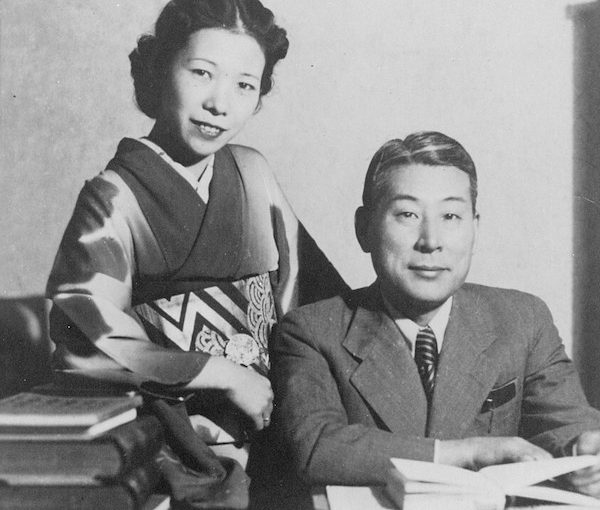
Yukiko and Chiune Sugihara (photo from Firehall Arts Centre)

It is written in the Mishnah that, “If you save the life of one person, it is as if you save the entire world.” Chiune Sugihara saved 6,000 Jewish lives – 6,000 worlds – in the summer of 1940, despite the dangers of doing so to himself and his family.

A new play about Sugihara sees its world première at the Firehall Arts Centre this month. Written by Japanese-Canadian actor and playwright Manami Hara, Courage Now opens Nov. 19.

Contrary to his government’s strict instructions to not issue visas to Jewish refugees, Sugihara, the Japanese consul in Kaunas (Kovno), Lithuania, handwrote in a 30-day period more than 2,300 visas for Jews trying to escape from Europe via the Soviet Union to Japan. Sugihara was a husband, a father, a career diplomat, a linguist, but, above all, with his strict Samurai upbringing, he believed in respect for, and sanctity of, human life. As he said, “They were human beings and they needed help.”

Sugihara’s actions are responsible for more than 40,000 Jews being alive today. Yet, after the war, the Japanese government dismissed him from diplomatic service and treated him as a persona non grata. However, Israel has honoured his courage and his memory on three occasions – in 1985, by recognizing him as one of the Righteous Among the Nations at Yad Vashem; in 2016, by naming a street in Netanya after him; and, in October 2021, by dedicating Sugihara Square in Jerusalem.

In an interview with the Independent, playwright and actor Hara talked about the journey that led her to write Courage Now.

“About 12 years ago, my mentor from Studio 58, Jane Heyman, approached me and asked if I knew about Sugihara and I said that I did not. She told me his story, that her parents and uncle had been saved by him and that she would not be here if not for his actions. We talked about collaborating on a play. Her story and my being Japanese made it very personal for me, as I was very embarrassed by how the Japanese government treated him after 1945.”

Getting a play from conception to the stage is a long process.

“I heard that a Japanese playwright, Hiraishi Koichi, had written about Sugihara. I got a hold of his play, translated it into English and worked with Jane on it but it just did not seem dramatic enough,” said Hara. “I talked to Koichi and asked if I could adapt the play and he gave me permission. So, I researched the Jewish families who were Sugihara survivors and created more scenes. But it still did not seem to have the theatrical weight it needed to be a success so I put it away for a couple years, as I felt I had lost my vision.

“About five years ago, I traveled to Japan and had a chance to speak to Sugihara’s daughter-in-law and two of his grandchildren, which gave me a firsthand intimate look into his life and that of Yukiko, his wife. Then it dawned on me that the way to tell the story was from two female points of view, that of Yukiko and of a child survivor, Margaret. So, I went back to the story and after many years of writing drafts and workshopping, here we are.”

There are five characters in the play: Sugihara, Yukiko, a young Margaret, an adult Margaret (Jewish community member Advah Soudak) and young Margaret’s father (community member Amitai Marmorstein). Margaret is a fictional character, created from the stories of many survivors. Scenes are set up to move between the Lithuanian summer of 1940 and mid-1980s Vancouver, where an adult Margaret now lives.

Hara does double duty in this production, as the playwright and performing as Yukiko. “It is difficult to switch, wearing both hats, you feel like you have a split personality,” she acknowledged. “However, I take off my playwright hat and then I concentrate on my character in terms of what are her needs, where should I be focused and what is happening with the other characters. So, when I am on stage, I am the actor and I let the director take over from there. If he or the other actors see anything that needs tweaking or fixing, they will let me know. It is a very collaborative process. We are three weeks from opening and still finalizing many of the details.”

Hara sees her character as a spirited, stubborn, strong woman, not as stereotypically subservient, but rather as someone who also was idealistic and who was supportive of her husband in all that he did. “She knew the risk to her family and the sacrifice that would have to be made in carrying out her husband’s plan to save the Jewish refugees,” said Hara. “It is an amazing role and I am so honoured to be able to bring this story to Vancouver audiences. I hope the audience takes away that there is always hope, that there is always a way to find courage to walk towards that hope and one should never give up.”

Director Amiel Gladstone got involved in the project, having worked with Hara before.

“She was looking for the right kind of collaborative director for the show and she reached out to me because I work so much with new plays,” said Gladstone in a telephone interview with the Independent. “She told me that she had been hoping for a Jewish director…. I told her that my father was Jewish.”

As to the play, he said, “It is a memory play dealing with two women trying to piece together what happened to them years ago during those dark times. We had to create a space that includes both 1940 and present-day locations: a Japanese home and garden, a Jewish refugee apartment, the Kaunas consul office, a park, the train station, with all the locations in view at the same time. It becomes a dream world, where the actors move from set to set as they go back and forth in time. Itai Erdal’s lighting design will inform the audience as to the change in time and place.” (Erdal is also a member of the Jewish community.)

Soudack’s character, in her 50s, is going through a difficult separation and divorce. In an interview with the Independent, Soudack explained, “She realizes that she has a big hole in life, as she does not know what happened to her parents. She travels to Japan to seek out Sugihara and to ask about her father but learns that Sugihara is dead (he died in 1986) so she looks to Yukiko for answers. At the same time, Yukiko is also going back and remembering that time through her interaction with Margaret.”

Soudack had to grapple with capturing the essence of Margaret’s psychological issues, including post-traumatic stress disorder.

“She has broken pieces of memory that she wants to fit together. She has had a difficult life,” said Soudack. “It must have been terrifying to be leaving your family, everything you know and being put on a train and sent off on your own. She has a lot of anger, sadness and abandonment and betrayal issues. She does not form close loving relationships very easily, as she learned that people closest to her disappear. She has to work through all this as she seeks the truth.”

Working with Hara has been a treat, said Soudack. “It is fabulous with the playwright right there so, when a question comes up, she can give us the explanation. It is a beautiful sense of collaboration, respect, joy and appreciation of what she wrote and it is a gift to be right there with her working through this project.”

As to being a Jewish actor in this role, she said, “As a Jewish person, you grow up with the Holocaust and the plight of the Jews – it is so part of our DNA that, when you come across a story and people that you never heard of, it makes you have such gratitude and respect for these non-Jewish heroes who, in the face of so much antisemitism, still found the courage to do the right thing. If I could meet Mr. Sugihara, I would hug him, look him in his eyes and thank him for his bravery and courage.”

Courage Now runs to Dec. 4. For tickets, visit firehallartscentre.ca or call the box office, 604-689-0926.

Tova Kornfeld is a Vancouver freelance writer and lawyer.

Format ImagePosted on November 11, 2022November 14, 2022Author Tova KornfeldCategories Performing ArtsTags Advah Soudack, Amiel Gladstone, Chiune Sugihara, Courage Now, Firehall Arts Centre, Holocaust, Manami Hara, memorial
A crush leads to new career

A crush leads to new career

Liz Glazer headlines the Nov. 24 Chutzpah! event Celebrating Queer Jewish Comedy. (photo from Chutzpah!)

Lawyer-turned-comedian Liz Glazer shares the Rothstein Theatre stage Nov. 24 with the Holy Sisters, Israeli drag queens Ziona Patriot and Talula Bonet, in the Chutzpah! Festival event Celebrating Queer Jewish Comedy. The evening is hosted by multidisciplinary artist and performer Yenta, whose alter ego is Stuart B. Meyers.

Based in New Jersey, Glazer is an award-winning comedian. Before taking to the stage as a career – and engaging in other creative endeavours, including acting and writing – she was a tenured law professor.

Of comedy, Glazer said, “I never intended to get into it. I had a crush on a woman who asked if I ever thought of doing comedy (no) and said she would put me on her show (to which I initially also said no, then realized she would probably be at her own show, so I said yes). I loved it so much from that first performance, and I think what I loved about it wasn’t even the laughs or attention or even that this woman I had a crush on was in the audience, though all of those things were nice, but that all I had to be to do it was me.

“I enjoyed teaching law, but there was always something about it where I had to fit what I wanted to say or write about into a framework of legal analysis. I had to have the topic of whatever I was saying or writing be the law, not just my own life, because there would eventually be something like a bar exam. When I did comedy, all I needed to talk about was myself. Though I should note: after all of my shows there are exams, so audience members should be prepared for that.”

Glazer’s first comedy performance was on March 5, 2013. She admitted to having been “a wreck.”

“I wrote stuff to say,” said Glazer, “but had the thankfully correct instinct that it wouldn’t connect with the audience or be funny or good, so I called a friend with experience performing comedy and she told me to just say something vulnerable to the audience at the beginning of my set.”

Thinking she got the message, she hung up before realizing she didn’t know how to be vulnerable.

“They don’t teach you how to do that in law school,” she said. “So, I paced around a bunch trying to think of something vulnerable to say, couldn’t really think of anything, then headed to my front door to leave for the show…. I see a package at my front door, and I hadn’t ordered anything.”

With time to spare before the show, Glazer brought the package inside. As she was about to open it, she said, “I realize[d] a trick to being vulnerable is not knowing the answer to something, and I didn’t know what was in the package, so perhaps the vulnerable thing I could do to start my set would be to open the package on stage. So I did.

“Turns out the package was from my mom, who had visited my apartment a couple weeks before and noticed that my white fluffy cat Mona – who would climb to the top of my closet – was shedding her white fluffy fur on my dark suits I would wear to teach class, making me look like a white fluffy law professor. My mom said I should buy vinyl suit covers … [but] knowing I wouldn’t, she ordered me three packs of six of them and sent them to me without my knowledge. So, my first set ever began with my opening this package on stage and explaining to the audience my relationship with my mother and my cat Mona, and how I’m a law professor who teaches class with white fluff all over my suits. And it worked! I think because, even though I had no idea how to do comedy, I couldn’t not be myself because I was genuinely reacting to what was in that package in the moment I opened it for the first time along with the audience. And/or because, as a rule, vinyl suit covers are very funny.”

Glazer no longer relies mainly on improvisation, but it still is an important part of her act.

“I do write a lot of jokes,” she said, “and much of my shows consist of prepared material but also improvising is everything, to quote the great Joan Rivers (in a very short interview I saw somewhere and am not sure where). Live comedy, whether it’s written down ahead of time or not is, by nature, dependent on interaction and connection with the audience which is, by nature, improvisational. So, to prepare for a show, I make sure I know what I want to say – sometimes a set of things and, more often, one big idea I want to get across – and I annoy my wife for a few hours repeating it aloud while she tries on clothes and asks me if I like them. And I try to meditate before [a show] because the key ingredient for me is clearing my focus so I can be present with the audience in the moment. That’s really the stuff. Connection and clarity.”

Glazer is married to Rabbi Karen Glazer Perolman, a spiritual leader at Congregation B’nai Jeshurun in Short Hills, N.J.

“I was raised going to Orthodox Jewish day school, a Conservative synagogue, and I’m now married to a Reform rabbi, so I think that makes me Chassidic,” Glazer joked. “I do talk about being Jewish in my comedy, and I do comedy for Jewish organizations and synagogues frequently. I talk about being married to a rabbi and, when I do comedy for Jewish audiences, I talk more extensively about my upbringing and how I learned in school all of these rules about what not to do, then lived in a house where we ate pepperoni pizza on trayf silverware on Shabbos.

“At an even deeper level,” she said, “my lineage consists of four out of four grandparents who survived the Holocaust. Not to brag, but it’s true. And I think of them constantly when I do comedy, especially when it’s explicitly about being Jewish and especially now as antisemitism is on the rise, unfortunately. There’s always a fearful part of me that wonders how much to talk about being Jewish in situations where there might be antisemitic people in the audience or if I post a video that may spark antisemitic comments, but I think of my grandparents in those moments, too. I think, if they survived for me to not be loudly Jewish, what was the point?”

Glazer doesn’t shy away from who she is or what challenging circumstances she has faced.

“I’m recording an album soon called Still Born Sorry, about grief and trauma and stillbirth (and it’s funny!) that will be an audio album available wherever you get your music and such, and also part of a documentary film about how I was supposed to record an album and have a baby last year, and neither of those came to fruition when I thought they would. That prior album was supposed to be called Born Sorry, and was postponed due to a stillbirth, so this one (the album and the documentary) will be called Still Born Sorry, which may be the best pun I definitely did not intend.”

In addition to the Nov. 24 performance at Chutzpah!, Glazer will be leading a two-hour workshop on the afternoon of Nov. 25. Participants will explore their “personal experiences, opinions and overbearing family members to find funny material to bring to the stage,” as well as setting up a “punchline joke structure and what it means to find a comedic voice.”

For anyone a little nervous about trying to seek out that voice, Glazer said, “I adore nervous people, so I really encourage especially those who are, to come to the workshop.”

Glazer encouraged readers to check out her website, dearlizglazer.com, and send her “a nice email! I would love to hear from you!”

For tickets to Glazer’s workshop and any Chutzpah! performance, visit chutzpahfestival.com.

Format ImagePosted on November 11, 2022November 9, 2022Author Cynthia RamsayCategories Performing ArtsTags Chutzpah!, comedy, Liz Glazer, standup
How to be radically creative

How to be radically creative

Linda Dayan Frimer speaks about her new book, Luminous, at the Waldman Library on Nov. 27. (photo from Linda Dayan Frimer)

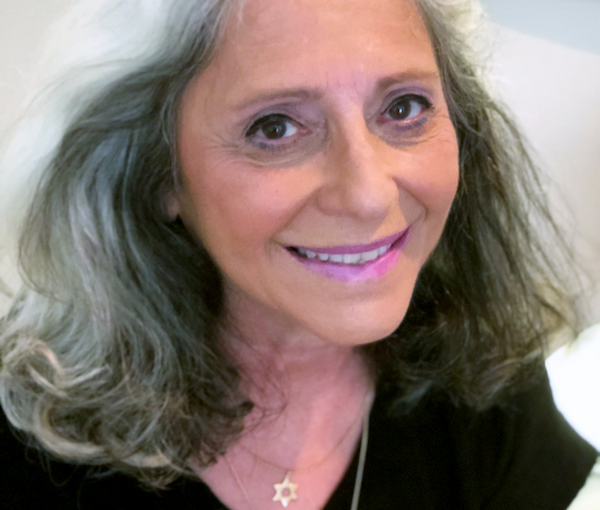
Linda Dayan Frimer’s new coffee table book, Luminous: An Artist’s Story as a Guide to Radical Creativity, takes the reader from Frimer’s early years in rural British Columbia through to the present, mixing her own story with encouraging the reader to jump-start their inner artist. Along the way, the multifaceted memoir also incorporates art history, spirituality and Judaism.

For Frimer, who was raised in the Cariboo District town of Wells, where hers was the only Jewish family in the community, making art is something she has done since early childhood.

“Painting was the same as experiencing wonder and awe within creation, where everything – the trees, their trunks and the big starry sky – led to a sense of a creation unified through colour. Just as it was for Chagall, colour from early childhood was love for me,” Frimer told the Independent in a recent interview.

As she grew and learned more of her own cultural suffering, and empathized with the suffering of the First Nations peoples in the Cariboo region, she longed to express this love for creation by unifying and healing in her own way, however she could.

“Art-making was my remarkable tool and the colourful, light-filled forests surrounding my home was my first inspiration,” she said. “I then learned the power of stories and how to tell them visually using photographs. This led to sharing reverence with other cultural groups, particularly in a group show called Kaleidoscope, where I met Cree artist George Littlechild. And our work on sharing cultural reverence through art – and our great and soulful friendship – began.”

A later example of the power of stories occurred when child Holocaust survivor Renia Perel showed Frimer a letter that was written 50 years after the death of Perel’s mother. Frimer created visual tribute in which Perel was able to write the letter into the artwork.

Exploring book’s subtitle

According to Frimer, radical creativity is an intense action that has the potential to occur each time we bring something new into creation. “It impacts upon the fundamental way we see and experience the world at a particular time, which can lead to each of us to having an inward moral experience. To be radically creative is to not only express what is most deeply felt but to hold an intense connection and longing to heal, and to unify this creation and ourselves within it,” she said.

“This calls upon and leads each of us to think deeply and imagine more. Bold and courageous radical creativity is ours each time our heightened emotional selves seeks a creative means to both respond to and enlighten the darkness of uncertain political and societal times.”

Citing various modern artists, Frimer noted that Picasso painted “Guernica” in only black, grey and white in response and protest to the impact and suffering caused by the Spanish Civil War on the Basque town of Guernica. American artist Adolph Gottlieb released the creative potential of the unconscious mind by painting the opposite polarities in existence as dots on a spectrum, where, with only one change, one dot could become the other, she said. And Czech painter Alphonse Mucha wrote that the purpose of art is never to destroy but always to create, to construct bridges.

In an era fraught with loss of species and forests through global warming, the war in Ukraine and other conflicts, economic suffering, the pandemic, among other issues, Frimer said, “We, like the aforementioned spiritual visionaries, greatly need to be people of true feeling with the creative purpose of constructing bridges.”

Radical creativity driven by one’s inner core self, she said, takes colours and forms and, often intuitively, paints an open emotional response to what urgently will need expression in our own time.

“To be radically creative is to be amazed by creation,” she said. “I paint from my heart all that I feel and all that comes through me as my receptive and creative art becomes more abstract. I am open to the source of this inspiration and grateful.”

Source of inspiration

Throughout her book, Frimer delves into the history and significance of colour. She includes dozens of exercises for aspiring artists of all levels, and highlights the role of creativity as a positive force between humanity and nature.

In Frimer’s words, “All creativity begins with a dot, in our imagination and on paper. In that movement of the first spark, everything and everyone is equal, and all of us equally creative.”

She hopes the reader will “take a journey to their own essence, their inner child who was created without memory and was free from fear of appearances and outside judgment – and also to look and to see more deeply and to be more aware of the energy of the colours in their midst daily. And to use these colours in their own expression of radical creativity.”

Colours are symbols and tools that can offer personal and universal meaning and lead to deepening understanding and caretaking of both nature and culture, she said.

“I’m hoping the art history shared and the stories of great artists, who, as seers in their time were radically creative, can enlighten and inspire individual pathways ahead,” she said.

Luminous is available through Chapters, Amazon, area bookstores and the Jewish Community Centre of Greater Vancouver. Frimer will speak at the Waldman Library on Nov. 27, at 3 p.m.

Sam Margolis has written for the Globe and Mail, the National Post, UPI and MSNBC.

Format ImagePosted on November 11, 2022November 9, 2022Author Sam MargolisCategories BooksTags art, creativity, Luminous, Waldman Library
Reviving Jewish roots

Reviving Jewish roots

JunkOy! recently released their new 10-track album, Once Upon a Time in Odessa.

It has been busy fall for Vancouver-based ensemble JunkOy!, culminating with the promotion of a 10-track album, Once Upon a Time in Odessa. At the same time, the band is preparing a live video, getting ready for some in-person gigs and recording a second album.

JunkOy!’s repertoire is a mix of klezmer interspersed with a number of other musical genres, including jazz, ska, tango, waltz and rock and roll.

“Our songs are old Soviet chestnuts, which were written by Jews in the early 1900s but appropriated by the Soviet culture. Almost all early Soviet music was written by Jews who grew up with Yiddish and klezmer music,” said Stav Au-Dag, the group’s frontperson. The songs were translated into English by Au-Dag and reworked to eliminate the Soviet influences in the lyrics. All of JunkOy!’s songs can be performed in either English or Russian.

“The idea for this project is simple: to take Jewish music from its Soviet orchestral captivity back to its klezmer Jewish roots,” Au-Dag explained. “And a dash of Gypsy jazz and ska never hurt anyone, either.”

In addition to removing the references to the Soviet regime, Au-Dag said he and the band rearranged the songs in a more traditional klezmer style – “clarinet, violin, accordion and bass plus acoustic guitar, instead of the stuffy big Soviet orchestral music they were recorded in,” he said. “Thus, the songs are democratized and shown to be belonging to folk tradition, in which everyone could participate, rather than a part of an institutionalized culture, attainable only to the highly educated musicians and rich concert-goers.”

Many of the tracks on Once Upon a Time in Odessa draw upon the connections between early Soviet pop culture and its Jewish roots.

Two songs on the new album come from the first Soviet musical, Jolly Fellows (1934): “March of the Cheerful Pilgrims” and “Young Heart.” Both songs have postmodern lyrical contributions from Au-Dag, who added a third verse to the march and dispensed with all references to the joys of Soviet labour, while a second verse was added to “Young Heart.” Musically, Au-Dag said, “Young Heart” benefited from “Ikh Hob Dikh Tsufil Lib” (“I Love You Too Much”) by Alexander Olshanetsky and Chaim Tauber.

The song “Uncle Eli” is taken from “Der Rebbe Elimelech,” penned by Moyshe Nadir. Au-Dag said Nadir’s song is based on the British nursery rhyme “Old King Cole.” In the USSR, the song received assistance from two Jews: it was translated by Elizabeth Polonsky and Joseph Pustylnik added the instrumental part. Au-Dag has augmented the lyrics and written new choruses.

The origins of the tune “Lime-Lemons” are found in 1920s Odessa. Leib Zingerthal sang the lyrics by Yakov Yadov.  Au-Dag pointed out that the popular number dealt with the lawlessness that occurred in the aftermath of the Russian Civil War, when hyperinflation turned a person’s fortune into worthless “lemons.”

The album includes a version of “Steamship,” premièred by singer and comic actor Leonid Utyosov in 1940, and considered by some to be the first video clip in the world. The song was written for the big screen by composer Nikolai Minkh.

Two songs on this album originate in Jewish Poland. “Samovar,” with music by a teenaged Fanny Gordon (born Fayge Yoffe) and lyrics by Andrzej Włast (born Gustaw Baumritter), was written in 1929 and has a long, convoluted history. First popular in Poland, then in Lithuania, it was appropriated by Leonid Utyosov in 1933, without credit to its authors. Au-Dag said Yoffe was so scared of Utyosov, she did not claim her authorship until 1979 – when she received 12 rubles. Au-Dag has expanded the original Russian one-verse version and shifted the story to Crimea, where Gordon was born.

“Tired Sun,” meanwhile, was written by a Jewish duo, poet Zenon Friedwald and composer Jerzy Peterburgsky, in 1937. Au-Dag has added the second part to the song.

The name JunkOy! (or JunkOye!), translated as the Village of the Spirit, is derived from a community at the centre of the Jewish agricultural settlement in Crimea (1925-1941). The group consists of five musicians on stage: Au-Dag, vocals and acoustic guitar; Serge Galois, double bass; Ben McRae, clarinet; Paul Krakauer, accordion; and Masha PinkCod, vocals and violin.

Founded in Montreal in 2014, JunkOy! has been operating out of Vancouver since 2015; its members met originally through Facebook and various musical friends. They hail from throughout the globe: Crimea (Au-Dag), France and Russia (Galois), Canada (McRae), Poland (Krakauer) and Moscow (PinkCod).

To get a taste of JunkOy!’s music, venture over to YouTube and the Magical Crimea channel. There, one can find the rousing performance they gave earlier in the year at Or Shalom, where they raised money for Jewish Family Services to settle Ukrainian refugees in British Columbia.

To purchase Once Upon a Time in Odessa, send an email to [email protected].

Sam Margolis has written for the Globe and Mail, the National Post, UPI and MSNBC.

Format ImagePosted on November 11, 2022November 9, 2022Author Sam MargolisCategories MusicTags Jewish music, JunkOy!, JunkOye!, Magical Crimea, Once Upon a Time in Odessa, Russian, Soviet Union, Stav Au-Dag
מדד בועת הנדל”ן העולמי

מדד בועת הנדל”ן העולמי

בנק ההשקעות השוויצי יו.בי.אס פרסם לאחרונה את המדד השנתי שלו של בועות הנדל”ן בעולם. על פי המדד על רשימת עשר הערים המסוכנות ביותר מבחינת בועדת הנד”לן נמנות טורונטו וונקובר מקנדה, וכן תל אביב מישראל.על פי המדד של בועודת הנדל”ן של היו.בי.אס מחירי הדיור בעיר כמעט שילשו את עצמם בין השנים אלפיים ואחת לאלפיים ושבעה עשרה. שכר הדירה שמר על קצב עלייה לצד הגידול במחירי הרכישה, דבר ששיקף מחסור גדול בנכסים לדיור. לדברי עורכי המחקר, אחרי תקופת תיקון קצרה באלפיים ושמונה עשרה, חזר השוק לשלב נפיץ נוסף של קפיצת מחירים. בבנק יו.בי.אס מעריכים כי מחירי הנדל”ן למגורים בעשרים וחמש ערים מרכזיות בעולם, במסגרת הכנת הדין וחשבון, ממחצית שנה שעברה עד מחצית השנה הנוכחית, הואץ קצב הצמחיה הממוצע במחירי הדיור הנומינליים באותן ערים, עד כעשרה אחוזים. מדובר בשיעור הצמיחה הגבוה ביותר מאז שנת אלפיים ושבע

במדד בועות הנדל”ן, הערים טורונטו שבקנדה – ראשונה ופרנקפורט שבגרמניה – שנייה ממשיכות להציג, כמו אשתקד, את רמות הסיכון הגבוהות ביותר בין שוקי הדיור העולמיים. סיכונים לבועה מוגברים נרשמים גם בציריך בשווייץ  – שלישית, מינכן בגרמניה – רביעית, הונג קונג בסין – חמישית, ונקובר בקנדה – שישית, אמסטרדם בהולנד – שביעית תל אביב בישראל – שמינית וטוקיו ביפן – תשיעית. למעשה, כל הערים שנבדקו, מלבד שתיים: פריז בצרפת ושטוקהולם בשבבדיה, חוו עלייה משמעותית במחירי הדיור

עורכי המחקר מסבירים כי כתוצאה משערי הריבית הנמוכים, התרחקו מחירי הדיור בעשור האחרון בהתמדה מרמות ההכנסה ומשכר הדירה. הערים השוכנות כרגע בטריטוריית סיכון לבועה חוו בתקופה זו עליות מחירים ממוצעות של כשישים אחוז במונחים מותאמים של הינפלציה, בעוד שההכנסה ושכר הדירה הריאליים גדלו רק בכשניים עשר אחוז נכתב. כעת .יש התחלה של נקודת מפנה בעקבות עליית שערי הריבית, אבל חוסר האיזון בשוקי הדיור העירוניים הגלובליים עדיין גבוה מאוד, שכן בלא מעט ערים המחירים אינם מסונכרנים עם שערי הריבית ההולכים וגדלים בעת הזו

עורכי המחקר מעריכים עוד כי ההאצה בצמיחת המשכנתאות שטרם נפרעו הייתה בולטת כמעט בכל הערים. לדבריהם זו גם השנה השנייה ברציפות שבה החוב הביתי גדל מהר יותר במידה ניכרת מאשר הממוצע לטווח ארוך. בנוסף, שיעורי הריבית למשכנתאות כמעט הכפילו את עצמם בממוצע בכל הערים שנבחנו, מאז נקודת השפל שלהם באמצע אלפיים עשרים ואחת. בשילוב עם מחירי נדל”ן הגבוהים, בנק יו.בי.אס מודים כי האפשרות לרכישת דירה על ידי שכיר בעל הכשרה גבוהה הוא נמוך בממוצע בשליש לעומת המצב לפני מגפת הקורונה שפקדה אותנו לפני למעלה משנתיים

לדברי קלאודיו סאפוטלי, מנהל תחום הנדל”ן במשרד מנהל ההשקעות הראשי ביו.בי.אס, האינפלציה וההפסדים על נכסים, הנובעים מהסערה הנוכחית בשווקים הפיננסיים, מפחיתים את כוח הרכישה של משקי הבית, דבר שמרסן את הביקוש למרחב מחיה נוסף. הכוונה לרכישת דירה נוספת מעבר לזו הקיימת. אי לכך, ענף הדיור הופך כעת לפחות אטרקטיבי כהשקעה כי עלויות ההלוואה בערים רבות עולות על התשואה של השקעות של קנייה לצורך השכרה

לדברי עורכי המחקר, דירוגי המדד לא גדלו בממוצע בהשוואה לשנה שעברה. בנוסף, הכנסות גבוהות וצמיחה של שוק ההשכרה בלמו גידול אפשרי נוסף בחוסר האיזון. מחירי הדיור באיזורים הכפריים צמחו מהר יותר מאשר בערים, זו השנה השנייה ברציפות. בנוסף, צמיחת המחירים הואטה במידה ניכרת במונחים מותאמים של האינפלציה. אך הערכות המחיר הנוכחיות הן גבוהות ביותר. בכל מקרה מציינים במחקר שהשגשוג הגלובלי בתחום הדיור מגיע כעת לסופו

מהמחקר עולה עוד כי בארה”ב, חמש הערים שנבחנו נמצאות בטריטוריית הערכת-היתר, וחוסר איזון נראה במיאמי ובלוס אנג’לס יותר מאשר בסן פרנסיסקו, בבוסטון ובניו יורק. שוקי   הדיור בשטוקהולם, פריז וסידני שבאוסטרליה נותרו בהערכת-יתר למרות מגמות צינון מסוימות. שוקי דיור אחרים המפגינ סימני הערכת-יתר כוללים את ז’נבה, לונדון, מדריד סינגפור. סאו פאולו, שנוספה השנה למדד, זוכה להערכה הוגנת, לצד ורשה ומילאנו

בדיקתה לעומק של הנתונים מגלה כי למרות השנה החזקה שעברה על שוק הדיור של דובאי, גם היא שוכנת כעת בטריטוריית ההערכה ההוגנת. לדברי עורכי המחקר, שוק הדיור של דובאי היה רכבת שדים בשני העשורים אחרונים, ככל שהביקוש התאים את עצמו במידה רבה להתפתחות מחירי הנפט. מחירי הנפט המשתנים תדיר, והגידול בכמות ההגירה, הפיחו חיים בשוק בשנה האחרונה. מחירי הדיור צמחו בעשרה אחוזים בין אמצע אלפיים עשרים ואחת לאמצע אלפיים עשרים ושתיים. שכר הדירה בארבעת הרבעונים האחרונים עלה על הצמיחה במחירי הדיור. לפיכך ממשיך השוק ליהנות מהערכה הוגנת

בשווייץ, הביקוש החזק המתמשך להשקעות בסביבה עם שיעור ריבית שלילי היה המנוע העיקרי של מגמת המחירים. מחירי הדיור באיזור עלו בכעשרים אחוז מאז תחילת המגפה. בסך הכול, היחס בין מחירי הרכישה לבין מחירי שכר הדירה יצא מאיזון, והשוק הפך לאיזור סיכון-לבועה. לדברי עורכי המחקר, מחירי הרכישה הגבוהים יחוו בקרוב בוחן מציאות, שמקורו בזינוק שיעורי הריבית של בנק סוויס השוויצרי. אך הודות להמשך צמיחת האוכלוסייה החזקה באיזור הכלכלי של ציריך, ייתכן שתתבצע התאמת מחירים לאורך זמן

פרנקפורט ומינכן בגרמניה מציגות את הסיכונים הגבוהים ביותר של בועת הנדל”ן בקרב שוקי איזור האירו. שתי הערים הגרמניות חוו בעשור האחרון כמעט הכפלה של מחירי הנכסים מבחינה נומינלית, למרות שהצמיחה הנוכחית הצטננה לכדי כחמישה אחוזים בין אמצע אלפיים עשרים ואחת לבין אמצע אלפיים עשרים ושתיים מהרמות הדו-ספרתיות הקודמות שלהן. השילוב של עלויות מימון גדלות ושל סיכויי צמיחה כלכלית נמוכים בשנה שעברה אמור להוציא אוויר ממנוע השפע ששרר בשוק, למרות שיעורי הנכסים הריקים הנמוך מאוד מבחינה היסטורית

הממצאים מראים כי שוק הדיור של אמסטרדם בהולנד הציג צמיחת מחירים חזקה ביותר בשוקי איזור האירו, עם שיעור של כשבעה עשר אחוז בערכים נומינליים, והעיר נמצאת כיום בטריטוריית הסיכון לבועה. במדריד, צמיחת המחירים הואצה גם כן מאז תחילת המגפה. עיר הבירה הספרדית נמצאת כעת בטריטוריית הערכת-היתר, למרות שבממוצע עובד בעל הכשרה במגזר השירותים יכול עדיין להרשות לעצמו את מרחב המחיה הגדול ביותר בקרב שוקי איזור האירו שנכללו במחקר

לצד ההתאוששות הכלכלית ושיעורי הריבית הנמוכים יותר לאחר המגפה, תמריצים לשיפוץ בניינים תמכו בעליית מחירים במילאנו באיטליה לאחר עשור של מחירי סטגנציה. מהצד השני, תחום הדיור בפריז משתרך מאחורי שוקי הדיור של איזור האירו. מחירי הנכסים הנומינליים סבלו מסטגנציה בין אמצע אלפיים עשרים ואחת לאלפיים עשרים ושתיים, ועקב כך נטשה פריז שבצרפת את טריטוריית הסיכון לבועה. אך פריז ממשיכה להיות שוק איזור האירו הכי פחות נגיש מבחינת מחירים במחקר

שוק הדיור בלונדון בבריטניה נמצא בטריטוריית הערכת-יתר. המחירים גבוהים בכשישה אחוזים מהשנה שעברה, כשהם נתמכים על ידי מחסור נכסי דיור מול הביקוש המוגבר שלאחר המגפה. שכר הדירה שם משתנה בחדות, כאשר קונים נתקלים בקשיים במציאת נכסים מתאימים. עם זאת, שיעורי המשכנתאות הגדלים, סיום חופשת מס הבולים בבריטניה והצפי הכלכלי הלא ברור מחלישים את הצפי בנוגע למחירים

לדברי עורכי המחקר, ורשה בפולין נהנתה מהיותה אחד משוקי העבודה החזקים במזרח אירופה, והחוזק הזה משך לשם אזרחים חדשים ומשקיעים מסוג רכישה לצורך השכרה. השוק ממשיך ליהנות מהערכה הוגנת, אך הדיור הפך בהדרגה לבלתי נגיש כלכלית בשל המחירים הגבוהים ושיעורי הריבית המטפסים במהירות. בניגוד לכך, למדיניות מוניטרית הדוקה יותר הייתה השפעה מיידית על שוק הדיור של שטוקהולם בשבדיה. עקב כך אירעה צניחת מחירים של יותר מעשרח אחוזים ברבעון השני השנה, שהקפיצה את דירוג המדד אל מחוץ לאיזור האירו והיישר לטריטוריית הערכת היתר

על פי המחקר, מחירי הדיור בטוקיו ביפן הלכו וצמחו כמעט ברציפות במשך למעלה משני עשורים, תוך שהם נעזרים בתנאי מימון אטרקטיביים ובצמיחת האוכלוסייה. חוסר האיזון הגיע לסף הסיכון לבועה, ככל שהזמינות של רכישת הדירות המשיכה להתדרדר. אך סימני החלשה הופיעו לאחרונה: צמיחת המחירים פחתה בחצי לכדי חמשיה אחוזים לעומת השנה המקבילה, ומשתרכת מאחורי הממוצע הכלל ארצי זו הפעם הראשונה בעשר שנים. המחירים בסידני באוסטרליה השתנו באופן קיצוני ביותר משלושים אחוז באלפפים ועשרים ואלפיים עשרים ואחת, לפני שהידוק תנאי ההלוואות בשנה שעברה והקפיצות האגרסיביות של שיעורי הריבית השנה הפחיתו את הנגישות במידה רבה. עקב כך, המחירים כבר הספיקו לרדת ביותר מחמישה חוזים במהלך הרבעון השני של השנה. השוק נותר עדיין בהערכת-יתר גבוהה

השוק של הונג קונג בסין רשם תיקון של כארבעה אחוזים במחירים הנומינליים בין אמצע שנה שעברה לאמצע שנה זו – שיעור הצמיחה החלש ביותר מכל הערים שנבחנו במחקר. למרות זאת, השוק לא עזב עדיין את טריטוריית הסיכון לבועה. סינגפור נהנית ממיצוב בינלאומי חזק כמרכז עסקים, ומחירי הדיור גדלו באחד עשר אחוז נוספים בין אמצע אשתקד לבין אמצע השנה. המחקר עולה עוד כי ערי ארה”ב חוו צמיחת מחירים חזקה הרבה יותר מאז תחילת המגפה בהשוואה לשנים הקודמות. מיאמי ממשיכה ליהנות מהגירה חזקה פנימה ומעניין רב בקרב המשקיעים. היא רשמה את שיעורי צמיחת מחירי הרכישה ושכר הדירה השנתיים החזקים ביותר, ונדחפה עקב כך עמוק יותר אל טריטוריית הערכת-היתר. גם סן פרנסיסקו רשמה גידולים מרשימים במחירים. לנוכח היחלשות גיוסי העובדים לענף ההייטק והסיכויים להמשך הקיום של מודלי העסקה מרחוק ועבודה ההיברידית, הצפי עבור מחירי הדיור בסן פרנסיסקו הוא עגום למדי

חוסר האיזון בלוס אנג’לס כבר היה גבוה, וגדל אף יותר מאז השנה שעברה, משום שנגישות רכישת הנדל”ן כבר הגיעה קרוב לשיאים של כל הזמנים. בוסטון נהנתה מצמיחת ההכנסות הגבוהה ביותר מכל הערים במחקר, זאת על גבה של כלכלה חזקה ומגוונת. חוסר האיזון נשאר ללא שינוי ניכר לעומת השנה שעברה. מצד שני, ניו יורק הפגינה את צמיחת המחירים החלשה ביותר מאז אמצע אשתקד מכל הערים האמריקאיות שנכללו במחקר. היא ממשיכה להיגרר אחרי ערים ומדינות נגישות יותר וגם ידידותיות יותר מבחינת מיסוי, עסקים ורגולציה

רמות מחירי הנדל”ן בוונקובר ובטורונטו שבקנדה שילשו את עצמן בעשרים וחמש השנים האחרונות, אולם עלייה של שלושים וחמישה אחוז בדרך לרדת. לדברי עורכי המחקר, הזינוקים בשיעורי הריבית האחרונים של בנק המרכזי של קנדה היו ככל הנראה הקש ששבר את גב הגמל ותיקון מחירים מתבצע כבר עתה

שוק הדיור של תל אביב עבר לטריטוריית סיכון לבועת נדל”ן בפעם הראשונה, לאחר שמחירי הנדל”ן בעיר זינקו בכשמונה עשרה אחוז בין מחצית אלפיים ואחת למחצית אלפיים ושתיים – השיעור הגבוה ביותר מאז אלפיים ועשר

Format ImagePosted on November 2, 2022October 31, 2022Author Roni RachmaniCategories עניין בחדשותTags annual index of real estate bubbles, Tel Aviv, Toronto, UBS Swiss Real Estate Bubble Index, Vancouver, world, בנק ההשקעות השוויצי יו.בי.אס, ונקובר, טורונטו, מדד שנתי של בועות הנדל"ן, עולם, תל אביב
Teaching about charity

Teaching about charity

Ellen Schwartz, founder of Project Give Back. (photo from LinkedIn)

Jewish Federation of Greater Vancouver’s Choices, the largest celebration of women’s philanthropy in the community, takes place Nov. 3 at Congregation Beth Israel. At the event, featured speaker Ellen Schwartz, founder of Project Give Back, will talk about raising a son with a neurodegenerative disease and how her son Jacob helped her “live a more grounded, purposeful and present life.”

Project Give Back is targeted to elementary students in Ontario. Established in 2007 by Schwartz, a Toronto-based teacher, community advocate and mother of three children, it started as a program she created for her fourth grade classroom and it is designed to teach compassion and concern for community. The program, which selects and trains teachers to deliver its specialized curriculum, runs weekly from October to May in partner schools. In it, students help do the teaching by explaining the value of a worthy cause to their fellow classmates. Since its inception, Project Give Back has helped bring awareness to hundreds of charities.

“The beauty about Project Give Back is children teach us about what matters to them, through their involvement with a charity that they or their family are connected to,” Schwartz told the Independent.

Fifteen years after starting the program, Schwartz said many early participants continue to be actively involved in charitable work as they enter into young adulthood.

“We definitely have seen many of our alumni actively giving and making change in their communities,” she said. “Some of our graduates have published books, with proceeds donated to their chosen and personal causes.”

Some of the many grassroots charities to which Project Give Back has recently brought attention are Sending Sunshine, a program directed at curbing loneliness in the elderly population; Nanny Angel Network, which provides free in-home child care in Canada; and the Super Sophia Project, a group whose goal is to offer hope to children and their families battling cancer.

As Project Give Back bases much of its lessons on personal connection and in-class discussions, it, like many organizations, was affected by the pandemic and had to shift its operations accordingly.

“We had to pivot quickly to online learning. All of a sudden, we looked at the windows of the students and we had family members attending lessons as well as pets, grandparents, etc. That was beautiful to see,” Schwartz recalled.

“Unfortunately, there was a tremendous gap in education and, while many schools were able to continue, almost at the switch of a button, others truly struggled. In these schools, often school was a safe place for many children and many didn’t have the opportunity to reset online quickly. We launched Project Give Back Connects during this time. This was a way to connect powerful messages and resources to classroom teachers, which they could access and share with their students.”

For her Vancouver presentation, Schwartz plans to discuss some of the life lessons she learned from her son Jacob, who died in 2019 at the age of 21. Only months after he was born, he was diagnosed with Canavan disease, which damages the brain’s nerve cells. Jacob wasn’t able to walk, talk or see.

“I will share the best piece of advice I was ever given. It was on a folded note left in my mailbox 25 years ago, [and] I still don’t know who left it there,” said Schwartz. “I will touch on tricks and tips to living a life filled with purpose and meaning as well as shaping grief in a manner that allows us to move forward.”

Currently, Project Give Back only operates in Ontario, but Schwartz is eager to investigate operating in Vancouver schools.

“Our plan is to continue to grow slowly and carefully, never compromising on the quality of our program,” she said. “Sometimes, bigger does not mean better. I would rather teach less children and do it well so that spark becomes a flame, rather than teaching more and hoping to ignite a spark.”

Schwartz also co-founded Jacob’s Ladder, Canadian Foundation for the Control of Neurodegenerative Diseases, with her husband Jeff in 1998. In its 21 years of operation, Jacob’s Ladder raised more than $3 million for research, education and awareness of neurodegenerative illnesses, as well as research into treatments.

Ellen Schwartz has written two books: Lessons from Jacob: A Disabled Son Teaches His Mother About Courage, Hope and the Joy of Living Life to the Fullest and Without One Word Spoken. She has been honoured by the Israel Cancer Research Fund, Ve’ahavta, Aish Toronto, Sick Kids Hospital, and Brilliant Minded Women. And she has been awarded a Queen’s Jubilee Medal, a Meritorious Service Decoration by the Governor General of Canada and a Canada 150 Exemplary Canadian Medal.

“I am hoping to make some new friends and inspire your community with a story I am honoured to be able to share,” Schwartz said, when asked about what she expects from her visit.

The community speakers participating in Choices this year are the daughters of Holocaust survivor Robert Krell: Shoshana Lewis, Simone Kallner and Michaela Singerman. They will share how they honour their father’s experience.

Also part of the Nov. 3, 5 p.m., event will be a marketplace including several local vendors.

Tickets for Choices are $60 and include dinner. However, there is a minimum donation of $154 to support the Federation annual campaign and, for first-time Choices attendees, a minimum donation of $36. Register at jewishvancouver.com/choices.

Sam Margolis has written for the Globe and Mail, the National Post, UPI and MSNBC.

Format ImagePosted on October 28, 2022October 26, 2022Author Sam MargolisCategories LocalTags annual campaign, Choices, health, Jewish Federation, neurodegenerative disease, parenting, philanthropy, Project Give Back, tikkun olam, women
Art of unweaving as midrash

Art of unweaving as midrash

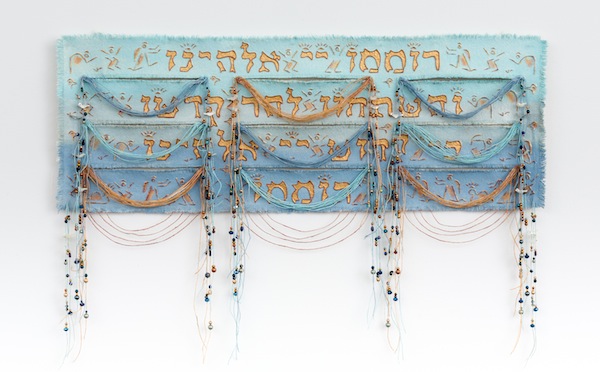
“Romemu” by Laurie Wohl.

Laurie Wohl’s “unweavings” are currently on display at the Zack Gallery, until Nov. 8. The exhibit, Journeys, features two of the New York artist’s collections: the Shabbat Project and the Meditation Project.

“By unweaving the fabric, I make manifest what is hidden within the material – liberating the threads to create shape, then ‘reweaving’ through colour, texture and text,” says Wohl in her artist’s statement.

“My unweavings process came out of my concern with narrative and storytelling,” she told the Independent. “I began as a painter on stretched canvas over 30 years ago, but I came to feel that painting on a flat, rigid surface felt static – distancing me from my materials and my stories. So, I began experimenting, cautiously making slits into the canvas, then unweaving, thread by thread – engaging with the material, exploring it. My work became completely ‘unstrung’ by 1989.

“Unweaving became a meditative process that allows me to feel my way into the material at the same time that I am feeling my way into the spiritual texts that have caught my attention,” she said. “Liberating the threads – creating different forms physically – has given specific resonance to the biblical, spiritual and poetic texts that fascinate me. Both the words within each piece and the unwoven form suggesting these words serve as a visual commentary, a visual midrash. This process of unweaving, then reweaving with text, paint, texture and beads, becomes a modern interpretation of the narrative and ritual function of textiles.”

photo - Laurie Wohl
Laurie Wohl’s textile art is on exhibit at the Zack Gallery until Nov. 8. (photo from Laurie Wohl)

Wohl’s maternal grandfather was an Orthodox rabbi – “I was very close to him, going to Shabbat morning services with him, sitting with him in the intense quiet of a Saturday afternoon twilight, at the waning of Shabbat,” she said.

“I was raised in the questioning tradition of Reform Judaism and I have read widely in the faith traditions of Christian and Eastern religions,” she continued. “My work has grown out of my own search for meaning – what is important to me as an artist in our complex world – and from my exploration of a medium that’s congenial to this meaning. The events of our time and my own life experiences have captured my imagination, and led me to be concerned with possibilities for reconciliation, both political and religious – in post-apartheid South Africa, in Christian-Jewish relations and, after Sept. 11, 2001, in possibilities for interfaith conversations among Jews, Christians and Muslims.”

Wohl uses a heavy cotton canvas for her works. She describes her creative process on her website: “I first release either the warp or weft threads to create the desired shape. Various textures may be collaged onto the surface, such as fibrous papers, sand and pumice. My images and calligraphy are applied with modeling paste. I then apply acrylic paints to the surface, and a final thin layer of gold wash. Where gauze is used, the fabric is dipped in diluted paint, then hand-painted and embellished with fibrous papers. In the last part of the process, beads – prayers and marking points – are affixed with acrylic gel.”

Wohl’s textiles are held in numerous public and private collections, including the Museum of Arts and Design, and some of her pieces have been on long-term loan to U.S. embassies in several countries. Her works are recognized by the American Institute of Architects’ Interfaith Forum on Religion, Art and Architecture, and by the Surface Design Association, and she has exhibited in widely differing venues, from Jewish community centre galleries to university galleries to galleries in theological seminaries.

“One of the exhibits in a Christian theological seminary led to a feature on my work in a magazine, Christianity and the Arts, which led to my work being exhibited in a major church in Chicago – Fourth Presbyterian Church,” she said. “This led to a commissioning by the church of 12 pieces for their sanctuary. And that led to another commission in New York City by Madison Avenue Presbyterian Church.

“The pieces I made for these sanctuaries are my responses to the particular interfaith work of those communities and their Old Testament roots. The Psalms Project for Fourth Presbyterian’s main sanctuary consists of 12 large pieces…. The church asked me to use Hebrew as well as English calligraphy to underscore the congregation’s immersion in its Old Testament roots, and the psalmic motif emphasizes the Christian-Jewish dialogue to which that church is committed. The project for Madison Avenue Presbyterian Church uses texts from both Old and New Testaments, and Hebrew, English and Greek calligraphy.

“Between 2001 and 2010, as I was working on projects exploring the relationship of Christianity and Judaism, the necessity of expanding my work into the realm of Islam was percolating beneath the surface,” she said. “I had just moved to New York City when the events of Sept. 11, 2001, occurred. Experiencing the trauma and aftermath, and especially the demonizing of many Muslims, I began to think about how I, as an artist, could contribute to a better understanding among Jews, Christians and Muslims – to suggest a way that art can be used to mediate at the intersection of faith and politics. After extensive reading in medieval and contemporary spiritual texts and poetry in 2009, I began my 18-piece project – Birds of Longing: Exile and Memory – in which I explore the relationships among the three Abrahamic religions, using text, texture, colour and form. I relate spiritual and poetic texts from the Convivencia (the Spanish medieval period) to contemporary Middle Eastern poetry, particularly Israeli, Palestinian and Syrian. The pieces explore common themes of spiritual love, exile, nostalgia for Andalusia, poetry referencing Old and New Testament texts and the Qu’ran, and poetry speaking of mistrust of enemies, yearning for reconciliation.”

Wohl began the Shabbat Project after Birds of Longing, which had been an intense process. “I was somewhat exhausted spiritually – there seemed to be no end in sight to the fighting and misunderstanding in the Middle East, and xenophobia was heating up against immigrants and refugees coming to our borders,” she said. “I felt a need for spiritual renewal and turned to our tradition. The Kabbalat Shabbat service at my own synagogue – Stephen Wise Free Synagogue [SWFS] in New York City – is a wonderful blend of reflective and joyous music. Through wordless music – the niggunim – and through prayerful words set to music, we are invited to enter into the spiritual, the transcendent, both individually and in community.

“Music has long been an important part of my art practice. The pieces in the Shabbat Project embody prayers and psalms of the Kabbalat Shabbat and Shabbat morning services, both in terms of the texts inscribed and the form of each piece, which evokes – hopefully – the spiritual texts. I was fortunate to collaborate with Cantor Dan Singer at SWFS for a soundscape that is integral to and accompanies the project.”

Wohl shared the meaning behind a few of the works from the Shabbat Project. “The piece ‘Kabbalat Shabbat’ is a circular piece suspended from the ceiling,” she explained. “With this form, and using semi-transparent materials, I try to evoke the mystery and beauty of the Shabbat bridge. There are references to many prayers and melodies embedded in the piece: Y’did Nefesh, Ahavat Olam, V’al Kulam, L’chu N’ran’na.”

image - “Sanctuary: Mishkan” by Laurie Wohl
“Sanctuary: Mishkan” by Laurie Wohl, who explained: “The partially unwoven centre alludes to the bima and altar, and the piece includes words from Psalm 19, Yih’yu L’ratzon: ‘May the words of my mouth and the meditations of my heart be acceptable to You….’”

Another example she gave was “Hashkiveinu: Evening Prayer,” which, she said, “suggests a tallit or prayer shawl and embodies words from an ancient prayer. ‘Cause us to lie down in peace and raise us up, our Sovereign, to life renewed’: ‘Hashkiveinu, Adonai Eloheinu, l’shalom. V’haamideinu shomreinu l’chayim.’

“‘Romemu’ also echoes the form of a tallit or prayer shawl, and incorporates the praise text from Psalm 99:9: ‘Let us exalt Adonai our God  / and worship at His holy hill / for holy is Adonai, let us exalt.’ (‘Romemu Adonai Eloheinu / V’hishtachavu l’har kodsho / Ki kadosh Adonai Eloheinu, romemu.’)”

In total, 12 pieces comprise the Shabbat Project and the Meditation Project encompasses 11 pieces.

“For many years, the process of unweaving and working with spiritual texts has been a form of meditation for me,” said Wohl of the latter project. “Living in New York City at the beginning of the COVID pandemic, the incomprehensible numbers of those dying daily caused me to search for a way to find solace in a world turned upside down. Rabbi Angela Buchdahl, the senior rabbi at Central Synagogue in Manhattan, started a daily meditation practice on Zoom just then. I found comfort in her teachings and in the communal aspect of the meditation. Rabbi Buchdahl has continued the communal meditation once a week, and I have continued my meditation practice. The pieces in the Meditation Project draw on the teachings from her sessions and my responses to them. My hope is that the thoughts I held as I created the work will project a sense of mindfulness and serenity that viewers can carry with them.”

Format ImagePosted on October 28, 2022October 26, 2022Author Cynthia RamsayCategories Visual ArtsTags art, Judaism, Laurie Wohl, midrash, textiles, unweaving, Zack Gallery

Israel’s best revenge

In an email briefing this week, the English-language news platform Times of Israel declared: “UN releases 2nd damning report on Israel; real estate soars.”

These were two unrelated stories. The United Nations had unveiled another in its persistent condemnations of the Jewish state and, on a completely different issue, it reported that Israeli housing prices have spiked 19% this year over last – the largest jump in recorded history.

As curious as this combination of stories was, it could hardly compete with an adjacent mashup about two of Israel’s leading far-right politicians, Bezalel Smotrich and Itamar Ben-Gvir, the latter of whom, in an apparent effort at humanizing himself, appeared on a cooking program: “Ben-Gvir stuffs peppers and Smotrich proposes legal reforms.”

But, returning to the first items. The connection between UN condemnation of Israel and soaring real estate prices in Israel may be remote but perhaps not random. In any country, high real estate prices indicate a demand for housing that is larger than the supply, a situation due in part to rising economic prosperity (which is not generally shared equally, it should be said, and is too complex to fully discuss in this space).

The larger issues, for our purposes, are the curious parallels between this fact and the accompanying story, about yet another of the UN’s broadsides against Israel. Late last week, a report by the United Nations Independent International Commission of Inquiry on the Occupied Palestinian Territory declared that Israel’s occupation of the West Bank is illegal. Not a surprise considering the commission’s mandate, to say the least. Leaving aside whatever legitimacy that investment of resources may or may not have on the ground, it is safe to say it will have little impact on most Israelis beyond a déjà vu. UN condemnations against Israel come fast and furious.

In their 2009 book Start-up Nation: The Story of Israel’s Economic Miracle, Dan Senor and Saul Singer argue that Israel’s economic miracle is not despite the external and internal challenges the country and its people have faced but, to a large extent, because of them. Political and economic isolation bred a degree of self-sufficiency. Military and terrorist threats demand enormous investments, which have had the largely unintended consequence of building a range of high-tech and other industry sectors. The imposition on young adults just out of high school with life-and-death decision-making authority accounts in part for the risk-taking that drives Israel’s entrepreneurship.

On a daily basis, Israelis may not make the connection between their broad economic successes and the incessant rhetorical assaults it receives from the UN and self-appointed arbiters of righteousness worldwide. Even in times of war and other existential threats, Israelis have traditionally continued building their individual and collective futures. What is more, they are consistently ranked in surveys and studies as among the world’s happiest people.

Fighting inflation and inequality, resolving the ongoing conflict, addressing infringements of human rights and all of the other challenges facing Israel must be addressed – and, in the seemingly endless successions of national elections the country is mired, there is no shortage of inventive and outlandish suggestions for resolving every issue.

There is a saying: living well is the best revenge. The world, including the world’s ostensible parliament, can rail all it likes. We should not ignore criticism. But we should celebrate the achievements that others ignore or defame. The arrows aimed at Israel, whether we or the slings that shot them like it or not, seem to strengthen rather than weaken the resolve of its people.

Posted on October 28, 2022October 27, 2022Author The Editorial BoardCategories From the JITags anti-Israel, economics, innovation, Israel, Israeli-Palestinian conflict, politics, real estate, United Nations

Posts pagination

Previous page Page 1 … Page 154 Page 155 Page 156 … Page 664 Next page
Proudly powered by WordPress