Skip to content
  • Home
  • Subscribe / donate
  • Events calendar
  • News
    • Local
    • National
    • Israel
    • World
    • עניין בחדשות
      A roundup of news in Canada and further afield, in Hebrew.
  • Opinion
    • From the JI
    • Op-Ed
  • Arts & Culture
    • Performing Arts
    • Music
    • Books
    • Visual Arts
    • TV & Film
  • Life
    • Celebrating the Holidays
    • Travel
    • The Daily Snooze
      Cartoons by Jacob Samuel
    • Mystery Photo
      Help the JI and JMABC fill in the gaps in our archives.
  • Community Links
    • Organizations, Etc.
    • Other News Sources & Blogs
    • Business Directory
  • FAQ
  • JI Chai Celebration
  • JI@88! video

Recent Posts

  • Zionism wins big in Vegas
  • Different but connected
  • Survival not passive
  • Musical celebration of Israel
  • Shoppe celebrates 25 years
  • Human “book” event
  • Reclaiming Jewish stories
  • Bema presents Perseverance
  • CSS honours Bellas z”l
  • Sheba Promise here May 7
  • Reflections from Be’eri
  • New law a desecration
  • Resilient joy in tough times
  • Rescue dog brings joy
  • Art chosen for new museum
  • Reminder of hope, resilience
  • The national food of Israel?
  • Story of Israel’s north
  • Sheltering in train stations
  • Teach critical thinking
  • Learning to bridge divides
  • Supporting Iranian community
  • Art dismantles systems
  • Beth Tikvah celebrates 50th
  • What is Jewish music?
  • Celebrate joy of music
  • Women share experiences 
  • Raising funds for Survivors
  • Call for digital literacy
  • The hidden hand of hate
  • Tarot as spiritual ritual
  • Students create fancy meal
  • Encouraging young voices
  • Rose’s Angels delivers
  • Living life to its fullest
  • Drawing on his roots

Archives

Follow @JewishIndie
image - The CJN - Visit Us Banner - 300x600 - 101625

Culture Crawl set to return

Culture Crawl set to return

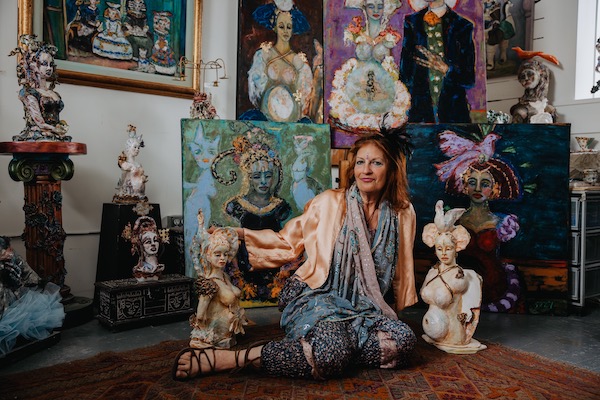
Suzy Birstein amid her work, some of which visitors to her studio will see during the East Side Culture Crawl. (photo by Britt Kwasney)

“I am most looking forward to healthily connecting with fellow artists and art lovers in real time, real space. Art is always more powerful in person,” artist Suzy Birstein told the Jewish Independent about the East Side Culture Crawl Visual Arts, Design & Craft Festival, which returns to its traditional format Nov. 17-20. Some 400+ artists will open their studios to the public.

“The sense of community, commitment, excitement, inspiration, appreciation – all that brought me to Parker Street [Studios] and East Side Culture Crawl originally is happening again,” she said. “It feels like a renaissance.”
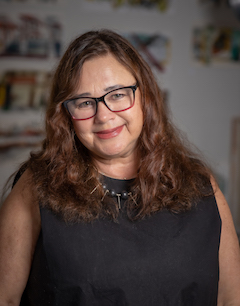
photo - Photographer Esther Rausenberg, artistic and executive director of the East Side Culture Crawl
Photographer Esther Rausenberg, artistic and executive director of the East Side Culture Crawl. (photo by Adam P.W. Smith)

“After the two-year pandemic rollercoaster ride, I am thrilled we are back to a ‘new normal,’” said Esther Rausenberg, artistic and executive director of the Crawl, as well as a participating artist. “I do say ‘new normal,’ as we don’t have a crystal ball and I can’t really speculate how this year’s Crawl will play out. Personally, I am excited to get out and see all of the new and amazing art that has been created and to catch up with the artists. It’s also a real pleasure for me to meet members of the public as they share their enthusiasm for the event, the art and the connections they will be making with the artists.”

Birstein (clay, painting, sculpture) and Rausenberg (photography, Georgia Art Studios) are only two of many Jewish community members who will open their creative space to the public over the four days of the festival, which also features gallery displays, and artist demonstrations and talks. Other community members include, from Parker Street Studios, Shevy Levy (painting), Olga Campbell (clay, mixed media, new media), Mia Weinberg (painting) and penny eisenberg (drawing, painting); from Eastside Atelier, Lauren Morris (mixed media, painting), Ideet Sharon (assemblage, mixed media, painting), Stacy Lederman (mixed media, painting) and Karly Leipsic (mixed media); and, from the Arc, Lynna Goldhar Smith (installation, painting). Overall, festival-goers can explore about 68 buildings and studios in the Eastside Arts District, the area bounded by Columbia Street, 1st Avenue, Victoria Drive and the waterfront.

“This year’s event has a distinctly celebratory tone,” said Levy. “It is a reunion for Vancouver’s established art community, a chance to reconnect, to have meaningful discussions around art, not just with artists, students and educators, but with those who display art, like galleries and art management, and everyone who is excited to work together again.”
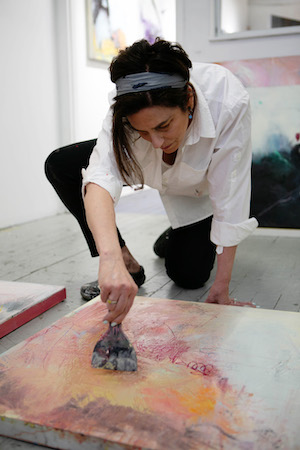
photo - During the pandemic restrictions, painter Shevy Levy started a new direction with her abstract work
During the pandemic restrictions, painter Shevy Levy started a new direction with her abstract work. (photo from Chutzpah!)

Thinking of the last couple of years, she noted, “What was fascinating about the immediate impact of COVID-19 was the sudden loss of collective connection – both human (face-to-face) and the collective understanding of what the future might bring…. When we were forced to isolate, I appreciated the introduction of art to the digital and virtual world, and how it helped the art world, in many aspects, to find new ways to connect with society. However, now I understand how much I, like so many of my colleagues, urgently need constant interactions with the community – 2022 Crawl is here to fill some gaps.”

Goldhar Smith – a multi-disciplinary artist who has spent more than 30 years in theatre performance with painting very much in the background – is excited about the chance to show her visual art to a lot of different people. “I especially love the opportunity to see their responses to the work and engage in lively conversation when it’s possible,” she said.
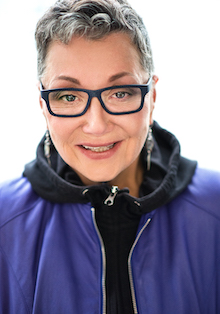
photo - Lynna Goldhar Smith
Lynna Goldhar Smith (photo from Chutzpah!)

Interested in integrating her visual art practice with her performance practice, Goldhar Smith said, “I have been building installations in my studio to that end and so, among my paintings and prints, visitors will see the beginnings of more conceptual ideas in some of the physical objects and paper sculptures in the studio.”

Whether abstract or figurative, Goldhar Smith seeks to express the intangible qualities of human experience in her work. “If I paint a landscape, it is as much an emotional or psychological landscape as a place,” she said. “Yet, at the same time, if I paint an urban crow or a heron, it is more an expression of honouring the urban wildlife, and reminding myself that I am in their domain. I hope that makes sense. Whatever I paint, I am like an improvisational actor, responding to the moment, with one brushstroke informing the next. The meaning emerges after the fact. It is not so much I make my art, as my art makes me.”

For Goldhar Smith, the pandemic was a dramatic reminder “that we need to behave more responsibly, more cohesively, with more compassion and care for each other – with more understanding of our connection to each other – and to view ourselves as part of nature and part of one planet all together. Yet, we are so divided. If there was ever a time for artists to get focused, this would be it.
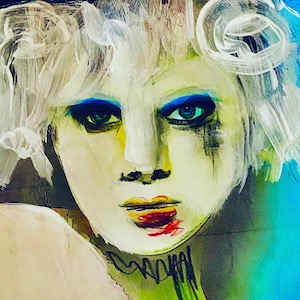
photo - “Gloria” by Lynna Goldhar Smith
“Gloria” by Lynna Goldhar Smith (image from Chutzpah!)

“Artists, and art, have the privilege and responsibility of their voices,” she continued. “We need to use our voices to contribute to the global change that is necessary. We need to speak up with courage and make brave art.

“We need to be endowed with the respect that what we do is of great importance and we need to be valued, supported and encouraged because artists bring meaning and perspective and also disruption and confrontation with the status quo. We need to see how our art fits, not so much into the art marketplace, but as a central driver of change that can address the pressing needs of our time.”

Levy expressed a similar view.

“So many artists, myself included, produce artwork with an outcome in mind, such as an exhibition or career step,” said Levy. “The challenges of the past few years forced me to take the time to reflect on my own art practice, taking it to the next level by exploring new avenues and fresh approaches. I had to remove and free myself from that outcome. I was able to experiment and create work that connects me better to the meaning of being a better human and better artist, as opposed to a ‘professional artist’ operating within the structures of a commercial art world.”

Birstein also used the pandemic period for self-reflection. “The enforced isolation of the pandemic,” she said, “gave me the gift of time: time to create, experiment, reflect, all day, every day. This is a first in my art practice and I was very productive.”

Birstein created two bodies of work for two solo exhibits in 2021 and 2022.

“Tsipora: A Place to Land was exhibited at the Zack Gallery,” she said. “Tsipora is my Hebrew name, meaning Bird. Pre-COVID, the bird symbolized a freedom of spirit while taking flight. With COVID, it was a time to nest, to find a place to land.

“Frida: When I Have Wings to Fly was exhibited at POMOArts. Frida is a continuation of my art historical portraits, Ladies-Not-Waiting, inspired by Velasquez’ masterpiece ‘Las Meninas.’ This series speaks to Frida Kahlo as a symbol of feminine strength and empowerment: a person who transcended tragedy and transformed it into beauty. My sculptures and paintings invite the viewer to converse in intertwined stories of myself, my mother, Frida and other historic figures that embody resourcefulness, resilience and beauty.

“Materially, both bodies of work involved much experimentation with structural techniques, surfacing with fired and cold materials, addition of repurposed objects.”

For Levy, the last couple of years allowed her to start a new direction with her abstract work. “Slowly, I developed large-scale canvases that were marked by bold and expressive brushstrokes,” she said. “I am excited to share with the public my new collection, A Portrait of a Flower. My work demonstrates the flowers as a source of lines, shapes, negative space, gesture, colour and value, or another source of abstraction.”

The pandemic period also gave Levy the chance to explore more remote art communities. “Pre-COVID,” she said, “I used to share and exhibit my art within my immediate community. In the last two-plus years, I had more time to develop my social media presence and expertise. As an outcome, 2021 was the best year ever of showing and selling my work.”

Birstein also pointed to the technological silver lining of COVID. “With the necessity of communicating virtually while globally isolated,” she said, “I see the world of art opening in terms of compassion, imagination, inclusion, respect – all of this so apparent at this year’s Venice Bienale, from which I have just returned.”

In addition to the open studios Nov. 17-20, the East Side Culture Crawl features a multi-venue, salon-style curated exhibition called NEXT, which “explores the after-effects of living through a pandemic as we long for and ponder about what’s next.” There are also several other events. For more information, visit culturecrawl.ca.
Format ImagePosted on November 11, 2022November 9, 2022Author Cynthia RamsayCategories Visual ArtsTags art, East Side Culture Crawl, Esther Rausenberg, Lynna Goldhar Smith, multimedia, painting, sculpture, Shevy Levy, Suzy Birstein
Reimagining together

Reimagining together

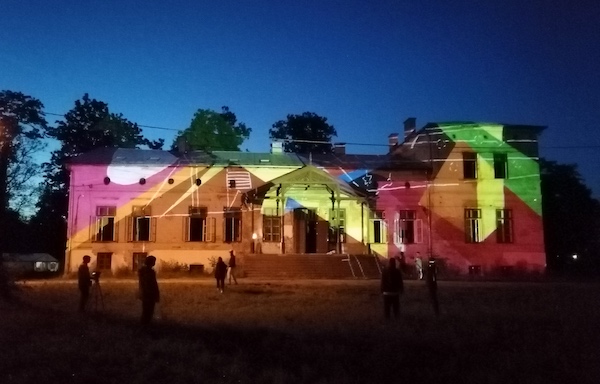
A scene from Site: Yizkor as it was performed in Sichów Duży, Poland, this past June. (photo from Chutzpah!)

Site: Yizkor is both an intensely personal work and a powerful, universally meaningful work. It is ever-changing and spans the past, present and future.

“For me, this project is a gesture of healing,” co-creator Maya Ciarrocchi told the Independent. “My goal for audiences and participants is that, through the process of shared commemoration, we may put aside our differences and look towards a reimagined future.”

Part of this year’s Chutzpah! Festival, Site: Yizkor is a collaboration between Canadian multimedia artist Ciarrocchi and American composer Andrew Conklin. It is an evolving “interdisciplinary project [that] explores the physical and emotional manifestation of loss through text, video and music.” It is an installation (of video, prints and drawings) and a performance, and includes workshops “where participants are invited to create their own Yizkor pages as a way to mourn and commemorate lost people and places.”

“Yizkor books are documents written by Holocaust survivors to commemorate the villages they lived in before the Second World War,” explained Ciarrocchi. “They capture the spirit of these places by describing the day-to-day life of their Jewish citizens. They include lists of the Jewish residents, the structure of political systems and where the best shopping could be found. They also include photographs and maps of the villages drawn from memory. They document a time and place that no longer exist but the traces of which are visible in the contemporary landscape.”

In introducing the project to workshop participants, Ciarrocchi said, “I tell them that, while Site: Yizkorexamines displacement through the lens of Yizkor, which is an inherently Jewish framework, the project is not limited to the Jewish experience. Site: Yizkor is centred on creating a space for shared commemoration and the universal experience of loss.”

photo - Maya Ciarrocchi
Maya Ciarrocchi (photo © Joanna Eldredge Morrissey)

For the local presentation, Conklin works with a local string quartet for the performance, while Ciarrocchi creates “video projections for the performance that include references to the known and erased histories of Vancouver,” and installs the exhibit in the gallery. She leads the workshops, which include both Jewish and non-Jewish community groups, and participants “are invited to read their text as part of the performances or share them as written documents or drawings as part of the exhibition.”

Site: Yizkor has been presented in New York City and in San Francisco. In June of this year, it was presented in Poland, from where Ciarrocchi’s maternal grandfather immigrated to Canada; Ciarrocchi was born in Winnipeg.

The project began in 2018, when Ciarrocchi was a fellow in the Laboratory for Jewish Culture program in New York City. “At the time,” she said, “I was working on a series of drawings depicting former Polish and Lithuanian wooden synagogues layered with memory maps sourced from Yizkor books. As part of the project, I gave a performance lecture where I read passages from Yizkor books, accompanied by projections of my drawings, maps and photographs from Yizkor books. I concluded the performance by prompting the audience to ‘describe a vanished place of personal importance.’ I collected these texts, and they were incorporated into future performances.”

photo - Andrew Conklin
Andrew Conklin (photo from Chutzpah!)

She met Conklin around when she was in residency at Millay Arts in upstate New York. “He expressed interest in using my drawings of maps as a musical score,” she said. “We then started working on a sound/video project comprising his compositions and my animated maps and drawings.”

In 2019, Ciarrocchi was invited to attend an international meeting of interdisciplinary artists in Poland.

“The group gathered in Sichów Duży, a rural area not far from Staszów, a small town that was once an important centre of Jewish life,” said Ciarrocchi. “The site once belonged to an aristocratic family who lost their lands and titles during the Second World War. The buildings had been restored except for one and, one evening, I projected the video on its surface and played Andrew’s music from speakers inside. It was then I knew that I needed to return to this place and present the work live with musicians inside the structure. In June 2022, after three years, a pandemic and a war, I returned to Sichów with a team of musicians from the U.S., Germany and Poland. We presented Site: Yizkor inside the ruin to an audience comprised of Ukrainian refugees who were being housed on the site. The following week, we presented Site: Yizkor in another ruined manor home outside of Kraków. That iteration included dancers as well as musicians.”

It was an emotional experience.

“Gratitude and relief,” said Ciarrocchi about what she felt afterward. “Gratitude to Andrew and the incredible team of performers we assembled and to the funders who supported the work. Relief after all the planning and delays that we were finally able to bring the work to Poland. It was also exciting to see the project come together so beautifully. In many ways, my first research trip in 2019 was where I felt all the sadness and grief. This year, I was too busy to let myself go into the dark crevasses of my emotions. In 2019, though, I spent most of the three weeks I was there crying. I visited my grandmother’s shtetl, which was incredibly powerful. While sitting on the ground in the old Jewish cemetery there, I released all my grief. Poland is filled with ghosts. One does not help but feel their presence.”

It is in this context that the question asking workshop participants to “describe their dreams of the future” was added to the project.

“I added this part of the prompt in Poland,” said Ciarrocchi. “I realized that, understandably, so much of the Jewish experience there is about memory and the past. I’m two generations removed from the Holocaust and, while its effects are written into the code of my body, I am also interested in how we create something new from the residue of this loss. This also comes from these past years of the pandemic, when there has been such a huge loss of life. We’ve had to reimagine how we live now and in the future.”

The performance and exhibition of Site: Yizkor in Vancouver is the Canadian première of the work.

For a recent grant proposal, Ciarrocchi wrote about the première, “This event will also be a coming home. Site: Yizkor is rooted in research into the land and architecture of a place in relation to the known and mythological histories of my ancestors who fled Poland and Lithuania before the Second World War. My ancestors emigrated to Canada to form a new life for themselves and their descendants. On the surface, their story is one of success. My great-grandfather was a seminal figure in Winnipeg’s garment industry, and my family still benefits from his accomplishments. This story belies how the effects of trauma and displacement have persisted from their origins in Eastern Europe so many decades ago. Forming cross-cultural connections through Site: Yizkor’s performance and workshop model, first in Poland and now in Canada, irrigates ancient inherited wounds.”

Site: Yizkor is co-presented with the Zack Gallery and in partnership with the Vancouver Holocaust Education Centre, with the support of the Jewish Community Foundation. The performance takes place Nov. 19, 8 p.m., at the Rothstein Theatre, and it will livestreamed and available on demand; it will include a facilitated talkback and a reception with the artists. The exhibition and workshops take place Nov. 12-19 in the gallery. For tickets and more information, visit chutzpahfestival.com.

Format ImagePosted on November 11, 2022November 9, 2022Author Cynthia RamsayCategories Music, Performing ArtsTags Andrew Conklin, Chutzpah!, Holocaust, Maya Ciarrocchi, memorial, Poland, Yizkor

Concerning elections

On Remembrance Day, we reflect on the sacrifices made by Canadians who fought to defend freedom. Many of us recall the solemnity of our childhoods standing in a school auditorium, first beginning to understand the meaning behind the poem “In Flanders Fields” and the moment of silence.

Similar ceremonies occur worldwide, including in places where the loss of life in wars has been far greater and more recent than our nation’s experience.

At the same time, it is impossible not to reflect on how some of the messages of tolerance, coexistence and peace seem to have been lost on leaders of various countries – as well as those who vote for them.

Across Europe, the Americas and some other places, extremism is growing. Far-right governments in Italy, Poland and Hungary advance xenophobic and scapegoating policies. While not yet reaching the highest echelons of power, far-right groups in Germany and France are growing in popularity. The defeat of Jair Bolsonaro, Brazil’s extreme-right and volatile president, is a bright spot, though the leftist Luiz Inácio Lula da Silva, who beat him only by a hair, demonstrated in his previous term as president that he is also no archetype of impeccable governance.

Enormously alarming were this week’s midterm elections in the United States. More than half of the Republican candidates for Congress and state offices, including crucial officials who oversee election processes, are “election deniers” who claim that the 2020 presidential race was not rightfully won by Joe Biden. The refusal of the former president to acknowledge defeat and accede to the peaceful transition of power, hand-in-hand with the insurrection at the Capitol on Jan. 6, 2021, represent the greatest threat to American democracy since that country’s Civil War. The last two years have shown how fragile this form of governance is and how dependent it is on the goodwill of its participants to abide by the rules and accept the will of the people. The fact that about half of American voters don’t seem the least bit bothered by this reality is the scariest part.

Then, and by no means least, are the results of Israel’s most recent national elections. The good news is that, after five elections in three years, the country will apparently have a stable coalition government. The bad news is that it will include individuals whose political and moral values should be scorned by people who support democracy, pluralism and respect. Itamar Ben-Gvir, leader of the third-largest bloc, was forbidden from serving in the Israel Defence Forces because military leaders deemed him too extreme. Until he decided to get serious about politics, Ben-Gvir had a framed photo in his home of Baruch Goldstein, the extremist who murdered 29 Palestinians in Hebron’s Cave of the Patriarchs in 1994. His policies include annexing the West Bank and forcibly expelling (at least some of) its residents, an idea that is, put mildly, against international law, and would almost certainly lead to a serious regional conflagration.

Israelis must deal with the situation they have created. Diaspora Jews and other supporters of Israel have a tough row to hoe as well.

Jewish organizations worldwide have issued unprecedented statements of concern and condemnation about internal Israeli affairs. There has always been tension, ranging from a low simmer to a full boil, between Israel and the Diaspora over a vast range of issues. Israelis, we must state, are the ones who put their lives, and those of their children, on the line to defend the Jewish state and they alone have the right to determine its direction. This does not mean, however, that the opinions and concerns of overseas family and allies do not matter.

Israel has always lacked dependable overseas allies. In far too many instances, this has been an unfair situation driven by geopolitical issues and, to an extent, bigotry and antisemitism. But Israel is not entirely blameless in its isolation. Decades ago, Golda Meir said, “I prefer to stay alive and be criticized than be sympathized.” Sometimes, Israel needs to make unpopular choices in the interest of its security.

There are moments when Israel’s hand has been forced, when its leaders have made choices that are unpopular among outside observers but deemed necessary for national security. This is not one of those moments. Israeli voters have chosen some extremely unsavoury people to represent them. They have sown the wind. It is the responsibility of decent people in Israel and abroad – including Jewish institutions – to advocate for tolerance and human rights in order to moderate the inevitable storm.

Posted on November 11, 2022November 9, 2022Author The Editorial BoardCategories From the JITags democracy, elections, Europe, extremism, far-left, far-right, Israel, politics, populism, United States

New learning, old discoveries

On Sundays, we work together as a family to clean the house. We’ve just moved to an historic home that is in the midst of renovations. We aren’t fixing the house to create new modern luxury, but rather so that all the plumbing works and nothing freezes in the wintertime. We’re excited about creating updated versions of what this house might have looked like when it was built in 1913 – with necessary improvements like removing knob and tube wiring and asbestos, as well as insulating and fixing pipes.

A friend was excited about the house’s historic details. She said her husband wouldn’t consider moving to an older home because of ghosts. While I won’t belittle anyone, I’m not particularly worried about ghosts in old houses. Instead, I love knowing that people lived, died, gave birth and had many important, regular and extraordinary life events, both happy and sad, inside these same walls. Imagining past inhabitants who washed their faces at the sink, ate meals in the dining room or celebrated birthdays with loved ones, just as we do, gives me great joy.

Like any house, ours has its creaks and groans. It’s perhaps worse than usual because we’re new here. We haven’t yet effectively bled the radiators. Maybe we don’t always properly close a storm window. This morning I heard sounds, but I suspect there’s a squirrel in the attic. Even this annoying intruder reminds me that our family’s not the first one here. Hopefully, not the last either, although I hope we can get the squirrel to leave first!

When I think about Jewish tradition, it’s a lot like this opportunity to inhabit an old house. Judaism is old, but as each of us “moves in” to our identity or tradition and makes a place for ourselves, both the tradition and the people grow and change. Jewish practice isn’t exactly the same as it was 2,000 years ago, no matter how much some people would like it to be. Similarly, when we’re done fixing up our old house, it will be different, functional for today, and perhaps even better than when we got here. The same, but different, and that’s OK.

I reflected on this when we hit this Jewish month of Heshvan, sometimes called by its older name, likely connected to Akkadian, Marheshvan. In English, this could be translated to “Bitter Heshvan.” As time passed, language changed. With the connections to other ancient languages forgotten, the rabbis called this month “bitter” because, in their understanding, it didn’t contain any big holidays. To some, this might be a relief after the fall High Holidays and, to others, it’s a weird thing to say. Shabbat still happens every week and that’s important, too. There’s even a little-observed Ashkenazi tradition, the Fast of Behav, which I just learned about while writing this column, and it happens during Heshvan.

This learning process is one of those chances where I realized Judaism can grow and change just as we do with our old house. A year ago, I wrote about Heshvan as the time when I would begin to learn to chant Torah – and, yes, while I still have a long way to go, I learned to do that well enough to read Torah twice.

This year, I realized that, actually, Heshvan isn’t mar or bitter due to a lack of holidays because Sigd is on the 29th of Heshvan. As of 2008, Sigd is an official holiday in Israel. It’s a Beta Israel (Ethiopian Jewish) holiday, 50 days after Yom Kippur, and it celebrates the acceptance of Torah. Today, it’s celebrated by fasting, reciting psalms and gathering in Jerusalem to hear the Kessim (priests, like the Kohanim) read the Orit (the Octateuch, or eight biblical books: the five books of the Torah, plus the books of Joshua, Judges and Ruth). Then, when the ritual ends, it’s time to break the fast, dance and celebrate.

I learned this from Wikipedia and other sources online. I haven’t experienced this in Israel or met Jews who celebrate the holiday. However, that doesn’t mean the holiday doesn’t exist! Our tradition has multiple ways to celebrate and observe. For instance, many Jewish organizations take two days off for some holidays, even though only part of the Jewish community observes for two days. Many Jews don’t observe minor fast days, such as the Fast of Behav, which I just heard of today.

How do Heshvan and Sigd relate to living in an old house? Living in old houses has offered me so many ways to learn the social histories of our ancestors. Discovering the plumbing of a bedroom sink, long removed, or a window that was blocked off during a renovation helps me see not only how the original owners of the house used it, but also how subsequent families and businesses chose to reinvent their living spaces. While we can’t understand everything about their lives, we find reminders of the past that can inform us now.

In my house, the contractors recently removed the quarter-sawn oak flooring of a room to deal with the water damage from a long-ago flood. We found a 1925 penny on the subfloor. Perhaps it fell out of the pocket of the house’s first owner, a doctor, as he undressed, or a worker lost it during a renovation. That penny was produced nearly 100 years ago, but 12 years after the house was built. Sometime later, it fell between the boards.

We’re often so immersed in our rituals, as family members, congregants or people in a particular ethnic or national group, that we miss out on other ways to enrich our knowledge and traditions. If we look beyond the easy, and later, interpretation of the word Marheshvan and consider its Akkadian roots, or the diverse holidays that in fact do happen this time of year, we can turn around this bitter message.

Wishing you a happy Heshvan, full of both new learning and old discoveries.

Joanne Seiff has written regularly for CBC Manitoba and various Jewish publications. She is the author of three books, including From the Outside In: Jewish Post Columns 2015-2016, a collection of essays available for digital download or as a paperback from Amazon. Check her out on Instagram @yrnspinner or at joanneseiff.blogspot.com.

Posted on November 11, 2022November 9, 2022Author Joanne SeiffCategories Op-EdTags Heshvan, Judaism, lifestyle, Sigd
Building community bridges – memorial for genocide of Lithuanian Jews

Building community bridges – memorial for genocide of Lithuanian Jews

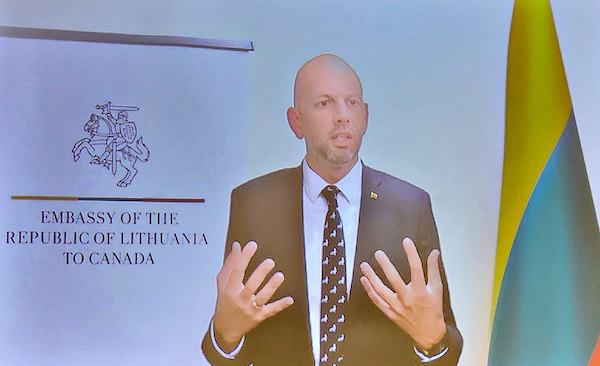
Lithuania’s ambassador to Canada, Darius Skusevičius, greets participants in pre-recorded video. (photo from Lithuanian Community of BC)

As a young teen growing up in Vancouver in the 1960s, I used to be puzzled by Remembrance Day. We were given red poppies at school to honour the soldiers who served Canada during the First and Second World Wars. But I knew my parents had also experienced war, and their families – my grandmothers, aunts, uncles, cousins, even my half-brother and stepsister – had been horribly murdered. Why were there no red poppies for them and the six million others who had died in the Holocaust? Where were their memorial parades, their wreaths?

In Vancouver’s Peretz School, which I attended a couple of afternoons a week to learn about Jewish culture, we commemorated Yom Hashoah, which was established by the Israeli government in 1959. Our commemoration was a small event, important to staff, students and families, but ignored by Canadian society in general. It was not until 2005, when the United Nations General Assembly established Jan. 27 as International Holocaust Remembrance Day, that non-Jews as well as Jews began to join in collective memorialization – or so I thought until quite recently.

In 1994, the Lithuanian Parliament established Sept. 23 as National Memorial Day for the Genocide of Lithuanian Jews. Every Sept. 23, the anniversary of the liquidation of the Vilna (Vilnius) Ghetto, commemorative activities are held at Lithuanian memorial sites, in schools and in other educational institutions. Government institutions, with the support and involvement of local Jewish communities and survivors’ groups, shape the content of these activities, and Jewish and non-Jewish Lithuanians regularly participate in them.

A few years ago, I joined the Lithuanian Community of British Columbia (LCBC), where I currently serve on the board of directors. This year, on Sept. 22, with the support of the Vancouver Holocaust Education Centre (VHEC) and generous volunteers from Lithuanian and Jewish communities, LCBC and its partners, National Memorial Day for the Genocide of Lithuanian Jews was commemorated. The event, which took place at the Peretz Centre for Secular Jewish Culture in Vancouver, was held for the first time in Canada.

Participants were welcomed by Algis Jaugelis, president of the LCBC, followed by opening remarks by Nina Krieger, the executive director of the VHEC. The ambassador of Lithuania to Canada, Darius Skusevičius, kindly provided a recorded welcome to the event, followed by a written statement from Christopher Juras, the honorary consul of Lithuania in Vancouver.

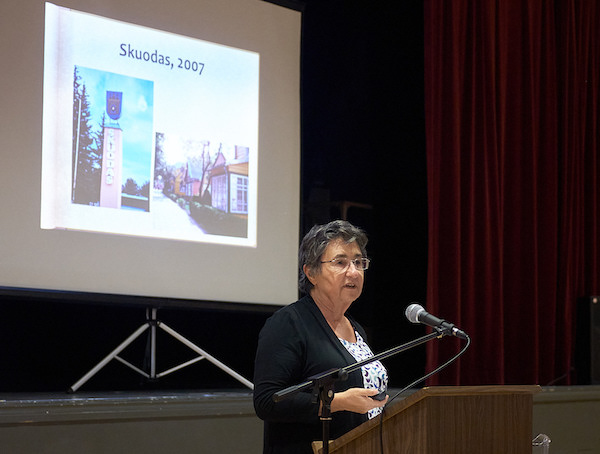
LCBC member and historian Dr. Gene Homel presented an overview of Jewish life in Lithuania from the 1300s to the present day. I gave an illustrated presentation on the Jewish community in my father’s ancestral town in Lithuania, using photos and information found in my research.

photo - Rachel Mines characterizes the lives of the Jewish residents of Skuodas, Lithuania
Rachel Mines characterizes the lives of the Jewish residents of Skuodas, Lithuania. (photo from Lithuanian Community of BC)

Helen Mintz, a Yiddish translator, read a selection from one of her translations of Abraham Karpinowitz’s short stories. Karpinowitz, the son of a theatrical family in Vilna, survived the Holocaust and later wrote several volumes of stories memorializing prewar Jewish life in Vilna.

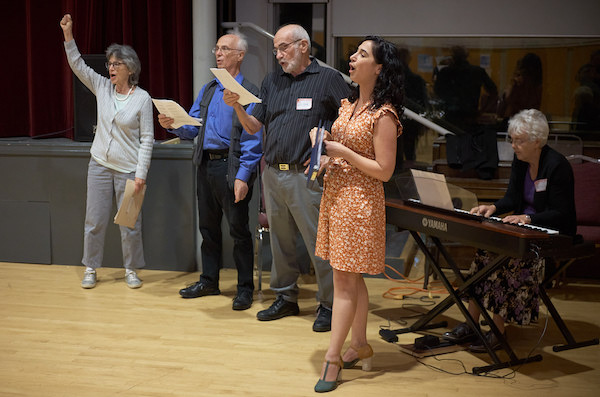
The ceremony ended with the singing of the “Partisans’ Song” / “Zog Nit Keynmol,” written by Hirsh Glick in the Vilna Ghetto, which was followed by a recording of Glick’s words translated into Lithuanian and read by high school student Giedrius Galvanauskas under the auspices of Eli Rabinowitz’s We Are Here! international educational project.

photo - The ceremony ended with the singing of “Zog Nit Keynmol.” Left to right are Celia Brauer, Alan LeFevre, Victor Neuman and Kathryn Palmer. At the piano is Cathrine Conings
The ceremony ended with the singing of “Zog Nit Keynmol.” Left to right are Celia Brauer, Alan LeFevre, Victor Neuman and Kathryn Palmer. At the piano is Cathrine Conings. (photo from Lithuanian Community of BC)

Lithuanian and non-Lithuanian participants found the remembrance ceremony both educational and emotional, and emphasized the importance of dialogue and reconciliation. According to Jaugelis, it was “an important and moving event, an opening of doors and minds, with great potential for future intercultural and bridge-building events.” Andrea Berneckas, another LCBC director, wrote, “It was such a privilege to be part of this solemn, yet beautiful and hopeful event. I look forward to being part of the Lithuanian community’s strengthening of ties by the sharing of stories and experiences.”

“I look forward to more opportunities to bring the communities together,” said Krieger. And Celia Brauer, a local Yiddishist whose parents survived the Holocaust in Latvia and Poland, summed up the general feeling: “We are far away from the original homeland, yet this event brought people closer together – which is incredibly important.”

National Memorial Day for the Genocide of Lithuanian Jews is now on LCBC’s yearly calendar of events and the next memorial will take place in September 2023.

More information about the Lithuanian Community of British Columbia can be found at lithuaniansofbc.com.

Rachel Mines, the daughter of Holocaust survivors, was born and raised in Vancouver. As a child, she attended classes at the Peretz School (now the Peretz Centre for Secular Jewish Culture) and served on Peretz’s board of directors 2015-2016. Mines, whose Lithuanian citizenship was reinstated in 2022, now serves on the board of directors of the Lithuanian Community of British Columbia.

Format ImagePosted on November 11, 2022November 9, 2022Author Rachel MinesCategories LocalTags Canada, education, Holocaust, LCBC, Lithuania, memorial, Vancouver Holocaust Education Centre, VHEC

Still waiting for knee surgery

I am not known for my patience. And I’ve been preparing for my long-awaited knee replacement surgery for nearly three years.

I’ve acquired all the necessary post-surgical equipment: expensive ice and compression machine, bath transfer bench, walker, crutches, cane, toilet riser, reacher, long-handled shoehorn, high density cushion, a chair with arms. I attended all the prehab and pre-surgery webinars, got my SPARC parking pass, watched all the recommended surgical and how-to videos (several times each), made a list of what to bring to the hospital and rescheduled a host of medical appointments and personal commitments. I even arranged to “foster” some of my furniture out to friends to clear the way for my anticipated post-surgical walker/crutches. I had meetings with the surgeon, pre-admission nurses, anesthesiologist, physiotherapists and an occupational therapist. I was more prepared for my surgery than Eisenhower was for D-Day. I repeat, I am not a patient woman.

Staff at Oasis (Osteoarthritis Service Integration System) and ASAP (Arthritis Surgical Assessment Program) are my new BFFs. They told me about assistlist.ca, a website that lists used medical equipment for sale. I learned that the Red Cross Health Equipment Loan program has become stricter about who it lends to. It used to be that everyone got their equipment there. Since COVID, anyone who wants to borrow from there has to sign a waiver explicitly disclosing their need for assistance. Luckily, I don’t need their services.

I’m armed with more resources than I know what to do with, so it just makes sense to share them. There are lots of medical supply stores, but the ones who have the greatest variety are Lancaster Medical on West Broadway and Macdonald’s Prescriptions (in the Fairmont building). Best place to buy high-density cushions (and any kind of foam) is Discount Foam on Fraser Street near 33rd. Need an ice/compression machine? Go to the source: ProCare Medical Inc. Just FYI, the Polar Care Wave machine combines the ice therapy and the compression that targets not only swelling but also pain. Apparently, it’s a must-have for knee replacement surgery.

If you have an extended medical plan, check to see what they cover, because this equipment can be expensive. Also check if they cover a private or semi-private hospital room. And don’t forget to get a doctor’s note indicating that you need this equipment for a knee or hip replacement, and include this with your extended health claim. My health carrier insisted that I buy from an actual medical supply store (not, say, Facebook Marketplace) and that the receipt indicate the source, and that my name be on the receipt. You might want to buy your equipment secondhand to save some money, but just remember that your extended health won’t cover it.

I learned that a high-density cushion, which I’ll need post-surgery, is not a benefit covered by my health plan. I also learned that, after knee replacement, all seating must be two inches higher than the top of my knee. That includes the toilet, the bed, all chairs and couches, and the car seat. Seriously, the logistics of preparing one’s home (and car) before surgery seem never-ending. Like making sure that everything you need on a daily basis is within counter-height reach. No squatting to get toilet paper out from under the sink – unless you have a reacher. No going to restaurants without your high-density cushion. No bending over to put on your socks. The list goes on. And on.

To say that I was ready for surgery would be this century’s understatement. Then I got COVID.

Don’t ask me how. It’s one of the world’s great mysteries. I am vaccinated five times. After intense speculation, the only culprits I can point to are either the physiotherapist appointment I had (both of us wearing KN-95 masks) or an elevator (me masked, of course).

It was a Friday morning and I just thought my allergies were acting up. Or maybe I’d been mouth-breathing at night – slight sore throat, stuffy nose, tired, a bit of a dry cough and a headache. Minor stuff. Until I did a COVID rapid home test. I tested positive. I immediately called the urgent care clinic and got a PCR test, phoned my gastroenterologist and proactively got a prescription for the antiviral medication Paxlovid, and waited. Less than 24 hours later, when positivity was confirmed, I started on the medication and was better in five days. My surgery was scheduled for four weeks later – and this was a problem, as I will explain.

I want to make one thing clear. I do not blame my orthopedic surgeon or the anesthesiologist for my knee replacement surgery being postponed three times. I do blame COVID. I do blame miscommunication. And I definitely blame an over-burdened healthcare system. Primarily, the latter.

My husband and I have been crazy cautious and isolating like nobody’s business during the pandemic. The wild card is that I’m immunocompromised, so I’m at higher risk for any kind of infection. But nobody has been more careful than us. In fact, I’m pretty sure I spent more money on KN-95 facemasks, latex gloves and hand sanitizer in the past two-and-a-half years than I have on clothing. By a long shot. Until this point, we went nowhere, saw no one and did nothing. But, as COVID eased up a bit during the summer, so did we. But incrementally. Literally by centimetres. I met a few friends for dinner outside. We traveled to Victoria for four days. Wild and crazy stuff by all accounts.

Having just been told for the third time that my surgery would be postponed, I was devastated. It had to do with a seven-week waiting period post-COVID before getting an anesthetic or surgery, because of the risk of blood clots and pneumonia. Immunocompromised … blah, blah, blah.

All this is to say that I should have listened to a wise woman long ago, who advised that I “get comfortable with uncertainty.” Umm, OK. How exactly do I do that? Apparently, you breathe. And wait. And breathe. And practise mindful meditation. Maybe get a little anxious. Breathe some more. Meditate. Eat. Maybe get a bit more anxious. Breathe. Wait some more. I’m now an expert breather.

The only thing that helps me is holding firm to my belief that nothing happens by accident. Everything happens for a reason. Usually one to which I am not privy. But still. Enter faith and trust – stage right, stage left, stage centre. That’s really my only life raft. Luckily, it’s sturdy and solid and mine for the taking. Anytime, anywhere. Now that’s what I need to practise. Oh yeah, and breathing. Meanwhile, I’ll continue cooking and eating. Stay tuned.

Shelley Civkin, aka the Accidental Balabusta, is a happily retired librarian and communications officer. For 17 years, she wrote a weekly book review column for the Richmond Review. She’s currently a freelance writer and volunteer.

Posted on November 11, 2022November 17, 2022Author Shelley CivkinCategories LifeTags Accidental Balabusta, health, knee replacement, medical system, surgery, waiting lists
RJDS’s new early ed program

RJDS’s new early ed program

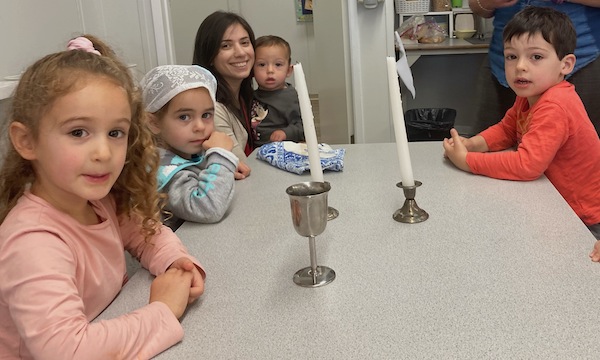
Richmond Jewish Day School preschool children gather for Shabbat celebration, with Sara Solomon assisting. (photo from RJDS)

Sara Solomon, Richmond Jewish Day School’s new program director for early education, knows firsthand the importance of a community-centred Jewish day school. She can remember making the daily half-hour bus ride each way from Richmond to Vancouver to attend the nearest Jewish elementary school. It wasn’t until 1992, when RJDS opened its doors, that she could attend school closer to home. But it isn’t sentimentality that has drawn her back to RJDS. It is the school’s novel and forward approach to teaching elementary education.

“[RJDS’s] family-centred culture of the school and the progressive approach to education … aligned with my own values,” said Solomon, who graduated from Langara College in 2010 with a diploma in early childhood education and a certificate in special needs. She said the school’s focus on innovative teaching methods for individualized education aligns with her own practice of “emergent curriculum” – a teaching method that supports the belief that children excel when they are permitted to learn at their own speed and according to their own strengths, interests and abilities – was a deciding factor when it came to applying for the position.

RJDS offers two preschool programs: Gan Alef, for infants and toddlers (0-3 years old) and Gan Bet, for children ages 3-5. For both, the school employs what RJDS principal Sabrina Bhojani refers to as a “constructivist play-based approach” to education. Instead of using teacher-led lessons and activities, educators use curiosity and inspiration to nurture the child’s development. “This provides opportunities, experiences and materials that are responsive to children’s interests and passions,” said Bhojani.

photo - Richmond Jewish Day School principal Sabrina Bhojani
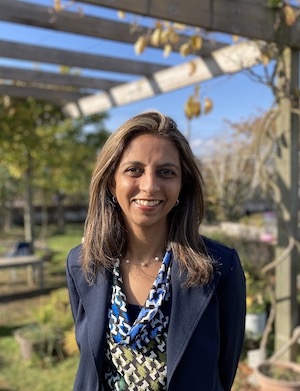
Richmond Jewish Day School principal Sabrina Bhojani. (photo from RJDS)

Although the children are usually in group settings, individuality of expression is encouraged. “We also weave Judaic concepts and history through storytelling; language and traditions are experienced through holiday celebrations and Hebrew songs,” Bhojani explained.

“We try to incorporate [the curriculum] in as natural a way as possible without it seeming like we’re inputting information,” Solomon added. The curriculum often uses Jewish holidays to inspire exploration of colours, themes and Hebrew words. “For Sukkot, [we had] a picture of a sukkah and there was a discussion about what the sukkah is, how it’s used,” she said by way of example.

The school also had a small sukkah outside that the students could visit. “The younger children were given some natural materials the teachers collected from outside,” along with some paints. “The older group were given the leaves or needles from an evergreen tree for the roof, some popsicle sticks and a few other things. There was no expectation for it to look like a sukkah,” Solomon explained, noting that the kids weren’t given specific exercises or told to decorate the structure. But the materials were provided for creative expression and exploration that eventually led to decorating the sukkah.

Bhojani said the new RJDS-run early education centre was created to overcome several challenges facing the Richmond Jewish community. The first was to expand access to early childhood education, an urgent need that is being felt throughout the Metro Vancouver area and beyond.

According to Bhojani, infant-toddler spaces are in high demand across British Columbia. “In the last few years, the number of childcare spaces has simply not been enough to meet the needs of families. This has been a province-wide issue, but it has been far worse for families in Richmond, particularly those families seeking a place they could be assured that their Jewish children could express themselves in an authentic manner.” At the moment, she said, “RJDS Early Learning Centre is the only Jewish child care in the Lower Mainland that accepts child under 18 months old.”

The new centre will support continuity of education for children throughout the elementary school experience.

photo - Sara Solomon when she was in sixth grade at RJDS. Solomon was one of the school’s first graduates
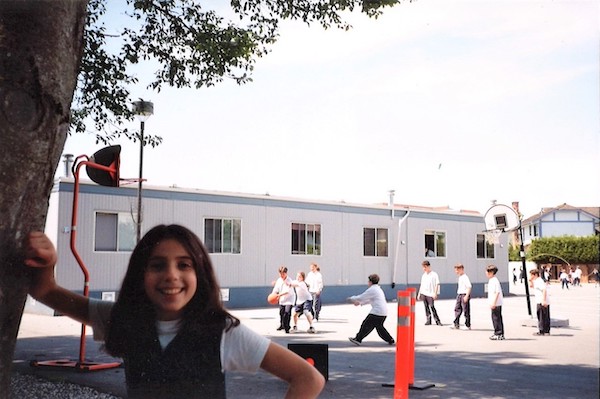
Sara Solomon when she was in sixth grade at RJDS. Solomon was one of the school’s first graduates. (photo from Sara Solomon)

Bhojani said the previous preschool was run by an independent contractor that rented space from RJDS, but its curriculum wasn’t synchronized with what was being taught in the upper grades. “[Being] that it was a third-party organization, we had no authority or oversight in the daycare’s programming,” she said. With the demand for childcare spaces, the former preschool also wasn’t able to guarantee availability for families that wanted to enrol all of their children at RJDS for preschool through Grade 7 attendance.

“We realized quickly we needed our own licensed facility,” and one that fit with the new lesson plans, Bhojani said. “Soon after, we made a commitment to building our own learning centre in order to be able to better serve our community.” That included renovating parts of the school.

The improvements were paid for by two local grants, one of which was specifically tailored to increasing the number of childcare spaces in British Columbia. The B.C. New Spaces fund, offered through the provincial government, helped cover the cost of structural renovations in the preschool area.

The second grant came from the Jewish Community Foundation, which provides unrestricted grants for a wide variety of community needs. While the school did not disclose the amounts they received from each grant, Solomon said the two grants allowed them to make targeted upgrades in time for the 2022/23 school year.

“So far, we have been able to repaint the building, put in all new flooring, upgrade the lighting, and the next steps are going to be some plumbing upgrades,” Solomon said.

The school will still have some further additions to make, such as a new washer and dryer, a sink in one of the classrooms and some improvements in the outdoor play space. Solomon said she is hoping the school will be able to develop an engaging play area, where classes can be held outdoors, too. “We have the most beautiful property here,” she said. “We are on farmland and we are really hoping that we can incorporate that into our outdoor play space.”

Bhojani said the school’s new early education program director comes with the life experience and drive that will help make the new preschool a real success. “As an original RJDS graduate, current school parent and former board member, Sara Solomon has an unparalleled dedication and commitment to our school,” said Bhojani. “She, along with a highly qualified and experienced staff, in the short time that we have been open, have created beautiful spaces in which children feel nurtured and loved.”

Jan Lee is an award-winning editorial writer whose articles and op-eds have been published in B’nai B’rith Magazine, Voices of Conservative and Masorti Judaism and Baltimore Jewish Times, as well as a number of business, environmental and travel publications. Her blog can be found at multiculturaljew.polestarpassages.com.

Format ImagePosted on November 11, 2022November 23, 2022Author Jan LeeCategories LocalTags children, early education, education, preschool, RJDS, Sabrina Bhojani, Sara Solomon
Petitioning for change

Petitioning for change

Richmond educator Alisa Magnan is petitioning Richmond city council to create, adopt and publish a truth and reconciliation policy. (photo from Alisa Magnan)

On Sept. 30, the National Day for Truth and Reconciliation, Richmond educator and Jewish community member Alisa Magnan hoped to attend a commemoration event in her home city – but couldn’t find one. Instead, she went into Vancouver for a special naming ceremony, where Trutch Street was renamed Musqueam View Street.

“[Former] Vancouver Mayor Kennedy Stewart spoke about being a settler himself, and about wanting to do more for reconciliation,” she recalled. “On the City of Vancouver’s website, they have a whole policy and framework for reconciliation, but the City of Richmond’s website has nothing, and even their history starts with settlers in 1860. There’s almost no mention of Musqueam except that they came to Richmond to work in the cannery!”

Magnan, a teacher at Spul’u’kwuks Elementary in Richmond for the past 10 years, initiated a petition with her co-worker, Katherine Myers, that she plans to present at a Richmond city council meeting on Nov. 21. The petition requests that Richmond city council adopt a truth and reconciliation policy that includes signage around historically significant places like the midden at Spul’u’kwuks Elementary, a commemorative event in the city for the annual National Day for Truth and Reconciliation, and a policy on the city’s website that shows what Richmond is doing.

Last month, Magnan attended the all-candidates meeting in Steveston, where she asked Richmond Mayor Malcolm Brodie what he did on the National Day for Truth and Reconciliation. She said Brodie’s response was that he had worked on his campaign.

Magnan also reached out to Richmond city councilor Carol Day to ask why there was no land acknowledgment made prior to council meetings. Day responded that the city is in litigation with both the Cowichan and Musqueam First Nations and that, until it has been resolved, making the land declaration would compromise the city’s legal position. Particularly with the litigation with the Cowichan tribe, Day wrote, “it’s very, very serious, affecting private land that regular people own, land owned by the Port of Vancouver and city-owned land. The court case is groundbreaking and, if the Cowichan win, it will set a precedent for the entire country.”

The Richmond School Board has been very proactive on truth and reconciliation, said Magnan, doing land acknowledgment and scheduling professional development days where educators learn about truth and reconciliation and pass that onto their students. “Our kids are learning about this but not their parents,” she noted. “One parent commented that there was so much negative being taught about the residential schools. ‘Aren’t there any positives?’ the parent wondered.

“In order for Indigenous voices to be heard, you have to know what they’re going through. People need to be educated without having to go searching for it,” Magnan said. “Our goal for the petition is to encourage the City of Richmond to create a truth and reconciliation policy that’s public, so we can see what’s being done, or at least to show they’re working towards it. We want to be proud of what Richmond’s doing, not embarrassed that there’s no ceremony on the National Day for Truth and Reconciliation.”

To sign the petition, go to change.org/t-r-policy.

Lauren Kramer, an award-winning writer and editor, lives in Richmond. To read her work online, visit laurenkramer.net.

Format ImagePosted on November 11, 2022November 9, 2022Author Lauren KramerCategories LocalTags Alisa Magnan, petition, Richmond, truth and reconciliation
New cantor welcomed

New cantor welcomed

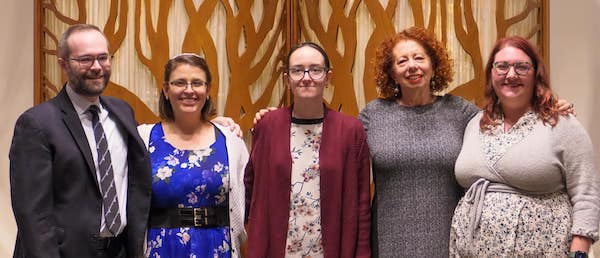
Left to right: Cantor Josh Breitzer, Cantor Shani Cohen, Rabbi Kylynn Cohen, Prof. Joyce Rosenzweig and Cantor Lianna Mendelson at Shani Cohen’s installation as cantor at Temple Sholom the weekend of Oct. 28-29. (photo from facebook.com/templesholom.ca)

Temple Sholom officially installed Cantor Shani Cohen, the first ordained cantor to serve the congregation, on the Oct. 28-29 Shabbat weekend, with services and music throughout to mark the occasion.

Always passionate about music and Judaism, Cohen found a path that combined her interests – and talents – while studying for a master’s of music in vocal performance and pedagogy at the University of Houston in the mid-2010s. There, she started working for Congregation Shma Koleinu.

“Rabbi Scott Hausman-Weiss saw something in me, and invited me to lead High Holy Day services with him. He knew that I would become a cantor before I did. Once I started leading services, I looked into becoming a cantor and what that would mean,” Cohen told the Independent. “What I discovered was that being a Reform cantor encompasses so many different skills: you get to lead the congregation in prayer, teach b’nai mitzvah, introduce new music, and lead lifecycles for the community.”

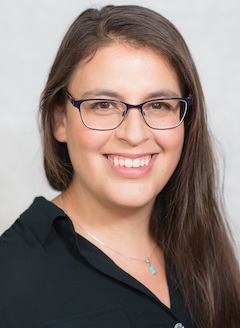
photo - Cantor Shani Cohen
Cantor Shani Cohen (photo from Shani Cohen)

Following her studies in Houston, Cohen enrolled at Hebrew Union College and embarked on a five-year cantorial program, which comprised a first year of study in Jerusalem, followed by four years in New York. “I got to work with the most incredible, groundbreaking cantors and rabbis of our generation, and enter into a diverse community of Jewish clergy around the world,” she said. “The training for cantors centres on Jewish music and liturgy, but many of our courses are in conjunction with the rabbinic students, including pastoral care, Bible, Jewish history and philosophy, and lifecycles.”

As a student, she presented recitals every year on different topics, such as Shabbat, High Holy Days, and Jewish composers. In her final year, she wrote a thesis and presented a recital on the same topic – her research delved into the collaboration between rabbis and cantors, looking into the history of these roles and the way clergy teams function in Reform congregations today.

Cohen was influenced by the cantors of the early to mid-20th century, which is often referred to as the cantorial “golden age.” These cantors included such names as Yossele Rosenblatt, Moshe Koussevitzky, Leibele Waldman and Moishe Oysher.

“I love how they brought their full voices to every piece, whether they were leading services or performing on the concert stage. I am also greatly inspired by the incredible teachers that I had at the Hebrew Union College Debbie Friedman School of Sacred Music (DFSSM), including Chazzan Israel Goldstein, z”l, who I got to work with as my coach my second year.”

Two of Cohen’s mentors, Prof. Joyce Rosenzweig and Cantor Josh Breitzer, were in attendance at her October installation, offering both words and music. Cohen worked with Breitzer as an intern at Congregation Beth Elohim in Brooklyn, where she got “to see firsthand his ability to weave together traditional and contemporary musical styles in an authentic, cantorial way.”

She said, “I too strive to bring the breadth and depth of Jewish music into my cantorial work, showing our community that both new and old music has a place in our synagogues. I think this is what cantors are called to do in order for us to keep this art form alive.”

Cohen delights in both the variety of her job and its interpersonal nature, noting that no two days are alike. “I could go from teaching students and leading prayer with our religious school one day, to officiating a wedding or going to visit one of our home-bound congregants the next,” she said. “Each facet of my work feels meaningful, especially being there for people when they are feeling vulnerable: when someone loses a loved one, gets bad news, or even the excitement and anxiety of preparing for their child’s b’nai mitzvah.”

A native of the Bay Area, Cohen attended the University of Puget Sound in Tacoma, Wash., where she studied music and psychology. “I love being close to the water and, when the sun comes out, you appreciate it so much more because so much of the year is dark and rainy,” she said. “It was definitely a big contrast from where I grew up, but I felt a strong connection to this part of the continent when I was an undergraduate student, and am so grateful to be able to live here now.”

Cohen and her wife Rabbi Kylynn Cohen moved here with their black Lab mix, Trouble.

“The addition of Cantor Cohen to Temple Sholom’s clergy team is a milestone for our growing congregation, having grown from 600 households in 2013 to nearly 950 households just nine years later,” said Rabbi Dan Moskovitz, senior rabbi at Temple Sholom. “Cantor Cohen adds a depth of pastoral skills and Jewish knowledge to her outstanding musical and cantorial abilities.

“She stands upon the shoulders of lay cantorial soloists Arthur Guttman and Naomi Taussig, who together set the tone and tenor for generations of Vancouver Jewish families,” he said.

“It is an honour and a privilege to be part of the Temple Sholom clergy team,” said Cohen, who brings the team to three, joining Moskovitz and Rabbi Carey Brown. “And I am grateful to get to do this work every day.”

Sam Margolis has written for the Globe and Mail, the National Post, UPI and MSNBC.

Format ImagePosted on November 11, 2022November 9, 2022Author Sam MargolisCategories LocalTags cantors, installations, Judaism, music, Shani Cohen, synagogues, Temple Sholom

Racism talk versus action

When George Floyd was murdered by a Minneapolis police officer in 2020, it reawakened awareness about police violence and institutional racism in the United States and beyond. Nearly three years later, many of the anti-racist pledges made during that time remain unfulfilled.

“Do you know that most of those commitments have not been met and there is no accountability for not doing this?” said June Francis, special advisor to the president of Simon Fraser University on anti-racism, director of the Institute for Diaspora Research and Engagement, co-founder of the Black Caucus at SFU and an associate professor in the Beedie School of Business. “Companies said they were going to do X,Y and Z, research shows they’re not doing it. Accountability is everything. If we don’t see change and there are no repercussions … then we get tired, society goes back.”

Francis was speaking Nov. 3 at an event titled From Talk to Action: Challenging Racism in Canada Today. The panel discussion, at Robson Square, was presented by the Simces & Rabkin Family Dialogue on Human Rights in partnership with the Canadian Museum for Human Rights and Equitas, an international human rights education organization.

Francis aimed a particularly sharp critique at academic institutions.

“When students arrive at a university, they are being groomed to become racist people,” she said. “I say this honestly because what they are taught is any ideas worth knowing emanate out of white supremacists. White ideas are the enlightened [ones], the primitive becomes us, our art is considered primitive, our work is always denigrated. It’s only recently that Indigenous knowledge has become a thing, only because we’ve totally destroyed the planet and now we’ve suddenly awakened and, even then, we have a certain category of it as being nonscientific. Universities are founded on these ideas that are meant to create this idea that some people are superior to others and we perpetuate this every day. Then we go on to only fund research that does that. We go on to promote people who do that research. We go on to insist that our students who dare to challenge the system don’t graduate unless they do what we tell them to do.”

Annecia Thomas, who joined Francis on the panel, was mobilized to action in the aftermath of Floyd’s murder, as well as when students at her Kamloops high school made light of the murder in an online post. She was afraid to speak up, she said.

“But, I think, through this fear I gained another fear – that was not speaking up,” she said. “Without speaking up, it would just continue.”

Also on the panel was Daniel Panneton, director of allyship and community engagement at the Friends of Simon Wiesenthal Centre for Holocaust Studies. He addressed online hate and how it can transmute into real-world violence, citing the case of Dylan Roof, the South Carolina man who was radicalized online and, in 2015, murdered nine people in an African-American church.

Concerns about free speech rights, which are sometimes invoked to defend racist, misogynistic or otherwise bullying behaviours online are specious, he argued. These actions effectively deter members of historically marginalized communities from running for public office and participating in the public sphere, he said.

“The tolerance of hate and threatening speech in our society threatens the free-speech rights of vulnerable communities,” said Panneton.

The panel was moderated by Niigaan Sinclair, an Anishinaabe man who is head of the department of Indigenous studies at the University of Manitoba and is a frequent commentator in national media.

“I grew up as a refugee, but I didn’t know it,” he said, referring to Canadian governments who forced his ancestors off their lands. “In every other country of the world, that would be called ethnic cleansing, but in Canada they call it progress.”

He said the ultimate goal of racism is to erase its own history.

“The outcome of violence is always silence, not to talk about it, to make sure that it happens in perpetuity and that it’s somehow legal and justified,” said Sinclair.

Zena Simces and Dr. Simon Rabkin, who launched the annual series four years ago, spoke of their motivations.

“We established the dialogue on human rights because we saw a void in Vancouver with respect to a dedicated program on human rights for everyone in the community, for all groups,” said Simces, a consultant in health, social policy and education and a former leader in the now-defunct Canadian Jewish Congress.

“To combat racism, we first need to understand it, think about the background and understand the history,” said Rabkin, a professor at the University of British Columbia medical school who has provided health care to underserviced areas in northern Canada and in Kenya. “Talk and reflection is not enough, it won’t move us forward. We need a vision of the future in order to provide a guidepost and a goal to aim towards.”

Posted on November 11, 2022November 9, 2022Author Pat JohnsonCategories LocalTags Annecia Thomas, anti-racism, Daniel Panneton, human rights, June Francis, Niigaan Sinclair, racism, Simon Rabkin, speakers, Zena Simces

Posts pagination

Previous page Page 1 … Page 153 Page 154 Page 155 … Page 664 Next page
Proudly powered by WordPress