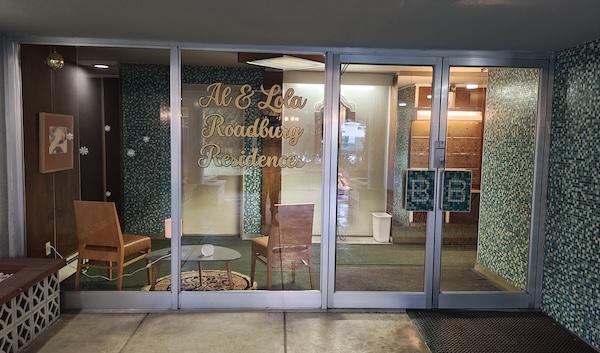
The Al and Lola Roadburg Residences – a place to call home. (photo by David J. Litvak)
Since moving to Vancouver from Winnipeg in 1991, I have moved approximately 30 times. Most of these moves have not been made by choice but, thanks to the good folks at Tikva Housing Society, I have hopefully made my last move in Vancouver.
I am a publicist/writer, and a mashgiach (kosher supervisor) at the Louis Brier Home and Hospital. Like many people here, I do not earn enough to own my own home. Living in a city where development is rampant is even challenging for renters, like me. We are at the mercy of the latest development, where, oftentimes, residences are torn down to accommodate new and more expensive apartments or condominiums (this has happened to me several times), or landlords, who give us notice to accommodate family members needing a place (which also has happened to me several times).
Since 2022, I have moved five times. However, my last two moves were much easier, thanks to Tikva Housing, which provided me with shelter and helped me navigate the challenging housing market.
I was familiar with Tikva but hadn’t wanted to reach out to them, except as a last resort. When I received two months’ notice in the dead of a freezing winter, during a COVID outbreak at my workplace, at a place I had been living for less than six months, I decided to contact them. I was desperate.
After I took the first step – signing up with the Jewish Housing Registry – I was informed that there was a suite available in a brand-new apartment building that had two floors of its nine storeys reserved for Tikva residents. I had to delay my move for a couple of months so that I could remain close to the Louis Brier for Pesach – as an observant Jew, I have to walk to places on Shabbat and holidays. Thankfully, friends put me up for those months and Tikva Housing saved the suite for me. Tikva even let me move some of my stuff in, though I wasn’t living there yet.
Once I moved into my apartment, I felt like I was living on a kibbutz. There were many familiar faces from the Jewish community living there. It was nice to see folks that I knew, including a colleague from work. The building itself was in a great location, not far from the Marine Gateway Canada Line station. Unfortunately, it turned out not to be a great location for me, because of its distance from the Louis Brier.
Even though this apartment didn’t end up working out, I was grateful to Tikva Housing for providing me with temporary shelter. I was even more grateful when a place became available in a 20-unit building in Kerrisdale that Tikva was able to purchase because of a $10 million donation from the Al Roadburg Foundation.
Not only did Tikva Housing Society find me this amazing apartment, but the staff did everything they could to make my move as painless as possible. I now have peace of mind, knowing that Tikva Housing is my landlord and I am no longer at the mercy of the city’s development. I love my new place. Hopefully, I will be able to call it home for a long time.
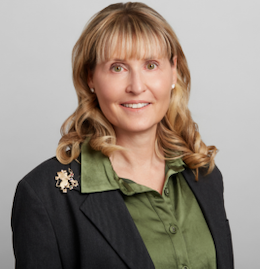
David J. Litvak is a prairie refugee from the North End of Winnipeg who is a freelance writer and publicist, and mashgiach at Louis Brier Home and Hospital. His articles have been published in the Forward, Globe and Mail and Seattle Post-Intelligencer. His website is cascadiapublicity.com.
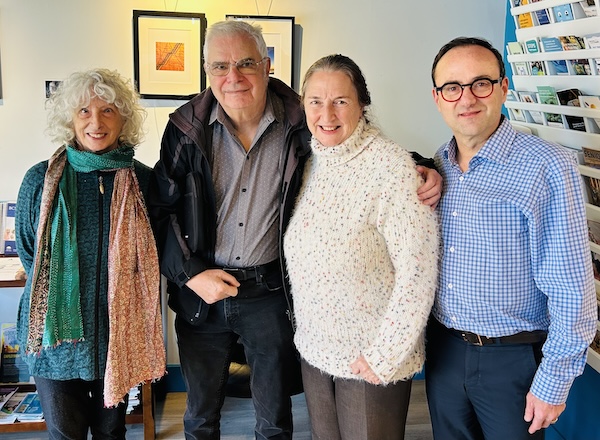
Jewish Seniors Alliance of British Columbia’s Margot Beauchamp, left, and Jeff Moss, right, with advocate for seniors’ rights Howard Glick and Parliamentary Secretary for Seniors’ Care and Long-Term Care Susie Chant. (photo from JSA)
Jewish Seniors Alliance, whose mission is to reduce isolation, build connection and uplift and support Jewish and other seniorsin the province, started 2025 with a new name.
At its annual general meeting last November, the organization chose to rename itself the Jewish Seniors Alliance of British Columbia. Formerly, it was called the Jewish Seniors Alliance of Greater Vancouver. One of the motivations for the change was to better reflect the organization’s goals and the services it provides.
The new name comes as JSA expands its advocacy work throughout the province, with efforts such as extending its reach, via its Senior Line magazine, to more communities. The new name, it maintains, recognizes the need to connect with more seniors in the province. Initially, JSA intends to partner with outreach programs in the Sea-to-Sky, Burquitlam and Surrey regions.
Similarly, the JSA Peer Support Services program has been rebranded. It will now be known as Community Support Services (CSS), which the organization believes will express its objectives and more clearly define the services it offers with senior volunteers and clients: senior peer support and friendly visiting/calling.
Concurrently, JSA has relaunched its advocacy work around free home support for all BC seniors, stating that it had success with this effort in the run-up to the provincial election. It will continue to meet with government and opposition MLAs, as well as work with and through community partners to ask people to contact their MLAs to voice their support for the initiative.
“The JSA approach to advocacy and government relations has been focused and targeted on decision-makers,” said JSA executive director Jeff Moss during a Jan. 22 Zoom event, in which he discussed the proposal for universal home care in British Columbia as a way to reduce the burden on individuals and government spending.
Moss summarized a recent mandate letter to Susie Chant, parliamentary secretary for seniors’ care and long-term care, which advocated for increased health-care availability, cost containment, responsive health systems, increased senior care, engagement with stakeholders and communication with the health ministry.
Howard Glick, an advocate for seniors’ rights and barrier-free healthcare, joined Moss on the Zoom panel. Glick had recently produced a short video, The Home Care Imperative: A Humanitarian Solution, on the need for free home support in the province, which was shown to the audience.
The video emphasized the advantages of home care, including aging in place, which can allow seniors to preserve their independence and dignity. It can also produce systemic savings that reduce waits for long-term care and free up hospital beds. And its implementation can be expedited, as home care can be scaled more quickly than construction for long-term care facilities.
Also stressed in the video was the idea of accessible, personalized home care as a better way to benefit seniors in their daily lives. The video argued that such a measure would foster independence and connection while strengthening the health-care system overall. This issue is particularly pressing, as the number of seniorsin the province, and across the country, is set to increase in the coming two decades.
Most older adults, the video pointed out, would prefer to stay at home. Research from the Office of the Seniors Advocate, under the leadership of both former seniors advocate Isobel MacKenzie (now a JSA board member) and current advocate Dan Levitt, shows that many admissions to long-term care could have been treated at home with the right supports. Women, people in rural communities and those living alone make up a greater percentage of those moving into long-term care, according to the office’s report.
According to the video, British Columbia, when compared to Ontario, is lacking in several features that pertain to senior care, such as funding, services, eligibility, caregiver support and integration. The costs associated with accessing care for seniors in British Columbia greatly exceed those of other provinces as well, the video contends, noting that Alberta, Ontario and other provinces offer free home support for older adults.
Following the video, Moss reviewed a long list of advantages of providing free home care.
“The benefits are personalized at-home care, ease of access, reduced hospitalizations, fewer unnecessary admissions to long-term care, better health outcomes, increased independence and peace of mind,” he said.
During the question-and-answer session, it was conceded that the home-care model proposed in the video is, at present, far from the current reality.
“At this point, the system is fragmented, disorganized and unreliable, and there are a whole bunch of other problems. What our video is advocating is how to make things work for people in the future and that means reevaluating the structure of the system completely,” Glick said.
“Before any changes can be made, we have to have influence and contacts, we don’t have that yet. We’re just in the starting process of trying to get our foot in the door with the people who have the money and make policy,” he added.
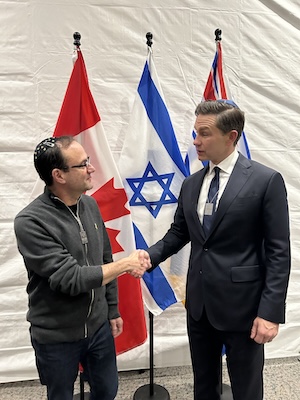
Jewish Senior Alliance of British Columbia executive director Jeff Moss, left, with Conservative Party of Canada leader Pierre Polievre. (photo from JSA)
The January event was part of the JSA-Phyliss and Irving Snider Foundation Empowerment Series and was co-sponsored by the Kehila Society of Richmond, COSCO and West End Seniors’ Network.
Moss, Glick and Margot Beauchamp, JSA’s quality assurance liaison, have since met with Chant. According to Moss, Chant gave them her support to move the initiative forward by way of making an introduction to the ministers of finance and health, along with opportunities to speak with all MLAs. JSA is also seeking the support of Brennan Day, opposition critic for rural health and seniors’ health.
JSA is working to advance the interests of seniors at the national level as well. During Conservative Party of Canada head and leader of the Official Opposition Pierre Poilievre’s visit to Temple Sholom on Feb. 2, Moss said he took a moment to let Poilievre “know that 65% of BC seniors are living on less than $40,000 annually and that adjustments are needed in the Guaranteed Income Supplement for seniors so that they can ensure more sustainability to age better.”
Poilievre directed Moss to follow up with his policy team.
Vancouver Talmud Torah students in the new Hildy Barnett Wellness Centre. (photo from VTT)
“It was a dream that came true,” said Jeffrey Barnett of the new Hildy Barnett Wellness Centre at Vancouver Talmud Torah.
The centre, named in honour of his late wife, was dedicated last November.
“As a graduate of Vancouver Talmud Torah and as a teacher of over 30 years, and also being a child psychologist, she knew the value of supporting kids in a Jewish environment,” said Barnett of Hildy, who died April 25, 2024. She and Jeffrey were married 47 years; they have two children and four grandchildren.
Hildy Barnett specialized in education for children with special needs. She worked with the Vancouver School Board for three decades and, after retiring, continued to work with children and teens in various capacities. She volunteered at Canuck Place and with the Jewish Community Centre of Greater Vancouver, among other things. She helped start Jewish Family Services Vancouver’s Innovators Lunch, with friends Naomi Gropper Steiner, z”l, and Kristina Berman.
Shortly before Hildy Barnett passed away, she and Jeffrey made the decision to fund the wellness centre at VTT. Hildy had asked Shirley Barnett, who had a relationship, via her sons, with Shane Foxman, associate director of development at VTT, to inquire about legacy opportunities at the school. Foxman connected Shirley with Emily Greenberg, VTT head of school.
“When Shirley first told me about Hildy, I asked her to tell me a bit more about what she did, her passions, her career,” Greenberg told the Independent. “It became almost immediately clear that she should be part of realizing the vision for the wellness centre. As her health diminished rapidly, Shirley came to the school and I told her to film me speaking about my vision for the space, the children it would serve and the reason we needed to create such a space for our students. I knew what I wanted it to look like, but I wanted to paint that picture for her. I remember, when we stopped recording, I had goosebumps because I could feel how special this room was going to become.
“We hurriedly sent the recording over to Hildy’s daughter, Mira, to show her in her hospital bed,” continued Greenberg. “I remember Shirley got a text back from her within a few minutes. She said that it was exactly what she had hoped for. Hildy, unfortunately, passed away just a couple hours later, but I have always been so grateful that she knew about the wellness centre before she left this world. I think this has made this work even more sentimental. We really wanted to get every detail right.”
Before she died last April, Hildy Barnett, with her husband Jeffrey, decided to fund the building of a wellness centre at Vancouver Talmud Torah, which has been named in her honour. (photo by Alexandre D. Legere)
A VTT newsletter leading up to the centre’s November dedication noted, “Approximately 20% of our students require some form of extra assistance to fully engage in the curriculum and to meet their full potential…. Over the last several years, we have completed a landscape study to understand best practices for supporting students with learning needs and have implemented several new layers of services to help create unique learning pathways.”
The study comprised a review of what many other schools are doing for student support services, said Greenberg. “There were many takeaways,” she said, “but one of them was that the spaces we create can really enable the programming and support we want to offer. The wellness centre has catapulted our counselors from being in a windowless, uninspiring, tiny office to in a centre that exudes safety, support, belonging and comfort.”
Over the past five years, VTT has gone from having a half-time counselor to two full-time counselors: Donna Cantor and Shakaed Greif. The two are both experienced counselors who are helping “to better support our students, parents and, sometimes, staff, as they navigate the many pressures and challenges of life, especially in a post-Oct. 7 world,” said Greenberg.
The counseling team “has been imperative in helping our many new Israeli students settle into life at VTT. They also run many support groups, including our Free to Be Me club, Chesed club and more,” she said.
The Hildy Barnett Wellness Centre allows Cantor and Greif to have their own offices, as well as a shared space for working with small groups and families.
“When I look back, in a very quiet way, Hildy did what she loved and, having the facility at TT is the ultimate,” Jeffrey Barnett told the Independent. “It brought smiles to her face. She knew that she wasn’t going to be around. She knew that the legacy she was doing would benefit so many youngsters, including the fact that our own grandchildren would be at the school, and that not only this generation but future generations [would be helped]. And it made me feel good that she felt good. It’s still very sad, very touching, and we miss her a great amount.”
Barnett spoke of Hildy’s approach to education, which was based on the methods of the late Dr. Reuven Feuerstein, with whom Hildy Barnett had studied.
Feuerstein was a psychologist from Romania, who trained with the Russian psychologist Lev Vygotsky, explained Charlene Goldstein, who, with Hildy Barnett, years ago established with the Vancouver School Board a learning centre for speech language pathologists, teachers, counselors and others, which has since faded away. Goldstein is a registered psychologist in the neonatal follow-up program at BC Women’s Hospital and Health Centre; she also has a private practice.
“Reuven came to Israel right after the Holocaust and he began to work with children from the Holocaust, as he did with children from Ethiopia,” Goldstein told the Independent. “And what he saw was that these children only lived in the present, that they had limited memories of the past and very few [visions] of the future, and that was because, to protect them, their parents didn’t want them to know too much, plus they had a lot of losses. So, he had a group of volunteers together who would sit by the beds of these children, so if they had nightmares, they would calm them.
“Then, he began to notice that some people were saying that these children were incapable of learning, that type of thing,” she continued. “But what Reuven and Vygotsky believed in [is that] you can have direct learning, where, let’s say I’m a child and I’m looking at putting some blocks together and I figure it out and nobody has to tell me what to do. Or, you could have mediated learning, which is, someone is between the child and the activity helping them to learn what to do.
“So Reuven, and I still do this now – when a child says to me, I can’t do this, I say, well, what do you already know here? What do you already recognize? What about this is new? And I start asking questions about things. So, what do you call this? Oh, my goodness, look at all of these things that you already know. Reuven would also say to teachers, think of the child, and his logo was ‘just a minute … let me think.’ Because he believed, as I do, that everybody has the potential to think, everyone has the potential to learn. We may not all learn everything the same, but we have potential to learn. And that everyone has potential to give back to society.”
Part of the funds raised by the Hadassah Bazaars – which Hildy’s mother, Marjorie Groberman, helped start here and in other places across Canada – were sent to Israel to support Feuerstein with his work, said Jeffrey Barnett.
Groberman, who was “Mrs. Hadassah-WIZO for many years,” had heard Feuerstein speak at a Hadassah convention, said Goldstein. He was brought to Vancouver by Hadassah-WIZO and Variety Clubs International, with which Jeffrey Barnett was involved, she said.
Feuerstein came back to Vancouver many times, said Goldstein. When here, he trained many educators, including those who worked with Indigenous children.
“Some of the children would think he was Santa Claus and would call him that because he had a long, white beard and his beret,” said Goldstein.
Among the people in Feuerstein’s sphere was Dr. Lorna Wanosts’a7 Williams, an expert in Indigenous language revitalization and education. Williams met Goldstein and Barnett in the mid-1980s, when she was hired by the Vancouver School Board as a specialist in First Nations education.
“I was looking at Reuven’s work because of his ideas around what happens with children when they get separated from the knowledge, from their parents,” Williams told the Independent. (People wanting to know more about this aspect of Williams’s work should watch the 1994 National Film Board of Canada documentary The Mind of a Child.)
Williams said Hildy Barnett was focused on “supporting all children to learn and enable them to overcome all their trauma. She just was so dedicated to that kind of work.”
Barnett knew how to move things along, said Williams. “She was able to bring people together in such a beautiful way.”
She added, “I really honour her for all the help she gave me and that she gave many other people. She was very quiet but she was very strong.”
Goldstein, who knew Barnett from having grown up in the local Jewish community, before they connected more in Hadassah-WIZO and with Feuerstein’s work, echoed Williams’s observation.
“Hildy had the most gentle voice, she had a great sense of humour, but she had strong determination,” said Goldstein. “In Star Trek, there’s one person who says, ‘Make it so,’ and that’s what Hildy was like. She would say, ‘Make it so,’ and you just didn’t say no to Hildy because Hildy listened to everybody and had such compassion, such compassion.”
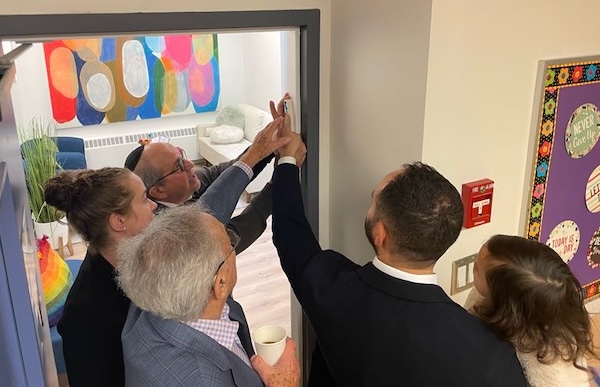
Rabbi Philip Bregman, at back, and Jeffrey Barnett, middle, hang the mezuzah at the door of the Hildy Barnett Wellness Centre, along with Barnett’s daughter, Mira, and son, Joel, who is holding one of Barnett’s grandchildren, Blake. (photo from VTT)
The Nov. 24, 2024, dedication ceremony of the Hildy Barnett Wellness Centre was originally envisioned as a small family gathering to honour Barnett’s legacy, said VTT’s Greenberg. “But, to our delight, she was so beloved in the community that many more people attended.
“I think it was an opportunity for many people to pay their respects to her powerful legacy of believing in children, and the Hildy Barnett Wellness Centre has become a healing place in so many ways, including for those who are grieving Hildy’s loss.”
Heterodox Academy is a nonprofit organization dedicated to promoting viewpoint diversity, open inquiry and constructive debate in higher education. It works to counter ideological conformity on campuses by providing research, resources and programming that foster an environment where diverse perspectives are welcomed and critically examined.
If that sounds like what a university is intended to be, says one local professor, it’s a commentary on the state of contemporary campuses that such an organization is necessary to encourage the academy to live up to its principles.
Dr. Rachel Altman, associate professor in the statistics and actuarial science department at Simon Fraser University, is one of the campus co-chairs of the Heterodox Academy chapter at SFU.
“Heterodox Academy is an organization that fosters free, open inquiry and free discussion even about controversial issues,” she said. “It’s not just about freedom of speech. It’s also about our conduct, the way we have these conversations. I think that’s what really distinguishes it from the general free speech advocacy groups.”
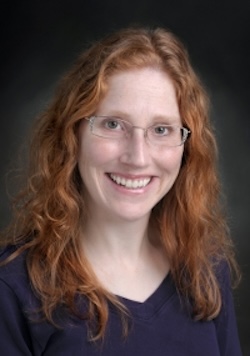
Dr. Rachel Altman is one of the campus co-chairs of the Heterodox Academy chapter at Simon Fraser University. (photo from SFU)
Heterodox Academy provides guidelines that urge interlocutors to present their case with evidence, bring data when possible, assume the best of one’s opponent and be intellectually humble, among other principles.
HxA, as it is shorthanded, offers events, conferences, resources and other materials that “try to teach our society, especially within academia, how to interact in a productive and civilized way, even when we disagree,” she said.
These tools are intended to help bridge the divide between the ideal of a university and the reality of creating a dynamic marketplace of ideas.
“Just because we have it in our head that in the academy we should be able to discuss anything in a civilized way doesn’t mean we actually know how to do it,” she said. “They provide tools and modeling of those tools to actually teach people how to be civilized.”
The HxA chapter at SFU emerged after a group of scholars got together because they were concerned about the state of academic freedom at the university. They founded the SFU Academic Freedom Group.
Within a few months of that group’s founding, Heterodox Academy launched its Campus Community Program, recognizing chapters on individual campuses. Some SFU professors applied and were accepted among the first chapters chartered.
“We hosted a so-called Heterodox Conversation event this past September,” she said. “That’s a model developed by HxA where you invite two people who have different views on a topic and they sit down and have a conversation with the model [called] the Heterodox Way and then the audience gets involved and we have a group discussion.”
The topic of that dialogue was “The purpose of today’s Canadian universities.”
“The timing was perfect because, just the previous week, our president had issued a statement on institutional neutrality,” she said, referring to an announcement by SFU’s president, Joy Johnson, on maintaining an environment where scholarly inquiry remains unbiased by partisan agendas. “For me, I was celebrating like crazy, but there were others on campus who were very unhappy.”
Altman can’t say whether the Heterodox Academy chapter or the SFU Academic Freedom Group deserve credit for the president’s statement or for other recent developments she and her colleagues view as positive.
“I’m a statistician, so I rarely claim causation,” she said wryly. “I’m very conservative that way. But I think so.”
The groups are comparatively small, but they may be having an outsized impact.
“Everybody knows about us,” she said. “The administration clearly knows and it’s just been so gratifying to see the change in the whole tenor of the administration’s approaches over the last couple of years. It’s a clear change.”
Numbers may remain relatively small, Altman suspects, because of a false perception of their group.
“We are consistently being cast as this right-wing, conservative group and it’s not true,” she said. “We have people across the political spectrum in the group. It is a nonpartisan group.”
The idea that academic freedom and institutional neutrality are right-wing positions, she said, is belied, for example, by the gay rights movement, which emerged in the 1960s, in part thanks to the viewpoint diversity of campuses.
It is not a coincidence, Altman believes, that several HxA members, including herself, are Jewish.
“Jews have a long tradition of arguing and debating in a civilized way, the whole ‘two Jews, three opinions’ thing,” she said. “Jews are just a natural fit with the HxA model.”
In contrast, the equity, diversity and inclusion (EDI) model that has become increasingly prevalent on North American campuses in recent years is antithetical both to the academic ideal and to Jews, she argued.
“For some Jews like myself, I realized very early on that the EDI ideology that’s become so predominant in academia and elsewhere, that it was terrible for Jews,” she said. “This model of the oppressed and the oppressor, it didn’t work. Jews did not fit into that mold.”
EDI is the opposite of what it claims to be, said Altman.
“I think it’s exclusionary, it discriminates against groups,” she said. “It’s antithetical to everything I believe in because I truly believe in inclusion and anti-discrimination.… I was very unhappy about the rise of the EDI ideology and, in my groups of people who are also similarly concerned about that ideology, I think Jews are overrepresented. That would suggest I’m not the only Jewish person who sees the fundamental conflict, the contradictions in the EDI ideology.”
Altman said few people would openly admit they oppose academic freedom.
“Really, it becomes about the definition of academic freedom,” she said. “When I say I support academic freedom, that’s the end of my sentence. What I look for when I’m talking to people is the ‘but’ that can follow. ‘Of course, I support academic freedom, but … there are limits.’ Things like that.”
In some cases, Altman thinks, this equivocation comes from a lack of understanding around the core principles of academic freedom.
“But then, there are some people who truly want to change the foundation of the term, the concept,” she said. “They truly believe that we should have limits on both our academic freedom and our freedom of expression more generally.”
In addition to the SFU branch, Heterodox Academy has a chapter at the University of British Columbia, Okanagan. While there are some HxA members at the Vancouver campus of UBC, Altman said, there is not yet an official chapter there.
Canada’s westernmost Reform rabbis, Dan Moskovitz of Vancouver’s Temple Sholom, and Lynn Greenhough of Victoria’s Kolot Mayim, sat down for a discussion (and celebration) of the resilience of the Jewish people during a Zoom webinar on Feb. 2.
Greenhough, who posed questions to Moskovitz for an event that was part of Kolot Mayim Reform Temple’s 2024/25 Kvell at the Well series, described him in her introduction as a “one-man advertisement for Jewish resilience.”
Rabbi Dan Moskovitz of Temple Sholom was the most recent speaker in Kolot Mayim Reform Temple’s Kvell at the Well Zoom series. (photo from rabbidanmoskovitz.com)
Moskovitz began by bringing historical context to the topic, noting that the sages would often say that new questions and problems are the reframing of events that have happened in the past.
“Sadly, we have a history that can take us back to times of trial and challenge just as easily as it could to triumph,” said Moskovitz. “So, part of it is that we’ve seen this before and we’re still here. That is, I think, a key to our resilience.”
Another element to resiliency is adaptability, he said. Here, the senior rabbi at Temple Sholom cited a section of the Talmud that debates whether it is better to be a cedar tree or a reed.
“The rabbis conclude it’s better to be a reed than a cedar. While we can stand firm at some point, a strong enough wind from just the right angle will topple us over [if we are a cedar],” Moskovitz said. “But the reed can adjust. And that’s how we dealt with the destruction of the First and the Second Temple.”
Judaism, he continued, has maintained a fluidity that allows it to be open to new ways to grapple with present-day issues like identity, the role of women and modern concepts of morality, discarding past practices that might be distasteful today.
“I think that important to our resilience has been our ability to change,” he said. “When groups or religions don’t change, their survival becomes precarious.”
Judaism’s resilience, too, can be attributed to its portability; namely, texts were printed and studied. Further, discussions, such as those occurring in the Talmud – which Moskovitz described as the “original Wikipedia” – could be had not just in one place in time but across time, to create an “ongoing dialogue.”
“I think about Pesach and the printed Haggadah, but also the technology, if we can call it that, of the socialization of the story, that coming together every year to retell our story, as opposed to telling it and forgetting it,” he said. “What Pesach does is remind us of the story of redemption, remind us of our role, Moses’s role, God’s role, the role of miracles, and to reinterpret that through the lens of our modern experience, to see the pharaohs of our time.”
A recent illustration of Judaism’s ability to adapt, he said, occurred during the pandemic, as events and services shifted to Zoom. Most of Temple Sholom’s minyan services are still held online, as they have proved a valuable means for congregants to connect in a meaningful way.
Change and innovation, Moskovitz argued, are always going to happen, and it has been to Judaism’s advantage to move forward, to progress, and not shelter itself from the outside world. One such step practised by Reform Judaism, for example, is to use transliteration and English translations of the Hebrew text in prayer books, making the prayers and other material accessible to a wider range of people.
Later in his talk, Moskovitz referenced how times of crises and discrimination have empowered Jews to create their own institutions.
“I think that we have to have a deep appreciation for the resourcefulness of the generations that came before us,” he said. “Most of the institutions that we have been raised in were built by a generation of Jews who were excluded from general society.”
To the question of the post-Oct. 7 world in which university campuses and other spaces have become hotbeds of vitriol against Jews, Moskovitz stressed that flexibility and adaptability do not mean capitulation.
“If there are places that we have been and rightfully should still be and want to be, then we do have to stand our ground there,” he said. “We do have to insist and we do have to call out the hypocrisy of certain things or the blatant discrimination.”
Crucial in this pursuit, said Moskovitz, is to find allies. He told the Zoom audience that Jews will not defeat antisemitism, but non-Jews will.
“We can’t separate ourselves from the community,” he said. “While we could use our money to pull out of places like Harvard, we should absolutely stay at the boardroom table as long as they will have us. If not, then go to whatever audience will receive our message of why we were kicked out of that place, and stay in for the argument and the fight.
“I think that we shouldn’t abandon these institutions and say, I’m not going to send my kid there anymore because it’s antisemitic. It will only become more antisemitic if we stop sending our kids.”
Jonathan Bergwerk, author of the Audacious Jewish Lives books, is the next speaker in the Kolot Mayim Kvell at the Well series. On March 2, at 11 a.m., he will discuss Jewish innovators who have changed the world. Visit kolotmayimreformtemple.com to register.
Sam Margolishas written for the Globe and Mail, the National Post, UPI and MSNBC.
Sara Ciacci, z”l, was a passionate advocate against domestic violence, establishing ASTEH, an emergency shelter for women escaping abuse. (photo from JFS Vancouver)
Sara Ciacci, z”l, is, in many ways, an urban legend – a name synonymous with impact, compassion and transformative change in our community.
Ciacci dedicated her life to fighting food insecurity, most notably co-founding the Jewish Food Bank in 1984. She was also a passionate advocate against domestic violence, establishing ASTEH (Alternative Short Term Emergency Housing), an emergency shelter for women escaping abuse. And JFS Vancouver has recently honoured Ciacci’s extraordinary impact by renaming ASTEH to Sara’s House, a tribute to her unwavering commitment to empowering women and building their resilience.
A survivor of domestic violence herself, Ciacci deeply understood the fear, shame and stigma that women and children face when escaping abuse. Her firsthand experience drove her determination to create a safe space where Jewish women and their children could find refuge and rebuild their lives.
Sanctuary for women, children
Sara’s House is a community-based housing facility providing security, stability and support to Jewish women and their children fleeing violence or at risk of homelessness. With the guidance of JFS counselors and care managers, women are empowered to explore their options and make decisions that lead to a safer, more hopeful future.
Over the years, Sara’s House has been a haven for dozens of women and their children. One such story is Abby’s.
When Abby first walked into JFS, she was overwhelmed with fear and desperation. Fifteen years into her marriage, a sudden violent shift forced her to confront the emotional, verbal and financial abuse that had been present from the start. She never thought she would find herself in this situation.
Abby recalled a comment from JFS executive director Tanja Demajo.
“Tanja told me she felt I had a very good chance of getting out of the abuse and I was a good candidate for ASTEH housing,” said Abby. “By the end, I felt overwhelming relief. It was the life preserver I needed to get out.”
A lasting tribute
JFS Vancouver is profoundly grateful for Ciacci’s legacy of dedication, empathy and action. With the renaming of ASTEH to Sara’s House, her vision of providing a haven for women and children will live on, inspiring future generations to continue the work of protecting and empowering those in need.
Community support helps sustain Sara’s House and the life-changing services it provides. To learn more or to contribute, visit jfsvancouver.ca/donate.
Gloria Gutman, PhD, has been honoured with the King Charles III Coronation Medal, which recognizes individuals who have made a significant contribution to Canada, or an outstanding achievement abroad that brings credit to Canada. She will receive the medal in a ceremony March 21.
A research associate and professor emeritus at Simon Fraser University, Gutman founded the Gerontology Research Centre and the department of gerontology at SFU, serving as director of both units from 1982 to 2005. She is the author/editor of 23 books, the most recent (with Claire Robson and Jen Marchbank) titled Elder Abuse in the LGBTQ2SA+ Community (Springer, 2023).
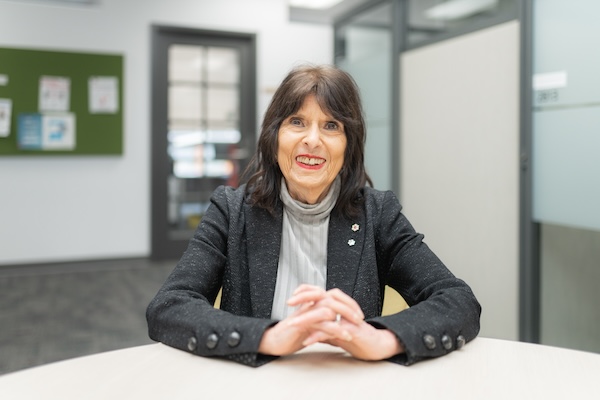
Dr. Gloria Gutman (photo from SFU)
During her career, Gutman has held many prominent roles, including president of the Canadian Association on Gerontology, president of the International Association of Gerontology and Geriatrics and president of the International Network for Prevention of Elder Abuse. Currently, she is president of the North American chapter of the International Society for Gerontechnology, vice-president of the International Longevity Centre-Canada and a member of the research management committee of the Canadian Frailty Network. Previously, she served on the World Economic Forum’s Council on the Ageing Society, World Health Organization’s expert advisory panel on aging and health, and the CIHR-Institute of Aging advisory board.
“I am grateful to SFU for having nominated me for this award.
Developing the gerontology department and Gerontology Research Centre, serving on boards, organizing conferences, and advocating for seniors in other ways nationally and internationally, has been a privilege and a pleasure,” said Gutman. “It could not have taken place without the strong support of FASS [the faculty of arts and social sciences] and senior administration.”
In 2012, Gutman was awarded a Queen Elizabeth II Diamond Jubilee Medal by the Government of Canada and, in 2016, she was appointed to the Order of Canada, the country’s highest civilian honour.
– Courtesy Simon Fraser University
* * *
Lana Marks Pulver (photo from Jewish Federation)
Jewish Federation of Greater Vancouver is proud to congratulate its board chair, Lana Marks Pulver, who was honoured by Jewish Federations of North America with the Kipnis-Wilson/Friedland Award for exemplifying the higheststandards of philanthropy and volunteerism. Marks Pulver’s selection for this award is a testament to her exceptional dedication and leadership.
– Courtesy Jewish Federation of Greater Vancouver
* * *
The Louis Brier Jewish Aged Foundation is pleased to announce the appointment of long-time volunteer leaders Marie Doduck and Lee Simpson as co-chairs of the 2025/26 campaign. Please join board directors Harry Lipetz, Rick Cohen, Mel Moss, Bernard Pinsky, David Zacks, Michelle Karby and Abbe Chivers, and staff Ayelet Cohen Weil and Wendy Habif in congratulating and thanking them for their tireless commitment to our Jewish elderly.
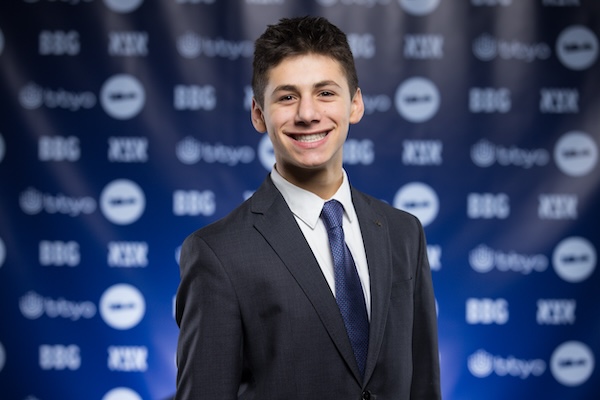
Levi Moskovitz has been elected to the BBYO International executive board. (photo by Jason Dixson Photography)
Vancouver teens joined thousands of peers, educators, business leaders and philanthropists from around the world at BBYO’s International Convention (IC) 2025 in Denver, Colo., Feb. 12-17. Levi Moskovitz, a student at King David High School, was elected as BBYO’s international teen treasurer (grand aleph gizbor) for the 2025-26 term. He is the only Canadian on the BBYO international board, which represents 70,000 teens from 64 different countries.
Moskovitz has been an active and dedicated member of BBYO Vancouver since he joined in Grade 8. He currently serves as regional godol (president) for Vancouver, where, along with a small cohort of fellow teen leaders, he has expanded the region from one chapter and a handful of teens to four chapters and more than 100 active teens.
Prior to being elected president, Moskovitz was the regional gizbor (treasurer). This position gave him real-world experience in leading successful fundraising initiatives, expanding community partnerships and empowering younger members to take on leadership roles. He also has been instrumental in growing chapter programming and strengthening BBYO’s presence across British Columbia.
For the next year, Moskovitz will help lead the organization as it celebrates Jewish identity, combats antisemitism, develops the next generation of youth leaders, and promotes its core values of faith, fraternity, patriotism, charity and integrity. As international teen treasurer, he will lead BBYO’s global philanthropy efforts, oversee the International Service Fund (ISF) and support chapter treasurers worldwide. He will help guide the movement as it raises and distributes more than $1 million in tzedakah (charity), including #GivingBBYODay. He will also collaborate with BBYO’s chief financial officer and board of governors on financial priorities within the organization’s $54 million annual budget. As part of the 12-person international teen board, he will shape BBYO’s global vision.
“Being elected as BBYO’s international teen treasurer is an honour,” said Moskovitz. “BBYO has given me incredible opportunities to grow as a leader, and I’m excited to help Jewish teens worldwide make an impact through philanthropy and financial empowerment.”
BBYO Vancouver’sgrowth in recent years has been helped largely by two major multi-year capacity-building grants: from the Ronald S. Roadburg Foundation and from the Diamond Foundation. Moskovitz’s election marks another milestone for the region’s legacy of leadership in BBYO’s international movement.
Vancouver BBYO has been at the forefront of community impact, organizing service projects and fundraisers that benefit local and global Jewish causes. The chapter’s close partnerships with King David High School, the Jewish Community Centre of Greater Vancouver and local synagogues continue to provide teens with opportunities for leadership, Jewish engagement and community service.
This year, Vancouver BBYO’s presence was felt beyond the election stage, with a delegation of 26 teens representing the city at IC 2025.
“Levi’s leadership and dedication have left a lasting mark on Vancouver BBYO,” said Persio Bider, BBYO Vancouver regional director. “His election to the international board reflects the strength of our growing community and the incredible potential of Jewish teens to lead on a global stage.”
– Courtesy BBYO International
***
All in the family
Levi Moskovitz’s older brother, Judah, was the last Canadian elected to the BBYO international board, in 2023, as grand aleph shaliach (Jewish identity and Israel). His father, Temple Sholom’s Rabbi Dan Moskovitz, is a past international president (grand aleph godol, 1989-90).
The 100th anniversary of BBYO in Canada happens in 2026. “That anniversary will be part of a major effort to identify Canadian BBYO alumni,” Rabbi Moskovitz told the Independent.
For more information about BBYO in the Vancouver region, visit their website (via bbyo.org) or contact the regional director, Persio Bider, at [email protected]. If you are a BBYO alumn, join the BBYO Alumni Association to stay connected with the organization and support its mission.
בסרטים מצוירים רואים את החיה החזקה ביותר עומדת על גבעה וכל שאר החיות החלשות מריעות ומקבלות את מרותה. בארה”ב היום אותו כלל חל על הנוכל דונלד טראמפ שחזר לבית הלבן, והאמריקנים – בטיפשותם שבחרו בו – מריעים עכשיו בשמחה לעומתו
כל מי שקצת בדק את ההיסטוריה של טראמפ וכנראה לא הרבה אמריקאים עשו זאת, יכול למצוא בקלות אינפורמציה רבה שמוכיחה עד כמה הקריירה העסקית שלו מבוססת על נוכלות, רמיה, עושק ובדיות. בני משפחתו, משקיעיו, עובדיו ורבים אחרים מספרים בפרטי פרטים עד כמה טראמפ שיקר ורימה אותם, והמציא מציאות מדומה על מצבו הכלכלי – אך הוא לא נפגע מכך. המערכת המשפטית בארה”ב היא כה חלשה כך שלטראמפ התאפשר להמשיך ולרמות במשך כחמישים שנותיו הראשונות כאיש עסקים. עם הכרזתו שהוא רץ לנשיאות, המפלגה הרפובליקנית קיבלה אותו בזרועות פתוחות, במקום להעיף את הנוכל. מדוע? כי במפלגה הרפוליקנית בעידן הנוכחי הנורמות נשחקו עד דק והרצון לשלוט הוא הערך הכמעט יחידי שרלוונטי. מצד שני עומדת מפלגה דמוקרטית חלשה ונאיבית שחבריה מדברים על ערכים דמוקרטיים לטובת מדינתם, בזמן שהרפוליקנים השתלטו במהירות יחסית על כל ארבע מערכות הממשל: בית המשפט העליון, הבית הלבן ושני בתי המחוקקים. בעוד שהדמוקרטים מדברים על ערכי שוויון, חופש ועזרה לזולת ולא יכולים להגיע להסכמה שתאחד אותם, הרפובליקנים חיפשו רק את מושכות השלטון וכל דרך היא לגיטימית מבחינתם, להגשמת ערך זה עליון זה. כולל שקרים, איומים והפחדות. כך היה בקמפיין הבחירות הראשון של טראמפ וכך היה גם בקמפיין השני. וזאת בשיתוף פעולה מלא של ההמון ברחובות שהרגיש כאילו טראמפ הוא קומיקאי שמספק להם לחם ושעשועים
בקמפיין הראשון טראמפ נעזר בחברת התעמולה האמריקאית השמרנית קיימברידג’ אנליטיקה, שעזרה לו לנצח את הילרי קלינטון. קיימברידג’ הבינה שהיא צריכה להשפיע על כעשרים אלף בוחרים שלא ידעו במי לבחור כדי שטראמפ יזכה לרוב האלקטורים. החברה פימפמה להם שקרים וזה עבד מול הדמוקרטים שחיים בעבר ולא הבינו מול איזה נוכל ושקרן פתולוגי הם התמודדו. קיימברידג’ עזרה קודם לכן לפמפם שקרים בקמפיין שתמך ביציאת בריטניה מהאיחוד האירופי. לא פלא שהחלו חקירות בעניין קייבמרידג’ היא הכריזה על פשיטת רגל שכך שלא נאלצה לספק מסמכים ודוחות
במקפיין הבחירות השני של טראמפ הוא נעזר במכונת תעמולה הרבה יותר אפקטיבית וחזקה – טוויטר (אקס) של אילון מאסק. כל אחד יודע שמאסק הוא האחרון שאפשר לסמוך על אמינותו ויושרו. מאסק חושב רק במונחים של כסף, קפיטליזם טהור ושליטה על ההמונים. ממש כמו חברו הטוב טראמפ. טוויטר שימשה מנוע תקשורתי עצום להאדרת שמו של טראמפ, תוך שהיא מפמפמת שקרים והפחדות אל ההמונים וזה עבד מצויין. מה גם שהמצד השני שוב הדמוקרטים החלשים לא קלטו באיזה עידן הם נמצאים
טועה מי שחושב שאחרי עדין טראמפ החיים יחזרו למסלולם. הוא הצליח בקדנציה הראשונה להביא לרוב של שופטים שמרנים בבית המשפט העליון, וזה ישמר במשך שנים רבות. אותם שופטים כבר גרמו נזק אדיר לנשים ובארה”ב לאחר שביטלו את חוק ההפלות הפדרלי
טראמפ וחבריו יגרמו נזקים רבים למערכות השלטון, האכיפה והצדק בארה”ב, מה שיבטיח לרפובליקנים את את השלטון לשנים רבות בעתיד. והחשוב מכל: שלטונו של טראמפ הוציא את כל השדים הרעים מהבקבוקים ולא ניתן יהיה להחזירם. עבור לא מעט אמריקניים טראמפ משמש דוגמא ומופת שתוך שהוא מוכיח ששקר הוא כמו האמת
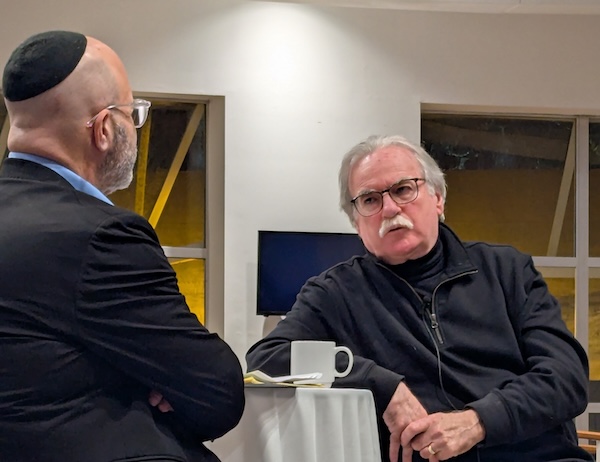
Terry Glavin, right, in conversation with Rabbi Dan Moskovitz Jan. 30, traces the evolution of anti-Israel extremism in Canada. (photo by Pat Johnson)
At times, the world seems to be going off the rails, with Canadian activists overtly cheering on terrorists and celebrating the atrocities of Oct. 7. But Terry Glavin, a BC writer and thinker with a lifetime of experience on the ground as a journalist in the Middle East, thinks a reckoning is coming.
Speaking with Rabbi Dan Moskovitz at Temple Sholom Synagogue Jan. 30, Glavin, who says he comes from the political left, sees “a very, very disturbing and destructive phenomenon in all of the places where the left used to be.”
Part of that is a consequence of a change in global dynamics.
“Where there was once a fairly robust sort of proletariat internationalism on the left, there was something that was emerging by the ’60s and ’70s that was kind of a Third Worldist, anti-Western substitution for a genuinely progressive working-class internationalism,” he said. “That has had enormous implications in the trajectory of human history – very disturbing implications.”
The socialist or communist ideal never took hold in the West and that sent proponents seeking a spark that could catch fire.
“The working class simply didn’t take up the offer of overthrowing the state and seizing the means of production,” said Glavin, “so a lot of people on the European left went looking for a new proletariat and found it in Third World revolutionaries. Sometimes that was actually a legitimate thing to do. But, in the context of the so-called Arab world, what has often as not occurred is that bonds of solidarity would be forged with some of the most reactionary, anti-liberal, anti-progressive, theocratic, fascistic movements.”
Lacking a coherent political ideology, the movement coalesced around “anti-imperialism,” whose unifying principle was simply sharing the same enemies.
“All you have to basically do is say ‘I’m against the Americans, I’m anti-imperialist,’ and you’re in,” Glavin said.
The collapse of the Soviet Union was disorienting to the left, which then discovered the politics of anti-globalization. This created more strange bedfellows, Glavin said, because denouncing the International Monetary Fund and the World Economic Forum had once been the purview of the right.
Then, after the 9/11 terror attacks, anti-globalism took a backseat to what its adherents called an “antiwar” movement. Glavin takes exception to the term, because he said it was not an antiwar movement so much as a movement that sided with the West’s enemies in the wars in Iraq and Afghanistan.
“That’s a fairly serious charge to levy,” he said, “but organizationally and institutionally, that is actually a fact, in Canada particularly.”
A series of annual conferences in Cairo during the first decade of this century brought together global organizations including Canadian groups like Toronto Stop the War Coalition, the Canadian Peace Alliance, the Vancouver Coalition to Stop the War and others. In Cairo, they were joined by representatives of terror groups including Hezbollah, Hamas, Palestinian Islamic Jihad and the Popular Front for the Liberation of Palestine. These ostensible antiwar groups, and these decidedly violent groups, developed a program that opposed “imperialism.” And, vilified above every evil was the perceived imperialism of Zionism.
“At its very birthing, at its very centre, was anti-Zionism,” Glavin said.
While most of these Canadian activists probably self-identified as leftists, they had made common cause with the descendants of history’s most extreme right.
“We sort of imagine that there was this horrible phenomenon of Nazism that consumed millions and millions and millions of people in a world war and then we won and then it was over,” he said. “People forget that the same philosophy, the same ideology, the same antisemitic hatreds, were spreading throughout the so-called Arab world, throughout the Maghreb and the Levant, and Iran as well, in the 1920s and 1930s. It persisted.”
Glavin explained the direct line from the Nazi collaborationist Arab leaders of the 1940s and successive decades of forces in the region that translate and promulgate Mein Kampf and keep the flame of fascism alive.
Despite this seeming ideological incongruity, Canadian activists returning from Cairo found some receptive audiences for particularly Canadian reasons. Canada is a decentralized, multicultural constitutional monarchy, post-nationalistic and less driven by a cohesive patriotic impulse than some other states, according to Glavin. These fluidities caused Canadians to search for an identity.
“We needed to find a way to figure out our place in the world,” he said.
Canadians were very engaged with the creation of the United Nations, including its Declaration of Human Rights. “So, the United Nations and its protocols have always significantly informed Canadian foreign policy,” he said. “If you vest your foreign-policy principles in an institution that, without anybody noticing for some reason, became largely a function of the police-state bloc and the Organization for the Islamic Conference, you’re going to find yourself in a bit of a spot.”
This may have created fertile soil for the sorts of ideas that these activists brought back from Cairo, he said. It may also explain why “Israel Apartheid Week,” a global anti-Israel phenomenon, began at the University of Toronto and why an anti-Israel boycott movement began in Canada three years before the boycott, divestment and sanctions (BDS) movement was originated by Palestinians.
Meanwhile, as activists claimed to be advocating for peace in places like Afghanistan and Iraq, Glavin said they were instead often working at direct cross-purposes with those peoples’ self-defined interests. Such was the case, he argued, with those who opposed Canada’s engagement in Afghanistan.
“The Afghan left, the Afghan women’s movement, the Afghan student movement, Afghan intellectuals, poets, Afghan socialists, liberals, were all ‘troops in,’” he said. “All these white people in North America and Europe were all ‘troops out.’ Right away, that should tell you something. Something has been broken in the traditions of left-wing solidarity among and between working people around the world.”
Journalists Glavin knew in Afghanistan were baffled by Canadian activists.
“They would see another protest in Toronto,” he said, and they would ask: “Why would they do that to us?”
The left has to be held to account, Glavin said, naming the New Democratic Party specifically.
“Where the hell were you when this was happening? What were you saying when trade union leaders were meeting with Hezbollah, were meeting in Damascus with these blood-soaked tyrants? Where were you?” he asked. “The women of Afghanistan were begging – begging you – to stay with them, just hang on for a couple more years. [They were saying] ‘We’ve got an entire generation of young people coming up now, they’re graduating and they are going to be taking over, and you walk away from us? How could you do this?’”
All of these threads of ideological extremism came together with a particular fervour after Oct. 7, 2023, Glavin argued.
“Immediately, across this country, people were pouring into the streets celebrating the bloodiest pogrom since the time of the death camps,” he said.
This was new, Glavin noted. A couple of decades earlier, at the height of the antiwar movement, activists were not overtly championing the terrorists.
“You didn’t have hundreds and hundreds of people in the streets saying, ‘We are Al Qaeda, we support Al Qaeda, yay Al Qaeda,’” he said. “You have that now – people who are openly, enthusiastically, deliriously, hysterically praising Hamas. That’s different. Something big has changed. Something very big has happened.”
This has affected Canadian Jews severely.
“On Oct. 8, Canadian Jews just didn’t wake up to find that the fabric of the country had been kind of torn by this, but rather that something had been woven into the very fabric of the country itself,” he said.
As things have deteriorated to the point where clusters of Canadians are literally celebrating the mass murder of Jews, Glavin sees a ray of hope. By showing their true colours, these activists have made it more difficult for aware Canadians to ignore the extremism that has consumed parts of our society, including the anti-Israel left. He foresees a reckoning.
“I am optimistic,” he said, “because I do think that most normal people, on any number of fronts, have simply had enough.”