

These “quarantini” cookies were baked by Lynne Altow and her aunt, Alexandra Altow. When Queen’s University closed earlier this month, Lynne stayed at her uncle David and aunt Alexandra’s house in Toronto on her way home to Vancouver, where her parents, Lisa and Andrew Altow, and grandparents, Bill and Debby Altow, live. Debby shared this photo with the Independent.
Category: News
Beauty of spring in Israel
Spring. Every year, it returns like a miracle and Israel is carpeted with wildflowers. There are nearly 3,000 types of wild plants in this tiny land, a wonderful profusion, among the most abundant on earth. Israel boasts a variety of different ecological systems – deserts and marshes, high mountains, dense forests and open fields, with wildflowers to suit each habitat.
Wildflowers are protected in Israel and nature reserves prohibit the picking of any flowers, even the most common, which helps them to propagate over wider areas. In turn, this brings the sunbirds, which feast on their nectar.
The Song of Songs, which we read every Passover, is a most beautiful love poem. King Solomon wrote it as a dialogue between a young shepherd and his beloved: “Rise up, my love, my fair one and come away / For lo, the winter is past / The rain is over and gone / The flowers appear on the earth / The time of singing is come / And the voice of the turtle is heard in the land.”
The flowers he refers to, nitzanim, still carpet the fields – shiny red poppies flaunting scarlet beauty in the grass.
In Jerusalem Forest, delicate cyclamens bloom in the crevices between the rocks. Called Solomon’s Crown (in Hebrew), they lift their pink, cream or lilac heads on slender stalks. Clumps of wild violets, the dew shimmering like diamonds, add their touch of magic.
Israel’s rainy season, mid-October to late March, leaves a bequest of green. Sharon Valley is dotted with tulips and narcissus. “I am the rose of Sharon, a lily of the valleys” – it is believed that King Solomon was referring to the magnificent black tulips of the Galilee.
In spring, even the weeds in Israel are pretty – the milk vetch, which is a thistle, adds purple blooms to the roadside. The rockrose is abundant in forest glades and the orange ranunculus bursts into bloom. Like its velvety cousin, the anemone, it is a protected wildflower in Israel.
The perfume of daffodils – which suffused the winter – still wafts on the breeze and the white, cream, yellow and blue noses of lupins are pushing through the soil. Oleanders are in bud, growing wild by the banks of the River Jordan and near streams in Galilee, promising a burst of summer beauty. And the blue statica reminds us that we, too, have a Mediterranean coast like the famed Riviera. This lovely sea plant flowers from mid-spring to mid-summer, when its corolla drops off and only the sepal remains.
Who says Israel has almost no natural resources? When you see the splendour in the grass of the land’s spring glory, the wildflowers glowing like jewels, you’ll echo the poet’s words: “Had I but two loaves of bread / I would sell one of them / And buy white hyacinths to feed my soul.”
Dvora Waysman is a Jerusalem-based author. She has written 14 books, including The Pomegranate Pendant, which was made into a movie, and her latest novella, Searching for Sarah. She can be contacted at dwaysman@gmail.com or through her blog dvorawaysman.com.

Chai Lifeline in the city
A group of nine Jewish boys from Toronto was in Vancouver recently, courtesy of Chai Lifeline Canada. (photo from CLC)
A group of nine Toronto boys, aged 10-15, recently enjoyed a three-day, all-expenses-paid trip to Vancouver, courtesy of Chai Lifeline Canada, a national charity that supports the families of children or parents who suffer from serious illnesses.
The boys – each of whom has a sibling or parent who is sick – were invited on the trip as a diversion to their family challenges and as an opportunity to bond with other kids in similar situations. Students of seven different Toronto schools, the boys didn’t previously know one another, but came back from the Feb. 28-March 2 trip with strong, new friendships, said Chai Lifeline caseworker Shmuel Rosenberg.
Welcomed by the Vancouver Jewish community, the boys arrived in the city to a group of local boys handing out care packages and then joined them for an excursion to a trampoline park.
A special Shabbat was hosted by Congregation Schara Tzedeck, where the Toronto boys had the opportunity to bond with more of the local community and experience a walking tour of the city, led by Schara Tzedeck’s Rabbi Andrew Rosenblatt. Other weekend highlights included skating on the top of Grouse Mountain and hiking amid spectacular views.
Based in Toronto, with an office in Montreal, Chai Lifeline Canada has nearly 600 volunteers helping more than 2,000 family members nationally. The organization provides dozens of free initiatives to help give children stability and their families a sense of normalcy. Initiatives include counseling, tutoring for children missing extended periods of school, family retreats, sibling programs similar to that of Big Brothers, Big Sisters, and summer camps for kids. For more information, visit chailifelinecanada.org.
Talking helps reduce stigma
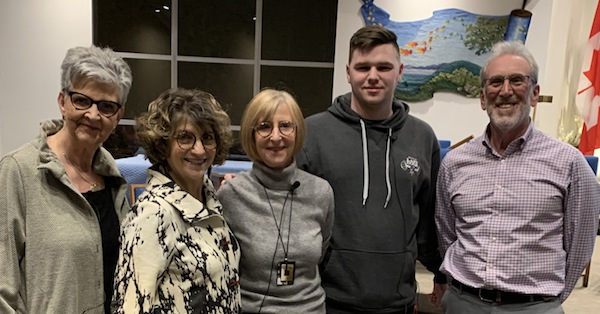
Left to right: Peggy Allen, Shelley Karrel, Shelley Rivkin, Jordan Bowman and Howard Harowitz. (photo from JACS Vancouver)
The capacity for transformation and healing was front and centre at the event Optimism and Hope: Erasing Stigma of Mental Illness, Addiction and Homelessness.
Co-sponsored by Jewish Family Services (JFS), Tikva Housing and Jewish Addiction Community Services (JACS) Vancouver, the panel discussion on Feb. 26 was held at Temple Sholom. It featured Shelley Rivkin of the Jewish Federation of Greater Vancouver, Abbotsford entrepreneur and volunteer Peggy Allen, and Jordan Bowman of Last Door treatment and recovery centre in New Westminster.
Temple Sholom’s Rabbi Dan Moskovitz welcomed those gathered by talking about the Aleinu prayer, which, he said, asks us “to go out into the world and do what we’re praying for. And so, if I can make a request of all of us, myself included, it’s to go out from this room and to do and to share what we’ve learned and what we’ve heard tonight with our families and with our broader circle. That’s our shlichut, that’s our sacred mission, beyond just coming here today to get what we need for ourselves.”
JACS Vancouver board chair Howard Harowitz briefly described the missions of each of the event sponsors before introducing the night’s speakers, beginning with Rivkin, who shared the stories of a few community members who have been impacted by the risk of homelessness. She prefaced her remarks by saying homelessness is not limited to people living on the street or who live in shelters. Rather, the growing concern in our community is “relative homelessness, the lack of suitable, consistent and predictable housing,” she said.
She also noted that “it is not a natural equation that addiction, mental health and homelessness are faced by all people” in need. “Each person has to be approached individually and uniquely,” she said, then listed six sources of support in our community: JFS, Tikva Housing, Yaffa Housing, JACS, the Kehila Society of Richmond and the community’s synagogues.
Originally from Regina, Sask., Allen has lived in Abbotsford for a long time. She lives in an area where homeless people have gathered since the Salvation Army moved into the neighbourhood in 2004. A wife and the mother of two children, the situation was very difficult initially. She shared stories of her young granddaughter witnessing people having sex and shooting up, and of being chased out of her home by a crack addict.
“I was quite a happy person and then the homeless moved in and I changed forever,” she said. “I got angrier and angrier and angrier and I ended up making, in 15 years, I made 463 calls to the police. And they came every time and did nothing, because what are they going to do?”
Allen said she became very depressed. Then, she was invited to a meeting at city hall about the homeless. She challenged attendees to come and see the extent of the problem for themselves, and two women from Fraser Health took her up on it. Over coffee, Allen shared with them her concerns and, despite her self-described antagonism to them, they invited her to speak at a meeting of the Drug War Survivors, a peer-based user group that participates in the development of harm-reduction policies, among other things.
Reluctantly, she agreed. Expecting an audience of maybe 10 drug addicts, “there were 110 of them,” she said. “I look around and I open my mouth and I just let it all out. I don’t know what happened, it was a miracle, really. I talked about my father and I talked about him beating my mother so desperately,” waking Allen’s sister, who was told to return to bed by their mother, and did. “That’s what we were raised with,” said Allen. “I had never spoken about it, and I just let it all out,” including how she was kicked out of a school in her teens for selling drugs.
After her remarks, audience members lined up, but she didn’t know why, so she started to leave. “As I’m walking out, the first guy comes up and hugs me. They were all standing there to hug me,” she said, holding back tears.
One of the men recognized Allen from secondary school. He shared with her that he was raised with such anger that he went down the path of drugs, whereas she – who his family warned him about as a teen, since she sold drugs – did not. He said to Allen, “I see now that I, too, can change my life.”
This interaction, she said, changed her life. “I went home, and I was walking up the driveway to get the mail and this crazy lady that lived on the street and was a huge drug addict and was nasty and did not like me, she came running up my driveway swearing and yelling at me with this other guy. I was so emotional, I went running at her, I don’t know what I was going to do, and I stopped. I changed my mind. I turned around and I went home. And my life changed. Everything on our street is still happening and nothing has changed much there, except me.”
Allen started giving to the homeless. She joined the city’s Business Engagement Ambassador Project, which works to build relationships between Abbotsford residents, business owners, homeless and others to strengthen the sense of community. “What I do is I speak all over the place and raise money to help them help themselves,” she said of those who are homeless.
The project is a year-and-half old and she described it as a success. One aspect in particular that is working, she said, is that the program pays homeless people to clean up area businesses and parks.
The last speaker, Bowman, now 22 years old, has been clean for just over four years. He is a youth program support worker at Last Door, the centre at which he was set on the path of recovery.
Bowman said he had a good upbringing, went to Jewish summer camp and day schools, was into sports, has lots of friends and has a great family. Having lost his mother to cancer when he was 10, he said, “That was obviously tough, but by no means do I point my finger at that and say, ‘that’s when I started using drugs.’”
He described his life as normal, living with his dad and brother. There were no indications, he said, that he would become an addict. Addiction does not discriminate, he said, and people need to know that. His family, he said, were completely surprised to find out about his drug use and were “unversed in the topic of addiction.” Luckily, he had a cousin who works as a drug and alcohol counselor and “she saved the day” when it came to him seeking help.
At age 14, Bowman started to experiment with marijuana. He couldn’t say exactly why he started using harder drugs, but perhaps he had just gotten in with the wrong crowd. He described the process as progressive. “It went from using once in awhile to using every day, to doing whatever it takes,” he said.
“I’m not going to get too much into the things I did to get to get high every day but it definitely involved a lot of stealing from the people very close to me. It didn’t matter if you would love me, if you would hate me, if you were older, if you were younger, if I had the chance, I would try and rip you off if I was with you, and that was the reality of my life.”
From age 16 to 18, he was using opiates every day, while still going to school, while still trying to cover up that he was an addict. “I wanted help, but I didn’t,” he said. “I wanted help because I knew in my mind that I could be a better person than I’m being right now but, in the other part of my mind, I was scared and I wanted to keep getting high.”
The breaking point came when he stole a significant amount of money from his brother. From that day, when his brother reacted with love rather than anger – Dec. 22, 2015 – the efforts at recovery began, with the help of his father, brother, cousin and others. There were a few false starts, a couple of detox and treatment centres, before he landed at Last Door in mid-January 2016. He has not used drugs since.
Waiting times and the cost of treatment were among the topics discussed in the question-and-answer period. Giuseppe Ganci, director of community development for Last Door Recovery Society, was in the audience. He explained some of the different levels of care, ranging from assisted living residences, for which there are minimal guidelines, to treatment centres, which will have psychiatrists and other professionals on site. The definitions of the levels differ between regions in the province, he said, making the system hard for people to understand and, therefore, access.
“The problem is,” he said, “you always hear there are not enough beds in British Columbia. That’s actually a myth. There are so many beds. Last Door runs probably at 80% capacity every day [and has] for years. We have about 100 beds and only 35 of them are funded [by government]; the rest, there’s no funding for them, so it’s a shortage of funding for treatment, it’s not a shortage of beds.” This means that people who can afford it are able to get treatment within 24 hours, rather than join the queue of six to eight weeks or longer, he said.
After a couple more questions, Harowitz wrapped up the event. Addiction is not a choice, he stressed, citing JACS speaker Steve Whiteside. “It’s not a weakness of character, it’s not anything other than any other kind of disease that people have,” he said, challenging the audience “to keep the conversation going.”
Israeli pucksters visit
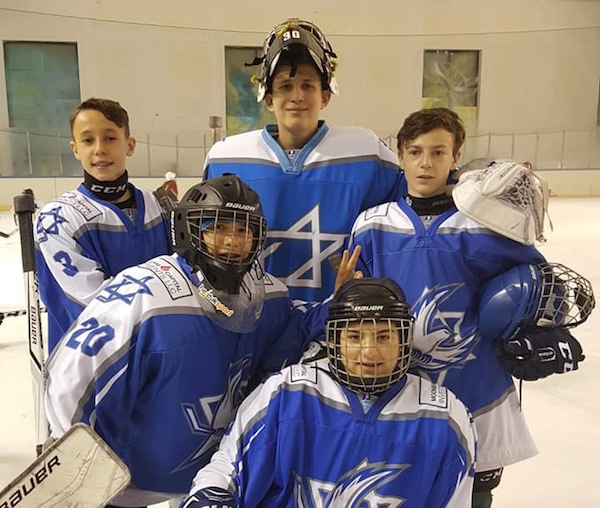
Members of the Hockey Academy of Israel. (photo from Kyle Berger)
The Jewish Community Centre of Greater Vancouver, along with the Jewish Federation of Greater Vancouver, played host earlier this month to 27 young hockey players from Israel’s Northern District who were in town for an eight-day visit.
The stops for the athletes, ages 10 to 14, on their March 5-13 Vancouver trip included a fundraising exhibition game against the JCC league (which had some former NHL players in attendance), the JCC Purim party March 9, which had a hockey workshop for kids in the gym, and a Canucks game on March 10, where Vancouver took on the New York Islanders. The Israeli junior players also had a practice skating session with Barb Aidelbaum, one of Canada’s top power-skating coaches, and ate meals at the Israeli-owned Chickpea and the Palestinian-run Aleph restaurants.
The co-ed group, comprised of youth from a variety of backgrounds – Jewish, Muslim, Christian and Druze – is part of the Hockey Academy of Israel (HIA). Situated in Metula, Israel’s northernmost town – along the border with Lebanon – the HIA (formerly the Canada-Israel Hockey School) was started in 2010 thanks to the drive and ambition of a local Israeli apple farmer and hockey aficionado, Levav Weinberg, and the initial financial support of Canadian media mogul Sidney Greenberg. Presently funded by donors from around the world, the HIA sees as its goal to make hockey fun and affordable for kids who otherwise would not get the opportunity to play.
Since its inception a decade ago, the HIA has witnessed a growing passion for the game in Israel and now boasts more than 400 young players in its academy, all of whom play at the Canada Centre in Metula, home to the only full-sized hockey rink in Israel. This is the second time a group from the HIA has visited Vancouver, a trip that was organized by the JCC and financially supported by the Jewish Federation. Members of the HIA also have visited other NHL towns, such as Ottawa, Pittsburgh and Winnipeg.
The existence of a camp in an area that has frequently made headlines for regional animosities has shown that much good can arise from sport. Many lasting friendships between players of different ethnicities have been formed at the academy.
“There are few things in the world that bring people together the way sports can,” said Kyle Berger, sports coordinator at the JCC and local delegation head for the Maccabi Games. “Sports bonds teammates together, it bonds countries together and, in some rare cases, sports can even bring peace and unity when such things seems almost impossible. This is the magic of the Hockey Academy of Israel, which brings both Jewish and Arab youth and their families together in the name of hockey.”
The HIA says it has found that, as passion for hockey grows in a region surrounded by political conflict, so too grow the bonds and respect these teammates from different cultural and political backgrounds have for one another.
Berger, along with other members of the Metro Vancouver Jewish community, has visited the hockey academy on several occasions, starting in 2012. He told the Independent that he “was blown away” by what he saw when he first arrived. “I had no idea as to the extent of the passion and the intensity the hockey academy has created for the game in Israel, and how much it has done to unite people of different cultures,” he said.
Hockey in Metula, which was featured in the 2013 TSN documentary Neutral Zone, has had a short, yet storied, history. Before the HIA was created, Canadian coaching legend Roger Neilson taught a camp in Metula in the late 1990s and played an integral role in establishing a fervour for the game in Israel.
The HIA is presently coached by Torontonian Mike Mazeika, who believes “the main goal of the academy is to integrate Jewish and Arab kids together, playing hockey, so that they can understand each other and make a difference for the future. Is that going to get us peace in the Middle East? No, probably not. But, if you don’t start small and take small steps, you’ll never be able to take a big step.”
The JCC and Jewish Federation were helped in various ways to support the HIA’s visit, including by host families, sponsors or venue/activity donors. For more information, contact Berger at kyle@jccgv.bc.ca or 604-638-7286.
Sam Margolis has written for the Globe and Mail, the National Post, UPI and MSNBC.
A focus on the environment
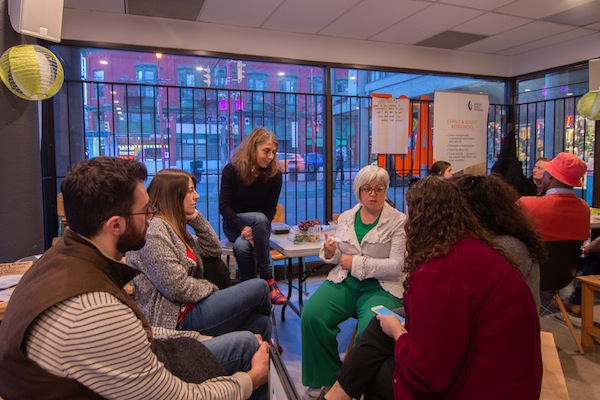
Transportation and sustainability consultant Tanya Paz, centre, participates in Tu b’Shevat Circle: Teachings from the Earth, an event spearheaded by Or Shalom Synagogue in partnership with Jewish Family Services, JQT Vancouver and UNIT/PITT Society for Art and Critical Awareness. Or Shalom’s Rabbi Hannah Dresner is seated on the stool to Paz’s right. (photo by Matt Hanns Schroeter)
More than two dozen individuals whose work involves food security and climate change issues met on Feb. 9 for Tu b’Shevat Circle: Teachings from the Earth, an event spearheaded by Or Shalom Synagogue in partnership with Jewish Family Services, JQT Vancouver and UNIT/PITT Society for Art and Critical Awareness.
Those who gathered work or devote time to such organizations as Grandview Woodland Food Connection, Sustainabiliteens, Coquitlam Farmers Market and Extinction Rebellion. They came together to explore various topics, including how their Jewishness intersects with their work in secular organizations, envisioning a sustainable world and the Jewish community’s role in social justice.
“I noticed that so many of these organizations are spearheaded by young Jews and felt it important to create an opportunity for them to see one another and recognize this aspect of kinship in their work … and whether this commonality enhances the work, draws them into kinship or stimulates any collaboration,” said Or Shalom’s Rabbi Hannah Dresner.
Or Shalom brought on Carmel Tanaka to organize a gathering. Through meetings with young adults and stakeholder groups, Tanaka met a number of people whose careers relate to food security and social justice, but most weren’t working for Jewish organizations nor were they connected to one another within a Jewish context. She and Dresner agreed it was worth bringing them together to see what conversations would blossom.
Tanja Demajo, chief executive officer of Jewish Family Services, said JFS provided funding for the event because they believed in the value of the project.
“There are a lot of Jewish and young Jewish people who are interested in food security and questions of accessibility, which is very interesting from a perspective of … whether this work is modulated by [Jewish] values and how this translates to day-to-day practice,” she said. “At the end of the day, it didn’t really matter if the different participants were working in a Jewish or non-Jewish community.”
Some attendees revealed that, for them, being Jewish is secondary to their focus on environmental issues.
“The room was full of people who identify in varying degrees with their Jewishness and, for some, it’s an important aspect of their identity and, for others, it isn’t integral,” Tanaka said.
Dresner spoke to the indelible connection between environmental action and Judaism. “In my understanding of Judaism, saving our world is at the heart of what it means to have a Jewish spiritual life,” she said. “Creative energy, or the vitality of spirit, is always flowing toward us. It’s what I’d call the ‘world that’s always coming,’ or the ongoing nature of creation. We can encourage and aid this vitality, helping to direct it where most needed, or we can impede the flow. When we are selfish and impede creative flow, the result is a deprivation of generative spirit, spirit denied to corners of creation, and we see results like species blinking into extinction.”
The rabbi wants to spend more time with young Jews working in social justice. “The Judaism I believe in mandates their work as the highest mitzvah of our moment,” she said. “It’s a misconception born of the compartmentalized Judaism in which many of us were raised not to understand that attention to the environment is a Jewish priority.”
Aaron Robinson, chair of Grow Local Society Tri-Cities, a food security group that runs the Coquitlam Farmers Market, said his work for the organization won’t ever have a Jewish mandate, but his Judaism is tied into what he does. “Personally, I can never underestimate the role that Jewish values play in the way I see the world, especially when it comes to tikkun olam,” he said, adding, “I guess it’s become engrained in me, but it was nice to bring it back to the surface to see, wow, there is this Jewish connection to all this work that we’re doing.”
Robinson appreciated the opportunity to connect with other Jews working in similar fields and hopes the conversations will continue.
Some people discussed not feeling supported by the Jewish community to undertake the work they do within a Jewish context. Tanaka said she believes the Vancouver Jewish community hasn’t focused attention on these issues until recently, citing the 2019 climate march and protests as a galvanizing factor, and said it’s time for the local community “to support young Jewish adults who are doing this kind of work … because these are Jewish issues at the end of the day.”
Some at the event suggested funding for environmental advocacy was needed. Dresner said there was also a desire for bridge building. “They seem to be asking for an arm of organized Jewish community to create some occasional containers for their gathering, just to share within the hybrid of their niche or to explore potential collaborations,” she said. “Or Shalom will be looking at finding funding to continue holding this group and its outgrowth in a loose, nurturing embrace.”
Demajo said the JFS food security program has already benefited from the event. “Being exposed to more city-wide programs and initiatives and being exposed to all different voices gives a different perspective to JFS,” she said, “because it opens up new ideas.”
Shelley Stein-Wotten is a freelance journalist and comedy writer. She has won awards for her creative non-fiction and screenwriting and enjoys writing about the arts and environmental issues. She is based on Vancouver Island.
For Nanaimo-area kids
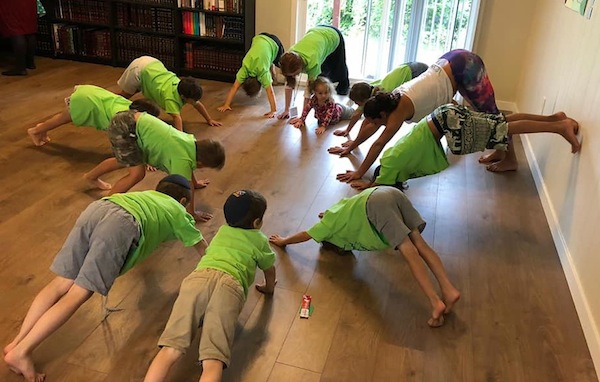
The first Camp Gan Israel in Nanaimo was last summer at the Shemtovs’ home, which doubles as the Chabad Nanaimo centre. (photos from Blumie Shemtov)
For the first time last summer, Blumie Shemtov offered a Jewish day camp for kids 5- to 10-years-old from her home in suburban Nanaimo, where she and her husband, Rabbi Bentzi Shemtov, operate Chabad Nanaimo and Central Vancouver Island. With no dedicated Jewish infrastructure in the city, families in the small and relatively disparate Jewish community are enthusiastic about the day camp.
A few years after Chabad Nanaimo started up, Blumie Shemtov met several families interested in having their young kids experience Jewish camp. She offered the five-day Camp Gan Israel in July 2019. Shemtov was struck by the sense of belonging that developed among the 10 children who attended, most of whom are the only Jews in their schools, she said.
“The idea was a week where children could be around other Jewish children and gain that sense of pride … and know that they are not the only ones” in the community who are Jewish, she told the Independent.
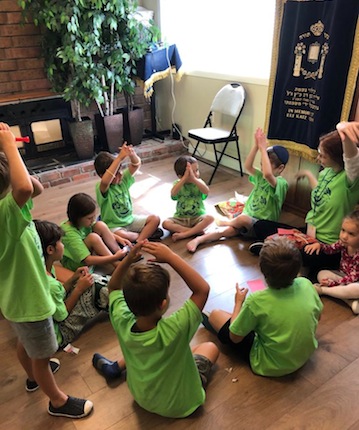 Jewish prayer, songs, culture and history were taught against a backdrop of recreational activities. Much of the day was spent in the Shemtovs’ backyard and large downstairs recreation room, but, to expand the activities, Shemtov and her counselors took campers on day trips to the beach, forested trails and even a trampoline gym.
She said, while some families attend holiday events throughout the year, the camp was the first immersive Jewish experience for many of the children.
“There’s something that’s holding everyone together,” she said. “The Jewish aspect that they don’t get regularly, I think, is an extra plus that makes people feel automatically closer together. Some people don’t feel the need [to be in Jewish community] until they have it.”
Research in recent years about the value of Jewish day camps has suggested they create long-term personal investment in Jewish community, much like overnight camp experiences, but have a lower barrier to entry financially and may have the ability to reach more children and families.
A 2018 report by Judith Samuels for the Foundation for Jewish Camp noted that day camps engage parents in the experience as well and allow “for a greater partnership between the camp and the camper’s parents surrounding the growth and skill-building that takes place at summer camp…. Unlike in overnight camp, day campers return home to their families each evening to share stories, songs and new learnings from their day.”
A companion report authored by Ramie Arian suggests why day camps might work so well in regions with no formal Jewish community space. It concludes, “Day camps can operate with much greater flexibility in the size and shape of their facility” than overnight camps.
Basha Bishop wanted her two daughters to attend the Nanaimo camp so that they would have more exposure to Jewish culture and history and “learn more about their heritage.” Both girls have grown up in Nanaimo and attend some events at Chabad throughout the year. While Bishop believes her daughters already had a strong sense of being Jewish, the camp was “important for them to have the exposure” to Judaism. At home, they talk about Jewish values and discuss Jewish-related topics, but, mainly, Bishop wants to teach her kids that “they have options available as their faith.”
“They’ve always adopted this idea of everything is kind of fluid – there’s no one way of doing anything,” she explained. “They can take what they need and feel like a part of community.” She said they will attend the camp again this summer.
Shemtov thinks the effort people made to have their kids attend is a testament to their dedication to community-building and Jewish learning.
“The beautiful thing I see here is, in other places, people send their kids to camp to get them out of the way, to give them something to do,” Shemtov said. “Over here, some parents are almost sacrificing their family time and vacations because they feel this camp is more important … and the experience [their kids] are going to gain is important.”
If more families come forward, Shemtov will consider extending the camp to two weeks this July. For more information, visit jewishnanaimo.com.
Shelley Stein-Wotten is a freelance journalist and comedy writer. She has won awards for her creative non-fiction and screenwriting and enjoys writing about the arts and environmental issues. She is based on Vancouver Island.
Supporting gender diversity
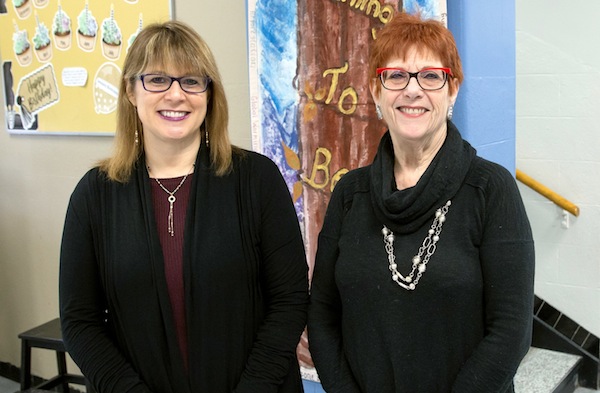
Ara Morris, principal of Brock Corydon School, left, and Naomi Finkelstein, co-founder of Parents Family Friends of Transgender Individuals. (photo from Morris and Finkelstein)
The Winnipeg School Division recently assembled a panel to discuss ways to best support trans and gender diverse children and youth, especially in school settings.
Ara Morris, principal of Brock Corydon School, was invited to sit on the Jan. 22 panel, which took place at Prince Charles Education Resource Centre. “Our school has been very active in talking about gender,” said Morris. “We’ve been making changes to our school as a result of having children in our school who are transgender. We want all of our students, all of our families, to feel included, important, and as equal members of our community and so, to do that, sometimes we have to reflect on the different ways that we are speaking, the different language that we are using.
“We know that many times children identify themselves in all different ways,” she said. “We want to be respectful of that. We have had a lot of professional development for our teachers and that has included programs from the Rainbow Resource Centre,” which offers support, counseling and educational programs for LGBTQ2S+ individuals and allies.
Brock Corydon has invited the parent of a transgender student to speak with school staff, and teachers have led sessions among themselves, as well as having had other teachers come to share how they work on being inclusive in the classroom.
“Our school division has a policy and it was updated in June 2018 for diversity and equity,” said Morris. “With all the research that our school division has been doing, I’d be surprised if other school divisions weren’t doing the same.”
Morris has received many phone calls from other principals asking for suggestions, and she works with parents to identify any needs, such as the need for a gender-neutral bathroom, which the school now has.
Even though full-time staff has been educated on the topic, part-time or causal staff also need to be informed about the proper way for teachers to speak at the school, including the use of gender-neutral language.
Naomi Finkelstein, a retired teacher and the mother of a trans child, was also on the event panel. Finkelstein was dealing with the situation 13 years ago and recalled having tried to find proper supports, which were lacking. She started a support group with another parent, called Parents Family Friends of Transgender Individuals (PFFOTI).
“I had a daughter and, when she was about 20 and a half, she came out and shared that she was transgender,” said Finkelstein. “I knew that this was something I was going to have to get support for, so I went to the Rainbow Resource Centre.”
PFFOTI started out with the two founding members and is now providing support to 170 parents. “Of course, that many do not come to all the meetings and, really, what happens is people kind of grandfather out. Their children are older now, they’ve made their transitions … maybe some have had surgery and they don’t feel the need to attend anymore. We’re always getting new people,” said Finkelstein.
“Our group is specifically for parents,” she continued, “because there are some parents who have just found out and they need the support. And there are always Kleenex boxes on the table. For some parents, it is a real shock.
“I was shocked, too, but I did my crying at home in the shower, which was really very good. There was something, I don’t know why, it was almost like being in a womb, feeling protected in there…. We want the parents to be able to share their fears and concerns; you can’t do that if a child is there.”
Over the years, Finkelstein has developed a list of do’s and don’ts for parents who suspect that their child might be trans.
The do’s list includes respecting your child’s identity and following your child’s lead and listening to them about what trans is all about. Each child is different and there’s no right way to be trans. As Finkelstein pointed out, “some go on hormones, some don’t, and some just dress in what they consider the gender’s clothing.”
The list encourages parents and others to learn about the difference between sex and gender – gender is a social construction, whereas sex is biological.
PFFOTI advises parents to start by helping and educating themselves so they can better help their child. “This involves reading and coming to support groups,” said Finkelstein. “And parents need to take into account if there are other siblings. There can be issues for the other siblings, and they need to be educated, too.”
If the children are minors, parents need to take the lead in setting up doctors’ appointments, buying appropriate clothing, getting haircuts, etc.
“Truly, the key to success is offering the kids your unconditional support,” said Finkelstein. “One of the support groups online, their motto was, ‘Fake it until you make it.’ But, we also talk about what parents need to do within the school system and that they need to advocate for their children. Although the human rights law says that they have rights, not all school divisions are on board. Winnipeg [School Division] 1 is totally on board and they have a process. We need parents to take part in the process and get the school to take part in the process.
“And a critical thing is bathroom talk,” she said. “You have to talk to your child before you go to the administration, so you’re both on the same page as to what the child wants to do. Some schools now have non-gender-specific bathrooms, which is great. I wish every school would have one.
“And then they have to talk to the administration about what their rights are. They should know those rights before they go in.”
Setting up a safe person at the school, with the help of administration, who the child can go to, someone who affirms their identity, if they are having problems, is also important, as is talking about the school’s anti-bullying policy and how that is handled.
“Past the age of 12 and up, you’re also dealing with all these hormones that rage through the child’s body,” said Finkelstein. “So, some kids are going to have to get on blockers to prevent their periods and their breasts from developing, and stuff like that.”
Parents and others must understand that a child’s identification as trans is not likely a passing phase. Although some children identify as trans and later change their mind, that is uncommon. So, do your best to avoid calling your child by their previous name, said Finkelstein.
Parents “really have to make an effort not to misgender,” she said. “Misgendering kind of denies their existence as a person, and that’s a big negative. But, as a parent, if you screw up, you just apologize. I think kids are very understanding about that. As long as you don’t deliberately misgender a child, they are open to the fact that, you’ve had them for 13, or 18, or 20 years, and, yeah, that other name is going to come out. It takes you awhile to reformat.”
Another PFFOTI recommendation is to never out your child – let them do it when they are ready.
“Statistics have proven that, [even] with children who are trans who get support from their parents and their family … four percent commit suicide,” said Finkelstein. “The statistics are much higher – about 45% – for those who do not get support. This past summer, we lost four kids (three in Winnipeg and one who had moved to Vancouver).”
Finkelstein regularly checks in with her son to talk about his mental health and to assure him she accepts him as he is.
Rebeca Kuropatwa is a Winnipeg freelance writer.

Creation of now-iconic pant
Jeans bearing the Levi Strauss & Co. trademark.
Nothing quite compares to the essential staple that almost all of us have in our closets, with styles including flare, skinny, low-rise, high-rise, boyfriend, ripped, the list goes on. If you haven’t guessed already, I’m referring to jeans. They epitomize fashion versatility, taking us from a city stroll in a pair of sneakers to our favourite restaurant in the evening with a boot or dress shoes. There are few fashion houses, from couture to street wear, that haven’t designed their own style. But, for the original jean, we have to thank Levi Strauss & Co.
Loeb Strauss, born 1829 in Bavaria, was the youngest of seven children. At age 16, after his father’s death and with increasingly harsh restrictions and discrimination towards Jews, he decided – with his mother and two of his three sisters – to move to New York. There, two of his brothers welcomed him into their dry goods business.
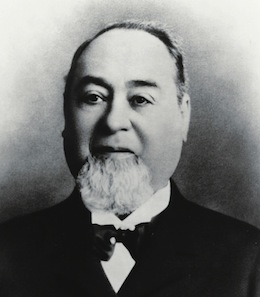
In the 1850s, in the midst of the gold rush, Strauss saw potential opportunities to set up shop in the West and he did so, opening a branch of the family business in San Francisco, where he changed his name from Loeb to Levi.
Levi Strauss & Co. became a rapid success, selling merchandise to local customers as well as to those in neighbouring cities. Strauss became a respected figure among the Jewish community, known to have a sharp business mind and a kind demeanour. He was also known for giving back to community, donating to both Jewish and non-Jewish charities.
The nature of the business – and the course of fashion worldwide – changed when Strauss was approached by Jacob W. Davis, a regular customer and acquaintance, who came to collect an order of canvas for his tailoring business. Davis made durable work wear, or “waist overalls,” as he called them, from special fabric that was primarily used to make tents. Having developed a system to prevent the overalls from ripping at the pockets by adding copper rivets at the corners (allowing them more longevity), he knew he discovered something big but, in order to proceed, he needed financial backing, primarily for the patent fee. Strauss became his business partner in 1873.
Levi Strauss & Co.’s jeans were produced largely for the labour workforce. However, over the years, they became a choice piece of clothing for women and men in any profession, at least when not working. Levi’s entered the world of film in 1938 when John Wayne wore a pair of Levi’s 501 jeans, transforming them into the American cowboy’s leading attire.
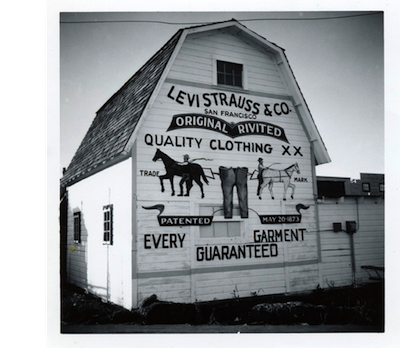
The financial success of Levi Strauss & Co. allowed Strauss to expand his business to many diverse industries, from banking to electricity. His philanthropy also expanded and he gave to many Jewish organizations, notably helping found and establish the Reform congregation Emanu-El in San Francisco.
While Strauss never married and had no children of his own, he had a strong relationship with his nephews. When he died, in 1902, Levi Strauss & Co. and most of his estate went to his four nephews and other family members; many charities were also beneficiaries named in his will.
Over six generations, Levi Strauss & Co. has remained a family-run business, manufacturing not only jeans but other casual wear, accessories and a children’s line. One of the largest brand apparel companies in history, the Levi Strauss name is universally recognized. Now run by the Haas family, decedents of Strauss, the family and business continue Strauss’s legacy in another important way – by being one of the most charitable families in the Bay Area.
Ariella Stein is a mother, wife and fashion maven. A Vancouverite, she has lived in both Turkey and Israel for the past 25 years.

Predicting the future
Trend forecasters Lior Fisher Shiloni, left, and Nataly Izchukov. (photo by Michael Topyol)
What do jeans, trench coats and a little black dress all have in common? A place of honour in women’s wardrobes, that’s for sure. And it’s no accident – the three are timeless trends that have been around for decades.
“A trend is a state of mind, a very, very wide perspective that begins in the margins and slowly reaches the masses,” said Israeli trend forecaster Nataly Izchukov. “A trend undergoes evolution and is here to stay. People always think it comes and goes, but that’s actually a mistake. It develops and updates, and it’s here to stay.”
In 2014, Izchukov founded the Visionary, a Tel Aviv lifestyle and design trend forecasting agency that deciphers for its customers the way the wind is blowing. She and her business partner, Lior Fisher Shiloni, also expose the Israeli public to the art of forecasting and even pass on their knowledge in a first-of-its kind local “trendology” school.
Forecasting the future, Izchukov explained, begins in researching the past. She and her team study what has happened in the past year or so across the world, from politics and economics to natural disasters, cinema and fashion, and try to understand how it will affect esthetics and designs. “For example, one of the leading trends for the summer of 2020 is going to be acid-bright colours,” she said. Its source of influence? The yellow vests movement in Paris.
The second step is social research, which involves identifying their clients’ audience and what interests them on social networks and in the media. The third step is what Izchukov calls iconography, the interpretation of the findings in a more abstract way. This all leads to conclusions regarding megatrends and the microtrends that ensue.
Izchukov gave the example of older solo women travelers. More older women are jet-setting off by themselves, but are still looking to feel safe and secure and have a sense of community on their travels. This translates into many different microtrends for Izchukov’s clients, including how hotels are decorated and the colour palette that best suits their guests.
The biggest megatrend, however, is sustainability. “It deals with promoting the status of women, with poverty, with education, it’s a very, very wide issue,” said Izchukov.
Trends are not fads. Fads are not sustainable; they enter and exit our lives quickly. Top examples of fads, Izchukov noted, are Kardashian-style cycling shorts, the 1990s digital pet Tamagotchi craze and a recent favourite – handheld spinners. By contrast, a trend can take three to four years to go mainstream, and not all businesses have patience for such a process.
“They mostly want us to create fads, but we’re really seeing a change developing in 2020,” she said of her clients. “The biggest change is the extreme climate happening across the world. What happened now in Australia [with widespread bushfires] is one of these extreme cases that made people say, ‘OK, there’s a problem here.’ There was great denial of the topic among companies.”
The emphasis on sustainability is causing apprehension in the Israeli business scene, she said. One of the problems is the high cost of creating sustainable fashion.
“The product ends up being expensive and people don’t really want to spend that money on it,” Izchukov said. “There’s still a gap between the goodwill of people for the world to be a better place, and people wanting a good and attractive price, and you have to think how to bridge it.”
Izchukov predicts some big changes in the coming decade for fashion, food and hospitality in Israel.
“In fashion, a few very substantial things are going to happen – mostly companies that will change their appearance and their production lines in a more sustainable, ecological and recycling direction,” she said. “There’ll be fewer stores but these will include a lot more content and information that is beyond fashion.”
In Israel, there will be greater inclusion of people with disabilities in the fashion world, she said. This is in line with the global trend for inclusivity, which sees fashion houses employing ambassadors of all sexes, genders, religions and sizes.
In the Israeli hospitality sector, we can expect “the substantial entry of more hostels and of very affordable hotels,” she said. “They’ll try to create a very interesting experience in their locations in terms of the customer and the hotel itself.”
Izchukov predicts that food will increasingly go in the direction of “how we can eat in a healthier manner that precisely matches our needs and our bodies.”
She said, “Artificial intelligence will greatly help to resolve the issues of need and of customization.”
Food is also a great example of the impact local cultures have on trends. Izchukov noted the failure of American companies such as Starbucks to succeed in Israel. While Israelis like to think that the global giant failed because the local coffee is far superior, Izchukov suggested it has more to do with the Israeli state of mind. Self-service, waiter-less, eateries are a doomed business model in Israel, she said, because locals much prefer personal attention.
Israel21c is a nonprofit educational foundation with a mission to focus media and public attention on the 21st-century Israel that exists beyond the conflict. For more, or to donate, visit israel21c.org.