Israel’s quirky design house

Peleg Design’s Magnetic Vase is a bestseller. (photo from Peleg Designs)

From optical illusion flower vases to playful elephant-shaped cutlery drainers, Shahar Peleg wants his products to bring his customers joy, but first and foremost to fulfil a need in their home.

How does he figure out what those needs are? “Some of the ideas came to us while daydreaming, some in the shower, some we woke up with and some just came to us by email,” reads the website’s Suggest an Idea section.

People from all over the world reach out, the designer and founder of the brand told Israel21c. “Once in awhile, we get a great idea and we pay royalties to the designers or inventors,” he said. “It’s really amazing because a lot of people have a lot of ideas.” For example, the Bag Bunny, a magnetic rabbit-shaped tool for easily opening plastic packaging, was inspired by a customer suggestion.
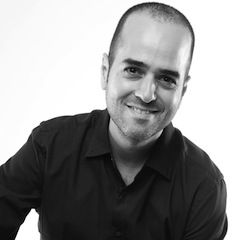
photo - Shahar Peleg wants his products to bring his customers joy, but first and foremost to fulfil a need in their home
Shahar Peleg wants his products to bring his customers joy, but first and foremost to fulfil a need in their home. (photo from Facebook)

Founded in 2005 and based in Tel Aviv, Peleg Design’s online store offers around 100 unique products that stem from everyday needs, each with quirks, twists or optical illusions that Peleg describes as “magical.” Nothing, he said, is what it seems.

The product that kicked off the company’s success was a vase Peleg designed for his own wedding in 2005. These “floating” vases are anchored by magnetic bases hidden underneath the tablecloth. To this day, the vase set is one of Peleg Design’s bestsellers. “It was a huge hit,” he said. “That’s what really began to generate business.”

Another universal problem Peleg wanted to solve was grime building up at the bottom of a cutlery drainer. His answer was Jumbo, an elephant-shaped cutlery holder that drains water out of its trunk, directly into the sink.

Peleg said function is key, and design secondary, to usefulness. But, still, he hopes his customers will fall in love with his “cute” designs.

His newest item, the Egguins, is an example of that cuteness. The penguin-shaped eggholder is not only visually amusing, but makes it easy to remove eggs from boiling water and store them in the fridge. One comment on Peleg Design’s Instagram page calls the item “the best thing since sliced bread.”

Many of Peleg’s products are made from plastic but they are meant to last. Sensitive to environmental issues, he explained that he wants his customers to develop an emotional connection to the items and use them for as long as possible before discarding them.

Passion and profession

Growing up, Peleg dreamed of being an astronaut, but he would eventually find his passion in a different form of exploration: design.

Peleg studied interior design at the Holon Institute of Design. A class project made him realize he had an eye for creating quirky but useful knick-knacks. He had made a wine-bottle holder that seemed to defy gravity. He was able to sell a few even before graduating.

“It started from selling one product in two or three stores in Tel Aviv,” he said. “It’s now become both my passion and my profession.”

photo - The Jumbo cutlery holder drains into the sink straight away
The Jumbo cutlery holder drains into the sink straight away. (photo from Peleg Designs)

What began as a one-man show has expanded to more than 30 countries, including the United States, Japan, Peru, France and South Korea. Some designs can even be found at the gift shop of the Louvre Museum in Paris and the Museum of Modern Art’s gift shop in New York City, where the Magnetic Vase is one of its bestselling items.

Peleg explained that his products are available in most major economies, excluding those that have no political relations with Israel. He hopes one day that will change, and he says so to the businesspeople he meets from countries like Iran and Kuwait.

Every now and then, Peleg receives an email from an Israeli customer, with a photo of his Magnetic Vase on a shelf in the MOMA gift shop. They are so happy to see an Israeli designer’s product among some of the world’s best, he said, noting, “That makes me proud.”

For more information, visit peleg-design.com.

Israel21c is a nonprofit educational foundation with a mission to focus media and public attention on the 21st-century Israel that exists beyond the conflict. For more, or to donate, visit israel21c.org.
Local team’s global impact

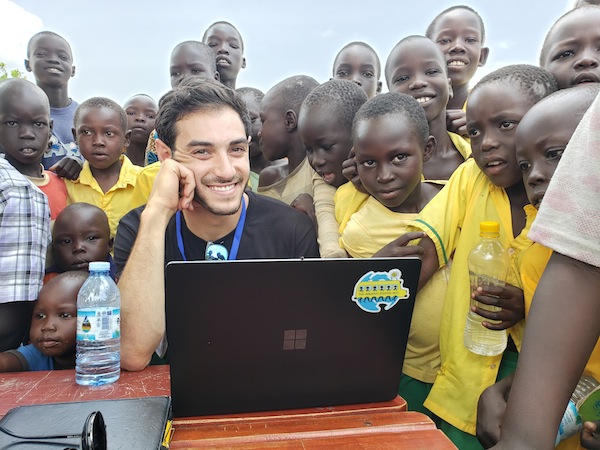
Ran Sommer (photo from the Walking School Bus)

Ran Sommer was working as a project manager for a health region and moonlighting as a volunteer for a very small Vancouver-based international education charity. A trip to India to see the charity’s work in action changed the direction of his career – and the course of the organization.

The Walking School Bus was the brainchild of another young innovator from the Vancouver area, Aaron Friedland, who has received numerous recognitions, including a Next Einstein award, which was presented by CNN’s Anderson Cooper, and as one of the Jewish Independent’s 18 Under 36 honourees. TWSB, as it is shorthanded, emerged out of a trip to Uganda

Friedland took, where he learned that many students in that country do not attend school because it is too far for them to walk. The first step in his venture to resolve the problem was a book by the same name, which started a fundraising campaign that led to the purchase of the first vehicle, which shuttles Ugandan kids to school then does duty as a taxi in the off hours to cover expenses and generate revenue for school materials.

When Sommer returned from earning undergraduate and master’s degrees at Wilfred Laurier University in Waterloo, Ont., Friedland was one of the first people with whom he reconnected. Both alumni of King David High School, they had been in the same social circles and Sommer had followed Friedland’s successes via social media. He came on board as a volunteer, serving as director of communications.

While Sommer was getting some good training at project management in his day job at the health authority, when he joined a self-funded trip to see TWSB’s operations in India, he was inspired to take a leap into the uncertain territory of a startup nonprofit.

“I was just so blown away to actually see what I was communicating about for the last year,” Sommer said, adding with a laugh: “To see not only that it was real [but] it was 10 times better than I thought it was and I should probably be communicating it better.”

The inspiration was mixed with sadness that he didn’t feel his full-time job was as meaningful. He and Friedland sat down, figured out how to scrape together enough to give Sommer a salary that would just cover his rent and expenses and Sommer became first-ever employee of TWSB, as director of operations. (Friedland was still unsalaried at the time.)

Despite rapid growth since Sommer’s hiring, it’s still a streamlined organization, with seven employees in Vancouver and eight overseas. But, with its tight budgets and small team, the organization has branched out in a range of directions.

The organization was never simply about getting kids from Point A to Point B. First, there is a research component. Graduate students develop symbiotic relationships with TWSB, joining self-funded excursions to the operations – now in India as well – and looking at data from the projects to enhance their delivery and outcome.

Once TWSB put in place the infrastructure to get students to school, they realized some were arriving hungry and thirsty, which impedes learning. The organization added water-catchment systems, chicken coops and community-supported agriculture to their operations. They developed supplementary curriculum, dovetailing with the objectives of the school systems where they work, including an offline database that serves as a sort of virtual library. In a country like Uganda, where a vast majority of the population does not have access to electricity, let alone wi-fi, the curriculum is aided by Raspberry Pi microcomputers – about $100 each – which can communicate with one another in a localized intranet, but not access the internet. Teachers can use the tablets to project material on screens – a benefit in places like some refugee camps TWSB works, where the teacher to student ratio can be one to about 260.

Throughout the charity’s projects are economic development initiatives that both help the communities they serve and create sustainable funding for their work. They created the BrightBox Macro classroom – a shipping container retrofitted into a solar-powered classroom. While students learn in a space that takes up about seven-eighths of the space, a solar charging room powers not only the shipping container classroom but the entire adjacent school. It also provides a charging hub, where people from the community can pay a few cents to charge their cellphones, tablets, flashlights or other electronics, similar to for-profit charging hubs common throughout the developing world. These fees will add up, according to projections, to eventually pay for the entire facility over time.

TWSB also has a small but aggressive fundraising arm that obtains grants from foundations and groups including National Geographic. The academic expeditions are funded by participants themselves, who are asked to raise an additional $1,000 to $2,000.

Based on studies that indicate students can double their reading comprehension exponentially in just months through the multisensory experience of reading the words while hearing them spoken, TWSB developed Simbi.

This “reading-while-listening application” uses different voices, accents and dialects to give the reader the most relevant voice available in their respective region. Again, outcomes are studied and the data shared to make the impacts greater. Simbi began as a part of TWSB curriculum program and then expanded independently as a startup aimed at an even broader market, with Friedland as chief executive officer, while he continues as executive director of TWSB. In addition to the thousands of students served by TWSB, Simbi is in use by another 10,000 who are not part of the project and the objective is to make Simbi available to unlimited numbers.

Through partnerships with Uganda’s minister of education and the United Nations refugee agency, TWSB has expanded its reach into refugee camps and remote public schools.

“There are currently 32,500 students who are interfacing with our technology,” Sommer said. In Uganda, there are 300,000 refugee students alone – not including others in low-income, remote or otherwise underserved communities. And, with expansion into India and a scalable model that they envision taking off globally,

Sommer predicts further exponential growth.

In addition to Sommer and Friedland both having attended Vancouver’s Jewish high school, there is another Jewish connection. The project began during Friedland’s studies in economics at McGill University, with the initial initiative launched within Uganda’s Abayudaya (Jewish) community.

While the Walking School Bus has grown, with 15 employees now around the world, its strength is still in the power of volunteerism, Sommer said.

“We’ve been able to maintain our values and the pillars of the organization because of an incredibly large army of volunteers that are so involved and motivated,” he said.

RCMP coins reflect diversity

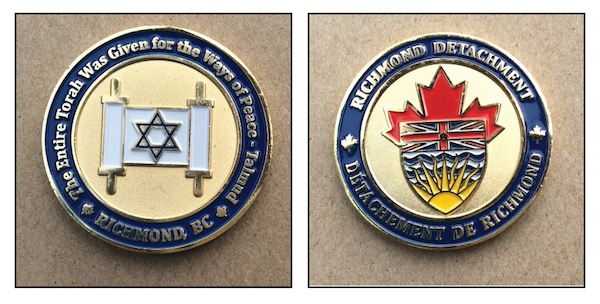
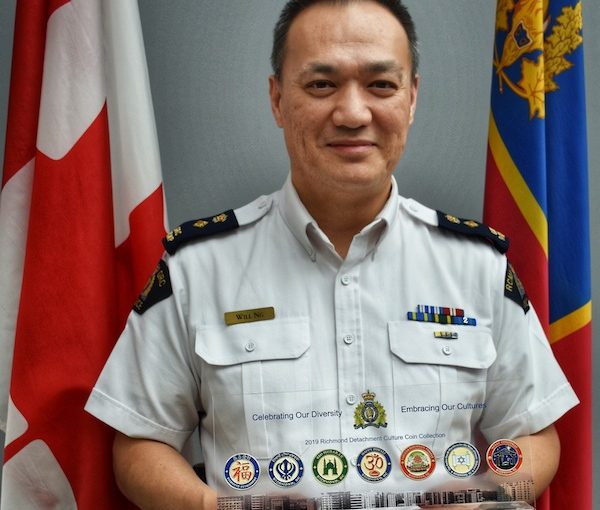
Last year, Richmond RCMP Superintendent Will Ng came up with the idea of creating a challenge coin unique to each of seven communities in Richmond. (photo by Lauren Kramer)

In 2019, Superintendent Will Ng at the Richmond RCMP came up with the idea of creating a “challenge coin” unique to each of seven of Richmond’s larger communities: Jewish, Christian, Buddhist, Hindu, Muslim, Sikh and Chinese. A coin was designed for each with the guidance of the community’s spiritual leaders.

For the Jewish community, the coin was collaboratively designed by Sgt. Kevin Krieger and Congregation Beth Tikvah’s Rabbi Adam Rubin.

“I was genuinely moved and touched when the RCMP approached me to help design the coin,” Rubin told the Independent. “The fact that the RCMP was willing to produce a challenge coin for the Jewish community speaks volumes about its commitment to diversity and inclusion, as well as its commitment to the safety, well-being and flourishing of Jews in the Lower Mainland.”

photos - The Jewish challenge coin was designed by Sgt. Kevin Krieger and Rabbi Adam Rubin
The Jewish challenge coin was designed by Sgt. Kevin Krieger and Rabbi Adam Rubin. (photos by Cynthia Ramsay)

The Jewish coin features a quote from the Talmud (in English) and an image of the Star of David and a Torah scroll. Rubin and Krieger both felt that these are widely recognized symbols of Judaism and Jewish life.

“The Torah is at the very heart of our religious life, the core of who we are as a people, while the Star of David connects us to our past and to the state of Israel,” Rubin said. “The excerpt from the Talmud, ‘The entire Torah was given for the ways of peace,’ is a heartfelt expression of an essential teaching of our tradition – that peaceful relations between people is one of the goals of religious life. Given recent events in North America, Europe and elsewhere, that claim is more important than ever.”

Some 400 coins were produced in time for Rosh Hashanah last year and have been handed out by members of the police force at special community events, both in Richmond and beyond.

“The coin represents the fact that we stand in solidarity with our Jewish community against hate and antisemitism,” said Ng. “We will do our best to protect our Jewish community to ensure they feel safe to both live and practise their religion free from hate or prejudice.”

Rubin said he is deeply grateful to the RCMP for producing a coin with such an important message. “I hope and pray that, though this challenge coin may be fairly modest in the grand scheme of things, it plays a part both in ensuring the continued flourishing of Jews in Canada, and in helping to reinforce the crucial value of peace.”

Cpl. Adriana Peralta, who works in Richmond RCMP’s media relations, said the coins are commonly used in the RCMP as a token of appreciation for community service, or as a small gift to individuals who have served their community. “We have a large faith-based community in Richmond and our detachment came up with this particular series of coins as a way to connect with our interfaith partners and celebrate the rich diversity of our cultural groups,” she explained.

The RCMP has created a display of the seven coins at the Richmond detachment, where they are positioned below an image of the Richmond skyline.

Lauren Kramer, an award-winning writer and editor, lives in Richmond. To read her work online, visit laurenkramer.net.

Desert not a wasteland

Monument Valley in Utah. (photo from CBC Radio)

Having always lived in and around rainforest, CBC Vancouver’s Matthew Lazin-Ryder said the desert is a place he still struggles to fully understand.

“The desert has always seemed to be an imaginary place,” said Lazin-Ryder, contributing producer of the radio-documentary What Happens in the Desert. “My only contact with the desert has been in movies, storybooks, religious metaphors and things like that. The closest I have ever gotten to the real desert is having spent a little time in New Mexico, but, even then, I don’t think I was in true, scientific desert. My impression of what the desert was in my imagination was different than reality.

“One thing I wasn’t prepared for in my time in New Mexico was how cold it got at night, because it can get really cold. The imaginary desert in my mind was always hot – nights are sweltering, empty spaces, desolation.”

photo - Matthew Lazin-Ryder, contributing producer of the CBC radio-documentary What Happens in the Desert
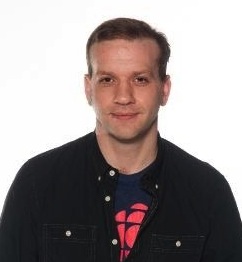
Matthew Lazin-Ryder, contributing producer of the CBC radio-documentary What Happens in the Desert. (photo from CBC Radio)

In the radio documentary, which is an episode of the CBC Radio show Ideas, Lazin-Ryder explores various perceptions of the desert, stemming from culture, such as movies, novels and poetry, which often only portray one aspect of the landscape.

“An example we use in the documentary is Monument Valley in Utah, which, if you’ve seen a western film, it’s in so many movies,” Lazin-Ryder, who is a member of the Jewish community, told the Independent. “So, Monument Valley is that part of Utah, with red sand and rock, with these big towers of rock jutting out of the middle of the desert. John Ford, legendary western director, shot over 10 movies there at Monument Valley and lots of other classic western movies have used the backdrop of this valley as the setting.”

However, while it may seem that many films are shot in Monument Valley, most are actually shot in less-known locations in states like Texas, California and Arizona.

“It’s never specifically that this movie or story is taking place in Monument Valley,” said Lazin-Ryder. “It just becomes a symbol of the desert, which is a stand-in for an alien place, an exotic place, a place that you’ve never been to.”

From a religious perspective, the experts Lazin-Ryder interviews often speak of duality, where the desert is both a place where God is absent and where God is felt the strongest.

“The desert, in the Old Testament, is a place of deep spirituality and is also, for the Israelites, the place where they encounter God, where God travels with them,” he explained. “In the Christian New Testament and Christian culture later on, the desert becomes a place, not of exile and separation from God, but a place you go to escape civilization and to connect with God. Simultaneously, it’s a place where there are dangers … and the devil lives there and there are poisonous creatures, and it’s a place of death, wasteland and absence of God. But, at the same time, the desert is the place, both for the Israelites and early Christians, a place to go to connect with God.

“In a sense,” he said, “the desert, through its absence, represents God, because you can’t fully describe God – you can’t fully describe absence. The desert represents this strange relationship that we have with God, in a religious metaphor – at the same time that God is everything, God is nothing, and indescribable.”

In the documentary, Lazin-Ryder talks about the way the desert is portrayed in science-related and apocalyptic movies – movies that portray the future world as a desert; that climate change, if it continues apace, will leave the whole earth a desert.

“The seas will dry up, the forests will die and everything will be desert waste … which is not particularly an ecologically valid prediction … but, it’s a helpful metaphor for people to think about the dangers of climate change,” he said.

“The other thing is that, when talking about climate change and things like switching to less carbon-intensive energy, the desert becomes a very easy thing for people to say … ‘Hey! You know what would be great? Let’s just put a whole bunch of solar panels and windmills and stuff in the desert, because that’s empty land and it gets a lot of sun.’ You can Google it – there are all kinds of plans that people have pushed, to put acres and acres of solar panels in the Mojave Desert, the Sonoran Desert or the Sahara Desert.

“It’s this kind of a science-fiction idea that, hey, we have these empty spaces on the earth – let’s absolutely fill them with solar panels and windmills. But, the problem with that is – it comes from this thinking about deserts as though they are empty, ownerless places, absent of life. And, the problem is that that’s not true. Deserts are full of life, of plants and of animals that have adapted in interesting ways. And, we also don’t quite understand the place that deserts have in the broader ecosystem, in terms of the carbon cycle.”

While we hear in the news about desertification, in actuality only some deserts may get bigger and others drier, he said. Very few reports talk about the fact that some deserts may get wetter and, in a sense, shrink.

Desert systems are intricate and delicate and we, as humans, often only notice a change when it is already too late. Lazin-Ryder gave the example of the Joshua trees in the Mojave Desert that are dying, and the efforts to preserve them.

“Those kinds of problems are expected to increase as climate change goes on,” he said. But, talking about the desert as merely land available to fix the problems that we have created, “neglects the fact that they are not absent, marginal places. They actually have a place in the world. Deserts are a natural thing that should exist on the earth,” he said. “And there will be increasing pressures to put things in the desert, to put people in the desert, to grow food in the desert – despite the fact that they are as important and as under threat as places like the rainforests and wetlands that we’re trying to preserve. So, on one hand, we’re afraid the future might become desert, but, on the other hand, we may want to think about how to preserve the deserts we already have, as there are many threats to the desert.”

Lazin-Ryder hopes listeners of the documentary will gain a better grasp of the nuances of the desert. For most people in the West, he said, “interaction with the desert is in an imaginary sense … either in religious texts, fiction or movies.” The show tries to get people to consider “what those metaphors and symbols do to our thinking – not just about the desert, but of all the natural world; in what places are worth preserving, celebrating, and what places we think of as marginal, empty, dead or inherently bad.

“We get lots of stories told to us all the time, about what parts of the earth are good or bad,” he said. “I think, ultimately, beyond whether we’re talking about deserts, dry land or wet land, my ultimate hope is that it helps people think about the stories that we tell ourselves about the natural world, versus trying to gain an understanding about how the natural world actually works.”

To listen to What Happens in the Desert, visit cbc.ca/radio/podcasts/documentaries/the-best-of-ideas.

Rebeca Kuropatwa is a Winnipeg freelance writer.

Most volunteer angels

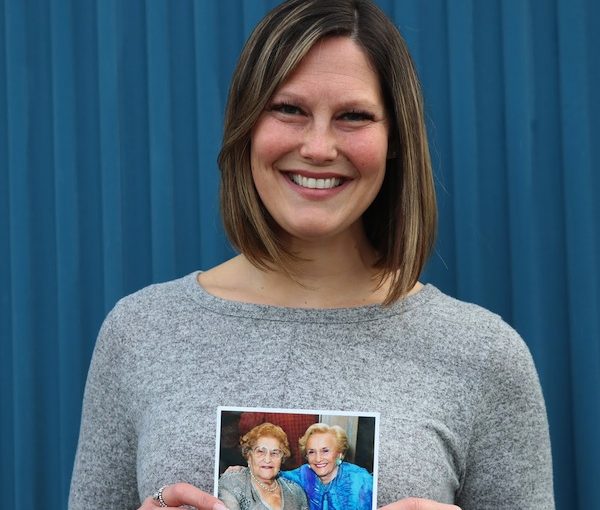
Courtney Cohen holds a photo of her grandmothers, Rose Lewin, left, and Babs Cohen. (photo by Lianne Cohen Photography)

The seventh annual Rose’s Angels took place at Richmond Jewish Day School on Feb. 16. Held under the umbrella of the Kehila Society of Richmond, the event was founded by Courtney Cohen and Lynne Fader in 2013, in memory of Cohen’s grandmothers, Rose Lewin, who was a Holocaust survivor, and Babs Cohen. This year’s gathering saw the largest turnout for volunteers, with approximately 80 family, friends and community members coming together to assemble more than 1,000 care packages and several hundred warmth bundles, which were delivered to partner agencies.

A total of 24 not-for-profit agencies receive the care packages for their clients. Participating agencies included, but were not limited to, Richmond Family Place, Chimo Community Services, Jewish Family Services, Richmond Food Bank, Richmond Centre for Disability, Heart of Richmond AIDS Society, RainCity Housing, Richmond Multicultural Community Services and Gilmore Park United Church.

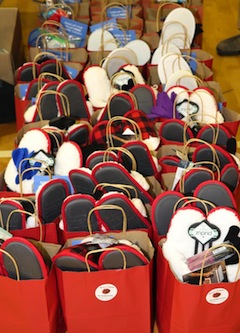
photo - More than 1,000 care packages were packaged on Feb. 16
More than 1,000 care packages were packaged on Feb. 16. (photo by Lianne Cohen Photography)

The packages consisted of toiletries, such as shampoo, soap and toothbrush; feminine hygiene products, including tampons, hair accessories, nail file and makeup; books, note pads, and arts and craft supplies; non-perishable food items, such as juice, oatmeal, granola bars, soup, coffee packets, trail mix and chocolate; and socks, gloves and scarves.

The items included in the packages were tailored to meet the needs of the recipients, as Fader and Cohen asked the agencies involved to survey their clients as to what items they would like to receive. The feminine hygiene and makeup products are donated via the Beauty for Babs component of Rose’s Angels, said Cohen.

“This event would not be possible,” she said, “if it wasn’t for our incredible donors and volunteers, who allow this event to be successful year after year. Individuals and businesses donate to Rose’s Angels through the Kehila Society of Richmond.”

photo - Volunteers at this year’s Rose’s Angels, which took place on Feb. 16 at Richmond Jewish Day School
Volunteers at this year’s Rose’s Angels, which took place on Feb. 16 at Richmond Jewish Day School. (photo by Lianne Cohen Photography)

She added, “People want to volunteer in their community and, sometimes, they don’t have the resources or connections that allow them to carry out their desire to give back. Rose’s Angels has grown into a strong pillar event in our community and it’s wonderful to see volunteers of all ages coming together to assemble care packages for those who they will never meet. It’s inspirational.”

Rose’s Angels takes place in February because, said Cohen, February is a special month – it’s Heart Month, Valentine’s Day and the month of her grandmother Rose Lewin’s birthday. Since its inception in 2013, the annual event has created and donated more than 5,000 care packages Richmond-wide, she said.

For more information about Rose’s Angels or to make a donation, contact Cohen or Fader at the Kehila Society of Richmond, 604-241-9270, or rosesangelsevent@gmail.com. For more information about the Kehila Society, visit kehilasociety.org.


Using apps and robots – coronavirus

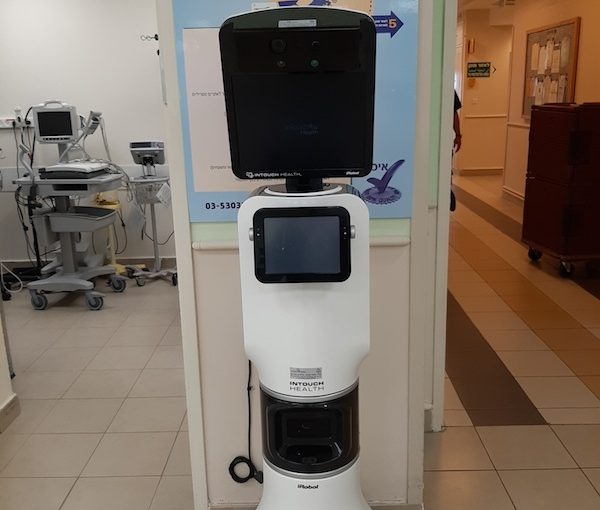
One high-tech solution for patients possibly infected with the coronavirus is a robot that can enter the patient’s room and be controlled by medical staff from the outside. (photo from IMP)

Before the coronavirus arrived in Israel – there were two reported cases at press time – Sheba Medical Centre was preparing for it with different high-tech means: a telemedicine app that enables patients to receive care in the isolation, but comfort, of their own home; and robots that can treat in-hospital patients in order to minimize contact with staff.

Sheba’s Datos Health-In is a telemedicine app that enables patients to remain at home. In the event of an epidemic, with more patients than isolation rooms available, the app can be a viable tool for patients who are not severely ill. With the app, patients can enter vital signs and other information, which is directly accessed by their doctor. Patients can also establish contact with their physicians at any time of day or night.

The program was launched on Feb. 9 and tested on Israelis who had been in China and who, according to Health Ministry instructions, had to be in quarantine for 14 days, the incubation period of the virus. Doctors initialized contact with the patients twice a day.

photo - Sheba Medical Centre’s Dr. Galia Barkai
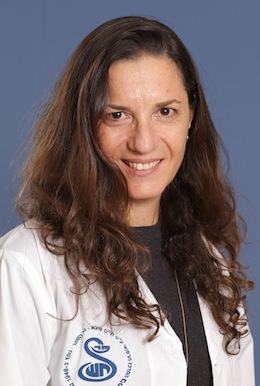
Sheba Medical Centre’s Dr. Galia Barkai (photo from IMP)

“This is one instance where telemedicine protects staff as well as other patients, by minimizing direct contact with those infected with the coronavirus,” explained Dr. Galia Barkai, head of telemedicine services at Sheba.

Another high-tech solution for patients possibly infected with the coronavirus is a robot that can enter the patient’s room and be controlled by medical staff from the outside. Designed by California-based virtual healthcare company Intouch Health, the robots are already in use in other departments, such as in the intensive care unit of pediatric cardiology, and the trauma unit.

“This technology is the perfect solution to provide care for in-patients infected with coronavirus, while protecting staff from contagion,” said Barkai.

Screening for the virus produces results in just a few hours but, with symptoms that are not very dramatic and that are reminiscent of the flu, including fever, cough and shortness of breath, Israel’s Health Ministry is only allowing those who have returned from China and a few other countries in the Far East to be tested.

– Courtesy International Marketing and Promotion (IMP)

Treating children’s asthma

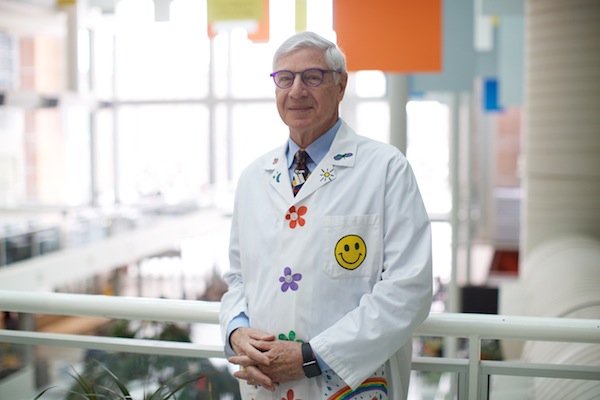
Dr. Allan Becker has devoted much of his life’s work to the study of asthma and how it affects children who have it. (photo from Allan Becker)

As Jewish community member Dr. Allan Becker was starting his career as a general practitioner, his daughter was diagnosed with asthma. As a result, he has devoted much of his life’s work to the study of the condition.

“My interest really started when my oldest daughter began having a wheezing episode at about two years of age,” Becker told the Independent. “It was pretty obvious that this was an infection – something we call bronchiolitis, which is fairly common in young children.”

Becker was working in Dauphin, Man., at the time of his daughter’s diagnosis, in the 1970s, and was beginning to see more and more kids with asthma coming into the emergency room.

“Since 1980, when I returned to academics, I’ve been trying to understand why the epidemic started – what the developmental origins of asthma and allergies are,” said Becker, who is now based in Winnipeg. “And, really, they’re the canary in the coal mine when you think about the increase in chronic diseases.

“Asthma is by far the most common chronic disease in children and it’s the earliest to start,” he said, “but we’re seeing parallel increases of other chronic diseases, like diabetes, inflammatory bowel diseases, various forms of arthritis, and others.”

Over the course of a five-decade career, so far, Becker has seen chronic diseases become more prominent. And, while the reasons for this change remain elusive, it seems clear that it involves genes and the environment.

In the early 1990s, Becker and Vancouver-based Dr. Moira Chan-Yeung embarked on a study of ways to potentially prevent the development of asthma.

“Think about the environment in terms of things we breathe and eat … and things like pets in the home, like tobacco smoke exposure, like pollution, like bad nutrition, Western-style diets, etc.,” said Becker. “We started a multifaceted prevention of asthma program in 1994.”

While that study did not reap substantial results, it did eventually lead to a current study examining the environmental impact on expectant mothers in all areas, including the benefits of decreasing stress, which Becker feels may be the most important factor.

Information about the study, called Canadian Healthy Infant Longitudinal Development (CHILD), can be found at childstudy.ca.

“CHILD started in 2008 and is an observation study, because we don’t believe we know enough to prevent the disease as yet,” said Becker. “We’re now seeing the children at 8 and 9 years of age, and we’re looking way more broadly at the environment. We’re looking at stress very specifically, both for parents and children.

“We’re looking much more in terms of diet, but also at the microbiota, the bacteria and other organisms that live in us, with us and on us, and which are likely extremely important – maybe critical – in helping to shape children’s immune responses in early life.”

According to Becker, there are more bacteria in our gut than there are cells in our body, and microbiota are now being considered as the cause of and potential cure for all sorts of illnesses.

One of the biggest hurdles is trying to determine if a young child who is wheezing has asthma and should be treated as such, or if the child has a respiratory infection that causes wheezing. Becker said part of the problem is how to more accurately define wheezing, which is described as a whistling noise coming from the chest.

“The key thing is that it’s not just the whistling noise in the chest,” said Becker. “It’s also that tugging in, particularly tugging in under the ribs, with the tummy pulling in when breathing. That’s a very good indication that those airways are narrowed and that the child has to work hard at moving air, particularly moving air both in and out. That’s what we teach our trainees to work on with the families they see.

“And, obviously, any time a child is distressed – if they’re looking distressed, particularly if there’s a change in colour of the lips – those are urgent issues. And, some children have such severe narrowing of the airways that you don’t hear wheezing, because they’re not moving enough air, but they will be struggling to breathe. You’ll see them pulling in their tummy and you’ll see their shoulders heaving,” he said. “And you’ll often see toddlers and older kids with their hands braced on their knees, hunched forward, trying to get air in. That type of tripoding is really a worrisome sign, as is a change in lip colour – that’s an emergency. Those children need to be brought to emergency quickly.”

If it gets to the point that the child is given inhalers, Becker pointed out that blue puffers are for particularly bad episodes, while orange or red puffers are for management.

For a bad episode, he said, two inhales from the blue puffer should be taken. “An inhalation and a bit of a pause, and then a second puff and inhalation … in many cases, that will be enough to help control things,” said Becker. “If it doesn’t help make things better, then, in five to10 minutes, it should be repeated. If the child is still distressed, that’s an indication they need to be brought to a hospital.”

The blue puffer should not be used for asthma management, he warned, as the body will develop resistance to it. So, if the controller medications are not providing enough control, he said parents should talk to the doctor who prescribed the puffer to determine a solution.

“If people are needing to use the blue puffer on an ongoing basis, even once or twice a week, week after week, that’s really telling you that you don’t have control of what’s going on and is very worrisome,” said Becker. “There should never be a death from asthma. But, sadly, every year there are some. And, these deaths are – rather surprisingly – not necessarily in kids with the most severe, persistent asthma; they’re in kids who are thought to have mild asthma. But, in fact, when you look at it, if you are using the blue puffer and need to get a new one every month or two, that’s a big red flag … needing to use the blue puffer in the middle of the night, that’s a big red flag. Nighttime symptoms are really a worry – those are kids who need to be seen and properly assessed and, in most cases, they need to be using controller medication.”

Becker is proud of having led the development of a national certification for asthma educators in Canada – Canada was the first country to provide this type of certification.

“We have a children’s allergy and asthma education centre in Winnipeg attached to our children’s hospital,” he said. “It’s one of the only real free-standing ones in North America. The website is asthma-education.com.”

Rebeca Kuropatwa is a Winnipeg freelance writer.

Camp helps lift spirits

A moment of levity during the taking of Justine and Stewart Silver’s wedding photos. (photo from Justin Silver)

The late Stewart Silver was born and raised in Montreal. He had worked as a standup comedian, and moved to Toronto in hopes of furthering his career. Justine Silver grew up in a Houston suburb. In late 1990, she followed her sister, who had moved to Toronto, and, there, she joined Jewish online dating site Jdate. So had Stewart.

“There was a thing where you had to describe your perfect date,” recalled Justine. “Profile after profile included long romantic dinners and were all gushy and gross … but his said, ‘Yeah, after we grab a drink, we step out of the restaurant and trip over a big bag of money.’ I was like, ‘Oh my gosh … that’s the perfect date!”

The couple took their time getting to know each other and, after a year and a half, got married.

To all appearances, Stewart was a healthy 44-year-old. He had biked up hills in Christie Pits Park the day before he had a fatal heart attack while the couple was having a conversation on Nov. 16, 2011.

Left shocked and widowed, Justine embarked on a healing path, including taking a hiatus from her event-planning business.

“It’s been quite some time since then and there’s been grief bursts,” said Silver. “In the early days, there was a lot of therapy and some peer support groups. Then, I found Camp Widow and have been to a few of those. I was pleased it wasn’t at all associated with any religion and was welcoming…. There was one in Tampa, and so a couple of widow friends that I had met up with, here, in Toronto, in a peer support group for young people who’d lost their spouses under the age of 55 … decided to make a whole trip of it. We went to the beach, museum, and then to Camp Widow. It’s a very transformational experience when you feel that you’re surrounded by people who understand the topsy-turvy world that you’re starting to barely understand yourself.”

The first camp Silver went to, in Tampa, was in the spring of 2018. Then, in November 2018 and November 2019, she attended the camps in Toronto. She and her friends have already signed up for the next November 2020 camp in Toronto.

While it’s called a “camp,” the weekend is more like a conference, with people coming together for sessions on various topics.

“One of the neat things I like at Camp Widow is that the name tags, everyone has one, but there are a couple features to it,” said Silver. “One of them, there’s a ribbon at the bottom. For example, in my work as an event planner, if you’re a presenter, your ribbon will say ‘presenter,’ or, if you’re on the organizing committee, it will say ‘organizing committee’ or ‘volunteer.’

“But, these [also] have the number of years ago that your loss occurred. So, for me, that was six years. So, let’s say it’s a teal ribbon. All of a sudden, you notice the six-year people … and there’s a bond, because you’re in a different place than, say, the six-month people. Everyone is compassionate to everyone else, but it’s just a really interesting way to bond with people.”

As far as the camp schedule, there are some group meals, as well as meals on your own. There are various types of sessions offered.

“There are tracks, like for people who are five years out, one year, or one to five,” said Silver. “I can’t remember the exact breakdown, but you can decide to go to everything along a certain track, or you can decide in the moment what you’ll do, which sessions you’ll go to. Then, there are some networking evening events, different ways of getting to know people.”

One is designed like speed-dating, but not for that purpose. You get the chance to talk to someone for a certain amount of time, and then you move on to the next person and chat with them. “It’s really interesting to see where the commonalities fall,” said Silver.

On Saturday night, there is a banquet with a theme and people dress up – some participants may not have gone out since their loss. After dinner, each person says the name of their loved one out loud, while some 200 others quietly listen. Then, there is a dance, which gives the opportunity to destress and socialize. The DJ doesn’t play any music that could potentially trigger anyone’s grief, like slow songs.

At the camp, there are people from their mid-20s to people in their 70s and 80s; people from all religions, cultures and political leanings.

For Silver, Camp Widow “creates community and support amongst widows and widowers…. Sometimes, when you’ve lost someone, it can be very isolating, which can be in different and unexpected ways. I wouldn’t say never, but it doesn’t go away. The intensity definitely lessens and you find new ways to live with grief. And there are plenty of people who, we say, are ‘re-partnered.’ When you’ve been widowed and then you meet someone else and you have a boyfriend/girlfriend, wife/husband or partner, we say you’re ‘re-partnered,’ because we don’t think that means you’re not still widowed.”

The camp provides tools and connections that widows and widowers may not otherwise find on their own.

“I feel camaraderie in sharing my story and being heard, or hearing someone else’s story and being helpful to them,” said Silver. “At this past Camp Widow, I did an art thing. I can do crafty things OK, but I’m not really an artist. But, one of the workshops I went to was all about healing through art and it was just a whole different facet. We all had paint and they set it up so well…. We had a white piece of paper and I got white paint and I painted a white heart. Then, I put a line through it – a squiggly line, like it was broken – and you could barely see it … like you couldn’t see that my husband had a heart problem…. Then, everyone shared in the room what theirs was about. When you do that, it’s like opening up a wound, and then the scar heals better next time.”

Six months ago – eight years into her healing journey – Silver and her older sister, Eileen Jadd, who is a social worker, started the charity Good Grief Bereavement Healing Services.

“We have a roster of counselors in different parts of Toronto for bereaved people,” said Silver. “We’re also offering workshops on eye movement desensitization, which is a thing for trauma victims. It really helps you compartmentalize the trauma, so you can talk about it without being retraumatized. So, we’re doing a workshop on that.

“We’re starting a group on sibling loss and, eventually, will have a physical building. We want to have a centre, so people who’ve lost someone, it’s like a snap of the fingers and they’ll know where to go. When you know there’s an accident, you know to dial 911. We want it to be, ‘Wow, you’re in need, you’ve lost someone, and you know exactly where to go.

“I think widows and widowers need their person’s name to be said. People are so afraid of saying it, because they don’t want to bring it up in fear. But, they want their names to be said, so that’s a big part of it. I happen to talk about Stewart all the time, but a lot of people don’t have those opportunities in their own lives.”

In addition to talking about him when memories arise, Silver said, “Every year, I go to shul and I say his name and a prayer for him, and commemorate it that way. I remind people that we got married in that synagogue, and I remind people that he was a person that existed and stood in that space with me, and that his influence is still there. Just because he’s not standing next to me in that moment … he’s still there. In those ways, we talk about him.”

Camp Widow is put on by Soaring Spirits International. For more information, visit soaringspirits.org, campwidow.org, widowedresilience.org and goodgriefhealing.ca.

Rebeca Kuropatwa is a Winnipeg freelance writer.

Teaching kids reading skills

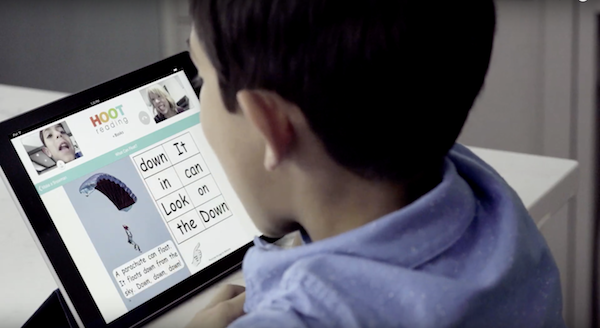
With Hoot Reading, kids and teachers can see and hear each other via video chat. (screenshot)

Hoot Reading allows kids to get in their desired screen time, while also improving their reading skills. Jewish community member Carly Shuler, co-founder and chief executive director of the online tutoring company, came up with the educational concept while working on Sesame Street.

“While I was there, I was working on a research project aimed at understanding how to help kids learn through video chat,” Shuler explained. “Fast forward a couple of years and my co-founder, Maya Kotecha, and I decided the idea was too good to stay in the lab. So, we got the rights, formed Hoot Reading, and here we are.

“Something a lot of parents don’t know is that there is a deadline for reading,” she said. “We talk a lot about the fourth-grade reading slump, which is this phenomenon that happens in Grade 4, when children need to make the leap from learning how to read to reading to learn.”

The school system is based on the assumption that, by Grade 4, kids will be reading fluently. While some kids are indeed fluent readers by then, some 60% of students are reading below grade level as they start Grade 5. And, from then on, the ability to read is needed for every single topic, from math to science to social studies to music and to health, not to mention for activities outside of school.

“What happens is that those kids, come Grade 4, that we thought were average students, fall behind,” said Shuler. “They lose confidence and they disengage from school. And so, while we don’t believe at Hoot Reading that earlier is better, we do believe that there is a deadline for becoming a fluent reader – and that deadline is Grade 4.

“Hoot Reading, in particular, is good for all kids from kindergarten through to Grade 4 and, then, also any kids who are struggling after that point,” she said. “So, we have kids up to Grade 10 reading with us. They are in that 60 percentile of kids who are reading below grade level.”

The tutoring is done online with classroom teachers, one-on-one, in 20-minute lessons, two to three times a week. The app is basically Facetime meets Kindle, said Shuler. Kids and teachers can see and hear each other via video chat, and both the teachers and the students can point to things and see where the other is pointing.

“It allows for that dialogic reading, but it’s the interactive back and forth that is so important as a child progresses as a reader,” said Shuler. “Kids can do it from the comfort of their own home, from their family car, from their sibling’s piano lesson, or wherever they are. It can really happen anywhere at any time, so parents find it very convenient.”

Weighing in on screens, Shuler said, “At Hoot Reading, we don’t believe all screens are created equal. As parents, we should be paying more attention to what our kids are doing on screens, rather than just focusing on how much time they are spending on them. There are some really great things they can do.

“We believe screens can sometimes have a real benefit to our children’s learning, such as by allowing us to offer an affordable way to do one-on-one reading tutoring. So many kids can get access to it, whereas they couldn’t before. So, we encourage parents to think about it that way.”

Further to this, Shuler encourages parents to be reading mentors and role models, showing their kids that they, too, are using their screens to read.

“It’s really important that our children know that we are reading, so that they can see that it can be a really fun part of their media world,” she said. “Whether we are reading on a Kindle or reading a hard copy book, we want to show them and do it in front of them … and talk about the books and stories at the dinner table, because it’s really important that kids see reading can be fun.”

Shuler feels strongly that parents should help their kids choose apps and games that encourage reading. The ability to comprehend what you are reading and to be able to follow instructions is an important skill. While enjoying some games that do not involve reading is OK, she recommended finding games that do provide a different medium for kids to further their love of reading.

Just like any other skill, the more you practise, the better you get at it and Shuler maintains that kids should read aloud with a grown-up for at least 10 minutes a day, five days a week.

“In the same way that, when learning to play basketball, some kids might be a little better at it than others, but the best way to improve anything is through practise,” she said. “We have to practise and we have to practise out loud, with a grown-up there. Whether that grown-up is a parent, a Hoot Reading teacher, or someone else, kids need to be practising – and that’s not what’s happening in so many households. We’re so busy nowadays, between after-school activities and all the amazing things our kids get to do. But, reading cannot fall onto the backburner, because, if kids don’t practise, they’ll probably end up in that 60% by Grade 4.”

Shuler said kids need to have what they learn in school reinforced at home and, therefore, increasing public awareness is critical.

“A lot of parents don’t know – they just think about reading in terms of literacy or illiteracy so, once their child can read, they think, ‘Great! My child can read. We’ve got this!’ But, the truth is, again, reading is a skill, and you get better at it the more you read. That’s where most parents don’t know how important it is to continue the reading out loud, even if their child is reading.”

She added that “the key is in knowing how important it is and in making sure we prioritize reading practice in the same way we prioritize brushing our teeth.”

Finding books and other material that interest kids and make them excited about reading is paramount. “Just try to keep it a positive experience as much as possible,” said Shuler, “and do what you need to do as a parent to make that happen.”

Shuler and Kotecha recently launched a new initiative, called Hoot for All, sponsored by Spin Master, that will allow them to provide reading tutoring for kids at Boys and Girls Clubs across Canada at no cost to the kids’ families.

For more information, visit hootreading.com.

Rebeca Kuropatwa is a Winnipeg freelance writer.

Predicting diabetes risk

A new computer algorithm can predict in the early stages of pregnancy, or even before pregnancy has occurred, which women are at a high risk of gestational diabetes. (photo from Weizmann Institute)

A new computer algorithm can predict in the early stages of pregnancy, or even before pregnancy has occurred, which women are at a high risk of gestational diabetes, according to a study by researchers at the Weizmann Institute of Science.

The study, reported recently in Nature Medicine, analyzed data on nearly 600,000 pregnancies available from Israel’s largest health organization, Clalit Health Services.

“Our ultimate goal has been to help the health system take measures so as to prevent diabetes from occurring in pregnancy,” said senior author Prof. Eran Segal of the institute’s computer science and applied mathematics, and molecular cell biology departments.

Gestational diabetes is characterized by high blood sugar levels that develop during pregnancy in women who did not previously have diabetes. It occurs in three to nine percent of all pregnancies and is fraught with risks for both mother and baby. Typically, gestational diabetes is diagnosed between the 24th and 28th weeks of pregnancy, with the help of a glucose tolerance test in which the woman drinks a glucose solution and then undergoes a blood test to see how quickly the glucose is cleared from her blood.

In the new study, Segal and colleagues started out by applying a machine learning method to Clalit’s health records on some 450,000 pregnancies in women who gave birth between 2010 and 2017. Gestational diabetes had been diagnosed by glucose tolerance testing in about four percent of these pregnancies. After processing the dataset – made up of more than 2,000 parameters for each pregnancy, including the woman’s blood test results and her and her family’s medical histories – the scientists’ algorithm revealed that nine of the parameters were sufficient to accurately identify the women who were at a high risk of developing gestational diabetes. The nine parameters included the woman’s age, body mass index, family history of diabetes and results of her glucose tests during previous pregnancies (if any).

Next, to make sure that the nine parameters could indeed accurately predict the risk of gestational diabetes, the researchers applied them to Clalit’s health records on about 140,000 additional pregnancies that had not been part of the initial analysis. The results validated the study’s findings: the nine parameters helped accurately identify the women who ultimately developed gestational diabetes.

These findings suggest that, by having a woman answer just nine questions, it should be possible to tell in advance whether she is at a high risk of developing gestational diabetes. If this information is available early on – in the early stages of pregnancy or even before the woman has gotten pregnant – it might be possible to reduce her risk of diabetes through lifestyle measures such as exercise and diet. On the other hand, women identified by the questionnaire as being at a low risk of gestational diabetes may be spared the cost and inconvenience of the glucose testing. (Visit weizmann.ac.il/sites/gd-predictor to access the self-assessment questionnaire.)

In more general terms, this study has demonstrated the usefulness of large human-based datasets, specifically electronic health records, for deriving personalized disease predictions that can lead to preventive and therapeutic measures.

The work was led by graduate students Nitzan Shalom Artzi, Dr. Smadar Shilo and Hagai Rossman from Segal’s lab at the Weizmann Institute of Science, who collaborated with Prof. Eran Hadar, Dr. Shiri Barbash-Hazan, Prof. Avi Ben-Haroush and Prof. Arnon Wiznitzer of the Rabin Medical Centre in Petach Tikvah; and Prof. Ran D. Balicer and Dr. Becca Feldman of Clalit Health Services.