Climate hot topic at Limmud

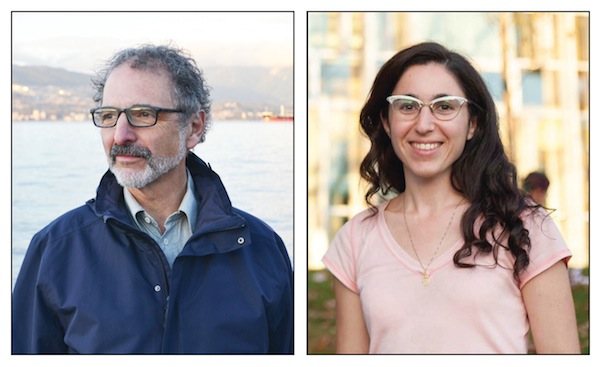
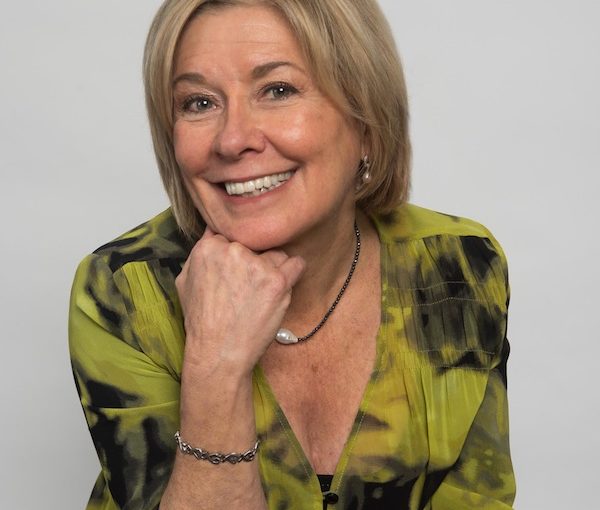
Dr. Larry Barzelai and Maayan Kreitzman will talk about environmental activism at Limmud on March 1. (photos from the interviewees)

Environmental activism is among Canada’s top news stories in recent days and the issue will be confronted from both a Jewish and a broader perspective by two leading voices at Limmud Vancouver next month.

Dr. Larry Barzelai, a Vancouver family doctor, assistant professor at the University of British Columbia’s faculty of medicine and B.C. chair of Canadian Association of Physicians for the Environment (CAPE), will present alongside Maayan Kreitzman, a PhD candidate at the Institute for Resources, Environment and Sustainability at UBC. The pair acknowledges that they come at the topic using different tactics, but aim for the same objective.

Kreitzman has been among those blockading the port and traffic.

“The actions happening in the streets right now are in response to this Coastal GasLink natural gas pipeline construction on Wet’suwet’an land,” she said. But this is only one element of the much larger picture, which is that oil and gas development is “occurring unabated and greenhouse gas emissions and ecological destruction is continuing unabated throughout the world, when we know that these activities are threatening our life-support system and are putting billions of people at risk over the next decade. People are already being impacted today.”

The issue brings together a host of concerns, she said, including “indigenous rights and sovereignty, the Canadian government’s complicity in a climate-unsafe future … as well as the business side of that from the private sector.”

Kreitzman has heard the complaints that disruptive protests may turn off potential allies and anger the general public.

“I think people’s emotions are valid and there is a valid concern about disrupting ordinary people that need to make a living and need to take care of their families,” she told the Independent. “On the other hand, I think many of the people that sometimes make these kind of complaints aren’t really the people that are struggling to feed their families. People that come from a place of privilege need to recognize that these protests inconveniencing them is a small price to pay for the types of progressive changes that will benefit all of us, including their children.”

Kreitzman said she and Barzelai will “bring a concise summary of the latest science to people so that they really understand the magnitude of the situation that we’re in.”

She said, “We’ll be speaking to a spectrum of different actions, from the personal to the more conventional campaigning type of approaches, like report-writing, research, lobbying, letter-writing, to direct-action approaches, which is what I’m most interested in, where people that have privilege start putting their bodies on the line and breaking the law on purpose, using the message of nonviolent civil resistance, which has been successful in many movements throughout history.”

Barzelai takes a more conventional approach to advocacy, but shares Kreitzman’s sense of urgency.

“Climate change, which we’re calling a climate emergency, is upon us,” he told the Independent. “It’s dramatic and we have to take big steps to do something about it. Maayan is taking a bit more radical approach to this. Myself and my group are a bit more middle-of-the-road, shall we say, but I think we both have the same endpoint in mind – that things have to change dramatically.”

CAPE, which has been around for about 25 years, focuses on the health impacts of environmental decisions and climate change.

“We see diseases that are spreading, we see cancers that are becoming more rampant, we are seeing the floods and the wildfires and the temperature changes that are dramatically affecting people’s health and we figure it’s our responsibility as doctors to look at climate change from a health perspective and to inform people of what’s going to happen unless we make dramatic changes,” he said.

Fracking is one area where he thinks British Columbia is “really going down the wrong path.”

“They’ve bought this myth that natural gas is clean energy, which it is absolutely not, and they are doing their best to increase rather than decrease global warming, and we think that’s the crucial issue that needs to be discussed in Canada and especially in B.C.,” he said.

Kreitzman and Barzelai will speak at Limmud Vancouver on March 1.

Tickets and more information can be found at limmudvancouver.com.

Many ideas at Limmud

At LimmudVan’20, Anna-Mae Wiesenthal will present on The “Othering” of Germany’s Jews and Canada’s First Nations. (photo from Anna-Mae Wiesenthal)

The latest local incarnation of the global Jewish learning festival Limmud takes place Feb. 29 and March 1. LimmudVan’20, which is being held at Congregation Beth Israel, begins with Havdalah and a few musical and intellectual appetizers on the Saturday night, followed by a day of presentations on a diverse array of topics on Sunday.

Anna-Mae Wiesenthal, a teacher at King David High School and a PhD candidate in Holocaust and genocide studies, will present on The “Othering” of Germany’s Jews and Canada’s First Nations.

Originating from Winnipeg, Wiesenthal has long had an interest in First Nations issues and has been involved in community programs there. She is aware of the sensitivities around paralleling these histories.

“There is a lot of controversy surrounding the use of the word genocide and First Nations, but I approach it from an examination of looking at different viewpoints and different research that argue both sides,” she told the Independent. “What do these two experiences of these two people have in common?” The point, she said, is not to come to any firm conclusions.

“I want to leave it open to the audience to process the information and to assess the commonalities and the differences,” Wiesenthal said. “I’m certainly there to point some of them out, but I think it’s to provide a different perspective that will engage and inspire discussion and curiosity among the participants to go further with it.”

Also not promising any proscribed conclusions is Rabbi Philip Gibbs, who will ask: Would the rabbis approve of Uber? Gibbs, who is spiritual leader of Congregation Har El, in West Vancouver, said that even issues as seemingly modern as an app that permits ride-sharing can be addressed through ancient wisdom.

Traditional arguments around fair and unfair competition have remained with him since rabbinical school and came to the fore in recent weeks as British Columbia argued over, and then slowly and somewhat clunkily implemented, ride-hailing services like Uber and Lyft. Some of the issues that could arise include whether a company keeps money in the community it serves or extracts it to some distant parent company. But don’t expect him to come down clearly on one side.

“If you’ve ever looked into a question of Jewish ethics, you know that you can make the joke of saying two Jews will have three opinions,” said Gibbs. “Maybe, through the discussion, someone else will tell me what it seems like I’m thinking, but really I think the goal is just to be more attuned to what some of the issues are so that, as we begin to make choices of who do we call up for a ride to the airport, that we’re taking into account a wider range of values than simply how little we want to pay for it.”

Other presenters will talk about crafting Jewish children’s books (see jewishindependent.ca/new-publisher-set-to-launch); how Leonard Bernstein used the music of Selichot to create West Side Story; the rich and poor among Portuguese Jews in Amsterdam’s Golden Age; building Jewish micro-communities through co-housing; healing Christian antisemitism; analyzing the Israeli smash TV show Shtisel; and many other topics.

Tickets and more information can be found at limmudvancouver.com.

Increased cancer risks

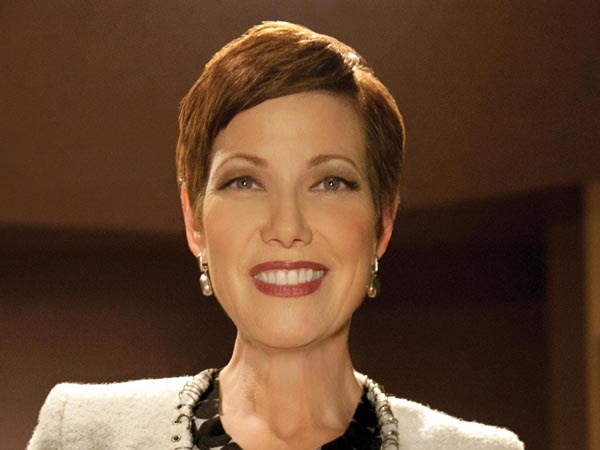
Libby Znaimer was the keynote speaker of the inaugural BRCAinBC event One in 40: From Awareness to Empowerment. (photo from zoomerradio.ca)

An estimated 200 people gathered at Congregation Beth Israel last month for One in 40: From Awareness to Empowerment, the inaugural event of a project to increase knowledge of the cancer risks connected to the BRCA1 and BRCA2 gene mutations.

The Jan. 8 event title is based on the fact that, for people with Ashkenazi Jewish heritage, there is a one-in-40 risk of carrying the BRCA genes, which increase the risk of genetically linked cancers. This rate is 10 times that of the general population. Elizabeth Wurzel, author of the bestselling memoir Prozac Nation, who passed away in January from breast cancer and was found to carry the gene mutation, called BRCA “the curse of the Ashkenazi Jews.”

One in 40 was organized by BRCAinBC, a provincial group spearheaded by members of the family – wife Jane and daughter Catriona – of Geoff Remocker, who died of aggressive prostate cancer. BRCAinBC’s objectives are to increase awareness among community members and health professionals, educate community members about genetic testing options and reduce the fear and stigma that can surround genetic testing. (See jewishindependent.ca/brcainbcs-inaugural-event.)

Toronto-based broadcaster Libby Znaimer, the keynote speaker, led the audience through her story. In January 2009, after enduring a six-and-a-half hour operation, the only possible cure for pancreatic cancer, she didn’t consider the odds of survival that favourable. Pancreatic cancer is the only form of cancer for which the survival rate is in the single digits, said Znaimer in her talk.

She not only has survived pancreatic cancer, but breast cancer, which was also BRCA-related.

Znaimer has made a film about her experience, Cancer Saved My Life. “It’s more than just a catchy title to get eyeballs on my documentary. It’s true. And I am living proof that, when it comes to the BRCA mutations, there is good news, in addition to the bad news,” she said in her remarks to the audience, which she shared with the Independent.

When Znaimer found out she had breast cancer in 2006, she was not surprised. Because of her family history, she knew that she was at a greater risk. However, she said, she did not think breast cancer would kill her.

“I remember being at a boozy dinner just a few days after being told I had cancer. I was very lucky that a former neighbour of mine was visiting,” she said. “She was working in the States as the head of breast radiology at one of the famous Mayo clinics and, based only on what she knew about my family history, she pointed her finger at me and said, ‘Sweetheart, you have bad genes and, if I were you, I’d bite the bullet and have both my breasts and my ovaries removed … as quickly as possible.’”

Znaimer cited a study in Toronto in which Jewish women were tested for the mutation regardless of family history. Fifty percent of those who tested positive would not have qualified for testing because of their family history. Results from similar studies in the United Kingdom and Israel produced similar outcomes.

“And, having one of those mutations doesn’t just mean you’re at an exponentially higher risk of getting those cancers once,” she warned. “You are also more likely to contract a second cancer, not a recurrence – a completely new other cancer.

“It is especially gratifying for me that my case has helped others and to be here to talk about the importance of getting tested,” she said. “It is the dawn of a new decade. My second decade as a survivor since Cancer Saved My Life.”

The Jan. 8 educational evening also included panelists Dr. Rona Cheifetz, medical lead of the Hereditary High Risk Clinic, B.C. Cancer Agency; Dr. Intan Shrader, co-medical director, BCCA Hereditary Cancer Program; Len Gross, president of the Prostate Cancer Foundation of British Columbia; and Tovah Carr, a BRCA carrier.

BRCAinBC arose from the realization that many in the Jewish community are not aware of the risks of carrying the BRCA genes. They hope to support improvements in access to genetic testing throughout the province for members of the Jewish community, and to protect BRCA carriers from the potentially negative consequences of positive carrier status; in obtaining insurance, for example. For more information, visit BRCAinBC.ca.

Sam Margolis has written for the Globe and Mail, the National Post, UPI and MSNBC.

From Soviet to Nazi rule

Aileen Friesen has researched how Mennonites living the area of current-day Ukraine reacted to the Nazis. (photo from Aileen Friesen)

An event titled Jews, Mennonites and the Holocaust took place in Winnipeg at the Rady Jewish Community Centre a few months ago. Organized by the Jewish Heritage Centre of Western Canada, it featured Mennonite historians Aileen Friesen, executive director of the D.F. Plett Historical Research Foundation, and Hans Werner, a retired University of Winnipeg professor, who discussed Russian Mennonite reaction as the Nazis invaded Russia during the Second World War.

“I am from a Mennonite background,” said Friesen in a post-event interview with the Independent. “That is, on both sides of my family – one side came to Canada in the 1870s, with the migration of Mennonites from the Russian Empire during that time, and the other part of my family came to Canada in the 1920s, with the migration from the Soviet Union.”

The Nov. 5 discussion focused on the area that comprises current-day Ukraine, which, during the time of the Nazi invasion, was occupied by what was then the Soviet Union. Mennonites who were in the region at that time were not of German heritage, but they spoke German and were viewed by the Nazis as allies. As well, the Russians expected that these Mennonites would be sympathetic to Germany and did what they could to relocate them to eastern Russia prior to the Nazi invasion.

“The way we think of this nation’s state … is just not what it is in the 18th century,” said Friesen. “It’s a very multi-ethnic space in which we have a lot of German speakers, and we talk about the Polish-Lithuanian commonwealth as a very multi-ethnic territory.

“We don’t have the concentration camps – we have a lot of mass shootings that are going to take place in this territory. So, Mennonites are living in a space that becomes under Soviet control, and they live under Stalinism. And then, it will become occupied by German forces, and then they will be living under German occupation.”

As the Nazis invaded, they were looking for people from the local population with German affiliation to integrate into the administrative system, while targeting the Jewish population – to have them register, to wear the Star of David and to separate them from other sections of the population.

According to Friesen, many Mennonites looked at the Nazis as liberators from the Stalinist occupation, which oppressed the Mennonite community in the area and enforced an atheistic existence. The responses of other Mennonites to the Nazi treatment of Jews were mixed: some responded in horror, but most remained silent.

“Sometimes, they say in memoirs that they said something to the German occupying forces, that they can’t do this,” said Friesen. “But, this is a time when people have been demoralized by Stalinism and have learned to keep their mouths shut…. But you will see that some people are very upset about what’s happening to the Jewish population…. Where there is a mix of Mennonites and Jews, there is also some intermarriage, so there were people who felt a great affiliation with their Jewish neighbours and felt very upset about this.

“My topic, specifically, focuses on a segment of the Mennonite population that joined into the secret police (SS), the local police, and are, therefore, implicated in the massacres that took place, as the local police were participants in these massacres.” Friesen said there were “Ukrainians, Mennonites and other types of ethnic Germans in the Ukrainian local police.”

As the Nazis invaded, they ranked the population, placing the Mennonites higher than the Ukrainian/Russian population, as they were considered by the Nazis to be Volksdeutsche (German folk). This allowed Mennonites access to more resources and they were better treated.

Before the Nazis invaded, she said, Mennonites and Jews “occupied a space together.” For example, “in Chortitza, there was a synagogue and there was also a Russian Orthodox church, and a Mennonite church that was in operation before the Soviets took power. It’s a space in which people organized and interacted with each other and, yet, these forces that get imposed upon them, there’s a reaction from within the local community that, in the case of the Mennonites, I don’t think that was a response that served them … at least some people … bought into these ideas that the Germans brought into this territory. It dovetails with some of the ideas they had of their own suffering under the Soviet regime and they accepted the dehumanization and sometimes participated in the dehumanization of others, which is really a sad story.”

Friesen encouraged readers to watch the event video on YouTube.

“There were some interesting questions and responses from the audience,” said Friesen. “We had a good turn out, from both the Mennonite and the Jewish communities, discussing these very difficult issues. I think the lectures online will give you a much better background to this story than I’ve been able to share.”

Rebeca Kuropatwa is a Winnipeg freelance writer.

Survivors reflect on liberation

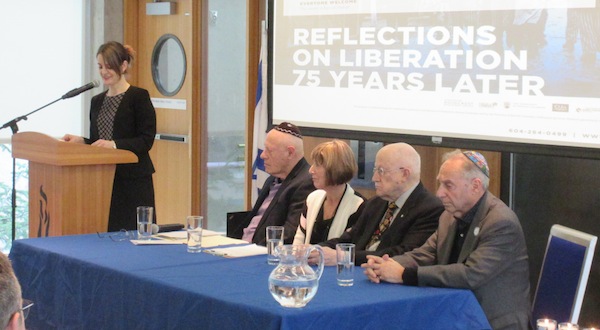
Dr. Ilona Shulman Spaar moderates a panel with Holocaust survivors, left to right, Janos Benisz, Amalia Boe-Fishman, Dr. Peter Suedfeld and Alex Buckman. (photo by Pat Johnson)

One survivor of the Holocaust who spoke at a panel recently believes that, in a generation or two, people will largely forget about the catastrophic events of that time.

“I think the world will forget about Auschwitz,” said Dr. Peter Suedfeld, a professor emeritus in the department of psychology at the University of British Columbia. “The world has already forgotten about ‘never again.’ We’ve had a fair number of genocides since 1945, in which the world did not intervene. A recent poll that I saw … apparently, the proportion of people who remember anything about how many Jews were killed in the Holocaust, what Auschwitz was, what the Holocaust was and so on, is not all that much above 50%.

“This is going to go on generation after generation,” he continued. “The survivors won’t be here to push the story any further. Their children will for awhile, but they have other things to do and other things to be concerned about and their children even more so. In a few more generations, it will be in the history books and people will say, yeah, I read about that or thought about that in grade whatever but, in terms of remembering it as something in your gut, something that arouses an emotion, something that has a personal connection to you, I don’t think it’s going to last all that much longer. I’m sorry to say that, but that’s what I think.”

Suedfeld, who weeks earlier was invested into the Order of Canada for his decades of work on the psychological and physical effects of extreme and challenging environments, was speaking at Hillel House, on the UBC campus, on International Holocaust Remembrance Day, Jan. 27. He was part of a panel of four survivors sharing their reflections 75 years after liberation.

Suedfeld, who was born in Hungary, survived under false papers and a back story as an orphaned Roman Catholic child. He recalled successive bombardments of the various sanctuaries he was in near the end of the war, as Allied bombers repeatedly blew buildings apart while Suedfeld and other children hid in the cellars.

After liberation by Russian forces, Suedfeld was eventually reunited with his father; his mother had been murdered. The lesson he took from the experience, he told the packed afternoon audience, was to cherish and defend the values of freedom.

“Freedom to be who you really are, but freedom of speech, freedom of association, freedom of religion, freedom of everything,” he said. After moving to the United States, Suedfeld became a powerful advocate of the First Amendment, which guarantees freedom of religion and expression. Since coming to Canada, he has been a similar champion of the Charter of Rights and Freedoms, he said.

Suedfeld’s admittedly pessimistic perspective on the future of Holocaust remembrance was contested by Alex Buckman, a fellow survivor on the panel.

As long as organizations exist like the Vancouver Holocaust Education Centre, which co-sponsored the event with Hillel BC, and children of survivors and others who have been touched by their experiences share the lessons they have learned, the future will be better, he said.

“Maybe our children will pick up, speaking on our behalf,” said Buckman. “Maybe they will remember because we will tell them what happened.”

Like Suedfeld, Buckman survived by being hidden by Catholics; in his case, in Belgium.

“They told us that the war was over and that we should rejoice and be happy and our parents would come and pick us up and everything would be hunky-dory,” he recalled. “At 6-and-a-half in an orphanage, nothing was that rosy. We saw parents come and pick up their children and take them home, but nobody came for us. I was there with my sister Annie and she was crying and wondering why our parents weren’t coming and I tried to tell her that I’m sure that they will come. But, like her, I didn’t know why they weren’t coming.”

The pair were moved back to Brussels and put in the care of the Red Cross, which posted the names of orphaned and unclaimed children on sheets around the city. Eventually, a paternal uncle showed up and took the two children to Annie’s parents – who, since little Alex had believed himself to be Annie’s brother, he reasonably concluded were also his parents. The truth came out in a cruel way, when another cousin, in a pique of anger, blurted out to Alex that his parents were dead and that Annie’s parents were not his.

“I took a step back and, for the first time, I realized I was alone,” Buckman recalled. His aunt and uncle did care for him, though, despite the uncle’s misgivings, because of the aunt’s insistence based on a promise she made to the heavens when she learned of her sister’s death.

Also on the panel was Amalia Boe-Fishman, who was born in the northern Netherlands in 1939 and also survived thanks to a Christian family. Like many survivors, her liberation story is not one of joyous freedom but of confusion and fear of the future.

“Liberation should have been a real happy time for me. It wasn’t,” she said. “I was told we were free, but what did that mean? What did that mean to a frightened 5-year-old girl who had been in hiding for three years? What did it mean to be free? I was told that, for the first time I could remember … I would now be able to go outdoors. I didn’t know what to expect. What was there? What was waiting for me outdoors? Indoors had become my entire life. Indoors was where I felt secure and safe. Indoors was all I knew.”

Her first venture out was harrowing. It was odd enough to be surrounded by throngs of strangers after her entire life had been confined to just a few familiar faces. After a victory parade, the girls she knew as her “sisters” decided to walk to the town centre. While crossing a bridge with scores of others – Amalia had never seen a bridge before – a rumour started that the Nazis had returned and panic swept the crowd. Pushing and shoving was accompanied by screaming and concern that the bridge was about to collapse.

“Here I was, trapped outdoors, in a crowd of panicked strangers and I was terrified,” she said. “The bridge didn’t collapse, but, as you can imagine [it was] a very long time before I would ever cross a bridge again.”

Another ostensibly joyous aspect of liberation was also clouded with confusion and fear.

“I was told that I had a real family. I had a real father, a real mother, an older brother and a baby brother,” said Boe-Fishman. “Miraculously, out of many different hiding places, all four of them had survived the war.… But who were these people? They were strangers. So, this is what liberation means to me. To leave the only family I ever had known to go outdoors to a place of terrified strangers, to strange people in a strange home.… I had to adapt to a new and also frightening world.”

For Janos Benisz, liberation was similarly conflicted. As a child, he had seen his father and his grandmother dead in the streets. His mother had been killed earlier by Nazi collaborators, during what was to have been a routine medical procedure.

Young Janos was transported from his hometown of Esztergom, Hungary, to Budapest, where Jews were divided up, many being sent directly to death camps including Auschwitz.

“I ended up in an Austrian slave labour camp,” he said, remaining there for seven or eight months before the Russians liberated them.

“I had the body of a 4-year-old,” he recalled. “At my bar mitzvah, I was under five feet.”

Making his way back to his hometown, he found squatters in the family’s house and learned that, of his immediate family of eight uncles, two aunts and 29 cousins, only Janos and one uncle had survived the Nazis.

Benisz was put in a Jewish orphanage in Budapest, then sent to Halifax, where he was put on a train to Winnipeg. He was bounced from foster home to foster home, back to an orphanage and then to a reformatory.

“I couldn’t fit in,” he said. At 18, he got a job at the Winnipeg Free Press as a copy boy.

“I spent the next 15 years in the newspaper business, then I became a salesman on my own, retired in ’71,” he said. He noted the figurative and literal centrality of the Jewish Community Centre of Greater Vancouver in his life today. He lives 40 yards from the centre, he said, and much of his social life is focused there.

“It’s my second home,” he said. “I work out there. I shmooze there. I’ve got a group of guys I call the ‘kosher nostra.’ I’m very happy. I absolutely adore this country of Canada. It’s been good to me ever since I turned 18.”

Prior to the panel, Holocaust survivors lit candles of remembrance. Vancouver Mayor Kennedy Stewart read a proclamation declaring International Holocaust Remembrance Day in the city. Rob Fleming, British Columbia’s minister of education, spoke on the importance of Holocaust education and credited the partnership of the Vancouver Holocaust Education Centre (VHEC). Student Adam Dobrer shared his family’s Holocaust legacy. Prof. Nancy Hermiston, director of voice and opera at the University of British Columbia, provided opening remarks. Nina Krieger, executive director of the VHEC, introduced the program and spoke of the importance of remembrance and the power of the memory of Auschwitz on the 75th anniversary of its liberation. Dr. Ilona Shulman Spaar, education director and curator of the VHEC, moderated the panel. Rabbi Philip Bregman, chaplain of Hillel BC, chanted El Maleh Rachamim and the Mourners’ Kaddish.

Many other commemorations and events took place throughout the province on and around Jan. 27.

Finding ’n’ riding the WAHVE

Sharon Emek, founder and owner of Work at Home Vintage Experts (WAHVE). (photo from WAHVE)

Sharon Emek’s company, Work at Home Vintage Experts (WAHVE), celebrates its 10th anniversary this year.

WAHVE matches experienced professionals who are transitioning into retirement with businesses that are looking for the professionals’ specific skills and expertise. One of the draws for what WAHVE calls “pretirees” is that the pretiree can work from home. “By removing the requirement that workers be in the office, we break down the walls that confine businesses to a smaller talent pool,” notes the website. “Wherever the best talent is for the job, we help make it happen.”

Company founder Emek was raised in a moderate Chassidic home, but her parents refused her request to pursue a higher education. Nonetheless, she went to university, earned a doctorate and became a professor. Being computer and tech savvy, however, she started consulting for companies that were developing efficiency procedures and protocols. In the early 1980s, she went into business for herself.

When she was consulting for brokers in New York, New Jersey and Connecticut, she said, “The insurance companies began noticing how the work I was doing helped them run a better operation, so they asked if I’d like to start my own insurance brokerage firm. They said, ‘We don’t have any women,’ so I said, ‘Great. I’ll be happy to.’ I’d never actually sold insurance before, but I know a lot of people, so I wrote a business plan.”

Emek’s agency became one of the largest female-owned agencies in the area, before it merged with a larger brokerage firm in 2003.

“The industry began to worry about a potentially huge talent drain to come … everyone was turning grey,” said Emek. “It was a huge boomer industry. Young people hadn’t come into the industry and everyone was concerned at what we were going to do and how we’d get our work done.

“For me,” she said, “for every problem, there’s a solution. The research started to show that the more active you are, the more you engage your brain, and the longer you live.”

Within a few years, smartphones came out and laptops were gaining popularity. A couple of years later, voice systems and video calls became commonplace.

“You can [work] … at home and no one would know that you weren’t in the office, so it occurred to me, why don’t people do that? I bet people want to continue to work, but they don’t want to be in an office any longer,” said Emek. “After 30 years of driving to work, they are ready to retire from the regular office setting … but they’re not ready to retire from work.

“We did a whole survey in the industry of people over 55, asking them about that. All of them said that they love what they do, that they don’t want to stop working – they just don’t want to work in the office. And, also, that they are worried they don’t have enough money for retirement. So, all that came together in my head and I woke up one day and said, ‘Duh!’”

While people were ready to work from home, brokerage firms did not know how to make that a reality, so Emek developed a methodology for qualifying people interested in going this route. Creating a matrix of questions similar to dating sites, but for business purposes, she assessed 50-to-80-year-olds and helped them create a resumé to qualify them for remote positions in the insurance industry.

For the past 10 years, WAHVE has been connecting “vintage” experts with brokerage positions, filling needs on both sides of the spectrum.

Neither side meets in person, she said, so the potential employer has no idea of the applicant’s ethnicity or physical attributes.

“Our clients fill out a whole job request that includes their work culture, their daily functions, etc.,” said Emek. “We created this very sophisticated software and the whole point is to transform how everyone views retirement. These people are ‘un-retiring’ … retiring from the office, not from work. That’s the key.”

While Emek acknowledges that many other industries could benefit from this type of worker, her focus for now is on the insurance and financial services sectors.

“People are still old-fashioned, thinking the only way to supervise is to see you in the office, but they are beginning to understand that they can have a flexible work environment. They also realize that you can’t always find the right talent in your backyard,” she said.

Although many younger people also would love the opportunity to work from home, Emek recommended that they start by working in an office, to gain experience and expertise.

“That’s the problem with millennials,” said Emek. “They want to work from home, but they don’t have institutional knowledge yet. How are they going to learn it unless they work with people? A 25-year-old has to be trained. They don’t yet have the knowledge to work from home.

“My customers will hire my people because they know they are experts with 25 or 30 years of experience. Within two days, they are 100% productive. My people fill a need immediately. And there’s no turnover, they aren’t looking for a promotion – they just want steady work for the rest of their lives.

“WAHVE is more than a placement agency,” she said. “It provides support to clients, insurance and tech support…. In a sense, it provides home office management services, so professionals can do their jobs. I call it the ‘independent contractor model.’”

Emek gave the example of a woman who contacted WAHVE several months ago. In an email of thanks, the woman shared, “I moved to be near my daughter and granddaughter. I’ve been in the business 30 years and I have excellent credentials, but, every time I walk into the office for an interview, they’d see my age and that I have a limp. So, for over a year, almost a year-and-a-half, I could not find a job. I applied on WAHVE and, within a month-and-a-half, I now have a job I love. And nobody knows how old I am or that I have a limp.”

Of this, Emek said, “That’s why, that’s the purpose of WAHVE.”

WAHVE is not yet in Canada, but Emek would like to see it branch out here and beyond. “At this point,” she said, “we are trying to finish penetrating the big insurance companies. Once we do that, we’ll head to Canada – in two years, we hope.”

For more information, visit wahve.com. 

Rebeca Kuropatwa is a Winnipeg freelance writer.

Worst traffic in the OECD

In central Tel Aviv, a driver slotted their car in between two properly parked vehicles. (photo from Ashernet)

Traffic density on Israel’s roads averages about 2,800 vehicles per kilometre, worst of all the OECD countries, for which the average is around 800 vehicles/kilometre; after Israel, Spain comes in at number two, with 1,300 vehicles/kilometre. As both the standard of living in Israel and the country’s population increase rapidly, the road and rail infrastructure, as well as the development of public transportation, are not keeping pace, even though there is a high price to pay for congestion. Israel’s Ministry of Finance put the cost of congestion in Israel at approximately $10 billion per year.

Community planning critical

Alex Cristall, chair of the board of directors of the Jewish Federation of Greater Vancouver. (photo from JFGV)

Long active in the Jewish community, Alex Cristall started his current volunteer position as chair of the board of directors of the Jewish Federation of Greater Vancouver in June 2019. He spoke to the Jewish Independent about the role, and where he sees the organization as it enters a new decade.

JI: Could you go over your professional background and your work with Jewish organizations?

AC: I grew up in this community and was always surrounded by a culture of volunteerism. My professional background is in real estate investment, and my family’s values always drove our approach to business and to community involvement. From my grandparents to my parents to the way my wife Jodi and I are raising our children, giving back and getting involved with community has always been a priority, both in and out of the office. I started volunteering as a young adult and it’s grown from there.

JI: How did you become chair of Federation?

AC: Before taking on the role of board chair, I held a number of other leadership positions with Jewish Federation and with other organizations. At Federation, I served as chair of the 2016 and 2017 Federation annual campaigns, as chair of major donors, chair of men’s philanthropy and as a member of the board.

Anyone who knows me knows my love of sports, so my previous involvement with the JCC Maccabi Games and with Maccabi Canada came about very naturally. I also chaired the JCC Sports Dinner.

Serving as vice-president and then president of the JCC [Jewish Community Centre of Greater Vancouver] was instrumental in giving me a unique perspective that has been indispensable as chair of Jewish Federation. I got to see firsthand how important the partnerships between the organizations are, and how much partners rely on the community planning and fundraising expertise that Jewish Federation brings. At the time, Jewish Federation organized local missions, where we visited various partners, including the Jewish Food Bank and Tikva Housing Society, and learned about the range of needs in our community – and the range of responses.

It was very eye-opening, and that was when I got involved in men’s philanthropy at Jewish Federation and decided to learn more about the community. That ultimately led to a role on Jewish Federation’s allocations committee, where we were fully immersed in the entire breadth and depth of need – and opportunity for impact – in our community.

In my mid-30s, I was fortunate to travel to Ethiopia with members of Jewish Federation’s National Young Leadership Cabinet to see the work we were doing there with two of our international partners, the Joint Distribution Committee and the Jewish Agency for Israel. That was where I really began to understand the big picture of what we can accomplish for world Jewry in need.

More recently, I was able to visit our partnership region in Israel and learn about the particular challenges of living in the north, and the impact we’ve been able to make there as the result of a long-term strategic focus.

I’ve been in Israel many times, but, in terms of our partnership region and Beit Vancouver, this past spring was my first visit. It’s such a successful country overall, but I really saw the inequity that exists in the periphery. To see the contributions of our community and the future development plans of the region was inspiring, as was seeing what our Israel and overseas affairs committee, through annual campaign funds, and many local families are doing there with their investments…. It was very rewarding.

We need to continue to raise up that entire region…. Every mayor of our region came to greet us and that’s how you know how important our dollars are for youth. So many different things going on. When you see the respect that the different mayors have for the work we do and the people involved, it’s clear that our impact matters.

JI: What are your goals looking ahead?

AC: Our community is growing and changing all the time. As a Federation, we have been changing alongside it, which is positioning us to effect positive change in ways that can make an impact now and into the future.

We have a unique role in the community in terms of our planning function, and it’s a critically important piece that we bring to the table. We are focused on planning strategically to identify and prioritize needs locally, as well as in our partnership region in Israel. Our donors and fund-holders at the Jewish Community Foundation help us meet these needs. The partnerships we have developed over the decades are key to being able to get the work done in ways that are going to create lasting change.

We have made progress on every one of the areas of opportunity we identified in the strategic priorities, from affordability and accessibility, to seniors, engagement and, of course, community security. With big picture issues like these, the outlook is for the long term and so the work is ongoing.

At the end of the day, I would like people in our community to say that we made it easier for them to live Jewishly – whether that’s because we helped make a Jewish program more affordable, because we reached out to them where they live, because their aging parents were able to access a seniors’ program, or what have you.

JI: What challenges do you see before you?

AC: Our community is growing and its needs are constantly evolving, so there is always a lot of work to do, and that makes it exciting. I love a good challenge, and there are challenges everywhere we turn.

This community looks so different from when I was a child here. Even in the last decade it’s changed considerably. We’re more spread out and we’re more diverse.

More than half of our community is comprised of children, youth and young families, many of whom are really crunched by the high cost of living, and many of whom see their Jewish community engagement in ways that are very different from previous generations. At the same time, we have a growing population of Jewish seniors who need to stay connected and supported as they age. These are two of the big challenges facing our community right now. We also need to continue to meet our community’s needs through diverse revenue sources.

And last, of course, is the upcoming redevelopment of the JCC site into a true community hub. It’s still in the early stages, but Jewish Federation is poised to play an important role in this when the time comes. We’re proud to have entered into a memorandum of agreement with the JCC. [See jewishindependent.ca/historic-jcc-fed-agreement.]

JI: What excites you about the role?

AC: I feel very fortunate to work with an incredible group of volunteer leaders and professional staff, all of whom genuinely care about this community and about Israel.

From a personal perspective, some of the best lessons I’ve learned have come from volunteering with different community members and working with the Federation staff…. It’s very rewarding to meet with people in the community and see the reach and the impact of the good work we’re doing.

JI: What accomplishments are you most proud of thus far?

AC: One thing I am very proud of is how our donors have come to rely on Jewish Federation for our breadth of knowledge of community needs, our strategic approach and the strong relationships we’ve developed. Many of them trust us with all of their Jewish community philanthropy, and they come to us first when they have questions about where and how they want to make an impact.

I think we can be very proud of how we have taken a very strategic approach to growing the financial resources we generate, whether that’s through the annual campaign, through special project funding, or through legacy giving at the Jewish Community Foundation. As a result, our partners have more ways to access funding for the vital programs and services that align with high-priority community needs.

Community security is an area where we wish we didn’t have to focus our attention, but the reality is that we do. It was the first thing I really championed as chair of the annual campaign in 2016, and it was one of the first areas of strategic investment that we addressed from our 2020 Strategic Priorities [ourcommunity2020.jewishvancouver.com]. Since then, our community security advisory committee has taken an active role in addressing needs in this area and, on their advice, we hired a director of community security. Together, they are creating a culture of security consciousness.

Sam Margolis has written for the Globe and Mail, the National Post, UPI and MSNBC.

Inherent love for business

Ben Silverman (photo from Ben Silverman)

Ben Silverman is the managing director and co-founder of Integral Artists, a talent agency based in Vancouver. He’s also the president of media investment firm Various Things Entertainment and co-founder of James Charles Properties, a real estate development company focused on B.C. holdings. It takes a lot of energy, but Silverman, who was named on Business in Vancouver’s 2019 Forty Under Forty list, has a mind that’s always working.

“Even if I am trying to relax on vacation, my brain doesn’t seem to want to shut off the part which is observing the world around us and processing it in search of new opportunities and/or improvements,” he said. “As a lifelong student of the art of calculated risks and plan execution, I am naturally compelled to the life of an entrepreneur.”

The 39-year-old grew up in a creative environment, enjoying writing and performing.

“Growing up in Richmond, I used to perform in the Prozdor musical theatre productions put on by Joan Cohen at Beth Tikvah,” he recalled. “My entire family would partake – my brothers on stage with me, my dad playing in the live orchestra and my mom helping organize the program. Prozdor was a real contributor to my enjoyment and pursuit of the performing arts.”

While he continued that pursuit, which included obtaining an undergraduate degree in creative writing, his taste for the entrepreneurial was taking shape as well. In 2003, he launched his first formal start-up, Astone Fitness, off the back of an infomercial he produced for a product he trademarked – Ripcords Resistance Bands.

Now, the film and television industry is where he brings his passions together. “Film and TV are commercial art forms which I have always been drawn to as forms of great entertainment and storytelling,” he told the Independent. “There is an inherent overlap and compromise required between the creative and the business side in film and TV.”

This overlap is where he does his best work, he said, harnessing his communication skills and his ability to relate to the needs of his creative clients, as well as his business acumen.

Outside of his work endeavours, Silverman remains active in the Jewish community, and is connected to the Bayit.

“I have tremendous respect for Rabbi Levi Varnai, who is inspiring and doing incredible work galvanizing the community around him and helping people from all walks of life feel like they belong,” Silverman said. “The shul’s [past] president, Mike Sachs, is also one of the hardest working and dedicated individuals I know. Together, their approach is inspiring and makes me feel like my contributions matter, which motivates me to participate however possible, whether financially or with my time.”

Silverman continues to dream big. Last year, Various Things Entertainment acquired feature film distribution company levelFILM, which had seven movies at the 2019 Toronto International Film Festival, including Hope Gap, starring Annette Bening and Bill Nighy, and Ordinary Love, starring Liam Neeson.

As for Integral Artists, which also has offices in Toronto, Silverman said the agency is in “active discussions regarding a further expansion within North America. Our goal is to be the largest talent agency headquartered in Canada.”

Shelley Stein-Wotten is a freelance journalist and comedy writer. She has won awards for her creative non-fiction and screenwriting and enjoys writing about the arts and environmental issues. She is based on Vancouver Island.

Drawing more women to tech

Jodi Kovitz, founder and chief executive officer of #movethedial. (photo by photagonist.ca)

What began as Jodi Kovitz’s personal desire to increase the technology industry’s minimal efforts to attract women leaders is now a broad movement – #movethedial.

Kovitz was born in Calgary and moved to Toronto with her mom when she was 5, while her dad remained in Calgary. Growing up, Kovitz’s role models included her grandmother, Dr. Muriel Kovitz, who served as the first female chancellor of the University of Calgary, and who today lives in Vancouver.

“I had a very loving home and was always pushed and encouraged to be true to myself, be creative and build things,” said Kovitz. “I started my first business when I was 16, which was a greeting card company. I have always pursued entrepreneurship throughout my career, in various forms.”

After graduating from the University of Western Ontario’s Ivey Business School, in London, Ont., Kovitz worked at a consulting firm over the summer. Her mentor there advised that she do something more entrepreneurial, so Kovitz joined a tech start-up.

“I ended up meeting an amazing woman leader in banking after a couple of years,” she said. “Even though I really enjoyed myself and was getting a lot out of it … I left the start-up and went to join her at the bank, where I learned a ton about leadership. I was working specifically in HR [human resources] and leadership development.”

After going to law school and a brief stint working as a lawyer, Kovitz became the chief executive officer of the nonprofit Peerscale, a peer-to-peer group for tech CEOs.

“Peerscale is when I started #movethedial, which very much started as a passion project while I was in my other role,” said Kovitz. “But, it soon became so large that it called me to create it in a formal sense and to move into it full-time.”

Since then, #movethedial has become a global movement and a social enterprise, working to advance the participation and leadership of women in technology.

“While there’s work we need to do over the long term,” Kovitz told the Independent, “we need to ask what we can do now to better engage, include and advance either women in the ecosystem in the moment, as well as those that are just graduating, even just considering going into STEM [science, technology, engineering and math]…. It’s a multifaceted approach.”

The kick off of #movethedial in 2017 was to be a cosy 30-person event posted on social media – 1,000 people came.

Kovitz asked attendees who wanted to help. Fifty people responded, she said, “and we did a whole bunch of initial pilots and experiments. After a year, there was just so much passion and excitement that I was very fortunate to be approached by someone I’ve been friends with for a long time, who cared deeply about this mission and offered to back me … so I could start and create the vision I had … and that I wouldn’t be as afraid to take the risk as a 40-year-old single mother starting something as a full-time job. He was there, supporting me, and partnered with me in many ways, in terms of his advice and experience in building a very large-scale, global, billion-dollar business, as well as tactically helping me through things and scaling the organization.”

The organization #movethedial works with tech companies to attract and recruit women – all people who identify as women, just not people born as women – as well as advance, engage and retain women in their companies. It also works with community groups on a platform called #movethedial stories, showcasing the experiences of women technology leaders around the world.

“We’ve touched thousands of people that way,” said Kovitz. “We have an annual global summit. Last year, we had 2,802 people at our summit in Toronto, where we’d brought speakers in from around the world, and we connected our audience to one another in a really profound, magical way…. We’re creating what the future of #movethedial can look like, thinking through youth and how we can really impact … the ecosystem … and create a different future.

“What really drives me is that we can’t actually build technology solutions for everyone in the population [without including everyone in the population]. And, by the way, everything is tech, right? Banks, taxis, food … everything is tech. We can’t design solutions relevant to the masses if we don’t have representation from our population at our design leadership and governance tables. We just can’t build solutions that work for all the people.

“The urgency for me is around AI (artificial intelligence). It’s really starting to dominate how we use technology. Everything is going to, if it doesn’t already have an algorithm … and AI is taught. If all humans that teach and create AI are men, these machines will develop different patterns of behaviour and algorithms. My fear, and there’s a lot of research to back this up, is that we will build our human biases right into the solutions and algorithms, and we will never be able to undo it. For me, the urgency to create teams that reflect the population is to ensure that we don’t put our bias in forever.”

For more information, visit movethedial.com.

Rebeca Kuropatwa is a Winnipeg freelance writer.