Addiction a risk for all

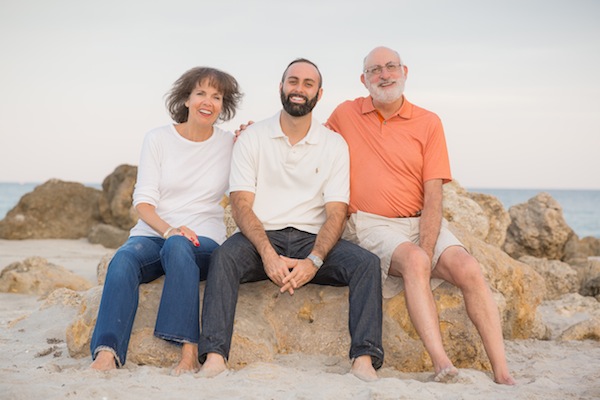
Left to right: Lisa, Jacob and Richard Hillman. (photo from Lisa Hillman)

“I had a fairly demanding and public position in the health system. I was president of our hospital foundation, had a very large board of about 25 people and a staff of about a dozen people. We were raising a lot of money to build a new hospital campus at the time, and so I was very public and very out and about. And, my fear was, as sick as it is to say today, that, if somebody would find out that my son had a drug problem, what would that say about me? What kind of mother could I be? What kind of person was I if I had a son who was using illicit drugs?” Lisa Hillman, author of Secret No More: A True Story of Hope for Parents with an Addicted Child, told the Independent.

“That was my feeling at the time,” she said. “I was not at all prepared to have addiction in my household. I was both ashamed and terrified at the same time.”

Hillman and her now-sober son, Jacob, shared their story at a Jewish Child and Family Service (JCFS) event at Congregation Shaarey Zedek in Winnipeg late last year.

Lisa and Richard raised their family in Annapolis, Md. Jacob was in high school when they found out he was using drugs. With almost 40 years of experience in the healthcare industry and being the healthcare decision-maker for the family, Lisa was determined to help Jacob overcome his addiction, while also keeping it a secret.

Like many others, however, she learned the hard way, after a couple of years, that this was not something she could fix. Although she held out hope that Jacob’s use of drugs was just a normal coming-of-age rite of passage, like trying cigarettes or alcohol, and that he would return to being the high-achieving person she knew him to be, that is not what happened.

“At first, we had him evaluated,” said Hillman. “I asked him if he would see a psychologist. He said ‘yes.’ He had bi-weekly meetings with a psychologist. At one point, my son gave me permission to talk to him – Jacob asked me, ‘If he tells you I’m alright, will you get off my back?’ And, I said, ‘sure.’

“This was when he was still in his senior year of high school. I visited with the psychologist, who said to me, ‘I told your son to smoke a little less.’”

Jacob was arrested during a holiday week after graduation, and the situation became more serious. As the family worked to get Jacob help, he resisted it, as addicts often do.

“The question I always get is, ‘How do you get them to accept treatment if they don’t want it?’” said Hillman. “I wish I had an answer for that. What we did with our son is finally say to him, ‘Jacob, you have a choice. You can continue to use, but you can’t live under our roof, or Dad and I will pay for inpatient treatment.’ Fortunately, he accepted inpatient treatment.

“Keep in mind, I’m very blessed,” she added. “I had some insurance and other resources. We were able to afford to send him someplace, which I know a lot of families can’t afford to do. I’m very, very lucky.”

The Hillmans found a place in Maryland, because Jacob did not want to leave the state. The place seemed to be very lovely and spiritual. They were hopeful he would get better there. But, after 12 days, the Hillmans visited their son and Lisa knew he had been using. Sure enough, the next day, Jacob’s counselor asked them to come pick Jacob up, that Jacob could no longer stay there.

“We brought him home to Annapolis,” Lisa Hillman said. “He entered the addiction treatment centre inpatient [program] that is part of my health system, where I was then and am still today, on the board. So, my drive for anonymity in this situation was about to crumble. The counselor my son was seeing said to me, ‘You have to tell somebody at work.’ So, I told my boss, the CEO of the hospital, and he was very empathetic and extremely understanding.”

Jacob went in for two weeks, after which the counselors suggested the Hillmans allow him to go to Florida for continued treatment, where he could live in a sober living house and continue to get outpatient treatment.

“The day he left, the counselor said to me, ‘Your son is going to have his program. What are you going to do for yourself?’” said Hillman. “My immediate reaction was that the counselor must have had 10 hits too many, because I didn’t have an addiction. I wasn’t the sick one, my son was the sick one. And yet, I realized I was crying all the time, I was obsessed with where he was and I couldn’t go to sleep at night until I knew he was home.

“I was isolated, I was depressed,” she said. “I wasn’t sharing anything with family and friends. So, I tried Al-Anon. And, from my very first time, I realized I’d [found] a home. These people understood me and were going through the same thing. I wasn’t alone anymore. I had people around me who got it and who were going through the same thing. Meanwhile, my son was in Florida and was getting better.”

Midway through that first year, Jacob had a minor relapse and told his parents about it over the phone. In that conversation, his mother said to him, “Jacob, we love you. Thank you for being honest and telling us. Please take care of yourself. You’re the only one who can.’ And Jacob replied, “Mom, thank you. That’s exactly what I needed to hear.”

Hillman recalled, “Pre-Al-Anon, I would have been on the phone screaming at him, angry. Fast-forward another six months, and he has another much more serious situation. We were told, ‘Your son needs detox.’ He was using heroin IV, a horrible scenario. So, we were asked to pay for a third inpatient treatment centre.

“I remember clearly asking the counselor, ‘How many times do we have to pay for this?’ And he said, ‘Tell your son that this is the last time.’ So, we did and, at the time, we did mean it, really. This was the last time we’d pay for him to have inpatient treatment.”

Although Hillman cannot say for sure that this ultimatum is what did it, Jacob stayed there for 100 days. After that, he moved, got a job and stayed for six months in a sober house. He kept the job for several years and eventually moved into an apartment. He has been active in AA ever since and has been clean for almost eight years.

Hillman has continued going to Al-Anon. She asked her husband to come with her and try it out at least once. They went to a different meeting than she had been going to. “We walked into the room and there were two couples who we know really well,” she said. “Both of them had children with similar problems and we had no idea. We’ve been going to that same meeting now for almost nine years, every Thursday night.

“That first meeting was a huge relief,” she said. “I couldn’t speak at the first meeting. I couldn’t open my mouth, with lips quivering as I cried. They let me cry. Other people at that meeting cried. And I heard a phrase that night, that I think really guided me: ‘Detach with love’ – meaning you have permission to detach from your loved one’s problems, that you’re not responsible for them, that you can’t fix their problems, but that you still love them.”

Hillman realized, over time, that Jacob would have to find his own way and that she couldn’t enable him by sending money or paying for things for him. “But, we never stopped loving him the whole way, the whole time,” she said.
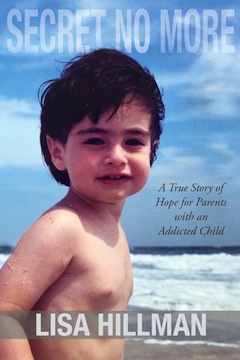
image - Secret No More book coverAs she healed, Hillman felt the desire to write a book about her experiences. She asked her son for permission to publish it.

“The reason for writing it was, I knew there were other families in hiding and ashamed, and that shame and fear just makes it worse,” she said. “It makes it worse for you if you love someone in addiction, and it doesn’t help the person with addiction. The whole purpose in writing this was to help particularly other moms and dads and sisters and brothers and boyfriends and aunts and uncles and grandfathers who I knew were sort of in hiding and had secrets and weren’t sharing – giving them hope that they can do it, too.

“Don’t hide,” she stressed. “Find professional help for yourself. My message is not to those with addiction, it’s to those who love people with addiction. My son says, ‘Mom, remind people that this is your story. Not mine.’

“If you have somebody in your life that is using or drinking, please go get help for yourself,” she said. “If one person in the family can get healthy and understand addiction, boundaries, and how to take care of themselves, then it will affect the rest of the family.

“That’s what happened in our family. I got stronger, my husband got stronger. Jacob saw that we were trying to understand him, that we were trying to get ourselves right again. He was getting better and we had a common language.”

Hillman said, “I think people who recover from an addiction and somehow live every day clean and healthy, year after year after year, to me, they are the most amazing, profound people. My son has become just an astonishingly profound young man and I’m very, very proud of him.

“I think that Judaism hasn’t helped us here today,” she added. “I think it’s getting better, but, looking back on it, part of my shame was that this doesn’t happen to Jews. We’re smart, educated, driven, are achievers, we don’t have addiction – but that’s not true.”

The Nov. 25 event with the Hillmans was sponsored by the JCFS and Gray Academy of Jewish Education. Panelists included an addictions physician, a therapist and an Addictions Foundation of Manitoba consultant on youth.

“Recovery is individual. There is no single treatment that works for everyone. There is no easy fix, like there is no single cause. It’s a combination of factors,” said Ivy Kopstein of the JCFS. “As a community, we need to end stigma and judgment, and replace it with compassion and understanding so we have no need for secrets anymore.”

Rebeca Kuropatwa is a Winnipeg freelance writer.

Shluchim gather in N.Y.

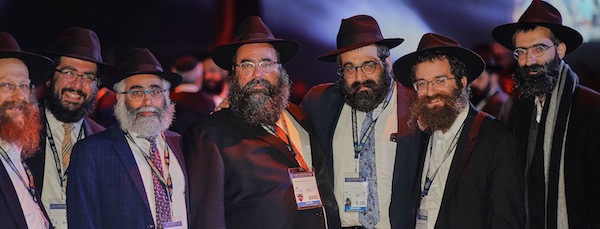
The 2019 “class photo” of Chabad shluchim who attended the Kinus Hashluchim in New York. Among the 4,000 Chabad emissaries attending were 14 from British Columbia. (photo from Chabad-Lubavitch)

Fourteen B.C. Chabad emissaries (shluchim), including one from Victoria and one from Nanaimo, recently converged on New York City for the annual five-day International Conference of Chabad-Lubavitch Emissaries (Kinus Hashluchim), which brings together shluchim from more than 100 countries around the world and other Jewish communal leaders, almost 6,000 people.

The Kinus Hashluchim reflects directly on the influence of the Rebbe, Rabbi Menachem Mendel Schneerson, z”l, leader of the Chabad movement, who, decades ago began sending young Chabad couples to far-flung corners of the world to serve and, in some cases, build Jewish communities. The shluchim, or Rebbe’s Army, now comprises 5,000 Chabad couples worldwide. The newest shluchim just established a Chabad centre in Kigali, Rwanda; one in Myanmar; and one on the Caribbean island of Turks and Caicos.

The November Kinus conference focused on the work that has been accomplished. “It’s an opportunity for shluchim to share the various challenges they encounter and the countless accomplishments they achieve. We get a chance to share ideas, inspiration and guidance not only from the Rebbe’s teachings, but from each other. And these enable us to go home spiritually refreshed and ready to implement new things,” said Rabbi Yechiel Baitelman, director of Chabad Richmond. “We definitely gain strength from each other, and our challenge is to celebrate and share Judaism with joy, and to continue optimistically and positively empowering Jews around us.”

During the five-day gathering, the shluchim participated in seminars and workshops on combating antisemitism, inspiring pride in the Jewish people, and much more. They also engaged in study, prayer and celebrations, including a gala dinner. The spiritual high point took place on the Friday, Nov. 22, when shluchim visited the Ohel, the Rebbe’s resting place. Thousands of emissaries waited in line to deliver handwritten notes and prayers to the grave.

“It’s an opportunity for us to rededicate ourselves to the Rebbe’s spiritual and social vision for the world,” said Rabbi Yitzchak Wineberg, director of Chabad Lubavitch of British Columbia. On Shabbat, shluchim and lay leaders spent time learning and praying in Brooklyn’s Crown Heights neighbourhood, which houses the worldwide headquarters of the Chabad Lubavitch movement at 770 Eastern Parkway. They also took part in farbrengens (traditional Chassidic gatherings). On Sunday, the annual “class photo” of more than 4,000 shluchim took place at Chabad headquarters.

photo - Left to right, some of the B.C. rabbis who attended the conference: Rabbi Falik Shtroks (Chabad White Rock/Surrey), Rabbi Chalom Loeub (Chabad UBC), Rabbi Shmulik Yeshayahu (Community Kollel), Rabbi Yechiel Baitelman (Chabad Richmond); Rabbi Meir Kaplan (Chabad of Vancouver Island), Rabbi Bentzion Shemtov (Chabad Nanaimo) and Rabbi Binyomin Bitton (Chabad of Downtown Vancouver)
Left to right, some of the B.C. rabbis who attended the conference: Rabbi Falik Shtroks (Chabad White Rock/Surrey), Rabbi Chalom Loeub (Chabad UBC), Rabbi Shmulik Yeshayahu (Community Kollel), Rabbi Yechiel Baitelman (Chabad Richmond); Rabbi Meir Kaplan (Chabad of Vancouver Island), Rabbi Bentzion Shemtov (Chabad Nanaimo) and Rabbi Binyomin Bitton (Chabad of Downtown Vancouver). (photo from Chabad-Lubavitch)

The Sunday evening gala, which Baitelman described as “vibrating with uncontainable energy, renewed enthusiasm and an undeniable sense of mission,” was held at the New Jersey Convention and Exposition Centre. Emcee for the evening was Rabbi Moshe Kotlarsky, vice-chair of Merkos L’Inyonei Chinuch, the educational branch of the Chabad movement. He spoke of the challenges Chabad emissaries encounter in their work, and praised them for their enthusiastic and unflagging commitment to making a difference in the world.

The gala’s keynote address was given by U.S. Ambassador to Israel David Friedman. He related that he has been Torah study partners with a Chabad rabbi in Woodmere, N.Y., for more than two decades, and said that helped prepare him for his current role as ambassador to Israel.

Many of the gala’s speakers emphasized how shluchim are deeply connected to Jews in every part of the world, and that each individual Jew is important to them. Rabbi Yitzchak Schochet, a Chabad emissary from Mill Hill Synagogue in London, England, said: “Ask yourself, where would the world be today without the Rebbe’s vision? Who else goes looking for Jews all around the world, in every corner of the world?… What would have become of [Jews] were it not for the unconditional devotion of every shaliach and shalucha?”

The gala wrapped up with the annual “roll call,” at which Kotlarsky read out the names of the countries that have permanent shluchim. The evening ended with dancing and singing. For those who are interested, the banquet was livestreamed by chabad.org at tinyurl.com/twu2x7z.

In addition to Wineberg and Baitelman, the B.C. contingent of shluchim included Rabbi Avraham Feigelstock (Community Kollel), Rabbi Schneur Wineberg (Chabad East Vancouver), Rabbi Dovid Rosenfeld (Lubavitch BC), Rabbi Mendy Feigelstock (Kosher Check), Rabbi Levi Varnai (Chabad Richmond), Rabbi Binyomin Gordon (Kosher Check), Rabbi Falik Shtroks (Chabad White Rock/Surrey), Rabbi Chalom Loeub (Chabad UBC), Rabbi Shmulik Yeshayahu (Community Kollel), Rabbi Meir Kaplan (Chabad of Vancouver Island), Rabbi Bentzion Shemtov (Chabad Nanaimo) and Rabbi Binyomin Bitton (Chabad of Downtown Vancouver).

Richmond marks the Shoah

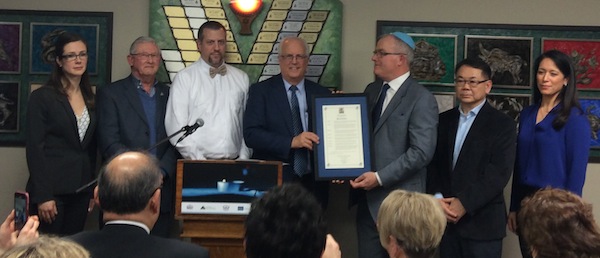
Left to right: Councilor Kelly Greene, Councilor Bill McNulty, Bayit past president Michael Sachs, Richmond Mayor Malcolm Brodie, Bayit president Keith Liedtke, Councilor Chak Au and Councilor Alexa Loo at the Bayit, after the mayor officially proclaims Jan. 27 as International Holocaust Remembrance Day in the city of Richmond. (photo by Cynthia Ramsay)

On Jan. 22, emotions were near the surface in a Holocaust commemoration that included the official proclamation of Jan. 27 as International Holocaust Remembrance Day in the city of Richmond. In a packed sanctuary at the Bayit, a synagogue in the province’s second-largest Jewish community, survivors, rabbis, community leaders and a host of elected officials from all levels of government were on hand to mark what was billed as an historic day.

Writer and teacher Lillian Boraks-Nemetz spoke as a survivor of the Holocaust and shared her first-person account, as well as the moral implications of what happened and the weight of survival.

photo - Lillian Boraks-Nemetz
Lillian Boraks-Nemetz (photo by Cynthia Ramsay)

“Not a day passes when I don’t ask myself why did I survive when six million perished, 1.5 million children and among them my 5-year-old sister,” said Boraks-Nemetz. “And I survived. Why? When every European Jewish child was automatically sentenced to death by Hitler, I won. Was my survival a miracle? A twist of fate? The will of God? Why me?”

She recalled the day everything changed, Sept. 1, 1939.

“I was alone on the porch of my grandfather’s summer home when masses of airplanes passed over my head. I heard shots, explosions, my dad ran to get me and we barely made it to the shelter, where the sight of crying children and frightened people confirmed my own fears,” she said. The Nazis invaded her Polish homeland. Jews lost all human rights, her father lost his right to practise law, her uncle was prevented from practising medicine. Teachers, professors and businesspeople were all kicked out of their positions. Jewish children did not attend schools and they were bullied, a precursor of the much graver fate to come.

Soon the Jews of Warsaw were imprisoned in the ghetto, where a Nazi-created dystopia developed.

“People stole food from each other,” she said. “All morality ceased to exist in an amoral world.”

Young Lillian was smuggled into the factory where her mother was a slave labourer. Lillian’s grandmother had bought a small house in a village and promised it to a man in exchange for posing as her husband, creating a pretext of a non-Jewish Polish family. Lillian was then smuggled from the ghetto through bribery and survived the war with her grandmother and the man.

“What were my chances of surviving? The rate of a child’s surviving the ghetto was seven percent,” she said. “We were liberated in 1945 by the Russians. But liberation isn’t liberating to survivors.”

While adults worked to reestablish their lives in a new country, children were left largely to their own devices to assimilate all that had happened. Psychiatry or any professional help was largely nonexistent.

“I was told to forget and to let go by people who didn’t have a clue what was on my mind or my soul,” she told the audience. “This was not a physical wound that results in a bruise or a scab, which then falls off and mostly disappears. This is a branding on the soul of fire caused by man’s inhumanity to man, woman and child. The enormity of the Holocaust is still largely incomprehensible and still emotionally inaccessible to those who were born here.”

photo - Judy Darcy
Judy Darcy (photo by Cynthia Ramsay)

Judy Darcy, British Columbia’s minister of mental health and addictions, shared the story of how her father survived the Holocaust and subsequently hid his Jewish identity to everyone, including his own children, until the last years of his life, when he tried to reconcile his experiences in meetings with the late Toronto rabbi Gunter Plaut. Darcy’s story was featured in the Independent (Feb. 24, 2017, jewishindependent.ca/mlas-father-hid-past).

photo - Rabbi Levi Varnai speaks as Keith Liedtke looks on
Rabbi Levi Varnai speaks as Keith Liedtke looks on. (photo by Cynthia Ramsay)

Rabbi Levi Varnai, spiritual leader of the Bayit, recalled his family’s survival during the Holocaust, and Ezra Shanken, chief executive officer of the Jewish Federation of Greater Vancouver, spoke of the human potential for good and evil.

“We must understand that we as human beings have the capacity for immense love but also to create immense pain and it’s only through disciplining ourselves through education and through moments like this that we ensure that the community that I think we all want, which is a community of love, is what will remain,” Shanken said.

photo - Ezra Shanken
Ezra Shanken (photo by Cynthia Ramsay)

Richmond’s Mayor Malcolm Brodie spoke at the event. In an interview with the Independent after, he noted that he often receives requests for proclamations. Recently, the urgency for making a statement and standing with Jewish people was accentuated when a Richmond auction house had to be pressured to cancel the sale of Nazi military memorabilia. Participating in the commemoration with the Jewish community was significant for him, said the mayor, and the past is a lesson for the future.

“I found it quite moving,” said Brodie, noting the remarks by Boraks-Nemetz and Darcy. It is important, he said, “to remind people, and the greater community, to watch out for the signs, because something like this – hopefully never on the scale – but something could happen again.… There have been enough times recently that antisemitism is still a real thing. It is something that we don’t hear too much about but it is something that is very real. In addition to honouring these millions who died, we have to educate young people to make sure that everybody knows the facts and we make sure that it never happens again.”

Michael Sachs, a Jewish community activist and past president of the Bayit, was pivotal in organizing the event – which was co-hosted by the Bayit, Vancouver Holocaust Education Centre, Centre for Israel and Jewish Affairs, Kehila Society of Richmond and Jewish Federation of Greater Vancouver – and ensuring the attendance of the elected officials. Among the attendees were the mayor, most of Richmond’s city councilors, all four of the city’s members in the Legislature, Member of Parliament Alice Wong and former MP Joe Peschisolido, as well as others.

“There were 100 chairs and it was standing room only,” Sachs said afterward. “It’s historic because it’s the first time in Richmond that this proclamation has been made. To have such an outpouring of elected officials, VIPs and all these people coming out – it’s the first in history in Richmond.”

Sachs was effusive in his praise for the mayor for his actions. While many commemorations are taking place because it is the 75th anniversary of the liberation of Auschwitz, that was not a prime motivator of the Richmond event, said Sachs.

“It’s the first step of many that will come,” he said. “It’s the beginning of a real public acknowledgement that will lead to more public education. We had someone who was there, one of the aides of an elected official, and he came up to me afterwards and he said, ‘I didn’t know anything about the Holocaust.’ That’s one person right there,” Sachs said. “And, hopefully, this moment continues to help bring Holocaust education into every classroom in this province.”

War heroism recalled

Prof. George Bluman speaks at the 15th annual Raoul Wallenberg Day commemoration, Jan. 19. (photo by Masumi Kikuchi)

Japanese diplomat Chiune Sugihara was honoured in Vancouver this month with a lecture on his wartime heroism – by a man who owes his life to the actions of Sugihara when the diplomat served as consul for the Imperial Japanese government in Lithuania, near the start of the Second World War.

George Bluman, a professor emeritus of mathematics at the University of British Columbia, spoke at the 15th annual Raoul Wallenberg Day commemoration Jan. 19, which was held at the H.R. MacMillan Space Centre. The annual event is presented by the Wallenberg-Sugihara Civil Courage Society and took place 75 years and two days after Wallenberg, a Swedish diplomat in Hungary whose actions saved the lives of tens of thousands of Jews, was last seen alive. The actions of Sugihara, vice-consul of the Japanese embassy in Kaunas, Lithuania, paralleled those of Wallenberg in that he issued visas and took extraordinary actions to save the lives of the threatened Jews of Europe.

Bluman’s parents, Nathan and Susan Bluman, fled to Lithuania after Germany invaded Poland in 1939. There, they received transit visas from Sugihara, which enabled them to travel through the Soviet Union to Japan. They then obtained temporary permits to enter Canada and they were aboard the last ship sailing from Japan to Vancouver prior to the attack on Pearl Harbor.

An estimated 15% of Sugihara survivors became Canadians, many of them remaining in Vancouver, including the Bluman family, which has come to number 23, now including great-grandchildren of Susan and Nathan. It is estimated that Sugihara’s actions facilitated the escape of thousands of Jewish refugees.

In addition to the Sugihara descendants living in Vancouver, Bluman noted an additional local connection. On his way to Europe for the series of diplomatic postings that would lead to his heroic acts, Sugihara and his wife Yukiko arrived by ship in Vancouver in 1937, then took a transcontinental train to the East Coast to board another ship, which would take them to Europe.

A 2017 poll in a Tokyo publication rated Sugihara as the most important Japanese person ever. “Why?” Bluman asked. “Against advice from his superiors in Tokyo, he issued transit visas to Japan that ended up saving about 2,100 Jewish refugees who otherwise would have been likely murdered. Those saved included my parents as well as one of my uncles and his wife.… Perhaps as many as 40,000 people owe their lives due to the extraordinary heroic deeds of Sugihara.”

Two diplomats from the Netherlands played crucial roles in Sugihara’s heroics, Bluman said. After the Nazi occupation of that country, in May 1940, an anti-Nazi Dutch government-in-exile was established in London and remained in charge of all Dutch embassies. The anti-Nazi Dutch ambassador in Latvia, L.P.J. de Decker, dismissed his pro-Nazi Lithuanian honorary consul, replacing him with Jan Zwartendijk, a Dutch engineer heading Philips electronics in Kaunas.

“Two young Dutch rabbinical students approached Zwartendijk, requesting documentation to go to Curaçao, a Dutch colony in the West Indies, with the aim of traveling east through the Soviet Union, Japan, the Pacific Ocean and the Panama Canal to tiny Curaçao, an island off the coast of Venezuela, about one-sixth the size of Metro Vancouver. They also sought permits for their mostly Polish classmates.

“Why Curaçao?” asked Bluman. “Because no visa was required to enter Curaçao. The local governor had sole authority to permit entry. But this was rarely granted. Zwartendijk was given permission by de Decker, the Dutch ambassador in Riga [Latvia], to issue permits to Curaçao to their fellow rabbinical students that stated, in French, ‘A visa for entry is not required,’ leaving out the condition of the governor’s permission. Moreover, Zwartendijk courageously agreed to issue such permits to all Jewish refugees who applied for them.”

A delegation of Jewish refugees approached Sugihara about obtaining Japanese transit visas, a necessary step for the scheme’s success.

“Without permission from Tokyo, and after getting Soviet approval, signed by Stalin, for refugee transit through the Soviet Union, Sugihara issued transit visas valid for a stay of 10 days in Japan, based on the seemingly sufficient Zwartendijk Curaçao permits,” said Bluman. “Zwartendijk signed 2,300 such permits, until his office was forced to close on the day Lithuania was annexed by the Soviet Union.… The scam worked.”

With the annexation of the Baltic states to the Soviet Union, all foreign embassies were ordered closed. Though Zwartendijk left, Sugihara managed to stay on for a further four weeks to continue writing transit visas – even for Jews who had not obtained a visa from Zwartendijk.

“These Jews included my parents, who approached Sugihara’s office six days after Zwartendijk had left,” Bluman said.

Ultimately, about 80% of the Jewish refugees issued Sugihara visas survived and about three-quarters made it to Japan. Almost half carried on to Shanghai, China, to wait out the war.

Sugihara’s diplomatic career effectively ended in Romania, where he was posted at the end of the war. When the Soviets occupied Bucharest, Sugihara and his family were imprisoned in a prisoner-of-war camp for 18 months.

Back in Japan in 1946, Sugihara was dismissed from diplomatic service and spent the next several decades in low-key positions in Japan and Moscow. His retirement from service was ostensibly a matter of downsizing, but some have speculated that his heroic insubordination was a cause.

Only in 1968 did Sugihara learn that most of the Jews he had helped had survived. In 1985, he was recognized by the state of Israel, receiving the Righteous Among the Nations award from Yad Vashem, as well as perpetual Israeli citizenship for himself and his family. Zwartendijk was posthumously honoured in 1997. Sugihara died in 1986, at the age of 86. Bluman retains close contact with the family in Japan.

“In my family,” Bluman concluded, “there is one great hero we always carry in our hearts and to whom we will be forever grateful: Chiune Sugihara.”

After Bluman’s presentation, attendees watched the film Persona Non Grata: The Story of Chiune Sugihara. Earlier, Alan La Fevre, president of the Wallenberg-Sugihara Civil Courage Society, welcomed guests, including the deputy mayor of the city of Vancouver, Christine Boyle, who read a proclamation declaring Raoul Wallenberg Day. Diplomats from Japan and Ukraine were in attendance.

The Wallenberg-Sugihara Civil Courage Society was formed in 2013 by members of the Swedish and Jewish communities. The society continues the legacy of the annual Wallenberg Day events in Vancouver, recognizing and honouring individuals who, at great personal risk, have helped others by acting against unjust laws, norms or conventions.

Mark and Seth Rogen honoured

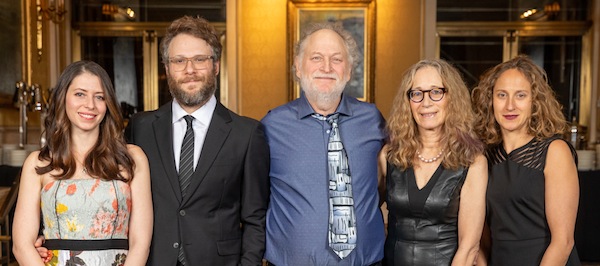
Left to right: Lauren Miller Rogen, Seth Rogen, Mark Rogen, Sandy Rogen and Danya Rogen at the ceremony in New York City at which Mark and Seth were honoured with the Generation to Generation Activism Award from the Workmen’s Circle. (photo from Mark Rogen)

Vancouver’s Mark and Sandy Rogen have good reason to be proud of their children and the Jewish values with which they raised them. Some of those values were highlighted as 2019 came to a close, when Mark Rogen and his actor, writer and producer son Seth were honoured on Dec. 2 with the Generation to Generation Activism Award from the Workmen’s Circle in New York.

The award recognizes the Rogens’ work promoting Jewish culture and traditions, while also carrying on the traditions of tikkun olam, repairing the world.

“What made it meaningful for us and for everyone who came was that it was an award about values,” Mark Rogen said in an interview with the Jewish Independent after a game of basketball at the Jewish Community Centre of Greater Vancouver. “It wasn’t about someone giving $2 million to get their name on a hospital. It was about recognizing people living in a positive way.”

Rogen said he and Sandy have always preached that value to their kids, along with the idea that they should always strive to “be a blessing.”

“That’s the way Sandy and I tried to raise Danya and Seth – to try to be a blessing and do what you can,” he explained. “Doing something one-to-one is just as good as doing something internationally. It’s where your heart is and I think Sandy and I are very happy to see that’s how Danya and Seth live their lives. That’s the pride.”

Rogen noted that, when his kids were young, they experienced many blessings. In those years, he said, the family had little money and institutions like Vancouver Talmud Torah, the JCC and Camp Miriam treated his children well, and “didn’t charge us a lot. So, Danya and Seth spent their formative years in the Vancouver Jewish community, and their friends today are from those years. Seth met Evan [Goldberg, his writing partner] at the JCC doing karate, and then they did bar mitzvah classes together.”

Knowing that his children are giving back as adults is important, said Rogen, who worked for the Workmen’s Circle for two years when the family temporarily moved to Los Angeles when Seth filmed Freaks and Geeks. Among other things, Seth and wife Lauren Miller Rogen founded Hilarity for Charity, which raises money for Alzheimer’s care, research and support.

That the recent award was a joint honour made it more meaningful to Seth Rogen. “To be honoured in any capacity is rare and lovely for me, but, to be honoured alongside my father was truly special and memorable,” he told the Independent. “My dad has always been dedicated to helping others and spreading goodness wherever he can. He worked for nonprofits most of my childhood and always strived to make the world a better place. He is someone I always go to for advice and his guidance is consistently geared towards not just what’s good for me, but what’s good for everyone.”

As for the Jewishness he often displays on screen, the actor said he rarely separates that part of himself from his work. “Being Jewish is inseparable from my identity in many ways, so it’s something I’ve always thought was good to acknowledge and integrate into my work,” he explained. “I simply am Jewish and I’m proud of myself and what I’ve done with my life.”

Seth Rogen’s biggest Jewish role, however, might be coming in the soon-to-be-released American Pickle, in which he plays a young man who comes to the United States in 1918 from a European shtetl, then gets trapped and preserved in a pickle barrel for 100 years before being united with his grandson in Brooklyn.

Danya Rogen – who is currently on the board of Vancouver Talmud Torah, on the personnel committee for Habonim Dror Camp Miriam and a regular participant on the JCC softball league team her father captains – joined many family members and friends in New York for the ceremony honouring her father and brother. She remembers her parents raising their awareness of important issues at a very young age.

“My parents, and my dad in particular, taught us to stand up for what we believe in and stand up for others who can’t do it for themselves,” she said. “My parents were also incredibly kind and generous, even when we didn’t have so much ourselves. All of those values have stuck with me my whole life. “I hope to live up to being a blessing and can pass those values on to my own children. I suppose the fact that I have become a social worker isn’t that surprising.”

Kyle Berger is Jewish Community Centre of Greater Vancouver sports coordinator, and a freelance writer living in Richmond.

Community milestones … Suedfeld, Averbach, Phillip, Gutteridge, BI

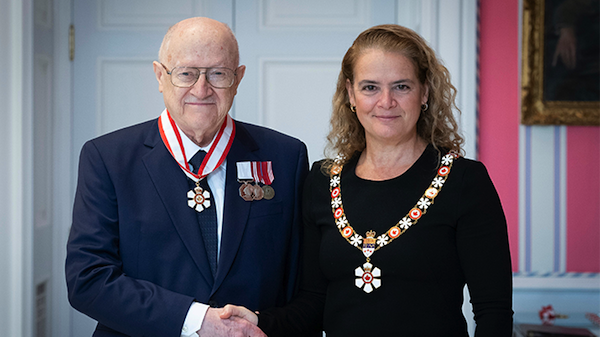
Dr. Peter Suedfeld with Governor General Julie Payette at Rideau Hall. (photo by Sgt. Johanie Maheu)

On Nov. 21, 2019, Vancouver’s Dr. Peter Suedfeld was among those invested into the Order of Canada by Governor General Julie Payette during a ceremony at Rideau Hall in Ottawa.

The Order of Canada is one of the country’s highest civilian honours. Its companions, officers and members take to heart the motto of the order: “Desiderantes meliorem patriam” (“They desire a better country”).

Suedfeld was invested as an officer of the order. The honour’s website notes that his “groundbreaking research expands our notions of resilience and transcends academic fields. Professor emeritus at the University of British Columbia and a prolific writer, he is internationally acclaimed for documenting previously ignored positive psychological and physical effects of extreme and challenging environments. His work has taken a critical look at the impacts on humans experiencing polar isolation, space exploration, sensory deprivation, decision-making during international crises, and such traumatic experiences as genocide. He is highly regarded both as a mentor and active member of his community.”

Created in 1967, the Order of Canada recognizes outstanding achievement, dedication to the community and service to the nation. Close to 7,500 people from all sectors of society have been invested into the order. Those who bear its iconic snowflake insignia have changed Canada’s measure of success and, through the sum of their accomplishments, have helped build a better country.

Appointments are made by the governor general on the recommendation of the Advisory Council for the Order of Canada. For more information about the Order of Canada or to nominate someone, visit gg.ca/en/honours.

* * *

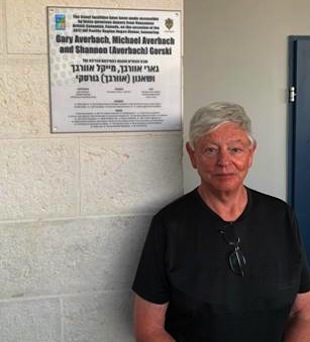
photo - Gary Averbach at the Israeli Scout’s facilities in the city of Ra’anana
Gary Averbach at the Israeli Scout’s facilities in the city of Ra’anana.

JNF Canada is proud to have completed renovating the infrastructure of the Israeli Scout’s facilities in the city of Ra’anana, to be more accessible for children and youth with disabilities. This project was the focus of the JNF Vancouver 2017 Negev Dinner, honouring the Averbach family.

The Israeli Scouts, Tzofei Tzamid, run programming for more than 80,000 members aged 9-21 (including more than 2,500 with disabilities) throughout Israel. They bring together children and youth from across the spectrum of Israeli society to learn leadership skills and the value of inclusive community, and to enhance their self-image.

A special thank you to Gary Averbach, Michael Averbach and Shannon (Averbach) Gorski, and the entire Vancouver community for taking this vision forward and helping JNF improve the lives of the members of Tzofei Tzamid. To learn more about the project, visit jnf.ca/tzofei-tzamid.

* * *

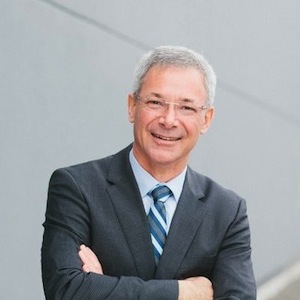
photo - Rob Philipp will start his position as chief executive officer of Hillel BC in June
Rob Philipp will start his position as chief executive officer of Hillel BC in June.

Rob Philipp has been appointed to the position of chief executive officer of Hillel BC, effective in June.

Philipp’s appointment follows a Canada-wide process engaged by the search committee of the Hillel board of directors, comprised of Gordon Brandt (chair), Eric Andrew, Rebecca Recant, Frank Cohn, Talia Magder, Alexis Pavlich, Rachael Segal and Isaac Thau (board president). Philipp was the unanimous recommendation of the search committee and unanimous choice of the board of directors.

Philipp has a long history with the Vancouver Jewish community, having served on several boards, including 20 years on the board of Temple Sholom and being president of that organization. He participated in the Vancouver Wexner Heritage Leadership Group, which was a selected group of local Jewish leaders that studied and learned together for two years.

Philipp brings a unique and impressive set of experience, credentials and passion to Hillel. After graduating from the University of British Columbia, where he was an active member of Hillel, he worked as a chartered professional accountant. He then developed his career in sales, marketing and management in both for-profit and nonprofit organizations, most recently as the chief executive officer of the Fraser Valley Real Estate Board and as interim executive director of Temple Sholom.

He is known for being a creative and innovative leader, with a warm and strong team approach and a people-first mentality. His experience in developing and executing strategy, program development and delivery, combined with his business, governance and financial acumen, will be tremendously valuable to the continued growth of Hillel based on the strong foundation built by Rabbi Philip Bregman and Sam Heller in recent years.

* * * 

photo - Jessica Mann Gutteridge is the new artistic managing director of the Rothstein Theatre and Chutzpah! Festival
Jessica Mann Gutteridge is the new artistic managing director of the Rothstein Theatre and Chutzpah! Festival.

The Jewish Community Centre of Greater Vancouver welcomes Jessica Mann Gutteridge as the new artistic managing director of the Norman and Annette Rothstein Theatre and Chutzpah! Festival. The position was previously held by Mary-Louise Albert, who is leaving after 15 successful years. The JCC thanks Albert for her excellence in service and dedication to the community and the arts.

Gutteridge joins the JCC from Boca del Lupo, where she managed Performance Works on Granville Island. She was also a founding board member of the Granville Island Theatre District. She held positions of managing director and education manager at Carousel Theatre for Young People. Her work as a dramaturg has included new plays for young audiences and playwrights from Shakespeare to Genet to Edwin Sánchez.

She received her master’s in fine arts from the Yale School of Drama’s department of dramaturgy and dramatic criticism, and studied directing at Wesleyan University. Born and raised in New York, she returned to the theatre after nearly two decades as a lawyer specializing in advertising and trademark law. At Columbia Law School, she was editor-in-chief of the Columbia-VLA Journal of Law and the Arts. Her nonprofit board work has included serving as co-president of Landmark on Main Street (a performing arts and community centre on Long Island, N.Y.), the Vancouver International Burlesque Festival, and the Bayview Treehouse Preschool. She was a member of the 2018-19 Cultural Leadership Program at the Banff Centre in Alberta.

“I look forward to continuing to bring diverse, world-quality artists to present their work to Chutzpah! Festival audiences and to reach a new generation with exciting performances. I am also delighted to steward the Rothstein Theatre as a gem appreciated by professional artists and community members throughout Metro Vancouver.”

The JCC is excited to see Gutteridge apply her industry experience and talents to the management of the centre’s fully equipped 318-seat performance venue, and the creative direction of the Chutzpah! Festival, one of the major art events in Vancouver’s cultural calendar.

* * *

At Congregation Beth Israel’s annual general meeting Dec. 5, several volunteers were recognized. Mazal tov to Howard Mickelson and Keren Gertsman (President’s Award), Lloyd Baron (Board of Directors Special Service Award), Michael Harris (Board Recognition Award) and Lissa Weinberger (Special Service Volunteer Award).

The congregation also welcomed its incoming board for 2019-2020: Helen Pinsky (president), David Silver (vice-president), Heather Sirlin (secretary), Keren Gertsman (treasurer), Lisa Averbach, Anton Bloem, Alexis Doctor, Kevan Jacobson, Lisa Marcoe, Christie Menzo, Dale Porte, Jennifer Wolf and David Woogman.

Youth feed homeless people

Youth from Temple Beth Ora and Gathering Angels in Edmonton help out at Boyle Street Community Services shelter. (photo from Rabbi Gila Caine)

In Edmonton, Rabbi Gila Caine and Muslim leader Nesrine Merhi-Tarrabain have combined forces to serve their local community.

Caine is spiritual leader of Temple Beth Ora, a Reform synagogue in Edmonton with nearly 100 families, which celebrated its 40th anniversary last year. Merhi-Tarrabain is director of Gathering Angels, which runs an educational centre that teaches Muslim girls Islamic values.

Caine grew up in Jerusalem and moved with her husband, Ariel, and their two young children to Edmonton more than two years ago to lead Temple Beth Ora. Their kids attend the local Talmud Torah school.

Growing up, Caine learned early on, and more so in her early teens, to always be looking for ways to strengthen and help community. She wanted to bring that same mindset – of taking responsibility for your local community – to b’nai mitzvah-age kids at her Edmonton congregation.

“We’ve wanted to go out of the classroom and do stuff outside for a few years now,” Caine told the Independent in a recent interview. “And then, through another connection I have, with Salaam Shalom group, I asked one of them if perhaps they have somebody in their community that does stuff with kids … and that maybe we could do stuff together.

“I thought that would be really cool if we could get the b’nai mitzvah kids to go out and do stuff in the community, but with other youth of a different faith group,” she said.

Caine was connected with Merhi-Tarrabain. After some effort and time, the synagogue and educational centre managed to get together on a Saturday in November, preparing and serving both breakfast and lunch at Boyle Street Community Services shelter.

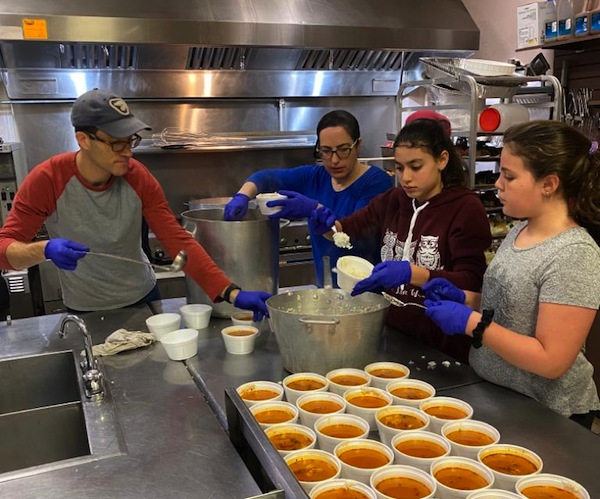
“We brought food with us, had her girls, my kids, and some parent volunteers working in two shifts there that day – working together, preparing sandwiches, cooking,” said Caine. “It was actually funny to see – it was more the parents that were connecting and talking … [while] the kids were basically doing their work quietly. But, the parents got into really nice conversations with each other and they served the food. And everybody from both sides came away feeling that we should do this again.”

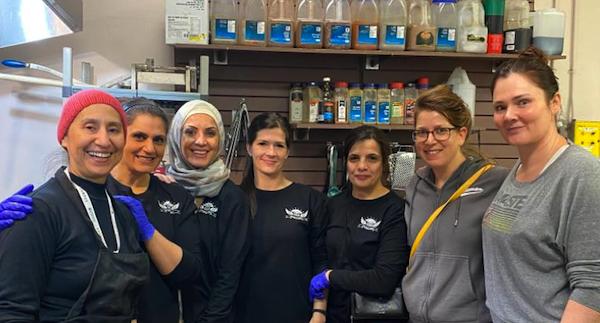
photo - The interfaith initiative at Boyle Street Community Services was led by Nesrine Merhi-Tarrabain, third from the left, and Rabbi Gila Caine, second from the right
The interfaith initiative at Boyle Street Community Services was led by Nesrine Merhi-Tarrabain, third from the left, and Rabbi Gila Caine, second from the right. (photo from Rabbi Gila Caine)

Caine is hoping to make serving the community a tradition at Temple Beth Ora, possibly with Gathering Angels again, as well as with other groups.

When thinking of the best activity to launch the b’nai mitzvah community service initiative, Caine chose this particular one – preparing and serving food – as she knew from experience that many of the kids really enjoy dealing with food service, having seen them help out at the shul.

“Some of these kids are b’nai mitzvah kids and they want to volunteer again,” said Caine. So, the youth group counselors “will sit with them and talk to them about what they want to do. This is the next step,” she said.

After the November project, there was another food-related volunteering opportunity for the kids last year. They joined the Edmonton Jewish community as a whole to prepare a Christmas meal for another shelter. “They really wanted to take part in that,” said Caine. “And now we will see what they will come up with next.”

According to Caine, having Merhi-Tarrabain at the Boyle Street Community Services kitchen was beneficial for several reasons, including that she had volunteered there with the girls in the past and had experience. That meant Merhi-Tarrabain could offer tips about what food to bring and how to best help in the food’s preparation and serving.

“Now, some of the parents who were there, they want to initiate more of these things,” said Caine. “And now, we have a better idea of how to do that.”

Both faith groups understand that more such gatherings are necessary before the youth can make lasting connections.

Caine said her synagogue is trying to create a project with another Muslim youth centre in Edmonton and also with one of the city’s churches. “We’re trying to create a program,” she said, “where they will have meetings, talk and learn and do stuff together … hopefully resulting in some real connection-making.”

Rebeca Kuropatwa is a Winnipeg freelance writer.
Promoting fair trade in Israel

Raz Frogel (photo from Fair Trade Israel)

Raz Frogel, 23, has taken it upon himself to increase the number of fair trade items on Israeli store shelves.

Frogel, who lives in Dror Israel commune in Haifa, first read about child labour and improper working conditions when he was 16 years old. The article was about people working in cocoa fields and, after reading it, he announced to his parents that he would no longer eat chocolate, and explained why. He then spent the next two years in search of a solution.

“When I was 18 years old, I found fair trade and started doing research about it and looked into where I could find fair trade products,” Frogel told the Independent. “When I was released from the army, I started the fair trade movement in Israel.”

In his research, Frogel came across a 2016 article in the Independent: jewishindependent.ca/many-benefits-of-fair-trade.

“I realized nobody in Israel tried to promote fair trade or was trying to change the situation,” said Frogel. So, he took on the responsibility “and started to spread word of fair trade in Haifa, trying to make Haifa the first Fair Trade City in Israel. There are 2,000 cities in the world with the designation of fair trade towns,” he said, “but none in Israel.”

Frogel said many people try to shame companies into becoming fair trade employers, but he sees this as a wrongheaded approach, akin to movements and groups promoting the boycott of Israeli companies and products.

“We try to focus on the good companies and give them our support, and not on companies with what we see as wrong or bad practices,” he said. “I don’t want to shame anybody. I just want everybody to go fair trade.”

As a first step to achieve this goal, Frogel is trying to raise awareness.

“When you walk on a street in Israel, you can ask 10 people what fair trade is and maybe one will know,” he said. “So, before we can go to the companies and ask for fair trade products and change behaviour, we need to educate the public, create awareness.

“Ten years ago, there were no vegan products in Israel, but, when the community and demand grew and grew … there is now no coffee shop without soy milk or something like that. So, with fair trade, we need to copy this process. We need to raise awareness, create demand, and create communities that create demand. Then, we need to go to companies and ask for fair trade products.”

About 20% of Israelis live in poverty, the majority of whom are women, some of whom are paid less than minimum wage and suffer from other unfair labour practices. With this in mind, Frogel connected with an organization working to empower women. So far, Achoti (My Sister) is the only business in Israel that uses fair trade.

While fair trade in the food industry is a relatively known issue, Frogel pointed out that the fashion industry is also problematic.

If workers need to be paid more, that extra cost could be added to the price of the product. But, the extra money paid to the workers could come from another part of the industry chain. And, while investors want the highest possible return, it is up to us – the end users – to determine the value of a product by voting with our dollars or shekels, said Frogel. If the demand is high enough, more producers could be encouraged to enter the market, thereby increasing supply and placing a downward pressure on prices.

“I think there is no price to pay,” contended Frogel, “because, when you look at the U.K., the cheapest products in the store are fair trade, like Cadbury or Nestle … and Starbucks. When you look at fair trade in places where it’s common, it’s cheaper than non-fair trade products. When we talk to people, we try to explain to them that, when there is a demand, the prices of products will come down and everybody can support it.

“Right now, it’s very expensive to buy fair trade in Israel,” he admitted. “I can’t lie. But, we’re working on it and I don’t think fair trade should be more expensive.”

While Frogel is working on bringing fair trade to Israel, he hopes that readers will join the global movement, wherever they are, and join a local fair trade initiative to promote it in their communities.

Currently, Fair Trade Israel has a Facebook presence and the organization can offer tax receipts to donors through Achoti.

“We are trying to raise Friends of Fair Trade, wanting to raise a lot of support from all over the world, to show that fair trade is part of Jewish values,” said Frogel. He wants to see Israel become “a fair trade movement leader.”

Starting by focusing on Haifa, and Israel in general, Frogel is organizing events and doing advocacy work in schools and businesses. As far as getting Haifa recognized as a Fair Trade City, he is working to fulfil the requirements for such recognition, such as attaining a high level of fair trade awareness and product availability. “We have a lot of support from the city council and have a group of great people leading this project,” said Frogel. “We have stores with fair trade products, but not in every neighbourhood. We started programs in schools in the last month and we have special programs on campuses to raise fair trade awareness and product availability.”

For more information, visit achoti.com (which is in Hebrew) or contact Frogel at frogel.raz@gmail.com.


Rebeca Kuropatwa is a Winnipeg freelance writer.
Campaign wraps up

“We’re making our final push toward another record-breaking campaign,” Jonathon Leipsic, chair of Jewish Federation of Greater Vancouver’s annual campaign, said when the Independent caught up with him last month, as the 2019 fundraising drive was entering the home stretch.

The campaign’s goals for the year are “to continue to grow to meet the ongoing needs around security, education, affordability and beyond.” The distinguishing message of the 2019 campaign, when it kicked off on Sept. 1, was to amplify the impact of donors’ giving and to “create a ripple effect.”

That amplification can be seen on several fronts, such as affordable housing, the most pressing concern of Lower Mainland residents. In 2007, long before real estate prices reached the levels of the late 2010s, Jewish Federation helped establish the Tikva Housing Society. Tikva serves all those who have been impacted by the high costs of rent – families, young individuals and seniors. The society now manages 98 affordable housing units, 37 of which came about in late September through a joint project with the YWCA – awarded by the City of Vancouver – for rentals at the new Arbutus Centre at 4188 Yew St.

Jewish Federation’s work encompasses all phases of a person’s life by providing community planning expertise, developing partnerships and raising funding for critical programs and services throughout the region. These are delivered through its many partner agencies, including programs that support seniors, Jewish education, arts and culture, and services for youth and young adults.

By 2031, it is predicted that the number of Jewish seniors in Greater Vancouver will double to 6,200. With this comes the challenge of helping them keep living independently and stay engaged within the Jewish community. As part of its strategic planning process, Jewish Federation co-hosted the second annual Changing Landscapes Forum on Nov. 26, which focused on three areas to address the high-priority needs of elderly community members: aging in place, caregiver support and social connection.

As for Jewish education and educational programs, Jewish Federation currently partners with Jewish day schools, summer camps and supplementary school programs across the region. As well, its vision reaches beyond the metropolitan area, to Israel. More than a decade ago, it identified at-risk youth in its partnership region of the Upper Galilee as a group in urgent need. It then invested in tech education, which has allowed other organizations to build on its success. The Israeli government recently selected an international consortium of venture capital groups to develop a food-tech centre in Kiryat Shmona, the Upper Galilee’s largest city. The centre will benefit residents of the region and position the area as a global hub of innovation.

Jewish Federation’s work also extends to eastern Russia, home to some of the most impoverished Jews in the world. Through its partnership with the Joint Distribution Committee, an international rescue and relief organization, Federation provides needed services to 27,000 Jewish children and their families and more than 165,000 elderly Jews. As the nearest federated community to these Jews, Federation’s efforts help bring humanitarian aid in the form of food packages, medicine, heating fuel and home-care visits, among other things.

For his part, Leipsic said, “I am always humbled by the generosity of our Jewish community and the incredible volunteerism exhibited by the army of volunteers and canvassers that give their time in support of Am Yisrael.

“It is a privilege and honour to serve,” he added, in explaining why he took on the role as campaign chair, on top of having a full schedule as a physician, radiologist and professor of radiology. “I try to live my life in accordance with the talmudic saying klal Yisrael arevim zeh bazeh – all of Israel is a guarantor for each other.”

Sam Margolis has written for the Globe and Mail, the National Post, UPI and MSNBC.

Interfaith youth unite in service

Interfaith Youth BC participants gather at Or Shalom Synagogue on Dec. 8. (photo from Pamela Evans)

Being stewards of the earth, performing acts of kindness: it’s not just Judaism that promotes these principles, and it’s for this reason that three faith groups in Metro Vancouver have brought youth together to explore shared values while participating in community service projects.

The Ismaili Centre of British Columbia, Or Shalom Synagogue and the United Church of Canada began working together in 2019 under the moniker Interfaith Youth BC to deliver programs for youth ages 11 and up. Participants learn about tenets of Islam, Judaism and Christianity while giving back to the community at large.

“You have kids, especially the ones in high school, they’re getting together and some of them have preconceived ideas of the [different faiths],” said Harriet Frost of Or Shalom Synagogue. “Sure, they get along in what they have in common in terms of their interests, ages and what they’re all going through as teenagers, but we’re addressing the elephant in the room. We’re addressing their faith traditions…. It’s an opening to see that they have a lot more in common than they might have realized before.”

Pamela Evans, a regional minister for youth and young adults for the United Church, said the guiding principle behind the collaboration is relationship building. “We make assumptions about others that aren’t based on reality,” she said. “If we’re able to build relationships, it’s less comfortable for us to do that and it affects the way we think about things. I love that sense that [the program] is an open place for curiosity and it’s grounded in this respect for one another.”

In May 2019, youth were given texts from the Torah, Qur’an and Bible that focused on stewardship and caring for the land, and had to determine which holy book each quote was from.

“The fascinating thing is no one could get it quite right because it was quite similar,” said Frost. “It’s a powerful exercise for anyone to see that.”

Later, the youth cleaned up English Bay beach in partnership with the Great Canadian Shoreline Cleanup.

photo - Some of the items Interfaith Youth BC participants assembled into care packages to distribute in Downtown Eastside on Dec. 8
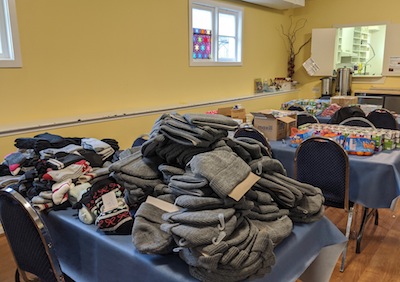
Some of the items Interfaith Youth BC participants assembled into care packages to distribute in Downtown Eastside on Dec. 8. (photo from Pamela Evans)

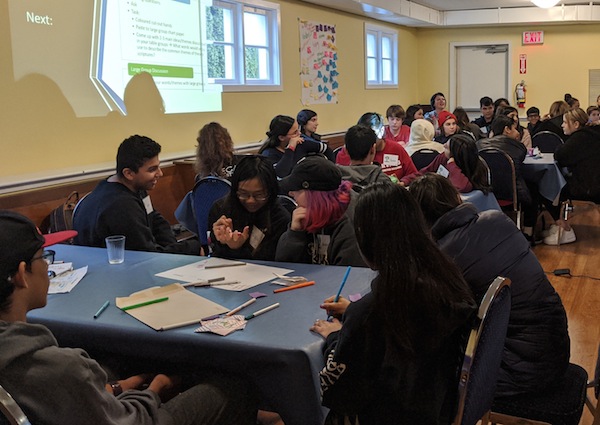
On Dec. 8, 45 young people gathered in the social hall at Or Shalom to once again dive into pieces of scripture, this time focused on acts of kindness. They assembled 150 care packages that included warm clothing, toiletries, sandwiches and snacks to distribute in the Downtown Eastside with support from the Lookout Housing and Health Society. The teens composed handwritten notes to include in each package. Several businesses donated items for the packages.

Through the nexus of study and action, “we are able to … provide a greater understanding of how faith and service are connected,” said Alina Daya, a secondary teacher at Ismaili Tariqah and Religious Education Board. “Through these events, youth are able to actually live out the guidance of their respective faiths and appreciate the similarities in values, guidance and practice within all of our traditions.”

Gabriel, one of the youth who attended the Dec. 8 event, was moved by the opportunity to make a difference. “I thought it was great how all the teens from different religious backgrounds could come together to help provide some small comforts to those less fortunate in Oppenheimer Park,” he said. “I was surprised at how similar our values were, especially of human kindness and compassion.”

Frost believes the exposure to different faiths and cultures can, in the long run, have the potential to break down political barriers. “It’s a bridge to sitting down and talking about it…. It’s a pathway towards peace and reconciliation in a broader sense,” she said. “If you develop a personal relationship, you realize the commonalities between everything.”

While the program is for youth, Evans sees it has ripple effects for adults as well. “I learn from my colleagues about things I didn’t know about and it feels like a blessing and a privilege to be a part of those conversations. I think sometimes adults are afraid to be in those conversations, or their privilege clouds their understanding. Youth don’t do that, so what would it look like if we shaped this generation of youth to think differently?”

The organizers plan to hold another event this year, a “festival of faiths,” at which they hope to invite other faith communities to participate.


Shelley Stein-Wotten is a freelance journalist and comedy writer. She has won awards for her creative non-fiction and screenwriting and enjoys writing about the arts and environmental issues. She is based on Vancouver Island.