Skip to content
  • Home
  • Subscribe / donate
  • Events calendar
  • News
    • Local
    • National
    • Israel
    • World
    • עניין בחדשות
      A roundup of news in Canada and further afield, in Hebrew.
  • Opinion
    • From the JI
    • Op-Ed
  • Arts & Culture
    • Performing Arts
    • Music
    • Books
    • Visual Arts
    • TV & Film
  • Life
    • Celebrating the Holidays
    • Travel
    • The Daily Snooze
      Cartoons by Jacob Samuel
    • Mystery Photo
      Help the JI and JMABC fill in the gaps in our archives.
  • Community Links
    • Organizations, Etc.
    • Other News Sources & Blogs
    • Business Directory
  • FAQ
  • JI Chai Celebration
  • JI@88! video

Recent Posts

  • Story of Israel’s north
  • Sheltering in train stations
  • Teach critical thinking
  • Learning to bridge divides
  • Supporting Iranian community
  • Art dismantles systems
  • Beth Tikvah celebrates 50th
  • What is Jewish music?
  • Celebrate joy of music
  • Women share experiences 
  • Raising funds for Survivors
  • Call for digital literacy
  • The hidden hand of hate
  • Tarot as spiritual ritual
  • Students create fancy meal
  • Encouraging young voices
  • Rose’s Angels delivers
  • Living life to its fullest
  • Drawing on his roots
  • Panama City welcoming
  • Pesach cleaning
  • On the wings of griffon vultures
  • Vast recipe & story collection
  • A word, please …
  • מארק קרני לא ממתין לטראמפ
  • On war and antisemitism
  • Jews shine in Canucks colours
  • Moment of opportunity
  • Shooting response
  • BC budget fails seniors
  • Ritual is what makes life holy
  • Dogs help war veterans live again
  • Remain vital and outspoken
  • An urgent play to see
  • Pop-up exhibit popular
  • An invite to join JWest

Archives

Follow @JewishIndie
image - The CJN - Visit Us Banner - 300x600 - 101625

Byline: Cynthia Ramsay

Play’s vital importance

Play’s vital importance

Shepherd Siegel, author of Disruptive Play. (photo by Laura Totten)

Shepherd Siegel is a hardcore idealist. At least, it would seem so, based on his book Disruptive Play: The Trickster in Politics and Culture (Wakdjunkaga Press, 2018).

“What if we didn’t take everything so seriously and capitulate to the competitions of war and business?” he writes. “What if we let our utopian dreams and desires out to play, out of the box? What if we did more than talk about it and constellated our lives around play and art instead of work and commerce?”

While all about play, Siegel’s 358-page analysis is more academic than whimsical. A writer, musician and educator, he earned his doctorate at University of California Berkeley and has more than 30 publications to his credit. Quickly into the book, he admits the inherent difficulties in writing on this topic: “By attempting to put play, an irrational activity, into the rational fictions of words, I fear that naming this magic will dispel it.” And, to some extent, it does, but his prose is clear and engaging; his examples well-explained and well-researched.

Siegel defines three types of play. Original play is what kids up to three years old do; it has no purpose except fun, it is spontaneous and creates a sense of belonging. Cultural play entails games with winners and losers; it involves learning skills through practise, it comprises rules and moral lessons. Disruptive play “disrupts the normal functioning of society”; it is “resistance to contest-based society and a public affirmation of the natural play element that pervades all life.”

Disruptive players – or tricksters – have existed throughout history, in both oral and writing-based cultures. Siegel gives some 25 examples, beginning with the trickster Wakdjunkaga, whose precise origins are unknown, but whose story comes from the Winnebago (or Ho-Chungra) tribe, “which emerged in northwestern Kentucky in roughly 500 BC. From 500 AD and for about a thousand years, they lived in what is now Wisconsin.” He ends with the Yes Men: “Jacques Servin and Igor Vamos are known by many aliases, but they are Andy Bichlbaum and Mike Bonanno when they are the Yes Men,” and they operate under the motto, “Lies can expose truth,” using guerilla theatre and other tactics, Siegel writes, to “embarrass and proclaim the sins of those who would wage unjust wars, destroy the environment, or cause the suffering and death of other people.”
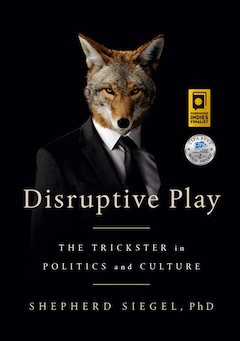
image - Disruptive Play book coverSiegel discusses in depth several trickster tales from various parts of the world. He analyzes King Lear’s Fool, Bugs Bunny and The Simpsons in this context, as well as real people, such as Alfred Jarry, Marcel Duchamp, Andy Kaufman, Abbie Hoffman and others, and movements like dadaism in art, the Beat Generation in literature and rock and roll in music. He also offers a couple of models on which a play society could be based: the Fremont Solstice Parade in Seattle and Burning Man in Nevada.

While acknowledging that there are many problems in the world, Siegel foresees a time when society will be able to meet all of its members’ basic needs. When this time comes, he writes, “the greatest remaining problem will be one of establishing and maintaining societies of trust. Play, as we shall see, absolutely requires trust in order to thrive, even to exist.” However, until that time comes, disruptive play – which threatens power brokers and structures – is a dangerous venture.

“Playful adults, artists, the poor, people with disabilities and deviators are all sent to the margins,” writes Siegel. “From the 17th-century development of military tactics and the industrial revolution of the 18th century came a more prescriptive sense of the normal and the suppression of carnival celebrations and urges … thus the binding of the Trickster spirit. The concentration of power, by its very nature, requires divesting this spirit, treating the Trickster as the Fool or court jester. But eventually the Fool makes fools of those who would constrain, punish and repress Trickster spirit.”

Unfortunately, while most of the tricksters Siegel highlights do indeed have their time in the sun and they manage, for awhile, to speak truth to power and get people to question their values and society’s direction, their lasting impact has been minimal, even if they themselves have proven memorable. The potential for building a play society – given Siegel’s convincing argument that capitalism or commercialism and play are antithetical – is a long shot. The models of Fremont and Burning Man are small-scale, time-bound events and do not seem feasible as models for society as a whole, for any length of time.

That said, Siegel’s is an exciting vision. “As (and if) our society achieves economic, environmental and social balance, the search for a meaningful life will take on greater importance and become more complex,” he writes. In this utopia, play, which “has meaning but not purpose … is the perfect antidote for existential crisis in a world of questionable purposes. Only by entering a state that discards purpose – that plays – might our true purpose be discovered.”
Format ImagePosted on March 6, 2020March 4, 2020Author Cynthia RamsayCategories BooksTags culture, disruptive play, mythology, Shepherd Siegel, storytelling, trickster
Belief in God gives strength

Belief in God gives strength

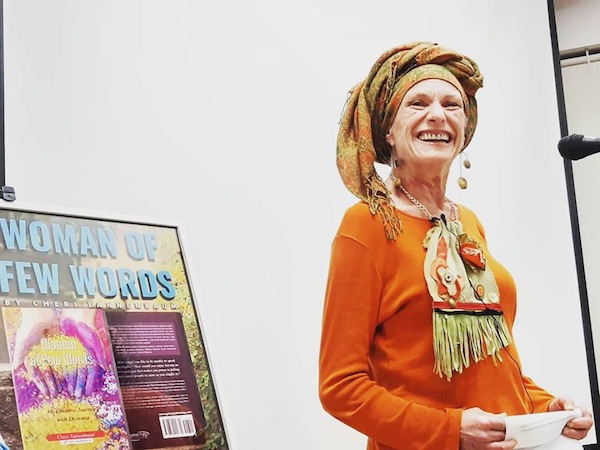
Author Cheri Tannenbaum gives a talk about her book, A Woman of Few Words. (photo from Gefen Publishing House)

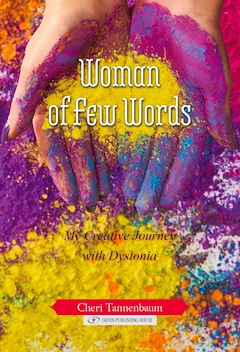
“Happiness is a choice,” writes Cheri Tannenbaum in her book Woman of Few Words: My Creative Journey with Dystonia (Gefen Publishing House, 2019).

No one would blame Tannenbaum for not being happy, for staying in bed, for giving up. But that’s not who she is. “From the first day of my illness to this very day,” she writes, “I wake up each morning, say Modeh Ani (the prayer said upon waking in the morning), push myself out of bed, and consciously and deliberately choose life.”

Born in Edmonton, Tannenbaum is the oldest child of Samuel (z”l) and Frances Belzberg; the family moved to Vancouver when she was 16. With refreshing honesty, Tannenbaum shares her struggles with anorexia, but also some of the ways in which she was a “happy, fun-loving, gregarious, outgoing flower child” when she was in her teens. She writes about how she became religious, and it is her strong belief in God that has buoyed her since she became ill with dystonia at the age of 20, the first sign of which was that her “handwriting suddenly became totally illegible.” As well, her voice became monotonic, and other symptoms appeared, including severe difficulties in walking and, eventually, speaking, a symptom that, very much later in life, was remedied, as the unexpected result of medication intended for another purpose.

Woman of Few Words details Tannenbaum’s life with dystonia, which, according to the Dystonia Medical Research Foundation, which was founded by her parents, “is characterized by involuntary muscle contractions and spasms.” She openly talks about the time she attempted suicide and the difficulties she had in having children. She offers thoughts on living with the illness and lessons she has learned, as well as several pages on dystonia and many inspirational quotes from various sources.

Tannenbaum has a bachelor’s in psychology and a master’s in human development. She has followed her passion – art – in more than one creative direction. She has a long-lasting marriage, three children, grandchildren, and family and friends who care about her, and she has lived in several places in the world, making her home in Efrat, Israel. As she writes, “Dystonia is not my essence, nor does it define me.” It does, however, present many challenges.

“If I didn’t have the belief that there is an all-loving, all-powerful G-d who runs the world and has a master plan, then all challenges are just random; things that happen are just occurrences coming from nowhere…. Most probably, those challenges would feel meaningless and purposeless,” she told the Independent.

image - Woman of Few Words book coverTannenbaum responds to every reader who sends her a note. “The notes I have gotten have been extremely positive, telling me how I have helped them or given them a different perspective, etc.”

She said, “If I were to have gotten only one response that I have touched one person’s soul then I have accomplished what I set out to do – baruch Hashem, I have gotten more than one.”

Tannenbaum’s mother shared some of the ways in which her daughter’s illness affected the family.

“Cheri’s illness was slow in showing itself so, at first, her tripping or falling or dropping things was almost a joke for her siblings,” said Belzberg, who has three other children. “I took her to our family doctor, who said it was just teen angst, then that it was physiological, so she saw a psychiatrist, who said she was fine, so back to the GP.

“As her condition became worse, I began shopping for different kinds of medical advice locally and even to Scripps Clinic in California, and still no answers.

“In the meantime,” said Belzberg, “Cheri met Harvey, married and moved to Los Angeles … and her condition worsened.”

Belzberg said it took almost five years for them to get a diagnosis and a name for her daughter’s condition: dystonia muscular deformans. “There were, at that time, three known patients,” said Belzberg. “Today, we have several hundred on this continent alone.”

With no known patients and no known treatment or cure, Belzberg said, “My husband mobilized with the help of two doctors from UCLA [University of California, Los Angeles], Dr. John Menkes and Dr. Charles Markham; we gathered about five or six known neurologists from across the U.S. and began to do research. Meetings were set up for every two weeks and both my husband and I monitored the meetings between the experts … with the whole purpose of finding everything there was to know about the disease and how to treat it.

“Word got out that this was being addressed and there was more interest from within the research community,” she said. “We got a grant from the NIH [National Institutes of Health], plus our own … financial support, to establish ourselves, and began a series of research conferences with different doctors with different specialties. That was almost 40 years ago and, this June, there will be the Samuel Belzberg 6th International Dystonia Symposium in Dublin, Ireland, the latest in our international annual meetings.

“Through our persistence, as parents, we have created an international research body with a large patient list and researchers waiting to have their grants financed,” said Belzberg. “We also – as parents and ones who are crucially and emotionally involved – started our own scientific board and monitored them ourselves. We set a precedent – no other research board that we know of allows lay people to actually participate, verbally, in the discussions as they ponder their findings.”

Belzberg noted that funding is always a concern because dystonia “is not a well-known disease or a recognizable name, though we fall in the category of MS [multiple sclerosis] and Parkinson’s.”

Asked what advice she would have for a parent of a child with a chronic illness, Belzberg said, “Every family has to deal with their own crises emotionally, spiritually, within their own strengths, and persist in finding answers. Chronic illnesses can be very wearing both for the patient and the family, so it takes a great deal of tolerance and understanding on the part of each to make it through the day.”

For someone who just found out they have a chronic illness, Tannenbaum said, “I would first give them a big hug and sit with them, hold their hands and just listen to them vent – how they feel about the diagnosis, their anger, their fear, their hopelessness, their ‘why me?’

“When they would be ready to hear me, I would tell them that there is a G-d, master of the universe, who loves you more than anyone else loves you in the whole wide world. Everything G-d does is for the good, even though I know it doesn’t feel that way right now. This is a test that G-d knows you can pass; otherwise, He wouldn’t have given it to you…. This is an opportunity for you to grow and to bring out your hidden potential and strengths that you never knew existed within you. Through this test, you can create miracles. Through this test, you can bring good and G-d into the world. Depending on your attitude and perspective, you will be able to help and change other people’s lives. This test is bringing you farther along to fulfilling the potential that only you can do.”

Format ImagePosted on February 28, 2020February 26, 2020Author Cynthia RamsayCategories BooksTags Cheri Tannenbaum, chronic illness, dystonia, Frances Belzberg, health care, Judaism, lifestyle, memoir
Question that won’t die

Question that won’t die

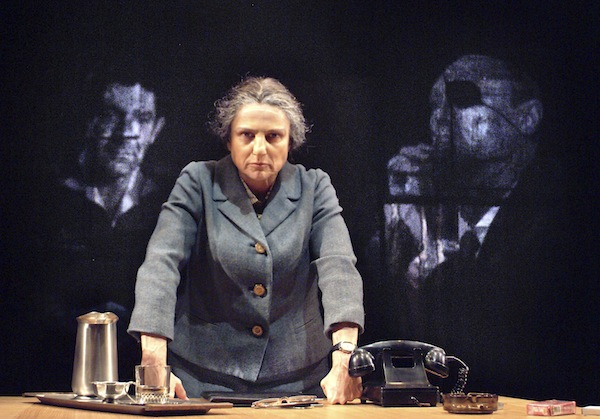
“How does a housewife decide between generals?” asks Golda Meir (played by Tovah Feldshuh) in Golda’s Balcony. In this instance, she must decide between the counsel of David (Dado) Elazar, her chief of staff, left, and Moshe Dayan, her minister of defence. (production still)

Tovah Feldshuh is incredible to watch in Golda’s Balcony, The Film. Not just in her passionate and sympathetic portrayal of Golda Meir, Israel’s prime minister from 1969 to 1974, but in her depiction of all 45 characters in William Gibson’s one-woman play. She’s Meir, David Ben-Gurion, David (Dado) Elazar, her husband Morris, Holocaust survivors and Israeli soldiers, among many others. She moves as easily between the personalities as a child raised in a multilingual household moves between languages. And with powerful effect.

Golda’s Balcony, The Film has two screenings at the Vancouver Jewish Film Festival – March 1, 1 p.m., and March 2, 3:30 p.m., at Fifth Avenue Cinemas. See it. You will have a more nuanced understanding of Meir, as well as of Israel, its origins and the struggles it has faced and will face. Gibson’s text is superb; it is engaging and insightful, with enough humour along the way that you’ll be able to breathe on occasion, as Meir deals with the existential crisis of the Yom Kippur War. Fluidly switching from wartime to other parts of her life, the play depicts, if nothing else, the stressful, heart-wrenching, thankless job that is being prime minister of a country that is constantly under threat.

The film is a recording of the play’s soldout Off-Broadway première on May 4, 2003, at the Manhattan Ensemble Theatre, presented by Issembert Productions. After a four-month soldout run at MET, the show moved to Broadway, and the Helen Hayes Theatre, where it ran for 15 months, making it, apparently, the longest-running one-woman show in Broadway history. It has won countless awards.

The set is relatively simple. A table with a couple of chairs on a tile floor. On the table, a dial telephone, a pitcher and water glass, an ashtray, cigarettes. Light shines on the table from the right, as if from a window. The backdrop is a wall of reddish stone or metal slabs of varying sizes that protrude outward. Images are projected onto the wall or chairs when relevant, giving the audience a visual of the person Meir is talking about, or that Feldshuh is portraying – though it is hard to see these images in the film version. To the side and a step down is a small piece of stage covered in dirt, with a few rocks, which acts as refugee camps in Cyprus, the kibbutz on which Meir lived for a time, Russia when Meir visits on a diplomatic tour, etc. The focal point for the entire production is Feldshuh.

The play begins in darkness, a man chants a prayer, the words “Golda’s Balcony” appear briefly on the wall. Thunder claps, lightning flashes, gunshots ring out, then darkness again, but the sound continues: guns firing, bombs exploding, planes overhead. A housecoat-garbed Golda, sitting at the head of the table, strikes a match and lights a cigarette; the lights rise a bit and calmer music prevails.

“I’m at the end of my story,” says Golda. “I’m old. I’m tired. I’m sick. Dying, the doctors tell me. The picture you have of me as Mamaleh Golde, who makes chicken soup for her soldiers, it’s a nice picture. And I do make chicken soup. But let’s empty it all out for keeps right now because, at the bottom of the pot, is blood. At the bottom of the pot is the question that won’t die. I can do without that music!” she yells. It stops. The lights come on more fully, as Golda then starts to relate the story of her first voyage to Palestine, with her husband, in 1921 – 52 years later, she would become prime minister.

“I remember, starting with a phone call, that woke me up at four o’clock in the morning. Saturday, Yom Kippur, 1973,” she says, as she closes her eyes, looking exhausted, her right arm holding up her head, the left one sliding off the table. The phone rings. Startled, she answers it, hearing the news that Egypt and Syria have attacked Israel. As she takes off the housecoat, Golda is in her familiar muted woolen skirt suit; energy, anger and fear all come to the surface as she relates her generals’ differing views as to what Israel needs to do. Dado: attack! Moshe Dayan: don’t be seen as the aggressor! “How does a housewife decide between generals?” she asks.

Of course, she does decide. But the agonizing and tension-filled process leads her – and Israel – down some very dark paths and the play masterfully depicts her sadness, anxiety and frustration; the sacrifices to her family, her health, as well as to others. Throughout the many narratives, it is the story of the Dimona nuclear facility to which she will get, the story that haunts her, that took her to hell; the story she needs to gather the strength to tell.

Thunder, lightning and gunfire divide the scenes in the whirlwind of action that Golda describes, her domestic life almost as tumultuous as her political life. We see her humanity, but also her toughness. Luckily, she never had to answer the question that “won’t die”: if Israeli forces hadn’t been able to cross the Suez Canal and if the United States had not come through with the needed military aid, would she have ordered the dropping of the nuclear bombs with which she had armed Israel’s planes?

Golda’s Balcony is a must-see in a festival with many excellent films. For the full schedule, visit vjff.org.

Format ImagePosted on February 21, 2020February 19, 2020Author Cynthia RamsayCategories TV & FilmTags Golda Meir, history, Israel, theatre, Tovah Feldshuh, Vancouver Jewish Film Festival, VJFF
Pink Rabbit opens festival

Pink Rabbit opens festival

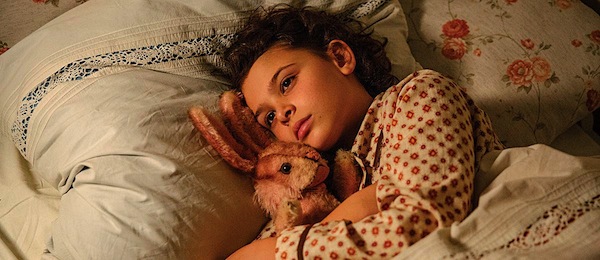
Riva Krymalowski as Anna, in the film, which opens the Vancouver Jewish Film Festival Feb. 27. (photo from betacinema.com)

The Vancouver Jewish Film Festival opens the night of Feb. 27 with the film When Hitler Stole Pink Rabbit, which offers a peek at a pivotal event in writer and illustrator Judith Kerr’s life.

Kerr passed away just under a year ago, at her home in London, England, at the age of 95. She had dozens of children’s books to her credit, including The Tiger Who Came to Tea and Mog the Forgetful Cat; Mog became a series, ultimately totaling 17 picture books.

Born in Berlin, Kerr and her family – parents and older brother – fled Germany in 1933, in the days leading up to the election that brought Hitler into power. Her father, Alfred Kerr (né Kempner), a journalist and writer, was a vocal critic of the Nazis even at that time and was warned that the police were about to arrest him. The story of the family’s journey to Switzerland, then France and, ultimately, England, is told in the children’s book When Hitler Stole Pink Rabbit, which was published in 1971.

The film, obviously, is based on that book, and it captures the fear, excitement, frustration and other feelings experienced by the family as a whole, but mainly by 10-year-old Judith – named Anna in both the book and film. We see that Anna copes, in part, by drawing and colouring pictures of disasters, such as a shipwreck or an avalanche. She, her brother and parents are close, thankfully, as they are uprooted more than once and the family unit is the only constant in their lives.

When Hitler Stole Pink Rabbit is both charming – the family’s interactions – and disturbing, in that the family is fleeing a danger that killed millions. It also raises current-day issues of what it means to be a refugee. Anna and her brother Max are given one night to pack. They are allowed one toy and two books. Anna’s choice of her stuffed dog over her pink rabbit gives the story its name.

For more on the film festival, visit vjff.org.

Format ImagePosted on February 14, 2020February 21, 2020Author Cynthia RamsayCategories TV & FilmTags children's books, Holocaust, Judith Kerr, memoir, movies, When Hitler Stole Pink Rabbit
Israel’s early days

Israel’s early days

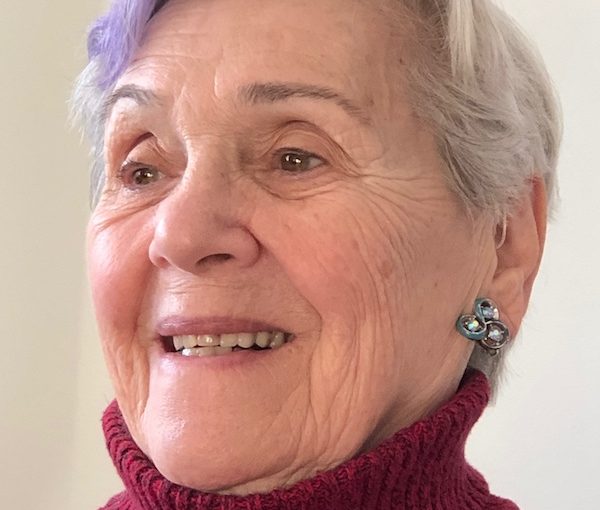
Gloria Levi launches her most recent memoir at the Jewish Book Festival Feb. 12. (photo from Jewish Book Festival)

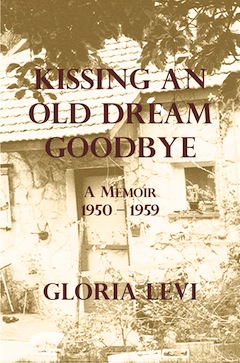
When local activist and writer Gloria Levi was a teenager, she was immersed in the Labour Zionist movement and “dreamed of becoming a pioneer in Israel.” In 1950, at age 19, she spent several months there. In 1957, with then-husband Norman (whom she had met on the previous trip) and two young children, she made aliyah. Her recently published memoir, Kissing An Old Dream Goodbye, honestly and succinctly relates what took her to Israel – and what brought her back just under two years later.

Levi launches her new book at the Cherie Smith JCC Jewish Book Festival on Feb. 12, 2 p.m., in the Waldman Library. Levi, who worked as a gerontologist for 30-plus years, has written a series of booklets, Challenges of Later Life, and co-wrote Dealing with Memory Changes as You Grow Older with Kathleen Gose. A lifelong student of Jewish texts and language, she translated The Life and Times of Simcha Bunim of P’shischa from Hebrew into English. She published her first memoir, My Dance with Schechina, in 2012.

Kissing An Old Dream Goodbye starts with Levi standing on the Marseilles pier, “impatient to set sail for Israel, the land of my dreams.” It was there that Norman noticed her, and the two became close over the subsequent months.

image - Kissing An Old Dream Goodbye book coverGrowing up in Brooklyn, Levi had just finished her first year at New York University – “Emotionally, socially and culturally, I was surrounded by Jews and rarely met non-Jews,” she writes. “I was fiercely independent and a bit of a rebel, and had a stormy relationship with my mother. My father had died when I was eleven. I paid my own way through university and had recently been living independently in Greenwich Village.”

Norman, then 23, had joined the British Army in 1944 and “had been with the British troops who liberated Buchenwald concentration camp. In 1947, he was “deployed to India during the bloody time of Partition.” He was traveling to Israel in 1950, intending to settle there.

While she stayed longer than the summer, Levi did return to the United States to finish her undergraduate degree, at the University of Iowa, “renowned for its child psychology department,” and Norman eventually returned to England. When a visit to Iowa City was about to extend past the deadline of his transit visa, the two decided to get married, as Levi’s career would have been jeopardized if they lived together without being married. “So much for romantic proposals!” writes Levi.

The couple ended up getting married in Canada, for various reasons, and then moved to Toronto, to Montreal and, finally, Vancouver. There, newlywed life was challenging, as they got to know each other, struggled with money and started their family. Levi writes with openness about the good and the difficult – a recurring theme is communication troubles between Norman and her. A prime example is that, when things finally began to look good for them, with secure jobs, a reasonable income, Norman suggested they move to Israel. Initially startled, Levi admits that she, too, still wanted to make aliyah, but “didn’t want to say much.”

They arrived in Israel, kids in tow, in late September 1957, heading to Kfar Daniel, a modified kibbutz. There, they adapted to yet another completely new way of life, making friends, learning the jobs they are given – Levi’s first work is cleaning outhouses – and figuring out how to live in a place with snakes, scorpions and other dangers, including possible imprisonment if you accidentally wandered into Jordan, and military service for Norman.

While they loved so many aspects of living in Israel – “the physicality of the land,” feeling like “a link to 2,000 years of history,” connecting “with the guttural, nuanced ancient mystical language of Hebrew” and feeling “that this truly was our home” – other parts of the experience, both on the kibbutz and in Akko, where they moved in 1959, were impossible to reconcile with their beliefs and moral code. Among Levi’s doubts about staying in Israel were “certain negative societal attitudes, my children’s potential education system, political injustices, corruption in the form of ‘protexia,’ and the top-heavy bureaucracy.” It is with regret and ambivalence, as well as some shame that they couldn’t make it work, that Levi and her family returned to Vancouver.

“I never felt concerned about going public,” she told the Independent of the personal nature of the book, “because I was describing my truth.”

And part of her truth is the love for the country that remains, despite the disillusion, especially regarding social justice – how kibbutz members interacted with one another at times, how citizens were treated by the state in certain instances and how Arabs were viewed. An epilogue takes readers briefly through Levi’s views of the political situation in 1964, 1967 and 2019.

“Given today’s controversies regarding Israel-Palestine, I wanted to describe the profound needs, emotions and idealism surrounding the early days of the state,” said Levi. “I wanted to convey my own journey of love and doubt, joy and conflict, idealism and human ego – the controversies inherent in communal living and the clashes of two peoples living and loving one land.”

In writing Kissing An Old Dream Goodbye, Levi said, “I hope I’m able convey the colour and beauty of the land, the strengths and limitations of people in an authentic, compassionate way.”

And Levi continues to write. Her current project is a novel called The Hotelkeeper’s Daughter, a “story about an immigrant Jewish religious family, taking place from 1938 to 1948,” she said. “It is the most exciting writing I’ve ever undertaken.”

For the book festival schedule, visit jewishbookfestival.ca.


Format ImagePosted on February 7, 2020February 6, 2020Author Cynthia RamsayCategories BooksTags aliyah, Cherie Smith JCC Jewish Book Festival, Gloria Levi, Israel, memoir
Loves making people laugh

Loves making people laugh

Esther Povitsky performs at the Biltmore Cabaret on Feb. 22 as part of JFL NorthWest. (photo from JFL NorthWest)

Chicago-born comedian, actor and writer Esther Povitsky is one of several Jewish community members performing in the Just for Laughs NorthWest comedy festival, which takes place around Metro Vancouver Feb. 13-25. Her credits include being co-creator and star of the show Alone Together, a recurring role on Crazy Ex-Girlfriend, parts on programs such as Brooklyn 99 and Parks and Recreation, stand-up on The Late Late Show and Comedy Central, as well as host of the podcast Glowing Up. The Jewish Independent spoke with her in advance of her Feb. 22 show at the Biltmore Cabaret.

JI: When did you first start doing stand-up and what motivated you to do it?

EP: I love comedy. I love watching it, I love laughing and making people laugh. I also liked the idea of being able to do something creative where I only relied on myself.

JI: Before you started stand-up, what were you working toward education- or career-wise?

EP: I thought I was going to be a professional dancer, and majored in dance in college.

JI: What is it about performing that you most enjoy, in stand-up and in acting?

EP: Having an excuse to drink too much coffee.

JI: When did you move to Los Angeles, and was it for a specific job or more opportunity for work in general?

EP: I did not have any specific jobs lined up! I moved here to pursue stand-up and worked as a babysitter, worked at a gym, a juice bar, and other random gigs.

JI: You describe your stand-up as just being you. Being Jewish on your dad’s side, where/how/does Judaism, Jewish culture or community fit into that, or your comedy series?

EP: I feel that I was raised very culturally Jewish and it’s a big part of my personality and who I am.

JI: In an interview you talk positively about the immediacy of seeing what works and what doesn’t onstage. How do you handle the highs and lows of comedy?

EP: I try to keep busy, stay active, spend quality time with friends and family, do puzzles, watch TV. I try to really focus on doing as many “normal” things as possible.

Povitsky’s Vancouver show is 19+. For tickets and the JFL NorthWest lineup, visit jflnorthwest.com.

Format ImagePosted on February 7, 2020February 6, 2020Author Cynthia RamsayCategories Performing ArtsTags comedy, Esther Povitsky, JFL NorthWest, stand-up
JFL NorthWest returns

JFL NorthWest returns

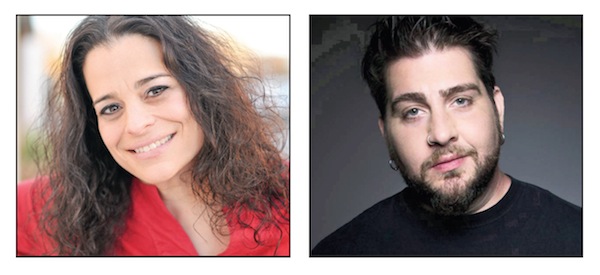
Jessica Kirson and Big Jay Oakerson are part of the Just for Laughs NorthWest comedy festival lineup in Vancouver Feb. 13-25. (photos from JFL NorthWest)

The Just for Laughs NorthWest comedy festival takes place around Metro Vancouver Feb. 13-25. Among the performers are several members of the Jewish community, including Andy Kindler, Jessica Kirson, Big Jay Oakerson and Esther Povitsky. The Jewish Independent recently spoke with Kirson and Oakerson.

Kirson is an award-winning comedian. She has appeared on several talk and TV shows, and has her own podcast, Relatively Sane. She was a consultant, producer, writer and actor in the Robert De Niro film The Comedian and will play herself on the HBO series Crashing with Pete Holmes. As part of JFL NorthWest, she will be at the Biltmore Cabaret on Feb. 17, 9 p.m.

JI: Since the JI spoke with you in 2016 ahead of your Chutzpah! show (jewishindependent.ca/gonna-be-a-fun-night), a lot has happened in your world. Could you share some of your professional highlights over the last few years?

JK: So much has happened. I have done a ton of television and movie appearances. I’m loving traveling all over the world doing stand-up. I am executive producing a movie for FX, a documentary about female comedians; it will première this summer. I had a special come out on Comedy Central called Talking to Myself, in addition to a bunch of other projects.

JI: You’ve been in the podcast world for a long time now. What do you particularly like about the medium?

JK: I started Relatively Sane because I wanted to create a podcast that wasn’t just funny and silly. I wanted it to get real also. I wanted to talk about anxiety, depression, etc. I love it. It’s one of my favorite creative mediums now.

JI: What is the difference, if any, performance or prep-wise between working on a radio show versus a podcast?

JK: It’s very similar. I don’t do a ton of prep work with my guests. I love finding things out while I’m talking to them. It’s more real that way.

JI: Can you tell me a bit about your Comedy Central special, how it came about and what it has meant to you career-wise?

JK: I had felt like I deserved a comedy special years ago. It was the one thing I felt I deserved that I didn’t get. I got a call from Bill Burr. He told me he wanted to produce my special. He shocked me. I feel very grateful to him. When comics do things like that for other performers, it’s amazing. We should all do it for each other.

JI: Similarly, The Comedian and Robert DeNiro. How did that happen?

JK: DeNiro saw me performing at the Comedy Cellar in New York City. He was looking for comics to be in his movie. We met up that week, we connected and I became his right-hand person. I ended up being in the movie and getting a producer credit. The hardest part was showing up every day, giving my opinion and not caring what the producers and director thought. It was very intimidating but I had him by my side so it worked out.

JI: Is getting your own television show still something you’d like to achieve?

JK: Yes, I would love to have a talk show.

* * *

Oakerson has appeared on many television shows. He has recorded two specials, one for Comedy Central in 2016 and one for Netflix in 2018, as well as three albums. He was the host and creator of What’s Your F#$king Deal?! and currently co-hosts the podcasts The Legions of Skanks, The SDR Show and The Bonfire with Big Jay Oakerson and Dan Soder. For the JFL NorthWest festival, he will perform at the Biltmore Cabaret Feb. 19-20, 9:30 p.m.

JI: When did you first start doing stand-up and what motivated you to do it?

BJO: I started doing comedy in 1999 at the urging of a friend who caught up with me after high school and expressed her disappointment in me never trying it before.

JI: In what ways has your stand-up style changed since you first started?

BJO: First of all, my level of nerves is significantly down. I think I’ve evolved it into a very comfortable style of storytelling and interaction versus joke writing/telling than I started with.

JI: Did you grow up in a household where you were encouraged to form and express your own opinions?

BJO: I don’t recall anyone in my household being highly opinionated about anything.

JI: Were you a witty or mouthy child?

BJO: 30% mouthy, 70% witty.

JI: What role, if any, does being Jewish, Judaism, Jewish culture or community have in your life and/or your career?

BJO: I thought I’d get a bump in this business because I’m Jewish, and nothing. I guess I’m not that kind of Jewish.

JI: What is it about pushing the boundaries that you most enjoy, and to what purpose do you do it?

BJO: “Edgy comedy” was generally the comedy I was drawn to growing up, so it’s just sort of how my humour developed. If I can make you question things or think about a different perspective on something, great, but, ultimately, I’m just trying to make people laugh.

JI: Are there any red lines you won’t cross?

BJO: Not if I think I can make the subject more funny than offensive.

JI: What do you enjoy most about doing podcasts?

BJO: Freedom.

Both Oakerson’s and Kirson’s shows are 19+. For tickets and the full JFL NorthWest lineup, visit jflnorthwest.com.

In next week’s JI: an interview with Esther Povitsky.

Format ImagePosted on January 31, 2020January 28, 2020Author Cynthia RamsayCategories Performing ArtsTags Big Jay Oakerson, comedy, Jessica Kirson, JFL NorthWest
Artistic visions of hope

Artistic visions of hope

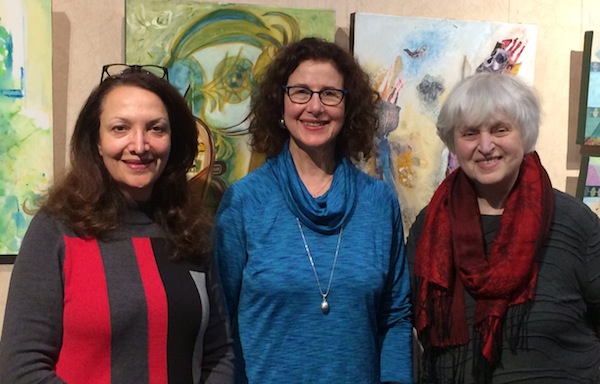
Left to right, Three Echoes artists Sorour Abdollahi, Devora and Sidi Schaffer. Their exhibit, Hope and Transformation, is at Amelia Douglas Gallery until Feb. 29. (photo from Three Echoes)

Connected by similar values and inspirations in their creative work and in their lives more generally, Sidi Schaffer, Sorour Abdollahi and Devora are longtime friends. Their fifth exhibit together – as the informal collective Three Echoes – is called Hope and Transformation. It is at the Amelia Douglas Gallery at Douglas College in New Westminster until Feb. 29.

“Art transcends the limitations of time, space, language and cultural background,” said Devora in her written remarks, prepared for the exhibit’s opening Jan. 16, which was postponed because of the snow, and given Jan. 21. “The echoes from within spill over onto the canvases,” she said. “Together, our works create a dialogue of hope and transformation.”

Devora told the Independent that the name for the exhibit came “through talk and discussion between the three of us in reflecting on our individual and collective journeys and where we found ourselves, and the world, at that moment.”

“Today, there is a lot of anxiety about globalization and migration,” Abdollahi said. “As an immigrant artist, my art deals with connections between cultures and hybridity. Therefore, my works might help serve as a bridge and tell the immigrant story.”

Abdollahi was born and raised in Iran, where she graduated with a diploma in Persian literature from Yazd University and a bachelor’s in fine arts from the University of Art in Tehran. In Vancouver, where she settled 20 years ago, she studied at Emily Carr University of Art and Design. She writes in the exhibit catalogue that her Iranian heritage and Canadian experience “have had a tremendous influence on my works’ subject matter, dealing with the mediation between the modern and the ancient, the old and the new, the West and the East.”

The artist uses collage, a multi-layering technique and mixed media. “My works show the relationship between culture and environment and migration,” Abdollahi explained to the Independent. “Our environments are changing both internally in our mind and externally, and my works illustrate this change. My works create negotiation between different cultures and societies.”

Schaffer also started her fine arts education in her birth country, Romania. In Israel, she received a degree in art education and taught in the school system for more than a decade. When she came to Canada in 1975, she studied at the University of Alberta, where she majored in printmaking and painting. Initially focused on abstraction, her work has become “more integrated, combining abstract and figurative forms,” she writes in the catalogue. “Now I am continually exploring new possibilities with mixed media, a combination of print, drawing, painting and collage. Important for me is the visual poetry, the relationship of form, space, colour and light. Some of my works in this show are a combination of collages of different things from nature and painting; others are collages of my own imagination.”

“I am an optimist and also I am amazed about the continuous transformation in nature around me,” Schaffer told the Independent. “I combined my love and respect for the beauty of flowers and leaves, surrounding them with hope, and new imaginary landscapes. In a way, I give the dry flowers a new life, bringing them out from the pages of old books.”

As for Devora, she told the JI, “What gives me hope is my relationship with the Divine – that there is no separation, that we are all connected and made of stardust, that we are all on an unfolding journey of being together. I attempt to express that emotion onto the canvas.”

For Devora, art has the power to transform the viewer when the viewer can hear her work speak to them from their own experience. “At the opening,” she said, “the Douglas College students from two classes – one poetry class and one art history class – gathered around and engaged with all three of our works, asking questions, wanting to understand the process, the intention and how they could relate from their own lives to what they were seeing.”

Normally, only the art history students attend each artist talk. However, after Devora shared that the Zack Gallery at the Jewish Community Centre of Greater Vancouver hosts Pandora’s Collective poetry nights, where members of the collective create works inspired by the art, the Amelia Douglas Gallery invited the poetry class, as well.

Growing up in Berkeley, Calif., where she earned a master’s at California School of Professional Psychology, Deborah Ross does all of her creative work under her maternal grandmother’s name, Devora, in honour of her grandmother, who was murdered in the Holocaust. “Her spirit gives me the strength and confidence to create,” said the artist in her remarks for the exhibit.

Devora, who now lives both in Vancouver and on Salt Spring Island, came to Canada in 1993. She has studied art at Emily Carr, Langara College and elsewhere. “My artwork reflects the love I have for the creative process and exploration,” she writes in the exhibit catalogue. “I am fascinated by the inner world of emotion, dream, metaphor and story and strive to illuminate both the universal and personal by bringing them onto the canvas.

“My latest works explore the interplay and continuum between abstract and representational images of landscapes and figure, and a fascination with the surreal, in mixed media combining acrylic and collage.”

In her remarks for the exhibit opening, Devora explained, “My art reflects a search for understanding and clarity about my personal and ancestral history and the world. My experiences inform my work as I go inside and bring them onto the canvas. I endeavour to transform darkness into the light of hope. I am interested in what is hidden and how it informs what is revealed.”

She noted that she, Abdollahi and Schaffer “turned to esthetics as a way to focus and navigate our journey.” And she expanded on this concept. “Through the lens of esthetics combined with the common immigrant experience and effects of war and displacement,” she said, “the three of us have managed to bridge all other divides: language, ethnicity, culture, religion and country of origin. Our childhood environments and experiences could not have been more different on the surface and yet the foundations of connection and similarity were already being laid down, established through the development of the lens of sensitivity to beauty in the world and compassion for the human experience.

“Our ideal, of different cultures living in harmony, is reflected in our own personal experiences, in which intimate exposure to the world of ‘the other,’ unearths commonalities and gives rise to a greater depth of understanding about our own lives.”

She concluded, “In closing, I would like to quote Sorour, as Sidi and I feel that her words speak for all three of us: ‘In my friendship and collaboration with Sidi and Deborah, I see an opportunity to explore and express my own culture, but also to relate these themes to other cultural experiences – recognizing the echoes of each other in our works and our lives. My works side by side those of my friends’ works create a dialogue and negotiation which hopefully provides the viewer with a different vision of the world – one which is borderless, free and peaceful.’”

Format ImagePosted on January 31, 2020January 28, 2020Author Cynthia RamsayCategories Visual ArtsTags art, Devora, immigration, Sidi Schaffer, social commentary, Sorour Abdollahi, Three Echoes
Directing a favourite musical

Directing a favourite musical

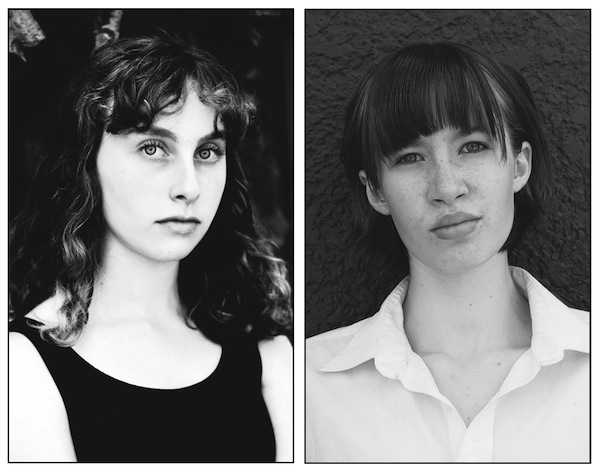
Malka Martz-Oberlander, left, and Dalia Currie are co-directing Little Shop of Horrors, which is at the Red Gate Revue Stage from Feb. 6-9. (photos from TES Theatre)

At 17, many Jewish Independent readers were probably spending most of their time hanging out with friends, maybe doing a music or art class or two, some sports activities. In addition to being a student, 17-year-old Jewish community member Malka Martz-Oberlander is a filmmaker, writer, film and theatre director, cartoonist, musical theatre actress and photographer. Her latest initiative is a production of Little Shop of Horrors, which is at the Red Gate Revue Stage on Granville Island Feb. 6-9.

Presenting the production is TES Theatre, or Transforming Education, which, explained Martz-Oberlander, was “originally the theatre program at the one-of-a-kind Windsor House School: a democratic, multi-campus, K-12 school in East Vancouver.

“When Windsor House School closed down last year,” she said, “former principal Meghan Carrico decided to start a theatre company for the students, like myself, who wanted to continue to do theatre and musical theatre together. The program that arose after the school’s devastating closure is grounded in the same democratic philosophy. Our mission is to make sure any student who wants to do any aspect of musical theatre can and will be supported by a willing cast and a professional musical theatre teacher.”

Martz-Oberlander is co-directing Little Shop of Horrors with Dalia Currie. Last June, the pair co-directed a production of Much Ado About Nothing that Currie adapted. According to Martz-Oberlander, Currie “loves Shakespeare” and has “co-directed and acted in many of the Bard’s shows,” including playing the role of Theseus in A Midsummer Night’s Dream in 2018, as part of the Carousel Theatre Teen Shakespeare Program.

Currie found musical theatre through joining Windsor House in 2018, said Martz-Oberlander. “She played Olive Ostrovsky in The 20th Annual Putnam County Spelling Bee and Gaston in Beauty vs. Beast, an original parody of the tale as old as time.”

For her part, Martz-Oberlander performed with Encore Musical Theatre (formerly Broadway Edge) for four years, then performed in two shows with Windsor House School and, this year, is a member of Arts Umbrella’s Pre-professional Musical Theatre Troupe.

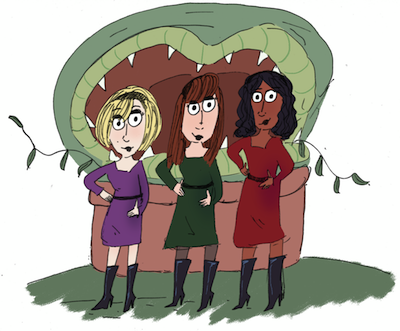
illustration - Crystal, Ronette and Chiffon are the three narrators of Little Shop of Horrors. Malka Martz-Oberlander sketched this image of the trio, which was colourized by Emi Lavoie
Crystal, Ronette and Chiffon are the three narrators of Little Shop of Horrors. Malka Martz-Oberlander sketched this image of the trio, which was colourized by Emi Lavoie. (image from TES Theatre)

Martz-Oberlander said she and Currie initially pitched Little Shop of Horrors to the theatre company because they had both grown up watching it, “and we were very excited at the thought of directing our first musical together this year with the mentorship of our new musical theatre teacher, Isabella Halladay, who is a local musical theatre artist.”

The production involves around 30 people, said Martz-Oberlander, “and all but three of them are students. We held auditions for people within our theatre community,” she said. “We made sure that anyone who was interested has been involved in some way, whether it be onstage or in the tech booth. The actors range from age 14 to 19. There is no live band, we have backing tracks.”

Little Shop of Horrors, both a film and a Broadway musical from the 1980s, is now back on Broadway, said Martz-Oberlander. “It’s about an orphan boy taken in and given a job by Mr. Mushnik, a European Jewish immigrant and the owner of a run-down flower shop in the ‘bad part of town.’”

Despite the fact that both writers of the musical were Jewish – Howard Ashman (who passed away in 1991) and Alan Menken – Martz-Oberlander said that she and Currie were concerned about the portrayal of certain characters, in particular that of Mr. Mushnik.

“As a cast and individually, we have discussed when it’s good to bring out stereotypes and when it’s actually really harmful,” Martz-Oberlander told the Independent. “For example, the character Mr. Mushnik seems like a two-dimensional, money-hungry shop owner. The character embodies this Jewish stereotype throughout the whole story. My non-Jewish co-director and I have tried our best to approach this thought-provoking comedic piece with the intention of not perpetuating hurtful stereotypes. When producing a show written in a different decade, when values were different, it’s so important to come at it from an authentic, respectful and knowledgeable way.”

Martz-Oberlander had only praise for the production’s venue, the Red Gate Revue Stage. Saying that the cast and creative team were “incredibly lucky to get to rehearse and perform” there, she added, “I think a place like the Revue is vital at a time in Vancouver where things are less and less affordable – to have arts spaces and small theatres like the Revue is very important.”

As for Little Shop of Horrors, Martz-Oberlander said, “I think it’s a great opportunity to come out and support local youth-directed theatre and watch a fantastic show! This show is really a one-of-a-kind, hilarious science fiction musical that will have you humming tunes for weeks after.”

Tickets to Little Shop of Horrors ($5-$15) can be purchased at the door or online from brownpapertickets.com/event/4481952.

Format ImagePosted on January 31, 2020January 28, 2020Author Cynthia RamsayCategories Performing ArtsTags Dalia Currie, Little Shop of Horrors, Malka Martz-Oberlander, musical theatre, Red Gate Revue Stage, TES Theatre, youth
Magnifying emotions

Magnifying emotions

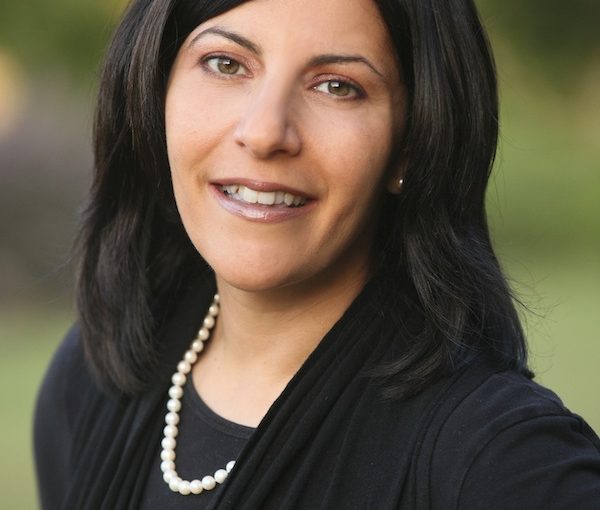
Gila Green will talk about her two latest books at the Jewish Book Festival on Feb. 9. (photo from JCC Jewish Book Festival)

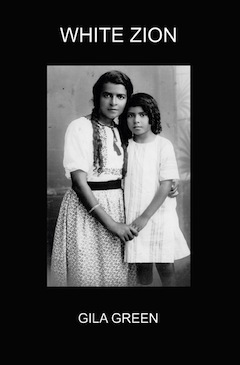
From the first page, White Zion reads like a memoir. Through 16 short stories, we get to know Miriam and her family, from her great-grandparents to her own children, as well as the places they are from, including Yemen, Israel at various points in its history and Canada. It is easy to wonder how much of Miriam is her creator, Israeli-based writer Gila Green, who will be at the Cherie Smith JCC Jewish Book Festival Feb. 9.

“The stories in White Zion are all about emotional truths,” Green told the Jewish Independent. “So, if that’s what’s coming across, that is some measure of success. I did not say this but Alice Munro did – I recall reading an interview with her in which she said: ‘If your audience thinks all you did was wake up and write down everything that happened to you yesterday, then you’ve succeeded.’ I would love to hear about how readers relate to these emotional truths, how they connect.”

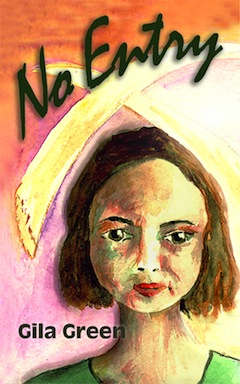
Green will also bring her young adult novel No Entry to the festival, for which she will talk at both the Jewish Community Centre of Greater Vancouver (12:30 p.m.) and the White Rock/South Surrey Jewish Community Centre (4 p.m.) that Sunday.

The heroine of No Entry is Yael Amar, a teenager from Ottawa, which was where Green was born and has lived. Yael has traveled to South Africa to intern for a spell at a private bush camp near Kruger National Park. (Green’s husband is South African, and Green has lived in the country.) There with the intent of helping protect elephants from poachers, Yael ends up in danger herself.

Despite the connections her books may, or may not, have with her own family, Green prefers to write fiction. She described nonfiction as “limiting” for her.

“As soon as someone tells me to write a true story, I’m suffocating,” she said. “I have to start questioning what is fact, what is memory, what lacks context, what is something I’ve just convinced myself is true and on and on. I spent four years at Carleton [University in Ottawa] studying for a journalism degree, so all of that kicks in. In the end, the short story is a wrung-out sock, more like a dozen tangled wrung-out socks. No one wants to read a sock. There is no connecting with it.”

Fiction allows for the expression of emotional truths that would be impossible to express otherwise, she said.

“Writing fiction allows me to hone in on a feeling – something I want my audience to feel, which is how I start every story I write. I ask myself, ‘How do I want this story to make the reader feel?’ and I start from there – and I can hold that emotion under a magnifying glass. I can distort it, blow it sky high, cut interference to ant height or delete. I can take one characteristic of one person on a single day about a single event and I can magnify it, so that the rest of the human being is rendered invisible. These were some of my goals with White Zion. The characters are all gross distortions of one human trait or another.”

But that doesn’t mean that facts don’t enter her work.

image - White Zion book cover“I tried to be as faithful as possible to the historical period,” she said, referring to the stories in White Zion, “and I spent months researching everything, from what vegetables they could have been selling in the Jerusalem market post-1948 to how they could possibly have been heating their homes. I also used the same biographical details for two of the characters, Miriam and her father. It was important for me that Jewish fiction expand to include Yemenite voices, religious voices, gay voices, the more voices the better.”

Green also did much research for No Entry and, in addition to crafting an entertaining, at-times tense, thriller-like novel, she educates readers on the nature of elephants and the very real threat of their extinction.

“Yael is a Jewish eco-heroine,” said Green, who noted that the character’s boyfriend, David, is also Jewish. “She’s not religious but both of her parents are Jewish – she mentions in No Entry how the South African traditional dish she tastes for the first time reminds her of her mother’s chulnt on the Sabbath and, in No Fly Zone, she has an Israeli-themed dinner with her parents. None of the other characters are Jewish…. I do like exploring different kinds of Jews though. If readers want a more obvious Jewish heroine in the sequel[s], please write to me.”

Green has finished writing No Fly Zone, the next book in what might become a series. In it, she said, “Yael Amar is back with her best friend Nadine Kelly, this time protecting Kruger National Park from the skies. But she is about to learn a big lesson when it comes to moral relativity and friendship.”

image - No Entry book coverGreen added, “I set out to thread the senseless loss of human life with the equally nonsensical destruction of animals in No Entry and I continue this in the sequel. I did this not because I’m trying to make a point about the connection or status between humans and animals – that’s the wrong way to understand my motivation. Rather, I’m trying to weave together the criminals who commit these inhuman acts: they’re connected.

“Often,” she said, “the same people willing to sell illegal blood ivory are involved in terrorism, human slavery and other acts that bring nothing but grief to the planet. I wish to emphasize this linkage, to shout it from the rooftops. But, in real life, I figured an exciting, adventurous, teen novel was a more effective way to go.

“I purposely made the terrorist event [in No Entry] happen in Canada because I want to get the message across that fatal betrayal doesn’t just happen in Africa or the Middle East. That attitude might allow some of us to feel off the hook. It happens everywhere and we all have to make sure we are part of the solution or there won’t be one and that thought is too devastating to imagine. I refuse to go there and No Entry ends on a victorious note for a reason.”

Though the sequel has been written, its publication date will depend on what happens in Australia and the bushfires that continue to destroy the country. Green shared, “I am very sad to say that my publisher Stormbird Press was on Kangaroo Island and has burned to the ground. The staff was evacuated on Dec. 20th. We are all praying for their safety and that they fully recover but, for now, everything is at a standstill and there is terrible devastation.”

Green is already working on her next novel. In A Prayer Apart, her main character, for the first time, is male, she said. “He’s an Israeli-Jewish teenager living through the 2014 war with Hamas, knowing he’s next in line for the front line. By the same token, he’s had it with his parents and school and his rebellious behaviour lands him in lockdown, one step away from juvenile jail.”

She said she will let readers know on her website, gilagreenwrites.com, when the publication details are finalized.

An avid reader since childhood and now a prolific writer, with four books published since 2013 and two more on the way, Green said, “Mankind cannot live without stories. Period. We are our stories. When people are down, what they are really saying very often is they don’t feel connected. Stories connect us.”

For the Jewish Book Festival lineup and schedule, visit jewishbookfestival.ca.

Format ImagePosted on January 31, 2020January 28, 2020Author Cynthia RamsayCategories BooksTags fiction, Gila Green, JCC, Jewish Book Festival, memoir, storytelling, young adults

Posts pagination

Previous page Page 1 … Page 41 Page 42 Page 43 … Page 84 Next page
Proudly powered by WordPress