Skip to content
  • Home
  • Subscribe / donate
  • Events calendar
  • News
    • Local
    • National
    • Israel
    • World
    • עניין בחדשות
      A roundup of news in Canada and further afield, in Hebrew.
  • Opinion
    • From the JI
    • Op-Ed
  • Arts & Culture
    • Performing Arts
    • Music
    • Books
    • Visual Arts
    • TV & Film
  • Life
    • Celebrating the Holidays
    • Travel
    • The Daily Snooze
      Cartoons by Jacob Samuel
    • Mystery Photo
      Help the JI and JMABC fill in the gaps in our archives.
  • Community Links
    • Organizations, Etc.
    • Other News Sources & Blogs
    • Business Directory
  • FAQ
  • JI Chai Celebration
  • JI@88! video

Recent Posts

  • Story of Israel’s north
  • Sheltering in train stations
  • Teach critical thinking
  • Learning to bridge divides
  • Supporting Iranian community
  • Art dismantles systems
  • Beth Tikvah celebrates 50th
  • What is Jewish music?
  • Celebrate joy of music
  • Women share experiences 
  • Raising funds for Survivors
  • Call for digital literacy
  • The hidden hand of hate
  • Tarot as spiritual ritual
  • Students create fancy meal
  • Encouraging young voices
  • Rose’s Angels delivers
  • Living life to its fullest
  • Drawing on his roots
  • Panama City welcoming
  • Pesach cleaning
  • On the wings of griffon vultures
  • Vast recipe & story collection
  • A word, please …
  • מארק קרני לא ממתין לטראמפ
  • On war and antisemitism
  • Jews shine in Canucks colours
  • Moment of opportunity
  • Shooting response
  • BC budget fails seniors
  • Ritual is what makes life holy
  • Dogs help war veterans live again
  • Remain vital and outspoken
  • An urgent play to see
  • Pop-up exhibit popular
  • An invite to join JWest

Archives

Follow @JewishIndie
image - The CJN - Visit Us Banner - 300x600 - 101625

Byline: Cynthia Ramsay

Idan Sharabi has been dancing all his life

Idan Sharabi has been dancing all his life

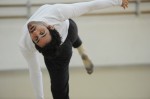
Idan Sharabi will be joined by three other dancers when he comes to Vancouver for Chutzpah! (photo by Tami Weiss)

From running around barefoot as a child to dancing for audiences around the world, Idan Sharabi has never stopped moving. “Dancing is the only action I have been doing all my life,” he told the Independent – and we in Vancouver can see him in action at Chutzpah! early next month.

The festival runs Feb. 22 to March 9, and Idan Sharabi & Dancers opens for eight-member Italian contemporary dance company ImPerfect Dancers in performances on March 6, 8 and 9. While based in Tel Aviv-Yaffo, Idan Sharabi & Dancers are an international group: accompanying Sharabi to Vancouver are Ema Yuasa (Japanese), Rachel Patrice Fallon (American) and Dor Mamalia (Israeli). Sharabi himself has studied in Tel Aviv (Thelma Yellin High School of the Arts) and New York (Juilliard School), performed with Nederlands Dans Theatre (NDT) in The Hague and Batsheva Dance Company in Israel, and had his work shown in – among other places – Israel, Switzerland, the United States, Japan, Italy and Canada (Montreal and Toronto).

“I have loved every person I have met from Canada. I have had a great connection with them immediately. There is something I like about Canadians!”

The Chutzpah! show will bring Sharabi to Vancouver for the first time. “I have been many times to Montreal but never anywhere else in Canada,” he said. However, “I have loved every person I have met from Canada. I have had a great connection with them immediately. There is something I like about Canadians!”

Idan Sharabi & Dancers will be coming to Vancouver from a residency in Holland. “Right after, we go to Rome to perform in the Food for Thoughts event [hosted] by the European Dance Alliance of Valentina Marini and, after, to teach repertoire workshops and master classes at the Contemporary Dance School Hamburg, in Germany,” said Sharabi, who has known and collaborated with each Mamalia, Yuasa and Patrice Fallon for some years now.

“Dor and I have worked together for the past 2.5 years,” Sharabi told the Independent. “We met back when I created for him and others in The Project of the Israeli Opera House, in 2011. Since then, we’ve been good friends and inspiring each other to create.

“Ema had danced with me in NDT and we created a lot together there: both Adar and K’zat (two pieces of our repertoire were made back then with her). She joined the group in 2010, when we had just started in Israel with our first show, when we weren’t yet settled at all. It was the show Home, which I had created for five dancers and, only two years later, I was able to start Idan Sharabi & Dancers as a traveling and performing group. It took those years, but Ema stuck with me through it, even though she lived in Holland – it was done by e-mails, phone, Skype. We made it happen, and she joined us again, since August 2013, in the Copenhagen Summer Dance Festival of the Danish Dance Theatre, who invited us to perform Adar there.”

Last but not least, Patrice Fallon and Sharabi met each other in 2011 at the Springboard Danse Montreal program. He has worked with her since then. “I was invited by Yuri Zhukov recently to create for his company ZDT [Zhukov Dance Theatre] in San Francisco, Calif., and I insisted on him auditioning her for the company,” explained Sharabi. “She got it and came to do my project there – we created together Spider on a Mirror. Everyone was happy with the decision to bring her, as she is definitely a great and very physical, groovy dancer with an open mind and heart, and then I realized she should definitely join us every time, whenever it’s possible.” The Chutzpah! show will be the first time that Patrice Fallon joins the full group of Idan Sharabi & Dancers in performance – she will also be with them during their residency in Holland prior to their coming here.

Born in Rishon Le Zion, Sharabi moved with his family to Mazkeret Batya when he was four years old. “It was like a tiny town,” he said of where he grew up. “Back then, everybody used to know each other and you got really close to your neighbors. The whole town was like a big neighborhood. Now, there is a road to it but when I was a child, there was no road yet for cars to drive on, and we used to run there barefoot, there was just sand. Actually, I don’t remember many cars … inside the village. We could basically use the ‘road’ (the sand) to lie down on, we would play there.”

Sharabi said he grew up in a traditional Jewish home. The youngest of three children, he went to synagogue with his father and brother every Friday night, and there was always Shabbat dinner, at least until he was in his mid-teens. “No one from my family works formally in the arts,” he said, “but they are all very creative, and especially my mother, who writes stories and poetry – but never to be published.”

Asked when he first discovered dance, Sharabi shared, “I always remember dancing and moving around as a kid. In general, as a kid, I was weird, according to the stories and my overall feeling. My mom says I was telling her things like there is movement inside plants, that the flower I was holding in my hand is not only what we see. She also says my father tells her that he can never understand me and he thinks my mom and I understand each other because we are both ‘crazy.’

“So, movement, and even exploration, was always there. I first started dancing in a class when I was about 12 years old.”

Sharabi also shared the recollection of a vacation at a hotel where his family stayed every summer. He participated every night in a dance activity for kids. “I think it was called Disco-Kid or something,” he said. “Apparently, according to the stories, I stayed there every day after the other kids left and kept moving around with one of the entertainment team of the hotel, and made myself – and her – memorize movements. By the end of the week, I had a little dance I had choreographed for us! Then, she brought my parents to watch me when I was dancing.”

“I don’t know how to describe how dancing makes me feel, but I can say for sure that dancing is the only action I have been doing all my life.”

A year later, he said, he was studying dance. “I don’t know how to describe how dancing makes me feel, but I can say for sure that dancing is the only action I have been doing all my life.”

One of Sharabi’s recent creations – with two other members of the group – is Nishbar, which means both broken and breaking, and the work has “a lot to do with feeling broken … breaking down or breaking up,” explained Sharabi. He said, “Everything we create in the group is personal on a certain level and people are touched in the creation process. I feel the moment when there is no inspiration for myself or the dancer, it stops there.”

“I realized how we always have our first stage in the process, which is playing a lot of games in the studio, getting to know the dancers, their personalities, their insecurities, the natural movement approach, their ideas of things, their creativity or the lack of it. Mainly, you see the reasons for one to dance almost right there on the spot.”

Sharabi and Mamalia recently were inspired to choreograph a work for Israel Ballet, at the ballet company’s invitation to Sharabi. “It was a very interesting process,” he said. “I realized how we always have our first stage in the process, which is playing a lot of games in the studio, getting to know the dancers, their personalities, their insecurities, the natural movement approach, their ideas of things, their creativity or the lack of it. Mainly, you see the reasons for one to dance almost right there on the spot…. This is something I always start with these days. In my group, I can sometimes just start with a lot of improvising with the dancers, or just watching them improvise and [encouraging] them towards different directions, giving them more and more tools to develop, things that I think of at the moment, leaving the freedom for them to develop other things…. I love this kind of process because I always learn so much from it.”

At the Chutzpah! Festival, Idan Sharabi & Dancers will be presenting a première formed from a couple of different parts of their repertoire. Called Makom, Sharabi explained, “Dor is a dear friend and so I talk to him a lot. I realized at a certain point that I simply love talking to him, I love how witty, funny, easygoing and open and sensitive he can be. I decided to start recording our talks. It became small interviews I would make with him before rehearsing. I asked him stuff in English instead of Hebrew because I started thinking [I would like] to use the material. He didn’t think we would do such a thing and it definitely surprised him to hear himself on the soundtrack. Then we went through a whole process of discovering his voice and the sound it creates in space and time. The textures of his voice and the meanings of what he had said were almost always connected.”

About the future, Sharabi said, “We might travel to Malta this summer. I go a lot to Europe to teach and create for companies as a freelance choreographer and this has created interest recently from a lot of companies to join my company with theirs, and so we do a lot of collaborations.

“We are booked to perform Nishbar and more works from our repertoire in Jerusalem, in Beit Mazye Theatre, in May. After, [we’ll be] in Herzliya with another show with the orchestra there. Poliphony invited my group for this collaboration. Artistic director and conductor Gil Shohat had met me recently and expressed his interest in my work to live music. I loved the idea and we are going to work on that as soon as we step in Israel again.”

ImPerfect Dancers and Idan Sharabi & Dancers are at the Rothstein Theatre on March 6, 8 p.m.; March 8, 2 p.m. and 8 p.m. (evening includes a talkback); and March 9, 4 p.m. Note: There is partial nudity. Tickets ($20-$28, plus taxes and service charge) are available at chutzpahfestival.com, as is the full festival schedule.

Format ImagePosted on February 21, 2014April 16, 2014Author Cynthia RamsayCategories Performing ArtsTags Chutzpah! Festival, Dor Mamalia, Ema Yuasa, Gil Shohat, Idan Sharabi, Idan Sharabi & Dancers, ImPerfect Dancers, Makom, Nishbar, Poliphony, Rachel Patrice Fallon, Rothstein Theatre
Noah Drew’s Tiny Music draws inspiration from Sholem Aleichem

Noah Drew’s Tiny Music draws inspiration from Sholem Aleichem

Since last year’s Chutzpah! Festival, the Jewish Independent has been waiting to see Noah Drew’s Tiny Music. The read-through in 2013 was a unique experience of a work-in-progress, and it will be fun to compare that “teaser” with the production that takes to the Rothstein Theatre stage later this month as part of this year’s Chutzpah!

“This play has actually been slow-cooking for almost 10 years,” Drew told the Independent in an e-mail interview. “In 2004, the fabulous actor/writer Josh Epstein approached me about writing and composing a musical together. We jammed on ideas, and decided to adapt a short story by Sholem Aleichem called The Fiddle, which I’d been very fond of growing up. At my grandparents’ house, I used to listen to a record of the great Howard Da Silva reading Aleichem’s stories accompanied by a klezmer band, and The Fiddle was one of my favorites: a dark fable in which a boy who’s obsessed with music is forbidden to have anything to do with it, but can’t help himself, to his family’s ruin. Josh and I wrote a few songs and scenes about a boy in the Old Country who was born with unusually large and dexterous hands – a violin prodigy. Some of the material was great, but then, life happened – Josh booked a big show in Toronto and moved there, and shortly afterwards I got a full scholarship to do my MFA in acting at Temple University in Philadelphia, and also moved east. Every once in awhile, Josh and I would connect and talk about working on the show, but it never quite happened.

“Then, in 2010, I was visiting my friend Sarah Shugarman (a wonderful musician in Toronto) and ended up unearthing one of the songs I’d written for the Fiddle project. When I read her the lyrics, she was effusive in her praise and excitement, and encouraged me to reopen the piece. We talked about co-composing, but in the end the scheduling and geography didn’t cooperate (I had completed my degree and moved back to Vancouver by this point) so I decided to push forward with the project alone.”

photo - Noah Drew
Noah Drew (photo from noahdrew.com)

At the heart of Tiny Music is Ezra, described in the Chutzpah! program as “an autistic man with an auditory-processing disorder that heightens his experience of the sounds around him.” About the writing of such a character, Drew explained that, around the time he re-committed himself to the play, he was “spending a fair amount of time with two members of my family – one adult and one child – who are on the autism spectrum. I also had a private acting student who was autistic. I noticed that all three of these individuals had certain challenges, particularities and special abilities when it came to focusing, and that all three seemed to have a very strong relationship to music. Music has always been incredibly important in my life also, and I was finding nice connections with my autistic family members through listening to and/or playing music together. I conceived of a contemporary version of the Sholem Aleichem story with an autistic man who hears in an extraordinary way at the play’s centre.”

Drew said he wrote a handful of songs and a first draft. “A two-day script workshop in Montreal in January 2013 led me to a second draft of the script, which was presented as a reading in the 2013 Chutzpah! Festival,” he said. “That reading was a bit of a whirlwind – we had only the one day to rehearse – but it was a good opportunity to see how the story was working (and where it wasn’t) and to hear a few of the songs with piano and voice. I learned from that reading that some aspects of the characters and story were really working, but others were a bit superficial and/or clunky.

“I went back into the writing process and, in October 2013, the show’s director/dramaturg Jamie Nesbitt and musical director Yawen Wang came out to Montreal to join me, sound designer Joe Browne and eight Concordia theatre and music students for a six-day workshop of the piece. That was a fantastic process! In addition to further developing the script and story, we got to explore the most important question of the piece stylistically: how can we make the songs, story, instrumental music and sound design all work together as a cohesive whole? We did some wonderful experiments, played around with ways of combining the elements and made discoveries such as: in this show, sometimes a sound cue or instrumental moment could actually replace dialogue. The script, music and sound all moved forward a couple of drafts. The characters were becoming more three-dimensional. The music was becoming more contemporary (‘less Sondheim and more Bjork’). The unique world of the show was coming into focus.”

Rethinking the storytelling

At this point, however, Drew and Nesbitt – co-founders of Jump Current, the producer of Tiny Music – noticed a “significant problem with the script.”

“Although the show is experienced from the perspective of an autistic individual, the storytelling mode was still quite ‘neurotypical,’” explained Drew. “Ezra had monologues in which he explained his situation and point of view to the audience in a very linear, chronological way. But the more I read and spoke to people about the range of autistic experiences, the more I realized that this linear way of speaking and thinking didn’t feel right. At Jamie’s urging, I took the script apart, and re-imagined it as a world in which time and memory are at times fluid, fragmented and unpredictable. Now, in the language, sound, music and staging, we are finding rhythms, patterns and textures that feel more true to who Ezra is. Rather than just describing and showing the story of this unique individual, we are figuring out how to invite the audience to share his visceral experience.”

This is what makes Tiny Music not just a regular, run-of-the-mill musical.

A sound design musical

“I call Tiny Music a ‘sound design musical’ because I want the audience to spend 90 minutes really hearing through Ezra’s ears,” explained Drew. “For Ezra, tiny details of the sonic environment that might go unnoticed by most people are very vivid. Sometimes, these details might mesmerize him. At other moments, they might overwhelm him. And sometimes, he hears the patterns in things so vividly that mundane sounds coalesce and occur for him as music. So, the songs in Tiny Music don’t just happen because, hey, it’s a musical. Instead, we only have songs because either (a) it makes sense that another character would actually be singing to Ezra in a certain situation, or (b) Ezra’s internal experience of certain sound patterns ends up transforming non-musical sounds into a kind of song. And, there are many times in the show – even some pieces I’ve called a ‘number’ – when nobody actually sings. Instead, it’s more like the environment itself that sings … all the sounds on all the floors of the building he’s in combine to make a kind of ‘sound design song,’ or a the voice of a person who is just speaking warps and distorts in Ezra’s perception, becoming rhythmic and harmonic. Every sound can be a kind of music if you really listen.”

 The producers: Jump Current

Tiny Music is but one of several projects that Jump Current is currently producing, despite its relatively recent appearance on the theatre scene. “Very close friends who have led kind of parallel lives for awhile now,” Drew and Nesbitt started the company last spring. Of the reasons for the collaboration, Drew said, “We’re both fairly well known in Canada as theatre designers (he for video projections and I for sound), but we both consider ourselves to be theatre artists in a much broader way than only design. In fact, we both are suspicious of the way that sometimes design tricks and flash can get in the way of real, organic moments of storytelling in the theatre. (Also, as it happens, Jamie and I are both married to yoga teachers who used to work as actors, who are now studying to be expressive arts therapists – go figure.)

“In 2012, Jamie got very involved in working on Tiny Music, and I started working as a dramaturg on a play he’s writing called Salamandra (which is based on the true story of his inheriting a 150-bedroom castle in Poland from his great-uncle, Poland’s former minister of war, and his great-aunt, a former Polish movie star). Because we were doing these two projects together, and because our views about theatre, politics and life are so aligned, we decided to start a company together.

“In addition to creating and producing works of theatre and media-based performance,” he continued, “Jump Current’s mission is to research, develop and champion uses of design and technology that illuminate live human-to-human connection, and counteract people’s sense of alienation from one another. We believe deeply that, although, of course, it’s true that we live in an age when technology can really separate people from direct, organic connection, there are ways that it can also facilitate a shared experience of wonder that can really unite people.”

Another project that Drew and Nesbitt are developing is The Riot Ballet, “which explores themes of crowd psychology, identity and protest – both peaceful and violent,” said Drew. “We recently participated in a two-week development process in Barcelona, which led to some really exciting material and ideas. The team is amazing – this project brings us together with fantastic theatre companies from Spain, Colombia, the U.S., and a dance company from Toronto. We’re aiming for a late 2015 or early 2016 première in the U.S., then dates in Canada and Europe.”

All of this is in addition to Drew being a tenure-track faculty member in the theatre department of Montreal’s Concordia University, his continued freelancing in sound design and his voice teaching work. One of his sound design projects, he told the Independent, is for Horseshoes and Hand Grenades’ production of This Stays in the Room, which will be performed at Gallery Gachet in Vancouver March 19-30.

About his full schedule, Drew said, “I feel very grateful that my years as a full-time freelancer and the demanding process of doing an MFA really helped me develop good time-management skills! But, when it’s all amazing, a busy life is a pleasure. Sometimes, when things get a little too intense, my wife and I look at each other and say, ‘At least it’s not boring!’ We’re usually smiling.”

Tiny Music takes place Feb. 25 and 26, 8 p.m., at the Norman and Annette Rothstein Theatre. It stars Anton Lipovetsky, Susinn McFarlen, Caitriona Murphy and Bob Bossin, with musicians Yawen Wang (piano and accordion), Joe Browne (live electronics), Caitriona Murphy (violin), Mike Braverman (clarinet), Jodi Proznick (bass) and Jason Overy (drums). There is a post-performance talk-back on Feb. 25. For tickets, visit chutzpahfestival.com, call 604-257-5145 or 604-684-2787, or drop in to the Jewish Community Centre of Greater Vancouver.

Format ImagePosted on February 14, 2014August 27, 2014Author Cynthia RamsayCategories Performing ArtsTags Anton Lipovetsky, Bob Bossin, Caitriona Murphy, Chutzpah!, Jamie Nesbit, Jason Overy, Jodi Proznick, Joe Browne, Josh Epstein, Jump Current, Mike Braverman, Noah Drew, Sholem Aleichem, Susinn McFarlen, The Fiddle, Tiny Music, Yawen Wang
Freud’s Last Session at Galbraith House a philosophical romp

Freud’s Last Session at Galbraith House a philosophical romp

Richard Newman as Dr. Sigmund Freud, left, and Damon Calderwood as C.S. Lewis. (photo by Damon Calderwood and Chris Robson)

When the air-raid siren goes off, it is hard not to heed it, and seek cover. So engaged does one become in Freud’s Last Session, which is on until Sunday at Galbraith House in New Westminster.

The house is an impressive sight. Built circa 1892, the 30ish audience members are already transported into the past by the time they walk through the front doors. As they take their seats in the living room, literally within breathing distance of the action, the set brings them into the late 1930s – Freud’s wooden desk to the left (that, notably, is covered with divinity statuettes from various cultures), a console radio flanked by two leather chairs in the centre, and the psychiatrist’s couch on the right.

Presented by City Stage New West, the Couch Trip Collective production features veteran actors Richard Newman as Dr. Sigmund Freud and Damon Calderwood as British author C.S. Lewis. In such an intimate space, with such competent actors delivering the dialogue, it is almost a voyeuristic experience. Director Chris Robson keeps the pacing tight, and the sound effects – from the radio, to a ringing phone, to a barking dog, to the aforementioned air-raid siren and rumbling plane engines – add to the immediacy.

Freud has asked Lewis to his home, and the fictional meeting is taking place on Sept. 3, 1939, the day that Britain declares war on Germany. Snippets of Neville Chamberlain’s address and of King George VI’s are played on the radio, as Freud periodically interrupts his discussion with Lewis for updates on the news.

Lewis is nervous at first because he thinks Freud has summoned him out of anger for how Freud is portrayed in Lewis’ Pilgrim’s Regress. But Freud is more interested in why an intelligent man like Lewis went from being an atheist to embracing Christianity. Their brief conversation gets heated on more than one occasion. Freud is particularly impassioned at times, not only from the strength of his beliefs, but from the exhaustion and frustration of being in constant pain – at 83, he is dying of oral cancer, and the play quite realistically depicts his agony, and the goriness of the disease.

The debate starts with God’s existence, and bounces back to it more than once, but covers a wide range of topics, including the impending war (and Freud’s narrow escape to England from Austria), morality, shame, desire, humor, what is now known as post-traumatic stress disorder, Jesus, the afterlife, ancient belief systems, suicide, relationships, sex and music. The play avoids becoming bogged down in heavy, philosophical dialogue by only touching upon each topic. An interruption happens – a phone call, a coughing attack, or what have you – after which the discussion generally turns to something else. Another perhaps surprising aspect of Freud’s Last Session is that the script, written by Mark St. Germain, contains many well-timed witty remarks that break up the seriousness of the subject matter, as well as the situation – both the advent of the Second World War and Freud’s intention to kill himself before the cancer does. The result is a play that may not change minds, but it will spark contemplation and discussion, which is more than enough.

Freud’s Last Session is at Galbraith House, 131 Eighth St., New Westminster, until Feb. 9. For tickets, visit brownpapertickets.com/event/549655.

Format ImagePosted on February 7, 2014August 27, 2014Author Cynthia RamsayCategories Performing ArtsTags C.S. Lewis, Chris Robson, City Stage New West, Damon Calderwood, Freud's Last Session, Mark St. Germain, Pilgrim's Regress, Richard Newman, Sigmund Freud, the Couch Trip
Children’s Hearing and Speech Centre celebrates 50th

Children’s Hearing and Speech Centre celebrates 50th

The Children’s Hearing and Speech Centre of British Columbia. (photo from childrenshearing.ca)

Imagine not being able to hear. The silence. The isolation. Now imagine the sounds of kids singing, playing, asking questions at story time – even though they are deaf or hard of hearing. These and other happy sounds filled the halls and classrooms of the Children’s Hearing and Speech Centre of British Columbia when the Jewish Independent recently toured the centre, which just celebrated its 50th year.

Founded in 1963 as the Vancouver Oral Centre for Deaf Children by a group of parents with educator Hilda Gregory, CHSC’s mission statement describes the facility as “a family-focused clinical and educational centre that teaches deaf and hard-of-hearing children to listen and talk, giving them the skills and confidence they need to achieve their fullest potential.”

According to the centre’s website, “Gregory was one of a handful of deaf educators who believed that even children with profound hearing losses, wearing hearing aids, had enough residual hearing that they could learn to listen and talk. The model of small classes and individual sessions … is the one we still use today.”

When the centre was started by Gregory, explained Janet Weil, executive director/principal of the CHSC, “There were no services for children under the age of 5. Hilda opened the first preschool for deaf children in Western Canada. What she did wasn’t radical. There were programs throughout the world teaching deaf children how to speak. What she did do was create a place where deaf children, with the very best amplification (hearing aids) available and focused educational strategies, could learn to listen and talk. Parents were key, and so parent education was a requirement. Parents were very involved. They knew [it was] something special, and they did everything they could to support the well-being and sustainability of the centre.

“Things have changed,” she said about developments over the last 50 years. “Children with profound hearing losses weren’t being identified as DHH [deaf or hard of hearing] until they were sometimes 3 or 4 years old; and, with a more moderate loss, until they were in school and it was obvious they were missing things.” Technological changes since the centre was started, however, “include newborn screening, which identifies a hearing loss at birth, [and has been] mandated in B.C. for all newborns as of 2009. There is a small window of learning when the child is very young. Neural plasticity means a child can access auditory information with prescriptive hearing aids and cochlear implants. The first three years are critical to get information to the brain that can be processed with relative ease. It makes all the difference for typical language and speech development – [it] impacts everything, especially reading.”

Weil’s uncle, born in the early part of the 20th century, was deaf. There was “no access to amplification, but my grandmother worked diligently with him to learn to talk,” said Weil. “He went to Stanford, graduated with a degree in English literature and became an editor of college textbooks. [He] never learned to sign, was a lip-reader and talker; very active in the San Francisco Jewish community. My mother was also a teacher of the deaf, so it’s really the family business.”

About how she landed in Vancouver, Weil said, “I was recruited to the centre in 2010. I had been a teacher of the deaf in the SF [San Francisco] Bay area for many years, a consultant to schools for the deaf in the U.S., and was the early childhood education director at the Brotherhood Way JCC in San Francisco for six years.”

The Children’s Hearing and Speech Centre of British Columbia offers programs that are not offered anywhere else in Western Canada, she said. “We see children from birth through Grade 12,” she said about what makes CHSC unique. She explained that its “various programs address individual needs,” and the goal “is to integrate the children into the mainstream of school and society with learning readiness skills and confidence.”

“What we know about the brain and sensory learning underscores our commitment to a team approach that includes occupational therapy; weekly sessions for identified children to address processing, balance, motor skills, learning differences. On-site audiology services make sure children have ongoing access to sound.”

The centre has a “cognitively based curriculum that fosters critical thinking and independence,” she added. As well, it recognizes that many of the deaf or hard-of-hearing children at the centre – more than 40 percent, she said – have additional learning needs. “What we know about the brain and sensory learning underscores our commitment to a team approach that includes occupational therapy; weekly sessions for identified children to address processing, balance, motor skills, learning differences. On-site audiology services make sure children have ongoing access to sound.”

Weil sent the Independent a document she had written about CHSC’s work with sensory integration. About the children who have additional learning needs, she wrote, “In addition to having a hearing loss, they also have vestibular dysfunction. The vestibular system, which sits insides the cochlea or inner ear, can be compromised when there is a hearing loss. The vestibular system influences nearly everything we do. That is why it is often referred to as ‘sensory motor integration.’

“For deaf and hard-of-hearing children, it impacts auditory language processing so that children have difficulty discriminating likenesses and differences in what they hear, as well as an inability to comprehend what is being said in a noisy environment, follow directions and express themselves with ease.

“Occupational therapists work with children to strengthen their vestibular systems, which improves their ability to play and learn,” she wrote.

In addition to occupational therapy, CHSC offers “speech and language therapy, parent education and support, before- and after-school care, music education and summer camp,” according to its website. First Words is CHSC’s program for children from birth to age 3; preschool and “language acceleration programs provide group and one-to-one sessions addressing each child’s specific learning needs. Small, individually focused, on-site classes begin at age 3 and continue, if recommended, through the primary grades.”

To help with children’s transition out of the centre, into public school or post-Grade 12, Weil explained that there are social groups for the kids, there are workshops for the high school to post-secondary jump, and the centre provides itinerant teaching services to children in independent schools. Some graduates participate in fundraising activities, she added.

One of CHSC’s itinerant students is Rina Pinsky, 15, who is in Grade 10 at King David High School. The youngest of four children, Pinksy told the Independent that she was diagnosed when she was 2 years old. “The type of hearing I have is called bilateral profound hearing loss, which means I am completely deaf in both ears,” she said. “On my left ear, I have a cochlear implant and I use an FM system at school, which helps me hear teachers better.”

She started going to the Children’s Hearing and Speech Centre when she was 3 years old, and left after Grade 1. “Since then,” she said, “I’ve had a hearing resource teacher from there. I still go back to the school to visit or volunteer for events.”

“I went to CHSC to learn how to talk, listen, and how to interact with other people. Now, with all of that support, I am doing well in school and I’m able to be independent. I read from the Torah at my bat mitzvah in 2011, I am part of United Synagogue Youth (USY) and I have been to two Jewish summer camps (Camp Solomon Schechter, 2007-2012, and Camp Miriam, 2012-present). All of this would never have happened if it weren’t for the staff at CHSC.”

About how the CHSC has impacted her life, Pinsky said, “I went to CHSC to learn how to talk, listen, and how to interact with other people. Now, with all of that support, I am doing well in school and I’m able to be independent. I read from the Torah at my bat mitzvah in 2011, I am part of United Synagogue Youth (USY) and I have been to two Jewish summer camps (Camp Solomon Schechter, 2007-2012, and Camp Miriam, 2012-present). All of this would never have happened if it weren’t for the staff at CHSC. I see Tricia [Eckels] twice a week at my school. We work on homework, editing papers, talking about my cochlear implant and FM system. Sometimes, we talk about current events.”

When asked to share something about her interests and/or extracurricular activities, Pinsky told the Independent, “I love to cook and bake, which makes me want to go to culinary school after high school. Once a week, I do hip-hop at the Jewish Community Centre [of Greater Vancouver]. Traveling is one of my favorite things to do.”

Pinsky is one of the hundreds of students that CHSC has taught since it opened. Among Weil’s “blue sky” plans for the centre is reaching out to more children, with more training programs for new teachers and satellite programs (classes outside of Metro Vancouver). This would be in conjunction, of course, with maintaining the services currently being offered. The third annual Family Concert, for example, will raise funds to support CHSC’s audiology program. “We do not receive government funding for this critical service,” explained Weil, “so we must fundraise to be able to provide this vital service that ensures our children are always able to hear.”

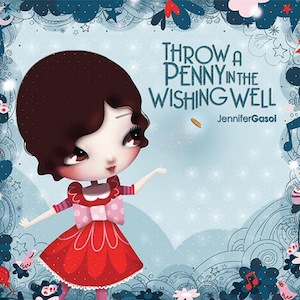
The family event has grown from one to two performances, both of which this year will feature children’s entertainer Jennifer Gasoi, a two-time Juno nominee whose Throw a Penny in the Wishing Well was nominated for a 2014 Grammy for best children’s album. (For interested readers, the Grammy ceremony takes place this Sunday, Jan. 26, 8 p.m., and will be televised.)

“What an idea,” said Weil about the fundraiser, “having a music concert to support children who are deaf and hard of hearing because they can listen and sing and make music. A great way to highlight what is possible…. A great way to reach out to families in the community for a fun day and to let them know something about what we do.” The event at the JCCGV’s Rothstein Theatre will also feature clowns, games, auction items and face painting.

Weil said the suggestion to invite Gasoi came from committee member Marla Groberman.

“Marla worked with Jennifer’s parents, Dr. Ivan and Laurie Gasoi, and it was agreed upon,” said Weil. Given the local connection and the fact that many of the production committee members are involved in the Jewish community, Weil said that the JCCGV “seemed like the perfect place to have the concert.”

The concerts will take place on April 12, at 10:30 a.m. and 1 p.m. Early-bird tickets (until Feb. 28) are $13.50/$16.50, or $50 for a family of four (two adults and two children under 17). For tickets and information, visit childrenshearing.ca.

Format ImagePosted on January 24, 2014April 27, 2014Author Cynthia RamsayCategories LocalTags Children’s Hearing and Speech Centre of British Columbia, Hilda Gregory, Janet Weil, Jennifer Gasoi, Rothstein Theatre, Vancouver Oral Centre for Deaf Children

Posts pagination

Previous page Page 1 … Page 83 Page 84
Proudly powered by WordPress