
Skip to content
  • Home
  • Subscribe / donate
  • Events calendar
  • News
    • Local
    • National
    • Israel
    • World
    • עניין בחדשות
      A roundup of news in Canada and further afield, in Hebrew.
  • Opinion
    • From the JI
    • Op-Ed
  • Arts & Culture
    • Performing Arts
    • Music
    • Books
    • Visual Arts
    • TV & Film
  • Life
    • Celebrating the Holidays
    • Travel
    • The Daily Snooze
      Cartoons by Jacob Samuel
    • Mystery Photo
      Help the JI and JMABC fill in the gaps in our archives.
  • Community Links
    • Organizations, Etc.
    • Other News Sources & Blogs
    • Business Directory
  • FAQ
  • JI Chai Celebration
  • JI@88! video

Recent Posts

  • המלחמות של נתניהו וטראמפ
  • Zionism wins big in Vegas
  • Different but connected
  • Survival not passive
  • Musical celebration of Israel
  • Shoppe celebrates 25 years
  • Human “book” event
  • Reclaiming Jewish stories
  • Bema presents Perseverance
  • CSS honours Bellas z”l
  • Sheba Promise here May 7
  • Reflections from Be’eri
  • New law a desecration
  • Resilient joy in tough times
  • Rescue dog brings joy
  • Art chosen for new museum
  • Reminder of hope, resilience
  • The national food of Israel?
  • Story of Israel’s north
  • Sheltering in train stations
  • Teach critical thinking
  • Learning to bridge divides
  • Supporting Iranian community
  • Art dismantles systems
  • Beth Tikvah celebrates 50th
  • What is Jewish music?
  • Celebrate joy of music
  • Women share experiences 
  • Raising funds for Survivors
  • Call for digital literacy
  • The hidden hand of hate
  • Tarot as spiritual ritual
  • Students create fancy meal
  • Encouraging young voices
  • Rose’s Angels delivers
  • Living life to its fullest

Archives

Follow @JewishIndie
image - The CJN - Visit Us Banner - 300x600 - 101625

Tag: Susinn McFarlen

Storytellers excel at Fringe

Sold out. That pretty much describes every show the Jewish Independent saw during the Vancouver Fringe Festival last month – two even made the Pick of the Fringe, which ran the week after the festival.

There were at least five shows in which a member of the Jewish community was involved. Kerry Sandomirsky directed and Lynna Goldhar Smith was the production manager for Beverley Elliott’s … didn’t see that coming, which made the Fringe Picks, along with Goldhar Smith-directed Dirty Old Woman. Both of these shows featured confident, funny older women in the lead.

Elliott’s was a one-woman show, but pianist Bill Costin added well-played and well-timed musical (and other sound) accompaniment, as well as being funny in his own right, and he provided some lovely harmonies in the vocal arena. The performance moved along quickly, with Elliott sharing both humorous and touching stories of her life, from her lack of success with internet dating – “47 coffee dates and I’m going broke” – to a longtime friend committing suicide, to a New Year’s Eve show at Vancouver’s Royal Hotel, hot yoga and more. Interspersed with the stories were many songs, several of which were original numbers, and they, too, ranged from the silly to the sentimental. It was a standing-ovation-garnering performance.
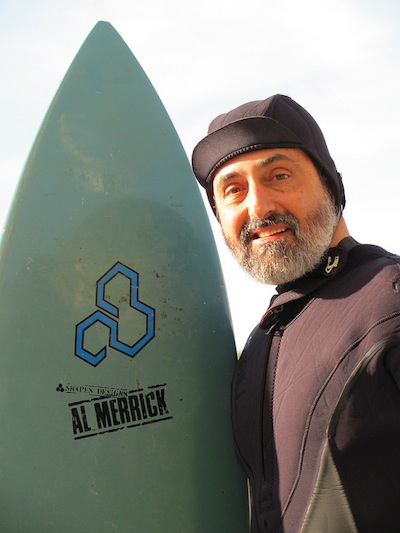
photo - Charlie Varon
Storytellers Charlie Varon (photo from Tangeret via Charlie Varon) and Naomi Steinberg (photo from Naomi Steinberg) were among the highlights of this year’s Vancouver Fringe Festival.

While the audience remained seated after Dirty Old Woman, they certainly whooped it up during the show, the actors having to pause more than once before the laughter subsided so that their next lines could be heard. The “dirty old woman” was played with impeccable comedic timing by Susinn McFarlen, who also made Nina a character with whom the audience empathized and for whom they rooted. She was surrounded by the excellent cast of Robert Salvador as Gerry, the much-younger and very handsome man with whom Nina strikes up a relationship; Emmelia Gordon as Liza, Nina’s daughter, who is somewhat jealous and completely unsupportive of her mother’s new relationship; and Alison Kelly as Diane, Nina’s best friend, whose marriage is “fine,” until it’s not. Written by Loretta Seto, the play didn’t feel scripted, but rather like watching snippets of real life.

Another writer who seemed to bring real people to the stage at this year’s Fringe was Charlie Varon, with Feisty Old Jew. Varon actually performed in front of the stage, a glass of water and a music stand the only props or set. As he enacted 83-year-old Bernie’s encounter with three 20-something surfers with whom he’s hitchhiked a ride back to his retirement home, Varon became each character.

Sharing not only what is said aloud between the people in the car, but what is going on in Bernie’s head, Feisty Old Jew is very funny and it is obvious that this production, these stories, are, as Varon told the audience, “a love letter” to his parents and that generation of Jews. Varon also shared a couple of short stories about another retirement-home resident, Selma, and, when he was finished, it was as if we’d met her. Varon said he has completed eight of 12 stories that he plans to publish as a collection in the next couple of years – it’ll be a fantastic read.

At the other end of the age range was Trey Parker’s Cannibal: The Musical, presented by Awkward Stage Productions, which provides young actors and crew the opportunity to learn theatre by doing. Young, of course, doesn’t mean inexperienced and the cast and crew of this Fringe show did an excellent job from start to finish – especially considering that there is no official script for Cannibal, which includes cartoons and animated backdrops, songs, dancing and dialogue. A lot goes on in this story, “loosely based” (to say the least) on that of Alferd Packer, “the first American to ever be convicted of cannibalism.” Not nearly as gross as it sounds, except for the short opening cartoon, this show was funny throughout and extremely well-executed.
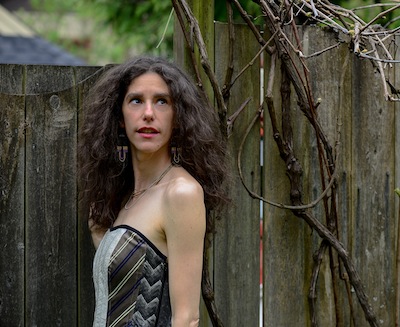
photo - Naomi Steinberg
Naomi Steinberg

Rounding out the entertaining Fringe fare enjoyed by the Independent this year was Naomi Steinberg’s Goosefeather, which was quirky, thought-provoking, innovative and mesmerizing. In 2011, Steinberg interviewed her grandfather at his Paris apartment. She asked him 100 questions – about his youth, his first job, how he helped her grandmother survive the war, why he finds measurement so fascinating, why she, Naomi, is so stubborn. “You were born like that,” he responds in what turns out to be characteristically brusque fashion.

But this isn’t straight narrative. An experienced storyteller, Steinberg intersperses what she knows and learns about her grandfather with observations about the concept of measurement, of time and space. What do we measure? Our waists, our burdens? What are our favorite measuring tools? A yardstick, the position of the sun? There is no such thing as an exact measurement, she notes – scientists always allow for a margin of error.

Steinberg adds goose honks and other sounds, ticks of time passing, packaging tape unrolling; she responds to questions and reactions from the audience; she hugs a plastic blow-up globe, hangs a pocket watch on the wall; she is dressed in a corset made from her grandfather’s ties. The presentation as a whole is much more than the sum of its parts.

Currently traveling the world, “crossing longitudes and latitudes, carrying [her] own prime meridian” and making a map, Steinberg told the Independent in an email that she is “working on shows in California, Australia, China, Japan, England, Switzerland, France, Israel and then returning through NYC and across Canada.” When Goosefeather lands again in Vancouver, take the time to see it.

Posted on October 3, 2014May 5, 2025Author Cynthia RamsayCategories Performing ArtsTags Beverley Elliott, Charlie Varon, Kerry Sandomirsky, Lynna Goldhar Smith, Naomi Steinberg, Susinn McFarlen
Noah Drew’s Tiny Music draws inspiration from Sholem Aleichem

Noah Drew’s Tiny Music draws inspiration from Sholem Aleichem

Since last year’s Chutzpah! Festival, the Jewish Independent has been waiting to see Noah Drew’s Tiny Music. The read-through in 2013 was a unique experience of a work-in-progress, and it will be fun to compare that “teaser” with the production that takes to the Rothstein Theatre stage later this month as part of this year’s Chutzpah!

“This play has actually been slow-cooking for almost 10 years,” Drew told the Independent in an e-mail interview. “In 2004, the fabulous actor/writer Josh Epstein approached me about writing and composing a musical together. We jammed on ideas, and decided to adapt a short story by Sholem Aleichem called The Fiddle, which I’d been very fond of growing up. At my grandparents’ house, I used to listen to a record of the great Howard Da Silva reading Aleichem’s stories accompanied by a klezmer band, and The Fiddle was one of my favorites: a dark fable in which a boy who’s obsessed with music is forbidden to have anything to do with it, but can’t help himself, to his family’s ruin. Josh and I wrote a few songs and scenes about a boy in the Old Country who was born with unusually large and dexterous hands – a violin prodigy. Some of the material was great, but then, life happened – Josh booked a big show in Toronto and moved there, and shortly afterwards I got a full scholarship to do my MFA in acting at Temple University in Philadelphia, and also moved east. Every once in awhile, Josh and I would connect and talk about working on the show, but it never quite happened.

“Then, in 2010, I was visiting my friend Sarah Shugarman (a wonderful musician in Toronto) and ended up unearthing one of the songs I’d written for the Fiddle project. When I read her the lyrics, she was effusive in her praise and excitement, and encouraged me to reopen the piece. We talked about co-composing, but in the end the scheduling and geography didn’t cooperate (I had completed my degree and moved back to Vancouver by this point) so I decided to push forward with the project alone.”

photo - Noah Drew
Noah Drew (photo from noahdrew.com)

At the heart of Tiny Music is Ezra, described in the Chutzpah! program as “an autistic man with an auditory-processing disorder that heightens his experience of the sounds around him.” About the writing of such a character, Drew explained that, around the time he re-committed himself to the play, he was “spending a fair amount of time with two members of my family – one adult and one child – who are on the autism spectrum. I also had a private acting student who was autistic. I noticed that all three of these individuals had certain challenges, particularities and special abilities when it came to focusing, and that all three seemed to have a very strong relationship to music. Music has always been incredibly important in my life also, and I was finding nice connections with my autistic family members through listening to and/or playing music together. I conceived of a contemporary version of the Sholem Aleichem story with an autistic man who hears in an extraordinary way at the play’s centre.”

Drew said he wrote a handful of songs and a first draft. “A two-day script workshop in Montreal in January 2013 led me to a second draft of the script, which was presented as a reading in the 2013 Chutzpah! Festival,” he said. “That reading was a bit of a whirlwind – we had only the one day to rehearse – but it was a good opportunity to see how the story was working (and where it wasn’t) and to hear a few of the songs with piano and voice. I learned from that reading that some aspects of the characters and story were really working, but others were a bit superficial and/or clunky.

“I went back into the writing process and, in October 2013, the show’s director/dramaturg Jamie Nesbitt and musical director Yawen Wang came out to Montreal to join me, sound designer Joe Browne and eight Concordia theatre and music students for a six-day workshop of the piece. That was a fantastic process! In addition to further developing the script and story, we got to explore the most important question of the piece stylistically: how can we make the songs, story, instrumental music and sound design all work together as a cohesive whole? We did some wonderful experiments, played around with ways of combining the elements and made discoveries such as: in this show, sometimes a sound cue or instrumental moment could actually replace dialogue. The script, music and sound all moved forward a couple of drafts. The characters were becoming more three-dimensional. The music was becoming more contemporary (‘less Sondheim and more Bjork’). The unique world of the show was coming into focus.”

Rethinking the storytelling

At this point, however, Drew and Nesbitt – co-founders of Jump Current, the producer of Tiny Music – noticed a “significant problem with the script.”

“Although the show is experienced from the perspective of an autistic individual, the storytelling mode was still quite ‘neurotypical,’” explained Drew. “Ezra had monologues in which he explained his situation and point of view to the audience in a very linear, chronological way. But the more I read and spoke to people about the range of autistic experiences, the more I realized that this linear way of speaking and thinking didn’t feel right. At Jamie’s urging, I took the script apart, and re-imagined it as a world in which time and memory are at times fluid, fragmented and unpredictable. Now, in the language, sound, music and staging, we are finding rhythms, patterns and textures that feel more true to who Ezra is. Rather than just describing and showing the story of this unique individual, we are figuring out how to invite the audience to share his visceral experience.”

This is what makes Tiny Music not just a regular, run-of-the-mill musical.

A sound design musical

“I call Tiny Music a ‘sound design musical’ because I want the audience to spend 90 minutes really hearing through Ezra’s ears,” explained Drew. “For Ezra, tiny details of the sonic environment that might go unnoticed by most people are very vivid. Sometimes, these details might mesmerize him. At other moments, they might overwhelm him. And sometimes, he hears the patterns in things so vividly that mundane sounds coalesce and occur for him as music. So, the songs in Tiny Music don’t just happen because, hey, it’s a musical. Instead, we only have songs because either (a) it makes sense that another character would actually be singing to Ezra in a certain situation, or (b) Ezra’s internal experience of certain sound patterns ends up transforming non-musical sounds into a kind of song. And, there are many times in the show – even some pieces I’ve called a ‘number’ – when nobody actually sings. Instead, it’s more like the environment itself that sings … all the sounds on all the floors of the building he’s in combine to make a kind of ‘sound design song,’ or a the voice of a person who is just speaking warps and distorts in Ezra’s perception, becoming rhythmic and harmonic. Every sound can be a kind of music if you really listen.”

 The producers: Jump Current

Tiny Music is but one of several projects that Jump Current is currently producing, despite its relatively recent appearance on the theatre scene. “Very close friends who have led kind of parallel lives for awhile now,” Drew and Nesbitt started the company last spring. Of the reasons for the collaboration, Drew said, “We’re both fairly well known in Canada as theatre designers (he for video projections and I for sound), but we both consider ourselves to be theatre artists in a much broader way than only design. In fact, we both are suspicious of the way that sometimes design tricks and flash can get in the way of real, organic moments of storytelling in the theatre. (Also, as it happens, Jamie and I are both married to yoga teachers who used to work as actors, who are now studying to be expressive arts therapists – go figure.)

“In 2012, Jamie got very involved in working on Tiny Music, and I started working as a dramaturg on a play he’s writing called Salamandra (which is based on the true story of his inheriting a 150-bedroom castle in Poland from his great-uncle, Poland’s former minister of war, and his great-aunt, a former Polish movie star). Because we were doing these two projects together, and because our views about theatre, politics and life are so aligned, we decided to start a company together.

“In addition to creating and producing works of theatre and media-based performance,” he continued, “Jump Current’s mission is to research, develop and champion uses of design and technology that illuminate live human-to-human connection, and counteract people’s sense of alienation from one another. We believe deeply that, although, of course, it’s true that we live in an age when technology can really separate people from direct, organic connection, there are ways that it can also facilitate a shared experience of wonder that can really unite people.”

Another project that Drew and Nesbitt are developing is The Riot Ballet, “which explores themes of crowd psychology, identity and protest – both peaceful and violent,” said Drew. “We recently participated in a two-week development process in Barcelona, which led to some really exciting material and ideas. The team is amazing – this project brings us together with fantastic theatre companies from Spain, Colombia, the U.S., and a dance company from Toronto. We’re aiming for a late 2015 or early 2016 première in the U.S., then dates in Canada and Europe.”

All of this is in addition to Drew being a tenure-track faculty member in the theatre department of Montreal’s Concordia University, his continued freelancing in sound design and his voice teaching work. One of his sound design projects, he told the Independent, is for Horseshoes and Hand Grenades’ production of This Stays in the Room, which will be performed at Gallery Gachet in Vancouver March 19-30.

About his full schedule, Drew said, “I feel very grateful that my years as a full-time freelancer and the demanding process of doing an MFA really helped me develop good time-management skills! But, when it’s all amazing, a busy life is a pleasure. Sometimes, when things get a little too intense, my wife and I look at each other and say, ‘At least it’s not boring!’ We’re usually smiling.”

Tiny Music takes place Feb. 25 and 26, 8 p.m., at the Norman and Annette Rothstein Theatre. It stars Anton Lipovetsky, Susinn McFarlen, Caitriona Murphy and Bob Bossin, with musicians Yawen Wang (piano and accordion), Joe Browne (live electronics), Caitriona Murphy (violin), Mike Braverman (clarinet), Jodi Proznick (bass) and Jason Overy (drums). There is a post-performance talk-back on Feb. 25. For tickets, visit chutzpahfestival.com, call 604-257-5145 or 604-684-2787, or drop in to the Jewish Community Centre of Greater Vancouver.

Format ImagePosted on February 14, 2014August 27, 2014Author Cynthia RamsayCategories Performing ArtsTags Anton Lipovetsky, Bob Bossin, Caitriona Murphy, Chutzpah!, Jamie Nesbit, Jason Overy, Jodi Proznick, Joe Browne, Josh Epstein, Jump Current, Mike Braverman, Noah Drew, Sholem Aleichem, Susinn McFarlen, The Fiddle, Tiny Music, Yawen Wang
Proudly powered by WordPress