Skip to content
  • Home
  • Subscribe / donate
  • Events calendar
  • News
    • Local
    • National
    • Israel
    • World
    • עניין בחדשות
      A roundup of news in Canada and further afield, in Hebrew.
  • Opinion
    • From the JI
    • Op-Ed
  • Arts & Culture
    • Performing Arts
    • Music
    • Books
    • Visual Arts
    • TV & Film
  • Life
    • Celebrating the Holidays
    • Travel
    • The Daily Snooze
      Cartoons by Jacob Samuel
    • Mystery Photo
      Help the JI and JMABC fill in the gaps in our archives.
  • Community Links
    • Organizations, Etc.
    • Other News Sources & Blogs
    • Business Directory
  • FAQ
  • JI Chai Celebration
  • JI@88! video

Recent Posts

  • Sharing her testimony
  • Fall fight takes leap forward
  • The balancing of rights
  • Multiple Tony n’ Tina roles
  • Stories of trauma, resilience
  • Celebrate our culture
  • A responsibility to help
  • What wellness means at JCC
  • Together in mourning
  • Downhill after Trump?
  • Birth control even easier now
  • Eco-Sisters mentorship
  • Unexpected discoveries
  • Study’s results hopeful
  • Bad behaviour affects us all
  • Thankful for the police
  • UBC needs a wake-up call
  • Recalling a shining star
  • Sleep well …
  • BGU fosters startup culture
  • Photography and glass
  • Is it the end of an era?
  • Taking life a step at a time
  • Nakba exhibit biased
  • Film festival starts next week
  • Musical with heart and soul
  • Rabbi marks 13 years
  • Keeper of VTT’s history
  • Gala fêtes Infeld’s 20th
  • Building JWest together
  • Challah Mom comes to Vancouver
  • What to do about media bias
  • Education offers hope
  • Remembrance – a moral act
  • What makes us human
  • המלחמות של נתניהו וטראמפ

Archives

Follow @JewishIndie
image - The CJN - Visit Us Banner - 300x600 - 101625

Author: Olga Livshin

Exhibit inspired by roots and wings

Exhibit inspired by roots and wings

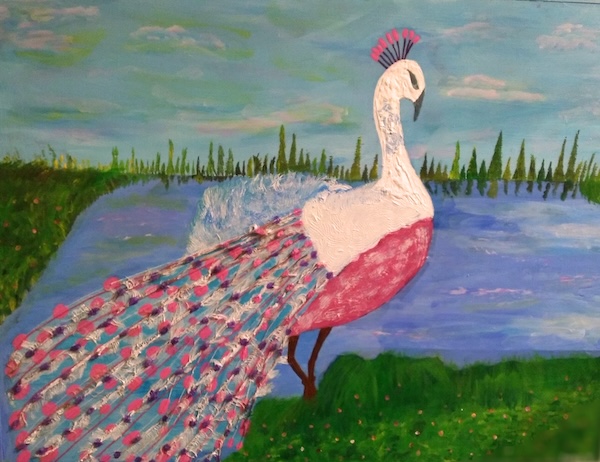
Roots and Wings at Zack Gallery features a wide range of artwork, including the painting “Princess Love” by Grace Tang. (photo by Olga Livshin)

Roots and Wings, the seventh annual exhibition of JCC inclusion services, opened at Zack Gallery on Jan. 30. The show marks February as Jewish Disability Awareness and Inclusion Month. Most participating artists are either members of Art Hive, JCC inclusion services’ art branch, or members of similar programs in other localities. Such programs offer people with developmental disabilities art classes and workshops, and help emerging artists with instructions and materials. 

The show’s theme is Roots and Wings. On the one hand, roots represent a deep connection to our origins: biological, ethnic and geographic. On the other hand, wings denote our striving to fly towards new beginnings and new understandings.
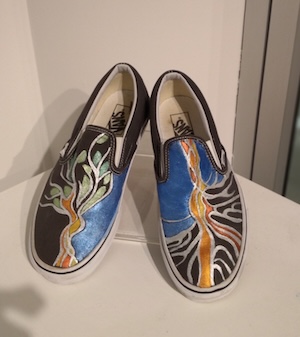
photo - “Shoes” by Jasmine Winkler Stobbe
“Shoes” by Jasmine Winkler Stobbe. (photo by Olga Livshin)

Many artists responded to the challenging theme. The exhibition includes paintings, ceramics and 3D installations. The images vary from detailed beaded jewelry by Mikaela Zitron to the flowery landscape “Walking through the Meadow Land” by Theresa Kinahan. Small raku ceramics of birds and hamsa (hands) by different Art Hive potters stand beside the colourful and whimsical acrylic “Paisley Cat” by Calvin Ho. 

Trees and roots also served as the inspiration for a few pieces. Among them, the most unusual is “Shoes” by Jasmine Winkler Stobbe. Roots painted in a quiet blue palette enhance the standard black fabric shoes’ tops, inviting everybody to try them on. 

But most artists went with the subject of birds, so fitting to the theme of wings. Small, everyday birds decorate Jerry Zhou’s charming totes. Strange, fantastic birds look haughtily at the viewer from Hadeeb Hamidi’s painting “Mystical Birds.” A regal peacock with its gorgeous tail struts across a simple landscape in Grace Tang’s “Princess Love.” And, while owls in several paintings are instantly recognizable, the driftwood bird sculpture “Fusion of Nature” by Melody Edgars feels like an embodiment of a proud sea bird with a powerful beak and a curious nature. 
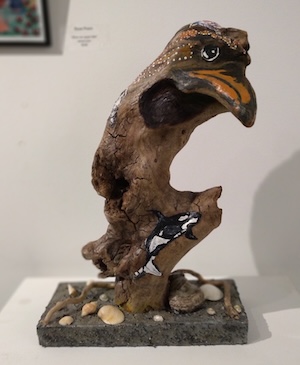
photo - “Fusion of Nature” by Melody Lorna Edgars
“Fusion of Nature” by Melody Lorna Edgars. (photo by Olga Livshin)

Many artists depicted chickens: small and large, yellow and multicoloured, familiar and exotic. Matthew Tom-Wing’s humorous “Nobody Here but Chicken” seems to represent this flock of chicken fairly well.

Some artists have participated in these annual shows before. For others, this is their first time at the Zack. One of the newcomers is Shiri Barak Gonen, the new inclusion services coordinator. 

“My career went in a kind of crooked line,” said Gonen in an email interview. “I started working in the Israeli tech industry when I was 23, freshly discharged from military service. I worked with computers in both technical and managerial roles while I completed my bachelor’s degree in psychology, followed by a music therapy program, on evenings and weekends. Afterwards, I worked for a few years as a music therapist with kids of all ages and with a range of challenges. Some years later, I found my way back to the tech industry, until we decided to relocate to Vancouver. We arrived in Canada in 2024.”

Newly hired, Gonen has given lots of thought to her new position. “The inclusion coordinator role is composed of two aspects,” she explained. “First, the managerial tasks such as staff and budget management and strategic planning. The other aspect is the direct and intensive interactions with the inclusion population, which requires sensitivity and a constant awareness of the needs of others. Both aspects are reflected in my personality and in my previous jobs.”

She added: “My current position is very different from my past jobs. In my last role, I was writing software code … and managing teams. Before, when I worked as a music therapist, I had a chance to work with my students and their families, but being a therapist puts you at a different angle than a program instructor. My focus will always be therapeutic, but I find much more pleasure in sharing hot chocolate and a chat with a group rather than analyzing their behaviour as a therapist. The essence of my new job is to establish meaningful relationships and mutual trust. We are building such a connection now.”           

Another newbie at the Zack Gallery is an experienced Vancouver artist – Pierre Leichner. 

“I have always been artistic,” Leichner said in a telephone interview. “Photography, ceramics, other creative outlets. But, when I graduated from high school, my family and I decided that, for better employment opportunities, I should go into science. I didn’t mind. I liked science too.”

He became a psychiatrist and worked in the profession for more than 30 years.  

“In 2002, I decided I couldn’t do it anymore,” he said. “The medical system turned too entrepreneurial, too corporate and dehumanizing.” So, he revisited his first love – art. He enrolled at Emily Carr University of Art + Design and received his bachelor’s in fine arts in 2007. In 2011, he completed his master’s in fine arts at Concordia University in Montreal.              

“Mostly I do visual arts,” he said. “Sculpture, photography, videos and paintings. I also do some performing arts, and I dabble in theatre,” he said. “I have my own YouTube channel, which deals with environmental issues.”    
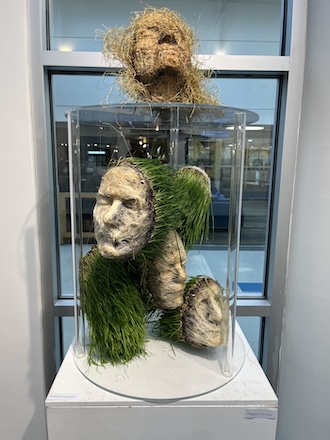
photo - Some of Pierre Leichner’s GrassRoots Project masks
Some of Pierre Leichner’s GrassRoots Project masks. (photo from Pierre Leichner)

A multidisciplinary artist with widespread interests, Leichner considers community involvement of utmost importance. In 2017, he founded the Vancouver Outsider Arts Festival, which provides opportunities to marginalized visual and performing artists. He still serves as its artistic director. He is also a member of the Connection Salon collective and sits on the board of the Community Arts Council of Vancouver.

“I like to explore the possibilities on the cusp of art and science,” he said. “There are similarities between the two, and both examine the foundations of human existence.”

The GrassRoots Project he presented for the current Zack show fuses science and arts and illustrates Leichner’s interdisciplinary approach.

“I saw the call for this show, and it fit my GrassRoots Project perfectly,” he said. “The project started in 2011, when Britannia Community Centre received a grant to celebrate people with the deepest grassroots contributions: teachers, artists, musicians.”

Over the years, Leichner has made about a dozen sculptural masks of those people, plus some of his friends and colleagues, employing a traditional Mediterranean technique. “I use wheatgrass,” he explained. “I make a mold of their face masks and plant wheatgrass within. The roots take the shape of the face, while the grass grows out like hair. It takes about three weeks to grow each portrait. The grass becomes part of the sculpture, the means of my artistic expression.”

Each mask is a symbol, echoing the synergy of humans and nature. “In this way,” the artist said, “nature imitated us in celebrating our community at this time of great ecological concern. We all need roots. We have them within our bodies. We also have them with our family and our community.”

Roots and Wings is on until March 2. 

Olga Livshin is a Vancouver freelance writer. She can be reached at [email protected].

Format ImagePosted on February 14, 2025February 13, 2025Author Olga LivshinCategories Visual ArtsTags disability awareness, JCC Inclusion Services, JDAIM, Jewish Disability Awareness and Inclusion Month, painting, Pierre Leichner, sculpture, Shiri Barak Gonen, symbolism, Zack Gallery

Start of a bumpy ride

A clip from the vintage TV show Golden Girls has been making the rounds recently, in which the adorable dolt Rose Nylund, played by Betty White, champions the idea of solving the Middle East conflict by moving the Palestinians to Greenland.

Fast forward to the 47th president of the United States, who last week stunned the world with a proposal that he take over the Gaza Strip and, apparently viewing the war-ravaged territory as a real estate opportunity, promised to turn it into the “Riviera of the Middle East.”

Trump said Israel would hand over the Gaza Strip to the United States, the two million Palestinians there would be relocated, and the US would then “level the site” before presumably constructing a sort of Levant Vegas. Some have begun referring to the enclave as the MAGA Strip. 

Donald Trump is a grifter whose lengthy CV is filled mostly with hucksterism and bankruptcy. In so far as he has intellectual tricks up his sleeve, his modus operandi is to distract his patsies with one hand while snatching their valuables with the other and offering spoils to his sycophantic gaggle of oligarchs.

This is to take nothing away from his skill. He is, it seems, outstanding at grifting. For his audience, however, the current reboot of the Trump show has the potential for less reality TV circus fun than train wreck tragedy.

Having dabbled with daddy’s money in the suburban New York real estate market and a few adventures into higher stakes insolvency – even successfully bankrupting a casino, which seems a feat of special skill – he is now (again) gambling at the highest levels imaginable. Only this time, he is gambling with the lives of Palestinians and Israelis, and possibly with the safety and security of people (including Jews) around the world.

The line between maniac and genius often seems perilously trifling, something we are reminded of not only watching the president, but also his newest billionaire tech bro sidekick (or is that side-president?) Elon Musk. Both share the habit of making wildly impolitic remarks (or gestures) that leave observers arguing over whether they have witnessed a policy balloon, the start of Nazi-style fascism, or some sort of sophomoric trolling. Are they serious, we ask ourselves, or is this another bait-and-switch in which one of them pulls a rabbit out of the hat over here so you don’t see the other one pilfering through pockets over there? More likely, it is both.

In other words, is this bizarre Gazababble a serious proposition? And, if not, what is he trying to distract us from?

Among the eye-popping phenomena we’ve seen in the days since the president’s remarks during his visit with Israel’s Prime Minister Binyamin Netanyahu have been the reactions from media and other public figures. The guy is, after all, the president of the United States. Media have to report his ramblings as though they are serious ideas to be weighed against alternative options like, say, not annexing one of the world’s most troubled strips of land and evicting (aka ethnically cleansing) the millions of people who live there, causing upheaval in a region already in turmoil, alongside increasing global hostility and potential for danger for the world’s only Jewish state and the world’s Jews.

Global media have reported Saudi, Jordanian and Egyptian leaders declaring Trump’s idea out-of-bounds which, by their very seriousness in rejecting it, seems to grant it some in-bounds validity.

Democrats in the United States and other observers are still poking through the entrails of last November’s election to understand why Americans rejected Kamala Harris’s mantra about “not going back.” There may be a million reasons why Trump won but high among them is the determination by many voters that they didn’t like the status quo. Trump is a disrupter. Whether you like or dislike disruption is irrelevant – no one, regardless of political persuasion, can deny this fact.

If you subscribe to the definition of insanity as repetition while anticipating a different outcome, the world’s approach to the conflict seems kooky. What we’ve been doing hasn’t brought peace closer but has seemed to push it further away. Peace and coexistence have rarely seemed so remote.

But, while doing the same thing and expecting a different outcome may be the definition of insanity, inverting the equation to its exact opposite does not guarantee success. Disruptive ideas are not in and of themselves dangerous, but what are the disruptive ideas that would bring both Israelis and Palestinians peace, security and dignity?

Clearly, something needs to change and fresh ideas are needed. Those are the ideas we should be considering. It is, presumably, possible to redirect a wayward train onto a different siding without derailing it entirely. How much more true when the disruption impacts millions of people’s lives, destroys communities, and would be a moral stain.

To carry on the metaphor, we are only days into the (presumably) four-year journey on this Trump train. The only thing that seems predictable is that it is going to be a bumpy ride. We must consider what each of us will do to ensure the bumps are not catastrophic. 

Posted on February 14, 2025February 13, 2025Author The Editorial BoardCategories From the JITags colonialism, Donald Trump, Gaza, geopolitics, Golden Girls, Israel

Taxes, tariffs for Jewish life

In December, our federal government offered a hastily assembled tax break that lasted until mid-February. The most memorable part of it was that the Canada Revenue Agency (CRA) chose to exempt “Hanukkah trees or bushes” from taxes. Your reaction might be like my twins’ outcry when I picked them up from junior high. We discussed it on the way home.

“Did they talk to an actual Jewish person?” they wondered. “Couldn’t they have exempted Hanukkah menorahs and candles? Judaica?

“Don’t they realize,” my kids added, “that anybody who is buying a tree is not doing a Jewish thing?”

I had similar thoughts. There are Jews who, for various reasons, decorate with Christmas items, but it’s not a Jewish thing.

I often write about how Jewish traditions, laws and texts apply to us, as Canadian Jews. This time, I reflected on how Canadian law applies to us, instead. The Hanukkah bush incident on its own wouldn’t have resulted in more than momentary annoyance or a wry chuckle if it had been a one-off mistake.

I thought of this while considering the recent US hoopla around eradicating DEI (diversity, equity and inclusion) policies. Canadians consider diversity part of our strength. Of course, there are efforts to uphold our strength in diversity amid the new US presidential activity. Historically, I’ve been a fan of DEI. It uplifts minorities who deserve a fair chance in a world that touts itself as a meritocracy but, in truth, privileges some far above others. 

After Oct. 7, 2023, it became clear that Canadian DEI does nothing to support Jewish people, although we’re a minority in Canada. More than once, my husband, a professor, was forced to point out surveys, embraced by his university, that left no way to identify as Jewish. In one human resources gaffe, the survey told Jews to identify as “white European.” My husband, whose father was born in a displaced persons camp in Germany in 1946, had no intention of pretending his murdered and displaced ancestors were considered equal or “white” citizens in Europe.

There are more anecdotes that one could share. Jews are a minority in Canada. The current DEI narrative doesn’t match who we are.

All this came up when reading the newly released tariff proposal compiled by the Canadian government. You could get bogged down in the definitions of “offal,” “margarine” and other details. I skimmed quickly, wondering how this would affect our Passover grocery shopping. Then I got stuck on the following entries in the backgrounder that was proposed to go into effect Feb. 4 and then was quickly postponed for 30 days.

Specifically, I got lost in item numbers 6117.10.10, 6117.90.10, 6214.10.10, 6214.20.10 and 6214.30.10. All these objects, associated with shawls, stoles, scarves and mantillas, and parts thereof, specifically list “prayer shawls.” These numbers relate to whether the garment is made, in whole or in part, of wool, silk or synthetics, and knitted or crocheted.

In recent years, it’s true that some older Christian women, usually in church groups, have knit shawls while praying. They gift these “prayer shawls” to those they pray for in their community. There isn’t much cross-border trade in these items. These works of prayer are gifts and are rarely for sale.

It’s easier to jump to the other definition. Tallits, tallesim, tallis, tallitot – however you call it, Jewish garments with tzitzit, made of wool, silk or synthetics, are called prayer shawls in English. Having recently searched for these for my twins’ b’nai mitzvah, many of the biggest Judaica shops that sell these are in the United States. Of course, one can also buy beautiful tallits from Israel. Due to the exchange rate, slow postage times and difficulty of shopping online, we bought our kids’ tallits locally at the synagogue gift shop, but some of those items came from US suppliers.

I wove my tallit for my bat mitzvah. I’m capable of weaving others, but because my kids haven’t grown to their adult sizes, our family decided not to invest too much time and money into their current tallits. What fits now at age 13 won’t work for them as adults. However, the new tariffs indicate that, although Jews are only 1% of the Canadian population, our ritual prayer items apparently deserve “special mention” and tariff fees. Note that, if you can locate a cotton tallit, it might not fit in the tariff schedule yet, but this list and its timeline are open to revision.

Where does this leave us? I’m wondering who compiled the two-month tax break and the tariff list. Someone on these task forces feels the need to single out and “include” Jews without consulting any Jews. The effort towards “inclusion” feels downright uncomfortable. It leaves Jewish Canadians feeling othered. We’re the small minority specifically allowed to purchase “Hanukkah bushes” without tax. Our tallits are mentioned five times in the cross-border tariff battles.

While we dangle in this awkward space, it brings up other issues. How many “Hanukkah bushes” or tallits do the CRA and tariff writers think we buy each year? As a small minority, even if we all bought these items every year (which we don’t), it would amount to nothing much. Something smacks of bias. The notion that we have outsized purchasing power or large numbers is part of a greater set of antisemitic tropes.

Earlier this week, I attended an online panel on antisemitism that included MP Ben Carr, Manitoba MLA Mike Moroz, Belle Jarniewski, executive director of the Jewish Heritage Centre of Western Canada, and Avrom Charach, a longtime Winnipeg Jewish leader and activist who has been cleaning up antisemitic graffiti. Everyone on the panel concluded that education and outreach to non-Jewish Canadians helps, because eradicating ignorant hate takes education and allies. The panel also suggested that appropriate federal and provincial legislation could help bring change.

Mentioning these strange tax cuts and tariff proposals could help educate Canadian government officials. Their efforts to single out the Jewish community have backfired. Let’s hope that future legislation doesn’t create other fake Jewish rituals or charge special tariffs on Jewish ritual items. Such actions aren’t supportive of Canadian diversity. Canada can do better. 

Joanne Seiff has written regularly for the Winnipeg Free Press and various Jewish publications. She is the author of three books, including From the Outside In: Jewish Post Columns 2015-2016, a collection of essays available for digital download or as a paperback from Amazon. Check her out on Instagram @yrnspinner or at joanneseiff.blogspot.com.

Posted on February 14, 2025February 13, 2025Author Joanne SeiffCategories Op-EdTags antisemitism, Hanukkah bushes, history, Liberal party, prayer shawls, tallit, tariffs, taxes, trade policy
The Holocaust in Hungary

The Holocaust in Hungary

Dr. Peter Suedfeld speaks at the International Holocaust Remembrance Day commemoration at the Bayit. (photo by Pat Johnson)

As a child in Budapest, Dr. Peter Suedfeld’s family spoke Hungarian in the home and considered themselves Hungarians first and Jews second. 

“If you asked us, ‘What are you? Who are you?’ The answer would be Hungarians,” he said. “Interestingly, we thought that that’s what the people around us thought also, that that’s what we were – Hungarians. It turned out a little later that we were mistaken.”

Suedfeld shared his family’s Holocaust story and his survival Jan. 26 at the International Holocaust Remembrance Day commemoration (IHRD) at the Bayit synagogue in Richmond.

Miklós Horthy, the regent of Hungary during most of the war, did not share Hitler’s determination to destroy the Jewish people, Suedfeld said. As a result, the status of Jews in the country was not markedly worse than that of other Hungarians during the early war years.

“By 1944, things were very different,” Suedfeld said. “It was increasingly likely that Germany, contrary to all expectations, was not going to win the war.”

The Soviets had pushed back the German advance on the Eastern Front and the Western Allies were close enough to bomb Budapest routinely. Food was scarce, as resources were being pilfered and transported to Germany. 

Realizing that the Hungarians had chosen the wrong side in this war, as they had at other times in history, Horthy went on the radio and announced that his country was surrendering, Suedfeld explained, whereupon Hitler directly occupied Hungary for the first time. Horthy’s government was replaced with an overtly fascist regime, the Arrow Cross. 

“They took it upon themselves to carry out the full Nuremberg Laws and all the persecution that had happened in Germany and Poland,” said Suedfeld. “It came later to us than it had many other countries in Europe but, when it came, they were determined to catch up.”

Adolf Eichmann himself, mastermind of the “Final Solution,” was sent to oversee operations in Hungary. Jews were forced to wear the yellow star for the first time and executions of Jews began in earnest.

Jews were taken to the banks of the Danube, where they were lined up in groups of three, tied together, their shoes removed, and then the middle person in the trio was shot. When the middle person fell into the river, the other two were dragged down and drowned, accomplishing the objective with one bullet rather than three. Suedfeld said 30,000 are estimated to have been murdered in this fashion.

Suedfeld’s paternal grandfather, a hero from the First World War, had died a few years earlier. He had assumed that his military accomplishments would shield his family from whatever antisemitic legislation was passed. 

“He died before he found out that he was wrong,” said Suedfeld, whose paternal grandmother astonishingly survived the Holocaust. His mother’s parents entered the ghetto, where they soon died from the privations there. 

Young Peter’s own story of survival was improbable. His mother was taken from their home while 8-year-old Peter watched, not knowing it would be the final time he saw her. She was taken to a holding camp in Hungary and from there to Auschwitz.

His father was drafted into forced labour and later experienced a death march and incarceration at Mauthausen, “one of the worst of those cruel, vicious camps.”

“But he survived,” Suedfeld recounted. “After the war, he was given a job, because he spoke English, interrogating suspected war criminals and SS officers captured in the vicinity. He enjoyed it.”

Young Peter survived after his mother was arrested because his aunt discovered him alone at home. She took him and decided, with his grandparents, that he should be hidden.

“They somehow found out that the International Red Cross had some orphanages started around the city. They were for war orphans but they smuggled a few Jews in when they thought they could get away with it,” he said. “I was a good candidate for hiding because I was blond and had blue eyes so I could get away with pretending I wasn’t Jewish.”

Like many survivors, Suedfeld’s existence is a result of an incalculable number of close calls and lucky chances. In just one instance, near the end of the war, the group of orphans he was with were being transported from one location to another. They were lining up to cross over a little fence when some soldiers saw them and may have assumed they were enemy forces. Machine gun fire burst forth. 

“Shots were fired and the kid on my left was hit,” said Suedfeld. “And the kid on my right was hit. But when it was pointing at me was the time that the next cartridge was being fed into the gun and so there was no shot. Pure dumb luck.”

Peter and his father fled Hungary when the communists took power. Suedfeld made his way to the United States in 1948, served in the US Army, eventually received a doctorate from Princeton University in 1963 and taught at American universities before moving to Vancouver. He was appointed professor of psychology at the University of British Columbia in 1972. His work and research are concerned with how human beings adapt and cope with challenge, stress and resilience.

At the commemoration, the Bayit’s Rabbi Levi Varnai reflected on the word zachor, remember. 

“We are obligated to remember, today, tomorrow and really every single day,” he said. “Zachor is always important but it feels like today it’s even more important than ever before.”

He acknowledged the nine Holocaust survivors in attendance and expressed regret that, after their childhoods were stolen, their golden years are now tarnished by witnessing a new surge of antisemitism.

“As much as we want to focus on the future and as much as we want to continue to build and not always think about our dark past, the only way to ensure a proper future is by remembering the atrocities, the hardships of the past,” the rabbi said. “We are lucky that we still live in an age that we can come into a room to witness survivors and share their testimonies. It is our obligation to take these stories and make sure that they will never ever be forgotten.”

Ezra Shanken, chief executive officer of the Jewish Federation of Greater Vancouver, noted the significance of the presence of elected representatives at the event. 

“If only our ancestors had public officials showing up like this and talking about how we have to create a safer space,” said Shanken, who said that people have asked him how bad antisemitism needs to get in Canada before Jews consider leaving the country. 

“When do we get out of here?” he asked. “We get out of here when the government starts making laws against us.” Governments in Canada of all parties, he said, “have been steadfast in trying to voice the need for safety and security for the Jewish people and for all people across our country, our province, our cities. I want to thank them for spending time with us tonight.”

Michael Sachs, director for Western Canada of the Friends of Simon Wiesenthal Centre and a past president of the Bayit, who initiated the annual Holocaust remembrance event six years ago, noted that the commemoration was taking place “amidst the worst, most sustained amount of antisemitism that Canadian Jews have ever experienced.”

“Survivors are a constant source of inspiration and wisdom for us,” he said. “No one can speak with a greater authority on what can happen when hate is left unchallenged than these survivors. For them, having witnessed firsthand and paid a dear price for society not standing up to the worst impulses of humanity, this is not academic.”

He asked everyone in attendance to redouble their efforts toward education about the Holocaust and about modern-day manifestations of antisemitism. 

“Jews cannot fight antisemitism alone, nor should we – not if we want a better society for all,” said Sachs. “The light of education shall lead our way.”

Steveston-Richmond East Member of Parliament Parm Bains represented the federal government and read greetings from Prime Minister Justin Trudeau. Kelly Greene, MLA for Richmond Steveston and minister of emergency management and climate readiness, brought greetings from Premier David Eby. All three of Richmond’s other MLAs – Teresa Wat (Richmond-Bridgeport), Steve Kooner (Richmond-Queensborough) and Hon Chan (Richmond Centre) – were present. Richmond Mayor Malcolm Brody read a city proclamation and was joined by councilors Bill McNulty, Andy Hobbs and Alexa Loo. Richmond RCMP chief superintendent Dave Chouhan was also in attendance. Bayit president Keith Liedtke emceed.

Nine Holocaust survivors lit candles. Cantor Yaacov Orzech chanted El Moleh Rachamim. Dr. Abby Wener Herlin, associate director of programs and community relations at the Vancouver Holocaust Education Centre, introduced Suedfeld. 

The event was co-sponsored by the Bayit, Vancouver Holocaust Education Centre, Friends of Simon Wiesenthal Centre, Jewish Federation of Greater Vancouver, Centre for Israel and Jewish Affairs and Kehila Society of Richmond. 

Format ImagePosted on February 14, 2025February 13, 2025Author Pat JohnsonCategories LocalTags Bayit, history, Holocaust, Hungary, International Holocaust Remembrance Day, Peter Suedfeld, Richmond
Healing trauma possible

Healing trauma possible

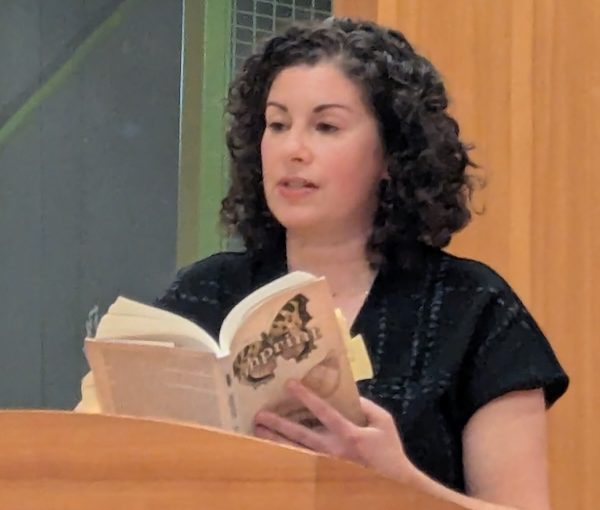
Claire Sicherman read from her book Imprint, about intergenerational trauma, at UBC Hillel on Jan. 21. (photo by Pat Johnson)

Understanding of intergenerational trauma has expanded in recent decades. Two granddaughters of Holocaust survivors discussed the larger phenomenon and their personal experiences recently at the University of British Columbia’s Hillel House, part of Hillel’s Holocaust Awareness Week. 

Claire Sicherman, author, workshop facilitator and trauma-informed somatic writing coach, shared her experiences and read from her book, Imprint: A Memoir of Trauma in the Third Generation, which was published in 2017. She was in conversation with Dr. Abby Wener Herlin, associate director of programs and community relations at the Vancouver Holocaust Education Centre, which co-sponsored the Jan. 21 event with Hillel BC.

Sicherman attributed to psychologist Dr. Arielle Schwartz the definition of intergenerational trauma as the ways in which the unresolved experiences of traumas, losses and griefs of one generation can become a legacy that is passed down to the next generation. 

“In other words,” said Sicherman, “the experiences of my grandparents are passed down through my parents to me.”

In addition to the “nurture” component of family legacies, there is the “nature” component of epigenetics, which Sicherman described as “the study of how genes turn on and off in response to environmental change.”

“I’ve heard it talked about like it’s sort of like light switches switching on and off in the body,” she explained. “Whatever switches switched on for my grandparents would then be switched on, passed down to my parent, passed down to me.” 

Experts in the field say it’s not a biological prison, Sicherman said. “They are actually malleable, so what you’re born with, you are not necessarily stuck with. We do have the ability to change certain things. There is hope in that.”

Growing up, Sicherman knew little or nothing about inherited trauma.

“When I started reading about it, I began to understand that what was going on with me wasn’t really my fault or that it wasn’t really something wrong with me,” she said. “It was just that I was carrying this huge thing.”

Reading excerpts from her book, Sicherman recounted being “disconnected from my body.” The inherited trauma manifested as a nervous system on overdrive and a tendency to hypervigilance. She was always ready to bolt out the door, looking for exit signs, aware of potential dangers, unable to fully rest, and prone to stress and anxiety.

She said that untold stories often pass more powerfully from generation to generation than stories that are recounted.

“When you think about that,” said Sicherman, “it’s what we don’t talk about that has more weight. It’s the silence. It’s the secrets.… That’s why it’s also important to me to speak out about these things, because it’s healing that goes across generations.”

Her survivor grandparents thought they were protecting their children through silence, Sicherman said. In response, the second generation learned not to ask questions.

There were other silences. In addition to the limited discussion around the Holocaust, Sicherman did not learn until well into her own adulthood that, when she was 4 years old, her grandfather had taken his own life, and not died of a heart attack, as she had been led to believe.

As someone who writes about and works with others on issues of healing intergenerational trauma, she urges people to embrace the totality of what they have inherited.

“Aside from trauma, what are the legacies that your ancestors bring to you?” she asked. “What are the gifts? What are the strengths? That’s also an important question to ask yourself, and a way of connecting with Jewish heritage. What are the strengths of your lineage? Is it survival? Is it tenacity? Is it humour? Is it creativity? Those are questions that you can ask yourself.”

Her son, Ben Sicherman, a UBC student, was present and also spoke of his family’s legacy of trauma. He described struggling with anxiety when he was younger and learning mechanisms for addressing issues through his parents’ modeling. He also spoke of carrying the legacy of his ancestors in ways like choosing 18 as his hockey number, not only because it represents chai, life, but because the numbers on his great-grandmother’s Auschwitz tattoo added up to the number 18.

Intergenerational trauma is a major component of her life’s work, said Sicherman.

“I do feel a sense of obligation, as a third generation,” she said. “But I also feel like this is part of my calling, too. It’s very meaningful. It’s an obligation that is not homework. It’s part of what I was set out to do.” 

Format ImagePosted on February 14, 2025February 13, 2025Author Pat JohnsonCategories LocalTags Claire Sicherman, health, Hillel House, Holocaust, Holocaust Awareness Week, Imprint, intergenerational trauma, mental health, second generation, survivors, third generation, trauma, VHEC
Enduring horrors together

Enduring horrors together

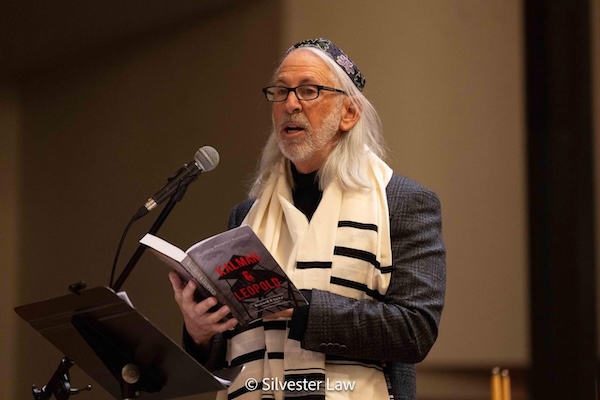
On International Holocaust Remembrance Day, Richard Lowy shared his father Leo’s story at Congregation Schara Tzedeck. (photo © Silvester Law)

On International Holocaust Remembrance Day, Richard Lowy stood in the spot where his late father, Leopold Lowy, davened and kibitzed for decades after arriving in Vancouver as a young man who had survived some of the most grotesque inhumanity history has known. Leo Lowy was a “Mengele twin” and a survivor of Auschwitz.

“This is where my father sat in synagogue,” Lowy said Jan. 27 to a packed audience at Schara Tzedeck Synagogue, beginning a unique and emotional commemoration that doubled as the launch of Kalman and Leopold, Lowy’s book about his father’s survival. 

Leo Lowy was just one of many survivors who joined Schara Tzedeck after their arrival on the West Coast in the late 1940s and 1950s. They didn’t burden others with their stories of survival, the son told the audience. 

Wearing his father’s tallit and carrying his siddur, Richard Lowy shared a little of his father’s story. The complete narrative of Leopold’s survival in Auschwitz – and the relationship the 16-year-old developed with a 14-year-old boy named Kalman Braun – is detailed in the book, which took Richard Lowy years of work to complete.

As twins, Leopold and his sister Miriam, as well as Kalman and his sister Judith, were of special interest to physician Josef Mengele, known to his victims and to history as Dr. Death. 

“My father was a boy when he arrived in Auschwitz,” said Lowy. “He and his twin sister Miriam were sent to the twin barracks, torn apart from the rest of their family.” Leo and Miriam’s parents, grandparents, eldest sister and the sister’s baby were murdered on arrival. His three other sisters were taken to a forced labour camp. 

Leopold and Kalman were recruited as servants in the guard barracks.

“In that unimaginable darkness, they became brothers, bound by a hope to survive,” Lowy recounted. “In Auschwitz, my father became Kalman’s protector, not because he wanted to, but because he had no choice. Kalman was a naïve, religious boy. He was dangerously unaware of the brutal reality they faced. His innocence threatened to draw the attention of the SS guards. Leopold knew that even the smallest misstep could lead to a beating or worse. Leo, my father, wanted to be invisible. When there was a roll call, he would go to the back of the line. He didn’t want to draw attention. He refused to make friends. He was unwilling to endure the anguish of getting to know someone and then they would end up on the pile. He buried his emotions deep, forcing himself to see the heap of bodies as nothing more than lumber. Yet, despite his efforts to remain detached, he was now compelled to guide Kalman, shielding him as a means of survival. What began as a necessity slowly evolved into a bond of friendship. Together, they endured the horrors of the SS guards and Mengele’s experiments.”

When the camp was liberated, the survivors parted with little fanfare. Kalman and Leopold assumed they would never see each other again.

In 2000, Richard Lowy produced a documentary film, Leo’s Journey, about Leopold’s survival. A year later, it aired on Israeli television. 

Reading from his book, Lowy described the moment that Kalman Bar On (né Braun), by now an elderly Israeli, was stunned to see a photo of the young Leo on his TV. There was not a doubt in Bar On’s mind that this was the boy whose protection and friendship had saved his life. 

A few months later, Richard reunited the two.

“Their reunion was a moment beyond words,” he recalled. “Two men, now in their 70s, embraced as if no time had passed at all, as if the decades of separation had simply melted away. In that instant, they were no longer old men. They were boys again, transported back in time to when their survival depended on each other.

“For the first time in over 50 years, they stood face-to-face with someone who truly understood the horrors that each of them went through and endured. In each other, they found more than the shared memories,” said Lowy. “They rediscovered the unshakable bond of two souls who had witnessed, experienced and survived the unimaginable together.”

Leo Lowy was a collector of cantorial recordings, which Richard Lowy entrusted to Vancouver Cantor Yaacov Orzech, who chanted El Moleh Rachamim at the book launch. Also at the event, Lowy presented to Rabbi Andrew Rosenblatt a 78 RPM recording of the rabbi’s great-grandfather, the renowned Cantor Yossele Rosenblatt.

Speaking to the audience, Rosenblatt reflected on the amount of desensitization that has to happen to get to the pinnacle of evil that Leo Lowy experienced. 

“Our presence here tonight is our attempt to ensure that our culture does not approach even the distant horizon of the periphery of such atrocities,” he said.

Peter Meiszner, Vancouver city councilor and acting mayor, brought greetings from the city.

“May we work together to ensure that the tragedies of the past are never repeated and that the principles of justice and equity guide our way forward together,” he said.

Selina Robinson, former BC cabinet minister and author of the recently published book Truth Be Told, introduced Lowy.

“Richard’s work is a call to action,” Robinson said. “It challenges each and every one of us to remember, to teach and to prevent hatred and antisemitism from taking root. That’s incumbent on all of us as we bear witness. It reminds Jews of our ability to overcome these hatreds. In sharing Kalman and Leopold’s journey, their memory lives on, guiding us to build a more compassionate and tolerant world.”

The book is available at kalmanandleopold.com, where the video of Leo’s Journey can also be viewed. 

Format ImagePosted on February 14, 2025February 13, 2025Author Pat JohnsonCategories LocalTags books, history, Holocaust, International Holocaust Remembrance Day, Kalman and Leopold, Kalman Bar-on, Leo Lowy, Leo’s Journey, Richard Lowy, Schara Tzedeck
New podcast launched

New podcast launched

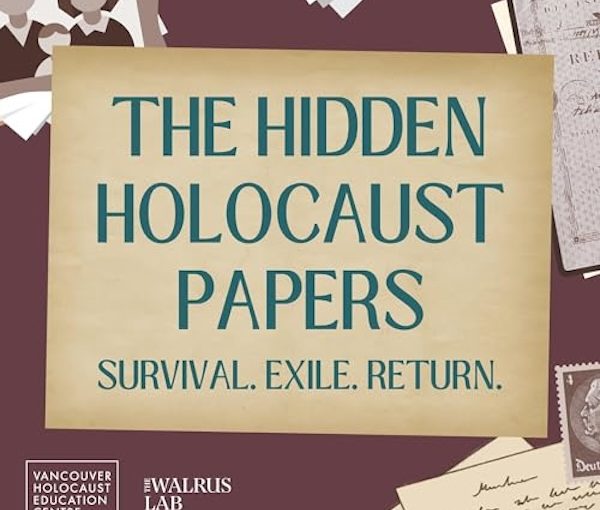
On International Holocaust Remembrance Day, Jan. 27, the Vancouver Holocaust Education Centre (VHEC) and the Walrus Lab launched The Hidden Holocaust Papers: Survival. Exile. Return.  The six-part documentary podcast, hosted by best-selling Canadian author Timothy Taylor, offers a personal exploration of his family’s hidden Holocaust history. 

Through the series, VHEC furthers its mission of Holocaust education and remembrance by supporting stories that bring the realities of the Holocaust to new audiences. Taylor’s journey of discovery is not only an act of personal reconciliation but also a vital contribution to preserving the memory of Holocaust victims and survivors for future generations.  

As Taylor unpacks long-forgotten family archives, the series takes listeners on an emotional journey from his home in Vancouver to Germany, revealing a tapestry of stories about survival, resilience and loss. Alongside his search for answers, Taylor reflects on the universal lessons of justice, remembrance and identity in the face of historical atrocities.  

“The Holocaust isn’t just a chapter in history – it’s a call to action to remember, educate and prevent future acts of hatred and genocide,” said Hannah Marazzi, acting executive director of VHEC. “We are honoured to work with Timothy Taylor to amplify his family’s story and underscore the importance of safeguarding these narratives.”  

In conjunction with the podcast, Taylor’s accompanying feature article, “Paper Trail,” will be published in The Walrus in May; it was made available online on Jan. 27. The article is an account of Taylor’s journey to instal Stolpersteine memorial stones for his family members who suffered under Nazi persecution. 

For more information and to listen to the trailer, visit lnkfi.re/thehiddenholocaustpapers. 

– Courtesy Vancouver Holocaust Education Centre

Format ImagePosted on February 14, 2025February 13, 2025Author Vancouver Holocaust Education CentreCategories LocalTags history, Holocaust, International Holocaust Remembrance, podcasts, The Walrus, the Walrus Lab, Timothy Taylor, Vancouver Holocaust Education Centre, VHEC
JQT-JFS partnership thrives

JQT-JFS partnership thrives

JQT Vancouver’s table at the BC Hospice Palliative Care Association’s Grief, Bereavement and Mental Health Summit 2024, which took place Nov. 20-22. (photo from JQT)

In 2024, JQT Vancouver, a queer and trans nonprofit, and Jewish Family Services Vancouver teamed up – through financial backing from the Jewish Community Foundation of Greater Vancouver and private donations – to create the JQT Mental Health Support Series, a set of informational workshops, resources and events for the LGBTQ2SIA+ community.   

The organizations have now entered 2025 invigorated by the response and eager to continue and expand their offerings.

“Like any marginalized community, queer and trans people are aware of their needs and are tired of being surveyed. They have been historically, persistently and systemically marginalized and are waiting for changes in society and health care to be more inclusive of them,” JQT founder and executive director Carmel Tanaka told the Independent.

Tanaka added that a limited operating budget can present challenges when providing the necessary safe spaces, programs and awareness resources for Jewish queer and trans community members and beyond. These needs for support far outweigh JQT’s capacity alone, she said. 

In her view, moving away from the survey model to a model of outreach and engagement not only fosters community between Jewish queer and trans people but ensures that Jewish queer and trans people are seen and treated as more than survey data. 

Tanaka credited JFS Vancouver chief executive officer Tanja Demajo for understanding this. Demajo listened to the recommendations JQT had been urging for a long time and took steps to fill the gap in mental health support services for the Jewish queer and trans community, said Tanaka.

“This partnership has been an incredible learning experience for me personally,” Demajo shared with the Independent. “Working closely with Carmel and the JQT team made me recognize the importance of being present, listening and understanding how JFS needs to evolve to better serve populations that may have felt isolated. Empowering others to take the lead in this context was inspiring and has already resulted in some truly amazing programming. 

“Seeing the community come together – sharing laughs, conversations and moments of joy – has reinforced one key takeaway: we should continue building these connections and creating even more opportunities to collaborate.”

The partnership between JQT and JFS dates back several years. In 2020, the two groups started conversations pertaining to diversity education, ensuring JFS supports for the social, physical and emotional wellness of all people, and providing a welcoming and inclusive organization for the Jewish LGBTQ2SIA+ community. Their partnership was given the name Twice Blessed 2.0: The Jewish LGBTQ2SIA+ Initiative. The Mental Health Support Series, rolled out last year, is the second phase of the initiative; it follows the 2022 Community Needs Assessment.

The mental health series provided numerous offerings last year that encompassed an array of topics – some serious, some lighter – such as dying and death, clay as a medium for mindfulness, and belly dancing. There was also an evening of comedy with Los Angeles-based performer Antonia Lassar and music from Victoria’s Klezbians.

“This series deals with very heavy issues, a lot of which are highly contentious and divide our communities in a number of ways. Our series also provides opportunities to laugh, have fun, relieve stress and move energy. When it comes to mental health, there needs to be a balance,” Tanaka said.

“There are many highlights for me personally,” she continued, “but one that stands out was when a group of queer Chinese folx attended our mahjong event to learn how to play mahjong because they didn’t have the opportunity to learn in their community. That’s when you know that you’re making a positive difference, when you are also helping out communities beyond your own.”

With the positive reaction thus far,  JQT and JFS are maintaining their partnership into 2025 to bring more programs and support to the Jewish queer and trans community.

“We look forward to continuing our learning journey and offering meaningful programming and support for the LGBTQ2SIA+ community. In partnership with JQT, we’re excited to develop programs over the next year that will clearly reflect our ongoing commitment to inclusivity and connection,” Demajo said.

Throughout the partnership, Tanaka said, JFS “has learned our preferred style of collaboration and communication, and has borne witness to JQT’s growth and its limitations as a 100% volunteer-led organization.

“Today,” she said, “our quarterly JQT-JFS meetings run quickly, smoothly and are a whole lot of fun because we all genuinely like each other, enjoy the work we are accomplishing together, and can see the fruits of our labour.”

In 2024, JQT gained charitable status. This is a significant accomplishment for a small nonprofit, noted Tanaka, who this month starts her seventh year with JQT. 

In 2025, she aims to secure an annual salary for the organization’s executive director position, as well as extended health benefits and program funding.  These, she believes, will set JQT up for further success and future executive directors.

“With an increase in queer Jewish event offerings in town,” said Tanaka, “JQT can now focus on heavier lifting, specifically education and training of Jewish and non-Jewish organizations in and out of community and health care, which has been a decades-long request from Jewish queer and trans people.

“We are starting to feel the synergy around our work and are finally being invited to the table,” she added. “It’s all been worth it and we look forward to continuing our collaboration with JFS in a good, organic way.”

The first event of the 2025 Mental Health Support Series, Jewish Magic Herbal Pottery, takes place on Feb. 25, 6 p.m., at Or Shalom Synagogue. To register, visit jqtvancouver.ca. 

Sam Margolis has written for the Globe and Mail, the National Post, UPI and MSNBC.

Format ImagePosted on February 14, 2025February 13, 2025Author Sam MargolisCategories LocalTags Carmel Tanaka, JFS Vancouver, JQT Vancouver, mental health, Mental Health Support Series, Tanja Demajo

Jews against Spanish fascism

The new historical novel by Vancouver writer David Spaner, Keefer Street, is as much about the idea of Keefer Street as it about the real East Vancouver avenue. This is appropriate, because the book is a reflection on the Spanish Civil War and its Canadian, especially its Jewish, volunteers. For the dead and the survivors, the war was a living hell. But for the survivors and anyone else with a direct or inherited memory of the 1936-39 conflagration, it is an idea. It has been called the Last Great Cause – and that is the underpinning of Spaner’s story.

Spaner takes part in the Feb. 26 JCC Jewish Book Festival event Jewish Fiction from Western Canada, in which Saskatchewan writer Dave Margoshes (A Simple Carpenter) is also featured. 

image - Keefer Street book coverKeefer Street toggles back and forth between the Spanish Civil War and a 1986 reunion of fighters and hangers-on (with occasional detours to family vignettes in other eras and areas). The storyline follows veterans of the Mackenzie-Papineau Battalion, the ragtag Canadian volunteers who made their way to Spain in direct defiance of their own government, joining American volunteers of the Abraham Lincoln Battalion, as well as French, Poles and others signing on in a pre-Second World War proxy against Hitler and Mussolini and their Spanish incarnation, Francisco Franco.

The narrator, Jake Feldman (later Jack Fields), is a Mac-Pap from the neighbourhood – that is, the Strathcona area of East Vancouver, specifically Keefer Street, where waves of immigrants have planted their first roots in Canada. By the time we join Feldman’s spirited (if predictably stereotypical) Jewish family, Strathcona’s Jews have already begun moving to the Oak Street corridor and its environs, but the Jewish element remains prominent among the multicultural milieu of the area. 

Spaner, who has written extensively about Vancouver’s left-wing (see Solidarity: Canada’s Unknown Revolution of 1983, jewishindependent.ca/history-of-left-coast), list-ticks a raft of momentous and minor Vancouver signposts and events, including Stanley Park’s hollow tree, the Sylvia Hotel’s Jewish roots, the lost, lamented Woodward’s flagship department store, Theatre Under the Stars (still going), Eastside firebrand Rose Barrett and her boy Dave, the Carnegie Library turned Downtown Eastside community centre, and the blacklisted singer Paul Robeson singing at the Peace Arch for binational audiences.

Obscure local trivia is also tucked into the pages. The Industrial Workers of the World got their nickname Wobblies here in Vancouver. David Oppenheimer, Bavarian Jew, became the city’s second mayor and has an eponymous park in the Downtown Eastside where the fictional Feldman family frolics. Local gal Sadya Marcowitz became Mary Livingstone and married Jack Benny, going on to become a major radio star.

More momentous local events are introduced, including the On-to-Ottawa Trek, the 1935 Ballantyne Pier riots and the upheaval around the visit of the Nazi warship Karlsbad earlier that year.

The life of Jake/Jack takes on a bit of a Forrest Gump feel with his uncanny ability to be in the right place at the right time, such as when he just happens to be watching an amateur baseball game in Toronto when Nazis descend in what we know now as the infamous antisemitic (and anti-antisemitic counteroffensive) Christie Pits riots.

Keefer Street is sometimes a didactic (perhaps necessarily, given the times) 101 on antisemitism in Canada, including Toronto’s Swastika Club and Quebec’s philo-fascist Adrien Arcand.

The flashbacks feature the parents’ hardscrabble migrant experience and their engagement in the shmata and fur trades, as well as the moderately idyllic life of Vancouver kids and teens in the 1930s. Apparently before the advent of Netflix, something called “shooting pool” was a popular pastime.

Hindsight allows Jake to reflect on the legal proscriptions against enlisting with a foreign militia, then the social ostracism on their return due to the associations of Spanish partisans with communism, then McCarthyism, then the apathy and ignorance of the Me Generation and its aftermaths, in which successive generations don’t know the role the Spanish Civil War or its belligerents played in 20th-century history.

The 1986 reunion allows for the exploration of the emotions of former fighters, wondering what their impacts were and what their lives have become.

Jews played a major role in the Spanish Civil War, as Keefer Street’s central protagonists demonstrate. This was understandable as a first military salvo against fascism, but Spaner illuminates another massive historical consonance that may be overlooked.

“Along with everything else the Civil War stood for, it meant a Jewish return to Spain after centuries in exile,” says one of the characters at the reunion. “During the Spanish Inquisition of the 15th century, the country’s considerable Jewish population, though it had lived there for eons, was given the choice of conversion or expulsion. Many were expelled. In the 1930s, Jews returned to Spain, volunteering in disproportionately large numbers – over half of the American nurses, for instance, from a country three-point-something percent Jewish. One personal note. In 1937, I crossed the same ocean going to Europe that my parents had fled across, coming from Europe just a generation earlier. My parents fled the barbarism of pogroms, inquisitions. I came back to fight it.”

Says Spaner through his character Jake: “Funny how a short time can define a lifetime. For a lot of the volunteers, the Spanish Civil War years are the big memory but, when you think about it, the war lasted less than three years. I was there about a year-and-a-half and so much of it’s a blur.” 

The JCC Jewish Book Festival runs Feb. 22-27. For tickets and the full schedule, visit jccgv.com/jewish-book-festival.

Posted on February 14, 2025February 13, 2025Author Pat JohnsonCategories BooksTags David Spaner, historical fiction, history, JCC Jewish Book Festival, Keefer Street, Spain, Spanish Civil War, Vancouver
Growing a garden together

Growing a garden together

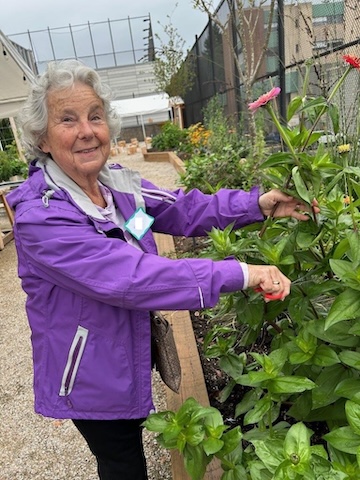
Volunteers, seniors and youth dedicate their time each week to tending, planting and harvesting at the Vancouver Jewish Community Garden. (photo courtesy VJCG)

The Vancouver Jewish Community Garden (VJCG), which opened in May 2023, began as a dream – a vision shared by Vancouver Talmud Torah, Jewish Family Services Vancouver and Congregation Beth Israel. The dream was made possible by the Diamond Foundation, which secured a long-term lease of the land for future development and has allowed for the opportunity to use it for a Jewish community garden on a temporary basis. Significant seed gifts from the Ronald S. Roadburg Foundation and the Jewish Community Foundation also played a vital role in its creation.

photo - A Vancouver Jewish Community Garden volunteer
A Vancouver Jewish Community Garden volunteer. (photo courtesy VJCG)

Generous donors, volunteers, students, garden experts, builders, designers and a project manager all contribute to its success. Every seed planted, every helping hand and every heart involved makes a meaningful impact – both on those who tend the garden and those who benefit from its harvest. As Rabbi Shimon bar Yochai said, “A garden is not just a patch of soil, but a place for the cultivation of the soul.”

Reflecting on two years of growth – including a full harvest season – it is possible to truly appreciate the impact the VJCG has on the Vancouver Jewish community. Under the care of garden coordinator Maggie Wilson, the VJCG has blossomed into a hub for connection, learning and nourishment. Sacred spaces are woven among beds of fruits, vegetables and flowers. 

“The garden is more than a place to grow food – we’ve built a wonderful community where people can experience the healing effects of digging in the soil, and witness the miracle of nature,” said Wilson. “Some participants are having their first experience planting a seed or picking a fresh bean. They are learning what it takes to grow food, and understanding, in a concrete way, how their work contributes to tikkun olam.”

Volunteers, seniors and youth dedicate their time each week to tending, planting and harvesting, ensuring that fresh, nutritious produce reaches Jewish Family Services to support community members facing food insecurity. Beyond its bounty, the garden is also an outdoor classroom. Students engage in hands-on workshops, learning about sustainability, collaboration and the growth cycle.

The VJCG is a community treasure that needs the community’s support to continue to thrive. Feb. 20 will be the first-ever Day of Giving in support of the VJCG. Donations will help sustain the garden, expand programming and continue to provide nourishment, education and inspiration. To contribute, visit jewishcommunitygarden.ca. 

– Courtesy Vancouver Jewish Community Garden

Format ImagePosted on February 14, 2025February 13, 2025Author Vancouver Jewish Community GardenCategories LocalTags Day of Giving, gardening, philanthropy, tikkun olam, Vancouver Jewish Community Garden, VJCG, volunteering

Posts pagination

Previous page Page 1 … Page 56 Page 57 Page 58 … Page 667 Next page
Proudly powered by WordPress