Skip to content
  • Home
  • Subscribe / donate
  • Events calendar
  • News
    • Local
    • National
    • Israel
    • World
    • עניין בחדשות
      A roundup of news in Canada and further afield, in Hebrew.
  • Opinion
    • From the JI
    • Op-Ed
  • Arts & Culture
    • Performing Arts
    • Music
    • Books
    • Visual Arts
    • TV & Film
  • Life
    • Celebrating the Holidays
    • Travel
    • The Daily Snooze
      Cartoons by Jacob Samuel
    • Mystery Photo
      Help the JI and JMABC fill in the gaps in our archives.
  • Community Links
    • Organizations, Etc.
    • Other News Sources & Blogs
    • Business Directory
  • FAQ
  • JI Chai Celebration
  • JI@88! video

Recent Posts

  • New rabbi settles into post
  • A light for the nations
  • Killed for being Jewish 
  • The complexities of identity
  • Jews in time of trauma
  • What should governments do?
  • Annie will warm your heart
  • Best of the film fest online
  • Guitar Night at Massey
  • Partners in the telling of stories
  • Four Peretz pillars honoured
  • History as a foundation
  • Music can comfort us
  • New chapter for JFS
  • The value(s) of Jewish camp
  • Chance led to great decision
  • From the JI archives … camp
  • עשרים ואחת שנים להגעתי לונקובר
  • Eby touts government record
  • Keep lighting candles
  • Facing a complex situation
  • Unique interview show a hit
  • See Annie at Gateway
  • Explorations of light
  • Help with the legal aspects
  • Stories create impact
  • Different faiths gather
  • Advocating for girls’ rights
  • An oral song tradition
  • Genealogy tools and tips
  • Jew-hatred is centuries old
  • Aiding medical research
  • Connecting Jews to Judaism
  • Beacon of light in heart of city
  • Drag & Dreidel: A Queer Jewish Hanukkah Celebration
  • An emotional reunion

Archives

Follow @JewishIndie
image - The CJN - Visit Us Banner - 300x600 - 101625

Author: Olga Livshin

Artistic visions on belonging

Artistic visions on belonging

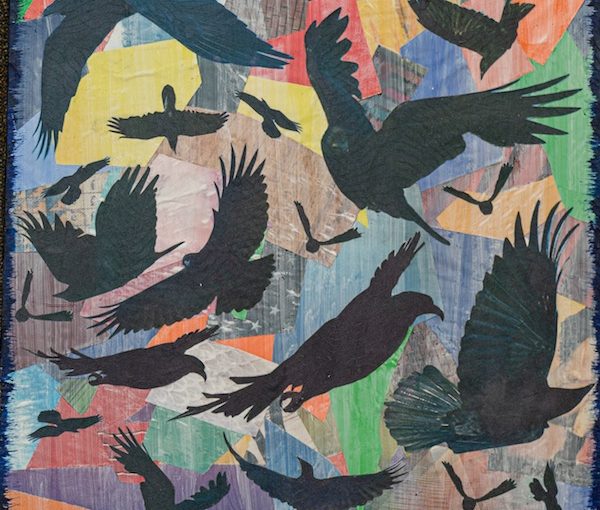
“We are Family” by Cat L’Hirondelle is now on exhibit at the Zack Gallery, as part of he group show Community Longing and Belonging, which runs to March 29.

The new group show at the Zack Gallery, Community Longing and Belonging, is the second annual exhibit in celebration of Jewish Disability Awareness, Acceptance and Inclusion Month. Organized by Jewish Community Centre of Greater Vancouver’s inclusion services and its coordinator, Leamore Cohen, the show is a silent auction. Half of the proceeds will go to the artists, and the other half will be divided between inclusion services and the gallery.

The show consists of 50 paintings by different artists. The size and shape of all the paintings are the same – small rectangles – but the contents and media used are vastly different, indicative of the artists’ various styles and training levels. Some are highly professional. Some are figurative; others abstract. But all reflect their creators’ need to belong, to be part of a community. Each painting tells a story.

One of the prevalent themes of the show is flight. Wings appear on several paintings, emphasizing the yearning for the freedom flight entails, but also for the brotherhood of other fliers. The white ornamental wings on Mikaela Zitron’s multimedia piece are bigger than the background board. They take the artist into the sky, into a joyful aerial dance, while Jamie Drie’s feathers, drifting in a sad emptiness, invoke the feeling of disconnection.

The murder of crows in Cat L’Hirondelle’s painting relates yet a different story. “I am a feminist,” said L’Hirondelle. “I was thinking about the importance of being part of a community of like-minded women. My group of longtime women friends is my family, my tribe and, like the crows, I know that they will always be there for me. Since I became disabled, I have felt more and more disassociated with the able-bodied-centric society in general. Just look at the history of people with disabilities in different societies – genocide, forced sterilizations, segregation, isolation, etc. I would love to feel that people with disabilities belong in the world. My piece is trying to impart that sense of longing to be included in general community and how crow communities seem to include everyone: the old, the disabled, the young. I have lived in the crow flight path for many years and have been watching crows’ behaviour; sometimes, I wished people were more like crows.”
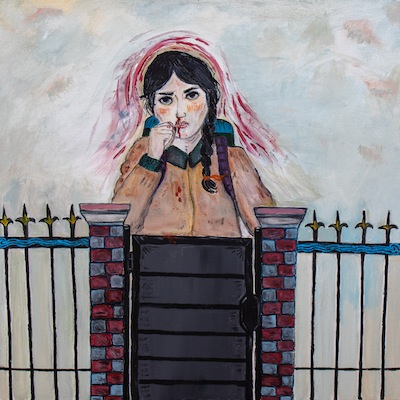
image - “Leaving for Awhile” by Daniel Malenica
“Leaving for Awhile” by Daniel Malenica

The second recurring motif in the show is loneliness, the sense of separation. Daniel Malenica’s image is distinctive among such pictures. The woman in the painting stands behind closed garden gates. She gazes at us from the painting, and the naked longing in her eyes is painful to behold. She desperately wants to open that gate and step through, to join us, but she lacks the courage. What if the people inside reject her? So, she just lingers outside, desolate and alone, waiting for an invitation.

Another outstanding piece on the same theme is Estelle Liebenberg’s black and white painting “Solitude Standing.” She told the Independent, “I work primarily as a potter and a metalsmith, but I accepted the challenge to paint something for the exhibition because I’ve had wonderful times working as a substitute art instructor at the JCC. I chose the monochromatic colour palette because, at the moment, I am quite fascinated by shadows, specifically how they change the shape of objects but still remain recognizable.”
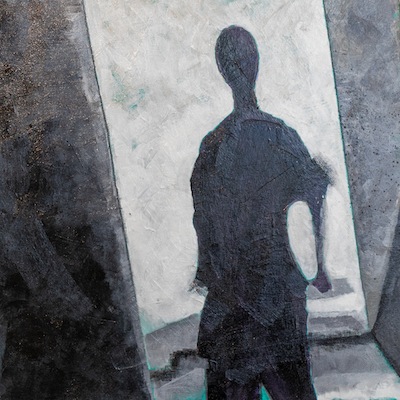
image - Estelle Liebenberg’s “Solitude Standing”
Estelle Liebenberg’s “Solitude Standing.”

Her focus for the piece was the idea of a community in general. “I’ve spent my life dealing with different communities and, I guess, for me, the lines have softened over time,” she said. “We spend so much time in our lives working on belonging, or longing to belong somewhere, to someone or something. It’s an integral part of the beauty, the joy, the frustration and the heartbreak of life. For me, this was longing and belonging as an immigrant, as an introvert, as a mother of grown children, as a single person living in a city.”

She explained the title of her painting: “It is a hat tip to a song by Suzanne Vega. For me, her words truly encapsulate the feeling of longing to belong somewhere: ‘Solitude stands in the doorway / And I’m struck once again by her black silhouette / By her long cool stare and her silence / I suddenly remember each time we’ve met.’”

Different artists explore different aspects of community and belonging, and not all the communities are small or local. For Marcie Levitt-Cooper, the community in her painting is the universe, the earth and stars encompassed by love. Esther Tennenhouse, on the other hand, contemplates the darker side of belonging.

“My piece is a photocopy from a pre-World War Two Jewish encyclopedia, Allgemeine Ensiklopedya,” Tennenhouse explained. “It was labeled in Yiddish and issued in New York in 1940, the year Germany occupied France. On first seeing this old map, I found it very poignant. The map had to fit the 16-by-16 canvas given to all participants. The format left space, and I filled it with the music of two nigguns and lyrics of six Yiddish songs.”

That colourful map with Hebrew lettering, published just before the Nazis unleashed the full horrors of the Holocaust on European Jews, made for a tragic, frightening image, despite its bright and cheery appearance.

While the exhibit includes other figurative paintings, the majority of the pictures are abstract, either simple swirls of paint or complex geometric patterns, like Daniel Wajsman’s piece – two irregular overlapping rectangles.

“I wanted to emphasize that we should bring everyone in, not leave anyone out,” he said.

Community Longing and Belonging runs to March 29.

Olga Livshin is a Vancouver freelance writer. She can be reached at [email protected].

Format ImagePosted on March 6, 2020March 4, 2020Author Olga LivshinCategories Visual ArtsTags art, Cat L’Hirondelle, Daniel Wajsman, disability awareness, Estelle Liebenberg, Esther Tennenhouse, inclusion, JCC, Jewish Community Centre, Leamore Cohen, painting

United by challenges

After two inconclusive elections in Israel, incumbent Prime Minister Binyamin Netanyahu appears certain to form a government after elections Monday, ending an unprecedented period of political instability.

Whether Netanyahu himself, under indictment and slated for a trial this month on corruption charges, will remain prime minister for long, the right-wing is certainly poised to govern for the near future. Israel’s Supreme Court explicitly refused to offer an opinion on whether a convicted prime minister could continue in office, a question that may now go from theoretical to very real.

Jews in the Diaspora, including a great many here in British Columbia, follow politics in Israel casually or closely, as many of us do the machinations of American politics that are also roiling this week. Canadian politics and those in British Columbia, around issues of environmental policy, disruptive protests and a host of other topics, have people here at home fired up about politics even without elections on the near horizon.

While there are countless issues and contests vying for our attention, there is also an undercurrent of less immediate yet possibly more ominous peril facing our democracies. Threats of external influence from bad actors, like a repetition of the Russian interference in U.S. elections in 2016, are cause for serious concern. The rise of domestic extremism – in mainstream politics as well as in the form of underground and sometimes violent movements – also deserves close attention. So does apathy.

All of these influences and attitudes present dangers to our democracies – in Canada, in the United States, in Europe and Israel. Newer democracies in Central and Eastern Europe have demonstrated how fragile the tissue of open, accountable and responsive government can be. It is alarming to witness the path that Hungary, Russia, Turkey and Poland have been on recently. Our democracies – in the United States and Canada, even Israel – may be somewhat older, but these countries are still warnings of how things that we take for granted can be snatched away. Democracy is less an enormous oak with deep and broad roots than it is a delicate flower that requires nurturing and constant attention.

For this reason, when there are government policies or election outcomes with which we disagree, we should remind ourselves that democracy may be the ultimate win-some-lose-some proposition and recommit ourselves to respect for the institutions of our democracy, not just when they serve our interests but even – especially – when they deliver outcomes that we find disagreeable. At the same time, we should be identifying and calling out every instance when a political leader or movement threatens the institutions or norms of our democracy.

Amid all of these political dramas, very daunting situations that recognize no geographic or ideological boundaries are challenging each and every one of us. This week, again, coronavirus is spreading and causing panic. Meanwhile, the dangers posed by climate change escalate every day. The economic impacts of these global concerns are blaring across the business pages: pandemic fears are causing wild stock market fluctuations, while the measures necessary to alter the course of climate change demand fundamental economic shifts. All of these threaten to exacerbate existing inequalities locally, nationally and internationally, threatening our morality and the stability of our world.

In the face of existential issues like these, the differences in our ideologies in countries like Canada, Israel or the United States fade into shades of grey. This is perhaps optimistic: that the differences between us are minimal in comparison to the difficulties we face together. That should motivate us to look beyond or to bridge our differences and recognize both the humanity in those with whom we disagree and the challenges to humankind that we must overcome together or succumb to apart.

Posted on March 6, 2020March 4, 2020Author The Editorial BoardCategories From the JITags Canada, coronavirus, democracy, economics, Israel, Netanyahu, politics, United States
Local team’s global impact

Local team’s global impact

Ran Sommer (photo from the Walking School Bus)

Ran Sommer was working as a project manager for a health region and moonlighting as a volunteer for a very small Vancouver-based international education charity. A trip to India to see the charity’s work in action changed the direction of his career – and the course of the organization.

The Walking School Bus was the brainchild of another young innovator from the Vancouver area, Aaron Friedland, who has received numerous recognitions, including a Next Einstein award, which was presented by CNN’s Anderson Cooper, and as one of the Jewish Independent’s 18 Under 36 honourees. TWSB, as it is shorthanded, emerged out of a trip to Uganda

Friedland took, where he learned that many students in that country do not attend school because it is too far for them to walk. The first step in his venture to resolve the problem was a book by the same name, which started a fundraising campaign that led to the purchase of the first vehicle, which shuttles Ugandan kids to school then does duty as a taxi in the off hours to cover expenses and generate revenue for school materials.

When Sommer returned from earning undergraduate and master’s degrees at Wilfred Laurier University in Waterloo, Ont., Friedland was one of the first people with whom he reconnected. Both alumni of King David High School, they had been in the same social circles and Sommer had followed Friedland’s successes via social media. He came on board as a volunteer, serving as director of communications.

While Sommer was getting some good training at project management in his day job at the health authority, when he joined a self-funded trip to see TWSB’s operations in India, he was inspired to take a leap into the uncertain territory of a startup nonprofit.

“I was just so blown away to actually see what I was communicating about for the last year,” Sommer said, adding with a laugh: “To see not only that it was real [but] it was 10 times better than I thought it was and I should probably be communicating it better.”

The inspiration was mixed with sadness that he didn’t feel his full-time job was as meaningful. He and Friedland sat down, figured out how to scrape together enough to give Sommer a salary that would just cover his rent and expenses and Sommer became first-ever employee of TWSB, as director of operations. (Friedland was still unsalaried at the time.)

Despite rapid growth since Sommer’s hiring, it’s still a streamlined organization, with seven employees in Vancouver and eight overseas. But, with its tight budgets and small team, the organization has branched out in a range of directions.

The organization was never simply about getting kids from Point A to Point B. First, there is a research component. Graduate students develop symbiotic relationships with TWSB, joining self-funded excursions to the operations – now in India as well – and looking at data from the projects to enhance their delivery and outcome.

Once TWSB put in place the infrastructure to get students to school, they realized some were arriving hungry and thirsty, which impedes learning. The organization added water-catchment systems, chicken coops and community-supported agriculture to their operations. They developed supplementary curriculum, dovetailing with the objectives of the school systems where they work, including an offline database that serves as a sort of virtual library. In a country like Uganda, where a vast majority of the population does not have access to electricity, let alone wi-fi, the curriculum is aided by Raspberry Pi microcomputers – about $100 each – which can communicate with one another in a localized intranet, but not access the internet. Teachers can use the tablets to project material on screens – a benefit in places like some refugee camps TWSB works, where the teacher to student ratio can be one to about 260.

Throughout the charity’s projects are economic development initiatives that both help the communities they serve and create sustainable funding for their work. They created the BrightBox Macro classroom – a shipping container retrofitted into a solar-powered classroom. While students learn in a space that takes up about seven-eighths of the space, a solar charging room powers not only the shipping container classroom but the entire adjacent school. It also provides a charging hub, where people from the community can pay a few cents to charge their cellphones, tablets, flashlights or other electronics, similar to for-profit charging hubs common throughout the developing world. These fees will add up, according to projections, to eventually pay for the entire facility over time.

TWSB also has a small but aggressive fundraising arm that obtains grants from foundations and groups including National Geographic. The academic expeditions are funded by participants themselves, who are asked to raise an additional $1,000 to $2,000.

Based on studies that indicate students can double their reading comprehension exponentially in just months through the multisensory experience of reading the words while hearing them spoken, TWSB developed Simbi.

This “reading-while-listening application” uses different voices, accents and dialects to give the reader the most relevant voice available in their respective region. Again, outcomes are studied and the data shared to make the impacts greater. Simbi began as a part of TWSB curriculum program and then expanded independently as a startup aimed at an even broader market, with Friedland as chief executive officer, while he continues as executive director of TWSB. In addition to the thousands of students served by TWSB, Simbi is in use by another 10,000 who are not part of the project and the objective is to make Simbi available to unlimited numbers.

Through partnerships with Uganda’s minister of education and the United Nations refugee agency, TWSB has expanded its reach into refugee camps and remote public schools.

“There are currently 32,500 students who are interfacing with our technology,” Sommer said. In Uganda, there are 300,000 refugee students alone – not including others in low-income, remote or otherwise underserved communities. And, with expansion into India and a scalable model that they envision taking off globally,

Sommer predicts further exponential growth.

In addition to Sommer and Friedland both having attended Vancouver’s Jewish high school, there is another Jewish connection. The project began during Friedland’s studies in economics at McGill University, with the initial initiative launched within Uganda’s Abayudaya (Jewish) community.

While the Walking School Bus has grown, with 15 employees now around the world, its strength is still in the power of volunteerism, Sommer said.

“We’ve been able to maintain our values and the pillars of the organization because of an incredibly large army of volunteers that are so involved and motivated,” he said.

Format ImagePosted on March 6, 2020March 4, 2020Author Pat JohnsonCategories LocalTags Aaron Friedland, Ran Sommer, refugees, technology, tikkun olam, Uganda, Walking School Bus
Play’s vital importance

Play’s vital importance

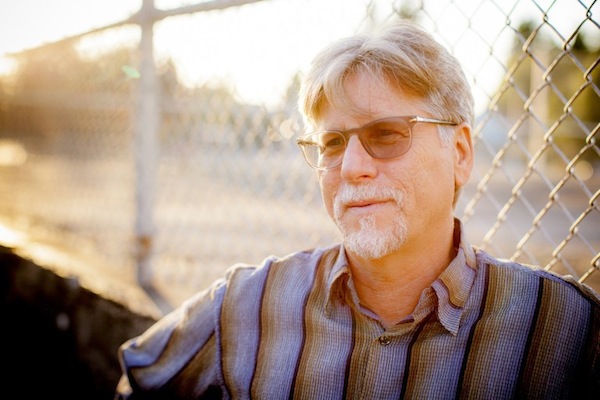
Shepherd Siegel, author of Disruptive Play. (photo by Laura Totten)

Shepherd Siegel is a hardcore idealist. At least, it would seem so, based on his book Disruptive Play: The Trickster in Politics and Culture (Wakdjunkaga Press, 2018).

“What if we didn’t take everything so seriously and capitulate to the competitions of war and business?” he writes. “What if we let our utopian dreams and desires out to play, out of the box? What if we did more than talk about it and constellated our lives around play and art instead of work and commerce?”

While all about play, Siegel’s 358-page analysis is more academic than whimsical. A writer, musician and educator, he earned his doctorate at University of California Berkeley and has more than 30 publications to his credit. Quickly into the book, he admits the inherent difficulties in writing on this topic: “By attempting to put play, an irrational activity, into the rational fictions of words, I fear that naming this magic will dispel it.” And, to some extent, it does, but his prose is clear and engaging; his examples well-explained and well-researched.

Siegel defines three types of play. Original play is what kids up to three years old do; it has no purpose except fun, it is spontaneous and creates a sense of belonging. Cultural play entails games with winners and losers; it involves learning skills through practise, it comprises rules and moral lessons. Disruptive play “disrupts the normal functioning of society”; it is “resistance to contest-based society and a public affirmation of the natural play element that pervades all life.”

Disruptive players – or tricksters – have existed throughout history, in both oral and writing-based cultures. Siegel gives some 25 examples, beginning with the trickster Wakdjunkaga, whose precise origins are unknown, but whose story comes from the Winnebago (or Ho-Chungra) tribe, “which emerged in northwestern Kentucky in roughly 500 BC. From 500 AD and for about a thousand years, they lived in what is now Wisconsin.” He ends with the Yes Men: “Jacques Servin and Igor Vamos are known by many aliases, but they are Andy Bichlbaum and Mike Bonanno when they are the Yes Men,” and they operate under the motto, “Lies can expose truth,” using guerilla theatre and other tactics, Siegel writes, to “embarrass and proclaim the sins of those who would wage unjust wars, destroy the environment, or cause the suffering and death of other people.”

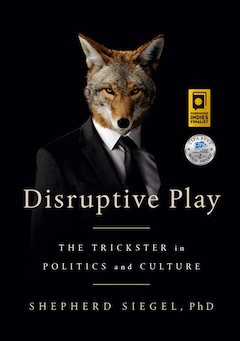
image - Disruptive Play book coverSiegel discusses in depth several trickster tales from various parts of the world. He analyzes King Lear’s Fool, Bugs Bunny and The Simpsons in this context, as well as real people, such as Alfred Jarry, Marcel Duchamp, Andy Kaufman, Abbie Hoffman and others, and movements like dadaism in art, the Beat Generation in literature and rock and roll in music. He also offers a couple of models on which a play society could be based: the Fremont Solstice Parade in Seattle and Burning Man in Nevada.

While acknowledging that there are many problems in the world, Siegel foresees a time when society will be able to meet all of its members’ basic needs. When this time comes, he writes, “the greatest remaining problem will be one of establishing and maintaining societies of trust. Play, as we shall see, absolutely requires trust in order to thrive, even to exist.” However, until that time comes, disruptive play – which threatens power brokers and structures – is a dangerous venture.

“Playful adults, artists, the poor, people with disabilities and deviators are all sent to the margins,” writes Siegel. “From the 17th-century development of military tactics and the industrial revolution of the 18th century came a more prescriptive sense of the normal and the suppression of carnival celebrations and urges … thus the binding of the Trickster spirit. The concentration of power, by its very nature, requires divesting this spirit, treating the Trickster as the Fool or court jester. But eventually the Fool makes fools of those who would constrain, punish and repress Trickster spirit.”

Unfortunately, while most of the tricksters Siegel highlights do indeed have their time in the sun and they manage, for awhile, to speak truth to power and get people to question their values and society’s direction, their lasting impact has been minimal, even if they themselves have proven memorable. The potential for building a play society – given Siegel’s convincing argument that capitalism or commercialism and play are antithetical – is a long shot. The models of Fremont and Burning Man are small-scale, time-bound events and do not seem feasible as models for society as a whole, for any length of time.

That said, Siegel’s is an exciting vision. “As (and if) our society achieves economic, environmental and social balance, the search for a meaningful life will take on greater importance and become more complex,” he writes. In this utopia, play, which “has meaning but not purpose … is the perfect antidote for existential crisis in a world of questionable purposes. Only by entering a state that discards purpose – that plays – might our true purpose be discovered.”

Format ImagePosted on March 6, 2020March 4, 2020Author Cynthia RamsayCategories BooksTags culture, disruptive play, mythology, Shepherd Siegel, storytelling, trickster
God and America

God and America

Michael Medved’s latest book is God’s Hand on America: Divine Providence in the Modern Era. (photo from Michael Medved)

Most of us would call them close calls or dumb luck – the many things in American history that could have gone terribly wrong, but didn’t. But Michael Medved firmly believes they weren’t merely happy accidents; rather, they were a direct result of God’s guidance.

Medved’s God’s Hand on America: Divine Providence in the Modern Era (Crown Forum) is a chronological sequel to 2016’s American Miracle (Crown Forum), a book that began with the pilgrims in 1620 and ends with Lincoln’s assassination, on April 14, 1865. They share a common theme, he said: “Divine intervention is extraordinarily obvious and important in tracing the course of American history.”

Story after story, Medved builds the case that there are solid “arguments for divine providence in the rise to power, and continued power and prosperity, of the United States.” President Theodore Roosevelt, for example, was shot in the chest but a folded speech in his jacket pocket took the bullet.

In another of many examples, a seemingly lucky moment came during the Battle of Midway, in June 1942. U.S. planes had gotten lost over the Pacific Ocean but, just in time, they suddenly found their way back, to dive bomb Japan’s fleet. History, said Medved, regarded this as a huge blow to the Japanese – at a time when the Americans and British had, up until that point, faced setback after setback, loss after loss, and were struggling to make advances in the Pacific.

“Fate, destiny, providence and the United States is a complicated process. It doesn’t mean America only wins, but it does mean that it’s safe to say that Lincoln, Washington, the Roosevelts, were right; Kennedy and Eisenhower were right; that America has been used as an instrument, or vehicle, for grand purposes by a Higher Power,” noted the Jewish syndicated radio host, whose daily program reaches more than five million listeners, across 300 stations. Medved is also author of 12 other books, including bestsellers The 10 Big Lies About America and Hollywood vs. America.

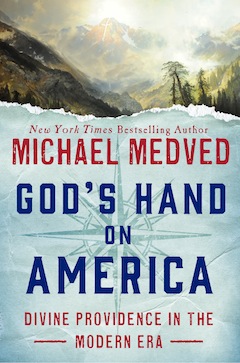
image - God’s Hand on America book coverHis thesis isn’t out of the blue, either – since the first landings, ordinary Americans and their leaders have believed that God helped in their nation’s successes, said Medved. For people of faith, it was the most reasonable explanation for the seemingly inexplicable. Their Bible-centred view carried over to an appreciation of Jews, he added, at a time when there were few Jews in the United State, i.e. until the 19th century.

They recognized, he said, “the special place the Jewish people had in America,” especially conscious of the verse in Genesis, which says that anyone who blessed the Jews would be blessed, and anyone who cursed the Jews would be cursed. These beliefs were exhibited in many ways, such as the Hebrew words on the seal at Yale, Urim and Thummim, elements of the ancient high priest’s breastplate, used for obtaining oracles; and the seal of Dartmouth College, which has El Shaddai (God) in Hebrew.

Early colonizers even identified themselves as being “like the Israelites who have crossed a perilous ocean to come to the land that was promised,” said Medved. “That identification of Puritans [goes] all the way back to the founding of New England in the 1630s.… They described themselves as ‘New Testament Hebrews.’ The identification with the Jewish people was very profound.”

While at Princeton, then-future president James Madison’s concentration of study was Hebrew, said Medved. Later in history, Harry Truman formally recognized Israel, minutes after it was declared a country. And then there was Richard Nixon’s military aid to Israel during the 1973 Yom Kippur War – quite unexpected, said Medved, given the recordings that surfaced of Nixon using insulting epithets against Jews. According to Medved, Nixon’s gesture of goodwill, though not mentioned in the book, saved the Jewish state from annihilation.

Dave Gordon is a Toronto-based freelance writer whose work has appeared in more than 100 publications around the world.

Format ImagePosted on March 6, 2020March 4, 2020Author Dave GordonCategories BooksTags God, history, Judaism, Michael Medved

Words of praise for libraries

We have a lot of interesting Jewish educational opportunities in Winnipeg, where I live. If you made a big effort, you could be busy learning, attending lectures, events and classes much of the time. It might be possible to find something to do nearly every day of the week, but most of us don’t or can’t.

Maybe you can’t get out due to health issues or because you’re the caretaker for others. Perhaps it’s just too dark and cold right now, and you aren’t all that keen about going out after dinner. (I hear you!) There are many reasons to say no, we can’t manage something.

The last few weeks, I’ve found myself in this situation. Someone in my household got sick, or I did. The weather was just too cold. I wanted to hibernate. I wasn’t sure the car would start or the event cost too much or … you get the picture.

However, I found a solution that has really enriched this season. There were some books on Jewish topics that friends suggested online, and even a book written by someone I knew. I couldn’t afford to buy them all, nor did I know yet that I wanted to own them. This is where the public library is an amazing resource. I had all the books delivered to one library, where they sat on the holds shelf with my last name on them.

When I checked them out, I worried that I would not be able to finish them in time. Maybe I was being overambitious. Not to worry, it turns out. Most of the books were finished long before they were due – they were that good.

What were they? Well, now that I’ve read these books, I’m happy to make a couple recommendations! The first was Sacred Treasure – The Cairo Genizah: The Amazing Discoveries of Forgotten Jewish History in an Egyptian Synagogue Attic. Genizahs are where some Jewish communities stored their old (both holy and mundane) documents for many centuries. Written by Rabbi Mark Glickman, who I studied with at summer camp as a teenager, this book was the Jewish equivalent to an Indiana Jones story. I love reading about Jewish social history and, to be honest, it made Shabbat and several sick days absolutely a joy. I told all my friends I was geeking out on the genizah book!

The second book I loved was The Unorthodox Match by Naomi Ragen. Ragen is a beloved American-Israeli novelist, and this book didn’t let me down. It was both a love story and a realistic account of how some Chassidic and ultra-Orthodox communities operate. There’s a great divide. These groups both encourage ba’alei teshuvah (those who “return” to more traditional Judaism), but they also ostracize them, as not being the same as those who were raised from birth in these communities. The novel emphasizes the differences between what Judaism teaches about accepting converts and strangers and how communities actually act, sometimes alienating those who seek to be included.

After reading these books, I was struck by how I was able to enrich my Jewish learning simply by using the library and the couch when it was so cold out. Yet, if cities like mine cannot figure out their finances, it’s possible that some of our public libraries (along with wading pools, swimming pools, arenas, etc.) will soon be closed due to budget cuts.

We can choose to read at home and learn more about Jewish topics this way, but only if the public libraries remain open and they can afford to buy these books. We may complain about our taxes, but we are given a great gift when we can access these literary “riches” for free.

Canadian winters are long. I count myself lucky that, when I couldn’t go out, I was able to sit by the fire and read and learn this winter. If we want that learning option to be available, we all have to commit to doing our share to keep libraries (and all the other benefits of a tax-paying society) open and thriving.

Joanne Seiff has written regularly for CBC Manitoba and various Jewish publications. She is the author of three books, including From the Outside In: Jewish Post Columns 2015-2016, a collection of essays available for digital download or as a paperback from Amazon. Check her out on Instagram @yrnspinner or at joanneseiff.blogspot.com.

Posted on March 6, 2020March 4, 2020Author Joanne SeiffCategories Op-EdTags books, education, geniza, history, libraries, lifestyle, Mark Glickman, Naomi Ragen
Symbolic treats for Purim

Symbolic treats for Purim

While hamantashen are one of the most known Ashkenazi treats, many other foods are associated with Purim. (photo by Rebecca Siegel)

In the Book of Esther, all we are told is that letters were sent to the Jews in the provinces, telling them to have days of feasting and gladness. Fourth-century scholar Rava interpreted this to mean a seudat Purim, a meal in the late afternoon, to differentiate Purim from other days.

There are no rituals attached to the seudah, and no special Kiddush is said, though some people make up a Purim Kiddush, which is nonsense or a parody on something in the Torah.

Kalonymos ben Kalonymos, a French writer, philosopher and translator who lived in the 13th and 14th centuries, wrote a parody of a talmudic tractate, called Masekhet Purim, citing 30 different dishes to eat on Purim. He included chestnuts, duck, venison, goose and pigeon.

One custom, particularly of Jews of Middle Eastern backgrounds but also of some Ashkenazim, is to serve dishes with chickpeas on Purim. Why is this done? They say, in order to remind us that, to keep kosher, Esther lived on vegetables, notably beans and peas.

Another custom, according to the late Gil Marks in the Encyclopedia of Jewish Food, is to eat turkey, because Europeans had thought the bird came from India and the Book of Esther says Ahasuerus ruled from India to Kush. The Hebrew word for India, the country, and turkey, the animal, is hodu. Another idea is that the turkey bird is very foolish, and so was Ahasuerus.

Some people also serve kreplach, the triangular-shaped, meat-filled, savoury pastry on Purim. They do so because the meat inside is prepared by chopping, which is a form of “beating,” akin to the stamping of feet on the floor to drown out Haman’s name.

In the 17th century, European Jews made a dish called megillah kroyt, consisting of sauerkraut, raisins and honey. A stringy dish, it symbolized the rope used to hang Haman.

In her book Quiches, Kugels and Couscous, on Jewish cooking in France, Joan Nathan writes that Jews of Alsace made Alsatian Chouroute, sauerkraut with sausage and corned beef, because the sausage hangs in butcher shops and reminds them of Haman. The Alsatians also call the corned beef “the Haman.”

At the actual seudah, Marks says that Ashkenazim often serve koyletsh, or keylitsh in Russian – a long, braided challah symbolizing the rope on which Haman was hanged. Other Ashkenazi dishes include kreplach in chicken soup, knishes, pirogen (filled, boiled, pasta dumplings), stuffed roast chicken or veal breast, stuffed cabbage, and tzimmes.

Some Sephardim serve breads or foulares (pastries filled with long-cooked eggs), sambusak (meat turnovers), stewed chicken, and rice with chickpeas or nuts.

According to Encyclopedia of Jewish Food, because the name of G-d is not mentioned in the Book of Esther, “the sense of the mysterious and hidden extends even to the food.” In other words, we cannot see the fillings inside and that alludes to “the many intrigues, secrets and surprises unfolding in the Purim story.”

The sweets served on Purim symbolize a good “lot” and a sweet future. In fact, Muslims refer to Purim as Id-al-Sukkar, the Sugar Holiday.

The most important aspect of many Purim pastries is their shape. Most Ashkenazi Jews only know of hamantashen, the name for which comes from the German mohn (meaning poppy seeds) and taschen (referring to pockets). Some say the pockets refer to Haman, who stuffed his pockets with bribe money.

The original name was mohntaschen, and the tradition of eating them may date back as far as the 12th century. Shmil Holland, the Israeli historian, caterer and cook, says, when Jews fled Germany for Eastern Europe in the late Middle Ages, they took the poppy seed pastry with them and added the Yiddish prefix “ha,” thus making it hamantash. The Midrash, however, says, while reflecting on his plan to get rid of the Jews, Haman realized the three Patriarchs would intercede. Thus, the pastry is triangular in shape.

Sybil Kaplan is a journalist, lecturer, book reviewer and food writer in Jerusalem. She created and leads the weekly English-language Shuk Walks in Machane Yehuda, she has compiled and edited nine kosher cookbooks, and is the author of Witness to History: Ten Years as a Woman Journalist in Israel.

Format ImagePosted on March 6, 2020March 4, 2020Author Sybil KaplanCategories Celebrating the HolidaysTags food, hamantashen, Judaism, Purim
Why groggers on Purim?

Why groggers on Purim?

(photo from ajudaica.com)

One of the most popular customs for Purim is to drown out the name of the villain, Haman, with a noisemaker. In Hebrew, it is called a ra’ashan; in Yiddish, it is a grogger, which comes from the Polish word for rattle.

The origin of this custom comes from the Book of Exodus 17:4: “For I will utterly blot out the remembrance of Amalek from under the Heavens.” Haman’s ancestors were Amalekites.

While the custom of using a noisemaker during the reading of the Megillah is more recent among Sephardi Jews, some form of grogger has been used primarily among Ashkenazi Jews since the Middle Ages.

There are records that children in ninth-century France and Germany used groggers on Purim. They took flat stones or wooden paddles on which Haman’s name was inscribed and beat them together when Haman’s name was mentioned in the reading of Megillat Ester. It was also popular to write Haman’s name on the soles of their shoes and then stamp their feet when his name was read, thus erasing his name.

Today, the traditional grogger looks like the Hebrew letter dalet, a horizontal piece made of wood or metal with a rotating cylinder or tongue attached to a vertical handle, which, when turned, makes noise.

One also finds groggers decorated with illustrations from the Book of Esther, plastic groggers with clapping hands, and designs in wood and metal. Schoolchildren often make their own containers of paper or metal and then fill them with beans, so that, when they are shaken, they make noise.

Whatever grogger you use for Purim, just make sure you do it loud and often, for, in each generation, a Haman has arisen to live among us!

Sybil Kaplan is a journalist, lecturer, book reviewer and food writer in Jerusalem. She created and leads the weekly English-language Shuk Walks in Machane Yehuda, she has compiled and edited nine kosher cookbooks, and is the author of Witness to History: Ten Years as a Woman Journalist in Israel.

Format ImagePosted on March 6, 2020March 4, 2020Author Sybil KaplanCategories Celebrating the HolidaysTags grogger, history, Judaism, Purim

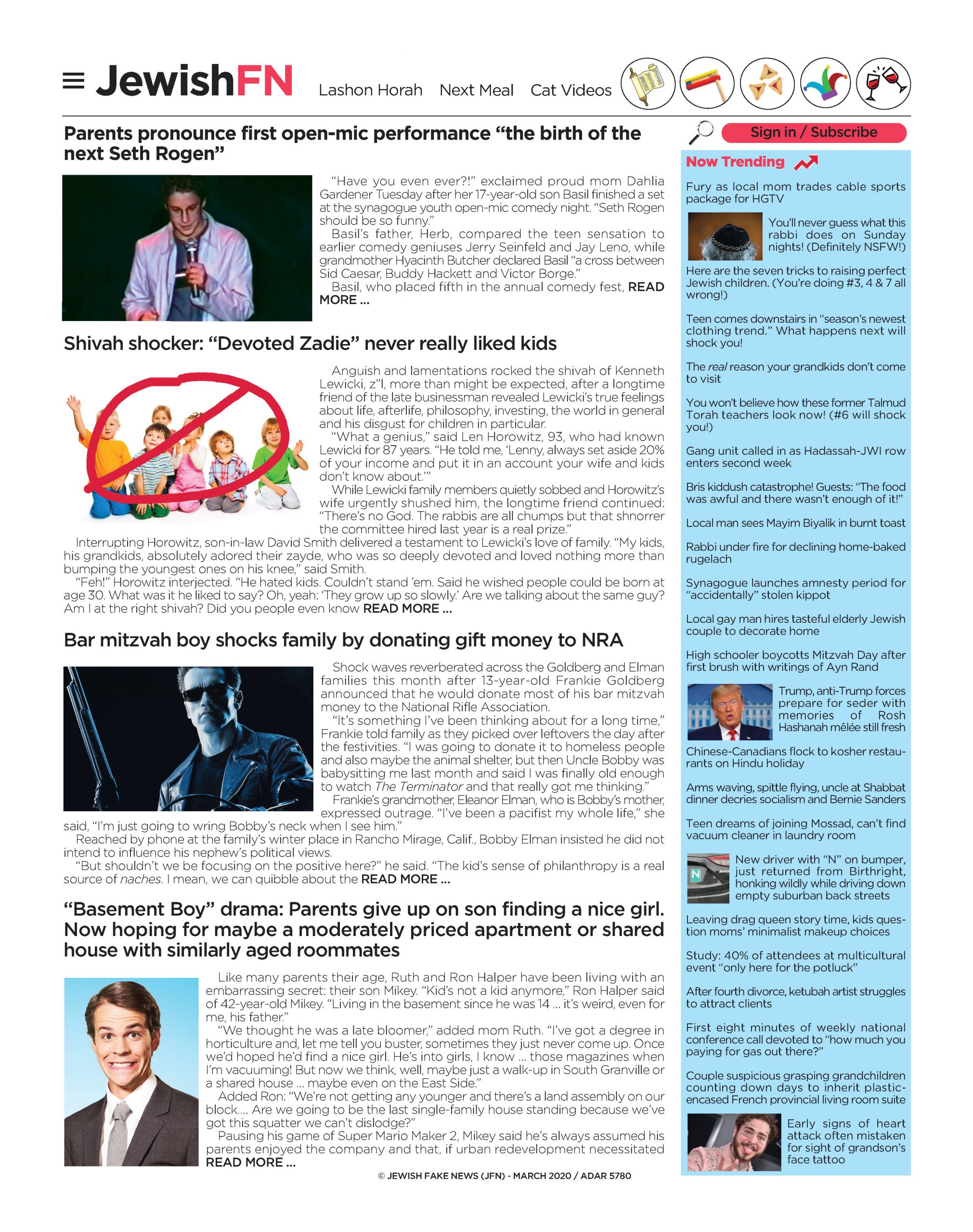
Happy Purim 2020!!

image - JI Purim Spoof 2020

Posted on March 6, 2020March 6, 2020Author The Editorial BoardCategories Celebrating the HolidaysTags clickbait, politics, Purim, satire
‘הקהילה היהודית בוונקובר ,חלק ב

‘הקהילה היהודית בוונקובר ,חלק ב

אלמוני מחוץ לאחת מחנויות החייטות של גברת אן סניידר, בערך 1915.

(מוזיאוןהעםהיהודי L.21938)

המזכיר הראשון של קהילת עמנואל היה אדוארד גולד. שנים רבות עמד בראשה שמואל גינצבורגר, יליד שוויץ, אשר הגיע לוונקובר באלף שמונה מאות שמונים ושבע. הוא עסק בנדל”ן, עסקים וביטוח, ועוד בנעוריו סחר עם תושבים של קנדה בחוף השקט. גינצבורגר היה חבר מועצת העיר מערב ונקובר, וגם קונסול בשוויץ. אולם רק בשנת אלף תשע מאות שישים וחמש נוסדה בוונקובר קהילה רפורמית של ממש. עוד אישיות ראויה לציון היה השופט העליון שמואל דייויס שולץ, בן למשפחת חלוצים מוויקטוריה, קולומביה הבריטית. באלף תשע מאות וארבע עשרה נתמנה לשופט היהודי הראשון בקנדה, בבית המשפט המחוזי ונקובר.

בתחילת המאה העשרים האוכלוסייה היהודית בוונקובר הלכה וגדלה, בעיקר בשל הגירה מאירופה. כבר באותה שנה היו בוונקובר כמה משפחות יהודיות אמידות, אך רוב היהודים התפרנסו ממלאכות. כרבע מהם היו בתחום הביגוד: חייטים, מגהצים, מפעילי מכונות תפירה, ועוד. היו גם שענים, צורפים, בעלי חנויות, רוכלים. צמח גם מעמד צווארון לבן, בעיקר מנהלי חשבונות, ופקידים. הנשים היוו חלק חשוב מכוח העבודה. הן תרמו להכנסת המשפחה, הן בעבודה בעסקי בעליהן, הן כעובדות שכירות מחוץ לבית

שנת אלף תשע מאות ושבע נוסדה הקהילה האורתודוכסית הראשונה בוונקובר, בני יהודה. בית הכנסת בני יהודה (הראשון בעיר), נוסד ארבע שנים לאחר מכן בשכונת סטראטקונה. נשיא הקהילה הראשון היה זבולון פרנקס. הקהילה מנתה בעיקר מהגרים ממזרח אירופה. בית הכנסת הראשון היה מבנה עץ צנוע, ובשנת באלף תשע מאות עשרים ואחת הוחלף בבית כנסת שוחרי צדק, שהיה מבנה גדול יותר, לקהילה הצומחת. בהמשך נהפך לתאגיד בשם שוחרי צדק/חברה קדישא/בני ברית, אגודה לעזרה והגירה. ראש בית הכנסת שוחרי צדק במשך שלושים שנים היה רבי נתן מאיר פסטינסקי.

הקהילה הרפורמית, שחבריה גרו בעיקר באזור המערבי האמיד יותר של ונקובר, זנחו את הרעיון להקים בית כנסת נפרד, על מנת לשמור על אחדות הקהילה.”בית ישראל, הקהילה הקונסרבטיבית, נוסדה באלף תשע מאוןת שלושים ושתיים, ובית מדרש, של הקהילה החרדית ספרדית, נוסד אחד עשר שנים לאחר מכן.

תחילתו של החינוך היהודי הייתה צנועה, בית-ספר-ערב על יד בית הכנסת בני יהודה. באלף תשע מאות ושמונה עשרה התפתח לבית הספר היהודי של ונקובר, על יד בית הכנסת שוחרי צדק. באותה תקופה נוסד במערב ונקובר בית הספר של קהילת עמנואל. בית-הספר-ערב שלום עליכם, מוסד חילוני לקידום לשון היידיש ותרבותה, נפתח עשר שנים לאחר מכן, אך בסוף שנות השלושים נסגר, למרות מאמציה של האגודה היידית הסוציאליסטית מוטער פריין. את מקומו תפס בשנת אלף תשע מאות ארבעים וחמש בית הספר פרץ, שהוקדש לקידום אידיאלים הומניסטים וסוציאליסטים. ואילו בית הספר תלמוד תורה נפתח שלוש שנים לאחר מכן.

בשנות העשרים החלו לפעול בוונקובר ארגונים יהודיים חדשים, ביניהם מועצת נשים (החל מאלף תשע מאות עשרים ושש) ומרכז קהילתי במחוז פיירוויו (שנתיים לאחר מכן). השבועון ג’ואיש ווסטרן בולטין – שכיום נקרא הג’ואיש אינדפנדט התפרסם משנת אלף תשמע מאות ושלושים. למין ייסודה, דאגה הקהילה החדשה לייסד ארגוני סעד, צדקה ועזרה הדדית. האגודה להלוואה חפשית (אלף תשע מאות וחמש עשרה) ומשרד הקהילה היהודית ונקובר (תשע שנים לאחר מכן) היו ארגוני הצדקה הראשונים, לרווחתם הכלכלית והחברתית של המהגרים החדשים. אחרי אלף תשע מאות שלושים ושתיים, הועד המנהל הוא שתיאם את פעולות כל הגופים האלה, והיה אחראי גם על המרכז הקהילתי.

Format ImagePosted on March 4, 2020June 30, 2020Author Roni RachmaniCategories UncategorizedTags British Columbia, history, Jewish community, Jewish museum, JMABC, Vancouver, Victoria, וויקטוריה, וונקובר, מוזיאון העם היהודי, קהילה יהודית, קולומביה בריטית, תולדות

Posts pagination

Previous page Page 1 … Page 260 Page 261 Page 262 … Page 650 Next page
Proudly powered by WordPress