I don’t know what the reason is, but I note a change in my attitudes, ideas and emotional makeup. Could it be my advancing age, or was what I’m feeling always there, hidden under the impedimenta of getting through life?
We all start out, when getting on our feet, stumbling about – in choosing our direction, determining a focus, finally forging the path or paths that will be the ones we follow through most of our lives. Our background cannot help but be important in that process and, for some people, it is the essence of who they are. For me, I never felt it was of much matter.
These days, however, as I advance toward the final curtain, with a burgeoning altered perspective, I become more and more certain that I am all about what I was when I started. This may mean nothing to so many of you out there who have re-made yourselves into the images of what you wanted to be, rather than that what you were, but this seems to be the truth for me. I am extremely conscious of this because I had a spouse who totally remade herself into what she wanted to be by conscious effort, but I find now that that was not to be for me.
I know that I am being arbitrary by appropriating the “chicken soup” theme as an ethnocentric symbol of my Jewish background. Surely it is available and present in the culinary arrays offered by so many cultural groups. Nevertheless, I have seized on it because of what it means to me and to so many of my co-religionists. How often was it a centrepiece of the Sabbath meal, when chicken was the only meat offering even in a spare week’s diet, in the shtetl and on the tables of recently arrived immigrants in the “new world”?
For me, no matter how important the item was in the diet, making the sparse stretch so much further, it has a context for me that goes much further, even beyond its important role as “Jewish penicillin.” For me, it speaks of home and hearth. For me, it speaks of a mother’s love for her children, her family and her home. It speaks to me of taking something small and making it into something big that had ramifications for a person all of their lives.
For many us, our lives are shaped by the happenstance of our early experiences. Child psychologists can confirm that the impressions we absorb in our early days can have important implications for the people we become in our later years. I believe that one of the important things parents can offer their children is to provide evidence to them of unconditional love. We absorb that into the essence of our beings unconsciously and it can set us up well for life.
Chicken soup speaks to me of unconditional love. Whoever we are, whatever it is, that love can impart a sense of self-confidence that can otherwise take years of positive experience to generate. It can give us the strength to try, and fail, and try again and again until we succeed, or choose to move on.
For me, the humble chicken soup speaks of that unconditional love. For me, in the Jewish home of my upbringing, that was the message I received. So, now, after many decades of pursuing a life in nonsectarian environments – for the most part, a Jew among non-Jews – I trace back my capacity to arrive and thrive, to the original environment from which I drew my strength.
Am I being too ethnocentric? Surely, working in an environment that was much more merit-based than the one my grandfather and father were born into made an enormous difference? All too true! And yet, for me, I feel the difference of how I grew up.
Whatever your background, from where do you draw the drive that powers you through life? Mine leads back to chicken soup.
Max Roytenbergis a Vancouver-based poet, writer and blogger. His book Hero in My Own Eyes: Tripping a Life Fantastic is available from Amazon and other online booksellers.
Cookie + Kate’s creamy roasted carrot soup, as made by the Accidental Balabusta. (photo by Shelley Civkin)
Nothing screams for comfort food quite like a COVID-19 pandemic. And nothing spells comfort food quite like soup. So, while the spirit of sharing is upon me, I present to you: roasted carrot soup. I’d love to say I made the recipe up, but you know I’d be lying. Credit where credit is due, and all that. It’s a recipe by blogger Kate, who, along with her canine sidekick, Cookie, make up the duo Cookie + Kate. (Why the dog gets top billing, I don’t know. Maybe he’s the taste-tester?)
I suppose it was one of these endless pandemic days where I was stumped for dinner ideas and thought – soup. It’s filling, especially if you add a nice sourdough or baguette, and you don’t need to make a bunch of other stuff, really. A salad, maybe? Perfect for lazy cooks.
The Cookie + Kate recipe is easy, if time-consuming, but you won’t regret it, I promise. And it’s creamy and dreamy, with no dairy in it at all. Prosaic as it sounds, this soup is like hitting the culinary lottery. Don’t be put off by the multitude of instructions; it’s worth every single one. Being a lover of platitudes, you know what they say – the journey of a thousand miles begins with a single step.
CREAMY ROASTED CARROT SOUP
2 pounds carrots 3 tbsp extra-virgin olive oil, divided 3/4 tsp fine sea salt, divided 1 medium yellow onion, chopped 2 cloves minced garlic 1/2 tsp ground coriander 1/4 tsp ground cumin 4 cups chicken broth or vegetable broth 2 cups water 1 to 2 tbsp unsalted butter 1 to 1 1/2 tsp lemon juice, to taste freshly ground black pepper, to taste
Preheat oven to 400ºF. Line a large rimmed baking sheet with parchment paper.
Peel carrots then cut them on the diagonal so each piece is about a half-inch thick at the widest part.
Place carrots in a plastic bag with two tablespoons olive oil and half teaspoon salt. Massage them so all carrots are coated in oil. Arrange on the baking sheet in a single layer.
Roast carrots until they’re caramelized on the edges and easily pierced with a fork, 35 to 40 minutes, flipping halfway.
Once the carrots are almost done, warm the remaining one tablespoon olive oil in a soup pot over medium heat until shimmering. Add the onion and quarter teaspoon salt. Cook, stirring occasionally, until the onion is soft and turning translucent, five to seven minutes.
Add the garlic, coriander and cumin. Cook until fragrant while stirring constantly, about 30 seconds to one minute. Pour in the vegetable broth and water, while scraping up any browned bits on the bottom with a wooden spoon.
Add the roasted carrots to the pot once they’re cooked. Add the butter, lemon juice and pepper. Bring the mixture to a boil over high heat, then reduce the heat to maintain a gentle simmer. Cook for 15 minutes.
Once the soup is done cooking, remove the pot from the heat and let it cool for a few minutes. Then, carefully transfer the hot soup to a blender, working in batches if necessary. (Don’t fill past the maximum fill line.)
Blend until completely smooth. Add additional salt and pepper if necessary. It’s ready to serve.
Keeps well in the refrigerator, covered, for about four days, or for several months in the freezer. But, believe me, it won’t make it to the freezer.
APPLE RUM NOODLE KUGEL (Since it is mere weeks until Pesach, now is the time to get your kugel on. This one is a boozy take on the traditional apple noodle kugel. It’s sweet, slightly alcoholic and scrumptious.)
2 tbsp unsalted butter 3 large apples, peeled, cored and diced into 1/4” to 1/2” pieces 12 oz curly broad egg noodles 4 eggs 1/2 cup brown sugar 1 tsp vanilla extract 2 tbsp rum 1/2 tsp ground cinnamon
Preheat oven to 350ºF. Grease a 9”-by-13” baking dish.
Begin heating a large pot of water.
Melt one tablespoon butter over medium-high heat in a large skillet and add the apples. Cook, tossing in the pan, until they begin to colour and are slightly tender, about five minutes. Remove from heat.
When the water comes to a boil, add the noodles. Cook as per the package instructions, then drain through a colander and add them to the pan with the apples. Add the remaining tablespoon butter and toss together until the butter melts. Set aside to cool.
Beat the eggs in a large bowl. Add the sugar and beat together. Beat in the vanilla, rum and cinnamon.
Add the noodles and apples and fold everything together. Pour into the prepared baking dish.
Bake covered with foil, for approximately 20 minutes, then uncovered for the remaining 20-25 minutes, until the kugel is set and the sides are browned. If you like the noodles crispier on top, remove the foil a bit earlier. Allow to sit for at least 10 minutes before serving.
The rum makes it just a little naughty, and exceedingly rich-tasting. Definitely company-worthy. Not that we can have people over during a pandemic, but still. Like my father Sidney, alav hashalom, used to say: “I’m the most important company in my own home!” That, by the way, was his standard response whenever anyone asked him why he always used a linen napkin (even at breakfast). The fact was, the paper ones slipped off his lap, but never mind. He deserved the best.
When everything you need to know about 2020 (and 2021, so far) can be summed up by Velcro, Spandex, Zoom and facemasks, it’s nice to kick it up a notch just for, well, no good reason at all, except that you can. So, treat yourself to a little mid-week decadence and throw in that kugel rum. You might even want to indulge in a little shot glass of the stuff before dinner, just to round out the meal. Or not.
Shelley Civkin, aka the Accidental Balabusta, is a happily retired librarian and communications officer. For 17 years, she wrote a weekly book review column for the Richmond Review. She’s currently a freelance writer and volunteer.
While pasta and cheese casseroles are recorded as early as the 14th-century, the first modern recipe appeared in an English cookbook in 1770. The story is also told that President Thomas Jefferson and his chef brought the recipe to the United States from Europe in the 1790s, although it does not appear in a U.S. cookbook until 1824, with the unkosher boxed Kraft version appearing in 1937. British immigrants brought the recipe to Canada in 1845. The quintessential comfort food, here are a few of my favourite versions of mac and cheese.
MY BEST MACARONI AND CHEESE (I adapted this recipe from The Joy of Cooking, making it without breadcrumbs on top.)
4 cups macaroni 2 eggs 1 cup grated cheddar cheese 2/3 cup milk 1/4 cup margarine paprika to taste
Preheat oven to 350ºF. Grease a casserole.
Cook macaroni in boiled water for about 10 minutes and drain.
Add eggs, cheese, milk and margarine. Pour into greased casserole.
Melt margarine in a saucepan. Stir in flour to make a roux. Add pareve chicken soup, milk and nutmeg. Cook until thick.
Place one-third macaroni in a greased casserole. Sprinkle with one-third of cheese and one-third of sauce.
Make two more layers of macaroni, cheese and sauce. Bake for 20-25 minutes.
STOVETOP MACARONI AND CHEESE (This recipe is by California chef and restaurant owner Grace Parisi, in Food and Wine.)
1 tbsp unsalted butter 1 finely chopped onion 1 1/2 tsp tomato paste 1/2 tsp thyme 2 cups half-and-half salt and pepper to taste 3 cups elbow macaroni 1/4 cup shredded kosher Gruyere cheese 1/4 cup shredded kosher white cheddar cheese 1/4 cup shredded kosher Fontina cheese 1/4 cup grated kosher Parmesan cheese 2 tbsp Panko breadcrumbs
Boil water in a pot.
In a stovetop, ovenproof frying pan, melt butter and cook onion five minutes. Add tomato paste and thyme and cook one minute.
Add half-and-half and two cups hot water, reduce heat to a simmer. Add salt and pepper and macaroni and cook eight minutes.
Stir in a quarter cup boiling water, Gruyere, cheddar and Fontina cheeses. Cover and let stand two minutes, until cheeses are melted.
In a bowl, combine Parmesan cheese and Panko. Sprinkle over pasta. Place under broiler and broil two minutes or until golden.
Sybil Kaplanis a journalist, lecturer, book reviewer and food writer in Jerusalem. She created and leads the weekly English-language Shuk Walks in Machane Yehuda, she has compiled and edited nine kosher cookbooks, and is the author of Witness to History: Ten Years as a Woman Journalist in Israel.
Aaron Dewitt put the Feb. 12 issue of the Jewish Independent to good use on Purim – after reading it from cover to cover, we trust. (photo by Rahel Halabe)
כמעט שנה מאז התפרצה הקורונה, נראה כי ארה”ב וחלקים מאירופה מתחילים לצאת מהחשכה ומטפסים במעלה הדירוג החדש של בלומברג, שמבקש לבחון את האופן שבו מתמודדות 53 מדינות עם הנגיף.
למרות שבראש הכותרות בחלק ממדינות אלה, הופיעו בחודש האחרון בעיקר המאמצים שלהן בנושא החיסונים, ההתקדמות של חלק מהן במעלה הדירוג הושגה במידה רבה בזכות מאמצים משמעותיים יותר שננקטו על ידן בנושא חבישת מסיכת והותרת אזרחים בבתיהם. ארה”ב, מתכוננת להתאוששות כלכלית מהירה מהצפוי, ובדירוג פברואר של בלומברג זינקה המדינה שמונה מקומות לעבר המקום ה-27 ברשימה.
מי שממשיכה להוביל את הדירוג של בלומברג זה החודש הרביעי ברציפות היא ניו זילנד עם ציון של 77.6. בין היתר, הצליחה המדינה לשמור על הדירוג הגבוה היות ששמרה על הגבולות שלה סגורים במהלך פברואר, ביצעה ארבע עסקאות להשגת חיסונים והצליחה כמעט לחסל כליל את התפשטות הנגיף בקרבה.
במקום השני צועדת אוסטרליה, שעלתה מקום אחד בדירוג, וסינגפור במקום השלישי שירדה מקום אחד, ופינלנד במקום הרביעי שעלתה שלוש מקומות מהמקום השביעי. עוד בצמרת המדינות שמתמודדות בצורה הטובה ביותר עם הקורונה בעולם: נורווגיה במקום החמישי שעלתה מהמקום השישי, סין במקום השישי שירדה מקום אחד מהמקום השביעי, וטיוואן במקום השביעי שירדה שלושה מקומות מהמקום הרביעי. סוגרות את העשירייה הראשונה: דרום קוריאה במקום השמיני שעלתה ארבע מקומות, יפן במקום התשיעי שירדה בדירוג מקום אחד, ותאילנד במקום העשירי שעלתה ארבע מקומות. במקום האחד עשרה דנמרק, במקום התשיים עשרה קנדה, במקום השלוש עשרה הונג קונג ובמקום הארבעה עשרה ישראל עם ציון כולל של 59.6 והתקדמה מקום אחד מהמקום ה-15 – כמעט אך ורק בזכות מספר המתחסנים הגבוה. בפרמטר אחר שנבחן על ידי בלומברג – מספר מקרי הקורונה החודשי – ישראל צועדת בתחתית הרשימה עם 1,874 נדבקים בקורונה ל-100 אלף איש שנמדדו בחודש האחרון. רק פורטוגל (1,598 מקרים ל-100 אלף איש) וצ’כיה (2,156 מקרים ל-100 אלף איש) יותר גרועות ממנה. אחריה איחוד האמירויות במקום החמישה עשר, הודו במקום השישי עשרה ווערב הסעודית במקום השבעה עשר.
עורכי הדירוג כותבים כי “ישראל – המובילה העולמית בתחום החיסונים – מספקת הוכחה בעולם האמיתי לכך שחיסוני ה- mRNA הניסיוניים פועלים לא רק למניעת מקרי מוות אלא גם מאטים את קצב העברת הנגיף”. בבלומברג מציינים כי ישראל עלתה שלב אחד בדירוג למקום ה-14 “עם השקת החיסונים המהירה”, אף שזו עדיין לא השכיחה את גל המוטציה הבריטית שפוקד את המדינה ומדגים את הסכנה שהמוטציות ממשיכות להוות.
הדירוג מבוסס על פרמטרים שונים, ובכלל זה את מספר הנדבקים בקורונה בחודש האחרון ל-100 אלף איש, מספר המתים מקורונה בחודש האחרון ל-100 אלף איש, מספר המתים מהנגיף למיליון איש מתחילת המגפה, שיעור המאומתים העדכני בבדיקות קורונה, נגישות לחיסונים (שיעור האזרחים ששוריינו עבורם חיסונים), ומספר המתחסנים בפועל ל-100 תושבים.
עורכי הדירוג מציינים, בין היתר, כי כלכלות עשירות שהיו בעבר בתחתית הרשימה, כמו צרפת, בלגיה ואיטליה, טיפסו במעלה הדירוג מאז החלה לפרסם אותו בלומברג בנובמבר ודחקו מטה מדינות כמו דרום אפריקה ואינדונזיה. כעת השליש התחתון של הדירוג מורכב ממדינות מתפתחות באמריקה הלטינית ובאפריקה.
השליטה של מדינות עשירות באספקת החיסונים העולמית – שמנכ”ל ארגון הבריאות העולמי כינה כ”כישלון מוסרי קטסטרופלי – ככל הנראה תמנע ממדינות עניות להתקדם במעלה הדירוג בחודשים הקרובים. כך לדוגמה מקסיקו נותרה בתחתית הדירוג במקום ה-53, האחרונה בין כל המדינות שנבדקו.
The Vancouver Jewish Film Festival is set to go online March 4, and all the many offerings will be available until March 14. There are plenty of gems for viewers of varying tastes and ages, including a few Israeli films that seem to be nostalgic paeans to American comedies or kids’ movies of the 1960s and 1970s. But we start with romance.
The film Love in Suspenders opens with a wild car ride through Tel Aviv, as we are introduced to main character Tammy (Nitza Shaul) who drives like … well, an Israeli. When she backs into pedestrian Benno (Yehuda Barkan), this adorable slice-of-life gets rolling.
Her son Michael, a lawyer, warns that one more infraction will lead to the loss of her driver’s licence. Making nice with her victim (while continuing to argue it was his own carelessness that led to the mishap), Tammy begins what evolves into an innocent and unintentional courtship with Benno.
The luxurious seniors facility where Tammy lives is a hotbed of sexual tension – with lectures on the wonders of Viagra, a supporting character in the film that really should have received its own credit.
Tammy venerates her late husband Yoni in ways that probably exceed what would be considered normal grieving. Hanging on to her glorious past – Tammy and Yoni were a musical duo that toured Israel and abroad – versus facing an exciting but unnerving new romance is the conflict that drives her character.
Benno’s character is driven by all sorts of unnerving situations. Benno’s got his own problems with the next generation, but both he and Tammy handle their affairs like adults, despite being treated like children by their kids.
Michael’s horror at both his mother’s rekindled sex life and the uncertain provenance of the unkempt and possibly homeless Benno threatens to undermine the trajectory of their affection.
Kids aren’t the only interfering forces. The extravagant dining hall and luxurious hallways of the seniors home are brimming with prying eyes and wagging tongues. The roosters in the facility are put out that Tammy has scored a love interest from the outside, despite all their strutting and preening. The women in the building always seem to be nearby when Tammy’s male caller is coming or going from her apartment.
The title Love in Suspenders is a play on the phrase “Tuesdays in suspenders,” a program in which Israeli seniors get weekly discounts at venues like the cinema. The movie is an absolutely charming vignette of finding love at a later age and dealing with the impacts of a fresh future on a cherished past. It is a respectful treatment of older characters and their romantic explorations, which are topics too often treated shabbily by Hollywood and other depictions.
– PJ
***
Not one of us will be able to avoid death. Yet, despite its inevitability, few of us prepare for dying and most of us put the thought of it to the back of our minds, even as we mourn those who have died.
The hour-long documentary Dying Doesn’t Feel Like What I’m Doing is almost a must-see for anyone struggling with the reality of mortality. It is a caring portrait of Rachel Cowan’s 18-month journey from a cancer diagnosis (a brain tumour) to her passing. Along the way, we learn about how remarkable this human’s life was and how her impacts continue. However, while Cowan was successful by almost any measure, it is not only her accomplishments that are noteworthy, but her struggles and her finding of strength in love and gratitude at her most vulnerable, when she had every right to be bitter and selfish.
Cowan was a civil and women’s rights activist of some acclaim. She was married to Paul Cowan, a journalist for the The Village Voice, and theirs was a partnership that extended into work at times; she took incredible photographs for his stories, capturing on film the best and worst of humanity in a tumultuous era. The couple lived and fought for their beliefs and really did make the world a better place.
Paul died from leukemia in 1988, at 48 years old. Rachel had converted to Judaism earlier in their relationship, after his parents died in a horrific apartment fire. The tragedy spurred Paul to explore his Jewish roots and her to search for God and meaning, which led her to Judaism. She was studying to become a rabbi during the period that Paul was ill and she was ordained soon after his death. At that point, still deep in grief, she thought, “Now, what?” How possibly could she counsel others when she herself was so ungrounded. She decided, “Choose life.”
She not only chose life for herself, but for others. While working at the Nathan Cummings Foundation, she established the Jewish Healing Centre, after seeing how little Jewish community support Paul had had in palliative care. She also established other initiatives and wrote a book on wise aging. As the documentary begins, we see Rachel leading a meditation group, continuing her life’s work. The film’s title comes from a comment Rachel makes about nine months after her diagnosis: “I’m living my life. Dying doesn’t feel like what I’m doing.”
– CR
***
With a harrowing opening scene, A Starry Sky Above the Roman Ghetto begins an historical back and forth between the terrible past and the present. The intertwined timeframes and eventual plot twists remind the viewer that the past is not really past.
Roman high schooler Sofia (Bianca Panconi) finds a Second World War-era letter and photograph hidden in the lining of a flea market suitcase. Her curiosity piqued, she begins a quest to uncover the story behind the mystery, which forms the narrative of the film.
Bringing the artifacts to her schoolmates, who enthusiastically join in the sleuthing, Sofia and pals then recruit students from the neighbouring Jewish high school to join in the mystery-solving.
There is charm in the cross-cultural friendships and some minimal tension when the teens meet obstruction from their parents and teachers. But the film is generally simplistic, too often cutesy and frequently hammy.
Before they have even tracked down the basics of the historical mystery, the students decide to turn their quest into a play. The movie itself has the feel of a high school production, and the fresh-faced, upbeat teen spirit seems incongruous with the Holocaust narrative at the heart of both the theatre production and the film. Impediments are too easily overcome. Archival research eurekas far too effortlessly and speedily fall into place. (The way the characters manhandle historical documents would make an archivist recoil.) An ostensible Montague/Capulet hurdle to a pair of star-crossed lovers is resolved in the most facile manner imaginable. The ending is unbelievably tidy – unbelievable being the operative term.
Continuity and fidelity to peoplehood and identity are core themes, but even these are handled poorly. For example, a Jewish boy gives Sofia a convincing explanation for why he must date and marry only a Jewish girl, but the next day he apologizes, apparently deciding that maybe continuity isn’t as sacred as a little amorousness after all.
The resolution to the larger mystery falls very close to home for Sofia, whose own life is altered by her discovery. This outcome provides some justification for the girl’s otherwise inexplicably dogged devotion to unraveling the mystery. But the whole thing has more of a Scooby-Doo vibe than the solemn drama the film probably set out to create.
There is some eye candy in the form of Roman architecture, including parts of the city’s Jewish quarter, but it is perhaps a thwarted COVID-era wanderlust to blame for finding fault that the film is not more of a visual celebration of the eternal city.
There is some decent acting and there are enjoyable components to A Starry Sky Above the Roman Ghetto, but it is hard to sustain the premise of an historical mystery when every twist and turn is foreseeable long before the ostensibly bright students clue in.
– PJ
***
Fans of Airplane, Naked Gun and Austin Powers will settle right in with the ridiculous Israeli comedy Mossad. Upending the perception of the Israeli intelligence agency as one of the world’s greatest, the film centres on what must be Mossad’s most moronic agent.
The action begins with the kidnapping of the world’s foremost tech magnate, Jack Saterberg, while he visits Israel. (One doesn’t have to stretch the imagination much to conjure a mashup of Twitter’s Jack Dorsey and Facebook’s Mark Zuckerberg). It falls to Mossad operative Guy Moran (Tsahi Halevi) to team up with CIA agent Linda Harris (Efrat Dor) to confront the bad guys.
When Mossad hit Israeli theatres in 2019, it saw a box office-smashing open. It is an all-ages bit of entertainment, with slapstick buffoonery and sight gags – and not really a lot more. There is certainly plenty of violence, but it is exclusively of the cartoonish variety.
In addition to sight gags, smartass dialogue drives what there is of a direction to the story. “I’m a Mossad agent. Here’s my card,” Moran says. “It’s blank,” replies the recipient. “I’m a secret agent,” he says. Nyuk nyuk nyuk.
The kidnappers threaten to stop all cellphone service worldwide. When they offer a two-minute taste of the threat, global mayhem and violence ensue, underscoring the urgency of preventing the calamity. Suffice to say the only real tension in the 90 or so minutes comes from bracing for the next corny gag.
All the predictable scenarios are packed in – like a countdown clock to doomsday and other tenets of the genre – but in the most outlandish forms. Romance also figures, with Israeli-Israeli, Israeli-American and human-machine flirting adding spice and disorientation befitting a script that seems to view no joke as too absurd if there’s a chance of a laugh.
For a harmless multigenerational movie night, Mossad will deliver a few side-splitters and a lot of snickers.
– PJ
***
Hila Natanzon and Amir Tessler rebuild a derelict airplane in Sky Raiders.
Sky Raiders is pure family fun. In Hebrew with English subtitles, the audience needs to be old enough to read, but not even that well, as the action is pretty easy to follow. For the parents who may have watched The Love Bug when they were a kid, there will be a comforting sense of familiarity with Sky Raiders, though the historic plane that gets rebuilt in this movie isn’t anthropomorphized and the love story in this case is between the teens.
Yotam (Amir Tessler) is the new kid at school and has trouble fitting in. When he spots Noa (Hila Natanzon) playing soccer with a group of boys, and holding her own, he is smitten. He joins the game but soon requires medical attention for an asthma attack, having left his inhaler at home, despite his over-protective mother’s multiple reminders for him to take it with him; his father, a pilot, died a few years earlier in a plane crash. Noa has her own parental problems – her father, also a pilot, has dismissed her as, basically, “just a girl” – and her older brother bullies her.
The two teens share both the love of all things planes and flying, as well as parents who actively try to dissuade them from these loves. They find their father figure in the grumpy old man dubbed “Mad Morris” by the local kids, who, surprise, is a really nice guy, just sad and lonely.
When Yotam and Noa discover a Messerschmitt that had been left to rot in a plane cemetery, the two – with Morris’s help – set to restore it. And, not only to restore it so that it can sit in a museum, but so that it can actually be flown in the upcoming annual Yom Ha’atzmaut airshow.
With some cheesy CGI, young love conquering all, bullies put in their place, the ostracized taking front-stage, and happy parent-child reconciliations, Sky Raiders is Disney-esque and charming. Cue the music to swell, as the credits begin.
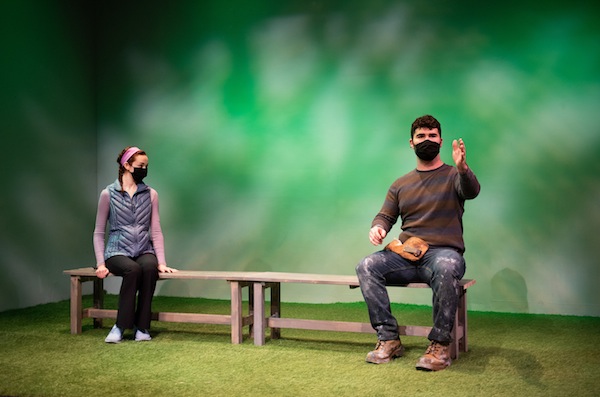
Katherine Matlashewski and Tanner Zerr in Fast Foward. (photo by Emily Cooper)
Since COVID-19, we have been learning how to relate to one another from a distance, as well as how to use the technologies, like Zoom, that have allowed us to retain a more personal connection than we could have if we had experienced the pandemic even a handful of years ago. While our reality seems stolen from the script of a futuristic sci-fi horror film, playwright Rosamund Small’s visions of love in the future and how technology affects it, TomorrowLove, are “hilarious, snappy, moving and refreshingly fun in these times,” according to Shekhar Paleja and Lauren Taylor, co-directors of Studio 58’s production of Small’s playlet collection.
Jewish community members Samantha Levy and Katherine Matlashewski are among the cast members of the production, which will be released online on Feb. 28 and available to watch individually or collectively until March 7.
Studio 58 is Langara College’s professional theatre training program, and this spring’s lineup – which TomorrowLove launches – is the first under the direction of Courtenay Dobbie. Both Levy and Matlashewski are in their second year of study.
“I was finishing up my first year when the pandemic began in earnest here,” Levy told the Independent. “COVID-19 has forced me to be more isolated from my school community through Zoom classes, but it has not taken away the care and dedication of my professors, or the support of my peers. We are still a family, even though we are distanced or online.”
It has become a hybrid program since the pandemic, with some classes online and others held in person with social distancing, said Matlashewski. “Since Studio 58 is a hands-on conservatory program, the transition to online studies was challenging at first,” she admitted. “The faculty and staff, however, have been extremely supportive during these uncertain times. They have all worked tirelessly to adapt our training while also prioritizing our safety.
“That being said,” she added, “as a result of COVID, students are now required to commute to and from the college quite a bit … [and] the hours of online Zoom classes are exhausting. Despite these challenges, I appreciate the continuation of our small in-person classes.”
Prior to her post-secondary training at Studio 58, Matlashewski appeared as Mopsy in King Arthur’s Court (Metro Theatre), where she received the Community Theatre Coalition Award for best supporting actress. Other select credits include Alana in Dear Evan Hansen (Laughing Matters), Luisa in The Fantasticks (Stage 43) and Little Red Riding Hood in Into the Woods: In Concert (Royal City Musical Theatre). Most recently, she was awarded the 2021 Cheryl Hutcherson Award by Applause! Musicals Society.
“I have been a part of the Vancouver theatre and dance community from a very young age,” said Matlashewski. “I feel incredibly blessed to live, create and play on the unceded territories of the Musqueam, Squamish and Tsleil-Waututh Nations.”
In TomorrowLove, Matlashewski said, “I have the pleasure of acting in the playlet called Fast Forward, alongside Tanner Zerr. This playlet explores themes of love, abandonment, age difference, time travel and the consequences that come with it.”
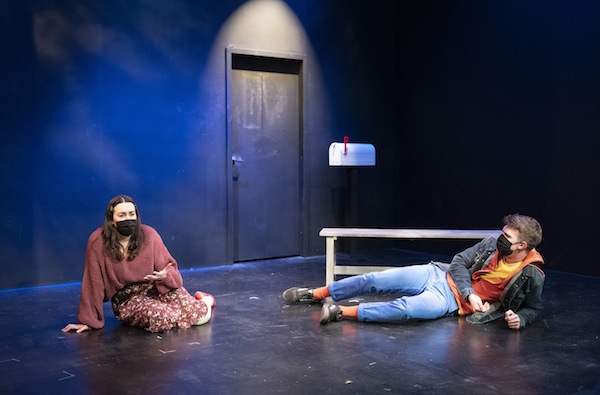
Levy plays the role of Jessie in the short play Take This Soul. “In Take This Soul, Jessie’s ex-partner, Rylan, shows up at her doorstep after having disappeared for four days,” explained Levy. “He tells an outlandish tale of an experiment in a distant country that has allowed him to return and present her with his literal soul.”
Samantha Levy and Riley Hardwick co-star in Take This Soul. (photo by Emily Cooper)
In addition to this Studio 58 production, Levy’s acting credits include Love, Loss and What I Wore (Centaur Theatre), Fancy Nancy: The Musical (Côte Saint-Luc Dramatic Society, Segal Centre) and It Shoulda Been You (Dora Wasserman Yiddish Theatre, Segal Centre). Her TV and film credits include Annedroids and 18 To Life.
“I’ve been performing since the age of 5, when my parents signed me up for an extracurricular theatre troupe in my hometown, Montreal,” said Levy. “Little did they know that I would fall in love with performing! Since then, I’ve acted on stage and on screen, trained at the Stratford Festival’s Theatre Arts Camp, and dabbled in directing both plays and musicals. Now, I am so thrilled my love of acting has led me to Studio 58!”
But the experience is not what it normally would be, of course.
“During the pandemic, the lovely production team has been working extra hard to keep us all safe,” said Levy, “and that includes managing our schedules closely to avoid contact between folks. So, I have come to value the time I have with others in person even more. When we are in person, we are also wearing masks and social distancing at all times. This often means coming up with innovative new ways to express ourselves without proximity or touch on stage, which has been a wonderful challenge. It is incredibly uplifting for me to have the privilege to be able to continue to create with others, be vulnerable and connect.”
Acknowledging that the “pandemic has been an emotional rollercoaster for everyone,” Matlashewski said, “One of the challenges that I have faced is navigating acting while wearing a mask. Prior to COVID, I did not realize how much I relied on the non-verbal cues and facial expressions of my scene partners. However, now that two-thirds of the human face is covered by a mask, I find that I have to listen more closely to fully understand my scene partner. With that in mind, we all have had to adjust and be patient with ourselves and others.
“My biggest take away from acting during COVID is the importance of human connection,” she continued. “We have had to find new ways to connect and communicate while maintaining physical distancing. During the rehearsal process of Fast Forward, I discovered how social distancing impacted my acting choices. Since I had to maintain a two-metre distance from my scene partner, each movement that I made on stage had to be carefully considered. Our fantastic director, Lauren Taylor, guided us through this process and helped specify our blocking.
“Although we are required to maintain physical distance and wear masks while we are acting, I am thankful that I get to act in person for my first mainstage show at Studio 58.”
Reflecting on her connections to Jewish community and culture, Matlashewski said, “Within Judaism, community is a value that is held with the highest importance. Although we cannot gather in person, I invite you all to find the light where you can and share it with those around you.”
For her part, Levy said, “As my parents are across the country in Montreal and my brother (he’s a doctor!) is in St. John’s, Jewish culture and art are an anchor to the family who love me. Seeing Jewish representation in art is healing and beautiful.”
She then added a “non-performance-related anecdote.”
“I walked into a Jewish bakery during Chanukah to get a few latkes,” said Levy, “and I left with tears in my eyes and a bag full of items I had not planned to buy.”
To see one or all 13 of the TomorrowLove playlets, visit studio58.ca.
The entire federal cabinet – save the foreign affairs minister – was absent Monday when the House of Commons unanimously voted to characterize the Chinese government’s treatment of its Muslim Uyghurs and other ethnic minorities in the northwest part of China as “genocide.”
In the absence of the prime minister and all his cabinet colleagues, Marc Garneau, the foreign minister, stood and declared, “I abstain on behalf of the Government of Canada.”
The vote was on a nonbinding resolution brought forward by the Conservative party and, ultimately, was supported by all parties, receiving a unanimous vote by those members in the house and participating remotely. An amendment, brought by the Bloc Quebecois, also passed, calling on the International Olympic Committee to move the games scheduled for Beijing in 2022 unless the genocide stops.
According to international law, genocide is the “intent to destroy, in whole or in part, a national, ethnical, racial or religious group.” The United States, at the tail end of the Trump regime, became the first country to name China’s behaviour genocide.
The Chinese government is perpetrating mass incarceration of millions of Uyghur Muslims and ethnic Kazakhs in northwestern China, operating concentration camps, separating families, committing forced sterilization, using slave labour and employing indoctrination apparently aimed at breaking the victims’ adherence to Islam and promoting obeisance to the communist regime.
The Chinese state barely disguises their intent, acknowledging that they are operating “re-education camps” or “counter-extremism centres.” An Australian study last year posited that there are 380 such facilities in the northwestern province of Xinjiang, where most of the 12 million Uyghurs live. The area produces a large proportion of the world’s cotton and the BBC has reported that an estimated 500,000 people are being employed in forced labour picking cotton. Some who have escaped the camps report physical and mental torture, including mass rape and sexual abuse.
An argument could – indeed should – be made that the use of the term “genocide” must be applied carefully in order to avoid diminishing the significance of the language. We have seen the misuse of the term applied to Israel. But there is a great difference between using caution out of respect for the magnitude of the allegation and avoiding the term out of some political expediency or fear of diplomatic retaliation.
Whether what is happening in China right now fits the definition of genocide as we understand it in contexts like the Holocaust, Darfur, Rwanda or Bosnia is not immaterial. But there can be no question that what is happening are crimes against humanity on a massive, blood-chilling scale. Censure of the most extraordinary sort is absolutely justified.
Of course, discretion plays a role. In every decision and position the government takes relating to foreign parties, there are multiple domestic, diplomatic and practical considerations. No country’s foreign policy is pristine or unsullied by what we might consider pure self-interest or unprincipled motives. Fears of repercussions are legitimate.
China is a bully. In response to Canada’s rightful arrest of Huawei executive Meng Wanzhou on a U.S. extradition request, the regime effectively kidnapped two Canadian citizens, Michael Kovrig and Michael Spavor, who have now been incarcerated for more than 800 days.
As we have said in the context of Canada’s support for Israel, elected officials should exercise immense caution in employing foreign policy as a wedge issue. Certainly there are legitimate differences of opinion among parties and individuals on various international topics.
Objectively, O’Toole and his party did the right thing. They were accompanied by MPs from all parties, including Liberal backbenchers. We would hope that the motion and the unanimous support is a symptom of a genuine Canadian commitment to fighting evil in the world. However, it is difficult not to see some partisan calculation at play. O’Toole and his party have been effective and vocal in raising the Uyghur issue (as well as other Chinese government atrocities and human rights abuses) for some time. By contrast, the Trudeau government has appeared to waffle, hemming and hawing over the definition of genocide and appearing reticent to offend the Chinese regime; their approach to China in general has been scattershot and incoherent.
It is within the realm of reason that the Conservatives saw a chance to embarrass and divide the Liberal government and took it. But the bigger issue is, even if the Conservatives were motivated by some hope of political gain, the Liberal government could have muted any such benefit by simply doing the right thing – as Liberal MPs and those of other parties did.
O’Toole, after the vote, decried an absence of leadership. Fair enough.
If the Canadian government has a reason to not characterize Chinese actions as genocide, we’d like to hear them. By simply refusing to show up, the Trudeau government did not take a stand on one of the crucial global issues of the day.
When a people is facing genocide, the very least the victims and Canadian citizens should expect is for Canada’s government to speak up. Too many times in history we have seen the consequences of silence.
I was talking to my mother on the phone when she told me about one of her committee projects. At her congregation in Virginia, there’s an outdoor space, in the woods. It’s used as a learning environment and sanctuary, with play space, too.
While it may be a charming and rustic foray into nature, it’s also something else. It’s inaccessible to those with disabilities. My mom described how a group home brought some of its residents to an outdoor service, only to discover that, in fact, the residents couldn’t attend, because they use wheelchairs. The trails, filled with rocks and tree roots, are too difficult for those wheelchairs to navigate.
My mom is on the “inclusion committee” at her synagogue. In part, she joined because she cares about everybody at her congregation. She wants to practise “audacious hospitality” and “radical inclusion.” The other part is more personal. My nephew uses a wheelchair. Of course, she wants to help him have a full and meaningful Jewish experience.
These bumpy trails are a physical barrier to inclusion. Our Jewish communities are full of physical barriers. These can be things like having only one staircase as an access point into a building – and no ramp. It can mean having no accessible bathroom, or no place for a mom to breastfeed. It could be lacking a way to invite a person in a wheelchair onto the pulpit, because there’s no ramp, or even no handrail for those who might not be stable on their feet.
Physical barriers aren’t just stairs, of course. What about large-print prayer books or documents that work with text-to-speech software for those who have visual impairments? What about an amplification system, sign-language interpreter or closed captioning for those with an audio disability?
Even beyond this, there are those whose differing abilities aren’t visible. Is there a quiet room available and unlocked for those who have sensory challenges? Many might need a break from loud music at a bar mitzvah or during a raucous Simchat Torah celebration. Is there a way that those who have mental health challenges or intellectual disabilities can be offered support if they need it while at a synagogue event?
February is Jewish Disability Awareness and Inclusion Month, or JDAIM. If this were a committee meeting, this is when, inevitably, someone would speak out. “Whoa,” this person might say. “We’re just a small congregation with limited funds. We simply can’t do all this. We can’t be all things for all people.”
This is the second barrier to break down. It’s an attitudinal barrier. When someone’s attitude gets in the way of helping practise radical inclusion, it stops us from meeting every Jewish person’s needs in the community. This attitude adjustment is necessary when, for example:
a baby starts to fuss and a parent works to quiet the baby and feed him,
a nonverbal person makes noises during services,
a person needs to stand or sit during services because of pain or disability when everyone else is doing the opposite,
a person who cannot hear turns to her spouse to ask, “What page are we on?” in that loud voice.
The list could be a mile long. I’ve seen somebody cast a fish-eye at every one of these people. Given how many of us struggle with disabilities, well, let’s just say it’s high time for a change in attitude.
To the person who says, “We’re a small congregation, we can’t do all this,” be ready to stand up and say, “Did you ever wonder why it’s such a small shul? This is why. This attitude. This inability to try and include everybody and to work to meet their needs.”
It doesn’t cost a lot to build a portable ramp for the bima (pulpit). Sometimes, funds can be raised in creative ways to fix physical barriers. What’s harder? Working to change our conscious and unconscious attitudes about disability and inclusion.
Disability will affect all of us or our loved ones at some point in our lives. Please, don’t wait until you break your leg to acknowledge this. It’s really important to bring JDAIM up, but it shouldn’t be a once-a-year discussion.
In the portion Yitro, which we read in synagogues at the beginning of February this year, G-d speaks to Moses and to all the people at once. They all hear the Ten Commandments together in Exodus 20:1-14. Rabbi Ana Bonnheim’s commentary on this portion uses the phrase “radical inclusion.” Moses prepares the people to hear from the Almighty, and they all receive this revelation together – each in his or her own way. Rabbi Bonnheim reminds us that inclusivity, this frequent repetition of “ha-am”, “the people,” is essential to Jewish tradition.
On Shavuot, when we gather again to hear the Ten Commandments, everyone is supposed to be there. If we want a Jewish gathering where everyone physically can be there, it’s time to start an inclusion committee, if your community doesn’t have one. If you already have that committee, remember the public relations campaign that must accompany any initiatives, so that attitudinal barriers change as well as physical ones. The truth is that, even if everyone can physically be present, if your community projects a bad attitude, those with disabilities won’t want to be there.
As for me, I received a “save the date” card for my nephew’s bar mitzvah recently. I cannot wait to see him, using his assistive speaking device, leading the service. Of course, there’s a closed border and a pandemic in the way, too, but their congregation works so hard to include everyone that I know that, in the worst-case scenario, I’ll be there virtually, through livestreaming. Jewish celebrations, like every other kind of Jewish gathering, are for all of us. That’s why inclusion matters.
Joanne Seiffhas written regularly for CBC Manitoba and various Jewish publications. She is the author of three books, including From the Outside In: Jewish Post Columns 2015-2016, a collection of essays available for digital download or as a paperback from Amazon. Check her out on Instagram @yrnspinner or at joanneseiff.blogspot.com.
Temple Sholom Sisterhood’s social action committee invited members of the community to broaden their understanding of who is Jewish and consider how expansive the community could be in the first of its Tikkun Atzmi Series: Healing Ourselves to Heal the World. The Feb. 4 Zoom event featured panelists Carmel Tanaka, a community engagement professional, and poet Angelica Poversky.
Tikkun atzmi, to repair oneself, is considered the first step on the path towards tikkun olam, repair of the world. Along the way, there are also tikkun bayit, strengthening the family, and tikkun kahal, healing the community.
Tikkun atzmi implies looking inwards and reflecting on what should be taking place within the Jewish community, particularly as it pertains to marginalized groups, such as people of colour, LGBTQ+ individuals and others who consider themselves distanced from the tribe. The past year, the organizers said, has highlighted “so many of the inequities that persist in our world.”
“Not only am I deeply invested in making our Judaism grounded in social justice any opportunity I get, I know and love many Jews who feel as though they didn’t have a home in the community and I am invested in changing that,” moderator Dalya Israel began.
Tanaka spoke about coming to terms with the descriptions that derive from being the child of a multi-racial marriage. Often, she would refer to herself as half-Jewish and half-Japanese. “It wasn’t until years later that I realized I am not half of anything – I am fully Jewish and fully Japanese-Canadian. I can be all of these things and celebrate all of these things,” she told the Zoom audience.
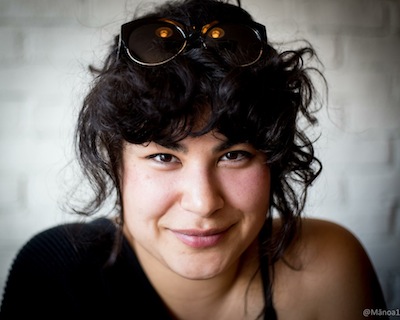
Carmel Tanaka (photo by Manoa1)
Tanaka recalled experiences of her time as director of the University of Victoria Hillel, where she encountered several students who felt alienated from the community because they were not halachically Jewish. Realizing that it can be traumatic for someone to be told they don’t belong in a group, she endeavoured to create a safe space at UVic for anyone who may be Jewish, Jew-ish or Jew-curious.
Poversky referenced the exclusion that some Jews within the LGBTQ+ community have endured. “It is horrible that people are not fully accepted,” they said. “What is our goal if not to uplift everyone? Why create barriers? Those feelings of persecution can be very painful, so why place them on others?”
The discussion touched on the causes for the limited presence of younger and/or marginalized people in synagogues and other areas of Jewish life. Tanaka recounted a story about her mother who, years ago, was told by a synagogue that she was welcome to come to services but was asked to leave her husband at home.
While attitudes may have improved since then, there is still much more room available for inclusion and diversity, said Tanaka. “I feel, in order for the term Jewish to be more expansive, it needs to expand far enough to be a safe space for anyone who wants to identify as Jewish,” she said.
Israel, citing Sarah Hurwitz’s 2019 book Here All Along: Finding Meaning, Spirituality and a Deeper Connection to Life – in Judaism (After Finally Choosing to Look There), put forward the notion that, instead of thinking of themselves as the “Chosen People,” Jews could be the “choosing people.”
“Every day, we wake and choose to be Jews, and the way we live our life,” Israel said.
“Community happens when we complete ourselves,” Poversky added. They spoke about moving away from “action-based” assumptions about Judaism or sexual identity and attaching more importance to the declaration of one’s identity. That is, one can say they are Jewish without the acts of celebrating Chanukah or reading Torah. Implicit in Poversky’s statement was the “restrictive construct” within institutions that defines or even “polices” the identity of another individual because that person belongs to a marginalized group.
Tanaka shared experiences of visiting synagogues and being asked about her name, her lineage and her proficiency in Hebrew. This line of questioning to Jews of colour and others, she believes, is what has caused people to distance themselves from the Jewish community.
“It is the dance of having to prove who you are through actions,” Tanaka explained. “It is what we call microaggressions. When you have this happen over and over again, it can be emotionally exhausting.”
Tanaka, a queer Jewpanese woman of colour, is founder of JQT Vancouver (pronounced “J-Cutie”), Vancouver’s Jewish queer trans nonprofit. She also leads a monthly Zoom call for Jewpanese and their families from all over the world.
Poversky is a queer non-binary Russian-Jewish poet who has more than seven years of facilitation experience. They’ve taught poetry workshops in schools, in libraries, with youth groups, in community centres, and at dozens of festivals across North America. Much of their activism has been devoted to queer and trans celebration.
The Sisterhood’s three Tikkun Atzmi panels are designed to fuel the action committee’s dedication to social justice. Future panels will invite participants to elucidate on ways of bringing awareness to systemic inequity and its impacts on the Jewish community. They will also delve into their Judaism and explore sacred teachings for guidance in caring for and making space for one another.
Sam Margolishas written for the Globe and Mail, the National Post, UPI and MSNBC.
***
To watch the entire Tikkun Atzmi panel discussion, click here (the passcode for the video is !*n?RC1s).