Skip to content
  • Home
  • Subscribe / donate
  • Events calendar
  • News
    • Local
    • National
    • Israel
    • World
    • עניין בחדשות
      A roundup of news in Canada and further afield, in Hebrew.
  • Opinion
    • From the JI
    • Op-Ed
  • Arts & Culture
    • Performing Arts
    • Music
    • Books
    • Visual Arts
    • TV & Film
  • Life
    • Celebrating the Holidays
    • Travel
    • The Daily Snooze
      Cartoons by Jacob Samuel
    • Mystery Photo
      Help the JI and JMABC fill in the gaps in our archives.
  • Community Links
    • Organizations, Etc.
    • Other News Sources & Blogs
    • Business Directory
  • FAQ
  • JI Chai Celebration
  • JI@88! video

Recent Posts

  • Sharing her testimony
  • Fall fight takes leap forward
  • The balancing of rights
  • Multiple Tony n’ Tina roles
  • Stories of trauma, resilience
  • Celebrate our culture
  • A responsibility to help
  • What wellness means at JCC
  • Together in mourning
  • Downhill after Trump?
  • Birth control even easier now
  • Eco-Sisters mentorship
  • Unexpected discoveries
  • Study’s results hopeful
  • Bad behaviour affects us all
  • Thankful for the police
  • UBC needs a wake-up call
  • Recalling a shining star
  • Sleep well …
  • BGU fosters startup culture
  • Photography and glass
  • Is it the end of an era?
  • Taking life a step at a time
  • Nakba exhibit biased
  • Film festival starts next week
  • Musical with heart and soul
  • Rabbi marks 13 years
  • Keeper of VTT’s history
  • Gala fêtes Infeld’s 20th
  • Building JWest together
  • Challah Mom comes to Vancouver
  • What to do about media bias
  • Education offers hope
  • Remembrance – a moral act
  • What makes us human
  • המלחמות של נתניהו וטראמפ

Archives

Follow @JewishIndie
image - The CJN - Visit Us Banner - 300x600 - 101625

Author: A Camper Parent

Reluctant kids loved camp

Reluctant kids loved camp

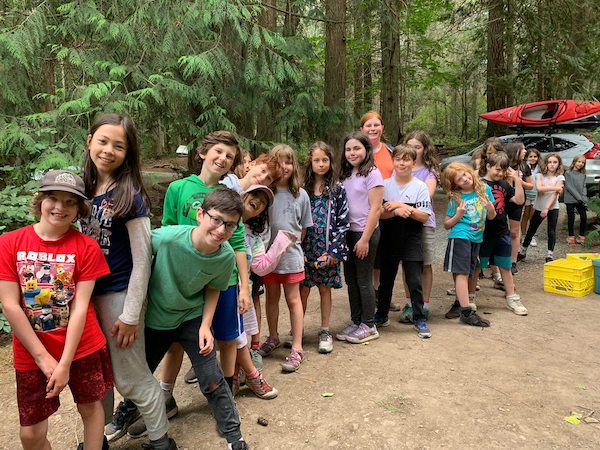
Generations of kids have “the best summer of their lives” at camp. (photo from Camp Miriam)

“There’s no way we are going to a Jewish camp,” my kids declared with absolute resolve. Wait. What? Why??? They explained that they knew “enough” Jewish people and plenty of culturally Jewish things, so camp was not necessary. OK, I thought, that’s completely, totally and utterly crazy.

While we’ve been involved at Temple Sholom for years, speak Hebrew at home and celebrate the holidays, my kids are the only Jewish kids in their classes at public school. They are often told they don’t look Jewish, let alone Sephardi. Whatever that means – there’s a huge span between Barbra Streisand and Ofra Haza. They weren’t excited about their identity, but begrudgingly went along with being Jewish. It was the equivalent of cultural, ethnic and faith feet dragging.

My disappointment couldn’t be missed because I literally said, “I’m so disappointed to hear you say that.” I thought guilt might move them – a powerful tool of every Jewish mother. They apologized. Yes. I was moving the needle. And then, they immediately asked me if they could go to a Christian horse camp. Nope. I failed, while concurrently being mortified. To be clear, I wasn’t horrified of considering a different faith camp, but because they are wildly allergic to horses. Who wants to be the parent that gets a phone call that their kids can’t handle equines? Not me. Too embarrassing.

Moreover, it was a complete reversal of my experience. I begged my parents to send me to a Jewish camp. I started going from the age of 10, eventually visiting Israel and managing to get a coveted staff position. My camp time was the most incredible and defining experience of my youth. I wished, hoped and prayed for my kids to have the same experience. They had shut down the idea, but before I wrote them off as blasphemers, I decided to let it sit and cook in their minds like a delicious shakshuka.
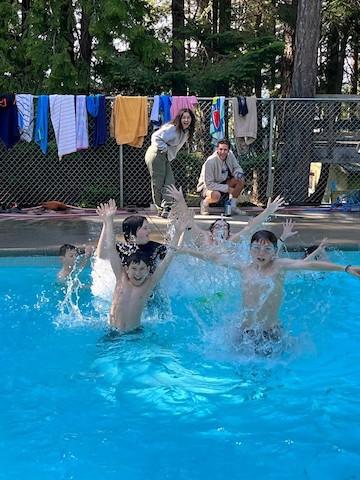
photo - kids in the pool at Camp Miriam
(photo from Camp Miriam)

For a couple of months, they pondered a tough year of COVID-19 shutting down so much of life – and the idea of being away for several weeks with a lot of independence became very appealing. They finally agreed to “let me send them” to Camp Miriam, which was very similar to the camp I went to back east. They diligently packed, were welcomed by friends at registration, got on the bus and did not look back. I got two postcards. The first informed me that they hadn’t been eaten by wild island dogs, and the second told me they were having the best summer of their lives.

The kids came back transformed both physically and figuratively. They both grew half a foot, and something in their psyche profoundly shifted. They loved, I do mean loved, all things Jewish because of Camp Miriam. They had a magical summer that every parent wishes their kid to have. A tight group of friends, a deep respect for their beloved staff and a passion for the programming. Frankly, they wouldn’t zip it about how much they adored Camp Miriam.

They bragged about doing avodah (work), one choosing garbage duty and the other cleaning the sherutim (bathrooms). Umm … what happened? I couldn’t get them to make their beds at home, and they were doing legitimate work at camp? It struck me. Camp Miriam had instilled a profound sense of pride. For weeks, and I do mean weeks, they would prompt a conversation with, “At Camp Miriam….” Some of their most profound moments were having Shabbat at the Point, feeling a deep connection of chevra (community) and telling me they felt understood for the first time. They didn’t have to explain themselves, and that was mind-blowing.
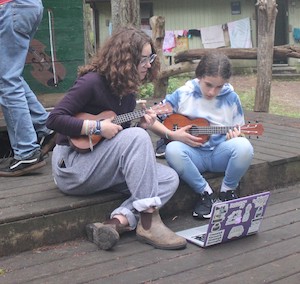
photo - two people playing guitars at Camp Miriam
(photo from Camp Miriam)

Going to Camp Miriam coalesced for my kids a sense of identity; they felt seen and heard, so could go deep into what this meant. We were able to have a shared generational experience, which was pretty awesome, considering my kids think electricity was barely invented when I was a kid. I corrected them and explained that the cutting-edge technology of faxing existed when I was a child.

Last week, I overheard them at Sunday Temple Sholom school bragging that Camp Miriam was the best camp ever. And there it is. My kids not only needed Jewish camp, but they also desperately wanted to be there. I feel utterly indebted to Camp Miriam for giving my kids such a brilliant and rich Jewish experience and, although I couldn’t say it to their faces, I was satisfied thinking, “Yes! In your faces. You suck. I was soooooo right about everything, and you were so unequivocally wrong.” Also, now I can breathe easy, knowing they can’t wait to go back to Camp Miriam and build a lifetime of memories and friendships.

– Courtesy Camp Miriam

Format ImagePosted on January 13, 2023January 11, 2023Author A Camper ParentCategories LocalTags Camp Miriam, children, identity, Jewish camp, Judaism, overnight camp, summer camp
An open letter to Camp BB

An open letter to Camp BB

Photos from camp captured kids’ joy and excitement while appeasing the anxious parents at home. (photo from Camp BB Riback)

Let me start by saying how grateful I am my son has returned from his first three-week camp experience clean, smiling and with a head full of exciting stories!! Thank you Stacy Shaikin, Jordyn Wright and the staff for making this first year back memorable.

Today, in the joyful chatter of the reunions with our kids, we feel it in our hearts and bones: Camp BB Riback must continue to survive and thrive in Alberta.

As my son unpacks his duffle bag, he unpacks his memories not yet knowing they will remain with him for a lifetime. It is a very special role Camp BB plays in our children’s lives, providing a summer full of social, physical and cultural experiences unique to the Jewish community.

Camp BB’s influence and lifelong impact on our kids individually and collectively informs the future of Jewish communities in our cities, province and beyond. I am grateful to have strong leadership in Stacy and a supportive board of directors from both Edmonton and Calgary, some of whom have given years of service.

I give props to the photographer who captured absolute joy and excitement while appeasing the anxious parents at home. I often found myself playing “Where’s Waldo?” – happily, searching for my kid in the background because he was busy living his best camp life … completely neglecting his duty to send a thumbs up or other such emoji so mom and dad could be OK! His actions in the background spoke louder than his hand signals ever could.

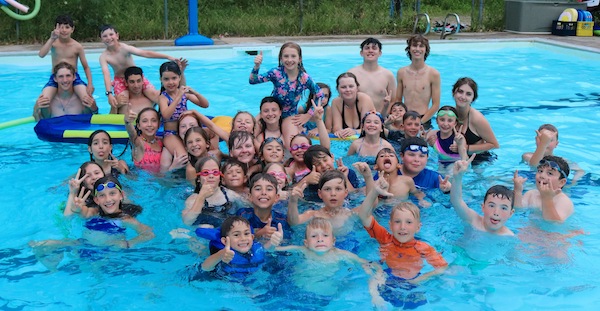
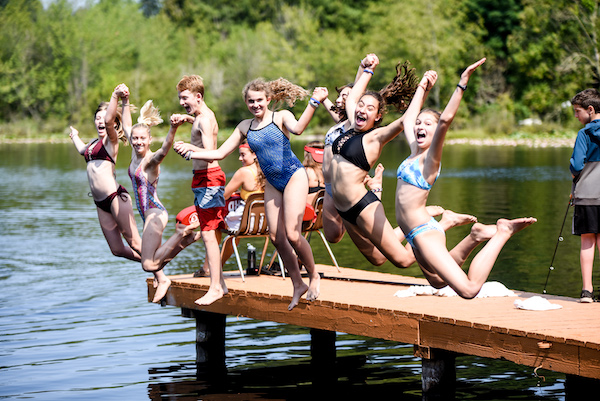
A highlight of the photo gallery was seeing the action in and around the newly refurbished pool. Stacy and the board worked tirelessly to fund that project during COVID. The dedication and generosity of everyone involved is translated onto the faces of every happy camper that leapt, dove, flipped, slipped and eased their way into that pool this summer and for every summer hereafter.

photo - kids at the pool at Camp BB Riback
(photo from Camp BB Riback)

We wouldn’t be enjoying the gallery photos or stories shared by our kids tonight if it weren’t for the extraordinary outpouring of generosity that kept Camp BB Riback’s doors open during the unprecedented two-year shut down. I had the privilege of serving on the board and stewardship committee during that time, working and witnessing the unity of our community as we championed to save Camp BB Riback – it was and continues to be an exhausting amount of work.

So, today, I hope we (camp parents and families) will find it in our hearts and budgets to donate right now to support the continued revitalization of old and outdated structures and fund new projects at camp.

photo - kids dancing at Camp BB Riback
(photo from Camp BB Riback)

My family’s favourite way to donate is through the monthly auto-donation subscription plan and the Skip the Depot program. It is a small amount each month for us that, over time, builds to a lasting impact at camp.

More importantly, I know, in my heart and bones, that through our regular support of camp we are building a legacy of philanthropy in our family so that, one day, when our kids are grown, they will support camp in their own way … and the cycle of nourishing our community, the Jewish community, continues.

Today please consider the gift of memories and lifelongfriendships (see what I did there?!) for future generations.

Thank you Camp BB Riback and everyone you have touched. Until next summer.

– Courtesy Camp BB Riback

Format ImagePosted on January 13, 2023January 11, 2023Author A Camper ParentCategories LocalTags Camp BB Riback, children, Jewish camp, Judaism, overnight camp, summer camp
Strong connection to Israel

Strong connection to Israel

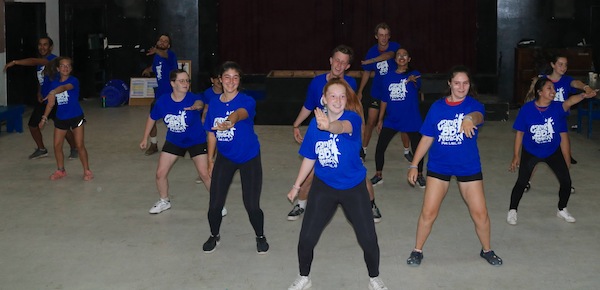
Counselors last summer learning the words and moves to Israeli pop music so they can teach the campers. (photo from Camp Hatikvah)

As Israel prepares to celebrate its 75th birthday, Camp Hatikvah looks back fondly at its long and meaningful connection to the Jewish state.

Established by members of the Young Judaea youth organization, Camp Hatikvah was Western Canada’s first Zionist summer camp. Developed in the aftermath of the Holocaust, Hatikvah was created to “produce proud, happy Jewish youth who were earnest and sincere in their beliefs” and committed to the rebuilding of the Jewish people and homeland. Activities offered included arts and crafts, drama, music, athletics, singing and dancing, but the basis of the program was designed around providing campers with a strong background and knowledge of Jewish and Zionist affairs.

One of the original goals of the camp was to promote aliyah and many of the camp’s participants have indeed gone on to join a kibbutz, study in Israel, serve in the Israel Defence Forces or raise their families in Israel. However, the camp leadership eventually realized that mass immigration was unlikely and began focusing on another important task – ensuring that Canadian Jewish youth truly understood the importance of the Jewish state and their role in nurturing and protecting it.

For campers of the 1950s, ’60s and ’70s, programming was focused around concepts of pioneering and perseverance. Israel was still so young and so vulnerable and participants united in their shared passion not only for its success but its survival. The counselors were impassioned leaders who created meaningful opportunities for learning. Education was key and advocacy was a responsibility.

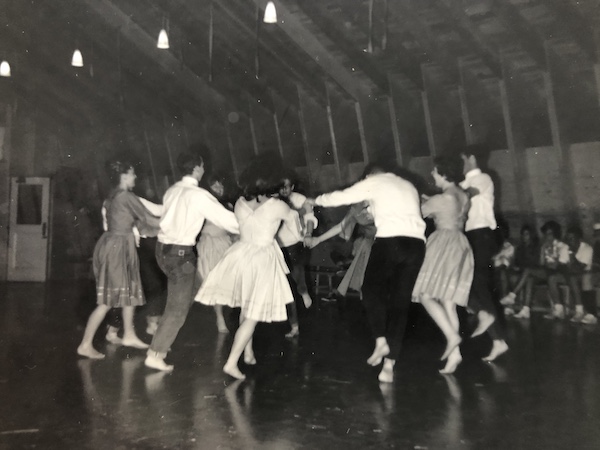
photo - Israeli dancing in the early 1960s at camp
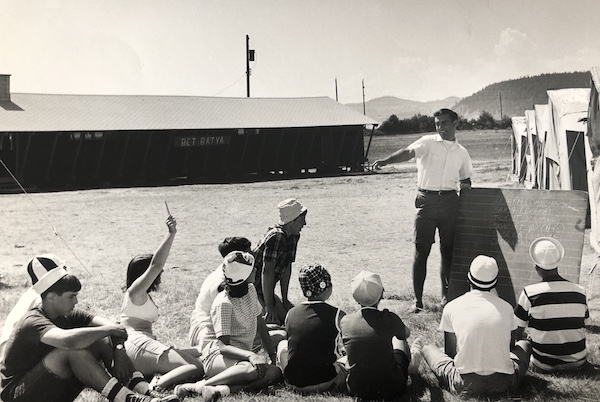
Israeli dancing in the early 1960s at camp. (photo from Camp Hatikvah)

By the 1980s, things were changing. The campers of that era were used to the idea of a strong Israel and much of the Jewish state’s impressive accomplishments felt like distant “history” to many of the young campers. This created a challenge for the camp but one to which they rose. Rather than sitting the campers down and lecturing them, Hatikvah used the uniqueness of the camp setting to provide active education. Field games were used to teach about geography, history and conflict, with campers learning a great deal without even knowing it (that’s the best kind of education).

The early 1990s were a time of great hope. With the Oslo Accords having been signed, it was an exciting time for Israel and for Hatikvah but, unfortunately, it was short-lived.

In the late 1990s and early 2000s, Israel was shaken by one horrendous terrorist attack after another. While our community stood in solidarity with our mishpachah (family) in Israel, many Hatikvah families were not comfortable sending their children on Biluim Israel, a sister program that runs an Israel experience for Hatikvah’s campers the summer before they become counselors. The result was that, for several years in a row, Hatikvah had very few counselors on staff who had ever been to Israel. This reality created a radical shift in the camp’s Israel education strategy.

Joanna Wasel, current board president, was the program director at Hatikvah at the time. She recalled, “since our participants were no longer going to Israel, we knew we had to bring Israel to them.”

The focus of Hatikvah’s Israel education shifted from the past to the present. While campers still learned about important historical figures and events, most of the programming began to focus on culture.

“It was important to us that our campers saw beyond what was in the news,” said Wasel. “We didn’t want them to think of Israel only in terms of conflict. We wanted them to see the beauty and uniqueness of this truly special and resilient country.”

photo - Campers in the early 1960s learning the Hebrew words for their activities
Campers in the early 1960s learning the Hebrew words for their activities. (photo from Camp Hatikvah)

Thankfully, the situation in Israel eventually stabilized and campers once again returned to Israel, bringing back their knowledge and passion when they became counselors the following year. But the affinity towards more modern Israel programming stuck, and the focus at the camp remains based on building bridges between Canadian and Israeli cultures.

“Friday nights at camp are amazing,” shared Liza Rozen-Delman, camp director. “After prayers and a traditional Shabbat dinner, our campers spend the evening dancing to Israeli pop music. It is incredible to see. They know all the words – which are in Hebrew – and the fun dances their peers in Israel are doing. It’s so natural and so beautiful.”

These programs are facilitated by young Israeli shlichim (emissaries), who continue to be an important part of Hatikvah’s program. “With the exception of 2022, when COVID restrictions were in place, Hatikvah has always had Israeli shlichim,” said Rozen-Delman. “The experience is so meaningful both for them and for us.

“Hatikvah was founded to promote the dream of an independent Jewish state and so it is really special for us, some 75 years later, not only to celebrate how far Israel has come but to also recognize how important our partnership was both then and now,” she concluded. “As we say at Camp Hatikvah, may they – and we – continue with chazak ve’ematz (strength and courage).”

– Courtesy Camp Hatikvah

Format ImagePosted on January 13, 2023January 11, 2023Author Camp HatikvahCategories LocalTags Camp Hatikvah, children, Jewish camp, Judaism, overnight camp, summer camp
Why we need summer camp

Why we need summer camp

Summer camp helps foster grit, creating space for kids to develop independence and author their own stories. (photo from URJ Camp Kalsman)

As a parent of three, I know how hard it is to balance the overwhelming desire to make sure my kids “have it all” – diverse extracurricular activities, best schools, quality family time, etc. – and, at the same time, to know when to let go (and actually do it!) so they can experience the power of paving their own way. Skinned knees, bruised egos, broken hearts and all.

As a summer camp director, I also know that parents like me are not alone. In fact, there is a whole army of incredibly kind and passionate young adult role models, often dressed up in silly costumes, ready to be my partner in this “gritty journey” of adolescence and the teenage years.

Ask anyone who grew up at overnight summer camp – Jewish or otherwise – and most will tell you it felt like their second home. At Camp Kalsman, where my children and I have spent the past six years, we welcome campers and staff members “home” each summer. But what does this really mean and why is this important for fostering grit in our kids and teens?

I’d argue that home, a place of true belonging, is prime real estate for failure, learning and growth – home is where grit is born. Often, when we think of home we think of being safe and protected, perhaps shielded from the real world. I would argue that home is more of a safety net, giving a child the reassurance that not only is failure OK but that, when they do ultimately fail at something, we’ll be there to catch them and help them bounce back, stronger and more resilient.

What are the top three reasons why you, as a parent, guardian or loving adult, need summer camp, too?

1. Creating space to deepen connection. I’m going to say something that might make some people uncomfortable – your kids need a break from you just as much as you need one from them. Camp gives you the chance to create that space, knowing that you have a trusted partner to create that same safety net for your child. Absence makes the heart grow fonder is a cliché and it’s also a deeply true statement. By creating (physical) space for a finite period of time, your child has the chance to broaden their perspective, test everything you’ve taught them, try something on their own and learn from other trusted adults. When a camper has a temporary moment of sadness at camp (sometimes referred to as homesickness), that feeling is validated – “how wonderful is it that you have such great folks at home who love you, believe you can do this and know you will be safe and cared for at camp?” Camp simultaneously builds a sense of self separate from the family unit and strengthens the roots of that family tree from afar.

photo - kid kayaking at Camp Kalsman
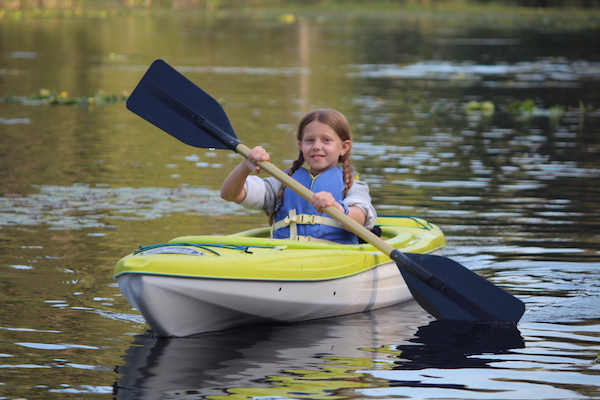
(photo from Camp Kalsman)

2. Declaration of independence. How often do you wish your kid would make their own lunch for school, make their bed without you asking, pick up those socks that have been next to the couch for what seems like days? At camp, where “nagging” parents are replaced with super-cool counselors who are the perfect combination of Julie Andrews and Dick Van Dyke from Mary Poppins, kids learn a sense of communal responsibility, pride in keeping their space clean, and come to understand how their action (or inaction) can have ripple effects on those around them. At the beginning of the summer, they will have contributed to creating a cabin covenant (at Camp Kalsman, we use the Hebrew term brit kehillah), a shared understanding, co-created by their bunkmates and counselors, about how they will live and play together for the camp session. Campers have to navigate social situations without adult or teacher intervention (those cool counselors are also trained in conflict-resolution and will help out, of course). The ownership children and teens feel about their time at camp helps foster confidence and self-awareness and helps calibrate their inner moral compass for when they return home and to school.

3. Sharing the stories. It may happen in the car-ride home, over that first “real-world” meal after so many days of camp food, or a few days after they get home and have had time to process, but your child might just freely and willingly tell you stories about the summer. It won’t be like their one-word answer when you ask about school. With their new-found independence and confidence (see #2!), they might tell you about the friends they made, the new food they tried, the counselor they loved, maybe even the silly dance they made up. And, after you’ve listened intently, controlling your need to ask 1,000 follow-up questions, and instead basking in their joy and nostalgia, you’ll say, “Wow, that sounds like one incredible summer!” You will have given your child the gift of summer camp, and they will have given you the gift of sharing in their joy and confidence and gratitude.

While there are many, many more reasons that we all need summers at camp (a second home), the combination of creating space, developing independence and authoring their own stories is, at its core, the secret sauce of raising a gritty and resilient generation of children, teens and parents!

Rabbi Ilana Mills is camp director, URJ Camp Kalsman. If you are interested in learning more about the camp, visit campkalsman.org or contact Rabbi Ilana at [email protected].

Format ImagePosted on January 13, 2023January 11, 2023Author Rabbi Ilana MillsCategories LocalTags children, identity, Jewish camp, Judaism, overnight camp, parenting, summer camp, URJ Camp Kalsman
Campers share their thoughts

Campers share their thoughts

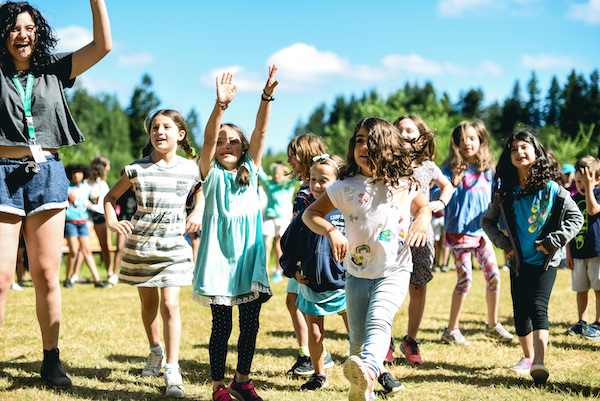
Making friends and challenging oneself are just two of the things kids love about summer camp. (photo from Camp Solomon Schechter)

Jewish camping can be an integral part of children’s lives and their development. Involving them in Jewish summer camps leads to brighter Jewish futures and a stronger Jewish community as a whole. Camp helps Jewish youth feel proud of their heritage and can lead to stronger friendships and relationships, campers finding their true passions, and discovering the joy in Jewish life. We spoke to several Camp Solomon Schechter campers about what camp means to them and how it’s made an impact on their lives.

Ruby Lipsky (1st year): “[Camp friends are special] because you can just do whatever you want with them and they make you feel like [you’re] home and, if you’re sad, they help you and it’s just nice to have somebody here to be with you. You’re living with some new people in your cabin that you’ve never met before and I made very good friends with them because I treated them nicely. If you treat them how you want to be treated, then it just makes camp so much more fun.”

Izzy Drazin (2nd year): “You’re just welcome to anything you want to do. I feel like I’ve been more excited whenever I come to camp. Instantly something clicks in my head to be happy, have fun, try new things. I want to bring back some of the energy that I have here, some of the ruach, happiness, and this new sense of self.”

Orli Kalman (7th year): “Out of camp I have learned so many new values of kindness and working with others. It’s a really great opportunity because you’re constantly surrounded by people and sometimes that’s a lot, but you deal with it and learn how to prioritize yourself and take time for yourself when you need it. Then, you can go back and make friendships and value the time that you get to spend with others.”

* * *

“My friendships at camp are the most important thing to me and that is one of the main reasons that I come back to camp. I get to see the same people every year that I love and that I get to grow with and learn more about every summer. We have so many similarities but at the same time so many differences, I’m constantly learning new things about my friends. It’s great that we are able to start right back where we left off and just keep growing these friendships and making them stronger.”

photo - kids having fun at Camp Solomon Schechter
(photo from Camp Solomon Schechter)

Bella Robinson (8th year): “At home, I have a few Jewish friends but going to camp, where everyone is Jewish, is such a magical thing. All the aspects of my life tie into me being Jewish and, at home, I find that I may not relate to my other non-Jewish friends because they don’t share some of the same aspects of their culture or religion or keeping Shabbat and they may not know about some of the traditions I keep close to my heart. When I’m at camp, constantly practising Judaism and I’m with all my Jewish friends, those friendships are just so much stronger than any other ones at home.”

Josh Kittay (15th year, counselor): “The biggest thing about camp that makes it so special is those memories for me. I love to tell stories and, when I go home, I get to tell all my family and friends those stories that happened, whether it’s your new friend you made or something really funny you did on the aqua park or an amazing shot you made on the basketball court. You get to really find out who you are here and you get to be that person you want to be, whether you’re extra goofy here or you wanna change a little bit who you see yourself as. You get to do that here ’cause no one’s gonna judge you.”

* * *

“It’s so important to be somewhere that is so inclusive. We are judged as a Jewish community, we are judged for just being Jewish, and being able to not only be Jewish here with tons of other Jews … you also get to be how you want to be and you better come up with your own story about who you wanna become. You don’t have to go along with the rules, go along with the set laws of what we call the ‘real world.’ You get to be who you wanna be, you get to choose who that person is. What we like to say is you get to try on new clothes. If you wanna become someone else, go for it. This is the place where no one is gonna judge you, everyone wants to do the same thing, so find out who you are.”

– Courtesy Camp Solomon Schechter

Format ImagePosted on January 13, 2023January 11, 2023Author Camp Solomon Schechter campersCategories LocalTags Camp Solomon Schechter, identity, Jewish camp, overnight camp, summer camp
Community tree of life

Community tree of life

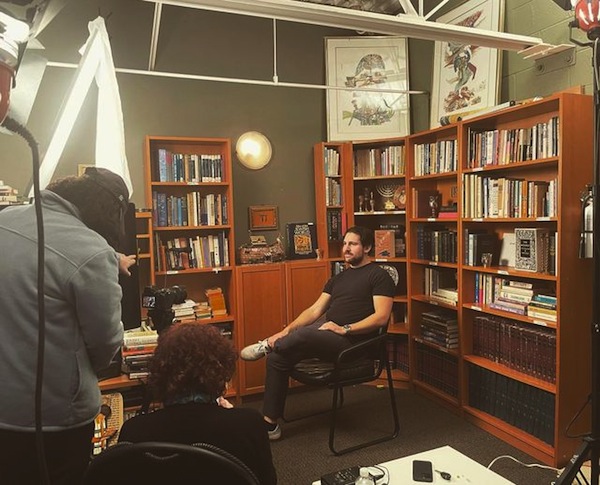
Daniel Shalinsky being interviewed and filmed as part of White Rock South Surrey Jewish Community Centre’s oral history project, which will form part of the community’s Feb. 5 Tu b’Shevat Gala, along with singer Tania Grinberg, speaker Karen James and more. (photo by Helen Thomas Mann)

The White Rock South Surrey Jewish Community Centre Tu b’Shevat Gala will take place on the evening of Sunday, Feb. 5, the start of the holiday. With the theme “Strengthen Our Roots,” a main component of the event will be community members’ oral histories.

“The idea for the project came about in a very multidirectional way,” Helen Thomas Mann, WRSSJCC president, told the Independent. “First, we wanted to host an annual fundraising event and, with our membership drive being around the High Holidays, Tu b’Shevat seemed like a good time for it.”

Tu b’Shevat, the 15th of the Hebrew month of Shevat, is the New Year of Trees. 

“Naturally,” said Thomas Mann, “the theme for a Tu b’Shevat event would be trees, so we began focusing on our ‘tree of life’ as a community. But we were coming back together after a three-year lull from the pandemic – we needed people to remember why this place is important, and why it should continue to exist. The idea became, let’s honour our roots, our history as a community of nearly 30 years; remember the branches that connect us to our Jewishness and the WRSSJCC, and celebrate our leaves, the future of our community.

“As a new president and newer member of the community,” she said, “I felt sensitive to the fact that, although I was playing a leadership role in the organization, there were many people who had worked hard before me to create this warm Jewish space. Our new board didn’t have to reinvent the wheel. I made it my mission to learn those stories.”

A therapist by profession, Thomas Mann is naturally interested in people’s stories, she said. “I had a conversation with Alysa [Routtenberg] from the Jewish Museum and Archives of British Columbia, and that’s where collecting life stories of people in our community came about. She provided me with a recording device. Then it occurred to me that these life stories and the stories of the JCC itself could be incorporated into our celebration.

“I was scrolling the WRSSJCC Instagram account, and I saw a person we follow, and who follows our organization back, who had beautiful fine art photos. Their website said they were passionate about storytelling. I took a chance and reached out, and the person happened to be Yaacov Green, who participated in the JCC as a child and whose father was a president of the JCC for many years! Yaacov generously offered to donate his time to record and edit these interviews to make a short presentation for the Tu b’Shevat event, and a longer version to be submitted to the Jewish Museum and Archives of B.C.”

During the project, Thomas Mann said, “Marcy Babins from the museum mentioned this may be the first representation of Jews from our outlying community in the archive, so I’m thrilled we will be represented. There’s such a rich history here of creative, scrappy and very grassroots Jewish community-building efforts. It’s been very inspiring to learn about. We have interviewed 23 people so far, plus we are having two make-up days…. We are also completing a few Zoom interviews for those who are no longer local.”

Everyone in the community was invited to participate, whether new to the community or having been a part of it for a long time. One of the participants was Daniel Shalinsky, who was interviewed for the project by his grandmother, Helen Lynn Lutterman.

“He attended Hebrew school at the JCC and spent lots of time there as a child,” said Thomas Mann. “There are pictures of him as a child with a hammer, literally building our WRSSJCC alongside his family. His parents are Hertha and Steve Shalinsky, who we are honouring at the Tu b’Shevat event. Their family, including Steve’s brother and his wife, Ken and Andrea Shalinsky, were integral in acquiring our physical space. Steve was a president for many years. For more on the fascinating story of how the space was acquired, you will have to attend the event to find out!”

In addition to the community histories, award-winning Yiddish singer Tania Grinberg will be featured at the celebration. And the night’s keynote speaker will be Karen James, who will share the story of her experience at the 1972 Olympics in Munich. James was there with the Canadian Olympic swim team, and witnessed a group of people climbing over the wall of the Olympic village. Only later would she find out that those people held hostage and then murdered 11 Israeli athletes. “She will share how witnessing this event impacted her life, her connection to her Jewish identity, and her relationship with the WRSSJCC,” said Thomas Mann of James’ presentation.

The Tu b’Shevat fundraiser is for specific programming, as well as operating expenses of the WRSSJCC.

“We are fundraising to generally pay our bills, and our hope is to be able to hire a part-time employee to support our admin needs and flourishing programming,” Thomas Mann explained. “We also have a list of ‘wishing tree’ items that range in dollar amounts from new oven mitts to computer monitors, and open amounts for specific purposes such as donating towards a child in need’s Hebrew school tuition. Long term, we would love to be able to find a new building space where we could have a stand-alone building, as opposed to being in a strip mall, with an outdoor area for a sukkah and community garden. That would be our pie-in-the-sky donation! We are a 100% volunteer-run organization, so every contribution counts.”

The entire community is welcome to the Feb. 5 event, which will be held at the White Rock South Surrey Jewish Community Centre, 32-3033 King George Blvd., in Surrey. “We considered the ease of hosting in a different location for space restrictions, but it seemed too important to centre the space,” said Thomas Mann. “Plus, our tree of life is on the wall, and we will be unveiling the new additions at the event.”

Tickets will soon go on sale – keep an eye on Instagram (@wrssjcc) and Facebook (White Rock South Surrey JCC).

Format ImagePosted on December 23, 2022December 21, 2022Author Cynthia RamsayCategories LocalTags community centre, fundraising, gala, Helen Thomas Mann, JCC, oral histories, South Surrey, synagogues, Tu b’Shevat, White Rock, WRSS, WRSSJCC
Building bridges to inclusion

Building bridges to inclusion

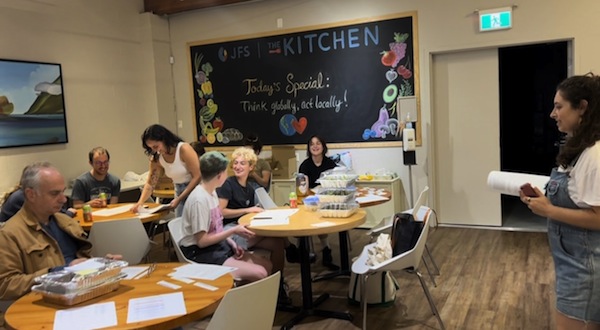
Volunteers from the Jewish community turn up each June to prepare, label and deliver freshly cooked meals to Black families as a sign of community support. (photo by JFS photo by Madison Slobin)

How do you build a more inclusive Jewish community, one that thrives on diversity? For Vancouver’s Jewish Family Services, says chief executive officer Tanja Demajo, resilience starts with building bridges. And it flourishes with finding common links between cultures.

During the last few years, JFS has been expanding the programs it offers to Jewish communities throughout Metro Vancouver, and looking for new ways to enrich conversations around diversity and inclusion. 

Projects like the Shiva Delivers partnership with Vancouver’s Black community and Twice Blessed 2.0: The Jewish LGBTQ2SIA+ Initiative are helping forge alliances and cultural understanding.

Sharing home-cooked meals

Shiva Delivers, which provides traditional home-cooked meals to Black families dealing with loss and grief, was started by Madison Slobin and Becca Schwenk in 2020 following the death of George Floyd, who was killed on May 25 of that year during a routine traffic stop by Minneapolis police. His death ignited protests in cities across North America, including Vancouver. According to Demajo, Shiva Delivers emerged as “a response to the social injustice and the grief that the Black community were experiencing.” (See also jewishindependent.ca/providing-comfort-and-hope.)

Slobin and Schwenk ran the program independently the first year with a cadre of volunteers from the local Jewish community. In 2022, JFS jumped on board, offering its kitchen as an operation centre for the project, which takes place every June. According to Slobin, Jewish families from across Vancouver signed up to cook full-course meals and carry out the deliveries, inspired by the very Jewish tradition of responding to tragedy and mourning with food.

“When someone in our community is grieving, we support them with food and with showing up and saying, ‘we’re here for you,’” Slobin said, noting that the concept was popular with volunteers from the start. “We had young Jews participating, we had Orthodox Jews participating, we had [people] from all spectrums [of the community].”

According to Demajo, news about the program arrived at the right time for JFS.

“JFS was going through this exploration of how do we work with and reach out to different communities,” Demajo said. “What we really learned was, first of all, a large Jewish community was interested in making this connection and intercultural exchange … with the Black community and showing their solidarity. And, on the other hand, the Black community was just touched by the fact that another cultural group offered that support.”

Demajo said she received many expressions of thanks from Black community members stunned by the gesture – and the elaborate dishes. “Are all Jewish people such good cooks?” one person called to find out. “Your food is amazing!”

But the project also helped JFS confirm that there were members of the Black community who were Jewish but not affiliated with the Jewish 

community. Demajo said she realized this when a young woman who had received one of the dinners contacted her to ask why the Jewish community was doing this. 

“Well, you know,” Demajo told the woman, “we have Black people in [our] community as well, and we want to build bridges and reach out [and] learn from each [other’s communities].” A moment later, Demajo said she heard the woman’s child calling to her. The child was speaking in Hebrew. “And that kind of took me back a little bit,” Demajo admitted. 

It turned out the woman had moved here from Israel some years earlier but wasn’t participating in the Vancouver Jewish community. “Even though I lived in Israel,” she told Demajo, “I’ve never felt part of the community here.” 

“And I realized at that moment,” Demajo said, “how important this [program] is, because we don’t know who the people are that we seem to support, until we actually do reach out and hear these stories.”

Slobin said the project not only inspires more opportunities for sharing between the two communities, it’s helping convey an important message to Black Jews that they are indeed a welcome part of the Jewish community. “Every single year that we have done it, we have had Black Jews participate and express how meaningful it is for them to see their own community recognize them in this way,” said Slobin.

Being more welcoming

Twice Blessed 2.0: The Jewish LGBTQ2SIA+ Initiative formed in response to a survey that JFS and JQT Vancouver (a volunteer-run Jewish queer and trans nonprofit) compiled in 2021 to determine the needs of the local LGBTQ2SIA+ community. The results were released earlier this year.

Some respondents said they feel unwelcome in the greater Jewish community, while others stated they feel ostracized by the LGBTQ2SIA+ community because they are Jewish. Most respondents felt that clear “‘indicators of support’ for the LGBTQ2SIA+ community would make them more inclined to participate in the Jewish community.”

“Our commitment to diversity and inclusion must speak through our actions, and not only our words. 

Although not an easy task, it is an imperative one,” wrote Demajo and JQT executive director Carmel Tanaka in the report, which can be found at jqtvancouver.ca/twice-blessed-2. (See also jewishindependent.ca/thirteen-calls-for-action.)

“One of the lessons we need to learn is, how do we make our agency more welcoming for different people?” Demajo said, “And, very simply, how do we do that in a dignified way?”

These questions are also helping JFS reexamine how it’s interacting with other cultures and communities when it’s providing social and economic support to Jewish families.

“I think it’s important for us as a community to understand the clients that we support live in very diverse neighbourhoods, which means that probably, on a daily basis, they see a lot of diversity and they live in those circles. When we as an agency provide certain supports to one targeted group and exclude their neighbours … that creates a lot of tension that gets reflected in their day-to-day life. So, at the end of the day, we all go home but they have to deal with the aftermath of the way we provided services … and this is why, on our end, it became really clear that, in order to support our clients, it’s not just a question of providing services directly to them,” explained Demajo. “It’s also ensuring that they have a safe community, a community of allies, a community that they can rely on when we’re not around. By building these bridges between all these different groups, I believe that we can create that.”

Learning from the past

JFS is currently exploring a number of new projects focused on diversity and social inclusion, both within the Jewish community as well as forming relationships outside its cultural space. JFS’s the Kitchen is often the meeting space.

“I think the beauty of having a kitchen is having a space for, again, sharing the stories and experiences through food,” Demajo said.

Recently, JFS has been partnering with organizations like CIJA and the Jewish Federation of Greater Vancouver to explore ways in which different cultures can share their culinary traditions, stories and passions.

Demajo said JFS is also doing a review of some of the programs it has offered in the past. “We really want to learn from things that went well, things that did not go well, and we understand in this space that there will be a lot of road [to travel], which is not easy. But it takes a lot of courage to step outside of that comfort zone as well.”

About tikkun olam, repairing the world, she said, “Conversation may start with a handful of like-minded people, but it takes diversity and acceptance to build an inclusive community.

Jan Lee is an award-winning editorial writer whose articles and op-eds have been published in B’nai B’rith Magazine, Voices of Conservative and Masorti Judaism and Baltimore Jewish Times, as well as a number of business, environmental and travel publications. Her blog can be found at multiculturaljew.polestarpassages.com.

Format ImagePosted on December 23, 2022December 21, 2022Author Jan LeeCategories LocalTags diversity, Jewish Family Services, JFS, Madison Slobin, Shiva Delivers, Tanja Demajo

A first step to solutions?

Among other things, Hanukkah is about bringing light into the darkness. There is plenty of darkness in the world and a vast range of concerns calling for radiance.

Mainstream media seem to have taken the cue that Hanukkah is the moment to discuss the alarming and rising phenomenon of antisemitism. Time magazine declares: “Amid antisemitism, Hanukkah celebrations carry new weight.” USA Today explained a new tradition: “On Hanukkah, the ninth candle reflects how anyone can fight antisemitism by sharing truth.” Here in Canada, both Prime Minister Justin Trudeau and Opposition Leader Pierre Poilievre highlighted antisemitism in their annual Hanukkah messages. Expect to see similar expressions of concern in a few days, as the end-of-2022 reflections on the good and bad of the year just passed and hopes for the fresh new year fill pages and airtime during the slow news days of the winter holidays.

We are not complaining. This issue needs thorough and ongoing coverage. It just seems, somehow, that writing and talking about what is often called the world’s oldest bigotry lacks new insights. Many agree that this is a problem. Few, though, have solutions beyond platitudes. 

Finding innovative ways to think and talk about “the world’s oldest” anything is, by definition, a challenge. Some of the greatest scholars in the world have studied the problem, vast networks of activist organizations and Jewish communal agencies devote themselves to defeating it, and still it grows. If we had the definitive explanation or the silver bullet to solve it, you would not be reading it here – we would be sharing our wisdom from the dais of the Nobel Prize ceremony and as the lead story on the world’s media. Undaunted, a few thoughts:

The very phrase “antisemitism” may be problematic. The term was invented in the late 1800s by a proud antisemite to describe his orientation. But while there is a great deal of conscious and visible antisemitism in the world today that rightly raises alarms, there has always been an equally, perhaps more, worrying phenomenon in the form of unconscious bias about Jews that permeates many societies and individuals. This is more insidious and, therefore, more difficult to challenge. 

It is worth noting that antisemitism is often most prevalent where no or few Jews exist, making it easier to project onto a largely imaginary enemy the fears and hatreds carried by the individual or the society. Similarly, we see a projection of Jewishness onto any unpopular phenomenon, an example being the “Great Replacement” theory, a paranoid fantasy in which whatever the perpetrator despises (in this case immigration) is cast as a problem with Jewish roots.

Both of these phenomena touch on what we suspect is the nut of antisemitism: it is a problem that affects Jews but it is not a problem of Jews. That is, if Jews did not exist, the antisemites would have to invent them – which is, in essence, precisely what they have done with the caricatured “Jew” that is demonized by antisemites. 

This understanding, of course, does nothing to resolve the problem. And, again, a problem known as “the world’s oldest hatred” is not going to be solved in one generation with one easy antidote. It is encouraging, though, to see the range of responses to the problem, from more in-depth coverage in mainstream media to the statements of top leaders in Canada, as well as in the United States, where a major presidential effort against antisemitism is being led by Doug Emhoff, the second gentleman of the United States, who recently led a roundtable of leading thinkers, and in a host of other undertakings worldwide.

As is said in a different context, the first step to recovery is admitting you have a problem. As a society, we have a consensus that antisemitism is a growing problem. As we approach 2023, we hope those thoughts will turn to even more action in confronting this confounding blight. 

Posted on December 23, 2022December 21, 2022Author The Editorial BoardCategories From the JITags antisemitism, Hanukkah, history, politics
Sacre premières here

Sacre premières here

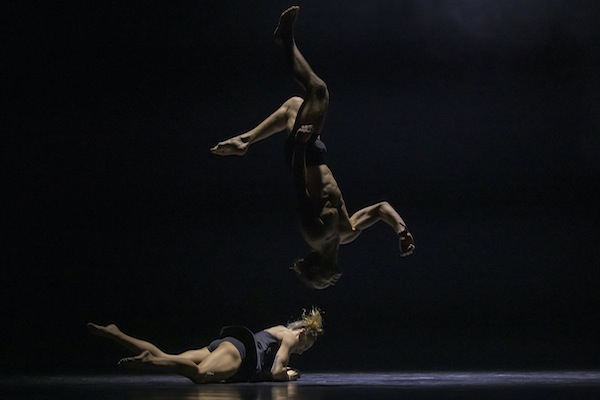
Circa’s Sacre is an exploration of humanity’s interconnectivity, our inherent sexual desire and our complex relationship with divinity. (photo by Pedro Greig)

DanceHouse and the Cultch present the Canadian première of Circa’s acrobatic Sacre, on stage Jan. 17-21, 8 p.m., at the Vancouver Playhouse. Directed by Jewish community member Yaron Lifschitz, artistic director and chief executive officer of Circa, Sacre is an exploration of humanity’s interconnectivity, our inherent sexual desire and our complex relationship with divinity. Inspired by Igor Stravinsky’s seminal production The Rite of Spring, the full-length work from Australia’s leading contemporary circus company is a blend of balletic lines and athletic feats, infused with pulsating and dissonant elements of a reimagined Stravinsky score.

“This is a work of powerful juxtapositions, blending the sacred with the profane; the ethereal with the visceral. On one level, Sacre is a work of mesmerizing beauty, drawing on the lyrical movement of contemporary dance and the intense physicality of the circus arts,” said Jim Smith, artistic and executive director of DanceHouse. “At the same time, the work offers a raw and bracing social commentary, drawing upon the ancient pagan traditions referenced within Stravinsky’s transgressive work – in which a virginal young woman dances herself to death. This offers an intriguing and gritty contrast to the pure spectacle of the performance, and invites reflection on the nature of humanity’s responsibility toward one another in a world on the brink of disaster.”

Stravinsky’s The Rite of Spring was so scandalous that it incited a riot at its Parisian première in 1913. Despite – and partly because of – this incendiary start, the work is now considered one of the most impactful compositions of the 20th century. Circa’s new interpretation of the haunting work premièred in January 2021 at the Illawarra Performing Arts Centre in Wollongong, Australia. Sacre features 10 acrobats interwoven in ceaseless motion, as they deftly move in and out of technically complex grouping structures, lifts, tumbles and leaps.

Set to a pounding musical score by Philippe Bachman, full of fast-paced tempo and mood changes, and echoed by a lighting design by Veronique Benett that moves through intense flashes of light and darkness to dim lighting that slowly brightens, the work methodically builds into a crescendo with heart-pumping intensity.

Circa’s Lifschitz is a graduate of the University of New South Wales, University of Queensland and National Institute of Dramatic Arts (NIDA), where he was the youngest director ever accepted into its graduate director’s course. Since graduating, Lifschitz has directed more than 60 productions throughout his career, including opera, theatre, physical theatre and circus. He was founding artistic director of the Australian Museum’s theatre unit and head tutor in directing at Australian Theatre for Young People, and has been a regular guest tutor in directing at NIDA. He was creative director of Festival 2018: the arts and cultural program of the 21st Commonwealth Games.

Lifschitz has served as artistic director and CEO of Circa, based in Brisbane, since 2004. The company has performed in more than 40 countries across six continents to more than 1.5 million people. Circa has presented at major festivals and venues around the world, including Brooklyn Academy of Music, the Barbican Centre, les Nuits de Fourvière and Chamäleon Theatre Berlin.

For tickets and further information about Sacre, visit dancehouse.ca.

– Courtesy DanceHouse and the Cultch

Format ImagePosted on December 23, 2022December 21, 2022Author DanceHouse & the CultchCategories Performing ArtsTags choreography, Circa, Cultch, dance, DanceHouse, Rite of Spring, Sacre, Stravinsky, Yaron Lifschitz
Opening gates of kabbalah

Opening gates of kabbalah

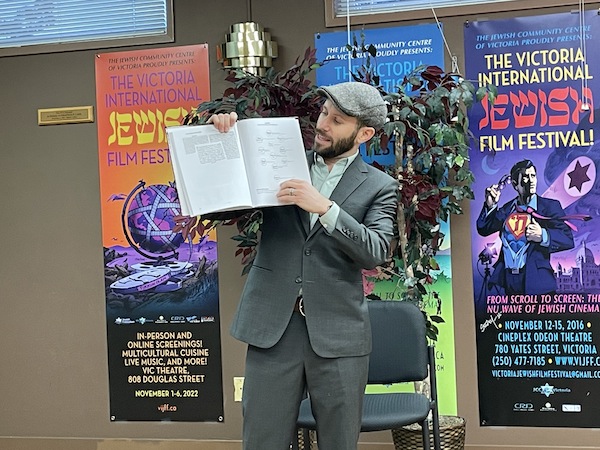
Rabbi Matthew Ponak recently released his latest book, Embodied Kabbalah: Jewish Mysticism for All People. (photo by Marilyn Wolovick)

Rabbi Matthew Ponak introduced his new book, Embodied Kabbalah: Jewish Mysticism for All People, this month both in a Zoom event and in-person at the Victoria Jewish Community Centre.

According to the book’s description, the objective of Jewish mysticism is to “touch infinity with your feet planted in everyday, ordinary reality.” The book contains universal teachings that Ponak believes are necessary to the world at this time.

Delving into a millennium of Jewish writings, Ponak hopes his approach will serve as a counterweight to the focus in modern spirituality on bliss and transcendence. Throughout the centuries, Ponak argues, Judaism – including Jewish mysticism – has held “being a good person” as the ideal.

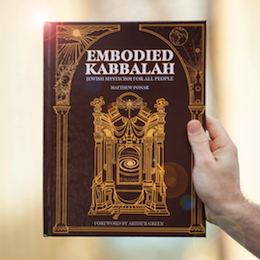
image - Embodied Kabbalah book coverEmbodied Kabbalah, written in the talmudic style, in which commentary surrounds the original texts, looks to the mystic teachings for finding a healthy balance between one’s spiritual life and external commitments to family, work and community. Many of the book’s sources have been translated into English for the first time.

During the launch at the Victoria JCC, Ponak spoke of the personal journey that led to the creation of the book. In his initial studies, he observed two different paths. “One was a path of transcendence,” he said, “a path of bliss, that all is well in the world and we should be celebrating all day. On one level that appealed to me, but I felt there was something missing in it.”

The other path, he said, is one of transformation. “This is one of deep self-knowledge: that I could get to know who I was inside, and new parts of me would start to come forward. There is a deep, radical honesty that can liberate parts of who we are. Those parts can enter into our outer lives as we become more whole.”

Upon further exploration, he discovered there was a way to incorporate both paths into one’s life.

“I found a particular teaching that says there is a time to transform – the work week – and a time to rejoice – Shabbat. One day a week, it is time to celebrate all that we have and focus on the positive, to not get weighed down by the negativity,” Ponak said. “There is a time for the deep personal transformation of working on ourselves, the spiritual work week. On Shabbat, however, everything is whole and we are, too. We feed ourselves delicious food and take an extra nap to help our bodies know the world is complete.”

Ponak emphasized that it is not necessary to choose between the paths of rejoicing and of transformation. There is a time for working and a time for celebrating. If all one has is work, then there is the risk of missing out on the beauty of life, he said. Alternatively, if one is in a prolonged state of transcendent joy, then a spiritual leader, for example, might become unable to help others grow because they have “left the world, so to speak, unable to relate to people.”

He said, “It is good to come off the mountain. It took me a long time to understand the value of that. If I had a trauma or a difficulty in my earlier years as a seeker, it was with the bliss. The transformation stuff was hard, but I was able to get it once it was taught to me in an accessible way.”

Ponak retraced various aspects of his spiritual journey. He studied transpersonal psychology (or spiritual psychology) and other religions. Through this, he found he could be both a spiritual person and grounded.  “But there was a deeper part of me that knew there was something else,” he said. “There must be something in Judaism.”

After several years of study at the Rabbinical School of Hebrew College, he was able to decode the texts on his own. He discovered the hidden treasure of grounded Jewish spirituality that had been there all along in lesser-known mystical writings.

“If I had access to Embodied Kabbalah as a teenager, it could have saved me a lot of headaches and heartaches, to say nothing of my family’s stress,” he said. “This is why this book is so close to my heart.”

Among those who would benefit from the book, Ponak pointed to those interested in Jewish mysticism, those who have Jewish ancestry but feel alienated from Judaism, and those who want to learn about universal Jewish teachings as part of the global spiritual landscape.

Yet, for him, “the call to action that feels most urgent is to help people who are ‘ungrounded,’ who are finding mystical writings or going to spiritual retreats but are not connected to the earth: to the body or to their emotions. It’s time to open up the gates of Jewish wisdom to all who can benefit from it,” he said. “I hope this effort will help spiritual seekers to be responsible, relatable, whole and healthy – along with spiritually connected – so that we can be of our greatest service to humanity.”

For more information or to order the book, visit matthewponak.com.

Sam Margolis has written for the Globe and Mail, the National Post, UPI and MSNBC.

Format ImagePosted on December 23, 2022December 21, 2022Author Sam MargolisCategories BooksTags kabbalah, Matthew Ponak, spirituality, Victoria

Posts pagination

Previous page Page 1 … Page 149 Page 150 Page 151 … Page 667 Next page
Proudly powered by WordPress