Skip to content
  • Home
  • Subscribe / donate
  • Events calendar
  • News
    • Local
    • National
    • Israel
    • World
    • עניין בחדשות
      A roundup of news in Canada and further afield, in Hebrew.
  • Opinion
    • From the JI
    • Op-Ed
  • Arts & Culture
    • Performing Arts
    • Music
    • Books
    • Visual Arts
    • TV & Film
  • Life
    • Celebrating the Holidays
    • Travel
    • The Daily Snooze
      Cartoons by Jacob Samuel
    • Mystery Photo
      Help the JI and JMABC fill in the gaps in our archives.
  • Community Links
    • Organizations, Etc.
    • Other News Sources & Blogs
    • Business Directory
  • FAQ
  • JI Chai Celebration
  • JI@88! video

Recent Posts

  • Sharing her testimony
  • Fall fight takes leap forward
  • The balancing of rights
  • Multiple Tony n’ Tina roles
  • Stories of trauma, resilience
  • Celebrate our culture
  • A responsibility to help
  • What wellness means at JCC
  • Together in mourning
  • Downhill after Trump?
  • Birth control even easier now
  • Eco-Sisters mentorship
  • Unexpected discoveries
  • Study’s results hopeful
  • Bad behaviour affects us all
  • Thankful for the police
  • UBC needs a wake-up call
  • Recalling a shining star
  • Sleep well …
  • BGU fosters startup culture
  • Photography and glass
  • Is it the end of an era?
  • Taking life a step at a time
  • Nakba exhibit biased
  • Film festival starts next week
  • Musical with heart and soul
  • Rabbi marks 13 years
  • Keeper of VTT’s history
  • Gala fêtes Infeld’s 20th
  • Building JWest together
  • Challah Mom comes to Vancouver
  • What to do about media bias
  • Education offers hope
  • Remembrance – a moral act
  • What makes us human
  • המלחמות של נתניהו וטראמפ

Archives

Follow @JewishIndie
image - The CJN - Visit Us Banner - 300x600 - 101625

Author: Cynthia Ramsay

Reading expands experience

Reading expands experience

Letters that highlight friendship, writing that facilitates healing, stories that dissect societal mores – the books reviewed by the Jewish Independent this week represent only a small fraction of those featured at the Cherie Smith JCC Jewish Book Festival this year.

While the official festival runs Feb. 11-16, opening with Dr. Gabor Maté in conversation with Marsha Lederman about his latest book, The Myth of Normal: Trauma, Illness & Healing in a Toxic Culture, there are a couple of pre-festival events this month: German writer Max Czollek launches the English version of his book De-Integrate! A Jewish Survival Guide for the 21st Century on Jan. 19 and American-Israeli photographer Jason Langer presents his book Berlin: A Jewish Ode to the Metropolis on Jan. 26. As well, there is a post-festival event, on Feb. 28, which sees former federal cabinet minister and senator Jack Austin launching his memoir, Unlikely Insider: A West Coast Advocate in Ottawa.

If the books reviewed by the Independent are any indication, attendees of the festival can expect to have their views challenged and their perspectives broadened; they will be moved, disturbed and amused, sometimes all at once.

Intimate portraits

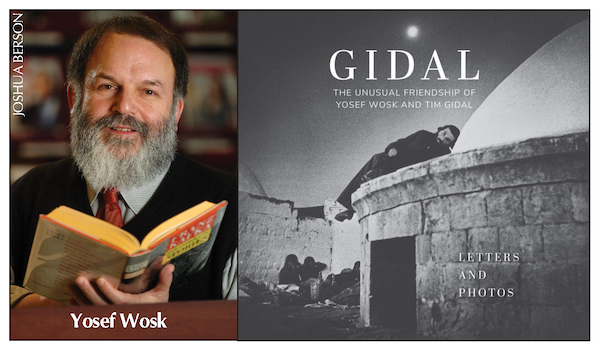
Two years ago, the JCC Jewish Book Festival featured the book Memories of Jewish Poland: The 1932 Photographs of Nachum Tim Gidal (jewishindependent.ca/gidals-photos-speak-volumes). It was the fulfilment of a dying request that Israeli photographer Tim Gidal made in 1996 to Vancouver scholar, writer and philanthropist Yosef Wosk. The book was released at the same time that an exhibit of its photos was mounted at the Zack Gallery (jewishindependent.ca/jewish-poland-in-1932).

The friendship between Wosk and Gidal was evident in that book and in the exhibit. How the two men – separated in age by some 40 years and in geography by almost 11,000 kilometres – became such good friends is the subject of Gidal: The Unusual Friendship of Yosef Wosk and Tim Gidal, written by Wosk (and, technically, Gidal) and edited by another of Wosk’s good friends, Alan Twigg.
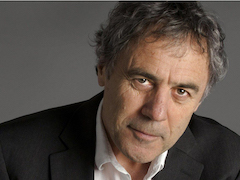
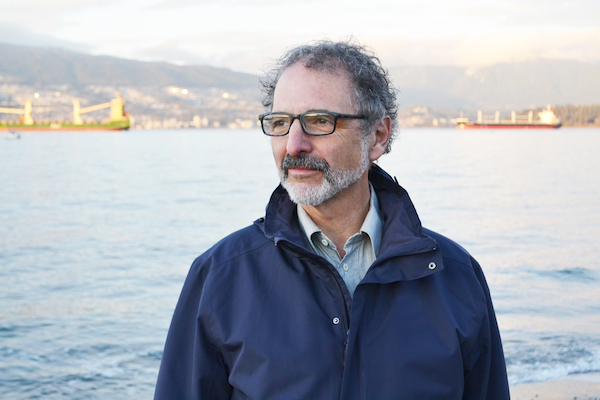
photo - Alan Twigg
Alan Twigg (PR photo)

The bulk of Gidal is letters that Gidal and Wosk wrote to each other from 1993, soon after they met, through to Gidal’s death in 1996. The postscript is a letter from Wosk to Gidal’s wife, Pia, mourning Gidal’s death and hoping that “his work and vision continue to inspire others.” Twigg has masterfully edited the multi-year correspondence, which comprised hundreds of letters, into an engaging narrative that offers insight into the core of these undeniably brilliant men, their work, ideas, loves, frustrations, sadnesses and more. Their vulnerability makes this a brave publication for Wosk to have created, and a meaningful one.

The other main component of Gidal is, of course, Gidal’s photographs, which, Wosk writes in the afterword, “serve as background to the letters.” As he did with Memories of Jewish Poland, Wosk mostly lets the photographs speak for themselves. Each photo section has a theme but each image within the section is simply captioned, placed and dated, without commentary.

There is a short chapter on Gidal and one on his and Wosk’s friendship and how this book came about. Gidal is creatively and esthetically put together. Each letter is headed by a key quote from the missive and the date it was sent. Images are included of some of the actual letters, most of which were sent by fax. It is interesting to contemplate whether this fount of communication would exist if it had been made via email.

Wosk and Twigg will talk about Gidal on Feb. 14, 7 p.m., at the book festival. The event is free of charge.

 Therapeutic memoirs

Paired together for a presentation are Margot Fedoruk and Tamar Glouberman. The program categorizes them as “modern-day women” who will be presenting their “offbeat memoirs,” summarized by the question, “How B.C. is that?” Indeed, both Fedoruk and Glouberman tell coming-of-age stories of a sort, Fedoruk’s beginning in her 20s and Glouberman’s in her 30s. And they both lead outdoorsy, independent lives that could be described as the B.C. ideal, yet both have also faced many challenges and darker sides of that ideal.

Fedoruk is the author of Cooking Tips for Desperate Fishwives, in which she openly shares her anxieties of being married to a West Coast sea urchin diver – she is lonely without him, must raise their two daughters mostly without him and is worried that an accident may result in her having to live without him. Yet, she loves Rick, even though she does try (unsuccessfully) to convince him to take up another profession and stay closer to home. The pair moves around a lot, and Fedoruk herself takes up many different jobs over the years to make ends meet. But they stick together, getting married after their daughters are all grown up and have left home.
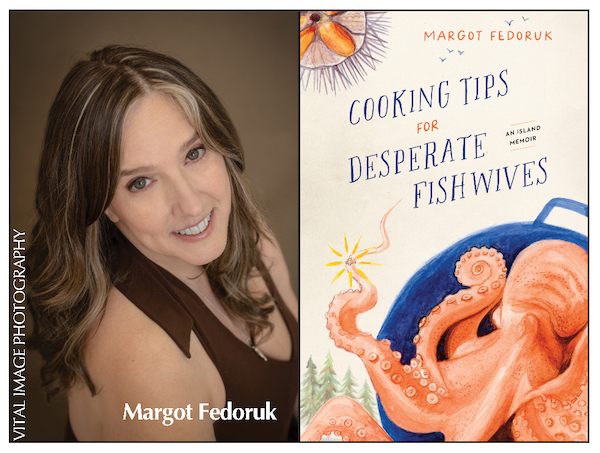
images - Margot Fedoruk and Cooking Tips for Desperate Fishwives coverAs dysfunctional as their relationship appears at times, Fedoruk had a more challenging life before she met Rick. Her father is a horrible man, her mother dies of cancer and she and her sister lose the family home to her mother’s second husband, also a horrible man. And there’s more. It is no wonder she leaves Winnipeg, eventually settling in British Columbia, though settling may be too strong a word, as she and her family do live in several different places on the coast, with some time in Calgary.

What makes Fedoruk’s memoir unique is the inclusion of a recipe in almost every chapter that reflects the mood or subject matter of the chapter, like the Killer Lasagne in the introduction, which begins, “The night I ran over Rick with my car, I was over four months pregnant with our first daughter.” Other recipes include Easy Curried Chickpeas With Rice, which appears as an affordable comfort food in a chapter about her being exhausted, on her own, caring for her two then-young daughters; and Wild-crafted Stinging Nettle Pesto, which comes after one of her descriptions of the soaps she makes – her business is Starfish Soap Company.

Near the end of her memoir, Fedoruk mentions that she has started therapy. I would have liked her to have written this book further into that process. As honest as she is about her feelings and circumstances, the memoir would have been more layered and impactful had she been further along in understanding how her traumatic childhood experiences, her genes and other factors affect how she moves through the world.

Glouberman has a less tragic background but a similarly transient life – and also loves something that gives her both great joy and great anxiety, the latter of which eventually takes over. In Chasing Rivers: A Whitewater Life, she shares her emotional journey of trying to make a life as a whitewater rafting guide.
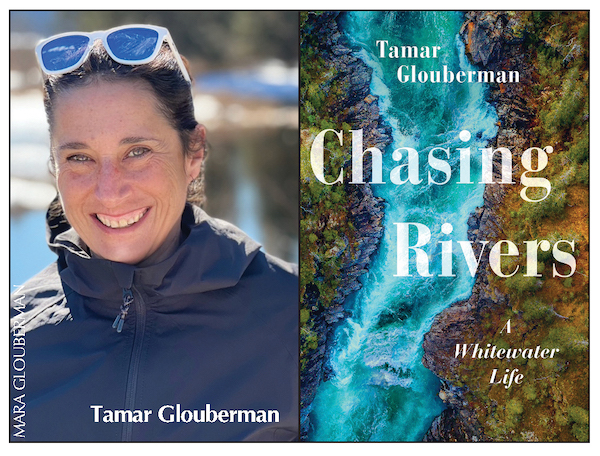
images - Tamar Glouberman is the author of Chasing Rivers: A Whitewater LifeOne of the few women to guide tours, Glouberman does face sexism, her skills often underestimated by clients, but her male bosses and colleagues all seem to appreciate her abilities – certainly more than she does. She is constantly worried about making a mistake that will kill her or someone else and, while this is rational, given her job and its risks, the feeling becomes overwhelming. With an accident on the road – there is a lot of travel required to get to places like Chilko River, Williams Lake and further afield, outside the province – and her worst nightmare coming true on a rafting trip, Glouberman’s fears have very real incidents on which to grow.

Glouberman tries other types of work, but is always drawn back to the water. She struggles with depression and has a few other harsh experiences that add to her self-doubt. She tries various forms of therapy, some of which make her feel worse. Her family is supportive, though, and her sister’s home in Whistler is a refuge. She is only beginning her journey to healing when the memoir ends, and part of that has to do with getting into a master’s writing program. Both she and Fedoruk, who also went back to university for a writing degree, thank several people for their memoirs coming to fruition.

Glouberman and Fedoruk present at the book festival Feb. 12, 2 p.m. (tickets are $18). They also speak at Congregation Har El that day, at 11 a.m.

The price of victory

The harm inflicted on a society by war culture is front and centre in Israeli writer Yishai Sarid’s book Victorious. The main character, Abigail, is a military psychologist who, basically, tries to make soldiers into better killers, both “helping” them through trauma after they’ve experienced it and teaching them ways to be immune to trauma so that they can “beat the enemy.” Her father, who strongly disapproves of her work with the army, is a renowned clinical psychologist. On more than one occasion, he tries to talk her out of working for the military, but does not succeed. That the character of the father is dying of cancer is not coincidental.
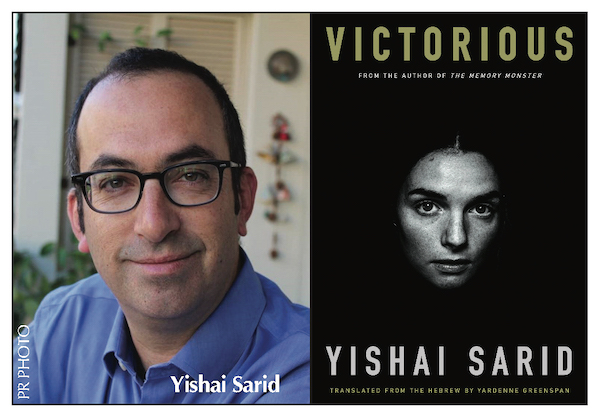
images - Yishai Sarid and Victorious book coverAbigail blurs professional lines everywhere, working for the married man who fathered her son, the man who is now the army’s chief of staff; sleeping with a patient/friend; trying to become close friends with a former patient; and having a sexual relationship with one of the young soldiers whose unit she’s evaluating. The lessons she teaches are chilling, as is her abandonment of a patient who becomes too difficult for her to handle and some of her other actions.

She believes her job is her patriotic duty, even as her own son, Shauli, enters military service, in the paratroopers no less, and her fears for him fight with her pride in his choice. Though, with both his father and mother being staunch militarists, it could be argued that Shauli doesn’t really have a choice.

Victorious is a sparingly written novel that readers will not only ponder but feel well after they put it down. Translator Yardenne Greenspan must be given credit for making Sarid’s words as impactful in English as they are in Hebrew.

Sarid’s book festival event is Feb. 12, at 8 p.m. Tickets are $18.

For the full author lineup and to purchase festival tickets or passes, visit jccgv.com/jewish-book-festival or call 604-257-5111.
Format ImagePosted on January 13, 2023January 11, 2023Author Cynthia RamsayCategories BooksTags Alan Twigg, fiction, JCC Jewish Book Festival, Margot Fedoruk, memoirs, photography, Tamar Glouberman, Tim Gidal, Yishai Sarid, Yosef Wosk
Controversy welcome

Controversy welcome

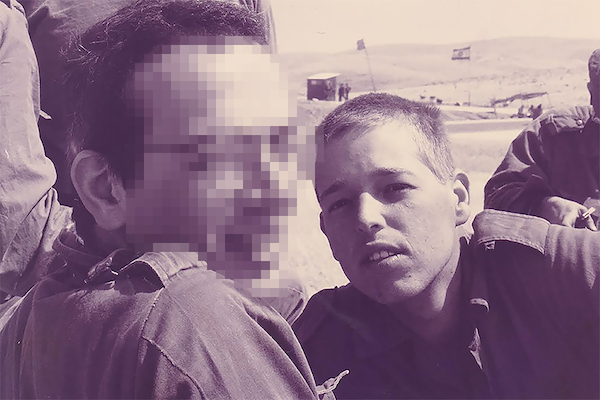
Soldiers of Tomorrow, about Itai Erdal’s experiences in the Israeli army, is at the Roundhouse Feb. 3-5. (photo from the Elbow Theatre)

“I know that this play will piss off a lot of people on both sides of the conflict, but I welcome the controversy. I am taking some strong stances and talking about some explosive subject matters (pun intended) so, if it wasn’t going to piss people off, then I probably didn’t do my job properly,” Itai Erdal told the Independent. “I think it’s good to challenge people and I welcome the discussion that this play will generate.”

Erdal was talking about Soldiers of Tomorrow, which he wrote with Colleen Murphy. The play is part of this year’s PuSh International Performing Arts Festival, and sees its world première Feb. 3-5 at Roundhouse Performance Centre.

Presented by the Elbow Theatre and PuSh, Soldiers of Tomorrow is directed by Anita Rochon and performed by Erdal with Syrian musician Emad Armoush.

“When I was a kid growing up in Israel, peace seemed inevitable – it was just a matter of time, there were countless songs about the day peace will arrive. The adults would always say, ‘By the time you grow up, we won’t need an army anymore.’ No one says that today,” writes Erdal on his website. “Most Israelis accept that their children will be soldiers. One day, when my nephew was 8, he came home from school with an empty box to fill with stuff to send to soldiers on the front line. Inside the box his teacher had written: ‘To the soldiers of today from the soldiers of tomorrow.’”

This experience inspired the play. While fictional, it is about real events that happened to Erdal during his time in the Israel Defence Forces in the early 1990s.

“I served in the army for three years and as a combatant soldier,” said Erdal. “I would have had to be in the reserves until the age of 45, which I didn’t want to do. I was in Jerusalem during all the suicide bombings in the ’90s and my reluctance to continue to be a soldier and my exhaustion of the political situation definitely contributed to my decision to immigrate to Vancouver.”

Erdal has made his mark here in many ways, including as an award-winning playwright, performer and lighting designer. He created the Elbow Theatre in 2012 “to confront urgent social and political issues.” Soldiers of Tomorrow is its sixth production. The PR blurb notes that, in it, Erdal “relates his actions in the army, exploring his personal culpability in the face of complex geopolitical forces in his former country – a place that he loves ‘with a broken heart.’”

“I pitched the idea for this play to Colleen Murphy in 2018 when we were working together in Stratford,” Erdal told the Independent. “We met a few times that year, but it really took off when the pandemic started. For almost two years, Colleen and I would meet on Zoom every Monday and Thursday for two hours. It was really great to have a project during the lockdown, it kept me sane.”

Although it is a one-man play, Armoush will also be on stage with Erdal, performing the music live. As to how he connected with Armoush, Erdal said, “I was looking for a Palestinian musician but there aren’t many of them in Vancouver and Emad was highly recommended by my Israeli musician friends.”

About the timing, Erdal explained, “During my lifetime, the situation for Palestinians has only gotten worse, it never gets better. Israel recently formed the most extreme right-wing government in its history, with several openly racist and homophobic ministers. Many Israelis and Palestinians are bracing themselves for the worst. Unfortunately, this play is more relevant than ever.”

He is not concerned about how Jews in general or Israelis specifically will be perceived by non-Jewish people who see the play.

“I am a very proud Jew and, even though I criticize the state of Israel, I do so because I love it, and I think that love is clear in the play,” said Erdal, who shared the following quote from the play: “I am aware that this is a topic that intimidates many Canadians. I’ve seen the glazed look in your eyes. I’ve had many people ask me to explain the conflict to them and, after one minute, they are searching for the exit. I’ve also seen many people twist themselves into pretzels in order not to take sides because they were concerned about appearing antisemitic. I hope by the time you leave here, you’ll be able to criticize Israel without worrying about appearing antisemitic.”

Soldiers of Tomorrow is at the Roundhouse Feb. 3-4, 7:30 p.m., and Feb. 5, 2 p.m., with a post-show talkback after the Feb. 4 performance. The show is 75 minutes long, with no intermission. Tickets ($34) can be purchased at pushfestival.ca.

The PuSh International Performing Arts Festival runs Jan. 19-Feb. 5. It features 20 original works – theatre, dance, music, multimedia and circus – from 12 countries and includes six world premières, one North American debut, six Canadian and two Western Canadian openings and one Vancouver première. Single tickets start at $34 in-person, $25 online, plus there are pay-what-you-can and free events; passes, which offer a discount and other perks, are available for both in-person and digital shows. Visit pushfestival.ca or call 604-449-6000.

Format ImagePosted on January 13, 2023January 11, 2023Author Cynthia RamsayCategories Performing ArtsTags Elbow Theatre, IDF, Israel Defence Forces, Itai Erdal, memoirs, PuSh Festival, theatre

Democracy in danger

A pageant of pandemonium consumed the United States House of Representatives last week as it took 15 votes to confirm Kevin McCarthy as speaker. The chaos was caused by a group of far-right congresspeople representing less than five percent of the total House membership. Eventually, McCarthy triumphed – well, squeaked through – by cutting backroom deals that will empower the extremists and weaken the office of the speaker.

Although the holdouts are on the far-right fringes of American society, personality was a major factor in the weeklong deadlock. The opponents have issues with McCarthy as a person and a politician as much as they have with his policies. To succeed, McCarthy had to agree to concessions and cough up inducements that defile the dignity of his office and put the House of Representatives in jeopardy of being hopelessly deadlocked and dysfunctional.

An analogous situation is unfolding in Israel, where Binyamin Netanyahu has returned to the prime ministership. To do so, he had to make some very grubby deals with some very distasteful people.

Here, too, personalities were at play, as much as policies. There is a swath of centre-right politicians who would have joined a coalition that was not headed by Netanyahu. As a result, to regain power, Netanyahu was forced to make deals with far-right figures who should never have been considered for inclusion in a democratic government.

Both of these situations speak to an unfortunate reality of parliamentary democracy. When a bloc fails to attain a comfortable majority, they can find themselves dependent on the support of narrowly focused, ideologically driven extremists that represent very few voters. In many cases, the extremist tail ends up wagging the dog.

This is regrettable and it is sometimes inevitable. Democracy is by no means without its downsides. In fact, Winston Churchill’s aphorism – “Democracy is the worst form of government – except for all the others that have been tried” – resonates here.

The foundational piece of democracy is free elections and the peaceful transition of power, a cornerstone that was attacked on Jan. 6 two years ago at the U.S. Capitol. That cornerstone is now under siege in Brazil, in a striking parallel – as if the supporters of defeated former president Jair Bolsonaro directly stole the playbook of the American Republicans’ “stop the steal” scheme to subvert the 2020 U.S. election.

Violent protesters ransacked Brazilian government buildings this week, stealing weapons and artifacts and vandalizing facilities. Brazil does not have as long a history of democratic infrastructure as Israel or the United States, which could make it more vulnerable to attack. One core difference in the Brazilian case, versus the Israeli or American situation, is that the threats, at this point, are coming from outside the government – the protesters are supporters of a defeated (and possibly self-exiled) former leader. In the United States, the insurgents have an apparent stranglehold on one of the houses of Congress and, in Israel, are fully in charge.

The biggest concern in a democracy comes when the extremist tail that wags the dog not only influences policies but actually begins chipping away at the institutional underpinnings of democracy itself. This is a legitimate concern in Israel, as some partners in the coalition are threatening the judicial system, the functioning of police and the very definition of Israeli citizenship. The vote for U.S. House speaker did not itself represent a threat to democracy, though the final votes poignantly took place on the second anniversary of the insurrection that was the greatest attack on American democracy since the Civil War – a moment from which the country and its democratic foundations still reel. And continued dysfunction in the House portends a difficult road ahead for U.S. democracy as voters tire of do-nothing legislative bodies and what some perceive as broken political systems.

Both Israel and the United States are on unprecedented precipices. (Brazil, ironically, probably less so.) However, in both Israel and the United States, entrenched civil society organizations and strong parliamentary opponents are in place to monitor and bolster the fundamentals of their societies. Those on the (geographical and/or ideological) outside should support in every way we can the movements for democracy, pluralism and tolerance in Israel, the United States and everywhere in the world where these values are threatened, including if we see dangers to them here at home.

Posted on January 13, 2023January 11, 2023Author The Editorial BoardCategories From the JITags Brazil, democracy, Israel, politics, United States

Resilience amid disruptions

I’ve been thinking about my childhood school bus driver, “Dot” or Dorothy Gelles. I lived in a house that was technically not too far from school to walk, but there weren’t enough sidewalks and there was one dangerous intersection. As a result, I rode Bus #302 and then, later, when #302 was retired, #562, with Mrs. Gelles. Ours was a relationship that lasted from kindergarten until Grade 12.

I started driving in Grade 10, lived in Israel on a kibbutz in Grade 11, and mostly drove my younger brother to school when I returned for Grade 12. Still, I rode the bus every day until those last few years. I sat at the front, chatting with Mrs. Gelles and enjoying the ride. Later, I read, did homework or talked to other kids. The bus wasn’t late. Mrs. Gelles rarely missed a day driving us. We trusted Mrs. Gelles. She was a dependable, reliable and kind part of our lives.

Though growing up in a different country, my kids are also eligible for the school bus through Grade 6. They go to a Hebrew-English bilingual school that requires a bus ride. I’ve always thought it was a wonderful gift to parents and good for the environment that they could take the school bus. Although there have been some years in which the bus has been dependable, with mostly the same drivers, I have never properly managed to figure out each driver’s name or been introduced. To me, this is the most precarious part of the school day during Winnipeg winters – I’ve always felt a little nervous about the ride, the drivers, and whether they’d make it to school or home.

This year, due to the pandemic, sick days, the labour shortages and lack of trained drivers, things are the worst they’ve ever been. When there was a bus drivers’ strike, we knew that the school bus wasn’t coming. We were responsible for getting our kids to school and home. When someone contacts us early in the morning and says, “This route is canceled,” we shuffle around our work days to get the kids to school. Sometimes, there’s no notice at all: scared kids and panicked parents result.

On the last day before winter break, our kids weren’t dropped off at the bus stop at 3:46 as per the schedule. They didn’t get home until after 4:35 p.m., more than an hour after the school day ends, at 3:30. The high that day was around -22°C. We were lucky: our kids are 11, old enough to cope, and we figured out what had happened. Their dad was working from home. He dropped everything, stayed at the bus stop in the cold while I phoned the bus transportation office and the school. We found out that there had been a late bus that didn’t get to the school until after 4 p.m., a substitute driver, and that driver got lost. Everything went wrong. The school secretary apologized – she should have called me sooner. I knew that not only would my kids be upset, but they’d missed their piano lessons, too.

This is part of a bigger disruption narrative. So far, this year, Grade 6, is my kids’ first school year since Grade 1 where we haven’t had a teacher change or disruption yet. It’s true that everyone feels jostled by the COVID pandemic but, starting six years ago, before this virus happened, every year something interrupted their learning. Everyone deserves maternity leave and, yes, teachers retire and principals shift schools, but theirs has not been world’s most stable learning environment. Everyone wants to blame COVID but the problems are much bigger than that. Yes, we’re lucky in many ways, but expecting a stable schooling environment shouldn’t be unreasonable with all our other privileges in Canada.

Being resilient in the face of change has been seen as an important skill to have as the world shifts to cope with pandemics, climate change, wars, supply chain issues, etc. There is much to be said for being flexible and able to roll with what happens. At the same time, most adults are resistant to change and don’t like it. For many, we want our coffee or tea with breakfast, our meals cooked in a certain way, our exercise routine or housecleaning to be orderly. Ritual and routine reassure everyone.

In many ways, Judaism reflects this. We’re still praying in ways our ancestors prayed thousands of years ago. Our holidays, sanctuaries and social halls look remarkably similar from one country to the next, even with culturally different norms. We relish the familiar, even as it slowly changes and adapts to fit modern sensibilities. No matter what Jewish movement you’re accustomed to, Orthodox, Chabad, Reform, Reconstructionist, Conservative or Renewal, or if you use terms like secular, traditional … we’ve all made adjustments reflecting our evolving understanding of Judaism and the world around us, or in reaction to those things.

What makes our traditions comforting, reassuring or even just functional is not the same for everybody. However, one thing remains the same. Aside from catastrophic events, it’s the way we react to and adjust to change that matters. Finding a positive way forward, moving towards solutions – these help us grow and learn. Jewish communities, forced through pogroms, expulsions and murders, have created art, literature, liturgy and rabbinic rulings to cope with terrible circumstances we could not control.

As everyone now knows, we cannot control everything. We can only hope to give the resources and resiliency to help everyone cope. In Winnipeg, making sure the kids wear warm sweaters and snow pants along with parkas and boots? That is one step. Another is offering contingency plans: an extra set of house keys, feeling comfortable with the neighbours, knowing there’s a safe place to go if they get locked out.

Many in North America, pre-pandemic, were used to stability. We made plans for weddings or trips a year in advance. It may be that our new “normal” brings us much closer to what our ancestors knew long ago. With increasing weather, climate and health emergencies, and political upheaval, we need to find resources and solutions when change happens. Cause change is going to happen.

Meanwhile, we can also all strive to be a bit more like Mrs. Gelles: caring, reliably on time and trustworthy. I can never see a driver open those school bus doors without smiling and thinking of her. And hoping for the best and wishing for that stability for my children, too.

Joanne Seiff has written regularly for CBC Manitoba and various Jewish publications. She is the author of three books, including From the Outside In: Jewish Post Columns 2015-2016, a collection of essays available for digital download or as a paperback from Amazon. Check her out on Instagram @yrnspinner or at joanneseiff.blogspot.com.

Posted on January 13, 2023January 11, 2023Author Joanne SeiffCategories Op-EdTags change, lifestyle, reliability, resilience
Local heads CAPE crusaders

Local heads CAPE crusaders

Dr. Larry Barzelai chaired the recent Canadian Physicians for the Environment climate conference. (photo from Larry Barzelai)

We can recycle everything possible, drive electric vehicles and take other steps to ameliorate our carbon footprints. At some point, though, says Dr. Larry Barzelai, we need to address our culture of consumption because we are simply using more resources than the planet can sustain.

Barzelai, chair of the B.C. branch of Canadian Association of Physicians for the Environment (CAPE), spoke to the Independent following a conference he chaired on climate issues. The third annual event, held entirely virtually, brought together doctors, nurses and other medical personnel to discuss climate and the environment from a specifically health-related perspective.

“It’s a physicians organization,” said Barzelai. “So people who tend to be most interested are doctors. But we’re always trying to expand it into other healthcare professionals.”

Interested people outside the profession are welcome to join, he said.

“It’s a general information conference to appeal to people that don’t know very much about environment or climate issues and people that are well-versed,” he explained. “We’re hoping there will be something in the conference for both those groups.”

Topics included “radical overconsumption, environmental genocide, economics and de-growth,” mobilizing climate action within the medical community, the impacts of food systems on the climate, and strategic approaches to successful advocacy campaigns. Canadian filmmaker, broadcaster and activist Avi Lewis gave a closing presentation.

Barzelai retired from his practice as a family physician in June of last year but still does work in seniors facilities including the Louis Brier Home and Hospital. He was pleased that, with the exception of Nunavut, the conference had representation from all provinces and territories.

The conference took place under the auspices of the continuing professional development department of the University of British Columbia and, while it is a national conference, most of the members of the steering committee are from the West Coast.

The October event was the third annual conference and Barzelai laughed about the fact that they had thought they were breaking new technological ground when they began planning for the first gathering. Believing that too many people spend too much time and resources flying, with deleterious impacts on the climate, they envisioned a virtual conference, or possibly a hybrid version with hubs in Vancouver and Toronto where locals could attend in person. By the time the inaugural event was nearing, the entire world had adopted virtual meetings (as well as religious services, seders and just about every other kind of interaction).

While Barzelai has thrown himself into the climate issue in recent years, he calls himself a “Johnny-come-lately” to the topic.

“I’m a late joiner,” he admitted. “A lot of the people in the organization have been doing this all their lives [and] are really dedicated people.”

Barzelai began reading and thinking more deeply about climate issues after encountering the American environmental author and activist Bill McKibben at a conference several years ago. He was particularly impacted by McKibben’s book Eaarth: Making a Life on a Tough New Planet.

Barzelai explained why McKibben spelled the book (and the planet) “Eaarth.”

“It’s changing and it’s changing rapidly and he says the expectations that seasons would be similar and that you would be able to predict rainfalls and temperatures on a fairly regular basis, with some exclusions, year after year – now that’s all gone out the window,” said Barzelai. “It’s a different world. That’s why he is calling it by a different name. He says, with a lot of work and a lot of luck, maybe we can create a new world that is somewhat akin to our old world, but it’s never going to be the same. We are going down a new direction here in a future that’s undefined and we’ve got to be careful and not let climate change get too far ahead of us.”

At the recent conference, Barzelai was struck by the message that, even as humans are taking these issues more seriously, we are still not getting to the core problem.

“Two of our speakers talked about consumption, that we can recycle as much as we want and drive as many battery-operated cars as we want but, at some point, we have to reduce consumption,” he said. “Even if we were as green as can be, we are still utilizing more resources than the earth can put out, so reducing consumption has to be a big part of this. It’s a tough topic because our whole society is based on consumption. But a lot of people think that we’re not going to get anywhere with climate change issues unless there is a general reduction of consumption in First World societies.”

Another issue to which Barzelai urged people to pay attention is corporate “greenwashing,” a topic addressed at the conference by Prof. Calvin Sanborn of the University of Victoria.

“That’s a big, big issue,” said Barzelai. “The fossil fuel companies are saying that they are greening and changing but, in reality, they’re just trying to find ways to keep doing what they’re doing and they don’t really want to change.”

Due to university copyright issues, recordings of the conference are not publicly available, but more information about CAPE is online at cape.ca.

Format ImagePosted on January 13, 2023January 11, 2023Author Pat JohnsonCategories LocalTags CAPE, climate crisis, environment, Larry Barzelai, physicians

Engaging in guided autobiography

For more than 20 years, the Second Generation (2G) Group in Vancouver has organized and participated in workshops, local and international conferences, meetings and special projects, with a goal of developing a deeper understanding of ourselves and our history, as well as leaving a legacy for future generations. This article is about how 12 members of Vancouver’s 2G community used guided autobiography (GAB) to write their stories of growing up as children of Holocaust survivors.

Deborah Ross-Grayman: For some years, I have co-facilitated the 2G Group in Vancouver. Over time, I became aware that a growing number of us wanted to write both our own stories of growing up as children of Holocaust survivors and document the survival experiences of our parents. We wanted to explore how growing up in our families, and living with a Holocaust legacy, may have shaped our responses to life’s circumstances and influenced decisions we’ve made and actions we’ve taken. I began to look for a class we could take as a group.

Wendy Bancroft: In the fall of 2020, I was leading a GAB workshop series for the Simon Fraser University Liberal Arts and 55+ Program when I received an email from the program office saying they had been approached by a member of Vancouver’s Second Generation community, looking for a writing instructor to help them document their experience of living with this legacy. There are other writing courses offered through the 55+ program but students tended to give GAB high marks for being “safe” and having a “therapeutic effect,” hence my name was suggested.

GAB is a gently structured method designed to help individuals recall, reflect on, write about and share aloud meaningful memories. Feedback focuses on the experience being shared, and theme-based writing provides a ready focus. Stories must be kept under 1,000 words and all stories are shared aloud in a small group.

It’s a method designed by renowned gerontologist and founding dean of the University of Southern California Leonard Davis School of Gerontology, Dr. James Birren, and it was originally intended as a tool to enhance life review for older adults. In addition to choosing foundational and universal themes, Birren developed a set of associated memory-stimulating questions. It was a powerful tool that has, for several years now, been shared in general populations by instructors certified through the Birren Institute of Autobiographical Studies. I am one of some 600-plus individuals, globally located, trained to lead workshops using guided autobiography.

Truth is, I was thrilled to be asked to lead workshops for the Second Generation Holocaust survivors community. Although not raised as a Jew, I learned as a young adult that my birth father was Jewish and, ever since, I’ve wanted to know more about my genetic inheritance.

Ross-Grayman: For our part, none of us was familiar with GAB, nor knew about Birren. We were attracted by the fact that it gave us a structured way into telling our stories, and six of us enthusiastically signed up.

Bancroft: Shortly thereafter, I had my first meeting with Deborah and Henry Ross-Grayman, co-facilitators of the 2G Group.

Planning the workshops

Bancroft: Deborah and Henry told me about the group and what they hoped to get out of the writing; I helped them understand what GAB was about. Then came the important task of choosing from the many writing themes offered in GAB. Deborah and Henry chose themes addressing experiences they felt would be especially relevant for their 2G community: family, spirituality and identity, facing fear and finding courage, love and intimacy, and finding resilience.

It was then my job to adapt the introductions and associated questions to be relevant and sensitive to the 2G life experience. Up to that point, my knowledge of Judaism had been limited to novels and what I had learned in the past from attending a three-night series of information sessions offered as a Taste of Judaism through Temple Sholom. I worried I might use insensitive language and references so I read books and articles dealing with Holocaust effects and watched interviews available on the internet.

Our first official GAB for 2G workshop series took place on March 14, 2020.

That this was a special group was immediately evident. Many already knew each other so they had a head start on bonding, but they were also unusually open and deeply sharing, warm and … vociferous. The term “herding cats” often came to mind. Some were already outstanding writers. One was an actress and did marvelous imitations of her parents and grandmother.

Most stories were linked to Holocaust effects and led to insights about family or other events in the past. I think here of one that had to do with driving anxieties triggered by bridges. The author remembered being 3 years old and hiding with her family under a bridge to escape bombing. While the stories could be painful, pain was often offset by laughter.

Ross-Grayman: Wendy guided us on our journey with sensitivity and care. In the first session, each of us committed to confidentiality, which created a safe container for our exploration. And, as a result, a deep intimacy developed as we shared things that some had never shared. Through the process of writing, reading and listening to our authentic and honest pieces, we increased our compassion and understanding of ourselves and each other.

In reflecting on the impact of these powerful sessions I wrote: “Like Partisans in the woods, with words our weapons, we fought for truth and liberation. Arm in arm we supported each other, witnessed ourselves mirrored in the other and found the strength to continue excavating. Our expert guide pointed the way with care. We arrived at the end of our journey full of purpose and understanding, more connected and less entangled with the past.”

What began as a six-week course for six of us, grew to a two-year writing project for 12 members: Fran Alexander, Olga Campbell, Esther Chase, Barbara Gard, Jane Heyman, Gabriella Klein, Agi Rejto, Marianne Rev, Deborah and Henry Ross-Grayman, Sidi Schaeffer and Marg Van Wielingen. A majority are in the helping professions and the arts. We were born in Australia, Hungary, Iraq, Germany, North America, Poland and Romania.

We continue to meet bi-monthly as an informal 2G writing group.

Bancroft: It has been a deep and meaningful experience for me. Over the time I’ve spent with these dynamic, compassionate and highly intelligent individuals, I’ve come to feel an even stronger attraction to Judaism. The 50% of me that is Ashkenazi Jew keeps pushing for more and more recognition.

Ross-Grayman: It is important for these stories to be recorded for posterity so future generations can have a greater understanding of the impact of the Holocaust and intergenerational transmission of trauma and resilience. This is not just for the future Jewish community, but for all communities and peoples affected by war, genocide and trauma.

We are now organizing a Second Generation anthology, which we hope to publish soon.

Wendy Bancroft has been helping people tell their stories for 40 years, eight of those as a guided autobiography instructor. In 2022, she was awarded the Betty and James Birren Award for Excellence in Practice from the International Centre for Life Story Innovation and Practice (ICLIP). More information about Bancroft and GAB can be found at storycatchers.ca. Deborah Ross-Grayman brings her background co-founding and running a woman-owned business and her work as a child and family therapist to her role, over 20 years, as co-facilitator of the Vancouver Second Generation Group. She is also a visual artist and writer, currently working on her memoir. She can be reached at [email protected].

Posted on January 13, 2023January 11, 2023Author Wendy Bancroft and Deborah Ross-GraymanCategories LocalTags 2G, guided autobiography, second generation, Vancouver, writing
Recollecting Auschwitz

Recollecting Auschwitz

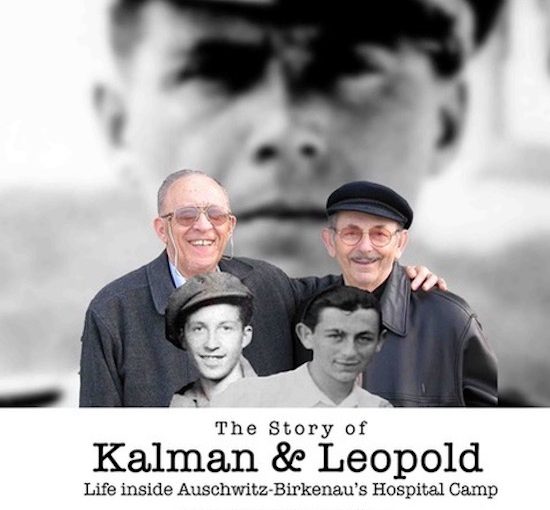
Recollections of day-to-day details at Auschwitz-Birkenau death camp by survivor Kalman Bar-on are being made public for the first time in Canada at an International Holocaust Remembrance Day presentation in Vancouver on Jan. 26 at the Rothstein Theatre.

The Story of Kalman & Leopold features previously unseen testimony, providing a unique glimpse at the Nazi atrocities committed at the extermination camp, given from the vantage point of a Jewish witness posted in a camp guard shack. The presentation takes place on the eve of the 78th anniversary of the liberation of Auschwitz-Birkenau.

The testimony of “Mengele twin” Kalman Bar-on will be revealed by Richard K. Lowy, a Jewish Canadian and the son of Holocaust survivor Leopold Lowy – another twin who was subjected to SS doctor Josef Mengele’s gruesome human experiments at Birkenau’s hospital camp during the Holocaust.

Richard Lowy was on a decade-long mission to preserve his father’s recollections as Canada’s last surviving “Mengele twin” when his efforts yielded an unforeseen link to Bar-on in Israel.

“I will try to paint this map of fear,” begins Bar-on’s testimony, “pointing out the difference between fear from the paws and boot of SS Guard Sgt. Fritsche Fritz, the palpable fear for our lives when witnessing a delivery of the next batch of walking skeletons to the crematorium, the ice-cold grab in my chest when I am lying on the stone table during the periodic medical checks of Mengele, and the ever-present knowledge that no one, but no one, will survive and emerge from Birkenau.”

“We produced Leo’s Journey (leosjourney.ca) in 2000,” writes Lowy. “The documentary was presented in Canada, part of Europe and in Israel.”

When the film played on the National Geographic Channel in Israel on Oct. 31, 2001, an astonishing thing happened, Lowy said. “Precisely 21 minutes and 17 seconds into the film, a picture of my father, Leo Lowy, was shown as a young boy. [A] man dropped his dinner and started yelling at the screen: ‘It’s my Lippa!’ Kalman Bar-On had been looking for his ‘Lippa’ for 56 years. Lippa was his hero in Auschwitz-Birkenau and saved Kalman from beating in the hospital camp’s SS guard shack.”

For (free) tickets to the Jan. 26 presentation, which starts at 6:30 p.m., visit eventbrite.com.

Format ImagePosted on January 13, 2023January 11, 2023Author Richard LowyCategories LocalTags Auschwitz-Birkenau, Holocaust, Kalman Bar-on, Leopold Lowy, memoirs, Mengele
Local Houdini connection

Local Houdini connection

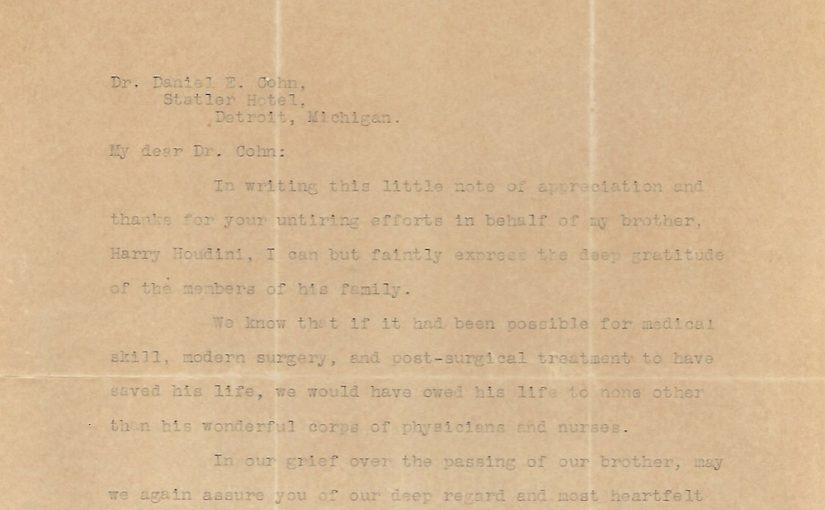
Among the documents in the Houdiniana Collection at the New York Public Library for the Performing Arts is a thank you letter from Harry Houdini’s brother to Dr. Daniel E. Cohn, who was Houdini’s doctor at the time of the escape artist’s death in Detroit on Oct. 31, 1926. (image from New York Public Library for the Performing Arts, Houdiniana Collection)

Did you know there’s a Harry Houdini connection to Vancouver’s Jewish community? My late husband was Theodore (Ted) Cohn, emeritus professor of political science at Simon Fraser University. Ted’s father, Dr. Daniel E. Cohn, was Houdini’s doctor at the time of the escape artist’s death in Detroit on Oct. 31, 1926 (Halloween).

After Ted’s mother, Ethel Schatz, died in 2012, we acquired papers related to Cohn’s care for Houdini. Cohn was just 25 years old, starting his medical practice. He was the substitute doctor for the Statler Hotel at the time of Houdini’s Detroit tour.

Prior to his Detroit performance, on Oct. 22, Houdini had been punched unexpectedly in Montreal by a McGill student, J. Gordon Whitehead. Whitehead was testing Houdini’s ability to withstand abdominal blows. Without advance notice, however, Houdini was unable to prepare his muscles, and his appendix was ruptured. Nevertheless, he and his wife Bess traveled to Detroit, where he performed at the Garrick Theatre on Oct. 24. He collapsed after the show.

Houdini reluctantly went to Grace Hospital after being examined by Dr. Cohn. His surgeon, Dr. Charles S. Kennedy, operated and discovered the now-gangrenous appendix. With no cure in sight, Houdini remained hospitalized. Specialists were consulted, to no avail.

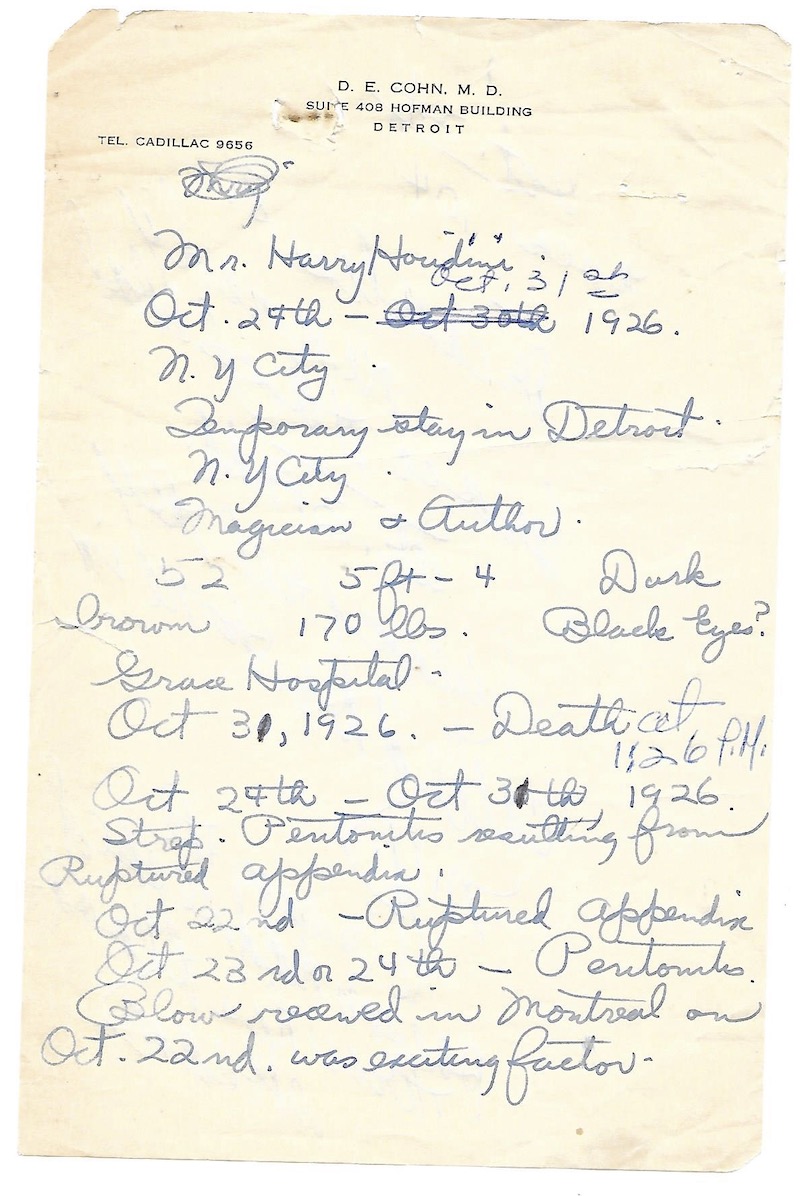
image - Among the documents in the Houdiniana Collection are Dr. Daniel E. Cohn’s notes on his examination of Harry Houdini
Among the documents in the Houdiniana Collection are Dr. Daniel E. Cohn’s notes on his examination of Harry Houdini (page 1 shown here). (image from New York Public Library for the Performing Arts, Houdiniana Collection)

Cohn was able to spend time at Houdini’s bedside, getting to know him and even bringing him “Farmer’s Chop Suey,” a sour cream-raw vegetable dish Houdini requested. The two ate this Jewish specialty together.

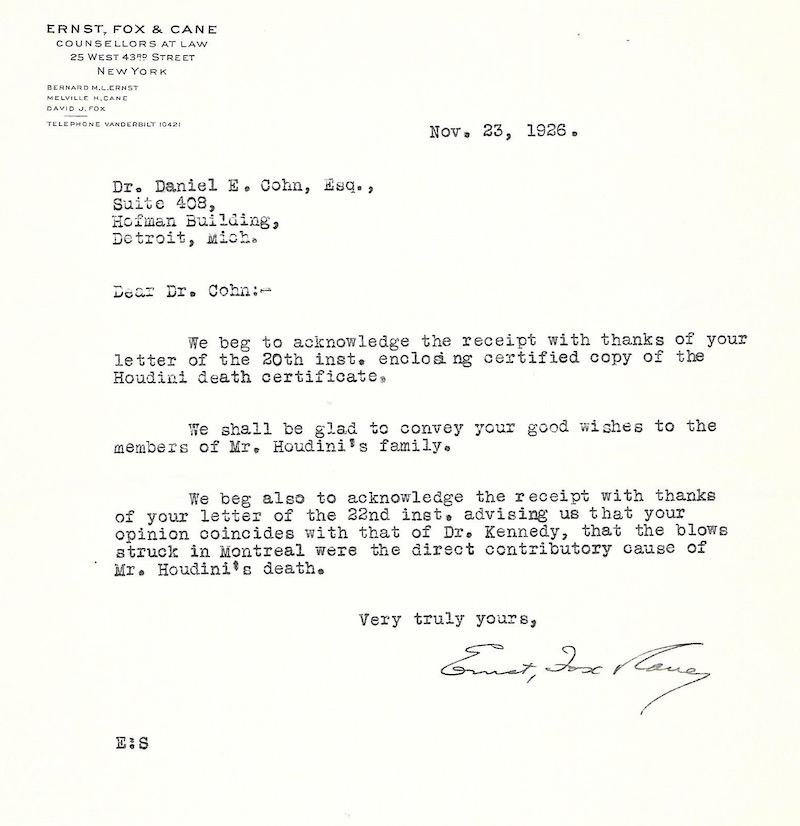
A thank you letter to Cohn from Houdini’s brother, Theodore Hardeen, and other original documents are now in the Houdiniana Collection at the New York Public Library for the Performing Arts. These include Dr. Cohn’s notes related to Houdini’s medical care and death, and insurance and legal letters related to Cohn’s payment. I wanted these valuable items to have a better home than our personal archival-quality folders, and approached the specialty library, where these papers will be available to researchers.

image -  One of the legal documents related to Harry Houdini and Dr. Daniel E. Cohn
One of the legal documents related to Harry Houdini and Dr. Daniel E. Cohn. (image from New York Public Library for the Performing Arts, Houdiniana Collection)

Houdini’s father, Rabbi Mayer Samuel Weiss, moved to Appleton, Wisc., in 1878, to be the first rabbi at Zion Congregation. Houdini, known then as Erich Weiss, was 4 years old. Houdini is buried in Machpelah Cemetery, Queens, N.Y.

Format ImagePosted on January 13, 2023January 11, 2023Author Shirley CohnCategories LocalTags history, Houdini, Houdiniana, New York Public Library, Ted Cohn
National library opens soon

National library opens soon

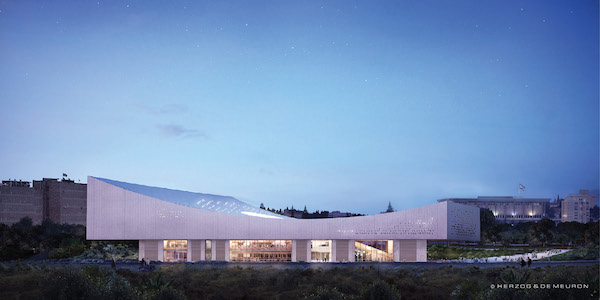
The National Library of Israel’s new building was designed by the Basel architect firm Herzog & de Meuron. (photo ©Herzog & de Meuron)

Come March, and in advance of Israel’s 75th Independence Day, the People of the Book will have an iconic shrine worthy of their literary legacy, promises Oren Weinberg, the chief executive officer of the National Library of Israel, making him the chief librarian of the Jewish people.

All of the NLI’s collection of more than 6,000,000 rare volumes, manuscripts, incunabula, books and miscellaneous printed material has been transferred from the current building on the Hebrew University of Jerusalem’s Givat Ram campus. Their new home, 500 metres distant, is the 45,000-square-metre venue located at the northwest corner of Ruppin Road and Kaplan Boulevard in the Ben-Gurion government precinct, between the Knesset and the Israel Museum.

“Construction of the new National Library of Israel complex is nearing completion,” Weinberg told a recent press conference. “Over the past year, the new building has emerged as a stunning addition to the Jerusalem cityscape, already recognized as a major Jerusalem landmark.

“The building reflects the library’s transformative renewal from the secluded environment of a university campus to a stunning physical manifestation of our central value: opening access to the National Library of Israel’s treasures to broad and diverse audiences from Israel and around the world.”

Weinberg told a recent explanatory session for the NLI’s core group of readers and researchers that, while boxing, moving and unpacking 33,000 books daily is a daunting logistical challenge, he and his team are proud they were able to do so without disrupting service to the institution’s many thousands of daily readers. The transfer of the books was finished in December. Now, a high-tech array is protecting the invaluable collection from fire, water damage and theft. Apart from reference material, most of the books are housed in the four basement levels. The six floors above ground serve the public.

With palpable excitement, Weinberg displayed photos of the construction progress of his $200 million baby, now in its final phase, funded by the Rothschild family’s Yad Hanadiv and the Gottesman Fund of New York.

The NLI was designed by the Basel architect firm Herzog & de Meuron. If that name is familiar, it’s because the Swiss architects are renowned for their bird nest stadium that graced Beijing’s 2008 Olympics. Their Jerusalem library is certain to be an equally recognizable instant landmark. Located on an irregular plot, the architects designed a modern interpretation of a triangular flatiron building surrounded by a lush garden.

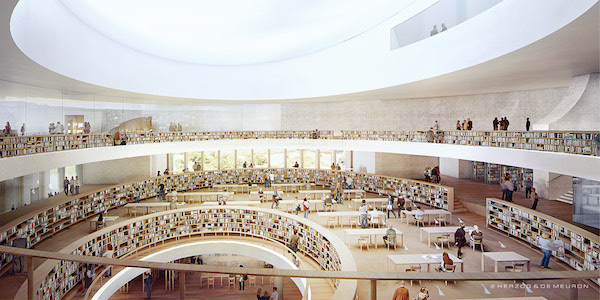
Like its predecessor, which opened in 1960 and is named after its patron, Lady Davis of Montreal, the new building will be primarily a close-stack facility. It, too, will have a spiral staircase. But the comparison ends there. With a glass oculus – calling it a skylight would be too modest – and a swooping roof that would be a skateboarder’s delight, the distinctive library will be incomparably more multi-purpose than the current facility. Besides the greatly expanded and dramatic three-level reading room, it will encompass an auditorium, display areas, lockers, commercial space, a restaurant, synagogue and underground parking. In the future, it will be served by a nearby light rail station.

The multi-purpose research centre and venue for cultural and educational activities will also be a place to drink coffee and socialize, Weinberg said.

photo - The National Library of Israel’s reading “room” has three levels
The National Library of Israel’s reading “room” has three levels. (photo ©Herzog & de Meuron)

Founded in 1892, the NLI today is the repository of the world’s largest collection of Judaica and Hebraica. It collects everything related to the state of Israel, and contextualizes that core with general books on the humanities, Islam, the Middle East, religion and antisemitica.

Among its rare treasures are the Damascus Crown, a 13th-century Hebrew Bible smuggled out of Syria 29 years ago in a Mossad operation so hush-hush that the manuscript’s existence in Israel was kept secret for decades. Another priceless volume is a commentary on the Mishnah handwritten by the medieval Jewish philosopher Maimonides.

Sir Isaac Newton’s manuscripts about theology and the apocalypse, including his notations in cursive English and Hebrew, have a home at the NLI. Newton predicted the end of the world will come in 2060. That should leave readers at least 37 years to savour the new building.

More recent is Czech novelist Franz Kafka’s notebook, wherein he recorded Hebrew words and their German meaning in advance of his unfulfilled dream of settling in Jerusalem.

The NLI continues with its mission of collecting, preserving and providing access to the cultural treasures of the state of Israel and the Jewish Diaspora. For example, in a complex deal in 2017, the library acquired 80% of the 10,000-volume Valmadonna Trust Library – the largest private collection of Hebrew books and manuscripts in the world. Included were a rare 1491 Chumash (Torah in book-bound form) from Lisbon and one of only two surviving copies of a 1556 Passover Haggadah from Prague, a siddur (prayer book) from Venice dated 1459 written on klaf (parchment) and a Hebrew Bible handwritten in England in 1189 – the only dated Hebrew text before the expulsion of Jews from England in 1290 by King Edward I.

In keeping with NLI policy, the price paid for the Valmadonna Trust Library collection was not released. Selections from it will be on view to the public in March, when the new NLI opens.

Like books, space can also be a precious commodity. With desks for only 600 readers, the Givat Ram structure is today obsolete. The new building will have more than double that number. Each reader will enjoy a 1.25-metre-long desk and each space will be equipped with its own reading lamp.

While computers will be readily available both at desks and to borrow – during a recent visit to the Lady Davis building, I had to scavenge a mouse to access the catalogue – it is anticipated that most readers will be bringing their own notebooks, said Weinberg. That fact indicates the NLI’s forward-looking vision whereby ever more materials will be digitized as the preservation of knowledge evolves.

What of Mordecai Ardon’s triptych depicting the Prophet Isaiah’s vision of messianic peace, which was installed in 1984 opposite the old building’s main stairwell? The stained glass vitrine, like the old building, will be in limbo – an empty white elephant waiting to be repurposed.

Gil Zohar is a writer and tour guide in Jerusalem.

Problematic provenance

Gish Amit’s 2014 book Ex-Libris: Chronicles of Theft, Preservation and Appropriating at the Jewish National Library, published by the Van Leer Jerusalem Institute, tells the extraordinary story of how three collections came to the NLI.

Following the Second World War, the Diaspora Treasures project brought to Jerusalem hundreds of thousands of books once owned by now-murdered Jews whose belongings had been looted by the Nazis.

During Israel’s 1948-49 War of Independence, 30,000 Arabic-language books that were owned by Palestinian refugees were collected. They are cataloged “A.P.” – abandoned property – and await a peace treaty so that they may be turned over to the future National Library of Palestine.

Lastly, there was the gathering of books and manuscripts from the 49,000 Yemenite Jews who were rescued and brought to the nascent state in 1949 and 1950 in Operation On Wings of Eagles. Their property was systematically looted as part of Israel’s claim to ownership of the country’s Jewish past, as well as its pre-Zionist past. Amit documents that only a small number of those books were ever returned to their rightful owners.

– GZ

Remembering Lady Davis

Noted Jewish Canadian philanthropist Henriette Marie Meyer (1872-1963) was born in San Francisco. She moved to Montreal in 1898 to marry businessman and philanthropist Mortimer Davis, and became known as Lady Davis after her husband was knighted by King George V in 1917.

The couple divorced in 1924 and Lady Davis moved to Paris, where she continued her philanthropic activities, including founding a resort for children with disabilities, called the Colonie de vacance. For her actions, she was made an officer of the Legion d’honneur.

With the outbreak of the Second World War, Davis fled to Montreal, where she donated a Spitfire plane to the Royal Air Force and provided lodging for RAF pilots. For her contributions, she was made Commander of the Order of the British Empire.

In 1945, she founded the Lady Davis Fund, which helped bring Holocaust survivors to Canada. She is best known in Canada for the Lady Davis Institute for Medical Research at Montreal’s Jewish General Hospital.

In addition to the National Library of Israel, she also donated funds to build the Mechanical and Aeronautical Engineering Centre at the Technion, and the Lady Davis Carmel Medical Centre, both in Haifa.

– GZ

Format ImagePosted on January 13, 2023January 11, 2023Author Gil ZoharCategories IsraelTags development, Herzog & de Meuron, libraries, National Library of Israel, Oren Weinberg
Regards from Israel …

Regards from Israel …

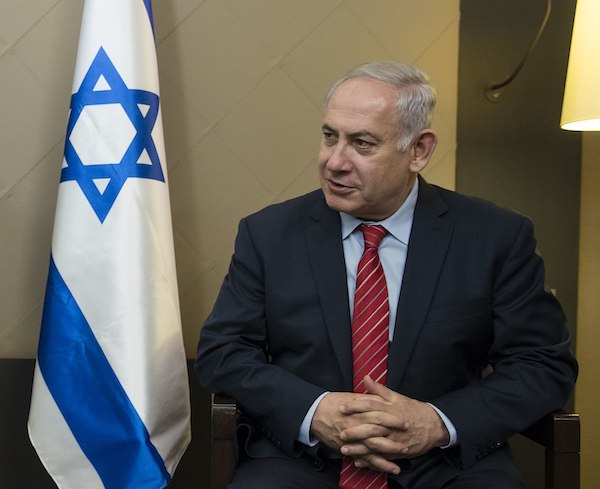
During coalition building negotiations, Binyamin Netanyahu had to consider lists of demands that would make even the pious cringe. (photo from president.gov.ua)

So, my mom doesn’t have to worry about me anymore. Ever since I moved to Israel, she’s been concerned about my safety. Well, Israel is now one of the five safest countries in the world to visit, according to Swiftest, an American travel insurance website. From homicide rates to natural disasters to rode carnage, Israel rounds out the top five safest places, just after Singapore, Denmark, the Netherlands and Switzerland. The most dangerous country to visit is South Africa. Canada was ranked the 21st safest country, so now I’ll have to start worrying about my mom’s safety. Just sayin’.

* * *

During coalition building negotiations, United Torah Judaism (UTJ) – holding seven seats Binyamin Netanyahu required to build his government – presented a list of demands that would make even the pious cringe. This included affirmative action for ultra-Orthodox job seekers in state-owned companies. More religious studies in secular schools. Less secular studies in religious schools, like science, arithmetic and English. More gender segregated beaches. (How often do the Orthodox go to the beach? Do they need additional beachfront real estate?) Legislation permitting yeshivah students to continue Torah studies and defer army service. And, are you ready for this? A demand to stop energy generation on Shabbat. Does this reek of theocracy-building or what? And it costs the Israeli taxpayer – about which the UTJ constituency knows little – about nine billion bucks a year!

Not to be outdone in chutzpah, Religious Zionist Member of the Knesset Orit Struk is reportedly a strong advocate of a government amendment enabling private businesses to refuse to provide services based on religious beliefs. But only if the same “widget” is available elsewhere at similar terms. Good thing she clarified that. Seriously! So a business owner can now deny selling to people of colour, to LGBTQ+ people, to Arabs and to others, Jews and non-Jews. If it’s justified by religious beliefs and becomes even more outlandish. Doctors could also decide who to operate on. Yes, bearers of the “hypocritic” oath: “I’m not operating on that guy. He’s homosexual.” OMG!

I’m not just sayin’, I’m shoutin’! Bring in some sanity!

* * *

Speaking of the Haridim, according to a new research study from the Hebrew University, Philip Morris spent more than $1 million on advertising to attract the ultra-Orthodox. Now what makes this demographic so influenced by cigarette advertising? Is this related to that sector’s education, or lack thereof, in the sciences and the deadly impact tobacco products have on health? Maybe the incoming government should introduce more secular education in the religious schools. Make Israel a more educated and healthier country.

And talking about education – in a survey by the education platform Erudera, Israel is the fifth most educated country in the world. More than 50% of Israelis hold a higher education degree. This despite Rabbi Yitzchak Godknofp, the United Torah Judaism’s party chairman, claiming that math and English studies have no effect on Israel’s economy in his lame attempt to defend these core subjects not being taught in Orthodox schools. Really, no effect?!

By the way, Canada was in top spot, with almost 60% of Canucks holding a tertiary degree. And in Canada all schools teach the three Rs.

Just sayin’.

* * *

Tel Aviv made the UBS Global Real Estate 2022 Bubble list, being in the top 10 cities with a severe housing bubble. Given Tel Aviv’s 2021 rank as the most expensive city, according to The Economist magazine and my wallet, this is really no surprise. To wit, housing prices increased threefold between 2001 and 2017. And, during 2022, climbed another 18%. This bubble was not only in Tel Aviv but throughout our tiny shtetl. Also included in the list of top 10 severe housing bubble cities are Toronto and Vancouver; Winnipeg – my home city – is not on the list.

Towards the end of 2022, Tel Aviv fortunately lost its place as the world’s most expensive city. It moved to third place, behind Singapore and New York. Coming in last were Damascus, Syria, and Tripoli, Libya. All things considered, I’d rather be living in one of the most expensive cities.

Just sayin’.

* * *

Not all is bleak. According to The Economist, Israel was the fourth best performing economy within the OECD during 2022. Metrics included GDP growth rate, annual inflation and share prices. Greece ranked first, the U.S. ranked 20th and Germany 30th. As a top world economy, shouldn’t prices be more reasonable in Tel Aviv? Just askin’.

* * *

Somewhat belated happy Hanukkah thoughts. Sufganiyot – Israeli jelly-filled donuts doused in oil – shouted out from every bread counter in the country. It made me more whimsical and homesick for the donuts of my Canadian youth, Tim Hortons – Tim Hortons bakes ’em. I’m all for celebrating the Maccabees’ triumph over the Syrian-Greek Seleucids’ empire in Judea – yes, Hanukkah is mainly about victory – and their eight-day oil-based menorah-lighting miracle. Just didn’t want my sufganiyot tasting like they had been sitting in oil for eight days. Just sayin’. Belated wishes for a happy Gregorian new year.

Bruce Brown is a Canadian and an Israeli. He made aliyah … a long time ago. He works in Israel’s high-tech sector by day and, in spurts, is a somewhat inspired writer by night. Brown is the winner of the 2019 AJPA Rockower Award for excellence in writing, and wrote the 1998 satire An Israeli is…. Brown reflects on life in Israel – political, social, economic and personal.

Format ImagePosted on January 13, 2023January 11, 2023Author Bruce BrownCategories IsraelTags cultural commentary, economics, governance, Israel, orthodoxy, politics

Posts pagination

Previous page Page 1 … Page 148 Page 149 Page 150 … Page 667 Next page
Proudly powered by WordPress