Skip to content
  • Home
  • Subscribe / donate
  • Events calendar
  • News
    • Local
    • National
    • Israel
    • World
    • עניין בחדשות
      A roundup of news in Canada and further afield, in Hebrew.
  • Opinion
    • From the JI
    • Op-Ed
  • Arts & Culture
    • Performing Arts
    • Music
    • Books
    • Visual Arts
    • TV & Film
  • Life
    • Celebrating the Holidays
    • Travel
    • The Daily Snooze
      Cartoons by Jacob Samuel
    • Mystery Photo
      Help the JI and JMABC fill in the gaps in our archives.
  • Community Links
    • Organizations, Etc.
    • Other News Sources & Blogs
    • Business Directory
  • FAQ
  • JI Chai Celebration
  • JI@88! video

Recent Posts

  • טראמפ עוזר דווקא לנושא הפלסטיני
  • New rabbi settles into post
  • A light for the nations
  • Killed for being Jewish 
  • The complexities of identity
  • Jews in time of trauma
  • What should governments do?
  • Annie will warm your heart
  • Best of the film fest online
  • Guitar Night at Massey
  • Partners in the telling of stories
  • Four Peretz pillars honoured
  • History as a foundation
  • Music can comfort us
  • New chapter for JFS
  • The value(s) of Jewish camp
  • Chance led to great decision
  • From the JI archives … camp
  • עשרים ואחת שנים להגעתי לונקובר
  • Eby touts government record
  • Keep lighting candles
  • Facing a complex situation
  • Unique interview show a hit
  • See Annie at Gateway
  • Explorations of light
  • Help with the legal aspects
  • Stories create impact
  • Different faiths gather
  • Advocating for girls’ rights
  • An oral song tradition
  • Genealogy tools and tips
  • Jew-hatred is centuries old
  • Aiding medical research
  • Connecting Jews to Judaism
  • Beacon of light in heart of city
  • Drag & Dreidel: A Queer Jewish Hanukkah Celebration

Archives

Follow @JewishIndie
image - The CJN - Visit Us Banner - 300x600 - 101625

Tag: White Rock

Hebron key to conflict

The White Rock/South Surrey Jewish Community Centre hosted Yardena Schwartz, author of Ghosts of a Holy War: The 1929 Massacre in Palestine that Ignited the Arab-Israeli Conflict, on Feb. 23.
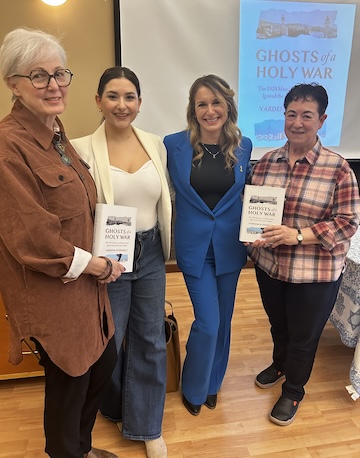
photo - Left to right: Gay Cohen, organizer of the White Rock/South Surrey Jewish Community Centre Book Club; Helen Mann of the Jewish Federation of Greater Vancouver; author and journalist Yardena Schwartz; and WRSS JCC president Adele Ritch
Left to right: Gay Cohen, organizer of the White Rock/South Surrey Jewish Community Centre Book Club; Helen Mann of the Jewish Federation of Greater Vancouver; author and journalist Yardena Schwartz; and WRSS JCC president Adele Ritch. (photo by Chloe Heuchert)

At the event, held in partnership with the Jewish Federation of Greater Vancouver and the Cherie Smith JCC Jewish Book Festival, Schwartz – an award-winning producer and journalist – spoke about her book and then answered some questions from the audience.

Schwartz has worked for NBC, among other organizations, and reported for many publications, including the Wall Street Journal, New York Times and Foreign Policy. She lived in Israel from 2013 to 2023.

While working as a freelance journalist in Tel Aviv, Schwartz was introduced to a family from Memphis, Tenn., who had a box of letters written by their late uncle, David Shainberg, who was one of the 70 Jews killed by some of the Arab residents of Hebron during the massacre in 1929. He had sailed to Palestine in 1928, and studied at Hebron Yeshivah; he wrote hundreds of letters to his family about how Jews and Arabs were living together, coexisting, peacefully. Schwartz spoke about those letters, and the massacre and how it relates to Oct. 7. 

Helen Mann, who works with the Jewish Federation and is also a part of the White Rock/South Surrey Jewish community, told the Independent that reading Schwartz’s book amid growing antisemitism was empowering, that “it felt more important than ever to spread the historical truth of our people and this contentious and tiny piece of land, especially in such a tiny Jewish community we are in, of White Rock/South Surrey.”

Mann said there is so much misinformation being disseminated, on social media in particular.

“Yardena has meticulously delved through and cited sources to do the work for us, and weave that history into a page-turner,” she said. “While I hope this book gets into the hands of anyone who wishes to speak on the current conflict and politics, it’s of high priority that we as a Jewish community are educated on our own history; to know who we are in order to know where we are going.”

The Jewish Independent spoke with Schwartz after the event.

JI: What types of research did you do for the book?

YS: My research started with interviews in Hebron with Palestinians and Israelis living there. And then, from there, I focused on the period of history that preceded the massacre, so 1928 and 1929. That involved looking at archival newspaper articles in places like the Palestine Post and the New York Times, and Arabic press… There’s an archive in Hebron that I spent a lot of time in, archives in Jerusalem, and Hagana Archives in Tel Aviv. This was during COVID, so I couldn’t go to the London archives, but some other authors who had been there and got materials were kind enough to share them with me.

It was a lot of archival research, a lot of interviews: hundreds of hours of interviews with Israelis and Palestinians in Hebron between 2019 and 2023.

I also read as many books as I could that were focused on that period. There were two books that were really helpful in my research. One was Hillel Cohen’s Year Zero of the Arab Israeli Conflict, which tells the story not just of the Hebron massacre, but of the riots of 1929. And it’s very succinct, it just focuses on the riots, like none of the history before or after. Then, a book by Orin Kessler, Palestine 1936, which focused on the Great Arab Revolt from 1936 to 1939.

JI:  During your research, did you find any information that surprised you in a way?

YS: Well, the letters that David Shainberg wrote to his family were really eye-opening for me in painting a picture of what Hebron was like before the massacre and what Hebron was like during the British Mandate before the massacre…. I had never known that Jews and Muslims had lived side by side in peace in Hebron and owned businesses and drank coffee together. That was really surprising to me, given what Hebron is today.

But I think what shocked me most during my research was what I discovered about the mufti, the grand mufti, Amin al-Husseini, who was the first leader of the Palestinian people, and, specifically, his role during the Holocaust, his affiliation with the Nazis, his role as a Nazi, and his role in recruiting tens of thousands of Muslims to fight for the Nazis – and the fact that he lived the rest of his life out in the open. I mean, he was wanted for Nazi war crimes and yet he didn’t have to live out the rest of his life in hiding, like so many Nazis did…. He was never arrested, never was prosecuted or put on trial for his crimes. 

JI: Since this is your first book, how was the overall experience, and what challenged you the most? 

YS: I think what challenged me the most was giving birth to two children during the course of writing this book. I honestly still have no idea how I wrote a book while raising two kids – my kids are now 2 and 4-and-a-half. I was pregnant with my first child when I started this research … and it was really difficult to write about such a depressing, heavy subject while bringing new life into this world. It was really difficult.

It had always been a dream of mine to write a book. I’d been a journalist for years, but I don’t think I could grasp, until writing this book, just how difficult writing a book is, especially something that covers 100 years of history. So, it was … a tremendous undertaking. Sometimes, it was torturous, but other times it was really fulfilling and especially now that it’s out there in the world, and hearing from readers is just like an incomparable experience…. I feel really blessed that I was entrusted with these letters by these families. Without them, this book wouldn’t have come to fruition, basically. 

JI: What key message do you want readers to take from the book? 

YS: I think my key message is that we will never be able to resolve this conflict if we can’t agree on the facts that drive it and the history that precedes this tragic moment we’re in. And, I think, to anyone who wants to see peace in Israel, peace between Israel and Palestinians, I hope they’ll read this book. I hope they’ll learn the lessons of history, so that we can stop repeating the mistakes of the past. 

Chloe Heuchert is an historian specializing in Canadian Jewish history. During her master’s program at Trinity Western University, she focused on Jewish internment in Quebec during the Second World War.
Posted on March 14, 2025March 13, 2025Author Chloe HeuchertCategories BooksTags antisemitism, Helen Mann, history, misinformation, South Surrey, White Rock, WRSS JCC, Yardena Schwartz
Community tree of life

Community tree of life

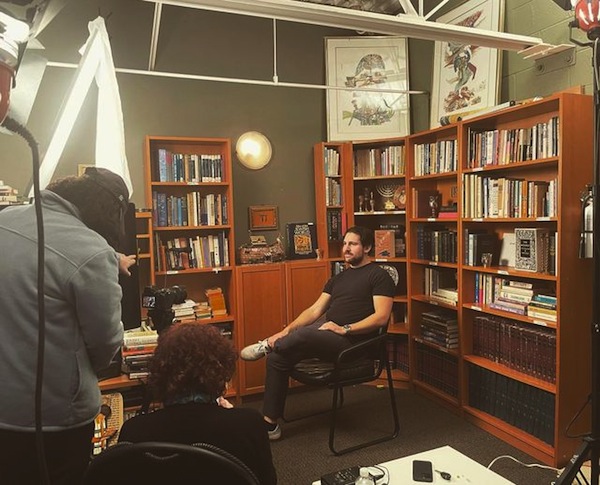
Daniel Shalinsky being interviewed and filmed as part of White Rock South Surrey Jewish Community Centre’s oral history project, which will form part of the community’s Feb. 5 Tu b’Shevat Gala, along with singer Tania Grinberg, speaker Karen James and more. (photo by Helen Thomas Mann)

The White Rock South Surrey Jewish Community Centre Tu b’Shevat Gala will take place on the evening of Sunday, Feb. 5, the start of the holiday. With the theme “Strengthen Our Roots,” a main component of the event will be community members’ oral histories.

“The idea for the project came about in a very multidirectional way,” Helen Thomas Mann, WRSSJCC president, told the Independent. “First, we wanted to host an annual fundraising event and, with our membership drive being around the High Holidays, Tu b’Shevat seemed like a good time for it.”

Tu b’Shevat, the 15th of the Hebrew month of Shevat, is the New Year of Trees. 

“Naturally,” said Thomas Mann, “the theme for a Tu b’Shevat event would be trees, so we began focusing on our ‘tree of life’ as a community. But we were coming back together after a three-year lull from the pandemic – we needed people to remember why this place is important, and why it should continue to exist. The idea became, let’s honour our roots, our history as a community of nearly 30 years; remember the branches that connect us to our Jewishness and the WRSSJCC, and celebrate our leaves, the future of our community.

“As a new president and newer member of the community,” she said, “I felt sensitive to the fact that, although I was playing a leadership role in the organization, there were many people who had worked hard before me to create this warm Jewish space. Our new board didn’t have to reinvent the wheel. I made it my mission to learn those stories.”

A therapist by profession, Thomas Mann is naturally interested in people’s stories, she said. “I had a conversation with Alysa [Routtenberg] from the Jewish Museum and Archives of British Columbia, and that’s where collecting life stories of people in our community came about. She provided me with a recording device. Then it occurred to me that these life stories and the stories of the JCC itself could be incorporated into our celebration.

“I was scrolling the WRSSJCC Instagram account, and I saw a person we follow, and who follows our organization back, who had beautiful fine art photos. Their website said they were passionate about storytelling. I took a chance and reached out, and the person happened to be Yaacov Green, who participated in the JCC as a child and whose father was a president of the JCC for many years! Yaacov generously offered to donate his time to record and edit these interviews to make a short presentation for the Tu b’Shevat event, and a longer version to be submitted to the Jewish Museum and Archives of B.C.”

During the project, Thomas Mann said, “Marcy Babins from the museum mentioned this may be the first representation of Jews from our outlying community in the archive, so I’m thrilled we will be represented. There’s such a rich history here of creative, scrappy and very grassroots Jewish community-building efforts. It’s been very inspiring to learn about. We have interviewed 23 people so far, plus we are having two make-up days…. We are also completing a few Zoom interviews for those who are no longer local.”

Everyone in the community was invited to participate, whether new to the community or having been a part of it for a long time. One of the participants was Daniel Shalinsky, who was interviewed for the project by his grandmother, Helen Lynn Lutterman.

“He attended Hebrew school at the JCC and spent lots of time there as a child,” said Thomas Mann. “There are pictures of him as a child with a hammer, literally building our WRSSJCC alongside his family. His parents are Hertha and Steve Shalinsky, who we are honouring at the Tu b’Shevat event. Their family, including Steve’s brother and his wife, Ken and Andrea Shalinsky, were integral in acquiring our physical space. Steve was a president for many years. For more on the fascinating story of how the space was acquired, you will have to attend the event to find out!”

In addition to the community histories, award-winning Yiddish singer Tania Grinberg will be featured at the celebration. And the night’s keynote speaker will be Karen James, who will share the story of her experience at the 1972 Olympics in Munich. James was there with the Canadian Olympic swim team, and witnessed a group of people climbing over the wall of the Olympic village. Only later would she find out that those people held hostage and then murdered 11 Israeli athletes. “She will share how witnessing this event impacted her life, her connection to her Jewish identity, and her relationship with the WRSSJCC,” said Thomas Mann of James’ presentation.

The Tu b’Shevat fundraiser is for specific programming, as well as operating expenses of the WRSSJCC.

“We are fundraising to generally pay our bills, and our hope is to be able to hire a part-time employee to support our admin needs and flourishing programming,” Thomas Mann explained. “We also have a list of ‘wishing tree’ items that range in dollar amounts from new oven mitts to computer monitors, and open amounts for specific purposes such as donating towards a child in need’s Hebrew school tuition. Long term, we would love to be able to find a new building space where we could have a stand-alone building, as opposed to being in a strip mall, with an outdoor area for a sukkah and community garden. That would be our pie-in-the-sky donation! We are a 100% volunteer-run organization, so every contribution counts.”

The entire community is welcome to the Feb. 5 event, which will be held at the White Rock South Surrey Jewish Community Centre, 32-3033 King George Blvd., in Surrey. “We considered the ease of hosting in a different location for space restrictions, but it seemed too important to centre the space,” said Thomas Mann. “Plus, our tree of life is on the wall, and we will be unveiling the new additions at the event.”

Tickets will soon go on sale – keep an eye on Instagram (@wrssjcc) and Facebook (White Rock South Surrey JCC).

Format ImagePosted on December 23, 2022December 21, 2022Author Cynthia RamsayCategories LocalTags community centre, fundraising, gala, Helen Thomas Mann, JCC, oral histories, South Surrey, synagogues, Tu b’Shevat, White Rock, WRSS, WRSSJCC
Welcomed in Kiryat Gat

Welcomed in Kiryat Gat

Laura Soda, right, with her host family, the Lipiks, and some of her MITF colleagues at Rosh Hashanah. (photo from Laura Soda)

Growing up as a Jewish young adult in White Rock, I always had mixed feelings about celebrating the High Holidays. On one hand, I enjoyed the traditions and the feeling of community that I experienced when we would go to services. However, early fall has always been a hectic and stressful time for our family as well. Aside from Rosh Hashanah and Yom Kippur, there was the beginning of a new school year, all four family birthdays falling within a month of one another and, finally, Thanksgiving. It’s a six-week family marathon.

During the High Holidays, I also was overwhelmed with the feeling of being the “token Jew” in every class. At the beginning of every school year, I dreaded having to approach the teacher and ask for time off so that I could observe holidays that most of my peers, and even some of my teachers, had never heard of. I almost had a sense of guilt, as if I were inventing holidays just to get out of class. All I wanted was to fit in and be like everybody else. And, in the White Rock of my childhood, there was little cultural, ethnic or religious diversity. There were two other Jewish kids at my school, but we rarely – if ever – acknowledged our mutual Jewish connection outside the context of Hebrew school, synagogue or youth group. It wasn’t that we were actively hiding our Jewishness; for me, I simply felt that any sign of difference was “uncool.”

I am currently on a 10-month program teaching English in Israel with Masa Israel Teaching Fellows (MITF). I am living in Kiryat Gat, a small, mostly religious up-and-coming city in the south of Israel. For the next 10 months, I will be teaching English to the children of the community in which I live. Most of the people here do not speak English, and I feel grateful to be in a place where I can help break language barriers and contribute to English language education. For me, however, it has been quite an adjustment.

With the challenges of settling into a new country, in a town where not many people speak English, I am overwhelmed by the tremendous sense of community and unity. Despite the inconvenience of the train and bus schedules around the holidays, it wasn’t just me being inconvenienced. For the first time in my life, I was in the same situation as everyone around me.

Recently, I celebrated my first Israeli Rosh Hashanah with a host family that I was connected to through the MITF program. The Lipik family welcomed my peers and I, quite literally, with open arms and have made us feel at home. My roommate and I walked to Rosh Hashanah services in the morning and passed many others doing the same. Suddenly, I realized that, although I had been prepared to feel like an outsider in a tight-knit community of people who were more religious than me, my Rosh Hashanah experience was so welcoming. I smiled at the children who listened to the shofar with wonder, and I was reminded that children are simply children, no matter where they live or what language they speak.

Later, we joined our host family at their backyard barbeque along with their extended family and friends, and we ate our hearts out as we basked in the smell of smokey chicken kebabs and toasted marshmallows for dessert. Throughout it all, it sunk in that, this year, I don’t have to explain myself. This year, it is my turn to learn – to watch and listen to how other Jews celebrate, being curious about the differences, but, more often, being surprised by the many similarities in our traditions. My first Rosh Hashanah in Israel taught me that although I am far from my home in Canada, I am exactly where I need to be – I feel right at home.

Laura Soda is currently on a 10-month program teaching English in Israel with Masa Israel Teaching Fellows. For more information on the MITF and other Masa programs, visit masaisrael.org.

Format ImagePosted on October 7, 2022October 5, 2022Author Laura SodaCategories Israel, LocalTags education, Israel, Judaism, Kiryat Gat, Masa Israel Teaching Fellows, memoir, MITF, teaching, White Rock
Holiday baking

Holiday baking

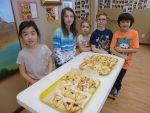
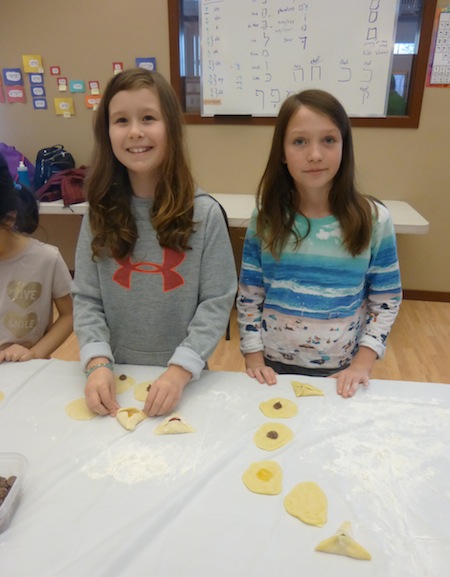
photo - In preparation for Purim, students of White Rock South Surrey JCC Religious School baked hamantashen to take home and share with their familiesIn preparation for Purim, students of White Rock South Surrey JCC Religious School baked hamantashen to take home and share with their families. (photos from WRSS JCC)


Format ImagePosted on March 9, 2018March 7, 2018Author WRSS JCCCategories Celebrating the HolidaysTags education, hamantashen, JCC, Judaism, Purim, White Rock
Proudly powered by WordPress