Skip to content
  • Home
  • Subscribe / donate
  • Events calendar
  • Business Directory
  • FAQ
  • News
    • Local
    • National
    • Israel
    • World
    • עניין בחדשות
      A roundup of news in Canada and further afield, in Hebrew.
  • Opinion
    • From the JI
    • Op-Ed
  • Arts & Culture
    • Performing Arts
    • Music
    • Books
    • Visual Arts
    • TV & Film
  • Life
    • Celebrating the Holidays
    • Travel
    • The Daily Snooze
      Cartoons by Jacob Samuel
    • Mystery Photo
      Help the JI and JMABC fill in the gaps in our archives.
  • Community Links
    • Organizations, Etc.
    • Other News Sources & Blogs
  • JI Chai Celebration
  • JI@88! video

Recent Posts

  • Legal help for students
  • Revisiting myth of Lilith
  • Wrong person rebuked
  • Canada’s mixed messages
  • Questions for museum
  • Symposium on antizionism
  • Making soccer political
  • CJPAC lauds Pulver’s impact
  • City recognizes Vrba’s legacy  
  • Organ donation saves lives
  • Theodore’s March premiere
  • A healing Shabbaton
  • Supplying healthy food
  • A chime of metal tags
  • Yellowknife seder a first
  • Ishai energizes, unifies
  • A Lag b’Omer to remember
  • Expanding the healing
  • Hannah Senesh – a unique hero
  • Community milestones … May 2026
  • Sharing her testimony
  • Fall fight takes leap forward
  • The balancing of rights
  • Multiple Tony n’ Tina roles
  • Stories of trauma, resilience
  • Celebrate our culture
  • A responsibility to help
  • What wellness means at JCC
  • Together in mourning
  • Downhill after Trump?
  • Birth control even easier now
  • Eco-Sisters mentorship
  • Unexpected discoveries
  • Study’s results hopeful
  • Bad behaviour affects us all
  • Thankful for the police

Archives

Follow @JewishIndie
image - The CJN - Visit Us Banner - 300x600 - 101625

Month: December 2022

Learning to nurture kindness

Learning to nurture kindness

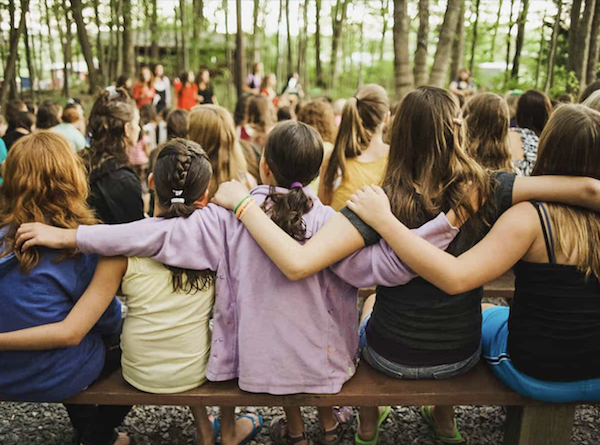
Foundation for Jewish Camp has been awarded a grant to explore how Jewish overnight camp nurtures and promotes character development. (photo from jewishcamp.org)

Foundation for Jewish Camp (FJC) has been awarded a three-year expansive research grant from the John Templeton Foundation to explore how the activities and rituals at Jewish overnight camp nurture and promote character development in adolescent campers and camp staff.

Findings of an earlier landscape survey of current virtue development practices at Jewish camps and a series of interviews with camp professionals identified kindness as the most common virtue camps desire to nurture in their communities. This next phase of in-depth research will focus on understanding how kindness is embedded into the structure of Jewish camp, how character virtues are taught, practised and modeled by camp leadership and staff, and how staff and campers are impacted.

The initial one-year planning grant, awarded in 2021, was used to develop conceptual frameworks and research design and instrumentation. This work included convening thought partners and learning circles to guide the project; conducting a landscape survey of current virtue development practices at Jewish camps; interviewing a select group of 10 camps to learn more about their current practices; and developing the proposal for the three-year study to evaluate the impact of character development practices on the minds, hearts and behaviours of adolescents and young adults who participate in Jewish camp.

According to Rabbi Avi Katz Orlow, FJC’s vice-president for education and innovation and the co-leader for this project, “Jewish camp in North America has a great history of making mensches – a Yiddish term for a person of great character and integrity – but that is not enough. We need to look critically and explore the metrics of character development. With the support of the John Templeton Foundation, we will define where we are headed in this work for the next decade. Surfacing and sharing best practices in character development will ensure we are making our best effort to raise new generations of thoughtful, resilient, caring, community-minded individuals. The world needs mensches now, more than ever before.” 

“We want to surface exemplary practices that support young adult camp staff to model and nurture kindness in themselves and others,” said Nila Rosen, FJC’s director of learning and research. “Our research will allow us to learn with the camps and develop additional resources and practices to elevate emerging and promising character development at camps across North America.”

These resources will expand on FJC’s Making Mensches Periodic Table – the resource bank for camp staff and educators to engage in the work of character development, whose popularity served as the basis for this inquiry.

FJC has selected five camps that are intentional in their construction and cultivation of a culture of kindness in their community. These camps will conduct a thorough exploration of how that shows up in their staff selection and training, relationship building, camp rituals, peer-to-peer support, professional development, branding materials, camp artifacts, signage, or explicit language used by leadership teams.

Dr. Richard Bollinger, senior program officer of character virtue development at the John Templeton Foundation, said, “We are excited about the potential impact of this project because spreading kindness within a community can create ripples of a ‘pay-it-forward’ nature that extend far beyond the initial kind actions. Along with the hundreds of thousands of campers, families and staff who participate in 300+ Jewish camps across North America each year, we are eager to share and learn with FJC and the field.”

– Courtesy Foundation for Jewish Camp

Format ImagePosted on December 23, 2022December 22, 2022Author Foundation for Jewish CampCategories NationalTags Foundation for Jewish Camp, Jewish camp, kindness, summer
ההגירה מישראל לקנדה צפויה לגדול

ההגירה מישראל לקנדה צפויה לגדול

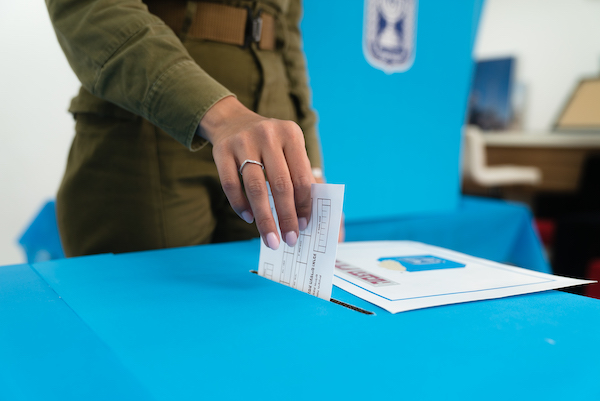
(IDF Spokesperson’s Unit / CC BY-SA 3.0: צילום)

לאור תוצאות הבחירות הכלליות האחרונות שנערכו בישראל בראשית חודש נובמבר, צפוי שההגירה אל קנדה תגדל. יש ישראלים שיתייאשו מהמצב החדש בישראל, כאשר ממשלת ימין קמה בהשתתפות המפלגה הימנית קיצונית הציונות הדתית, והם מבקשים לעזוב את ישראל. כך ישראלים מתבטאים בפייסבוק

בשנים האחרונות ההגירה מישראל לקנדה נמצאת במגמת עלייה ועתה צפוי שיותר ישראלים יעברו אליה. לפי פייסבוק תומכי בנימין נתניהו, שקראו למתנגדיו “שמאלנים בוגדים” קוראים להם עכשיו “שמאלנים למטוסים”. ואכן יש סברה ישראלים לא מעטים יעזבו לחו”ל. אחד אנשי הימין כתב בפייסבוק: “לאור תוצאות הבחירות אנשי השמאל עוזבים את הארץ ולכן משבר הדיור מגיע לקיצו”. אחר מאלה שרוצים לעזוב שואל באמצעות פייסבוק: “איך עוזבים את ישראל ומהר?” התגובות: “מבקשים מקלט מדיני, משיגים דרכון פורטוגלי, זה הרבה יותר קל ממה שחושבים”. משפחה ישראלית שעברה להליפקס לפני חמש שנים כותבת בפייסבוק לאחר קיום הבחירות: “למדנו לאהוב את החיים כאן בקנדה. את השלווה, את הנופים, את האדיבות ואת השקט. אז נכון שלא הכל מושלם. ולא הכל קל. ולא הכל מרגישים שייכים. אבל בשורה התחתונה, מרגיש שכנראה עשינו את הדבר הנכון. ישראל עומדת היום בצומת דרכים, ואים להסתמך על הבחירות האחרונות, כנראה שאנחנו כבר אחרי הפניה”. תומך נתניהו שואל בפייסבוק היכן הם אלה שטענו כי אם ביבי חוזר הם יעזבו את הארץ?”

כאשר היאוש גבר ולא רואים אופטימיות בטווח הקצר או אפילו הרחוק יותר, וכאשר ערכי הדמוקרטיה של ישראל הולכים ונמסים ולעומתם ערכים ימניים קיצוניים שתופסים מקום מרכזי במדינה, יש כאלה החושבים שהגיע הזמן לעזוב. כאמור קנדה היא אחד היעדים החמים בעולם כיום עבור ישראלים, שלא רוצים לעבור לאירופה או לארצות הברית

חברת דיווידשילד המתמחה במתן שירותי ביטוח עבור ישראלים הגרים בחו”ל, מסבירה מי זו קנדה: מדובר במדינה הצפונית ביותר בצפון אמריקה, המעוררת אצל רבים אסוציאציות של קור ושלג, אבל במציאות מדובר באחת המדינות הנחשקות בעולם להגירה ולרילוקיישן עם אוכלוסייה רב תרבותית, כלכלה יציבה, טבע מרהיב, נופים עוצרי נשימה ואיכות חיים גבוהה. קנדה נחשבת לאחת ממדינות ההגירה הפופולריות ביותר בקרב ישראלים, אם זה בזכות הכלכלה החזקה שלה, אפשרויות התעסוקה הרבות, קשרי המסחר הטובים ואיכות החיים הגבוהה. קנדה נחשבה למדינה ליברלית בעלת חוקי הגירה נוחים מאוד, שמטרתם למשוך אליה כוח עבודה משכיל ומקצועי. במהלך השנים עברה מדיניות ההגירה הקנדית שינויים רבים וכיום היא מתבססת בעיקר על קריטריונים כמו השכלה, גיל, ניסיון מקצועי ושליטה בשפות. המקצועות המבוקשים בקנדה, שעבורם הסיכוי הגדול ביותר לקבל אישור עבודה, הם בתחומים הבאים: רפואה וסיעוד, מחשבים, הנדסה, חינוך לגיל הרך, מרצים באקדמיה, תרגום, פסיכולוגיה וניהול בכיר

קנדה היא מדינה ענקית, השנייה בגודלה בעולם, עם צפיפות אוכלוסייה קטנה יחסית לשטחה הגדול – מה שמהווה אטרקטיביות רבה עבור ישראלים המעוניינים ברילוקיישן. כלכלתה של קנדה נחשבת ליציבה מאוד, שוק העבודה מגוון ושכר העבודה נחשב גבוה ביחס לשעות העבודה

אפשרויות התעסוקה בקנדה עבור מהגרים ישראלים נעות בין עבודות של צעירים, כמו: עבודה בעגלות ובמכירות, עבודת שיפוצים, טיפול בילדים והדרכות נוער בקהילות היהודיות; ועד משרות בחברות ההייטק הגדולות, בתחומים כמו הנדסת תוכנה; כמו כן, משרות בתחומי הסיעוד והרפואה בבתי החולים המתקדמים ביותר בקנדה

ישראלים המעוניינים ברילוקיישן לקנדה צריכים קודם כל למצוא מעסיק חוקי שידאג עבורם לויזת עבודה. החברה המעסיקה צריכה להיות בעלת משרדים הנמצאים בקנדה ועליה לקבל היתר ממשרד העבודה הקנדי להעסקת עובד שאינו קנדי

עם איכות חיים גבוהה, שירותי בריאות טובים, חינוך איכותי, כלכלה יציבה, חברה מקבלת, קהילה יהודית ענפה, שיעור פשיעה נמוך יחסית וטבע מרהיב – החיים בקנדה נחשבים בהחלט לנוחים ומלאי הזדמנויות

מערכת הבריאות בקנדה נחשבת לאחת מהטובות בעולם ומורכבת בעיקרה ממערכת ציבורית, הממומנת על ידי הציבור (בקנדה אין כמעט בכלל רפואה פרטית, כולל בתי החולים). כל אזרח קנדי, מהגר או תושב קבע זכאי לכיסוי רפואי מלא, כלומר כל ביקור רפואי, אשפוז בבית חולים וביצוע בדיקות רפואיות ניתן בחינם ובאופן שוויוני (למעט תרופות וטיפולי שיניים). העובדה כי כל השירותים הרפואיים ניתנים בחינם, אינה גורעת מאיכותם – ההפך: תקציב הבריאות בקנדה הוא גבוה מאוד, מה שמבטיח שירותים רפואיים איכותיים ויחס אישי

הדבר הראשון שעליכם לחשוב עליו כאשר אתם מתכננים מעבר מגורים לקנדה הוא כמובן עניין המגורים. אם אתם נשלחים לרילוקיישן, סביר להניח שהחברה המעסיקה תדאג עבורכם למגורים מסובסדים על חשבונה באזור העבודה. אם אתם עצמאיים או שעליכם למצוא מקום מגורים בכוחות עצמכם, זכרו כי גובה שכר הדירה משתנה בהתאם לאזור המגורים, הביקוש וסוג הדירה. פעמים רבות משתלם יותר לבחור במקום מגורים מעט רחוק מהמרכז ולהשתמש בתחבורה הציבורית היעילה

עניין נוסף שיש לדאוג לגביו כאשר עוברים עם ילדים לקנדה הוא החינוך. קנדה נחשבת למדינה שמשקיעה רבות בחינוך ומערכת החינוך שלה נחשבת לאחת הטובות בעולם. בקנדה יש מבחר גדול של בתי ספר ציבוריים ולצדם בתי ספר פרטיים, חלקם הגדול הוא בתי ספר יהודיים. ההרשמה לבתי הספר נעשית ישירות דרך מוסד הלימודים

הבחירה בין חינוך ציבורי ופרטי תלוי בשיקולים אישיים וכלכליים, אך שתי האופציות יבטיחו לילדכם חינוך איכותי. הלימודים במערכת הציבורית הם ליברלים יותר ויחשפו את ילדיכם למפגשים עם תלמידים ממגוונים אתניים שונים. הלימודים במערכת החינוך היהודית הפרטית אינם זולים וכוללים לצד הלימודים במקצועות הכלליים גם לימודי עברית ויהדות. חשוב לדעת, כי כל תלמיד חדש הנכנס למערכת החינוך הקנדית צריך לעבור מבחן באנגלית ובמתמטיקה כדי לקבוע את רמתו. מומלץ לקבוע מועד לראיון עוד בטרם הגעתכם לקנדה

אם חשובה לכם הקהילתיות, השמירה על הצביון היהודי והקרבה לישראלים נוספים, בקנדה אתם בהחלט תרגישו בבית. יהדות קנדה היא הרביעית בגודלה בעולם (אחרי ארה”ב, צרפת וישראל) וכיום חיים בקנדה למעלה מארבע מאות אלף יהודים. הקהילות היהודיות במדינה נחשבות מפותחות מאוד, בעלות קשרי קהילה חזקים והן מעניקות תמיכה רבה וסיוע למהגרים חדשים. המוקד המרכזי של ישראלים בקנדה היא העיר טורנטו, העיר הגדולה בקנדה ובירת מחוז אונטריו, בה מתגוררת הקהילה היהודית כוללת כמאתיים אלף אלף יהודים. יעד נוסף מרכזי עבור מהגרים ישראלים היא העיר מונטריאול הנמצאת במחוז קוויבק, המחוז הגדול בקנדה. במונטריאול נמצאת הקהילה היהודית השניה בגודלה בקנדה שמונה קרוב לכמאה אלף איש. בערים נוספות שבהן תמצאו קהילות יהודיות הן: ונקובר, ויניפג, אוטווה וקלגרי

מעבר מגורים עם כל המשפחה הוא לא קל אף פעם, אבל כשמדובר במדינה כמו קנדה סביר כי לצד קשיי המעבר, תחוו קליטה נעימה בזכות החברה הקנדית המקבלת והקהילה היהודית והישראלית המחבקת. עם זאת, יש לקחת בחשבון את כל ההשלכות והאתגרים העומדים בפניכם בעת מעבר למדינה רחוקה וקרה כמו קנדה

קושי נוסף עמו אתם צפויים להתמודד הוא מזג האוויר. קנדה היא מדינה קרה מאוד, עם חורף סוער וטמפרטורות שצונחות אל מתחת לאפס, לישראלים המגיעים ממדינה חמה לוקח זמן להתרגל לקור הקנדי. היתרון כאן הוא שכל שנה תזכו לראות שלג, הילדים יוכלו לבנות בובות שלג וללמוד לגלוש

Format ImagePosted on December 14, 2022December 13, 2022Author Roni RachmaniCategories עניין בחדשותTags Binyamin Netanyahu, Canada, economy, education, elections, Facebook, healthcare system, immigration, Israel, Jewish identity, peace, weather, בחירות, בנימין נתניהו, הגירה, הצביון היהודי, חינוך, ישראל, כלכלה, מזג האוויר, מערכת הבריאות, פייסבוק, קנדה, שלום
RJDS hosts leaders

RJDS hosts leaders

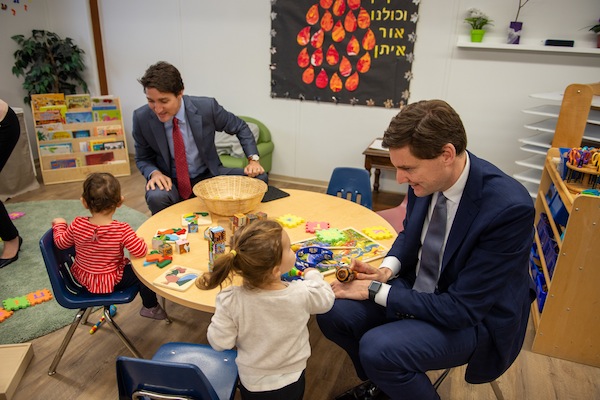
Prime Minister Justin Trudeau and B.C. Premier David Eby interact with kids at Richmond Jewish Day School on Dec. 2. (photo from Province of BC)

On Dec. 2, Prime Minister Justin Trudeau and federal Minister of Families, Children and Social Development Karina Gould were joined by B.C. Premier David Eby, B.C. Minister of State for Child Care Katrina Chen and Musqueam Indian Band Chief Wayne Sparrow at Richmond Jewish Day School to highlight federal and provincial efforts to make childcare more affordable.

RJDS established its Early Learning Centre this past September, with Sara Solomon as director. (See jewishindependent.ca/rjdss-new-early-ed-program.) It offers two preschool programs, one for infants and toddlers (0-3 years old) and one for children ages 3-5.

Reut Dahan, a parent at RJDS, commented on the government’s reduction of childcare fees, calling it “life-changing.”

“Thanks to this amazing program being implemented, our costs are now reduced by over $1,000 a month, allowing both of us to work full time and easing some of our financial stress,” said Dahan, who has three kids – a toddler, a preschooler and a school-aged child.

Among those from the Jewish community who attended the Dec. 2 event were Ezra Shanken, Jewish Federation of Greater Vancouver chief executive officer; Geoffrey Druker, chair of the Centre for Israel and Jewish Affairs’ Local Partnership Council; Michael Lipton, RJDS board chair; Shannon Gorski, a board member of both Federation and Jewish Family Services; and Federation marketing and communications manager Sara Bandel. In his weekly email message, Shanken thanked RJDS principal Sabrina Bhojani and Lipton for making RJDS’s Early Learning Centre a reality.

– Courtesy Richmond Jewish Day School, Jewish Federation of Greater Vancouver and Province of British Columbia

Format ImagePosted on December 9, 2022December 7, 2022Author RJDS/Federation/Govt of BCCategories LocalTags David Eby, early education, education, funding, Justin Trudeau, RJDS
JCC receives $25M support

JCC receives $25M support

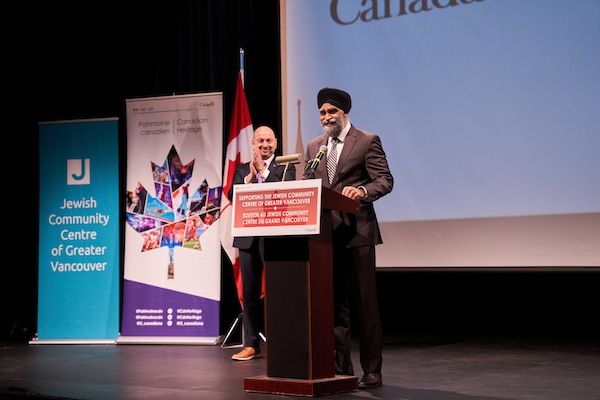
Minister and MP Harjit Sajjan speaks at the Jewish Community Centre of Greater Vancouver on Dec. 5, while Jewish Federation chief executive officer Ezra Shanken looks on. (photo from Jewish Federation)

On Dec. 5, the Jewish Community Centre of Greater Vancouver (JCC) announced that it has received $25 million in support from the Government of Canada through the Department of Canadian Heritage. The funding will be used for the redevelopment of the 3.3-acre property at West 41st and Oak Street. It will support the transformation of the JCC into a state-of-the-art multigenerational community hub in the Oakridge area with more childcare spaces, expanded seniors programs, arts and cultural spaces, and an expanded Vancouver Holocaust Education Centre.

“The Government of Canada stands with Jewish communities across Canada and around the world. Today’s investment is part of our commitment to an inclusive Canada that is strong and proud of its diversity. Supporting cultural facilities is essential, not only to retain their viability today, but to help them flourish for generations to come,” said Minister of Canadian Heritage Pablo Rodriguez.

“The Jewish Community Centre of Greater Vancouver is now another step closer to building a larger community hub where Vancouverites of all backgrounds can connect through shared experiences, while allowing the centre to continue providing services and supports that enrich quality of life in our city,” said Harjit Sajjan, minister of international development, minister responsible for the Pacific Economic Development Agency of Canada and member of Parliament (Vancouver South).

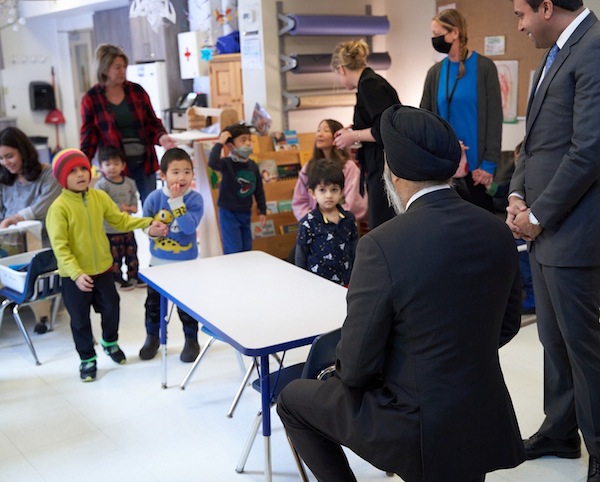
photo - Minister and MP Harjit Sajjan took some time out to meet some of the kids at the centre; MP Taleeb Noormohamed is standing to the minister’s right
Minister and MP Harjit Sajjan took some time out to meet some of the kids at the centre; MP Taleeb Noormohamed is standing to the minister’s right. (photo from Jewish Federation)

The redevelopment of the JCC is the cornerstone of the overall site redevelopment plan, which will also provide permanent homes for more than 20 not-for-profit community organizations and two residential towers that will provide mixed-use rental housing, some to be at below-market rates.

The JCC, Jewish Federation of Greater Vancouver and King David High School have signed a memorandum of understanding that will see them work together to fulfil a shared vision rooted in extensive community and public consultation.

“The funding from the Government of Canada through the Department of Canadian Heritage contributes the resources necessary to support and sustain the Jewish community in Vancouver,” said Eldad Goldfarb, executive director of the JCC.

“The new space is poised to be a connection point that people of all ages and from all walks of life can enjoy for generations to come, and the legacy of this redevelopment will last a lifetime,” he added.

“This announcement is the result of efforts that spanned many years,” said Ezra Shanken, Jewish Federation chief executive officer. “We want to thank the Government of Canada and our advocacy agent, the Centre for Israel and Jewish Affairs, for their work on this.”

Monday’s announcement builds on the $25 million funding provided in 2021 by the B.C. government and a $25 million gift and community match from the Diamond Foundation. 

– Courtesy Government of Canada and
Jewish Community Centre of Greater Vancou
ver

Format ImagePosted on December 9, 2022December 7, 2022Author Govt of Canada/JCCGVCategories LocalTags development, Eldad Goldfarb, Ezra Shanken, funding, Government of Canada, Harjit Sajjan, JCC, Jewish Community Centre, Jewish Federation, Pablo Rodriguez

Rail against extremism

Coalition negotiations continue in Israel after the fifth election in less than four years. And the signs are ominous for the future of Israeli democracy, for women’s equality, for religious pluralism, for LGBTQ+ rights, for peace and for coexistence.

Bezalel Smotrich, head of the Religious Zionist party, will be a major player in the new government, as will the leaders of two parties with whom he ran in an electoral slate: Itamar Ben Gvir, head of Otzma Yehudit (Jewish Power), and Avi Maoz, head of the religious extremist faction Noam.

Smotrich will apparently have unprecedented influence over the growth and governance of West Bank settlements. The explosive issue of “who is a Jew” – which determines eligibility for immigration under the Law of Return – will fall in part to Maoz, who wants to delegitimize non-Orthodox conversions and narrow the parameters under which an immigrant is permitted under the Law of Return from grandchildren of Jews to those born to Jewish parents. In addition to determining Jewish identity, Maoz has a preoccupation with homosexuality and has promised to ban Pride Parades and  oppose equality for gay Israelis. (Netanyahu has said he won’t allow Maoz to diminish gay rights.) Netanyahu has promised to hand Maoz control over a NIS 2 billion budget (about $790 million CDN) for “external programming” in public schools.

Yair Lapid, the outgoing prime minister, railed against this allocation.

“If we don’t stop them, Avi Maoz and his unenlightened gang will put unenlightened, racist, extremist, misogynistic and anti-LGBT content into our children’s schools,” said Lapid.

Ben Gvir and his party call for the expulsion of Arabs they deem disloyal and he has suggested that the anti-Zionist religious sect Neturei Karta should be put “on a train.” Ben Gvir’s party advocates the absorption of the West Bank which, by necessity, would eliminate either the Jewish identity or the democratic nature of Israel – and we do not need to speculate on which Ben Gvir would be willing to discard.

The three horsemen have endorsed banning public transit and sports on Shabbat, eliminating a department that promotes women in the military, and snatching the power to appoint judges from a nonpartisan panel and putting it in the hands of politicians, in addition to a host of other far-right policy fetishes.

“This Israel is not going to be governed by talmudic law,” Netanyahu said in defence after attacks on his coalition agreements. This is precisely the direction his partners are headed, however, and the very fact that he was moved to make such a disclaimer is proof of how dangerously close the new government will be to crossing a religious-secular divide that the pioneers of the state consciously erected.

The jigsaw puzzle parliament is not Netanyahu’s fault – any prime minister was going to have to cobble together a mismatched majority. What is Netanyahu’s fault is the particularly rancid aspects of the coalition. Seeing the unlikelihood of the most hateful and divisive minor parties reaching the electoral threshold in the previous election cycle, Netanyahu personally intervened to urge them to band together to get into the Knesset. An historical precedent is worth reiterating: when the fundamentalist Rabbi Meir Kahane was elected to the Knesset in 1984, the entire chamber stood up and walked out when he spoke. By contrast, when Kahane’s ideological descendants were facing electoral oblivion in 2020, Netanyahu stepped in to help ensure their success. There are many cases in Israel (and other divided parliamentary democracies) where the extremist tail wags the more mainstream dog. In this case, to mix canine metaphors, the ostensibly mainstream leader laid down with dogs and woke up with fleas.

The controversies in Israel have already swept across the ocean. Diaspora Jewish communities are aflame in concern and condemnation. The longstanding divides between Israeli and Diaspora Jews are already being exacerbated – and the new government hasn’t even been sworn in.

The most stalwart voices of Diaspora Zionism are issuing warnings. Abe Foxman, longtime head of the Anti-Defamation League, came out of retirement to harrumph that his support for Israel is not unconditional. The usual suspects in the anti-Israel camp are crowing that their prognostications have proved spot-on. But, more worrying, are middle-of-the-road Jewish and non-Jewish voices who are looking at developments and wondering what it is they defend when they defend Israel. The multi-partisan support Israel has largely enjoyed in the United States, Canada and some other places will be further challenged by Israel’s nationalist, anti-pluralist and generally extremist policies.

In this space, we have repeatedly said that it is up to Israelis alone to determine what defence strategies are necessary to preserve life and limb against terrorist and other threats in Israel. It is Israelis who put their lives and the lives of their children on the line in national defence.

That exclusivity does not extend to policies like teaching homophobia in schools or limiting the role of women in the military – and it certainly doesn’t extend to policies, like the Law of Return, that directly affect Diaspora Jews.

People who care about the pluralist, democratic, inclusive Israel that was dreamed of and built by generations who came before us have a right – an obligation, in fact – to rail against what appears to be on the horizon for the country we care so deeply about, are invested in so much, and count on for Jewish safety and survival.

Posted on December 9, 2022December 7, 2022Author The Editorial BoardCategories From the JITags coalition, democracy, Diaspora, human rights, Israel, Netanyahu, politics, theocracy

Counting our blessings

It’s that time of year again. Which I face with trepidation on occasion, because my family celebrates Hanukkah – and that’s it. Some years, I manage to float by in a haze of patience, busy with my family’s celebrations and entertaining, oblivious to everything around me. Other years, I’ve had to interact with the majority culture around me in ways, big and small, that feel difficult. I could go into all the examples of what makes me feel uncomfortable, but that’s not really necessary. Why? Too many readers know what I mean, and those who don’t will suggest that I’m just being overly sensitive, whatever example I raise.

Hanukkah (however you spell it in English) is not a major Jewish holiday, though it has some themes that require adult maturity to unpack. It’s a story of guerilla warfare, a holiday of religious freedom, a tale about light and miracles, and of a small group of locals winning the fight against a big assimilationist majority. It’s not the easiest set of ideas to explain to kids, which is probably why we teach them the blessings and focus on dreidels, fried food, candles and presents.

Hanukkah shares a lot of ground with other winter solstice holidays, of course. It’s really dark at this time of year and all we want to do is bask in a little bit more light, eat lots of calories and find something to enjoy together indoors. Winnipeg, where I live, is a good place to remember this – with the change to standard time, the sun goes down very early, with just about eight hours of daylight.

After all this pondering, I kept coming back to what recipe I could find to make this year one of the “good ones,” where I don’t dwell too much on the frustrations of the season for minorities. It came to me, while driving back and forth to the elementary school. When my kids are on duty as safety patrols, they need to arrive early and leave later, so they can’t take the school bus. Even though they are learning to be responsible in Grade 6, the people who learn the most about responsibility in this scenario are parents. We drive them to school early and wait patiently in the car for 15 minutes after school is done so we can drive them home again.

A person (ahem, me) can get grouchy about this, especially because there’s a lot of traffic at this time of day. However, my special reminder happens when I cross a bridge, under which a river flows. We are lucky to be situated at the forks of two rivers in Winnipeg, so we cross bridges a lot. At a Jewish summer travel camp, long ago, my kids learned to recite a chant reminding us that the Ba’al Shem Tov says water is a siman brachah, a sign of blessing – a good sign.

The Ba’al Shem Tov was the founder of Chassidic Judaism, a teacher and a mystic and the stories of the Ba’al Shem Tov maintain resonance for us today. Remembering that water is a sign of blessing made me think about how very lucky my family and I are. We have clean water, unlike many Indigenous Canadians, and unlike many others in the world. In general, most of us in Canada have a place to live, heat and food. We are not suffering in winter as much of Ukraine is, without electricity or heat. While inflation is rising, we’re not faced with the staggering heat bills hitting the United Kingdom and Europe.

Once I remember to be grateful, I find myself pushing farther – to consciously force myself, when perhaps I am grouchy, hungry or cold, to be more patient and kind. For me, that crankiness is temporary. For people who are struggling, unhoused and don’t have enough to eat, it’s a much longer ordeal.

The Ba’al Shem Tov was a very good teacher and had patience and love for his students, who were small children. I’m also returning to the elementary school now, as I’ve started volunteering one afternoon a week. This, too, has been a gift. Helping kids in Grade 1 with the alef bet (Hebrew alphabet) is another wonderful opportunity to celebrate. If volunteering is giving, I receive the enthusiasm, affection and wonder that these eager learners share. It’s worth the traffic jam struggles of crossing the bridge repeatedly in traffic.

When Hanukkah arrives, we’ll have our night of tzedakah (charity) as well as our nights with sufganyiot (jelly doughnuts) and other small treats. We’ll light our candles and push away darkness as we can. However, the Ba’al Shem Tov’s reminder, that water is a blessing and a good sign, is a year-round gift, just as it is to work with kids. We can choose to use these teachings as a reminder to take that deep breath, find the bandwidth and be kind because we’re grateful and fortunate.

I can’t guarantee I’ll always be patient this time of year. I’m not always up for the parties that are for the “holidays,” but are called wassails, or the repeated Merry Christmas greetings. Luckily, I have lots of chances to look out at the water as I cross the bridge and to look at the joy of kids eager to learn, and to remember to be grateful for these blessings. Have a great Hanukkah!

Joanne Seiff has written regularly for CBC Manitoba and various Jewish publications. She is the author of three books, including From the Outside In: Jewish Post Columns 2015-2016, a collection of essays available for digital download or as a paperback from Amazon. Check her out on Instagram @yrnspinner or at joanneseiff.blogspot.com.

Posted on December 9, 2022December 7, 2022Author Joanne SeiffCategories Op-EdTags Baal Shem Tov, family, gratitude, Hanukkah, Judaism, lifestyle
Neville sworn in with shofar

Neville sworn in with shofar

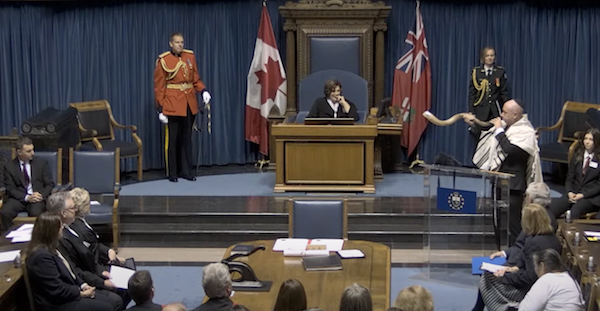
Anita Neville’s swearing-in ceremony on Oct. 24 included the blasts of a shofar blown by her rabbi, Anibal Mass. (screenshot)

Anita Neville says she “feels the responsibility” of being the first Jewish person to be appointed as the lieutenant governor of Manitoba – an office she was sworn into on Oct. 24, using a Hebrew Bible.

For the next five years, the vice-regal residence in Winnipeg will be where Neville calls home. And she was quick to start carrying out official duties like laying the first wreath during the province’s Remembrance Day ceremony, and reading the government’s Speech from the Throne to open a new Manitoba Legislature session on Nov. 15.

“The whole thing is new. The protocol is new. I’m fortunate that there are very knowledgeable, experienced people around me, so that makes it easier,” Neville told The CJN Daily in an interview from Government House, acknowledging that she has a steep learning curve for her new role.

Which is why, shortly after her swearing-in, Neville flew off to attend a round of orientation meetings. She also learned that she will be going to Buckingham Palace, at some point, to present her credentials to King Charles III.

“There are three others who have not presented their credentials to the monarch, so there are four of us in line,” said Neville. “I don’t know where I am in the order, but I look forward to it very much.”

Couldn’t lose face with grandson

Neville was at her cottage with her grandchildren in July when Prime Minister Justin Trudeau called to offer the position. She took time to think about whether she wanted this very public role. After all, she already had a fulfilling career in community service, including as chair of the city’s public school board, and then 11 years as the Liberal member of Parliament for Winnipeg South Centre, from 2000 to 2011. She’s also deeply involved in Jewish community matters, with her synagogue Shaarey Zedek, and the Jewish Heritage Centre of Western Canada.

At first, some members of Neville’s family were worried the new position might be too much for their 80-year-old mother and grandmother.

“I’ve got a very bad back,” she said. Neville walks with the assistance of a cane.

But her decision was made after she thought about her grandparents and her roots, having been born in the traditional Jewish immigrant neighbourhood in the North End of the city, then growing up after the Second World War, when barriers to advancement still existed for Jews.

What clinched it was when a grandson scolded her and said, “How could you not take the job? How many people get this opportunity?” Neville felt that she didn’t “want to lose face with Aaron.”

Considering saying no was “beyond his comprehension,” she said.

Jewish and Indigenous touches

The 26th lieutenant governor in Manitoba’s history made sure to put her own stamp on the official swearing-in. The formal ceremony was full of Jewish symbolism.

It not only involved her choice of Bible to swear the oath, but it also had the piercing blasts of a shofar blown by her rabbi, Anibal Mass – who delivered blessings and then led the audience with a loud “Mazel tov!”

The opportunity is something the daughter of Russian Jewish immigrants in Winnipeg’s North End never dreamed would be possible for somebody with such origins.

In her speech, Neville told the audience that her grandparents fled Bessarabia and Odessa a century ago, to escape a climate of murderous antisemitism, and to find freedom and opportunity in Canada.

“I wanted … the larger community of Manitoba to be aware of who I am and where I came from,” she said. “I did it thoughtfully. I don’t think I was over the top.”

It wasn’t only having Jewish rituals that marked a departure from previous swearing-in ceremonies. Neville pushed to include Indigenous people in the program, which she claims is the first time this has happened. It stems from her own decades of work on their behalf, and it will likely be a key part of her mandate.

An Indigenous elder, Myra Laramee of the Fisher River Cree Nation, delivered an invocation during the ceremony, and even called her longtime Jewish friend by the title of “Auntie.”

A positive signal: Neville

Neville’s swearing-in also came just three days before the Manitoba government adopted the International Holocaust Remembrance Alliance definition of antisemitism, becoming the fifth Canadian province to do so. (Canada adopted it nationally in 2019.)

While she did not have anything to do with the timing, and did not work behind the scenes on that file, Neville agrees both things are good for Jews.

“I think, for the Jewish community, it is a signal of positive acceptance, integration,” Neville said. “Not that it wasn’t there before, but it’s a kind of stamp. It’s like getting a check mark.”

Neville isn’t the first Jewish person to hold a similar appointment in Canada: that milestone was pioneered by Myra Freedman, who served as Nova Scotia’s lieutenant governor from 2000 to 2006. (Freedman held Shabbat dinners at the official residence and kept kosher.)

For her part, Neville plans to install a mezuzah at the entrance to her private quarters when she moves into the century-old Government House. And she won’t serve pork or shellfish.

When she was initially appointed, a friend immediately called

her, half-jokingly anticipating an invitation for the fast-breaking meal at the end of Yom Kippur. All Neville can say to that for now is, “We’ll see.”

Centre-left stance on Israel

Neville is a long-standing supporter of Israel, and her appointment comes amid rising antisemitism, including a torrent of hate for Israel and Zionism.

B’nai Brith Canada’s annual audit reported 223 anti-Jewish incidents in Manitoba last year, up from 92 in 2020, and 83 the year before that, according to Janna Minikovich, a spokesperson for the group.

Does Neville fear becoming a target for anti-Jewish sentiment in her new role? During her days in Parliament, she remembers receiving some hate mail, but she declined to comment further on her current opinions on Israel, besides describing those views as “centre left.”

Neville co-chaired the Liberal Parliamentarians for Israel caucus when she was an MP. Moreover, in the House of Commons, she raised the plight of the 800,000 Jewish refugees expelled from Arab lands, saying people needed to pay attention to this historic injustice.

But she also criticized Stephen Harper’s Conservative government for cutting federal funding to KAIROS Canada, an aid agency supported by several churches. The group supports the boycott, divestment and sanctions movement against Israel as a method of combating what it considers oppression of Palestinians. (Neville said at the time that, without clear explanations of the change in funding, it appeared Canada was stifling criticism of Israel.)

Operation Ezra volunteer

Neville has long been an advocate for social justice causes. One that is dear to her heart involves her work with a Jewish-led rescue organization in Winnipeg, Operation Ezra. The group has worked with other faith communities since 2015, to help bring 65 Yazidi refugees to Canada. (The federal government has brought in hundreds more under a federal sponsorship program starting in 2017.)

In between rehearsals for the Speech from the Throne and planning her move-in date to her new quarters, Neville made sure to turn up at the Winnipeg airport to greet the latest new arrival.

Ayad Alhussein, now 13, was captured by ISIS forces in 2014 – along with his entire family – when the Islamic extremists took over much of Iraq and Syria and set up a caliphate. Yazidis are not Muslims, and they were ordered to convert, or be killed. Ayad was just 5 years old at the time, and was kept prisoner for five years, until he escaped. He had been living in a displaced persons camp in Iraq, while two of his surviving sisters made it to Canada.

According to Michel Aziza, co-chair of Operation Ezra, it took constant pressure by the committee on local MPs and on immigration officials to get Ayad’s paperwork processed. “The world moved on, from Yazidis, to Afghans, to Ukrainians,” said a frustrated Aziza after Neville welcomed the slightly overwhelmed teenager.

Scenes like this underline why Neville’s swearing-in speech referred to her core values of “tikkun olam and tzedakah,” referring to herself as a descendent of refugees.

“I know that the Jewish community … because of what [feedback] I’ve received, has been very happy and very pleased with my appointment. And I feel the responsibility of it, let me tell you.”

To listen to Ellin Bessner’s podcast with Anita Neville, visit thecjn.ca/news/anita-neville-profile. The swearing-in ceremony can be viewed at youtube.com/watch?v=d0i3C2lce-g.

Format ImagePosted on December 9, 2022December 7, 2022Author Ellin Bessner THE CJN DAILYCategories NationalTags Anita Neville, Judaism, lieutenant governor, Manitoba, Operation Ezra

Talking about addiction with L

Jewish Addiction Community Services (JACS) estimates that one in six members of the Jewish community in Metro Vancouver – or more than 4,000 people – are in need of support for dealing with substance use disorder. And yet, it is a topic that many of us find hard to talk openly about.

“I grew up around alcoholism in the home. There was shame in the family that dad had a drinking problem, and it affected my childhood, there is no doubt,” said L, who had the courage to speak with the Independent about their experience with alcoholism. “My dad was an angry drunk and he’d be embarrassing in public. He didn’t show up for commitments and didn’t turn out to be a very good father. I got to the point where I didn’t count on him because I couldn’t, and I resolved that with myself at a young age.

“Yet, there was a part of his life that was enticing and rather exciting for me,” added L, now a sober member of Alcoholics Anonymous (AA) and a participant in JACS Vancouver. “When my father would pick me up on a Friday night, we would head to the bar. I thought it was something fun, better than my boring life at home.

“I would be excited to play the bar games and drink Shirley Temples, but I was way too young to be in that environment, way too young to have my views shaped by those experiences.”

Although these tavern trips took place when L was in junior high school, they considered it normal. “I didn’t realize there were no other kids in the bar. It seems weird to me now that no one objected,” L reflected.

L grew up in an environment where Judaism was not talked about much, either. “There was already a stigma within a stigma. There was a great shame about being Jewish. Being Jewish was rarely discussed, the same way Dad’s drinking was rarely discussed. Both topics became elephants in the room.

“I think what I draw from that experience is that I really believe the disease of alcoholism is genetic; it seems to run in families,” L said. “All I needed was that environment to stir up that excitement. My dad had a full wet bar at home, and I just loved it. I was drawn to it like a magnet because I associated it with fun Friday nights when Dad took us to the bar.”

L’s father’s drinking led to L’s mother divorcing him when L was 5. There remained trauma within the home – matters that were not openly discussed – and alcohol presented a means “to take the edge off.”

L established their own relationship with alcohol and began drinking and using drugs as much as possible.

“I was the perfect rebellious child,” L said. “I found ways to drink – whether stealing it from my parents’ liquor cabinet or sneaking out at night to hang out with older kids to drink. I used to hide it in my room. I kept a mason jar of whiskey in my closet.”

As L’s dependence increased so, too, did their obsession to drown out reality. “In high school, I would sneak out to drink and do drugs. I would put a trashcan beside my bed so I would have a place to throw up when returning home. This way, I wouldn’t risk waking my parents, because my bathroom was right next to their bedroom. I was pretty far gone by high school. The more I drank, the less I was interested in life around me. I dropped out of school and then left the house at 16.”

The reliance on alcohol remained for another 10 years. Family members disassociated themselves and L eventually sought help. By the time L “hit bottom,” a phrase used in AA to describe the lowest moment in an alcoholic’s drinking experience, they were “unemployed, suicidal and physically dependent on alcohol to function on a daily basis.”

“I didn’t fashion myself to be that bad, yet I didn’t have any friends left,” said L. “No social network, I was very isolated. I didn’t leave my house anymore. I didn’t check the mail. I couldn’t even go to the grocery store without being drunk or high. I ended up going to a counselor, who thought I should go to an AA meeting. I thought that sounded horrible; I was only 26. AA sounded like it was for a bunch of old men and winos who lived under a bridge. However, my counselor said, ‘It has to be better than the way you’re living now.’”

Though there were struggles initially in attending AA meetings, L picked up a desire chip (sobriety coin) in August 1997 and has not had a drink or drug since, recently celebrating 25 years of continuous sobriety. L remains active in AA, and sponsors others who are looking for relief from their alcoholism.

AA, though it often holds meetings in churches, is a non-denominational program. “I am very steeped in Alcoholics Anonymous and that’s my central connection with sobriety,” L said. “It wasn’t until a Jewish friend in AA told me about JACS that I was able to reconcile my long-standing concern with the Christian side of AA.”

After attending some JACS meetings, L felt relieved that they could talk openly about their Judaism, which had been a sticking point for L in AA. Through JACS, L was introduced to the book Twelve Jewish Steps to Recovery, by Rabbi Kerry M. Olitzky and Dr. Stuart A. Copans.

“Just reading the foreword to that book helped me better understand that AA’s founder, Bill W., was only using the God of his understanding, which happened to be based in Christianity, to write the outline for sobriety in the AA literature.”

This realization was a profound moment for L, since they always “railed against [the Christian] part of the AA program,” saying “that never felt right.”

“All of a sudden,” L said, “I realized that AA wasn’t Christian at all, only Bill’s concept of his higher power was. AA allows me to choose the concept of my own higher power, which is based in Judaism.”

Becoming more involved with JACS has opened a whole new perspective for L, which was not found in AA meetings alone. “I couldn’t be more grateful for finding this missing piece of the puzzle at JACS and for the continued support of Shelley Karrel, who runs the Vancouver chapter,” said L, who attributes this shift to becoming more involved in the Jewish community and reconnecting with their lost Judaism.

“I would not have had this spiritual awakening without being more connected to my community and being introduced to JACS,” L said. “Being able to finally connect my sobriety with Judaism feels like coming home for me.

“When I think about my father’s demise – a sad and lonely alcoholic death – I know that could have been my fate as well. There isn’t a day that goes by without being reminded of where I came from and how grateful I am that I survived. I did not have to die by suicide, or alone with a bottle hidden away in my closet. I was given a new life. A sober life.

“Thinking about drinking is the furthest thing from my mind today,” said L. “It used to be the only thing I thought about 25 years ago. The obsession has been removed. I am completely safe and sound when it comes to alcohol now, as long as I stay active in AA and keep on the path of spiritual growth.”

For more information on available resources and support – within and beyond the Jewish community – visit jacsvancouver.com.

Sam Margolis has written for the Globe and Mail, the National Post, UPI and MSNBC.

Posted on December 9, 2022December 7, 2022Author Sam MargolisCategories LocalTags AA, addiction, family, health, JACS, Jewish Addiction Community Services, Judaism
Artist advocates for nature

Artist advocates for nature

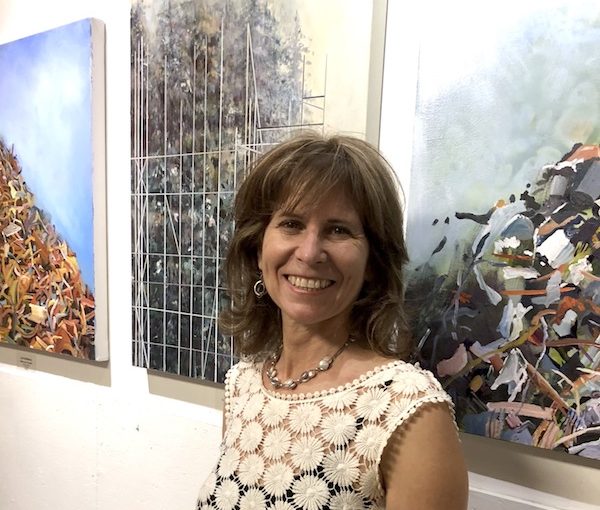
Lori Goldberg’s artwork reminds viewers that “that which we discard doesn’t disappear.” (photo from Lori Goldberg)

If you attend a performance at Queen Elizabeth Theatre, you will see the artwork of Lori Goldberg. She is one of the artists whose creations are at the theatre for another couple of weeks. The exhibit opened Oct. 29.

“Queen Elizabeth Theatre has a program for exhibiting artwork by local artists,” Goldberg told the Independent. “There was a call that was sent out a few years ago and I responded. I was accepted and the work was to be installed just when the pandemic began, so it was postponed until this year.

“It is an ideal venue,” she continued, “as thousands of people a week attend events at the Queen E.  My art has a message about climate change and it is important that it gets seen by as many people as possible. My pieces are on exhibit until Dec. 19, and people are only able to see it if they have a ticket to an event. Alternatively, I am available to take anyone interested on a private tour.”

The paintings in the exhibit come from three ongoing series: Plasticity, Poetics of the Discarded, and Reconstructing Nature.

“For many years, I have been investigating what happens when two opposing places – cities and nature – collide, connect and transform,” said Goldberg. “Through more awareness and experience firsthand, many of my works have ultimately been about the precarious relationship that we have with our natural world. Seeded in environmental advocacy, an animating factor in my practice has been reclaiming, recycling and reimagining refuse.”

photo - “Rogue Fish” by Lori Goldberg
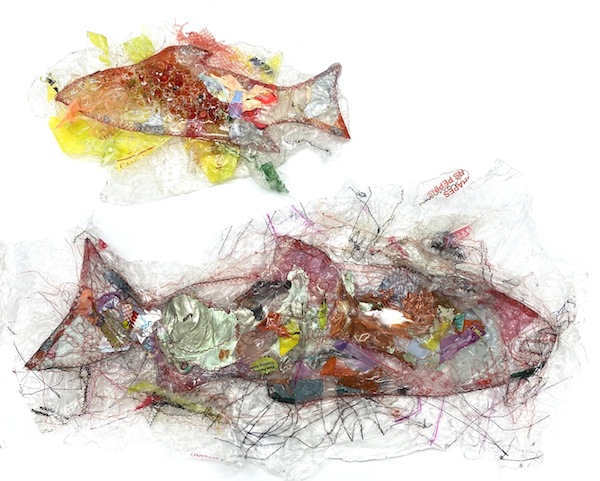
“Rogue Fish” by Lori Goldberg (photo from Lori Goldberg)

In the description of Plasticity on her website, Goldberg mentions her discovery that ink can be transferred from, say, a plastic bag, to canvas. Her creative process invites such discoveries.

“I am a diverse artist and my ideas dictate my art,” she explained. “My practice has primarily focused on painting, but I have had to explore other mediums to adequately express my concept.  Besides paint, I have explored photography, assemblage and sewing.  I have worked with clay, glass, so-called ‘trash’ from my studio, single-use plastic bags that I fuse on canvas, and I have stuffed lost socks with fabric remnants given to me by tailors.”

For Goldberg, the camera is her “sketchbook” and a photo is generally the starting point for her painting.

“My work references the physical world at one point in my creative process,” she said. “When I research and gather information, I look for source material that is usually filtered through my own photo documentation. Other photo images can come from friends, the internet or by random discovery. I also use memory, dreams – and always my imagination. I take parts of photos that resonate for me and incorporate that visual language – usually recontextualizing and altering it – in my work.”

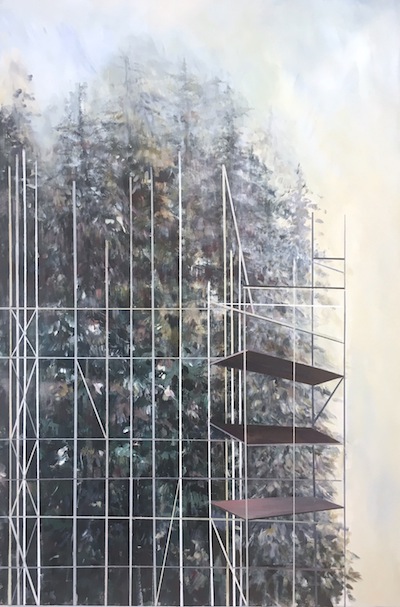
As an example, Goldberg spoke about the series Reconstructing Nature, which references nature/urban tensions found in Vancouver. “There is no lack of trees here and our city is in constant state of flux, with the demolishing of buildings and the construction of new ones, so I take photos of the nature that is all around me, but also of the scaffolding and cranes that are so prominent in the city as well,” she said. “In the Poetics of the Discarded series, I started by visiting a number of refuse sites, with an interest in memory and objects. Within the refuse, there were mounds and mounds of history: the detritus of days spent, life and death, business, conveniences used, sentimental things and so much more. I would photo-document these toppling heaps of refuse and re-contextualize and resurrect them as a visual reminder of the ongoing narrative between humans and their environment, reminding us quietly: that which we discard doesn’t disappear.”

photo - “Reconstructing Nature” by Lori Goldberg
“Reconstructing Nature” by Lori Goldberg (photo from Lori Goldberg)

While Goldberg does not paint on location often, she said, “My creative process is to go out into nature or the city, experience it, document it and return to my studio. Having said that, making work outdoors is becoming more interesting to me and it is a future direction that I plan to spend more time doing.”

With her art, Goldberg said, “I would like to think that I am creating work that is impactful to the viewer and especially the younger generation, that they will be empowered to take action towards making a difference as they engage with the world.

“The works are meant to be educational and I hope that they impart to the viewer a sense of personal responsibility – that they put to action what they feel and be one small ripple of change to create a better future for themselves.”

An educator for more than 30 years, Goldberg has taken her classroom outside and into the public arena, where, she said, “I create hands-on workshops using materials that address repairing the planet and healing ourselves. I created a project titled Lost Socks, where the public stuffed and sewed lost socks together to create a long tubular form that stood for connection, diversity and difference. Recently, I have used single-use plastic packaging to create wearable art. What I enjoy about these workshops is that they attract all ages and so it is intergenerational and accessible to all.

“Artists are essential in our communities,” she stressed. “Some of us choose to create work that challenges topics that are highly charged and sensitive, but, without venues in which to work and to exhibit, the messages cannot be passed on. I appreciate the exhibits I have had over my life at the JCC – I cannot imagine what would happen if we lost such a significant public space as the Sidney and Gertrude Zack Gallery. It is a venue for Jewish artists and Jewish content. It reinforces Jewish identity, conversations and connections. It is a gallery that has assisted me in my journey as an exhibiting artist and has given me opportunities to work with preschoolers, seniors and poets.”

Goldberg believes in giving back and donates her work frequently to different organizations, such as Big Brothers. “My recent donation was to Tikva Housing,” she said. “I gave them three paintings from my Judaica series. There is a satisfaction that is hard to explain, but it is a joy to be able to offer something of value to make others feel uplifted.”

Goldberg is currently applying for artist residencies in different parts of the world.

“I am interested in responding to the environment that I would be in and allowing it to dictate the direction of my work,” she said. “I want to contextualize my work in such a way that I am creating awareness about our healing of our planet but indirectly, through healing ourselves. Artist residencies offer opportunities for new perspectives and fewer distractions, so you can shed the restraints and discover what is there, but has been hidden.”

For more information, visit lorigoldberg.ca.

Format ImagePosted on December 9, 2022December 7, 2022Author Cynthia RamsayCategories Visual ArtsTags environment, Lori Goldberg, nature, painting, Queen Elizabeth Theatre
Survivors share their stories

Survivors share their stories

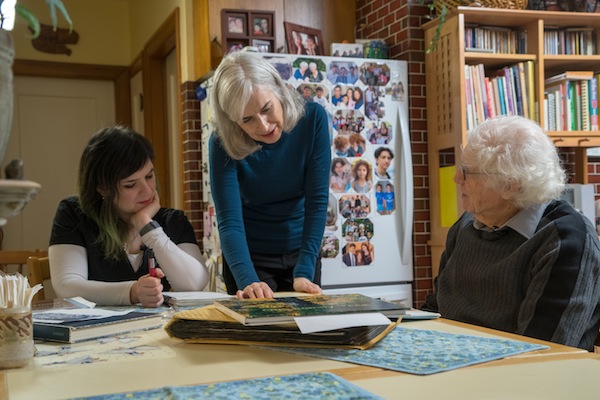
Charlotte Schallié, a University of Victoria scholar and Holocaust historian who is leading the graphic novel project, with survivor David Schaffer and graphic artist Miriam Libicki, left, at Schaffer’s home in Vancouver in January 2020. (photo by Mike Morash)

A University of Victoria project, first announced in January 2020, came to fruition this spring with the release of But I Live, a graphic novel that tells the stories of four Holocaust survivors.

But I Live involved an international team of researchers, students and institutional partners from three continents, and brought together four survivors and three graphic artists to create an autobiographic series recounting one of the darkest periods in human history. The survivors who told their stories were Emmie Arbel (Israel), Nico and Rolf Kamp (Holland) and David Schaffer (Canada). Their stories were transformed into art by Barbara Yelin (Germany), Gilad Seliktar (Israel) and Miriam Libicki (Canada). The project was edited and organized by Charlotte Schallié, chair of the department of Germanic Slavic studies at UVic and head of Narrative Art and Visual Storytelling in Holocaust and Human Rights Education at the university.

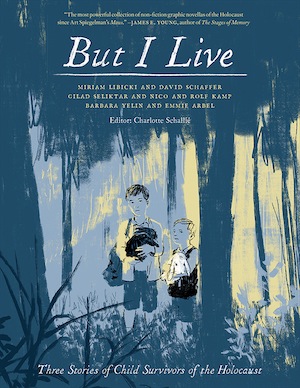
image - But I Live: Three Stories of Child Survivors of the Holocaust book cover
But I Live: Three Stories of Child Survivors of the Holocaust was published by New Jewish Press (2022).

“Many people in North America have learned about the history of the Holocaust through survivor stories that are repeated in popular culture, which largely focus on survival in the concentration camps or experiences of hiding in Nazi-occupied territory,” said Schallié. “The three stories in But I Live complicate these mainstream narratives by exploring complex topics such as the burden of memory, the need to testify, the ripple effects of trauma and the impact of the Holocaust on descendants of survivors, for example. As historical documents, they are also important for centring the survivors’ experiences and enabling them to tell their own stories.”

Though the gravity of the crimes committed during the Holocaust is well documented, the majority of visual records were largely produced by the Nazis and their collaborators. “These are important historical sources,” said Schallié, “but a sole focus on documentation produced by perpetrators ignores the value of survivors as living knowledge-keepers.”

An objective of the project, therefore, was to turn the perspective over to the survivors. “A survivor-centred approach to gathering testimony about the Holocaust honours the integrity and humanity of the person’s lived experience, while respecting their right to tell their own story,” Schallié said.

Another consideration in the project was time – the majority of Holocaust survivors alive today were young children during the war and are now in their 80s and 90s. The importance of learning from these knowledge-keepers is increasingly vital.

“If we don’t engage them in our research now, their expertise and experience will soon be lost,” Schallié stressed.

There is, in her view, a moral obligation and duty to collect and preserve survivor testimonies. “Each voice that was marked to be silenced by the perpetrators of these atrocities matters greatly and needs to be heard and acknowledged,” she said.

An additional goal of But I Live is to interest young readers in Canada, where high schools are not mandated to include the study of the Holocaust in their curricula.

“We hope that our visual storytelling work will appeal to youths and young adult readers, and elicit within them a deep sense of empathy that leads them to think critically about the historical past and present,” said Schaille.

“Holocaust survivor stories that are presented as heroic narratives, where the storyline progresses from dark to light – or from a site of danger to one of safety – place a heavy burden and responsibility on survivors, whose life stories and memories are unlikely to conform to that model, and simplifies the reality of their lived experiences. But I Live holds space for fragmented memories, difficult emotions and the afterlife of trauma. In doing so, it complicates mainstream tropes, clichés and iconographic imagery that is sometimes misappropriated or exploited in popular culture,” she explained.

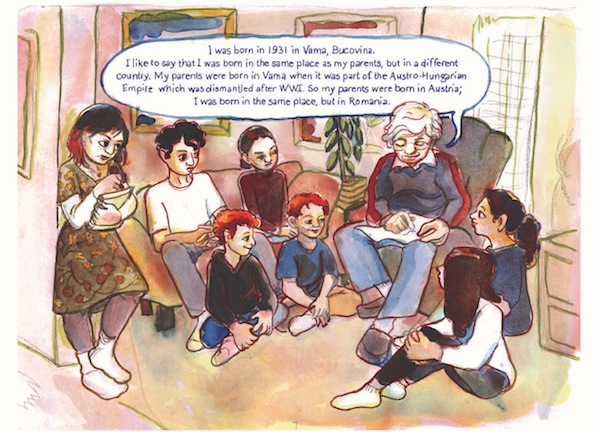
image - A panel from “A Kind of Resistance,” a graphic narrative by Miriam Libicki from interviews with David Schaffer
A panel from “A Kind of Resistance,” a graphic narrative by Miriam Libicki from interviews with David Schaffer. (image by Miriam Libicki)

The work at UVic expands on previous projects, such as the book On Listening to Holocaust Survivors: Beyond Testimony by Henry Greenspan of the University of Michigan, which focuses on survivor accounts while being mindful of the trauma such memories can evoke.

“Eliciting experiences and memories of extreme human suffering from the survivors necessitated a research process and practice that privileged their safety by minimizing the risk of re-traumatization, managing potential triggers and providing sustained support for all participating project partners,” Schallié said. “This approach ensured that we – the stewards of survivor memories – honoured what we felt was our obligation and duty to amplify the voices of the Holocaust survivors.”

But I Live was released by New Jewish Press, a division of University of Toronto Press. A German edition, Aber ich lebe, was published by C.H. Beck in July and has received positive coverage in the German broadsheets Der Tagesspiegel and Die Zeit. In November, the book received a German LUCHS-Preis for literature.

On Oct. 23, But I Live won the 2022 Canadian Jewish Literary Award for biography, presented at York University in Toronto. At the ceremony, the project was lauded for exemplifying “the power of the non-fiction graphic novel to convey the experience and aftereffects of the Shoah.… The historical essays, an illustrated postscript from the artists and personal words from each of the survivors offer a profound meditation on the past and its reach into the present.”

But I Live will be featured at the Cherie Smith JCC Jewish Book Festival here in Vancouver on Feb. 12.

Sam Margolis has written for the Globe and Mail, the National Post, UPI and MSNBC.

Format ImagePosted on December 9, 2022December 8, 2022Author Sam MargolisCategories BooksTags Charlotte Schallié, graphic novel, Holocaust, Jewish Book Festival, survivors, University of Victoria, UVic

Posts pagination

Previous page Page 1 Page 2 Page 3 Page 4 … Page 6 Next page
Proudly powered by WordPress