Skip to content
  • Home
  • Subscribe / donate
  • Events calendar
  • Business Directory
  • FAQ
  • News
    • Local
    • National
    • Israel
    • World
    • עניין בחדשות
      A roundup of news in Canada and further afield, in Hebrew.
  • Opinion
    • From the JI
    • Op-Ed
  • Arts & Culture
    • Performing Arts
    • Music
    • Books
    • Visual Arts
    • TV & Film
  • Life
    • Celebrating the Holidays
    • Travel
    • The Daily Snooze
      Cartoons by Jacob Samuel
    • Mystery Photo
      Help the JI and JMABC fill in the gaps in our archives.
  • Community Links
    • Organizations, Etc.
    • Other News Sources & Blogs
  • JI Chai Celebration
  • JI@88! video

Recent Posts

  • Or Shalom reopens its doors
  • JFS from past to future
  • Need holistic approach
  • Sharing stories, advice
  • Journalist shares fears
  • Skills to live together
  • Road to independence
  • Cutting grass with scissors
  • Zionism as a solution
  • Deceit, desire & the divine
  • Reclaiming sacredness
  • Creative project ideas
  • Summer squares and cobbler
  • Thou shalt … summer commandments
  • Legal help for students
  • Revisiting myth of Lilith
  • Wrong person rebuked
  • Canada’s mixed messages
  • Questions for museum
  • Symposium on antizionism
  • Making soccer political
  • CJPAC lauds Pulver’s impact
  • City recognizes Vrba’s legacy  
  • Organ donation saves lives
  • Theodore’s March premiere
  • A healing Shabbaton
  • Supplying healthy food
  • A chime of metal tags
  • Yellowknife seder a first
  • Ishai energizes, unifies
  • A Lag b’Omer to remember
  • Expanding the healing
  • Hannah Senesh – a unique hero
  • Community milestones … May 2026
  • Sharing her testimony
  • Fall fight takes leap forward

Archives

Follow @JewishIndie
image - The CJN - Visit Us Banner - 300x600 - 101625

Month: December 2022

Measure of a community

Measure of a community

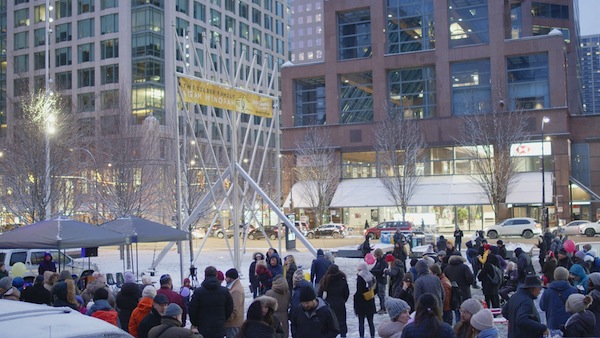
Several hundred people came to the Vancouver Art Gallery Plaza to participate in the annual lighting of the Silber Family Agam Menorah. (photo by Lior Noyman Productions)

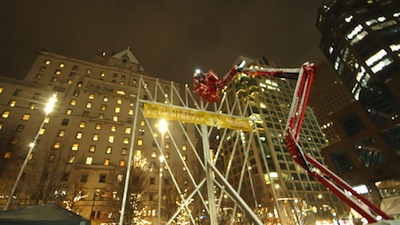
In some places in the world, the sun shines on Hanukkah. It’s warm and inviting, and people gather at the lighting of a public menorah. But the real measure of a community is when hundreds turn out despite the cold and snow, to celebrate Hanukkah in a spirit of camaraderie and festivity. Such was on the first night of Hanukkah in Vancouver, when several hundred people came to the Vancouver Art Gallery Plaza to participate in the annual lighting of the Silber Family Agam Menorah.

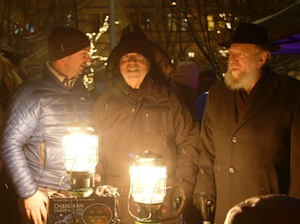
photo - Left to right: Ezra Shanken, Arnold Silber and Rabbi Yitzchak Wineberg try to keep warm at the lighting of the Silber Family Agam Menorah Dec. 18
Left to right: Ezra Shanken, Arnold Silber and Rabbi Yitzchak Wineberg try to keep warm at the lighting of the Silber Family Agam Menorah Dec. 18. (photo by Lior Noyman Productions)

Members of Parliament, of the legislature and of city council brought greetings from their respective governments. The current patriarch of the Silber family, Arnold Silber, delayed his vacation to warmer climes in order to be at the ceremony. His son, Steven Silber, spoke on behalf of the family, and noted that this year marked exactly 95 years since the family’s former patriarch, the late Fred Silber, landed in Canada from his native Poland, with almost nothing to his name. He built a beautiful family and a legacy to the Jewish and wider community.

photo - Lighting of the Silber Family Agam Menorah Dec. 18
Lighting of the Silber Family Agam Menorah Dec. 18. (photo by Lior Noyman Productions)

Rabbi Yitzchak Wineberg, executive director of Chabad Lubavitch of British Columbia, noted in his short address that the lesson of Hanukkah did not lose its impact on Fred Silber. The Maccabees were very small in number, against a mighty army of the Assyrian Greeks, who were well versed in the art of war. Hanukkah teaches us never to be deterred by challenges. Fred Silber may have arrived here with little but he left this world having left much for future generations.

Rabbi Dovid Rosenfeld read a letter from the Lubavitch Rebbe (Menachem Mendel Schneerson) z”l that explains the importance and value of public menorah displays, and the attendees enjoyed a choir performed by students of the B.C. Regional Hebrew Schools, of which Rosenfeld is a co-director with his wife, Chaya Rosenfeld.

Chabad Lubavitch BC gratefully acknowledged the support of Arnold Silber in making this event possible.

– Courtesy Lubavitch BC

Format ImagePosted on December 23, 2022December 22, 2022Author Lubavitch BCCategories Celebrating the Holidays, LocalTags Arnold Silber, Dovid Rosenfeld, Hanukkah, Lubavitch BC, Silber Family Agam Menorah, Steven Silber, Vancouver Art Gallery, Yitzchak Wineberg
Celebrating together

Celebrating together

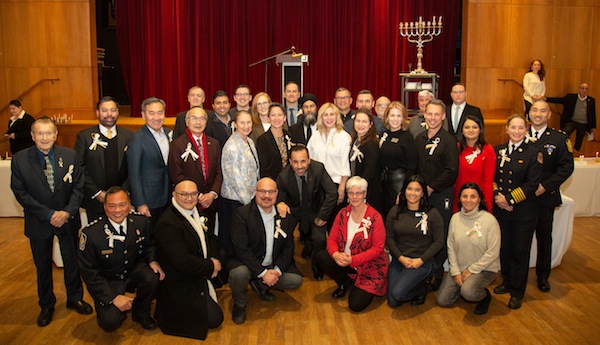
CJPAC and CIJA Dreidels and Drinks reception Dec. 19. (photo by Rhonda Dent Photography)

British Columbia’s Jewish community welcomed elected officials, community partners and volunteer leaders to celebrate the second night of Hanukkah at the Jewish Community Centre of Greater Vancouver for the CJPAC and CIJA Dreidels and Drinks reception.

The Canadian Jewish Political Affairs Committee is a national, independent, multi-partisan nonprofit. Its mandate is to engage Jewish and pro-Israel Canadians in the democratic process and to foster active political participation. It is dedicated to helping community members build relationships within the Canadian political arena. 

The Centre for Israel and Jewish Affairs is the advocacy agent of Jewish federations across Canada. CIJA represents the diverse perspectives and concerns of more than 150,000 Jewish Canadians affiliated with their local Jewish federation. As the Canadian affiliate of the World Jewish Congress, representative to the Claims Conference and to the World Jewish Restitution Organization, CIJA is also connected to the larger organized Jewish community. 

The annual CJPAC-CIJA Hanukkah soiree drew a diverse crowd of attendees, including multi-partisan representation across federal, provincial and municipal governments, members of the diplomatic corps, Vancouver Police Department, Vancouver Fire Rescue Services, and guests from civil society, who lit their own menorah at the front of the room while Rabbi Philip Bregman, interfaith liaison for the Jewish Federation of Greater Vancouver and the Rabbinical Association of Vancouver, officiated the candlelighting ceremony. 

PJ Library books were sent home with elected officials, along with a menorah, candles and chocolate gelt for their home/office. 

With the help of various community members and partners, the event highlighted how CJPAC and CIJA work together to create meaningful experiences for the Jewish community. To see photos from the celebration, visit CJPAC and CIJA’s social media pages or contact [email protected] or [email protected] anytime for more information. 

– Courtesy CJPAC & CIJA

Format ImagePosted on December 23, 2022December 22, 2022Author CJPAC & CIJACategories Celebrating the Holidays, LocalTags Canadian Jewish Political Affairs Committee, Centre for Israel and Jewish Affairs, CIJA, CJPAC, Hanukkah

Community milestones … Daysons, Diamonds, Keils & Altman

On Dec. 14, JWest announced a $5 million gift from the Dayhu Group of Companies in association with the Ben and Esther Dayson Charitable Foundation. The visionary gift is part of a match that was initiated by the Diamond Foundation’s historic $25 million gift to support the development of the new Jewish Community Centre of Greater Vancouver site.

The Daysons have a long and significant history within Vancouver’s Jewish community. Ben and Esther Dayson both immigrated to Canada from Russia in the 1920s. In 1936, the couple was married in the original Jewish Community Centre in Vancouver, located on Oak and 11th. First settling in Saskatchewan, they moved with two small children to Vancouver in 1949. After a short time running a “15 cent store” in Marpole, Ben Dayson founded Dayhu Investments, which later became a leading real estate investment, development and property management company. The generations that followed Ben and Esther (née Nemetz) have carried on their parents’ and grandparents’ legacies, becoming successful in their own rights and continuing to give back to the community.

Shirley Barnett (née Dayson) and her brother, Philip Dayson, have fond memories of attending the JCC. As teenagers, they attended high school dances, went to youth group meetings, and learned the importance of volunteerism and giving back, all through spending time at the JCC. 

“Fundamentally, we believe that the Jewish Community Centre plays an integral role in an inclusive and healthy Jewish community, and it will provide a welcoming social, cultural, recreational and educational asset for all to enjoy,” said Barnett. “Our family has long appreciated the celebratory and community aspects of the Jewish Community Centre. The JWest project is the most important undertaking in the history of this region, and we hope that our gift inspires others to contribute to this space that will be a critical resource for thousands of people of all ages and from all walks of life.”

JWest is a partnership between Jewish Federation of Greater Vancouver, the Jewish Community Centre of Greater Vancouver and King David High School. The project will deliver a community centre with expanded space for the Vancouver Holocaust Education Centre, a new theatre and, in the second construction phase, a relocated high school and two residential towers that will provide mixed-use rental housing.

“It was the desire of our parents to support those both within the Jewish community and those in the wider community,” said Philip Dayson. “The Jewish Community Centre is not only the heartbeat of Jewish life in Vancouver, but it also continues to have an inclusive atmosphere that welcomes all. We are particularly thrilled that this project will bring much-needed social housing along with vital programs and services. We’re privileged to be able to support this community and this transformative project.”

“The Dayson family have been pillars in Vancouver’s Jewish community for more than three generations and, through this generous gift, they have demonstrated their continued commitment to Jewish life in Vancouver,” said Alex Cristall, JWest capital campaign chair. “We gratefully acknowledge the support this project has received from the Government of British Columbia, the Government of Canada and community members for this once-in-a-lifetime project.”

For more information about JWest, visit jwestnow.com/about.

***

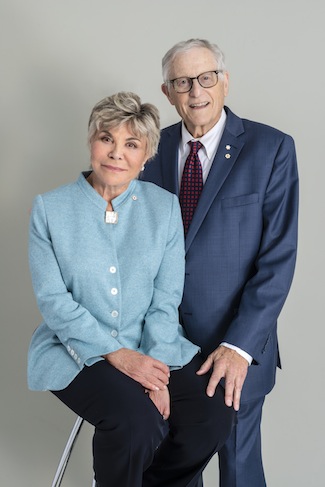
photo - Leslie and Gordon Diamond
Leslie and Gordon Diamond (photo from Jewish Federation)

Gordon and Leslie Diamond will receive the 2023 Yakir Keren Hayesod Award in recognition of their committed leadership and unwavering devotion to Israel and to Keren Hayesod through their generosity and leadership with the Jewish Federation of Greater Vancouver.

The Yakir Award – Keren Hayesod’s highest honour – is bestowed upon individuals whose sense of mission, dedication and perseverance on behalf of their homeland and their nation have made an outstanding, long-term contribution to the state of Israel, the Jewish people and Keren Hayesod. The Hebrew word yakir means beloved, notable, worthy and, accordingly, the Yakir Award reflects the ultimate devotion and clarity of vision that a community leader can show. 

Jewish Federation nominated the Diamonds for the honour and this is the first time in two decades that a Western Canadian leader has been selected for it. The official ceremony will take place in Israel on the country’s 75th anniversary of independence.

***

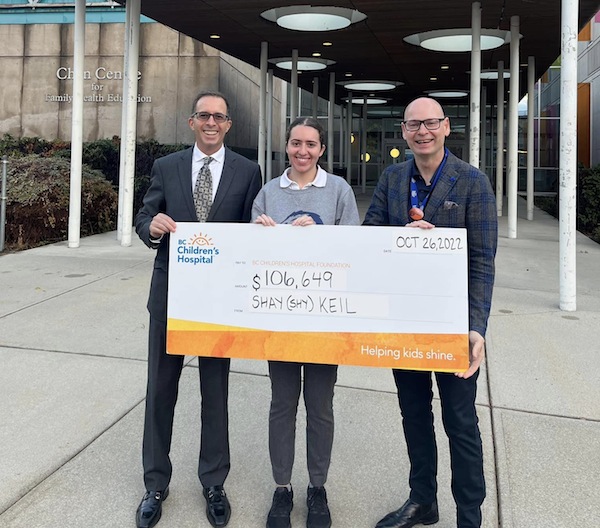
photo - Shay Keil and his daughter Tali Keil presented a $106,649 cheque to B.C. Children’s Hospital Foundation chief executive officer Malcolm Berry in late October
(photo from Facebook)

Shay Keil and his daughter Tali Keil presented a $106,649 cheque to B.C. Children’s Hospital Foundation chief executive officer Malcolm Berry in late October. It was Keil’s second annual 30/30/30 campaign, marking his 30-plus years with Scotiabank and the goal of raising more than $30,000 by Sept. 30. He thanked other donors and the Keil Investment Group team: Angela Wadsworth, Vilma Castellani, Claire Brinkworth and Lydia Leung. In November, Keil was chosen by the Globe and Mail Report on Business as one of the 2022 Canada’s Top Wealth Advisors: Best in Province.

***

The national board of directors for Ben-Gurion University Canada (BGU Canada) has announced that

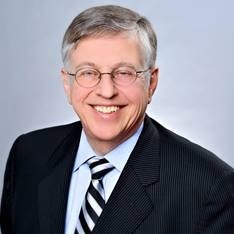
photo - Jack Altman
Jack Altman (photo from BGU Canada)

 is the new national president. He brings a wealth of volunteer leadership experience to his new role, plus a deep passion for philanthropy in the Canadian Jewish community.

Altman is the immediate past president of the Montreal chapter of BGU Canada, where he served for four years. He currently sits on the board of governors of Ben-Gurion University of the Negev and is the vice-president of La Société pour les Artistes en Milieux de Santé. He has been involved with many other organizations over the years.

Altman practised as a CPA for 50 years. He retired from his role as partner at Crowe BGK, where he remains as a consultant, and is the president of J. Altman Investments Inc.

BGU Canada thanks Mitchell Oelbaum, immediate past president, for his passionate service and unwavering commitment to the university.

Posted on December 23, 2022December 22, 2022Author Community members/organizationsCategories Local, NationalTags awards, B.C. Children’s Hospital Foundation, Ben Dayson, Ben-Gurion University Canada, BGU, development, Esther Dayson, Gordon Diamond, Jack Altman, Jewish Federation of Greater Vancouver, JWest, leadership, Leslie Diamond, philanthropy, Philip Dayson, Shay Keil, Shirley Barnett, Tali Keil

Charges are withdrawn

A criminal charge against the Canadian arm of an Israel-based organization that provides volunteers for the Israel Defence Forces (IDF) has been withdrawn because there was no reasonable chance for a conviction.

On Dec. 12, the Public Prosecution Service of Canada (PPSC), which assumed carriage of the case, withdrew a charge that Sar-El Canada violated the Foreign Enlistment Act, which prohibits Canadians from enlisting in or accepting any “commission or engagement” in the armed forces of a foreign country. The charge was withdrawn because there was “no reasonable prospect of conviction,” Sar-El Canada’s lawyer, John Rosen, told the CJN. “The case is now completed.”

The charge was approved in September by a justice of the peace in a private prosecution initiated by David Mivasair, a Hamilton, Ont.-based rabbi with a long history of activism targeting Israel, and Rehab Nazzal, a Palestinian-born, Toronto-based artist who was shot in the leg in Bethlehem in 2015 while photographing an IDF crowd control weapon. They alleged that Toronto-based Sar-El Canada broke the law because it recruited or induced individuals to volunteer for Israel’s armed forces. They further alleged that, once in Israel, volunteers reside on military bases, wear military uniforms and complete tasks that would otherwise be assigned to soldiers; those allegedly included packing food rations and medical kits, cleaning tanks, painting helmets, radio repairs and gas mask refurbishment.

In a statement, they said the “recruitment” in Canada of volunteers “to assist the Israeli military ought to be a concern of all Canadians.” They began a private prosecution after they said police and the federal government failed to act on a complaint.

Sar-El Canada sends 100 to150 volunteers a year from this country to Israel, the group’s national president, Jeff Sarfin, told the CJN when the matter began.

In a statement to the CJN, Sarfin said Sar-El Canada is “very pleased” that the charge was withdrawn. He said the “attempt by anti-Israel activists to intimidate us and the Jewish community has failed. We are also grateful to the support we have received from the Jewish community as we deepen and strengthen the connection between our community and Israel.”

Rosen echoed the sentiment. The complaint “was merely another failed attack on Israel and those who support it, this time by attempting to hijack Canada’s legal system,” he said. He said the charge should never have been authorized and agreed with the prosecution that there was never a reasonable prospect of conviction.

“More importantly,” Rosen added, “the prosecution of this baseless complaint would also have been against the public interest, given Canada’s implicit approval of similar activities that directly support Ukraine’s defence against Russia.”

Ukraine has openly called for soldiers from around the world to join the fight against Russia. Ukraine’s consul general in Toronto was recently quoted as saying that “hundreds” of Canadians got in touch to offer assistance.

Sar-El Canada’s parent organization in Israel was established 40 years ago. It operates in more than 30 countries and has to date sent some 160,000 volunteers to Israel to provide “broad logistical support to the IDF,” its website says. Volunteering takes place on IDF bases throughout the country.

Programs offer volunteers “an opportunity to live and work beside Israeli soldiers and gain an insider view of Israel.” Working alongside soldiers and base employees, the “non-combat civilian support duties” encompass packing medical supplies, repairing machinery and equipment, and cleaning, painting and maintaining the base. The Sar-El program “is a morale booster and motivator for the soldiers,” the group’s website states.

In a hearing in September before the justice of the peace who approved the charge against Sar-El Canada, Mivasair testified that, to the best of his understanding, the Foreign Enlistment Act prohibits recruiting people for “non-combatant engagements” with foreign armies.

Asked for a comment and whether an appeal is being considered, Shane Martinez, a lawyer for Mivasair and Nazzal, told the CJN: “We disagree with the decision of the Federal Crown and are exploring all available options.”

Two years ago, a campaign launched by progressive groups and 170 prominent Canadians alleged that illegal recruiting for the IDF of non-Israeli citizens was taking place in this country. Justice Minister David Lametti was asked to investigate. He referred the matter to the RCMP.

– For more national Jewish news, visit thecjn.ca. 

Posted on December 23, 2022December 22, 2022Author Ron Csillag The CJNCategories NationalTags David Mivasair, IDF, Israel Defence Forces, Jeff Sarfin, John Rosen, law, Rehab Nazzal, Sar-El Canada

Claims of speech suppression

Independent Jewish Voices Canada recently released the report Unveiling the Chilly Climate: The Suppression of Speech on Palestine. It was compiled by Dr. Sheryl Nestel and Rowan Gaudet for IJV Canada.

Nestel is a retired sociology professor from OISE (Ontario Institute for Studies in Education), University of Toronto, and Gaudet is a master’s student at the University of Bologna in the global cultures program; he has done research for IJV in the past. The text below is from their report’s executive summary.

Focused on the Canadian context, the report seeks to shed light on the wave of suppression of speech regarding Palestine that is sweeping North America and parts of Europe. It documents the impact of reprisals, harassment and intimidation faced by Canadian activists, faculty, students and organizations in relation to scholarship and activism in solidarity with the struggle for Palestinian human rights. There is a connection to be made here between these attacks and efforts by pro-Israel advocacy groups to market the International Holocaust Remembrance Alliance Working Definition of Antisemitism (IHRA), a document that has come under vigorous attack by defenders of academic freedom and Palestinian human rights. While its proponents argue that this definition will not threaten freedom of expression or inhibit criticism of Israeli policies, the findings of this report demonstrate that these basic rights are already under threat and could be further imperiled if the IHRA were to be widely adopted.

The contribution of this report is two-fold: 1) the amount and quality of information gathered here is unprecedented and speaks to the worrisome prevalence of harassment and suppression of speech on Palestine on campuses and in Canadian civil society and 2) it surpasses a simple documentation of instances of repression by employing an ethnographic methodology to analyze the so-called “chilling effect” and its impact on governmental, institutional and individual decision-making. This research project situates itself firmly within the realm of critical qualitative inquiry, which seeks to employ qualitative research for social justice purposes, including making such research available for public education, social policy formulation and the transformation of public discourse. The inquiry is also shaped by decolonizing methodologies of social science research, which seek to challenge institutions, academic and otherwise, which prioritize colonial forms of knowledge production and maintain institutional commitments that impede indigenous self-determination. Finally, Nestel and Gaudet follow the directives proposed by queer, feminist and antiracist research methodologies, which entreat people to consider how their positions in social hierarchies of race, class, sexuality and citizenship mediate their experiences.

In all, the researchers collected 77 testimonies from 40 faculty members, 23 students, seven activists and seven representatives of organizations. Testimonies were collected from participants in Ontario, Manitoba, British Columbia, Saskatchewan, Nova Scotia, Quebec and Alberta. Among the academics responding were representatives of 11 disciplines from 21 Canadian universities.

Interviewees recounted that their experiences included political intervention into hiring; attempts to prevent access to event venues; and the attempted cancellation of public events on Palestine, as well as targeting and doxing, including the inclusion of 128 Canadian academics and activists on the website of Canary Mission, an organization that purports to document “individuals and organizations that promote hatred of the U.S., Israel and Jews on North American college campuses.” Threats of violence and genuine acts of violence were experienced by student activists and these often contained racial and sexual slurs including threats of sexual violence. Students were subject to warnings and disciplinary measures by university administrators whom respondents often described as being hostile to Palestine solidarity activism on campus. Faculty respondents reported restrictions on academic freedom, self-censoring of expression on Palestinian human rights, discriminatory treatment by academic publishing platforms, harassment by pro-Israel advocacy groups and media outlets, attacks from colleagues, political interference by university administration, classroom surveillance by pro-Israel student groups, and anti-Palestinian and anti-Arab racism. Indeed, the suppression of speech on Palestine has significant consequences in academia, where it threatens principles of academic freedom and encourages surveillance of critical intellectuals and activists and of the oppositional knowledge that they produce. 

As the research by Nestel and Gaudet reveals, the precarious employment conditions of more than half of Canada’s university teachers mean that, because of the “chilly climate” around speech on Palestine, untenured or pre-tenure faculty are reluctant to pursue academic or activist work in this area for fear of endangering contract renewals or future career prospects including access to publishing platforms so central to the academic tenure and promotion process. 

Unsubstantiated allegations of antisemitic intent and support for terrorism are commonly leveled against pro-Palestine academics and activists. Significantly, Palestinians, Muslims and non-Arab racialized participants appear to have borne the brunt of direct attacks on their scholarship and activism. The emotional impact of harassment and suppression was felt most acutely by Palestinian students and faculty interviewed. Jewish activists were not immune to attack and were often characterized by opponents as “kapos” or “self-hating Jews.” 

The report also documents how both on- and off-campus Israel-advocacy organizations have been at the forefront of efforts to suppress speech and activism on Palestine. As University of Pennsylvania political scientist Ian Lustick has argued, the pro-Israel organizations have constituted a “vigilante” force, which has made it “increasingly difficult to criticize Israel without fear of lawsuits, accusations of antisemitism, demands for political balance in staging of events, blacklisting of participants, or other forms of personal or institutional harassment.”

This report signals that an atmosphere of repression and recrimination related to discourse and activism around Israel/Palestine is ubiquitous and insidious and should be unacceptable in a democratic society.

To download a copy of the full report, visit ijvcanada.org/unveilingthechillyclimate.

– Courtesy Independent Jewish Voices Vancouver

Posted on December 23, 2022December 22, 2022Author Independent Jewish Voices VancouverCategories NationalTags free speech, Israeli-Palestinian conflict, survey

BGU family mourns

Ben-Gurion University Canada chief executive officer Mark Mendelson passed away in Montreal without warning on Nov. 14 at the age of 73. 

Over the years, Mendelson’s imprint has been felt throughout BGU Canada. Helping create new purpose and hard results, connecting communities with Ben-Gurion University and Israel, his life, experience and leadership were transformative: the organizations he touched, the chapters he helped grow and the voices he helped raise, were the product of a life dedicated to the singular purpose of protecting and nurturing, manifested in boundless energy and enormous reach, helping BGU Canada grow.

“He took what was a small but respected organization to a national powerhouse,” said Montreal and Ottawa executive director Simon Bensimon. 

A leader who gave people around him the space to excel while daring them to wow him, Mendelson’s energy, enthusiasm and resilience were infectious, and served his gift for reaching out and making valuable connections between donors, volunteers and stakeholders. “A character who had character,” said B.C. and Alberta Region president Adam Korbin. “He was a blessing in my life, a mentor, confidant and friend.” 

As much of Canada’s nonprofit sector slowed and then scrambled for relevance and community engagement during the pandemic, Mendelson helped steward BGU Canada through and maintain the interest, enthusiasm and commitment towards the cause.

His legacy for BGU is omnipresent in the organization and on the ground in Israel. For the national organization, this is embodied in the new archives building in Sde Boker, for which Mendelson marshaled his best efforts and drive to realize and, ultimately, stood before as great affirmation of one of the crowning achievements of his BGU Canada career. 

Mendelson understood the importance of each national chapter. “From the outset, he was committed to putting Vancouver on the map and was determined that we should hold a gala,” recalled David Berson, executive director, B.C. and Alberta region. “His love for BGU and Israel were first and foremost – alongside fishing and food!”

The Montreal-born-and-raised son of Dr. Hyman and Audrey Lynne Mendelson, Mark spent a lifetime dedicated to Israel and Jewry – as a kibbutznik, as an IDF paratrooper, as a social worker, an entrepreneur and then as a leading advocate. He held fast in his belief in Israel, securing her future through grit, diplomacy, and the Jewish people’s greatest currency: knowledge.

“Much of my success as president, and much of what BGU is today, is because of Mark’s complete dedication to the task of building Ben-Gurion University,” said BGU president Prof. Daniel Chamovitz.

At Mendelson’s funeral in Montreal, Chamovitz recalled this “large man wearing a loud plaid sport jacket, bearing a gift of fresh salmon whose smell permeated the air, and having one of the most endearing smiles anywhere.” It was their first meeting. “I had been president for only three weeks and, somehow or another, no one had prepared me for Mark Mendelson.”

Mendelson had a keen understanding of the ongoing relationship between the Diaspora and Israel, and he followed through on his promise to Chamovitz that, despite Canada’s modest Jewish population, BGU Canada was poised to make a major jump in its philanthropy: “We punch way over our weight.”

“The university, the Negev, Israel and dare I say the world,” said Chamovitz, “is a better place because of him.”

– Courtesy Ben-Gurion University Canada

Posted on December 23, 2022December 22, 2022Author Ben-Gurion University CanadaCategories NationalTags Adam Korbin, Ben-Gurion University, BGU, Daniel Chamovitz, David Berson, Mark Mendelson

Opportunities for growth

Moving into an old house that needs fixing is a challenge many people aren’t prepared to consider. I’ve heard this repeatedly from people who are both impressed and stunned by our choice.

We’ve just moved into our fifth old house as a married couple. We can see the big yard, friendly quiet neighbourhood, the structure’s amazing character features from 1913, and feel this was a good choice, if an expensive one. We’ve been married almost 25 years, too. We’ve become smart enough, as partners, to hire contractors to help us cope with the things that are far beyond what we can manage to do ourselves. So far, we’ve had fewer arguments this time around.

However, there are moments when I doubt my choices. This house has a lot of broken window panes. In some cases, someone just enclosed the window in a wall, so it sat there for perhaps 50 years, broken or not. When our contractors opened up one of the walls, well, all became clear. It was no wonder that plumbing pipes froze there in a Winnipeg winter – in a dark space with a broken window. Never mind triple-paned argon-filled glass, just closing some of the windows with regular, unbroken glass would have made a world of difference.

My husband took the first few windows to be repaired at a local hardware shop. When these came back, fixed properly and affordably, he carefully fitted them back in where they belonged. Then he watched a This Old House YouTube video to figure out how to get out still more of these broken beauties. Then, he described how he’d need my help to slide out the next large storm window.

I got anxious. This involved broken glass, fragile window frames, standing on a mudroom ledge (while he stood on a ladder outside) and December weather. Also, it involved cooperating with one’s spouse, which can sometimes be stressful, too! Luckily, the Winnipeg December weather was mild, right around freezing. I eased myself onto the ledge, over some stairs, and held onto the window exactly as instructed. I had some serious nerves.

To my surprise, the broken storm window, which had been partially concealed behind drywall for many years, slid right out. There was barely time to admire the buttery paint of the inside window, although we took a second to notice the old-fashioned curtain rod. Someone took the time to drywall in this entire window but left the curtain rod hooks still completely intact. Go figure.

When I climbed down, I was oddly proud. I hadn’t fallen off the ledge, we’d removed the window, and I’d gotten up close and personal with a really old part of my house that was still in good working order. Then I remembered to go wash my hands right away. I’d just been grasping with sweaty hands onto peeling lead paint on the window frames … but I digress.

We all need growth opportunities. Lots of people take on new extreme sports or complicated hobbies. Others learn new languages, develop new relationships or take journeys to new places. Perhaps because of the pandemic, or having younger kids, I have had small expectations of myself. I’m not taking any solo international vacations or racing fancy cars. Even so, I’ve had growth opportunities. Life offers them free of charge, when you least expect it, whether it’s house renovations, new professional or Jewish learning experiences or just wintertime in Manitoba.

I’m also several years into some Jewish learning, doing Daf Yomi, a page of Talmud a day, which takes more than seven years to complete. I’ll be the first to admit that, some days, I breathe a sigh of relief when I find that it is a very short page. (Nedarim-Vows, the current tractate, has a few of these!)

And, I’m experiencing this house renovation, complete with having a major plumbing overhaul done last weekend. This included not having a stack at all for a long afternoon. (The stack lets waste water leave your home. Without a working one, well, nobody flushes the toilet or runs a faucet. It was quite a wait.)

We currently have a completely gutted kitchen and might not have a finished kitchen again for quite awhile. Slow cooker meals and the kitchenette in the first floor powder room require forethought and improvisation. Again, maybe, seen optimistically, these, too, are chances for growth and learning.

Most of my experiences aren’t extreme. I’m not climbing Kilimanjaro, yet it was quite the adrenaline rush just standing on the ledge above the stairs, dealing with the broken window. It’s these moments that help keep us stimulated, challenged, changing and growing as people.

As a kid, I remember how hard it felt leaving for a Jewish summer sleep-away camp. It was exciting and terrifying, all at once. Big milestones in life – major birthdays or, say, hitting 25 years of marriage – can also be seen as colossal events. However, my daily life seems to be full of those moments that some see as inconsequential, until they become teaching moments.

I’m reminded of one squishy deep-snow spring day. I got my car stuck in our back lane parking spot. It was a goopy mess. If my four-wheel-drive SUV got stuck, well, anyone’s could. Alone with my twins, I had to manage to fix it. With their help, I got us out, using all the tricks my dad had taught me long ago, including my floor mats for traction, rocking the car back and forth, and more. My kids and I cheered, sweaty and covered in disgusting slush and completely late for whatever we’d set out to do, but we’d gotten the car out together.

We didn’t climb the highest peak. Far from it. We got ourselves out of a rutted, snowy prairie back lane in springtime. Judaism offers us a whole list of blessings to memorize and recite, and many of them are for small moments. When we eat bread, bless our kids on Shabbat, pray for rain, see a rainbow or just get up in the morning, we have a chance for a blessing. Yet, the moment we pause to reflect on what happened, maybe we realize that those growth moments – going to summer camp, buying and renovating an old house, one window at a time, or teaching kids important winter driving skills – weren’t quite so small after all.

Here’s to growth moments.… May yours in 2023 be meaningful and not too painful!

Joanne Seiff has written regularly for CBC Manitoba and various Jewish publications. She is the author of three books, including From the Outside In: Jewish Post Columns 2015-2016, a collection of essays available for digital download or as a paperback from Amazon. Check her out on Instagram @yrnspinner or at joanneseiff.blogspot.com.

Posted on December 23, 2022December 22, 2022Author Joanne SeiffCategories Op-EdTags Judaism, lifestyle, personal growth, renovations
Building sense of community

Building sense of community

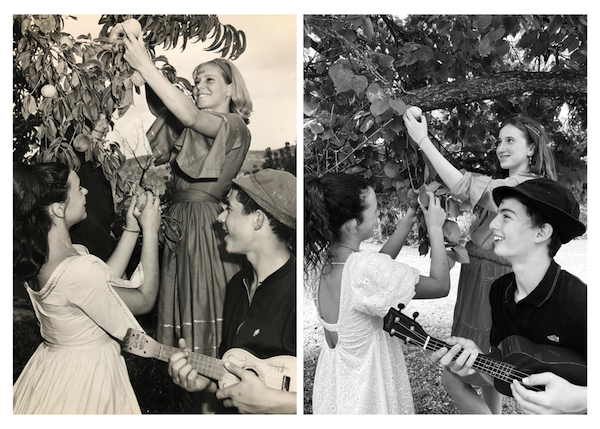
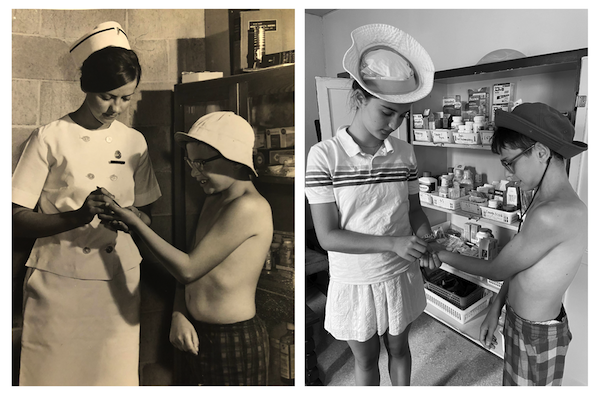
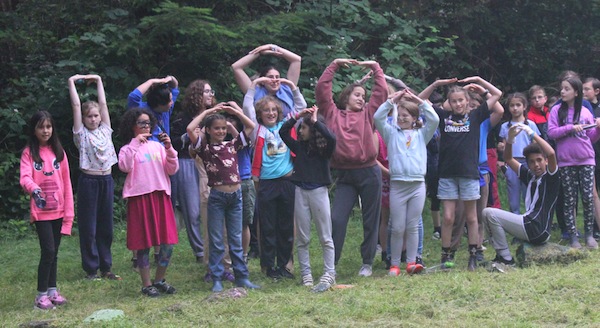
This past summer at Camp Hatikvah, the 13-year-old campers were asked to re-create a camp photo from the 1960s. (photo from Camp Hatikvah)

If any Camp Hatikvah alumni stepped onto the property for the first time since the early 2000s, they would be in awe. With the exception of the chadar (dining hall), every single building on site has been rebuilt over the years thanks to the generosity of the community. The facilities are safe, modern and thoughtfully planned to ensure the best program possible can be delivered to the close to 700 participants Hatikvah hosts each summer. 

However, even more impressive than what has changed at Camp Hatikvah over the years, is what hasn’t.

“Our site has certainly improved a lot over time and the new facilities have led to exciting program 

opportunities for our campers but, with great pride, our program remains deeply steeped in the same traditions that existed when the camp was founded some 75 years ago,” shared executive director Liza Rozen-Delman.

Rozen-Delman went on to say that, while  alumni from any previous era who visited the camp may not recognize the buildings, they would feel immediately at home.

“Everything would be familiar to them. The mifkad (flag raising/lowering) ceremony is performed verbatim to how it was done in the ’40s. We still start every meal by singing ‘Anachnu od lo achalnu shum davar …’ followed by the blessings. The Kochot campers still try to sneak past shmira (night watch) after bedtime and final banquet is still the most special night of the summer,” she said with a smile.

It’s hard not to smile with her, as you can see the passion for Jewish camping all over her face as she speaks about the generations of children who have been impacted by Hatikvah. 

“It’s a place like no other,” Rozen-Delman said. “It is where thousands of kids had the chance to experience a fully Jewish environment for the first time in their lives. It’s beautiful and I am grateful to be able to be a part of it.”

Joanna Wasel, board president, couldn’t agree more. She said Jewish camp is one of the most impactful ways to help children form a strong and proud Jewish identity. It works, she said, “specifically because the learning at camp is informal. It doesn’t come from lectures but from immersive Jewish experiences that are shared amongst a community of peers. It’s powerful and effective. Quite frankly, it’s brilliant.”

photo - One of the photos from the 1960s that Camp Hatikvah 13-year-olds re-created last summer
One of the photos from the 1960s that Camp Hatikvah 13-year-olds re-created last summer. (photo from Camp Hatikvah)

During these complicated times, when youth are experiencing mental health issues at an unprecedented rate, Hatikvah’s focus on tradition is also helping campers go back to a simpler time. “We are a technology-free zone,” noted Rozen-Delman, who went on to say that camp offers children a much-needed respite from social media. “Being unplugged is freeing,” she said. “It’s one of the greatest gifts we can give the children of today.”

Rozen-Delman spoke about the joy she feels when kids engage in the type of back-to-basics fun that the camp environment can provide. She recalled a program the 13-year-old campers did this past summer, where they were given an historical camp photo from the early 1960s and asked to re-create it.

“It’s not always easy to get a 13-year-old excited about a program, so I was unsure what the reaction would be,” she said. “But these kids reveled in the opportunity to do something creative and different. They went to their cabins, got dressed up and had the most amazing time giggling with each other as they performed their task. It was so pure. And I loved the photos they took, as it connected them with the past and reminded them that they are a part of a community of people who have been touched by this special camp.”

– Courtesy Camp Hatikvah

Posted on December 23, 2022December 22, 2022Author Camp HatikvahCategories LocalTags continuity, history, Jewish camp, Joanna Wasel, Liza Rozen-Delman, summer
Getting back into traditions

Getting back into traditions

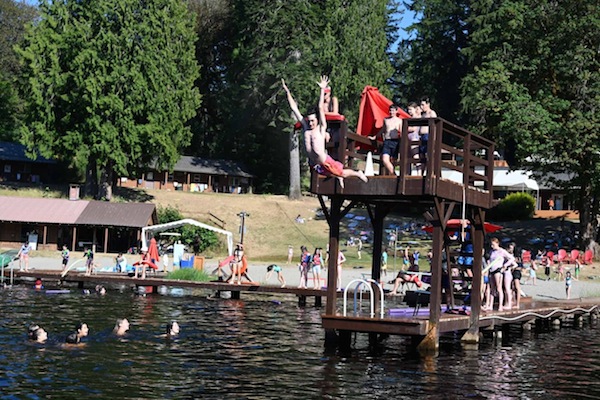
Camp Miriam adapted during the pandemic, but nothing quite compares to being back in the old stomping grounds of Gabriola Island. (photo from Camp Miriam)

Camp Miriam is a place that holds fast to tradition. This tendency is obvious if you just look around: tables in the chadar (dining hall) are signed and dated by the former chanichimot (campers) who painted them, with the oldest table proudly displaying an impressive “1997.” Besides the tables, Camp Miriam has been running educational and Labour Zionist-oriented programming since it opened in 1948. Camp Miriam has a solid foundation of tradition and is not a place accustomed to rapid or unexpected change.

If Camp Miriam is so deeply rooted in tradition, how, then, to return to its customs after they were so rapidly and unexpectedly interrupted during the past couple of years? With 2022 constituting the first year that Camp Miriam could offer campers a full-capacity summer on Gabriola Island since 2019, there were many traditions to get back to. I, for one, had started to forget what it feels like when all of camp holds hands on Saturday nights during Havdalah. I was also having a hard time recalling the early morning energy that fills machaneh (camp) at 8 a.m., when around 200 chanichimot and tzevet (staff) are just waking up, eager to meet the day.

Of course, I did get around to remembering both the longstanding customs and everyday activities that take place at camp. But I didn’t do it alone. This summer, I worked as a madatz madrichol (counselor-in-training counselor), one of four madatz madrichimot, meaning I spent a lot of time with youth aged 16 to 17. As future leaders of Camp Miriam, the madatz were grateful to have the chance to take part in the leadership development program, especially after having lost valuable experiences to the pandemic. Throughout the summer, I watched them grow, face challenges and become people who will be important guides in the lives of Camp Miriam campers for years to come. I was impressed and humbled by all they accomplished, and it is largely through them that I was able to remember what it means to be at Camp Miriam.

So what does it mean? Camp offers lots of opportunity for personal development and growth and, at the same time, it provides a nearly criminal amount of fun, both for chanichimot and tzevet. There is avodah (labour) and a chance to take care of their summer “home,” and there are chuggim (interest groups), where kids chose an activity that interests them, like pretending to be Vikings, or swimming or making friendship bracelets. We all explored Gabriola and Vancouver Islands on tiyul (out trips), shared Shabbatot together, and contributed to meaningful conversations in daily educational programming blocks, during which we covered topics from consumerist culture to antisemitism.

While Camp Miriam adapted during the pandemic, nothing quite compares to being back in the old stomping grounds of Gabriola Island. Sure, maybe madrichimot had to explain basic elements of camp to kids more times than usual, but the synapses of the Camp Miriam community were firing and, together, we remembered. It is not a far cry to consider the summer of 2022 as a triumph – both in recovering the institutional memory of Camp Miriam, and in providing campers with meaningful summers. I, for one, know that more than one madatz went home with stories they’ll be telling to their own children. 

Reflecting back on the summer, I can’t help but feel a certain amount of pride. There is pride in remembering, and it is thanks to this recovered memory that Camp Miriam will continue to grow. 

Emma Paidra has been a chanichol (camper) at Camp Miriam since 2009 and she is a fifth-year madrichol (counselor).

Posted on December 23, 2022December 22, 2022Author Emma PaidraCategories LocalTags Camp Miriam, continuity, Jewish camp, memories, pandemic, personal growth, summer
Encouraging independence

Encouraging independence

At Camp Solomon Schechter, campers are encouraged to take some risks, embrace imperfection, connect and make new friends, and grow as leaders and good citizens of the world. (photo from Camp Solomon Schechter)

The pandemic and its restrictions on socializing greatly affected kids in particular. Being together at school and at camp gives children the chance to practise being in community and build skills around dialogue, collaboration, connection and identity. Without face-to-face interactions, in-person education and events, physical touch and their relationships, they have struggled to stand up for themselves and build the confidence they need to make their own decisions and truly find out who they are. Especially with how much social media and celebrity culture influence kids to try the latest trends to be part of the in-crowd, many of them are losing their own self-worth and misinterpreting their identities.

As many camps and groups for young people do, Camp Solomon Schechter values each child as an individual, and strives to support their social, emotional, physical and spiritual growth. At Solomon Schechter, campers have the opportunity to practise independence by choosing their own chuggim (activities) and making their cabins their own through spirited chants or personal artwork. Campers can do all of this in a safe, nurturing environment and find their passion to do what makes them happy, whether it’s arts and crafts, sports, nature or musical theatre. Every camper is encouraged to risk a little (but not without guidance and protection from counselors), embrace imperfection, try something new, connect and make new friends, make choices that support their community, and grow as leaders and good citizens of the world.

For summer 2023, Camp Solomon Schechter is making an even greater and more intentional effort to praise perseverance and inspire confidence in our campers to help them discover themselves. All of the programming this summer will be infused with key curricula that will teach campers how to set goals, show love, explore their feelings and emotions, find new activities they can be passionate about, and develop skills they can bring back home and use in life outside of camp.

One of the newest programs, started last summer, was the middot (values) system, which includes values such as compassion, respect and teamwork. This was designed to show campers the 10 values that members of the Camp Solomon Schechter community uphold. Each value corresponds with a coloured bead, and a camper received a bead from a counselor when they displayed one of the 10 values. Each cabin of campers collected their beads in a jar and, once they reached 25 beads, they received an award.

“We’re immensely proud of this program and the campers who displayed these values all throughout the summer. We believe that this program and others are crucial in developing confidence,” said Zach Duitch, Camp Solomon Schechter executive director. “We know that they will treasure these values and take them with them as they grow and begin participating in the community at large. We can’t wait to bring our middot program back to camp this summer and see how our campers have used these values outside of camp.”

– Courtesy Camp Solomon Schechter

Format ImagePosted on December 23, 2022December 22, 2022Author Camp Solomon SchechterCategories LocalTags Camp Solomon Schechter, children, Jewish camp, middot, pandemic, personal growth, summer, values, Zach Duitch

Posts pagination

Previous page Page 1 Page 2 Page 3 … Page 6 Next page
Proudly powered by WordPress