Skip to content
  • Home
  • Subscribe / donate
  • Events calendar
  • News
    • Local
    • National
    • Israel
    • World
    • עניין בחדשות
      A roundup of news in Canada and further afield, in Hebrew.
  • Opinion
    • From the JI
    • Op-Ed
  • Arts & Culture
    • Performing Arts
    • Music
    • Books
    • Visual Arts
    • TV & Film
  • Life
    • Celebrating the Holidays
    • Travel
    • The Daily Snooze
      Cartoons by Jacob Samuel
    • Mystery Photo
      Help the JI and JMABC fill in the gaps in our archives.
  • Community Links
    • Organizations, Etc.
    • Other News Sources & Blogs
    • Business Directory
  • FAQ
  • JI Chai Celebration
  • JI@88! video

Recent Posts

  • Legal help for students
  • Revisiting myth of Lilith
  • Wrong person rebuked
  • Canada’s mixed messages
  • Questions for museum
  • Symposium on antizionism
  • Making soccer political
  • CJPAC lauds Pulver’s impact
  • City recognizes Vrba’s legacy  
  • Organ donation saves lives
  • Theodore’s March premiere
  • A healing Shabbaton
  • Supplying healthy food
  • A chime of metal tags
  • Yellowknife seder a first
  • Ishai energizes, unifies
  • A Lag b’Omer to remember
  • Expanding the healing
  • Hannah Senesh – a unique hero
  • Community milestones … May 2026
  • Sharing her testimony
  • Fall fight takes leap forward
  • The balancing of rights
  • Multiple Tony n’ Tina roles
  • Stories of trauma, resilience
  • Celebrate our culture
  • A responsibility to help
  • What wellness means at JCC
  • Together in mourning
  • Downhill after Trump?
  • Birth control even easier now
  • Eco-Sisters mentorship
  • Unexpected discoveries
  • Study’s results hopeful
  • Bad behaviour affects us all
  • Thankful for the police

Archives

Follow @JewishIndie
image - The CJN - Visit Us Banner - 300x600 - 101625

Month: April 2019

Intern a student and teacher

Intern a student and teacher

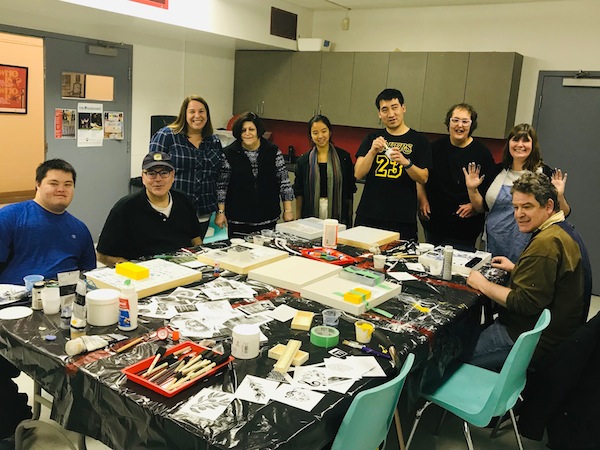
Xianzhi (Paul) Chen, in the Lakers T-shirt, not only led programming at the Jewish Community Centre of Greater Vancouver, but participated in it. (photo from JCC)

Xianzhi (Paul) Chen came to Canada from China in 2011 with his family. He loves outdoor sports, especially basketball, and has always been community-oriented, including providing care for Chinese seniors at a nursing home. But how did he find his way to the Jewish Community Centre of Greater Vancouver?

Paul is pursuing a recreation and leadership diploma at Langara College. Last year, he approached six organizations for an internship, to apply the training and skills of this program to a real-world environment, but was turned away by all the organizations he approached. When he initially interviewed for a position at the JCC with Lisa Cohen Quay, Adult 55+ program coordinator, she also said no. However, the issue was not whether he could do the work required, but rather that the requirements and expectations of the Langara internship were too much for her department to oversee.

Paul is blind in one eye and has limited vision in the other. He requires accommodations. But accommodations were not the issue either. Lisa’s mom lives with extremely low vision. She knew that, with slight adjustments to the work environment and access to a CCTV machine and specialized software like ZoomText, Paul would be able to meet and even exceed expectations. His disability, as so often is the case, was not the barrier.

Fortunately for the JCC, Paul would not take no for an answer. Without an internship, he would have had to delay the completion of his education. So, he wrote Lisa after that first meeting and asked her for a chance to show his skills. Paul – bright, friendly and tenacious – left a powerful impression. Lisa could not stop thinking about his abilities and the challenges he had faced. Determined to provide him with a meaningful and useful internship, she reached out to me, the coordinator of the JCC’s inclusion department, to see if we could create one between our two departments.

We did just that, agreeing to co-supervise Paul’s internship. We decided to provide him with program planning experience and program support experience, while also allowing him to actively participate in some of the JCC’s inclusion programming. Lisa then reached out to the Langara internship coordinator to negotiate a modified internship for Paul. The school agreed to Paul interning between the two departments at a reduced load over a longer, five-month period.

Paul was very nervous at first. He did not know how to set up for events like mah jongg, poker or bridge, how to manage a budget or how to plan programs. But, he took instruction well, was eager to learn and did his best. He demonstrated care in all his interactions with community members and poured his heart into every project in which he participated.

“I oversaw Dumpling Night at the Community Kitchen to share the Chinese New Year with community members,” said Paul by way of an example of how he incorporated his previous experience into his internship at the JCC, and learned more about leading programming.

“I oversaw all aspects of a balcony beautification project, including [doing] the budget by myself,” he added. “I learned how to use my hands to make art during the Art Hive program.”
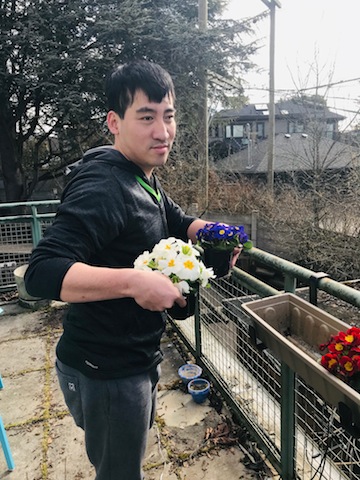
photo - Xianzhi (Paul) Chen
Paul Chen (photo from JCC)

Paul tried many new activities during his internship and, as a result, made a lot of friends. He learned quickly that friendships are forged through recreation.

Paul said the highlights of his internship were “making three excellent art pieces,” the beautification project and the “terrific relationships with people that I met in this community.”

“Paul has demonstrated a passion for community development through his internship at the JCC, with a focus on diversity and inclusion,” said Erin Wilkins, department chair, recreation studies, at Langara College. “He has also demonstrated how to provide engaging recreation experiences that support diverse community members and build resilience through empowerment.”

She said the department is “so proud of Paul’s accomplishments at the JCC, and thankful for the support he received throughout his internship, which is the final semester of the recreation leadership diploma.”

The JCC is proud to have been part of Paul’s training and professional development. We are happy to have provided him with a meaningful and diverse introduction to recreational programming, to community building and to leadership development. We are equally grateful for what he has given back to our community and us as professionals, and hope that he will continue to participate in our community and lead programming in the future.

Access to opportunity, we are reminded, requires adjustments and flexibility and is always worth the effort.

Leamore Cohen is inclusion services coordinator at the Jewish Community Centre of Greater Vancouver.
Format ImagePosted on April 19, 2019April 17, 2019Author Leamore CohenCategories LocalTags disability, education, health, inclusion, JCC, Langara College, Paul Chen
Trying to make access equal

Trying to make access equal

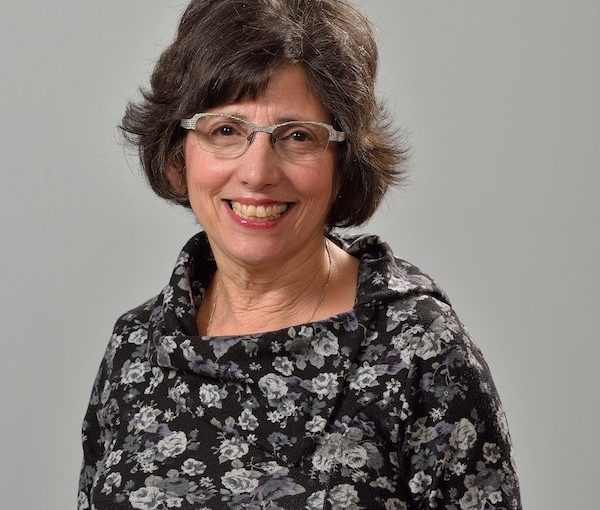
Dr. Cheryl Rockman-Greenberg (photo from Rockman-Greenberg)

In the 1970s, when Dr. Cheryl Rockman-Greenberg was eyeing the budding field of genetics as a career, she had to become a pediatric doctor first. Now, Rockman-Greenberg counts her clinical background as a blessing, one that, today, geneticists no longer require.

“Having a strong background in clinical medicine certainly always helped me in my career, because the kind of genetics I was always interested in was in rare metabolic diseases,” said Rockman-Greenberg. “These are diseases often caused by enzyme deficiencies that go by very elaborate names. Having a good foundation in clinical medicine through pediatrics certainly helped me.”

Rockman-Greenberg, who lives in Winnipeg, was invited to speak at the city’s Congregation Shaarey Zedek Sisterhood Interfaith Luncheon on April 30.

“I learned that the luncheon was spearheaded through the sisterhood in many ways to promote information sharing between the faiths,” she said, noting that a purpose of the event is education and “to look at how we can build bridges between people of different faiths and not build walls.”

“From a global perspective,” she said, “I think it fits the themes of the interfaith luncheon. And, from a Jewish perspective, I’ve certainly been involved over the years, particularly with the National Council of Jewish Women, of increasing awareness of the importance of genes for health, and bringing together some of the advocacy groups in rare genetic disorders.

“I helped the National Council put out a brochure on carrier testing on new genetic disorders in the Ashkenazi Jewish population that has been extremely well-received worldwide. This information is always evolving.”

At the luncheon, Rockman-Greenberg was planning to discuss, among other things, Bill S-201, also known as the Genetic Non-Discrimination Act, which passed into law in Canada in 2017, though it is still being challenged by insurance companies in Quebec.

“This is a remarkable act in the sense that it does protect Canadians from the use of genetic test results outside of medical care and medical research,” Rockman-Greenberg told the Independent. “In other words, genetic test results do not have to be disclosed to insurance companies or employers. We’re one of many countries who have such legislation in place, and many people here have worked for years and years lobbying for similar legislation for Canada.”

Methods of genetic testing continue to advance, said Rockman-Greenberg. Tests that were nonexistent or very complicated to administer as recently as two decades ago can now be done quickly and inexpensively.

“The evolution has dramatically changed over the past 10 years, particularly in the sense that the techniques we use to diagnose genetic disease have dramatically changed – from studying one gene at a time, to being able to sequence the entire genome of an individual,” she explained.

When Rockman-Greenberg refers to “new genetics,” she is referring to the ability to offer state-of-the-art, revolutionary genetic testing that was not possible just 10 years ago. It is this access that Rockman-Greenberg is lobbying for now.

“Everybody doesn’t have the same access to the testing in Canada,” she said. “It’s certainly not uniform from province to province or within provinces. So, many people are very committed to ensuring there are strategies in place to promote fairness.

“Notwithstanding that, the legislation is going to protect people against disclosing information that is already in place. I think we are ahead of the game because we have this in place. But, we are not ahead of the game in making sure people are going to have access to new diagnostic testing and new therapeutics in a way that’s going to be equal across the board.”

Rockman-Greenberg’s focus on rare metabolic diseases means that she has witnessed firsthand the struggles to get specialty drugs approved through a system focused on the big diseases, such as diabetes and cancer.

“You may get a new drug for diabetes that will be approved and available for patients very quickly, whereas some of the new drugs for other diseases I treat can take years and years before they go through the approval process,” she said.

Rockman-Greenberg thought that the topic was an appropriate one for an interfaith gathering, “as everybody having the same chance to be successful is very important to me. I work with families and patient support groups to help remove barriers and help people feel empowered.”

She said, “There are many challenges in dealing with rare diseases and I try to work both sides: the patient side, as well as advocate for changes at the government level, to make sure there is fairness in access to new therapies.”

Rebeca Kuropatwa is a Winnipeg freelance writer.

Format ImagePosted on April 19, 2019April 17, 2019Author Rebeca KuropatwaCategories NationalTags Cheryl Rockman-Greenberg, equality, genetics, health, human rights, interfaith, law, NCJW, Shaarey Zedek, Winnipeg
Bittons bring home honours from New York

Bittons bring home honours from New York

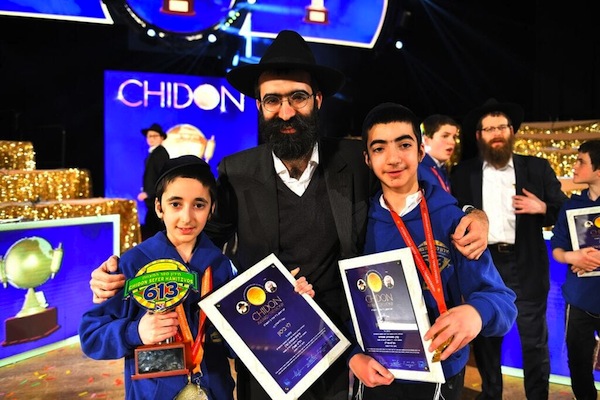
Silver trophy winner Levi Bitton, 11, and medal winner Mendel Bitton, 14, with their father, Rabbi Binyomin Bitton, director of Chabad of Downtown Vancouver, at the International Chidon Sefer Hamitzvos. (photo from Chabad of Downtown)

Seven months of diligent study came full circle April 7 for Mendel and Levi Bitton of Vancouver and more than 1,200 of their peers at the final round of the annual International Chidon Sefer Hamitzvos in Brooklyn, N.Y. Of close to 10,000 children from more than 150 schools worldwide who participated in this year’s competition, Mendel and Levi earned two of the highest scores on three rigorous exams, qualifying them for a trip to Brooklyn to participate in the final tournament. Also earlier this month, more than 1,400 girls participated in their own similar showdown.

The Lubavitcher Rebbe, Rabbi Menachem M. Schneerson, OBM, encouraged children to thoroughly study all of the Torah’s 613 commandments as enumerated and elucidated by Maimonides in his Sefer Hamitzvot. His followers have taken to his words, hosting an annual chidon (contest) that challenges children to study large volumes of detailed texts delving into the intricacies of each mitzvah, and compete for trophies, medals and prizes.

Organized by Merkos L’Inyonei Chinuch, the educational arm of the Chabad-Lubavitch movement, together with Tzivos Hashem, its children’s division, the Chidon Sefer Hamitzvos sees thousands of children ages 9-13 staying late at their respective schools to study the mitzvot with their classmates and friends. As finalists, Mendel and Levi flew to New York, where they enjoyed four days of trips and competitive games that tested their knowledge, and concluded with a grand on-stage tournament and award ceremony.

In the final moments, the tension rose and the crowd went silent as the emcee opened the long-awaited envelopes and announced the trophy winners and champions of the final exam.

We are proud to report that Levi earned a silver trophy. We are also proud to report that Mendel was among 15 boys, from grades 4 to 8, who completed the entire Chidon curriculum. Mendel earned a medal celebrating his commitment and all those months of hard work.

Mazal tov to Levi, Mendel and all of the competitors!

For more information on the contest, visit chidon613.com.

Format ImagePosted on April 19, 2019April 17, 2019Author Chabad of DowntownCategories LocalTags Bitton, Chidon, education, Judaism, Maimonides, Sefer Hamitzvot
Animal Behaviour’s double honours

Animal Behaviour’s double honours

A scene from Alison Snowden and David Fine’s Animal Behaviour: Victor acts out. (image from National Film Board of Canada)

Alison Snowden and David Fine’s National Film Board animated short Animal Behaviour won for best animated short at the Canadian Screen Awards March 31.

The film also was an Academy Award nominee this year. It is the fourth Oscar nomination for the Vancouver-based husband-and-wife animation duo, who took home the Oscar 24 years ago for the NFB-Snowden Fine Animation-Channel 4 co-production Bob’s Birthday. They were also nominated for their 1987 NFB short George and Rosemary, with Snowden nominated before that for her 1984 student film Second Class Mail.

Animal Behaviour takes viewers inside a group therapy session for animals who grapple with issues not unlike our own. (See jewishindependent.ca/animated-therapy-session.) Produced and executive produced by Michael Fukushima for the NFB’s Animation Studio in Montreal, Animal Behaviour is the 75th Academy Award nomination for the NFB – more than any other film organization based outside of Hollywood. The NFB has received 12 Oscars over its 79-year history, including a 1989 Honourary Academy Award for overall excellence in cinema.

Format ImagePosted on April 19, 2019April 17, 2019Author National Film Board of CanadaCategories LocalTags Academy Awards, Alison Snowden, animation, Canadian Screen Awards, David Fine, Oscars
Safe, healthy and respectful

Safe, healthy and respectful

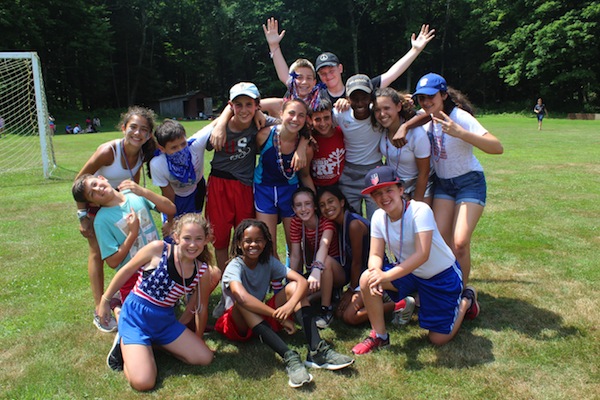
Campers at Pennsylvania’s Camp Havaya. (photo from Camp Havaya)

In Pirkei Avot (Ethics of Our Fathers), Ben Zoma says, “Who is honourable? One who honours others.” The Foundation for Jewish Camp’s Shmira Initiative “aims to make camps safe, healthy and respectful model communities. Shmira, in Hebrew and in the vernacular of Jewish summer camp, means guard duty, embodying the social and individual responsibility every community member has to ensure a safe environment.”

For some camps, the initiative provides practical training that has been needed for some time. But, at Camp Havaya in Pennsylvania, camp director Sheira Director-Nowack told the Independent that they have been operating on the initiative’s principles for many years.

“We have people who go by ‘he,’ by ‘she’ and by ‘they,’ as rabbis, teachers, students, educators, campers and staff,” said Director-Nowack of the camp, which is part of the Reconstructionist movement. “So, for us, the sexual harassment piece is something we’ve always discussed, have always had a policy for. I used to work at a camp that did not have that defined as clearly and they had some real challenges. We don’t have some of those challenges here, because it’s very up front and very clear – how you treat all people, not just insofar as gender, but in all areas of inclusion.”

At Camp Havaya, respect is constantly discussed.

“The name of our camp mascot is Howie Bee,” said Director-Nowack. “We talk about ‘how we be,’ using that as a fairly common statement to talk about how we should treat each other with respect, kindness … better than you’d want to treat yourself, you’d want to treat the other person … and, not just as a Jewish phenomena, but as a human phenomena.”

While Director-Nowack acknowledged that, every so often, they run into power conflicts in a relationship, they try to ensure it never gets near the point of harassment.

At Camp Havaya, she said, flirtation is discouraged. For example, there are strict rules as to what clothing is acceptable. Everyone must wear shirts at all times and clothing should be loose fitting. They also have no boys against girls competitions. Instead, all sports are open to everyone and, while everyone swims together, there are rules about appropriate swimwear.

Language and attitude is another area that is closely monitored at the camp. “We don’t use the word ‘broad’ or ‘chick,’ we don’t use a lot of derogatory terms,” said Director-Nowack. “We don’t make jokes at other people’s expense.

“We want everyone to treat each other how they would treat their own family or themselves…. There’s not a constant need for romance or underlying things that go into that modern love thought and, because of that, we don’t see certain behaviours that other places might see.”

The concepts of the #MeToo movement are discussed at camp, as are other relevant topics, like Black Lives Matter and the Israeli-Palestinian conflict.

“Our constituency is made up of people who are interested in these things … also, things like respect for people with special needs, inclusivity, race, culture and minorities,” said Director-Nowack. “We don’t talk about these things because they’re hot topics. We were talking about them before they were considered cool to talk about.

“We also give the credit to younger people, because it is them who are changing the verbiage, changing ideas. They are bringing them to us and we are bringing them to camp, because, if camp is a microcosm of society, then we want to be part of that.”

If and when the topic of sex comes up, Director-Nowack said she teaches her staff to turn the conversation back to the camper and ask why he or she is wondering about it.

Camp Havaya has a no-sex policy. If inappropriate behaviour is observed, Director-Nowack said, ‘We don’t punish people for behaviour, but I may or may not ask them if camp is the appropriate place for it. I don’t feel like there’s any place at camp where you could be sexual appropriately, and that’s what we talk about.

“We don’t hook up in the middle of the woods – that’s just not what we do. And, we really don’t have a lot of that. I don’t think I’d kick someone out of camp just because they kissed someone. But, I’d say something like, ‘I just walked passed you kissing … not what I want to see, not OK, not cool.’ If it got further than that, it would depend on the kid, the parent, the discussion and the situation. We’re dealing with human beings and we have an environment that’s not constant.”

Still, staff members do talk with campers about consent, in an effort to ensure all of them are comfortable in their own space at all times.

“Our goal is to create young leaders in the Jewish community who are thoughtful and intelligent, and who are, therefore, going to go out and lead a Jewish life and know themselves,” said Director-Nowack. “We love that some people find their love and their relationships at camp. But, I also love that people find their independence at camp … or that they want to lead a more productive Jewish life without a partner…. We want our kids and staff to leave camp as people who are going to make decisions guided by some basic values.”

For more information on the Shmira Initiative, visit jewishcamp.org/shmirainitiative.

Rebeca Kuropatwa is a Winnipeg freelance writer.

Format ImagePosted on April 19, 2019April 17, 2019Author Rebeca KuropatwaCategories WorldTags #MeToo, camp, children, ethics, harassment
Mystery photo … April 19/19

Mystery photo … April 19/19

Two unidentified women hold a White Elephant sign for Hadassah Bazaar collection, 1953. (photo from JWB fonds, JMABC L.10545)

If you know someone in this photo, please help the JI fill the gaps of its predecessor’s (the Jewish Western Bulletin’s) collection at the Jewish Museum and Archives of B.C. by contacting [email protected] or 604-257-5199. To find out who has been identified in the photos, visit jewishmuseum.ca/blog.

Format ImagePosted on April 19, 2019April 17, 2019Author JI and JMABCCategories Mystery PhotoTags archives, Hadassah Bazaar, history, Jewish museum
Spring cleaning

Spring cleaning

Crews from the office of the Rabbi of the Western Wall remove tens of thousands of written prayers from the Western Wall. (photo by Gil Zohar)

On April 10, equipped with long sticks, crews from the office of the Rabbi of the Western Wall removed tens of thousands of written prayers, which worshippers had wedged into crevices at the holy site over the previous half year. The painstaking work is done twice annually, in advance of Passover in April and Rosh Hashanah in September, to ensure space for new prayers. The notes that are removed are buried in Mount of Olives Cemetery.

The origin of the practice of placing small folded sheets of paper between the cracks of the 2,000-year-old ashlars is unclear. According to tradition, God’s female presence (Shechinah), has never left the holy site.

A retaining wall of the Temple Mount, built by King Solomon circa 960 BCE and destroyed by the Romans in 70 CE, the Kotel Maaravi (Western Wall) stands today beneath a religious plaza known in Arabic to Muslims as al-Haram ash-Sharif (the Noble Sanctuary). Jews believe the holy hill marks the navel of the world from where God began his creation 5779 years ago; the site also marks where Abraham brought his son Isaac to offer him up as a sacrifice. Muslims consider the Western Wall to be where Muhammad tethered his winged steed al-Burak when he ascended to the Seventh Heaven. And Christians believe Jesus was one of the millions of Jewish pilgrims in antiquity who came here during the festivals of Passover, Tabernacles and Pentecost.

From 1948 until 1967, when East Jerusalem was under the control of Jordan, Israelis were prohibited from visiting the site.

Gil Zohar is a journalist based in Jerusalem.

Format ImagePosted on April 19, 2019April 17, 2019Author Gil ZoharCategories Celebrating the Holidays, IsraelTags Christianity, Islam, Israel, Jerusalem, Judaism, Kotel, Passover, Western Wall
נשיאה של ישראל ביקור בקנדה

נשיאה של ישראל ביקור בקנדה

נשיא המדינה, ראובן ריבלין, קיים לאחרונה ביקור רשמי בקנדה, שכלל פגישת עבודה עם ראש הממשלה, ג‘סטין טרודו. (Mark Neiman GPO)

נשיא המדינה, ראובן ריבלין, קיים לאחרונה ביקור רשמי בקנדה, שכלל פגישת עבודה עם ראש הממשלה, ג’סטין טרודו. טרודו אמר לריבלין בפגישה ביניהם: “אנו מציינים שבעים שנה לכינון היחסים הדיפלומטיים בין שתי המדינות. יש לנו הרבה על מה לדבר כמו חידוש הסכם הסחר שלנו, ולדבר על פלורליזם ועל סובלנות ומאבק נגד שנאה וחוסר סובלנות. אני יודע שאתה מחזיק בדעות חזקות בנושא הזה. תענוג גדול לשבת איתך בזמן שבו ישראל וקנדה חברות נהדרות”. ריבלין הישיב לטרודו: “תענוג להיות איתך ולהכיר חבר כל כך טוב. אנחנו חולקים ערכים ואידיאלים. יהודים באו לקנדה כבר לפני מאה וחמישים שנה. אני גאה מאד להיות כאן ולהחליף ידע ורעיונות איתך. אנחנו חווים ימים קשים במרחב, ואתם עושים המון עבורנו במטרה לשמור על המרחב העדין ועל הקיום שלנו. אתם עושים זאת בסוריה, בלבנון ובסיני”. הנשיא הודה לטרודו על תמיכתה של קנדה בישראל בזירה הבינלאומית ועל התמיכה נגד הפעילות האנטישמית של תנועת הבי.די.אס. ריבלין מקווה שקנדה תביע עמדה נגד מהלכים חד-צדדיים של הפלסטינים נגד ישראל. וכנגד היחס המפלה כלפי המדינה במוסדות הבינלאומיים.

השניים דנו בסוגיה האיראנית והנשיא ציין לטובה את החלטת הפרלמנט הקנדי על הקפאת היחסים עם איראן, ואת ההכרזה כי משמרות המהפכה האיראניים הם ארגון טרור. בנושא זה אמר ריבלין: “איראן מובילה את התבססות הציר השיעי בעיראק, סוריה, לבנון ותימן. ובפעולותיה היא מחריפה את המתח הסוני-שיעי, העלול להביא להסלמה אזורית ולאיים על העולם כולו”. הנשיא הדגיש כי: “אסור לעולם לאפשר התבססות איראנית. בלימת ההתבססות האיראנית תושג רק באמצעות לחץ בינלאומי מתואם ופעולות צבאיות נקודתיות בכל עת שנדרשת”.

לפני הפגישה עם טרודו, נפגש הנשיא עם המושלת הכללית של קנדה, ז’ולי פאייט. השניים קיימו פגישת עבודה מדינית. הנשיא העניק למושלת (שהייתה בעבר אסטרונאוטית והיו לה שתי משימות בחלל), דגם מוקטן של החללית “בראשית”. החללית הישראלית הראשונה עתידה הייתה לנחות על הירח וכידוע התרסקה וגרמה לעוגמת נפש גדולה בישראל. פאייט אמרה דברים מרגשים לזכרו של האסטרונאוט הישראלי, אילן רמון ז”ל, שעימו הייתה ביחסי ידידות. ריבלין מצידו הזכיר את מותה של אשתו, רונה רמון, ופאייט אמרה שהדבר מאוד העציב אותה.

טרודו וראש עיריית טורונטו, ג’ון טורי, השתתפו באירוע מיוחד: שבעים שנה לידידות בין קנדה וישראל. האירוע נערך בטורונטו בהשתתפות כאלפיים איש. הוא אורגן על ידי מגבית היהודית קנדה והבונדס, בשיתוף פעולה עם ארגון הגג של הפדרציות היהודיות בקנדה.

טרודו נשא באירוע נאום פרו-ישראלי יהודי יוצא דופן, גינה את האנטישמיות ואמר כי בניגוד אליה, הערכים היהודיים של נתינה וקהילה הם ערכים קנדיים. טרודו: “האנטישמיות בעולם מרימה ראש. התקפות אנטישמיות מתרחשות נגד ילדים שהלכו עם כיפות בקנדה, ההתקפה נגד בית הכנסת בפיטסבורג, ההתקפות בפריז, בירושלים ובכל העולם. אנטישמיות נמצאת במגמת בעלייה והיא מפיצה שנאה”. טרודו הוסיף עוד כי האנטישמיות החדשה כוללת גם את הדמוניזציה של ישראל. לדבריו אין מקום לתנועת האפרטהייד נגד ישראל בקנדה. ראש ממשלת קנדה הדגיש: “אני יכול להבטיח לכם שקנדה תמיד תגנה כל שנאה נגד כל קהילה, ותזכיר את המסר שוב ושוב כי אנטישמיות היא התקפה על קנדה. ישראל היא לא רק בת ברית, אלא שותפה אמינה שאפשר לסמוך עליה והיא יכולה לסמוך עלינו”.

טרודו אפוא מנסה להתקרב לישראל ואל היהודים בקנדה לקראת הבחירות הכלליות שיערכו כאן בחודש אוקטובר.

Format ImagePosted on April 17, 2019April 14, 2019Author Roni RachmaniCategories עניין בחדשותTags Canada, Israel, Justin Trudeau, Reuven Rivlin, ג'סטין טרודו, ישראל, קנדה, ראובן ריבלין
Politicians speak at AIPAC

Politicians speak at AIPAC

Clockwise, from top left: U.S. Vice-President Mike Pence, Joe Lieberman, Senator Marco Rubio and Senator Cory Booker address attendees of last month’s AIPAC Policy Conference. (photos by Dave Gordon)

U.S. Vice-President Mike Pence, in addition to other ranking American politicians, spoke of their unwavering support for the Jewish state to 18,000 people at the American Israel Public Affairs Committee (AIPAC) Policy Conference, in Washington, D.C., March 24-26.

Speech themes revolved around recent rocket attacks against Israeli civilians, the Golan Heights being recognized as Israeli sovereign territory by the United States, and sanctions against Iran. Every official who mentioned BDS, the boycott, divestment and sanctions movement against Israel, condemned it.

Much was said about the Democratic congresswoman from Minnesota, Ilhan Abdullahi Omar. Her statements – including “Israel has hypnotized the world” and that AIPAC has influenced U.S. policy through money – have been interpreted as antisemitic by some Jewish leaders.

Pence said, “History has already proven [Donald Trump] to be the greatest friend of the Jewish people and the state of Israel ever to sit in the Oval Office of the White House.”

Among the pro-Israel bona fides of Trump, Pence said the United States shut down the Washington branch of the Palestinian Authority as a consequence for funding terror; ended tax dollar funding for United Nations-funded Palestinian schools; moved the U.S. embassy to Jerusalem; and recognized the Golan Heights as Israeli territory.

“We stand with Israel because her cause is our cause, her values are our values,” he said.

In addition, Pence talked about the end of the “disastrous nuclear deal with Iran” that has been replaced with “a maximum-pressure campaign” of sanctions, thereby causing Iran’s economy to dip.

“There’ll be no more pallets of cash to the mullahs in Iran,” he said.

In a swipe across the political aisle, Pence said, “It’s astonishing to think that the party of Harry Truman, which did so much to help create the state of Israel, has been co-opted by people who promote rank antisemitic rhetoric and work to undermine the broad American consensus of support for Israel.”

Without mentioning her name, he referred to Omar as “a freshman Democrat in Congress” who “trafficked in repeated antisemitic tropes.”

Former U.S. ambassador to the UN Nikki Haley’s first comments were about what she believes is the UN’s hypocrisy.

“You know, what’s interesting is, at the UN, I can guarantee you this morning it is radio silent,” she said, in reference to the rocket attacks from Gaza into Israel. “They are not saying anything about Hamas, they’re not saying anything about the lives lost, they’re not saying anything. But, if it was any [other] countr[y], they’d be calling an emergency Security Council meeting.”

David Friedman, U.S. ambassador to Israel, claimed that Trump is “Israel’s greatest ally ever to reside in the White House” and, to those who think otherwise, “please, take a deep breath and think about it some more.”

How America is now sanctioning Iran was one example of an Israel-friendly policy. Friedman criticized the previous administration for paying the Islamic Republic $100 billion in the hopes that country would “self-correct.”

“What did Iran do with all its newly found treasure?” he asked. “Did it build up its civilian institutions? Did it improve the quality of life of its citizens?” Instead, he said, it “doubled down on terrorist activity in Yemen, in Iraq and in Lebanon. It increased its stock of ballistic missiles and it invested in military bases in Syria, on Israel’s northern border.”

photo - Protesters at this year’s AIPAC Policy Conference, in Washington, D.C., last month
Protesters at this year’s AIPAC Policy Conference, in Washington, D.C., last month. (photo by Dave Gordon)

Israeli Prime Minister Binyamin Netanyahu delivered an address via satellite, initially planning to take the podium in person, but returning to Israel to deal with the rocket attacks.

“The Golan Heights is indispensable for our defence,” he said of the recognition by the United States of the northern land seized by Israel in the Six Day War, in 1967. “It’s part of our history. When you put a shovel in the ground there, what you discover are the ruins of ancient synagogues. Jews lived there for thousands of years and the people of Israel have come back to the Golan.”

Netanyahu said he thought comments like Omar’s are antisemitic.

“Again, the Jews are cast as a force for evil,” he said. “Again, the Jews are charged with disloyalty. Again, the Jews are said to have too much influence, too much power, too much money. Take it from this Benjamin, it’s not about the Benjamins.”

In the session Canada’s Relationship with Israel, the panel included Liberal member of Parliament Anthony Housefather, Conservative MP Erin O’Toole and former Conservative foreign minister John Baird.

Housefather said he believes Israelis do not think there’s a negotiating partner for peace, but they share some blame in the conflict: “The more they create settlements, the less likely there will be peace … they should think carefully before expanding settlements.”

A questioner asked him when the Canadian prime minister would do something “real” for Israel and Housefather noted that, in recent weeks, Prime Minister Justin Trudeau forcefully condemned the BDS movement in a town hall meeting.

Another audience member asked why the Trudeau government continues to fund the United Nations Relief and Works Agency. While acknowledging that UNRWA has “curricula problems” that involve “anti-Jewish, anti-Israel comments, misogynistic comments and anti-gay comments,” he said that the $50 million in funding was just.

Housefather said he had spoken with the head of UNRWA and voiced his “concerns at the slow pace they are making changes in the curricula,” but added that their schools make children “a lot less likely to become terrorists against Israel.”

“Yes to helping them with UN aid programs; no to funding their schools,” said O’Toole. And Baird agreed.

On the topic of a peace plan, O’Toole said he “kept hearing from Palestinians their want for a ‘one-state solution,’” while their government “exerts violence, and does not take care of the needs of their people.”

“I think you’ll see from Israeli leaders that they’re prepared to experience real pain [in concessions],” Baird said, but “Palestinians have to stop the incitement” and the “hate-mongering.”

While several candidates for the Democratic party’s 2020 presidential nomination skipped the conference, leading Democratic figures were prominent at AIPAC, including House Speaker Nancy Pelosi, who insisted no one will be permitted to make Israel a partisan wedge issue.

Dave Gordon is a Toronto-based freelance writer whose work has appeared in more than 100 publications around the world.

Format ImagePosted on April 12, 2019April 10, 2019Author Dave GordonCategories WorldTags AIPAC, Anthony Housefather, antisemitism, BDS, Binyamin Netanyahu, David Friedman, Diaspora, Erin O’Toole, Israel, John Baird, Mike Pence, politics
Connecting beyond art

Connecting beyond art

“Sydney Beach Cliff” (Australia) by Talin Wayrynen.

Art Vancouver’s dictum is “Connect. Inspire. Educate.” This year’s fair brings together almost 100 exhibitors from around the world to Vancouver Convention Centre East April 25-28, and features art classes, guided tours, speakers, panel discussions and a café art crawl. Both veteran and emerging artists participate, and the Jewish Independent spoke with a few artists in the Jewish community who are newcomers to the exhibition world: Matthew Weinstein, Talin Wayrynen and Tara Lupovici.

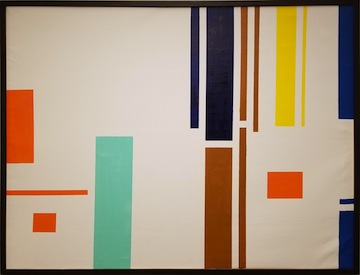
photo - Untitled #29 (2019) by Matthew Weinstein
Untitled #29 (2019) by Matthew Weinstein.

“I had a chance to volunteer at last year’s show,” Weinstein told the Independent. “Seeing the great professionalism demonstrated by the Wayrynen family inspired me to submit a formal application to this year’s exhibition.”

Art Vancouver was launched in 2015 by Lisa Wolfin Wayrynen. It has become somewhat of a family affair, with this year’s exhibitors including her daughters, Taisha Teal Wayrynen and Skyla Wayrynen; her son, Talin Wayrynen; and her sister, LeeAnn Wolfin.

“We just exhibited in Korea last November, and were invited to participate in another show in Seoul in June, and another show in Taiwan in December,” said Lisa Wolfin Wayrynen, referring to her and her children. “The family act is on the move!”

The 2019 Art Vancouver will be Talin Wayrynen’s second time exhibiting at the fair. An aerial photographer, among other things, he will be exhibiting photos from Australia and New Zealand, and possibly Indonesia. Last year, he said, he displayed photos of British Columbia and Mexico.

Weinstein said he will be bringing a select number of pieces to the show. Describing his art as “abstract and minimal in nature,” he said, “The purpose is to bring peace and tranquility to contemporary rooms…. My passion is to make large multi-coloured pieces that are not just pleasant to look at, but also provoke questioning and inspiration.”

About his creative process, Weinstein said, “The numbers and letters may appear as if they are there to provide meaning when in fact they are just as nonrepresentational as the rest of the shapes. One might ask, ‘Why did you add the number 7 at the bottom right corner of this piece?’ My answer would be, ‘There is no concrete reason behind that decision. It is as random as the rest of shapes, colours and signs you’re seeing. If you’re asking this question then I’ve accomplished my goal to generate interest and promote inspiration.’”

Lupovici, whose artist signature is LUPO, said, “My art is a psychedelic, abstract combination of organic and fluid lines with colour combinations that are inspired by the colours I feel.”

This year’s fair will be Lupovici’s first Art Vancouver, but she has a previous connection to the Wayrynen family. “I went to camp with Taisha and Skyla, Lisa’s daughters,” she said.

A graduate of Kwantlen Polytechnic University’s fashion marketing program, Lupovici said fashion was her main focus, and she has worked in various places, including with her father (Irwin Lupovici), at Bong Wear. “Then, one day,” she said, “I was making dinner and cut a red cabbage in half and boom! My passion for painting was back in my life.”

photo - Tara Lupovici with some of her work
Tara Lupovici with some of her work. (photo by Adrianna Hankins)

She has dedicated the last year or so to painting. “Eventually,” she said, “I will mesh my art and fashion design together and have my LUPO label.”

Half-Jewish and half-Chinese – she also speaks Cantonese – Lupovici said, “I definitely would not be the person I am without all the Jewish culture and community that I have been surrounded by. Jewish summer camp was one of the most memorable, loveliest times of my childhood and I am, to this day, close with many of the people I went to camp with. I would not say it has influenced me in design and art, but I do feel being Jewish and meeting other people in the community is inspiring in itself.”

Weinstein also said his being Jewish has had little influence on his work. However, he said, “Having grown up in a suburb of Tel Aviv, I feel connected to my Jewish identity…. The last time I visited Israel was in 2011 and I am very excited to visit again in May…. My upcoming trip is something I look forward to, as it provides a rare chance to explore my roots and reinforces my personal connection to Judaism.”

More travel is also in Wayrynen’s plans, having recently been to Korea, Taiwan, Indonesia, Australia and New Zealand.

“I started using drones just for fun in 2016 and then, in 2017, started using them for film and photography,” he said.

While he couldn’t describe the exact elements of a “perfect” shot, he said, “I like to have stuff that’s unique and can’t really be replicated – like a wave crashing, shots of wild animals or something along those lines.”

As an example, last summer, in Horseshoe Bay, he filmed a group of killer whales, which was later featured by CBC.

Not just anyone is allowed to use drones, of course, and Wayrynen said permission currently depends “on where and for what reason you fly, but it’s soon to be just a licence no matter what.”

In British Columbia, he said, “[I]t’s unlikely to get a permit to fly anywhere remotely populated and even some parks have issues with it. The states are pretty similar and, as for Mexico, I was working on a TV show that did all the paperwork for it, all I provided was the licence and insurance. We were able to film basically anywhere there during the few weeks our permits lasted.”

Weinstein summed up well the importance of venues like Art Vancouver. “If you’re reading this,” he said, “please feel free to come by my booth at the upcoming show and let me know what you think of my art. I enjoy listening to all criticism (both good and bad) and, if you have other suggestions, I’ll be happy to discuss in person.”

For more information on and tickets to Art Vancouver, visit artvancouver.net.

Format ImagePosted on April 12, 2019April 10, 2019Author Cynthia RamsayCategories Visual ArtsTags art, Matthew Weinstein, painting, photography, Talin Wayrynen, Tara Lupovici

Posts pagination

Previous page Page 1 Page 2 Page 3 … Page 6 Next page
Proudly powered by WordPress