Skip to content
  • Home
  • Subscribe / donate
  • Events calendar
  • News
    • Local
    • National
    • Israel
    • World
    • עניין בחדשות
      A roundup of news in Canada and further afield, in Hebrew.
  • Opinion
    • From the JI
    • Op-Ed
  • Arts & Culture
    • Performing Arts
    • Music
    • Books
    • Visual Arts
    • TV & Film
  • Life
    • Celebrating the Holidays
    • Travel
    • The Daily Snooze
      Cartoons by Jacob Samuel
    • Mystery Photo
      Help the JI and JMABC fill in the gaps in our archives.
  • Community Links
    • Organizations, Etc.
    • Other News Sources & Blogs
    • Business Directory
  • FAQ
  • JI Chai Celebration
  • JI@88! video

Recent Posts

  • Legal help for students
  • Revisiting myth of Lilith
  • Wrong person rebuked
  • Canada’s mixed messages
  • Questions for museum
  • Symposium on antizionism
  • Making soccer political
  • CJPAC lauds Pulver’s impact
  • City recognizes Vrba’s legacy  
  • Organ donation saves lives
  • Theodore’s March premiere
  • A healing Shabbaton
  • Supplying healthy food
  • A chime of metal tags
  • Yellowknife seder a first
  • Ishai energizes, unifies
  • A Lag b’Omer to remember
  • Expanding the healing
  • Hannah Senesh – a unique hero
  • Community milestones … May 2026
  • Sharing her testimony
  • Fall fight takes leap forward
  • The balancing of rights
  • Multiple Tony n’ Tina roles
  • Stories of trauma, resilience
  • Celebrate our culture
  • A responsibility to help
  • What wellness means at JCC
  • Together in mourning
  • Downhill after Trump?
  • Birth control even easier now
  • Eco-Sisters mentorship
  • Unexpected discoveries
  • Study’s results hopeful
  • Bad behaviour affects us all
  • Thankful for the police

Archives

Follow @JewishIndie
image - The CJN - Visit Us Banner - 300x600 - 101625

Month: April 2019

Monitoring online hate

On Monday, Facebook eliminated many extremist pages from its platform, including several Canadian pages, such as those of extremist groups Soldiers of Odin, the Canadian Nationalist Front and Aryan Strikeforce, as well as individuals like white supremacists Faith Goldy and Kevin Goudreau.

Some anti-racist activists say it’s a good start, but only the tip of the iceberg. They also assert that occasional purges of hate content will not address the larger issue in the absence of clear, enforceable standards by social media giants like Twitter and Facebook, which also owns Instagram.

Relatedly, the Centre for Israel and Jewish Affairs has launched a campaign, #notonmyfeed, which is intended, according to the accompanying website, “to stop online hate from becoming real-world violence.” (See jewishindependent.ca/cija-fights-online-hate.) CIJA cited social media posts by the murderers in the Pittsburgh synagogue and the Christchurch mosque killings as cause for governments to move on the issue.

“In both cases, the perpetrator used social media to spread their heinous, hateful agenda,” according to the website notonmyfeed.ca. “From white supremacists to ISIS, it is increasingly clear that online hate and radicalization can fuel and foreshadow offline violence.”

The House of Commons justice committee – as if they are not busy enough with the SNC-Lavalin affair – is launching a study on the issue. The intent, according to CIJA, is to develop a national strategy around online hate.

A national strategy confronting hatred, whether online or offline, seems like a positive development if it helps track problematic people and ideas in order to prevent future violence.

The benefits of a crackdown on online hatred are obvious: by making it more difficult for hateful ideas to reach large, mainstream audiences, moves like those by Facebook are a positive step. Groups that use social media to recruit individuals into hate movements may be hobbled by such policies. Although there are plenty of forums online where they can continue their efforts, hate groups may not have as easy and accessible a reach if policies are put in place to monitor and censor such groups and their messages.

Of course, some of the extremists are crowing about being banned.

“Our enemies are weak and terrified,” Goldy tweeted (because she is not banned from that platform). “They forget most revolutions were waged before social media!”

True enough. But if we make Goldy’s job harder, it’s a good thing.

However, while there are potential positive outcomes, we should not be blind to the potential unintended consequences of such a move.

If the murderers of Pittsburgh and Christchurch had given hints on social media of their intent, isn’t the larger issue here that those threats went unchecked and, therefore, the perpetrators were allowed to complete their mission of mass murder without intervention? Do we really want to eliminate forums in which we can track and identify potential terrorists? If we ban them from these platforms, are we forcing them underground into places where we cannot police them?

Presumably, police and intelligence agencies know where to find the online warrens of hatemongers and can monitor those venues almost as easily as they could Facebook or Twitter, while ensuring that members of the public who are innocently surfing the web do not stumble upon violent hate messaging in seemingly innocuous places. Even so, given that, as CIJA points out, the Pittsburgh and Christchurch killers left a trail on social media and still managed to execute their terrible plans, it suggests we’re not doing a stellar job on this front even when the warning signs are on the world’s largest sharing platforms. So, how much better are we to expect things to be when we force them into the darker crevasses of the online world?

This issue is confounding in part because the internet is, by definition, anarchic and largely beyond the control of all but the most authoritarian governments. As a result, governments and even social media behemoths like Facebook can do only so much to control what is shared through the web writ large.

Leaving aside issues of free expression (which differ across jurisdictions in ways that social media do not), there are practical considerations that we hope elected officials, law enforcement and social media corporations themselves consider when addressing online hate.

As governments do begin to take the issue seriously and consider interventions in the interest of public safety (including, especially, the safety of the most commonly targeted identifiable groups), we trust that a balance will be struck between eradicating violently hateful messaging, on the one hand, and, on the other, not harming law enforcement’s ability to do their job by pushing these ideas into clandestine sectors where they can neither be monitored nor challenged. Finding that balance should be the key to formulating public policy on this urgent issue.
Posted on April 12, 2019April 10, 2019Author The Editorial BoardCategories From the JITags #notonmyfeed, antisemitism, CIJA, Facebook, hate, internet, racism, technology

Together on path to freedom

Passover is coming! As we prepare, we think of what it means to be enslaved and to be free. Some seders focus on human rights. Others read and discuss Jewish texts about how to understand the holiday. Every year, we re-examine not only how good the foods are, but the ideas around slavery and redemption.

At one of my first Jewish events in Winnipeg, 10 years ago, I heard racist comments about indigenous Canadians. I was really upset by the incident. I was so uncomfortable that I still remember the experience in detail, even though I’ve forgotten a lot of other things over time.

I recently attended some of the lectures in an extremely worthwhile series put on by Westworth United Church called Interfaith Dialogue on Truth and Reconciliation. Each year, in the springtime during Lent, this church offers some of the best adult education programming I’ve ever attended and they welcome the entire community. The topics are thoughtful but, even more important, participants come ready to wrestle with hard intellectual and emotional ideas. I was introduced to it because Dr. Ruth Ashrafi has been a speaker as part of this programming more than once, and I’m hooked.

This year, the series was held in four different locations throughout the community, including Congregation Etz Chayim, Westworth United Church, as well as at one of the mosques and at a Buddhist Temple. It was so well attended that it filled the pews – wherever it was held.

Each session, a religious leader spoke, but he or she spoke at the lectern of a different congregation. Dr. Shahina Siddiqui spoke at Etz Chayim. Ashrafi spoke at Westworth United. It was powerful to see people of different faiths take to different pulpits. These leaders spoke, in the context of their religious traditions, on their status as Canadians or newcomers to a place with a heavy past of racism toward and discrimination and neglect of its indigenous people.

The most shattering part of the series was to hear from indigenous elders. I only attended two of the events, and heard Theodore Fontaine and Chickadee Richard speak. I cried while I listened to them. Their powerful personal, political and religious stories shook me.

These were bright, strong leaders with absolutely valid points about how they and their communities have been affected and mistreated by Canadian law and society. Their beliefs and prayers – about caring for Mother Earth, about protecting water and guarding the lives of those they love – are no different than those of other religious traditions in Canada. Yet, there are still indigenous communities who are forced to live in terrible conditions, without access to clean water and without adequate education or health care. How can people of faith accept this dichotomy? How is it that the first people in Canada don’t have access to the basic human rights that most of the rest of us enjoy?

After each set of lectures, we were sorted into random discussion groups. In the first event, we were asked to imagine what it might have been like to experience residential school and how we felt we would have reacted. What would that have been like?

All around me, I heard older Canadians mention how they didn’t know, and that their history classes didn’t teach them what had happened. They struggled with this part of Canadian history. It’s a denial that seemed familiar from German accounts of the Second World War, when people said “they didn’t know” what was happening to the Jewish people in their communities.

I could see many parallels between the stories Theodore Fontaine told, of “going to the moon” and escaping the abuse by disassociating and going somewhere else in his mind, and the novel The Painted Bird, by Jerzy Kosinski, which describes the horrors experienced by a Jewish child during the Holocaust. Trauma causes us (humans) to do many of the same things, even if our religious and ethnic identities differ.

Many of us know that the trauma of the Holocaust doesn’t go away in one or two generations. Those indigenous Canadians who were sent away from their families to residential schools, where they were abused, fed poorly and otherwise mistreated – their trauma has affected their families for generations. Jerzy Kosinski dealt with his childhood Holocaust trauma through substance abuse and, eventually, suicide. It’s no wonder that many indigenous survivors do the same.

Passover is a time of year, like the High Holidays, where we throw off wrongs and bitterness in the hope of embracing new growth and change. We can throw off the bondage of old biases or ideas that have enslaved us. Prejudice against indigenous people, their traditions and the burden of past abuses needs to be addressed – by all of us.

At the end of the lecture series, the facilitators asked variants of this question: “What will you do in the next year to address reconciliation, promote diversity and inclusion, and to make change?” My commitment was to be brave in speaking out about these issues.

Now, I’m turning over the question to you. What will you do, as a person of faith, to make change? Start by reading the 94 recommendations of the Truth and Reconciliation Call to Action. Write to your politicians to protect the water, the earth and the peoples who came to Canada first. Go to a powwow or a reconciliation discussion. Look others, no matter who they are, in the eye and greet them with loving kindness. In short – do more. It’s the Jewish thing to do.

Remember – we were slaves in the land of Egypt and now we’re free. Free to step up, speak up and help others along the path to equal rights, respect and freedom.

Joanne Seiff has written regularly for CBC Manitoba and various Jewish publications. She is the author of three books, including From the Outside In: Jewish Post Columns 2015-2016, a collection of essays available for digital download or as a paperback from Amazon. See more about her at joanneseiff.blogspot.com.

Posted on April 12, 2019April 10, 2019Author Joanne SeiffCategories Op-EdTags First Nations, Passover, racism, reconciliation, tikkun olam
A story of survival and safety

A story of survival and safety

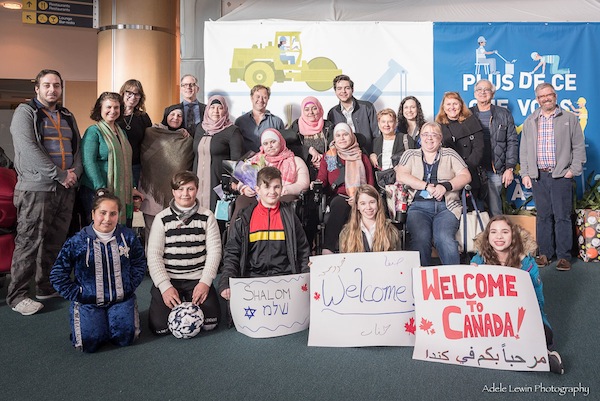
Welcomers of the Alsedawe family at Vancouver International Airport Jan. 21. (Adele Lewin Photography)

More than three years ago, Hanan Alsedawe’s family story of survival began as a waiting game on both sides of the ocean. But, on Jan. 21, 2019, the wait became a welcome as Hanan and her children stepped foot on Canadian soil.

In early 2015, congregations Beth Israel and Beth Tikvah began the long process of sponsoring and reuniting a Syrian refugee family with family who already lived in Vancouver. We worked with the government-approved sponsorship agreement holder – the Anglican Diocese – to prepare and submit our private sponsorship application to the Canadian government. It was a journey requiring perseverance by our coordinating committee, and patience and understanding from the many donors of both synagogues who demonstrated belief in our efforts regardless of the length of time it was taking.

On the Jordanian-Saudi Arabian border, in the Azraq Refugee Camp, Hanan and her two children – Mahros and Safa – shared limited resources with more than 55,000 refugees. Their extended family had made their way to Canada under government sponsorship, but Hanan had stayed behind, in Duma, Syria, because her husband, Raslan Abdulmalik, had been taken away by Syrian government forces and she had no idea of what had happened to him. She waited, she hoped, she prayed, but, eventually, with no sign of Raslan being alive, yet with no confirmation that he was either in prison or dead, Hanan decided to escape from Duma. She made her way with her two young children to Amman, Jordan, and eventually was placed in the Azraq refugee camp. There, she waited for a miracle.

Sept. 2, 2015, was a watershed moment that captured the hearts of people around the world and galvanized Canada into accepting 25,000 Syrian refugees into the country. Hanan’s mother and five siblings came to our shores under those auspices. But it would take years of work and hope to bring the last of Fayzeh Alsedawe’s daughters, with her children, to join the family here.

More than three years after initiating the sponsorship, Beth Israel and Beth Tikvah fulfilled Hanan’s dreams of joining her mother and siblings in Vancouver. On Jan. 21, representatives of both synagogues were on hand at Vancouver International Airport to welcome their sponsored family.

On any given day, at any given time, the international arrivals hall at YVR is a kaleidoscope of colours. On that Monday in January, the full spectrum was visible, augmented by the cacophony of diverse languages and a blending of bodies. Clearly, Canada is at its most multicultural in an airport setting.

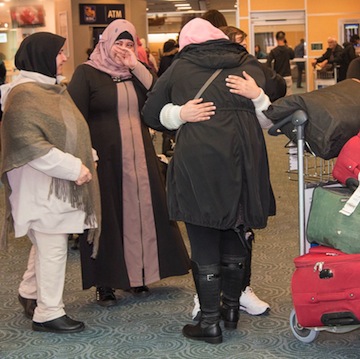
photo - Members of the Alsedawe family at YVR: Fayzeh, Hanan, Mahros and Hanadi
Members of the Alsedawe family at YVR: Fayzeh, Hanan, Mahros and Hanadi. (Adele Lewin Photography)

Also palpable was the range of emotions. There was the full gamut of human feelings on display among those awaiting families, friends and strangers to enter the hall. Contrasts abounded: joy competed with sadness, anticipation with angst, relief with uncertainty. Each person arriving searched for familiar faces, welcoming arms and handwritten signs, indicating that someone was there for them.

In this swirl of humanity were representatives of Beth Israel and Beth Tikvah, their dream to sponsor a refugee family from Syria finally reaching fruition. Sharing this moment – indeed, at the centre of this moment – was the local family: the mother, Fayzeh, and her five adult children, Hanadi, Huda, Maha, Hatem and Mohammed, who had arrived in Canada three years ago and had waited anxiously to be reunited with the remainder of their family.

There was something so surreal, yet so tangible and in the moment at that airport reunion. Words are inadequate to describe the outpouring of relief and love when Hanan and her children emerged in the arrivals hall. An invisible bubble enclosed the family, as they looked at each other for the first time in more than four years. And then, quickly, the bubble grew, as our delegation surrounded the family with our own contributions of hugs, gifts and welcome. One gift in particular seemed to unite the new family with our Canadian sponsors – a Whitecaps soccer ball given to 13-year-old Mahros. Soccer, a universal language for children and adults alike!

Every family has a history, a story that captures the essence of their character and experiences. The Alsedawes’ story is one of courage and hope. Their life in Syria was destroyed by war but their determination to escape, under circumstances almost impossible for us to comprehend, means that, today, their story is one of hope and gratefulness. In Hanan’s own words to the committee, “I thank God and I thank you.”

Settlement requires patience. Never has the Hebrew word savlanut meant so much to our small committee. Patience was required in the very lengthy process from application to arrival. Patience is required as we work to settle the children in school, the mother in English-as-a-second-language classes and the family into a way of life totally foreign to them. Within weeks of their arrival, the family had visited a family physician, dental appointments were booked, the children were enrolled in public school, bank accounts were set up and, important in this day and age, cellphones and tablets were provided to them.

Our year of sponsorship has only just begun, but this journey has been undertaken with the generosity of many people. Our donors have compassion and commitment, and understand that, “There but for the grace of God go I.”

Rosalind Karby is co-chair, with Miranda Burgess, of Beth Israel Congregation’s Committee for the Syrian Refugee Sponsorship Initiative.

Format ImagePosted on April 12, 2019April 10, 2019Author Rosalind KarbyCategories LocalTags Beth Israel, Beth Tikvah, immigration, refugees, Syria, tikkun olam
Educating rabbinical students

Educating rabbinical students

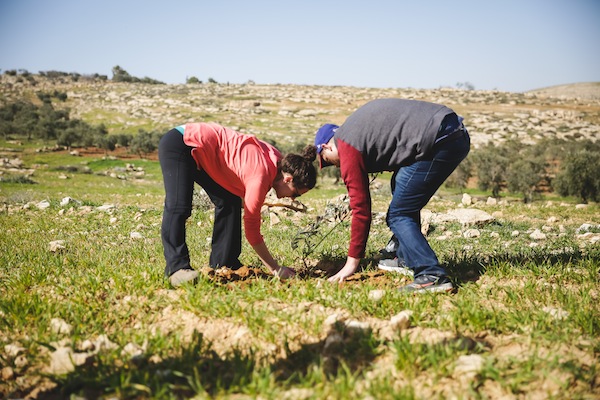
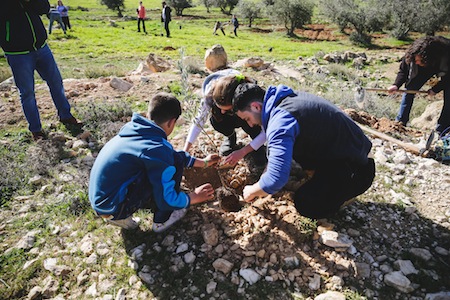
T’ruah students help plant trees in the Hebron Hills. (photo from T’ruah)

U.S.-based T’ruah: The Rabbinic Call for Human Rights works in Jewish social justice circles in Israel and North America.

“We work with human rights of both Israelis and Palestinians…. We’ve also worked on introducing rabbis and rabbinical students, and also congregations, to what’s happening in West Bank and more,” executive director Rabbi Jill Jacobs told the Independent.

T’ruah, which supports a two-state solution, offers the Year-in-Israel program for rabbinical students.

“Students study in Jerusalem at various institutions,” said Jacobs, “but they don’t necessarily get to see human rights issues up close. We take them once a month to see a human rights issue on the ground, either in the West Bank with Palestinians, in Bedouin Israeli communities in the Negev, asylum seekers, etc.”

At these sessions, students meet with Israeli human rights and other leaders on the ground. The program is held during students’ free time, separate from their regular studies.

“The goal of the program is to help them develop a rabbinic moral voice,” said Jacobs. “As rabbis, they’re going to be called on to speak about Israel. The question is, how do they talk about Israel as a rabbi? Rabbis talk out of their values, and also are generally dealing with politically diverse communities…. So, the question is, how can a rabbi speak in a way that will push people to listen to perspectives they might not otherwise listen to, [based on] Jewish texts and Jewish values?”

Jacobs recognizes that the information they provide is not comprehensive. Their focus is to give students the opportunity to interact with human beings – to meet Palestinians, Bedouins and others and learn from them what their life experience is like.

“It’s also crucial to us that they are meeting with Israeli human rights leaders,” said Jacobs. “Very often, there’s a dichotomy that suggests that being pro-Israel means supporting the right-wing government of [Binyamin] Netanyahu and that being pro-Palestinian means being against Israel. We’re pro-human rights and we want them to meet Israelis working every single day to push for human rights in their own country because they love their country. We want them to see that there are actually people who are changing the situation.

photo - T’ruah students planting trees
T’ruah students planting trees. (photo from T’ruah)

“We hear a lot from the students that our program gives them hope. Sometimes, they are so hopeless about what is happening in Israel and then they meet people, both Jewish and Palestinian communities, who are trying to change their situation.”

One T’ruah graduate is Rabbi Philip Gibbs, spiritual leader of Congregation Har El in West Vancouver.

“During my year in Israel, during my second year of rabbinical school, I had the opportunity to then be a fellow with T’ruah for their rabbinical student program,” Gibbs told the Independent. “I really appreciated the opportunity, both because, at least the year I was doing it, there was clearly a huge focus on the Israeli-Palestinian conflict. But, also because the way, in terms of educating about social justice issues in Israel, they were able to show some of the other issues happening – whether it was meeting with Bedouins, talking to some asylum seekers from Africa … really seeing what their home-grown needs are and seeing how it developed into a strong sense of the how they were fighting for many of those needs through the legal systems in Israel.”

Gibbs met with Palestinians who had been displaced from the Jerusalem area after the 1967 war. “We had the chance to hear their narrative,” he said, “highlighting how their status as refugees during that conflict had really come into question because of both the policies of Jordan, as they were occupying the area, as well as some of the motivations of different settler organizations in their attempt to create a much stronger Jewish presence behind the Green Line… I felt like that was more educating us in understanding the way that the nature of a lot of these neighbourhoods had been going back and forth.

“For the Israeli settlers, they felt they were reclaiming a neighbourhood that was Jewish. For the Palestinians that had been living there, their legal status was caught up in layers of legal confusion of having that area under control of many different authorities over the past 150 years.”

Gibbs has not yet had an opportunity to bring this part of his rabbinical education to his congregation directly, but it has definitely played a role in how he shares his perspective regarding, for example, the upcoming Israeli election.

“I’m making sure there’s a deeper sense of having the recognition that a lot of these questions that are coming up, some of these issues are on the minds of most Israelis … but that, no matter what, a lot of the work that human rights organizations are doing, a lot of that is going through the overt legal system of Israeli government.”

Regarding the many Israelis he has met who work for human rights organizations, Gibbs said he appreciated the way their main motivation was a deep sense of trying to make their country the best it can be, noting that every government needs to be transparent in their treatment of their citizens, allowing for a certain amount of criticism.

“That’s something coming from a place of love and it’s the most ideal way to get things done in a constructive way,” said Gibbs. “People can debate about how much people living outside of Israel are supposed to be making any sort of direct intervention, which happens on both sides of the political spectrum, but, I think, there’s absolutely nothing that we should hide in terms of understanding the full array of political work happening in Israel.”

Rebeca Kuropatwa is a Winnipeg freelance writer.

Format ImagePosted on April 12, 2019April 10, 2019Author Rebeca KuropatwaCategories WorldTags Diaspora, Har El, Israel, Judaism, Philip Gibbs, rabbis, T'ruah, tikkun olam
A story told in art and poetry

A story told in art and poetry

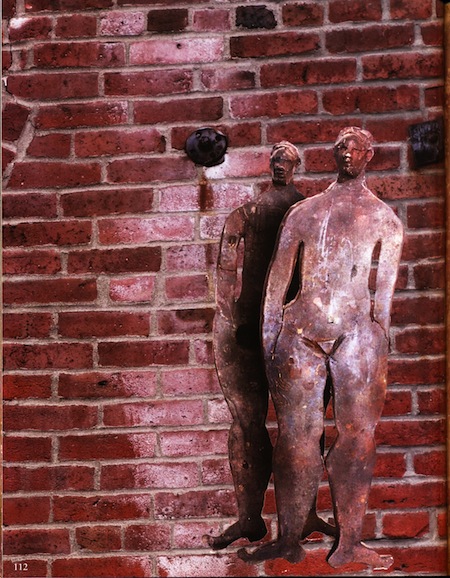
Olga Campbell’s acrylic painting “Remembering,” above, and bronze sculpture “Twins II” are just two of many artworks she includes in A Whisper Across Time.

Grief is many-faceted. Sometimes, we’re not even aware for what we’re grieving. One of the most beautiful passages in Olga Campbell’s A Whisper Across Time: My Family’s Story of the Holocaust Told Through Art and Poetry (Jujabi Press, 2018) is the following poem:

“I was born with a very deep sadness / a sadness and an anger / as a child I didn’t question this / it was the way it was / when I got older my mother had cancer / she died when I was twenty-two / I thought that my sadness was caused by her death / I had no idea that it was caused by her life.”

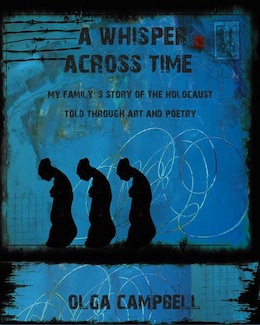
book cover - A Whisper Across Time“A Whisper Across Time is a heart-warming, emotional journey that reminds us of the suffering and pain that war, intolerance and persecutions create, not only for those who had to endure atrocities but also for the children of the survivors,” notes Dr. David Lee Sheng Tin, author of two books on spiritual health and growth, in the foreword.

In A Whisper Across Time, Campbell gives clear voice to the whispers in her ear, “whispers across time.”

“This is the story of one family out of millions of families who went through the Holocaust,” writes the artist, whose mother lost all of her family during the Second World War. It is “the story of survival and death,” “of how trauma of such magnitude is passed from one generation to another to another….” It is also an ardent call for readers to remember Rwanda, Rohingya, Bosnia, Syria, Afghanistan, Sudan, Iraq, Cambodia…. “[O]ne of every 113 people on the planet is a refugee,” writes Campbell, noting, “by the end of 2016, there were 65.6 million refugees, asylum seekers and internally displaced people in the world” and that “racism, antisemitism and ultra-nationalism are on the rise.” She pleads, “eighty years ago, the world looked away / we must not look away now.”

In an interview with the Jewish Independent last November about the exhibit of the same name that helped launch the book, Campbell updated that statistic. “Our world is a chaotic place right now, somewhat reminiscent of the period before the war,” she told writer Olga Livshin. “There are over 68 million people around the world that are refugees or displaced. My book is not only about my family. It is a cautionary tale. It is about intergenerational trauma and its repercussions across time.” (See jewishindependent.ca/whisper-across-time.)

In 2005, Campbell mounted the exhibit Whispers Across Time. “This art show dealt with memories and losses,” she writes in the book. “Many of the pieces in the show were fragmented, partial in appearance, reflecting both a presence and an absence.”

image - “Twins II” by Olga Campbell
“Twins II” by Olga Campbell.

The exhibit featured masks, rusted metal figures, ceramic sculptures, photographs, mixed media and texts that, explains Campbell, “echoed the same theme of loss and regeneration – a life spirit which emerged from the devastation of the past.” Even reduced in size to fit on the pages of a book and taken out of a gallery setting, this artwork is powerful.

In A Whisper Across Time, Campbell shares some of what she has discovered about her mother, Tania, and father, Klimek Dekler, as well as about her maternal grandmother, Ola Akselrod, and her mother’s identical twin sister, Mania, and brother-in-law, who was also an identical twin, but Campbell hasn’t been able to determine which brother – Manasze or Efraim Seidenbeutel – her aunt married. Campbell recounts how her parents met, the atmosphere leading up to the war, and how her parents survived. Her father’s family also survived. There are no records, says Campbell, of what happened to her grandparents or her aunt during the Holocaust; the Seidenbeutel brothers were murdered at Stutthof concentration camp, a few days before it was liberated.

“My mother must have been completely traumatized by her experiences and her losses,” writes Campbell. “She lived and worked and loved, she still danced … sometimes. But the joy in her heart was not so big. The light inside was dim. And, at night, when she was alone in her room, she cried.”

In A Whisper Across Time, Campbell also talks about preparing for the 2005 exhibition, and some of the strange happenings that occurred, such as how multiple attempts to photograph the art failed – a broken camera, saved images that wouldn’t open on the computer. Her use of language, both in poetry and prose, is emotive without being overly sentimental. And her artwork evokes an emotional reaction, often involving some sadness and always demanding contemplation.

For more on Campbell and to purchase A Whisper Across Time, visit olgacampbell.com.

Format ImagePosted on April 12, 2019April 10, 2019Author Cynthia RamsayCategories Books, Visual ArtsTags art, Holocaust, memoir, Olga Campbell
Historic cemetery full of life

Historic cemetery full of life

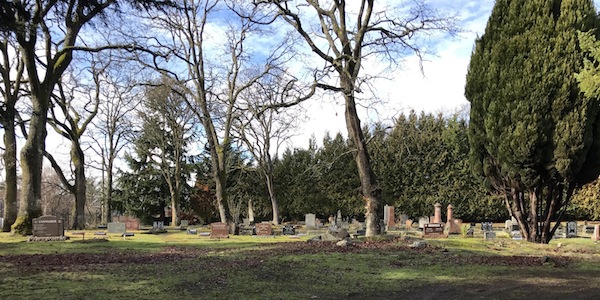
Victoria’s historic Jewish Cemetery. (photo from Amber Woods)

Who could imagine that a book about a cemetery would be so full of life? But then, the people who populate Amber Woods’ Guide to Victoria’s Historic Jewish Cemetery (Old Cemeteries Society, 2018) were among the most vivacious of sorts, starting with the daring, westward-bound pioneers eager to start a new life on a new frontier, to those who went on to be well-known judges (Samuel Schultz), politicians (David Oppenheimer) and artists (Reuven Spiers). Written on the cemetery’s gateway, the phrase Beit HaChayim (House of the Living) welcomes visitors.

The cemetery has had a storied existence. There have been fires, upkeep challenges, pleas to the public to locate graves of prominent individuals and, sadly, in recent times, the desecration of five gravesites in late 2011.

photo - Amber Woods
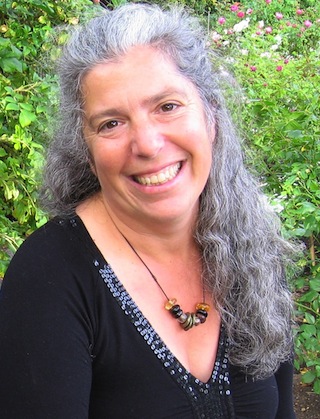
Amber Woods (photo from Amber Woods)

The discovery of gold along the Fraser River in 1858 brought an influx of people to the region, mostly from California, Jews among them. Jews arrived largely as merchants and proved adept at figuring out what was needed in the community. Having already developed trading networks, they did not need to rely on the Hudson’s Bay Co. (HBC) for supplies or for getting their goods to other markets, and “could move quickly from one business to another.”

On May 29, 1859, a group met to create the basis of a Jewish community, including a synagogue and a cemetery, in Victoria. A cemetery committee was formed and, on Oct. 1 that year, 1.7 acres of land was purchased from Roderick Finlayson, the chief factor of the HBC. In February 1860, the cemetery was consecrated, making it the first Jewish cemetery – and the oldest non-indigenous cemetery – in continuous use in Western Canada.

The first funeral at the cemetery, on March 20, 1861, was the result of a most unsavoury encounter. Businessman Morris Price, an immigrant from Prussia, was in his shop in Cayoosh, what is now Lillooet, on Feb. 1, 1861, when three men entered. He was found dead the next day. All the perpetrators were found guilty; two were executed, the third convicted of manslaughter and given a shorter 12-month sentence for his cooperation with officials. As Victoria’s was the only Jewish cemetery at the time in the region, Price’s remains were sent from the mainland.

Herein, too, are remembered several who were prominent in Victoria’s early commercial hub – liquor salesman, saloon operator and real estate tycoon Max Leiser; clothier Frederick Landsberg, who learned Chinook to trade with First Nations people and who would later go into curios, real estate and, finally, philanthropy; and restaurateur H.E. (Henry Emanuel) Levy, who opened the first gourmet establishment in the Pacific Northwest, the very “unkosher” sounding Levy’s Arcade Oyster Saloon, which became a local hangout. Levy’s son, Arthur, followed in the family business, setting up various popular diners, such as the Poodle Dog Café. Once retired from the restaurant business, Arthur Levy began a mission of world peace, which saw him correspond with many a noted statesman of his time, including Nikita Khrushchev, David Ben-Gurion and Jawaharlal Nehru.

Many of those buried at Victoria’s historic Jewish Cemetery lived the sort of life that could have been turned into a novel or film – tales of shipwrecks, of bankruptcies turned into successes.

There are fascinating biographies, such as that of Samuel Schultz, who, despite living to be a mere 51 years of age, did more in those years than most do in a lot longer. Schultz was a musician, athlete, activist and lawyer. He is credited with pitching the first no-hitter in British Columbia, played flute and clarinet for the Victoria Symphony, composed music, served as a correspondent for several newspapers and was a founding member of the Independent Order of B’nai B’rith and became the first Jewish judge in Canada.

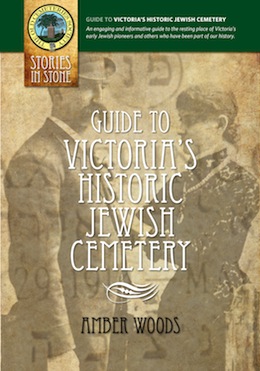
book cover - Guide to Victoria’s Historic Jewish CemeteryThen there is Lewis Lewis, who served twice, in non-consecutive terms, as one of the first presidents of Victoria’s Temple Emanu-El (now Congregation Emanu-El). His is a story shrouded in questions. “Much of the information available about Lewis Lewis is contradictory, incomplete or, in some instances, false,” Woods writes. Many myths and mysteries exist about this early Jewish settler, from his place of birth in Eastern Europe to how he changed his name, from the story of his arrival in Victoria, to his legacy within the local community.

The historic Jewish Cemetery is situated four kilometres from downtown Victoria, where Fernwood Road meets Cedar Hill Road. Visitors enter through the pedestrian gate of the main entrance.

Woods’ book is part of the Stories in Stone series organized by the Old Cemeteries Society. Copies can be purchased at the Jewish Community Centre of Victoria, Congregation Emanu-El, area bookstores (Bolen, Munro’s and Ivy’s) and online at jewishvictoria.wordpress.com.

Sam Margolis has written for the Globe and Mail, the National Post, UPI and MSNBC.

Format ImagePosted on April 12, 2019April 10, 2019Author Sam MargolisCategories BooksTags Amber Woods, cemetery, history, Victoria
Persistence a common theme

Persistence a common theme

There is a bounty of books to read and review at the Jewish Independent. One of the many perks of my job is that I have so much culture literally at my fingertips. But, given the weekly deadlines and other demands of running a newspaper, I can’t always be au courant. So, hopefully I will be forgiven for reviewing four books published last year for this Passover issue: a memoir, a work of fiction (perhaps 😉 and two young adult novels. I’m excited to report that two of the books were written by people who have written for the JI and one was written by a local community member.

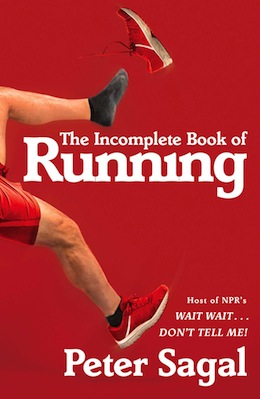
My favourite podcast is Wait Wait … Don’t Tell Me! And, even though I don’t run, one of my favourite magazines is Running Room. I’m not sure how I got onto their mailing list, but I always enjoy reading people’s inspirational stories of why they started running, I like the recipes and nutritional advice and the training tips, which are useful for other types of exercise. Anyway, all that to say I was excited when the host of Wait Wait, Peter Sagal, who is Jewish, came out with his new book, The Incomplete Book of Running (Simon & Schuster, 2018).

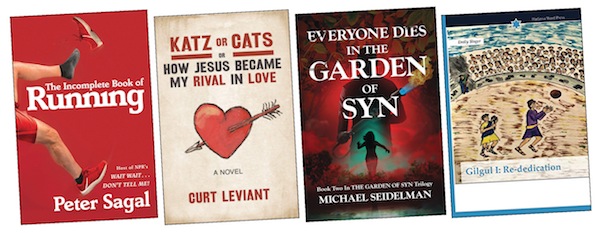
book cover - The Incomplete Book of RunningSagal shares personal stories about why he started running, some of the marathons in which he has participated and people he has met along the way, notably a couple of runners who were blind (or almost), for whom he acted as a guide. Scattered throughout, he offers various facts and figures about running; its health benefits, as well as its downsides (I did not know about, to put it delicately, the digestive issues long-distance runners can face). He speaks somewhat vaguely but openly about the dissolution of his first marriage and he is refreshingly honest about his struggle with depression.

Running has helped Sagal deal with difficult circumstances, and continues to not only be a form of exercise for him, but something that informs how he lives. Among other things, running has taught him persistence and has made him more courageous; it has contributed to his “faith in the possibility of positive change” and his realization of just how enduring is love.

I admit that, despite Sagal’s enthusiasm, reading about multiple marathon experiences, as a non-runner, got a little tiresome. And the book isn’t chronological, so I wasn’t always sure of what point we were at in Sagal’s life. But, those minor criticisms aside, I enjoyed the book a lot, especially Sagal’s conversational style of writing and his humour. Having listened to him almost every week for so many years, it felt, at times, that he was right there, telling me his story; that I was listening to him, rather than reading him.

* * *

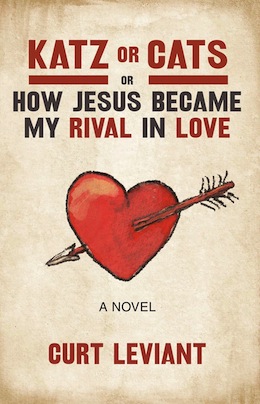
There is no doubting that Curt Leviant is a talented writer, that he has a wicked sense of humour and a heightened sense of observation and awareness. Katz or Cats; Or, How Jesus Became My Rival in Love (Dzanc Books, 2018) is his most recent of many novels and fans will not be disappointed.

A book editor, John, and a writer, Katz, meet on the subway. On their commutes into New York, Katz shares what is ostensibly his brother’s love story, though it may be Katz’s. Part of the novel’s plot revolves around just how true, or fictional, is the story of Katz’s brother, who also goes just by his surname, Katz.

book cover - Katz or CatsAs the story goes, Katz (or Katz) meets a woman on a train. Maria is supposedly a devout Christian, but she has no trouble permitting a stranger to put his arm around her on first meeting, nor having sex pretty soon thereafter with said stranger, Katz, who she thinks might be married. Their relationship – and the novel – comprises much sex, a lot of talking about sex and many discussions about religion – Jesus, specifically, and Maria’s recurring feelings of guilt for not being what she thinks a good Christian should be.

As Katz relates the tale to John, the editor interjects every once in awhile to question apparent contradictions or errors in the telling. Some aspects – Katz’s marital status, for instance – remain unclear, and purposefully so.

Ironically, perhaps, given that the premise of the novel is a writer telling a story to an editor, Katz or Cats would have benefited from some tighter editing. More than one topic recurs and some points are made multiple times. While Katz’s wit and intelligence provide much to think about, I didn’t find him to be a sympathetic character, so “listening” to him became difficult. And, while I’m not a huge fan of political correctness, I found his treatment of Maria to be condescending and rude at times, and some of his quips to be on the edge of disrespectful towards other cultures. Though Katz refers to Maria more than once as smart, her waffling and some of her responses to Katz – and his reactions to her – don’t really support that notion.

Overall, while provocative in many ways, I found Katz or Cats to read like a book from another era. Many male writers, from Seneca to Henrik Ibsen to Thomas Mann to Leviant himself, come up in conversations in the novel, reinforcing my feeling that this book would be most appreciated by older, male readers. But I could be wrong. When I shared my views with Leviant – who regularly writes for the Jewish Independent’s holiday issues (see page 34 of this issue, for instance) – he shared that a similar novel of his, translated into French, got great reviews from young women critics.

* * *

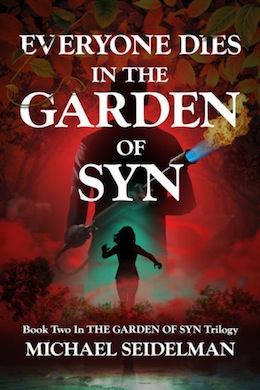
Ever since reading No One Dies in the Garden of Syn in 2016, I have been waiting for the second book of local writer Michael Seidelman’s trilogy featuring teenage heroine Syn. And, late last year, my wait was over.

book cover - Everyone Dies in the Garden of SynEveryone Dies in the Garden of Syn (Chewed Pencil Press, 2018) starts with a violent prologue that both heralds what’s to come and starts to explain the “Creepers” – weird-looking creatures that seem to be combinations of two people or a person and an animal or insect – we met in the first novel.

In the introductory pages of Everyone Dies, Seidelman, in addition to moving the story along, reminds readers of what has come before. The action in this book centres around Syn’s need to rescue her sister, who has been kidnapped by Cole, a “boy” who befriended and then betrayed Syn – or, from his point of view, was befriended and betrayed by Syn.

Still missing as Everyone Dies starts are Syn’s parents, who disappeared when she was 5. Because of Syn’s actions in the first book, the garden, which once had healing powers – “no one dies” – has lost them, so now “everyone dies,” or can die, in the garden. Therefore, the situation is that much more dangerous now for Syn, who suffers from cystic fibrosis. Whereas she didn’t have to worry about her health in the first novel, it becomes another thing she has to battle in the second.

And there is many a battle in Everyone Dies, and lots of running and chasing. There were a few times I lost track of which universe (there are multiple) we were in, and, sometimes, who was fighting whom, but the action moves along and the tension builds. There’s a wonderfully satisfying twist at the end. And so begins the wait for Book 3.

To read more about Seidelman’s first Syn novel, visit jewishindependent.ca/first-book-of-trilogy-now-out.

* * *

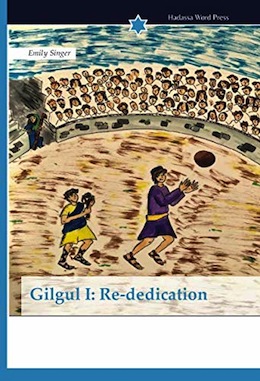
“When my 13-year-old son devoured Bulfinch’s Mythology after reading Rick Riordan’s Percy Jackson, I realized we need an exciting, thought-provoking series based on Jewish history, something that will send our kids reaching for a Torah, a Talmud or a Book of the Apocrypha,” wrote Emily Singer to the Jewish Independent in an email about her new book, Gilgul I: Rededication (Hadassa Word Press, 2018).

Singer, who lives in Israel, is a writer and a high school teacher. When she and her family lived here, she taught at Vancouver Talmud Torah. She has written several articles for the Jewish Independent so, when she contacted the paper about Gilgul, I happily agreed to review it.

book cover - Gilgul INot surprisingly, knowing Singer’s skill as a writer, Gilgul is a compelling and radical take on the Chanukah story. While all the book’s hero David wanted to do was to play the game skyros with his friends, the game takes on a deadly seriousness for the 15-year-old when King Antiochus sacks the Temple and starts a war against the Jews.

David must be smart, brave, strong and compassionate to stay alive and save his family and his people. He must figure out who to trust, and the fact that it’s not always clear who the good guys and bad guys are adds tension and meaning to the novel. Even with the help of his equally heroic sister Leya, some unexpected courageous allies and a little magic, David has his work cut out for him. Gilgul will leave readers thinking anew about Chanukah, the rededication of the Second Temple, the Maccabees, the miracle of oil, and more.

Format ImagePosted on April 12, 2019April 17, 2019Author Cynthia RamsayCategories BooksTags Curt Leviant, Emily Singer, fiction, Gilgul, memoir, Michael Seidelman, Peter Sagal, Syn, writing, young adults
Learn from a cooking master

Learn from a cooking master

I don’t do it often, but I like cooking. Actually, I cook almost every day, but rarely cook with a capital C. My mother taught me the basics, and I appreciate not only good food, but the company that generally goes with it. When a close friend took a cooking class and shared some of the science behind what makes an excellent meal versus a mediocre one, I was fascinated.

In looking for more in-depth information than is normally in a cookbook, I came across the bestseller and multiple-award-winner Salt Fat Acid Heat by Samin NosratSamin Nosrat, which was published by Simon & Schuster in 2017. The timing of my discovery was not coincidental. Nosrat’s Netflix series by the same name had recently premièred, in October 2018.

I knew there was a small Jewish connection to the book – author and food expert Michael Pollan had written the foreword. But then, the same friend who inspired my interest in the technical aspects of cooking told me she thought the illustrator might be Jewish. And, she was right! Wendy MacNaughton – whose clients include the New York Times, Wall Street Journal, Time Magazine, Bon Appetit, Gastronomica and many others, including Simon & Schuster – is Jewish. (With a name like Ramsay, I should have looked into it further right away; next time, I will.) With this added information, I could easily justify asking for a review copy from the publisher, and did.

book cover - Salt Fat Acid HeatSalt Fat Acid Heat is not a cookbook that you just pop open, pick a recipe and make it, though you could do that. There are plenty of recipes for salads, pasta, fish, chicken, meat, sweets and more. Shaved carrot salad with ginger and lime, garlicky green beans, beer-battered fish (which also contains vodka, apparently), and fresh ginger and molasses cake are top of my list to try. There are a couple hundred pages of recipes, plus some suggested menus, chefs and authors to look for online or in books, a four-page bibliography, an index and an illustrated list of kitchen and pantry essentials.

In this latter part of the cookbook, there is also a Cooking Lessons section based on the enormous amount of information Nosrat imparts in the first 200 pages about salt, fat, acid and heat. So, for example, to put what you learned about seasoning from within (salt), make spicy brined turkey breast; about emulsions (fat), pasta Alfredo; about layering acid, balsamic vinaigrette; and about preserving tenderness (heat), some scrambled eggs. Other lessons focus on timing, knife skills and improvising with leftovers.

What makes this cookbook a must-have for foodies and cooks of any level, is not only the detail into which Nosrat goes about the four elements that make for good cooking, but that, in discussing the details, she communicates and almost transfers her love of and excitement about food and cooking to the reader. It’s hard to read this book and not be tempted to head to the store to buy the umpteen types of salt that exist (who knew?) or a selection of olive oils to taste, to the market for the freshest of fruits and vegetables, or to the butcher for the best cuts of meat.

Nosrat is all about the experience of cooking – taste and taste again, and don’t be afraid to experiment. As Pollan writes in the foreword, “Even though it contains plenty of excellent recipes, this is a book concerned foremost with principles…. Master these principles, [Nosrat] promises, and you will be able to cook delicious food of any kind, in any tradition, whether a salad dressing or braise or a galette.”

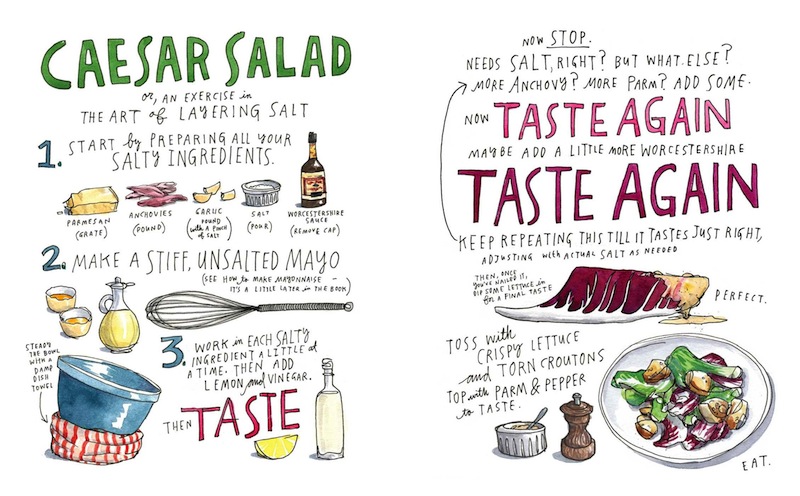
illustration - Salt Fat Acid Heat caesar salad made by Samin Nosrat, illustrated by Wendy MacNaughton
A Caesar salad, as made by Samin Nosrat and illustrated by Wendy MacNaughton in Nosrat’s Salt Fat Acid Heat.

The full-colour illustrations are critical to what makes Salt Fat Acid Heat such an incredible resource and enjoyable read. From drawings of things that don’t lend themselves easily to depiction, such as grains of salt, a chemical reaction and saffron, to making tables, charts, Venn diagrams, frying instructions, etc., more fun and easy to understand, MacNaughton helps Nosrat explain the art and science of cooking.

The size and weight of Salt Fat Acid Heat is daunting, until you open it. As Nosrat writes about how to use the book, “Pay attention to the techniques, the science and stories, but don’t worry too much about committing it all to memory. Come back again later to revisit the concepts that are relevant to you.” But, most importantly, she emphasizes, “Don’t forget to enjoy the pleasures, both small and large, implicit to cooking and eating with people you love!”

Format ImagePosted on April 12, 2019April 10, 2019Author Cynthia RamsayCategories BooksTags cooking, Samin Nosrat, Wendy MacNaughton
Young speakers deliver

Young speakers deliver

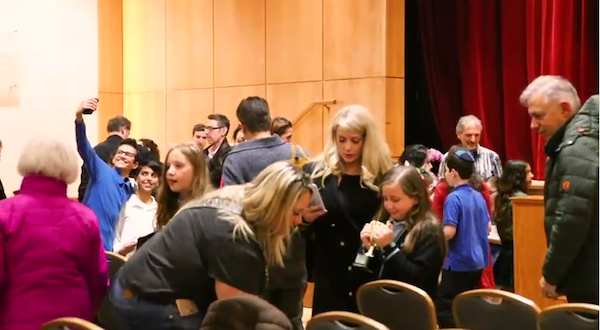
This screenshot from the 30th anniversary video of the Public Speaking Contest shows participants’ excitement. Larry Barzelai can be seen at the back of the crowd on the right.

On March 14, about 90 young participants and their families and friends, as well as volunteer judges and moderators and others from the Jewish community gathered for the annual Public Speaking Contest, presented by Jewish Federation of Greater Vancouver and State of Israel Bonds.

“This contest was established in memory of my father, Morris Black, who left money in his will to support such a contest,” Larry Barzelai told the Independent. “It has morphed from a Peterborough-based essay contest for famous people in Jewish history, to an Ontario-based essay contest, to a public speaking contest in Hamilton (run by my brother Rick) and the present public speaking contest in Vancouver. I give credit to my brother Rick, who originally came up with the idea of a public speaking contest in Hamilton, where he lives, and I started the contest in Vancouver a few years later.

“For my father, family, education and Judaism were the most important things in life,” Barzelai added. “This contest combines all three.”

This year’s Grade 4 through Grade 7 participants came from Gilpin Elementary School, Richmond Jewish Day School, Temple Sholom Religious School, Vancouver Talmud Torah, Vancouver Hebrew Academy and West Point Grey Academy. Some of the public school entrants may also attend a synagogue school.

Speeches had to run less than three minutes, but could cover any topic. Students were given a list of suggestions, such as the following: What is your favourite Jewish holiday and why? Describe a family member or someone from Jewish history and tell us why you admire them. Israel is often described as the “start-up nation” – name something invented in Israel and discuss how you think it has made a difference to people’s lives. Reduce, reuse, recycle are terms used to describe how people protect the environment – tell us about two Jewish values that you feel are connected to environmental protection. If you only had time to visit one city in Israel, which city would it be and why?

“To prepare a talk, students must conceive of a topic, organize information about that topic, and be prepared to deliver a speech to an audience of fellow students and strangers,” said Barzelai. “The preparation helps their ability to organize their thoughts in a coherent manner. Subsequently, they have to be prepared to present the information in a manner that is convincing to other people. These tasks require time and effort. After they give their speeches, they usually feel a well-deserved sense of accomplishment. What could be a better learning environment for the students and more positive experience for the families!”

Lissa Weinberger, manager of Jewish education and identity initiatives at Federation, is in charge of managing the literally hundreds of moving parts of the machine the contest has become. She provided the Independent with the list of winners for this year’s event, though the contest organizers rightfully stress that every participant is a winner for having participated and put in the work.

With the contest in its 31st year, Barzelai said, “It continues to be rewarding to watch the smiles on students’ and parents’ faces after they have given their speeches. This reflects the fact that the students have worked hard, have accomplished something valuable and are proud of themselves.”

He added, “It is also rewarding to see the children of parents who were in the contest themselves when they were in elementary school.”

Last year, to celebrate the contest’s 30th anniversary, Barzelai had a video created.

“It was hoped that the video would encourage future students to participate,” he said. “They would see that most participants seemed to enjoy their involvement in the contest, and viewed it as a positive learning experience.”

Written and directed by Adam Bogoch and edited by Thomas Affolter, the video gives a brief history of the contest, shows clips of the 2018 event and features interviews with the students, community leaders and volunteers, including Barzelai’s spouse, Rhona Gordon, who is an advisor on the project and is always on hand to help give out the awards on contest night.

This year’s awards went to, in Grade 4: Myelle Leung (1), Lia Golik (2) and Miri Grad (3) in Group 1; Miriam Ora Yeshayahu (1), Arlo Foxman (2) and Yanky Baitelman (3) in Group 2; and Naomi Bernal (1), Hannah Pressman Chikiar (2) and Jake Silver (3) in Group 3.

In Grade 5, the winners were Mira Hurwitz (1), Baila Shapiro (2) and Anne Cohen (3) in Group 1; Adina Ragetli (1), Sophie Rossman (2) and Jakob Murphy (3) in Group 2; and Sarah Malul (1), Hannah Setton (2) and Hannah Norden (3) in Group 3.

In Grade 6, winners were Chaya Malul (1), Eden Almog (2) and Tamir Gini (3) and, in Grade 7, they were Chasya Berger (1), Rivka Feigelstock (2) and Max Dodek (3).

For more about this year’s contest and to watch the 30th anniversary video, visit jewishvancouver.com/psc2019.

Format ImagePosted on April 12, 2019April 10, 2019Author Cynthia RamsayCategories LocalTags Larry Barzelai, public speaking, youth
Volunteering’s benefits

Volunteering’s benefits

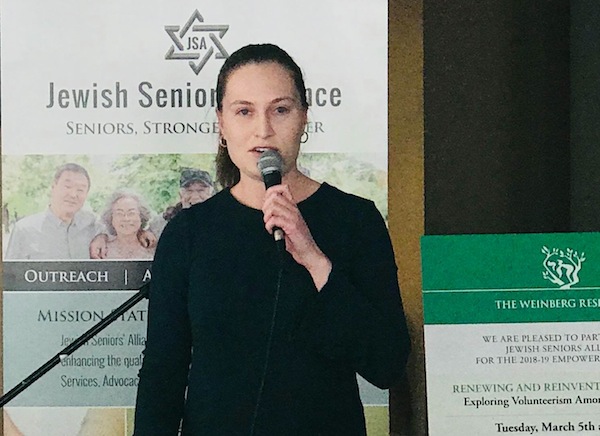
Eireann O’Dea speaks at the March 5 session of the Jewish Seniors Alliance Empowerment Series. (photo from JSA)

The following talk was delivered March 5 at the third session of the 2018/19 Jewish Seniors Alliance Empowerment Series, which took place at the Weinberg Residence. Speakers also included Larry Shapiro, JSA’s second vice-president; Jessica Bruce, volunteer coordinator for the Weinberg and the Louis Brier Home and Hospital; and Vanessa Trester, manager of the Weinberg.

It is relatively common knowledge that volunteering provides tremendous benefits to individuals and to the community at large. Volunteers have the opportunity to bring an increased sense of meaning and purpose to their lives, expand their social network, exercise unique skills and hobbies and, of course, help others in need. The presence of volunteers within a community increases social cohesion, builds trust and creates a “social infrastructure” of support, reciprocity and concern for others.

But what do volunteer roles really mean to those who participate in them? How does one start volunteering, and why do they continue? The Jewish community is exemplary in its provision of services and volunteer opportunities for children, youth, adults in mid- to late life, and the elderly. Yet the personal experiences of those who volunteer in the community, from a research standpoint, are largely unknown. This fact, along with my own experiences of working and volunteering within the community, inspired my master’s thesis, titled, An Exploration of Pathways, Motivations and Experiences Among Older Jewish Volunteers in Vancouver. The findings reflect interviews with 21 volunteers.

The majority of participants have volunteered for most of their lives. They described having parents who were community-minded, as well as adolescent experiences of being a part of Jewish youth organizations or women’s groups dedicated to community service. The expectation from others to volunteer was also discussed. Often, participants were asked to volunteer by their peers, rather than having sought out opportunities themselves. Over the years, this allowed them to experience multiple volunteer roles, as they would often be exposed to another role as a result of their status as a volunteer in the community.

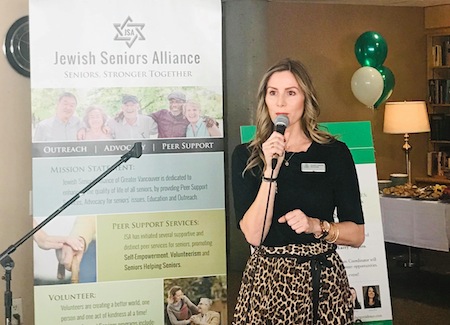
photo - Vanessa Trester, manager of the Weinberg Residence. The Weinberg hosted the March 5 JSA Empowerment event
Vanessa Trester, manager of the Weinberg Residence. The Weinberg hosted the March 5 JSA Empowerment event. (photo from JSA)

Participants found volunteering to be personally rewarding, describing how their roles made them feel better about themselves, kept them busy and productive, as well as mentally fit. Participants were also motivated to volunteer for generative reasons; that is, to help the next generation and the community at large. The desire to pass on Jewish culture was evident, with many describing their efforts and desire to serve organizations that preserved historical documents, worked to support Jewish infrastructure and educate children in the community. They felt that volunteering represented an important part of Jewish life and cited the importance of helping others within Jewish culture and religion. Tzedakah, a Hebrew phrase meaning justice or righteousness, was frequently referenced.

Participants described the connections formed with their fellow volunteers and to the community. Friendships were maintained both within and outside of the context of the volunteer role. Caring for seniors was another common experience among participants. Many took on roles that involved working with older adults, whether it was making home visits to isolated older adults, or assisting with recreational programs. It was also found that participants gravitated towards leadership roles within volunteer organizations and, in some cases, had founded their own initiatives. Participants also found their volunteer roles to be an opportunity to engage in personal interests and hobbies, as well as a chance to use skills they learned during their professional careers.

Volunteering is a highly productive way for older adults to increase their level of activity, foster their interests, help others and continue to be social and connected to their communities. As Canada continues to diversify in terms of ethnic composition, it is essential that volunteer opportunities be made accessible to and inclusive of older adults from all backgrounds. To achieve this, it is imperative that future research in this area encompasses the experiences and stories of older adults themselves.

Eireann O’Dea is a PhD student in gerontology at Simon Fraser University. Her research interests are related to community engagement among older adults, ethno-gerontology and environmental accessibility. She wrote her master’s thesis on senior volunteers in the Jewish community and has recently joined the board of Jewish Seniors Alliance.

Format ImagePosted on April 12, 2019April 10, 2019Author Eireann O’DeaCategories LocalTags Empowerment, health, JSA, seniors, volunteering, Weinberg Residence

Posts pagination

Previous page Page 1 Page 2 Page 3 Page 4 … Page 6 Next page
Proudly powered by WordPress