
Skip to content
  • Home
  • Subscribe / donate
  • Events calendar
  • Business Directory
  • FAQ
  • News
    • Local
    • National
    • Israel
    • World
    • עניין בחדשות
      A roundup of news in Canada and further afield, in Hebrew.
  • Opinion
    • From the JI
    • Op-Ed
  • Arts & Culture
    • Performing Arts
    • Music
    • Books
    • Visual Arts
    • TV & Film
  • Life
    • Celebrating the Holidays
    • Travel
    • The Daily Snooze
      Cartoons by Jacob Samuel
    • Mystery Photo
      Help the JI and JMABC fill in the gaps in our archives.
  • Community Links
    • Organizations, Etc.
    • Other News Sources & Blogs
  • JI Chai Celebration
  • JI@88! video

Recent Posts

  • Federation now across BC
  • Israel fighting for its existence
  • Deal strengthens Iran
  • Patriotic belonging diminishes
  • A campaign to engage
  • Upstanders’ first live event
  • Responding to Carney
  • Having your own home
  • Music a family tradition
  • Musical to warm heart
  • Community milestones … June 2026
  • Sharing her passion for Israel
  • Or Shalom reopens its doors
  • JFS from past to future
  • Need holistic approach
  • Sharing stories, advice
  • Journalist shares fears
  • Skills to live together
  • Road to independence
  • Cutting grass with scissors
  • Zionism as a solution
  • Deceit, desire & the divine
  • Reclaiming sacredness
  • Creative project ideas
  • Summer squares and cobbler
  • Thou shalt … summer commandments
  • Legal help for students
  • Revisiting myth of Lilith
  • Wrong person rebuked
  • Canada’s mixed messages
  • Questions for museum
  • Symposium on antizionism
  • Making soccer political
  • CJPAC lauds Pulver’s impact
  • City recognizes Vrba’s legacy  
  • Organ donation saves lives

Archives

Follow @JewishIndie
image - CJN box ad Rockowers 2026

Tag: Kolot Mayim

Genealogy a great motivator

On Nov. 5, Dr. Joshua Grayson, a genealogist specializing in Jewish families from Central and Eastern Europe, was the lead-off speaker for the 2023-24 L’dor V’dor (Generation to Generation) lecture series on Zoom, organized by Victoria’s Kolot Mayim Reform Temple.

Grayson is the founder of Lost Roots Family History, a website, virtual museum and research service devoted to helping Jewish families reconnect with their roots, discover their past, engage with the present and preserve their heritage for the future.

Titled In Search of Lost Roots, Grayson’s talk elaborated on how he was able to trace his family history across three-and-a-half centuries, or 10 generations, to approximately 1650. Proficient in many historical scripts, he has conducted genealogical research in German, Russian, Polish, Hebrew, Yiddish, French and Spanish.

“There’s truly an astonishing amount of information out there,” Grayson said. “With a combination of computer research, language skills, a lot of perseverance and just the right amount of luck, the depth of information you can find about your family history can be simply astounding.”
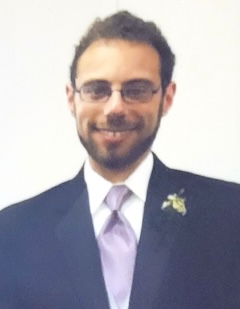
photo - Dr. Joshua Grayson, founder of Lost Roots Family History, launched this season’s L’dor V’dor lecture series, organized by Victoria’s Kolot Mayim Reform Temple
Dr. Joshua Grayson, founder of Lost Roots Family History, launched this season’s L’dor V’dor lecture series, organized by Victoria’s Kolot Mayim Reform Temple. (photo from Kolot Mayim)

Grayson’s interest in family history started at a young age, when visiting his grandparents’ home and being captivated by a photo at the bottom of their staircase. Taken in 1904, it depicted his grandfather’s grandparents and the first five of their 10 children, including his great-grandmother at the age of 11.

“To my childish imagination, I was sure I could almost feel their presence looking over me and their other descendants. At times like these, I would muse at how my close connection with my grandfather was similar to his connection with the people in this photograph. And so on down the unbroken chain of time,” he said.

As a child, Grayson remembers, he was fascinated by the notion of all the people to whom a person could be related.

He recounted later honing his research skills at the University of Southern California, where he earned a PhD in historical musicology – skills, he said, that are particularly well suited to genealogy. They include gathering historical evidence, evaluating sources and communicating ideas.

When he typed in the name of one of section of his ancestry, Penzias, into a database on the Gesher Galicia website, Grayson said, “I quickly discovered records from as early as 1805 because our family name happens to be unique. I felt fairly sure that these were long forgotten family members.”

He said, “These databases allowed me to accomplish in just a few minutes what would otherwise have taken months or years of digging through archives, scanning old record books or microfilms one record at a time.”

As a side note, Grayson stressed that creativity with spelling can be helpful, as names were not written in a standardized way until much later into the 19th century and even into the early 20th century. Although most databases use technology to automatically include names that are spelled in similar ways, the technology is not perfect.

The Zoom lecture brought to light the remarkable and inventive methods of deduction Grayson employed to ascertain his own ancestry – from an egg merchant to a Cubist painter – and the sorts of investigations he performs to uncover the family histories of those who request his services, all while conveying an infectious enthusiasm for Jewish genealogy.

As an example of his research, Grayson spoke about a client who knew nothing of her family history other than her father was from Lublin and lost his entire family in the Holocaust. Grayson was able to trace the client’s father’s family back to 1750 and followed her family members as they moved around rural Poland and to Lublin in the 1880s. He discovered relatives who fought against the Nazis with the underground resistance and, ultimately, connected her with previously unknown family members on five continents.

Grayson is currently in the final stages of constructing a text database of the names of people buried in the Old Jewish Cemetery in Prague. The database is based on two 19th-century efforts to preserve names on the tombstones, one of which was published in a book in 1880 and the other of which appears on the website of the Jewish Museum in Prague.

Commissioned by E. Randol Schoenberg, the former president of Holocaust Museum LA, formerly the Los Angeles Museum of the Holocaust, Grayson’s database will cover the names, death dates and, in some cases, biographical details of approximately 15,000 Jews who died in Prague between 1437 and 1787.

“In my experience,” said Grayson, “I’ve found that finding out about family history can be a great way to get people more involved in Judaism. Understanding where we came from and the historical forces that shaped our own families can be a powerful motivator to exploring our Jewish identity.”

For more information about Grayson and his work, visit lostrootsfamilyhistory.com.

Kolot Mayim’s next Zoom speaker will be Dr. Jennifer Caplan, associate professor and chair of Judaic studies at the University of Cincinnati and author of Funny, You Don’t Look Funny. Her talk – titled Jewish Humour from the Silent Generation to Millennials – will take place on Dec. 3, at 11 a.m. To register, and for the full lineup of speakers, visit kolotmayimreformtemple.com.

 Sam Margolis has written for the Globe and Mail, the National Post, UPI and MSNBC.
Posted on November 24, 2023November 23, 2023Author Sam MargolisCategories LocalTags family history, genealogy, Joshua Grayson, Kolot Mayim, speaker series

Between generations – Building Bridges speaker series opens Nov. 5

Kolot Mayim Reform Temple welcomes Dr. Joshua Grayson to speak on In Search of Lost Roots: How One Researcher Traced His Family Across Three-and-a-Half Centuries. The lecture will be presented on Zoom Nov. 5, 11 a.m., launching a new season of the Building Bridges speaker series on the theme of “L’dor V’dor: From Generation to Generation.”

Grayson has always been fascinated by family history and, thanks to research skills honed in a doctoral degree at the University of Southern California, as well as fluency in five foreign languages, he was able to trace one branch of his family history back to approximately 1660, and many other branches to the early 1700s. Through his research, he learned about the many contributions his family made in fields as diverse as science, art, medicine, feminism and Zionism. His efforts also led him to reconnecting with living relatives he never knew he had.

Grayson founded Lost Roots Family History, which is a website (lostrootsfamilyhistory.com), virtual museum and research service devoted to helping other Jewish families reconnect with their roots, discover their past, engage with the present and preserve their heritage for the future. On the theme of From Generation to Generation, he observed, “No matter how much things may change, something of the achievements of those who came before us – some piece of what they have built – will live on forever to inspire and educate future generations.”

Kolot Mayim’s Rabbi Lynn Greenhough added, “Many of us participate in what we call ‘Jewish geography,’ trying to establish long-lost connections with each other through familial ties. Some of us who have chosen Judaism can sometimes feel outside these geographical memories, but the information we receive from all our collective ancestors can inspire all of us to treasure what we hold today.”

Grayson’s online lecture will offer insights into the resources available for Jewish genealogical research, including archival records, immigration documents, letters, oral histories and digital databases. As well, he will provide guidance on how to navigate these resources, overcome obstacles and piece together the intricate stories of Jewish ancestry.

L’dor v’dor generally emphasizes the passing on of knowledge and experience from older to younger generations. This year’s Building Bridges series will expand the concept of l’dor v’dor as a reciprocal relationship, where learning can also be passed from younger generations to elders. Speakers will highlight the Jewish experience of resilience, survival and renewal across generations.

For the full list of speakers and to register for any of the talks, visit kolotmayimreformtemple.com.

– Courtesy Kolot Mayim Reform Temple

Posted on October 27, 2023October 26, 2023Author Kolot Mayim Reform TempleCategories LocalTags Building Bridges, family, genealogy, Joshua Grayson, Kolot Mayim, Lost Roots Family History, speakers series

Hope as commitment

Rabbi Suzanne Singer of Temple Beth El in Riverside, Calif., ended the 2022-23 Hineini lecture series in April on a distinctly positive note. Her Zoom talk, hosted by the Victoria congregation Kolot Mayim, focused on “finding hope in a world of unending problems.”

photo - Rabbi Suzanne Singer
Rabbi Suzanne Singer (photo from endoflifechoicesca.org)

Singer began with the story of the golden calf. When Moses is delayed on Mount Sinai, the people, fearing he won’t return, make an idol to worship – a terrible sin. However, said Singer, God was prepared for this transgression and offered a means to repentance: instructions for the tabernacle.

“The Mishkan was built as a place for God to dwell and to bring God’s presence back among the people,” she said. “By offering the Israelites the opportunity to use their gold for a higher purpose, God is giving them the opportunity to redeem themselves and to resume their intimate relationship to God.”

Yet, she pointed out, the instructions for the tabernacle were given before the calf appears. Among the possible explanations for the inverted order is the notion of hope.

“It’s almost a 100% certainty that, at some point, every human being is going to commit a transgression,” said Singer. “But God is prescient enough to understand this, so, underlying God’s instructions for the Mishkan is the reality of sin. God knows that people are going to sin, but God wants to guarantee that there’s always a possibility of redemption, that there’s always a tabernacle available for every golden calf.”

According to Singer, this knowledge can allow us to live our lives understanding we have the ability to make amends. With all the problems in the world – climate change, wars, economic disruption, gun violence – people need to remember that the tools are there to repair the world (and the soul).

“God is telling us that we can transform our idolatry, our egoism, our greed, our thirst for power into something sacred,” said Singer.

Singer defines hope as a commitment that allows us to picture the future and provides us the energy to build it. Hope requires action and a stubborn determination to produce a positive outcome.

She cited several examples in which hope persevered against extraordinary odds, from the pear tree outside the World Trade Centre that survived the Sept. 11, 2001, terror attacks to the Ethiopian Jews who trekked through dangerous terrain to reach the airlifts to Israel.

“Resilience is linked to the belief that we can make a difference in our lives and the lives of others. Hope really gives us the will to not only heal ourselves, but to make the world a better place,” she said.

The rabbis of our tradition, said Singer, tell us that, when we arrive in heaven, we will be asked seven questions: the most important one is, did you live with hope?

Using the words of Rabbi Jonathan Sacks, Singer noted that Judaism is the only civilization whose golden age is in the future. “If we don’t like what we see in our society or in our world, we have the capacity to make things better,” Singer said. “The Exodus story tells us that our circumstances do not define us, and that we can change those circumstances for a better future.”

Quoting Sacks again, she added, “To be a Jew is to be an agent of hope. In a world serially threatened by despair, every ritual, every mitzvah, every syllable of the Jewish story is a protest against escapism, resignation or the blind acceptance of fate.”

Even in the polarized political climate of our age there is hope, Singer said, offering Derek Black as an example. A decade ago, Black was a rising figure in the white supremacist movement. After engaging with and getting to know an ethnically diverse group of students during Shabbat dinners at a Florida university, he renounced his racist worldview.

Acknowledging that many serious problems exist, Singer noted that war is rarer now, genocides are fewer, life expectancy is higher and hunger has diminished.

“No one knows the wars that don’t happen, the family members who aren’t claimed by disease, the children who don’t die in infancy,” she said.

“Hope is a strategy, not a feeling, and it’s within our power to call it forth,” she concluded. “One needs to believe in and build a future, even if we may not be there to experience it.”

Singer, who was a student rabbi at Kolot Mayim in the early 2000s, is active on many fronts. She serves as a member of the Reform movement’s Commission on Social Action and as president of Pacific Area Reform Rabbis.

Sam Margolis has written for the Globe and Mail, the National Post, UPI and MSNBC.

Posted on April 28, 2023April 26, 2023Author Sam MargolisCategories LocalTags Hineini, hope, Judaism, Kolot Mayim, lifestyle, Suzanne Singer
On being an Upstander

On being an Upstander

Pat Johnson, founder of Upstanders Canada. (photo from Upstanders Canada)

Pat Johnson, the founder of Upstanders Canada, addressed the importance of standing up to antisemitism during a March 5 Zoom lecture organized by Kolot Mayim Reform Temple in Victoria. Upstanders mobilizes non-Jewish Canadians to confront antisemitism and anti-Zionism.

Johnson writes for many media outlets, including the Jewish Independent, where he is also on the editorial board. Over the years, he has worked for many Jewish organizations. He was quick to stress that, as a non-Jew, he is not trying to tell Jews what is antisemitism, but rather share his experiences fighting and studying it.

Due to the complexity of the ways in which antisemitism and anti-Zionism may overlap, Johnson defined anti-Zionism – as opposition to the existence of a Jewish state, and not as criticism of Israel – and then moved on to his topic.

Of primary concern in recent years, he said, is the notion of non-Jews laying claim to the definition of antisemitism, thereby effectively telling Jews whether or not their experiences with antisemitism are valid.

“Jewish people are treated differently than every other group, even by people who self-define as anti-racist, and I argue that this is proof itself of a problem,” said Johnson.

He maintains that, on such issues as the definition of antisemitism as put forward by the International Holocaust Remembrance Alliance (IHRA), some people “are willing to devote more resources to fighting over the definition of antisemitism than they are to fighting against antisemitism.”

As a result, he said, there is a more contentious discussion around antisemitism than any other form of racism. Antisemitism is different from other forms of bigotry because Jews can be of any race, colour or identity; therefore, they do not conveniently fall into any racial categories.

“Fighting discrimination against Jewish people has to some extent fallen through the cracks, in part because many people simply do not understand it, cannot see it, deny it or simply wish it away,” said Johnson. “We are dealing overwhelmingly with unconscious biases. People do not even realize they carry them. So, when we call someone out for a statement that appears to us to be premised on antisemitic stereotypes, it just doesn’t resonate.”

Johnson then discussed how antisemitism is not a problem of Jewish making. Rather, it is a product of the antisemitic imagination, a caricature. “In a weird way, antisemitism has nothing to do with Jews, except that Jews are the collateral damage in a corrupt world poisoned by antisemitic ideas,” he said.

Antisemitism comes in myriad forms and is not simply a matter of people hating Jews, he said. “If we think it is, we will never overcome it.”

Johnson provided numerous examples throughout the past several centuries of Jews serving as scapegoats, as well as more recent examples, including the denial in various circles of hate crimes committed against Jews, the abundance of anti-Jewish hostility in Arab media and the inevitability in nearly all conspiracy theories that Jews are lurking somewhere in the background as the masterminds.

Johnson spoke about the manifestation of antisemitism in progressive movements, making it clear that his criticisms were not being made from a right-wing standpoint. “These are my people and I have seen it up close,” he said of the left.

Johnson said discrimination is often the result of economic circumstances. Jews, from a Marxist perspective, are seen as a privileged economic class and not as a disadvantaged minority. Therefore, if taken a step further, lowering the Jewish status a peg can be translated, by some, not as prejudice but the advancement of equality.

“It is a racist economic critique, but I am absolutely certain that this is a core underpinning of antisemitism and unconscious bias about Jews that we see on the left,” Johnson said.

Right-wing antisemitism tends to be more overt and fundamentally racial and so it is more easily identifiable, he said. Left-wing antisemitism, in Johnson’s experience, is different.

“Even Jeremy Corbyn, the former British Labour Party leader, whom I would argue is a bare-faced, dyed-in-the-wool antisemite, maintained enough plausible deniability that perhaps he himself believed he was free from antisemitic ideas. Antisemites on the right don’t bother deluding themselves about where they stand,” he said.

To Johnson, the left’s ambivalence to antisemitism is all the more dispiriting because it ignores the contributions Jews have made in building progressive movements.

“If most leftists are not engaged in antisemitism, they are not engaged in fighting it, either,” Johnson said. “Betrayal hurts most because it does not come from your enemies. To admit that antisemitism has gotten worse during our lifetimes offends our progressive values.”

Johnson believes there may be a long struggle ahead in confronting antisemitism, though he did mention lessons he has learned in this battle. These include being intellectually prepared with an argument before problematic situations arise, so as not to be overwhelmed by emotion in the moment, and not assuming ill will when ignorance may be more likely. He noted that, while calling out antisemites is crucial, calling in those who unknowingly say or do something antisemitic is as important.

For more information about Upstanders Canada, visit upstanderscanada.com.

Sam Margolis has written for the Globe and Mail, the National Post, UPI and MSNBC.

Format ImagePosted on March 24, 2023March 22, 2023Author Sam MargolisCategories LocalTags antisemitism, education, Kolot Mayim, Pat Johnson, Upstanders Canada
Canadians Jews doing well

Canadians Jews doing well

Prof. Dr. Morton Weinfeld was the latest speaker in Kolot Mayim’s 2022/23 series. (photo from Twitter)

On Feb. 5, Morton Weinfeld, a professor of sociology at McGill University in Montreal, presented the talk The Jewish Glass Is Half Full, as part of the 2022/23 Building Bridges Zoom lecture series put on by Kolot Mayim Reform Temple in Victoria.

Weinfeld, the child of Holocaust survivors from Poland and the author of Like Everyone Else But Different: The Paradoxical Success of Canadian Jews, started teaching at McGill in 1977 and has seen more than 4,000 students participate in his course on the sociology of North American Jewry.

The course, Weinfeld explained, formed the basis of his book, in which he uses Jews as a case study for the challenges in Canada of identity, culture and acceptance of the country’s multicultural position. By his own description, he tends to take a more liberal stance on Israel.

Weinfeld confessed at the beginning of his talk that the track record for predicting the future has been, and remains, dismal. The same is the case for sociological studies of the Jewish community, he asserted. As an example, he noted that the social sciences in the 20th century missed the mark on predicting the Holocaust, the triumph of Zionism, and the revival of orthodoxy in North America, among other things.

“Thus, I am doing this presentation with humility, in case anyone thinks I can predict the future,” he stated at the outset.

Accentuating the positive at first, Weinfeld praised Canadian multiculturalism. “Canada is committed to helping promote and enhance cultures, and Canada also will try to offer these cultures maximum participation in Canadian society. So, if you want to be a professor at McGill, or you want to run for a cabinet post in any government, you are free to do that. Canada will remove the barriers that prevent you from achieving that.”

In Weinfeld’s view, the Canadian Jewish community is currently doing quite well in this regard, particularly when compared to other minority groups in Canada and Jewish communities elsewhere in the world.

“One of the reasons why Jews have done well in diasporic settings [like Canada] is because they have been at it for such a long time,” he said. “For at least 2,000 years, since the Roman exile, Jews have had no choice but to learn how to live in a variety of the diasporic settings. Practise makes perfect. Other Canadian minority groups have not had anything like this.”

Weinfeld offered another piece of news: that the Canadian Jewish population is growing. While the number of Jews self-identifying as ethnically Jewish decreased from the 2011 Census to the 2021 Census, the number of Jews self-identifying as Jewish by religion increased from 329,500 in 2011 to 335,295 in 2021. In the context of this statistic, he referred to a 1964 cover story in Look magazine called “The Vanishing American Jew,” which painted a bleak future for North American Jewry, with intermarriage being among the main concerns. Look is no longer around, he noted, but the number of Jews in North America has grown and, “over the past two decades, the fears of assimilation have become muted.”

Further, the pluralism seen in the Jewish community, from liberal denominations to orthodoxy, is a source of strength, said Weinfeld. Together, he said, the different groups combine to make Jews in Canada far more interesting and viable, despite the lack of understanding each group in the community may have for one another.

Weinfeld characterized Jews in Canada as having a high-degree of voluntary self-segregation; that is, each group tends to congregate more within its own circles. However, he said, the comfort of one group can lead to a bolstering of overall Jewish identity.

“Those doom and gloom predictions for Jewish disappearance, certainly in the United States and Canada, have been excessive,” he said.

Weinfeld then spoke about the presence of antisemitism in modern North American society, pointing out that, just a few years ago, it would have been unimaginable for a former American president to dine with an unabashed antisemite like Kanye West.

“There is no question that antisemitism is a reality in Canadian Jewish life,” Weinfeld said, referring to surveys and polls showing that millions of Canadians believe in conspiracies theories, often with Jews as the masterminds behind them.

Canada, according to surveys by the Anti-Defamation League (ADL), is worse than Scandinavian countries and the Netherlands when it comes to levels of antisemitism, but fares better than France and Germany.

Regarding the situation at Canadian universities, Weinfeld said, “I think that, on campuses today, there is a tendency to dismiss the concerns of those Jewish students that like to support Israel. And I’m not speaking of the extreme right, I’m speaking of very liberal, progressive Jewish students who want to also retain Israel’s right to exist.”

Later in his talk, Weinfeld warned, “I think that we may be in for a rocky period – with regard to antisemitism and its links with Israel, Israeli policy and Zionism, in part because of the new Israeli government. But I want to be very clear, the seeds of all of that predate the current Israeli government.”

Rabbi Suzanne Singer of Temple Beth El in California, a former journalist, will wrap up this year’s speaker series on April 9. With a history of leadership at Kolot Mayim, Singer will talk about Hope: How Do We Find Hope in a World with Unending Problems? To register for this talk, visit kolotmayimreformtemple.com.

Sam Margolis has written for the Globe and Mail, the National Post, UPI and MSNBC.

Format ImagePosted on March 10, 2023March 9, 2023Author Sam MargolisCategories LocalTags antisemitism, Canada, census, freedom, governance, Kolot Mayim, Morton Weinfeld, politics
Caring in times of need

Caring in times of need

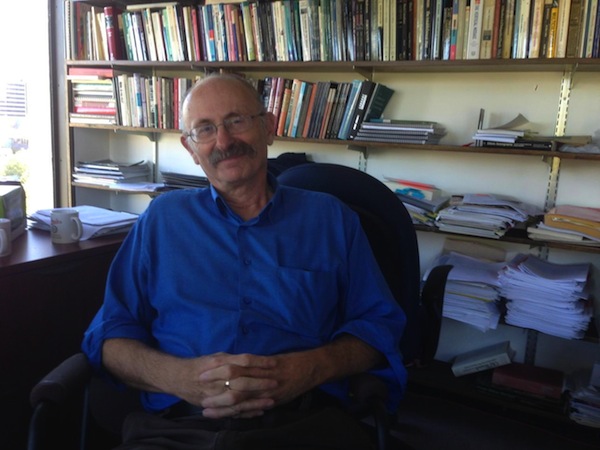
Chaplain Sari Shernofsky (photo by Norwegian Cruise Line)

Earlier this month, Sari Shernofsky described her experiences as a chaplain in a Zoom lecture called Stories from a Narrow Bridge: Meeting People in Time of Need. The talk’s title comes from a quote by Reb Nachman of Breslov: “All the world is just a narrow bridge and the main thing is to have no fear at all.” For Shernofsky, a recent transplant to Victoria from Calgary, those words were a call to pursue training as a multifaith hospital chaplain.

Shernofsky’s talk was part of Kolot Mayim Reform Temple’s current lecture series, Building Bridges: Hineini – Answering the Call to Heal the World. It took place on Jan. 8.

Shernofsky worked in hospital and hospice settings for 15 years, with the objective of offering compassionate care to those in need. She also served as the Calgary Jewish community chaplain where, in addition to visiting individuals, she helped set up support groups and various training workshops for synagogues that wanted to become involved in community care.

According to Shernofsky, to care for others in their time of need – whether it be an illness, end-of-life care or simply to connect with those who are isolated or alone – is not a choice but an obligation she views as a profound Jewish value.

A chaplain provides spiritual and emotional support to people in institutional settings. Healthcare chaplains, such as Shernofsky, are trained to work with people of different faiths. Though derived from a Christian word, a current use of chaplain encompasses the work done by spiritual-care providers. Many who go into the field do so later in life, as life experience is advantageous to the job. Shernofsky had worked in the corporate world before entering the chaplaincy. “I wanted at a certain point to work with my heart and not my head – to [be able to] look back at the end of my life and say I did something to help someone else that was meaningful,” she said.

“Maybe we are the bridge, and we are reaching out our hands to others – that is basically what a chaplain does. And there is a chaplain in all of us, to reach out our hands and make tikkun olam [repairing the world] happen,” she said.

As she explains it, her job was to visit people and let them take her into their world. Among the visits was one to someone she met while studying to be a chaplain. One evening, at midnight, she received a message on her pager notifying her that the daughter of an elderly evangelical man was looking for a Bible so she could read scripture to him. Once brought, the Bible did not create the desired effect, so the daughter asked for a hymnbook. Shernofsky returned with a hymnbook, which didn’t work either.

Silence ensued. Shernofsky finally walked over to the head of the bed and placed her hand on the man’s forehead. “I told him what a special life he led and how loved he was. I talked about the family being around and how much love was surrounding him. As I was talking gently to him, the daughter and her friends started humming ‘Amazing Grace’ in the background. I had a back-up group. And it was the most magical moment, a holy, sacred moment. When it was over, the daughter had a wonderful smile on her face. We gave her a moment that she needed. I walked out of the room at two in the morning and I was higher than a kite.”

In another instance, a Jewish man in his 60s came into the hospital in critical condition. At a certain point, doctors considered removing his life support, but his rabbi objected and he remained in hospital for another month.

“I realized that the family had time during that month to get over the initial shock and get used to the idea. Perhaps more importantly, they did not have to make a decision to pull the plug. And I don’t know how families can do that, and how awful it must be because there has got to be a place in the back of your head that says, ‘What if I hadn’t?’ It was a real learning experience for me about timing.”

She also recounted the lesson she received from a woman who had been bedridden in a hospital for several years. The woman was adored by hospital staff, Shernofsky said. “I learned that, when you have so little, you can still make a difference.”

Shernofsky ended with a few words about medical assistance in dying, or MAiD. “People choose MAiD because they are afraid of suffering, they don’t want to be helpless and don’t want to be a burden to others,” she said. “Maybe some of those reasons are a bit misguided. What happens with MAiD is often poor information. People are not told what other supports are available, like palliative home care and hospice. There are lots of good things about hospice, people are not educated about them and that’s a shame.”

The next speaker in the series is McGill University’s Prof. Morton Weinfeld, who recently published an updated edition of his book, Like Everyone Else But Different. He speaks Feb. 5, 11 a.m. To register, visit kolotmayimreformtemple.com.

Sam Margolis has written for the Globe and Mail, the National Post, UPI and MSNBC.
Format ImagePosted on January 27, 2023January 26, 2023Author Sam MargolisCategories LocalTags chaplaincy, health, Jewish chaplain, Kolot Mayim, Sari Shernofsky
Ukraine’s complex past

Ukraine’s complex past

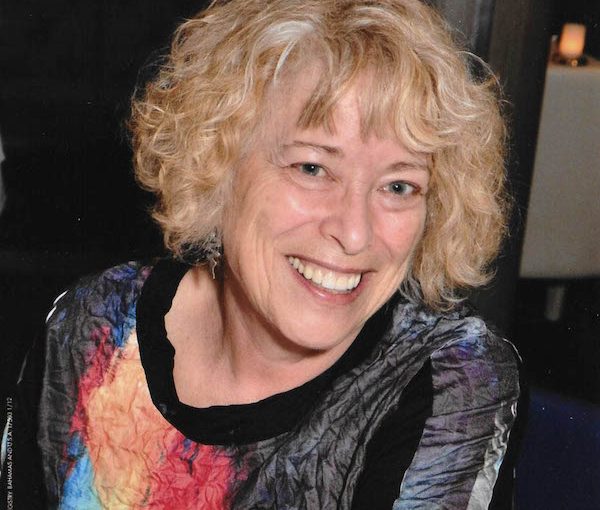
Elissa Bemporad (photo from Elissa Bemporad)

During a Dec. 4 Zoom lecture organized by Kolot Mayim Reform Temple in Victoria, historian Elissa Bemporad offered a nuanced look at the Jewish experience in Ukraine, as well as perspective on the Russian invasion of Ukraine

“It was a history marked significantly more by coexistence between Jews and non-Jews than it was by violence,” said Bemporad, a professor at Queens College and CUNY Graduate Centre in New York City. “I am saying this not only in response to the genocidal war that Russia has launched in Ukraine, justifying it by manipulating the past and demonizing Ukrainians as quintessentially violent. We should resist the view of the Jewish experience in the region, as tragic as it might have been, as if it was doomed from the very beginning and enveloped in perpetual violence.”

The current war, she underscored, has brought about the worst refugee crisis in Europe since the Second World War, with cities destroyed and civilian populations terrorized. “The aim of this war seems to be putting an end to Ukrainian sovereignty and identity,” she said. “As a historian, one of the most painful moments was reading about how the Russian occupiers were seizing and destroying books. As Jewish historians, we know all too well what happens when a society destroys books.”

Showing images of the destruction of Jewish buildings in Ukraine, such as a synagogue in Mariupol and the Hillel building in Kharkhiv, Bemporad spoke to the irony of one of Russia’s stated goals of the conflict: to rid the country of Nazis. Most of the Jews in these bombed-out cities have left, she said, and there is uncertainty as to whether they will return; many have either fled to Israel or settled in the West.

Bemporad discussed the pre-Second World War period, when 1.5 million Jews lived in what is today Ukraine, the largest community being in Kyiv, where 226,000 Jews resided, or one-third of the city’s population. Addressing the anti-Jewish violence in the region, she spoke about – among other uprisings, dating back to the 17th century – the Russian Civil War (1918-21) and the resulting atrocities committed against the Jewish population by both military units and the civilian population. Many of the pogroms took place in Ukraine and tens of thousands of Jews were killed.

“Jews were thought of as interlopers in the national body and imagined as forces connected to Bolshevism that would tear apart the nation’s fabric,” Bemporad said. “The fact that Trotsky was the leader of the Red Army did not play in favour of the Jews.”

But Bemporad highlighted a history of coexistence as well, stories in which some Ukrainians heroically stepped in to save the life of Jews, notably the writer Rakhel Feygenberg, who, along with her infant son, was hidden by non-Jews during a 1919 pogrom.

About the post-First World War era, she noted the ambivalent attitude the Soviet state had toward antisemitism. “While the state condemned antisemitism on paper, it was often eager to ignore antisemitism or to weaponize it in its best interest,” she said. “With regard to the pogroms, the Soviets shifted between acknowledging and downplaying the anti-Jewish violence. They were ambiguous in their treatment of the Jews, and they were the ambiguous in their treatment of the perpetrators, creating a state-controlled memory. However, when the discussion of the pogroms was perceived as at odds with the regime’s interests and priorities of building socialism based on the brotherhood of peoples, then the memory of anti-Jewish violence was silenced and the Soviets preferred not to investigate and punish the perpetrators.”

In other examples, she said the Soviets would use antisemitism among Ukrainians as a means to demonstrate they were prone to nationalism. And both Ukraine and Russia have provided recent examples of reviving the memories of and glorifying national heroes who were responsible for carrying out pogroms.

In a final slide, Bemporad displayed the results of a Pew Research Centre survey on antisemitism in Europe. Despite Russia’s attempts to portray Ukraine as a hotbed of antisemitism, more Russians had an unfavourable opinion of Jews than Ukrainians. And, in Bemporad’s view, Ukraine, despite its corruption, has become the most democratic of the post-Soviet states, excluding the Baltic countries. Further, as has often been mentioned in referring to the present situation of Jews in Ukraine, the country elected a Jewish president, Volodymyr Zelensky, with more than 73% of the vote.

“Siding with Ukraine today does not entail dismissing or forgetting the dark pages of anti-Jewish violence in the region,” Bemporad said. “It is rather a reminder that we can start turning those pages and writing new ones in the book of the Jews of Ukraine.”

Bemporad, a two-time winner of the National Jewish Book Award, is the author of Becoming Soviet Jews: The Bolshevik Experiment in Minsk and Legacy of Blood: Jews, Pogroms and Ritual Murder in the Lands of the Soviets. She is the co-editor of two volumes: Women and Genocide: Survivors, Victims, Perpetrators and Pogroms: A Documentary History.

The next speaker in Kolot Mayim’s Building Bridges series will be Sari Shernofsky, a retired community chaplain from the Calgary Jewish community, on Stories from the Narrow Bridge: Meeting People in Their Time of Need. She will speak on Jan. 8, 11 a.m. Visit kolotmayimreformtemple.com.

Sam Margolis has written for the Globe and Mail, the National Post, UPI and MSNBC.
Format ImagePosted on December 23, 2022December 22, 2022Author Sam MargolisCategories LocalTags antisemitism, atheism, Elissa Bemporad, history, Kolot Mayim, religion, Russia, Ukraine, war

Dealing with addiction

Rabbi Allan Finkel of Winnipeg’s Temple Shalom spoke about addiction in the Jewish community and Jewish-based recovery during a Nov. 6 Zoom presentation organized by Kolot Mayim Reform Temple in Victoria.

The talk was the first of Kolot Mayim’s 2022/23 lecture series entitled Hineini: Answering the Call to Heal the World. It widened the definition of addictions to go beyond those that are substance-based to include dozens that are behavioural. Finkel also explored new research on the causes of addiction, particularly childhood trauma.

“My name is Allan and I am an addict,” he began. “This was a huge hineini, when I first said ‘here I am.’ This was my declaration 13 years ago. At that time, hineini meant here I am at the bottom of a drug addiction, I am broken and I am open to an unknown path that might lead to recovery.”

That path, starting at Narcotics Anonymous, would take him on a spiritual journey, reconnecting him with his Judaism and leading him to become a rabbi.

For his rabbinical program, Finkel wrote his thesis on addictions in the Jewish community. “I was curious to know what we might learn as rabbis, and how we can carry our journey forward in terms of serving our congregations,” he said. “It is a mental health issue, and there wasn’t very much known about it…. And there are certain issues, particularly within the Jewish community, that made it a topic that I wanted to explore.”

Finkel discussed a 1962 study of the Jewish community in the United States that tried to find out what percentage of the Jewish community was addicted to drugs and/or alcohol. The answer was zero, compared to a 10% addiction rate in the overall population. Clearly, the study indicated a denial within the Jewish community that Jews can also be addicts. A 1995 study in the United Kingdom produced similar results.

Beginning in the early 2000s, research began to demonstrate that, to understand addictions, one needed to look beyond substances and towards behavioural addictions, which can encompass many areas: shopping, food, internet and gambling, among them. More recently: cellphone use, online gaming and video gaming.

From this standpoint, the number of people demonstrating addictive behaviour reaches 47%, according to studies Finkel cited, though he suggested the number is likely far higher. A commonality among people with addictive behaviours is the inability to stop, no matter what harm it does to those around them and to themselves.

Returning to the denial of addiction in the Jewish community, Finkel proposed that one cause is the long-standing fear of shame, which could be triggered by an admission of a problem at a synagogue, Jewish school or other institution. Looking at areas of the Torah, such as the story of Noah, he explained, one sees that “the Jewish denial of addiction is social and cultural, it is not religious in orientation.”

Within the past decade, there has been a broader consensus within Jewish institutions that addiction is not a moral failing, but instead can be caused by the same factors that result in other mood and psychological disorders.

Using the work of Vancouver physician Dr. Gabor Maté, Finkel noted that all addictive behaviour can be traced to something that happened when a person was very young. “Not everyone who was traumatized becomes an addict, but every addict was traumatized.”

One conclusion Finkel draws is the need to destigmatize the word “addiction.” He stressed that an addiction, as stated in the American Psychiatric Association’s 2013 manual on mental disorders, is a means of coping no different from any other mental health disease.

A second takeaway is that adults and not children bear much of the responsibility for addictions; in other words, no child ever dreams of becoming an addict. Children do not have the rational skills to take on and cope in a non-destructive way with trauma that happens to them.

Further, Finkel argued that real recovery is not simply about stopping addictive behaviour, but about going back to one’s past and taking care of the fears and resentments of childhood, as well as the habits that build up over a lifetime.

Finkel told the audience that it has been more than 10 years after his last relapse. He said the rewards of recovery have been immense and have brought incredible relationships with his children, himself and life.

Finkel is an outspoken advocate for interfaith engagement and for the building of strong bridges and partnerships across all denominations within the Jewish community. He currently chairs the Winnipeg Council of Rabbis.

A video of Finkel’s lecture is posted at kolotmayimreformtemple.com.

Sam Margolis has written for the Globe and Mail, the National Post, UPI and MSNBC.

*******

Some resources

Rabbi Allan Finkel provided this list of resources for those experiencing addiction and those close to them:

  • Crisis and suicide line: 1-800-784-2433
  • Jewish Addiction Community Service (JACS) Vancouver 778-882-2994
  • Mental health support: 310-6789 (no area code required)
  • Umbrella Society: support, outreach, recovery, counseling, groups, harm reduction and education, umbrellasociety.ca
  • Our Jewish Recovery: Facebook group, with 16 active Jewish recovery meetings and classes, virtual retreats, individual and group coaching, led by Rabbi Ilan Glazer
  • Rabbi Mark Borovitz, Finding Recovery and Yourself in Torah: A Daily Spiritual Path to Wholeness
  • Rabbi Kerry Olitzky and Dr. Stuart Copans, Twelve Jewish Steps to Recovery, and other of Olitzky’s books, including with co-authors
  • Rabbi Paul Steinberg, Recovery and Jewish Spirituality: Reclaiming Hope, Courage and Wholeness
  • Rabbi Shais Taub, God of our Understanding: Jewish Spirituality and Recovery

– SM

Posted on November 25, 2022November 23, 2022Author Sam MargolisCategories LocalTags addictions, Allan Finkel, health, Kolot Mayim, mental health

Speaker series returns

Kolot Mayim Reform Temple in Victoria is presenting a new season of its Building Bridges speakers series. The 2022/23 lineup will highlight the theme of Hineini: Answering the Call to Heal the World.

The Hebrew word Hineini can be translated as “Here I Am.” The series of six talks includes local, national and international speakers who have each in their own way stood up to create positive change in the world from a uniquely Jewish perspective. The monthly talks are offered free of charge and held on select Sundays from November to April on Zoom.

Beginning Nov. 6, 11 a.m. PST, the first speaker will be Rabbi Allan Finkel. Finkel is a Reform rabbi at Temple Shalom in Winnipeg. He will address the topic of Addiction in the Jewish Community and Jewish-based Recovery.

On Dec. 4, Elissa Bemporad, a widely published historian and professor at Queens College and the Graduate Centre – City University of New York, will speak on History is Not Destiny: Thoughts about the Russian War Against Ukraine and the Jewish Past in the Region.

Starting off the 2023 portion of the season will be Sari Shernofsky, a retired community chaplain from the Calgary Jewish community. On Jan. 6, Shernofsky will speak about Stories from the Narrow Bridge: Meeting People in their Time of Need. She will discuss her journey to chaplaincy, the patients she traveled with, spirituality and aging, and medical assistance in dying (MAiD).

Morton Weinfeld, professor of sociology and chair of Canadian ethnic studies at McGill University, recently published an updated edition of his book Like Everyone Else But Different. His Feb. 5 talk is titled Like Everyone Else But Different: The Jewish Glass is Half Full.

Pat Johnson, writer, organizer, entrepreneur and Jewish Independent editorial board member, will highlight his work with Upstanders Canada, an organization he founded to mobilize non-Jewish Canadians to stand up against antisemitism and anti-Zionism. His March 5 talk, Standing Up to Antisemitism, will explain coordinated steps anyone can follow to create a positive difference.

Rabbi Suzanne Singer, a former journalist and a Reform rabbi from Temple Beth El in California, will wrap up the series on April 6. With a history of leadership at Kolot Mayim, Singer will talk about Hope: How Do We Find Hope in a World with Unending Problems?

The word Hineini occurs 17 times in Hebrew scripture and is said at pivotal moments when profound change is about to take place. Kolot Mayim Reform Temple is an inclusive, welcoming congregation led by Rabbi Lynn Greenhough, who reminds us that, “Our world today cries out for responsive and responsible change; each of us can do our part in helping with that healing and transformative change.”

To register for any or all of the six talks that comprise the 2022/23 Building Bridges series, visit kolotmayimreformtemple.com.

Posted on September 16, 2022September 14, 2022Author Kolot Mayim Reform TempleCategories LocalTags Building Bridges, Hineini, Kolot Mayim, speakers series, Victoria
Shira Choir focus of lecture

Shira Choir focus of lecture

Reverend Hazan Daniel Benlolo (photo from Kolot Mayim)

“To repair the often-shattered world, I cannot think of a better way than to give a voice to those less heard,” said Reverend Hazan Daniel Benlolo, leader of the Montreal Shira Choir, a vocal ensemble comprised exclusively of people with physical and intellectual challenges.

Benlolo was speaking at a Feb. 13 lecture co-hosted by Montreal’s Spanish and Portuguese Synagogue and Victoria’s Kolot Mayim Reform Temple during Jewish Disability Awareness and Inclusion Month, or JDAIM.

Born in Morocco, Benlolo settled with his family in Canada in the 1970s and became the cantor of Montreal’s Spanish and Portuguese Synagogue at the age of 17. He is also a rabbi and an artist who, among other things, designs ketubot (Jewish marriage contracts). Despite his many hats, Benlolo’s true passion, as evidenced throughout his talk, is to provide a stage for those who have seldom been listened to, accepted or appreciated in the community.

While working in Ottawa in 2002, he helped lead the Tamir Neshama Choir, which toured throughout Canada, the United States and Israel.

“It really inspired me and opened my eyes to a new life that I never explored before. To be able to spend time with people of special abilities made my life that much better in so many different ways,” Benlolo said of his Ottawa experience, for which he received a Governor General’s Caring Canadian Award in 2013.

The move back to Montreal came a few years ago. There, Benlolo and his wife Muriel Suissa founded the Shira Choir in 2019, with the assistance of Federation CJA and the Jewish Community Foundation of Montreal. The choir, made up of singers from many cultural backgrounds, performs a wide range of music, from liturgical to Broadway and pop.

Not long after the choir’s formation, the pandemic struck in early 2020. Nevertheless, Benlolo has managed to keep the music playing through Zoom rehearsals and socially distanced visits with choir members.

Benlolo stressed that, too often, people with special needs come in and out of our lives, without our taking the time to engage with them. His simple request to the Zoom audience was “to take the time,” as “it could make a world of difference.”

“They teach me more than I could ever teach them,” is the view Benlolo expresses regularly, saying there is no way to place a value on these relationships.

He emphasized the importance of not patronizing anyone in the choir. That is, audiences should give them a standing ovation only because members of the choir deserved one for the quality of their singing, not for the act of performing itself.

“They have hopes and aspirations. Some are going to fulfil them, some are not,” asserted Benlolo.

The future for the choir, he declared, is to continue to spread love, positivity, inclusion and the sense of community, but not tolerance, a word to which he has a particular aversion. “I don’t want to tolerate you, I want to love you. I want to count you in the community as a full member,” he said.

“We want to continue building from here,” he added. “It can only come to fruition if everyone puts in some effort. Just a little bit of an effort, the results will be so satisfactory, both for the individual and the community, [and] we will learn some new things, we will learn a way of life, that for so long has been hidden.”

Benlolo’s talk covered the recently premièred documentary Just As I Am, which can be viewed on CBC Gem (gem.cbc.ca/media/absolutely-canadian/s21e26). The film, a profile of the adults with special needs in the choir, explores the universal language of music and its ability to transform lives.

Benlolo also presented two short videos, both available on YouTube, showing members of the Shira Choir singing Ed Sheeran’s “Perfect” and Leonard Cohen’s “Hallelujah.”

In his concluding remarks, Benlolo urged the audience to not look upon those who are differently abled as “different” in a pejorative sense. “Different is great,” he said. “Different is beautiful. There is so much untapped talent out there that I am always in search of these people who are hidden gems.”

The Spanish and Portuguese Synagogue in Montreal is the oldest in Canada, tracing its history back to 1760, when the first Jewish settlers arrived in Quebec, making it as old as the province itself.

Now in its 14th year, JDAIM is a unified effort among Jewish organizations and communities throughout the world to build awareness and foster inclusion of people with disabilities and those who love them.

Benlolo’s presentation was the fifth in Kolot Mayim’s six-part series on the theme of Building Bridges: Celebrating Diversity in Jewish Life. The final session in the series features Indigenous artist Patricia June Vickers and Rabbi Adam Cutler of Adath Israel Congregation in Toronto, which is co-sponsoring the event. The topic on March 20, 11 a.m., is An Indigenous and Jewish Dialogue on Truth and Reconciliation. To register, visit kolotmayimreformtemple.com.

Sam Margolis has written for the Globe and Mail, the National Post, UPI and MSNBC.
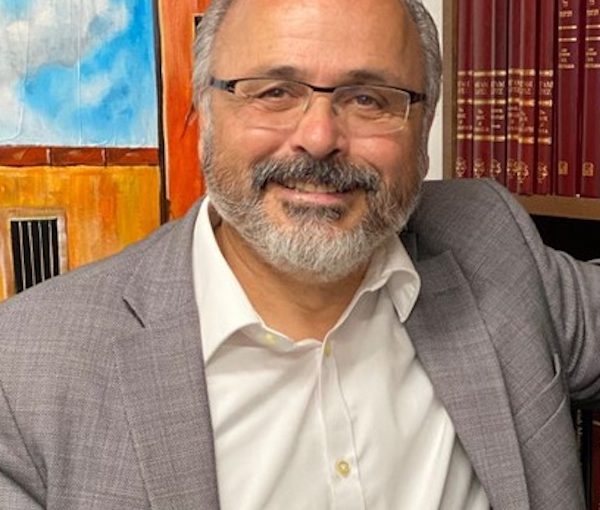
Format ImagePosted on February 25, 2022February 23, 2022Author Sam MargolisCategories MusicTags Building Bridges, choral singing, Daniel Benlolo, JDAIM, Kolot Mayim, Montreal, music, Shira Choir, Spanish and Portuguese Synagogue

Posts pagination

Previous page Page 1 Page 2 Page 3 Page 4 Next page
Proudly powered by WordPress